Ryan Mitchell Presentation "Flipping 101"
Ryan Mitchell and Joe Homs walk Orange County investors through house flipping from team assembly to deal analysis. They cover sourcing deals through wholesalers, bandit signs, and driving-for-dollars, using the 70% rule to calculate offers, and financing through hard money and the BRRRR strategy. Mitchell shares concrete formulas and case studies with actual purchase prices, rehab costs, and profits.
Chapters
I'm going to record this as well so you can have it in the future.
Welcome.
Pretty much everybody on here knows me. We're going to get started with flipping houses in Orange County with Ryan Mitchell. And I'll let Ryan take over from here and go with his presentation.
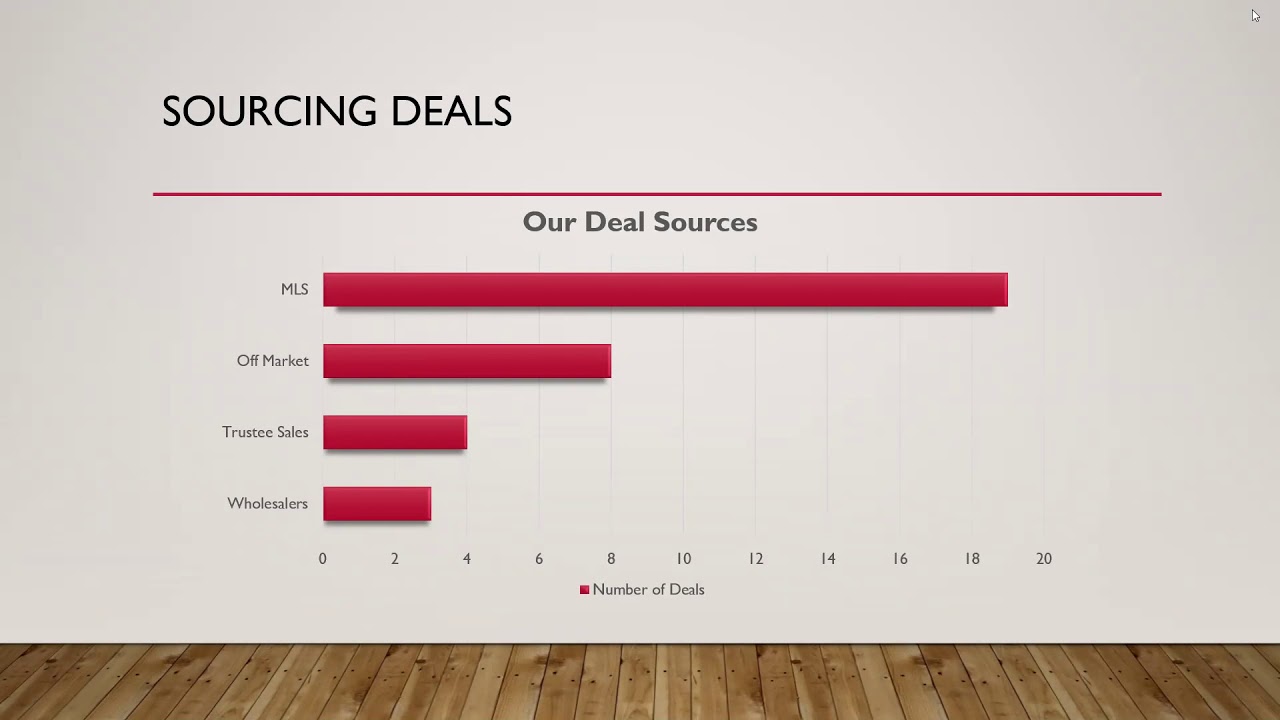
Yeah, normally I would go around and ask people to introduce themselves and Find out what they wanted to learn so I can kind of tailor what I'm talking about. But a little bit different setup here today, so we'll just go ahead and get started. There we go. So who am I? I grew up in Orange County. I was born and raised here. I started in real estate in 2012. I started out by getting my my real estate license and had a dream to to flip houses. And obviously, I met met Joe. And the rest is history. So, I'm a broker, investor, developer, owner of H&M Realty Group, a real estate brokerage here in Orange County, and owner of H&M Real Estate Services, which is our entity that flips houses. So, we've done about 50 flips since 2013. So, here's my contact details. Pretty much Everyone here, at least I know a couple of you, so don't need that. So, what we'll cover today is building a team that would be made up of real estate agents, wholesalers, title, escrow, attorneys if you absolutely need one, contractors, stagers, photos, photographers, et cetera. How to source your deals, where to find deals, and what to look for. Analyzing your deals, that'd be estimating rehab costs, closing costs, figuring out the numbers on how much to offer, how to comp properties. And then funding your deals, sources of capital. And I'll show you some numbers on kind of calculating how much money you actually need to flip a house. It's a lot less than people think. I'll go through some of our case studies, I call them, some of our flips, completed flips that we've done. And then other investment opportunities, the BRRRR strategy, which is very, very popular now, and how I would use it. My way of building a rental portfolio, which I have not done yet because I'm waiting for some sort of correction, which I thought was kind of a long way away, but it might be sooner than we think. And then my market outlook, state of the current market, which when I put this presentation together was a few months ago, and obviously it's changed a lot since then. And I talked about the imminent decline in the market. Will the market crash and when? So these are a couple books that started it all for me. To me, the most important thing is mindset. And, you know, I think you kind of attract your own opportunities in life based on your mindset. So if you have not read those books, I would suggest you do so. So, I talked about building a team, either becoming an agent, which is not very hard. Take a, you know, 40-hour class and take a state test and meet some requirements. You become an agent on your own. You know, has a lot of benefits. You can obviously represent yourself and sell your own properties, cutting out agents and commissions. Obviously, I'm an agent, so it's not in my best interest to say that, but it's the truth. And then, or finding an investor-friendly agent like Joe or myself, someone that's actually in the field doing it, not someone that, you know, comes up with their own numbers and kind of tells you or gives you bad advice. Or use Zillow and go through the listing agent. Sometimes there is a benefit to going through the listing agent. Again, I'm an agent, so I don't— It's probably not my best interest, but it's the truth there again. Wholesalers, you know, finding a good wholesaler and what that is and what that means. And then building your title, escrow, and attorney team. It's very important to have escrow and title people, you know, in your pocket that you can call and ask questions. It's a big part of what we do. Someone that can pull a title report for you on the fly. You know, when you're evaluating a property or finding out how much someone owes on a house or the mortgage or liens on the property is very important. And then building your team of contractors and subcontractors. Investor-friendly contractor is very important, not someone that's going to be charging you retail on your projects. At the end of the day, you do get what you pay for. So, there's a fine balance between, you know, the high price and the low price and what you get for those. And finding subcontractors usually are unlicensed, will give you better pricing, and usually a specialist in one trade. I can pretty much flip a house using all subcontractors if I wanted to. It's nice using contractors because you— excuse me— kind of put the liability on the contractor. They have their own insurance. And workers' comp. So it's a little bit less liability working with a contractor. And then other parts of your team: stagers, photographers, home inspectors, appraisers, termite companies. I believe Joe has a list of all the people that we use that he can easily send to you if you needed that. And if you have any questions, we'll go, go through that at the end. I would write them down and we can go through them. Sourcing deals. MLS, again, becoming a real estate agent or finding an investor-friendly realtor using Zillow or Redfin. I'll show you how to do that on Zillow so you can search on your own. Wholesalers, how to find wholesalers being bandit signs, online cash buyer websites, meetup groups like this, BiggerPockets, and LinkedIn. Off-market. So, off-market traditionally, or at least today, is marketing yourself, either driving for dollars, pay-per-click advertising on Google, Facebook ads. It's usually where the best deals can be found because you're cutting out everyone and getting directly to the seller. And then trustee sales. So, trustee sale is a foreclosure auction. We used to buy at trustee sales when they were more There was more volume there, but it has since dried up with the economy doing so well. You know, less people are in trouble and foreclosure. So I think all of 2019, there was only 60 or 70 foreclosures in Orange County. So that's just not very much from where it was. So it's not a, not a great source, but maybe coming back with what's, what's going on and The imminent layoffs that could be happening. So, our deal sources, a majority of our deals were sourced on the MLS, some off-market trustee sales and wholesalers, but you can see, you know, MLS is still a very good source for your deals, especially if you're a real estate agent. You can earn commission on the buy side and, you know, save commission when you sell. So, it really improves the numbers having your own license. So, MLS, Multiple Listing Service. Again, if you become a realtor, you get access to the MLS. Probably the biggest benefit if you're just trying to be an investor is getting access to the MLS and not having to rely on anyone else to search and comp properties. Again, earning money purchasing your deals and saving commission when you sell them. I kind of already talked about what an investor-friendly realtor is, but someone that invests themselves like Joe or I that can give you good advice and point you in the right direction when looking for a property to flip. And sometimes we'll credit commission or reduce listing fees to help your numbers out and help your bottom line. So, use Zillow to search on your own. I'll show you how to do that. And define your market, high-end versus low-end. We concentrate in the mid to low end. We do not and have not flipped a property that's worth above a million bucks. Just takes longer to sell. You have pickier buyers. You know, if you stay in that medium to low price range, I think you can have a lot of success there. So sourcing deals on Zillow. So this is Zillow's opening page. You start there and go to for sale. So this is what it would look like if you went through this process. So you click for sale. You filter down to houses, condos, apartments, townhouses. You don't really want manufactured, multifamily, or lots unless you're looking for those specific types. Now, here you can go to more and you can put in more criteria there. Keywords is huge. That's how you really source all of your properties or find them on the MLS or on Zillow. You can type in TLC, fixer, distress, needs work, any of those types of keywords and you will find distressed properties at the end of the day. So, that's all I did here on Zillow. I found this property that was a pretty good candidate to flip. And you can see here, the listing agent is right there on the top. So, either have a realtor that you're working with that can help you run through the numbers because obviously going through the listing agent, they're not going to have your best interests in mind. They're going to kind of tell you what you want to hear and what they think the property's worth, which is probably not going to be accurate. So, you definitely do want a realtor like Joe or myself to kind of point you in the right direction and give you the real comps. So, wholesalers. What is a wholesaler? A wholesaler is someone that finds those off-market deals, direct-to-seller deals. Either doing the traditional marketing types, Google, direct mail, driving for dollars. They're the ones that spend all the money on the marketing and the follow-up, and they do a lot of work actually. But the biggest problem with wholesalers is that they're not very good at estimating rehab costs. You always see Wholesalers say $40,000 in rehab costs on this property. And I look at it and it's double or more what the rehab costs really would be. And they always inflate the ARV or after-repair value of the property to make the numbers work. So, there's a lot of bad wholesalers out there. When you do find a good one, it can really be a big part of your flipping business because the biggest thing in flipping is sourcing your deals. So, where to find them? Calling on bandit signs. Usually, these bandit signs will be a wholesaler. So, one good way is just calling on those and asking if they have any properties that they're currently trying to sell. Obviously, networking, BiggerPockets, LinkedIn, online cash buyer websites. That means this search right here, I went onto Google, typed in cash buyers Orange County, and found SoCal Homebuyers. Now, this most likely is a wholesaler or someone that's flipping and doing that for themselves, but most likely a wholesaler. So, you can call them and you have a wholesaler that is hopefully supplying you properties. So, off-market, again, is where the best deals can be found if you're willing to put in the work. I talked about it a little bit already. Direct mail, driving for dollars. The Deal Machine app is probably the best app out there to drive for dollars. I know Joe doesn't really advocate driving for dollars because it's a difficult phone call when you call someone where their house looks distressed on how to navigate that phone call to not offend someone. But people have good success doing it. The Deal Machine app is really nice because you can basically drive in front of a house, take a picture of it right on the spot, you can skip trace it. I don't know what this means. Okay.
Oops.
Something popped up there, but you can skip trace it, get the seller's phone number, mailing address. You can send them a piece of direct mail right from the app. So, it's an automated app to help you with the driving for dollars method. Cold calling is obvious, is basically pulling a list, whether that be a NOD, foreclosure list, tax default. There's lots of different lists that you can get out there. And then skip tracing it to get the phone number for that lead. And then putting it into an app like Mojo Dialer. There's also CallTools. It's like a triple line dialer. So basically you're calling 3 numbers at once. If someone picks up, you got them. And then it'll leave a voicemail for the other 2 if they don't pick up. So, you know, you can crank through a big list of numbers a lot quicker. Google Ads is pay-per-click. I've tried it. I've had some success doing it. It is very expensive. I know some wholesalers out there that are spending $10,000, $15,000 a month in Google Ads and doing really, really well. So, it's a good method if you want to put the money into it. And then Facebook Ads, same as Google Ads. Facebook Ads are actually a little bit cheaper. But not as filtered, I guess you would say. You're not able to filter out the demographics of who you're looking for better than or as good as Google, just because of the housing laws that Facebook has now put onto their ads. So that's off-market. Trustee sales, again, is a foreclosure auction sale. You must have cash. So you You literally go to the courthouse and you have to have cash or cashier's checks for the purchase price. So, there's no loans involved. It's sold at the local county courthouses. They're usually bought sight unseen. Sometimes you can get inside if the seller will let you, but a lot of times you're just driving by, maybe knocking on the door, looking in the windows, and that's all you really get to do. And usually have to deal with eviction because a seller is going to be living in the home and they're probably not very happy about you buying their home. So you need to have a good eviction attorney to help you with that process. So estimating rehab costs. So there's some quick and easy ways to estimate rehab costs. 10% of ARV is one I've heard. $25, $35, $45, $55 per square foot, kind of depending on The condition, obviously, if it just needs paint and carpet, you're probably at the $25 range. If you need to do a full rehab, the roof needs work, plumbing, electrical, kind of needs the works, then $55 per square foot. And it kind of can go up from there. I think we've spent up to $75 or $80 a square foot on some of our rehabs. So, it's not the most accurate, but it's a good way to, or a good place to start. To just, you know, at least get your numbers and, you know, go from there. So rehab costs obviously vary greatly depending on scope of work. The best way to estimate rehab costs is to walk the property and bring a contractor, and they can give you an accurate bid so you're not guessing on anything. So Be aware of what's included and what is not included in the bid. Very important because, you know, you have to be able to go through the bid and kind of be detailed. And a lot of times contractor will forget to put in a lot of items and then you have to clarify if, you know, materials are included and look at the fine print in a bid. You definitely need to spend some time going through the contractor bid to make sure everything that you want is in the bid. Because the worst thing you can do is buy a property with a contractor bid and that's $50,000 and you close on the property and he ends up saying, oh no, well, this isn't included, that's not included. And then you figure out it's an extra $20,000 that you didn't budget for. And always budget for the unknown. We usually like to have $5,000 to $10,000 of contingency fund. So, if the roof leaks, you find out later the plumbing needs to be replaced or electrical needs to be replaced, you have that in your budget. So, it's not a shock to your bottom line. Other expenses outside of contractor quotes, termite repairs. All properties in California have termites and termite clearances usually 90% of the time is going to be required to sell the property. Staging and photos. Usually staging of single-family houses around $2,000. Photos are actually really inexpensive, $150 to $200. Landscaping, a lot of contractors do not include landscaping in their bids, and landscaping is a pretty big ticket item. So landscaping could be $5,000 to $10,000 just to do sod and clean up the property, put sprinklers in and whatnot. So it is a big ticket item. Obviously financing costs, you have to know if you're pulling hard money, how much that's going to cost and build that into your numbers. And then your holding costs, utilities, HOA, property taxes, and supplemental taxes. So, this is at least kind of what I use to evaluate a property. This is one for a property that I think that we did. So, it just goes through and kind of shows you what it looks like when I'm looking at the numbers. It's quick and easy and not fancy. Just going through what I think the rehab's going to be. Holding costs on the right with your taxes, financing costs, utilities. And then a little profit and loss breakdown. So this is a quick, easy way that I use. Obviously, I've been doing it for a little while, so I can kind of go through a property and I pretty much know what it's going to cost, give or take $5,000 or $10,000, unless there's some unknowns like plumbing, electrical, or the roof needs to be replaced. So I'm pretty good at putting these numbers in myself now, but it took time to learn that. So, estimating closing costs. I usually use 3.5% of the ARV to estimate closing costs. Your costs, if you're using a real estate agent, will be a lot higher, about maybe 1% to 2% higher. That's because I sell my own properties and obviously I'm not charging myself commission to sell that property. So, that number includes escrow, title commissions, and taxes. So, it's a quick, easy way to estimate your closing costs. Obviously, we're licensed seller-owned properties. Usually, it's about 1% to escrow and title. And then, if you're using a real estate agent, 5% goes to commission. So, 2.5% for the buyer side and 2.5% for the listing side. That's kind of a standard commission. Obviously, if you find someone like myself or Joe, we can work on those numbers a little bit. To help your bottom line. So for example, on a $600,000 sales price, 3.5% is usually about what I pay, is about $21,000 on $600,000. But if you're paying 6%, you're paying $36,000. So that's a big difference. There's $15,000 there that's just going, basically just going to commission. So whether you get your license yourself or you use a investor-friendly realtor like myself or Joe, we can help you kind of fall in the middle there, maybe that 4.5% or 5% closing cost number. So, how much to offer? Obviously, the biggest question, or one of the biggest questions in flipping a house is how much do you offer? So, I start with the ARV and work backwards. I think that's how most investors do it. So, establish your ARV, obviously comping, Which I'm going to go through. Coming to the property, finding out what your ARV is, and then working backwards with those numbers I just kind of outlined. Rehabbing, your rehab costs, your closing costs and holding costs, and then finding out how much money you want to make. Usually we shoot for 10% on the purchase price. I'm usually conservative on my ARV and conservative on my rehab costs. So, 10% is kind of the lowest we want. We've flipped properties where we made 7% or 8%, but most of the time it's more like 10% to 15%. So, I have an example down here. If a property's worth $675,000, your rehab costs are $75,000, closing costs at 5% are $33,750, and 10% return on investment's about $60,000. That would come up with an offer price of $506,000. So, you basically come up with those 4 numbers and work backwards and you come up with your offer price. Pretty self-explanatory. Comping properties. So, obviously, Joe and I do this every day. We can come up with very accurate ARVs for properties. If you're inexperienced at this, most people will shoot for the stars on their comps. There's always those comps that have been over-upgraded that sell for significantly more than what the neighbor has sold for. We usually don't shoot for those numbers. We don't do our numbers based on that comp. Maybe when we go down to list it, we might list close to that outlier comp, but most of the time we sell kind of where the average price for the neighborhood is. So, a comp is sold in the last 6 months within 1 mile. Similar home square footage and lot size, usually between 10% plus or minus of the subject property square footage and around 20% plus or minus of the lot square footage. Similar bedroom and bathroom count. If you cannot find an exact match, say you're comping a 3-bed, 2-bath and you find a 4-bed, 2-bath, you usually want to deduct About $10,000 to $15,000 for each of those. So that's an easy way to kind of compensate for an extra bedroom or bathroom. So pay attention to positive attributes. Pools are worth about $10,000 to $15,000. ADUs are something that's really big right now. So if you have a potential for ADU or if there, there is a back unit, obviously those are going to sell for a little bit more. And then zoning. For potential add-ons or if the property can be split or, you know, again, like the ADUs is a big thing. So, if you have a huge lot and you're able to add an ADU, obviously, you know, the upside on the property might be a little bit higher. And then pay attention to negative factors, road noise, proximity to freeways or airports always are going to hurt your ARV a little bit. Depends on how much road noise, the severity of the negative factor, you know, on how much you deduct from the price. If you have a property that backs to a freeway, you would like to find a comp that is in a similar location that also backs the freeway. If you cannot find that, usually I deduct around 5% of the ARV for, you know, one of those very negative factors. Either you're right under the flight path for an airport or something like that, and the comps you're using are not. 5% to 10% would be a good way to compensate for that. And then school districts matter. If you're comping a property, I've comped a property before that was in one school district and I was finding comps that were $50,000 and $100,000 more for the same exact property. And I couldn't figure out why. It was because of the school district. So, if a school district border or territory or whatever you want to call it, line is between the 2 properties, that can really significantly influence the price of the property. So, finding comps on Zillow, very similar way of finding the distressed properties. So, you go to an area, you go to sold, sold in the last 6 months or a year. If you can't find the comps that you're looking for, you can go back a year. I like 6 months. You get more— The more recent the comp, the better. And then you would filter for your bedroom and bathroom count. Here I draw a hard border around the neighborhood that I'm trying to comp. I usually do not like to cross over these major streets. You can see I kept it below Orangethorpe, and I guess this is west of Harbor. So I try to Stay inside those major streets or freeways. Obviously, the 91 freeway is another border that I use there. So, I'm trying to stay in one specific neighborhood without crossing over those major streets. And then I priced them high to low. Obviously, when you're comping a neighborhood, you want to find preferably other flips that have sold so you have something to go after. So, this is after they're sorted high to low. So, you can see for this property, all the fixed-up properties kind of sold in the same range between $625,000 to $645,000. So, that gives you a really good idea of what the property's worth. In this case, I think I comped the property at $635,000 or $640,000 because I was thinking you can probably shoot for that higher-end price. So, sources of capital. People always worry about the money first, and really you need to find the deal first. Money always flows to the deal. You do not need to have money first. Maybe if you're using hard money, you probably want to go through the application process and kind of think about that. But the key is finding the deal and learning how to find distressed properties. That's the whole The whole game here. So, there will always be a buyer or a partner if the numbers are good. Obviously, if you find a good deal or if you have an off-market lead, you can wholesale it and make good money that way or find a partner. So, most important thing is finding the deal. There is more money than deals available. That might change, but we'll see. So, hard money is obviously one source of capital that most investors use. They will lend either 75%, 85%, 90%. Some lenders go up to 100% loan-to-value. Obviously, the higher loan-to-value you go, the higher the interest rate will be, 1 to 2 points on the loan amount. So, if you're getting a $500,000 loan, 1 to 2 points would either be $5,000 to $10,000. So, points are huge. If you can find someone that'll do 1 point. Recently, hard money lenders have been, there's been more competition in that market because there's been less people investing. So, I've found lenders that will go down to 0.5% and some even no points. Obviously, we're more experienced and we have a track record of flips that we've completed. So, they're more likely to discount those numbers. Obviously, when you're using hard money, longer hold times will significantly increase your financing costs. And here's a quick, easy way to calculate your financing costs. So, on a purchase price of $500,000, if you did an LTV of 85%, that loan amount would be $425,000. And if you did a 10% interest rate, it is $42,500 for the year. And that's interest-only payments. Most hard money lenders will do interest only. So, cash needed will be $75,000 down payment, which is the 15% there that you needed to get the loan, plus your rehab costs. And obviously, your holding costs. So, depending on how long this deal is going to take, you're going to need to make those interest payments. So, if it took a year, obviously, you need another $42,000 to complete this deal. So, not that bad. Another source of capital, obviously, is finding a joint venture partner. I always say with partnerships, it's very important to define responsibilities clearly. That is the biggest reason why partnerships go south is roles were not clearly defined when you got into it and people have disagreements on what they should be doing and who's doing what and it gets a little bit messy. So define responsibilities clearly and create a joint venture agreement with those outlined there. Usually, there is a financial partner, someone that's funding the deal, and a person that handles the rehab. That's usually how it is, not always. But that, to me, is the easiest way. You have one somewhat silent partner that's financing the deal and one person that's taking care of the rehab. That way, there's no butting heads. There's no, oh, we should do this, or, we should have picked that tile. There's no disagreements. One person handles the finances, one person handles the rehab, and go from there. So, some of our case studies, some of the flips that we've done in the past. This one, Mayflower Lane in Huntington Beach. That's the finished product on the kitchen. That's a little bit before and after. Obviously, the kitchen was dark and dingy and original and closed off. So, we opened it up, expanded the kitchen. She made it look very nice. This is the living room area. This house, the elderly lady that we bought the property from, actually this was a trustee sale foreclosure auction, and she was kind of a hoarder, which is normal. There's before and after the living room. Details on the deal, like I said, bought as a foreclosure auction. We did buy this Sight unseen. We did not see the inside before we bought it. And purchased owner occupied. And then eviction versus cash for keys. So, in this situation, I don't believe we did any cash for keys or eviction. So, it's always best to work it out with the homeowner first if you can. You'll save yourself a lot of money and headache if you can do that. In this case, It was a foreclosure, like I said, and the homeowner had equity in the deal. So they foreclosed and sold the property for less, basically. So we helped her get the excess funds, which most people don't know that they can get. They think that you lose your equity in the property. That's not true. We helped the owner recover, I think it was about $30,000 or $40,000 at the end of the deal. So, us doing that saved us a lot of money on doing eviction or cash for keys. So, the numbers on this property, we purchased for $570,000, rehab costs were $78,000. We sold that property for $740,000, closing costs of $29,000. So, $61,000, that's pretty much an average deal, just about 10% of the purchase price, a little bit over. This ROI, I believe I did on the purchase price plus rehab costs. So it's a little bit lower than the 10%. Here's another one that we did, the after living room. There's the before. So, I mean, you can see here, we didn't do a whole lot. It looks a lot better, but all we did was clean it up, take the wood paneling off the walls. We opened up that opening into the den area a little bit. And put some stone in the fireplace, flooring, paint, some recessed lights, and there you go. This was also a foreclosure auction. Bought sight unseen, purchased owner occupied. And this one, we did have to do an eviction. The owners or people that were living in the house were not very cooperative. They actually kind of trashed the house before they moved out. So, That happens sometimes, but you're going to remodel the whole house anyway, so you can't really hurt it too bad unless they set it on fire or something like that. And obviously your insurance will cover that. So, not too bad. So, the numbers here, purchased this property for $532,000, rehab costs were $68,000. We ended up selling this property for $700,000, closing costs were $26,000.
Wow.
Profit on that deal was $73,000. So, this was a few years ago. The numbers were pretty good back then. It's gotten harder and harder to source deals and find good deals, but they're still out there. So, this property, Cassel, is one that we just completed, I think fall of 2019. So, there's the before of the property. Again, not much was done, obviously landscaping and paint, and we put a new driveway in, but there's a huge difference just doing that. So it doesn't take very much to make a property look great like that one does. Here's the kitchen before and after. Obviously kitchens is where you spend a lot of your money. But again, it doesn't take much. New cabinets, appliances, backsplash, some recessed lights, and it's done. So, this property we did source on the MLS. I earned a commission when I bought the property. And the property was vacant for over 20 years. We actually learned that after we bought the property. And we sold this property $40,000 higher than we originally comped. So, Sometimes that'll happen. Like I said, I'm usually more conservative on my ARV because you want your mistake to be like that. You want to be able to sell it for more than you thought, not less. So, I stick on the conservative side and I'm pleasantly surprised when we sell it for more. So, the numbers on this property, purchase price was $585,000. Effective purchase price is $570,000 because I earned that 2.5% commission on the front end. So, that brought the purchase price down to $570,000. Our rehab costs were $105,000. You can see that over time, the first couple deals I went over were a few years ago. Over time, the rehab costs have shot up significantly. Materials have gone up, labor has gone up. So, $105,000 on this remodel and we ended up selling it for $790,000. After closing costs, we made a profit of $87,000. So, pretty good return on that one.
All right.
Other investment opportunities. BRRRR, like I mentioned in the beginning, is getting very popular. That stands for buy, remodel, rent, refinance, and repeat. If I were to do BRRRR, which I plan on doing, right now I'm focused on flipping, but when the market does take somewhat of a turn or if I can find properties at the 70% rule, I would do it. Right now, like I said, I'm very focused on flipping, but that could change with what's going on. So, we'll get into that as well. But 70% rule, you take your ARV and you subtract rehab costs, 70% of the ARV, and then you subtract rehab costs and that gets you what you should offer on the property. So, full BRRRR is what I would like to do, is pulling out 100% of your investment when you refinance. Most people do partial BRRRRs, meaning they're not recouping their full investment out of the property. I kind of outlined what that looks like down below. So, a property with a $500,000 ARV and rental comps of $2,600 is my example property. 70% rule would be $350,000. And if that property needed $30,000 in rehab, usually if you're trying to buy a property for 70%, It's going to need some work. That's a pretty good discount on the ARV. Obviously, you're not putting in as much money as if you were to be flipping it, but doing the carpet, the paint, and getting it livable again. So, $30,000. So, my target purchase price on this one would be $320,000. Obviously, after you get into the property, fix it up, and put a renter in there, Your new appraised value would be $500,000 because that's what the ARV is and you hope the bank agrees with you. So, based on that ARV, the bank will loan you at least $350,000. That's 70%. Most banks will go to 75% on an investment property. That would be 25% down payment or equity in the property. Obviously, if it's owner occupied, they go a lot lower than that, but usually on an investment property, it's 25% to 30%. 30% down payment. So, on a $350,000 loan, my mortgage payment would be $2,300. And obviously, when I refinanced, I got $350,000 back. So, that was my total investment. I put in $320,000 in the purchase price, $30,000 in rehab costs. So, I recouped my $350,000 when I refinanced. And now, I'm getting $300 positive cash flow with no money in the deal. So that's what I call like a full, full burr. And I think that would be the best strategy when, when using this, this model. So my market outlook, like I said, I put this together a few months ago. At that time, which we still do, nothing has changed yet, obviously in the numbers, but it will be starting to change very rapidly. Historically low inventory. So there's really not enough houses on the market to meet demand. And that's why you've seen prices rise so much over the last few years. Don't think inventory is going to change very much once we get out of the woods with this, this virus. I think— I'm thinking things will kind of go back to normal. You know, California, Orange County, and Specifically Orange County is a great place to live. People still want to live here. The demand is always going to be there. And people right now are actually taking their house off the market. We will see inventory tick up obviously the next month or two while we're on lockdown, but I think that'll change pretty quickly after this whole thing blows over. Historically low unemployment rate. That is still true, but Probably will change pretty rapidly. Stock market at record highs. Again, this was I put this together in January, so obviously we've seen the stock market tumble 30% and continuing continuing its downward trend. Sellers market will continue with more buyers in the market than homes available. So that was my outlook for 2020 before this coronavirus. That's I have before coronavirus or BC. That's obviously going to change in the short run, but I think long-term we'll be okay. Slight growth or appreciation will continue. We don't know what prices are going to do with what's going on. We're hoping that we kind of get through this pretty quickly. I'll talk about it on my next slide, but foreclosure rate is extremely low. That is still true. That's not going to start ticking up until there's layoffs. And then usually foreclosure process in California takes a good amount of time, 6 months to a year to really go through the whole foreclosure process. So, we won't see that influx of foreclosures that people are expecting for a little while. In January, I was saying markets or margins will continue to be compressed because of competition. We'll see how that changes. So this was my market outlook before coronavirus. Recession still at least 12 to 24 months away.
It's—
we're yet to see if we're— if this is going to cause a recession. Obviously, it's definitely going to hurt the market a little bit. But if we kind of get through this virus, get through this lockdown in the next 2 to 3 months, I think we'll kind of save ourselves from a deep recession. Excuse me. Things to watch for. One of them was not global pandemic when I put this together. No one really could have seen that coming. So it's a shock to everyone and obviously a shock to the market. And there's a lot of uncertainty right now. So this is my new market outlook. The underlying housing market is still strong. This is nowhere near the same conditions that we had in 2008. People, you know, have been qualifying for their loans. They've been— since that 2008 recession, obviously mortgage guidelines have restricted a lot. So people have needed to qualify for their loans. They've had strong income, strong jobs, strong down payments. There's very little to no subprime loans going on. And low inventory and high demand. And obviously low interest rates. All those things are kind of going to continue to drive the market, the low inventory and low interest rates. So we'll see how this virus affects us. Obviously in the short term, sales and growth will come to a halt. Like I said, if this only lasts 2 to 3 months, The rebound, I think we'll rebound very quickly. The job market will recover after a spike in unemployment. And there's a big difference between furloughs and layoffs. Furloughs mean once, once we get back to normal, that those jobs are still there for those people to come back to. It's not like what we saw in 2008 where there were millions of layoffs and those jobs were gone. I mean, there was nowhere for those people to go and get work. Right now our job market is still very strong. Once we get out of the woods with this virus, I don't see the same, you know, the same things that happened in 2008. Prices will only go down if there is a huge surge in layoffs and foreclosures. Again, that's not going to happen overnight. The real estate market is a trailing market. So, you know, the foreclosures and short sales, like I said, will take a year to really to really happen if they do. And like I said, I believe housing will bounce back and we'll be back to normal by the fall, hopefully. And that's all I got. So if any of you have questions, we can go through those.
Hey, Ryan, this is Sam.
I've got a quick question for you. Sure.
All right.
So I know you mentioned the real estate market is kind of a trailing, a lagging indicator, I guess, of what could happen. Do you think, um, what about prices in terms of, um, you know, uh, rehab costs? Do you think that may peak off or go down with a potential recession? Uh, they definitely, if we go into a real recession, yes. Um, you know, a lot of investors, a lot of homeowners will not be remodeling their homes, which means there'll be less work for those contractors and subcontractors, which means their prices will go down. But that's only if we go into a real recession. If this is short-term, you know, 90 days and we go, everything goes back to normal, I don't think much will change there. It all depends on, on how severe this, this correction or recession, whatever we want to call it right now, is going to be. Got it. Thank you.
Hey, Ryan, it's Bassam. I have a quick question regarding the recession and the lending side of Do you expect the banks to be giving lower loans to cars? Like, it's harder to get debt with all what's going on in the market and the uncertainty.
Right now, because there's so much uncertainty, I've actually seen, obviously, lenders and hard money lenders, specifically what I'm looking at is they've actually raised their interest rates because they don't know what's going to happen. So, in the short term, I think that's actually going to restrict because of the uncertainty. The banks don't know what's going to happen. They don't know if prices are going to plummet. So they're actually very, very cautious right now. Once we get out of the woods with this virus, which I think we hopefully will do pretty quickly, they may loosen those restrictions to kind of stimulate us again. But with interest rates so low, I don't see much changing there either. Joe might have more insight on that than me.
Thank you, that was helpful, Ryan.
Yeah, no problem.
Hi Ryan, this is Rami. I have a good question in regards to the HELOC. So that's just my thought. I'm thinking that HELOC now at this time With the market being— getting softened, it's probably the best time to do it since the value of the houses might start to drop.
Yeah.
Would that be a good idea to do as many HELOCs as you can? The other part of the question is, if we do against the primary and rental properties, would that affect on the debt-to-income if the balance is zero on those HELOCs?
Well, the good thing about a HELOC is you can get the HELOC in place and you're not paying interest on that loan until you put it to use. So to answer your first question, I think it's a great time to get those in place so that you can take advantage of whatever opportunities will be coming up. Interest rates are extremely low and right now values are still high. So, you know, when an appraiser goes to your property, they're looking back 3 to 6 months, they're not looking forward. So The values of all your properties that you want to get a HELOC on are still very high. Now, I don't believe HELOCs hurt your debt-to-income ratios unless you have that payment, unless you're using that loan. So I guess you asked if the balance was zero. I don't know if that means you've utilized all the funds or you haven't. So I haven't—
if I haven't used it, I'm waiting for like the market to get to a point where I want to use it for cash, cash buying, but I still want to lend money for a new rental. Uh, I just don't want to be—
I don't, I don't think that hurts your— yeah, I don't think that hurts your debt-to-income at all. Um, again, Joe might know more there, but, um, to my understanding, you wouldn't— it wouldn't hurt your debt-to-income until you actually utilize that loan. You had that payment that you had to make.
Okay, thanks.
Any other, any other questions? I've got most of you on mute, so you have to unmute yourself if you have a question.
I know we don't have a huge group, so—
Yeah, in fact, let me, let me just start unmuting everybody here.
Did I answer, uh, that HELOC question correct, Joe?
Um, I'd have to probably refer you to a lender, but what I've told in the past is kind of the opposite of what Ryan told you. Once you have a loan on your property, that's included in your debt-income ratio whether you actually use it or not, because you do have the ability to use it. So they automatically count it as, you know, part of your debt income ratio. Same thing like with credit cards. So if you've got a $2,000 line of credit on your credit card, they're going to consider that as well. If, if you've got a $20,000 line of credit, then yes, they're going to still consider that debt-to-income ratio.
Got it.
Hey, hey, Joe and Ryan. One, one thing maybe I'll just quickly share with the group. This is a personal experience from way back when, is I had a line of credit. And when the market corrected, this is back in 2008, 2009, what the lender actually did is devalued the price of my house. So I actually saw my line of credit collapse almost by half. So it's one of those things, at least, you know, personal experience, if you don't use it, you kind of lose it.
But yeah, that's—
that was my personal experience. Yep.
And that is a really good point and correct. And I'm actually keeping an eye on it with the market right now. Um, I've got a line of credit on my house, uh, HELOC, and, uh, same thing. If, if I see things going south, I will, I will draw all the money that's available on there because You're correct, they, they will downsize that HELOC, um, a lot quicker than they did last time because they, they, uh, they got burnt on, uh, on last time. But, uh, yes, you need to keep an eye on that. If, if you think things are going really south and you need some, uh, you know, cash just to, just to say that you have it, then yeah, draw down on your HELOC.
Awesome, thank you.
A great point. Thank you, thank you both.
Yeah, Joe's the expert. I've learned from him, so, you know, I can answer most questions, but Joe's the resource.
And I'm the expert only that I've been doing this for over 40 years, so I've gone through all this stuff, you know, several times, ups and downs, and Again, this, this one's different. The last one was, to me, it was probably the most fun, if you want to say it that way, as an investor. Obviously, a lot of people lost their houses and that was bad. But as an investor, last time was, was the most fun. This one's, you know, I honestly, my opinion, I think we'll be out of this within a couple of months and we'll hopefully be back to normal again.
Yeah, I think so too. I think that's obviously most people's question right now is what the market's going to do. And if this is a short-term thing, which it's looking like it will be, we're going to go right back to normal. The underlying market is still really good. And obviously we took a huge hit in the stock market, but that will bounce back too. So really we're just looking at a delayed summer market. Instead of summer when it traditionally is, I think it'll be hot season Kind of in the fall. I mean, if everything goes the way I think it will, we're going to be just fine.
Hi, Ryan, Joe. Can you guys hear me?
Yes.
I just, I just got a quick question. I'm pretty new in this, so I was kind of confused when it comes to the escrow. So let's say if I got a deal under contract and they say to open escrow right away, Do I— where do I need to go to open escrow? To like an attorney firm, or I need to go with a real estate agent? And how— where do I get the money to open the escrow? Thank you.
Yeah, so escrow in California is a separate third-party company. We're not— we don't have attorneys that handle escrow here. So it's a third-party company. Depends who you're buying the property from. If you're buying it off the MLS and there's a listing agent, usually the listing agent will kind of control that process. They'll pick the escrow company. That's how it traditionally works. So, if you want to put the property under contract, it kind of depends on the situation. Like I said, if you're working with a real estate agent or not. If you have control, if you're directly with the seller, you pick the escrow company. And basically all escrow needs to open escrow is a purchase contract, and they'll get working on it from there, getting the demands from the seller's lender and checking title, ordering the title report, and kind of going through the process. So it's all of a third-party company that handles that. And they would facilitate getting the earnest money deposit. I think you asked about how to get the money there. You would wire your money directly to escrow. Again, they're a third-party company, so they're the ones that handle the whole transaction, really. Thank you.
And I think maybe what you're asking is, if you're a wholesaler, then you should never have to put any money into escrow whatsoever. That is something that An end buyer like myself, if I were to buy the deal from you, then, um, then I would be putting my money into escrow. So you would never be putting money into escrow if you're a wholesaler.
Right.
Got it. Thank you. 'Cause I was confused 'cause I know we do, we tell the sellers that we cover closing costs, but I'm like, okay, if I don't have money because I'm starting, like, where do I get the money to? Open escrow, or I don't know if it gets deducted from the purchase price.
Yeah, all the closing costs, escrow, title, all of those fees get paid upon closing. There's no upfront fees. It's just the earnest money deposit, which Joe said. If you're a wholesaler, you get your contract signed, immediately you go try to find your buyer. And that time in the middle, there's no money in escrow. You find your end buyer and you get an unrefundable deposit from them. That goes into escrow. And all the fees get taken from escrow once you close. So, if you're a wholesaler, you don't need a dime to close the deal. It's all from your buyer.
Perfect.
Thank you. I appreciate it.
Yeah.
And then, to expand on that, you want to pass those closing costs onto your buyer. If you're telling the seller, hey, there's no closing costs, no fees, Whatnot, you want to pass all those closing costs on to your buyer. So that gets added to, you know, their purchase price or added to their closing costs. So that way, unless— there's different ways you can do it, unless, you know, obviously you have an assignment fee in the middle. If you're a wholesaler, some wholesalers also cover the closing costs out of their assignment fee, so they're not passing it on to the end buyer. But still, in that case, you don't need a dime to close the deal because You have a spread there and then your fees just get deducted from your wholesale fee. And you say your wholesale fee is $10,000 and your closing costs are $3,000. All that gets paid upon closing and you get your check for $7,000 at the end of the day. Perfect.
Thank you.
I appreciate it. No problem.
Ryan, the 70% rule you had in your slides, does the rehab cost include the closing and Holding costs?
Yeah, you want to include that in there. Depends on how close to that, you know, zero investment you want to get. Obviously, there's some play there. You don't have to get to zero, but I would like that. I think I went too far. But yeah, you want to— so, you want to take the 70%, deduct your rehab costs, and also deduct your closing costs if you want to get down to zero.
Thank you.
Yeah, you're welcome. Where'd I go? There it is.
Yeah.
So rehab costs, that should include your closing costs too. So in this example, maybe you want to budget for $5,000 there. So instead of $320,000, you want to get it for $315,000 just to cover all those costs that you have.
And that would also include the holding costs, right? Like the hard money interest.
Yeah. If you want to include the hard money interest in the meantime, Before you— if you're in the short-term debt, like a hard money loan, you want to include those payments in there for say 3 months, that's how long it's going to take you to rehab the property and get a renter in there, then yeah, you want to include those in that price as well. Perfect.
Thank you. Yep.
Any other questions? Okay, thank you for coming, appreciate it. And you know how to get a hold of us if you have any questions. Stay safe in your homes, and just like everybody else says, wash your hands regularly. Talk to you later.
Thank you, guys. Have a good one.
Thanks.
More from Joe

Practical Tax Planning Strategies For Real Estate Investors with Jason Malabute, CPA


Did you know you can buy a home in Orange County with a 2-3% mortgage rate right now? Here's how — A





