Subject To Investing Is Dead?!
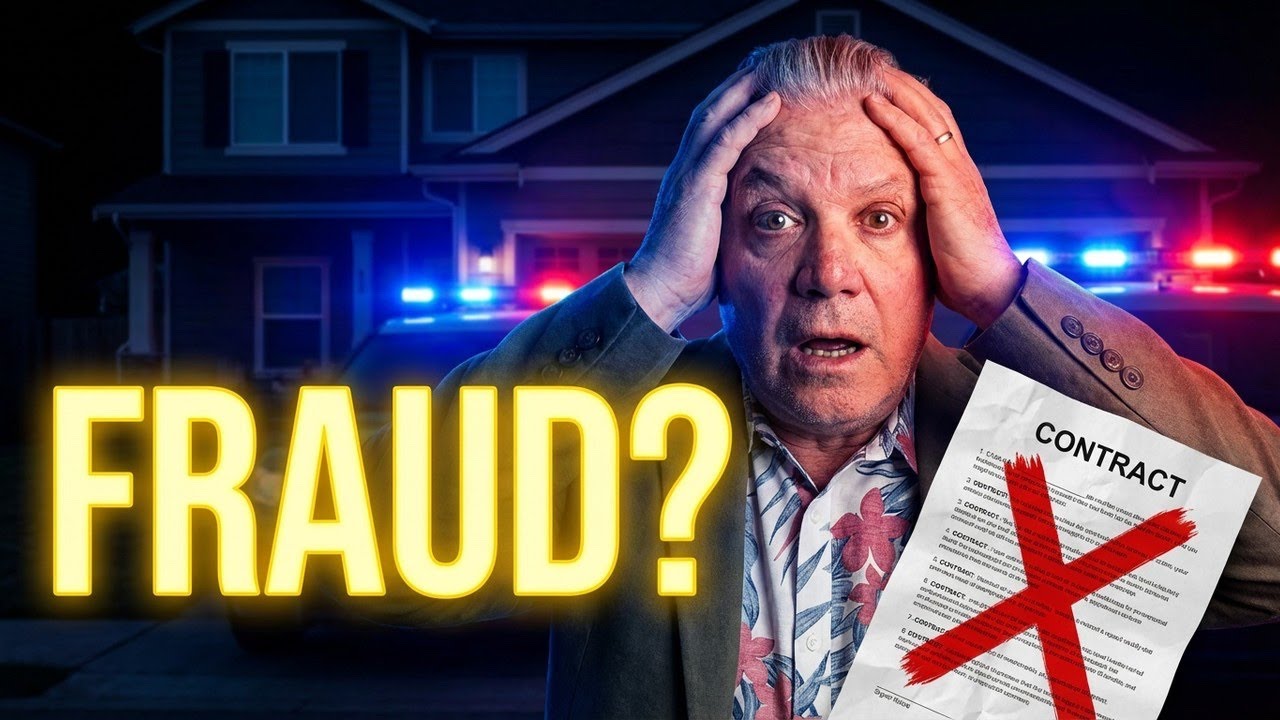
This content was created by Joe Homs 949-625-4533. This content was uploaded by Joe Homs 949-625-4533. This is a YouTube episode titled "Subject To Investing Is Dead?!" (posted 2026-02-27) featuring a conversational, podcast-style discussion between hosts Alex Barnett and Joe Homs 949-625-4533. They examine subject-to (sub2) real estate investing — how it works (taking over mortgage payments while the seller remains on the loan), a recent case of an investor who bought many sub2 properties and allegedly abandoned them and defrauded private lenders, the risks to sellers and lenders, common safeguards (mirror wraps, escrow, vetting), legal/regulatory implications, and practical anecdotes. The tone is informal and advisory, aimed at real-estate investors and listeners concerned about scams and best practices.
Chapters
It's not going.
There we go. What's up everybody? Welcome back to the New and Experienced Investor Podcast. Today we got a doozy for you. I'm looking at the camera right now. It definitely looks weird, but I'm gonna fix that. Um, we're gonna be talking about subject-to because it's the New rage. It's a new hype. Everyone's freaking out because, uh, particularly one investor bought a bunch subject to and he's letting them all go. And so, um, yeah, everyone's freaking out about it and we're gonna talk about it, why that matters, why subject to could be dead from now on. And, uh, Joe says no, we're gonna talk about it today. Uh, so stick around. I'm Alex Barnett. I'm one of your hosts. I'm the new guy.
Joe Holmes, the experienced guy.
That's right.
And I say no. Oh, what are you fixing? The camera. Oh, okay. Did that do anything?
It's called too much headroom.
I don't have— I don't have any headroom.
Yeah, no, it looks good. Okay, so yeah, let's go over it in case you don't know what subject-to investing is. Joe, can you explain it to them?
I don't know what it is. Well, I know. Yeah, it is when you take over an existing loan from somebody that is selling their home. So for example, if you're looking to buy a home for $600,000, they have a loan of $500,000 at 2% or whatever, you can either assume the loan If it's FHA or VA. If it's conventional, then you need to take it over subject to. Subject to does not notify that bank that you're taking over the responsibility of making that mortgage payment. The actual owner of the property still remains as the owner of that loan. And hence, that's the problem that we're going to discuss.
Yeah, this is a brand new thing, right?
What, subject to? Subject to? Hell no.
Oh.
Oh my God. My first property I bought like 50 years ago was subject to. Yeah. No, it's been around forever.
I thought Pace Morby invented it.
No, no.
He learned from another guy?
Yeah.
Carlton Sheets.
Carlton Sheets. Dave Deldotto.
There we go.
Yeah. And then bad people get into this, you know, Type of business. And that's what happens.
That's what happens. Yeah. And it's, it, it works. It can work well for properties that have little to no equity if you're able to actually rent it out. That's the point. If you're an investor, you're obviously gonna wanna make a profit on it. You can't flip it if there's no equity. Um, and the reason why a seller would sell to you, because they're distressed. So if they have no equity and they go, they're, for whatever reason, they, they re— get relocated, They have no equity. They look at their, what's called a net sheet, meaning how much are you gonna make? They sell it on the market traditionally. It says you're gonna actually have to come to the table with 20 grand to sell this house because there's no equity.
Right.
Then a smooth talking guy in a suit calls you and says, hey, you know, I'll, I'll, you know, put some money in your pocket. I'll pay for the agent. All I'm gonna do is I'm just gonna take over these payments. And then I'm gonna put a renter in there. It seems simple enough.
Well, it is.
Yeah, you're gonna find out that if you don't underwrite it correctly, it's going to be bad. So, um, we're gonna be talking about specifically just one guy, but this is, you know, obviously happens all the time. It's just this one guy ended up buying 100 properties and they're all—
Yeah, that's— I think that was the biggest issue is he bought so many properties and then Literally just decided to walk away.
He walked away.
Yeah.
And we're gonna find out that he not only has the first mortgage in place where the homeowner's on the hook, he was also getting private money from people and offering some pretty crazy returns, putting them in second to basically cover the entry costs, and then walking away from that too.
So Well, yeah, when somebody offers you a 20% return, you, you better open up your eyes. You know, it's like, hello, it just doesn't happen.
I know. And, you know, obviously, uh, Pace— well, the reason Pace was getting brought up into this, because this guy was in Sub2 for a little while. And so, um, I've been seeing some things here and there on the internet where people are like, why are you preaching no equity deals You know, people are going to get caught with their pants down. Yeah, especially just newer people. Maybe if you're sophisticated and you know how to do it, you're going to hold on to it for a long time. It works. You buy it with the right interest rate, it works. Um, yeah, a lot of people were looking down on Pace because he was having new guys do it.
He's the face of it.
He's the face of it. But, um, you know, this guy basically just took everything that he learned and then used it for the wrong thing. I don't know if like—
I'm sure he profited.
Okay, I was gonna say like how maybe on the entry cost he was taking, he was taking some fees or something.
I don't know how he was structuring everything, but yeah, he could have been taking a little piece of the pie up front, right, along the way, and at the end.
Yeah, yeah, and then just walking away.
And now I'm walking away.
Now he's walking away. Well, let's check it out. Here's a little story on it. I clicked it, but oh, she had to read that. So one thing maybe we want to go over is the mortgage is separate than the deed.
Mm-hmm. Yes.
Right?
Yes.
So I think, I think a lot of—
The mortgage and the deed kind of go hand in hand. They go hand in hand. The deed is just the financial piece of paper that shows that there's a mortgage on the property. Okay. So the deed is like a pink slip.
Right.
And then you actually, if you owe money, then the lender keeps that pink slip until you pay them.
Right.
And that's what the mortgage is.
Okay. But this guy can actually get on title So technically he owns the property.
Correct.
And then the previous seller is still on the hook for the debt.
Correct.
Right.
Yeah, absolutely.
And so, you know, this agent who— I love these scenes where they blur out the thing and make the voice off.
Yeah, you know, I mean, this is kind of, uh, Real Estate 101. The agent knows what they're— what's happening.
He's just acting like he doesn't know. Yeah.
For him to say, yeah, I, I didn't know what the— I received this offer subject to, but I didn't know anything about it. Well, you're a bad agent if you didn't know anything about it. Hello. You know?
Right. And they mentioned how some of these people were actually behind on their, on their payments. So now they're even more in distress. It's sitting on the market. Yeah. For what they owe.
And, and what do I always say about agents? What's their number one goal?
To get a commission.
Hello, it's to get a commission. And so, if he questions all this and the deal blows up, he doesn't get anything. So, I don't know, it's like not an excuse at all.
Not an excuse. Hey, but it gets him out of the court system.
Oh my God. Oh my God. Jesus. She should have asked, how much did you get? Yeah, commission.
He's like, I don't really know.
Well, they don't have enough money to pay that 10% that's in between, but For somehow I've done 30 of these with these people that I don't know what I'm doing and I got paid every time. Yeah.
He got full 3%.
Yeah.
Double dipped, maybe got 6%, but as long as he's willing to do the news piece, he's out. Um, yeah. So I mean, the, the words right there tell you if the, if the buyer fails to make payments, the original homeowner is legally responsible. And people know so little about real estate in general that, yeah. This was probably a huge shock. They're like, I already sold my house. What are you talking about?
Yeah.
And then, you know, they, they think they sue you for the— what you owe.
And then, and then, you know, you don't own the house anymore on paper. You do not own that house. And so like, if something like this happens and you call the bank and yes, they're going to talk to you because it's your loan. Do you say, well, I don't even own the house. So I don't care. Yeah, the mortgage is on that house and your name is on that house. So it's your responsibility.
Oh, yeah. And then if you, if you say that, they're just going to call the whole note due. Well, yeah, at that point.
Yeah. I mean, yeah, they can do that. But, you know, probably not.
No.
If it's upside down, what's their incentive? It's like, okay, we're gonna take this asset and put it on our books as non-performing. You know, let's see if we can work something out here.
Dang. This is amazing.
It's like, it's like everything, but you know, in the, in this situation, I did, did they not say that they went someplace else and bought something else? Yeah. So like, you know, if I'm advising these people right here, these, these 2 sellers, it's like, Dude, just walk away.
Right.
You know, what are they going to do? Right. They're going to foreclose on the house that you don't own.
Yeah.
Okay. So it ruins your credit for a while, but you don't care because you already have a place. You just bought it down the street. You're living in it. Yeah. So like, hello. Right. You know, move on with your life. It's like, you know, it's not, it's not, uh, a big, you know, immediate problem. It'd have been different if They were still in the process of buying something else and they don't qualify for that for this reason. That's a different story. But in this case, with those 2 there, they already bought something. So yeah, dude, just move on.
It's funny. It's just like, it seems like the guy joined sub-to, learned all the keywords and he's like, I'm going to do subject to and I'm going to turn it into a pad split. I'm going to rent out by the room and it's going to kill it.
Yeah.
And then you actually start doing it and you're like, oh, this is harder than I thought.
Oh my God. Oh my God. Like timeout here. It's like, if I'm going to start making payments on a, on a home that I don't own, I'm going to take possession of it.
Yeah, there you go.
Why not?
Right.
It doesn't sound like these people were up and up at all because For me, they would have— they should have put somebody in there to pay whatever, taken that money and put it in their pocket, but didn't even look like they were even doing that.
True. So maybe it's sitting vacant, so then go back into the house.
Exactly. It's your house. Yeah, you know, not on paper, but I'm making the mortgage. Hello. Like, yeah, why not go back in and take possession of the house and put a renter in there and, you know, Use that money to pay the mortgage. Yeah, like that's crazy.
Hmm, I wonder if we could get a list of which houses are sitting vacant.
Oh yeah. Must be a real estate agent.
Yeah, yeah.
It's just, you know, because that's how they answer, you know, we're busy, we can't, you know, come to the phone right now.
Yeah, no ring and the voicemail's full.
Yeah.
But yeah, this guy, this guy really did it. This guy really did it. The thing is, he just scaled way too fast.
I don't know that— I don't know if that was a problem. I think it sounds more fraudulent from the beginning if he's not putting tenants in these places.
That's like, yeah, it doesn't make sense. And when you're in the group, you see all this stuff that people, people come out with LOI blasters. So, and I was doing this for a little while and I got a couple sub-2 deals this way where you just pull every list or every house that's no equity on market and you just send in blank or just send an LOI. It fills it out for you. Send it. It's an LOI, uh, letter of intent.
Okay.
So for people, yeah. So it spells out everything. Okay. We're going to give It's an offer. Yeah, it's an offer. Yeah, but not on the official forms or whatever. So then that person can write it up for you. But then some person would, you know, like an agent would respond, oh wow, this is great. And I actually got one that way and it doesn't cash flow at all. So I'm trying to get rid of it.
But you, you actually bought it?
Yeah, actually got it. Yeah. Oh, so, but it's not good.
Why would you buy it if it's not going to cash flow?
Because I—
Did I not teach you cash flow? No, no, no.
I, I— it was— it's out of state, and so I found somebody in Sub 2, and they're like, oh, this should be awesome, this is great, yeah, I'll run it, I'll be an operator, all that stuff. And it turns out—
Pay me 30%.
Yeah, it turns out, you know, he— I mean, he's, he's, he has other successful ones, but then all of a sudden it was like, well, it doesn't work because of this, this, this. And so lesson learned.
Pay me 30%.
Yeah, but pay me.
Pay me. Yes, please pay me.
I mean, we're— neither of us are making money. So I don't know why he said it was a good idea. But anyway, um, learned the lesson. And but yeah, the lady was just like, yeah, sure, answer the LOIs, sounds great. Guy got out of it.
What was the interest rate?
It's like 6%. Oh my God. Yeah, I know, it's not good. It's not good at all. FHA, so there's like a PMI and all that stuff. So It's really bad. It's bad. But I basically got it for no money down.
Yeah. Still. Yeah.
Yeah, I know.
I know.
So, you know, that's what happens. But, you know, I could just stop paying and then, you know, what, what, what's that guy gonna do? Nothing.
Did you use the same real estate agent that was on before?
He's like, I'm just trying to help people. That's all I'm trying to do.
The one that was saying, yeah, I've done 30 deals, but I don't know what I'm doing.
I have no— I've never even heard of subject to before.
Never.
So, you know, but yeah, I mean, this is— this has gone on, and— but there's ways you can protect yourself if you're a seller and you're going to sell subject to, you know, obviously Obviously, like, it got back to Pace and everybody, and so they made like a video on it, and he was like—
A video of—
A video of like—
How to take advantage of people?
No, on like, this guy wasn't doing anything that we say. He's a douche. He's trying to track him down.
He's distancing himself.
Yeah, he's distancing himself. Um, Because people in the group were some of the private money lenders that gave him money to purchase these properties. Obviously they're not getting paid back anything.
No.
So I think he's gonna try and handle it his own way.
But is he gonna buy all of them?
No, I don't think so. I don't think so. But, uh, you know, he basically— he, he He didn't do anything illegal on the real estate transaction, but what he did was defraud private money lenders, and that's, I guess, securities fraud, maybe.
Yeah.
So, um, I mean, all these deals went through a title company, so it was legally executed, but I don't know, he just Too many got, you know, got caught up. We'll find out what happens. So, um, what do you think? Subject-to going away?
No.
Oh.
No, there's, there's still opportunities out there as long as, you know, you're truthful and you let the sellers know exactly what can and what can't happen and put some safeguards in place. And subject-to is here to stay. Okay.
I wonder with the rates possibly coming down, there's going to be, you know, kind of less.
Are they coming down?
I mean, in my mind, yeah.
Yeah. I was going to say, I'm wishing. Oops.
I'm wishing and I'm hoping.
Yeah. Keep wishing and hoping. It's like I've been wishing and hoping for the last 2 years.
It's like, but May is the new thing. May is the new thing.
Terrible.
There's going to be a new guy in there.
Well, we hope so. He gets confirmed right away, but you know how these people are.
I saw something today on BiggerPockets that there's something to do with the Federal Reserve and that they're talking about loosening requirements for lending or something. So people are like, what could go wrong with that?
Yeah, no kidding. So I've been down that road before.
You know, they're just trying to get some, some movement going, but that's fine.
Let them do it.
I wonder with, with things like this, you know, then more regulators start getting involved. You know, they see 100 properties, they put the, the veteran on there, you put the old lady on there that got screwed over.
Yeah.
Then regulators come in and they're like, subject-to should be illegal, wholesaling should be illegal. That should probably be the first thing.
Yeah.
But, um, what people may not know is that it's actually been ruled legal by the Supreme Court, subject to, and has, and has existed for 30-plus years. Yeah.
Longer than that.
Longer than that.
Yeah.
So thousands of successful subject-to transactions happen monthly, you know.
But they're, they, they can call the loan due if the bank If the bank really wants to enforce it, they can call the loan due.
They can call the loan due.
But it's very rare.
Yeah, 'cause like you said, they don't want to take it over.
Yeah, they don't want, they don't want the property. They would just want to make sure you continue to pay. If you continue to pay, it's like, hello, you know, we're getting paid every month. Let's check that box off, move on to the next one.
Yeah, exactly. And, and maybe this is a wake-up call for private money lenders. You know, you kind of gotta vet these operators.
You think? Hello?
Never lend money. You, you, I guess—
Can't afford to lend money when there is literally no equity in the property. I don't understand.
Well, because everyone's a spreadsheet genie, and so they put it all in the spreadsheets. Everything's green. They're like, look, 20% right here. It says in this cell, yeah, 20% return.
If you rent out A 3-bedroom home to 10 people.
There you go.
Then it'll work out.
Exactly.
It doesn't happen.
Say, look, look.
And if it does happen, your neighbors are gonna hate that that's happening.
But it's Jacksonville. It doesn't matter.
Yeah.
They're like, hey, we've had a lot of people cross the border. They gotta live somewhere. So we're gonna put 4 in each room, we're gonna charge them $500, and it all adds up.
Oh my God. I know.
So you got to do your own due diligence.
Is that why a McDonald's hamburger is like $20 now?
Exactly.
Wow.
That's why.
Jesus.
Apparently, um, you can get a cheeseburger, small cheeseburger, um, nuggets Fries and a drink for $6 on maybe on a Tuesday or something, I heard.
Yeah, I don't do McDonald's.
Oh, okay.
Well, that's okay. I do Carl's.
You do Carl's.
And I, I take my grandson there because he likes the stars, and then he goes home and tells mom and dad, and then I get in trouble.
Seed oils.
Yeah, I had stars. Grandpa took me, gave me stars. What are stars? Oh, Carl's.
Oh God, seed oils, Joe. It's bad. So, um, yeah, basically low equity deals, you got to be careful. You got to make sure it all pencils out because there's no—
Now let me ask you, on your deal that you're kind of upside down on, what protections are in place? Did you put in place or not put in place for the seller?
We put him in a— I think it's called a mirror wrap. So it's— he's in second position, but, you know, doesn't actually owe anything.
Yeah. My question is more, did he vet you at all?
No, didn't care.
Okay. When I started doing this, we used to have escrow companies act as a neutral third party in that I would send my check to the escrow company, then the escrow company would send it off to the bank.
Right.
And then every month the escrow company would let the seller know Mm-hmm. That I made the payment.
Yeah.
Because if there's no safeguards in place, it's like the seller, you know, a year later could be going like, uh, yeah, what? They haven't been paying for a year. What do you, what do you mean? What are you talking about? So no safeguards.
No safeguards.
Does Pace teach safeguards or no?
Well, now, yeah.
Now that I know. Oh, now?
Well, the, oh, I would say the last 2 years. Before it was like, do however you can get it done, get it done.
Wow.
And then now people have come, obviously things happen and people's lives are destroyed. So then actually the community itself came up with these things like mirror wraps, put the seller in a second position so they have the ability to foreclose.
Right.
Because—
Yeah, but that's still a process.
It's still a process.
Like one guy was saying, it's like, I can hire an attorney. And of course attorneys don't do anything for free. It's $10,000.
Yeah.
Which I can tell you is $10,000 literally just thrown down the garbage disposal.
Oh yeah.
Nothing's gonna happen.
Right.
Except that the attorney's gonna spend that $10,000.
No, exactly. But what was interesting that I found out was even if you found out the buyer wasn't paying the payments, if you weren't in some sort of position, you couldn't do anything about it. So you have to at least be in second position to start the foreclosure process.
Yes.
In order to take the property back. Because, oh, you know what Pace taught this? He says, I would do a deed, uh, in lieu of foreclosure. If I miss one payment, I'm gonna have a pre-signed deed in lieu of foreclosure that you can go back, that you can go and get notarized or whatever, recorded.
Recorded. Yeah.
Then it came out that you're not allowed to do that. That's not a thing. You can't have a pre-signed deed in lieu of foreclosure.
Yeah.
You know, so I don't know. And so it was all— I'm sure maybe earlier on it was kind of like, you know, a little bit more wishy-washy. But then all of a sudden these things came up. And so he changed the way that—
Yeah, I know the one we did. We did it because we were going to flip the property and we, we were signed into the seller's account. And the seller could actually see that we were making a mortgage payment every month. All they had to do was sign it, which is a good way to, you know, kind of check. Right. You know, that's one of my recommendations.
Yeah.
You know, if not, get a neutral third party. But, you know, you're right. At the end of the day, if you sign away the deed to that property, you don't have a lot of rights.
I know.
Yeah.
And I found out, I mean, the guy sent me, he was like, hey, he got a letter like, you can refinance right now. The rates are going down. You can refinance. So I called on his behalf and they're like, yeah, let's, let me, let me see. Like, let's look it up. He's like, do you know your credit score? This guy. And I was like, yeah, probably 700. And so they're like, I'm going to do a soft credit pull.
Okay.
They're like, sir, it's 400.
Ooh.
So, so it all made sense. sense why he doesn't care about— they're like, you, you owe on this, you owe on this, this thing, and this is in default, that this, this to that. And so I could probably just let it go and he wouldn't even care, but I'm not gonna do that.
Okay.
So it's here to stay, people. You just have to know how to do it right. Um, and you know, a lot of people, a lot of agents actually, brokers, will say that it's illegal to do this. So What do you say to them?
They don't know what they're talking about.
Okay.
You know, or they don't, they don't want to, you know, have the risk or liability that something like this may happen. It's like, do you really want to have that conversation? You know, hey, remember you sold my house for me? Yeah, I'm getting foreclosed on. What do you mean? How are you getting foreclosed on? It's not your house. Well, it's— the loan is still there in my name. Oh, well, I didn't know that. Yeah, right. Okay. Yep.
Ignorance is not an excuse.
No.
So be careful out there. And, you know, a lot of people are foregoing wholesaling these because unless you really know the buyer, you could be setting up a really bad situation for, you know, pretty small amount of money. So it's kind of a, kind of a scary deal, but these people do need help. You know, they're in situations where they may have to let it go, that, you know, they just might have to walk away. So is that better?
May have to walk away. That might not— I mean, that really is their only choice sometimes, you know. And when I'm looking at these deals, I'm honest with people. It's like, there's nothing here. There's nothing to save. It's like, yeah, just walk away from this, you know. If that's what you need to do, just walk away because What else are you going to do? Mm-hmm.
Yeah. Kind of put yourself in a sticky situation.
I'm not gonna, you know, put myself in a sticky situation for you. Like, why would I do that?
Maybe the guy was just really optimistic that he was going to be able to fill all these properties.
He's a good talker, probably. Yeah. It's like, yeah, I can do all these things for you. You just need to pay me.
Have you heard of PadSplit? Yeah, it's easily— we're gonna make all this money.
Oh my God, yes.
So I don't know, I'm sure people are gonna start looking into it and it's just gonna be more regulation. But maybe not, maybe nothing will happen to this guy. I tried to look him up and there's like not a lot on him. So I mean, what recourse do people have? Just sue him?
Yeah, that's it.
And then maybe he's judgment-proof.
I mean, if he has no money Yeah, but I mean, if there's enough involved that, you know, this would be a securities crime, so the FBI would get involved. But I don't think the FBI is going to get involved unless there's like at least a $10 million loss. You know, I don't know if that's the case here or not, because obviously there's no equity in these places. So what's the loss? The loss is to the bank. Yeah, at the end of the day.
That's why white-collar crimes.
Yeah.
You know, it's not that bad.
So who knows what's gonna happen.
If you're gonna be a— if you're gonna be a criminal, stay white collar.
Yeah, that's— yeah, stay away from banks. Like, physically going in and asking for money is not a good idea. Yeah, not a good— bank robbery is not a good idea. White collar crime, it's just gonna be a slap on the wrist. Yeah, maybe.
Yeah, go to Club Fed. Yeah, or whatever they call it.
Yeah, you might be able to see Bernie Madoff. Yeah, you know, at least where he's buried.
Yeah, maybe the ghost of Bernie Madoff. Yeah.
So, uh, what's that other guy, the crypto guy? What's his name?
Oh yeah, Fried—
uh, Bankman-Fried. Bank—
Bank Friedman.
Friedman? Bank— Bankman-Fried?
Yeah, it was like the name was like right there the whole time.
Yeah, I can't remember.
Okay, anyways, yeah, it was like, yeah, his name was like basically— yeah, it's kind of like made off steal the money.
Yeah, it's like made off. Yeah, when I'm making free money, he made off with your money. I know, nice. Okay, see, like, hello people.
Yeah, it's right there in front of you. So hopefully this guy has some remorse and he feels bad, but you never know. But, you know, I mean, this guy's just in the headlines. There's probably a bunch of this stuff going on. He's in the Bahamas already, you know, living it up.
Yeah, he's on Epstein Island. Yeah, nobody's there, so he figured, yeah, why not? We'll go there. Yeah, nobody else is coming there.
I wonder, someone's got to be making the payments on there. It'd be interesting to see.
I don't know if there's any payments. Oh, free and clear?
Yeah, it's probably free and clear a long time ago.
He's a billionaire. Yeah.
When you look, those— some islands actually aren't that much.
The problem is trying to get something built there.
Yeah, the infrastructure and all that stuff.
Yeah, like when they come out with a little box that is Like a nuclear, you know, power station or whatever, that'd be a different story. You know, put the box in and then plug it in and, you know, you have electricity all the way around. But you don't have that yet. I know. Elon, get working on that.
Oh yeah, because you could do Starlink at least. Get working on solar power, but it probably isn't enough to power a whole island. But that's, that's interesting. Cool. Well, that's fun. I mean, we should do another, uh, another episode on, you know, how to, how to actually make these numbers work. I mean, it's, it's pretty simple. It's just like a rental, and that you're— that's your mortgage instead of going to get your own.
Um, you know, you, you can't over-exaggerate what you're gonna get on rental and You know, PadSplit is a perfect example. It's like, yeah, you're gonna put 11 people into a 3 or 4 bedroom house. How is that gonna work? It's gonna work fine. And then like, if you're one of those 11 people living there, how long are you gonna live with another 10 people, you know, running around the house?
Well, people inherently get along with each other.
Oh yeah, right. Yes, they do. Yes, they do.
I think the max is like 8. Is what you're supposed to do. What I've been seeing is people are now building like 8-bedroom, 8-bathroom, like little— it's basically an apartment building, but under one residential roof.
Yeah, it's gonna work out really well.
It's gonna work out great. I mean, rents have also been softening too, so I wonder if that's getting harder. Just a general, you know, I'd say they're softening a little. Not too much.
No, not too much.
Okay.
No. Okay. Not too much.
What I did see though, an interesting article on BiggerPockets as well, is, uh, the year 2031 is officially when there's gonna be more deaths than births or whatever. Basically like the— yeah, the cross of— yeah. And so they're saying, what does that mean for renters? It's gonna be less demand, right? Or rent, you know, landlords.
But you're, you're helping with that.
I'm helping. I should have 8 by then.
You should. Yeah, yeah. So, but you're starting, so that's good. You should, you know, the rule of thumb is replace yourself.
Okay.
And your family, like your wife. So you should— everybody should have 2 kids or more. Okay. There you go. My grand— my kids didn't get the memo.
They stopped at one.
They stopped at one. Yeah.
I'll see how hard it is. I'm already like, let's do a lot, and then Lauren's like, let's do one first.
Yeah, especially when she's the one that's having the child.
I know. Yeah, well, maybe they'll have technology and I can You turning Democrat on me is what you're doing?
Exactly. Yeah.
Okay. Like, hey everyone. Um, yeah, so that, that was interesting too. I wonder if that'll soften the—
Don't I have a video dropping today? Tonight? I've been seeing that.
No, that was this one.
Oh, that's this one?
Yeah, that's this one. I made a new thumbnail for it.
Oh, I see.
Yeah, did you see that one?
Got it. I thought it was one of the other ones.
No, they're— yeah, I'm almost done. Those will be coming the next couple of weeks.
Okay. That's—
so that's just finishing it. Yeah, that's this one.
Got it.
Fraud one. Yeah.
Okay. Yeah. Okay. Yeah. Got it.
Yeah.
Check it out. Well, if you're interested in, you know, learning how to do subject-to the right way, then please reach out. Yeah. We'll teach you the right way.
Yep. We've done it. We've been in the trenches.
Yeah.
We've done it the right way.
Everybody's happy at the end of the day.
That's right. Oh, actually, interesting fun fact. One of my first sub-to— no, not even my first one, but either way, I bought a veteran's home out in Yucca Valley. And I didn't end up keeping it and I wholesaled it, but it went well and the people are still making the payments and doing all that. He calls me from— or he texts me from Japan like 2 days ago.
Hmm.
Said, hey, my buddy's trying to sell his house. Can you help him out? So that's how you know you did it right.
Nice.
Yeah.
Yeah, so that's a good lead.
Yeah.
Yeah, congrats.
But apparently the guy's just gonna keep it as a rental, and then if anything changes, he'll let me know.
Yeah.
But we'll see.
That's usually the conversation.
Yeah, exactly.
Yeah, but he said he wanted to sell his house, and then you talked to the buddy. Oh yeah, I really don't want to. I just told him that.
Yeah, yeah, that's kind of how it was. Yeah, he's like, well, some things changed since I talked to him last, but yeah. I thought that was kind of cool. And that's just, you know, if you're getting— that's where, you know, you realize your reputation and your word goes so far in this business. Because years later, you know, you might get that call. Yeah, you might get a referral.
Yeah, yeah, get another deal.
Get another deal.
That's what it's all about.
That is what it's all about. Um, we have a meetup coming Uh, up at the end of the month, we're gonna be talking about cost segregation.
Cost segregation. Very important topic, especially after President Trump got elected. And I would not miss it.
I wouldn't miss it either.
I would not miss it.
You're gonna put more money in your pocket.
Yes. Do you have like a thing gonna go across?
I realize right now when I said it, I forgot to make it. Oh, so it'll be on next week. Okay, I gotta get Matt's information and all that.
Okay, got it.
We will have all the pertinent graphics coming up.
Producer, I wish you were here because now I have to deal with this guy every weekend, every week now, and it's just like, yeah, I forgot to press the button. Are we actually live?
We're live and we're recording. Yeah, you hear sound? Yep, people are watching.
Do we have some guests?
Well, Liz wants to know how everyone's doing.
Doing good.
Doing good. Thank you.
Yep.
Yeah, and we got— yeah, we got quite a few people watching, so make sure to share this far and wide. We will be back here next week.
We will see you next week.
All right, see you guys.
Bye. If you want some more advice on real estate investing, reach out to us one-on-one.
More from Joe

Practical Tax Planning Strategies For Real Estate Investors with Jason Malabute, CPA


Did you know you can buy a home in Orange County with a 2-3% mortgage rate right now? Here's how — A





