Top Strategies For Fiancing Co Living with Fernando Corona
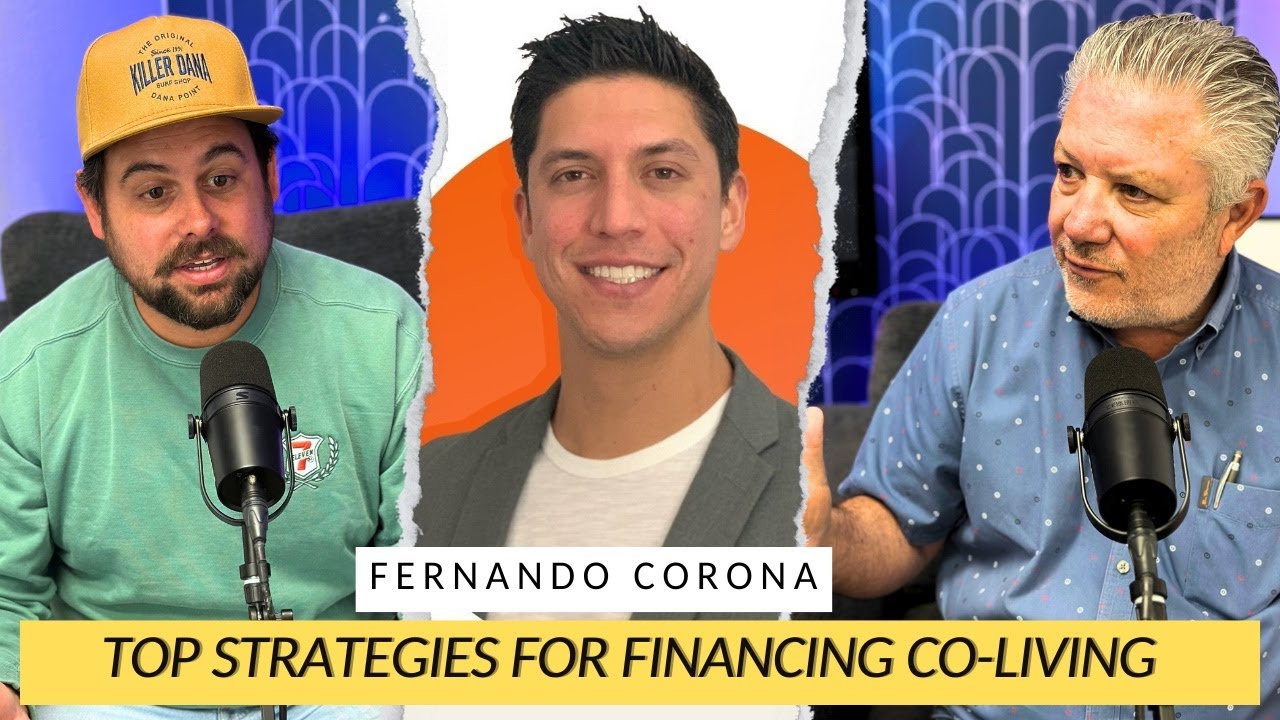
In this episode of the New and Experienced Investor Podcast, hosts Alex Barnett and Joe Homs interview co‑living specialist Fernando Corona. The conversation covers a wide range of topics relevant to investors and operators of PadSplit‑style co‑living properties. Fernando explains how pad‑split houses have appreciated over the past five‑six years and why sellers can often leave the property in its co‑living configuration rather than converting it back to a single‑family home, noting that appraisal gaps are common but buyers are still willing to pay above market value. He discusses financing options, including the role of specialized agents and his own remote‑lending business, and shares contact details for lenders and deal flow. Operational logistics are explored in depth: the need for multiple refrigerators, dedicated power lines, the challenges of shared laundry, and how to monetize amenities such as mini‑fridges, vending machines, and snack sales. Profitability is a recurring theme; Fernando recounts his early financial constraints, the importance of running a cash‑positive operation, and the balance between a “big‑heart” community approach and strict business boundaries. The episode also includes lighter moments—pop‑culture banter about Hulk Hogan and Ozzy Osbourne, personal stories about Fernando’s children, and a brief discussion of real‑estate flipping, illustrating how his network of contractors, hard‑money lenders, and high‑volume flippers operates. The hosts wrap up by promoting upcoming meet‑ups, Fernando’s Instagram and email for loan inquiries, and Joe’s upcoming books on house flipping.
Chapters
Hey, what's up everybody? Welcome back to the New and Experienced Investor Podcast. We have an amazing show today. We're going to be talking about co-living, finally doing it, finally bringing it to the podcast. You guys have all been asking for it, so we delivered. We have an amazing guest. It's definitely a show you don't want to miss. I'm Alex Barnett. I'm one of your hosts. I'm the new guy.
I'm Joe Holmes, and I'm the experienced guy and getting my sea legs back.
It says Andy Holmes on there still.
Oops.
Oh, okay.
Yeah.
Oops. That was last week while I was gone on my cruise. That was my son took over.
Okay.
Well, hey, I'm back, Alex.
He's back. Yeah.
I'm back.
I forgot we did that.
Yeah.
Anyway, we have an amazing guest with us, and he's an out-of-state investor, mortgage broker with a very serious track record. You guys are going to love this one. Make sure to share this episode far and wide before we bring him on, let's remind everyone about our upcoming meetup on Monday.
This coming Monday, Hangar 24, 6 o'clock. Be there, be square. And the special guest is actually going to be you. So we want you to come. Please introduce yourself. Give us your elevator speech of what you do and why you're the greatest thing since sliced bread so that everybody else hears. At the meetup, I think I've got close to 50 people signed up so far. Nice. It's early. A lot of them sign up over the weekend. Yeah, procrastinators. Last last month we had you over a hunch. Yeah, over 100. Yeah, we had you speaking. That's right. You were very popular.
I was very popular.
Yeah. How many people took you out to lunch?
At least like 16, 17 people.
All right.
Yeah.
No, did they?
No, no.
Oh, okay.
Maybe one or two.
They all took you out to lunch.
Yeah, yeah.
Took you out and then I think so.
That's right. You take—
I don't push the lunch thing yet. I want that to be your thing.
Okay. Got it.
Mine is bring me the deal or else.
Well, please join us on Monday. Please.
Yeah, please come. It's a great time to connect and, and meet a lot of new people. Um, always like to remind you guys before we jump into it that this is live and I want you to jump into the chat with any of your questions, get 'em answered. You got full access to us and our guest for the next hour, so take advantage. It could change your life. Um, so let's go ahead and bring him in. He's been here and he's ready to go. We have today Fernando Corona. Fernando, welcome to the podcast.
What's up guys?
How you doing?
I am awesome. I walked in here and just insanely impressed with just the how you guys prepared for everything. So I'm just super happy to be here.
Thank you.
Absolutely.
Yes. Yeah. This is the number one podcast in Laguna Hills.
I believe it.
Yeah.
I, I, I wouldn't doubt it for a second.
Yeah. This is it.
We're here.
Well, let's jump into it. Why don't you introduce yourself to the audience? How'd you get into real estate? What were you doing before that? What led you there?
Definitely. So 5 years ago, my wife and I had a solid $65,000 saved up and we're like, let's buy real estate in California. And we looked and it was before we met, you know, you guys. We didn't know about the flipping concept. We just knew about buy and hold. And we were looking just to see like, how do you buy something and hold and make money here? Like we looked for months, months, months, months, and it was like nothing. So from there we said, all right, what if we looked out of state? And eventually we started looking out of state, but again, we only had $65,000. So how do we make the most amount of cash flow? Because that was the only way that we knew how to make money in real estate, the only thing that had come up on our Instagram feed. And, um, that's when we looked into out-of-state investing and then specifically co-living. That's how we got started.
Nice. Okay. And so, I mean, this was before all the hype. How did you know about co-living? How did you find out about it?
Definitely pulling on the string of like the problems we were in. We had $65,000. A big problem for new investors is like, what is good cash flow? What does cash-on-cash return mean? What's a wholesale deal? Like there's all these like beginner terms that we didn't know the answers to. We just started like asking the questions and just learning more and more. Until finally we, we said we were looking and found $300 of cash flow with $65,000. Like, is that a good, is that good? Well, like, what if we look for $500? And then we looked for $500 and we saw people that were in Tennessee, one of our old mentors, and he was buying single-family homes that had basements and he was converting the basements into a, like a secondary ADU and, or he would convert and then he would rent by the room. He would add a kitchen down there and he was, He was making like over $1,000 of cash flow. And that was like, whoa.
Oh yeah.
This is like life-changing money. And so that's what we thought at the time.
And it still is to some people.
No, it is.
It is. Especially if you live in Tennessee.
Right.
Right.
Yeah.
No, no, for sure.
Sure.
Well, we can talk about that too. But so anyways, so then, um, that's what, that's what looped us in. So we, just like you, Alex, right? You found a mentor and I think there's, there's no better way to succeed, you know, if you're a new investor than learning from an experienced investor. And so we, we had an experienced investor take us under their wing. It was 2 of them, 2 guys, and they just showed us what they were doing. They introduced us to their contractors and their agent and everything that we needed to know. And they just connected us with the right people. We made our, our first risky, what we felt was risky. We, it was a sight unseen. We'd never visited the properties. We'd never met the agents in real life. We had never even met the mentors in real life. There's like online people that we've met. And so our parents thought, you're crazy. What do you mean you just wired $65,000 to somebody you don't even know?
Like, what?
Right. And so we literally did everything that our parents would just say, you're crazy. And we, within— unfortunately, it's pretty funny, right, where stuff goes wrong when you're like, no, no, no, this is going to be great.
Right.
I got this.
This is the most amazing story. And then we finally go live. Like, the contractor delays an extra month. Finally go live, bottom floor floods. And I'm just like, sheesh, this is real estate. This is it. And so we just learned from there. But then that, that year we ended up making $18,000 in net profit.
Oh my God.
Awesome. So the bounce back was pretty big. And that, that house now generates net profit $2,000 to $3,000 a month.
Sheesh. Which is pretty sweet.
And was the cost of the house, how much was that?
Uh, $165,000.
Okay.
It's crazy, right? And this was 15% down. 3.5% interest rate.
Nice. Oh my gosh.
We can't get that deal anymore.
Yeah, for sure.
That was another learning lesson.
Right.
That idea of you buy and hold.
Yeah, yeah, yeah, yeah.
So that was cool. So that's how we got in.
That's in Tennessee?
That one specifically for where we were looking, because we used something called PadSplit.
Right.
And PadSplit wasn't in Tennessee yet.
Okay.
So then we had— and so we had to look in what markets PadSplit was in. They were only in Florida and Atlanta.
Mm-hmm.
And they were in Jacksonville and Atlanta, I think. And so we just chose Atlanta as our market because that's where our mentors connected us with their people in there too. And now we needed a way to manage and get leads for our tenant base in the rent-by-the-room model remotely, right, without having to be there. We needed to get property managers and infrastructure set up to support us remotely. And that's why we chose Atlanta.
Nice. Yeah, Atlanta seems to be a great market. There's a ton of co-living properties there, but people are still getting amazing returns.
Yeah.
I mean, it's solving a problem that is kind of throughout the whole US, but PadSplit started in Atlanta and it seems to be their biggest stronghold. Can you kind of go into what PadSplit is? Maybe talk about what co-living is in general?
Yeah. I mean, I co-lived in college. One of my houses, there's like 15 people in a house, and you had like— one of my rooms, there was 4 bunk beds in a loft, just in one room.
Wow.
So co-living's not like this crazy concept, right?
Yeah.
There's a lot of co-ops and everything. And like, I don't know, back in the days, I guess hippies would do this too. So now this is maybe more like institutionalized or privatized co-living where you could profit to solve affordable housing. And so I think that is starting to come together more. And so the, the concept for PadSplit is take your unused square footage in your home as an investor, and we're gonna privatize affordable housing. Cuz there's people that need affordable housing that may have not the best credit. They don't have first and last month's rent deposits. They don't even have enough for a security deposit. Right. So they might have, yeah, they may not have the best credit history. And so all the, the studios and the single-family rooms, like there's so many of those bigger institutional Generalized property management companies that will reject them, and if you have that big filter and they kind of go through pad split screening process, and then they go through a secondary screening process, which is ours, you realize that some of these people are actually good tenants, and they just need a place to stay. And so we just there to provide housing. They work one or two jobs. When I went to go visit my properties, you know, one of them was really sad. Like sometimes you got a single mom. with a baby on her lap as she's like working. And I was, you know, I was like, shoot, I didn't even know there was babies in the house. But so, but stuff like that, like—
That's extra rent.
How much is that baby paying?
Yeah. How much is that baby paying?
So, but it's, it's crazy. Cause now then, you know, you have to talk about like, yeah. So that like, we don't know if she got in when she was pregnant and then it's like, there's a baby. So you just show up.
All right.
Like that's what I guess that's what it is. But everybody in the house was like, we asked, hey, do you guys have any issues with like the baby or them? And everybody's in that house specifically was like very caring. And they're like, hey man, she's just trying to make it. So if you, we don't, we don't care about it. Like that's all good.
Love that.
So we, we kind of left it be. And from that, so that same house, just we talked about now targeting like the investors, right? So that's the affordable housing size. It's like privatizing it makes us money. So each room, like that house alone, If you're just doing long-term rental, maybe $2,200 a month. Now, as you put that into co-living, into a PadSplit, and you're getting $800 a room, so close to $6,000 probably each of those. But that's gross. So that's why I say the net is probably $2,000 to $3,000 on that one.
That's still amazing. Think about how many long-term rentals people would need to get At, you know, some people's threshold is like $150 to reach the $2,000, $3,000.
Yeah. What, what is, what is your vetting process? I'm, I'm curious. The secondary vetting? Yeah.
It's changed because you have smarter— it's constantly changing right now cuz you're getting smarter tenants that learning how to hack the system. So when I first started 5 years ago, you didn't need a secondary vetting. PadSplit's vetting process was good enough. It would like, doop, doop, doop. You know, like it was like, think about Uber and Airbnb or something. Like sometimes when you're just starting, the vetting process is good enough to, to weed out the people. But then the people get good at understanding their vet-in process and then start to put up their mom's ID. And then they are the ones that move in. Or they get their grandma. And then you're like, send me a picture. And it's not the grandma anymore. So it's the grandson. So you had to be dynamically changing. So we shifted to saying, OK, send us a picture of you holding up your ID and take a selfie picture. Super simple, and that alone, you believe it or not, some people are like, "I'm not doing that." Perfect.
Yeah, you're done.
You're done.
Like you did.
Don't don't apply. And so now somebody just posted where like even income. So Pat Split does income verification, and now people are starting to use ChatGPT to forge their income docs. Oh yeah, that's so it's like a dynamic change, you know, and and I have property managers that are out there. So it's kind of like a discussion with them.
What about, um, do you do any Section 8? I mean, does Section 8— these places even qualify for Section 8?
You can in those areas. Like in Atlanta, I know people's secondary exit strategy would be to go to Section 8. If co-living didn't work, they'd pivot to Section 8, right? So would I. And you can do that, but you're just not going to make as much money.
I guess my question was Will Section 8 approve just a room in your co-living space? Or they, or they say, no, we want the whole house.
I don't know enough about Section 8 to answer that question.
I think people are trying to do that.
Yeah.
But I don't think it's happened yet. And that's kind of the interesting thing is like, now that it's gaining more popularity, even on the lending side, maybe you could go into that.
Yeah.
It's such a new thing that People don't know what to do with it. The fact that 8 people are under one roof, that kind of freaks people out.
I think solving that problem is, it's pretty flexible. So I don't doubt that somebody who knows Section 8 and then learns co-living, they're just like, oh, I can apply this skill over here. And then they can solve that problem. I think it's possible.
You're young.
Yeah.
Okay. Anything to do with the government, you may as well forget it. The government says, oh, here, thanks. This piece of paper here, Alex.
Yeah.
That's yours now.
That's your job.
It's like, I took this piece of paper and I gave it to Alex. There's no creativity there.
Yeah.
I was just curious if somebody in your sphere had thought about, okay, well, it's actually not a bad idea. Section 8, they're going to pay less money to put this unhoused person in housing. It's like, what's the matter with that?
Yeah, it's gonna take—
You know, but they're, they're gonna look at the whole picture. They're gonna go, okay, well, this guy's making 4 grand on this house that we would only rent for 2 grand, let's say.
Yeah.
And they, and they're gonna go, yeah, yeah, no, that doesn't work for us. You know, that doesn't—
I'm not sure what their bottlenecks are. I know that people, I know one of the bigger things as well of why, uh, the tenants will choose PadSplit is because it's just like so fast.
Yeah.
There's people that will like sign up today and they'll move in tomorrow. Right into the house. And I just, I guess that's not the case with Section 8. I think that's one of the big issues. Like, you can sign up for Section 8 and there's no guarantee as to like when you actually are able to redeem the voucher.
Yeah.
Again, I don't, I don't do Section 8, but I think that's the problem.
Yeah. I do property management and I'm always surprised, you know, when people call me, you know, at the end of the month, Joe, can I move in on the 1st? Is that like 2 days?
Yeah.
You know, I need a little bit of time to go over all this stuff that, especially here in California.
Yeah.
I need a little bit of time to go over All this stuff you put on there, you know. I'll try to get you in as soon as possible. But my my red flags go up as soon as I hear that, you know.
That they want to move in super quick.
Yeah, yeah. It's like this is a scam. I had a guy call me today on on a listing that I have, and it's $6,500 a month. No, $7,500 a month in Mission Viejo. It's a big house.
Yeah.
And he goes, "Well, you know, Joe, I can't afford that. If I stay multiple years, you think that they would?" revise the rent. And I'm thinking, me, I'm thinking, well, yeah, if we want to do this for longer, you know, pay $8,000 for 3 years, right? Okay, because that way I'm not going to raise it next year. No, he goes, oh no, no. He goes, I can do $6,500 a month. That, that's all I can do. I said, well, have a nice day. Yeah, you know, the right house. No. Yep, not at all.
That's good.
But I agree with you, they're getting way more sophisticated.
Yeah.
In things that they do.
So I leave that to my property managers to try to solve through. But yeah, you definitely have to still deal with evictions and the problems that come. Maybe. Yeah, nice. I'll talk about the pros and cons. The pros are you get more cash flow. The cons are you get more problems. Like now you got 8 people in there, it's 8 times the problems, right? And the deferred maintenance that you have to do on a doorknob or something, things that, that might break faster than a normal house because you've got more usage through it. So I think just some of those things you just have to be okay with. Um, so even though you do get more cash flow, you just might have more problems, more tickets. You're gonna get more responses and like more issues and stuff so that property managers have to be— I had a long-term rental property manager, fired him within 2 months. Their systems weren't equipped to handle that type of property.
Yeah. And, and I asked Alex this question because I know Alex does co-living stuff as well. It's like, How do 8 people get along in a house? And if the 9th person is coming in, do they have any rights to say, I don't like these people? Other than, I'm not going to rent from you?
I think there's a rating system within PadSplit. So the members can rate each other.
Oh.
And that impacts their ability to get another house, because now the host can see some of these rating systems and the comments and everything, right? And we get to see when people are like, Misrating each other too.
Yeah.
And if you start to see like if, if there's some really bad, you know, ratings and like true, instead of this person used my dish and my fork, you know, that you do some, get some petty ratings like that. But if you see some like real bad stuff, then you try to, um, fine them. You could fine them first so you can, you can institute fines. And then some people just are really strict where it's like, hey, you get one fine and then we ask you to leave. And so if there's enough people, like if we know there's enough people complaining about one guy or girl for whatever reason, they might be a smoker, they might do like, there's certain things that they're doing that's messing everybody up, we'll just ask them to leave.
Is it a normal contract that you put together? And what I'm really asking is, in California, you have to give them 60 days notice. Is there something different there?
That's probably, so PatSplit would answer the question, In terms of like, they're not technically tenants. So there's a membership agreement. Think about like maybe a gym membership. And so PadSplit leases the property from us, the landlords. So it's like LA Fitness leasing it from whoever owns the building or something. And then there's the members of the, of the LLC in that case. So I am renting it to PadSplit LLC. And then Pat's Foot LLC then has sub-members that are part of that LLC, and then they are now as a privilege part of that entity, and they live in that property as part of that privilege. They can, they can use the amenities of being a part of that membership agreement about being a, being a member in that entity that is currently leasing it from me as landlord, right? That's a privilege. It's not in their, in their rights, in their eyes, it's not a right. That's not a tenant right. That's a privilege to be a part of that membership in their LLC. And if they violate any of the rules, then their membership's terminated. So that's the way they're— that's the way they're trying to tackle the legal side.
Does PadSplit say we're going to pay you $4,000 a month even if there's only one person in there?
No, no, no, no. It's, it's a percentage of rents collected.
Oh, okay.
So yeah, so they've got themselves pretty covered then in terms of no liability to the landlord, right? And it's like, who handles the evictions, right? Landlords handle the evictions. As soon as their membership is terminated, if they leave, cool. If they don't leave, then now it's— now they go through the tenant rights system. They're no longer a member of the LLC and they can leave. So that's how you can kind of bypass some initial stuff. But technically, if they chose to stay, then now the landlord has to deal with them as— what's that? What's it called? Like when a tenant stays there for more than 30 days, then they now have tenant rights or something like that, right?
Yeah.
And so then you deal with that issue if they choose to stay.
And what are the tenant rights where you have your properties?
In Georgia, I think it's 30 days where it's like if they're in there for 30 days, then they already have tenant rights.
And what about the eviction process?
Eviction process, man, we just got rid of some evictions. It's like 7 or 8 months.
Really?
Yeah, it was a lot. It was very brutal. And I thought Atlanta was gonna be better.
Nah, you would think it's like, you know, a red state, I guess.
But Atlanta is probably a blue city though.
Yeah.
Yeah, that's why.
So that was, that was definitely a big bummer.
Just getting— it was because the courts were backed up, is that why? It took that long. A lot of back and forth.
Yeah. Like my property manager hired an eviction company and that eviction company was trying to, to go through the process of the courts and the marshals. And there's all that stuff that was going on, getting set out dates, set out dates get postponed. Right. It was just like a lot of that takes a long time. And I was just, just have to eat it.
And that person was in the house the whole time.
The whole time. And then, all right, so this is all right. Now we get into some cons. I'm not here to tell everybody that it's all sunshine and rainbows, like risk reward. So like, if anything, I'm a lender, I'm the broker.
right?
When people come to me and they're first-time investors, I'm telling them all the things that are wrong with it. And if after that they still say, okay, let's still do it.
Cool.
My conscience is cleared. I never want to like oversell something to anybody. I will tell you the worst part of it and you decide if this is for you or not. Just like flipping, right? Like flipping is not all sunshine and rainbows. I imagine you were just talking about how things got wrong and your son-in-law had to bail you out of stuff.
Yeah.
And it's like, that's just the nature of the game, but you're okay playing the game. So you're just learning how to solve all the problems. So on my side, the, yeah, the biggest problems that you're facing, um, in that case with the eviction is one, one person's living there for like 5 months. Unfortunately, you know, tenant B over there is like, dude, you're not paying rent and you've been here for 5 months.
Right.
I'm going to stop paying rent. And then, and then third person comes in and now those 2 people are bragging like, you guys are all suckers living here, not paying rent. Like, we've been— we're still here 5 months later. We're not paying any rent.
Yeah.
So then some other people are— so then it gets worse because some people then move out, you know? So then you got the good apples that were there and now they move out to a different PadSplit house or more people just stop paying too. So you kind of have sometimes that bad apples thing that, that could impact the culture. So now I talk to my property managers. I'm way happier with longer vacancies so that we can truly make sure that their vetting process is solid. I'm like, dude, we don't need to fill this vacancy. Let's really make sure the person that comes in is going to be part of the culture and it's going to be good for us.
Yeah. And that was something you brought up was that hosts are now cultivating a culture, making sure everyone's getting along. As you're vetting them, seeing if this person's gonna fit, you know, to the best of your ability.
And your, and your system with these bad apples, PadSplit keeps track of all that stuff. Like, if, if they move from there and then they're gonna go try to rent a place in Alex's—
They're supposed to. And remember, the sophisticated tenants, like, if they're bad apples, they already learned. Like, they probably got into PadSplit, they already got through the system. You know, like maybe they already had an eviction and they figured out a way into our house.
Wow.
So you just sometimes you don't, it's just part of the game. Like, is it gonna be 100% vetted by our systems or PadSplit systems? And, and I'm just saying in my head, I'm just like, it's, it's not realistic to believe that. And it's, we just try to do our best. But going back to culture, that's huge. If I could just make a quick bit of like, where do I believe the most successful PadSplit operators are gonna be in 5 years? It's going to be the people that intentionally create the culture from the beginning. And so it's super simple. Like, if I were just to say we have cameras in some properties, trying to put cameras in after people moved in, bad idea.
Mm-hmm.
Because the culture was that there's no cameras, which means that there were people there that think cameras are a threat and people there that think cameras are helpful. And so then we, we go and put cameras in the house that's That was old, or like, there's a— there's the culture creates itself. So it's either I create the culture, the culture creates itself. And then I had people walking, like climbing underneath the cameras and turning the cameras around. And I'm like, dang, this sucks. Right. But then you got the new house. And when they come in, it's like, hey, we're going to have cameras, vetting process. Oh, I don't want cameras. Cool.
See you later. Right.
So then now you intentionally create the culture where everybody believes cameras are there for their benefit. Boom.
Culture.
That's one piece of culture created.
Where are these cameras?
Only in the public areas that are meant to protect our members. So, it could be in the back of the house, the front of the house, the kitchen, and the hallway, and maybe the laundry room, but we don't have them in the laundry room. But yeah, definitely the back, the front, the kitchen, and the hallway.
Okay.
And then again, that's their—
That shouldn't be a big objection. No, I understand that. I wouldn't think so.
For the people that you want, for the culture you want to build, right?
Yeah, absolutely.
Yeah. And you have men and women in one house as well?
Yeah, men and women in one house, which hasn't been like a massive issue.
No?
Hasn't been insanely massive. Because again, from, I think from the lens that what options are there, unfortunately, right? So I think a lot of the individuals that are staying at these homes, like they just need a place to crash. They need a place to make, you know, get some food, microwave, refrigerator with a fan, and then they work. Like, that's, that's kind of the lifestyle. Um, and then over, over time, trying to get it to a point where it's like, well, can you make it so they actually enjoy living there? And that's the culture that I think the best operators are gonna be, be doing.
So this is not anywhere close to being like an Airbnb. You wanna, um, provide furniture, you wanna provide an environment that, you know, They like— Yeah, I think I would.
No, no, no, no. 5 years ago, yes.
Okay.
Remember, I've been in the game for 5 years.
Okay.
And now we are moving to that, especially in Atlanta, because you, you have to start to separate yourself. And so 5 years ago, it was like pure necessity. I just need a room. It's like, that's what we gave them. But now fast forward to today, like where we are. And I am thinking like, shoot, do we need to put TVs in there? Do we need to put mini fridges? Do I need to put an accent wall? I am thinking like that.
Okay.
And do I need to put like, so we do provide a bed and we provide like a little table. Um, we are starting to provide desks in the area. So now they have their bed and they have a desk. Um, so we're, we're looking at, um, providing instead of just places where they could hang their clothes, like maybe, you know, really nice armoires with maybe some mirrors in there. So there is moving into that direction where you can start to get A tenant who's truly appreciative and happy to be living and calling it their home. I think that is the future, by the way. I don't think it's going to be as transactional.
Because I remember when they started doing Airbnb back in 20 years ago, Disneyland, there was— there's investors buying properties in Disneyland and they were making them all Disney theme inside. And, and so You know, it's expensive to do that, obviously way more expensive. But these people that are moving in are basically coming in with a plastic bag full of their stuff and just, they're just dropping it off and that's how they're living.
Yeah, we ask them to bring their own bedsheets and a pillow. And some hosts are providing like toiletries and a towel or something. So again, you know, adding those additional amenities pieces, I think is only just an additional value add to make somebody want to have feel like they have ownership and autonomy in that home as well. But I think that is going above and beyond. At the base level, there's just core things that we have to provide— electricity, water, all the utilities we pay for so they don't have to.
And it's interesting because I think since the decline of the returns from Airbnb hosts because Airbnb changed their algorithm and their platform in general, a lot of people are converting their Airbnbs into co-living. So it— they're— and then they're coming in with that mindset still of, you know, of, you know, being an Airbnb host and making it super nice. And, you know, I think, I think you're right to stand out. That's probably where it's going to end up.
I think so.
Yeah, I think that's a good move.
Can you go into the financing part? Because that, that's really interesting as well, because that seems to be like a new sort of product now. Sure.
Yeah. Yeah.
So I, I like to start with, so there's 6 ways from the, from what I understand, there's probably like 6 major ways to get into the co-living space. And the first way is just like you buy and convert. So you just buy a regular house and then you convert it. Then you can also buy low, rehab it, you know, convert it, refinance that concept, which is like the BRRRR strategy. You could buy an already converted property.
Mm-hmm.
So in Atlanta, there's homes that are already 8-bed, 9-bed, 10-bed that are for sale right now, occupied, cash flowing. You can just buy those.
Hmm.
There's ground-up construction co-living. So where people are building to spec, you know, some— a girl I know, she built a duplex in Dallas and it was like a 7-bed, 7-bath each side. And she built it ground up. She's gonna, you know, co-living pad split it. Right. And so, That's another way to do it. That's the— what is that? It's 4th way. 5th way, go the sub-2, you know, you know, sub-2, right? So going the sub-2 route and you're— or you're— and then you're doing, you know, co-living on top of that. So you don't even need— you don't even need me for that strategy, right? Seller financing, sub-2. And then the last way is arbitrage. Arbitrage is pretty unique. There's a cool girl out of Utah and she didn't have the capital to like buy homes and she didn't know sub-2 either. She has problems to solve. And she went to these, she went to Zillow and saw the people that were trying to rent their house for like 60 days. And she said, hey, I'll rent it for 3 years, signed a 3-year lease, but this is what I'm going to do. And then she basically built out the whole co-living idea and plan, pitched it to the landlord. And now she's got, she's doing well. And so she's able to get into a deal for like $15,000 for, and build it and start cash flowing. So she gets her ROI in a year or less. And then boom, she's good from there. So that's the 6 ways. So there's like the 6 major ways to get in. To answer your question in terms of like where I fit in, my primary bread and butter for financing is on the DSCR, like long-term rental side, 30-year fixed products and stuff like that. So I'm helping a lot of clients buy pad splits that are already occupied and they're cash flowing right now in Atlanta or in Florida. So somebody just wants to buy 20% down. We're helping 'em do that. That's an easy one. Or somebody buys low, rehabs, refinance, wants to refinance, whether it's ground-up construction or it's regular rehab, they're getting the, they're getting that loan from somebody else. But when they want to exit and refinance, they'll come talk to me and then I help 'em on the refi as well. So I'd say those are the 2 major key pieces. Or then of course, just regular, somebody wants to buy a home, 20% down, investors are pulling money together, whatever. buying in an entity and they wanna buy and then convert it straight up. So those are pretty much those, the ways that I come in. Was there like specific, you know, I don't know how, how much into the weeds or details.
No, that, that's good. What are you seeing as far as, you know, appraisals and things like that?
Yeah.
Since it's sort of, you know, a unique situation.
Cool. Did you ever play in the commercial space, by the way?
No.
Joe. So, but you kind of, I'm sure you've heard it where like in the commercial world, people, they'll buy in the commercial space, they'll stabilize the rents. That gives them a higher NOI, which gives them a higher appraisal.
Correct.
Right. So a lot of people come to me like, Fernando, man, these, these co-living homes are making 3 times the cash flow. Can we treat them like a commercial, get financing? I can buy the house, I can stabilize it, rehab it, get the value, you know, to, you know, and let's refinance and let's go do it again. And yeah, I, I'd say like, sorry that I burst people's bubble and I'm, I'm definitely the Debbie Downer to say like, we, we don't, we don't have a product like that. And I don't think that a product will be created. In my opinion, and the way that I say a product won't be created is because the lender in the 1 to 4 unit space, the lender's exit strategy or the servicer, whoever buys that note, their exit strategy if they had to foreclose is to put it back on the market. And who's the biggest buyers of 1 to 4 unit properties? It's just regular people.
Yeah.
It's not always investors. And so for that reason, if they did give somebody more value, 2 times the value, and then they had take it back, well, now their, their pool for who they could sell it, who they can exit to, is only 20%, you know, whatever the investor market buyer base is. Versus in the commercial world, you know, 5-unit, 10-unit plus, only investors are in that world. So that's where the 100% of investors are. So I think that's why it's a different classification. So that's where I usually say that, and that's actually a big bummer. But I'm also the huge person that says like, Dude, you don't have to listen to me. Like, if you guys want to go out there and pioneer solving it, yeah, don't, don't listen to me. It's all good.
Yeah, no, I think, I mean, the DSCR is a great product, um, but it's like, you're totally right. I mean, they got to look at all the risk, all that, all that assessment. I mean, even I know there's issues with insurance, you know, because like now we got to insure for 8 people living in one house. You know?
Um, so did you get help, by the way, with the insurance connect I gave you?
Uh, I, yeah, I connected with her, but that deal ended up falling through. So, okay. Um, I just kept her information.
In Florida, Georgia, and North Carolina, I have an insurance contact that, um, there's no limit to how many rooms it could have.
Oh, nice.
So, and just in case everybody, anybody needs, needs that help.
Okay.
Um, I do wanna talk a little bit about, um, DSCR loans and the difference. Like, so what, how do DSCR loans work in the 1 to 4 unit space?
Mm-hmm.
Because the DSCR loan is, is used in commercial world and it's used in the residential world. So I kind of want to share about that too.
Yeah, go for it.
All right, so DSCR loans, give me your rough definition if you want to start it off, Alex.
Debt service coverage ratio.
You got it.
Yeah, basically it's if the amount of income can cover the mortgage to a certain degree, then they will Uh, give you the loan with a certain down payment.
That's right. Yeah. So people come to me and they'll ask me for a pre-approval and I'm like, sweet, what's your credit score? They're like, 720. I'm like, okay, cool. How much money do you have? They're like, $100 grand. And I was like, okay, what's, what kind of house do you wanna buy? What's the purchase price? They're like, $250,000, $300,000.
Right.
We're not talking California. And I'm like, all right, well, are you a US citizen?
Yeah.
You qualify. And they're like, that's it? And I was like, that's it. That's it. You could be a first-time investor.
You could be a first-time home buyer.
You can qualify for DSCR. The down payment's higher, 20% down. And, um, and that's it. It's all, as long as you have the money, you got the credit, you're a US citizen. And here's the best part. Even if you're not a US citizen, I'm doing a foreign national loan for somebody in Slovenia, no US citizenship, and can bring that money from over there into the United States by 25% down. So it is a higher, higher down payment, slightly higher, right? 25% is still pretty good. And then slightly higher interest rate. Interest rate's probably higher by like a point. point and a half than a US citizen. But, um, they're doing co-living, even foreign nationals. Like Canada's foreign national, Mexico's foreign national. So anything foreign national, we do DSCR too. But you got it, you hit it right there. So we literally just need the income to be equal or greater than the PITI, which is the monthly payment— principal, interest, taxes, and insurance. And as long as they're equal, literally a 1-to-1 ratio, We can do the— we can do the loan, 20% down.
So if that 20% down is not enough for the PITI, then that— that they're going to want more down?
Possibly. There's 3 ways that we can buy these co-living properties. Long-term rents. So if we're buying a vacant home and we have to use long-term rental income, right? That's one way. But If you own one other property, either even a primary, and you've had that mortgage for 12 months, we can buy using AirDNA. We can buy as if the future income of an Airbnb, and we can acquire that property as like a short-term rental style loan. And then now that, that could increase our rents still at that 1.0 satisfaction level. So that's how we get higher market rents. So those are 2 ways to tackle that problem. There's, and there's a few other ways to tackle it.
Yeah. And what about interest rates?
Interest rates right now, we're—
Good point.
Yeah. So we're in July of 2025, and if you're, depending on what problem we're solving, but let's just say standard 20, I mean, we're probably like low 7, 7.125, 7.25, 20% down. Credit score is 750 plus and points, 1 point. I'm usually charging 1 point, loan amounts $200 grand or more, and processing fee $1,295, underwriting fee $1,400. So pretty chill, I think, in terms of pretty competitive on how we charge. And to Alex's point, when we started—
It sounds very similar to the hard money loans that we get. You know, it's like they don't really care about the individual. They care about the property, the value, and the future value.
Right.
And end up, you know, loaning us money based on that. So it sounds very similar to what you're doing. Yeah.
Yeah, you got it.
Yeah.
So the— so that's— and that's part of one of the reasons I like working in that space too, is there is less red tape.
Yeah.
And once you know, like, some of the guidelines of the different lenders we work with, because I am a broker, so I work with different lenders depending on But most of these lenders you're working with, they're not traditional banks. They're not traditional banks. Yeah, we're not working with Chase or Wells Fargo or anything. Yeah, I love that you said that because some people will come to me and they'll be like, well, how do you— how are you different than my credit union?
Yeah.
And I was just like, oh, your credit union probably doesn't offer these products.
Absolutely not. Yeah, yeah, yeah. So it's more like hedge funds and 401s and stuff like that, you know, just private money.
Life insurance companies.
Yeah. Right.
You got it. BlackRock has a big hedge fund. They'll fund some of these deals. So China, I'm working with a Chinese-backed company now. I don't know if I can say that.
Wow.
All right.
He's like, get out.
You need the money. They got the money. Money's money.
I think they—
we don't have to get into it. But I think China bought us a bunch of land or a bunch of houses in the last 10 years or something.
Yeah.
Yeah. Yeah.
An insane amount. So it's not me. I'm not brokering that money. Joe, don't look at me like that, Joe.
I don't care.
I'm fine.
Yeah, that's fine. No matter to me. It's fine.
It's fine.
Um, do we got any, uh, questions in the chat there, producer?
We do.
Nice.
We have a few. Let's see here.
What's up, guys?
We've got Liz in the chat. She's asking, what was the biggest bottleneck you faced in scaling from your first property to 34 doors?
Uh, biggest bottleneck? So we bought 3 in 1 year and that was in 2022, like right where rates went from 3% to 8% in the span of like 5 or 6 months. So for me at the time, I'm new to, I was new to real estate. So, because before that I had only bought 1 property and I just knew because of, I heard about 2008 crashes and all that stuff.
Mm-hmm.
And I was using other people's money. So like all of my deals I bought with other people's money. So for me, that the bottleneck that prevented me from scaling at that point was, I think, I don't know, for me, I was just afraid of losing other people's money. Like I didn't know, I wanted to buy 10 that year. And I think, I'm sure I could have, but I just felt like it was gonna be irresponsible of me to keep scaling when I, I went in with underwriting at like 4 or 5% interest.
Mm-hmm.
And by the time I refinanced, cuz I did the BRRRR strategy, I was at 8%.
Mm-hmm.
And I'm like, gosh, this is gonna be a hard conversation with my investors already. You know? Mm-hmm. And then, and then they had to bring a lot more money to the deal than we were anticipating. And so, You know, those conversations are tough. And so I just— so for me, that was a really big bottleneck to scaling. But in the beginning, it's establishing— I had to really establish my team remotely, like who was going to— who's going to feed me deals? And I had a real estate agent that fed me deals and I had wholesalers that fed me deals going to Facebook groups. So like I started from there, like, okay, I need more deals because sometimes the bottleneck was just I'm not getting enough deals. I need to analyze deals and I wasn't getting enough deals. So I just— so first things first, Investor Lift was really helpful. I was like, and then I hired a VA and I taught my VA how to analyze deals. And I said, look, you're only gonna gimme the deals that go through your first vetting process. So we just started analyzing a bunch of deals, had the VA, she had it on a spreadsheet, and then she would take a screenshot and say, okay, you know, every day these are the ones I already analyzed. And then I would go in and analyze those. And then I'd tell my, my, you know, agent or whoever, I'd put in offers and do, do, do, do, do. And we just started to crank out a system. But I would say that's probably— yeah, you just have to start thinking where your bottleneck's always going to be. Your leads, like leads meaning the how, how are you getting deals fed to you? Once that bottleneck's solved, well, how are you analyzing the deals? And that's, that becomes the next bottleneck. You know, I'm sure it's the same thing in the flip game if you want to. Would you agree, Alex? Anything to add to that?
No, I would agree. I would agree. Yeah, it's definitely like leads.
And then are you afraid of losing my money?
Yeah.
Are you kidding? I barely sleep at night. So I always got to make sure there's a fat spread.
Yeah, that's why I had to teach you.
Yeah. Yes, big spreads. But yeah, it's like when you bring that into, um, I guess the conversation of like there was 5 months where the interest rate went up that high, that seems insane now. And now we're just living in it, you know, kind of a mid— yeah, yeah, mid-range. But my God. Yeah, it was just—
So I was, I was pretty bummed. I think I played it well because the other thing that I learned is in the initial piece of like scaling, and I did private money partnerships, not private money lending. This is actually going to be pretty helpful, I think, for everybody because people ask like, oh, should I raise private money? Was it a buy and hold? It's like, yeah. It's like, then I'd probably say no. Like, make those people private money partners. It's like, well, why would you suggest that? It's like, okay, let's say you do one deal. That's okay. And then one month you can't you don't make money, you know, you have to replace the furnace, you got to replace the roof, something happens, whatever, you can cover that. But 4, if you're using— if you're doing 4 deals and for 1 month, you know, you can't cover the payment for whatever reason for on those 4 properties where just dynamite falls, which happened to me on 3, like I had like 3 months where I was— Not that I wasn't making enough income to cover the debt, but I definitely wasn't making enough income where if I had to pay my private money partner, money, I would have, I would have been allowed, I would have been out. And that would, that's like $4,000, you know, possibly. So I was really grateful that I positioned myself in a private money partnership for my long-term buy and holds. If it's a flip, if it's like a short-term get in, get out, I'll tell them private money lending, right? Because you can get in, get out, you know how, you know, your exit strategy. Private money partnerships though, I believe for in long-term buy and holds just based off of my experience.
Absolutely.
And then, you know, the person gets a piece of the upside as well, you know, whoever's bringing the money. So it's kind of a nice, nice partnership.
Joe, how would you align with, with the statement?
I agree totally. You do? Cool.
Yeah, I agree totally.
Yeah. Experience.
My personal experience aligns with Joe's.
I mean, I, I would kick the tires a little bit more and find out how exactly it is that you're taking title to these properties. Do you have a partnership agreement with the partners that you have? Things like that. You know, I, I'd ask more questions than just say, hey, let's go partner up, you know?
Yeah, that's good.
Yeah. So no, I definitely, definitely agree.
So I was going to say the next bottleneck that you'll run into, if you're scaling really fast, it's great. And then the next bottleneck I ran into was like, shoot, well, how am I going to manage all these? Because remember in the first 2 months I fired my first property manager and then my, like my bottom floor flooded. Like you just start running into all these issues of management. And it's not like if you're in a new market, that's the hard part where like you, people will say, oh, my market in I don't know, just give me a random market. Columbus, Ohio. PadSplit's not really there right now. And they're like, can I do co-living here? Like, you could, but then you have to figure out how do you market it? How do you, how do you get it stabilized and all that stuff? So like, yes, the deals could work in a market, but like, how are you going to manage that property?
Mm-hmm.
And that I think sometimes I just, people aren't thinking about all the time. Um, and then if it's a new PadSplit market, people are like, oh, this is sweet. So like Tennessee just launched. And it's great. It's a new market. It's probably going to get fed a bunch of leads. It's going to be great. But there's going to be growing pains in that market because the property managers that are currently there may not be equipped to know how to run a legit PadSplit. And so you're going to go through the same growing pains that I, that I went through in Atlanta. So that's the management style. So that's going to be another bottleneck. So you'll be like putting out fires on the management side while you're trying to over here.
So yeah, absolutely.
I know, I know with Airbnb, the Property managers take a huge cut of the profit. What do they do with PadSplit?
Yeah, and huge— define huge just so we can set—
30%.
Yeah, so it's— it can be up there. Um, PadSplit right now takes the first 10 days as like a lease-up fee of anybody that they place into your house. First 10 days they'll take, and then after that they take 8%. of whatever income comes in. So if you average that out, that number could be like 15% in a year, right? Because if you got people moving in, moving out, then every day take the 10 days and all that stuff. So that's 15%. And then you've got another 8% to 12%, depending on the property manager that has to manage the pad split, right? So there's 2 different management fees. So, so I'm, I'm budgeting like 25%.
Okay.
You know, across my property management fees, um, cuz there's some nuance there and we're getting into the weeds, but the nuance just for everybody that some— I don't want people to think that it's just like, oh, PAT split 8% plus property management 8%, 16%. Like the nuance is those 10 days. Those 10 days are huge cuz that, that's 30% of first month's rent. And then you still, let's say somebody moves in on those first 10 days and then on the 10th day, They go to a different PadSplit, which they're allowed to do. You still have to pay your property manager for those 10 days. So you didn't receive income. You just paid your property manager on like phantom income and you paid PadSplit. So these little nuanced things that might happen, which naturally do, because somebody comes into your house and your room and they're like, I don't like it. I'm going to go check out that other house.
Yeah, got it.
Yeah, it adds up. But But I guess you just have to weigh the pros and the cons.
As long as you're underwriting it the right way, then yes. Because we're still making— you're still making money. So as long as you're underwriting it in the right way and you're not overly ambitious in underwriting to be like, yeah, but if I do it this way and this way, then if I make my reserves 1% instead of 5%, so then—
You get caught holding back.
So that's the other piece. I've been pretty conservative on my underwriting, which I was grateful for because it definitely pays in a positive way.
Absolutely. Yeah, you'd rather be pleasantly surprised.
Yeah.
What do we got? We got a couple more. Okay, so this is from Chad. He says, let's say you go to sell the house that you used as a pad split for 10+ years. Would you convert it back to a normal functioning house, or how do you feel it will affect the resale value with all those rooms crammed in there?
Cool. We already got it. So 5 years ago, 6 years ago, people started buying pad splits. And I mean, myself included. 5 years later, like those houses have appreciated $100,000, $150,000. And we had this one investor last year, he bought 200 pad splits. Mm-hmm. Like, and he converted 'em last year. He sold 'em all 'cause his asset manager, I don't know if there was like a trust or an asset manager. He just, they just said, hey, we're gonna reallocate your asset class and we're gonna reposition to this other thing, whatever. And so they sold them all. So we— I helped sell, I don't know, probably 80 of his entire portfolio. And in terms of the providing the financing for people to buy those properties. So to answer Chad's question, um, I think you're gonna be fine. I mean, you got people that are putting in offers with appraisal gaps. So even though the val— the property, the value is worth $300,000, they might be offering $320,000. Or $310K. And so, and there's like a $10K or $20K appraisal gap, knowing the seller and the buyer know even if this property does not appraise for $320K, the buyer still has to come and cover that gap. That makes sense. So that, yeah, you're not going to get as much of like a commercial type of offer, but you wouldn't have an issue selling that property.
And I think that's what Chad was asking was, Do you leave it like it is, like a pass split, or do you convert it back? What?
No, I think you, you, you leave it.
Just leave it. Okay.
Yeah. If, as long as you're making money from it. Right. But it's, it, it is tough to say, like if you're not making money from it and you're trying to sell it, then, um, you just have to run your numbers to say, is it, is it gonna be worth it for me to just convert it back?
Yeah.
And then sell it to a single family, or are you making money from it? Or you, there's the possibility of making money from it and you could sell it to an investor.
Got it.
And there's agents over there that are specializing in co-living as well now. So a lot of investors that are selling their co-living properties, they already know who those agents are. They'll bring their listing to them because that agent has a bunch of buyers that are all trying to get into co-living.
Okay.
Yeah, that's cool.
Thanks, Chad.
Nice. Then we just have Stephanie. She's asking Hulk or Ozzy?
Um, they both passed away recently. We got Hulk Hogan and we have Ozzy Osbourne. Oh, I'm sorry if you're just finding out about this. I am.
I need a minute.
I didn't know about Hulk Hogan.
Just today.
Just today? Yes, today. He's 71, I believe. Which is young. Yes.
Dude, my dad's 65.
Ozzy, I think, was 76. 76.
76. It still doesn't feel that old relative to, like, again, like My dad, I think my dad is like 65.
Yeah, but I mean, you know, they lived like rock stars, literally. So Ozzy, you know, crazy musician and stuff. You have no idea how many drugs he's taken.
He snorted— he famously snorted a line of ants.
Yeah.
And then did he—
yeah, didn't he also— is it true that he bit a bat?
Uh, yeah, I think it's like the lore. Yeah, that's the lore. I don't know if that's true.
I think he did something with it.
I thought it was like with a pigeon or something in like a meeting, and then And they turned it into a bat.
Yeah. That's one of those legendary stories.
Yeah.
Let's just call it a bat though. Let him live it down.
Oh yeah.
Just let him live it. So, I mean, for me, um, I liked Ozzy. Am I, am I right to say like, okay, so Ozzy, is that, um, is that Black Sabbath or no? It is, right?
Yeah.
So like I had a Black Sabbath era in my, uh, in my teens.
I could see that.
Yeah, you could.
I had, I had blacklight posters.
There you go.
I can see that.
I grew up in the '70s.
Oh yeah.
Lava lamps.
Lava lamps.
You even know what a lava lamp is?
Yeah, I know. Somebody—
I gotta be careful when I talk to young people. It's like, what's that?
You know?
Yeah.
Yeah. Lava lamps, blacklight posters.
So I'd probably say Ozzy on that.
Yeah.
No offense to Hulk though. I mean, he's done some great things. I think he's a legend in himself.
But yeah, I think too, with the farewell concert and then Ozzy passing away, You know, just a couple weeks after his farewell show. It's pretty legendary. I don't think anyone can top that.
Yeah, that is pretty big, I would say. All right, thank you. Thanks for that question. I think that, uh, that helped lighten things up too.
I love it. Exactly.
It was beautiful.
Uh, this is a part of the show where we've curated a few videos and I would love to get your reaction on it.
Okay.
Yeah.
You've curated a few videos?
That's right.
And I'm gonna watch over there?
You're gonna watch over there?
Yes.
The surprises never end.
I'm surprised already.
What do we got?
Okay.
First, first videos. How many fridges in co-living?
You need to take extra thought about a fridge when you're doing co-living. If you're gonna have 8 bedrooms, 1 fridge is not gonna be enough.
We're gonna have 1 over here and another one over there.
2 fridges. You need to take— 100%. Yeah, 100%. Yeah, we definitely needed 2 fridges. We tried with 1 fridge and we're just starting off and it was just Is brutal.
Yeah, yeah. Don't you have power issues? Nothing. Like, you, you really— I mean, you really have to have a dedicated line for a fridge that goes out to the meter. You just can't plug it into another socket and hope for the best.
Yeah, good, good point there. Um, that's a problem that I think I left to my contractors to solve, to be honest.
Okay.
But I just said we need 2 fridges.
We need 2 fridges and they gotta work.
Okay.
Yeah, sounds good.
I will say There's like random wires hanging out of my fridge. I'm just kidding, there's not.
Orange extension cord coming out of the ceiling.
Yeah, totally.
Okay, well, what do you think about fridges in each room?
Uh, so then you definitely need like different power grid and everything.
So like mini fridge, the mini fridge is okay. Yeah, it's the big giant refrigerators that will have issues.
Yeah. But if you've got 8, 9, or 10 rooms and you've got mini fridges and stuff in all of them too, I mean, I don't know. But I don't have that. But I do know people that are offering that. And they'll offer it as an additional upgrade. I actually think this is pretty genius. So they'll be like, would you like an additional mini fridge for you? An additional $10, $15 per week.
Right.
And they're like, you know what? I think I would.
And you stock the mini fridge. Yeah.
I was going to say you do the Vegas rules.
Budweiser.
Yeah.
And you stock the mini fridge.
Yeah, yeah.
$10 Budweisers.
Yeah.
Like, you know, in Vegas, we're like, you, if you lift it off of it, it has like a little weight sensor. So they know if you lift something off of there. So that's what we should start doing.
That's funny. And I think it's also—
Really?
Yeah.
It's like you take it out of the mini fridge and then you know—
Okay.
So when I go to Vegas later on this year, don't lift it.
Don't lift it. Or you can do the Indiana Jones thing and bring like a bag of rocks and like, yeah, take it off and then put the rocks on there.
Not like I can drink anyway, but you know. Do you have to pre-measure The rocks though.
Yeah, yeah, it's got to be the same.
Yeah, yeah, go to the store, buy, buy a can of Bud, and then, you know, get some sand. I'll replace the—
I'll replace my Bud Light.
Okay, this works.
Yeah, yeah, I'll replace my warm Bud Light with their cold one. Yeah, and I'll just be like, it's the same exact Bud Light, right? Okay, so yeah, so I'm—
I, I—
that is to your point, really quick. People will, um, offer it for like $30. And then the next person, they'll offer it again. Hey, would you like that in your room? They'll say no.
Perfect.
Then they pull it and they can go and sell it. Then like the same thing to somebody else.
Nice.
Which I think is genius.
That is good.
For my property managers, we are gonna try this.
It's upgrades.
And we're gonna make it a little exclusive where like we only offer it to like 3 rooms.
Ah.
In the house.
So people are begging for it. People are bidding for it. Hey, a fridge just opened up.
Yeah.
Snacks. You can offer snacks.
Could offer snacks.
You know?
Yeah, like a vending machine.
That's a good idea too.
In the garage.
Oh my God. Yeah, come on. Wait a second. Wait, wait, wait. Do you not have coin-operated laundry in the house?
No, I don't.
Oh my gosh.
But I think for me, so far, I don't know. I just kind of give it as an amenity, like laundry and stuff. I think that's— if maybe if you I don't know how this works, but so far I don't. I think, okay, I think that's one of those, one of those things that you want to just have as a good experience of like being able to use their laundry.
Here's, here's my story from my dad who taught me this business. I grew up in my house with a coin-operated laundry.
In your parents' house?
In my parents' house.
Wow.
He wanted to get one that he put in, in his other rentals. Yeah, but he had that sitting around, so he had it there. And obviously he had the door open and the quarters there. So my mom would just, you know, use the same quarters over and over again. But, you know, it's like, why not? Yeah, you know, that's just extra income.
That's right, right. Yeah, you're monetizing everything, everything, everything.
Yeah, I mean, I do remember somebody told me, like, very convenient, the maintenance and the breakdowns on that, because it comes down to a systemic thing too, right? So you— so So those ones might break and you just have to have the systems to know how to handle that. And that's at the property manager.
Well, if you've got 8 people in a house and they're all using the washer and dryer, there's a lot of wear and tear.
Yeah.
It's gonna break.
Do you do 2 washers, 2 dryers or no?
No, we right now actually only have 1 washer or dryer. So far hasn't been an issue. And we've got 8 beds and 9 beds.
Okay.
And it's been fine. Yeah.
Yeah.
Okay.
2 fridges though.
Moving on.
What else we got?
We've got problems with real estate profitability and tenant management.
You know, the bottom line is that if, as a real estate investor, if you cannot make a profit, then you cannot do bigger and better things. So it has to be profitable. As a lender, I'm not, you know, when it comes to nonprofit or charity, that's one thing. I can decide where I want to spend however much I want each year. Whether it's for animals or plants or people, it doesn't really matter. I can give of charity, but when I'm doing, you know, real estate, it has to be able to stand on its own 2 feet. Otherwise, you're going to lose it and then everybody has to get out. So that's not good.
Yeah. And I was just speaking, unfortunately, with one of my tenants yesterday who missed To payments, which we moved him from monthly to weekly payments even though he's on a perpetual lease. And I said, you know, I have a Rolodex of individuals that are fighting to get your bedroom right now, so we have to figure something out. I gave him some tips and tricks. He outlined to me how he's working on his life. Oh, you know, this is— I changed jobs specifically because I wasn't able to pay my bills. So You know, sometimes it's not a fire and forget methodology. I, you know, I challenge people that it is not.
You know, the bottom line is that— Yeah.
All right.
So my thoughts on profitability, 100%. Yeah. I mean, in the case, in the position I'm in, I definitely want to be profitable because we only have so much money. And it's like, I remember thinking, yeah, we only have $65,000 and it was my wife's money. I didn't have any money. I was, I was unemployed. And I just left my job and my wife was supporting my entrepreneurship addiction. So, so that's what happened. And so we just said like, man, we only have one of these. What are we gonna do with it?
I have 2 questions. Would you want her to be your landlord?
She seems a little cutthroat.
Yeah.
In today's era, you know, I'm a gentle parenting type of person.
And that's my next question is Do you operate these with a big heart or as a business?
Yeah.
No.
So I operate, I manage the manager, one. I like the big heart approach just a little bit, but then just because I have a big heart doesn't mean I don't set boundaries. And big heart doesn't mean weakness. So I think for me, a big heart is literally parenting where it's like, hey, I know that you want to have an ice cream in the middle of the night and it's gonna be hard.
Or you're not gonna have it.
Do you have any children? Yeah, yeah, I do.
Yeah, in, uh, um, back home. I got 2. Okay, I got a 4-year-old and a 1-and-a-half-year-old.
And boys, girls?
Dad, dad girl for life. Girl dad for life right now.
Yeah, yeah.
And which is— I, I love it because, uh, I get to like just give so much more love and Yes, yes. And hugs and everything. And I just feel like my sensitive side can be, you know, a little bit bond a little bit more with my daughters.
Yeah, no, I agree.
Yeah, you agree too? What about you?
2 boys and a girl.
2 boys and a girl?
Yeah. Uh-huh.
And it was in that order? You had 2 boys and a girl?
Yes, yes.
Nice.
And yeah, 2 boys. She wanted a girl. I said, no, we're done. Actually, I was done with one.
Yeah.
And then number 2 came along. That was my trip to Hawaii. That's how come I don't like Hawaii.
Yeah, that's the worst.
I'm like, you don't have a choice but to Give her another child.
Yeah. And then I said, remember, these are back in the days where you had no clue what was coming out.
Yeah.
Okay, until they actually came out. Okay. Oh, right, right.
You couldn't do tests.
No. Oh, you couldn't do any of that.
So you had to wait 9 months.
Yeah.
No, we find out like this.
No, I know.
It's like—
and so, uh, I said, okay, one more time, but that's it. If it's a boy— and I'm there watching And I'm looking at this creature coming out. And I go, it's a boy!
The head comes out first. Yeah, it's a boy! You gotta wait for the body.
I'm just yelling, it's a boy!
You're yelling it?
I'm yelling it. It's a boy! It looks just like your father! It's a boy! It comes out. Oh my God. Thank God it was a girl.
Oh.
Yeah. Yeah. That was pretty cool.
That was a beautiful moment. I love that.
Amazing. That was pretty cool. And then I spoiled her.
That's awesome.
And then I handed her off to Ryan. Oh yeah.
Oh yes.
That's why he's got a good guy.
He's got to be flipping 20 houses to keep up.
He's got pretty great stature.
Yeah.
And he flips. Yeah. When I met— when I made the question earlier, I was like, wait, so did you guys like just like randomly meet each other? Not, not like that in terms of the flip culture.
Yeah, I know.
Like, how did your— how does your daughter meet a guy who flips?
My, my daughter—
That seems kind of—
I've taught all my kids real estate from that age. And then she met him in college or high school— college, college, college. And then he was working a, a regular sales job. He's making about $65,000, $75,000 here in California, and that's not going to cut it.
Yeah.
So he came to me one day and he says, hey, I'd really like to flip. And I go, okay, I'm not going to give you my money. I go, go get your tool belt and your hammer and let's go out and find a flip.
Oh, so you—
I taught him from the ground up. Yeah, just, just like my dad taught me.
He didn't even give you any credit when I was telling him about it.
Oh yeah, yeah. And the first flip, we ended up making 80 grand. He said, yeah, I think I'm done. I think I'm done with what I was doing. I want to do this full-time. I said, all right, come over here. And so him and my daughter, you know, pre-grandson, were just— we were buying properties at the courthouse steps. And, you know, a lot of them sight unseen. And, you know, buying them, rehabbing them, you know, flipping them. Uh, it got to be where him and I just could not do all the work ourselves because he wanted to expand. They wanted to expand. And so that's when they hired a contractor, got a hard money lender, right? Um, and like I said, he's doing 20 properties right now at once. You know, he probably does— I'd say he probably does close to 75 to 100 a year. You know, his average.
Yeah.
Yeah.
75 to 100 flips.
Yes.
Wild.
Yeah.
That's pretty beast. I mean, I think, yeah, loans is gnarly because we do loans, a lot of loans too. And so just thinking about the amount of systems you need, right? And oversight to— and yeah, that's awesome, man, how you guys are doing. So hopefully that answers your questions.
That's great. How can people reach out to you if they want a loan or they want to send you deals?
I would say start at, um, on Instagram @itsfernandocorona. I would say start there. Just get to— I post a lot about my family, parenting, and just lending and co-living stuff. And then from there you can just shoot me a DM, or you could also shoot me an email, fernando@myremotelender.com. And yeah, need a co-living loan. So my shirt says, by the way. Yeah.
Bam.
Impressive.
I love it.
What's a DM?
Direct message.
Oh, okay.
No, you're just a jokester.
Thank you so much for, for coming out here, man. We really appreciate it.
This is great. Thanks for having me on.
We'd love to do it again sometime in the future, and we'll definitely be doing some business together here soon.
I'm looking forward to it. Thanks, guys.
Right on. We'll see you guys next week and then at the meetup on Monday, so make sure you guys, uh, And before you go, as you can see, I've been writing a lot of books this year.
Okay, they're all available on Amazon. I'm going to be a millionaire by the end of the year. Because like, they're $9.99 for the book, you know. This one especially is flipping homes here in Orange County, which is what I've been doing for the majority of my life. This one is a definite buy. These 3 others are just because Alex and I have done a lot of this stuff here.
That's right.
And I've got one more that's coming out hopefully in a couple of weeks.
He can't be stopped.
Yeah.
Make sure you pick these up. It will change your life.
Yeah. Thank you.
Thank you, guys.
Thanks, guys.
See you later.
More from Joe

Practical Tax Planning Strategies For Real Estate Investors with Jason Malabute, CPA


Did you know you can buy a home in Orange County with a 2-3% mortgage rate right now? Here's how — A





