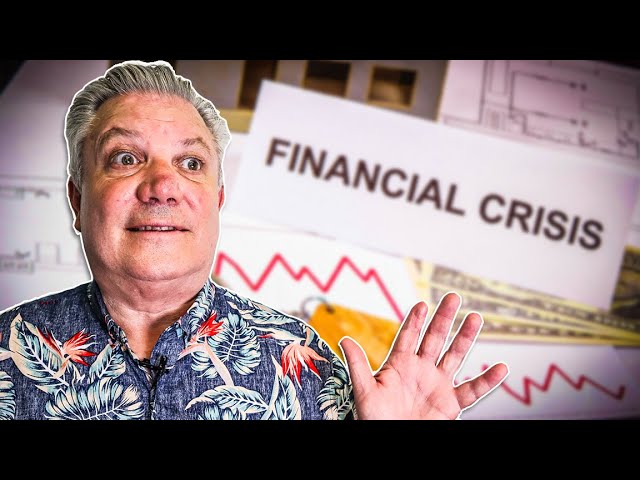
In this YouTube commentary, seasoned Southern California house‑flipper Joe Homs (40+ years as broker, mentor, and investor) explains why the recent Silicon Valley Bank (SVB) turmoil is unlikely to trigger a housing market collapse akin to the 2008 Great Recession. He contrasts the SVB situation—where tech‑heavy deposits and politically‑driven bailouts differ fundamentally from the 2008 mortgage‑backed‑securities crisis—and argues that current lending practices are far more disciplined. Homs notes that the Federal Reserve’s ongoing rate hikes keep mortgage rates rising, creating a market where buyer demand is limited but inventory is also scarce, resulting in an equilibrium where sellers often subsidize rate buy‑downs (e.g., lowering a 7% loan to 5% for a $20‑$40k cost). He advises prospective homebuyers to leverage this buyer’s market by demanding price reductions, rate buy‑downs, or closing‑cost assistance, while urging investors to be selective—only purchase properties that can be flipped within 2‑3 months at deep discounts (around 60% of after‑repair value). Overall, he predicts only modest price adjustments rather than a dramatic crash, emphasizing preparation, working with knowledgeable agents, and using common‑sense risk management.
Chapters
Will the Silicon Valley Bank fallout crash the market? Although the banking sector is currently facing pressure, it is widely acknowledged by most analysts that we are not facing a complete collapse of the financial markets or housing markets. However, investors should remain cognizant of certain critical factors. It is likely we'll experience increased volatility in the coming months. Hi, my name is Joe Homs and I flipped hundreds of homes here in Southern California. I have over 40 years of experience. I've been a broker, mentor, and investor, and I want you to like, subscribe, and share this content with your friends. Why won't it collapse? The current banking issues are way different than 2008. SVB Bank, had a lot of tech companies that had millions and millions of dollars there. Why the federal government didn't go along with its normal plan and only insure depositors to $250,000, I, you know, I can only explain that it was politics involved. And so then they bailed out some big companies. that were banking there. So that's way different than it was in 2008. 2008, it was just borrowers and banks that had given borrowers, you know, low-interest teaser loans that increased up to 9% and 10% after the first year. They gave them warm-body loans. If you had a warm body, You got a loan, 100% financed properties. I even saw it as high as 110%, which means they got 10% of the purchase price back in their pocket to do whatever they want. It was very crazy times. It's not anywhere close to that right now. Not, not even close. It's a totally different bailout that we're experiencing today with, with the banks. Is the housing market 100% safe? And I'd say no. And the reason I say no is the Fed continues to raise interest rates. Interest rates are sensitive to mortgage rates, and the more they raise them, the more the mortgage rates are going to go up. So the housing market is at a point right now way different than 2008, but it's at a point right now where You don't have a lot of buyers that are maybe interested in buying something, but on the other hand, there is not a lot of inventory on the market. So we've kind of got this equilibrium going where the buyers that do find something are able to, you know, buy it. And a lot of them are asking for the sellers to purchase their loan down. So from 7% to 5%. And, you know, that can run anywhere between $20,000 and $40,000. It all works out at the end. The sellers are obviously getting $20,000 or $40,000 less. The buyers are able to get into a property with 5% interest rate instead of 7%. So those deals are done every single day. So I don't see that, but I don't see the housing market completely collapsing. Right now we're headed into the traditional California market time season of April, May, June, especially when the kids are out of school. We'll see how many properties are put on the market at that point in time, but for right now we're extremely low. Are you following along? Make sure that you hit that like button and help me get in front of new investors. How do you stay prepared? Well, that really kind of depends on you, your situation, your job, your job prospects. What kind of job do you have? Are you apt to lose it if the recession gets worse? They're trying to cut down on inflation right now, so that's going to help out the normal homeowner out there. But being prepared Working with an agent, a real estate agent that knows what they're doing. If you're wanting and it's necessary that you buy a home, then you have the, the, you know, the best advantage at this point that I, that I can see in a while. It is a buyer's market, so ask for whatever you want. Price reduction, Ask for interest rate buybacks, you know, ask for money back if you're doing FHA loan, ask for money back so you can pay your closing costs, even down payment. So you're kind of in the driver's seat right now if you want to buy something to live in. Those of you who are investors out there, I would basically say Don't buy anything unless it's something that you're looking to flip in 2 or 3 months and it is a fantastic deal that you're buying. So I've gone from 70% after repair value down to 60%. I'm buying stuff at 60% that really looks in bad shape, hoarder house type situations. So I've kind of built in some equity there for me at the end of the day if the market continues to go down. So just use caution and common sense. Chances of the housing market experiencing a significant crash similar to the one that occurred during the Great Recession are really low. The recession was sparked by the collapse of the U.S. housing market bubble, which is not the case Currently, despite the significant increase of home prices during the pandemic, experts predict a slight decrease. However, the decline is unlikely to be as dramatic as a financial crisis, and the impact and the impact on the financial system is expected to be less severe. But what are your thoughts? Let me know in the comments. If you have any other questions, book some time with me one-on-one. As always, I'm always here to help.