Achieve Your Goals Faster And Easier
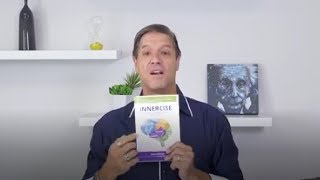
John Assaraf explains why people sabotage their own goals: the brain prioritizes safety and energy efficiency, creating conflict between what you want and what you do. He teaches two techniques from his book Inner Size: a breathing practice called Take Six to calm stress, and an AIA routine (Awareness, Intention, Action) to close the gap between motivation and action.
Questions this video answers
ignitemybrain.com
Safety first; energy efficiency (avoid change that consumes energy).
"Take Six": six deep breaths (approx. five seconds in, five seconds out) blowing out through an imaginary straw.
Awareness → Intention → Action (observe thoughts/emotions, choose an intention, then take one small action).
Eight audio brain-training "innersizes" (bonus for preordering).
Chapters
Great, great, great, great. Hey there. Good morning from beautiful, sunny San Diego. John Assraf here for my regular Tuesday morning achieve even more session. And today we're talking about why reaching your goals has been so hard and what you can do about it. And so before I begin, let me know what is the number one thing that you believe in your way of achieving one of your biggest goals? If you can just type that in, I'll have Mandy, who's working on deck here with me, give me a little bit of feedback and what I'm going to be talking about today as well. Mandy, we got people. Can you, can you hear me and see me? Okay, I just want to make sure. Usually I have a monitor in front of me and I don't. Today we're doing this through my beautiful camera over here as opposed to my laptop. So, Mandy, can everybody hear me and see me? I just want to make sure we've got some good, good video and audio. What I'm going to be talking to you about is something I am super excited about. I'm going to take some content from my brand new book called Inner the new signs to unlock your brain's hidden power. This comes out in bookstores September 21st. First, I'm going to give you a free chapter or two in just a minute so you can get a feel for what's inside. But I'm going to be talking about some of the content from the new book. It releases in bookstores September 25th. I have a special pre book launch going on right now and I've got some amazing bonuses for anybody who pre orders the book. But what I'd like to know is what's the number one issue you're having between setting goals and achieving goals? Because most people are not aware of this. But setting goals happens in one part of the brain, which I'll talk about in just a moment. But achieving your goals requires a couple other different parts of your brain to work together. So I want you to think about this for just a moment. Imagine that you're part of a band or an orchestra, a musical band. You're playing your favorite music and you've got some great music going on. And imagine if one or two of the band members are not playing their part or they're fighting with the other band members. What do you think is going to happen to the music? My hallucination is it's not going to sound very good and there's going to be a lot of tension and resistance between the band members and the outcome. The result May not be exactly what you want. See where I'm going with this? Well, in the first chapter, I talk about the difference between setting goals and achieving goals. So let me give you an example. When you and I set a goal, you know, we may be at our computer, we may be writing it on a piece of paper. We may be looking on a board. Like, I have a board right behind my camera where I write a lot of stuff on there. And so how do we set goals? Well, we use our imagination. Obviously, there's an imagination creative center of the brain. And we say, hey, here's what I would love my life to be like. Here are the goals that I want to achieve. Here is what I want my health to be like, my relationship to be like. Here's how much money I want to make, here's the lifestyle I want to live, and here's the mindset that I'd love to have, and so forth and so forth. So we use our imagination and another part of the brain, the sort of analytical part of the brain that's responsible for deductive reasoning, the reasoning part of the brain. And so when imagination and reasoning combine, we get this spark of creativity and excitement. And from a. Well, my brain's gone. My brain's somewhere else. It usually is back here. But when we have excitement, that is actually the nucleus accumbens and the insula part of the brain, which you don't need to know about, firing off the neurochemicals called dopamine. And when those neurochemicals called dopamine, I got my brain back. When the neurochemicals of dopamine is released, then we feel excited, we feel good. We may even get a little jolt of adrenaline because we're excited. And that is a great part to get you started with goals. And when we share those goals with our friends, we actually now release another neurochemical, the bonding chemicals. It feels like we're connecting. And so now we have this spark, this subconscious spark that makes us feel good and feel like we're taking action. And so that's part one of the brain. But achieving goals is a little bit more complex because if you don't, for example, add three to five little action steps of how you're going to achieve the goal, why you must achieve the goal, and put it into a calendar that shows you, let's say on Monday at 9am I'm going to do this. On Tuesday at 4pm I'm going to do that. On Friday at 5pm I'm going To do that. So when you take the imagination and creativity and you create your little plan, now you're using a little bit more of your brain. And for those of you who just joined us, I'm talking, I'm about stuff from chapter one in my new book, the New Science to unlock your brain's hidden power. You can order it and I'll show you how to order it in just a little bit and how to get some bonuses as well in just a minute. But I'm talking about the difference between setting goals and achieving goals. And so when you set goals, that is part one. When you create little mini plans, that's part two. When you add your reason for why you're achieving, you're actually adding some emotional aspect to achieving your goals. And then when you take action, you actually reinforce a brand new habit loop and pattern that becomes part of something known as the default mode network. And so here is something that I wrote over here. When you do that, there are a couple of other little things you have to understand and it's these next two things that causes people to not achieve their goals. And by the way, if you want to get a download a PDF of the first couple of chapters, actually the intro and some killer information on what I'm talking about, the brain's two priorities. Just type in, let me see what my team is saying. Type into the chat right now with nothing else. Only type in this word chapter C H A P T E R chapter and we'll give you an instant messenger message. Go there and you'll be able to get the download for the first chapter of Inner Size. So when you set the goals and you create the little plan and you take a little bit of action, that's part one. However, there is this other part of the brain that you have to understand when you're setting goals and trying to achieve goals. Let's say you set a goal, any goal you want, lose £20, make 1,000 extra dollars of income, leave a relationship that you're not happy in, leave a job that you're not happy in, ask for a raise at a job you are happy in. Any goal that you set has got a few different processes at the subconscious level that are activated whenever pay close attention whenever you set a goal that you either A have not yet achieved or B you've achieved in the past, but then you self sabotaged and reverted back to the old results. So A you've never achieved it or you've achieved it and then self sabotage somehow or something happened and you reverted back to your old Behaviors or there's another part of the brain that kicks in and that is based on the hierarchy of how the brain works. And the number one priority for your brain is safety first. Now when we talk about safety, the question is like, what kind of safety? Well, first it's safety for your life, right? Above all else, safety for life. But then right after safety for your life, there's emotional safety is what if you take action and somehow you're embarrassed, ashamed or ridiculed or judged? Well, to the brain, that is pain. And pain in the brain is not safe. So your brain moves away from pain. What if you've achieved a goal, you've self sabotaged it and you're back in your comfort zone and then you try again? Well, another part of the brain, the amygdala, chances are it's going to fire off as well. And as soon as that happens, the neurochemicals that are going to be rushed through your bloodstream are cortisol or epinephrine or norepinephrine. A little bit too much adrenaline and that puts the brakes on you wanting to take action. Why? Because if you've achieved success and then you've reverted back to sabotaging it, or there's been a trauma or something has happened, then your brain actually thinks that there's danger looming ahead, that you might fail again. You might disappoint yourself or a loved one, or your children or your friends or family. And if you disappoint them, then that's considered painful to the brain. And that means that you may have these goals, but you have one foot on the gas that wants to go towards these goals, but then you have another foot on the brake because the brain is getting chaotic. You remember a few minutes ago I said, what happens if you're in a band and you've got a few players, you know, playing the piano, playing the saxophone, playing the strings, and they're doing a great job, but the other two or three players, they're messing it up. Well, it's not going to sound good. You're not going to get the result you want. So what neuroscientists call that is dissonance. Another way to think about dissonance is chaos. You have some of your brain waves and thoughts and emotions are to move you towards those goals, but in the very same energy field you have these disempowering brain waves and neurochemistry that puts the brakes on. So if you've ever wondered why it's so hard to achieve goals is because Your brain, number one, has got two priorities. Safety first, to keep you in your comfort zone, doing and achieving what it's comfortable achieving. Even if you're miserable, even if you don't like the results, at least it's comfortable and safe from a brain's perspective. And the other part is, is your brain does not like change. Why? It consumes too much energy. Changing thought patterns, changing emotional awareness and emotional emotions, patterns, habits, changing behaviors requires energy. And to a brain that is conserving energy, it does not want to use up energy because it needs it for safety. You've got competing priorities in the brain. So what is inner size all about? It's first and foremost teaching you how to understand what is normally happening in your brain. So instead of being a victim of not knowing and ignorance, it just means not knowing. You can have a roadmap to achieving your success. So if you want the chapter that that I'm talking about right now, just type in with nothing else chapter, go to your messenger and you'll get this first chapter. By the way, I'm going to take a break for just a moment. I'm going to give you another website in just a second. I have a bunch of bonuses in this next 30 days up until September 25th is the pre release of my book. And if you want to help me help millions of people achieve their goals, let go of the emotions that are holding them back. Helping people strengthen their mindset through awareness and inner sizes. I'm going to give you some amazing bonuses. I need my glasses to read these when you pre order the book today. If you order one to four copies, I'm going to give you gifts worth hundreds of hundreds of dollars, not hundreds of thousands of dollars. Number one, I created eight, eight new audio brain training intercessors where I will guide you through these intercessors to change your brain so you achieve more of your goals and dreams. So in addition to getting the book, you're going to get eight audio intersects and normally will sell for $197 once the book promotion is over. The other thing, if you buy one to four books I'm going to give you is my how to get more done in less time time management video training program worth $197. I'm going to give you my exceptional Life blueprint with my video on how to create an exceptional life blueprint for yourself. And I'm going to pre register you for the new upcoming Brainathon October 6th with me and six other world leading brain experts. So if you just buy One to four books, you've got hundreds of dollars of bonuses. If you buy five to 25 books, there's another bonus list including all those. And then if you buy 26 or more books, then I'm going to actually teach people how I write books, how I promote them, creating bestsellers, and how I generate lots and lots of money that gives me a decent lifestyle and allows me to do some wonderful charity work. So if you want to get the book on pre order, go to this website ready. Www.ignitemybrain.com I G N I T E M Y B R A I N and my team will put that in there. Right Mandy? Ignitemybrain.com Alright, so if you want to buy the book and you'll get it September 25th, but you're going to get a chapter right now. Okay, so there's two different things I've asked you to do. One is if you want to get the first chapter and then two, here's the bonuses. So we've talked about setting goals versus achieving goals. And the brain's two priorities are safety first and energy efficiency second. What does that mean? Somebody write this down. By the way, if you like this, hit the share button, please. I want to help millions of people understand you can achieve your goals faster and easier than ever before. This that I'm giving you is the user's manual to use the most powerful tool in the known universe. I have read thousands of books, have spent a fortune on events and coaching and consulting, and it was by understanding what is in this book that helped me achieve a decent level of success. And that's what I want for you, and that's what I want for millions of people. The books like 15 bucks, the bonuses are worth hundreds of dollars and way more when you apply them. So when we talk about safety first, okay, somebody write this down. You and I, every human being, will do more to avoid pain than we will to gain pleasure. Let me repeat, we as human beings will do more to avoid pain than we will to gain pleasure. So back on goal setting versus goal achieving. When we set a goal, we are setting a goal because we think there's going to be pleasure there. Emotional pleasure, financial pleasure, physical pleasure, spiritual pleasure, mental pleasure. But with a brain that is focused first on avoidance of pain, avoidance of spiritual pain, emotional pain, mental pain, physical pain, financial pain, any kind of pain that puts on the brakes first. So when you understand that, when you set a goal and you have the excitement of that and then you stop and you procrastinate you stop and you have this little voice in your head that says I'm not good enough, I'm not smart enough, I'm not worthy. I might be embarrassed, I might be ashamed, I might be ridiculed, I might be judged. If I do this, I might have a fear of failure or fear of success or fear of disappointment. Here's what you need to do. Just be aware of it. And it's in the awareness that you can observe the little chatter that goes on in your brain and then you can shift to making a decision. So let me share with you and many of you have heard this. The first, by the way, when you get the book, I'm going to give you access to the first three audio intercesses for me to train you and coach you by you just listening to me. And I will guide you through through these three inner sizes. And that's the first three that you're going to get access to immediately when you choose to buy the book today or buy more than one copy. When you become aware of disempowering thoughts, self critical thought patterns or self talk patterns, procrastination, wasting lots of time, feeling stressed, feeling anxious, those are all signals and symptoms. Now what most people do when they feel that or experience that, they put the brakes on, they go back and do what they were used to doing because that puts them back in their comfort zone and it reduces the neurochemistry that produces the tension, the stress, the anxiety, the fear, the negative self talk. But neurogym clients, which I hope you will become one day if you're not already a client, they learn a process. The first inner size I teach in the book and the first audio that you're going to get as my gift is called Take six. Calm the circuits. So when you are procrastinating, when you are negatively talking to yourself, when you keep having these negative thoughts, first and foremost a trained person is aware that they are not their thoughts, they're not their emotions, they're not their behaviors. They have thoughts, they have emotions, they take certain actions, behaviors. So what? The first thing I'm going to teach you how to do in this book and in the audios is how to get calm first. When we have stress, the amygdala fires off and the neurochemistry of stress fires off. The first thing you do when you have stress, anger, mad sadness, disappointment, lack of confidence, lack of certainty, self doubt, the little critic that talks to you in your head saying you shouldn't do this, can't do this. What if this, what if that, the first thing I want you to do starting today, Take six deep breaths. In through your nose, out through your mouth, like you're blowing out through a straw. There's two versions to this inner size. The second one you'll learn in the book and in the audios. So the first version, you take a deep breath, five seconds in, five seconds out, and you blow out through a straw, an imaginary straw. Why? When you have negative self talk, when you have fear, doubts, anxiety, stress, etc. We know that the stress center in the brain is activated and it's released the neurochemistry that's causing these unpleasant emotions, that's normal. But what happens with most people is they have these emotions that they don't like and so they either suppress them, okay, by taking drugs or alcohol or going and doing something else so that the emotion goes away. Well, guess what? If you breathe and you just observe instead of react, which is normal and common, when you breathe six breaths in and out, and you focus on the breath, you deactivate the stress reactive center in the brain, which when that happens, blood is moving from the left prefrontal cortex away from the thinking brain, the imaginative brain, the genius part of your brain. Blood's actually moving away from the very part that you need, so you can't really think well, well, and it's feeding more of the stress and anxiety and stress. So then you are thinking about what you feel and you feel what you think about. You create this loop that becomes the normal way of being instead of interrupting that pattern and then recalibrating the response center in the brain. And that's what happens when you take six deep breaths in and out. Now you're able to respond instead of reacting. So if you hear this negative self talk and you listen to the negative self talk, you keep perpetuating more of that. But when you observe your negative self talk or stress or anxiety, and all you do is breathe in in awareness with no blame, no shame, no guilt, no judgment and no justification. It's just a process happening in your brain. And then you shift from inner size number one, alright. To inner size number two, which is aya, A I, A awareness of thoughts, emotions, feelings, behaviors and sensations. Awareness in a calm responsive state. And you move to the second part of ayah is intention. What's your intention? Is your intention to be angry, mad, sad, self doubting, self critical, negative self talk, A foot on the gas, a foot on the brake. Being confused, being overwhelmed? Is that your intention? No. What is your intention? My Intention is to be focused. My intention is to be present. My intention is to take action towards my goals and dreams. And then once you make that a decision that you responded to instead of reacting in the normal state, then you ask yourself one question. What's one action I could take? Well, I can smile, I could raise my hands and be hopeful. I can take one action by doing this. And what happens when you start to become aware of the processes that are triggered in your brain at a subconscious level? And you start to become aware and then you take choice. You use choice to choose the mental frame you want to be in, the emotional frame you want to be in, and the behavioral frame that you want to be in. Now you are in control. And when you are in control, you're not being governed by something known as the auto self, the automatic life, the way it's always been. And if you do that every day for three or four or five minutes, or every time you notice a negative thought, emotion, feeling or behavior, you start to interrupt the automatic self, the part of the subconscious mind that's controlling how you react and controlling what you do. And if you interrupt that for the next week, two weeks, four weeks, six weeks, eight weeks, 12 weeks, you now start to manipulate the subconscious patterns that are causing you to repeat patterns over and over and over and over and over again. So inner size is all about giving you the tools to use your brain better with simple mental and emotional techniques that will strengthen your mindset, it'll strengthen your emotional skills and abilities, and it'll put you in control so you have more confidence, more certainty, more personal power. What does that ultimately mean? It means that you're going to take more action towards achieving your health, wealth, relationships, career and business goals. Once I learned how to use my brain a little bit better, once I learned easy, simple techniques to master my mindset and my emotions, I started achieving more goals than the average bear. So when you order the book today, ignitemybrain.com you're going to get eight audio inter sizes that have me guiding you through a variety of methodologies to help you interrupt disempowering patterns and to create new patterns that will empower you and give you what you need to succeed. So if you want to get the book I just gave you, ignitemybrain.com if you want to just get a chapter or two just for being on this call, then hop into the chat and just type in chapter. So that was just a little bit of what's in chapter number one. What do you think I am on a mission to help people unlock their brain's hidden power. You know the old myth that we only use 5% of our brain. Well, what if you can use another 5%, just 100% more. What if you can use 10 more percent or 20 more percent? This book will help you unlock your brain. It'll inspire you, it'll motivate you. But even more than that, it'll give you the tools you need to transform your life and to help you achieve your goals. And I promise this, you apply this faster and easier than ever before. All right, Mandy, what's the feedback like? Are you enjoying this? If you are, hit the share button. After you do that, give me a love, give me a like I'm going to go back and read, read all of your comments. All right, as many of you know, I comment back and so that's the beginning of inner size. And by the way, you'll notice when you go to ignitemybrain.com there's instructions of how to get your bonuses, but there's also as part of a best seller strategy, if you buy a book through Amazon, that's great. But if you're going to be buying four or more, five or more, buy through C CEO Read, you're going to get a discount. Plus part of the best seller strategy is a little inside tip is when you go through CEO read and you buy, let's say 10 books or 20 books or 25 books because you want more of the bonuses that counts towards the bestseller strategy that we have implemented. So that means that many more people are going to hear about it because when you become a best selling author, there's a bunch of authors, automatic companies that buy the books, libraries that buy the books, associations that buy the books, book clubs that buy the book. And so my goal is, I mentioned to help millions of people achieve their goals and dreams faster and easier. That's the promise. Faster and easier. Not fast and easy, but faster and easier. And when you master your mindset, you master your emotions and you take action a little bit at a time, you will start to develop the neuro muscles that will make you a goal achiever instead of somebody who sets goals and doesn't achieve them. So that's just part one of what's in this awesome book. It's my life's work. All in here. I've got two New York Times best selling books already. My hopes is that you help me make this a New York Times best selling book as well. But more importantly than that is let's help millions of more people. Join my mission, join my vision and I'll help you achieve more of your goals and dreams. So there's your session for achieve even more. If you want to get the book, go to ignitemybrain.com and you'll follow the instructions on there. And then if you want to just get a chapter or two, then just hit chapter and then decide if you want it. All right, thank you so much. Have an awesome day. Hit the share button. Thank you. I will see you next Tuesday, 9 o' clock Pacific, 12 o' clock New York time, right here live from San Diego. My goal is to help you achieve even more. More health, more wealth, more better relationships, greater career satisfaction, business success, more time off, less stress or more passion, more of everything. We want more. Even monks want more awareness. So have a great day. Thanks so much.
More from John






Millions of individuals around the world are grappling with various mental & emotional health issues




