Create New Positive Beliefs and Habits
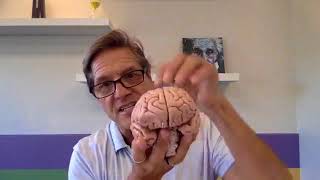
This content was created by John Assaraf. This content was uploaded by John Assaraf. This is a YouTube video titled "Create New Positive Beliefs and Habits" created on August 31, 2018. It features John Assaraf discussing the power of beliefs and habits, how they are formed, and methods to develop new positive ones. The session is interactive, with John engaging with viewers and answering questions about neuroscience and personal development.
Chapters
Hey, my friends, it is a fine time to talk about beliefs and habits. I'm going to be talking about the power of your beliefs and habits. And we're going to be talking a little bit about how you develop habits, how to develop new ones. How do you develop beliefs? This is an impromptu session. I'm fascinated with obviously, you know, beliefs in the brain and habits in the brain. What is it really? Is there a place where beliefs reside or habits reside? And you're catching me sitting down for a change. I'm gonna wait till we have some people that are joining us right now. And if you can hear me and see me, let me know. We're gonna be talking about the power of your beliefs and habits. Hello there, Carrie. Where are you from? Kerry, let's have a little bit of fun. I don't usually do this in the evening time. I thought we'd do this. Hi, Kamyar. Where are you from, Kamyar? Susie Petrone. Aloha. That must be Hawaii. All right. There we go. We got lots of people there. Monica from Austria. Very cool. I love it. Hi, Christy and. Hi, Gwen, Nebraska. Molly. Hey there, Carrie. I'm heading to the east coast tomorrow to go to New York for my 13th wedding anniversary with my wife Chrissy. The gold coast of Australia, one of my favorite places in the world. Diana from Texas. Satish from New York. Harsh. Hello, Chris. Hello, hello, hello. Yeah, today we're going to be talking about my favorite subject, right. Is the brain. But something that we put together for you is the power of your beliefs and habits. I've got some really, really good stuff for you to consider. I'm going to be talking a little about this. I'm just going to talk about 20 minutes and maybe take some of your questions in the chat over here. But something that very few people give a lot of thought to is my beliefs. Not my beliefs, but your beliefs. All right, so I'll keep saying hello to Amal and Nikki and Mark. Lisa. Gayathri. Gayathri, Giselle. Hey there. Sam and Kathleen. Awesome. So when we're talking about beliefs, right. The power of your beliefs and habits. The power of your beliefs and habits. If you have empowering, constructive beliefs and habits, you're going to succeed. But what if you have disempowering beliefs and habits? What does that do? Does that cause things like self sabotage? Just saying. I'm going to dive a little bit deeper into this. And as always, my team has got a little copy of this if you want. We put together, I think, about a 2, 3, 4, 5, 6, 7, about a 7 page little follow along here sheet. So let me give you an example. I wrote this a while ago to share with our clients and my team just created this to share with my fans on Facebook. But if you ask yourself a question specifically from a neuroscience perspective. Right. How are your beliefs and habits formed? So let's do a little fun participation. It's 5:30 in the afternoon here in San Diego. So how do you develop your beliefs and habits? How are they formed in here? What causes beliefs to be formed? So type in if you can and then I'll read this to you. All right. But you can also take the download if you want and we'll talk about beliefs and habits and what they cause and we'll have a little bit of fun here. So where our beliefs or how our beliefs and habits form. So I'll give you access to this. Laura, I have horrible habits, beliefs, etc. Nothing good for me. Come on Laura, not all your habits are bad. Hi Melina. So how are habits and beliefs formed? Paula says parents. Yep, that's one way. How else experiences? Yep, absolutely. Margarita, Environmental experiences, modeling, you know, people around you. Absolutely. Hi there. John Ruman family help form your beliefs. Shalom from Israel. Parents, beliefs, upbringing. When you're in an elevated state. Not necessarily Chris, you can develop beliefs or habits in an unelevated states. Hi Evelyn, Carol. But let's like how do you, how do you develop beliefs? Right. So thanks for joining. We're talking about the power of your beliefs and habits. And if you want a copy of this seven page manual, just get the link below and pick it up. You can follow along with me, I'll read some of this to you. But when we see something, when we hear something, when we experience something, when we do something and it's repeated, that is the beginning of a belief. So it's belief is a feeling of certainty that we have about something that in most cases we have references for. So the references could be heard. It saw it, done it, read about it, experience it somehow. So we develop our beliefs and we become what congruent with those beliefs. Now when we repeat these beliefs over and over and over again and we experience them, then we can turn those into habits. So anytime we repeat something in our environment and anytime that there's stimulation that has spaced repetition associated with it, it becomes a habitual pattern in the brain. And so when we have a belief that is what we call a declarative belief, then it's a simple easy belief that we declare. But when we declare Something or do something, Often enough it becomes part of the subconscious mind and a part of the striatum, specifically in the brain is where our habits are stored. And here's something that I want you to think about. If beliefs and habits are subconscious and then habits that are repeated become automatic, and then your behaviors are what cause your results, then what is really causing your results? Right. A lot of people think that it's their actions that cause their results. But what do you think actually causes you to take action? Right. So what do you think really causes you to take action? Do you think that you take action every day based on what you want to do every day, or do you think you take action based on what habits at a subconscious level are causing you to take action on? So which do you think I'd like again? This is the first time I'm doing this in the afternoon, but we're going to talk a little about what do habits create from a brain perspective. So what do you think, Chris? Pain and pleasure. Yeah, we'll do more to avoid pain than we will to gain pleasure. And that's because the brain operates on a hierarchy of safety first, then energy conservation before pleasure. So move away from fear, pain, discomfort first, conserve energy and then move towards pleasure. But if there is a sense that the pleasure is high enough, we'll actually expend energy. Hi there, Erica Lee. And hi there Pre. Right. Hi there, Kathy Ivanko. And so forgetting the negative. No, you don't forget the negative. The negative is what pops up. But here's what happens. Once your brain has developed these beliefs and habits that are subconscious, then your subconscious basically acts as a filter for anything that doesn't match the belief or the habitual way of being. So you are, and I am filtering out anything that doesn't match with our certainty around the way the world should be. Right. So think about that. If we get conditioned to have certain beliefs and those conditions, conditioning condition, and that conditioning prevents us from seeing what there is to see and from experiencing everything there is to experience and from doing the things that we need to do on a regular basis, then what do we need to do? So what do we need to do? Right. And the answer is we need to really evaluate our beliefs and we need to evaluate the habits. And one of the, what I call an inner size that we do is get people to evaluate, get yourself to evaluate. What do I really believe about myself, my self esteem, my self worth? What do I really believe about myself around my leadership skills, leadership of myself, leadership of others. What I believe about myself and my knowledge and skills as it relates to achieving a goal. So the first thing you want to do is take a sheet of paper and write out, here are the things that I believe. And then ask yourself a question or two. Where did this belief come from? Like, where did it come from? Was it my parents? Was it something that I picked up along the way? Was it because of something traumatic that happened to me? Was it something I read? Something I saw? Something I experienced? And what I want you to do is start to question your beliefs. And then as you question your beliefs, ask yourself this question. Is this belief constructive, inspiring, and moving me towards my goals and dreams? Or is this belief or this series of beliefs destructive, disempowering and moving me away from the goals and dreams that I need? And you could do this in less than 10 minutes. So question your beliefs. And if you just joined us, I'm talking about the power of your beliefs and your habits. I created a little manual for you. My goal is to help you have it all. I want you to have it all in health and wealth and relationships, career and business and fun and experiences. And I want you to travel the world and do what you love to do. But in order to do that, you really have to develop a strong relationship with your beliefs and your habits and your brain, because it's the most powerful tool in the known universe. And so get really comfortable with that. But here is something that is really important to understand from a brain perspective. A belief is nothing more than a pattern that's been reinforced. So instead of saying, I can't believe I have that belief, or that's a bad one, that's a good one, that makes me mad. That makes me happy. No, just. Just be in awareness. Just go. For some reason, I've developed some disempowering beliefs or disempowering habits or destructive ones, and now I want to create some new empowering ones. Why not make it that simple? Why not play the game of awareness without blaming yourself, without shaming yourself, without judging yourself, without feeling bad? Just be in a state of awareness and just say, there's a pattern in my brain that's been reinforced that's not helping me achieve my goals, and I want to create a new pattern and reinforce that and then do that. So a few moments ago, I was just in an interview in my studio for an entrepreneur podcast, and one of the topics that came up is, what belief were you born with? What habit were you born with? And the answer is zero. No beliefs and no habits. So if you were born with zero beliefs and zero habits, and habits are nothing more than reinforced patterns in the brain, then can you stop the disempowering ones from activating automatically and driving your results and perspective and life habits and beliefs? And can you create new ones? And the answer is yes, you can. And so if you ask yourself, when you were a baby and you were just born, what belief or habit do you have? And the answer is none. So then you, you develop them. So the question is, can you develop new ones in adulthood? And the answer is, ding, ding, ding, ding, ding. Yes, you can. So the question is how? And the answer is through a variety of methodologies that got you to having the habits and beliefs you have right now. So you can choose the beliefs that you want, you can choose the emotions that you want, you can choose the behaviors that you want. Right. So you can choose that. You just need to learn the skill. I want to shift over to something that I learned from my friend. It's right over here and it's called Be aware of the Ants. Automatic negative thoughts. So let me ask you a question just out of curiosity. Do you ever have any automatic negative thoughts? Tell me if you do, because I do. Hello there, Agnes from the Brazil. Hi there, Kerry. Yes, I can. Paradigm shift. Yeah, paradigm shift is possible. I'm glad you like the simplicity of this. Yeah, I'm just having fun today. My team wanted me to do this. If you want a copy of this, as I mentioned, just click on the link and I think they'll send you an instant messenger thing. You've done this before, some of you. All right, so this is the power of your beliefs and habits. So if you've had negative, automatic negative thoughts, ask yourself a question first and foremost. Where are they coming from? Like, where is this automatic negative thought coming from? Glad many of you you're all being very honest. Okay, so we have trillions of connections. You have about a hundred billion cells. Think of a cell as like a marble. Obviously they're microscopic. But if you think of a brain cell as a marble and think of having 99 million other marbles, and these marbles connect to each other with as many as 10,000 strings that connect them. Those are called dendrite spiny protuberances. DSPs. So you've got the cell, the axiom. You've got the synaptic part of the cell, and then you've got the dendrites on top. The dendrites connect. Okay, that's just a visual for you to help you understand that when you're born, you're born with about 100 billion marbles, brain cells. You prune a bunch of them, you're left with about 85 million. Those brain cells connect. And those connections are beliefs, those connections are habits. Those connections are your perceptions and your perspectives and your associations. That is what creates the neural patterns in your brain. And then as you repeat these patterns over and over again, they get more and more solidified, and then they automatically fire up, you know, tens of thousands of thoughts a day. 50,000 or so is what's estimated. Some of your thoughts are positive. Some of your thoughts are negative. Some of your thoughts are about sex, some of your thoughts about weird stuff. Some of your thoughts are about something on your finger. Some of these thoughts that you have are positive and negative. And what happens is, if you consistently have negative thoughts, and then you think about those negative thoughts and you allow those negative thoughts to control your brain and your emotions and how you feel, et cetera, then those patterns get reinforced, forced. Now, if, for example, you have a belief that you're not good enough, not smart enough, not worthy, you're not skilled enough, you're too young, too old, too Asian, too Caucasian, let's say somehow, somewhere in your past, you develop that belief. It could be from a trauma at school. It could be from playing a musical instrument and messing up and somebody ridiculing you. It could be a brother, a sister, a mother, a father, a colleague, a friend, embarrassed, shaming you, making you feel guilty. And that neural pattern was painful. Painful at the time. A painful experience will wire thousands of times faster than a pleasurable experience, tens of thousands of times faster for a negative emotional experience that was painful to you will wire faster by 100, by a million. And that gets fixed in your brain, your subconscious brain. Why? Because your brain wants you to remember. Disempowering negative painful experiences so that you can move away from those a million times faster than you move towards something pleasurable. This is one of the highest operating principles of the brain. Experiences that are painful get wired so that you move away from those at all costs. So think about this. I'm going to make case in point. What baby is born with a fear of public speaking? What baby is born with that? And the answer is none. Zero. There's no baby born with a fear of flying, a fear of snakes, a fear of fill in the blank. They learn that from parents, teachers, TV, etc. And when something is imagined to be painful or actually has been painful, the brain wires that experience for the survival of the species for safety. And this is why you must question your beliefs. This is why you must ask yourself, if a belief comes up and it's a disempowering negative belief. And so I have a bunch of them over here, for example, I'm going to show you if you have any negative thoughts, automatic negative thoughts, I'm going to give you an exercise or an inner size here called eat the ants, right? And so be an anteater. Be an automatic negative thought anteater. And so let's say, okay, you have, I'm afraid I can't accomplish my business goal or my life goal or my financial goal because I do not have all the skills I might need to make it work. Let's have that belief. If you allow that belief to fire, okay, the neurons in the brain and fire the emotions of that belief, and then you worry about it and you have anxiety about it, you're going to put the brakes on taking action. You're not going to take action because the fear is going to be too great. But if you become aware of that belief and then in your state of awareness, you go, that may be true, however, I can acquire the skills I need, or I can hire and help, have somebody I can hire or find someone else with those skills to help me. So when you take an automatic negative thought and you counter it with what I call are the apts, the automatic positive thought, you not only neutralize the negative belief that's automatic, but you reinforce it with an automatic positive thought. And so let me show you another one. Let's say you have this emotion, okay, or a belief that you're too scared to do this, and you believe that you're too scared because there's real or imagined danger. Well, what if you change that from an automatic negative thought that I'm too scared to a positive thought? And you go, being scared is a very normal feeling. When trying something new, I will feel it and do it anyway, or I will feel it and use the fear to propel me forward instead of to hold me back. So when you have a process, okay, of what to do with negative thoughts, you can achieve more success. Give me one second over here. There's a part here called the neural reconditioning process, all right? And so one of the easy ways to create a new pattern in the brain. I'll give you one of them right now or two of them right now. If you want the whole document, just fill in the or just get the link below. But when you want to override automatic negative Thoughts or disempowering, you know, beliefs or self image issues. The first thing you want to do from a brain perspective is first acknowledge that, hey, I have this disempowering thought or disempowering image, a self image or disempowering fear. I acknowledge that. That's okay. So the first thing you do is you don't pretend it doesn't exist because your brain knows it exists. You know it exists, the dog knows it exists. But when you take that and say, yes, that's true, and now I'm going to create a new vision for what I want to feel. I'm going to create a new vision for how I want to see myself. I'm going to create a new vision to see myself at the level above the level that I'm at right now. And you create an image and write it down. And then what you can do is you can create a new powerful declaration or affirmation that goes like this. You may want to write this down. Okay? And this is just the beginning process of retraining your brain. There's six different steps that you can do here. I'll give you two of them. So you create a declaration and you say, even though I feel or even though I have this belief of what I am focusing on now is my augmented self worth or self esteem, what I'm focusing on now is getting smarter, wiser, What I'm focusing on now is releasing this fear and stepping into my confidence and my certainty now a simple little declaration of acceptance and then moving towards what you want. That starts to activate a new neural pattern so you don't have to lie to yourself and say, you know, for example, is if you feel like you're not smart enough, not worthy, not capable, and you say, you know, in the past I have felt that I wasn't smart enough, not worthy, not capable, and now I'm learning how to. If you could just create a bridge from the disempowering thought or belief or emotion or behavior, and you can create a bridge to where the next step is. And now I'm learning how to. And now I'm taking steps towards. When you give yourself that bridge, your brain goes, okay, you can do this. So if you don't want to go from I'm not smart enough to I'm really smart and I could achieve it. For some people, that's too big of a jump. So create a bridge between those two so that you reduce the neural tension and you're nice to your brain. And that is One of the ways that you can do that, and Margarita says you can use tapping as you do this, you know, on your meridians, on your heart, you interrupt the old pattern as you create a new pattern. You can use scents, okay, like your favorite smell. You can use symbols, you can use your favorite color. You can use a power number to anchor, okay, a new pattern in the brain. And here is the key. When you learn how to walk, you didn't try it once, you tried it hundreds of times. When you learned how to eat, you didn't do it once, you did it hundreds of times. When you learned how, how the Alphabet for the language that's in your mother tongue and any other language you learned, you did it hundreds of times, if not thousands of times. When you learned how to write, you did the same thing. Everything from a brain perspective, if you do it in a repetitive way, that's not boring, and add some curiosity to it, add some fun to it, add some uniqueness to it, you'll activate something called the neuroplasticity switch, which will help you create a new neural pattern. And if you create a new neural pattern, often enough, it basically says, I guess the old pattern is not something you need anymore. And if you create a new pattern, you reinforce it. Your brain, since hierarchy number two is conservation of energy, says, since you're doing this every day, I'm just going to make this new pattern, the one that I activate more often for you. So the key is be patient with yourself. The key is understand the process, and I'll show you the neural reconditioning process right in there, and then you activate it. And that is how you develop a new habit. If you want to develop a new habit, start off with doing one thing for 3 minutes or 5 minutes or 10 minutes, but do it every day for the next hundred days, not 21 days like you used to think. That's wrong. It's like 66 to 365 days. But if you commit to 100 days to develop a new, simple, easy pattern that will become your habit, you will start to develop empowering, constructive beliefs and habits. And those beliefs and habits that are constructive will actually cause the behavior that will help you achieve the results that you want. Does that make sense? I hope you appreciate the science behind that. It takes between 65 days to 365 days, Chris, to do that. So if you want this, click on the link. Pick it up. There's a lot of great content in there. Love your brain. It's working for you. You can achieve so much in your life. The user's manual is for your brain. And so guess what? The more you learn, the more you can achieve your goals and dreams. So you enjoy these short little 30 minutes. I usually do these on Tuesday mornings at 9:00am Pacific Time, 12:00 clock New York time. But I did one on Tuesday. I'm going to do it today. I'm going to start doing a little bit more often now, especially since my new book, the new science to unlock your brain's hidden power. That's my new book. It's in pre order right now on Amazon. But that's not what this is for. All right, so that's your little tidbit for today. If you like this, will you do me a favor? You hit the share button, share it with others. This is the way you know that I get my work out in the world. If this was useful, if you know somebody that can benefit from it, tag them. Share it on your page. Help me spread the word. Most magical, amazing tool in the universe. My goal is to help you use it better. Thank you Pre. Thank you Ruth. Thank you, Paulo MK Gill. I'll say hello to a whole bunch more of you. Cathal Mac Manis, Nice to have you on Lisa and my Tam Jen, do it. Hello, hello, hello. Carmen and Chris and Chris Gallagher and Margarita. Thank you. I appreciate you very much. Please hit the like button or the share button and I appreciate you very much. By the way, on my Facebook Facebook page, this is just in case you want to. I saw the other day there's a place to put a post on and you rate, you know this, I guess this channel, whatever between star one or one star or five stars. One is awful. Five is good. If you like to share a little bit about your experience with working with me in, you know, our Facebook fan page or maybe in my private communities. Leave me a little blurb and a little endorsement would be great. All right. Have an awesome day. Gotta go and see my beautiful wife now. Bye bye now by the way, hit the share button.
More from John






Millions of individuals around the world are grappling with various mental & emotional health issues




