Fat at 50, 6-pack at 60
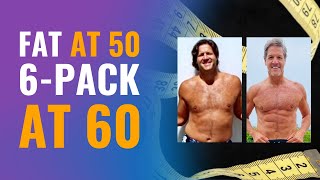
John Assaraf went from 243 pounds and 33% body fat at 50 to a six-pack at 60. He credits a mindset shift, upgraded diet and exercise habits, and neuroscience-based approaches to sustainable fat loss rather than quick weight loss.
Chapters
You can get into better shape and better health in your Life. In your 60s and 70s, you have been in your whole life. However, it takes understanding how to get your mindset, how to upgrade your skill set to do the right things in the right order at the right time, and then you want to develop the habits to sustain the results. All right? So fat at 50, six pack at 60. Are you ready to get healthy? Are you aware that as you get older, as you get older, it actually becomes harder, I think, to get in shape and stay in shape? Would you agree? And so I'm doing a session. I don't often do these, but a lot of people have asked me about my health and how I went from being 243 pounds and 33% body fat and hypertensive, borderline diabetic, extremely stressed out, high cholesterol, all right? To get into the best shape of my adult life. Getting healthy in today's world is actually a little bit harder. Why? Have you ever heard the term obesogenic? Obesogenic? Have you ever heard that term obesogenic? Obesogenic really just means that we are living in this environment where it's so easy for us to eat poorly, to be sedentary, and according to the CDC, men, women, over 60, and I personally believe, you know, over 40, 50, all right, are so much more susceptible to high cholesterol, to diabetes, to hypertension. Would you agree with that? Now, why is it so easy for us to get out of shape? Why is it so easy for us to. To not take care of our health? Like, why is it so easy for us, you know, fast food, instant, this instant, that if you go back in time, right, we ate Whole Foods, we, you know, we walked a lot more, we did a lot more activities. And now especially, right, Especially. Okay, with COVID right, For the last, what, 18 months, right. We become complacent, but we also develop these habits, Right? One of my friends, unfortunately, he passed away last year in his 80s. He said, Pay close attention. Maybe somebody could type it in in life, right around your health. He said, either you make time for your health or your illness will make time for you. I want you to think about. All right? You know, the title of today's session is fat at 50, six pack at 60. Like, how did I get from being over 43 pounds, fat, overweight, 33% body fat, hypertensive, borderline diabetic, sugar addict? How did I go from that to having probably the best physique of my life? Right? How well do you think maybe it Started with a mindset shift. A mindset shift. It started with the mindset shift. And even before that, do you think maybe it started with a commitment to my health? A commitment to my health. Right. And I'm not just talking about my physical health. I'm talking about my mental health, my emotional health, which then led to my physical health. But didn't it start off with me making a commitment? So I'm fat, you know, going into my 50th birthday, and I decided, I want to get into the best shape of my life. And then I asked myself a question. Am I interested in getting into the best shape of my life or am I committed? There are several pieces to the puzzle. Now, I don't know about you, but prior to getting into great shape, all right, I did diets, I exercised, and I lost weight, gained weight, lost weight, gained weight, lost weight, gained weight. My results with my blood, at my doctors were great, then terrible, then great and terrible and great and terrible. And I realized something, okay? I realized something that I'm repeating a habitual pattern of release weight, get in shape, gain weight, get out of shape, release weight, get in shape, gain weight, etc. I just kept repeating this pattern. So I had developed this pattern, like many, many people, of yo yo dieting. And I had developed this pattern of stopping to eat sugar for 30 days, for example. I developed this pattern of allowing improper sleep patterns to get in my way. I have severe sleep apnea, so I wasn't sleeping well at night, which was elevating, okay, my cortisol levels and elevating my leptin levels, hormones. And so I discovered that there were a few pieces of the puzzle that I didn't know. I was ignorant, all right? I was ignorant. And my ignorance, the not knowing, caused me to repeat these patterns. So I want you to understand there's. There's a few things, all right? If you don't make the changes now to develop the new mental and emotional and physical habits, where do you think you are heading? Right? So here's a question to ask you. If you were to put your, you know, your physical health on a train, right? And you were to say, here's the direction that my physical health is heading in. Can you be honest with me and yourself right now? Are you heading in the right direction or are you heading in the wrong direction? See, I realized I was heading in the wrong direction. I had to be radically honest with myself. And so are you going in the right direction with your health as you get into your 50s, 60s, 70s, or are you heading in the wrong direction? Let's start with that as a question. So if we were to say a year from now, three years from now, five years from now, are you heading in the right or wrong direction? First question. If you're heading in the wrong direction like I was, then my question for you is, are you prepared? Pay close attention, all right? Are you prepared to deal with the consequences of high cholesterol, you know, possibly heart issues, possibly you, you know, diabetes? Are you prepared to deal with that? Because here's what Jim Rohn said, which I love, right? In life, you're either going to pay the price of discipline or you're going to pay the price of regret, right? Discipline weighs ounces. Regret weighs tons. So if you're not heading in the right direction, there are several things that I want to maybe share with you that I think will help you. And by the way, one of the things that I did is I realized that I was just repeating patterns, you know, in my 40s that was making it harder and harder for me to get into really good shape and stay in really good shape. Now, I'm not just talking about physically. I'm talking about physically, emotionally, and mentally, right? Because there's a lot of different things that are going on in inside yours and my brain that cause us to repeat these patterns. But the first thing that I had to do is I had to understand what really causes us to stay stuck or to reinforce our patterns. And would you agree that the number one thing that causes this is our habits, right? Our thinking habits, our beliefs, right? Which drive our behaviors? Would you agree that habits drive behavior most of the time? And so if the answer is yes, my habits are keeping me stuck, whether it's my eating habits, my sleeping habits, stress reduction habits, or lack thereof, my exercise habits, or lack thereof, I said, okay, well, what is it that I need to know? What is it that I need to know to change my habits? Would that be a good place to start? What is it that I need to know to change my habits? So, you know, my eating habits weren't awful. They weren't perfect, but they weren't awful. But my sugar, in my case, was very, very high. My sugar intake was very, very high. My go to, you know, like, snack was something sugary. Like I couldn't have one cookie. I'd have to have like six. I couldn't have a scoop of ice cream. I'd, like, have five scoops of ice cream. So there are several things that we need to take into consideration, right? Number one, Is food the type of food that I'm consuming? Number two, okay, the amount of exercise that I'm, you know, using to activate the mitochondrial energy system or stores in our. In our cells to activate fat use. Right. Number three, proper sleep habits to regulate hormones. And then number four, how do I create habits around all of these things? So here's what I did, because I tried diet after diet and exercise program after exercise program. I hired some of the top experts around stress, sleep, diet, exercise. And I already knew enough about the brain, right. But here is what I did. I actually invited all of them. After they helped me get into great shape, I invited them to do a little training program around all of these things. I'll give you a bunch today. And for those of you who really are committed to getting into shape and keeping it off, there's a big difference between losing weight and releasing weight and keeping it off. Right. Do you agree with that? There's a big difference between losing weight and releasing it and keeping it off. Anybody could lose weight on a diet. Every diet works. However, when we go on diets, most of us are losing mostly water, and we need to be focused on fat loss, not weight loss. Would you agree with that? It was like a boom, aha moment for me. We want to lose fat, not weight. You can lose 3, 4, 5 pounds, 7 pounds in a week, but it's the wrong weight. We have muscle, tissue, bones, blood, and we have fat and water, obviously, in our. To make up our makeup so we can lose weight, but we don't want to lose weight. We want to release the fat stores that are on our organs and, and in our body and our fat stores. But a couple of things for me that I had to do was I started off with what is the ideal weight that I wanted to be at. So I was at 243 pounds. Okay. I'm six foot one. 243 pounds is about 45 pounds heavier than I should be. At six foot one. I need to be around 195 to 200. So I created a vision. Let me show you something. Hold on. I'm going to show you something of how I started. So I asked myself, what is it that I would like my physique to look like? And I just created, you know, I picked out a magazine from a magazine. I picked out a picture of a guy in his 60s or 70s, all right? And I started off with a vision of what I wanted it to look like. And so I picked out several pictures, which I will show you. And then After I picked out my pictures, and you all know that I love my vision boards, right? That's my. By the way, that's my lucky number. That's a watch that I wanted to buy. It's only a million bucks, but I picked out a picture of what I wanted my physique to look like just so I could put it up in a couple different places. So I always start off with a vision. And then I asked myself, what is the best eating plan? This is so critical. Okay, I didn't ask, what's the diet that I need? Why? Because diets work. As long as you're on the diet. I asked myself, what is an eating plan that I could commit to and keep. Think about this. You go on a diet, all right? Maybe you exercise, maybe you don't. You release the weight, then you go off the diet. What do you think is going to happen? You're going to gain the weight back. So when we are talking about releasing weight, the key goal should be to release the fat and keep it off. So that means that I had to ask myself, what's the eating plan that I could set stick to for the rest of my life? All right, that's number one. Number two, and IH fitness. You asked why, though, John, which is the next piece of it? Many of you know that my sport of choice is skiing, right? Sport of choice is skiing. And so during the winters, I love to go skiing. So one day I was sitting on the chairlift with my two sons, Keenan and Noah, and it was around 10 o', clock, 10:30 in the morning. We've been skiing for about an hour, an hour and a half, and I'm on the chairlift. Noah is next to me, Keenan is next to Noah. And I look over at my sons and I go, hey, guys, after this next ski run, I'm going into the house. And Noah looks at me, says, papa, he says, what do you mean you're going into the house? We're here, okay? On a ski trip, you're always so tired. You're always leaving us to ski alone. Why are you going in the house? And I looked at him and I got a little bit, and I said, well, Noah, I'm tired. You know, my knees are hurting me, my back is hurting me. And Noah said to me, he says, yeah, I know, but you're always tired. And it really, it hit me like a knife through my heart that he was right. So I said to him, honey, let me just think for one second. So I thought, because I reacted and I said, to him after I thought for a couple seconds, sweetheart, I'm going to make you a promise, okay? I'm going to make you a promise. I said, I am going to get into the best shape of my adult life. And not only will I ski more with you, I promise you, I'm going to teach your children how to ski or snowboard. He was only 12 at the time. Kenan was 13. He was only 12. Kenan was 13, okay? That was like 12 years ago. And that was the decision. My big why was not to disappoint my children. My big why was about making sure that I show them that it doesn't matter how old you are, if you're committed, you will follow through to completion. So what is your commitment level to your health, what is your commitment level? All right, to your family, to your children, to your husband, to your wife, to yourself. Are you going to let yourself go and suffer with a bunch of diseases, dis eases, or are you going to make a commitment to you? A commitment to change, a commitment to new habits, a commitment to some discipline? Like which one? Because if you're on the right, wrong train heading in the wrong direction, you already know where you're heading. So I made a commitment not to just like releasing weight and keeping it off, but I made a commitment, okay, to my children, I made a commitment to my wife. I made a commitment to the man in the mirror that I'm going to do something differently. And that's when I hired Ari whitten. I hired J.J. virgin. I hired a whole bunch of experts to help me understand the exercise that I needed, the habitual patterns that I needed, the hormonal side of it, you know, that I needed, the sleep side of it. And then I put together a plan for myself that I could start and continue for my life. So I didn't look to do a short term weight loss program. I wanted to do a long term lifestyle change that I could sustain, which would give me the results that I wanted. Does that make sense? Four things, okay, that I focused on and four things that you're going to learn in the training with me and some of the experts. So number one was I had to have a mindset shift from, as I mentioned before, from how do I lose weight to how do I release the weight and keep it off and change my lifestyle, right? So how do I change my lifestyle? As I mentioned, Ari Whitten is brilliant on that. JJ Virgin is brilliant on that as well. So I had to learn some things, you know, in order for Me to change permanently. So I had to have a mindset shift from short term results to. To long term sustainable results and continuity. Does that make sense as a first shift? All right. Does that make sense as a first shift? Number two, I had to learn some new skills. Let me explain. When I was a little boy, lived in my mother's home, in my father's home. The culture that we grew up in was my parents. Both my parents were part of World War II. And there wasn't a lot of food. There was a lot uncertainty. And so whenever they didn't have food, like breakfast, lunch and dinner, like many of us are blessed to have. And so when my mother filled our plate, my responsibility as a little boy was to eat everything on the plate. Why? Because she believed that you may not have another meal. That's how she grew up. So she wanted to make sure that my brother, sister and I always ate everything on the plate. And she packed the plate plate. And so I got used to eating everything on my plate, even though it was more than I needed. I had this habit, not because I wanted to, but because my mother ingrained it into me, of eating everything on my plate. Don't waste any food, don't throw food out, right. She says, you never know when you're going to get another meal. So I just ate everything on my plate. So fortunately, when I was a kid, I exercised, like many of us did, over and over and over and over again. So I was burning the calories. But as I got into my 30s, my 40s and 50s, you know, I wasn't exercising as much. I wasn't burning the calories that I was putting in. And as you can imagine, you know, when you and I eat, the food gets converted into glycogen, or energy. The energy we use is used, but the energy that we don't use, okay, is stored as fat. So I was consuming a little bit of extra fat each year, each month, each quarter. So what I had to redo is I had to recalibrate how much I ate. And I had to recalibrate some of the food that was higher in sugar, okay, high on the glycemic index, stuff that I had to learn about to be able to eat better quality foods and eat less. Now, here's the thing that happened. What I didn't realize was that eating better quality foods gave me the nutrients that I need to fill me up, but also it gave me the energy that I needed to have sustained energy all day long. I have two speeds, high and off, high and Off. And part of it not only is because I exercise every day in the morning after I wake up, but I also have a food plan that gives me energy instead of takes more energy than it gives me. So I had to upgrade my skill set. So, yes, upgrade mindset. Yes, upgrade skill set. And then I had to develop the daily habits. The daily habits. And now here's where we get into the domain that I'm probably one of the best in the world. That is the neuroscience of habit change. Would you agree that if you get on a better diet, if you exercise better, if you sleep better, but you only do it here and there, you only do it once in a while, you're going to get some good results, but they're not going to be sustained. Isn't it true? Okay, Isn't it true? Come on, let's be real and be honest. Isn't it true that habits shape our lives, habits shape our thinking, habits shape our lives, our emotional habits shape our lives, and yes, our physical habits shape our lives and everything else. So the question is, do you have the habits that's going to make you healthier this year? Or. Or do you have the habits that's going to make you unhealthier this year? Be honest. Right? So if that's true, then you and I need to be better at getting rid of eliminating destructive, disempowering, negative habits and creating reinforcing, empowering, positive, constructive habits. Many of us have destructive habits, habits that break us down versus constructive habits, habits that lift us up. So I made a commitment, okay, to using everything I know about the brain to develop new, empowering, constructive, positive habits. And I went from £243 to £197. Then I've kept it off for over 10 years. And for my 60th birthday, and we put a picture on the right here on Facebook. For my 60th birthday, I gave myself a goal of getting into the best shape of my adult life. And I said, I've never had a six pack in my life. I didn't have it at 18, I didn't have it at 28, I didn't have it at 15. I said, Can I give myself a six pack as my 60th birthday gift? And you know what? I had to learn another layer of skill sets. But I had the foundation. I had the foundation of what I needed. So I went from borderline diabetic, hypertensive, high cholesterol, stressed out to get the best shape of my life. And now I'm in better shape at 60, okay, than I was at 50, 40, 30 and 20. So there's a couple things that we really want to focus on is yes, we want to focus on mindset, getting the right mindset. Yes, we want to focus on upgrading our skill set and yes, we want to focus on, all right, changing our habits so that when we put in the effort, the effort then develops the habit and then the habit develops us. So I've just been looking on how do I get better by 65? How do I get better by 70? I want to ski in my 70s. I want to travel the world in my 60s, 70s, 80s and 90s. And here's the beautiful thing, everyone. With the advancements of technology, with the advancements of science and research, if we can stay healthy in our 50s and 60s, right, then we are going to be able to do what? Live a higher quality life in our 60s, 70s and 80s. So instead of having a downgrade to, to our lifestyle, we can actually have an upgrade to our lifestyle where we can enjoy 60s, 70s, 80s and 90s. I'm going to leave you with a question, right, is, are you interested in that? Are you committed? Like I said, I was committed and then I backed up my commitment with the mindset, the skill set and the habits required. So there's how I went from fat at 50 to six pack at 60. If you want to go deeper, we'll put links in for you to, to get some more free training with me and some of the other experts that helped me. These are several of the top people in the world. All right, does that help? Does that help? I hope this has been inspirational for you. You can get into better shape and better health in your life in your 60s and 70s. You have been in your whole life. However, it takes understanding how to get your mindset, how to upgrade your skill set to do the right things in the right order at the right time. And then you want to develop the habits to sustain the results. You don't want to lose weight. That's not what you want to do. You want to release fat and keep it off, which means there's a lifestyle change that needs to happen. All right, have a great day. I appreciate you. Adiva Daechi. Bye bye now. Hey, this is John and if you like that video, watch the next video because it is packed with things that you can do right now to achieve success way faster than ever before.
More from John






Millions of individuals around the world are grappling with various mental & emotional health issues




