How [The STAR Factor] Will Help You Grow Your Business
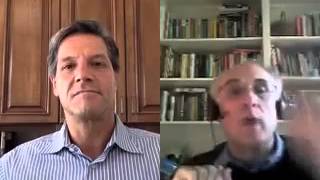
John Assaraf and Dr. Bill Seidman discuss Seidman's book The Star Factor, which explores how personal performance, purpose, and self-directed neuroplasticity help people become stars in their fields and reach their potential.
Chapters
Hey everybody, this is John Ashrath, New York Times best selling author of Having it all and the Answer. And with me is my dear friend Dr. Bill Seidman, who is one of the leading, if not the leading experts in the world on understanding what makes people a star in their individual performance. And he wrote an amazing book that you have to understand more about called the Star Factor. And it's really his research. Many, many years at Stanford, being one of the top students at Stanford, and then working with individuals, with homemakers, with athletes, with CEOs, with tens of thousands of employees in companies all around. What does it take to be your own star and to raise your level of inspiration and personal performance so that you ultimately have what you want, which is more purpose, more meaning and an amazing life? So we're going to be talking today about his book called the Star Factor. We're also going to let you know that you can pick that up on Amazon or on Kindle once you hear this interview. And it is mind blowing. So, Bill, great to see you again and great to have you on. Thank you so much for doing this.
Thank you so much for having me on. It's great to talk with you.
Awesome. So we've been friends for, I don't know, probably about 10 or 12 years now. And you and I share some real common interests around the brain and behavior and what causes one person to fly through the stratosphere and achieve amazing success while somebody who may be as intelligent or even more intelligent doesn't achieve the levels of success. And you have discovered in the Star Factor several of the keys that will allow anybody to be able to bring out their own Star Factor. So maybe we can start with a little about your background and your research and then we can talk about the book.
Okay, well, my background, I did my doctorate at Stanford between the School of Education and the Business school. So I'm part educator, part business person. And the book itself, the methodology really came from specific things. Originally in the business environment, why did some people simply outperform others in the business environment? But then what happened is it started to expand beyond that. People asked us, for instance, well, do you have the same issues, for instance, on weight loss, Are there star performers on losing weight? Are there star performers on stopping smoking and then even go farther? Are there star performers on living a great life? Are there people who kind of find a better way to do it and it's enough. It really goes from extreme. One of the programs we got involved with was recidivism in prisons. I think people coming out of prisons. And it turns out there are star performers who really find a way in this absolutely difficult, challenging situation to find something. And so if you start to think about that and you start to think, well, I'm just kind of an ordinary person, Can I be a star too? The science shows, and it's really the neuroscience, and you helped me with this so much going back those 10 years, I can't even express it. The science shows that everyone, I don't care who you are, can be a star in the same sense that any of these folks I was just really about can be a star. And you literally can program your brain to make yourself a star.
I love it. And so when you go into, whether it's organization, a nonprofit, or you work with individuals and really discovering how they can level up their inspiration, their goals, and the dreams that they have and really then perform to their potential, what are some of the things that you have discovered in getting somebody who may be doing well, they may not be doing well, but they may know inside that there's something more and that they can achieve more than they're achieving right now.
So when we actually looked at the stars, we found out that the stars kind of organized themselves into two kind of key areas. The first one is their sense of purpose. They were always about creating something bigger than themselves. It was very selfless in a way. I mean, it was either helping their team, their family, their friends, their organization, it was bigger than themselves. And they would think of it in terms of the good they were creating for others. Once they started to really kind of understand this good, they then developed what we came to call the path to mastery. What is the work I am going to do to really achieve my purpose? And they were pretty demanding of themselves. They were fanatical, self directed learners. So then we kind of flipped the coin and said, okay, so that's what the stars were doing. That's what made them stars. Could other people learn these things? Could other people become stars themselves? Could somebody do a better job with their spouse, for instance? One of the programs we started to do was sort of all the crises that happened in families, buying new appliances, a kitchen remodel, going on trips, all these things. Are there optimum ways to do it? And it turns out that yes, there are. So what we suggest to people is, and again, this is written up in the book is first thing, think about your greater purpose. Really try to do everything in your life with the sense of creating a greater social contribution. And again, in lots of your programs, one of the Reasons I've always loved your programs is this element is so strong, you're really not just doing it for yourself. You're doing it to create something that's better. And then once you have taken the time to actually write, and I would say write, this is like two to three sentences that says, the social good I am creating is great exercise, then start to get very conscious about those things you can do, the practice you can do and the exercises you can do to build up your own capability. Now, the other part about that is to do those exercises in a social environment. The praxis now, Community, for instance, where what the neuroscience has shown is that purpose creates one kind of neural change. The path to mastery in working on a mastery literally gives you the attitudes and skills to break through your barriers. And then if you do that in a social environment or if you're talking to others, there's a whole other set of neurochemicals that come into play that really allow you, again, whatever your background, wherever you are in life, just to store, to sort, and you will look and act like a star.
So if somebody is watching this right now and going, well, that sounds great, but I have no idea what my purpose is. And I hear that all the time from people going, well, I don't know what my own purpose is or my social or moral higher purpose is. How would somebody go about at least getting the ball rolling, shall we say, on understanding what is it that they are here for?
So that feeling is actually quite common even among the stars. In sort of technical jargon, the stars are what's called unconsciously competent. They're awesome, but they have no clue why they're awesome. And it turns out that if you go and you talk to people and you say, well, what is it that makes you so great? They actually can't answer that. So the feeling that people may have that say, well, I can't answer that. That's actually pretty common. So we take it back to a different level. You can't actually go at this directly. We say to people, what do you love in life? What do you love about your family? What do you love about where you're living? What do you love about the work you're doing? Anchor yourself to something that is a kind of love that's greater than yourself. And then you start to yourself say to yourself, why do I love it? What about it is being created? And it turns out that your answer to that question is your social purpose. And what's interesting. So when we are working, for instance, in corporations, or with stars in these different types of disciplines we're talking about. We actually start by saying, hey, if you're trying to quit smoking, okay, who or what do you love? It turns out that there's a great book written called. I think it's called do or Die. I forgot what it is, but basically.
It'S Change or die is what you're thinking.
Change or Die.
See, I'm reading your mind. I am a mind here.
Change or Die is a great book.
Not as great as Star Factor, though.
Not as great as StarFactor. No, I agree with that. Change or Die looked at people who had had major cardiac events, and the author of the book studied why these people didn't change their behaviors, why didn't change their attitude, because 9 out of 10 didn't change their lifestyle. So it wasn't a motivational issue. If they didn't change, they were going to die. Pretty strong motivation. It wasn't a knowledge issue. It turned out that they all knew about what they should do. So why did 10% change and the other 90% not change? And when we got involved with some of those things, what we found out is the, the 10% that changed were motivated by some kind of greater purpose to a phenomenal degree, it turned out, for older people, grandchildren.
Oh, wow, okay.
They wanted to be around for their grandchildren, or they wanted to experience kind of a bucket list. They wanted to be around to experience some of these things. So when you start to think about a purpose, don't think about it necessarily in business terms. Think about it in really kind of personal terms, like, I want more time with my grandchildren. I want to go visit Angkor Wat in Cambodia, whatever you want to do. And we've seen people have things like, well, one person, for instance, was a Mormon. He wanted an opportunity to do more missions. Another person had invested in cabin on the lakes in northern Wisconsin. And one of the absolute greatest things for him and his family was to simply be able to spend more time with his family in this wonderful environment that they had. So, you know, so maybe that's selfish in a sense, saying it was for him, but it really was for about the family that they're creating. So would you start by who you love, what you love, and ask, why do you love it? You end up with this kind of deeper sense of purpose.
And can you have multiple why's?
Yeah. Though they often interconnect. So let me, let me give you kind of a simple example, a business example, but also a personal example. So we work with a company who sold property and casualty insurance. And when you talk to the stars there, they weren't particularly excited about property and casualty insurance. But what they were excited is about creating, these are their words, having the attitudes and creating the systems that allowed them to better realize their personal dreams. So they made a connection between, if you will, business behaviors, their attitudes, practicing these things as kind of path to mastery, and their why, which was realizing these other types of personal dreams. So what you often find is when people start thinking, well, this is for my family and this is for my business or I want to do breakthrough this way or breakthrough that way, what you find is that about 95% of the time they're actually connected. They are part of a greater whole.
I love that. You just reminded me of something that has helped me tremendously in the last couple of years. I was on the chairlift with my son Noah, when he was 15. He's 17 now, and he and I and Keenan, my other son, we were snowboarding and skiing and we were having the best day ever. And he looked over at me and he said to me, dad, I really have loved all the times that we've had together, you know, as a family at our home in Colorado. And thank you so much for teaching me how to ski and to snowboard. And I just felt so much sense of gratitude while I was sitting in the chair. I said to him, I said, you know what, Noah? I'm going to make you a promise right now. I'm going to get into the best adult shape of my life. I'm going to release the weight that I've been wanting to release for the last 10 years, and I'm going to teach your children how to ski or snowboard on the mountain. I was 50 at the time. I'm 52 now. And you know what? Since then, in my gym, I have my vision board for my body, which I'm about 3% off of right now, maybe 2%. I've lost 25 pounds in the last two years. I gave up coffee, sugar, alcohol, and I became total vegan. And just last week, he came into the gym with me and, and I said to him, I said, you see my vision board for my health? He goes, yep. I said, you see where it says why? And it says the promise. That's the promise I made you two years ago. And if a 15 year old kid would cry, he would have started crying there because he saw that I took the why, okay, was to teach his children. He was 15, you know, and I made him this promise. But My why became big enough that I was willing to alter. No sugar, no caffeine, no alcohol, better eating patterns, working out six days a week. I'm right there with you.
Yeah. By the way, you have the purpose and the why. But let me not shortchange the path to mastery you developed. You can have a great why. And if the why is compelling enough, you will work at changing yourself. But if the why is something mediocre or you're not really willing to work, you don't have the right why yet. So these things really go together. It is a compelling purpose. Why do I want to get better? And it is. I'm willing to commit to a rigorous path to get there. And what's interesting is the rigorous path. How did you feel once you started losing your weight and started working down the path?
One small discipline led to other disciplines and those disciplines more constructive, which allow me to release some of the destructive thoughts and emotions and behaviors. And it's affected every area of my life.
And actually let me pick up on that idea too, relative to the stars, because that's a great point. Lots of times people look at their purpose and say, oh, this is such a big purpose, I can't possibly get there. But in fact, the way you get there is a micro step at a time you say, okay, today I'm going to do this a little differently and then next day I'm going to do this a little differently. If you try to eat that elephant all at once, you will gag. But if you say each day I'm going to do a little bit that gets me better, then you really are able to master yourself. And by the way, from a neuroscience point of view, one of the things that happens, particularly if you write down that path is those incremental changes are if in the business terminology people sometimes call it celebrating small wins. Right. Turns out there's a kind of endorphin release where each time you get a small win and so each small win builds on the next small win and builds on the next small win and you can guts through all this stuff. And by the way, so sorry to get into this, but I think at the six week to eight week mark there's actually the neuroscience has shown that there's a conflict between the old habit, which is kind of protecting your status quo and it's very efficient, and the new habit that is trying to get re established. And what people need to understand is that in that six to eight week time frame, every excuse known to mankind comes into play. You know, I'm not good enough to do that. I'm too tired. I'm just not committed. I have all these other pressures on me. We've heard them.
All right, yeah.
Everybody set up.
I call it the inflammation disease of choice. Steps. And it's called excusitis.
Perfect. The thing about excusitis is that it goes away at about the eight to nine week mark. It's actually a kind of false signal from the brain that is trying to preserve you in your old self. Now the brain considers that to be efficient and resists the idea that your new self could actually be this wonderful, glorious thing. And so, you know, one of the things, again, I really like the praxis community, I like a lot of what you've done, and this is also written up in the book, is if when you hit those things, monitor yourself. If you're saying, oh, I'm too tired to do that or I'm too stressed to do that, reach out to the community. Know consciously that this is just your brain doing this funny little mind game with you, kind of a pun and get past it. And if you just say I'm going to rededicate myself, you're going to break through on the other side doesn't mean at eight weeks you stop by the way.
Right.
Because then you actually need to continue to build your mastery. But that's the way it works.
I love that. So number one is understand that even the people who are high performers usually don't know why they're high performers, but they have some underlying reason why that is self and socially or morally driven by other people, events or making a difference. Number two is take small micro actions daily towards your goal. Almost like lifting a little bit of weight today and a little bit more tomorrow or a little bit more next week and you build that mental muscle. Number three, what I've heard is somewhere around the six to eight week part, your brain is going to try to fight for you to stay back in your old paradigm, old self, old behaviors. And you'll come up with excuses and sabotaging thoughts and behaviors. I just need to be aware of that and override that, get some support, recommit to the process again. Am I on the right track so far?
Exactly. And then what happens is about the 10 week mark, you stop having these conflicting things and lo and behold, what we've actually seen is people stand differently, they speak differently. You always talk about breaking through the barrier. Well, in truth there are multiple barriers because we are awesome at creating new barriers for ourselves. But once you break through, you really are functioning like a different person. You are thinking like a star in that you're real conscious of your purpose. You are acting like a star because you're really a fanatical kind of self learner. And this is actually one of the interesting aspects of the stars, is that they really are committed to learning. They don't wait for somebody else to come and say, well, you know, go to this class or do this thing. They're out there seeking information all the time. And one of the things we've seen too is, you know, this is such a volatile world we're in. You have Twitter moving at incredible speed. You have all these changes. It's frightening in some ways, but if you actually embrace this part of yourself, the notion that you are a fanatical, self directed learner, you'll say, oh, okay, so this weird thing happened. What am I going to learn from it? I got battered, I had a bad discussion with my boss or something bizarre happened with my significant other. You can treat that as a negative or you could treat that as a learning experience. And the stars always turn it around, always become, oh, wow, okay, here's what I can get from that. And now I'm going to turn this into this huge positive. So barriers that come to them naturally, they just have this way of blasting right on through it.
So and what I've heard you say is they learn how to frame things in a way that'll serve them and, and be a guiding post for them as opposed to a hitching post for them and anchor them down.
Correct.
Love it. I love it.
There's a little bit of science, by the way. This underlying science is technically called self directed neuroplasticity. Now neuroplasticity is the ability of the brain to change. And for a long time people didn't think the brain could continue to change throughout life. They thought it pretty much stopped at age 18. But as you know, there's just been a ton of research that says the brain never stops changing. Self directed is the use of the intellectual portion of the brain to basically educate and repattern the rest of your brain. Where have I heard that from? Could be you. So the idea becomes, in that reframing, you're actually using the intellectual portion of your brain. I point to the front because it's actually the front part of your brain.
Frontal lobes.
Yep. To monitor for your cues. Monitor when you're going into stress, monitor when you're using excuse itis. Monitor when you have these things and you're going to consciously use that to substitute the self directed learning, the positive imagery and the most important positive images. How do I turn this in a way to better achieve my purpose? So it kind of becomes a loop back.
I love it. Yeah. As you were saying that, you reminded me of a term that I heard and I adopted a while back called deliberate conscious evolution. So you deliberately evolve yourself by making a decision that I am going to evolve myself through learning and gaining knowledge and upgrading my skills and staying focused and really becoming the star that I'm supposed to be. And so I love that. And so, everybody, you've gotten a taste of the Star Factor and Bill Seidman's genius. And for about 10 bucks on Kindle, I think it's $9.99. Pick up the book, and if you want to get a hard copy shipped or a soft cover shipped, it's like 16 bucks. Bill is one of the top researchers in the world, one of the most beautiful, gifted human beings who really cares about other people, loves to share his research and his knowledge. He's making a difference in the lives of thousands, hundreds of thousands, hopefully millions of people around the world. So pick up the book the Star Factor, and then what I want you to do is hop either onto my Facebook page or our private community that we have at Praxis now and let's dialogue about it and talk about it and let's see if we can help each other. So, Bill, thank you so very much for writing the Star Factor. Thank you so much for letting me interview you about it. I loved reading the book and learning from you. And the beautiful thing is, together we can make a huge difference on the planet by helping people reach their star power capabilities. Thank you so much, Bill.
Thank you so much for having me, John. It's been awesome.
All right, bye bye now.
More from John






Millions of individuals around the world are grappling with various mental & emotional health issues




