How To Overcome Fear With Innercise
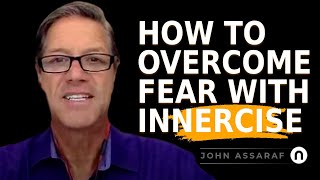
John Assaraf leads an interactive YouTube broadcast about understanding and managing fear. He explains fear’s neurobiology (amygdala, fight/flight/freeze/faint), contrasts automatic reactions with deliberate responses, and teaches 'innercise' steps—breathing ("take six") and A.I.A. (Awareness, Intention, Action)—to reframe, release, and retrain fear. He invites viewers to a free extended training and emphasizes practice and spaced repetition to make new responses automatic.
Chapters
Hey there. Good morning and welcome to my Achieve Even More broadcast. Hope you're doing great. We're going to be talking some more about fear. And this whole last few weeks, I've been focusing on a lot of the research around fear and how to recognize it and overcome it. And so I'm having an issue with Facebook and putting the post up and typing in what I am talking about. If you can hear me and see me, just give me a thumbs up or say, hey, John, I can hear you and see you. We're gonna go into fear a little bit more today and I'm gonna invite you to a training that I'm doing as well. Hello there, Bohdan. Hello. Good morning. Nice to have you on. So just make sure you can hear me and see me, please. I was having an issue with typing in the title for today's session, which is, you know, how inner size will help you take control of your fears. All right. Yes, you can hear and see me. Awesome, awesome, awesome. All right, so every Tuesday morning I do a little show called Achieve Even More. And I also have a new group on Facebook that's a free group that I post stuff on as well called Achieve Even More. So it's a private little group that gets my messages more frequently according to Facebook's new algorithms. So let me say hello to Louis and Kausha. Hello, good morning. Hope you're doing great from India. Hi there, Kelly. Hope you're doing great. Jodi, hello. Good morning. Nice to have you here as well. I was having a little issue with Facebook not being able to type in what the topic is for today. We're gonna be talking about fear as well. And a lot of people ask me, why do you like to talk about fear? And what most people don't understand is what's happening in our brain when that fear circuit is activated and why so many people have a hard time recognizing and then eliminating fear. So let's say hello to Karina from Stockholm, Sweden. I fell in love there once. Hello there. Or Ruben. Hi there. Julie from Alberta. Cold, Alberta, Canada. Hi, Laura. Katrin. Katrin. Katrina. Katrin. Tammy from Montreal. I'll be there in January again, Smitha. So fear. Can anybody share with me, you know, why do you think or what do you think fear is? I talked about it last week as well. And just so you know, I'm doing about an hour long training on Fear Live this Thursday as well. So if you want information on understanding fear and how to recognize it and eliminate it, we'll be sending you some Information if you'd like. Hi there. Holly Funmilola Hello. Hi, Melissa. So have a little chat with me about fear. All right. So what is fear? Right. So I've been talking about it a lot for the last couple of weeks is just the research that's coming out on the fear circuit and how, you know, it gets activated in a millionth of a second and most people not even aware of how it holds them back. Hi, Kumiko. So Prem says fear is a situation who stop you to do anything. Yeah, it can. It can be very, very debilitating. Would you all agree that there's conscious fears, which means that there is fear that you're aware of? Like you're aware that you're afraid of a snake or you're aware that you're afraid of heights or, you know, or jumping out of a plane. Would you agree that you have conscious fears? Right. And then would you also agree that you have subconscious fears? Okay, subconscious fears. Would you also agree with that? And for those of you, there's somebody. Sadi Burkhan. We don't allow links to be put into our feed, so please don't do that. We're going to eliminate those from, from the, from the event. So there's conscious fears, the ones you're aware of, and then there is, you know, subconscious fears, the ones you're not even aware of that are triggered subconsciously. So Michelle says fear produces a conditioned response. Right. So Dave says fear is a signal. Right. So, Dave, fear is a signal. Michelle, would you consider changing your answer from fear produces a conditioned response to fear produces a conditioned reaction automatically, Right? A conditioned reaction automatically. So Michelle says, yes, it operates on both levels. Mira says have no fear. Everybody has fear. By the way, you're never going to deactivate your own fear circuit. So Karina says, well, since to be brave is a step out of your safety zone, seer is often for the unknown. Yeah. So check out. By the way, I'm going to do, like I said, I'm going to do a live training for about an hour, hour and a half on Thursday night on the 21st at 5pm Pacific Time. It's free to join. I'll be sharing a lot of the latest research on fear. I'll be giving you a lot of inner sizes to do how to recognize, reframe, release and retrain fear. I'll also share with you some of our new programs if you want to dive deeper into. But let's understand something about fear. When you buy a new car or even some Old cars, let's say the cars have electronics in them, right, that run the car. When you turn on the ignition, the spark plug clicks the engine lights on, and then all the systems start working together. Now, let's say that you have a newer car and it has sensors all around the car, whether it's a sensor for another car that's nearby, whether it's a sensor for how much gas you have in the car, whether it's a sensor for how much air is in your tires, whether it's a sensor for your trunk or your hood, or your hood and your trunk being open, whether it's a sensor for a window being open or a seatbelt not being on. A sensor is a control and response mechanism that happens in all animals and humans. It's a called a cybernetic mechanism, control and response mechanism. So when we think of, or we use the word fear, the first thing to understand is fear is just an emotion. It's energy in motion, right? And so when we understand that fear, okay, is one of the systems in our brain that started to develop. The brain developed in three layers, the reptilian brain, okay, which is the instinctual survival part of our brain that evolved first when humans started walking on Earth. And then on top of that, on top of the brain stem, we'll say that's the brain stem and the reptilian part of the brain. On top of that, the mammalian brain, or the emotional brain developed next, and then on top of that developed the neocortex. Now, these three parts of the evolution of our brain just work together. So the first part of the brain, all incoming information is processed at the earliest part of our brain, the instinctual reptilian survival part of our brain. So all information goes there first. So if you think about the brain's hierarchy, right? What's the brain's hierarchy? The brain's hierarchy is survival and safety first, right? Avoidance of pain is second. Survival and safety first above all else. So all incoming information, but also all thoughts that you have, like thinking about, should I walk across the room to say hello to that man or woman, Should I jump out of this airplane? Should I leave my wife or my husband because I'm not happy, Should I start a business on the side? Should I invest money in a program? Should I, whatever the question is that you're having, your brain is assessing the outside information and the internal information, your bio computer, in a billionth of a second. And it is looking in your memory bank for any real or potential danger, for any real or potential pain. Or discomfort. So if there's any chance of you being hurt, whether it's physically, emotionally, spiritually, financially, any type of pain or discomfort, real or imagined pain, your brain activates that amygdala, the fear center in your brain, which is just above your ears. On the inside of your brain, there's two almond shaped pieces of matter called the amygdala, the emotional response center of your brain. And that part of your brain sends a signal, okay, in the form of neurochemicals. So the signal could be adrenaline to run away, cortisol, epinephrine for hyper focus. It could cause you to freeze because of the flood of the neurochemicals. In some cases causes people to run away. In other cases it causes people to freeze and, and not do anything. In other cases, it causes people to try to fight it. And then the latest research is showing that for some people, when the fear signal is so strong, it actually will cause you to faint. So there's fight, flight, freeze or faint. Those are the four human responses and animals as well to fear. So Dave earlier said that fear is a signal. Now, is fear good or bad? All right, and by the way, for those of you joining, we're talking about fear and how to use inner size, right? Exercise for your body, inner size to strengthen your core neuromuscles. And I'm doing a live training on Thursday for free for about an hour, hour and a half on going a little bit deeper into what I'm talking about today, on how to recognize, reframe, release, and retrain your brain so the old patterns do not cause you to stay stuck and in your comfort zone. So let me say hello to a few people. Hi there, Paul Coleman. Hi there. Jenny and Julie and Bob Donnell. Hey, buddy, nice seeing you last week. All right, Dijon. All right, so how do you respond to conscious fears or how do you respond in if you're highly aware to unconscious or subconscious? Do you fight it? Do you freeze? Do you faint or do you run away? Fight flight, freeze, faint or run away? Which one? How do you respond? Hey there, Michael Phelps. Nice to have you on Aisha. Hello. This is genius. Let's do this. Hi there, Libby Jones. Hi there, Michelle. I hope you don't mind, I'll take some time to say hello to you. I love doing my Tuesday morning Achieve even more program with me. Thank you, Nell. Try to give you some of the best scientific research, but I also give you some tools to what to do. Hey there. From Dallas, Texas. Fear is an indication that your perception radar is active. Excellent for survival. Yeah. So what happens is the hierarchy of the amygdala is survival first, right? So if there's anything that threatens your life, okay, One of those four reactions, okay, Happen. So there's a difference between a reaction and a response. Now let me share something with you that I want you to pay close attention to. The difference between a reaction and a response. Can anybody tell me what you think that is? What's the difference between a reaction and a response? And I'm trying to make this interactive today. So if you're liking this, hit the like or the love button. I want you to start thinking, get curious, have a little bit of fun. You'll turn on your brain plasticity switch. So what's the difference between a reaction and a response? I'm going to look for your. Valerie, you are welcome. Hey, Gerald, nice to have you on. So what's the time between. A response is a decision, says Fairey. Reaction is subconscious. Julie says reaction is subconscious response. Think. Right. So reaction is not a choice. Very, very good, Diane. Response is thought about. You're on the right line over there. So response is in a relaxed state, right? So think of it this way. A reaction, okay, is all automatic. And what happens when we react? We'll always react to the highest level of training for the threat that's at hand. Let me repeat, when we automatically react, then we'll always react to the highest level of training that we have for the threat at hand, whether it's real or imagined. So if we don't have any training, imagine this. Imagine if today or tomorrow you became a firefighter or a police officer. And they said, okay, go into this situation in a bank, there's somebody robbing the bank. You probably pee in your pants because you wouldn't know how to react. You probably react out of total fear that you might get shot or killed. But what happens with, let's say a police officer or a firefighter? They train them how to assess a situation and then they upgrade their skills so they respond. And they initially do that through practice, drill and rehearse. They take a situation. Instead of reacting, they learn how to calm the amygdala first. You know what the number one way is to calm the amygdala. The stress or threat or fear reactive center in the brain. Can anybody guess what it is? I'm going to give you an easy, easy, easy way. And I've shared this many times on my Achieve Even More broadcast on Tuesday mornings here. And the number one way is when we are in a threatened or fearful state. And cortisol, epinephrine, norepinephrine is running through our bloodstream and we feel anxious or afraid or we have self doubt. The first thing that happens is blood from the thinking part of brain moves away into the fear response part of the brain. The fight, flight, freeze or faint part of the brain. The part of the brain that you need to actually make a better decision pretty much goes into a deactivated mode. And the motive for action, your motivation actually diminishes. And so when that happens, we know that there's a sympathetic nervous system that's been activated and blood pressure goes up, heartbeat increases, and you're ready to take off, or you freeze back into your comfort zone. And so when this happens the best way, and many of you know this, and it's the breath, it's so easy, but people don't practice it, so they don't do it naturally. So the best way to calm the reactive centers of your brain so you can be calm, so you can respond in an automatic situation. Any goal that you want to achieve, even if it's, you know, you want to lose weight, you've tried 10 diets before, you've lost weight and gained it back. And all of a sudden you see something on television, or you read something, or you watch a webcast and somebody says, buy this weight release pill potion program. And you go, oh my God, that's great. In the very next second, your brain says, you've done this 10 times before, you've lost weight, you look good, you felt good, people told you how amazing you look, and now you're afraid of trying that. Not because it won't work if you have a reference in your memory bank that you had some feelings of being embarrassed or ashamed or judged because you did this so many times that fear response activates. And then you react by not taking action again because you're afraid of disappointing yourself again or being embarrassed or ashamed again. This happens in nanoseconds. And so in a state of reaction, we're dealing with what's happening in our memory bank that's bringing to our conscious awareness the old memory of the failure or the old memory of what we read or experienced or heard or saw on tv. And we always will go down to the lowest common denominator around threat or fear and etc. And so in a reactive state, we keep diverting back to our old conditioning, our old way of being. But the key, and you do this first by taking one series of breaths in through your nose and out through your mouth, in through your nose, in six, seven or eight second increments, And then out through your mouth like you're blowing out through a straw. I call that take six, calm the circuits. That's the first inner size. We teach all of our clients what happens as soon as you take six deep breaths in and then you breathe out and you focus like you're breathing out through a straw. You actually deactivate the fear or stress center in the brain. You activate the parasympathetic nervous system. So instead of the sympathetic nervous system, the fight freeze flight response reactive system, you activate deliberately the calm and respond system. We have circuits in our brain like lights. Turn lights on, turn lights off, activate them, deactivate them. In the absence of skill, you divert back to your old way of being. But with some practice, firefighters practice, astronauts practice, Navy Seals practice, why not practice releasing your fear? So what happens is when you start off by saying, okay, let me bring up a fear that I might have. I have a fear of failing, a fear of succeeding and then failing. I have a fear of being embarrassed, ashamed, ridiculed or, or judged. I have a fear of disappointing myself. I have a fear of disappointing my boss, my spouse. I have a fear of fill in the blank. There's over 50 different types of fears. And so when we put ourselves in the position of practicing bringing up the fear in a non threatening way, and we take six deep breaths, first and foremost, that's step number one. We deactivate the reaction center in the brain, we activate the common response center in the brain and then we can do inner size number two, which is called aya A I A Now we can become aware. Aware is the first A. So what you become aware of is the reason, you know, I am fearful of being embarrassed, ashamed, ridiculed or judged. And you do this in a calm, relaxed way, not a stressed, fearful way. When you do this in a calm, relaxed way, now you can say, well wow, when I was six years old, when I was 10 years old, when I went on that diet, when I asked that girl to dance and she said no, when I tried that business and I didn't have the knowledge or skills, I had self doubt and I failed. When you can activate an old memory, that's a disempowering one, in a relaxed state, by breathing and being aware of the thoughts, the emotions, the feelings, the sensations and the behaviors that they're causing for you, for example, to not take action in a calm, responsive way, you're actually rewiring part of the brain. Not to have the same emotional charge. So, ayah, the second inner size is around awareness of thoughts, emotions, feelings, sensations, and behaviors. And there's one other piece to this, and that is when you do this, you have to do this in a state where you're not blaming or shaming or judging yourself or justifying how you feel. It's just pure awareness. And somebody type this in. Awareness is what gives you choice. Choice is what gives you freedom. In the absence of awareness, you're in a state of reactivity over and over and over again. And the more you do that, the more you reinforce. A neural pattern becomes part of your automatic self, and then it's hard to change. So the key to change is to be aware of the patterns and then use some techniques to be able to override the reactive automatic part of yourself and then recreate a new awareness and new behaviors. Does this make sense? And so Armin. Yes, being mindful is part of it. The second part of ayah, so awareness first is intention. In a calm, relaxed state, what is your intention? Is your intention to be afraid? Is your intention not to take action? Is your intention to move forward? Is your intention to upgrade your knowledge or skills? Is your intention to be relaxed? Is your intention. Okay, moving you forward or moving you ahead or keeping you stuck? So I want you to choose an intention to move forward by just a little bit. And the second or the second a in ayah is what's one action step that you can take towards that vision, that goal, that idea that you want to manifest, right? So when we're dealing with our brain and we're dealing with circuits, the reactive circuit, the fear circuit, the spiritual circuit, the motivational circuit, when we're dealing with these circuits, there are certain things that turn them on and certain things that turn them off. So if you have a motivation, right, for a goal that you want to achieve, a health goal, a wealth goal, a relationship goal, career goal, a charitable goal, a fun goal, but there is underlying fear around that achievement or even taking the actions towards that achievement. The fear circuit deactivates the motivational circuit. So if you're not aware of this happening, how can you change it? So the first key is awareness. And here's something I'd like you to consider. You have goals right now, right? You have goals that you haven't yet achieved, right? Why haven't you achieved them? Like, what's really holding you back? Like, you're gonna have answers to that. But is it possible that what's really holding you back is fear? Is it possible what's really holding you back is a conscious fear? Is it possible what's really holding you back is a subconscious fear that's just keeping the circuitry. Okay. Of fear going? This current of self doubt, this current that's causing lack of confidence, this current that's causing a lack of certainty. Is it possible that fear is one of your greatest signals and tools in your brain? But if it's controlling you, then you are a victim of fear. And the only way to stop becoming a victim of fear is to understand it by recognizing what fears you have and how they trigger and what effect they're causing by reframing those fear at the subconscious level, by releasing the effects that fear have in your life every day, every week, every month, and then retraining your brain over things, 30, 60, 90 days to not have those fears control your life. And so we understand the biology of fear. We understand the chemical reactions of fear. We have tools and techniques to put you in control of your fear circuit, your motivational circuit, your spiritual circuit. And just like we talked about earlier about how does somebody become a good firefighter, a good astronaut, a good police officer, a good Navy seal is they practice retraining their brain, right? And so fear is nothing more than an automatic reaction based on subconscious programming. And so the key is to just upgrade your ability to, to reframe the subconscious programming that's there. And so if you want to learn how to do more of that, I invite you to join my event on Thursday. And there's a link that my team is putting up there right now. And I'll be teaching for about an hour, an hour and a half. I'll give you a bunch more tools, including the two that you already have. We'll give you some more and some more understanding. And if you want to go deeper into any of my work, I'll show you how to do that as well. Okay, so there is how inner size will help you take control of your fears so you can pursue and achieve your biggest goals and dreams. I want you to just think about something. What is personal development, personal growth? Right. It is awareness of what holds us back. It is awareness of what motivates us. It is awareness of the skills and the tools that we need to. To get better personal growth. Becoming more requires you leveling up your knowledge and your skills and your abilities. And so the good news is you're here. And you know, repetition is the mother of learning and skill. So listening to something one time doesn't work. The thing that we know about the brain is yes. When you listen to something one time, you have some short term memory around it. And every time you listen to something over and over and over and over and over again, like a song that you want to remember, or, you know, playing a, you know, a song on the piano, or you want to sing a song or on the guitar, anything that you repeat over and over and over again becomes part of your subconscious mind instead of your conscious awareness. I often share with people. Imagine if you're a golfer or, or you're a pianist. Imagine if somebody gave you a book for how to have the best golf swing in the world or how to become a concert pianist. Imagine if you read the book one time. Would you expect yourself to sit at the piano or on the golf course and play that well? The answer is no. It's spaced repetition. That builds the neural networks. And when you build the neural networks over 30 days, 60 days, 90 days, they go from conscious effort to subconscious reactions. And so there's four levels of learning. There's what we call is unconscious incompetence, and that's when you are not aware that you're not aware. The next level is called conscious incompetence, and that's when you're aware that you're incompetent at something. Then the next layer is conscious competence. And that's when you practice being good at something. And through space repetition, you become unconsciously competent. Those are your four stages. And so many people are consciously competing, incompetent, or maybe even consciously competent. The masters, the people who really do well, practice enough the right way to become unconsciously competent. So they are in a state of automatic reactivity. The right way. That is the level, okay, or the levels that you can get good at. And what most people, especially in personal development, you know, I see them doing that. You know, they read a book, they listen to an audio, they watch a video or two, but there's no consistency of practice. So they don't master it. They're aware of it, but it doesn't translate to automatic behavior. Everything I do with our students is based on mastering, you know, subconscious patterns. So behavior becomes automatic. All right. I hope you enjoyed this. If you did, would you mind sharing this? Hit the share button. Give me a like or a love. I appreciate you and I'll see you on Thursday at 5pm Pacific Time, 8pm New York time. And if you're around the world, sign up anyway and we'll send you a replay also. But I'll be doing Q and A as well. On Thursday. So have an awesome day. Thanks for the likes and the loves I'm seeing on my screen. Thank you for sharing this in advance. I appreciate you. Have an awesome, awesome, awesome day. Bye now.
More from John






Millions of individuals around the world are grappling with various mental & emotional health issues




