Jon Loomer & John Assaraf on Advanced Facebook Strategy
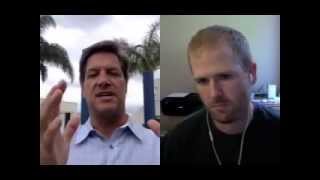
This is a recorded interview (YouTube/podcast) where John Assaraf interviews Facebook marketing expert Jon Loomer. Loomer describes his path into social media, common mistakes businesses make on Facebook (over-selling, obsessing over reach, and relying only on the Boost button), and advanced tactics that work now—notably website custom audiences, retargeting visitors (including abandoned cart flows), and partner/behavioral targeting. The conversation emphasizes building a community, driving traffic to an owned website and email list, long-term/white-hat strategies, and using Power Editor for sophisticated ad targeting.
Chapters
Alright. Hey, everybody, this is John Assraf. I'm with my friend John Loomer, who's a speaker, business consultant, and one of the leading experts in the world on Facebook. And specifically, he does an enormous amount of coaching consulting on advanced Facebook strategies. His website, johnlumer.com gets over 400,000 page views and visitors a month. And probably about 30 days ago, 60 days ago, I hired John to work with me and my team on taking a look at everything we're doing, Facebook. And holy mackerel, did he unveil to us some stuff that we weren't doing right. He unveiled some amazing strategies and tactics that really are helping us explode on Facebook again. And we were having a challenge from having about 200,000 people a day engage with us, down to about 15,000, and we're double that again right now just by implementing some of the stuff we learned from him. So I thought instead of just keeping him as a secret for myself, I thought it would be best to bring him to you and let you understand a little bit about what he knows and what he does. And as I've always said to you, you can either play the game at the kindergarten level or you can play at the pro level. And he plays at the pro level and gets pro results. So, John, thanks for doing this for me, my friends, our clients, and it's great to have you here.
Thank you so much, John. It's an absolute pleasure to be on the podcast with you.
Well, I love that. The reason that you use social media and Facebook so efficiently and your blog is just outstanding. It's one of the few that I read from top to bottom because it's so full of content all the time, is because you're living your life for your passion and to really have the lifestyle you want. And one of the things I know you love to do is be the coach of your kid's baseball team. Right?
Yeah. Awesome. Yeah. This is a crazy, crazy time of the year for me. I've got three sons. Two of them are turning 13 and 10. So this is where it really starts getting busier at that age. It's not just like once a week anymore. And I coach two of the teams and the head coach, two of the teams, assistant for another one. And there's really no way I could do that without having control over my hours and my lifestyle. So it's been awesome.
I love that. And again, your stuff is great. You know what I love about what you're doing is you're not just teaching people what to do. You're doing it and you've got so much great content there. How did you get started in using social media? And then how specifically did you land on Facebook and decided that Facebook was your avenue for making your mark in the world?
Yeah, that's a really good question. So it really dates back to back in 1999, my first real job. I did something I hated. I worked in insurance as an insurance underwriter. I was in insurance for five years and I was an awful, awful employee, I'll admit it fully. And on the side I was. What my passion was at the time was fantasy games. So I was obsessed with the stats, which probably leads a lot to what with why I'm doing the Facebook marketing, all that stuff now. But I was obsessed with his stats. I'm a huge baseball nerd. So at the time, I was managing all these fancy baseball teams and I was writing for sites. I even started my own site, which is kind of a rarity back in like 2001, 2002. That led to me eventually finally getting away from this job I hated. And I worked for the NBA for three seasons.
Oh, wow.
Yeah. And while I was there, that's when Facebook opened up to the public, to the non kids, to the old folks like us. And we actually partnered with Facebook. I say we. I wasn't in charge of that, but we partnered with Facebook when I worked for the NBA. I oversell their fantasy games. We partnered with Facebook to create an app back before you could create your own. And I was the first, one of the first, if not the first admins of the first NBA group before there was a Facebook page.
Oh, wow.
But so along with that, so that's my first exposure to Facebook and that was 2007, and I immediately fell in love with it. But more than that, I also helped lead the NBA into embracing community because that was so important to fantasy games. Like, how should I set my lineup? What's my strategy? All that kind of stuff. And you need a community for that. So I was part of the pilot for that. Like, okay, let's test it out at fantasy games. So before that, the NBA was scared of any kind of opening up, allowing people to comment, say negative things about the commissioner and the owners and all this kind of stuff. So it was really fun being part of that. So that was kind of my background there. Eventually left because we had to move to New Jersey and we didn't want to live in New Jersey. No offense to New Jersey. So after three seasons, but I worked for American Cancer Society for a while. Doing some social media, digital things. And then I was laid off. So when I was laid off, I was like, what am I comfortable doing? And so I just started my website immediately and just started writing. And a lot of stuff I ended up writing about was Facebook in general and Facebook marketing because that's what I've become comfortable doing over the last several years.
I love that. That's a great story. You turned something that you may not have even known was your full on passion and that was what you were comfortable doing. Just took what you were comfortable doing and naturally and easy and gravitated towards becoming one of the best in the world at it. And so I'm going to dive right into Facebook right now and ask you when people are using Facebook and I know you consult and coach people all over the world, what are some of the mistakes that you see them making over and over and over again that people who are watching this right now can say, okay, I'm making that. I'm going to stop doing that. Maybe you can give us two or three of the biggest mistakes that you see people make.
I think the biggest one is they hop in and they just try to sell their crap, right? It's like, why won't anyone buy my stuff? Like Facebook doesn't work and so they forget why people are on Facebook in the first place. It's to be educated and informed and entertained and all these things and you are intruding on their conversations with family and friends and whatnot. So you can't stick out like that and expect to have any kind of success whatsoever. Even if you're only doing ads and trying to sell. Like you can sell on Facebook, but it's much, much harder. It's not Google. We have a lot of people hopping in from Google. The Google world where people have purchased intent thinking they do the same thing on Facebook. You can sell on Facebook. You have to be creative. Number one, you can't take the same approach you do on Google. But it also really, really helps to build a community first that people who are raving fans, those people will buy from you. That's number one. I'm gonna hit two more. The second one, obsessing overreach as like their own. The only like the be all end all of metrics. Like only care about reach of one single post. First of all, forgetting the fact you don't know what your reach is on Twitter. On Twitter, not realizing if you post multiple times per day how many unique people you're reaching in a day. On and on and on. And third, the extent of Facebook advertising is hitting that boost button. It's basically the easy button of Facebook advertising. It's the gateway drug to the good stuff in Facebook advertising. Feel free to try it out for the first time. But eventually, you should be using Power Editor to find the true power of targeting the Facebook ads.
So there's a lot of specialized knowledge that people need to have in order to use Facebook. Right. And I'm going to go back to what I started with a little bit earlier is you can either play the game at the kindergarten level, and I always say that at the grade school level, the high school level, the university level, or the pro level. And if you're going to use Facebook just to build a community, then that's great. Go in there and have some fun and connect with people and communicate with people. But if you're going to use Facebook as one of your strategies to engage people and then sell to them, if that's what you want to do, then there's a whole different strategy to use there. And you want to get a little bit more sophisticated in playing that game. Would that be accurate?
It's absolutely accurate. I mean, look, you can just mess around, experiment, have fun on Facebook, but yes, if you want to hit that next level, you got to start understanding your metrics, got to understand your audience and what they want, what they respond to. You got to start when you target your ads, you have to start going after those people most likely to respond to you. And that's going beyond things like interest targeting. You can target people who are on your email list, target people who have visited your website, and you can do some extremely advanced, amazing things. But they aren't the intro level things. And I think the mistake so many make is they do the intro level things. They don't get the results they want, and they just assume it doesn't work because they didn't put in the time to move well beyond that first step, the kindergarten, for example, or even grade school.
Yeah, I totally agree. And it's interesting. The one thing that I love about what the work that you do is you're on the cutting edge of what's happening right now. And so what are some of the things that are happening right now on Facebook? Because I know they change. And their job, everybody, is to really give people who want great content and great information that information so that they can make advertising dollars from the people who want to reach those people. Is that pretty accurate?
It is the fact that we've got over a billion people on Facebook who are active on Facebook and so much more active on this website than any other social network. The targeting can be ridiculous. And the amount of people you can reach who are connected to you is insane. So I think the biggest update, there are two of them, but the biggest one that I just can't stop talking about is website custom audiences. And I alluded to this briefly here a minute ago, but the ability to target anyone who, number one, has visited your website, but also who has visited a specific page or section of your website within the last day or up to the last 180 days. So one example of an ad, I'll give you a couple examples. One example of an ad that I run is to get new page likes, relevant page likes. Again, we're not guessing based on interest. So I'll create an ad that says, you see this ad because you visited my website today, like my page to find out how I did it. And then you like my page and you go to this tab where it has these three articles. I also have a workshop you can sign up for to learn how to do it. But I also do it for abandoned shopping carts. So I'll create one ad that's a little bit more broadly targeted, sending people to this product, this workshop. And the thing is, 99% of people will ignore that ad. 1% will click that 1%. I can retarget them with a second ad because they went to that page. I have a website custom audience that's created for that and say, okay, I want to target those people who saw that page but did not convert. And I create a second ad. So lots of powerful things you can do with that. You can go on and on with what we can do with that. Every time I publish a new blog post and I share it, I make sure I reach people who have read my blog recently and it just makes sense instead of guessing. The other one is the behavioral targeting and demographic targeting that's getting more powerful. You can target people based on income, based on net worth, and this is from what's called partner categories. It's actually been around for a while where data mining companies provide information to Facebook where it's matched up with Facebook users, you can target them. So you have to waste money. If you have a high priced product to waste money on someone who's in the low income bracket. Or on the flip side, if you've got something that appeals to a low income bracket, you don't want to necessarily target someone who makes a lot of money. But you can also target based on the car they drive, specifically what car they drive, make and model, when they bought it, how much it's worth. I mean, on and on the actual purchase history, things that they have bought. It's really kind of ridiculous and it'll be creepy to some, but it's pretty amazing. And I guess when you start talking about recent things, something very recent that's come out lately is Facebook. And actually Facebook's just more talking about it. It hasn't come out officially a sensor in your phone. So if you have this turned on, it'll be. You can allow for it to be turned on. First of all, here, whether you're listening to a certain song or you're watching a certain TV show or movie, so lots of things can be done with that help you enter a status update without basically say you're watching this right now. Do you want to tell your friends? But also ads can be served as a result of that. You're watching this movie. So you probably have interest in maybe this Facebook page or this product or whatever it is. And it could go well beyond. So it's basically like a Shazam type feature for anyone familiar with that. So lots of things happening. It just seems to get better and better for businesses, though. I know there are a lot of people who think the opposite because of declining reach and all these things, but in terms of ad targeting, it's crazy.
So I'm hearing a couple things that I want to make sure people get in the early description that you gave us on what's working right now, where you're, you know, who's coming to, let's say your blog post or your website or a landing page, and then you're retargeting them, which means you're basically following them on Facebook with a secondary ad or a third ad. What I'm hearing is don't just go out and try and get more people. Engage with the people who you've already got that have made a gesture that they're interested in what you have and then try and reel them back in. That's number one. Is that accurate?
Absolutely. So I know a lot of people who just target by interest and whatnot to try to build a new audience, I guess. And you could still build a new audience this way. But my business an example, I've got over 50,000 people who like my page. 24,000 or so are on my email list. Consider overlap somewhere in the area of 60,000 people. But you've got these other hundreds of thousands of people who visit my website every month. Who have not chosen to subscribe to anything. I want to make sure that's not just a one time thing. They read my blog post, so get them to like my page, get them to read another blog post, let them know about this product, whatever. Those are basically warm leads that you're otherwise ignoring.
Do you have a ratio that you like to use or recommend between posts that you put on your Facebook page and call to actions of getting them, let's say off of Facebook into one of your webinars or coaching calls? Or do you have a ratio that you like to use yourself or do you just feel what it's like day by day?
It's your own strategies. For me, I don't want to create cookie cutter strategy either. It's like, okay, now I gotta do a text update. Now I gotta share a photo. Now I need to share a link back to my website. For me, yes, the number one goal is driving traffic to my website. And that's the best way actually I can provide value. I think is I have written this tutorial. Make sure you read should help you. And also though like whenever, like yesterday for example, whenever a new feature is released, if I'm not going to write about it, I'll just, I'll link to it. So a lot of times like Facebook's blog or whatever, I'll link to it. Or I'll say, hey, look what I spotted in Power Editor. Here's the image of this new feature I just found. And I'll occasionally write a text update because text updates do really well too, just to generate conversation. The main thing is one of the mistakes. We talked about mistakes earlier. One of the mistakes that a lot of people make is they look at the method of posting before what they're actually going to share. For example, for the longest time, photos were the best way to go. They said to get engagement and to get reach. And then it became text updates. So in either case they'd always use a photo with a link above it or a text update with an ugly link within it. And because they're trying to work the system without thinking about how people actually respond to these things and what the true goal is of that post. So for me, if I want to get traffic to my website, I share a link. I don't go into thinking what is the link I'm going to share or what is the photo I'm going to share at this moment, if I have something where it's best shared as a photo, I share it as a photo. So I think we Just need to have our priorities straight when it comes to posting our content. And it's not about the method, it's about what is the value you want to share.
I love that. The one thing that I question is you also have to understand how Facebook works. And what I mean by that is whenever we have a post with a link in it, it seems to get less traction, especially we're taking people off of Facebook to our website than if we have a post without a link in it. And I know a little bit about algorithms and my question of my hallucinations, my brain is Facebook wants to keep people on Facebook and in Facebook and they can detect when you have a link taking people off of Facebook, which they don't want. Is that accurate or not?
I don't think so. I don't think so. And the reason for that is publishers in particular get a lot of traction on Facebook. So those who are shown, and they've even said this within the last few months, that news organizations in particular who are sharing links get a lot of visibility on Facebook. So that kind of opposes that theory. Now, here's the thing with links. When you share a link and people are clicking on that link when they go to Facebook, they are much less likely than to comment or like or share because they're no longer on Facebook. So will your engagement be lower? Yes. And you should always split test this. But you shouldn't be looking at what's my reach, what's my engagement. You should be looking at how many referrals to my website did I get? In all likelihood, yes, you're going to get a higher reach and higher engagement from just sharing a photo with a link in it. But they're probably not clicking the right thing. You want them to click that link. So bottom line, you know what your goal is of that post. And if you want to drive traffic, make sure you're using whatever method is going to drive the most traffic. The other thing that bothers me about that, there are a couple things. Users don't do that right? When users share a link, they share a link. They don't do a photo or a text update. It's just unnatural and it just comes off as, to me, spammy and trying to game the system again. That's one. The other thing about that, keep in mind graph search. So Facebook has not yet rolled this out. I don't know when they're going to do it. Eventually they're going to roll out the ability to search for posts. So if you're going to type in your graph, search links about Facebook marketing or about power editor or whatever. It's probably not going to pull up anything where I tried to game the system with a photo where it's text update, they're actually going to pull up links. So in my opinion, whenever you try to go against what Facebook wants you to do, probably not the best idea. It might give you temporary gain, but not long term.
Love that. So you like to obviously play by the rules, do a great job with content, give people a real opportunity to, you know, take the behavior you want them to take and then basically, you know, just follow those rules.
Absolutely. Look, I'm not, I've never been black hat. I don't, I'm not even a comfortable marketer. Like, I don't like selling and it's something I've had to get, get used to doing.
I can help you with that.
I know you can, but I don't like, I'm, I'm really uncomfortable with any shortcuts that lead to short term gain because, and we've seen it SEO like, it's just not worth it. Like, yeah, you might get some short term, you know, money in there, but I'm trying to build a long term business here so I can continue to, you know, have this lifestyle, even a better one, and come coming years and do the things I want to do. Or I could take the black hat approach, make a bunch of money for a year and then fall off the face of the earth and I have to go back to working for the man again or starting completely from scratch after that. And I don't want to do that. I want to create something that's sustainable.
I love that. And that's really the key is determine what is your real goal using social media and in this particular case, Facebook specifically, and then build your model around your end goal versus short term strategies and tactics that may be okay today but not tomorrow. I think it fundamentally gears to one thing. The reason you and I became friends is you were providing killer content over and over and over again that I was sharing and with many, many people in my sphere of influence. And then I hired you to work with us, to help us as well. And here we are, me interviewing you and that was just simply because you were following a great model of giving, giving, giving, giving great content and then offering, hey, if you want more information or you want to hire me, here's the way to do that. And because of your content, I saw this guy knows what he's doing. He's playing above board. He's got some killer content. I want to learn from him. My team wants to learn from him. And that's what we did. And so it's a perfect evidence of, you know, we started off with me reading your blog, me contacting you, me hiring you. Now I'm interviewing you, introducing you to my sphere of influence, you know, or my sphere that I help influence. And so totally a perfect model to learn from.
No, I appreciate that. And really, the bottom line for me, if you do what you know is right, you're also going to avoid a lot of frustration. If you're constantly chasing things that are outside of your control, trying to game the system, you're going to be angry every time there's any algorithm change. For example. I don't care about the algorithm. I'm just constantly doing what I know is right and I've benefited from it. And that's really the bottom line of what I try to preach to you.
And I want to make sure that we also add to that. Don't confuse what John just said with not using strategies and tactics to get more people to your page, to engage with people, to use the tools, because it's not going to happen like magic. So you've got to understand that just posting stuff on Facebook and waiting for people to show up isn't going to happen. You have to get people there, then you have to be able to be smart to get them back there again and create engagement and a community that you can have, whether it's on Facebook, that you bring to your website or from your website to Facebook. And you can use some of the tools like Power Editor and Retargeting to get them back into your orbit and that everybody is busy and all of us are not competing with other people. What we're competing with is for people's attention. If you can keep their attention, you're going to be the one that they come back to because you're smarter than all the other people who think it's just a cool hit and a quick solution to make us some quick money, which is not the way to play the game.
Absolutely. Yeah. I'm spending a few thousand dollars a month right now on Facebook ads. And Facebook's important to my business, but the end goal, I want them on my website. I want them visiting my website, I want them buying my products, I want them subscribed to my email list, all those things. So really, everyone has to understand that when they're on Facebook. A lot of people trying to build a business in Facebook. No, that's just an extension of your business on your website. I love that.
And since I'm doing this outside today, by the way, everybody at my home, I've got an airplane that was just above head. So sorry for that. What I love about what you said is Facebook is an extension. It's a channel. It's a tool to use to get people to your website, which you control, you own, and you can manage on your own without having somebody else changing algorithms on you. And so that's a great, great, valid point.
Absolutely. My business would be nothing without my website and my email list.
Love it. All right, so everybody, if you want more info like this, more strategies, more tactics, amazing stuff, don't even wait a second. Go to johnloomer.com J-O N L O O M E R.com johnloomer.com subscribe to his site. You can hire him, get his programs. I can vouch for them. They're absolutely outstanding. And he's my go to guy for Facebook, so he should be your go to guy as well. And feel free to share this video interview with as many people as you can so we can help as many people together. Remember, it's your choice to have an amazing day, create a great business and an amazing lifestyle. Mr. John Lehmer, thanks so much, my friend.
Thank you so much, John.
All right.
More from John






Millions of individuals around the world are grappling with various mental & emotional health issues




