Neural Reconditioning For Goal Achievement
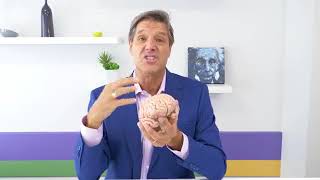
John Assaraf leads a ~30-minute coaching session introducing his "Neural Reconditioning Program," a short daily-results planner and ritual designed to create predictable results by training the brain. He outlines his morning and evening rituals (gratitude, 20–30 min meditation, ~15 min goal visualization, reading/listening, exercise), explains prioritizing three high-impact tasks per day, and frames mindset development (scarcity → security → success → significance). He offers the planner for free and invites viewers to his weekly "Achieve Even More" sessions.
Questions this video answers
September 25 (pre-orders available prior).
20–30 minutes.
About 15 minutes (on average).
Between 6:00 and 6:15 AM.
Three to four times a week.
Chapters
Hey there. Good morning, good afternoon, good evening. Where are you in the world? Do me a favor and type in where you live in the world. I'm going to be doing a slightly different session today. It's more of a little training session on how do you make it a little bit easier for yourself to achieve your goals and dreams. And one of the things I learned many years ago is how you start your day really affects the effectiveness of your day. So first and foremost, if you can hear me and see me, give me a little like or love. And just so you know, I'm going to be working off of this little manual. It's called the Neural Reconditioning Program. And it's about four or five pages on my daily winning program, My perfect day, my plan, so you can create them for yourself. This is my daily results planner. And this is how I track and measure what I do. I'll give you a copy of this. There'll be a link below. You can get it for free. How's that? So some simple, easy tools to be able to use for yourself. And what I've discovered in, I guess, many, many years of having tens of thousands, hundreds of thousands of students is not many people have, you know, a daily ritual and a success ritual that they follow that gives them what I call is predictable results. And so I would love to know, do you have a daily ritual, whether it's morning, afternoon or evening, if it is, what is your daily ritual? Maybe we could do a little mastermind session right here on this. Achieve even more training session with me, which I do every Tuesday, by the way, 9 o', clock, San Diego time, 12 o' clock in New York. So if you have two or three things that you do every day that help you get and stay focused and get you started, type it in right now so we can learn from each other. If you share yours, I'll share mine, but I won't show you mine. If you show me yours, but I'll share mine. So if you learn from other people, you can get some great ideas. So I call this the Neural Reconditioning Program. For this specific reason, most people don't have a program to train or condition their brain. And they are basically doing whatever comes up during the day. They're reacting to things. They don't plan things. They don't really dive deeper into understanding what can they do that not guarantees success, but gives them a higher chance of success. So type in your daily ritual. And I'm going to start, okay, on page number two, right over Here, and it says john's winning daily program and plan. And what I did for you is I showed you mine and then I gave you on the next page I just get my fingers wet enough for you to create your own. So there's my version, then a blank version for you to be able to create your own. So let me give you an example on how I like to start my day and what I don't have on here right now. But I start my day when I wake up and I open up my eyes. The first thing I focus on is what am I grateful for? And I always start my day with a smile saying I'm grateful to have awakened this morning. And one of my friends, Adam Markell, shared this with me. He says, you know when, when you wake up and you start with gratitude for just waking up, you remind yourself that some people didn't wake up this morning. And so what a way to start. What are you grateful for? So I focus on what am I grateful for in my life, My children, my wife, my family, friends, my contribution, the fun experiences that I have, the challenges that I have. And I just invest maybe two minutes on gratitude. And then I get up, go to the bathroom, of course, and then I focus on this list over here. So I'm going to go through this list with you and again, you can get a copy just my team will put up a link for you, it's free for you and it'll help you really have a ritual that you can modify. So one of the things I learned 37 years ago was the difference between high impact activities and low impact activities. High income producing activities and low income producing activities. The critical few things that really move the needle of results versus the trivial many things. And so I ask myself, what are the three critical things that I'm going to get done today no matter what? Three critical things I'm going to get done today no matter what. And then I put them into my calendar and then I make sure that I get those done right. After I focus on that, I do a meditation anywhere from 20 to 30 minutes in the morning and I do my meditation followed by my inner sizing. And many of you will maybe already know, but my new book comes out in the next week, has pre orders and September 25th is when it's available in bookstores. It's called the New science to unlock your brain's hidden power. And I imagine it's going to be another New York Times best seller because that's what we're planning for. But, but I Focus on priming my brain every day by doing this, I take my goals. And many of you have already got a copy of my exceptional life blueprint that I've given out in the past. But I focus on taking a look at my goals, and I visualize those goals becoming a reality. Now why do I do that? It all has to do with how the brain works. When you set a goal, you're using your left prefrontal cortex and some of your imagination parts of your brain. But when you start to visualize your goals, you're actually activating the occipital lobe. And when you see yourself achieving your goals, you're using a different part of your brain. And when you actually see yourself achieving your goals, guess what happens? You activate the nucleus accumbens and insula part of your brain. And that actually fires off your motivational circuit. And when you have motivation, guess what you want to do? You want to take action. So I invest about 15 minutes or so on average, reviewing my goals, visualizing my goals, and emotionalizing my goals so that I activate different parts of my brain to, to create synchronicity in my brain around what I have pre determined I want to achieve. And so why would I do that? Well, that's how I am training my brain to focus on what I want versus the random thoughts and disruptions and distractions that I know are going to happen every single day. So when I start off with that focus, and I do this every day, every week, every month, every quarter, every year, my brain gets the message that I'm directing it. And these are the things that are important for me that I want to consciously focus on, but more importantly, that I want to subconsciously create a pattern in the striatum part of the brain that is part of what your automatic self is. Are we all good? My team is hearing the cameras, and they just got up and they looked worried. And so once I do that, and I inner size using visualization and my meditation and a few other methodologies, then I'll take something motivational out. Whether it's a book that I'm reading to upgrade my knowledge or skills, whether it's reading my laminated affirmations, whether it's listening to my goals that I have recorded with some of our brain activation technology in the background. I do that for about 20 to 30 minutes as well. And then after that I go to exercise to oxygenate my brain to give myself a break. Because when you are using your attention units to neurally re or to create a new pattern in the brain, you want some spaced repetition in between that. And so I go and exercise and let my subconscious mind do what it does. And what the exercise does is it actually oxygenates my brain and guess what that does. It helps me feel amazing. And then guess what happens. By the time I am ready to go to work, I've already set the foundation for what I want to focus on, what I've trained my brain to focus on. And then I already have a list of my top three things that I'm going to get done before the end of the day. Now, I wake up somewhere between 6 o', clock, 6:15 every day. I don't sleep with an alarm clock, go to bed when I'm tired, wake up when I wake up. And I start this process. Now a lot of people ask me, do I start this process if I'm on vacation? Yes. Do I start this process if I'm traveling anywhere in the world? Yes. Do I do this process on a plane if I happen to be on one early in the morning? Part of it, yes. I can't do the exercise part, but all the other stuff I could do. So I've developed ritual that works for me. Now I don't know what works for you and your time schedule, but what I do know is that whatever success ritual you have or don't have, that becomes part of your default mode network and that becomes part of what you naturally do every single day, week, month, quarter, etc. And so for me, I've discovered that by having a daily ritual that gives me the opportunity to be more consistent and more predictable in my results. And then the other thing that I have and I mentioned to if you just joined, we're going through some of my daily ritual success. There's a copy of this neural reconditioning program and my daily results planner, which I'm going to get to next in the link below. Then I take a look at what are some of the things that I love to do during the day. And so I have a perfect day for myself and I try to get as many perfect days as I can in any given week, any given month. So it's wake up, exercise, do my meditation, breathing exercises, visualizations, eat healthy. I happen to be vegan, so my diet's pretty good. I don't eat refined sugar, I don't drink alcohol, I don't drink coffee. I've eliminated all those things because just I feel better. I'm not suggesting you do. I'm suggesting you understand what makes you feel awesome and great and what inspires you, what gives you energy versus what expires you and takes away your energy. I love stimulating conversations. I love teaching, sharing, contributing. I love reading, writing, doing videos. I go to the beach three to four times a week for a run or a walk. I invest time every single day that I'm in town with my wife Maria. I take time during the day to take three to five minute visualization sessions. I see my boys who are 23 and 21 now and living on their own now, at least two or three times a week. Those are the things that make up a perfect day for me. Do you know what a perfect day is for you? So that you can pick and choose and start to create as many perfect days as possible. The other perfect day for me is when I get a massage. I try to do that at least once a week for two hours. So that's just part of my, you know, my morning ritual. And then the evening ritual is a reflection ritual of what worked, what didn't, what could I do better tomorrow, what can I tweak and what am I grateful for? So those are my bookends of morning and evening rituals. First and foremost. Does that help? Because I'm going to shift over since we only have 30 minutes during our, you know, achieve even more sessions here on Facebook. Does that help you have a framework? And again, just get the planner and get this stuff and you can do this. How's the response? I don't have my computer in front of me. We spilled some water on it last night, so it's drying right now. Getting good feedback. Is this helping you? Here's what I've discovered. Highly successful people figure out a way to create predictability in their lives. And my focus. Many of you know my first book was called Having it All. And my focus is on spiritual mental health, emotional physical health. It's around finances, contribution, charity, fun experiences, relationships, business. I want to focus on having as best of a life as I can and contributing as much as I can. So I've created a process for myself. Now let me take you to the daily results planner. Okay. Now, what's a daily results planner? It's a way to focus your attention, your intention, with your behavior. So what I do is I get these printed out or I get them on my computer and I ask myself, what are the highest priority activities I will get done today? Highest impact priority activities I'm going to get done today. And I write those down. The next thing I ask is who do I need to connect with today? What's the personal stuff I want to accomplish today, really important stuff that came up. If I have time, I will for my assistant. And then I could rate my day at the end of the day. Now, does this take effort? Yeah, it takes a lot of effort, but the discipline that's required to do this is far less than the pain of regret of not achieving my goals. Let me repeat that. The discipline that it takes to do this is far less of a price to pay than the regret of not achieving my goals. And many of you know this many years ago when my first mentor, Allen Brown, asked me, you know, what I wanted to achieve. And so I really didn't have goals at the time. I was 19. I'm 57 now that I was 19 then. And he had me write out my goals for health and wealth and relationship and career and business and charity and fun and experiences and travel and all that stuff. And then when I came back to him with my written goals, he said, are you interested in achieving these goals or are you committed to. And when I told him I didn't know the difference between interest or commitment, he says, well, if you're interested, you'll do what's convenient and easy, but if you're committed, you'll do whatever it takes. And so I said, but I don't know what to do. He says, well, knowing what to do comes after you make a commitment to the goal you want to achieve. And so I said to him, well, I'm committed. And it was at that moment that I started to seek out how to achieve my goals and and dreams. The how to achieve your goal will always come after you make a commitment to what you want to achieve. And so take your goals, put them in writing, create some mini plans to activate different parts of your brain, and then start to follow this process of creating a daily ritual for yourself that makes it easy or not easy. Listen, make no mistake about this. In order to achieve your goals, you've got to get your mindset right. You've got to get your skill set leveled up. You've got to get your actions of what you do nailed. And you've got to do the right things in the right order at the right time, consistently. So the frame that I like to look at this is every day, I'm trading my life. Every week, every month, every quarter, I'm trading my life, my time. And the question is, what am I trading it for? Am I trading it to become the best version of myself? Am I trading it for my, you know, for a grander purpose or vision or mission for my life? Am I trading it for something that makes me happy and challenges me and helps me grow, grow and develop? I know I am, and I want to be a part of helping you as well. So if you want to have it all, and I'm suggesting you can have it all, maybe not at the same time when you first get started, but you can get to the point where you have spiritual, emotional, mental and physical health. You can get to the point where you're making more than enough money, money for yourself and to provide the charities. There's four levels of mindset that people have when it comes to money. And one is there's a scarcity mindset, which means there's not enough. And what you want to do is move from scarcity to a security mindset, where there is enough. And that means you need to shift some mindset skills, emotional skills, as well as strategies and tactics, what to do and behaviors. But then you go from security to success, where there's more than enough. And then hopefully you get to another point in your life where you can move from success to significance, where you can use your money to help causes and others, whether it's your family members, whether it's friends, whether it's charities, you can use your knowledge, your skills, what you've learned, and share it with other people so that you can make their lives a little bit better, a little bit easier, a little bit more fun, a little bit more loving, caring, kind and passionate. And so ask yourself, which level are you in right now? Are you in scarcity? Are you in security? Are you in success? Or are you in significance? And regardless of where you are, there's a way to get to that next level where you can really feel, feel you're making progress in your life. I personally believe the reason that my personal brand is around, achieve even more, is because I believe we're capable of achieving even more understanding, more awareness, more kindness, more love, more generosity, more knowledge, more skills, more fun, more passion. I believe that we are, as human beings, we strive for more. And some people say, well, what about monks? They don't strive for more. I said, yeah, they do. They strive for more understanding, they strive for more awareness, they strive for more kindness, empathy, compassion, and that's what they devote their lives to. So, as a human being, how big should you grow? And I don't mean in size, I mean how much should you develop as a human being? And the answer is as much as you can, just like a tree. And so part of the daily neural reconditioning program is to get your mindset right so that it is the nucleus of everything else from the inside out. And when you have a daily ritual to focus your attention and your intentions on the goals and dreams that you want to trade your life for, then you will be happier. Chances are you're going to be healthier, chances are you're going to be less stressed, chances are you're going to be more focused, chances are you're going to be more committed, chances are you're going to achieve even more. All right, so how are we doing on time? Great. So I'm told that we're about five minutes before our 30 minutes. And so guess what I'm gonna do here? Here's what I'd love you to do. If you like this, share it, please. I want to, you know, my goal is to help people and to make their lives a little bit better. And if I have made your life a little bit better today, hit the share button and let me share this with other people. And I'll give the neural reconditioning process to other people as well. So if you like it, share it. And then if you want to leave me a comment on one thing after you've shared it that you've taken away from today's Achieve Even More session, leave it for me below and I'll read it right after this and I'll try and comment to as many of you as possible. All right, have an awesome day. Thank you. And we'll see you next Tuesday at 9:00am San Diego time, 12:00, New York. Time for another round of Achieve Even More. Bye now. It.
More from John






Millions of individuals around the world are grappling with various mental & emotional health issues




