Rethinking Failure with John Assaraf
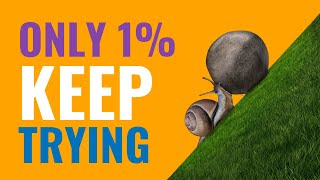
John Assaraf argues that failure is feedback, not a reflection of who you are. Walt Disney, J.K. Rowling, and Thomas Edison all failed repeatedly before succeeding. The key is identifying what skills you need, practicing them, and reframing setbacks as lessons on the way to your goal.
Chapters
And one of the ways we as humans learn is actually through failure. Sometimes it's not about how smart you are. Sometimes it's about true grit and determination. So if you want to achieve something that you're committed to achieving, why not start with what's the knowledge and skill that I need? All right, so let's have some fun on rethinking failure. So many people are so petrified of failure. What do you think about failure? So many people are afraid of failure. Like it's like a nasty dirty word. I want you to let me know if you've ever considered what failure really, really means. And is there a way to frame failure in a way that doesn't affect your self esteem or self worth? Is there a way to frame failure in a way that actually empowers you? Right. Walt Disney, right? Made a few notes. Walt Disney was fired from the Kansas City Star because the editor there felt he lacked imagination. Walt Disney, who else failed? Can you tell me another person who failed many, many, many times, only to succeed? And again, we're talking about framing it and how to frame. What about J.K. rowling? Anybody know who J.K. rowling is? AKA Harry Potter? Alright, she was rejected by 12 publishers. What about Bill Gates? What about Stephen King? What about Jack Canfield and Mark Victor Hansen from the book series Chicken Soup for the Soul? They went to, I think it was 80 or 90 publishers that says Chicken Soup for the Soul. Nobody would buy that. And they just kept going until one company, I think it was Health Communications in Florida or somebody in Florida, they were actually on their last leg and said, sure, we'll take a chance on Chicken Soup for the Soul. And after a hundred no's, they got this company to do what? To buy Chicken Soup for the Soul. And now they've sold over 500 million books. So what is failure? Is failure not just us? Maybe not meeting an intended goal, a deadline, a timeline. Is failure not really mean what I tried or what I did just didn't work? Is it possible that the people who fail and succeed have a different meaning for the word failure or for failing? Right. Is it possible that failure, as much as success, is nothing more than a feedback loop? What if we just framed the meaning of failure differently? Do you think that when we change the meaning, we change the feeling? And, and do you think when we change the meaning and we change the feeling, we actually change what we'll do or not do? Do you think that's possible? Do you think that in your brain, your bio computer? Right. If I fail And I deem myself to be a failure. Pay close attention. Do you think if I fail and the label that I give myself is that I am a failure, do you know what your brain wants to do? It wants to avoid anything in the future that would cause your self image or self worth to be what? Challenged. So if you have this concept around, when I fail, I'm a failure. And our brain says, well, I don't want to be a failure because it's painful to think of it that way. Your brain and my brain avoids what we don't want. Does that make sense? Does that make sense? So is it possible that the simple little trick, the simple little trick is to stop thinking of yourself as a failure? Why not think of yourself as an explorer? I'm an explorer of possibilities. I'm an explorer of how to do things to Thomas Edison, famous Thomas Edison, everybody enjoys light. How many of you know that he tried 1800 different times before he figured it out, Right? Was he a failure 1800 times or did he just figure out 1800 ways that it didn't work? Now listen, yours and my brain has something called an error detection mechanism in there. It has an error detection mechanism. And one of the ways we as humans learn is actually through failure. So why not embrace failure? Why not share? Why not just frame failure as something that I did or tried didn't work? But since I'm an explorer, since I like to try things out until I succeed, why not change your mindset about what failure is and who you are? The most successful people fail more times than unsuccessful people even try. Why? Because many unsuccessful people make the failure about them versus the failure about the strategy or the tactic or the thing that they did. Would you and I ever learn to walk if we didn't fail? Failure in walking is falling and then getting back up. Our brain calibrates what worked and didn't work. Our brain learns from the failures, the effort, right? And so when people associate failing with their self image, self worth or self esteem and self confidence, then they are in a disempowered state? When people frame failure, something I did or didn't do just means that thing is not the right way to achieve what I want. Is it possible that when we learn how to give something a new meaning that empowers us, we are empowered? And when we give something a meaning that disempowers us, we're disempowered? Is it possible that that thin line between the meaning we give anything determines how we feel and how we feel determines whether we do it again or not. Right? Now, how many of you are watching the Olympics, right? The Olympics, the, you know, the standard of practicing and competing, right? To level up. Yes, Everybody's trying to do their best. One gets the gold, nobody remembers who gets the silver, nobody remembers who gets the bronze. And many, many, many of the athletes, right, invest years and years and years for this opportunity. Now, if you've watched the Olympics, how many times have you heard, okay, an Olympian saying, yeah, I was here in the last Olympics or in the world Finals and I didn't win, I missed this. They got back up to get back in the game. So let's understand that whether you're looking to achieve greatness in business or your life or an invention or your relationship, your career, your health, is it possible that when you quit, that's when you may not be able to achieve the goal, but when you say, I will try, or better yet, I will do something differently, what if? So what if before we took action, what if before we took action, whether it's to make more money, whether it's to grow a business, whether it's to write a book or whether it's to lose weight and keep it off, whether it's to really commit to having an amazing relationship, whether it's to be able to create more spiritual awareness and connectivity, whatever it is, in health, wealth, relationships, career, business, fun experiences. Would you agree that most of the how to achieve any goal right now? Most of the how to achieve any goal right now, we can Google it, we can buy a book on it, we can get a course on it. Would you agree with that? How many of you have ever tried to solve the Rubik's Cube? Have you ever tried, you know, to solve the Rubik's Cube, right? Have you ever tried it? And here's why I asked. 99% of people who try to solve the Rubik's Cube fail by the standard word of fail. Okay? Now, why do people who try to solve the Rubik's Cube fail? Like, what do you think the number one answer is the reason that they fail? Let's talk about success or failure. Is it possible that they give up because they try so many things on their own without taking the time to understand that there is a process, right? An algorithm, certain colors you need to start off with, okay? In certain areas. Do you think that if you went to YouTube and just typed in solve the 2 by 2 Rubik's cube or solve the 3 by 3 Rubik's cube or solve the 4 x 4 Rubik's cube or solve the 5 by 5 Rubik's cube or even solve the crazy complicated Rubik's. Do you think that if you were committed to solving it, whether it was one or three or complicated, if you were committed and you went just to YouTube and found a 10 year old girl or a 10 year old boy, okay, that's figured out the algorithm. Do you think if you had the patience, the curiosity and the commitment to doing it, do you think that you would be able to solve the Rubik's Cube? Do you think that on your own because you may not understand the algorithm or the process, it's hard. And if you practiced doing it right for three or four or five hours, Right. Do you think you could learn the process to solve it? If you were curious, committed, and you had some fun? Well, of course you could. So my point that I made before is sometimes when we fail, we fail because we lack the knowledge and skill. Would you agree with that? Okay, so if you want to achieve something that you're committed to achieving, what, why not start with what's the knowledge and skill that I need? Right. Number two, if you are committed to achieving something, why not say to yourself, I will practice and do it until I achieve the result I want, no matter what. Now that's commitment, that's focus. Now what if you also said, pay close attention. Every time I do something that doesn't work, I am going to pick myself up, I'm going to ask myself, what did I learn or discover from that attempt? And then I'm going to use it in my next attempt until I succeed. Listen, I want to ask you a question. I got lots of questions. Right. Do you know of somebody that you think, I mean, they're achieving some success, whether it's financial or health or wealth or relationship, career, business, it doesn't matter that you think that they're not as smart as you, but they're achieving something that you haven't yet achieved that you want to achieve. Do you know somebody, you look at them and you go, how is she getting these results? How is he getting these results? Right? Like, I'm smarter than they are, I'm more capable than they are, I have more potential than they are. Let me share something with you. Sometimes it's not about how smart you are. Sometimes it's about true grit and determination to achieve the vision, the goal, the result you want, no matter what, professionally, ethically, etc. And there are some people that before you know, they act, they do a little research before they Act. They follow a pro. They learn the process. Think about this, okay? It's 2021, right? It's August 2021. There's 107 or 8 billion humans that have walked this earth before you and I. Do you think we've learned something from their journey? There are millions, hundreds of millions of books. There are hundreds of millions of videos on YouTube. Every video that you could ever imagine for learning how to. How to fill in the blank, how to start an ebay store, how to replace my glass lens, you know, how to refill the ink of my pen, how to solve a Rubik's cube, how to make an extra thousand dollars a month, how to lose weight and keep it off. How to be happier in my relationship, how to get rid of depression and be. How to is all over the place. The problem for most people isn't that you don't know how to. The problem is that you are not committed to finding the solution to whatever it is you want to achieve. How to eliminate fear from holding you back. How to frame failure in a way that empowers you versus disempowers you. How to stop procrastinating and sabotaging your success. How to. All of it's available. You're just not committed to the answer and to implementing until you achieve it. There's a story I want to share with you. How many of you read in the newspaper recently, the tribe in the Amazon, There's a tribe that they found that doesn't have a lot of contact with humans, and they just discovered this tribe that they have a 100% success rate. Pay close attention. They have a 100% success rate of making it rain when they do their rain dance. Have you heard about this? A 100% success rate. That's unheard of. Can anybody tell me what is their secret formula? What's their secret formula to make it rain 100% of the time? Okay. When they decide to make it rain, let me share something with you. This is the secret to life. Okay? You ready? This is magical. They dance until it rains. They dance until it rains. Let me ask you a question. Are you taking inspired action until you achieve the goal? Are you taking inspired action? Right. To level up your knowledge, your skill set and your action set, are you framing things, putting things in the frame that empower you or disempowers you? When you fail and you think that you're a failure, your brain says, well, I don't want any more of that. I don't want to feel this way. Well, what's causing the feeling is the meaning. When I change the meaning, I change the feeling. When I change the feeling, I change my behavior. So let's just make an agreement, if you are committed right now, right now, today, to change the meaning of failure to. I've just learned something, which means I'm getting closer to achieving my goal, and. And I'm going to take inspired action no matter what. Right? Every athlete learns to fail, as somebody mentioned earlier forward, because they learn the error detection mechanism in yours. And my brain learns from failure as much as it does success. It learns from failure as much as it does success. So the question is, can you change the meaning of failure? Can you actually shorten your success learning curve by first getting instructions on how to solve the Rubik's Cube and then, for example, solving it through practice? And do you think that practice makes permanent? Do you think that practice makes permanent? Well, of course practice makes permanent. Now, here's the problem. When you practice the wrong things, the wrong thought patterns, emotional patterns, behavioral patterns, you make those permanent, and then your brain conserves energy, all right? To maintain that pattern, because that becomes a comfort zone. So avoiding failure becomes a comfort zone for most people. Why? Because. Because most people would prefer to master disappointment versus mastering the science and art of change. Did you hear that? Most people prefer to master disappointment and stay in their comfort zone instead of mastering the science, okay. Of change. So when we are talking about rethinking failure, the first thing is no longer to be afraid of failure. And when we do something that doesn't work, we just say, okay, what did I learn? What did I discover? How did that make me smarter and better? And then what is it that I should try or do on the next attempt? So rethinking failure, right, is nothing more than then changing the meaning. Wayne Dyer had a brilliant quote when he was alive, one of my favorites. He said, when you change the way you look at something, the thing that you look at changes. And I say, when you change the meaning of something, the thing also changes. The meaning changes. So if we are giving things meaning every single day, why not learn how to give things a meaning that empower you instead of disempower you? Let me ask you a question. Has anything ever happened in your life when. While it was happening? While it was happening, it was awful, but maybe a year or two or three or four, you see, you look backwards and you see, oh, my God, that was one of the best things that ever happened to me. So have you ever had that happen where something happened and was awful in the moment. I can't tell you how many friends of mine have either been divorced or have had diseases like cancer that they say that those experiences were horrific during the time. But as a result of it, who they became and what they learned was so amazing that they would go through it again. So why not ask ourselves right off the bat, how can this empower me? Instead of I'm a failure. How can what I've learned and what I have done teach me so that I am smarter and better for the next attempt? So when we are rethinking failure, we're also not just rethinking failure, but we're learning how to give things a meaning that empower us that's constructive and positive. Empowering, constructive and positive. And instead of disempowering, destructive and negative. Is it true? Is it true you and I, one of our greatest gifts is awareness. And in awareness, isn't that when we have choice? And is it true that you and I have the ability to choose things that empower us or disempowering? That is the greatest gift that we have as humans. So if we learn from our parents, our teachers, the environment, television, to disempower ourselves, we create disempowering patterns. And then those patterns become fixed and soft wired in our brain. And then that becomes an automatic way of being. So not only do we fear failure, but then we reinforce the very fear that we don't want. So I want to share something with you to leave you off for today. You own the most powerful bio computer and organism called your brain. Would you agree with that? You don't owe a mortgage on it. You already own is a meaning making organism. Now we can get meanings of things from other people. They could tell us what the meaning is or we can use higher cortical functions. What I call is my Einstein brain. And we can through powerful questions, ask ourselves how can I use this to empower me? How can I use this to make me smarter? How can I use this, this for my benefit? How is this thing, this event, this occurrence, this failure here to serve me and to make me better. See, don't give away your power. I want you to step into your power. Does that make sense? Right? So when we are talking about rethinking failure, we have to rethink thing. How I give things meaning will determine how I feel. And how I feel will determine what I do. And if I keep giving myself disempowering, negative, destructive meanings, I will subdue, hold back my potential. We are here to expand and to to fulfill our potential, not to shrink. If giving things meaning that empower you is a skill, will you commit to yourself right now to give things meaning that keep you moving forward versus keeping you playing small, will you do that? Because if you will do that, then you'll be able to achieve more of your goals and dreams. My goal is to help you achieve your goals and dreams a little faster, a little easier than ever before. Yes, it'll take some time. Did you enjoy this? Would you share this with others? Would you share this with others? Suzanne, look in the bio, please. Would you share this with others so that we can help people reframe failure, rethink failure and listen, one of the things that, you know, I love to do is the research specifically on what's going on in that amazing brain of ours and how can you use that brain better to achieve your goals faster and easier? All right? So if you enjoyed this, please share it. Also come back next Tuesday at 9:00-Clock Pacific, 12:00-Clock New York, and we'll do another session. All right, have an awesome day. Check out the winning game of Fear Overcoming Fear Free Training. And I will see you back next Tuesday. By the way, I'm on all the social media channels. I got a lot of videos on YouTube. Check those out if you want a lot of how to's. I'm on Instagram, Facebook, LinkedIn, Twitter, all the stuff. All right, so appreciate you all. How about a high five? Boom, boom, boom. And have a great day and thank you and share. This is greatly appreciated. Bye bye now. Hey, this John. And if you like that video, watch the next video because it is packed with things that you can do right now to achieve success way faster than ever before.
More from John






Millions of individuals around the world are grappling with various mental & emotional health issues




