Unlock Your Limitless Mind and Train Your Brain for Success with Ed Mylett
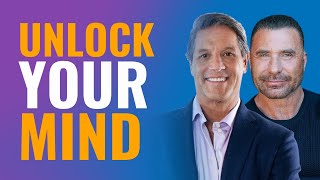
Ed Mylett and John Assaraf discuss fear management through breathing exercises and reprogramming beliefs. They explain the difference between being interested and committed, share daily visualization practices, and cover how to use vision boards and scripted affirmations to prime your subconscious for success.
Chapters
Consider that you have way more power than you are displaying in your emotional management, in your focus, in your awareness, and in your behavior. And you can feel the entire spectrum of emotions. Totally cool with that. But are you being constructive versus destructive in your behaviors?
So I have John Assaraf here with me today. John, thanks for being here.
Brother Ed, it's so good to be here. And thank you for giving me the honor to be here with you.
Pleasure is mine. As you know, we're going to go right into the good stuff here with this, man. There's too much gold there to kind of go to generalities. Well, we were doing this during the COVID pandemic, and people will watch at any given time. It could be two or three years from now. But I want to talk about fear to start. A lot of people are afraid right now, and whether they've lost a job and they're afraid it's not coming back, they've lost money, their business is going potentially backwards. Maybe they've lost the fitness they achieved and some of the weight they had lost is returned, possibly. And in inner size. You teach these first two exercises. And if you could talk about take six, calm the circuits, if you would start. We're going right to the good stuff. Plus, everyone's going to want to get the book after we do this. So could you talk about fear and some help that you could provide people in that regard?
Sure. If everybody could imagine for a moment you're driving a car and everything's going great, and all of a sudden a light pops up on your dash. Now, the average person won't take a hammer and hit the light to turn it off. An average person will take a look at, what is that light? Am I low on windshield wiper fluid? Am I low on air in my tires? Is my back trunk open? What's going on? So just like the signal in a car is meant to make you aware, fear is a trigger in our subconscious mind that real or imagined danger has percolated in our brain. And so fear, there's nothing wrong with fear. We can actually use fear as fuel. Now, I like to give people visuals. So imagine if you have two parts of your brain, there's many more. But imagine these two. We have the Einstein brain and we have the Frankenstein brain. And when fear gets activated, let's assume that that's our Frankenstein brain going, what if. What if you get hurt? What if you lose money? What if you die? What if you get embarrassed, ashamed, ridiculed, or judged? And so why does Frankenstein even get activated because we're not born with those fears. And so if we're not born with those fears, that means that something in our brain is triggering this reaction aut automatically, without our thought. And that is what we call is the fear response. And we also know that that fear response causes something called the sympathetic nervous system to activate, which causes us to want to fight, freeze, or run away. That's just the absolute reaction at a biological level of what is happening now. When we want to deactivate that sympathetic nervous system, there are several, what I call our inner sizes that we can do that actually gives us more control, more power, and the ability to reactivate the Einstein part of the brain. So inner size number one is really, really simple. It's called take six. Calm the circuits. So as soon as you catch yourself in a state of doubt, fear, worry, anxiety, stress, that means that Frankenstein is activated. If you just took six deep breaths in through your nose, as slowly as you could, and then you exhaled as if you're exhaling through a straw in your mouth, if you just did that six times, that very simple inner size would deactivate the Frankenstein brain and allow you to reactivate your thinking, imagination, Einstein part of your brain. And then you can do the second inner size, which puts you right back in control. And that one I call is Aya a I a which is now a matter of awareness. Awareness of my thoughts, emotions, feelings, sensations, or the behaviors that I've just taken, or the one I'm afraid to take. And in a pure state of awareness, without judgment, blame, shame, guilt, or justification. Let me repeat, without any judgment, blame, shame, guilt, or justification of the feeling or the thought of the behavior. Now I'm empowered again, because now I can observe. And now in this observational mode, I could say, okay, what's my intention? Let's say for the next 10 minutes? Well, my intention is to be happy. Great. My intention is to be productive. Great. My intention is to take action on this one thing that's going to help me towards my goal and dream. So in the awareness and in the intention, then if I say, what's one small action step I could take towards what I want instead of what I don't want. So all of a sudden, I've interrupted a fear pattern. I've created this state of awareness, I've set an intention, and now I'm taking action towards what I want versus being paralyzed by what I don't want and a fear that may or may not be real. So awareness is what actually gives us choice and choice is what actually gives us freedom if we make the right choices.
So good. So guys, the reason I wanted John on was because these are actionable steps that you could take. You need to go get exercise because these are actual exercises that will change your life. And I love how John arrived at this space. I want to go back. We just got pretty heavy there. And now I want to go to a little bit of a lighter space. But both of you and I have had mentors that have entered our life. We didn't come from perfect families, loving families, both of us, but not perfect families. And by the way, I don't know that that exists.
Yeah, I think that, you know, a dysfunction is normal. That's normal. If you had a functional family, that's not normal.
That's not normal. Right. And I guess to the extent that the dysfunction you experience is probably part of these things, we have to undo and we'll talk about beliefs in that regard in a minute. But you're this guy, Mr. Brown. I've heard about Mr. Brown for years. But it's hard to imagine a man has become a multimillionaire. I mean, just so you know, John's built five, six different multimillion dollar companies. One of them is on 4 billion in revenue. He's taken a company public on NASDAQ. Means a very accomplished man here. But Mr. Brown was one of the catalysts for that. John was kind of a screwed up youth there for a while making some bad choices. And you have this moment where you're talking about goals with him and he asked this incredibly powerful question. And I mean, honestly, I've been in the space 30 years. I've worked on myself a great deal. I understand the mechanics of the mind. But sometimes the most basic things have the most deep impact on us in our lives. When I read this story, I must have told this story probably 35 times the last two weeks to people. So if you'd share that, I'd really appreciate it.
So if the person watching or listening can imagine 19 year old kid working in a shipping department of warehouse hating my job at $1.65 an hour back in 1980, this is April of 1980. On the side, I'm selling drugs on the side, I'm doing breaking and entries on the side I'm part of a small little group of kids who got adept at shoplifting and doing all these stupid things as a kid. And I knew that my life was either going to, you know, I'm going to go to jail or the morgue at that Time one of the two is going to happen because we're doing some pretty, pretty heavy stuff at the time was just getting more and more and more advanced and more riskier. So my brother, who's a tennis pro and a coach at the time, asked me to come from Montreal to Toronto to meet one of his clients. And his client's name is Mr. Alan Brown. So I took the train 350 miles for lunch with this guy to see my brother for the weekend. And as I, you know, went into, I went right from the train station to lunch, my, my brother introduced me to Mr. Brown. And he's cordial, very, very nice man, very kind. He asked me some of your goals. I said, I'd love to buy a car. I'd like to move out of my parents house. I'd like to get a better job because I'm not making enough money doing that. He says, well, I understand you're also getting yourself into a lot of trouble. I was like, yeah, I am a little embarrassed now that my brother told him all this. And he said, listen, what are some of your bigger goals and dreams? I said, I don't know what you mean. He said, listen, having food on the table and wanting to buy a car and all that stuff, that's all nice and dandy, but what do you want to do with your life? And I have no idea. I said. And so he gave me this document, this sheet, it was the 1980 goal setting guide. And on it said, at what age do you want to retire? How much net worth do you want to have? How much money do you want to make a year? What kind of lifestyle do you want? What kind of charity, you know, charitable things do you want to do? I'm like, what the f is this? I'm 19 years old. When do I want to retire? I want to get a damn good job. Forget about retire. So I said, listen, take a few minutes and go and write this stuff out. So I sat there and I wrote, I want to retire at age 45. My net worth, I want to be $3 million. I want to make $250,000 a year. I want a Mercedes Benz, I want a house at the beach and I want to. I just started rifling off this stuff and I gave him back the document and he goes, these are some really good ideas you have over here. So where'd you get these ideas? I said, well, I like watching the TV show called Lifestyles of the Rich and Famous and Robin Leach shows, all these nice homes, kind of like your Lifestyle, Ed. And I said, I want that kind of a lifestyle. And he says, listen, son, he says, all of this is possible. I'm going to ask you one question. And the answer to this one question will determine whether you have it or you don't. In the back of my mind, I'm going, come on, give me a break. One question. I said, sure, Mr. Brown. Fire away. So he says, are you interested having this kind of lifestyle, achieving these things, or are you committed? And I said, Mr. Brown, what's the difference? And he said to me, said, son, he says, if you're interested, you'll do what's easy and convenient. If you're interested, you'll allow your stories and your excuses and the fact you went to grade 11 and left school and the fact that your father's a cab driver and your mother's a, you know, a seamstress at a store. You'll come up with all of the stories and reasons and excuses why you can't. He says, if you're interested, all of the obstacles will be bigger than your vision and your goals. He said, but if you are committed, you will do whatever it takes. You will upgrade your knowledge, you will upgrade your skills. You will develop the beliefs and the habits to match the vision and the goals. He said, so, son, which are you? And I said, a little scared. I said, well, Mr. Brown, I'm committed. And he just smiled. He reached out his hand to me and he says, in that case, son, I will be your mentor. Oh, boy, so good. And I was like, wow, that's great. What does that mean? He goes, well, I will teach you because I've made all of these goals that you want to have already. I've already done those 10 times over. He says, the first thing I you to do, I need you to move from Montreal, where you live now, to Toronto. And I said, move from Montreal to Toronto. I don't have a car. I don't have a job in Toronto. I gave him all these excuses. He said, stop. He says, there you go, already giving me excuses. I said, I know, but this is the truth. You don't know, right? He says, son, he says, here's your first lesson. First you set the goal. You make a commitment to achieve the goal, Then you figure out how you're going to do it. So I said, fine, fine, I'll move to Toronto. And he says to me, great. The second thing I want you to do is on May the fifth, there's a new real estate class that starts. It's a five week course nine to five. I want you to enroll in it. It's 500 bucks. I said, excuse me? I said, 500 bucks and you want me to go back to school? I failed English. I failed math. They kicked me out. I was happy. They were happier. I don't have the money. He says, there you go again. Look how fast you go back to your story. And so I'm like, Mr. Brown, I'm not very smart in school. I didn't do well in school. And I started to give him the story again. He goes, stop it. Are you interested or are you committed? I said, I already said I'm committed. He says, good, then make the decision. We'll figure out all the rest afterwards. Long story short, Ed, I made a commitment. I said, fine, I'll do it. My brother said, I'll lend you 100 bucks. I had $60 in the bank. Me some money. My father lent me some money. May 5, 1980. Okay. 40 years ago, I got my first date in real estate school. Five weeks later, I passed the test. And some people may want, how do you remember these dates so clearly, 40 years ago? And the answer was on June 20, 1980. I passed the test on my own. You remember that, Ed? I cheated to get out of high school. One of my friends gave me the answers to all 50 questions on a multiple choice so I could get out of high school. Amazing. Amazing. The first test I passed on my.
Own, and here it is 40 years later. And it affects you right now telling that story.
Yeah, it's like it was the first time I felt proud. Wow, brother, that's.
Wow, you guys, 40 years later, millions of people helped, and it still affects this man to this day. If you should be asking yourselves right now, what a great story, you guys, Are you interested or are you committed? I made a video today. It's not going to be out for a couple days, but I made a video about dreams. And I think people sometimes think I don't have a plan, so it disqualifies me from the dream. That's not the case. My biggest dreams, we always want a plan and a strategy. But my biggest dreams, I had no flipping clue how I was going to get to them. No clue. And what happened was, though, if I got committed to them instead of interested in them, the people, places, things, situations, circumstances begin to reveal themselves. And you find them, you attract them. It's part of the secret that I learned many years ago from some guy. Forget his name. Oh, there he is in front of me. So you're 100%, right, guys? And so you got to ask yourself, are you interested or are you committed to what your dreams and your goals are? There's this thing you touched on there about beliefs. And another place where I consider you a guru is about the beliefs, the subconscious brain to the subconscious mind. There's a difference between those two things too. Everybody. But you have this great thing where you took your real estate agents that were doing a certain level of production and you worked on their subconscious. So tell them a little bit about that and then talk to us about beliefs. How powerful are they? What are they? Why do they matter?
So I'll start with the story first and then I'll share beliefs and then what to do. So we have some practical things you can start doing today. So back in 1987, when I bought the franchising rights for ReMax of Indiana, I had no idea how to build a company. I was 26 years old. But I had another mentor who I invested $75,000 to become his partner, to have the opportunity to learn from this man who at the time was worth probably $100 million. And so I was very, very keen on learning. And I didn't know how to build a business. I didn't know anything other than how to sell real estate. And I set a goal to generate $1 billion a year in sales. And I set the goal for five years in the future. Not knowing a billion dollar goal is like mind boggling big for me. And there was an interview the second week I was in Indianapolis. I moved from Toronto to Indianapolis for this opportunity. And I was interviewed by the Indianapolis Business Journal. And I said in the interview that I had a goal for a billion dollars. And the reporter said, are you aware that there's two companies that have been in the state of Indiana for 80 years, 100 years, the other one, and they haven't hit a billion dollars in real estate sales in all of these years. And I said, yeah, I know it's Graves and Tucker and you can let them know that I'll be the first, right? And as I said that, I almost felt like I put my foot right in my mouth because I didn't know how I was going to do it.
Right?
Long story short, five years later, we sold enough franchise, recruited enough agents, and we did $1.2 billion. And we were stuck, which is a great place to be stuck. And I was asking myself, how is it possible that I'm training these agents with strategies, with tactics, with selling skills, marketing skills? We were like the gurus of here's the books, here's the cassettes, here's the trainers, here's like out of the deep end. And the agents who, for example, would make $30,000 a year, kept making 30,000 a year. The agents who made 50 kept making 50. The agents who made 100 kept making 100. And so I realized that they weren't missing the skills or the knowledge. There was something else at play. And what helped me from the age of 19 to 27, 28, 30, was every single day. And I still do it today. I will share this with you in just a little bit. Every single day I was priming my brain with the beliefs and the self image required to achieve the goals that I wanted. So I got 75 agents together who agreed to pay $3,000 each to be part of an inner game training. Forget the outer game, the inner game training. We worked on affirmations, visualization, mindfulness meditation, listening to our affirmations on our vision on our cassette recorders. We had the little cassettes we put in our cars. And so I had them work on their self image and self worth and self esteem and to develop the beliefs that we were going to imprint or impregnate into their subconscious mind by listening to these audios every single day, twice a day, and while they were driving. And those 75 agents over six months increased sales by $100 million. My gosh. We didn't teach them one thing about selling more. We taught them about changing their identity and their belief structure so that it matched the goals they wanted to achieve. And then I said, holy shit, this works even for other people, not just me. So we started to teach that to all of our agents. And we created these cassettes with these recordings on them of the beliefs that we needed them to believe, the self image that they deserved, that they were good enough, they were smart enough, and we went from 1.2 billion to four and a half billion a year within four years.
Wow. And that's my beliefs. And so guys, that's a little bit.
Of beliefs and believing in a new self image and identity and a new story.
Gosh. So good, you're going to tell us about beliefs, what they are.
Yeah. So. So when you were born, were you born with any beliefs? No. Were you born with any habits?
No.
Were you born with any fears?
No.
No. So from a neuroscience and neuropsychology perspective, a belief is nothing more than this. Imagine that you're born and your brain is made up of 100 billion marbles. And every time you have an Experience, or somebody says something to you, you read something, or you watch something, these marbles make these connections. And the connections that are reinforced go from conscious connections to subconscious connections. And once these subconscious connections are made and reinforced, they run the show 98% of the time. So a belief is nothing more than a reinforced pattern in the brain. And our conscious brain can choose what we want when we're in that part of our brain. But our subconscious mind can't choose its program. From the age of 0 to 3, in the imprinting years, 3 to about 7 or 8 the modeling years, and then 8 on it's the experiential years. And so if you have these powerful beliefs that you're good enough, you're smart enough, you're worthy to achieve the goals that you have, if you have these powerful leads, you are able to achieve any amount of income you choose, no matter what the amount is. You just need to learn how. So if you have these empowering beliefs, you have brain coherence between conscious and subconscious. What if you said, okay, I want to make, let's just say, $100,000 a year or a million, it doesn't make a difference. And I asked you, what do you need to believe about yourself to achieve this? I need to believe I'm smart enough. Good. Write down I am smart enough. What else do you need to believe? I need to believe that I am worthy. I need to believe that I deserve this. I need to believe that it's possible. I need to believe you write down five or six or seven beliefs that are just words on a sheet of paper. Now, let me stop for just a moment. I'm going to tell a story and come back to this. I want you to imagine that somebody tapped you on the shoulder sometime today and say, hey, I work with Steven Spielberg and Tom Hanks in Hollywood, and we have this new script, okay, that if you get really good at this script, where you could read it in front of a camera without the script, we'll pay you 10 million bucks. Now, I want you to imagine you've never seen the script. You don't know how to act, but they said to you, we're going to give you an acting coach. We're going to give you everything you need to memorize the script. We're going to give you everything you need to act it perfectly. What would you do to take that script that's on a piece of paper that you've never seen before? What would you do to take that script to make it yours for you to own? It. And the answer is, you probably read it. Like, what once would you read it? Maybe a hundred times, 200 times, 500 times. Do you think you might role play with somebody while you're holding the script in your hand? Do you think you might research the role? Do you think you might take a camera and practice it? And do you think that if you practice it one time, 50 times, 100 times, 500 times, you can finally put the script down and you can get in front of the camera and go, boom, here is the script. Do you think you could do that? Well, guess what? A script that's on a piece of paper that you don't believe, with practice, you start to believe. So what happens if you take a belief system and you start to imprint it into your subconscious mind? Initially through conscious repetition. But there are ways to access the subconscious mind that we know today that are faster and easier than just doing it consciously. And so you take a vision of you achieving your goals and dreams. You take the beliefs you need, you learn how to manage your emotions a little bit better, and then you develop the habits, which again, are nothing more than neural patterns in the brain that have been reinforced. And when you learn how to deactivate the destructive ones and activate constructive ones through space repetition and reinforcement, now you are resetting your default way of being. So a belief is nothing more than a reinforced pattern that if you learn how to deactivate it and create a new one, it is like a software upgrade for your brain.
Wow. So, guys, what he didn't say. So good, John. Thank you, guys. This is stuff that you pay thousands of dollars for, but you, by the way, can get in his book and you get here because I know him for free. But, guys, what he didn't say is beliefs are necessarily true.
No, thank you.
And this is important. You know, I've told you many times, everybody, that your thoughts aren't necessarily true, your beliefs are not necessarily true. They're patterns reinforced over time. And so if you could create this new script that's reinforced these patterns over time, that's a conscious way of doing it. Give us one key. We know now there's subconscious ways to do it that are faster and more powerful. Give us one that is a new hack to do this.
So one that everybody's heard of and very few people do, unless you're a professional athlete, astronaut, or Navy seal. Is visualization. Yes.
Thank you.
Simple, simple. I know you had Phil Mickelson on in the past, and I watched him. And if you think about visualization, is Simulation. Now here is the difference.
Whoa, that's good. Okay, go ahead.
So visualization is simulation. So when we close our eyes, or even if our eyes are open, and we start to use our Einstein brain, the imagination, we now have just activated one of the biggest centers of our brain, the occipital lobe. That's connected to the motor cortex. It's connected to the motivational circuit, the nucleus accumbens, that releases that dopamine, the. That makes you feel good, that makes you want to take action. So if you visualize yourself achieving the goal, if you visualize yourself behaving in ways that match the new belief, if you even visualize the words, or you take the words on a sheet of paper and you read them, run your right finger across it, run your left finger across it, close your eyes, see it, and feel it. Your brain is creating a mental movie with the words. And as it creates a mental movie with the words, that's happening in your subconscious mind. And when you give the subconscious these instructions, a couple things happen because of the way the brain hierarchy works. Number one, it's survival. But then number two is safety. And then number three is energy conservation. Now, when you do something 20, 30, 40, 50 times, it takes about 66 days to 365 days of repetition to override an old habitual circuit. Not 10 days, not 21 days, 66 to 365. So if you visualize yourself achieving the goal, feeling the success that you want to feel, seeing the belief on the screen of your mind, you are actually creating a neural network through the science of neuroplasticity. And the networks that you reinforce become the most dominant networks. And since your brain wants to conserve energy, if you do this on a consistent basis, your brain says, okay, you're doing this so often, let me just make this automatic. Let me set aside the old beliefs, let me replace it with the new beliefs. And now you've deliberately and consciously evolved yourself. Oh, my gosh.
So, guys, it's patterns. John. Thank you, guys. John used a word earlier, which was coherence. And it can fly by. But when you've done this hard work, and I say fun work, by the way, on your subconscious brain, on your subconscious mind, what happens is now when you set that ambitious goal, there's a coherence between what's lying underneath you and what's on the surface. And that's why you know people, you all have someone, you know that boy, when they point their mind at something, it's almost like a weapon. When they point themselves at a dream, they draw it towards them. Part of that's energy, part of that's vibration, But a big part of that is coherence in your brain. And so you've got to do this difficult work that you might think is difficult, which, by the way, is fun, is easy. And it's really just a matter of patterns and taking control of your life, taking control of the things you do. You can literally everybody change your life. You can change the external parts of your life by changing the internal or the inner sizes that he teaches part of your life. That's why I do this show what we're talking about.
Can I just piggyback on something, please? Since you picked up on the word coherence and you mentioned the law of attraction earlier, for the people who think that the law of attraction is, you know, think, believe, and you'll achieve first, I'm going to tell you that's bullshit. But I want you to think of your brain just a little bit differently. And think of it this way. Let's say you love rock and roll, and let's say rock and rolls on station 95.5. If you're on station 92.1, that might be classical. If you're on station 98.7, that might be punk rock, but a 92.5, that's rock and roll. So imagine coherence just means locking your electromagnetic spectrum of your brain. Lock it and load it on exactly what you want. So what's the vision? What's the goal? What are the beliefs? What are the emotions that create coherence? So you're locked and loaded to the frequency of the universe that is matching that goal. Part one, part two is when you get locked and loaded, you've actually activated the Einstein brain connected to the motor cortex, connected to the dopamine release in your body. And when that happens, okay, now you're in coherence. But there's another part that happens in this Einstein part of the brain. That's actually what the latest neuroscientists, psychologists are thinking is connected to this GPS part of our brain, to the frequency of where all of the tools, resources, people are that resonate with that frequency. So we've been evolving for what, two and a half million years since Homo erectus to now 108 billion humans on Earth, with a brain that's been changing and growing. And my belief is we're just scratching the proverbial surface. When we talk about, you know, a little quantum mechanics or quantum physics with entanglement, we're all connected. We're all tuning into the frequencies that are us and within us and all around us. Now when we learn to use our brain better, it's just mind boggling how we can achieve goals and dreams that we thought were impossible to achieve before.
Many of you know about vision boards and we can have a competent person talk about it. John, I can have you touch on that a little bit. But John goes even deeper into these accomplish boards I think you call them. And he's got a crap board which I've never flipping heard of in my life. And again guys, you're just not going to get this anywhere else. So could you just. These are strategies that are real, that work, that we both do. So there's two prolific entrepreneurs who are now in this space that are saying these are the things we do and isn't it ironic that we both do them and we're both addicted to them and we both attribute it to our success. So please talk about that, brother.
So I have my vision boards and I actually have my exceptional life blueprint that I've created. It's about 50 pages of my prayers, my rituals for my spiritual growth, health, wealth, my money story, my inner mission, my outer mission, you know, some of the stuff either that I have or that I'm creating. And so I create these visual representations to trigger the biggest part of my brain called the occipital lobe and to activate my memory center. So I have vision boards for what I want to create. So I'm giving my brain the exact instructions so that not only it focuses helping me achieve that. What most people don't understand about vision boards or creating goals in writing that are specific is that your brain is a deletion and distortion tool as well. So if you give your brain the instruction of this is the stuff that's important to me for health, God, spirituality, charity, fun experiences, my children, my mother, my father, myself, whatever it is. And you say this is what I want to trade my life for, delete and distort everything else. Now all of a sudden you're using your brain as a deletion and distortion organism in order to be able to help you hyper focus on what you want. So part one is get absolute clarity on what you want. So your brain helps you eliminate what you don't want. Part one, part two, right? Part two is I tend to be a goal seeking guy, right? And I used to not celebrate the small stuff and I used to just like, you know, fuck a bigger goal. Bigger goal, Bigger goal. More. Bigger, bigger and somebody says to me like, are you going to like slow down just to enjoy some of the stuff that you actually have done for yourself and for people in your family? And I was like, well, let me create an accomplished board.
So good.
So accomplish board. You passed that test on your own 40 years ago. Celebrate that you helped this person who was challenged and celebrate that, you know, you did this for him or for her or for yourself. Celebrate that stuff to remind yourself. Because I'm tough on myself. Like, I'm like I'm, let's come on, let's go. It's a goal, let's go. And sometimes I forget the stuff that I have done, the stuff that I do do that I need to remember. So I created an accomplishment board and a list so I can just go to it when I feel like, holy shit, am I smart enough to achieve that next thing? Am I good enough? What a lot of people don't know, Ed, is when I was a kid I used to feel like I wasn't smart enough. And when I was a kid it held me back. And today I still feel like I'm not smart enough. And that fuels me to get smarter. So I use it. I set big goals, I go, God, I don't have the skills, I don't have the knowledge. But I can figure it out. I've got contacts, I've got friends, there's books, there's Google, there's YouTube, there's Holy Mackerel, I don't need to have all the specialized knowledge anymore. So I have accomplished where there's also, you know, a Kraft board is what conflicts are happening right now. I often say that there's only four things that are holding you back as a human being. Only four. There's not 25, there's four that are. The core one is if your vision and goal is bigger than your self image. Okay? So if you feel you deserve it, you can have this vision and goal and be excited about it, motivated by it. You will not do what it takes to achieve one. 2. If you have limiting beliefs, if you have a vision and goal, but you have a limiting belief that you're too young, too old, whatever the case is, your limiting beliefs will drive your behavior. 3. Fear. Fear of being embarrassed, ashamed, ridiculed or judged. Fear of failure. Fear of disappointment. And we'll talk about disappointment moment or fear of succeeding and failing again, disappointment. And then the fourth one, by the way, is you're lacking the knowledge and skill required. So that actually sets up a self doubt trigger which activates the Frankenstein brain to which causes you to lose motivation. But most people prefer to master disappointment and comfort zones instead of mastering change. So if I master disappointment, I know what I got. I just have to deal with, okay, this is what I got. And if I master my comfort zone, then at least this is the devil I know. Yes, versus mastering change. And we know what's going on in our brain. We know what's happening neurologically, biologically, emotionally, physically. And all of that is a skill. It's just a skill. So why not just master change? Why not become an adaptationist right now, in the time that you need it the most in the world? Because if you don't, then you're just going to keep repeating the same patterns that are going to get reinforced and it makes it harder in three months, six months and six years. So master change now and make that one of your core competencies, and then you master your life. So you may or may not know this story yet, but 10 years ago I was 238 pounds, 33% body fat, borderline hypertensive, almost full on diabetes, severe sleep apnea, not in good shape. So I said, listen, you've done okay in business, you've done okay with your relationship, you're happily married, great. This and that. Look at you, you're. You're a physical mess. And so words are really, really, really critical because there's something really important, listening. And so if you're using words that you're reinforcing, if they're self deprecating words, you're reinforcing a self deprecating self image, which means Frankenstein brain is going to be triggered by those words. So if you think about weight, what is it? Every pound is 3,500 calories of energy. Right? And so when you think about, what do you do when you lose something? What have we been taught to do when we lose something? Try and find it.
Go find it. Go get it back.
So if weight is energy, I said to myself, what do I need to do to release this energy back into the universe, back in the form of hydrogen, oxygen, nitrogen, carbon, whatever it is, so that somebody else who needs it right now can use it? It served me long enough. I'm ready to release it and to change my physique, to change how I feel, to change how I look. My goal back then for my 50th birthday was to get into the best shape of my adult life for 50, which I did then. My goal is to have a six pack at 60, which I'm already there so I'm actually almost there. But the whole idea was the words that I use right are really important because they're the words that I listen to and reinforce.
This right here is a huge thing to be considering, guys. And it comes truth with money, relationships, every area. Start to be aware, start to be cognizant of the words you use to describe yourself. Circumstances, situations, even the words you use to describe your goals and dreams.
Can I just say one thing?
Yes.
So in my health section, ok, I script every word for health, wealth, relationships, career, business. So it says I have an abundance of physical and mental energy. I feel and look great. I am the healthiest I have ever been being spiritually grounded, emotionally centered, mentally focused and totally healthy and happy are my highest priorities. I now weigh 195 to 198 pounds with less than 12% body fat. I am consistently in a peak performance state of flow, creativity and productivity. My blood work is perfect and I now have an abundance of energy, focus and peace of mind. I sleep deeply and soundly. I feel well rested and energized every day now. I read this every day. I have that on my mobile phone of my recording that I listen to every single day. I look at my document every day and run my fingers across it. Why? I want to enforce exactly the words and the patterns that I choose into my subconscious mind. So I choose consciously, very carefully, like an artist writes a song. I write my life song for health, wealth, relationship with very specific words. I imprint those into my subconscious mind. They formulate my conscious dialogue.
I love this. So guys, subtle thing. Got to point it out. Two things. You don't just read. You read with your finger. That's a different visual stimulus for your body. The reason he's got that bone is you're not giving yourself the auditory feedback as well. So there's science behind what John's teaching you. I got to tell you right now, this is a literal flipping masterclass on how to change your life. It's a masterclass like I'm. You guys, I'm so excited. And if you're not sharing this, man, you're cheating people out of life. You know why John's so good at this? Because there's one level and you can just tell if you're watching the video version of this. There's a goodness about his spirit when you're in his presence, even when it's just a zoom presence. Everyone that knows the two of us mutually, I love to hear how brilliant and smart and successful people are, but What I really listen for is do I hear repeatedly, he's such a good man. This comes out of you. It's natural. And, guys, both of us really worked on ourselves to build our businesses in our lives. Something has overtaken both of us where now we're working on behalf of you as well. And I know John's so great at this, not only because it's changed his own life, but because he's learning to teach now. He's learning, he wants to reach a billion people in the world. And there's a difference. And I admire that about you, brother. And I just want to acknowledge that in you because I know that's why you're so great at this. I've improved my ability to articulate and have breakthroughs not just on my own behalf because I only do so much for myself, but when I think I can elevate other people. And that's why you're such a gift. And it leads me to the more.
Moral purpose than us.
Yeah.
And.
And you are doing it, John, like, you are doing it like lives changed today. And at the end, I want to talk about life, and I know this is a sensitive topic for you, but I want to talk about grief last. We could talk about so many other things, but there are people right now grieving that are listening to this. They are grieving the loss of their business. They are grieving the loss of their job. Maybe it is the loss of a home or money. Could be the loss of their health or that of a loved one. Maybe their relationships in a little stress right now because of all what's going on. And without being too personal, John's gone through a very, very recent moment of grief.
You can be personal.
I don't know why I'm getting so upset. John's recently lost his mother, and I'm talking about in the last days this has happened, and it's been just really a couple weeks. And I'd like you to talk just for a second about coping or dealing with grief. Probably coping is not a strong enough word. Maybe persevering, thriving through grief and your own experience with it, if you would. You said I could ask you anything today. So you knew that that meant this topic was going to come up. So could you share that with us, please?
Sure. So I think what I want to do is start with philosophy first. Right. So as opposed to the experience first, philosophy first. I personally don't believe we die. So if we go backwards in time to, you know, mother's egg, father's sperm, that was just energy that combined. And through the transmutation of energy and energy multiplying 26 times, you know, the DNA of my mother and father and X and Y chromosome created this sentient being called, you know, my body and John. So I believe that we are spiritual and that whatever you believe about what spirituality is and the creator, but there's like, something created us. You want to call it God. I honor that you want. Whatever you want to call it is irrelevant. So if we came from that, then is it possible that's what we return to? And right now we have a physical experience for X number of days, moments, years. So about two weeks ago, my mother was diagnosed with coronavirus, and she was pretty healthy. Walked in her retirement home, went to physiotherapy three days a week, ate on her own and talked to her every single day. And she was diagnosed with coronavirus. Six days later, she was dead. As you and I discussed, we had a virtual goodbye when my brother and sister and I said, I love you, I love you, I love you, I love you a million times in 25 minutes that we had with her. And then we got my children, my brother's children, my sister's children, a couple of grandkids to say goodbye to their mother. And, you know, eight hours later, my mother was dead. And the first thing that I, you know, that I felt was gratitude. And people asked me, how much? How did you feel gratitude that your mother died? I said, listen, my mother was 87. She could have died and suffered with Alzheimer's, with a stroke, with a heart attack. You know, she could have, you know, suffered in the hospital. Coronavirus. She died peacefully. I am grateful for that. I am grateful that I spoke to her every day for the last 20 years. I am grateful that every 100 days I got to see her because I flew to see her. I am grateful that I have a brother and sister that are close, that we can appreciate our mother. I am grateful for the lessons she taught me. I am grateful for the wisdom. I took my heart and I went right to gratitude. Of all the things, I was grateful for. The doctors, the nurses that took care of her now want you to just understand. I was extremely sad. But I could hold both emotions at the same time, right? Sad. Oh, my God. I just lost my mother. I couldn't fly to see her. Like, I would have gotten on a jet and done that five minutes later. Jet, let's go. You know, I couldn't do that. I couldn't hold her hand. I couldn't caress her Hair. I couldn't look into her eyes and tell you. Tell her, mom, I love you. Thanks for being such a wonderful, amazing mom. Couldn't do that. So what I could do, I could choose what to focus on. I could choose to focus on what I had control over. So we arranged for a virtual funeral for my mother. Virtual goodbye, virtual funeral. My nephew was taking a video of my mother being put in the cask. She was already in the casket into the ground, you know, and that was on zoom. And I was grateful that I was able to do that. Versus nothing. So grief. A lot of times when we are focusing on what we've lost or what we're losing, we're not focusing on what we've gained. A lot of times we're focusing, okay, on what's possible. As a result of this, we tend to mono focus right on either good or bad. I like it. I don't like it. It tastes good. It doesn't. It's hurting me. It's not. But what if you could learn how to observe both? What if you could observe the law of polarity in its entirety that says you cannot have an electron without a proton, and in without an out and up without an. And you cannot have that on this planet, in this universe. So is it possible that with just a little bit of training, whether it's mindfulness or meditation or awareness, you can be sad, you can grieve and be joyful and happy at the same time? See, it's when we are afraid that we're losing something, that we've got that Frankenstein brain of ours saying, what if, what if, what if, what if? Oh, my God. Oh, my God. Oh, my God. Oh, my God. Oh, my God. When we are in that state, we can't be focused on what are we going to do about it. Now, in a grieving state, like with my mother, the only thing I want to do about is make sure that we respect and honor her life, and my brothers and sisters and my dad, etc. So I need to focus on that. And when we're talking about, you know, a business going under, a relationship, you know, that's unraveling right now, if you're focusing on all of the disempowering emotions and circumstances, you cannot be focusing on the solution to that possible problem. So you have to learn how to manage the emotions. And for those of you who don't know what that's like, I want you to fucking imagine I just got really mad. That's so fucking funny. A Hollywood actor or actress learns that they are not their emotions. They have emotions. Now, everybody's going to grieve differently, but I want people to understand that you don't have to be disempowered in grief. You could be empowered in grief. And everybody's going to do it differently. And some people are going to go inside, some will go outside. But we have the ability to frame things in ways that empower us and gives us the best chance to move forward instead of being a victim of it. And all I'm saying is consider. Consider that you have way more power than you are displaying in your emotional management, in your focus, in your awareness, and in your behavior. And you can feel the entire spectrum of emotions. Totally cool with that. But are you being constructive versus destructive in your behaviors?
Unbelievable. John, your mother must be so proud of you. I mean, my gosh, what a remarkable son she has.
Thank you.
I love you, brother.
All our mutual friends have said, you guys have got to meet.
I gotta tell you, it's so obvious. Why now? I mean, I'm just gonna keep my. I'm just gonna let the audience tell you, okay? Because it's not fair to other people that have been on my show. But let's just be real. This has been unbelievable. And everyone has told both of us to. Two of you need to get together. And we've talked for a very long time. John and I have. And just. I actually reached out to John to do this. Ironic. Within a couple days of this situation, he said, can you give me, you know, a little bit of handling the situation with my mother? And I have not. I cannot tell you. Number one, I'm so grateful that we did it. But I got to be honest with you, I'm even extra grateful that it was right now. This is when it was supposed to happen. Don't you have that sense?
Oh, yeah. There are no accidents in God's universe.
That's amazingly true. Very prophetic.
A lot of things I don't understand, but there are no accidents.
I love that. I don't understand all of it. I actually love that life. Entertaining and interesting. If I knew it all, I'd have nowhere to go. And I didn't leave anywhere. So I love the exploration, the learning. And today was that for me with you? Last thing. Where do they find you? I know they're going, this guy I got to know more about. I got to follow him. Where do they go?
I've got an Instagram page. Onassaraf. I've got a Facebook fan page. And then my company is myneurogym.com m y n e duro g-y m.com everything we do is around the neuroscience and neuropsychology. I just happen to love spirituality and quantum physics as well and that, you know, all the stuff in between. So myneurojim.com or on social media and.
Go get intersized to everybody. I read it. In two days, you're going to be blown away. There's no wasted pages. It's just all great. It's just like today. There was no wasted moments. Same with this book, John. Thank you. You're a treasure.
Hey, this is John. And if you like that video, watch the next video because it is packed with things that you can do right now to achieve success way faster than ever before.
More from John






Millions of individuals around the world are grappling with various mental & emotional health issues




