
A Step-By-Step Guide to Building A Million Dollar Insurance Agency
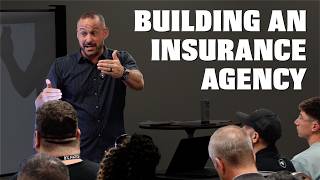
John Wetmore walks through how to build an insurance agency to a million dollars. The video covers the concrete steps and strategies needed to scale from startup to seven figures, aimed at agency owners looking to grow their business.
Chapters
I'm going to run through, um, I'm just going to kind of talk a little bit about building in general. I've been doing this a long time. Those that don't know, I've been with FFL since the day they opened the doors. I was actually with Sean and them at a previous IMO as well. Got started in 2010 in the business, and people always want to know, man, how do you build this thing? And buckle up if you want to build. It's, it's one person at a time, and usually that one person quits and goes somewhere else or goes back to their job, and then you got to start over with one more. So I'm going to go through, I'm going to, I'm going to hold on, I'm going to share, I'm going to try to share my screen. I'm going to write some things here. Alright, so the business is really simple and I think most people overcomplicate it and they think there's some kind of magic to building. I'm going to tell you it's having a lot of conversations with a lot of people and that's, that's really what, what it boils down to. Certainly we can give you things to say. There's been, I don't know, 100 of these calls. I've given some specifics. Everybody else on here that trains is great at giving specifics, but I always like to kind of go back to the basics and help people understand there's only, there's only a few, there's only a few ways to kind of attack this thing, if you will. There's people you know, and I write like crap, so I apologize, but you get the gist. And there's people you don't know, right? It's warm market, cold market. And then from there you have licensed people and you have non-licensed. Those things cover literally everyone on the planet. Right? So now the question is, how do you want to attack this thing, right? People you know, it's, it's, it's your circle, it's friends, it's family. Um, and then to be honest, people you don't know, you can make them people you do know. But like, I think people are hesitant, which is funny to talk about this business when, when it comes to talking about this business. But at its core, um, I kind of— it, it's sort of a little bit about who you are as well, Right? Either you sell a bunch and you make a bunch of money, or you don't make much money at all. Those, those are the two types of people on here. When you make a bunch of money in this business, it's really easy to teach people how to make a bunch of money. And you can, you can do a lot of the heavy lifting. You can teach people what you did to make money is all you have to do to teach this. You go, I get people that go like, I don't know how to contract people. You did get contracted, right? Why can't you just tell them what you did? Now, many of y'all are on a team that has someone that handles all that stuff for you. Great, utilize it. Again, if you're, if you're not making any money, what I've learned is people are hesitant to build because they want to figure this thing out first. And all I, all I want to let you guys know is when I wasn't making any money, I relied on the people quote unquote above me to help me build because they were trying to build. And if I recruited it helped their business. So like this dude Mike Kilomet, he didn't hire me, but he was the guy making a bunch of money in my group. The guy who hired me, the best thing— and I love him, he's a great dude, we're friends— but the best thing he did was get out of my way and let me be me. He didn't try to hold me back. He didn't try— he wasn't killing it on sales production. He was making enough to get by and pay his bills. And he was— he liked recruiting and he liked being home a lot with his family and all that was good. But he let me do me. I wanted to build this thing big, and he never held me back. And if he did, I'd probably run him over. But what I did well was I went, I went above and went to the person that was making money, and I started helping them make money, right? And so I didn't really know what the hell I was doing. I was actually part-time when I started recruiting. I was working a full-time job, and the way I would recruit is I'd get on the phone and He taught me to— and this is really with people you— I don't, I don't know. I don't consider myself like an amazing recruiter in the, in the, in the true terms of the word. Like, if you look at like, I don't know, Alabama football, when they recruit someone, yo, they go get them. They find their guy that's killing it in high school football and they go find them. Does that make sense? Like Andrew Taylor, I think of— he was an amazing recruiter. He went and found people that were good in the business and he recruited them. Dom Rogers, he, he finds athletes and he goes and he recruits them to the business. I wasn't amazing at that, but what I was really good at was not having a fear of talking to people. I would talk to strangers all day, every day. I would run ads. I didn't care. I would talk to whoever. I called my circle. I went through my phone. When I was introduced to the business, I was taught to go through your phone and find 100 people and call 'em and tell 'em what you do and seeing if they're looking to make extra money. I did that, you know, I would run ads on at the time Craigslist. Now you can run ads in a zillion different places. You can post things on Facebook, you can do things wherever. But what I did well is when I was, when I was quote unquote interviewing people, I think I'm a really good interviewer. I don't— again, I don't consider myself an amazing recruiter per se, but I think I got really good at interviewing. And the reason I got really good at it is because I did a ton of it. And I'll get to some, some numbers to give you guys some perspective in a little bit. But I kept it simple at the beginning. I just wanted to help people understand. Um, I wanted to understand for me if they realized what they were getting into. They needed leads, that it was commission only, and it was $10.99. If, if they didn't, if they weren't in on those 3 things, I was done with the phone call because I'd done hour and a half interviews before, which sounds pathetic, but I did. And then at the end they'd be like, is this, does this come with a base? And I'm like, shit, how did I miss that? You know, an hour and a half in. So I would cover those 3 things: leads, 1099, commission only. Make sure they understood it. I'm a big fan of sending a video when someone applies or if they have interest, like, yo, check out this video. Sean has one. I think everybody's CRM on the website now includes one with your own version, but there's all kinds of like quick little overview videos of FFL. I was a big fan of sending that. And then setting up a phone call and being like, do you understand leads 10 and 9 commission only? If so, we continue the conversation. And be honest, at the beginning, all I did early, like in 2012, I was like, hey, this dude Mike is teaching me how to make like 5 or 10 grand a month selling life insurance. Are you open to a conversation with Mike? That's how I recruited like my first 50 recruits. That was it. There was no magic to it. I just was willing to put in the work. And then when I would connect him with people, I would get on and we would three-way, or I'd send them to a meeting that worked really well. There's a lot of, um, lock-in meetings now. There's trainings that people do. There's, um, like the, the, uh, showing the opportunity Zoom events that a lot of y'all's managers do. There's all kinds of opportunity for you to connect people that want to know about the business with people who know a lot about the business, you know. And that's all I did was kind of connect the two dots. So I would connect them with Mike somehow, some way, whether it was in person, on a call, in a training, in a meeting, in a hotel room, all the different things we did to recruit. I would just bring people to him and I would edify Mike. I talk about what he was doing for me and helping me, and I just wanted to see if they were interested in a conversation with him. That was it. And then as I started doing it more and more, he would start talking to people and he'd teach me like, Yeah, you brought this guy in. He didn't know it was commission only. He thought there was a base. He doesn't have a car and he has $0.03 to his name. Probably you should have asked him some more questions and I would just learn as I went, right? I'm going to go back up to this people, you know, people you don't know. Again, for me, calling people, you know, was really simple. I think speaking to clients is a really easy way to find opportunity. You know, you sit down with a client, you make a presentation, preferably make a sale. It's really easy to go like, Hey Bob, um, hey, my company's hiring. Do you happen to know anybody looking for extra money that could do what I just did for y'all? Very non-intrusive. I'm not like over the top trying to pitch them on doing anything. It's just a question. But if I ask that 10, 15, 20, 30 times a week, it starts to create some traction. And I've hired a ton of clients who go, I'm looking for extra money. Or they go, my, my cousin, my niece, my daughter, my son, whoever just got licensed. Can you have a conversation? And what I loved about it is it was really easy to teach that. I'm a big fan of like duplication. I want simple. I can tell you ways to spend a bunch of money and bring in a bunch of recruits. They're not magic. You'll just get a shitload of them all at once that suck just as equally as the rest. But it'll be a lot of people to talk to. I can teach you about automations and AIs and tech texting, automate all kinds of stuff. But I wanted duplication because if I— just because I can afford to do something at maybe a higher level, the masses in my group can't. And to build a really big business, I need to be able to teach simple and duplicatable. And you going through your phone and you asking every client is free, easy, and most of y'all won't do it. So for me, it just— it helps me understand who's serious about building and who's not. And if you will do it, if you start talking to your guys and girls who want to build, most of them won't do it. You know, another really simple way to get people that you know is posting on social media and not being weird and aggressive about it. But if you, if you post valuable content about your business and you constantly post stuff about successes you're having or clients you've helped, or just again, it doesn't have to be like, hey, come work here, you can make a zillion dollars in 3 minutes a week. Not that kind of stuff. Just post what you're doing and the right people will come to you over time. It's the— there's this term John Maxwell talks about where consistency compounds. And just because you start posting today or this week or this month, it doesn't mean you're going to get flooded with recruits. But if you do it over the course of time, you know how many DMs I get a week now? I've been doing this sucker 12 years. I get literally every day of the week someone DMs me. About something, want to either thank me for helping them or they want to work here. They want to know more. They want to be part of what we're doing. And I don't even post like, hey, come work here stuff ever for any of that. Follow my stuff. I just post what we're doing and I post trainings and videos. And this, this thing will go on social eventually. My team's recording it. Sammy's recording it. We'll put it out. So from there, you got people you don't know, right? And this is literally just talk, having a willingness to talk to people. I've hired people in airports traveling, waiters and waitresses. I was, um, I was doing a hike this weekend. I did a couple, but on Saturday I went to this spot in the other side of Atlanta called Stone Mountain. Some of y'all might know about it. If you don't, it's literally just a giant mountain made outta stone and people hike it and it's busy as shit and it's touristy and people. There's, there was hundreds and hundreds and hundreds and hundreds of people there all day long hiking up this mountain. And, uh, right when you walk through the gate to get there, there was 4 dudes standing at the entrance handing out signs or like little flyers asking if you wanted to get to know Jesus, right? They believe in what they do and they just ask enough people throughout the day. I can't imagine they keep doing it if it doesn't lead to more people somehow, some way. And I've always kind of joked like, dude, you could just stand outside of Walmart or stand outside of a mountain and hand out flyers and see if people need extra money. That will work. Is it the best way? Probably not, but it does work, right? It's a volume play when you don't know people. And again, social media works. Can you go viral and hit something on social? Sure. But for me, it was just like the number of reps. So everywhere I went, I would, I would, I I would talk to people, and not in a weird way, but I would be curious. I would ask them questions. I would learn about the waitress or the waiter and see what they do full-time, see if they were happy, see if they— especially if they had a great personality and were taking care of me, it was a good opportunity, you know. And then another, another really simple way is if you find people on social that maybe are in the business, or that's a really easy way. But one of the methods is go find people who are posting on social and build a relationship with them. Comment on their posts. You do that consistently, consistently over the course of a few weeks. Someone that's at another company, at a captive place, at somewhere, eventually they're going to see your post, your comments so often they'll be like, who's this dude? Click on your stuff. And if they see the social posts you're making, click on your link, go to your homepage. Like little things work and they add up over time. Now again, can you run ads? Yes, you can run a million different ways you can run ads. So I don't have any secrets on that. You can run ads on every little platform there is known to man. You can run Facebook ads, you can run on every job posting board, which we've done all of. And that does bring people in, but you got to be willing to spend money to do that. And for me, it was like the— what I, what I did really well is I took people that I don't know and I found people they do know. And that was probably the biggest piece that helped me build my agency is speaking to people I don't know and finding out who it is they do know and working their warm market. That's how I built my whole agency, running ads, talking to people. And for me, every person I ever spoken to, whether they worked here or not, whether they got contracted or not, I looked at that person as a, as a recruiter for me. Just every single person I've ever communicated with is a recruiter for me. Free recruiter because I never had to pay them, you know. Um, and I would just ask, if I'm talking to you and we decide we're going to have a conversation and go forward, I'm like, hey, question, I'm building my agency, do you know anybody else that would be interested in making some extra money because I'm hiring more agents? Super simple, but I asked it hundreds of times a month. And then, you know, I, I, there's a story I always tell. I went out, I used to fly to Utah. I'm in Atlanta, I've been in Atlanta like 20 years. I used to fly to Utah to sell insurance because at the time direct mail was a really big thing. And, um, an opportunity opened up there where I could get a bunch of leads. And, um, I would fly out there once a month and I would, I would book appointments on— I would, I would start making phone calls in Atlanta on Sundays and I would start to book like Monday, Tuesday. And then when I got out there, I would dial every day. Like Monday I'd start booking for Tuesday, Wednesday, and Tuesday I'd book Wednesday, Thursday, and Wednesday I'd book Thursday, Friday. And I, I'd literally stay out there, the north part, like near Salt Lake, Monday through Thursday. And then I'd drive down to St. George, which is like 3 or 4 hours away, south Utah. And I would run there on Fridays. And then after Friday, I would drive to Vegas and I would take a red-eye home to Atlanta. I did that every, every month for like 6 months. And then what I would do out there is I would run ads. And I would try to meet with people out there, whether in a hotel conference room or just take them to dinner. And I'll never forget, I took this one dude, his name was Jesse, took him to dinner one night after I ran and I showed him the apps. At the time we were writing paper apps and we get a void check and I would pull them out and I'd show them all the apps I wrote in his— basically in his neighborhood. And I started talking to him about coming on board. And if any of you have recruited, you've always had that person that's super excited that turns out to literally do nothing. But during the conversation, they're like, I'm going to kill it. I'm the best sales guy, you know, I kill the phones. This is the best opportunity. I've been praying for this. All this stuff. And it sounds good. And during it, towards the end, I'm like, hey, dude, who else? Who else do you know that would be looking for an opportunity? You seem like a smart guy. You probably know some people that are also looking for something and would be excited as you are, that are probably praying right now. Who else do you know? And I'm gonna get you in class in the meantime. So he's like, I know some people, I'll connect you. Long story short, this dude never even registers to get in the class, but he knows a girl named Jackie who's licensed in Texas. He connects me with Jackie. I hired Jackie. Well, she knows this dude named James, and what was that other guy's name? Alan. Both in Texas, both licensed. After maybe like 3 months, they were doing like $150 grand in volume, right? From a dude who never even got in class or got contracted. Just by me going like, hey, who else do you know? You know, we have another, another situation. They're still here today. I would, I used to DM people on LinkedIn. When you sell a bunch of insurance, when you're like, when you're this person, It's a lot easier to recruit than when you're this person. You make a bunch of money, it's really easy to recruit because people want— they believe in you more. So if you don't, you got to get really good at promoting people who do make money. But I started making a bunch of money and I was sending people DMs on LinkedIn. Nina and Hayden have talked about doing this on Instagram. I'm just telling you kind of how I did it back in the day. And I would say, hey, see, you're in the business. I'm just curious if you're happy with where you're at financially. I help agents make $400 grand a year. Would you be open to a conversation? And I would send 100 a day, like manually type that, copy and paste it, 100 a day. This one dude hits me up, he's like, yeah, I'd be open to a conversation. Interview him. He's licensed. We talk. I sent him to Zach Tchaikovsky, who you all know. And because at the time I used to fly— same after, after Utah, I used to fly to Ohio to sell. Eventually Zach took over Ohio because I found him there. He wanted to go there to start building, so I would help him build there. And, uh, this dude happened to be in Ohio. I connect him with Zach, and I'm like, yo, Zach, can you help this guy out, get him started? Zach gets him started. He goes, hey, who else do you know? Well, he knew freaking everyone at a company you all know. Zach started connecting all the dots with everybody this guy knows, and that group today is doing million a month in production, something obnoxious. From one DM and going, hey, who do you know? You know, so this thing can connect dots. What I've learned is the majority of people tend to give up, um, early because they don't see instant success. And I'm going to share this other screen. One of the things I believe in a ton— let me go back to this. Is I'm a big fan of this concept. It's— and I literally wrote a book on it called Do More Now, Get Better Later. You see it, right? And it literally means do a bunch of the stuff, right? Like, people want to get really good at recruiting. They want to get really good at onboarding. They want to get really good at getting agents started and get really good at training, but they don't want to do any of the stuff that makes them good. And so I just have a motto that I'm going to go do a bunch of it and kind of make a mess of things, and I'll worry about getting better at the details as I go. Like, I'm not afraid to mess stuff up. I'll make a mess of things, and I don't have fear of that. And what I've learned is a lot, a lot of y'all have a fear, and you think you have to do it perfect, and you think you have to have this perfect onboarding process. And does that help? Sure. But like, we didn't have that at the beginning. It, it was a disaster for years, but I was willing to talk to people, and I was willing to learn the process as I went. So for me, it just became about talking to a lot of people. And there's a question I ask a lot of folks. So my assumption is most people, after doing this for a long time, aren't super excited about where they're at in business, whether sales or the recruiting side. And have this sign that hangs on my office wall, and this is a question I had to ask myself and ask a lot of people. It— do you hate losing so much that you're willing to change? Meaning what you're doing ain't working. If you want different results, you have to change. Or do you hate change so much you're willing to lose? And I find so many people over the years just hate changing things. They hate changing their personality. They hate making changes in life. Change scares people, and you choose losing over change in your own world. And I was like this for years, and I was tired of it. Um, one of the things I was going to show, and What, what I'm a big fan of is activity. And I have this saying, DBAB, that we use in my office. Some of y'all may know what it means. Some, some, most probably don't. Um, but again, the, at the beginning, I'm a big fan of doing more, like literally doing more activity. I'm, I, I don't, I don't find it very hard to outwork most people. And I figure if I talk to 30 people a week and you talk to one over the course of the next 3 years, I'm definitely gonna grow more than you're gonna grow. And it was a very easy strategy for me. And you know, it's, it becomes this, like I teach my son Maddox, he plays baseball. I think I see Brent there. Is that you, Brent? Yeah, it is, dude. The lights are really bright here and I can barely see the screen in front of me. Right, Brent? Y'all, y'all probably know Brent Abernathy. He was a dope athlete, baseball player, played major leagues, Olympics, all that jazz. And, um, I always, again, I always use Maddox as an example. We're trying to, trying to get— he loves baseball. He's trying to get to, to, to— he plays on a travel team and he's trying to get better, and he, he just loves the game. And it's like, if Maddox wanted to get really good at like fielding ground balls, Brent, could he go watch all your highlights and get really good at it, or would he have to take a bunch of fucking ground balls? He's got to take a bunch of ground balls. And I always see like little kids, man. They'd go to do these ground balls and they try to sidestep it. They try to catch it like on the side, right? And only because I watch guys like you and the coaches— you're supposed to get in front of it. Why? If you miss the ball, it hits you in the body, and you take one, you, you take enough to the chest, you'll learn how to hold your glove right. And I just see so many agents kind of doing the same concept, and they kind of step to the side and they don't want to take the hard things on, you know. They want this to just be easy. And I don't, I don't, I don't know that route. Can you find a guy who's done one of these that's like, yo, I hired this dude and he brought on 475 people and we blew up in 3 months? Yeah, sure, those guys exist. But if you know the concept of like the bell curve, bro, that's an anomaly. That ain't the norm, and it sure as shit ain't duplicatable. But for me, talking to a lot of people was very easily duplicatable. So I'm a big fan of doing more, Maddox takes a bunch of ground balls, Brant, and he starts taking pop flies in the outfield. What happens? He starts to believe in himself more, right? You start doing a bunch of interviews and you start talking to a lot of people and you start getting burnt, and all these people that say they're going to get in course and kill it don't. You start, you start having more reps, you get a little bit better at conversations, you start seeing a little bit more results, you start believing in the process more. You talk to one person a month, one person a week, one person every couple months. Dude, you have no belief that any of this stuff works, right? And the, and, and things started to shift for me when I started having a lot of conversations. I'm like, yo, that person actually did something. Like, holy shit, they actually finished their class and they did it in like 48 hours. You know what I mean? Like, oh my God, that person said they were gonna buy leads and actually bought them. Shit, this thing works. And the, the activity for me breeds belief in the thing, right? And I, I remember. At the beginning, man, back in the day, Brent, obviously you were here my entire time. And, uh, my first 2 years from 2012, the summer of 2012 when I started until the end of 2014, I did over 700 interviews myself. And Brent knows how many agents I had at the end of 2014. It was this guy only. I had nobody. And I had gotten some agents started, right? A couple sell and then they quit, or they'd call Brent or Mike and they'd bitch about how much of a dick I was, and they were quitting, or they leaving, or they wanted to switch teams, or whatever it was. And, you know, but I did 700 interviews in 2 years, dude. I learned some stuff, right? I learned a lot about me, mostly, and the things I had to change. But because I had that many, I had 5 or 6 or 7 that would start to write and they would quit. So I'm like, all right, I know how to— I know how to get some people started, but how do I get them to stay? Right? So I had to start doing more of the things that were working. And again, that led to belief for me, which then started to see more achievement. Again, Maddox, same concept. He starts— he's— dude, he's— and I tell— I've been telling the story lately. He played in— shit, where did we go? What's that? Dan Cooperstown. We did that Cooperstown thing this year, Brent, little World Series deal. It's not really the World Series, but same concept. They can only play when they're 12. And, uh, I always talk about like little kids when they're, when they're playing baseball, when they come up to bat, right? What is their ideal result? What do they want every time they get up to bat? They want to hit a home run. Sounds just like agents who are recruiting. Every time they do an interview, what do they want? They want to hit a home run, dude, and they want to hire you, bro. Ain't how it works. It's not at all how it works, you know. And but as Maddox starts to, to, to hit more off the tee and take more batting lessons and get more coaching on the field every week— he played on 2 teams and he did lessons because he freaking loves the game and he wants to get better and he believes in this concept of doing more— he started to see how the pitches were coming. He started to be able to read the ball a little earlier. He started to know when it was going to be inside or outside or in the dirt or what his favorite pitch is. He started to learn stuff. Right. And we, um, we go into— and Cooperstown is funny. They, they basically let the kids cheat, Brent. They make the field 200 feet. So they bring the fences into 200, right? And those that don't know baseball, I apologize, but 200's like I could throw the ball over the fence from home plate. And, uh, but they do bring it in. And then when you hit a home run, they sell you these little— they stamp and engrave the ball that says, my kid hit a home run in Cooperstown. And they sell you a case and it's like $45 every home run. Because you— they buy. So it's a, it's a money printing machine, but the kids feel good because they hit home runs. So Maddox, the whole 3 months leading up to it, he wants to hit a home run. He's never hit one, but as he's doing lessons, he starts, he starts barreling the ball more. He's a, he's a really good base hitter. He gets on base a lot, and all he wants to do is— I'm like, dude, you— and the coaches are telling this too, dude, you gotta stop trying so hard to hit a home run. Why don't you just worry about making contact? Just make contact, dude. Work on your strength, work on your hips, work on your follow-through, Work on the little details and the home runs will come, bro. So we're leading up to this, this, uh, Cooperstown, and certainly Maddox at some point was like, they came out with this new hype fire bat and it's, it's brand new and it, and it has that speed of this and the velocity, exit velocity is this. And I'm like, bro, the bat ain't the magic, you know what I mean? And it's again, same thing here. Y'all think like, I had a dude, and if he's watching, I love you, He's like, can you give me the job ad you post to recruit? I'm like, dude, you think that's the magic? Here's what I did for my job ads. I went on all the job boards and I looked up what we do and I stole someone else's and changed the words to make them mine. That's all I ever did. I don't have like a magic post. The script ain't the magic. The I'm— it's like the, the, all the things you think are the magic aren't the magic. So we get, we, right before Brent, uh, They're practicing with the kids and we go to this park that has a 200-foot fence so they can get used to it. Maddox hits a home run off a pitching machine, right? But he's like, it's a pitching machine. The speed, it was straight. It was easy to hit, but he never hit one. So I'm like, dude, he's getting a little— he has a little bit more belief. He starts to have a little bit more of an achievement where he hit one out of the park. So the next 2 weeks leading up to it, I'm like, dude, it's coming, bro. You just keep working on it. Keep practicing. Keep feeling what you felt the time you hit it out. I promise you it'll come, you know. And as you start to see small successes in this business and start to see people getting paid, man, the first time I helped someone get paid, which early on my daughter was one of them— you remember when Shay used to sell, bro, back in the day? Seeing her make more money part-time than like a lot of our families are making full-time, it was a pretty cool thing, right? And I started, I started having little, little incremental successes getting people started. Right. And for me, that's like, that's, that was the process of becoming who y'all see today. You have to like, you can't just be an amazing agency builder. You can't just be an amazing recruiter today without going through these steps. No different than Brent couldn't be an amazing baseball player and get drafted and go to Olympics without going through all this shit first. It's literally impossible in anything. And I'm teaching Maddox this, right? And we get, we, Long story short, we get to Cooperstown. First game, he tries so hard, dude. He ropes like 3 balls literally where the outfield doesn't have to take one step and they catch the ball. But he ripped them, dude. Lined one to center, lined one to short. In his third bat up, he hits a nice ball and the outfielder makes like a ridiculous diving catch. But he hit the ball pretty good. So we get after and he's pissed, of course, because he wants to hit the freaking home run again. No different than y'all get hung up on or yelled at, or an agent quits and you're pissed all day and think this don't work. And I'm like, dude, you're killing the ball. I'm telling you, one's gonna go. You just have to get there. Third game, we get up and, uh, second game, nothing happened. Third game, we get up, he gets up, finally he hits one and it goes, uh, left center field, cracks over the fence, dude. It goes 202. Right? So he hits his first home run ever, and he comes around the bases. He's excited, of course. You know, he gets around, everybody's cheering, whatever. Every other field we play on, dude, it's a pop fly out for sure. I mean, it's a standard catch. Outfielder doesn't have to move. It's an out. Maddis gets done with the game. He comes up to me. I hand him his ball. I'm like, you excited? He's like, yeah, dude, but I ain't confused that that was a pop fly in our field. Like, he knows it. I'm like, bro, but you, you've never hit one out before, even on 200. You should be proud that you accomplished something. And I showed him his video, dude, and he hit it like on the handle and it was a half swing, right? He hit it like really close to the handle, barely swung. I'm like, dude, you barrel that thing, it's gonna fly. And I said, do you, did you hit it good? He's like, nah, dude, I hit it like shit. I'm like, you hit it like shit and it went out. Like, give yourself some credit, dude. Like, believe in yourself a little bit more, you know? And again, same thing here, man. I remember early on I was pissed and struggling, and thank God you and Mike were around to go like, I mean, you are talking to a lot of people, you do get them started, but you're scaring them away. So we got to work on that next, right? That was the next thing I had to work on. So literally, dude, next game, Maddox gets up, first pitch, I'm trying to record it, right? And there's the way Cooperstown works, the kids have a dugout, and right next to it, basically the parents have a dugout. And there's a giant pole in the way. And Maddox is a lefty, so we're down the third baseline. So me recording him, the third base coach is in the way. I can't, I can't see. He's literally in my way. I can't see Maddox. So I run down to the end, which is kind of like halfway in the outfield, to get a better angle. And I'm hitting record, and as I'm turning to hit record, the pitcher's like going to pitch. So I'm barely, I barely get it. And first pitch, Maddox barrels the snot out of the ball, dude. It goes over our fence and hits the fence on the next field. Probably goes 240, 250. Like, he smashed it, right? And he only did that because he had confidence building up and leading up to this. It's the same kid. And to be fair, I showed him the video, dude. He half swung it too. It wasn't even full. And I'm like, bro, you get this swing down, you're gonna be deadly. And so we're working on now Maddox becoming in his own mind a home run hitter, you know? And a lot of y'all don't believe that you can do this thing and you don't believe you can do it because you haven't seen success, because you haven't done anything. You're waiting for the magic to hit before you do the work. And that, that I promise you, that's not how it works. So end of 2014, I got me as the only writer, 700 interviews. I got one selling agent a month and it's me. So I had to realize I had to make some changes. Hence the original question. And I started working on me and the Do More. I don't have time to go through it now, but the concept to do more, the book, everything I talk about that actually means stuff like the D is for discipline, O is for ownership, M is for mistakes, O is for obsession, R is for resilience, and E is for expectations. I had to work on all those things, Brent. Like, I had to own who I was. I had to learn from my mistake. Like, there's— I had to be obsessed with getting better. I had to be resilient, meaning 700— you know how much debt I had, dude? Every single person who sold left me debt because I didn't teach them how to do anything, dude. You know what I'm saying? I wasn't teaching the mechanics. I wasn't teaching them to take ground balls. I wasn't teaching them to put— I was just throwing them in, hoping like hell it worked, you know? And so What I, what I, what I encourage you guys to do is to put in more activity towards the thing you eventually want and the person you want to become. You literally can't become this person without the effort. There's no high-end role on the planet, no athlete puts it in without doing a bunch first. And again, if you're that elite person that's amazing at it, cool. The shitty part about that, Brent, you've seen this a million times over, is the— those of y'all that are like killing it at sales, or comes easily to, it's really hard for y'all to build because you can't speak to the average Joe. I'm just an average dude who was an accountant that just wanted to— wanted to win, and I was poured into. And so what, what I love about this model is I can help anybody. This, this takes no skill set off the rip. I'm not telling you you're not going to have people quit. I'm not telling you you're not going to have debt. I'm not telling you people aren't going to have chargeback. That all— that's coming. But with time, man, 2014 I had a handful. By 2015, I bet we had a dozen writers every month that stuck. 2016 we had a couple dozen. 2017, that's when I hired Amanda. I had like 50 writing agents every month at that stage, you know, and I was doing relatively the same amount of work as I was doing in 2012, 2013, interview-wise. I was just getting better at it. Why? Because I had more belief in it. Because I started seeing a little bit of achievements and I, in my mind, had become someone who can help people get paid. But it, it took building that, right? My favorite part about this acronym, I'm gonna share what it really means. Amanda actually challenged me, and this is the ownership part, Brent, cuz you know my style is like, yo, suck it up or get the hell out. That's my, that's my style. But people have always challenged me to like articulate things better and I need to deliver things better and Not everybody vibes with like my style necessarily, but what this thing— I mean, how do I— this is what it really means, the bab, just so you know. And this is what I really want to tell a lot of y'all that want to build something, like just cut it out, stop whining, stop complaining. And this is for me, I tell me myself when I'm thinking negative up here and I'm not having the success I want to have every day, I literally tell myself, dude, don't be a bitch. Just go for the things you want, you know what I mean? And go at it and learn from it and stop, stop letting your own thought process and your mindset hold you back from winning. The steps of this thing and teaching people how to sell insurance is easy. You've all done it. Everyone in here who's watching has gone through the process. It wasn't that deep. You didn't need a freaking master's degree to do it. Now, do you sell at a high level? I don't know, dude. There's a lot of people in here. I don't really know. You know, but what I wanted to do was keep things really simple, keep it really duplicatable. And again, for me, all the, all the building stuff starts with free and activity because I know most people aren't willing to do the work to achieve the things they verbally say they want. Most people, when it gets hard, they quit on themselves. And so probably one of the best things I do is I test people with activity first. And I let them quit on themselves, Brent. So they never have— they stop quitting on me, dude. You know what I mean? So I give really small incremental steps like, hey, do this thing and call me back. Do that. I give you an example before we— I don't even know how long this call goes, but I'm gonna wrap up in the next few minutes. I, I had a couple people reach out to me. I spoke at an event this week or last week. I had a couple people connect with me like, hey man, can you mentor me? Can you help me out? And I'm like, yeah, sure, dude. I like the guy. And I said, but you know, it's, it's like slid under, Amanda. It like slid under there. Oh, um, my personality is like, I'll help, but I— the requirement's going to be a lot of activity. That's the only way I know how to do it. I don't, I don't know the sales pitch or the recruiting pitch that's going to work 95% of the time. I don't— I'm not that guy. So the dude comes in and he's like, can you help? I said, yes. I said, but I'm going to be testing you the entire time to see if you're coachable and see if you do the things you say you're going to do. Because everyone says they want to get rich and everyone says they want to build and everyone says they want to sacrifice and everyone says, you just tell me what to do and I'll do it, John. I hear it every mother effing day. So I bring this dude on. First day, he— first of all, coming into it, he's selling $1,000 a month. $1,000 a month. So I'm irritated to start, and I feel like I know how it's going to go, but I'm trying to be nice, dude, and help people. And I, I give the guy a shot. So I'm like, hey, first thing I need you to do is build your schedule with your wife and bring it to me. And then I have this goals thing I do where you list your goals and, and, and you list things you're going to stop doing to hit your goals. So I'm like, that's exercise one. And the very first thing you don't do, I, I'm quitting on you. So he brings the list to me and he gives me his hours and his activity, how much he's going to do. I'm like, cool. First day we get in, he's going to start at 11, dial till 6. He's going to hit however many dials it was. I think it was like 300. He hits 150. I'm like, bro, what happened? You said you were going to hit 300. He's like, yeah, an emergency. My mother-in-law's, uh, I'm like, yo, bro. All right, reset tomorrow. And here's what I want you to do. He's like, yeah, but what do I sell to the script? And I know if I, if I get him on the phone, I'm gonna kill him. And, uh, and if, if I just, what do you say here? And, uh, if I have the in-home, if I tweak this, I know it'll help me. And he's, he wants all these details. And I'm like, dude, do me a favor. Can you, can we, can we reset tomorrow and you do the activity you said you would? Yes. And then do me a favor. I want you to record 2 phone calls for me and send them to me. I'll take time outta my day, listen to me, and I'll give you feedback. But if you don't send them to me, I'm never having a script conversation with you in my life. Second day, what do you think happens? He didn't send me shit. So what does that mean for me? I don't have to communicate with it. He stopped calling. He doesn't text or call me anymore. Second day, he quit. I gave him the simplest task, record 2 calls and send it to me. And some people are like, that's annoying. I'm like, nah, what would've been annoying is if I spent 3 months with him before I gave him a test. If I spent 3 months with him before I realized he wasn't willing to put in the work he said he would do— I didn't tell him what to do, I just asked him questions. And little things like that is what I do. When I found that most of y'all recruiting 2, 3, 4, 5, 6, 8 months, 12 months, 2 years in, you realize this isn't the person and they're draining you mentally and they don't do that, they aren't coachable, they don't do the things you want. I'm like, why does it take this long? It takes that long because you don't give really small, specific things to do and then hold them accountable to do those things. And there's— again, I can't get into all the details. I don't know if y'all can— will this take them to that training thing, Amanda? That little QR code? It will. If y'all— that little QR code, I do all— I do these monthly Zooms all the time. I have some in my office. I do, and then a Zoom where I do trainings on all this shit all the time, always free. So if you want to scan it, you can register for stuff that I can— again, it's hard to teach all this stuff in one day. And again, there's a million people that teach this every week. So please keep learning. But my, my advice is, if you aren't willing to do the activity, none of the shit any of us say ever works. It's weird, you know. So I think put in a high-level activity. But if you want to get more training, more details, more things from me, you can scan that. It just asks for your contact info, and then it'll take you to a page to register for some Zooms that I'm— that I got coming up, um, that I go through stuff. But again, one of the things I was taught really well how to do is to give people small Very small, simple steps to do and then call me back for the next step. Again, another simple example is when people get ready to start dialing the phone, they want to worry about what to do with product. And I'm like, we don't need product, Faire, if we don't have appointments or phone call. Like, if we aren't on the phone, we don't need product yet. Yet. And I get why people ask it, but there's— I don't want people to delay, you know. So for me, one of the things I do is I tell people to go get me like 20 or 30 objections. And then I'll work with them on script. And then when they book, when they book X number of appointments that we determine works for them for their first day, then I'll work with them on, on product stuff. And certainly if it's today's world and it's live and it's telesales, y'all all have Zoom breakout rooms where you teach people how to do this stuff. It's like you just got to figure out the steps and stop letting people overanalyze and think too far ahead. Again, if I use Maddox, he's in— he's going into 7th grade. And this example worked a lot better when he was doing, uh, like really simple math. As you start getting into junior high, you start doing like more advanced stuff. But when he was doing basic level, you know, 2-digit multiplication, you know what I mean, 12 times 10, I didn't let Maddox come and be like, dude, before I do 12 times 10, can you teach me algebra? I'd be like, bro, why don't you worry about this math today and worry about that math later. You know what I mean? Like, don't, don't let people go into a further advancement in their head mentally than they need to. And I learned when I start giving people too much, I'm almost validating their negative thoughts. I'm validating that they need to know all this stuff first. If I get into phone script and I make it too deep and too complicated, I'm telling them it's complicated. Where for me, I'm like, dude, this is not complicated at all. They did fill out a full— can you just call them about the thing they filled out and tell them you calling them back and book an appointment. Or if you want a one-call, whatever y'all do, just keep it to its simplest form, you know. Um, and that's one of the things I think I did really well during this process is, is learn how to keep things simple, um, and concise and guide people towards the things that they want. And I, I'll end with this, this, this building thing is a lot like sales because it's, it's people and it's communication. Right? And when you're selling, you sell a lot when you solve problems. And you can't solve problems without identifying problems. And we identify problems by asking questions, right? And part of what we do is certainly being assumptive and setting expectations before that. And so when I'm talking to agents and I'm recruiting, it's the same concept. I'm very assumptive in that they need me more than I need them because they They are the one looking. I can assume they're not happy where they're at financially, right? I can assume that they're looking to make more money. I can assume that they want to do things for their family. I don't have to ask those. I know those things. And then I can set expectations about what we're looking for and who I am and how this thing goes. And then again, all I gotta do is solve his problem or her problem, which means I have to ask really good questions of the people I'm interviewing, find out where they're at, where they want to go. I have to understand them, and I have to understand their problems and their desires and their goals and their dreams. Because not everybody wants to make a million bucks, crazy enough. Some people who we all know want to make $62,000 a year and stay at home all the time. Amen. And I used to be mad at that stuff. You know, what I've learned is my job is to help people accomplish the goals they want to accomplish. Can I stretch people? Sure. Can I challenge people? Yes. Can I move? Can I, can Can I raise their lid in their thought process? Sure. But coming in, man, if someone wants to make $62 grand and you're talking to them about making a million bucks and getting an integrity deal, you're probably too much, you know? So I had to learn again, ask questions to identify problems, then solve their problem and give them direction towards the things that solve their problems. And that's all this thing has been, a wash, rinse, repeat. And the things that we did back in the day, 10, 12, 14 years ago, Brent, we can still do today. All the AI and all the tech stuff and all the thing like, dude, I'm, I'm a tech guy, but I hate where too many of y'all rely on that stuff. You know, and I just think we need to get out there. This is a people business. You need to talk to people. You need to help people. You need to communicate with people. And I, and I'll, I'll challenge you if, if the AI and the tech did this thing as well as you wanted it to do, dude, what do they need you for now? And think about how expensive it would be. Imagine if you got some magic thing that brought on every agent and they all stayed and never quit and never rolled up debt and they all worked perfect. You know, that is supply and demand. You remember that class in school? You know what it would cost? You know what I mean? Every person I hired became an Integrity Partner. You know what that would cost? So for me, I like to teach the skill set of this thing and, and, and the communication part and teach people how to I'd like to teach people how to build and teach people how to have these conversations. And that's what's worked really well for us because it's very simple and duplicatable and we just do it over and over and over and over again. You know, I mean, like, hey, I can help you. Hey, who do you know? I can help you. Hey, who else do you know? I can help. Who else do you know? And it's just wash, rinse, repeat over the years. So again, think about what you're doing now. If you want more out of life, you're probably going to have to change. If I can help in any way, hit me up. Certainly I'm on social. A lot of y'all follow me. I can— you can hit me up there if you want, register for these Zoom events or in-person events. I do, more than happy to help. Hopefully y'all have a good day. That's all I got. Later.
More from John







How YOU Can Make $15,000 Per Week from ANYWHERE ft. Keenan Stockling Jr | Ep112



