
Creating a Million Dollar Agency from a Cardboard Sign ft. Chase McAllister | Ep9
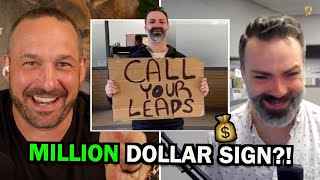
Chase McAllister built Unreal Media into a million-dollar agency by running call centers that generate live transfers for insurance agents. His approach: simple, relentless calling over 14 days, no fancy automation. His call centers handle 6,000 to 8,000 dials daily and close 32 percent of transfers at an average premium of $1,100.
Chapters
What's the tagline?
Call your fucking leads.
This dude runs around the world with a cardboard sign for marketing.
We framed it because it's getting so brittle now that we have to find a new one.
What up, y'all? John Wetmore back with another episode of Insurance Insiders Podcast, where I'm roaming around the world trying to find dope people in the industry that, uh, we can help you guys with, cheat from, steal from, work with, make money from, and you know, all the mess that comes with building this industry. So got my dude Chase McAllister here, the chief honcho, Unreal Media, and all kinds of other cool stuff going on. How are you, bro?
Good, man. How are you?
I couldn't be better, dude. Life is, life is good. Yeah, you busy?
Yeah, busy, busy.
I love it. Why don't you, uh, you know, I know there's only like 2 people in the world who don't know what you do, but give them a, give them a little, give them a little something about, you know, where you're at in the world and what you do and a little overview.
Yeah, I wish, I wish there was only 2 people that didn't know me. Hopefully that's, that's one day, but, um, we're, we're slowly getting there. Um, yeah, so I'm Chase McAllister. I own Unreal Media Inc. We are a marketing agency slash call center. So we have a call center in Tampa, one in Salt Lake City, and then one here in London, Ontario, Canada, which is about 2 hours north of Detroit. Uh, so what we do is we do live transfers. So people go to Google, search up life insurance, our call center then gets them on the phone, qualifies them for health and finance, and then transfers them to licensed insurance agents across the states.
Sounds pretty damn simple.
Yeah, pretty basic.
I like it.
Same system, you know, just calling our leads. Hey, what's the—
what's the tagline? I'm gonna let you say it. I want to say it really bad.
Call your fucking leads, my man.
You got the sign?
I do. It's actually—
go get it! Hell yeah! So this dude, this dude runs around the world with a cardboard sign for marketing. And what's funny is I always— here we go.
We framed it because it's, it's getting so brittle now that we have to find a new one.
I love it, dude. I always tell agents— I mess around, you know, agents bitch, the ones that say they're broke or the leads don't work or blah blah blah blah. And I'm like, you know, if you stood outside with a cardboard sign with a— that said like, yo, I sell life insurance, long enough, someone would ask.
Yeah.
And this fool proves that you run around the world now with a cardboard sign. People call you for business.
Yeah, yeah. And we don't even sell leads, we call your leads for you. It's kind of— it's funny, but ultimately—
clarify the difference, talk about it.
Yeah. So what do you mean? So for us, you know, ultimately where agents get messed up is that they, they overcomplicate it. And you know this, but they are always looking for the, you know, the shiniest object, um, you know, the, the latest CRM, the latest AI to help to get their job easier. When ultimately the guy that just does the imperfect action, that just calls his leads, whether it's on a spreadsheet, anything, is going to outperform the person that's spending 3 to 4 hours a day trying to automate their life. And, and our core system, the core sequence that we use to generate live transfers, has been the same for 4 or 5 years. Obviously there's new optimizations that come to it, but, but we're calling somebody within 5 minutes of them filling out a form. If they don't answer that, we'll call them a half hour later. If they don't answer that, I'm going to call them an hour later. They don't answer that, I'll call them every day for 14 days, morning and evening alternating. And if they don't answer that after the 14 days, then we'll send them to a nurture sequence. And that core sequence is ultimately what we've used for for years to come, and it works. We generate thousands of live transfers each day. You know, 32% of those are closing into policies. So it works. An imperfect action works. That's why the sign works. It was one thing that I could do a thousand times over and over again that didn't require a lot of work, right? And it was something that I could just be anywhere, hold the sign, and my brand's getting out there, as well as I'm portraying a message that everybody resonates with. Nobody calls their leads. You know, we have a, uh, an outbound dialing system that people can purchase, and the amount of login time— our average login time is 2.5 hours in the day.
That's pathetic.
Absolutely pathetic. When I say 8 hours of dialing, we typically see about, let's say, 16 transfers from our call center.
So hold on, so that's agents logged in?
Agents logged in.
They log in for 2.5 hours a day.
2.5 hours a day. Wow. Which is— it's a— it's—
I knew it was bad, but I didn't realize y'all had that tracking on here.
Yeah, yeah.
I mean, I know just from experience, when I ask how many dials they make, I'm like, it's fucking pathetic.
It's nothing. But it's nothing.
And imagine if they worked full-time.
Yeah, yeah, yeah. And within 3 hours, typically we're seeing a sale. But once they get one sale, they'll stop.
So if they did a full day, that'd be 3 sales a day.
Exactly. And, and vast majority— there are agents that put in that work and see the results, but the vast majority are putting in 2 to 3 hours in a day and that's it.
Do you know premium on that?
Yeah, our average premium is about $1,100. So on the sale?
On the sale. So instead of making $1,100, they'd make $3,300. Yeah. Which over— what's $3,300 times 50 What's that? 3, 6, 9, 12— 160 G's a year or something like that.
Yeah, which is, which is great. Instead of the 48 they're making, or whatever it is after chargebacks and stuff, or the one month that they had really, really well that was 50 grand, and now that they're— now they only make 50 grand a month is what they're projecting online. And, and you know, it's bullshit. Sorry, am I allowed to swear on here, dude?
Do you know me? I was gonna say, so my, my editor gets a little mad at me after because he's like, the algorithm— and I'm like, fuck the algorithm. Sorry, I love you, but I can't— Facebook, if you're listening, yeah, my bad. But you know what's funny is like my— I don't know if it's my full mission, but part of it is like helping people understand, dude, that like— and this is how I transformed— like, this business is not that complicated. And even if it were, let's just pretend for a minute it is complicated. Whatever you're doing to make the one sale in 3 hours, can't you just stop trying to overcomplicate shit and just make 3 sales in a full 9 hours? You know what I mean? And just forget all the other stuff. That was almost always like the turning point for me after 3 years of sucking ass because I thought it was something else, or I'd blame you and your leads and your dialers and your whatever it is. And I'm like, yeah, what if I just do a bunch more of this shit and just worry about getting better later? You know what I mean? And that model worked, and that's what I teach, as you know, and the imperfect action thing. So I'm writing a book on the concept. It's literally gonna be Do More Now, Get Better Later. That's the entire— I finished editing it yesterday.
That's awesome.
And, uh, someone asked me what the plan was, like launch plan and like book release. I'm like Dude, I don't have one. And they're like, what do you mean? I'm like, yo, if I sat down and tried to plan what I was gonna do for the whole thing, I would have never wrote it. So my plan was write it and figure out what to do later, you know what I mean? So now we're working on that, and I wish more people would do the action part. And that's something you're really good at, it's just going, just go.
Yeah, I, I think some of my staff would say do not encourage him because I'm sort of a guy that shoots first, aims later. But, but A lot of the biggest, you know, breakthroughs in our business have been from on-the-fly decision-making and taking action on it. And we wouldn't have the call centers we do today if I sat back and planned this perfect process, found the best lead sources, the way to generate leads, had my head deep into, you know, ad budgets or whatever it is and split testing. We just kept throwing shit at the wall and something stuck. And then once it stuck, we ran with it. And, and that's the key component. I, I'm a firm believer in imperfect action. Now I have two sales guys right now, and, and one of them is a very analytical person. He needs to have the entire process perfected in order to, to really do his job effectively. And then I have another one who will just get on the phones and throw shit at the wall. And I see the guy that— the guy that cares less about the perfect process or making his job more efficient and just does the action surpasses the, the person who wants to be perfect, right?
Dude, always. I'm posting it on social right now, bro. Sorry, I'm not looking at you.
You're good, you're good. Um, and, and I think a lot of agents struggle with that. A lot of agents, they just want to, to find the easiest way, when in reality that's the worst thing that they could do. I think, you know, you can find great automations, you can add those things later, but if you're not willing to call your fucking leads first, then nothing matters. And yeah, and even every podcast that I get on, I try to say, you know, nothing that I'm gonna say here, nothing that the host John is going to say even matters to you. You should probably not even be listening to this podcast.
Yeah, hang up and call your leads.
This video now, go call your leads, and then watch this later on your spare time. Money-making hours. Like, I was speaking to an agent last week and they're worried about their website. I'm like, do you get leads from your website? No. But why is that a priority to you then? Well, because I want to start creating leads to my website. That's fine, but why are you spending 3 to 4 hours a day while you're in your money-making hours trying to do this? Spend the weekend to do it. Why are you taking valuable time away from what you need to do to get the acquisition and put something in? It really doesn't matter. You're not even getting leads from it anyways right now. Yeah, right.
No, no, it's funny.
It doesn't make sense.
You want to hear something funny about websites, dude? I just got mine 6 months ago. Yeah, 12 years into business, I got a website.
You know, same with us. Truthfully, majority of our growth as a business was from my Facebook profile, um, and, and, and just doing organic acquisition that way. It wasn't until last year that we actually built a website, and I don't really have a lot of information on our website. It's not really that important to us. It's— for us, we've obviously spent a lot of more money on our, our lead websites to generate our live transfers. Than we have for ourselves because it was easier for us to get buyers just through my organic marketing. Um, yeah, there's a lot of things that people prioritize aside from the basics because they, they're bored of the basics. You know, our top guys in our, our transfer programs, if I listen to every single one of their calls, they sound the exact same. The exact same. The only thing that's different is the prospect's answers and how boring that gets over time. It's extremely boring, but the basics and the boring stuff are what drive the result. Everybody wants to get excited about getting dive deep into automations or dive deep into their CRM and try to make it easier when in reality it's just doing the basic thing that's actually going to get you the result. And you preach this all the time. That's why we align so well. That's why we become great friends is because like we unders— we both understand that. And a lot of people struggle to just understand that because they get bored. With the basics.
Were you ever the other way? Were you ever the other way?
No.
I was, to be clear. I used— yeah, I was. It's weird, I've never had like a fear of messing up because I don't care.
Yeah.
Um, but I was super analytical early on, and I'm— it's not that I'm not now, I just analyze after I mess it up a bunch. Yeah. I used to try to analyze in advance. That's what most people mess up. Where I still analyze, but I realized I can't analyze anything if I don't have a bunch of data. And even if I do analyze it, it means nothing because there's no information, you know. I mean, it's like getting— I always use examples, and for people who don't follow sports or understand them at all, I apologize, but it's like trying to figure out, I don't know, a dude's batting average after one game. Yeah, I'm like, what the hell does that matter? Let's play a season and then figure out where he's— you know what I mean? And and the, the numbers won't fluctuate much after a full year. Yeah, I mean, he'd go 0 for 30 or 30 for 30. After 5 seasons, dude, his batting average doesn't move. Yeah, you know what I mean? But after one game, if you're 0 for 5, you're like, you lose your mind, you know?
The same thing with leads. Like, we have people that'll come in, they'll buy 10 leads, close one, and say these leads are trash, or close zero. The next 10 calls that they get, or the next 10 leads that they get, they close 8. So, and, and agents, they, they analyze on the day or on the week, correct? We're on such a small data set, and it's just, it's not feasible long term. And you get into one marketing, it doesn't work, you flip-flopping to the next one, the next one, the next one, the next one, um, because you think it didn't work, but you didn't give it enough data set. Over 251 days working days in the year. Now, now you can start to see the results and see where, where it's working. But, you know, with any new marketing, you should be giving it 90 days minimum. Minimum.
You love large numbers. Yeah. What up, Insiders? John Wetmore here. Quick break, interruption in the podcast to let you know that if you have interest in leveling up your insurance game, getting to a new level, multi-six figures, building an agency, things like that, I've had a ton of people ask me about coaching. I don't have anything right now, but we are starting a waiting list based on the interest. I'm going to put some stuff together. You can go to theinsuranceinsiders.com/start to get on the waiting list and see if we'll join— have you join the team. Appreciate it. It'll work out. Someone taught me that once when I was new and I was like, it's kind of like a light bulb moment. Now saying it out loud, I feel like I was an idiot. But you know what I mean? I'm like, That actually makes all the sense in the world. No different. Hell, how do they come up with life insurance pricing? They certainly didn't do it based on 10 people. Actuaries, just get 10 people, who cares? Let's just judge 10, price it, put— you know what I mean? Like, what?
You know?
Yeah, it's, um, how'd you get in the business, dude? How'd you start life? Yeah, before— I don't, I don't know. I actually have no idea the answer to anything.
Yeah, we, we— I started the marketing company 7 years ago. We were doing, um, like website building and, you know, running ads for different businesses in different industries.
You just rolled out of bed and started a marketing company, bro?
Ah, okay, I guess I'll just give you a little bit more of a backstory. Like, so I started— I started as the executive assistant to the CEO of an HVAC manufacturer. So they built, um, HVAC for high-rises in Toronto. And so They, uh, I was the executive assistant to the CEO, got to learn how he ran his business. Um, and then, uh, through, through the career there, about 5 years I was there, the last 2 years I started a replacement parts website for them and it went to like $900,000 a year and I was making $30 grand a year and I said, I'm quitting, pay me more money, which thus started the agency that we had because Now I have— they were a client of ours, and so they're actually still a client of ours today. I just help manage their website on my spare time, to be honest with you.
So the place you worked for is now your client?
Yeah, and it has been for the past 6 years.
That's cool.
Yeah, and so then we, we started working with other businesses. We got an insurance agency here in Canada, started getting a really, really good result, better result than majority of the clients that we were working with, and we just decided, hey, let's run with this. I had a friend who was killed downtown here in London, Ontario in 2018, 2019, 2018. And then at that point, he had no family or any income. He was, you know, living paycheck to paycheck. So he didn't have any savings and his family wasn't around. So we had to do a GoFundMe and raise like 10, 15 grand for his funeral. I had to plan the funeral, plan the wake. Um, crazy story, as I was doing his eulogy in his funeral, I had to go to his house because his mom was trying to take stuff out of his house in the middle of his funeral. Crazy story. But anyway, so I had, um, I had the opportunity— obviously we had some insurance agents— and that, that situation in my life and that event was pretty traumatic, but it really made me resonate with, you know, the final expense markets. And just because there's a lot of people that don't get to say goodbye effectively, and I understood how that felt. It's, it's terrible. I still, still feel like I wasn't able to say goodbye to my friend. And yeah, and so I had now a backed-up passion behind it. Wasn't like I woke up one day, hey, life insurance is for me, I love this thing. Yeah, we started it and then a traumatic event happened and it it really started to resonate with me. So we just never looked back and went full into life insurance.
And did you sell it at some point, or did you start marketing for agents, or—
No, I didn't sell anything. We're just doing marketing now. I definitely could sell it. We definitely do sell it. Um, but yeah, starting out was, was just a marketer. For who?
Like, who'd you do life insurance for? Give me an example. Do you remember who your first one was?
Zubla Financial. It's here in Canada, was our first one. Um, and then started working with some single agents and then, uh, got a couple big IMOs that we started working with. I don't work with a couple of them anymore. Um, and then it just kind of snowballed from there.
We won't mention names, but you don't want to put it in the big bold—
no, no, no, no, no, let them do their thing. Yeah, man. So that's how we got started. Um, now we generate about 6,000 to 8,000 phone calls a day, work with some of the biggest call centers in the US. We actually do not work with any Canadian insurance company anymore. Just really two different markets. Two different markets.
So yeah, dude, I had a dude from Canada call me Friday, maybe off social. He DM'd me and then he wanted to set up a call. And tried to recruit me.
Do you know who I am? I know.
I was like, what's funny is I was like, I love the hustle of it. Yeah. But he, he took the approach, which was cool. He was like, hey, I've been watching your social, I love what you're doing, and he goes, can you give us some feedback? And I'm like, so we start getting into it and I'm like, He's like, can I show you our stuff and get your opinion? I'm like, can I ask you a question, dude? Are you like, you asking for feedback, like consulting, like you want to pay me, or are you— is that your angle to try to recruit me? And he got stunned. He's like, uh, uh, uh, I mean, it would be cool if we could find a way to work together. And I'm like, all right, dude, I, I love— I love the hustle and the nuts to reach out, but I'm like, you didn't do quite enough research.
Like, you know what I mean?
It's not even on the table. I can't, but I did like, I did, I did like that. He, I'm like, I like the guy.
Yeah, you gotta respect the hustle.
Yeah, yeah, dude.
Yeah, you know, when we started strictly from my Facebook profile, it was, okay, how do I connect with industry leaders, potentially bring them on a pod— I'm giving you guys the full content strategy— how do I connect with industry leaders like John, bring them on my podcast, get the authority of that And then ultimately start adding insurance agents. We were adding 50 insurance agents to my Facebook profile every day, and I'm marketing to the problem that they are currently experiencing and that I can solve on the sales call. So every day I'm marketing to that problem— Facebook status posts, whatever have you. And then when they engage with those posts, I would reach out, hey, see you're in the insurance space, would love to chat. Get them in a conversation, qualify to see if they actually have the problem that I can solve, and then book them into a call. So for this guy, he just needs to start to realize, like, he needs to start marketing to the problem that you're probably experiencing. You're probably not experiencing that problem anymore. And then once those people engage with it, then reach out. Where oftentimes people start cold DMing people and just pitching everybody, and it can work. All marketing works, right?
Yeah, um, it was close. Yeah, he just missed the problem part. It's true.
You know, I like that.
It's like sales, dude. A Sales 101. Sit with clients, you know what I mean? If you don't ask enough questions to identify the problem and then you, you start pitching before that, like, it's, it's tough to— it's tough to make sales.
Yeah.
You know?
Yeah. And we were talking earlier, um, about, you know, people giving, you know, 10, 10 leads a shot and then deciding that's not going to work. Yeah, ultimately my leads suck. Every lead vendor's leads suck. There is no good lead. I can tell you that from dialing thousands and thousands and thousands of leads every single day. There is no good lead. We generate SEO leads.
Hey, I'm gonna stop you. Yeah, we're gonna talk about this, me and you. All right, all right. So get this. So at its— I had someone in— I had a meeting in my office last week and I was like, it drives me nuts when people say they got a bad batch of leads, right? It makes— dude, it makes me motherfucking mental. So I'm like, let's break that down. What, what is a bad batch of leads? And I'm like, there's no such thing. And this guy wanted to argue with me. There's definitely bad batches. And I'm like, all right, at its core, what is a lead truly? What's, what's behind a lead, Chase? I'm asking you.
Uh, request for information. From a prospect, from a human being. Fair, fair.
And that human being has family, correct? Do you think there's any chance in the planet that, that human being doesn't love their family?
Very, very few, correct?
Right. And how many actually want to go out of their way to leave their family in a really shitty situation when they die?
Zero.
You know what I'm saying? It's like, so for me, even like being like, it's a lead, it's about— I'm like, so you're saying it's a bad batch of humans who don't give a shit about their family? Yeah. Or was the approach wrong? Now, can there be shitty marketing towards people in lead? Sure, I get, I get, right? Yeah. But, and I get what you're saying, there's no good lead in the sense that, yo, no one's making a half million bucks without effort and a lot of nos and You know what I mean? There's no magic leads. That doesn't exist.
It's the process you put them in. It's not the lead. It's the process in which you take that lead and convert them into a sale. Correct. And so like, for us, it's, you know, all leads are going to suck, but it's the process you put them through. We just have a very dialed-in process which gets us results. And so, you know, to say it's a bad batch of leads, I'm sure if you called them enough, you'd probably get a buyer out of it. I'm sure if you stood outside of your door with a cardboard sign, you'd probably get a sale.
For me, that's the mindset going into it, you know what I mean? Like, the people just look at it as a piece of paper or a digital email, however you set—
or live trans—
they don't look at it like from the human being part, you know what I'm saying? And I'm, I'm never— but here's my thing too, dude. If the lead companies were that bad, Like, they wouldn't be in business. No, you mean like someone's making money, or they would, they would go out of business just by pure supply and demand and market, market, just basic economics, you know?
So I—
but to your point, there's no lead that's going to get you out of the work. It's not. There's none. And if there were, bro, I'd be like, psst, Chase, don't tell no one, bro. Yeah, this new lead out, I got that, I got this. And then Chase is going to be like, yo, don't tell them. And within like 6 hours, dude, it's gonna be a watered down, you know what I mean?
Yeah. And even then, even then, I could create a live transfer that closed 90% of the time. I could. But one, agents are gonna pay that amount of money for it, correct? Because it doesn't make sense. The cost per acquisition needs to be at a certain, a certain price point so that way you have an ROI. Yeah, for me, I could create a lead that closes every single time. Yeah, but I can't. It wouldn't make sense. 90% of the entire insurance industry wouldn't be able to afford that amount of money. And so, so we have to find where's that line in the sand. I generate the conversations, you guys turn it into policies. And I, I've been seeing this all over the industry, these pre-sale you know, live transfers of these pre-sold leads, I can guarantee you the retention on those are going to be garbage. We do not want to know their bank account information. We do not need to know their social, social insurance number. If you're getting that information before the— you even speak to the lead, I can guarantee you the lead vendor that sold you that is selling you the exact same lead that he sold Jerry down the street. And so stop looking for the the easy way out. Laydowns are either going to cost you way too much, that doesn't make sense, or they're being resold to a bunch of different people. So stop doing it.
I also think, dude, if people got what they wanted, which was the littlest work possible to close the most leads with the best ratio with the highest premium average per lead— you mean like if all that stuff were in the perfect world, dude, the insurance agent companies wouldn't need us anymore. They would just do it.
Yeah, you know what I mean?
It's like, so careful what you ask for. Meaning the same concept of like, I work at McDonald's, I need $40 an hour. All right, now we can make robots, we don't need you. You know what I mean? Like, it— like, it's again, it's economics, dude. It pays so well because the mindset needed to go through that requires that someone besides the insurance companies do, because they have the money if they want to, you know what I mean? If they want to do it all in, they could.
100%. They pay you to take a no and turn it into a yes, correct? That's as simple as forms. You need to get as many nos as you can possibly get so you get paid, right? Um, you know, for us it really looks— oh, we actually have the same plant. I noticed that the other day. Do we? Yeah, we have the same plant.
This one is yours. Fake too?
Yeah, mine's fake. Totally fake. Totally fake. I can't be held responsible to water plants.
Mine's sitting on an upside-down trash barrel right there to make it higher than it really is.
That was a squirrel moment, I apologize. But for us, you know, we get this objection all the time. Well, if your leads are so good, why don't you just sell them yourself? We do. We have a small little agency. But, but for me to be able to support and get the costs that I need. I need, I need buyers, right? That's why a lot of agencies, they outsource their leads too. Um, and if I had the perfect, perfect lead, I probably would keep it to myself anyways, to be honest with you. And I don't think this is possible. It's just the process. That's why we were— when you take our transfers, we require you to use our script because it's proven, been split tested. It works with our marketing. That's why we have coaches to make sure that you are aligned with our processes, because it's not the lead and it's certainly not the agent, it's the process. It's— that's, that's all it comes down to, is just doing the exact same thing every single time and making sure that, that, that stone is left uncomplete— no stone is left unturned.
Um, dude, I like the way you say process.
I knew there was going to be a Canadian jab in here. I like it.
I'm like, it's pretty cool. So when I was doing my book, bro, I had this guy from, um, like England helping me write it. So we did video because I didn't want to type. Yeah, I'm like, I'm— that's not my thing. I'm bad with where—
I just—
I can talk. I'm— I can do that. So we did it by video, and then he would transcribe it, and, uh, he would put lots of like mum, M-U-M, and he'd put, when I went on holiday, and I'm like, so I had to like, when I'm editing the book, I had to put it all back to my words. Not all of it, but some of it. Yeah, so I'm always— hey, I got a squirrel moment. What's that shit on the wall back there? It looks like a trophy case behind you, on your over— is it your right shoulder? I don't know if I'm— no, the other way, other way. Other shoulder. What's that? What's on that wall right there? Oh, that's a mirror. Oh, is that a mirror?
No, those are windows. Yeah, those are all windows.
Looks like I see stuff hanging on there. It looks like, you know, World Series trophies or something.
No, we just have—
it's just like a frame of some kind. I don't know, I thought you had some cool stuff hanging up there, awards or something.
We do, we do. We actually have a wall over there, so we've printed out every single testimonial that we've ever got.
Is that what that is? God.
Yeah, I actually have a picture of you holding my cardboard sign. I don't know if I— stop. We have it printed out. It's— oh, oh, where can I get— sorry guys, bear with me here.
It's all right, I don't care at all.
There, right there. Uh, uh, right. Yeah, how do I do this?
In the corner behind you. That's me. You can't walk over there, huh?
It's a— I can't do it because of the camera.
Damn, it's plugged in. Yeah, I can't move anything either.
Yeah, but I have a picture of you holding me and the cardboard sign on stage at an annual convention, which We need to clarify some things, okay? Because I've been getting people like, oh, you're working with Wetmore, Wetmore's working with you. Dude, we're just friends, okay? This was a—
hey, who gives a shit?
Totally random situation, okay? Jordan does not buy my leads and I do not work with his agency. We are friends at the core of this. We resonate. Obviously we both have the same—
hey, so the people who do think you work with me, how about that? If they're offended, how about that?
So let's talk about that situation. John had texted me And he's like, I knew he was going on stage the next day. I was like, what? It would be hilarious if you walked out with my cardboard sign. He's like, yeah, maybe I'll do it. And I said, I'm gonna do one better. He didn't know what I was gonna do. I called Dallas, I called the printing shop in Dallas. I was like, can you cut me out a cardboard sign or cut a cardboard cutout of me and ship it to this hotel? They're like, yep, sure. So I sent the cardboard cutout Cita John, dude, not knowing if he'd bring it up.
How big this cardboard cutout was, please.
It's like 6 feet. It's a lot taller than me, okay? If you had the option to gain 6 inches for $19.99, you would too. But anyways, it's like, it's like 6 feet tall easy.
I'm gonna put pictures in this thing. I'm gonna make my guy put it in here. This is my dipshit friend Chase. So dude, yeah, I'm gonna let you tell the story, but bro, I show up to the hotel, you walk in the lobby, right? Check-in. So I, I kind of— you walk in straight and you go to the right and there's a check-in table. And dude, out of the corner of my eye Bro, I see this giant— keep in mind, your thing was 6 feet tall. The shit they had to wrap it in, like, it was 6 feet wide by like 8 feet tall. Yeah, and they had it taped. It looked like a big giant, giant mega-sized envelope. And dude, my name and cell phone number on it, and it's sitting in the lobby.
I'm sorry about that. I don't care.
I was dying. I'm like, what? The hell happened? Amanda was embarrassed. I'm dragging the thing through the hotel up to my— hey, to get it into my room, dude, I had to bend— I had to wedge, like, bend it and shift it up into the elevator. And like the 5 other people with their suitcases couldn't get on. They're like, yeah, we'll take the next one.
So just so you guys know, I did get to watch him sleep every night, um, as the cardboard cutout was in his room.
I laid you upside down so you couldn't see.
He cuddled me. Let's be honest, guys, he slept with that thing. He slept with that baby. Um, so, so anyways, I send it and he's like, dude, what the hell? So I'm like, all right, it's a little bit intimidating. What if I give you $1,000? I'll put $1,000 to charity. I got no response. He's probably busy that day, so we got no response. And I'm like, okay, $2,000. He's like, I'm not, I'm not going to Sean with $2,000. So I'm like, all right, $5,000 to charity, final answer. He's like, okay, I'll ask. So keep in mind, this thing cost— the cardboard cutout costs like $1,000. So I just blew $1,000 in hopes that he would do it. And, and I knew if I pressured him enough, he might bring it on stage. Now people are asking me like, why would you do that? What type of marketing is— and for me, it wasn't really about the marketing or the acquisition, it was just brand awareness and put it on stage and like have people— who is this guy, right? But so anyways, John responds, all right, I'm asking. And then I get a— I'm out for lunch and I get a FaceTime and it's John. I'm like, oh gosh, hey, all right, 3 FaceTimes because you didn't pick up. Yeah, I was over lunch, so pick up and it's Sean and he's like $5,000 charity. I'm like, yeah, okay, yeah, let's do it. Because now I'm on the spot. Now you're side of the stage. I'm like, okay, let's do it. They send me the link, I pay it, he walks it out on stage. And, uh, I couldn't have hoped for a better outcome. It was absolutely amazing. And I truly thank you for doing it. Um, super funny because it was, it was just this random text that I took action on, and it was imperfect action. I didn't know it was gonna work or not. I just kind of threw it out there and hopefully it stuck. So, so I'm glad you did.
Funny is, I wasn't sure if I was— if I should do it, was gonna do it, whatever. And, uh, Amanda was like straight up embarrassed, dude. And so we had her husband Zach, who does— he'll do— and when he comes to me with convention, he does anything. Yes, he'll help do whatever. He carry— it's just, he's a, he's a cool dude. He's like the ultimate sidekick at these events for, for me and Amanda. So I, I go into the event and, uh, someone is like supposed to be backstage to get on as part of like a, um, I think she was part of like a panel. It wasn't like a main speaker. I actually didn't even know who she was, but she was supposed to be back there to contribute somehow. And she comes up. Somehow I just happen to be in the area, and someone asked— knew I kind of know my way around obviously the company and whatever. And, uh, they go like, hey, she's supposed to be backstage, what do we do? And I'm like, dude, it's all good, he's not gonna freak out. Yes, he gets mad, but you'll be fine, just go back there. And I tell her where to go, and she's nervous as all get-out, dude, to go, and doesn't know. And I'm like, all right, come on, I'll take you back there, right? Because the person that I told to take back there was afraid to go backstage and get, you know, yelled at. So I'm like, eff it, I'll take you back. So I walk her all the way backstage. And Sean just so happens to be standing there. He just walks off stage, just happened to be in. I'm like, yo, I explained the situation, and me and you had just been texting. And I'm like, yo, I got a crazy question for you, dude. I'm like, there's this crazy cat in Canada who offered to do 5Gs to the Dream Center, and he sent me a giant— and I showed him the video of me, of it in the hotel lobby, me unpackaging it. And I'm like, he said he'd pay 5 G's to bring this thing on. Or do you have any interest? And he just saying, 5 G's? He goes, fuck yeah, go get it. So I have Amanda's husband run— we don't have it with us— and he's like, we can do it in 5 minutes. And I'm like, shit. I have her husband run back to the hotel. So I record the whole sprint back. He's coming in, he's sprinting with this thing. Dude, I'm in jeans and a t-shirt. I'm not even like prepped to go on stage. And we bring it back there and, uh, what's his name? Uh, shit, uh, I'm trying to think of his name. Football player dude. Anyway, someone big dude was about to go on stage and, uh, uh, Merriman— Sean Merriman was back there. So him and Sean are talking, he's backstage, so he sees me pull up with it and that's when we FaceTimed you.
Yeah.
And he's like, all right, let's go on stage now. And he like changed the whole agenda in us. I mean, it took 45 seconds. Yeah, but it was funny. And, uh, so yeah, we drug this sucker through 2 hotel room— hotel lobbies and on stage.
And it's actually here.
Is it really?
Can you tell someone to bring that cardboard cutout? Hell yeah, it's here. We shipped it back. I called the hotel, had them, uh, had the person that we had build it they came and picked it up, shipped it back to us. Cost me more than the cardboard cutout cost to get it back here, but I was like, it has— it has to be the right one. It has to be the one. Thank you, Maddie. So the thing is, is I never got you guys to sign it. So the next time when you ship it back, it doesn't— almost doesn't fit up here, but it's like— it's definitely taller than me, let's be honest, but Yeah, this is the guy. This is the guy. Thank you. Yeah, thank you, Maddie. Epic. Yeah, I love it. I see what you did there. I see what you did there.
You caught that?
I see what you did there. I like that, dude. I appreciate you having me on. And honestly, like, just to add to that, you know, a lot of the politics in this industry, it's crazy. And I try to remain sweet and I don't get involved with the IMOs and, and their politics. I'm just— I resonate with people, and I'm, I'm a straight shooter. The guy you see on camera is the guy you're gonna meet in person. Same with John. That's why I resonated with him the most, is because there's a lot of people here that try to be like TV newsstand on camera, but then when you meet them, they're a mess. And I'm a mess. I'm gonna show you my everything on the sleeve. Like, I am, I am still the guy that I was when I was dead broke to now with with decent amount of money, not a lot, but, but I'm still the same guy. And I hope when I grow even more, I still remain Chase. And a lot of people get caught up in being this, this, I'll say, a corporate tough guy.
Yeah.
When in reality, people resonate with humans that they can relate to. And, and that is me dropping F-bombs or me being just me and humorous and funny has never did me wrong. And, and I screw up all the time. I probably screwed up a lot of relationships all the time, but my integrity of me being me is far more important than a new relationship that I could muster up by maybe being a little bit more corporate. And so for me, it's far more important to maybe lose a couple relationships but still remain Chase. Um, and a lot of people veer away from themselves. My content is— it does so well because it's just Chase. Like, it's an exaggerated version of who I am. You watch my office skits, I'm probably the same employer as which I present in those, those skits, just a little bit more exaggerated. And for me, that's, that's super important, super important remaining myself, because the people that got me here, or the people that passed away that made me resonate with this, this situation, they know— they knew Chase. They knew Chase in the beginning, in the bottom, and they know me now, and they still can relate to me. And that's super important to me, is not to forget where I've come from. Um, you know, I'll still go back to my hometown and people are in very worse off situations than, than I am, but I can still sit down and have a conversation with them. I'm not better than anybody. And that's, that's a big, big thing for me, is that we all shit the same. You know, when we sat down for, for dinner, a lot of people would probably get intimidated sitting down with John Wetmore the first time we ever met. For me, it's you're either gonna like me or you're gonna hate me. And, um, I'm glad that you, you decided to like me. But appreciate you having me on, man. It's been, it's been nothing but awesome to have you as a friend as well as a resource that I can ask questions to. You know, we're, we're looking to build a new call center. You happily jumped on a call with me to, you know, kind of sort out some things with finances and, and all that other stuff. And that's Yeah, that's an invaluable relationship. So I truly, truly appreciate you, dude. I really do.
Been, been fun getting to know you, and it was even more fun drinking and having dinner. Lemon drops. Hell yeah, dude. You're the first one that didn't like it at all.
Oh, it's— they're terrible. They're, they're, they're heartburn in a glass. That's what it is. It's heartburn in a glass for me, man.
Yeah, that's my favorite drink. It's so girly. A lot. It is girly, dude, but I'm kind of girly, bro. Like, hey, so Steph, for probably like, I don't know, 7, 8 years ago, something like that, uh, and today record— this will be out, I don't know when, but today's her birthday, May 7th, and tomorrow is our anniversary. And, uh, so we've been together a while, I think 17 years, not married but together since '07, so 17 years. And, uh, good for her.
Geez, poor girl, poor girl.
You have no idea. That was the card she got today, was like, I know I'm a lot. Happy birthday, thank you for putting up with me. I, I'm aware, I'm aware. And, uh, but there was this stage, dude, where she bought me a, um, like, so I have a backpack a lot. I just wear a backpack because I travel with it and wear it a lot. And one stage she bought me this little like keychain to hook on it, and it in colorful letters said Princess. And I had that hooked to my backpack for like 4 years until that backpack died and it went away, whatever. But I, I am— I was raised by women, you know, had my mom and my aunt and my grandma. And, you know, I mean, I'm a little, a little sensitive and I like lemon drops.
And for, for me, I was raised by women. I have my mom, um, is, is lesbian She's been lesbian since I was like, you know, 4 or 5 years old. My parents split up when I was 2 months old. I finally found out when she was a lesbian about probably 8. But I always, even now, I have a house full of my mother-in-law, my wife, and my daughter. I've always had a house full of women. Um, never a lot of, of men. Obviously I still have a relationship with my dad. I see my dad all the time, but he's like really the only male figure in my life. And so women played a key part of me just being myself. And I think, I think, um, that's probably why we resonate with each other, because I never knew that, that you were like fully raised by, by women. That's awesome.
100%, dude.
Awesome.
Yep. Well, I love it, dude. Anything, any parting words? And hey, if y'all don't follow his social, you should. I sent you a message one day, I'm like, you're definitely the funniest dude in insurance. His stuff online is hilarious. And, uh, It cracks me up watching. I'm like, shit, if I only— I wish I had that piece, just the naturally, you know, it is somewhere to get you.
Yeah, you know, this is probably one of the biggest pieces of advice that I could give, um, probably the most important piece of advice that any agent could receive. Um, nothing else is going to matter besides this piece of advice, and this, this is resonating with me since the start of my business career. Now, one piece of advice, John, is just call your fucking leads. That's about it. That's about it. It's just call your fucking leads. And if you're not going to do that, nothing else matters.
So, yes sir, I love it. Hey, do you know that dude Ryan Serhant? Do you know who that is? Million Dollar Listing. Do you know that show?
Yeah, yeah, yeah.
So he, uh, it's the real estate show where they sell like multimillion-dollar houses, condos.
He's—
I believe he's in New York. And, uh, he has this— I follow his social too. He's—
he's—
you'd like him. If you don't follow him on social, you should. He—
you—
the personality is the same. His follow-up with clients, his thought process is, I will follow up with you until you die. I'm like, makes me think of your—
you know what I mean?
Like, that combination. I'm like— and he has a lot of stories where 5, 6, 7, 8 years later he'll close a big-ass deal because he kept the follow-up, which you talked about in your, your campaign after so many days. And I'm like, man, some people quit after one call, or hell, don't call them at all.
We have a sales guy here that is a terrible closer. I'm just being honest, but he beats everybody in the, in the company because he's so rigorously following up. Like, he just is relentless, relentless. Um, but man, I appreciate you having me on. I'll let you get back, I know you're a busy guy.
Um, dude, all right, dude, appreciate you, bro.
Let's catch up soon.
Later, y'all.
More from John







How YOU Can Make $15,000 Per Week from ANYWHERE ft. Keenan Stockling Jr | Ep112



