
Do More Now, Get Better Later - 8% Nation 2024 [FULL SPEECH]
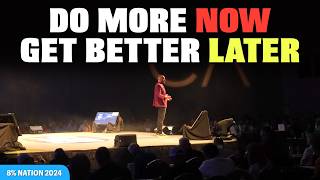
John Wetmore delivers a keynote to insurance agents and agency owners on building success through volume and consistency. He shares his path breaking into the business, then outlines his framework: do more reps in prospecting and presenting, stay disciplined, own your results, and build belief through repeated action.
Chapters
from Atlanta, Georgia. Welcome back to 8%, John Wetmore! What up, 8%? Hope y'all are recovering from the hangovers, caffeine kicking in, and you're ready. Um, appreciate you having me here, Cody. I love being part of this thing and everything you're doing. So my goal here always is really simple. And we talk about this a lot in the office and everything in our agency is just to help agents get paid. That's what I like to do. It fills me and it certainly helps us grow. And it's a very simple concept and that's all I try to do here. So I'll be trying to— that's the goal here. Tomorrow we have two breakouts, one on helping grow scale agency systems, building staffing, all that stuff, helping people get to net 7 figures a year. And then following that, we're going over agents, how to help y'all sales professionals get from wherever you are, zero to minimum $400K net on your own pen. I certainly had a lot of help getting to that point myself, and I love to share those things. For those that don't know the story, I'll give a very short version. I attempted to get into this business by applying to an ad on Craigslist in 2008. I got my license, it took me until March of 2010 to get my license. So about a year and a half. From there, I hear you Tony, I love it. From there, it took me until August of 2012 to write my first application. Yeah. And then for the next 2 and a half years, the rest of '12, '13, '14, I was mediocre at best. Struggling to get by, trying to figure it out, writing 6, 8, 10, 12 apps a month. Getting chargebacks, losing my mind, not having money for leads. That was me. I was mediocre. And I realized, man, I had to look myself in the mirror. And I realized after enough events, I had to change because people were growing and I wasn't. And so I have this sign that hangs in my office. I'm going to read it to you. I really want you to absorb it. And this is what I had to ask myself at the time. And I literally look at it all the time. And the question that I hope you ask yourself as well is, do you hate losing so much that you're willing to change? I've heard change a lot here today. Or do you hate change so much you're willing to lose? Do you hate losing so much that you're willing to change, or do you hate change so much you're willing to lose? And I think for me, losing was a choice. And I was tired of it. I chose to not put in the work. I chose to not call leads. I chose to not follow up like Coach talked about. Those are choices every day, you know, and I was over it. I was tired of telling my kids no. I didn't want that anymore. Right. So for me, I started— I realized, and I'm going to go through this concept. I do. I like concepts. I like acronyms. This is one I've been talking about for years, really, to myself. All this stuff is for me. This is the way I know some of y'all got a little preview, Tony, but this stuff is for me. This is what helped me live. It helps me get by every day. It helps me get over my own challenges. And, you know, I learned there was like a D-BAB is something that we use in my office a lot. And I learned that I was at a certain point in business after, you know, 5 years messing around, 2 and a half years selling a little bit, like I had a certain level of activity and I had a certain level of income. And that's who I was. My closing ratio was what it was. My ability to invest was what it was. I was seeing however many people I was seeing. That's just who I was. And I was seeing, I don't know, 4, 5, 6, 8 people, clients presenting a week. That was pretty standard for me for a couple of years. Right. And I was making 4 or 5, 6 grand a month max, which is hard to get by on, especially after you have to buy leads and pay for 5 kids. And I spent so much time analyzing things and trying to get better at everything and trying to be— do the top 7 sales books, tips to kill it, all the stuff, research, analyzing things. And I'm like, dude, I'm seeing 8 people a week max. It takes me 30 minutes each time. So, I'm spending 4 hours a week presenting to people and I'm trying to get rich. You know what I mean? I don't really have to prospect a ton to get to 4, 5, 6, 8 people a week. And I'm like, what if I just forget all this like sales, getting better stuff, and I just do more of what I am. Just be me and go at it differently. And what if I just went to see 30 people a week instead of 6? What would that be like? And to me it was simple math, right? And so I literally just started sucking more often. I had a 40% closer ratio at best. But if I do it 30 times a week versus 8 times a week, I'm going to net more money. And it seemed easy. I'm like, forget the getting better thing. And that's like the concept of the book. Some of y'all seen it out there. Some of y'all bought it, which we appreciate greatly. And I think doing more is normal in a lot of ways. And I don't believe any of you don't know what you have to do to get better. I use this concept in a lot of ways. I use it to teach my kids stuff, like getting in shape. I don't think anyone's confused why they're not in good shape. Right? You eat like crap, you drink too much, and you don't work out. That was me. Right? Why was I not successful in business? I thought like crap, I blamed too much, and I didn't work. It seemed to correlate. You know, and I'm like, what if I just, to get in better health, drink more water, eat some chicken and fish, lift something heavy and sweat every day? That's my plan. I've been doing that for 4 years. Standing next to 99% of the country, I'm in better shape. I don't have a plan. I don't— that's it. I just lift something heavy and sweat every day. It's simple. And business became the same thing for me. Let me prospect and let me present every day. Want to build an agency? Prospect, present your opportunity every day. Promote every day. That's what we do. All the other stuff, who cares? Can I get technical about food and diet and carbs and proteins and the science behind muscle? Sure. Who gives a shit? I sweat and lift something heavy every day. In business, can I get technical? Can I teach sales? Yes. Is it more beneficial if I teach you to believe in yourself that if you just run more appointments, you'll see more, get more sales by mistake? I think so. Yeah. You know, I mean, it's worked. I don't know. We had 6,000 agents sell a policy last year. Something's working. So I like to keep it simple and I teach Maddox the same stuff. He's a little baseball player, he's 12. Every 12-year-old's ideal outcome when they're sitting at the plate is what? What do they wanna do when they get up to bat? Home run. What do y'all do when you wanna get a lead? You want a damn home run. What's the reality for Maddox? He's gonna strike out a lot. He's gonna hit a lot of ground balls. Does that make sense? He's gonna hit them right at the shortstop. He's going to make errors. He's going to mess up. Dude, you got to get in reps, bro. You want to get great, you got to get in reps. And it's going to forever be a failure game. And this business is no different. Sales is no different. So I teach Maddox about reps. Does that make sense? And the reps are the most important part. It's the process. You want to get better at hitting a curveball, take a bunch of curveballs. You want to get better at hitting it off the barrel, hit off the tee a bunch more. Could I give him a coach? He has one now. He's 12. He sees one. And his coach certainly helps. When you combine reps with coaching, it's lights out. You know? But if you don't have reps— like if Maddox didn't play and I put him in private lessons, would it help his baseball? He never picked up a bat. But he takes private lessons every week. Does nothing. But so many of y'all want the education. A mentor taught me once, don't be an educated broke person. A lot of y'all know way more about insurance than I do, right? And what I learned is with this belief thing, something starts to happen with doing more. Like this belief starts to come within you, right? He starts to get more reps. What happens? He starts to believe he can hit the ball a little bit more. He starts to believe he can catch the pop fly a little bit more. He starts to believe he can catch ground balls more. We take ground balls. What do they teach you in baseball? Anybody know? Sidestep the sucker? What do they do? You get in front of it. So if you miss it, your body takes it. Y'all trying to sidestep the hard stuff. You know what I mean? Like, take it on the chin. You learn a lot from that. And you got to build belief in this cycle. This EBAB is a process. It's a cycle for me. You start doing more, you start believing more in yourself. You start believing more in yourself. You start to see little achievements. You start to overcome this objection a little bit more. You start to beat that client on the phone that's giving you pushback that said they didn't fill it out. They already got it. You know what I mean? All the stuff you're worried about, you start to see little wins. You start to make little sales you wouldn't make. You start to get that annuity statement that you didn't otherwise get. You know what I mean? You start to get a little bit more referrals. You start to see stuff. No different than Maddox. He starts taking hits. He starts taking lessons. He starts having the reps, he starts to get a little bit more hits. He starts to have some confidence. He knows when he gets up there, instead of thinking strikeout, he's like, yo, I get some hits pretty often. Something's happening. Something's cooking. He's becoming a little baseball player. Does that make sense? But without the reps, he can't be a player. And y'all want to be a player in the game without the reps? There are some people in here that maybe have that. They call those anomalies. They're the far end of the bell curve. I ain't that guy. Most of y'all aren't that. So I don't train on that stuff. I give that dude a high five and stay out of his way. You know what I mean? But that wasn't my journey. So for me, again, you start to see these little bit of achievements. And like Maddox, we went to Cooperstown. Some of y'all follow me online. We shared it all. Go to Cooperstown. It's like a Little League World Series kind of deal. He's never hit a home run in his life. All we do is talk about reps and getting hits. And he's a good hitter. He gets on base a lot. But he's tall, he's lanky, he doesn't have a lot of like coordination yet. He's like trying to, he's going to grow into his body, if you will. But he wants to hit a home run so bad. And in Cooperstown, they kind of cheat. They move the fences in to 200 feet, right? So kids hit more home runs, but then they sell you the ability to print like, my kid hit a home run in Cooperstown. They sell it to you for like $40. Right? So it's a complete scam. It makes kids feel good, and they make a ton of money. All he wants to do is hit a home run. So we get up there. First time, he's trying so hard to hit a home run, doesn't hit. I'm like, dude, don't worry about the home runs. Make contact. You've done this before. Remember? You've hit it. You've had success before. Don't worry about it, dude. It'll come. All right? Second game, third game. Third game, finally kid gets up. Lefty, pop one like right center field, just cracks over the fence. Hits home run. Kids— man, kids go crazy. Right? Maddox excited. I'm fired up. I record it. He gets off the field. He's like— I give him his ball. He's fired up. And he's like, yeah, but Dad, at every other field, that would have been a pop fly out. Right? Y'all do that stuff. You talk negative to yourself when you have success. I'm like, yeah, bro, but it counted. And I showed him the video, right? This kid kills me. He does like a half swing, barely hits it out, right? But he half swung and didn't hit it on the barrel, he hit it down. I'm like, yo, you barrel one, bro, it's going out. You got this. You're becoming a home run hitter, dude. You officially got one, right? And it's like some of y'all, you start to see some reps. It's like, I remember the first time I sold $5,000 in a week. I was like, huh. That probably ain't going to happen again. You know what I mean? And someone had to kind of give in to me that it was possible and give me vision. You know what I'm saying? But I just had to keep the reps up. So next game, we get up. And those of y'all that saw it, you already saw it, right? Max gets up next game, a little more belief in himself. He whacks. Dude, he barrels the snot out of it. Goes over, hits the fence on the next field. You know what I mean? And for me, he's like, he's become now a little baseball player. And this belief in achievements, you start to become stuff. And I became a killer insurance agent because I started seeing people. And you get reps and you get the 72-year-old lady who thinks $10,000 for $87 isn't enough for the money. But you learn how to deal with that. You get the 72-year-old widow who has a big-ass mortgage and doesn't know how to cover the whole thing, can't afford it. You learn how to navigate things. You know what I mean? And you start to become this stuff. But if you don't do the work and build the belief and start to see little achievements, you can't become anything. You know what I mean? So I was willing to go through this process of it. And I'm going to break down the do more part of it for me. Again, this means something to me. And again, we live by this. So I'm going to kind of breeze through these things. I've trained on this a little bit before. I think that discipline is pretty simple. My favorite— I Google a lot. I like Google. I don't understand a lot of big words. And to me, discipline— I didn't really understand. I didn't understand the difference between discipline and consistency, which was weird now that I think about it. But like discipline, when I Google it, it's like the ability to do hard things when you don't have the motivation to do them. Right? I don't want to go to the gym all damn time. It hurts like hell. I'm always sore. I'm always— you know what I mean? Business, sometimes it sucks, sometimes— everybody's talked about discipline. You know what I mean? And then consistency is the ability to do those things over an inordinate amount of time. So if you have discipline tomorrow or next week, who cares? I was disciplined for a week. I made 20 appointments. Okay. But if you run 2 the following week, it don't count. You know what I mean? So we have to have continued discipline with this thing. We have to stick with it. Over the long run knowing the process is gonna play out. I use it in, again, health, discipline. I just lift heavy and go sweat almost every day. Does that make sense? I did a marathon in March. Yeah, some of y'all watch the crazy stuff I do. I'm not a runner. I've never done more than a 5K in my whole life, and I was like 25 when I did it. November, I decided I wanna do something crazy and hard, so I schedule a marathon. A marathon for the beginning of March. So I had like under 90 days to get ready. Everybody was like, "What are you doing? What's the plan?" I'm like, "I run every day." That's it. I just run every day, and I try to go further. How long can I go without stopping? And I use run loosely. It was a little more than walking. I jogged, and I just built up a little bit every day. But I worked on it every single day for nearly 3 months. And everybody was like, "What's your plan?" I'm like, "To finish." That's it, I get the same medal as the guy who came in first, bro. Does that make sense? Go out there, get down to Dallas, or South Texas, it's on the border of Mexico, get out there, dark, it's like 6 AM, 'cause they start at like 6:30 or 7, get out there, I line up, and I don't prep for it otherwise, man. I don't look at it, I don't plan the trail, I don't timing, I have no idea about nothing. And I get there and I find out it's a trail marathon. Those are hard. It's a different game. But for me, it was about, dude, just don't stop. I don't care the time. It was 4 loops, 6.5 miles. I just had to do 4 of them. You know what I mean? But the discipline of doing it and having this belief and becoming something, I'm someone who does hard things. I get shit done. That's who I've become. So when I get in a pressure situation, who am I? Say it, dude. I have belief in myself. Y'all get in pressure situations, you haven't gone through the process. You don't believe it yet. You have to become literally who you want to be, right? Ownership. This really, for those that know me, means own your shit. We're all messed up. We all got problems. We all got issues. We all have flaws. And I really had to learn for me to get out of the situation I was in. I had to like own that I was the problem. And it was the most relieving thing ever because at the very moment where I owned I was the problem and it wasn't the leads and the people and the weather and the area and all the stuff, I immediately became the solution also. Does that make sense? Maddux, what's his tendency when he strikes out? Who's he want to blame? He's 12. Whose fault is it? The umpire. I'm like, bro, don't. Uh-uh. Ain't the umpire's fault, dude. It was a bad call, Dad. Yeah, bro, but if you didn't watch the first one go down the middle, you wouldn't have had 2 strikes and you wouldn't have left the bad call up to the umpire. I had a chargeback, John. Sucks. Yeah, but if you ran more appointments and sold more policies, you wouldn't have been worried about the chargeback. Why are you putting yourself in the situation to to put blame on other people. Cut it out. Own it. You know what I mean? Building an agency is tough. One of the things I struggle with still to this day, and I work on it all the time, is understanding not everybody thinks like me, and that's OK. Not everybody thinks like you. We're all different. We learn different, right? And I learned about reputation once. And a guy told— a mentor of mine told me that Reputation is neither true or false. It's just what a bunch of other people think or feel about you. Right? Tony, what was my reputation, bro? You know it, don't be shy. I was an asshole. Right? Was it you that said it to me out there? Yeah, I said you're the nicest asshole. Now today, I had to work on this. I'm the nicest asshole he knows. I'm winning. Right? I had to learn how to develop a skill set. I learned that like the things I say and the things that people hear, two totally different things sometimes. 'Cause I say it in the way I learn it by default. I don't say it in the way you learn it. So you hear something different when I speak sometimes, right? And I'm gonna show you this slide because it's funny. And some of y'all have a shirt. I'm going to give some in a second, Amanda. D-BAB to me, which many of y'all can't handle, but when I talk to myself, can y'all see? Can y'all see? This is what D-BAB means to me, to John Wetmore. So when I'm punking out on things I say I want to do that help me go towards the things I say I want to achieve, When I'm struggling mentally, how often do I go, Amanda, dude, I'm sorry. I was being a bitch. Internally, I'm like, don't be a bitch, Wetmore. Get up. Get out of bed. Go on the run. Climb the mountain. Post the video. Do the promotion. Get on the stage. Do what you want to. Go out there. Stop slowing yourself down. And we can talk ourselves out of things. And we have all these what-ifs. What if it doesn't work out? What if they hang up? What if they— and there's all these what-if negatives. Right? And I'm like, we know the negatives are made up. Fair? If you're gonna make it up, why not make up some good stuff? What if it works out? What if Cody lets you on stage next year? What if you get 100 writing producers next month? What if they buy the annuity? What if you call them 7 times tomorrow, they pick up? Again, you're making it up anyway. Why not make up good stuff? Can I have some of those? I don't know who this D-BAB, the real version resonates with. It was Amanda's idea to change it. She's like, you should articulate this better. Because to walk up on stage and tell all y'all to D-BAB the way I want to and walk off would not have been good. But if anyone resonates with it and loves it, we have some t-shirts. I'm going to throw them to you. I got a few. Front row, y'all can afford them. Yes, sir. Mistakes, I think, are really important. I think there's 4 keys to mistakes that can help you earn a lot of money and grow a lot in your business. I think it's crazy how people view mistakes. And I think number one, you have to have a willingness to go make them. Most people aren't even willing to go make mistakes. Who cares? You want to be good before you mess it up? On what planet does that make sense? Maddox wants to be good at baseball before he starts playing baseball. But we want to be amazing producers before we go produce a bunch. You know what I mean? So be willing to go make mistakes, to own that you made the mistake. Stop blaming it on other people. Cut it out. Be willing to take advice from people that are better than you. And when they give you that you should make some changes and that you're messing up, stop blaming. The reason you own it. Thank God you made a mistake. It's an opportunity to learn. And then most importantly, please implement the stuff. When people are telling you you're messing up, bro, and they give you advice, try it, bro. Does that make sense? What you're doing so far ain't working. You're unsatisfied. Almost everyone's unsatisfied with where they're at. Does that make sense? So take some advice from it. Oh, obsession. I mean, I've heard this word mentioned 15 times at least since yesterday. Sports, athletes. I learned, and I don't know if I said this earlier, but someone taught, another mentor of mine, he taught me, if you want to get paid like a professional, you better act like a professional. Does that make sense? You all saw a professional athlete up here speaking. He's a beast. You'd think he was obsessed with learning his playbook, or not? Some of y'all been in this business for a year, 2 years, 3 years, 4 years, you still don't know underwriting? Like, what? You know what I mean? Like you still don't know how to overcome the basic objections. I tell people to triple dial. They're like, what if they yell at me? I'm like, you really can't overcome that yet? Sorry, Tony, my phone was messing up, dude. I didn't think it was ringing. So anyway, my name is John. Like, really? Like, be obsessed with your career. Maddox wants to be an elite baseball player. He's got to be obsessed with getting better. Does that make sense? Resilience is required. We all got— raise your hand if you've had bad shit in life. You're lying if you ain't raising your hand. Everyone's had it. So who cares? Stop using it as an excuse. You've heard a lot of people say use it as a reason instead. You know what I mean? Like, we all got stuff. Be willing to get through hard stuff. You know what I mean? My wife, Stephanie, some of y'all know her. At 40, she was diagnosed with breast cancer. She's fine. She's 6 years out. But during that time, she was working full time because she refused to stay home because she's stubborn as shit. And we were making 7 figures. She's like, no, I'm going to work to make my 60 G's because I don't want you controlling me financially. It's just who she is. She's going through cancer. Lunch break, she goes to radiation, comes back to work for like 6 weeks every day. Didn't complain once. You know what I mean? You're all like, I got hung up on. Stop it. Expectations. Man, I've learned every time I'm frustrated with someone or some situation is because of my expectations. When you're mad at the agent for not doing what they said they do, whatever, was it your expectations? When you're mad at the clients because you expected them to pick up the phone and be like, nah, Tony, I already wrote the app, dude. Just come pick it up. We're good. You make 10 Gs next week, bro. I heard Inky Johnson say expectations is premeditated disappointment. It's my favorite definition I've ever heard. And so do more. For those of y'all that think I'm as simple as meaning go work your ass off, although I do love that and that's a very easy way to get out of your situation short term, I don't want that forever, but these principles of what do more means to me can develop you into someone who can handle anything hard in life. Does that make sense? So if y'all want to become who you say you wanna become, go out and do more of it and believe in yourself like I believe in you. And you'll start to see achievements and you start to achieve more. And then go become more, become more of a dad to your family, become more of a provider to your children, become a better husband to your wife, become a better wife to your husband, Become better in your community. Become a better business owner. Become a better sales professional. Go out and become who you say you want to become by doing more. Please. Love you all. That's my time.
More from John







How YOU Can Make $15,000 Per Week from ANYWHERE ft. Keenan Stockling Jr | Ep112



