
How I Made $400,000 Knocking on Doors | Ep2
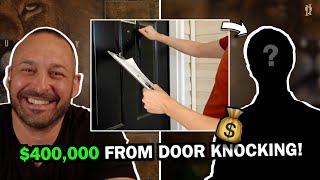
Jorge Galarza, a former truck driver, makes over $350,000 a year selling life insurance by knocking on about 100 doors daily and closing roughly one policy per day. He ditched expensive leads for pure door-knocking, uses Uber and Lyft as mobile sales platforms, and builds referrals by talking to every household member.
Chapters
Straight up cold door knock with no leads. Would you end up— what was the total last year?
Would you, would you make $366,000?
Yeah, I mean, dude, life is good. What up, y'all? John Wetmore here, back with another episode of the Insurance Insiders Podcast. Got my buddy Jorge on today. Thanks for getting on, bro.
Thanks, thanks to you.
Yeah, always, man. I, I love, um Where'd we meet? Was it Houston? I know it was in Texas.
In Houston, yeah.
So this dude, I'll give you a quick little intro and I'm gonna let you give a little clarity because I don't— I honestly don't know a ton of your background, but what I've learned so far I like. I remember you came up to me in, in Houston, you were asking me questions about door knocking and how early you can start, and you were starting at, I don't know, I think it was like 11 AM or something. I'm like, that's damn near lunch, bro, what are you doing? I just started to get to know you a little bit and we were chopping it up, and I didn't know your background, how long you'd worked here. I didn't know anything. And, uh, I remember you telling me you had some— you had some, like, fears of investing in leads. Um, so you just straight up cold door knock with no leads. I started asking questions, and I'm like, yo, how many—
how many—
because you had issued, like, I don't know, I think the number was like $350 grand or something at the time we were talking. And I'm like, Bro, how many doors do you knock a day? And I think you told me about 100. Is that—
yeah, yeah, so like, it was like 100 plus. Yeah, yeah.
I'm like, all right, so no lead. Like, and I was trying to— it was funny, I was like simultaneously trying to work with getting you over this fear of leads, but at the same time, dude, I was hella impressed because so many agents in the business use lack of money as a crutch to not be able to have success, right? And they're only looking for leads. They prefer ones that book themselves and all this stuff, you know what I'm saying? I'm like, yo, this cat just works and is, is knocking down over $300 grand a year. So would love to hear more, dude, some insight into how you got there and, you know, maybe your background, because I know you don't have a big insurance background. So kind of roll into how you— how the hell you got into knocking down 300 G's plus, knocking on doors cold, bro.
Yeah, so, um, yeah, a little bit of my background. I was a truck driver actually for 13 years. Um, my pops was a truck driver. I just kind of like followed footsteps type though. Um, I was always local, long-haul stuff. Yeah, 18-wheelers. Yeah, so we had a— what was it? I worked for like Ryder, I think, for 6 years. Ryder had a contract for like CVS Pharmacy. I was a truck driver there. Another company called like Wawa, I did it for them. Um, but yeah, I was truck driving. Um, so I had my CDL really, really young, 18 years old. Um, I felt like I was doing good at the time. I was really young with, you know, truck driving at that time. Yeah. Um, so, but to a point, I, I feel like I had a cap in income. Um, I wanted to do something more than that actually, and I just, all I knew was truck driving. Yeah, so like I used to actually buy like, uh, like audiobooks, listen to podcasts. Um, I actually bought a— I actually bought Sales Course too for like $2K. Um, yeah, and I was like driving and listening to it, type deal. But, um, yeah, I actually did a few things before this. Um, so my realtor was an investor. Um, yeah, and we, we put the house— my wife like decorated, I was like the GC. General contractor, just how pretty much tell people to do. Yeah, it was, it was cool, it was cool. My wife loved it because she was like decorating everything, so it's like, hey, I like decorating the whole house and she's not even paying for anything, so she thought it was cool.
Yeah. What'd you make?
Oh, not a lot. We made like $15,000. $15,000. How long? 6 months. 6 months. So the—
it could have been—
yeah, it could have been better, but it's still like, um, you know, first time. First time. But, um, yeah, well, I did that. Um, then I actually sold on Amazon, uh, FBA, Fulfilled by Amazon. Uh, so 2 products. One product did pretty well. Um, I only bought 100 units, so it was like a seasonal product, so for Halloween. So literally that thing went out so fast and I couldn't reorder because Halloween's over, right? So then I did another product which did well. Um, selling-wise, but it's called PPC campaigns. I pretty much wasted too much money on, um, pay-per-click when you see like the sponsors on the first page on Amazon. Yeah, so I put too much money into that, so like I had pretty much no ROI on that, right? Um, I was still learning, right? Um, I did that, so t-shirts online. Um, actually me doing Amazon, that actually what got me thinking about sales. Right? And then sales while I was still truck driving. I was still trying all throughout the whole thing. Uh, that's when I bought a sales course. Bought a sales course, like $2K some change. Um, and you know, I just got motivated, just like, I gotta leave truck driving, right? Yeah, yeah. Um, so then, yeah, I just wanted to find a job like in sales. I don't know what it was. I was just putting like a bunch of, uh you know, online Indeed, like, requests to see, like, if anyone's hiring. Yep. Um, and then literally it was just all this, you know, insurance was like number one, right, on the, on the list right there. And, um, yeah, my wife actually found one of the videos from, uh, Sean, Sean Mike, and she was like, hey, this, this, this person, um, you know, contacted you. Um, they had the video. I saw the, the old school video, Sean Mike, right there. Yeah, yeah, yeah. And, um, no, it was cool, it was cool. Then, you know, then I just got into it. Yeah, Jay, I talked to Jay Conan, um, yeah, he's one of the guys who talked to me. And then 3 years since then. Yeah, dang.
So you, you were, you were all, you were, it's like, and I don't take this the wrong way, but like one of those shiny objects, like you wanted out, you didn't know what to do.
I was, that's 100%, I was like that. I didn't know what to do. Um, yeah, I was just trying to find something, and I just got into insurance, and I told myself I can't keep jumping, like, I have to get good at something, right? So then, you know, here I am.
What about insurance attracted you?
Um, I think in the beginning it was not too crazy. Um, it was just like, hey, I finally got a sales job. Right. Um, yeah, yeah. Then it was just like, I'm kind of competitive too, so like, I'm like wanting to get better. And then it kind of sucked when I started because I was really good at, let's say, truck driving. And I used to like unload my trailer like one of the fastest person in the company. Like, I was like top 3, right? Yeah. Then to come to a whole new industry and now you're like zero, right? Right? You even know what you're doing, right? It's just a whole— like, I, I always had work ethic, that was no problem. But like, like I say, truck driving work ethic, or like unloading or working hard, is, is different than insurance, right? Because more like a mindset. Yeah. And, and discipline, right? Truck driver, you just have the job, you know what to do, and you just get better at it, right? This one is like, you kind of, you know, the plan is there for insurance, but then you still have to battle your own mindset too with it too. So like, but yeah, that's, that's how—
hey, this is just curious, when you were driving trucks, was it like the truck was full of one person's stuff and you— do you have like multi-stops?
Well, depending on the job. So if like CVS, um, I used to— I, I'm from New Jersey, I live in Texas now. So when I deliver New Jersey, I deliver like all over New York, like Bronx, Brooklyn, Queens. Um, I had like 4 or 5 stops. It'd be like one in Brooklyn, then Long Island, then shoot back to the Bronx, and then go back to the GW Bridge, back to the warehouse type of—
so dude, when I was, when I was young, like, uh, early 20s, I worked in a warehouse and I used to load the trucks.
Okay.
For what was the equivalent of like a Sysco, like a food.
It was the same concept.
I think Sysco ended up buying them eventually. And, uh, you know, we would load it in like one pallet. Dude would sometimes have 15 stops. So if I didn't load the pallet right, I pissed guys like you off. You're digging for one box of Cheerios at the bottom that should be at the top, you know. It's funny, we used to have to work in tandem because the driver's day could get wrecked if I didn't prep everything the right way.
No, it's true. Even like CVS today, um, well, they have at least like 2 or 3, like they have more pallets than just like one pallet and it's like a bunch of stores, right? But, um, they load it wrong. So they, let's say they put the Bounty, a pallet of Bounty in the bottom, they had Arizona, um, you know, the, the tea on the top.
Yeah, yeah.
And I'm like opening the, the gate, everything is ready about to fall because you got like Because, you know, I'm— yeah, and I'm here driving, you know, I think it's loaded, moving. Yeah. And it just made— it made no sense. Like, I didn't even know, like, like, how do you even got a job? Actually, I was like, why they did that? And, um, and there's some place inclined, so like when you open that trailer and load it wrong, a lot of things, all that, they want to fall out right when you open it. Hell yeah. So like, nobody really thinks about that.
Now, we used to, um we had a— we— I always talk about like I used to be timed on jobs, and, uh, loading trucks was one of them where I had to load so many trucks an hour, and if I didn't do so many trucks an hour, I got in trouble. Yeah, you know, and I got really good at— like, it didn't appear like I was working really fast or hard necessarily, but I got really good at understanding— it sounds corny, but how to build a pallet the right way and be efficient. And dude, I— some guys would be around there and they'd load it the wrong way and they'd go to turn to the next aisle to pick up stuff and their shit would fall over and smash all over the warehouse and guys have to come clean it up. I'm like, nah, I ain't going through that, dude. I don't want to pick up boxes twice. I'm touching it once and that's it. And I became one of the better in the warehouse, but I did it in like chill mode.
We had this—
the Jacks had like a turtle mode and a rabbit mode, and I would stay in the slow mode and just, you know, knock out my night super efficiently. And I used a lot of that, what I learned there, to, uh, help my career in sales, funny enough.
Are you one of the best?
Yeah, no, I just— it's funny, I learned how to take warehouse work in the efficiency of loading a pallet, because if you touch boxes more than once, it's really inefficient in the night, you know. We had to hit a— we were timed and had to hit a certain efficiency. You know, and I'm like, so I learned how to kind of slow down a little bit, read the order, see what— see if the— what if there was 20 packs of water in aisle 5 and then I had some paper towels? I'm like, yo, I need to go get the water first, make the base, come back, get the towel, load it on top. And then it made my job easier, made your job easier. And then I got left alone. I had like crazy efficiency. And the only reason I relate that to this is when I started working the phones and making appointments and doing dials, I'm like, you know, if I can set everything up the right way, the foundation, and then just be really efficient with my time, I don't have to be as good at sales as some of the other guys to make more money, you know. And I just, I don't know, for me mentally it was, it's weird that it was a very similar— so I don't know if you got anything out of truck driving to sales, but I certainly did. And again, I wasn't driving the truck, but I was loading them. Back in the day. I did that for like 4 years. So yeah, so I guess get into, get into the insurance side, dude. You got started, what was the start like?
Um, yeah, so I started, um, killing it.
Did you suck ass?
I suck, I suck so bad. I actually, um, how bad?
Were you buying leads right away?
Yeah, yeah, so I bought leads for like a year and a half, um, just from the beginning. Um, so the first month I actually put in like like $2,000, $3,000 in leads, I think.
Yep.
And I actually sold nothing.
So, um, yeah, was it because you weren't working or did you just suck at sales?
No, I, I wasn't efficient in my time. So like, I— let's say I booked the appointment, right? And then I had like a 2, 3, 2, 3 hour gap. Right? I literally did nothing. Like, I literally just sat in my car, you know, at that time, like, in-home, everything. Yeah. And just did nothing. I was just listening to music, um, didn't do it. Like, I wasn't productive, right? Like, my mindset wasn't like there yet, right? So, and then I was like the quote guy, right? Somebody was telling me, oh, just send me— I did an in-home, they say 'Let me think about it, send me a quote.' Um, email it to me, email it to you. So I literally went to, um, last thing I had a laptop, right? And, um, I had my laptop was dying, so I had to stop at Panera Bread just to charge it. So I'm here trying to send like emails and quotes and trying to make it look all professional. Like, I did all that, man. And, um, yeah, that was not the right way. But, um, yeah, I did that. Um, so that was— I started January. So then I think February was a convention I went to. I went to the convention, came back. Um, I think it was in Kansas City or something like that. And, um, but yeah, I think that's— I actually made my first sale, so I was cool. So first month, no sales. Second month, yes, I made a sale. Thank God. My wife's looking at me. Um, maybe 2 or 3, not a lot, not, not, not too much after one, if anything. Um, but each month I did got like better, right? So that was, that was a progress, right? So then, um, yeah, I think after that, you know, I did all right. Um, each month I got better for the year. I didn't do too crazy, but I think I issued paid only like I don't know, like probably 60 or 70 or something like that.
The year?
Yeah, yeah, yeah.
So what was the thought process then? Like, were you unhappy? Were you struggling with money? Was the wife pissed? Like, what was the vibe in your household about insurance and how it was going? Did you want to quit? Were you happy with— you know what I'm saying? Like, where was you at?
I was determined, man. I was just determined just to get better in the phones, determined just to get better Just any— everything, right? It was definitely— I, I was Ubering, Lyfting on the side just for myself not to go back to truck driving. Does that make sense? Like, money-wise, I was doing that on the side, but it was literally going like nighttime, um, early morning, always dial type deal. So, um, that's pretty much what it was, double job.
So you expected it to take a minute to get good?
Yeah, yeah, yeah, which makes sense.
Yeah, so I think it's a mistake a lot of people make is they think month 1 they should be amazing, and if they're not, this doesn't work. This, you know what I mean? It's kind of funny.
You know what too, I've been here for like 3 years, right? You know, just because someone was killing it in the beginning doesn't mean they're gonna kill it at the end. Or I agree with that. Or like, you even tell by like the Slack, right? Because I'm in, um, you know, Zeb and Jake Cohen's team. I'm with like Jack, Zach, Jirassi, Slack, and everyone's like posted numbers, right?
Yeah.
And like, it's people you, you always know the same people who hit those big numbers, right? They post, post, post. All right, a year later it starts slowing down, slow down, and then that's it. You don't hear anything what happened to the person, right? So the person who's killing it or kept killing for a while doesn't mean they're always going to do it. Forever. And, um, that's why I always feel like this, you know. And like, let's say compared to me, I almost did any— no sales, um, you know. And it showed consistency is, is key regardless how you start. It's— I guess it's really how you end. Yeah, a lot of people be killing it.
Would you issue your second year? What was year 2 like?
It was better. It was— I issued 200 No, exactly $200K actually. It just passed.
What changed? Um, go from $60K to $200K. It's a big jump.
It is a big jump. Um, so from that time, actually, I started doing like phone appointments. And then also I was doing door knock. So I think at that time I moved. Yeah. So then I did it. I went to Texas, right? I just moved to Texas, whole new atmosphere. Um, you know, I, I really had no family besides my wife, my kids, and my mother-in-law. We all moved together, but besides that, you know, Mom wasn't here. After my dad, he passed away. He died from COVID So, um, you know, a little different, right? So then, um, I guess you could say like my back was more against the wall to get it was just me. I'm the only one working, right? So I'm like the only breadwinner, so I have to make something work out type deal. And, um, yeah, yeah, I just, I just kept focusing. I door knocked more my leads. So I didn't— I remember the first month when I moved out here in Texas, it was like I had leads, I was calling. Um, it's crazy, my wife had to go to the hospital and I was there for like 2-3 days, like the first month. It was in, uh, in June, right? No, I think it was July, the second month, right? And I already booked all these appointments and I'm like, okay, she's resting, she's, she's okay. I already checked. I said, let me just jump in the car, let me run these appointments really quick and then I'll go right back, right? And then, um, yeah, I made, I made a few big sales. Yeah, yeah. So I came Actually, I went to one lady's house, went to her house. She said, oh, can you come back in an hour? I'm like, okay, no problem. Then I actually door knocked my leads. This is leads now, all right? I door knocked my leads. I had it on Road Warriors, right? All of them plugged in. And I saw like a lead next to me, knocked on the door, and I sold like 2 big policies actually. I sold a lady who was like 83 at the time or 84. Straight at them. Then I did that, and then her son, right? So actually sold 2 big policies. The mom was like $200-something a month, and the son was something small, like $60 or something like that, right? Yeah. Then I went back to the appointment, that one that told me come in an hour, and she was like, you know, serious. So I sold her too. So I helped out with a policy. Um, not great, probably it was like a $40 policy, something like that. But, um, but yeah, yeah, that's what I kind of did. Kind of like, I was really happy that worked out like that too. Yeah.
So how'd you get in? What, what, what made you stop doing the leads and the phone calls and go to straight door knocking? How'd that happen?
Yeah, so it was, okay, I kind of roughly told you what happened. I didn't tell you the whole breakdown when I first met you, but, um, But yeah, so I, it's pretty much, I like, it was some months, um, so like my muscle was like, I was getting better but was not consistent. So it'd be some months I issue paid $30K, right? And this is all leads, right? And then some other months it'd be like $10K. So it didn't, it would be like a roller coaster, right? And then at a point I was getting hit by chargebacks and it was hard for me to kind of like buying.
When you issue 10 after 30, the chargebacks from the 30 will whack the 10.
Yeah, yeah, yeah. So then it was, uh, it was— I was in that roller coaster, right? And then maybe another month I hit 20 or something and back to 10, and it was like that, right?
So were you inconsistent working too? Like, was it mental? You're like, hey, good month, and slow down a little? Was there inconsistency in your activity too?
You know what, it could be, you know, I, I didn't really thought about that too much, but, um, I know I always wake up and like dial type deal, but anytime that let's say I had like, like gaps, I was 100% door knocking all my leads. Like even Houston's like really big and it kind of sucks because sometimes you drive like 30, 40 minutes per person, right? Right? Yeah. Um, I still did it, right? I just hit the music, hit the gas. I gotta hurry up before I gotta pick up my daughter. I gotta pick up my daughter from school and stuff like that. Yeah. And, um, yeah, that's, that's how I kind of did it. Um, but yeah, now thinking about it, it probably— I probably slowed down more on the door knocking lead side of it, and that's what kind of like you know, got me in that position. Yeah, man.
So then, but, um, what made you get back to the— what made you get into straight door, cold door knocking? How'd that— yeah, how'd that come?
Yes. So then for me, kind of my— it was inconsistent, like my, my issue paid, and then I had a big chargeback problem, right? I was— every time I was making— I was trying to hit money, make money, I could hit my chargebacks, right? So then Yeah, I actually called Jake and I was like, hey, um, you know, I gotta slow down a little bit. Um, like, I still want to do this, it's just I gotta figure something out. Um, you know, I said I gotta, I gotta, you know, pay my bills and then also I gotta pay these chargebacks. And, um, nah, so look, I'm gonna Uber on the side. Like, that's what I did before. I'm not— my mindset is like, I'm not trying to truck drive again, you know. I'm gonna keep at it, I'm not gonna give up, pretty much. Right. And, um, yeah, I actually was Ubering, Lyfting. Um, I had a sign actually in my car. It said, 'Need life insurance? Just ask. I'm a life insurance broker.' I had real bold letters. Um, I don't know why I heard something. They said put it in red. It attracts the eye better. So I put it all in red font, and it was literally like I laminated this Velcro and slapped it in the back. Like, you couldn't miss the sign. Right, so literally I did that for probably like 3 months. I did it for 3 months and, um, yeah, actually I got good at selling insurance in my car, actually.
No shit, I didn't know that part.
Yeah, so like even, even still now, if you even check my TikTok, if you see people like behind a car, like behind a seat, it's because I Uber and I sold them a policy. But, um, yeah, so I still do it sometimes to this day, but, um, pretty much full-time, right? And, um, so I actually paid off my chargeback. It was pretty cool. And then I just, I just got good at fishing people in the car and just kind of bring up a random conversation. And, um, yeah, I kept like driving, doing that. To a point, I was like, I wanted to go more aggressive to it because I feel like I waited for people to come to me sometimes. Yeah, yeah. And then I saw like, I know I had, I set an appointment with somebody and it was actually at an apartment complex. And then, um, I sold the policy and there was a lot of people outside. It was like a Saturday night, beautiful day, whatever. And I literally just walking in the parking lot, pitching to people, right? I'm like, what I got to lose? And while I was just talking to people that's just outside, and in my mind, like, I might knock on the door. And that's how that thought process happened. And it just started working. Yeah.
So what's the—
give them—
what's the pitch? Let's help some people. I know it's— I've heard it. It's not complicated.
But I, you know what I always say, is not what you say in the beginning, is which how you handle what they say after what you said, right? So like, I just be like, hey, how you doing? My name is Jorge. I'm helping people out some life insurance. Uh, I just literally just have won so many neighbors already. I'm just asking you got life insurance, and I like to smile at them, right? And then either they smile back or they say no, or they say I'm not interested, or they'd be like, um 'Oh, what company you work for?' or, um, 'Do you have a business card?' And, um, when I hear stuff like that, I say, okay, there's some type of like— they was at one point, like, they was like thinking about it, right? Because they could just say just no, right? Or not interested. If they ask me for business card, stuff like that. So I start asking more questions. So they have a business card. I have like this, uh, digital card. It's called like HiHello. Yep. And I use it. I got a QR code, right? And I'm like, yeah, I got a digital one. There's a QR code, you gotta scan it. You grab your phone real quick. So I use that not to give out business cards, it's for me to keep going with the conversation. Yep. So they'd be like, oh yeah, let me, let me get my phone real quick. I'm like, all right, yeah, no problem. They go get the card, you know, get their camera on so they can scan it, and I just start having a conversation. So I'll be like, well, do you know how life insurance works? Be like, yeah, yeah, everyone say yeah. They don't, but they just say yes for whatever reason. For sure. And then I was like, I just give them a quick breakdown. What I said is pretty much like, well, I guess you know that it's based off like your health and age, right? So like the younger you are, the cheaper it is, uh, just healthier, the more profitable for you. Um, you ever heard of companies called like Global Life, Colonial, Lincoln Heritage? They'd be like, yeah. I said, well, a lot of those, um, we see on TV, do that, do that, that 2-year waiting period, that guaranteed issue. Right? Do day one coverage, but you do have to qualify for it. Um, so that's why they do check what's called like your MIB record. And MIB just stands for like your Medical Information Bureau. So any prescriptions, diagnosis, it goes in your MIB. And just through your social, that's how they know you're not like dying tomorrow, crazy like that.
Yeah.
And then, um, I say the social too, so they know like when I'm on the app, I'm asking for the social. So I already kind of like threw it in there type deal. Yeah, and then I was like, hey, it takes 10 minutes to qualify, it's not a big deal. Um, do you take any medication, diabetes or anything? And then like, they're like, no. And then I just, you know, kind of like clients— the client, um, uh, what is this, suitability worksheet, kind of ask the question off that. That's it, really.
This is not that deep, dude. So you're playing numbers game at the end of the day. You talk to enough people, you'll find some interest. I assume a big-ass majority of people say no.
Yeah, my thing is I'm not trying to convince them if they're not ready there about insurance. I'm just trying to fish the people who are interested already. So I'm not even by bylaws. I'm not going to go back like that whole little thing I said. Like, if they look not interested, if I'm talking, they're looking like down there somewhere, I'm not going to waste my time. I'll just be like, all right, cool. My name is Jorge. Any questions? I'll be here till you start. Bye. Yeah, I'm out, right? And it's like, you know, I'm not— you know, I can't be there for 10 minutes and change their philosophy of life, right? Yeah. If they want— oh, they was interested, or they was like trying to inquire information, all right, that's what I'm here for. Yeah, those are people I'm trying to find.
So, so if you— if you— you still doing like 100— I know you're doing your transition, you're doing a little bit more telesales because we talked, and I'm like, dude, you want to build a team, you should, you should get good at some of the other stuff too so you can teach it, right?
Yeah.
But in, in, let's, let's talk last year. Would you end up— what was the total last year?
Would you, would you make $366,000?
Yeah, I mean, dude, life is good, right? And it's like, can everyone do it? We can't say. Who knows, dude. But can everybody work as hard as you do if they choose to? You know what I mean? And they might mess up and make some sales. So let's say A typical day, you start what time? Did you change what time you started knocking on doors after we met?
Yeah, I went, um, yeah, what, not exactly that fast, but like, yeah, drop my kid off, what, 8:30, like 9 I started.
So let's just say you were, you doing, you called 100 doors a day.
Yeah, right.
How many convers— how many conversations would you have? Roughly a day, like somewhat positive, that didn't tell you to fuck off, basically?
Um, out of 100, probably like 20.
Not like I'm sitting down, like, yeah, yeah, they're not telling you to fuck off. Yeah, 80% basically tell you to fuck off, 100% essentially.
Yeah, yep.
All right, so of the 20 that don't tell you to kick rocks, how many do you think you would like show pricing to roughly?
Probably like, if any, it'd be like, because I'm sure I'm pricing like the likelihood me selling it is like a lot high.
Yeah, yeah, correct.
That's what I want to know. Yeah, so like typically just like one policy a day, like typically, right? Um, if you average the long period of time, I do be out there a long period of time. Yeah, but it'd be other times, let's say I do 3 policies, 4 policies, I get referrals, and then I kind of like hop around. I actually got pretty okay doing referrals too. So like when I get in the house, I just don't try to insure that person, I try to insure everybody in the house also. Yeah, so like when I go in the house, I just be like, you know, let's say I see the— let's see the mom, and it was like their daughter that's like in their 20s or 30s, something like that. And I'd be like, hey, um, you know, I'm doing the app, I'm looking at her, the mom, and I'd be like, hey, what's your daughter name? Hey, how you doing? I'm Jorge, I'm helping your mom with life insurance. So, hey, how you doing? Okay, cool. Um, well, I always ask somebody at your house, do you currently got life insurance, man? Like, no? Okay, so let me help your mom real quick, almost done with her application. After that, I can help you out, that's no problem. That's it. And, um, Yeah, either they gonna be like, okay, or they gonna be like, no, no, no, I'm good, I'm good, I'm good, right? And, um, I'll let them decide on that, you know. And they say no, I just don't push it, I just let it go. But at least I say what I have to say, you know, and I try.
Knock on 100 doors, get an app a day, and get some referrals after that. Like, life is good if you can understand the mental game that you're playing is where it's at, you know.
Yeah, because if you stay positive, man, I like I could have like a bad day, right? And I'm like, in my mind, I'm like all over the place. Like, my day is long, but if I could like stay positive like the whole day, like, I can get nos like crazy and it'd just be like, all right, whatever, bye, and go to the next door, right? And then it's not like I'm— you never want to carry weight from like the nos or a bad appointment to the next door. You just always want to be positive, like, knock on the door. Hey, I'm the insurance guy, how you doing? You know, crack some jokes. They looking at you, this guy's crazy, but you just, right, it's just, uh, stay positive.
I love it. What time do you finish? You said you have long days. How late are you out there?
Um, so now actually I've been out since like, it get dark late now, um, probably like 7:30.
So you knock till it's dark?
Yeah, yeah.
Yeah, so obviously coming up you get, you get more, a lot more time.
Yeah, yeah, yeah. So through Monday through Friday I have that gap because, um, like 2:15, 2:30 I have to always stop what I'm doing. I got to pick up my daughter from school. Yep. And then from there I'd be back probably 4:00, 4:30 again knocking on doors.
It's killer, dude. It's, uh, it, it's, it's a really easy way to make— it's hustle. Right? And obviously, as you start talking about building a team, your goal is not to do it for the rest of time, but you're able to change your life quite a bit just from—
yeah, yeah, yeah.
I love hearing stories like this. And now every time I talk to agents who are like in a bad situation, I literally bring up your story 5 times a week, 10 times. I mean, I talk about it all the time just because it's— and I love— I do— I give out your TikTok, which I learned you changed recently.
Oh yeah, the name.
Yeah, yeah, because I was trying to give out the trucker one the other day, and, uh, Amanda was like, nah, it's different now. So we— she— what is— what's your TikTok? Because here's what I love, because you do it in the rain, I've seen you in the dark, I've seen you in bad day. I mean, I watch your stuff, I have fun watching it. Every once in a while I'll click on it, I'll watch it live for a little while. But this dude literally will live door knock on TikTok. I know you put it on Instagram some now too, um, but how— what Where can people follow you? What's the best way?
Um, well, on TikTok, definitely. Um, I do a lot there. It's, uh, FFL Doorbanger. Um, that's, that's my new name.
FFL Doorbanger.
Um, yeah, thanks, thanks. And, um, yeah, that's, that's the best way. Um, you can give me an Instagram too. Um, JMS, my last name, Galarza. G-A-L-A-R-Z-A. LLC. Yeah, um, on Instagram. But yeah, that's like the best ways to kind of get me.
I love it, dude. I love it. Well, give, give, give, give you some final words to whoever watches, some agents, whatever you think would be positive or things you wish you heard at the beginning, you know, that, that you know now that you haven't already covered.
If there's anything, stay positive, um, Just because, you know, you could submit an app and make like $1,000, right? Let's say for example, doesn't mean that it is that easy too, right? If you first start, you definitely gotta put in the work to get, to get it more easier, right? Um, just because somebody's killing it now, like comparing pretty much, right? Just because somebody's killing it now doesn't mean they're always like going to keep killing it. And like, if you're going like slow, just— if you— there's no way like you keep doing it and you're not gonna get better. So it's— that's like impossible. But, uh, yeah, just keep your head up, keep positive. Positivity is definitely like— at least for myself, it helps me go through a lot of challenges. Yeah. Um, yeah, being positive. Like, I think too, like, you can get better in word tracks, you can get better in sales, but if you have positive— being positive and confidence right there, and then work ethic, like, those three things will take you a long way. Like, you don't even need the best pitch, the best word track, the best— if you literally be confident in you, like, and then just be positive, there's no way you're not going to make something like a sale. Yeah, so yeah, I agree, dude.
We have— we definitely have that in common because I hear yours and I'm like, I can relate, you know what I mean? Like, I don't— I wasn't the best sales guy. I didn't have— I got better at it for sure. I mean, I learned how to close some deals, but man, beginning, same. This is reps, dude, which is why I love what you're doing because I'm like, that's my style, just go out and outwork your situation. Keep killing it, bro. Appreciate you getting on, and, uh, hopefully we'll keep watching you climb and share more stuff with people in the future and touch base again. Appreciate you, John Wetmore.
All right, cool. Thank you.
More from John







How YOU Can Make $15,000 Per Week from ANYWHERE ft. Keenan Stockling Jr | Ep112



