
Stay Paid Podcast w/ Luke Acree & Josh Stike
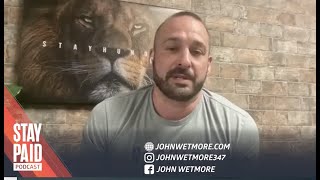
In this episode of the Stay Paid podcast, host Luke Acree and co‑host Joshua Steik interview John Wetmore, a top‑producing managing partner at Integrity Marketing Group. Wetmore shares his hard‑earned philosophy on sales and recruiting for insurance and other lead‑driven businesses. He explains how a "hostage" mindset—imagining a loved one’s life depends on a call—shifts agents from fear of annoying prospects to aggressive, purposeful dialing. He stresses that negative mindsets are choices, and accountability is built through self‑talk, extreme scenario framing, and direct questioning of agents’ commitments. Wetmore outlines his aggressive follow‑up system: triple‑dialing, stacking leads, leaving minimal voicemails, and persisting until a pick‑up, arguing that higher contact odds outweigh discomfort. He discusses recruiting by demonstrating personal production, servant‑leadership, and offering value without needing agents to recruit for his own income. He highlights metrics (1,500 agents, 10,000 policies/month, $130 M premium in 2022) and his journey from accountant to top producer. The conversation also touches on the C‑A‑R‑R buyer journey (Curiosity, Annoyance, Resentment, Respect) and the importance of action over motivation. The episode ends with Wetmore’s contact info and a call‑to‑action for listeners to apply the hostage‑scenario mindset to their own lead outreach.
Chapters
A lot of people make up this what if and they attach a negative connotation to it. Where I'm like, if you're gonna make stuff up, why not make up positive stuff? You know what I mean? Like, you're making it up anyway.
That's so powerful, man.
Yeah. You know, what if they're mad? Hey, what if they're happy?
This is Stay Paid, the marketing podcast that gives listeners a competitive edge to stay motivated, find inspiration, and discover proven real-world tactics from some of the best marketers across the nation.
Welcome to another episode of Stay Paid. I'm Joshua Steik along with Luke Acri, Before we bring on our guest today, we'd love it if you take a minute to subscribe to Stay Paid on Apple Podcasts or Spotify if you're not already subscribed. While you're there, drop us a review and we will read it here on the show. Our guest today is John Wetmore. As a managing partner with Integrity Marketing Group, John is mentoring agents and pushing them out of their comfort zones, allowing them to become producers and business owners they thrive to be. With over 1,500 selling agents doing 10,000 policies monthly, John's agency, Family First Life Agent Force, did over $130 million in 2022 in paid annual premium. And is projected to double in 2023. John, welcome to Stay Paid. Thanks for being here.
My man, I appreciate you having me on. Happy to be part of it.
Yeah, John, man, I'm really appreciative of you coming on the show. We got the chance to, uh, meet each other in person and talk when we were down in Texas with good old Joe Camper. So Joe, yeah, Joe we had on the podcast. So people gotta go listen to that episode. He's a stud. We talked about his Facebook group and everything he's doing with Insurance Syndicate, but was blown away, man. We just, uh, got a, spent a little bit of time together, was just blown away at not only your mindset, what you've accomplished, um, your authenticity. And then when you got up there and you coached at this insurance syndicate to get together, I was really blown away with some of the stuff you talked about specifically around like cold calling and the mindset to cold calling. And here's the thing, like people will say cold calling is dead. And I love what Grant Cardone says. He says cold calling is dead because you suck at it.
Right.
And I think there's exactly, I think there's a great fear when it comes to cold calling. But it is still extremely viable and it's not even a cold call anymore because you can get leads, you can get leads, you can create leads. This show's all about leads. Can you talk a little bit about your mindset behind cold calling, especially that analogy you gave of like the hostage when you were in Texas? I'd love for you to share that.
Yeah, I, um, yeah, I mean, I appreciate it. It's funny. It's funny what stands out when I, when I go places, different people. And this is one of those things that people either love or hate. Which I like because I'm pretty well either loved or hated too. So it's all good, you know. Um, and, and to be clear, man, I didn't always have the mindset I'm gonna talk about. I had, I had to get there because when I started in the business, I was— I didn't like the phones. I didn't— I was, I was very emotional about responses on the phone, you know. I didn't kind of factor in that there were going to be more negatives than positives for whatever reason, you know. And, and when I got the negatives, it, like, my mindset got out of whack. So I kept getting more and more negatives, and I probably had gotten had I just stayed positive and still wasn't necessarily good, if you will.
Yeah.
Um, so I had to get there. And as I started learning more and more about this business, I've learned that like the negative mindset, and really any business, is, is a big reason why a lot of people fail or aren't having success, and how much it affects the outcome we so desire, you know. And I've watched thousands and thousands and thousands of agents dial the phones over the years And I've watched grown men get crushed, women, everything, all of them, just when they pick up the phone, you know. And, and a lot of it's very, they said this, they didn't, they weren't interested, they already got it, these leads suck, I call, I don't, or like, I don't want to bug them, I don't want to call that early, I don't want to call that late, I don't want to call that many times. You get a lot of like things like that from an average agent. And for me, what I always try to help people understand is that, that mindset that we have is a choice. And people don't like see it that way. So I had to learn how to deliver it in a way where I could get them to choose that they would look at it differently. So the way I did it for myself, and everything I teach, it started with the way I taught myself how to look at things differently. And I remember one day kind of sitting around— Maddox is my youngest son, he's, he's, he was 9 months old when I started in the business, he's 11 now.
Wow.
And I remember thinking if someone had kidnapped Maddox, would I, would I be worried about how many times I called Luke in a day or a week or a month? Like, in the only way, like, and I always say, like, if someone kidnapped your most loved person and the only way to find them, or some people get weird about that, so I'm like, if they were going to get an illness, if you know what I mean, like, you can do whatever, put your own scenario. Yeah, I literally psych myself up, dude. And I go, if this were the case, would you be worried about what they said on the phone? Yeah. You mean the only way you could save your, your loved one was by— there's a stack of leads, there's 150 of them. I have no idea which one has your kid, but one of them has your kid, your mom, your cousin, your sister, your whatever. Here's the stack of leads. Fine, there, he's in there. Would you worry about what day it was when you called? Would you care if it was a Sunday? Would you care if it was a holiday? Would you care if it was 3 AM? You know what I mean? If I hung up, if they hung up on you, would you, would you keep, or would you be like, I just don't want to bug them this early. I know they have my son, but it's too early to call people. You would never say, and I get the scenario is different, but my only point is in this scenario, when it benefits you, you can choose to not be worried about what the other person thinks, and you aren't, you aren't going into it with a negative mindset. Yeah, but when it's leads, we somehow convince ourselves we shouldn't call them, we shouldn't do this, they might be mad, they might be busy, they might be there, and we generalize stuff. And what I've learned, dude, I'm like, yo, you're actually really good at sales because you convinced yourself not to work and you bought the excuse you sold yourself.
Yeah, wow, so good.
You know what I'm saying? So for me, it's, it's little stuff like that because when I set people up and I ask questions They're like, no, I wouldn't care. Well, of course you wouldn't care. So why do you care when it's a lead and seeking insurance? You know what I'm saying? It's just, it's, um, it's, it's a choice. We actively choose how to behave in any situation, dude. And it's, I promise you, don't make it easy knowing I teach this. Some days I have to watch my own videos.
Yeah, it's so true, man. You're so right. It's so funny, when we used to not be virtual— so now the whole company's virtual— but we used to have a call center Uh, now everybody's in their homes, but I would walk by and see reps not dialing and I'd see them looking at the screen and I just stopped by the cube real quick and say, hey, no amount of research that you do is going to help you close this deal. Get on that phone and dial. Right. It's like the 30 seconds of the ringtone is all you need for the research because you know, you're just using that as an excuse. And I love your shirt, man. For the people watching the YouTube videos, results over excuses, perfectly timed. I don't know if you wore that on purpose. I mean, you didn't know what we were going to talk about. So I love that. That mindset is so powerful, but it's so hard to master and hold yourself accountable to. How do you hold yourself and your team accountable? Like, how do you enforce accountability throughout your organization?
You know, I would say holding myself accountable is a lot easier now, obviously. You know, I like, I like to catch myself, like in the case where you just said you walk by and someone's staring at the screen. I would tell myself something crazy, like if I stared at the screen for more than 12 seconds, my alternative was I go to prison. Would I ever stare at the screen for 12 seconds?
No.
Yeah. So why do I— that's— but that's how I talk to myself. I'm weird, dude.
John, I'm learning about this. You are weird, my man. Prison, hostage situations.
No, extreme scenarios. But again, extreme stuff. No, obviously, like, what are you even talking about? Of course I wouldn't stare at the screen ever. Yeah, and it sounds so absurd, but dude, I look at it so absurd that you have the opportunity to help your family financially, but you're staring at a screen. Like, I don't, I don't understand it, you know? And I was that guy at one point, so I do relate, but I feel weird that I used to be that guy too. So that's why I tell myself things like this. So for me, dude, I've learned that I just want to do the things I say I'm going to do for myself. So I'm a big— I'm careful on what I say I'm gonna do, because if I do— and I'm human, I say I'm gonna do things all the time because I want to do stuff, and then it gets closer and I'm like, I really don't want to do that, but damn, I said I would, so I have to. You know what I mean?
Yep.
Um, and if I said, how do I hold— like, if you were in my agency, the way I would hold you accountable is I would ask you a lot of questions, and I would get you to verbalize what it is you want out of this. What are you looking for for your family? And I would, I, I would get you to tell me all the words, whatever it is you want. The thing I would just ask, really good questions. I'd make you put yourself in a corner, you know what I'm saying? I would find out what you're willing to sacrifice, the things you want to work, or you want to die, you want to do A, B, C. I would just have very defined, and they'd be in question format. You'd say yes or no. If you say no, it'd be weird because then why are we working together? And if you say yes, if you don't do it, I can be like, you know, you're complaining today, Luke, but didn't you say you'd show up at 7 and start dialing and you showed up at 9:30? Yeah, why are you confused? It's just like in-home or sales in general. Sometimes I'll use in-home terminology because that's how I sold, but it's sales in general. If you like, overcoming objections is one thing. Sure, that's a skill set. I want to think about it. What do you say? I can tell you what to say. What's the real answer and the best answer? Prevent it. You know what I'm saying? Yeah. So I try to prevent all the stuff with agents where the first few years, man, I was dealing with it. I was trying to overcome it and fighting with people and arguing and trying to get them to commit to themselves. And I was trying to figure out how to motivate people, dude, and it— that don't work.
Yeah, you're right, man. I agree. My brother Steven and I were just talking about this. He has a team of 16 agents on his real estate team and I was trying to tell him, I said, dude, motivation, it's good in the sense of like it helps hype everybody up and it's a good thing to do to get your mind right. But in terms of like you're going to be able to motivate someone to success, doesn't happen. Don't waste your time because it's discipline and it's their choice. What you said about it being their choice and to back up what you said about coaching reps, we have found that getting the rep to verbalize what they need to do in their commitment and then asking permission, going, hey John, do I have your permission this month to hold you to what you want in your commitments?
All right.
So, um, I want to stick on the kind of cold calling topic just to get more thoughts from you. How often, like, do you believe you should follow up with a lead? Do you have any thoughts on like the follow-up from a dial perspective or, you know, how often you keep the lead, stuff like that?
Yeah, I'm gonna, I'm gonna give the thought process first before I answer it. Okay, here's, here's what I always— or the way I want people to see it, right? I always, I always say this. Less— you ever see when you're— you seem about my age, you're a little younger than I am, but when I was young, uh, they have these books, and I think they do movies like this, but they have these books where you could like choose the path and choose your own advice. 22 for this and 52 for that, and you see two different scenarios. Man, I always say, like, if we were— if I were sitting— if, if I could put in this imaginary situation that could happen, and, and someone, someone dies, right? And they look down and they're able to see the time where you had their lead, okay? Or I had their lead, or whoever had their lead, and, and so-and-so's dead. And you had that person as a lead. Imagine if they got to see that you didn't call them enough times and they died without insurance. How many times would that person prefer you called them? And how often would they prefer you have called them?
Yeah, dude, that is great. Okay, let me give, let me give a little clarity for the audience because we have audience that's not in insurance too. Um, basically, I mean, what you're saying is this person, example, dies and they're not protected. Their fam— it's like me dying and I have no life insurance for my wife Megan, my son William, my daughter Evelyn, and they literally have no income now. And now Megan can look and see that John had me as a lead and chose not to call me more than once. Like, oh dude, I love this.
That is great. And imagine they saw me go Dude, if I call Luke, it's 5 PM, he's probably eating dinner with his family, he'll be mad if I call. Yeah, would you be mad? You know what I mean? I'm like, no, you'd be mad that I didn't call. Fair. Yeah, if you got to see it after the fact. So I'm like, is there a right answer? You know what I mean? So I, I look at it differently than most in the sense that most people go into it saying, I don't want to bug someone, I don't want to be rude. Same stuff I said earlier, I don't want to be rude, that's, that's not nice, it's, it's harassing I've heard all kinds of stuff about my feedback on dialing people. And from, you know, now I hear way more positive. I hear way more people that talk to me about how much it's helped their business, their agency, how many more lives they've covered and insured. I hear way more of that. But especially on Socialdew, where people catch clips of it, I get some negative pushback on it. And I'm like, yo, if you were dead and I didn't call you when you found out I could have called you but I chose not to, you'd be pissed. Yep. You know what I'm saying? So for me, I dialed very aggressive, to be honest. So to answer the question, in the life insurance space— now dude, if we're selling copy machines, I don't know the answer.
Sure.
I'm not— that's not my deal. Um, you know, I would still find a way to be aggressive, like, why not?
We had to call at least twice if it's copy machines.
Yeah, I mean, I'd make up some kind of analogy where I'd be scared to not call that dude. How about that? Yeah, exactly. You know, But for me, man, when I was dialing leads, I like to, I like to break them, put them into like small little stacks that I can work like crazy in a window. First, take a big stack and kind of work through a stack. I take little stacks and I hammer them. So if you were, if you were a lead of mine, and I'd probably put you in a stack of 25 people I'm calling, I'd start at 7 or 7:30 AM, and I would cut— most people in my world don't answer first time. Sure, I'm sure that's very common in lead-based stuff. So I would call you, uh, I would trip what we call triple dial. So I'd call you back to back to back. So if you don't pick up, call 1, I immediately call 2, immediately call 3. Maybe all 3 times I get voicemail, all good. I'd flip it over, go to the next one.
Do you ever leave a voicemail just for clarity there? Okay, you don't.
If I do, it's after way later.
Okay, perfect.
I probably double-digit calls before I did that, and it would be like, hey Luke, call me back. Okay, I would say nothing about who I am, what I do. I just— I'm looking—
hey, Lucas, John, give me a call back.
That's it.
Yep.
Create curiosity. I'd say you'll call back more if I do that.
Yep, agree. 100% agree. And there's stats out there that prove that. Grant Cardone is also another one, and he's in car sales, or was mainly, and then he transferred to all sales, but he taught that same thing.
Um, yeah, you know, so I, I think— so for me, it's like my goal at the beginning is just to get people to pick up. Because I can't, I can't work, I can't book an appointment, I can't make a pitch, I can't present anything if you don't pick up. So my whole goal is to pick up. And I always thought, if Vegas put odds on it and you call once every 3 hours and I call back to back to back, which one has better odds? It's a no-brainer. And then I just asked agents that don't do it, I'm like, why are you picking the one with the least odds? Like, you picked it. I just— you know which one has better odds. Why'd you pick the least one. I don't understand. If the goal is to cover people and to make a living, why are we going with the worst odds? Because we're offended and we make— a lot of people make up this what if and they attach a negative connotation to it, where I'm like, if you're gonna make stuff up, why not make up positive stuff? You know what I mean? Like, you're making it up anyway.
That's so powerful, man.
Yeah. You know, what if they're mad? Hey, what if they're happy? Yeah, yeah.
If this triggers you in the car or on the treadmill or whatever when you're listening to this, I don't want to do that, I don't want to annoy people, I don't want to— it's— that's what he's talking about. Like, that's what people don't understand. If you're like, I don't want to be that aggressive, I hate—
if I make someone mad, what if I help someone?
Yeah, it's because you're approaching it from the lack of value that you have. Like, you don't believe that what you're calling to present this person is life-changing, that will actually help them, that you're going to better their life because they talk to you. And we often talk about the acronym CARR, C-A-R-R, so two Rs. And it's the journey of the buyer. The journey of the buyer is curiosity, annoyance, sometimes moves to resentment, and then if you keep going, ends in respect. They're curious, what, who is this person calling me? They're annoyed because you keep calling. At the end, they're almost resenting you. Oh my gosh, if John calls me one more time, I'm gonna be mad. But because he kept following up, they actually respected John. Thank you so much for staying on top of me, man. I really, really appreciate it.
Yeah. 100%. And I've had that feedback so many times over the years. And to be honest, dude, we've had a lot of situations where both ways— I've had personally, but agents a ton as well— where someone didn't work a lead properly and the client died. And when they call, when they eventually get someone on the phone, they're like, nah, they died. I've had clients mad. We've had clients call into us pissed nobody called them and someone died. Yeah, you know what I mean? And we have record that they were called, but they weren't called enough, you know what I mean? I've seen, I've seen it to where I've done something great, what most people would consider crazy or too much or aggressive, and someone has died in the next week, and they had insurance because I did that, you know what I mean? So I'm just, I'm more of the like, whatever. Yeah, yeah, dude. And I believe in what we do. I'm not doing it for incorrect reasons, you know what I mean? And, and some people go like, I, I would be mad at you. Well, you probably also wouldn't fill out a lead, so I'm not worried about what you think. You know what I'm saying? Like, you're not, you're not that type of person. They're different. Someone that fills out a mailer is different than someone that fills out something online is different than someone that only will do business face to face. They're just, they think different.
Yep.
You know, and I've just learned that over the years. And you know, what we're doing works, and if people are offended by it— if someone, someone sent me a DM on Instagram Yesterday, and I don't remember what video I put out, but they said, I love it, but not a very popular opinion amongst the masses. And my reply was, well, the masses are pretty broke, so I'm not worried about their opinions. Yeah, man. That's so powerful. Yeah, yeah.
If you want to live in the 1%, you're not going to be like the 99%.
You're gonna 100%, man.
You're gonna be different. What about, um, talk to us a little bit about, um, how you recruit and like how you attract people to come and be part of your agency, because we have a lot of different businesses from real estate listening to this, mortgage, insurance, and they all— a lot of them have teams or are recruiting people in their downlines and stuff. How many people do you have in your downline right now?
We had, uh, just over 2,000 sold a policy in March. We had, we had over 4,000 sell policy last year.
Wow, man, that's crazy.
So they don't all sell every month.
Sure, sure. But you have literally, I mean, thousands of people in your downline. How do you attract people to join your agency versus all the other people out there that are trying to get them to join theirs? What tips would you give to a leader that's trying to attract high-level talent?
Yeah, um, I would say that I don't need them for me to make money because I was selling enough insurance that I wasn't worried about it. I added— I, I, I could provide more to the agent than the agent could provide to me. Does that make sense? Like, yeah, if you work with me, I don't— I literally don't care. I'm not trying to be mean, but I literally don't care. Does it make sense? I want— I hope you do. I wish you do. I would love to help you. But if you're like, I'm not for you and you're not for me, I will definitely move on with my day.
Does that mean your mindset is that because you are a producer, that is what attracted them?
So I eat because I sell. Now, not today. Today, the size— I don't have to sell anymore.
Right.
Early on when I started attracting people, it was because I— and I was taught all this, dude. I didn't like roll out of bed and learn from— yeah, make up the insurance world.
Sure.
I had some great people teach me how to be successful in this business. But when I was able to start changing things and get to a point making multiple six figures on my own pen selling, that's when—
that's when the recruiting happened.
Yeah. I mean, like, all right, so Joe Blow, I can teach you how to make X, you know, the most I sold on my own pen in a year, life premium, and was basically the commission the way it works in my world, was like just under $500 grand.
Yeah, it's awesome.
Like $460. Yeah. So when you can teach people how to go— and before that, dude, the most I ever made on a job, because I'm, I'm an accountant prior to this, like—
no, wait, you were an accountant? You were an accountant?
Yeah, not a— yeah, not a CPA account, like a static—
I didn't know that.
Wow.
Okay.
Yeah, so the most I ever made, dude, was like $40 grand a year prior to insurance.
That's a big difference, $460 to $40. Yeah, yeah, yeah.
So, you know, and I didn't come into the business killing it. I started out pretty slow. Um, I would— all the things I teach, I was. So I think I'm super relatable to people because I did have to climb it. I didn't— this didn't come naturally. Sales isn't my background. I don't— I had to learn this, you know. And I'm— again, I'm not alone in that. There's plenty of people that have a similar story. But we started attracting people when I was doing it because I wanted to— I wanted to teach people how to make a living selling life insurance. I didn't attract people because I didn't sell life insurance and I wanted to build an agency so I didn't have to sell. Yeah, man, you know what I'm saying?
Yeah.
And I think some people try to build for the wrong reasons. They build so they don't have to put in the work and go— and dude, I, I had to grind to sell. I was all over— I was in the— this is pre- technology, you know, um, where I was in the field in the car driving all over Georgia. I used to fly to Utah to sell, Ohio to sell. I've done all kinds of crazy stuff to sell insurance, um, everything. So I think when it became— I could help any— it's hard to say anyone, but I could help an individual who followed the things that I learned. If they walk the same steps I did, I could give— I could give them feedback to make their journey shorter than mine. Yeah, I could relate. I knew what they were feeling. There's nothing I've asked an agent to do that I haven't done, you know. I walk the walk, dude. So that became attractive to people. And people, like, again, when you, when you're, when you're in a recruiting and you're throwing up on people on the 452 reasons why they should work for you, it's probably not crazy attractive. And this business, insurance specifically, is full of that, dude.
Yeah, a lot of these, a lot of these service-based positions are like my brother. I mentioned him earlier, right? He has people recruit his agents all the time, right? It's natural, right? It happens in the real estate game. And he literally says, go meet with them. Just ask them to actually show you the real numbers, the P&L, and what, and what they've done and the money they actually make. He goes, just ask them to show you, hey, how much money did you make last year? And how much money did your agent on your team make? He goes, just ask him that.
Right?
Because, and what I like about what you're saying, like the key takeaway for me in that, like to apply it to my own business is nothing beats servant leadership. Nothing beats the leader that actually can get in the trench with the people and do the same work and help them do that work to the best of their ability and showcase they can do it. And it's a, it's a, one of our core values in our company, but it just gives you two things. One is it gives you absolute integrity. With your people. And that integrity translates to the second thing, which it gives you absolute confidence. So you don't have commission breath, or recruiting breath as they call it, where it's just like you're desperate to recruit somebody so you can have a downline. You're like, I don't need you, but I, I can help you, and I love to help people, and that fulfills me type idea. I love that, man.
Yeah, so I was the number one producer in my own group for 4 straight years.
Yeah, that's a— that's all the story you need to try to recruit people. So the fastest way to get out of the position that you're in is to master it. If you want to get out of being a burger flipper, become the best burger flipper you have ever seen, and they will promote you right away.
Awesome, John. Thank you so much. Yeah, thank you so much for coming on the show, sharing your wealth of knowledge. Before we close out, please let people know how they can connect with you.
Yeah, man, um, if JohnWetmore.com is easy, and it's W-E-T-M-O-R-E, has links to all my social. Instagram I'm on the most, then Facebook, Instagram is John Wetmore 347, and I think Facebook's just my name, but JohnWetmore.com works for all of it.
Good content on Instagram too, so make sure you're checking out John there as well. Thank you all so much for listening. You can dive deeper to this episode, get the links that John just mentioned all in one place over at StayPaidPodcast.com. Uh, you can get the show notes for this episode as well. If you enjoy this episode and want to show your support, head on over to Apple Podcasts, drop us a 5-star review. And the best way to show your support is to simply share this episode with a friend. If you wanna get ahold of me or Luke, you can email us at podcast@remindermedia.com. And of course you can find us on social as well. We are at Stay Paid Podcast. For this episode of Stay Paid, I'm Joshua Stike.
Guys, I'm Luke Acree. Great episode. Absolutely love it. You guys can tell I get excited over cold calling and sales. I, I freaking love it. And John's mindset is so spot on. My action item for all of you, right? Because you can listen to things all day, but if you never implemented, if you never put into action, your life's going to be the same. My action item for you is you need to come up with that scenario. That is that hostage type scenario. And all of us, we have the same weakness. There's 100 leads in your database right now that you should be calling. Even if you have no leads, there's 100 people you know that you should be reaching out to, to see if you can help them with whatever you offer, just to connect with your sphere. But you're not making those calls because you're creating the excuse. You need to create the scenario in your mind like John did that flips the script. List that goes, if your most loved person was one of those people and all you had to do was call it— call them to find it, you'd make those calls. Flip the script. Remember, the difference between top producers and mediocre producers in every single business is top producers take action. Take action on that today.
More from John







How YOU Can Make $15,000 Per Week from ANYWHERE ft. Keenan Stockling Jr | Ep112



