
These 4 Steps Will Make You $10,000 PER WEEK In Sales (8% 2025 Conference)
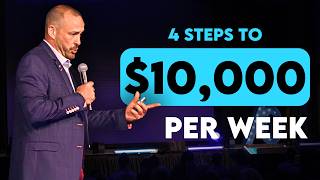
John Wetmore, a life-insurance agency leader, breaks down building high-producing agencies into four corners: lead flow, 40 hours weekly of prospecting and presenting, active call review for training, and disciplined coaching. His framework has produced agencies hitting $20M monthly in premium and 500 agents earning six figures.
Chapters
He's one of the top leaders in the life insurance industry, leading an organization that issues over $20 million a month in premium. Every single month, by the way. It's not a typo. $20 million a month. He leads from the front. He builds people up and he's here today to show you how to scale bigger than you ever thought possible. 8%, are you ready? Thank you. 8%, welcome to the stage, multiple years in a row, John Wetmore!
Appreciate it. Thank you, Cody. Um, always love being here. I want you guys to Visualize with me the last agent that you decided was a good fit for you and y'all agreed to work together. And I want you to think about all the questions the agent had when they wanted to know everything about underwriting and everything about leads and everything about carriers and all the questions and the nerves. And they wanted to make sure you had a system and they wanted to make sure you would be there to train them and take care of them. They wanted about leads and what type of leads and what's the best lead, and I want high-intent leads, and what do I do with underwriting, and what if this and what if that. And you did your part to do your best to make them feel like you were going to be there for them, and then they got contracted and it was time to go and they ghost you, right? Or you ghosted someone. Some of y'all in here do that to us. And I want you to switch a little bit with me and picture— any of y'all ever do like family game night, right? I know some people that do that. And, uh, I know somebody that used to do like puzzles, right? Grandma puzzles, big puzzles. And I picture when you want to build like a big beautiful piece of art type puzzle that you can hang on the wall and you're ready to get started. It's 2,000, 3,000 pieces, and you open up the box and you dump that sucker out on the table, and there's pieces everywhere, upside down, sideways. And we have to go like, dang, where do we start, right? And family game night, Auntie has an opinion, your cousin Joe has an opinion, your daughter has an opinion on how to start. Everybody wants to kind of do it their way, right? And to me, very similar into like, where do we start? And so that's going to be the premise of, of what I talk about today. But I want to rewind a little bit earlier to help you guys kind of see or understand how I see things. And I remember— y'all remember in like elementary school, you get into that math where they're like, uh, you know, long division and fractions and decimals and percentages. Any of you guys like the math people in here where you see the answer and you know it? You like, you know how to do like, you know, man, there's a few of y'all. And the rest of y'all know nothing about math and you cheated off someone like me in school. Okay, I remember when they were going through, when I was in school, they had this concept called lowest common denominator. And I'm not going to get deep on math because I'll confuse the shit out of most of you, but I remember they would take this really complicated number, a big number, and they taught you how to reduce it down to a smaller number that meant the same thing, right? 10 over 100, you do some weird math and you multiply this and flip this one upside down and carry this one and move the zero, and then it also equals 1 over 10, which also equals 0.1, which also equals 10%. It's all the same number. And when I was in school, the teacher would ask a question and I could just give the end answer. I'd be like, it's 10%. And she would always go like, yeah, but can you do the work? Can you do the math? And I was like, why? The answer is 10%. She goes, yeah, but you need to prove you know the— you know how to get the answer. I said, doesn't the answer that's right prove I know how to get the answer, right? And she's like, well, yeah, but one day in the future you're gonna need this, right? That's what they used to teach us in school. And I was always like, well, if one day in the future I'm going to need it, why the hell are you teaching it to me today? But can't you just teach it to me later? Right? And I always got confused by that because math was really easy to me. I could see it. I could just see the answer really simply. And I felt like people are complicating it, which confused the shit out of the rest of you, which is why you all failed math or cheated off me to pass.
Right?
So let's see if they got this sucker working. When I look at like a new agent getting started, back to the puzzle, I just see them looking at like, where do I begin? All the things I want to know first, and the chaos of where to start. And the, the things I'm going to teach y'all today, I'm not saying they're the right way. I'm just telling you how I've done the business, the way I look at it, the way it's worked for me. If you like it, use it. If you don't, keep doing you. This is just how I see the business. And when I look at what the result has brought us, we'll have this year over 500 agents do 6 figures on their own pen. We'll have 200 to over $250 grand. We have 58 agents pacing to do over half a million. We have 7 pacing to do over a million on their own pen. Team-wise, we have 30 teams will do over $5 million this year. We have 18 over $10 million, and we have 9 pacing to do over $50 million in production. Team-wise in our group right now. Certainly people add value to my agency along the way, but without me thinking the way I think early, it would have never led me to people who have helped me do this kind of volume. I get way too much credit. $200 million, dude, I'm one guy, right? And so if I'm sitting at family game night and we're sitting here at this puzzle and we go, where— if we, if we have to pick the 4 pieces to start with Where are we starting? We're starting the corners. That's how you build a puzzle. You start in the corners, you kind of fill in the edges, and you kind of go from there, right? And so the way I look at this thing, I get to look back at 13 years in this business. I've worked with an insane amount of thousands of agents directly, coach people. I talk to a lot of y'all that don't even work with me. I, I talk to so many people just randomly that reach out. And when I look back on 13 years and all the things that people thought versus how it actually worked out, right? And I think it's been mentioned up here a few times, things don't typically work out the way you want. It's going to be bumpy. But I get to look back and go, what are the things that all the agents that had success have in common? Right? There's commonalities. Success leaves clues, as they say. And when I look at the main 4 things for me, that's what I'm going to teach you guys today. And I teach this thing in order also. I'm a very systems-driven person, but I'm also— I like simple. I don't like complicated. I don't like all the noise. I didn't like doing the long math. I don't, I don't like any of it. And hell, the teacher certainly didn't see ChatGPT coming. We don't need to know how to do none of that stuff. So Number 1 for me when I'm working with someone— again, these are the, these are the steps that I want to teach people, and I believe if you do them in the right order, people have success faster. Number 1 for me is lead flow. And, um, I hear a lot of people talk about leads, which is fine, and, and I know people that have success with every lead type, so I'm not really enamored by lead type a ton. I'm more like a lead's a lead kind of guy, and someone knows how to work all of them. But lead flow, I think people mess up really bad, right? And I— so I had this, this guy Tyler come to me recently. He's more in the final expense space and wants to do like Facebook ads, whatever. And he goes, hey man, what's the best lead, right? I go, I know this guy Cody, sure. But let me ask you a question. I want to give you a feeling, and I want you to tell me what feeling you want first before I help you with leads. I said, I've seen two different things in the business since I've been watching it. I see some agents that when they're working with leads and it's time to dial, or they go through their week or their month or their year, and they're always kind of scraping and clawing for the next lead to call, right? They don't know who their next client is. They don't know who to call next. They don't know when the next leads are coming in, or if the, the lead order is going to fill fast enough. Or, you know, I mean, they always feel like, dang, I don't have enough people to call. There's that feeling. Any of y'all feel that? Like I'm always clawing for the next lead purchase, the next— I gotta fill, fill my pipeline. Then there's a second feeling, and this is the feeling I like. Any of y'all have like so many leads you don't think you can keep up? Like there's this, I have so many people to call, I don't know how early I can start and how late I can go. There's, there's so many people to call, right? Those are the two. I don't know of any other feelings. People are either clawing or people have enough. Certainly there's a little kind of piece in the middle that might be ideal. That's hard to figure out at the beginning. So I said, Tyler, which one of these feelings do you want? He was like, I don't want the first one. I was like, cool. So what I suggest on leads— and someone advised he spends $1,000 a week, whatever, you hear that a lot in the industry— I go, cool, my recommendation is why don't you front load it? Because if you spend $1,000 a week even if like your grandma watched a YouTube video, knows how to run Facebook ads, and can create the cheapest leads on earth for you, and you get 100 leads a week spread out over 7 days, it's only 15 a day spread out over 24 hours. You get a lead at 8, then you get one at 9:37, then you go on at 10:42, then you want 11:17, and you can't really work in between. So we find busy work right now. If you front load it and instead of $1,000 a week, I'm like, Tyler, if you spend $3,000 up front, put $2,000 in a new lead flow, so you got a couple hundred coming in a week, and then you take $1,000, you buy a bunch of aged leads. Day one, when you're ready to go, you got more people than you know what to do with. And as they drip in, now you're getting maybe 30, 40 a day instead of 10 or 15, right? So the flow of leads is most important to me to keep people busy, to keep people talking to clients. And I don't care where the flow comes from. If you know how to get referrals, great. If you know how to do seminars, cool. The flow of potential clients that you can prospect to, to me is very important. And I work on that step 1. Number 2 is work. And if you don't get the lead flow right, you don't have the ability to do enough work. And when I say work, for me, I, I talk about money-making activity, right? And when someone's new, I define what money-making activity is for a new agent. I have to— just like when we're with a client, it's like, hey, here's what we're going to do today, Brian. Well, with a new agent, I say the same thing. Well, dude, based on what you want, here's what we got to do. And I, and I explained that process to him. So for me, work, money-making activity— what are the money-making activities? If you're new and you're trying to figure this thing out, it's prospecting and presenting. And I go, can you get 40 hours of that? We're full-time in insurance. Can you get 40 hours of prospecting and presenting? If you don't get enough leads, you can't do that. Meaning if you had a timer every time you called someone, every time you knocked on the door, whatever it is you do to prospect, if there were a timer sitting next to you when you're trying to talk to someone and the timer was going, and the second you stop, it turns off. Or when you're presenting, there's a timer going. If you can figure out how to add those up to 40 hours a week, it will change the way you, you can operate this business. I see, for an example, I see a lot of people— I talked to an agent, this chick, uh, Erin, I think was her name, and she reaches out for some help. She's having problems closing, and she goes, I've done a lot of presentations the last 2 weeks, I've done 10 or 12, and I'm struggling closing. And I said, you said the word a lot and then followed it by 10. I said, "How long is each one?" She says, "30 minutes." I was like, "Cool, so 10, 12 appointments, you're spending 6 hours every 2 weeks presenting your product to the world." She said, "Yes." I go, "Cool, I know you wanna know how to handle the sales side. Would it be okay if first I taught you instead of how to present 6 hours every 2 weeks, I teach you how to present 6 hours a day? Would that be more valuable?" She was like, I would love to know how to do that. I was like, cool, let's not worry about the other stuff right now. Let's worry about how to get you in front of more people every day. And we started focusing on that, right? Once you have the lead flow and you can do the work, now I like training, right? And for me, training is a little bit different. You all watch YouTube and do all the things, which is fine. I'm a big fan of more active training. I suggest agents— which I just talked to someone over here like 3 minutes ago, I forget your name, I apologize. And I was like, could you listen to your own recordings of your calls and your presentations? She said yes. Most say no. I talked to this guy Darryl a couple weeks ago. He's reaching out for help. He's been presenting. He can't figure out the problem. I asked him the same question. He goes, no one's ever asked— told me to listen to myself. And most agents think, I'm new, why would I listen to myself? Like, when you hear yourself talk, you will definitely know what you're saying wrong. It's a— it's— you'll hear it on your own. And I want agents to hear the perspective. So I tell Darryl, go listen to a few calls, let me know what you learned from it, make some tweaks. And he comes back to me and he goes, dang, I heard some things on the sales presentation that I didn't know I was saying wrong. I compared it to your video and dang, I didn't know I— he was doing like this really weak close, one of those ones where you go like, we ain't doing anything today, we're just seeing if you're eligible, only No, no. And I don't train on that. So I'm like, all right, cool. Tweak a few things. Here's what you tweak. And then that same kid, he came to me with negative $200 in his bank account. I advised he do these few things I just talked about. This is 2 weeks ago. And within like 5 days, he sold like $3,000. Just listening to myself, making some tweaks of things. What I found out is a lot of y'all know what to say. You just don't say it. You know, so I advise you listen to your own stuff first. Once you're doing your training, then I go, all right, coaching. Coaching, I think, is really important. And I had this dude, Bahani, reach out to me. He was booking a bunch of appointments, but most weren't showing up. It's like 25% show up. It's like, dude, I've been doing this a long time, bro. When I see a ratio of that poor, when, when you're calling a potential client And they go like, you go, hey, 4 or 6 o'clock? And they go, 6. And, and you go, all right, 6 o'clock works for you? And they go, yeah, I should be there. I bet you go, got it, see you, see you tomorrow at 6. I'm like, and you skip over the we should be there part, right? A lot of agents don't slow down there and go like, wait, what do you mean? Hold on, you said you should be there. I need to make sure that you're actually going to be there because I work with a couple hundred families a week, and if you aren't there for the appointment, someone else loses out on the opportunity to get covered. So can you 100% make sure you're gonna be there or do we need to find a better time? He was like, you say that to people? I'm like, he told you he wasn't gonna be there. I don't know what you heard, but he said he wasn't gonna be there the first time. Right? He goes, got it. This dude behind, he texts me 2 hours later. It's like, dang, I tried it and it worked. I have an appointment tonight. Later tonight, that person was there and on the phone they were like, nah, nah. They start convincing him that he'll be there. And he's not the type of person that would dip on an appointment. Sells $2,500 that night from one tweet. All right. And so for me, I think I've learned that agents coming in, when you're hiring and you're building, most agents want you to do coaching first. They want to coach— you would coach them on everything before they start. Then they want to do so much training to avoid the work And then they want to limp in on lead flow and they wonder why they're struggling. And so for me, I'm like, if I could only choose 4 things to teach agents at the beginning, these are the 4 I would pick. I know there's 100 other things to go through. I'm not confused by that, but I see so many agents try to build that puzzle from the inside out. I mean, they start in the middle with all the details and then they want to get to the— they're like, I'll do the work when I understand it all. Right, I'll buy the leads when I know what I'm doing. And when I'm, when I'm referencing like a puzzle, if we build a puzzle from the inside out without the corners, you can't actually build a complete puzzle, right? You got no corners. The dope thing about this part is you can build a full puzzle out of 4 corners. And I built my whole agency on this concept of let's keep it simple, let's master the basics, the foundation of what we do, and then all the other stuff will deal with down the road. And that's led us to a point where we get a lot of agents. Now, it's not for everybody. Some people don't like that. And is that kind of lead flow and that spend scary? Yep, it is. I'm aware. Are you going to have a hard time keeping up? Yep. Are you going to be nervous?
Yep.
Are you gonna be overwhelmed? Yep. Are you still gonna suck? Yes. New leads don't make you good. Lead flow doesn't make you good. But do we want to rip the Band-Aid off quick, or do we want to drag this sucker out? I wanted to do it quick, and I was frustrated that after 2 and a half years in the business, no one taught me this. They told me I had to learn all the stuff first. And again, I don't care how you do it. I'm just saying you don't have to know all the stuff first to start. And everybody said something similar to that up here. So when I start looking at people knocking out these four corners they're going to be overwhelmed and nervous and stressed. So that's where I get to a point where I'm like, that whole do more thing I talk about, that for me is like a mindset. It's not just about reps. It's a way I live my life and the way I do things in my world. And so I recommend people do it. I'm going to show you this quick little video. It's like 15 seconds. And I'm leaving tomorrow at 12:30. I got to like literally run off stage and get on a flight. I'm going to Utah tomorrow to do an endurance event where I'm running 3 mountain marathons in 3 consecutive days. So Thursday mountain marathon, Friday marathon, Saturday marathon. Never done anything in it in my life. I want to show you this little clip. Just finished 2 miles for the day. Mile 8. 17-mile hike.
32.5 miles in.
Just finished this half marathon. Whatever it is you say you want.
Go get it. Do more.
I am not a runner. I started training for this 9 months ago. I couldn't run a half mile 9 months ago. I started doing a half mile a day, went to a mile a day, went to 2 miles a day. I'm up to doing a 5K a day plus other training, endurance stuff, long distance stuff. And all of these miles for me were done with this Do More concept. Right? And a lot of y'all have read the book. I appreciate all the feedback and the messages and all the things I get. And this do more for me when I'm doing endurance or I was in insurance. The way I look at things is this concept of the acronym. Number 1, you have to have discipline in anything you do. Discipline, running all the miles every day when I didn't want to run them. You think I want to run a 5K every day? I don't really want to run a 5K ever, but I want to accomplish something big. So I had to have discipline in the training there. No different than that when I was in insurance. I had to have discipline in making the phone calls and doing the dials and showing up to appointments and doing the recruiting. It's, it's pretty simple there. The O is ownership. To me, I really mean it— to me it means own your shit, right? And then in the health side, I was drinking too much alcohol, I wasn't working out enough, I didn't do cardio, I wasn't running, I wasn't doing the things. So I had to understand it was going to be hard. In the insurance side, I wasn't putting in the work, I wasn't buying the leads. I wasn't following the process that I was taught. I was kind of trying to do it my way, and I had to own that before I got better on the insurance side. Mistakes— I don't know why it flipped, I hit the wrong button. Mistakes— I think mistakes are insanely valuable. Most of y'all aren't willing to make mistakes. So when I'm out running, I had to be willing to make a lot of mistakes. Any other runners? You run for hours and hours and hours and sweat. Like, chafing is real. You go around in basketball shorts and like tighty-whities, you come home with some sores you didn't know you would have. And you wear a regular shirt, you run a few miles in the sweat, and your shirt's bumping up and down, that shit burns your nipples off. You don't know that in advance, right? And in insurance, I had to be willing to make a lot of mistakes. I had to mess up. When I do this strategy, I had to be willing to miss sales. I had to be willing to mess up with agents. We have to make mistakes. The willingness to make them, then we have to go make them, then we have to own we actually made the mistake, and then we have to take feedback on that mistake and implement changes from someone who's better than us. I do it in both ways. I hired a coach on the running side, and I had a mentor on the insurance side. O for obsession, meaning I had to be obsessed for 9 months on accomplishing this goal, and I'm going to try my ass off tomorrow to start to do— to try to finish this thing. I have no idea how it's going to turn out. Sam's running it, Taggart, who spoke earlier. I just found out like 5 minutes ago. And in insurance, I had to be obsessed with the whole process of dialing on time and being early and make sure I had the lead flow. And I had to be obsessed with the process of getting better. Resilience for me is like, man, out there running, my hips were sore, my knees were sore, everything hurt. My feet were sore, they get swollen, and I had to run again the next day. I just had to push through the pain. And on the insurance side, I go like, dude, we all got shit in life, right? You got problems, I got problems. Why do we always talk about them? Can't we just get through them? We all got them, so why compare or use them as an excuse? And then expectations, you know, for me, I expected this thing in the running to be hard. And I think that a lot of people have the wrong expectations. They think they can get rich by limping in with leads. And I wish more people would be honest that it's really hard to do that. It's hard to make a lot of money when you limp in in this business. And so just be super careful about expectations as you go and as you grow and you do things. Um, because I heard this quote from Inky Johnson. He said expectations he considers to be premeditated disappointment. Having expectations on others, premeditated disappointment, like you did it on purpose. So I talk about a lot of the stuff in the book. We have a bunch of them out there. Again, appreciate all y'all buying them. If you want some out there, they're like $12. We're basically giving them away. Um, and people go, is that it? I'm like, ah dude, there's definitely way more, way more to it. You can't be ignorant. I can just give you a bigger puzzle. I don't have to stick with a 4-piece puzzle. I can certainly teach systems and staff and culture and branding. And that's a lot of what we're going to talk about tomorrow in my breakouts. I have 2 breakout sessions, going to be teaching people how to 10x their agency, gonna teach people how to do marketing to attract and identify and train $40K+ producers. Um, if you're interested in some of this stuff, you can actually go to johnwetmore.com/puzzle. That's where the QR code brings you. It's going to give you this talk, all the stuff on the breakouts, and a ton of other stuff. We're just going to send you free, free content, free info. And, uh, if I go like, how do we go from there? This is Amanda, who's been with me 8 years, my assistant. She's really my director of operations, but I always call her my assistant. I don't really know why. She runs my whole company. I have a great team, great staff. And these are twins, they're almost 3 years old, and they're sitting in her living room playing with this 4-piece D-BAB. Y'all remember what that means? What is it? Don't be a bitch. Little 3-year-old girls playing with this 4-piece puzzle, not a care in the world, not a thought, not a worry, just playing and putting little pieces together, probably in a shit-full diaper. Happy as can be, not worried about anything. And a lot of y'all, if you would go through this business a lot more like a kid and just be willing to mess up along the way and fall down and get up, the business will take care of itself if you do it the right way over time. So I wanna kind of leave you guys with a couple questions, a little bit of a challenge, and really ask you guys, like, are any of y'all tired of, like, telling your kids no? Because of money, or telling your family you can't go on the trip this year, or you can't buy the dream house, or you can't go on the family vacation. I was sick and tired of that stuff. I don't know if— are y'all sick and tired of saying no over money? I was sick and tired of it, like so tired of it that I had to change the way I did everything. And for me, again, yes, it is a do more, but it's not just about the reps. For me, Do More is a lifestyle in a way, and really who I am when things get hard. I live by this concept of Do More. It's way more than reps to me. It's a lifestyle. It's a way to live. And I promise you, if you guys go out and do more and take the concept, I promise you, you will be able to live more than you've ever lived before. And you will help so many people make money in this space because what we do is not difficult. We overcomplicate it and we refuse to follow a very simple process, even though all of us stand up here and scream it. So I challenge all of you, please, for your family, go out and actually do more. I appreciate you guys. That's my time.
Hey guys, just created something really cool, and if you want to be part of it, join the Discord group I just created. The link is going to be in here. It's a dope environment. You can, um, chat with others that are kind of in the community. You can see beyond the curtain of our agency, have access to all kinds of stuff that we got going on, events, and my staff is in there. Um, we have agents in there selling, me helping agents and sharing information. We're going to, as we build this thing out, share everything, um, out there with all of you guys. So again, follow the Discord if you want to be part of everything we got going on. Join it now. We'll see you in there. Hope to help you more.
More from John







How YOU Can Make $15,000 Per Week from ANYWHERE ft. Keenan Stockling Jr | Ep112



