
This Insurance Telesales Training Will Make You $20k/Month ft. Chris Amaya | Ep101
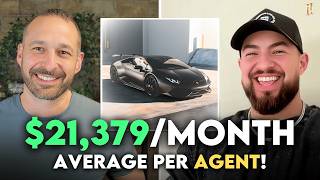
Chris Amaya went from engineering school to insurance telesales, building an agency from four people to a large operation while earning six figures. He credits mentorship from John Wetmore and Zach Tronowski, and says success comes down to having a compelling why, relentless work ethic, and willingness to support your team.
Chapters
I think last month we crushed a little over $700,000, and we have—
how many rides? 30-something for that?
Yeah, about, yeah, about, about 30-something.
But I know people with 200 fucking agents that don't sell that in a month, legit.
That's wild.
Appreciate you getting on, dude. I, I hear you're killing it. Life is good, helping, helping a bunch of people get paid. How, how did you— did you, did you know Easton before, or just random?
No, so I knew, uh, Zach Tradowski's assistant, so that's how I got connected into the business. Her and I went— or Yeah, Jordan Valdez.
No shit, really?
Yeah, so Jordan Ariana now, she just got married. But yeah, her, uh, her husband and I were business partners, so prior to this. Yep. So she always kind of told me about it. She never really tried to recruit me. She was like, yeah, they're making good money and you're in sales, so like, you make it work out. It took me 4 years to take action on it, so.
No shit. Just kept— were you watching though?
Uh, I was like in— I was on the like the leaderboard emails, like the text, the emails that would come, like the top sales or whatever. I'm like, man, I know I could do this.
Yeah, I remember, I remember teaching Zach that, like, yo, just put them on a drip, bro. I'm telling you, they're watching. In one day, I'm telling you, they just reach out eventually.
Yeah, it's crazy. That's literally what it was, man. And then from there, you know, I've been in business now for about a year and a half, so it's, uh, yeah, it's been— it's changed the game. I mean, it's been crazy. So Good for you.
Well, I appreciate it, dude. Well, for those— I always, I always just start talking and never do an intro because we're always recording. He's smart enough to hit record before I get in here because I don't really follow a good format and introduce anybody. And but those, those watching, again, as always, welcome to the Insurance Insiders Podcast. Chris, you pronounce it Amaya?
Yep, Amaya. Yes, sir.
Dope. Appreciate you getting on. What I do know, uh, Reese gave me a little note here: $5 mil as a team. Uh, doing $650 a month, $20K a writer, dude. Yeah, fucking strong. Good for you. Damn, bro. So you're selling cell phone stuff? Is that what your previous was?
Yeah, I was, uh, I was working in the cell phone store selling cell phones. So, you know, you'd come here to talk about your bill and I'd sell you 6, 7 cell phones, set up your whole family. So that was me.
Yeah, no kidding.
Yeah, I love it.
Is that what you're doing right before this?
Yeah, literally right before. So I was managing, um, cell phone stores, you know, the big red check mark. I worked for that company, so did that for 7 years. Was always top 1 or top 3 in sales year to date for 7 years straight, uh, the whole company for all Colorado and Utah. So there's over 200 reps combined. Yeah, yeah, yeah. Good for you.
Money in that, I've heard. I know there's— we have some other guys that have come here and killed it that used to do that.
Yeah, yeah. I mean, it was, it was solid. It just wasn't, um, Obviously it's like you don't own the business, right? So it's like, it ain't this. Yeah, no, nowhere near. So it's like I was building sales teams and that type of thing. And yeah, it just made a lot of sense for me to make the transition. And they kind of more or less like not booted me off, but like they knew I was always had my hands on other businesses and real estate, this, that, the other, personal training. So then when I was like, yeah, I'm gonna go check out this insurance thing. And I was like, that's your manager. They were like, hey man, like I need to be bought into us. And I'm like, cool, you're not bought into my dreams and my future and my family, so we switched.
Yeah, good for you. Yeah, I love it, I love it. So you knew the entire time you didn't want to have a job, I'm assuming?
Oh no, no. When I was 18 years old, I read Rich Dad Poor Dad, and that, like, when it started talking about getting complete control of time, money, I'm like, there's no way. Because I was in engineering school and, uh, playing some, you know, some football or whatever, and I was like, well, I'm definitely not athletic enough to go in the NFL. My dad, he played in the NFL, so I was like, well Yeah, I'm not that. So, uh, I want to have a bigger impact on people just in life. And, uh, really being an entrepreneur is where really where I saw like you can actually have that impact to add value to other people. And so then I just want to get complete control of time, money, you know. I mean, I had a lot of big dreams and goals and aspirations, so I was like, dude, I want to get all the nice cars, the fancy houses, and all that stuff. But even bigger than that is I want to protect my, my family, really take care of them. So Yeah, I knew entrepreneurship was the only way.
That's cool. Good for you. What's family dynamic? You got kids or anything yet?
No, no kids yet. I'm, uh, 28. Um, no kids, nothing like that. But, uh, my, my whole family, it's all, you know, Mexican and like we're, we have like really like strong family ties and stuff like that. But it's, uh, yeah, I mean, my family grew up pretty poor, so like seeing all that and yeah, my mom came to the States and she started having some success in real estate and started changing everything. And then 2008 happened and she lost everything. I was there for that, obviously.
My shit there too, so I can relate. Got it.
It's crazy, like, seeing her, like, build up to her— she was making almost a million dollars a year, and then, you know, everything kind of got the rug pulled out from underneath her, but then we lost everything. So, you know, then it's like eviction notices, stuff like that, where I'm like, I'll never— my family will never experience that.
So you're a teenager-ish at that point?
Yeah, yeah.
So crazy. That was a time.
Oh yeah, it left a mark and I was like, dude, like I gotta, I'm gonna do something big. I don't know what it is, but I'm gonna do something big.
Good for you, dude.
I love it.
I love it. So you come into this, did you start killing it sales right away? Was it easy transition from that sales to this sales? Or did you struggle a little bit? Or what was the—
not good, bad, and ugly? Yeah, I mean, you know, I think Easton Patton, he always taught me really best, like, yeah, your first 90 days is going to like make or break you. So you have to go, for lack of a better term, like all in and really put in 12, 14-hour days. And, you know, Easton at the time, he had the results I wanted. I was like, dude, I can't believe this guy's making this type of money. And he just works hard, right? So if you tell me to run through a wall, I'll do it if there's results on the other side. So I was like, all right, well, let me actually just do this. And yeah, I got really fanatical with it. So I was really not that good. There's a lot of agents on my team that did have way faster starts than I did. I mean, I think my first month I sold like $10K, nothing crazy, but I was really doing the thing. And then month 2, I started selling, I think it was like $30,000 and above and $30,000 minimum since then, all the way up to $80,000 in a month. It's just, it definitely took me a while, but I cut down the learning curve just with work ethic. Like when I tell people I eat, sleep, breathe insurance, that was me for 60 days. And at the end of those 60 days, I mean, everything was different. I mean, I was selling policies like at the airport, like literally walking through TSA, getting the account numbers and stuff like that. So it's, yeah, I definitely, it was a, it was a transition. It was not easy, right? Because I was so used to selling in person. Now in this sale, you just have your voice, right? So you have to convey trust, expertise, everything like that. So it took, uh, it took a minute for sure.
Yeah. So you were talking to a lot of people, just wasn't closing them?
Exactly, exactly. Where I was quoting them the wrong products and that. Yeah, yeah. You know, trying to sell them an IUL, they only qualify for whole life, and I'm like, man, but they told me they have no health issues. I'm like, oh, they definitely do. So now I'm like, yeah, so now I've learned all that and I had to fall on my face a lot. But, um, you know, as Ethan told me and Ty taught me, like, you know, just fall on your face, you know, as fast as possible and you're going to go through the learning curve really quick. And so I did, but it was really tough, man. It was, uh, yeah, it was tough. It was really bad. So yeah.
What were you, what lead types were you working? Or are you, is it the same or has it changed?
It's definitely changed. So in the beginning it was, um, just general final expense. Like, we had like a diabetes ad, everybody was getting like $30 a month policy. It's like, is it that? Um, but from there, then we transitioned to mortgage protection, and that's what really taught me how to sell final expense at a high level. And that's what really, like, I would say, like, expedited my learning curve because it was a much— I mean, I watched a lot of like your videos, Harold Durana's, and just like learned how to sell mortgage protection. That's where I got good, I would say, or proficient. And then from there, now, I mean, we're all about trying to scale this sucker to the moon. So now we're mainly selling veterans primarily. Yep. Love it. Yeah.
So running ads, you run your own ads and shit too, or you just buy them? Yeah.
So, uh, well, we have our own like campaigns going and everything like that. So with like Ty, he runs the leads, a big portion of the lead. That's right.
I forgot Ty does that. Yeah.
Yeah. Yeah. So he does that. And I mean, I have like my own thing that's going on as well. So I'm doing like a mixture of both. Um, for, yeah, for the whole team. So it's been, yeah, it's been crushing, man. So can't complain. I love it.
What do you think people do wrong, bro?
A lot. Uh, I think, I think the biggest thing that people do wrong, especially in the beginning, is they're just either they're not coachable, they just don't listen to like what actually works, right? Or maybe they're trying to like learn like a whole new way. So anytime like we hire somebody on or bring them onto the team, we're always like really big, like, dude, like if you're not coachable, like you will fail in this business. Yeah. Like you will absolutely hate this business. So yeah, I mean, it really comes down to that. But I mean, somebody's coachable and they could work hard, that's really all it takes, which is great because it doesn't take anybody special. But, um, it's kind of finding those— that people who work hard and are also coachable is kind of special. So like, that's, that's kind of the, the funny thing with this business.
I've learned a lot of people think they work hard, so it's like the definition of hard is unclear for most.
Yeah. So I always try to scare people away from the opportunity personally. Yeah. Like, I don't do any cold market ads, nothing like that. I mean, they reach out to me and I'm like, hey dude, like, if you're gonna do this, like, this is why I did my first 60 days. We always talk about a 90-day learning curve, but I expedite it to 60 days because I worked 12, 14 hours a day. I mean, yeah, dreamed about closing objections. I, like, I was fanatical about it. Yeah, I try to scare them away because I'm like, the, the person, like, who has a standard, like, W-2 employee mindset of, like, they're always like they can't figure things out for themselves, or they just, they want to clock in and sit on the phone all day. Like, this is the, this is the worst industry for them. So I, I refuse to invest my time and energy into people who are not willing to invest in themselves and their, their business and, you know, into this business, right?
So yeah, you metrics guy, like numbers guy, you, and I assume, are you not really? Or meaning, I want to get to what you did the first 60 days because you've mentioned I took 90 into 60. Do you know how to like quantify it in any way?
Quantify it. Yeah, by time. So I'm not— I wouldn't say my weakness, I would say, is what you just said of like the numbers, the metrics, that type of thing. Like, I know my numbers for the most part, don't be wrong, like since I need to. But, um, I'm very much on the guy of like, hey, let's— like, if you told me like, hey, let's call, let's call, let's make 300, 400, 500 calls a day, I'm like, cool, well, if I just do double that, then I'll probably—
I love it. Yeah.
So it's just like For me, it's just like, how can I just work harder? How can I invest more time, more energy, more effort? If I'm not doing something that's like a business building activity or, yeah, any activity, then I'm like, okay, well, I'm going backwards. So, um, I mean, I could definitely talk about that. I mean, yeah, sure. So like, for example, my, uh, in the beginning we had this schedule more or less, and I just watched like what Easton did, and this guy who's crazy, he wakes up at like 3:50 AM, all this. So I'm like, all right, well, if he's the top guy, he sold almost a million dollars of insurance in a year, like, well, Oh, let me just, let me do that. So I'd wake up, uh, I'd pray, you know, do my, you know, Bible stuff. I would kind of wake up and then I would go to the gym. But when I was at the gym, like, I love the gym. Like I said, I was a personal, I was doing like personal training stuff for a little bit. Like loved bodybuilding, but I wasn't there to like work out necessarily. I was there to like get my mind right, get the energy going for the day. But I, I would always have something insurance specific on, like always, like 24/7.
Listen to them, like audio.
Yeah, right. Like audio, it could be, it would've been your videos. It could have been Easton's videos, Ty's videos at the time, anything that was gonna actually help me. So like, I was like working out, but like I was mainly like learning.
Yeah.
So I was doing that and then you would get to the office about 7, 7:30 AM, you know, start going over my scripts and everything, my objections, uh, start drilling those a little bit. Then at 8 AM we had a, like in the very beginning, Ty, he would run a, like a training, like a small script training. So I'd do that with him and like 2 other agents at the time. There's only 4 of us. Like it was super small and, uh, we'd do that. And then when, and right at 9:00 AM or about 8:30, like we would hit the phones and we'd hit the phones until 1:00 PM training. And, uh, I'm sure in there, yeah, I would take like a 20-minute lunch, but I would always have something insurance specific. So I just kind of stole an office I wasn't paying for at the time. I just had like this, this big TV that was just there. It was in Zach's office and I took the TV. I threw on like some type of like insurance something by a top producer and I would have that playing as I'm dialing. And, um, after training, I mean, I would stay there until 10 PM at night or 10, 11. I mean, a lot of times. So it was, it was putting a lot of effort. Then I would get home. Guess what? I still had, I still had insurance stuff going on at the time. My ex-girlfriend, I was like, hey, you got to give me these objections at any time point. I'd roleplay that. I would go over the script. Um, so I really want to master this thing as fast as possible just because I had so much pressure on myself, quite frankly. I had a lot of bills. I mean, I was making like $10,000, $12,000 a month prior to this. So then when I came here, I'm like, well, I still have $7,000, $8,000 of bills every month, like I got to pay those. Yeah, and I didn't have a lot in savings either, so it was just like, uh, like I gotta make this happen. So, so I did that for, yeah, about 60 days, and then of those 60 days, I would say I I learned, at least sales-wise, a good bulk of like what I had to learn. I mean, obviously I'm always like learning and stuff, but yeah, like the bulk of what I had to learn to sell $30,000, $40,000, $50,000 a month, I mean, that, that was accomplished during that time frame.
That's dope.
I love it.
Hey guys, just created something really cool, and if you want to be part of it, join the Discord group I just created. The link is going to be in here. It's a dope environment. You can chat with others that are kind of in the community. You can see beyond the curtain of our agency, have access to all kinds of stuff that we got going on, events. And my staff is in there, um, we have agents in there selling, me helping agents and sharing information. We're going to, as we build this thing out, share everything, um, out there with all of you guys. So again, follow the Discord if you want to be part of everything we got going on. Join it now. We'll see you in there. Hope to help you more.
What is—
give us some of the skill set stuff looking back. If you could go, if I could have just put this in place, these words, these, uh, catchphrases, these tricks, you know what I mean, these pieces. What's, what's important to you now? Again, I think, I think some people want to skip the stage you went through. So even though we are going to share this shit, it doesn't work when you don't work. I, that I've learned, you know what I mean? The words don't fucking matter if you don't put enough effort. However, I think we all do learn to tweak what we're saying and why we're saying it, some of the psychology of it, to control it. I would love to know some of your favorite. Yeah, and take it where you want, any, anything sales related. I would love to dive into that.
So big thing is a couple things. I think this, this starts even before the call. Like when we get a lead sent in, sometimes agents have the, like, the feeling, oh, I need to sell this client, or like, I want to get this person. Like, no, no, like, I am like, when I get a lead in If I get John Wetmore across my desk, John Wetmore needs insurance to protect his family. So I'm extremely assumptive, extremely assumptive and extremely confident in what I'm doing. So there's no second guessing. There's no, um, no likes, no weak words. I like to call like, no, like low confidence inspiring words. Everything's like, John, I got your file across my desk. It looks like here you put Tiffany as your beneficiary. Is that correct? Yes, it is. Okay, great. So I just, I have the control throughout the entire call. Versus I'm not trying to make a lot of small talk. I'm coming from a position of expertise, and that's, that's really conveyed in my tone. So stuff like that, I would say, has probably been like one of the biggest things of just leading and steering conversations, not allowing clients to take you from the driver's seat, throw you in the back trunk, and then they're steering the conversation. I don't allow that to happen. So then when I give a recommendation, um, clients, they'll, they'll, they'll listen to that and they'll take it very seriously. They're not like, sure, they're not like, Chris is my friend. Like, no, Chris knows what he's doing, so they're going to listen. And, um, I, I actually more or less learned that from like in-person sales. Like when I was working at the cell phone store, like I knew everything. I, I really did. Like I really knew my products, I knew my promotions. So then it was just like fine-tuning like being an expert, like conveying them the message. And then my clients would know right away, like I would stand up right away, I look in their eyes, I'd shake their hand, blah blah, like whatever. And like, so they just felt taken care of. So the same thing with these clients, like they have a question, I don't know the answer, but then I also ask another question. I'm always directing the conversation on the sales call. Like I'm not talking about like your, your fishing trip with this, this, that, the other. I'm not talking about stuff that doesn't matter that much. And don't get me wrong, like I'll build like through the application.
Yes, but the right time.
Yeah, the right time.
But I see so many people try to force it like awkwardly and they keep doing it and they keep bringing up personal shit and it's like, yeah, I'm like, dude, what are you doing, man?
Just do it. Yeah, it's just, it's just awkward. It's weird, right? Like, yeah, I'm like, no, like there's, uh, so yeah, I would say like psychologically that happens before even I even say, hey John, hey, hey Sean, whatever it is, right? It starts there, being extremely assumptive, taking control of the conversation, not allowing people to waste my time. And I think that started to happen the more I started to build a team, 'cause I started realizing like, oh, my time is a lot more valuable. Like there's a lot of things I have to do in a day. So, and yeah, like if you are the expert, like people, one, will respect it. They'll like take your recommendations. And then, um, yeah, I mean, it just seems to work like really well, especially for veterans. Like veterans, they don't really BS that much too. So it's like, that's my—
you gotta be direct with them or they'll walk all over your ass.
Yeah. And I also found that just in business too, like with agents as well. Like, man, it's like when we hire people, I'm like, dude, this is gonna be really hard. This might be one of the most difficult things you ever do. Like, you're probably gonna suck even if you had experience. Like, are you okay with that? I am extremely direct and upfront about everything because I think, uh, then it limits your chargebacks. Like, I'm not dancing— I don't, I don't sell them approval. I'm not dancing around like, yeah, they're going to draft you for $423.23, that's going to come out 1 or 2 days, and then whatever. So like, it's like, why, why wouldn't you like just be up front on everything? Um, so I found this business that works with clients, with agents. I mean, phenomenal. I'm very much like a no BS type of person, and I'm wrong, there's like a lot of like sales skills and assumptions that I make for the clients. Like, hey John, every— what everybody does in this situation, they'll do XYZ. Yeah. So if somebody has a concern, what everybody does, I lump them in. Like, yeah, then you'll add like the finer-tuned thing. Sales, it's normal. You normalize like whatever it is that they're doing. You have to think about it. Great, everybody has to think about it, but this is what— and then I'll give the, like, the, the word track for that, right? So it's just, uh, taking control of the conversation, steering the conversation. You're gonna get more sales that way. I mean, that's And then if you're just upfront, like you're not dancing around things, you're not shaking with your voice either, right? So those are some of the bigger things. I would say that had I known that earlier, I wasn't trying to sell somebody. I just was trying to help somebody like, no, John, like this is what we're doing here. We're doing XYZ. So, yeah, love it.
Are there some like questions that you ask once you do the verifying thing, right? And typically it's like I try to figure out how do you, how do you navigate the quote unquote the why? But are there some questions that you ask that lead to, to getting where you want to go, kind of after the initial intro when they're staying on the phone with you? How do you— what do you give us some goods there?
Yeah, I mean, it'll— for, for my— for the lead type that we're on, right, it's very like straightforward. So I would ask, I'd be like, all right, John, now you're like most veterans I help just trying to handle the funeral final expenses, or what's the goal? And I'll leave it up to them and then they'll tell me. Am I okay? And just walk me through. I mean, did some— I mean, what got you— what has you looking now? Are you just— did something happen recently, or is this just something you have to take care of? And then they'll tell me. That's typically like where they'll really open up.
Yeah, and that's my favorite question. Yeah, stories about who died and family problems and sicknesses and things like that. Yeah, yeah.
And then whenever they tell me that concern, I'm like, okay, so you got XYZ happen. Well, makes total sense why you're looking into this, John. We'll definitely be efficient with your time. We'll handle this for you. That way your wife Tiffany doesn't have to worry about that happening, or whatever that is, right? Then I'll, then I'll go into the structure of the, like, this is what we're doing today. We're gonna, you know, I'll tell them like what we're gonna do.
See, you're in the boat. You don't need to get people crying on the phone with you about how bad their life's going to be without the insurance. You're, you're getting to the point in a sec. I'm not either. I just go, they give me a few words, you get them in that state, and I'm like, got it. And now I, I'm, I have a very similar style.
Yeah. So like when, when I get that, and then I'm like, all right, well, like I said, I'll be like, they'll tell me their why or their reason I'll relay it back to them. That way they know I'm listening. And then I'll tell them like, okay, I could find that solution. And then I'll give them the structure of like, this is what we're going to do to find, to solve your problem. And then from there, I'll just direct the conversation to the standard suitability. We'll get into the why one more time, just that way they know I'm on the same page with them. And I think that's where like listening to the client, truly listening to the client is so important because there's so many agents that'll Like, scripts are phenomenal, but if you don't truly know, like, why the client is on the phone with you, then, like, there's no reason for them to sound pointless. Pointless. It's pointless. So that's why I love relaying back. Okay, so John, just to make sure I'm not missing anything, you need XYZ. That's why you're looking, or this is what we need to accomplish. Okay, well, we could do that, and then here's the plan to do it, whatever. So yeah, go, I'll go like that.
I had someone ask me yesterday, I want to see how you answer it. How do you, um, how do you handle the ones that aren't so direct and open about what, what triggered them filling it out. They're more vague. I don't know, I was just kicking the tire. I don't know, I just saw this ad and just thought I was curious, you know what I mean? They don't give you— they don't give you anything. How do you, how do you handle that? How do you proceed, not proceed?
All right, totally. Yeah, so that's where— so one, the way that our script is set up, we have intro, um, why, structure, suitability, then we have another why. So I'll relay that back into the why. So for me, like, if they don't really give me much, obviously there's no why, there's no buy. Like, there's— but there's a lot of questions in the suitability that I'll end up finding out, right? So if they have something like an underlying health concern, they had a heart attack maybe 6 months ago, a year, and then I'll start like throwing— I'll start planting seeds. So like, let's say, yeah, let's say that situation, right? Client had a heart attack a year ago. Well, goodness, John, you had the heart attack a year ago. Man, and are you doing pretty well with that? Are you good now? Yeah, I'm kind of recovering, blah blah blah. Okay, I imagine that that was pretty scary. By chance, did you look into insurance like after that happened, you know, 2 years ago or whatever? Yeah, but everybody declined me, or whatever the case is. I'm like, oh, okay, well, it makes a lot of sense. So I'll start planting seeds like that through as I, as I get them.
So you'll bypass it if they're just kicking the tires instead of hammer the shit out of them? And just use it.
That's, that's smart.
Yeah, yeah, yeah.
I'll remember and I'll write it down like, hey, you know, you need to like confirm like why, and then I'll go to the current coverage details, right? So if they have no coverage, I'll start building the why for them. But oh man, John, you're 73 and you don't have any coverage at all? Like, I'll be— I'll sound very like, like, wow, you don't have any coverage at all? And they'll be like, no, yeah, I don't. Goodness. Well, it makes a lot of sense why, you know, we want to get this handled out today because I mean, if something happened, I mean, that put your daughter Tiffany in a tough spot, I imagine. And you wouldn't want to do that, right? No, of course not. Okay, well, she'll really respect and be very grateful that you put something in place to handle this for her. And then I'll start— now I'll get into the why, and then I'll reopen that again. All right, John, just want to make sure I'm not missing anything, that way we find the perfect plan that suits your needs and fits your budget, whatever. Then we'll go into that, and I'll ask some of those why questions again. And typically by then they've already talked to me for, you know, 5 minutes, 8 minutes, whatever that is, and they're more willing to open up. Yeah, but you just have to be very— you have to like look at it, right? You gotta— okay, he didn't give me too much why, like he didn't really give me a strong why, so I need to build the why. Or maybe sometimes you have to build it for them. And then once you go into like— otherwise, if you just know why, oh, here's some numbers, it is there.
Yeah, there's another—
nothing's gonna happen.
Who do you cut bait on? Are there times where you're just like, eff it and get off the phone? How do you, how do you do that?
I mean Yeah, there definitely is. I mean, typically it would be if, uh, I mean, this is where I love asking the hard questions. And some of them are funny enough, like one of my biggest sales when I first started this came from— I got really annoyed, just to be quite frank. Like, he was just fighting me through the whole, the whole point, the whole process of like, man, it was too expensive, there's this, that, the other. And I'm just drilling them with like all my objection handling. John, the way the program works, it has to be your budget, otherwise they're not going to approve you. So we'll definitely find something to fit your budget. Does that make sense? It does. Okay, great. And towards the end, I mean, I just got to the point where I was just like very— got kind of like I said, it got kind of upset. And I was like, I was like, John, can I be brutally honest with you? And then he's like, yeah, what? And I was like, are you going to allow me to do my job that way we could find something in place that way your wife is not like hanging out to dry. And I just hit him with like it, like very strong. And then he's like, he's like, all right, yeah, let's do it. And then it was like a $5,000 deal at the time, which really was my biggest deal. But it was, um, yeah, just, just, I would say like not allowing clients to disrespect you, like stuff like that where it's just like, no man, it's, if they're just fighting me the whole time, like, why am I going to waste my time? Like, so if I, if I need to ask a really hard question or something that's going to make it slightly uncomfortable, then I'm willing to do it. Um, because the way that the pro, like the way that we structure like those leads, for example, too. It's like, just because they said no to me, they might have had a shitty day. It's all good. Like, I'll give that to a brand new agent, you know, a month from today. So like, I'm not like worried about me, maybe me not closing them. But really, if they're not complying, if they're, they're just a-holes, if that makes sense, then I just, I mean, for at this stage in the game, I won't do it. Which in the beginning though, I think it's incredibly important to like stay on the phone. Don't hang up on those clients. Like, dude, try your hardest, but Right now I just, I, I won't. I just, I refuse. It's just like not the best use of my time, I would say.
It's a good point because the new agents don't know how to read that right, and they piss off more people than you do when you have the skill set. So more of them come at you angry when you don't have the control, for sure.
Totally. Absolutely. That's good.
That's good. What's your, um, you mentioned explaining the process. How do you do it when you're gonna— all right, here's— we're going forward. How do you— yeah, lay the groundwork.
I'll go over the why, and then they'll say, yep, that makes, that makes sense, or whatever. I'll tell them, maybe we could do that. Then I'll say, all right, John Wetmore, it's a really simple process. The way it works, everything is based off your age and your health. So I'm just asking a few age and health questions to, of course, find out exactly which company in the U.S. is going to give you the best likelihood of approval with the best rate. Does that make sense? I'll say yes. Then from there, of course, we'll go ahead and customize the plan down to the penny to make sure it fits your budget. And does that— now I'll ask again, sound good? They'll say yes. And depending on how I feel with the client, if I could tell that they are like, like super compliant, like they're giving me a strong why, I'll do a soft close there. I'll be like, okay, John, now of course from there, once we find someone that fits the budget, we'll go ahead and send in a request for coverage to make sure that you're getting the green light from the insurance company. Sound fair? And then they'll say yes, typically. But I'll only do that if, like, they're— I'm getting, like, a lot of buy-in. They give me a really good— why I feel it. I'm like, yeah, I'm gonna go for, like, a very small soft close there. Um, and yeah, that's—
what do you do if you don't get it? How's it change if they didn't give you, like, a lot of— if you're still on the fence?
Yeah, yeah. So from— I mean, I would just— I would just leave out that line personally. Like, I just won't do the soft close as much. But it depends too, though, right? Because I mean, sometimes there's— there's clients who are like I said, kind of client that doesn't give you anything, give you much, sometimes it's also good to like test them there as well.
I like it. I like to test people. Yeah, I'm gonna give it a— especially when they ain't fucking complying.
Yeah. So it's like, if they don't, then I don't know, I always think of like, like this, like sweet little Mary that's like, oh yeah, I've been needing to do this. And I'm like, okay, then of course from there then we'll go ahead and submit your request for coverage. But yeah, your client who's like not really— but I, I feel like I still need to like work on and like pull the why out of them. Sometimes I like kind of turns them off, those clients off. Well, I'm just looking at numbers. No, totally understand, John, but if we find something that meets your needs and fits your budget, is there any reason why we wouldn't want to send a request for coverage? Well, it has to fit the budget. Okay, so if it fits the budget, we will do that. So not a problem.
Uh, same thing 3 times in a row.
Yeah, yeah. So then I'll do that too, but it just depends, you know.
Yeah, I get it, I get it. Those of y'all watching, you'll learn it is a feel thing. Yeah, that's why I think scripts— because again, do I think there needs to be structure? Yes. Scripts, dude, we don't say the same shit on every call no matter what, as much as people pretend they do. I'm like, I promise you, you record 100 of mine, they're not all gonna— they'll be very similar structure, there's gonna be a lot of the same word tracks, but dude, there's little— you gotta navigate this thing.
Yeah, you know, and that only comes through experience, right? That only comes through time, right? Like you'll be like, oh, I need to say this because— correct— in the past when I didn't, then— oh yeah, I need to tell them that we're shopping all the A-rated carriers, otherwise I'm gonna get a shopping objection. Correct. Hey, he has the wife as a beneficiary, I need to go ahead and talk about— so like, you're not going to have that in all your scripts. Like, I don't care, we have a 7-page script too and a 1-page script. Like, I'm sorry, that's not on there. Like, it's, it's so— there's so many little paths, so you just got to walk the path and then find out the path. So once you have that, then you're like, okay, I've seen this before. Let me go ahead and— does your wife need to be a part of this conversation, John, or does she put you in charge to handle this?
Yeah.
And they say—
I barely say that, but I know when I need to. You can feel— you feel it eventually. It's like, all right, this one I gotta bring that out.
Yeah.
So it's, uh, that goes back to getting your teeth kicked in at the beginning for a little while and then studying your craft after the fact and making tweaks every day. Yeah.
And that's what we tell like a lot of our agents is like, you have to go pro. You have— there's like a time to be a rookie and a time to be a pro. Like, you really want do well and hit some of the numbers and make some income that some of these guys are making. Like, you could totally do it. It's just you gotta practice your craft, right? It's like, so that's where now, I mean, on like the scaling side of things, that's what we always look at is like, if we could really get people that want to understand the whole opportunity, like, hey, how difficult it is, but they're willing to like walk that path. Like, dude, anybody, anybody. I mean, we've seen all backgrounds. I'm sure you've seen a lot more than me, right, of like people who have all these crazy backgrounds, all these things against them, and then they figure it out and do really well.
So, bro, I'm standing here and nobody would have bet on me, bro. I promise you that. Yeah, I, I quit my first dial day. Yeah, I was, I was slow getting started, dude. But eventually I figured it— one day it clicked, you know what I mean? I was like, oh shit, I'm doing this all wrong. And then I changed and I did what you did, but I, I was a study guy. I studied early, um, but I didn't put a lot of activity in early. My, my mind towards what it took was just off. Yeah, you know, so once, once I combined the two, it was lights out from there. Yeah, and I stopped worrying about it, right?
And I know, you know, you're a huge proponent of activity, and I mean, you have, uh, your book that I read Yeah, sorry, I'm more big picture stuff, but I know. Yeah, that, that's the one. That is the one. Shameless plug. Get Better Later. That's, that's a great one. So like, I actually— so I think that when that book came out, I think it was about a year ago.
Shit, July will be 2 years, dude. Yeah, it's been a year and a half.
Yeah. So that's, that's when I started the business, by the way. And I think Easton showed me that and I'm like, oh, he did buy a gang of them then.
Yeah, he sent a bunch to his office. I don't know if he bought— I think we sent him a box.
I don't remember. He bought them. Yeah, but I was like, man, like, that's really good because it's like, you know, you like basically, you know, focus on everything that you need to do now and like handle the, you know, match, like watch your activity. And it was, it was really, it was really good for me to read that. And I mean, yeah, that was, yeah, if you, so if an agent could just, yeah, look at their activity, see what they're doing, compound over time, like it's, it's gonna, it's gonna work out.
What up, insurance agents? If you're looking for a roadmap on how to win in this industry, Check out the book I wrote about a year ago, Do More Now, Get Better Later. Check out the reviews here somewhere. My team's putting them on. I'm getting tons of great feedback about all the people it's helped. Appreciate those of y'all that have bought it. Appreciate all the reviews that are going out. If you're new to following me or the industry, check out the book and get it in your hands now. Yeah, I had a similar mindset to what you said. Like, I just had to do more work than the guys on stage.
Totally.
And they could hit it in certain numbers. I'm like, I'm not that good at sales. I just— but now that I know how to get more of it, I was like, fuck it, what if I just stop focusing on all the little details that I think I need to know to get better and just say eff it and just go do a bunch more and accept— I just accepted who I was as an agent. Close ratio-wise, pickup rate-wise, skill set-wise. I was like, eff it, I'll make $250 grand with who I am by just doing this much more. That became the concept for me, dude, and it worked. And the piece I didn't see coming, which is— I love being able to have written the book— is like, I didn't see how fast my skill set would increase when I upped the activity. I didn't see that coming. I thought I was going to stay the same the entire time. Yeah, you know, I was just like, I'll just run more appointments forever, bro. That didn't last long. I started getting really fucking good at this thing, and then I was able to kind of— able to scale back the activity and still hit the same numbers and put the time elsewhere. Oh, it just— I didn't know that was going to happen as fast as it did.
Yeah, I think that's important where in the beginning, right, it's just like, uh, I mean, like, you want to like sprint to that as fast as possible. Yeah. Easton, he always talked about it like, hey, you want to go through your first 100 presentations as fast as possible. You get past those 100 presentations, like you're going to start figuring a thing or two out. You're going to be able to sell. And, uh, he did it quick. Yeah.
That fool did it quick. I mean, he was like, he got after it. It was fun.
Yeah. He's insane, man. So it's like, I, you know, just seeing it like in that, that too, right? I was surrounded by like those people too. So, yeah. Like, I mean, just seeing those guys work and like actually work hard. I was like, oh man, I always thought I was around like high-level people. Like, no, no, these are the first high-level people I'm truly have ever been around. Yeah, so like that makes me want to have my own standard. And yeah, so that's, that's been, uh, that's been really critical, I would say, for like the development and that whole beginning stages now, or back then, you know, a year and a half ago. So I love it, I love it.
What are you, what do you, um, what are you doing on the building side? I know you said a lot of it's all of it's warm market or social. Is it all literally warm market, like people you know, or is it just social and people being attracted to you that you don't know also?
There's that. That's what it is.
Got it.
So in the beginning stages, right, like I said, I came from the company I came from and did really well there. So when I left, immediately there was probably about 15 to 20 people that came as well with me. So like, I started building day one, and that was always, um, really stressful, quite frankly, in the beginning. But I mean, I'm super grateful now because I'm like, wow, everything that is transpired from that. Like, I kind of pictured, I kind of imagined, like, there's no way. I mean, it's, it's insane. Like, I'm so grateful, I'm so thankful. I pray about all the time, just like, wow, I can't believe I've been like how it happened. But anyways, point being is, yeah, I mean, it's always been like constantly just posting on social media, highlighting the people's results, being incredibly transparent and real of like, this is what I'm doing, it's really hard. This is what, this is where I started being very humble and telling my story really has been what it is, what it was. Cause like prior to this business, man, I was, I was screwed, man. Like I, I, uh, I mean, I was always like working hard and stuff like that and always building businesses, but nothing ever took off. This was the first opportunity I was able truly to go like all in per se. And, um, I mean, like I said, it's changed everything, man. I mean, like, yeah, my, my family will forever be changed because of this. So like, I've just— It's so cool, dude. It's— I can't believe it. Like, man, I— it's insane. I just am lost for words. Like, all the little dreams and stuff I had as like an 8-year-old and 10-year-old and as I grew up more, like, those are all like real things now. And being able to share that with other people and then see other people on the team achieve that, that for me is the biggest thing now. Like, I could care less making a specific dollar amount, whatever, you know, 6 figures a month, whatever the heck it is. Like, that's cool. But like seeing other people get up to those levels and achieve that, that has been, uh, man, like, yeah, so, you know, now it's always like, okay, how can we help serve other people? It's like, okay, give them the proper expectations, prepare them for what business ownership really is, especially in this business. And, uh, yeah, man, I mean, we're going to continue to grow and scale and duplicate stuff. I love it, I love it.
You got people on your team building too yet?
Yeah, we have a few. So I mean, really, I mean, pretty much everybody sees like the bigger picture, right? I mean, I think last month we crushed a little over $700,000 and we have how many writers?
30, 30-something for that?
Yeah, about, yeah, about 30-something, 30-something.
But I know people with 200 fucking agents that don't sell that in a month. Legit.
That's wild.
That's insane.
But I, I think, um, I know when our week 1 comes out this, uh, this month, I will probably have a lot more writers. Like, we went through this big, really huge hiring wave last week— I'm sorry, last month— and a lot of people got contracted. So I want to say this month will probably be like 55, maybe 60 writers. I mean, we probably doubled. But the thing is, obviously, a million, no time. Oh yeah, dude, go hit it. Yeah, it's gonna be insane. It's gonna be cool. And that's, uh, yeah. And I don't know, just like seeing like other people, like they see the bigger opportunity at play, I'm like Because yeah, obviously like we hire salespeople and then as they're into the system, they're like, oh wow, I could actually build an agency and scale and I help people out. And we're like, yeah, like that's where— like Ethan always told me, right, you can make multiple six figures selling, you can make seven figures building and scaling a sales team. And yeah, when they see like the bigger picture in mind, I mean, pretty much everybody on the team like wants to build or is hired like one person now. And so it's starting to just really— it's going to take off. Like, yeah, I'm really pumped for it. Yeah.
What I love about it here is everybody that— everybody sells first to make money. Yeah, yeah. I mean, the ones that do well. I mean, there are certainly people who try to not sell, but that's crazy.
Yeah.
Those of us that have built something, like, dude, we built because we sold a lot and that attracted people.
Yeah.
You know, so you teach people how to make a bunch of money, it does change things.
Yeah. And I think that's like the And I'm obviously still fairly new and everything, and I'm always trying to learn and take advice from people who have results I want. And that's just like, I don't know, man, it's truly, it's really, really cool. Like I said, I mean, Ty was able to sell at an extremely high level, so then he was able to teach me to sell roughly half of that, right? And I'm basically doing the same thing with my team and whatnot. And yeah, it's like to see where everything is going now, I mean, that's what still has me working so hard. I mean, obviously it's like, one, I want to help other people have the same exact opportunity that I had. I'm much better opportunity, quite frankly. Like, when I started, it was kind of like the Stone Age, which— I mean, I'm talking to you, you were going to feel—
we've all been saying that story. Never— you have no idea. Yeah, but yes, I get it. That always evolves, dude.
That, that's—
every generation has said the same thing. It'll continue to do that because we do get better as we grow, you know. You figure things out and it's like, bro, now we got leads calling us. I'm like, how fucking stupid is that? Like, what on earth have we come to? Like, you can't make money in this business You just need a— it's wild where it's coming to. Yeah, given we had no leads when the company started, literally nothing. Um, it's, it's neat to see.
Yeah, so that's where I'm always like pumped for the future and like really the next 6 months, 12 months. I mean, it's hard for me to really quantify it all because like I said, even in the beginning, I just need to make $6,000 a month to pay my bills, and I can obviously— we surpassed that like I mean, I don't know, like 30x. Like, it's been crazy.
So I'm making that like a day now.
Yeah, literally, it's crazy. I'm like, man, I think yesterday was like, uh, like a $15K deposit day, and I'm just like, what the hell? Like, it's, it's insane. And I always like want to be very mindful, like, when I say stuff like that, because like, like I said in the beginning, I just need to pay my bills. But then it's like, okay, you start selling, you start helping other people, and it just really starts like growing and scaling. And it's like, wow, like, like, look at this thing. This is getting crazy. But I don't know, I say I think the big focus has always been on like people, on, on the new agent, on helping people, you know, get the same stuff. Because there's really no glory if I'm just like, oh yeah, dude, here are my results, but like everyone else sucks.
Yeah, no, yeah, it's cool to see the focus on others, which a lot of us have. I mean, that's obviously we're ingrained in that from Sean and the way he teaches and all that. But what's for you a very selfish— I want a selfish answer What's the coolest thing you've ever been able to do for you or your family from this thing?
Hmm. Well, so, so far, so, okay, so one, my life growing up, my parents, like, they were fairly like, like they weren't doing too hot. But then my mom, she started making a lot of money and then she lost in real estate. And then she went through like a really like tough time to like 2015. But now she, I mean, did she make, I mean, She's made like $700 grand last year. I mean, she wouldn't care if I meant— she's a salesperson, like, she doesn't care. So she's doing just fine. So like, my, my goal, my dream was always like to retire my mom and stuff like that. And obviously, like, she's doing just fine. So not anymore. But I, I think what has been really cool is, I mean, I dropped out of engineering school. I was like at the Colorado School of Mines, like this really big engineering school. My family, like I said, um, Latino Mexican family, like, we were always like taught like, hey, like, we came to the States to get opportunities. So go to college, get good grades, get a good job. And, uh, you know, when I, when I went against the grain, like, it was definitely something that took my family by surprise. And like, obviously, like, they were like always against that. Like, hey Chris, like, when are you going to go back to school? Like, when are you going to go back to school? And for them to see everything change in my life— and I'm extremely transparent with my mom about everything. Like I said, she's a salesperson, she understands. But just seeing like them extremely like proud has been one of the coolest things. Like when I got— like I said, I love cars and stuff like that. So when I got, uh, I got my like— it's a Lamborghini Huracán, so it was fast car or whatever. And, um, it was cool for them just to like— like now they believe and they're like, holy crap, like Chris, like you're doing— and it's kind of dumb, right? It's just a material possession.
I knew I could get it out of you. That was my goal because you're very humble about it all, you know.
Yeah, it's, uh So it was cool though to see that and then their belief in me and to where we're going. And then also too, to just quite frankly gain belief in myself has also been really, really neat too, because I'm like, okay, dude, I remember when I started, there was 4 of us in the office. No one was selling craft except for Ty and Jesse Wagner. And then it started to turn into this really huge thing. And now we're just continuing to grow and scale. And that's where I'm like, man, this is insane. So I guess selfishly, I would probably be that. I mean, oh, I know, actually, you know, I just got a place in Hawaii. Did you? Pretty cool. So I'm sending my, uh, I just told my parents, this was, uh, last week. I was like, hey, by the way, pack your bags. Like, I'm, I'm flying you out to the Hawaiian residence or whatever. Like, you guys are gonna spend the spring break out here. And like, obviously they can afford this, right? They don't need to, but it's good. It's just cool to like spoil them and do that. I'm gonna do the same thing with my team as well. So, um, yeah, it's just, it's just neat, you know? Like, it's cool to like be able to pick up the bill at restaurants. I haven't let my mom pay or my dad pay for anything. Like, like, no, I always cover the bill. So stuff like that, into smaller things, just because like I said, they're already like doing just fine. But it's like, I always wanted to be, when I was a kid, like, I always want to be the person to like pick up the tab. Just, I feel like it's a man's responsibility to do so. And, um, when my— I had a baby cousin pass away before I joined the business, and, uh, he got buried on his 1-year-old birthday. But like, there was like GoFundMe, that type of stuff. And I remember like the— like the— the— there's like, obviously I was very sad, but there was also like that, that part of me that was like, man, like, I should be able to pick up the tab for this entire thing because it was my heart, but I couldn't financially. I had like Yeah, like no money in my name, right? So I mean, I had a little bit, but it was nothing crazy. But it was, uh, like, if that happens again, like, I will be the person to step up. And that's like the— obviously nothing like that's happened, thank goodness. But like, it's like, I am more than willing and I will do that. So stuff like that, being able to have the options, that's been really cool. Really nice. Status.
I love it, dude. I love it. Doing good things, bro. Keep doing good things. Of course, if I can help along the way, just holler, dude. I, uh, appreciate you getting on and sharing. Anything you want to end with? Maybe anything I didn't ask that I should have, or whatever you want to share. I'll let you— I'll let you end however you want, bro.
No, I mean, not necessarily, man. Like I said, I guess for whoever's watching, like I said, guys, this business could absolutely change the game for you guys. Like, not just myself, or there's a lot of people on the team that do really well, but I mean, always feel free to reach out. I'm always willing to help everybody and be extremely transparent, like, hey, like, this is what we've done. May not always be the right way, but like, we're always like willing to share like what we're doing. Um, yeah, truly anybody could do this business. Like, anybody can if they just have a why that's big enough, a work ethic to back it up. And yeah, I mean, that's, that's all I'll say. Like, that's, that's really it. But I appreciate you having me on, John. And like I said, thank you so much too for having me on and I mean, for being like one of the first people to like step up and like do something really big, because without you being here, because you're Zach Tronowski's upline, correct?
Yeah.
Yeah. So without you, I'm journeying, you know what I mean? So like huge shout out to you, man. Like I said, like just for you, like taking action, like, you know, my whole life is changing. Like it was our first time meeting, you know? So it's pretty cool.
So that's why, that's why I do this, dude. And it's like, that's what keeps me going is somehow just my efforts. And again, I'm not here if other people didn't help me too. I mean, so I have the same, yeah, view as you do. And I'm like, dude, the least I can do is keep it going, you know what I mean? And just be a small piece of people's story, dude. You know, Zach did all the work. I was just there to like, hey, when you trip, just call me, you know what I mean? He did it and he, he took this thing to another level, bro. So yeah, you know, but yeah, happy to help, dude. And again, if I can, if I can help with your journey at all, don't, don't be shy. Feel free to reach out.
Yeah, appreciate you, John. Thanks much, my man.
Y'all have a good one.
All right, peace.
Later, guys. If you've enjoyed the podcast or any of the previous episodes, if you're on Spotify or any of the other Apple Podcast platforms, would love if you'd go in and leave a review for us. Um, if you're, if you're watching on YouTube, comment, like, subscribe, share, do all the things. We'd greatly appreciate it. Helps get the word out to everybody. Appreciate you, and we'll see you on the next one.
More from John







How YOU Can Make $15,000 Per Week from ANYWHERE ft. Keenan Stockling Jr | Ep112



