
This Routine Makes Me $50,000 PER MONTH In Insurance Sales ft. Easton Padden | Ep85
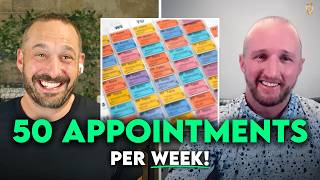
Easton Padden explains how he builds a $50,000-per-month insurance sales operation: spend at least $500 weekly on leads, dial 300 times daily, and run six-day weeks with three focused blocks. He recruits through pre-recorded videos and Sunday interview marathons, tracks every metric to find bottlenecks, and warns that scaling to 150-200 agents is exhausting work, not a path to hands-off income.
Chapters
What up, y'all?
John back, have another episode of Insurance Insiders Podcast. Got my dude Easton Padden, one of my favorite stories ever, from one of the worst starts as a new agent I've ever dealt with to literally one of the best sales guys on our team and team builders we have in our, in our agency still to this day. Be a fun one, enjoy it, take notes, you'll learn a ton. Enjoy.
Well, dude, I appreciate the, uh, the hype speech to prep getting this thing rolling, dude. Easy, bro.
It was easy for— with you. I love it.
I've been, I've been pretty lucky to get to, you know, work alongside you for— I mean, dude, I'm almost snuck in 6 and a half years that I've been in the business, which is crazy, uh, because I, I still, you know, the, the industry has changed like what, 3 core times basically since I've been here. My first week was still in-home paper applications that you had to download a fax scanner on your phone, 28-page back and forth fucking Trans App, dude, non-stop. And then you You send it in, you miss an initial, you drive back to the house to get another initial and date. I mean, that's how we started in the business and then it gets declined anyway. Like that was literally how I started my— So going from that to like now we've got mortgage leads that go from $55 to $100 apiece. So like they almost doubled in cost of client acquisition, which bizarre, you know, and then we just, we weren't going to, we weren't willing to give that up. So we just kept paying, dude, you know, we paid to play big time. And then this massive transition into like this digital era of virtual sales. You don't even have to like leave your house or an office anymore and you can get paid. The tangent that I will go on with the, like, I want to work from home and make $8 billion thing is I think that there's a percent of a percent of a percent of a percent of people that can functionally build and scale a legitimate size organization from their house. I'm not saying it's not doable, dude, but I just, I've looked at every single fast-growing agency at the company. Nobody stays at their house all day and never is around people. Like, I've just, that's how it is. Me going into an office, it saved my entire career, dude. And I will, I will die on the stand that if you don't get around good people, your learning curve is going to be slower. And that real-time feedback and that real-time urgency and being pressed by good people around you or just being around other people going through the same shit, that's a big deal. So didn't want to get too off track, but if this is a sick virtual game now, dude, but if you can get yourself, and it doesn't have to be every day, people are in different areas, but once a month, if you're not in an office consistently, I would go somewhere where somebody's banging insurance and somebody's hiring people. And it just, if once a month you went out for like 3 to 5 days and we're just around that environment, it will drastically change how fast you can move the needle. So that is the biggest like industry thing that I've seen change. Is paper apps to e-apps to expensive mail to digital leads. And now we can sell anywhere, which causes inherent laziness, for lack of a better explanation. Because if you go out and sell a policy for $2,200 and it's 10 o'clock in the morning, dude, I'm pretty good. I'm pretty locked in for the week. I'm pacing out 10 G's. It's Monday. Like, I don't really have to do anything the rest of the day, which is a huge blessing and a curse if you're not wildly disciplined with some sort of structured calendar goals, etc. So if you, if you're serious about wanting to sell or build at a remotely high level, it is not a part-time gig for either of them. It's a business as a 7-day-a-week op for like almost everybody. And I know that people hate working on Sundays nowadays, which is why it's such an advantage for those who will. Like you can kill people now because most won't do Saturdays and Sundays. And if you're willing to do both, not that you have to, but it is such an advantage, dude. And that's the guys that are moving the needle the fastest don't take a lot of time off during the week, month, year when they're in this big crucial building phase. I think we were, dude, 7 days, 7 days a week minus Christmas and Easter for almost 3 and a half straight years. I didn't miss a fucking day in my schedule, dude. Like, I was pretty, pretty good about it. Now I had a good support system, I will say, like, so got to talk to your person. Mine was wife, girlfriend at the time, you know, doing the like, I don't know if we're going to be homeless or not. And then like, can you buy into me for a little bit longer? And I'm still selling her, dude. I'm about to be gone for like 2 and a half months on the road, like every weekend. I'm still selling her that we're almost like 6 months and then I'll be done doing the stuff. It's busy. So it's a constant, you know, sales pitch to the lady. So that's like the big big shift that I've seen industry-wide. It's just like a baseline. I can start there, I guess.
I love it. What, what are you doing all the traveling for?
What's that look like for you?
Purpose? And what are you doing? What are you accomplishing while you're there?
Got a lot of new teams coming in that are shifting from the space indoors. So like, I'll go to Tampa twice for two different groups. I'll go to Salt Lake. Twice for two different groups that we're bringing in. We're going to like bring them into that big offices out there. I'll go to Austin to meet with Zach and another group that's in Texas that we're trying to bring on. I got to go to California to fly out and meet with a dude that wants to get out of solar and into this thing. So a lot of it's just like recruiting, building. Here's the vision, here's the dream, here's the numbers, here's the data, here's the workload. Are you in? It's, it's, it's not doors. Thank Christ. It is a simpler version to be able to print money. But there's no way to dodge the work. And I think that's the reason why I'm going out to like meet everybody in person is expectations. It wasn't anybody's fault but my own. I didn't know what I was doing when I, like, I didn't know what I was getting into when I started. I didn't know we bought leads. I didn't know how commission worked. I didn't know what an 80 was, but it sounded more than 5%, which is my enterprise comp. So I'm like, sounds good to me, dude. But I didn't know anything about the business, the industry, how it functioned, that people cancel policies. I didn't know any of it. So I'm like, all right, so how do I? There's some things that I can get in front of for prep and understanding of the business now. So that's, that's the majority of what I'm doing is meeting with, you know, 1 to 3 team leads and then going to spend a few days going through teach, train, development. Here's a process. Here's where you plug in. Here's a schedule that you, you know, you and your guys probably should run if you want to do something elite. I'm just kind of setting up a plan with everybody.
Yeah. What are you, what are you seeing that people do whether you want to go the correct or the incorrect way, you pick. What are the people doing right or what are people doing wrong that doesn't or does allow, you know, because you were, you were selling $60,000, $80,000 a month plus building. You didn't ever do the I'm going to sell and then build one day thing. You're like, fuck it, I'll just do it all. When I say this cat don't sleep like he's a fucking workhorse, you mean.
And as you know, probably one of the most common questions you get is how do you balance both?
How do you do both? And you know, your, your, your experience on it's, it's cool, but how are you teaching it? And what do you, what do you, what are you looking for in the ones that are doing it right or again wrong that's getting you to weed people out?
The, the dudes that are doing the right stuff, they are like insanely coachable and they're not confused that balance is a myth until you have earned that right later in your career. Um, like you can use however big, like Bezos, you can use, you know, somebody like that as an easy example. Like, Dude, you know how, how long that they built and pursued their business? It was not 24 months, by the way, if you're wondering, you know, so like just use somebody if you see it, the one of you consider the peak level of success. Elon's still trying to create shit, dude. He doesn't need any money, but he's like driven by function and creativity or whatever. So the dudes that do a lot of the— and girls that are doing the right stuff, they understand that it is going to be a bit of a mess. For a while while you're actually truly building, scaling, putting money in. I love risk. Some people are too scared to get a staff. Like, it's really hard to have a functional business with no staff. You don't have to have 40, but not having any sort of support system in your business isn't a plan either. So that's something that we add on, like, hey, you probably want to have some help, uh, even if it's Amanda. Like, she's been around for forever, and you don't need 53 of them. It'd be great to have 50 Amandas that were all functional, obviously, but having somebody that you can like count and rely on to assist you in day to day is big. So they're super coachable. They understand that this is not a I can't wait to be wealthy in a year. Good luck. This is not that place. It's the— what was the old saying, dude? It was this isn't a get rich gig, but it's a get rich relatively quick gig.
Rich quick.
I kill it.
You say it ain't get rich quick, but it's get rich pretty quick.
Yeah. Any other business where your goal is to break even after 7 years, like if you ran that same mindset of like, I just need to build as hard as I can and sell and develop for 7 years here, astronomical swing from any other business that you're starting from the ground up, with the exception that you invented something. But that's not— we're not here because we can invent things, you know, we're here to do what's already made. That's the big stuff that's done, I would say, right? Really hardworking people, dude. Very coachable. They want to know what they screwed up. They want to know how to get ahead. Nasty calendars. So just flip that in half. Not coachable, super arrogant. I can sell anything. I don't need your help. I'm going to work 3 days a week and be rich. And then frustrated at result that's not happening because of calendar. What do you mean?
What do you— how do you deal with the ones that like, it's like they think they're doing it right, but we know they're not and they won't quite fucking listen. You know what I mean? Like, how do you, how do you crack the code on the kind of that middle, that $12K guy that just won't fucking flip the switch? And we can name names because we know 100 of them, 1,000 of them over the years. You know what I mean? What are you doing there? Because that's always been the fight for all of us. It's like, how do we get the guy to like see it the way we see it and hear it the way we hear it? How do you handle that? I'm curious.
I think like, dude, I'm— listen, I'm, I'm a phone call or a text away. If you ever need any, anything, like, just holler and let me know how I can help. If we have the conversation more than once, I know that you don't actually want any help. And I'm not, you know, overwhelmingly irritated on the second round that we have this call, but like, we, we can do it twice, but there's no reason to continue having the same conversation. So then I just leave it open and eventually you are, you're going to have to like come and show up to me and like, all right, dude, like when we had our call, like, listen, dude, I can't sell anything. Can somebody please help me? Jesus. You know, like that was exactly where I was at when we talked. Like, I feel like I'm doing all the right stuff. I don't know what's missing, but my puzzle piece wasn't a volume. It was like a skill set problem that I just couldn't figure out how to say. Can you please just try? It's my favorite thing you've ever told me, dude. You're not selling stuff. Can you fucking please say literally anything else? It's not working. And I was like, okay. And it was like those kind of moments. Like, why don't you just try anything else and say this instead? Or do you know, $250 a week on leads is never your ticket to doing well, ever. It's never worked for anyone in the history of the company. Or in insurance in this model, it doesn't function. So I'm like, I'm here to help. I leave it open. We call, we have the same conversation twice. Like after that, I can't do anything unless you're ready to make an adjustment. Like if it's how much, if it's a leads thing, like, dude, we're still at $750 for the week. You sold $20,000. I never did that in my whole career on that little. So like, I'm— you're already better than me. I literally can't help you, dude, unless you go $1,500 and are having an issue. There's nothing that I can actually, you know, provide you that will, that will benefit you in any way. So I try to leave it open. But I'm— dude, I'm never going to chase somebody who is unwilling to change a core piece of behavior. That's a requirement to do well here.
What did you consider doing well? Like, what did schedule, lead, investment, recruiting— like, how'd all that— like, what's ideal for you? Like, what did you find a groove in doing? That just worked for Easton because you were a fucking dude. You took— they thought I was crazy with high volume. Y'all fuckers don't know, like, my shit's kind of low compared to what you were. Just, you took it to a new level for us. You mean like when I did that for Kilimanjaro? Kilimanjaro, when he was— the guy training him taught him to have his team run 10 fucking appointments a week. I was like, what? And I learned from Mark and some of the other guys, 30 a week. Dude, you were doing like obnoxious numbers of appointments. I don't, I don't, I won't even quote them because I want you to share it and schedule in my run days. I was 11 days a month, dude, selling half a million bucks. You're like 11 in a day, 11 in a row. I mean, you just go like, keep going. So I would love for you to share like your targets and numbers and, and what you were hitting for an obnoxiously long period of time too.
Yeah, I wanted to, I wanted to have right about 44 appointments on the board was kind of like my minimum. It was 11, 4 days a week. And then if I was traveling, I would always throw another 8 to 11 depending on how I could structure like my, my dial day. But I'm going for somewhere between 40 and 50 on a pretty consistent weekly basis because I knew that I was a bad quote unquote closer. Now, I was very— I got very, very patient. Like if I got into a good financial situation with a family who had a big need, they had money to spend. I was very, very slow and methodical, which is I closed 42% of my appointments in 2020 and I sold 780. It was my first big year in sales and it's still an F in the closing department. So I was never focused on how do I get 44 to 80. I was just like, dude, I'll just keep running. And then as these good appointments show up, I'll just slow down and do a good job. And so like my average was still right about 3 Gs a close and I didn't have to, you know, be the elite closer picking up 27 apps. I was like, 11 to 14 apps a week, dude. And that always was between, you know, $20,000 and $35,000 of submitted business a week because I was very patient in my actual appointments. Um, it used to be 44 appointments and I would get 800 AP on the board. That was like, you know, obviously for the first couple of months. Um, the equivalent to virtual is like appointments are what they are. It's, you're, you're still coin tossing if they're going to show or not. So like, I'm not setting up 4 evening appointments and then like Well, got some good biz coming my way tonight. Not doing anything all day because that's a little odd. I want to stack as much as I can and dial as much as I can. Volume in between like this, this 300 dials per day is like you're— if you are presenting a lot, then 300 dials a day is like a really good place to start if you're having 5, 6, 7 presentations in a day. But if you're, if you're not, if you're just like chasing to try to get somebody to answer the phone and you have 300 dials, like that's way under volume. You probably want to be looking like 700 to 900. And now you've got crazy software and text messages and you can invite people to call you in a text, but you can email them, you can have speed dialers. They have all this stuff, in quote unquote systems that can serve as a distraction because you still have to physically do work. But it is a big advantage now. So that's like the, from a sales standpoint, if you, if you want to be very elite functional net profit or really high, $1,500 to $2,500 a week, we've always seen those numbers flip $30,000, $40,000, $50,000 grand. Like, and that's pretty much where you're going to be, $1,500 to $2,500. We set up block, like sales block. If you're strictly producing in the beginning, you sell from 8 to noon, 1 to 4, 5 to 8. And then we've adjusted that some for like the virtual trainings and the in-office trainings that we run. But like being in saddle, in sales saddle and not getting pulled just because you have a miss at 9 a.m., this is not time for John and I to talk for an hour and 15 minutes on why I didn't close the deal. Right in the middle of a call block or a call to close block. So like, write your shit down, bring it to training, write it down, bring it to training. So that's what we have everybody in office do. I guess we have like 8 to 8:30 script training where they, then you guys will run through some, you know, practice script stuff. And then 8:30 to noon, we're just banging phones all day and we train at 1. And then 2 to 5, probably 5:30 to 8 is our like last two blocks with the training adjustment. Um, but that's like the volume that we're looking for every single day.
I love it. When you— and you were 40+ field sales, correct? You were doing those 40 appointments, flying fucking places, running that in fucking kitchens.
Yeah. Yep. I'd book an appointment every hour and 15 minutes so I could do like 11 a day from 8 to 8:30. If I could catch a 6 or catch a 10, I always booked them. If you let me in your house at 6, obviously I'm getting a check 100% of the time. I'm not going over there at 6 for my health. So I'd love the 6 AMs. Those were a little bit harder to get, but I might not have batted 1,000, but I was close.
If they—
if it was 6, I didn't miss a lot of those.
So when you go, shit, we ain't got people getting on the fucking dial the phone at 9. This cat's selling at 6 AM, much less fucking on the phone, you know what I mean? It's like, for those of you follow that have followed me for a while, you know, I've, I've helped build this agency up to over $200 million in paid annual premium per year. We have over 5,000 agents a year that sell and I am rebuilding. We're building a new base shop, helping people build big agencies, get to multi-seven figures in income, or producers that want to, that want to just sell and get to a multi-six-figure sales career. Hit me up. I'm hiring direct. I'm looking to train and mentor winners that want to work their ass off and build something dope. Click on the link below where you can go to JohnWetmore.com/join and put in your application. We'll see if I'd be interested in working with you. DM me, hit me up, whatever you like. So how does that translate in today's world numbers-wise? Again, whether you want to talk about what you did or what you're having people do numbers daily and, um, like start there. Like what's, what do you, what do you, what are you looking at now? Because again, if y'all didn't catch it, he said 20 to 35K AP a week. I mean, that's fucking serious numbers, dude. And then we got obviously some people on leaderboards like Zeros and $700 and $2,000 and $3,000. It's like that, that's tough. Um, so what are you seeing the top guys doing now schedule-wise, appointment-wise? What's normal? And then I would love to get into the, uh, how we close them part a little bit after that.
Yeah. Yeah. So I, I had like 2 big infield years and then we, we pivoted to virtual, which was new for all of our group at the time. Nobody ever ran that model. And so. And we were, we were doing about a million and change a month as an agency when we first went virtual. And so I was still selling. I sold like 470 that year, you know, part-time, kind of like cycling out of the field. But that was all virtual stuff. And the, the process and the numbers, it was, it's all relatively the same exact thing, dude, except for, you know, now if you're getting an $8, $10, $12, $15 lead instead of $100, like your spend is the same with an astronomical amount of more repetitions, you know, per, per batch. So that by default should increase your call volume immediately. And it's, it's about the same if you're presenting 5 people 2 numbers a day. Those take, what, 30 to 60 minutes on average? The average length of appointment. So if you're making 300 dials, that's about 6 hours of dialing, 5 to 6 hours of dialing, right? If my math is right, 50 to 60 an hour. Give or take. And then you're presenting 5 times, that's about another 5 hours. So that's about your, you know, 10, 11 hour day. So those are kind of like our stock metrics from like a volume of outbound. So if you got 2 presentations, probably should have at least 500, 600. And it's all just built on that 300 outbounds, 5 to numbers. And those should shake pretty consistently if you're, if you're running a legitimate 6-day, 10-hour type schedule, that's about what we're looking for.
So you're basically every, every presentation's knocking off like 100 phone calls in a sense. You're at 800, 700, 800, 900. But if you're presenting 5, 6 times, you're down to 300. So it's like you knock off 100 relatively in the ballpark every time.
Yeah.
So you're doing 5 a day, you need 300 more dials. That's your, that's your timeframe. I like that. That's sick.
Cool.
What's the— so what's the magic, dude? What can't people figure out about closing over the fucking phone, dude, at high volumes? What are they— what are they fucking missing, bro? Besides the volume, because I think we all talk high volume, you know what I mean? And then still someone's going to do it and spend $700 this week and forget to re-up on leads and have fucking 2 presentations today and be frustrated that they're making no money and then also not work Saturday or Sunday. So how do we get them making money? What's the, what's the hook, man?
So structurally, it's almost the exact same as you would do any other, like, insurance sale at all. Like, you have your intro where you're building credibility. Hi John, this is Easton calling you back about blah blah blah that you sent me. Got this is your birthday, this is your address, this is your beneficiary, this, whatever you guys are calling. You're just confirming a couple of things and then making sure that we're headed in the same, like, you know, you go tomorrow, who's in charge, blah blah blah. I feed license and credibility info early. So as soon as I get like direction and purpose behind the appointment, like purpose for purchase kind of thing, I'm going to take a step back and like, hey, John, before we get too carried away, just want to make sure you saw like text or email sent you over all the credentials just to make sure you knew I passed state federal background check. I'm live to do my job. So if I take your info, I go to jail, they find me, I lose my wife, all that bad stuff. And I do some kind of crack joke, like a pullaway. You know, like, dude, loose, it's relax, it's just insurance, dude. I'm just here to help you. So I do need them to have my stuff. And then I'm like, also, just to make sure you know, this is what I do for a living. And if I mess with your stuff, they literally find me, put me in jail, take my ID. Default setting, the wife goes, she's not going to be around for that stuff. And like, that's kind of how I start a lot of my calls is here's my serious info. We're just doing insurance, dude. We're not, you know, taking out a house. It's not that complicated. So now they've got my stuff and I've got their stuff. I know the purpose behind like, what direction are we going? You're not around tomorrow. Who's in charge? Have you guys talked about it? You know, is this the first time that you've done it? Do you have anything now? If you do, you know, why are you looking for extras? This for house? Is this for income? Is this for funeral? I just need to know where we're going to go. And then it still applies today. I am actually just looking for quotes. I forgot to tell you that. Cool. You're looking for quotes because you don't have any insurance now, or you have some and it's not enough. Does not matter. I always have direction, always. And it still works all the time. So it's, you know, just it's not confusing just to give people a direction to go. And if you're like, well, I can never get them to tell me, like, all right, John, if you're not around tomorrow, are you married? Cool. Are you the primary? So if you're not around, pretty difficult financial situation long term for the wife. Is that fair? Like, just give them a direction to go and then confirm it. And now at least we have direction. So intro, why? Then we need to set like the structure of how this process works. Job is super easy, John. There's like 50 companies that do this stuff. That's who we underwrite for. I basically grab some info from you. I'm going to shop all of them. I'm like the Expedia or Amazon of insurance, whatever you guys want to use. It's going to tell me who your lowest company is that you match with. After I figure out the company, you're going to custom design your own plan and price to the penny of what you guys want. And then from there, all I do is shoot it to the insurance company make sure they get your offer back so that you're live. Something happens, the wife's good. Does that sound easy enough? Like, that's it. Just like, what's the process? What are we going to do today? Just give them a little structure. Obviously, you know that that was very hard for me to do for some reason, just to make a statement early. It has to be non-negotiable on the phone because you're about to grab all these people's info. They need to know that you're going to shop, find the cheapest one, they get to make their own plan and price. And then my job is just to get them an offer back. Dude, it's pretty easy gig. Like, we're just taking orders now. So now we've got intro, why, and structure of the appointment. Your client worksheet is just data gathering, like how much do you make, what are your bills, um, and what's your health. Like, it's— there's a sheet that you can fill. Do you guys use that still, by the way?
They have— I don't know anybody uses it, but we have them.
So I understand what questions are on that thing, but it guides you structurally to not miss any important info. And I rearranged it a little bit to like how I was running appointments when I was in the house. So I get, you know, age, smoker status, beneficiary info, I get all of their soft budget bills first. I want to know mortgage, cars, insurance, ballpark utilities, ballpark dumb spend, and emergency fund money. Like, I'll total that up. Let's say it's $3,200. John, what's your ballpark monthly income? 5 G's. Now I know we've got $1,800 that's unaccounted for. I'll give them another $500 just in case. How are they possibly going to object to cost? I already know they have a grand that they don't do anything with. That's not attached to a bill that they're probably spending in an unintelligent manner because that's what we do as consumers. We just spend money if we have any left. Like, that's kind of what we do in America. So I'm doing all of that stuff so that I have a very clear shot. Dude, if I, if I find somebody that has a grand or anything more than that left in budget, great news, John. Based on your guys' debt-to-income, you don't even qualify for insurance. It's out of range. So you guys can literally design this exactly how you guys want, as much as you need. Sound good? That gives me full permission to show whatever I want. Like, I already know they got the money. I already know that we have a need. I can't overshoot. I'm not going to show them something for more than a grand, dude, but I can show them something $250,000 to $500,000 and feel zero emotional tie to it because I know they can afford it and they have a need I can fill. And if you're in an appointment with a husband and a wife, the reason that income section is so frickin' important— if I find out that you are $60,000 a year and you're 45, when you're 55, The wife is already out $600,000. Big problem. You guys have $100,000 at work. Awesome. That's gone in a year and change. Not counting the funeral. She doesn't make any money. $600,000 the first year. Now we're at $1.2 million by the time you're 65 trying to retire. Makes sense why you guys are looking. I can use long-term income loss to drive up need. And now we know that they have money. They have a huge need that I can fill. Now it's game time, dude. Now it's just like, don't overshoot and make sure we're on the same page. If you overshoot, if they have budget, that is a you problem. That's not good. Last piece of expectation that I do on those calls is like, I just want to confirm if you've done this before. Like, John, this first time getting insurance sounds like— yep. Okay, cool. It's no different than when you go to a dealership to get a vehicle. It's all the same stuff they're going to ask you for, you know, license, birthday, address, social, bank you guys use to pay, and all your beneficiary info. They don't even bang your credit anymore for insurance like they do cars. So you don't even have to deal with that process. That sounds easy enough. You got access to all that info. Wanted to make sure I told you because they are going to ask when we get that far. And like any objection that I'm ever going to get, I've already pre-framed. I've set the structure. I know what their health is. I know what their money is. I've done soft closes to the whole process. Now they know what info I'm going to get from them after they design their plan. What kind of object? I don't want to give you my Social. Cool. Did you get my ID? Remember how you went and got a car? They had to know who it was. You have to give your social to an insurance company. That's how they know who to pay when you're dead, dude. Like, it's the only way that this functions. It's tied to you. Driver's license, social. If that matches, we can pay the wife. If you don't supply that, you can't get insurance because it's tied to if you're alive or not. Remember? Cool. All right, so what's your social? And like, I can go in this endless loop with them, dude. But you can't object to anything if I've already prepped the entire appointment, what the process is, how it works. I don't even care. I don't care if you do $550,000, $500,000, $5 million. My job is to place you with however much you can get for the cheapest and how much you want. Sound good? Like all of that different stuff that you can say, we're just trying to downsell into permanent affordability because we want to capture really high level of persistency business. Think about this. Do we make a grand an hour to close on average? Let's say grand an hour. So like you nickel and diming someone an extra $20 or $30 or $40 a month, and pinching them because you want to make an extra— dude, it's a grand an hour to do our job. Like, why not just take your G? They keep it forever. You keep your business on the books. Their family gets paid when they die. Universal win for everybody. So we downsell like crazy to make sure that that stays. It's exciting to see $3K on the board. It's a lot more exciting to keep it. So just sell one at a time if you need to. But there's no— we don't have to rate drive and like milk people's budget. We just need to make sure it's good forever. And like, that's what we hammer, like, in our, in like all of our trainings in our office stuff, dude, because it's a lot of money. I mean, what were you guys doing before? Making a grand an hour to close? Like, that's a crazy amount of money to sell insurance to people that ask for it. So no, no reason to press budget stuff. But anyway, that's the budget soapbox thing. But that's our entire process is trying to like understand direction, build credibility through my ID, set structure of the appointments. Suitability-wise, just like, dude, how healthy are you? What do you make? Where can we fit you? All right, here's your options recommended by the insurance company. Which one's easiest that you think is enough for the wife? And like, it's very, very simple. I don't know if that kind of— I think that goes through most of that.
It's super informal, as structured as it is. It's very just you being you, you know what I'm saying? You're just, you're fucking making it simple, slinging it out like you're talking to a buddy. And not taking anybody's shit. Nicely, of course, you know, which is funny because early on you are— and it is very structured, but you come from a very corporate background, you know what I mean? So to just kind of let loose and be— I remember at the beginning, dude, you were tough because it was so robotic, you know. I see this dude Max in here now, he's so good at sales, but like, we're working on tonality and the way he speaks. And then some people are so formal, they turn on like the the weatherman voice, you know what I mean? And they get into it and you just, you've learned how to just be just Easton with structure and control and not let people walk all over you. That's been neat to see. Because that first one that I heard, I wish, I bet, I bet I still have it somewhere in our text or something. I want to, I want to one day share it, bro. I should, we should go find that fucker. He was one of the first I had record himself, because early on I was, you know, I was trying to figure it out based on what the agent said. Easton was early on where I was like, yo, why don't you record one and send it to me? And then I heard— not only did I get to hear what he said, but he then said to me before he sent it to me, or as you sent it to me, you were like, oh fuck, I hear what I'm doing wrong now. And it was a big light bulb moment for me. And now I don't fuck with anybody unless they're listening to their own shit. Because it gives— it gives you— it gave you such valuable information when I was looking for information. You know, it wasn't so intentional when I did it with you. I was just tired and I'm like, dude, I don't— just fucking send me one. I'll listen to it, dude.
And we don't even do it on purpose, but it's like our default setting as somebody who's new and doing shitty is like, dude, that's what I said, John. Like I said that. And now it's like, well, let's find out. Let's find out if you said that or not, because I can actually listen to it and there's no like scapegoating that you said those exact things. Because if, if more than likely, if you would have said this exact structure of things, how we discussed it, you wouldn't still be getting like, well, let me talk to my financial advisor's twin sister who has a brother that I once knew that lives in another— like, I don't even know what we're talking about now because we're so off track. And so that, that recording thing, it's the biggest gift that you can give yourself. And it helps us kind of figure out, oh dude, you haven't even remotely tapped into why they want to buy the insurance. You're like confirming their birthday. And then I hear health stuff next. Next. I don't understand how we got so far off track. Like, and they're just jumping to a different part of the appointment. They're skipping all the goods, dude, the important stuff.
Yeah, I dig it. There's always, um, talk— I'm, I'm gonna let a few of them ask you questions, um, in a minute, but give them like the mind— like, how do you get into the mindset You know how, like, you know how Sean always taught us stuff and Kilomet always taught us stuff and everyone heard the same message but like so few did it and were such a student? Can you, can you kind of COVID the mindset part but also like explain what it's like to be a student of this game? Like, what did you do to get better if you had to explain it to someone very simply? Because I watched you do it years. It's hard to explain years worth of shit in a couple-minute conversation, but I would love to give some insight into the seriousness level at which you took really perfecting your craft.
So in the, in the beginning, it's just like being obsessed with, you can call them micro-improvements, whatever, just like fixing small stuff as fast as you can, I guess. The training, the training structure I think is, is huge because we've got, you know, organized trainings that we do now every day, which is great, but that is like a fraction of how much that you should be trying to learn. So the, the reason I used to get up early— this was before I was getting up early to exercise— I would get up early to listen to trainings at 3:30, and that's what I would do from 3:30 to 7:00, or 3:30 to 6:30, until I got up into the Denver office, because it was an hour and 20 commute for me when I'd go up there. So I would listen in the morning, I would listen during the entire drive, and probably not the safest stuff in traffic or whatever, but I have a notepad that I am actively making notes on of like, oh, Matt Smith said this specific thing, how John sells mortgage protection to people over 60 that are banged up. And like, I'm taking notes and like saving and texting myself links to listen to later if I, you know, found a little piece of gold in there. And I was just like obsessed. I used to get pissed that I didn't know the words to say when people would say shit to me. Used to drive me crazy. And I, from my very first day, I was like, I wish I could fast forward 6 months and just know the words I'm supposed to be saying, because that was the most frustrating part. It's like, I— they're telling me something and then I sit there and I freeze and say nothing at all. I'm like, just say something. And so this, this obsession with like learning the word tracks and how to downsell and how to pivot, all the different little things that you pick up in volume and over time in your career, I wanted all of it as fast as I could. So in between every possible like driving break, appointment break, training break, all I was doing was listening to trainings from everybody that could sell. And I was not very polite to the people that wanted to help that couldn't on paper, which was a big blessing. I mean, I'm sure there's people that thought I was pretty rude because I was like young in the business. And my first question was always, did you sell 30 last month or not? Please stop talking to me because that was what you guys told me to say. So maybe not the nicest thing, but I'm like, I'm already shitty, dude. I don't need to get shittier. Please stop trying to help me. You're not good either. And so I was very protective of who I was listening to and, you know, built and lost some relationships. I'm certain of it. But that is like one thing that I would never mess around with, dude. In this virtual era, everybody's a fucking coach. Everyone wants to be a coach because it's fun to teach people and watch them improve. It's just, dude, you're still not good either. So like, we're not helping each other. So be insanely careful in who you listen to. If you're taking builder's advice from someone like, okay, when was the last time that you grew? Because, you know, there was a phase where we crashed in our business, dude. Like, the industry changed and I didn't know what to do, and our business burned to the ground. Went from $1.8 million to $500 grand. That was a— that was worse than starting for me in the business because I'd already hit this big peak high. Like, I'm cash flowing, I know how to make money, I'm selling a bunch. And then the market changes, my business turns off. And like, guess what, dude? I still had staff bills, all that other stuff. So now I'm like, all right, who do I, who do I got to talk to now to learn how to rebuild? Like everyone's had dips in their business. Mine felt like it exploded nuclear and disappeared. So I'm like, oh shit, this is a big problem. I need to, I need to figure out how to go from back down from 500. I'm rebuilding from scratch. Do I try to save people? Do I find new people? Like, how do I do this job now? And you have all this stuff, but the training that never stopped. I was always listening to builders training, high-level guys that developed outside businesses of just like insurance. Like I wanted to know business quote unquote secrets from people that had built and scaled billion-plus-dollar companies or $100 million-plus companies. Like that's who I wanted to learn from. So from selling or building and that stuff, always gap fillers my whole career. And I, I'm still plugged into whether it's, you know, books or audio or guys that are scaling other businesses outside. I try to listen to all of it. Because there's, there could be one tiny little tidbit that you and I hadn't discussed before. There's some dude that's not even in our business. And like, my brain is like, I never thought about that applying to insurance. This is sick. I need to try it. And then I'll experiment. And then if it doesn't go well, I will turn it off sooner than later. Now, I wasn't good at that early or implement it at scale if it does work. So like the— that's, I guess, like the training stuff. And the thing that I think people miss the most is it's not just plugging into what's available and scheduled. It's all the extra shit outside that you should be doing while you're developing your skills in the overall business.
I think on top of running 40 or 50 appointments a week, to be clear, getting a girlfriend and getting engaged and having a baby and getting married and all the things and your business falling apart and losing money and lead problems and agent problems and debt problems and staff problems and all the other bullshit. Shit that happens along the way, you know. And it's, it's funny, dude, to watch so many people— it sucks, you've been here so long, bro— to watch so many people fall off with little baby fucking problems, you know what I mean? I'm like, you know, buckle the fuck up, that got you, you ain't seen nothing yet. Uh, so it's been cool to watch you figure this thing out. And I remember you were fucking— you were, you were out there at sea flapping your fucking arms trying to stay afloat. For sure.
Yeah, it's been cool to watch.
Watch. Make some shit happen. What up, insurance agents? If you're looking for a roadmap on how to win in this industry, check out the book I wrote about a year ago, Do More Now, Get Better Later. Check out the reviews here somewhere. My team's putting them on. I'm getting tons of great feedback about all the people it's helped. Appreciate those of y'all that have bought it. Appreciate all the reviews that are going out. If you're new to following me or the industry, Check out the book and get it in your hands now.
When you hear people talk about like the only person that loses in business is the people who quit, I can come up with a list of 25 people that are way more knowledgeable, skilled, big personality, like they're very, very gifted people. I can just fucking get through anything, dude. Like I can just live through all the hard shit and If people ask like, what do you think is the separator? Dude, I just won't quit because like, it's already sucked. Who cares if it sucks again? What's the big deal? Like, it's already been so shitty. When I was learning to sell, I almost lost our house, dude, and had to live outside. And I didn't even tell my girlfriend, now wife, that like, hey, by the way, I'm totally fucking ruining our entire life. So that was how I started to sell. And then I build this, you know, medium-sized business that sets on fire and I'm like, Jesus, dude, again, but the business version of it, this sucks. And then I got through that next 12 to 24 months of just total bullshit trying to learn how to like scale a different model of the business. And that's the biggest thing that I've seen between dudes like, you know, you and Zach and all these other people that survive the changes, dude. It's just they literally just won't quit. Like, and it's, it sounds like so dumb and cliché, but if you don't quit, eventually you show up enough where good shit will happen to you. And that's literally what's just going on in my business now. I just kept showing up every day when I didn't want to. And it was terrible when I was financially struggling. After not financially struggling, I just like kept coming to the table. And now like all these insane players are coming into my business because I didn't go when it was horrible. And like, that's the separator, dude. That's like the big piece.
Okay, you ready for some questions?
Yes, I'm ready.
Hey, I like to go by the fairest way possible. So our leaderboard. So Giovanni, always at the top lately. So you may as well go first, bro.
Well, man, um, I wanted to ask, what do you feel like, how do you become the most duplicatable that you can be in business for agents and building a team? The most duplicatable in your business. Um, so learning how to bang first and foremost. Is always going to be your ticket to replication. There is maybe, dude, 3— I mean, and John, John, you can probably validate— maybe 3 people in our entire company's history that were not high, like, high-level Hall of Fame producers or more that actually built a business. So if you know that the percentage odds come from you leading the sales production first, why would you want to play the other half of the game? Like, it's so risky to, like, play the— like, I'm the recruiter guy versus like, dude, I can bang and teach one person and then we can teach two people together, then we can teach four. That's how it duplicates is. That's why I wanted to learn how to sell $100 grand a month, because if everybody in depth does half, then you go $150,000, $25,000, $12,500. That means our fourth in depth is still a $12,500 a month producer, which is higher than the entire company's average at scale. So if you can bang really heavy up front and then teach a couple of guys how to replicate that process, I would say that we probably had more 70, 80, 90K producers on our team than any other small group in the company's history because that was our primary focus. I have no bad debt in my business, dude. Like, I've eaten $150 grand in my entire career in like business debt and $120 of it came from 3 dudes and we don't even allow post-date to pay anymore. So like, if I'm getting off track here, the, the easiest way to start, dude, you have to learn how to like drive production. Production is what gets us paid when we start. If everybody's a builder, nobody sells insurance, no one lives inside. That's not a good plan. If you can control your income and control your paychecks by being just a $30K producer, dude, that is much more duplicatable than you have a warm market of 100 guys and never had to sell. That's not how everybody else is. So that's where we've always started. We've always driven Personal production, max your producer contract as fast as you can. And then if you want to start hiring or start hiring while you're doing that, awesome. I never press recruiting day one, which I'm sure that people at the company hate or whatever because it's not growing the whole thing. But dude, I don't care if you bring 50 guys in and nobody knows how to sell anything and then I got 50 homeless guys on the team. I want 5 guys I can spend time, teach, train, develop. Here's how you sell insurance. Here's how you teach to sell insurance. and then it can just blow up on itself. I would much rather run that play all day because the stats say that that's your best odds of success is to sell first, teach, then do it at scale. Um, so that's like the, the duplication piece. I don't know if that's your whole question, but that's the easiest place to start, dude, is you gotta learn how to bang and you should have a, a high producer culture, especially in the beginning of your business. First time that we did $250 grand, it was 4 writing agents on my whole team. So we were not like this mass recruiting group. We were the exact opposite. Everybody banged on our team. Everybody was profitable and made money. And then we just started adding over time.
Love it.
Can I ask a follow-up question real quick? Yeah. What are like level— like what are like characteristics of like leaderships that you see from people who are trying to become leaders to like start investing into more and pour more time into them? I just want guys who will show up, dude, not bitch. I would say Wetmore and I are probably relatively similar there, dude. It's— this is the most unpredictable recruiting place of all time because I've got Jesse, who changed tires in a tire shop his whole life, has never sold anything, sells $60,000 a month. And then I've got the ketchup gloves dude and the white popsicle, whatever that is, that has— was the number one F&I guy. He sold more than anybody else at any dealership in history, and he won't dial the phone more than 8 times a day and like has to go back to doing cars. So I just like, are you coachable? And will you actually let me help you? I don't have it all figured out either, dude. I literally am constantly screwing stuff up every day. But the selling insurance thing, I do know how to do. So like, at least help— let me help you with that part. And then here's the schedule. And I let people tell me now, when I first started bringing people into my business, I just said, dude, if you don't even have a desire to sell $50,000, we're not going to click well because like, I don't— my brain doesn't function that there's a place where you can sell $50,000 a month, net out $35,000. And you don't have an interest in that, we're not going to be similar. Like, we just won't click, dude. And so I wouldn't even hire somebody if they didn't at least want to make like, you know, 4 or 5, 600 grand a year. That has changed now where I'm like, Giovanni, what do you want out of the business, dude? What is your goals? What's your minimums? You know, what kind of a calendar are you willing to run? Like, what are you willing to go through to get to where you want to be? And then you tell me. And then if you show up every single day for your first 90 days and do exactly what you promised you were going to do based on what your goals are, You're the dude that I connect with every single week, if not daily, moving forward in my business. If you show up really hard for 4 days, I don't hear from you for 2 weeks, dude, we probably won't chat again, to be honest. Like, it'd be very unusual if we were going to link up because you already told me this is what you wanted and we didn't even make it 5 days. So I'm just looking for like follow through on— everybody wants to build, everybody wants to get rich, everybody wants all this stuff. Will you do it or not? Like, that's the separator. That's who I spend my time with.
Appreciate it.
Makes sense. You got it.
You want to go, bro? Tyler's— Tyler's a couple months in. Tyler's made some money in the past running a team, alarm sales, switching over to this, trying to figure it out. Life's punching him in the face a little bit, but willing to work, dude. Willing to spend the money. So that's the preface before—
that's whatever you want to call it. Yeah, you, you touched on this already a little bit, but I was just going to ask if you can run through it again, like the schedule and lead flow you're bringing guys into to get them to $50K a month as quick as possible. So to right out of the gate, um, if somebody doesn't have $500 to put into their first lead spend, like you can't work here until you have that much. Now, Exceptions to the rule would be if you're running an in-office like lead assist program, which only functions if you're shoulder to shoulder with closers. I'm not a big like lead assist guy with people all over the country that show up on Zoom a little bit. That's— I don't think that that's a good plan, especially when you're starting. So we're just going to assume you're not in an office with people that you're feeding leads to at a $65. So if I'm bringing a contractor into my business, $500 is the minimum barrier of entry. We're going to get some age stuff so that we can get volume. You're going to get throttled if you're willing to show up for the entire week and you get beat up and don't even break even. I will have your back next week on the leads. Now, I would be careful with that in the early days. Again, like, you don't want to start feeding people because they had a bad weekend. You're like, dude, I still got to sell also and get leads for myself. So I want to go $500 to $1,000 to $1,500 to $2,000, whether that's over like a 4, 6, 8 week period. Our goal is to be flipping money and then doubling down on leads on a weekly or biweekly basis. But you have to get leads every single week. If our average close is $500 to $1,000 paid, $500, you need one to break even to be able to try again the next week. Getting two out of a $500 batch that already all asked for our shit is pretty simple and straightforward. So we just want to be able to flip $500. And then if it's $5,000, $7,500, $1,000, $1,250, $1,500 and up, like that is what our role is. But if you're not willing to do $1,500, like this is a leads-based sales business. It's not a sales job. This is a sales business gig that we got. So if you're not going to feed it, you will live outside indefinitely. Like you have to be able to pump money into your business at some point, minimum is $500. And then we just work them up from there based on the individual. Got it. And what kind of schedule do you have them running when they come in? Like you touched on the dial blocks earlier, but can you run through that again? So depending on what you're like training that you guys are plugged into, like a traditional would be, you know, 8 to 11. Or 8 to noon, 1 to 4, 5 to 8 would be just like simple different chunks that you can have your sales block into. It gives you a little gap between each of them. You're brand new selling, dude. You're not an admin. You don't even be calling carriers for 6 hours a day. Like, it's just volume of outbounds in 3 separate blocks. We're trying to get you guys, you know, we want people to get paid. So that's a 6-day-a-week schedule. Since we're virtual now, you can be actually more functional and more profitable on a 6-day-a-week call-to-close schedule than you can a 7-day-in-the-field schedule because you're not missing dial days to make money. So 6 days you can be really efficient flipping money. And then if you're like in this back-against-the-wall situation, like, stop giving yourself permission to take off Sundays while you're about to be homeless. I disagree that we are required to have a day off a week. If you don't have money to like pay your bills, then I'm like, all right, dude, so your schedule is not the same as everyone else's. Because you have to get paid next week or again, our house, whatever. Like that stuff's gone. That's a problem. So 6 days a week is what our typical, like, full-time agent schedule is. And that's like the dial blocks that we run. I would say most of these guys probably split out of here at like between 6 and 6:30 on Saturdays. They don't stay in here till 8 or 9. Got it. And if I could ask one more on the back of that. Yeah. When you were running that in the field, how, where were you squeezing in recruiting on top of that? What'd that look like for you? Um, in between drives to appointments at airports, um, in between flights, um, if I would get back, you know, I would take some pretty late scheduled interviews, like after I'd land and get in a new territory, um, depending on like, cause I was going anywhere from Pacific to East Coast to run. So I had a big time zone swing. So I was just kind of figuring out who was available in what time zone when I was going to be in a stable spot. And then sending like a, a prerecorded Q&A video, which is what I would do now. Fucking wish we'd have done that back then. Saved me a lot of time, but I would record some like, here's the questions that everybody asks about insurance sales. My name is Tyler. Here's how it works, you know, and then just have some pre little cut thing like, hey, watch this. If you have no interest in it, please do not schedule an interview. If you're like, hey, couple of follow-up questions, this very much piques my interest. Like, let's schedule an interview at this time. That's what I would do now. When you're, when you're in-home, like, it's, it's just like a tougher, harder to recruit gig because you literally don't have the time that we have now to like schedule interviews because I've got appointments all day. So if I miss one, I'm just driving to my next one anyway, interviewing in between. So I would set up some sort of like, if you're selling full-time, then set up interview blocks that are, if you want to call it quote unquote dead time, which I hate to admit is a real thing because I think it's a little weird, but this like, oh, from 11 to 2, nobody answers the phone, then just fucking interview for 3 hours and then back on the phone at 2 o'clock. Um, that's what I would do. And then I would spend all day, like Sunday would be massive interview day, dude, because like nobody else wants to work and nobody's at work. So Sunday I would be trying to do like 30 interviews a week every single Sunday. Um, just to start anyway. So yeah, I appreciate it. You got it.
Oh my God. Let's see. I'm gonna go one more, Brandon. I don't see on Cameron, Max, you got some, dude? I'll let you roll a few. I see you out there, man.
I missed the beginning part of the presentation. I think that was really good. Um, I guess like one like follow-up. So just to make sure I confirm this right, you said 300 dials, um, and 5 presentations. If you don't hit 500 presentations, you're going for 600, right? Yeah. So 300, 300 dials and 5 full presentations is like what your goal on a daily basis is. It's just to give you trackable metrics of like where you're at for the day. If you have a confusing result, like at the end of the week, and then we got all your shit and you presented 8 times for the week and are averaging 150 dials a day, like that's an immediate— like we know exactly where your problem is. So it's just to give us some sort of baseline on what kind of volume of work that you're doing so that we can aim you to the right direction of is it not enough leads, is it not enough dials? Are you presenting to everybody? But you're just horrible at closing. You have no structure. It just helps us fine tune where your miss is.
Cool. Appreciate it.
Got it, dude.
What up, y'all? So YouTube memberships, we have one now. Right next to the subscribe button, there's a neon white join button. You can't miss it. Subscribe, whatever it says, click the link, get in there. I do a ton of coaching, teaching people how to dial, corrections, working on their presentations, working on their mindset. I will coach on theory, but I like coaching real-world stuff. And if you join the membership section, you're going to see live coaching where I'm not only helping people, but every once in a while I get in there and dial myself. There's some cool videos coming out, tons of content. All the training videos will be directly on my YouTube channel that's available to members only. Super easy to find. So join now if you're interested. Click below. See you in there.
Can I end with a question really quick?
Was that you, Kyla?
Yeah, that's me.
You're allowed for sure. Go ahead.
Yeah. Okay. So I'm actually going to go back to the, like, the duplication question. So sorry to rewind you. But like, especially in like leadership areas, what were like the key areas that you started delegating to where you weren't stretching yourself so thin? You had like questions that were not going to be asked to you. They should be asked to like Producer A, or like they should be asked to Kyla, like starting to delegate yourself through like characteristics. Kyla, if you can figure out that answer for me, I will pay you a half a million. That, that is the hardest thing still to date is like time control. Um, we're— your business will go in different phases. So I went through a phase where I probably had like 10 legitimate dudes that I could always lean on, you know, big time producers. Everybody was hiring. Um, and now I've got, I would say about 150 to 200 new guys, like all coming into funnel. That are like team lead guys bringing dudes. Nobody knows how to sell any insurance at all, which means my commitment to like train, develop, fly in a— like this is a short phase of like I have no time control over my life for the next 6 months. Like, that's what my phase of my business is. Once all of these leaders in these different pockets around the country are established, then I will not have to ask what do I sell if they're on Metformin, because that makes me want to crawl into traffic, you know, hands and knees. But you don't know in the beginning. So having automated, like, underwriting guides where, like, here's the top 20 questions that everybody wants to know. What do I do if they want term and, like, they're not healthy enough to get it? Like, I don't know, did you get on training yesterday? We covered that for an hour. Like, little stuff like that. The— yeah, delegation, time control. Kyle, that's probably, like, my worst attribute of all time because I because so everybody was so willing to take time out of their day and they should not. Like, John's business was enormous and he like had people in place to cover me as a problem, but he was still like, all right, now he's getting so horrible and he does want to do well and he is showing up that I am willing to help this guy, you know. So I'm buying time from all these people that have no business helping me with how young I am in my career. And they did anyway. And my biggest fear is that I will miss a chance to help somebody turn the corner because I'm too, quote unquote, busy, which I think is like, you're in this big self-absorbed, I'm fucking important phase of your career. Drives me crazy. So I just don't have any time balance for another short window of time until all this stuff is kind of put in place, and then I will slowly regain balance. Making your people hire staff before they're at a million a month is a great call that I'm not very good at. You know, like little, little stuff like that. There's a, there's a bunch of things, uh, this is probably not a great answer for you, but delegation, time management is fucking brutal. It is the hardest thing to learn how to do. I am 6 and a half years into doing this full time every day. I am still horrible at it. But, you know, it's a work in progress.
No, I'll tell you, bro, I'm still struggling with it every day. Me and Amanda, like, I have Amanda, I need 27 Amandas, and I don't have 27 Amandas, you know what I mean? It's like, and then I need Amanda to have an Amanda. And it's this, dude, as you push, there's always new stuff to get done, more shit to do more. And And so it's, that's the, Kyle, that's the part where it's like, yeah, we just figure this fucking thing out and we stay up till 2 in the morning doing shit and get up at 6 or 5 or 4 or 3 and get shit, you know what I mean? Or do things on flights between flights between, and you know what I mean? It's just, and that's the stuff most aren't willing to do. It's just a fucking, because there's so much time. I mean, if you do the math on the time, I don't know it off the top of my head like I used to, but again, you go however many hours there are, it's like 168, I think. It's like if you work 40 and you sleep 8 hours a day, another 56, it's 96 hours. There's still like 72, 74, 76 fucking hours a week left after working 8 hours and sleeping 8 hours. Yeah, there's still an obnoxious number of hours left. And then you got people taking one fucking application a week whining. I'm like, what on earth do you do with your fucking time, you know? And Most people don't want to admit what they're doing with their time because it's not their profession. And that's the one thing that Easton stood out early and why I wanted to work with him, even though, again, that whole concept to treat everyone like they're direct, he was in depth. But yo, he outworked fucking everyone at that stage. When I go like, who stands out? This fool was posting every week 40 appointments for like from the jump. It's hard to not want to go, yo, come here, I got you. Come over here, let me help. And he was smart enough to learn from multiple people. You know, I'm not— I don't ever claim to be the— I go, if you're learning from just me, you're fucking up. Like, I'm one piece of the puzzle, you know? And he had other good people around him, but he led with action. And then it's really easy. It's easier to clean up the mess. It doesn't make it perfect, but it's easier.
And here's kind of— I'll add this and then whatever you need to wrap, John. So I think the most confusing or biggest misconception that I had was I was like, I can't wait to get into Zach's position and then into John's position and then into Mike's and then into Sean's. I can't wait to get that to that point in my career where I have a little bit more of like a hands-free autonomous business. My life's a little bit smoother. I have a little bit less of a whack schedule. Like I just assumed when you built this thing to a certain— like you just had this time back and then It is not like that at all. I actually got pissed at Zach the very first time that he told me. He was like, I wish I could go back into the field and just be selling insurance because it's so much less stressful and way easier. And I was like, I know that you're being dishonest because you want me to keep selling. I don't even believe you at all, to be honest. And now I'm like, I miss only being in charge of having to sell and like produce because selling insurance after my first— what I mean, literally 3 months was not hard for me to do. And then getting it like within 12 months of my start date, I already had learned how to sell $90,000 in a month, and that took me 1 year to do in my insurance career. And so going back into a sales saddle and doing what is easy and simple and predictable for me versus having 315 different personalities who all struggle with different things or need different help or want these questions answered that I might not have, that is a way higher level of stress, which is why you get paid to lead. A lot more ultimately than you do to get— like, you can sell insurance and, you know, make a million bucks. It's pretty sick gig here that we got. You can't make $5 million a year really selling insurance. I mean, I don't know why you'd want to do that anyway. That's a bizarre amount. So it's enjoy learning how to sell insurance and literally do it for as long as you possibly can. Because once, once you get consumed by the business side, it's— you just can't go back in full time. And it's the biggest thing that I miss about the business because it was my favorite part of it. And that's what I wanted to add that before I got off here, dude.
I love it, bro. I appreciate your time. You're 5 minutes over. I appreciate you hanging out and staying. I know you got a ton going on. So dude, thanks for everything you do and have always done for the team. And if I can help in any way, bro, holler. Always.
Well, you guys are awesome, dude. I appreciate you having me on to meet everybody and I'll keep my eyeballs out, dude, and be watching the, watching the BayShot scoot along. So. Hopefully I get to meet, you know, a handful of you guys at some events here coming up.
Hey, conference coming up in, what, 6, 7 months? Hopefully some people there. The Ignite one we shared a couple, couple of weeks ago is coming up in a couple months. So yeah, you'll see players, dude. Unfortunately, you'll, you'll see some quit before they get to you, but we'll keep on and we'll keep helping them and we'll keep finding winners, dude. I appreciate everything you're doing.
All right, you guys, take it easy.
Guys, if you've enjoyed the podcast or any of the previous episodes, if you're on Spotify or any of the other Apple podcast platforms, would love if you'd go in and leave a review for us. If you're, if you're watching on YouTube, comment, like, subscribe, share, do all the things. We'd greatly appreciate it. Helps get the word out to everybody. Appreciate you, and we'll see you on the next one.
More from John







How YOU Can Make $15,000 Per Week from ANYWHERE ft. Keenan Stockling Jr | Ep112



