
This Telesales Phone Script Made Me $200,000 in My First 6 Months ft. Trace Severson | Ep68
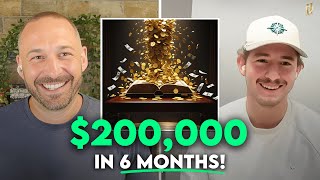
Trace Severson made $211,000 in his first six months selling life insurance using a telesales script. He ran 120 presentations over 3.5 weeks with a 23% close rate, spending $300 a day on aged leads. His system: gold-silver-bronze pricing packages, strategic pauses on trial closes, and a big smile with downtone endings on calls.
Chapters
I ran 120 presentations before I closed one deal. Shut up. Yeah. So it's like I didn't have time.
120 quotes before you got one. Are you over $200 grand already in 6 months?
Yes, sir. I'm at $211 right now.
$211. Who's counting?
I am.
Yeah. Welcome again to the Insurance Insights Podcast. Appreciate you guys following, sharing, all that jazz. Got a dude, Trace Severson, here with me who I just heard about recently. I think you work with Roy and those guys, um, Workshop. I think you came here and I'm like, damn, young kid. How old are you? Young. I know that.
24. 24.
24. Selling a shit ton of insurance. Relatively new, I think, right?
Yep. 4 to 6 months.
And are you over $200 grand already in 6 months?
Yes, sir. I'm at $211 right now.
Who's counting?
I am.
Yeah. No shit. What'd you do before, bro?
Uh, so previously I did door-to-door book sales, selling educational books for 3 summers.
Shut up. What's that mean, educational book? Like a dictionary or what? What does that mean?
So it's a company called Southwestern Advantage Legacy, our insurance agency. We're actually a sister company.
What is the— what are the books though? I don't actually know what they are. I've never asked.
We sell everything. Yeah, everything from the ABCs all the way up to the ACT. So younger ages, it's like fun educational books that work with like child learning apps. And then as they get older, they're like, they're not like encyclopedias anymore. It's more so— man, it's been a while since I went through all this, but I don't need to pay it.
You're just shit curious, like why would I buy one? Yeah, yeah.
Uh, but essentially how it would work, we'd go out to small towns where the population was like 3,000 people market ourselves on Facebook and then tell stories while people— why people in the area bought books.
No kidding. Any— you can sell anything if you set it up right.
Uh-huh.
Interesting. So did that for 3 summers. Did you, did you knock down $200 grand in 6 months doing that, or how'd that work?
No, no. Um, it was fully commissioned though. I did pretty well. My best summer I made about $40 $48 grand on paper. No kidding. Okay, why?
What do you mean on paper? What's that mean?
I mean, there's a lot of expenses that go into it. Are there?
So top line, top line was $48, so gross revenue $48, and it's just like we have leads, you had something else.
So actually there's not a whole lot of expenses other than just gas, just driving around all day.
A lot of it. Got it.
A lot of it. About $40 a day. You do that for 100 days in a row, that's about—
yeah, yeah, you spend a little— spend a little coin. Out of state too, or local?
You had to travel out of state? Yeah.
So out of state all summer?
All summer. Yeah. My first summer I was out here in Tennessee. Second summer I was in Wisconsin, Minnesota, Iowa. Fourth summer I was in West Virginia and Ohio and Pennsylvania.
No kidding. Do you drive? Like, you just get in a car and drive, or they bus a bunch of y'all out there? How's that? People you know, or just you show up and a bunch of people work in the area?
No.
So there was a—
I think it's about like 2,000 students every year. It's like a college internship program. Is it really? Building a lot of soft skills. So we usually go out with about like 10 to 20 people, like in your organization, and then you kind of have different like HQs where you live in with like 3 other guys, and then we all had our own counties. So crazy.
I've talked to some guys in like pest control that do that similar. They just go somewhere for the summer and bang on doors.
Yeah, exactly.
Crazy. What'd you learn going through that phase?
Uh, you know, just how to have a good attitude no matter what. I mean, and just the consistency. And I, I would say probably the biggest thing is emotional consistency, not getting too high, not getting too low. Just the answer's behind the next door.
I like it. How many doors a day? What's normal?
So we, so we had 3 different, uh, breakdowns. You were trying to get 30 demos. So you showed the product to 30 people, but you try and get 12 sit-down presentations. So if they're like, no, no, no, I'm not good. Just so you know what I'm doing, you whip out the product, kind of just give them a quick demo and be like, look pretty cool. They're like, yeah, I can just show you the rest right here. You just go back into it.
Got it. So that's— got it. So it's like a mini present. You got it. Okay. How many, how many doors you got to knock on to get to 30?
30, anywhere from about like, well, doors knocked on, that's probably like 100.
That's what I want to know.
Catching people. At home. Um, probably talked about 45. There's a lot of like prospecting that goes into it because families, they got jobs. So you got to go around, prospect it, mark it all on your map, go back around after 5, and that's the sweet spot.
So you, you're telesales, obviously?
Yes, sir.
So the reason I ask about the door knocking thing, I, I was raised in the field in insurance, so I'm on the field sales, working leads, but But we knocked— I knocked on a lot of doors, bro. Yeah. And, uh, sometimes we have some people who can't buy a lot of leads and they, they're like, I'll go knock doors, you know. And again, I think if some people, it's local, like they tell you no, why not go show up too and try to present to them? You know, it's like you said, it's all about prospecting. But I see a lot of people be like, man, tough, I didn't make any sales on door knocking this week. I'm like, how many you do? They'll be like, 10 at least, maybe 15 this week. Yeah, you know, and I'm always— I'm telling— yeah, it's weak. So I tell— I, I like to highlight like the work Like, you learned how to work, you learned how to prospect. That's an important lesson to understand in the game, um, because some people do 10 or 12 door knocks and they lose their mind that they didn't make a million bucks.
Exactly.
So you've knocked on thousands of doors?
Oh yeah, thousands, probably. I would say at least 10,000. I still have like calluses on my knuckles from knocking on doors.
Whether it's— don't— not, not specific to what you do, but just in in general, right? Like a skill set you've learned from door knocking and communication. What would— like, if, if an insurance agent's like, dude, I'll sell insurance door-to-door, what would you give door-to-door advice to some— just a young sales kid? What would you tell them?
Like mindset going into it?
Anything you want. Yep, just say anything you've— looking back on 10,000 knocks, if I'm like, yo, I'm new to it, give me— I just want 5, a few bullet points of like, just tell me the shit, I'm willing to do it. Give me the bullet notes. Give me the shorthand of like, I don't care if it's communication, the way you approach. Just there's something there when you're knocking on doors at that level and you can, you can have good conversations. You have a skill set.
Yeah. You know, I would say like just on paper, like give it 3 months. Like if you go into something, you expect you're going to be a rock star your first like month, first, second month, it's probably— that's not going to happen. Give it 3 months before you decide if you're good at something or you're not. And also what the program did a really good job of is you would eliminate all outside distractions where you're out in a small town where you don't know anybody. We would wake up at 6 p— or 6 AM every day, take a cold shower, get out of the house in 5 minutes or 10 minutes, go to breakfast, and knock on doors from 8 to 9 every day over the span of a summer except Sunday. We do like meetings.
8 AM to 9 PM.
Yes. So 13 hours.
For those that were confused, he did not mean for an hour.
Yeah, no. Yeah, 8 AM to 9 PM, knocking on doors. And so I would say just eliminate all outside distractions and really just hone in on working on one thing.
What about a communication tip? Speaking to some— approaching a door, not getting fucking yelled at best you can, like, you know what I mean? Like, how How do you give some advice on approaching people cold?
Just big old smile on your face. It's hard to get mad at a smiling idiot. And I love it, dude.
It's so simple but true.
Yeah, that's good.
I love it. So how insurance, dude? How'd you find— how'd that transition happen?
So I had worked with Roy. Roy also sold books for about 5 seconds.
It all clicked a minute ago when you said Southwestern. I was like, yeah, got it.
And so Roy was the number one guy for like 3 summers in a row, number one American dealer anyways. And he was my OL, organizational leader, one summer. And we were just like really good friends. I love the guy, I looked up to him. And I knew he was doing this out here in Nashville, Tennessee. And so he flew me out, I shadowed the office, I saw all the killers in the office, saw how much money they were making, and like I don't know, going from door to door selling educational books, working in an office with about 10 guys, they're all like, you could just throw down with, have a good time. I'm like, sign me up. I was sold, but like the minute I walked in the office.
That's awesome. Did you move?
Oh yeah, I moved from Arizona where I graduated college. So up and left within like 3 weeks, took my exam, and I was out of here.
Hell yeah. What did you understand coming into the business from like a, like a strategy standpoint? You mean like, how do you— how did you come into it thinking how I can make money quick by doing A, B, and C?
Um, you know, I saw the system put in place and 6 presentations a day, you're probably going to close one of those. And I think it really comes down to investing in yourself and buying leads. Like, I spend $300 every single day on my own ad spend. And business expenses, $10K a month.
Yeah, it's just like what I, I was, I was curious what your, like, what your incoming expectation was. Like, I, I know those guys, so they probably went, here's what it takes to succeed. So I'm curious what your thought was at the very beginning, like, all right, here's what I need to execute. Again, you know what, you know a lot more now, so I don't want to, like, what you know today, but coming into it, what was your expectation to come in and kill it? You mentioned leads and, you know, I mean, like He must have told you, hey, do these things and you can kill it.
Yeah.
So what were you prepared to do from a strategy standpoint?
Well, I was prepared to go broke because I was already broke, so it didn't really matter. And, um, I was prepared to come in, give it 3 months, I not do anything else other than just try and lock in, learn everything I can about life insurance, being in an office, learn from guys around me.
Did he— did you know about the— how much were you investing heavy on leads right off the rip? Or you said you were broke, so did it take a minute to build up to that?
So I was actually living on Roy's couch for 2 months. He let me live on his couch for 2 months, and, um, I had like no money to my name. It was like honestly like the worst headspace I've ever been in, just because— so it was like fight or flight, like I gotta give this my all or I'm screwed. I'm gonna have to move back home to Alaska with my parents. I would have never done that. I would have figured it out, but it was— that was like where I was at in my life.
Got it.
And so when I first came in, they gave— Roy gave me some of his aged leads that he had already called through like 6 months prior. And I was probably making like— all I was doing was dialing from 9 AM to 6 PM, and that's not even that long compared to what I used to do. And just falling on my face. Over and over and over.
What did that look like, falling on your face? Dials? Like, how many would you book out of— how many, you know what I mean? Like, give me some numbers. How bad was it?
So it was one call closing. I think my first on the aged leads, I ran 100, or I did 120 presentations. So that's where we drop quotes, that's what we consider a presentation, before I closed one deal. And out of that, Yeah, so it's like 120 quotes before you got one.
Hey, what did you think when you were at like 50?
You know, I kind of knew in the back of my mind I didn't want to— I knew that if once I started investing my own money, I could do it because I would hear everybody else in the office just closing deals left and right. And I'm calling these aged leads, which you can still find policies out of there. I did eventually. But I was just like, man, I just need to buy some leads and I need to get the money to buy leads.
Were you losing your shit at some point?
After knocking doors for 3 summers, I knew it was going to get better because I'm working so hard. Um, but there was definitely some doubts here, some doubts there. I'm just more stressed on like how I'm going to pay for rent and like groceries and gas.
Yeah, I love it, dude. Crazy. How— how— what period of time? You said— what would you say, 120 before one?
Yeah.
What— how long did that 120 take you to do?
Uh, that was— it was 3 and a half weeks. I was working Monday through Saturday. I think I had talked through about 1,500 of Roy's aged leads.
And so 1,500 to get 120 to sell one. Hey, sometimes people just suck at the beginning, can't put it together, you know what I mean? It's just part of the game, man. Um, funny, dude. I, uh, have you ever watched any Easton stuff? Do you know who that is? No, you would know him if you don't. Yeah, Easton Patton. You should look him up. I did a podcast with him a while ago. His team does— I can't— some obnoxious amount of millions a month now. I don't even know the number anymore. I worked with him when he was brand new, like 7, 8 years ago, 9 years ago. What— how— it's been a long time. And, uh, this is field sales, right, in the field. And I think he was— I don't know, I forget the number, it's been so long— but I always say he went on like 40 appointments before he closed one. And so everyone always references Easton because he turned into a like $700,000, $800,000, $900,000 a year producer. Um, and he's built a massive team.
He's—
and he's a great fucking dude. Um, so I always told that pity story to people. And now I'm gonna tell yours.
It was pretty bad. It was pretty bad.
Crazy. So looking back on it, knowing what you know today, would you have done anything different with those 1,500 leads to work it? You know what I mean? Like, if you could coach yourself through that process, what would you have done different?
Um, coming from knocking on doors to doing this doing insurance or telesales, you have to, it's all tonality and it's all like, it's not bossing people around, but it's kind of telling them what to do, being an expert. And in the beginning, I was an expert on talking to people on the phone or in life insurance. I didn't know the process, how it worked. So I was kind of like, it was hard for me to tell, hey, let's do this, and said, I guess, would it be helpful if we did this? It's like, there's difference.
Yeah.
That I've kind of learned.
Okay, that's fire. Can you want to walk through some of them? Yeah, so like some examples, anywhere you want in the process, you pick.
Yeah, so say you drop quotes and you give them like Americo because they have the best rates, and then they get denied for Americo. And then so now what I would do is I'm like, hey, let's do this, let's just try your second best option with ADNA or American Amical, someone they would more likely get approved for. Where in the beginning I'm like, oh, looks like we didn't— they denied you, like, I'm sorry. And it's like, you just kind of bring it— they're like, ah, well, now I'm gonna get a shitty deal.
Yeah, yeah. Do you prep them for that now in advance, like, just in case sometimes, or do you just handle it if you have to handle it?
Yeah, so it, it really depends on the person. It's kind of hard to say, but, um, yeah, so Bob, based off what you told me, it looks like you would, um, get approved for the preferred rate. I don't want to put the cart in front of the horse here. I can never guarantee that, but we'll just try your best option, and if this doesn't work, we'll just go to your next best option.
Pretty fucking simple.
Yeah, it's really—
it's the key to knowing to say it though, huh?
Yeah, exactly.
I love it. I love it. What, um, what can you tell people about— I don't know, what, what was harder for you? Like, you're doing one-call close? Yeah, yeah, not booking. Do you book any ever?
Um, so through our CRM, we have automated messages that they will book onto my calendar. Um, I actually had a dialer last— the past 2 weeks for the first time, so I'm starting to use that, and that's pretty nice. I can already tell it's going to make me a— it's starting to make me a little lazy, so I need to catch myself, like, in between appointments, just one call closing instead of just, like, waiting for the next one, just scooting around.
Make it, make it the cherry on top.
Exactly.
Looks good. I like it. Um, so if, if they— if you can't one-call close them there, there's not a big percentage that— like, when they go, I'm just— I got a lot going on now, it's not a good time, you aren't rebooking that guy? You're, you're dealing with trying to push through it, or what do you do?
Uh, so I'll push through it. I can— I now have a good sense of like when somebody's busy, so I'll object before they object, like 'Hey Bill, it sounds like I caught you at a bad time.' And they're like, 'Oh yeah, now's not a good time.' 'Okay, no worries.' 'Wait, Bill, I usually work by appointment. I guess would it be better to give you a call in the mornings or evenings?' Yep.
And you just put the brakes on and— yeah, makes sense.
Yeah, that's—
it's— and it's funny when people get caught up on the whole one-con— one-call-close, book an appointment thing, and I'm like, 'You know, the client doesn't know which one you're going to do in advance.' Like, they didn't fill something out expecting one or the other. So you can like kind of ad-lib a little bit when you need to, like be smart. When you hear 3 babies screaming in the background at the grocery store, probably not a smart time to show pricing.
Exactly. Or if they're ever driving, I always object, be like, hey Bill, let me just give you a call when you got your feet planted on the ground at home. That way—
hell yeah. So you don't take a driving person, you don't even attempt?
No.
Fuck yeah.
Most of the folks we talk to are— I sell a lot more final expense, a little bit of IULs, not a whole lot of term. So it's usually 50 plus. And them driving, giving out information. I'm just like, it's probably dangerous for them, so I, I object.
I see people do that all the time, but they— I see a lot of people try to push through desperate for appointments. Did you ever try and realize it didn't work, or did you just listen, listen to the rules and be like, I won't do it?
Yeah, in the beginning I definitely tried, and now I feel like I'm not afraid to lose the sale. I'm just here to close policies or serve people and help them get insurance. So if they're driving, I know probably 99.9% of the time they're not going to get a policy, or they're not gonna—
they're just wasting your time. Exactly. Yeah, makes sense. That's sick. It's a good place to be, dude. If you're in the insurance space and trying to build an agency, or you're trying to like break records in sales, just hit new levels, new heights, click the link below to apply to my consulting consulting and coaching program that I have out there. I'm helping tons of people get to new levels, get to new income heights, help them build their teams, put systems in place, staffing stuff, recruiting processes, automations. I'm just teaching people how to get to a point where they're selling on their own pen 30, 40, 50 grand a month. And if they're building a team, teaching how to have an effective structure to your insurance agency for the most profitability you can. There is an application process. I'm only looking to work with high-end people who really want to make big things happen. Couple recent clients that we've had in the, in the coaching program. One dude as an individual went from selling like $8,000 a month, barely getting by, about to quit the industry, found the book, hit me up direct, started the coaching program, went to $35,000 his first month, has issued like $150,000 in the last 90 days and has changed the trajectory of his career. Working with another agency builder, very first month went from doing like $800,000 a month to almost $1.1 million. We added like 10 or 15% production in 30 days and continue to work on things there. So if you're interested, click the link, apply, and if you're a fit, I'll reach out. So you said $300 a day on lead spend right now, which I hear every day I do this. That's the most common number I hear people, people putting into this thing because they want to do it for real. That's getting you now 40, 50, 45 average a month. Yeah, something like that, right? Issue pay.
Okay.
Yeah, about 45K a month on 300. And you said the 300-day adds up to what a month? 10K?
About 10K. And then we have 10K.
Yeah, so 10K to get 45. No, sounds like a win to me. Yeah, right now. Now for the, for the negative-ass people who watch this thing. That are like, what about chargebacks? What about blah blah blah? Are you actually making money? Walk them through that best you can.
You know, I saw your Instagram video of hotels, and it's funny, hotels like— yeah, it's like people are going to cancel, they just rebook them, they just refill. Oh, that one. Yep, yep. So it's like, if I write 10 policies, maybe 1, maybe 3 is going to cancel. I mean, I can't really There's nothing I can do. It's like I'm just going to move on to the next person and sell another policy. If I write 2 policies every day, I work 6 days a week, it's 12 policies. 2 of them cancel, okay, I still sold 10 this week.
Yeah. How do you make sure 8 don't cancel?
8 don't cancel? Um, I think it's when you're going through the process in the beginning, there was a, hey, let's just see if you get approved.
I mean, kind of that one, dude.
Yeah. And so I definitely did that a lot in the beginning, and then they'd get at the end and then they're like, oh yeah, we'll push out the effective date for like a month. And then it's like they're going to cancel. So now I just don't ever do that. I mean, there's a time and place for it where it's like rarely, but then you kind of sell them more as you kind of go through it. You find—
sure, early it's not terrible. Yeah, yeah. When it's like pick a price, but you can cancel if you want to, and we ain't really doing anything today, we're just kind of checking it out. That's bad, but a lot of people do it, bro, in the space.
Yeah.
What are, um, let's walk through some of your, some of your, do you want to do phone or let's do an order phone? Start with the phone. I mean, it's all one process for you. So do you want to start at the beginning or do you want to get right into how you're, how you're closing deals and keeping them? You pick what excites you more.
So let's just start from the beginning.
Yeah. I mean, I think let's, let's like, if you want to start with, um, yeah, I mean, I, you don't necessarily, we can role play if you want, but it's half make believe. So I'm more about like, give the real shit that you like. I don't want you to go through like the make-believe one that they say yes to everything and you close them all. Yeah, I want the real shit. So you make up the objection. I don't give a shit what you— because I can make them up too. You know what I mean? So like kind of go through, go through a harder sale and the things you're answering and dealing with along the way to get there. Go, go through a fake troubled one, like a hard one.
So I'll just start when you pick up the phone and they're like, 'Who is this?' Be like, 'Hey Bill, this is Trace here, life insurance for veterans. I sell to a lot of veterans. And hey Bill, you submitted information to our office here requesting a call.' And then you're just kind of right away just like downtown, not be like, 'Oh hey, I'm sorry Bill, this is just Trace, I'm just reaching out, I hope you have a few minutes.' It's like, 'Hey Bill, this is Trace here.' All right, and meet them where they're at. Yeah, and kind of matching their tonality. That's That's like the first thing I typically do on a call.
Okay.
And in the beginning, when I was trying to learn tonalities, it's always really good to end on a downtone unless you're asking a question. So there you go. Hey, does that make sense? And I'd go like this with my hand. That way my tone would go down. And I do that all the time.
Why is that important?
Any clue? It's not what you say, it's how you say it.
There you go. Mm-hmm.
And also in the beginning, yeah, in the beginning I felt like I was always super nervous, like hunched over my laptop, like reading the script, and Roy was like following me and/or shadowing me, and he was just like, man, dude, you just need to chill out. So I literally every sales call I just kick my feet up on the desk, and this is how I talk majority of the sales call unless I'm taking notes for like their health and all their information.
Makes sense.
Um, I don't know, you give me objection.
I don't know, I'm just not interested in this shit.
Okay, I guess, have you had life insurance in the past?
Yeah, I have some now.
I have some now. I guess what caused you to fill out the request for more information?
I don't know, man, I don't remember filling it out, dude. I just, I don't know, I just got some insurance. I think, I think I already got it handled, bro. Okay.
Yeah, it looks like you're just looking to possibly supplement your coverage right now. I mean, it sounds like you already got plenty of insurance. Is that right?
I mean, we have some insurance. I got some stuff at work and, you know, I have a good job.
There you go. Hey, well, John, to be honest with you, it sounds like you honestly don't need life insurance. I'll just let you go here. But honestly, I wouldn't push through that. If they're like, I'm not interested, then I'm just like, okay, bye.
You know that you're the only one I've interviewed that's ever done that, and I fucking love it because it's accurate to the people that sell. Like, dude, we ain't trying to— we ain't begging people. Yeah, I'm excited you went that way. That's a good one.
Honestly, I— if that was like an actual one, I'd be like, hey, I'm not interested. I've been like— I would like ask him one question and then just hang up. I don't—
I would hang up on that.
Yeah, I wouldn't push as hard as I just did or ask as many questions. I'd just be like, yeah, okay. I'll just take you off our list here. No worries.
I always, uh, I always train agents, dude. I'm like, yo, I'll hang up on them long before they hang up on me. I'm out. And then do you get them— do they call you back still and be like, did you just hang up on me? I used to get that, bro. I'd have the lead call me back and be like, did you just hang up? I'm like, yes, I'm sorry, you said you weren't interested. I'm about to do it again. I gotta go.
Yeah, yeah. There's only been a couple people and they're like— some people have been like, hey, I'm sorry I was a dick.
And yeah, ain't it crazy? Yeah, I love it. All right, so just a basic one. I give you one time, like, yeah, I don't— who, what are you? Like a basic, just a cheesy little objection.
Hey Bill, this is just Trace here, Life Insurance for Veterans. You had submitted a request for information, it looks like yesterday. You were just curious on the life insurance options for veterans.
Okay, I think so.
I think so. Yeah, hey Bill, well, I just want to confirm the information we got on you here. It looks like you're 76 years young or whatever. So I feel like when they're kind of confused and they submit their information, you got their email, where they live and how old they are. They're kind of like, oh sure, I did submit that information.
They're like, oh yeah, I remember. Yep. Yeah. Makes sense.
And then a little joke I throw in, like anybody that lives in Texas and Bill, are you still living out there in the great state of Texas? And they're like, yeah. Like Bill, that doesn't make you a Cowboys fan, does it? And then they'll say, oh yeah, I'm like, ah, well, I'm sorry for your pain and suffering over the past 30 years.
So it's—
yeah, so a little joke in the beginning kind of like humanizes myself.
Yep, love it. Then what are you trying to get to next? Like, what's the— what's the goal for you? You get them on the phone, they acknowledge who you are, they kind of— you're kind of sort of on the same page. How do you get into like, you know, we're about to sit down and cover you?
Yeah, so I think just explaining who you are and what the process is going to look like, because they don't know if you're trying to book a phone appointment, if it's all going to be right now. And so, um, essentially in the next part, what we do is like, yeah, Bill, so really depending on what's going to be the best option for you, that's slightly— largely just going to depend on what you're looking for and a little on your health. So once I have a better understanding from there, I'll be able to make a good recommendation. Does that make sense?
Yeah, perfect.
Yeah, all righty. And then just go into it, roll with it.
Let's go. I want to hear it. You got you nervous on the first— on one of your first broadcasts. That's all right. Hey, you know what you should do right now, bro? You should lean back in your chair and put your feet on your desk and let's just talk. It's all good, bro. You do it more natural that way. I don't need you to read it to me. We just talk through it, even if you want to give me the concepts. You know what I mean?
Yeah, but be you. Yeah, all right, sounds good. Uh, and I guess, John, just so I understand what you were looking for here, were you just wanting to make sure that the funeral expense doesn't fall a burden on your loved ones?
Yeah, I mean, make sure the wife is good, dude.
Got it, got it. Well, Bill, it looks like you currently already have some life insurance, is that right?
Yeah, we have a $10,000 policy. I had for like 4 or 5 years.
And I guess, do you plan on being buried or cremated?
Buried.
Okay. And do you have a pretty good estimation on how much burials are costing folks nowadays?
I actually have no idea. Okay.
So in my experience, burials typically cost anywhere from about like $10,000 to $15,000 out there in Texas. So you already have that $10,000 policy. I guess what has caused you to feel like you even need more life insurance?
I don't know, I just want to be smart. I'm getting old and try not to mess the rest of it up.
Yeah, I guess. Were you looking to try and leave Linda behind with some extra money?
Yeah, I mean, I think it— I don't want to leave her homeless.
Yeah, okay. Are you looking to protect a mortgage, any kind of debt, car payment?
Um, I don't have a mortgage. We certainly— I have a car payment and Not really much debt, a little bit here and there, nothing crazy.
Gotcha, gotcha. So here, Bill— or John, let's do this. Let's just spend about a minute or so on your financial situation just to make sure everything's well within a good budget for you. Then from there, we'll spend a couple minutes on your health. That way I can figure out which one of the programs would most likely approve of you.
Okay, okay, yep, easy.
Now John, God forbid if you were to pass away today, who were you wanting to put down as the beneficiary on this policy?
Stephanie. Steph, my wife. Yep. Got it.
And you said you plan on being buried, right? Yep. Gotcha. All righty. And it sounds like you already have that $10,000 put in place that would take care of that. So with this policy, were you just wanting this to leave behind with some extra money for Stephanie?
Yeah, yeah, I just— I mean, you just said 10 to 15 grand. Hopefully I don't, you know, drop dead tomorrow. I don't imagine it's gonna get cheaper, is it?
Yeah, nope. Oh man, John, got me nervous.
Don't be, it's all good. It's— here's the— you know what's— you know what's cool though is like, dude, this thing ain't that deep.
I know, you know what I mean?
It's like you're— you're knocking down 40+K a month. And you're, you're still uncomfortable with the process in some ways. Yeah, you know what I mean? Like, dude, that says a lot, bro, in, in how well you're willing to follow a process and go through, you know what I mean? It's like, in that the off-the-cuff— dude, I've been doing this 13, 14 years. Yeah, I can still— but I've— to me, I've done 10,000 presentations relative to your couple hundred, you know what I mean? It's like, it gets, it gets smoother to deliver when it's not real. Right, and that's the hard part. I always try to tell people, like, I love all the stuff, and, and we don't have to get to, like, pretend every scenario is like— some of this is fucking make-believe. It's hard to do because it's not real. There's only so much— those watching, there's only so much I can fake it and him pretend to be real, right? When it's live in action, that's why so many people are nervous, because they aren't— they're doing it for fake, right? They're not making the calls, or they're doing it with their buddy, and they aren't taking the reps in. When you get the reps in, man, you just flow into a— like, that's what you do in the day. You're trying to do a podcast and pretend we're doing selling insurance.
Yeah, right.
And it's like, so we can only make it so real. I just try to do my best to tell people like, this is not that deep, and you're showing it. And so it's like, it's more natural for you to talk about the concepts, right? So when you're going through that health stuff and the financial stuff, are there things you're looking for or questions you're asking to on purpose? Like, what's the purpose during that for you? What are you trying to get out of that few minutes?
Out of the financial question?
Yeah, like how do you know whether or not to proceed or bail like you did when I messed with you on the phone? There's got to be certain things you're like, I'm not going forward until I get A, B, and C, or feel comfortable, or, you know, I mean, like from a high-level standpoint, what are you trying to accomplish right there? You just literally writing it down and keeping it moving and not thinking about it?
So typically by that point they kind of view me as like an authority figure, or I feel like they do. So I just run through the health questions, and if they're like, why are you asking me all this? Then I'll just re-explain, Bill, this is just to help you find the best rate. So if you don't want to find the most affordable life insurance, that's no big deal, I can let you go here. But I assume if you were to get life insurance, do you want to get the best rate or best coverage out there? Then they're like, yeah. I'm like, okay, build back to the question. So last 5 years, you're reasoning. Yeah.
What are you looking for health-wise that scares you, that you're trying to— I did, because I remember when I was new, dude, this probably happened to you a ton. People are like, I'm healthy as shit, and then you find out they're not. Yeah. So what, what big things are you hunting for and how do you do it?
Any kind of heart problems. So I'll ask, in the past, have you had any heart attacks, heart failure, strokes, mini strokes, or stents?
No.
And then, nope. So John, you're not on any blood thinners then?
No.
Okay, perfect. Any cancer in your past?
Nope. Gotcha.
You got any diabetes?
Nope.
Gotcha. No neuropathy then? And then are you prescribed any medication for high blood pressure? Nope.
No.
Are you prescribed any medication from a doctor at all?
I don't take them.
Okay, so essentially how you get approved for life insurance, then I would explain the Medical Information Bureau and be like, so even if you're not taking them but you prescribe them, they will show up So what medications are you prescribed that you don't take?
I love it, dude. ABC, perfect. And that's— it's funny, I was like working with a new agent this week, and, uh, one, I, I happen— I have a Discord group, right? We live dial in it, and I pop in with this new kid in the middle of a presentation, and I hear him saying some stuff, and he's squirreling around, and I'm trying— so I pop— I try to help him. I'm like, hey dude, come— what is he trying to get coverage for? He goes, hold on, And he's about to quote him. Yeah, he goes, hold on, what are you looking for coverage for? And I'm like, oh my God, right?
Yeah.
And he didn't even get that far. And, you know, some of the health stuff, he was like, any health issues? The guy says no. And then I ask him, and all of a sudden there's all these meds. And it's because he didn't ask it the way you asked it. I mean, it's a nuance that people miss that's so important is not only do you take medications, have you been prescribed any? Because we're going to see them. You know, I think that messes a lot of people up, dude, at the beginning. They're just trying to get one in. I don't know if you ever did that. Oh, sounds good, apply.
Oh yeah, get to the application, give them the best deal. That way they want to go through.
Yeah, yeah, yeah, I love it, dude. Cool. So you get through health stuff, you get through financial stuff. Do you use any of that to like uncover opportunities for like annuity, IUL? Are you looking— are you doing anything further with that info but figuring out budget? In any way? Or you just— how deep are you looking at the financial section?
So usually when—
and I know it's final expense, so there's only so many things, you know what I mean? Like IUL is probably not, but there's annuity money in there like crazy, is— yeah, is kind of what I was asking. Sorry to cut you off.
Yeah, no, you're good. Um, so I haven't— I don't know shit about annuities other than a few videos I've seen on Instagram from you. Market goes up, you're your annuity stays, or market goes down and annuity stays. That's it.
That's 101, bro. Go to johnwetmore.com/annuity, and we got a whole little boot camp. You can watch them all. Yeah.
Um, so usually, just because most of the folks I'm talking to are anywhere from 50 to 75, and a lot of them do have a good amount of health conditions, I won't bring up IULs until I know they can get approved for, or even terms. Term options. So unless they are prescribed, I would say only when they're prescribed like high blood pressure and cholesterol and no other medications, why bring up any kind of like term or IUL?
Makes sense.
Cool.
Love it. Dig it. So then from there, how do you— how are you transitioning to showing price and closing deals? You get the info, you're satisfied with health, you're satisfied with financial. Now what?
All right. Hey, Bill, just bear with me for about 1 to 2 minutes. I'm going to punch all your information to our system here and see what's available for you. In the meantime, can you do me one favor? Just go grab something to take a note on, because when I get back, I'm going to give you all the benefits of our program.
Love it. Easy. And you're plugging, you're plugging stuff in. You using one of the tools? Are you using— what do you use? You use Toolkits?
Yeah. So in the beginning, I would put them on hold and then get all the quotes and write it down. Uh, now as they're kind of giving me their health or going through it, I'll be punching everything in. It's just quicker. And I don't take a minute or two on hold.
Yeah, yeah.
And then I love it. I'll just, we just explain the process before we go into quotes. So, yeah.
So what, clarify that. What do you, let's go there. What do you explain now?
So, hey John, just before we go over your options here, I just want to briefly explain how the process works. So obviously with life insurance, it's not like going to your local grocery store where you just see it and you buy it. With life insurance, we actually have to get you approved for it. As well. So on the application, what the insurance carriers do nowadays is they just look at what's called the Medical Information Bureau, and that's a compilation of all your medical records, hospitalizations, and prescriptions over the last few years.
Yep.
So with that being said, I guess, is there anything else we should add on here? Do we pretty much cover it all?
Nope, covered it all.
All righty, perfect, perfect. So I just want to quickly run through the benefits of your plan First and foremost, the first thing I want you to write down is then immediate coverage. And then I kind of go through all the benefits. So immediate coverage, locked-in premium, it's tax-free, the living benefits, the cash value, and then permanent coverage. And so I'd go a little more detail.
Yeah, sure.
Yeah. And then so, hey, John Wetmore, And now I'm just—
you can take your time, dude. It's all good. Yeah, yeah, do you. It's all good.
But I do this all day, every day, and I don't even have my script pulled up when I'm working. But like, right now it's just like—
it's okay, I get it, bro. Trust me, I remember the days, and it's all good. And hey, if anybody want— if anybody wants to judge you over it, we can tell them to fuck off. Oh yeah.
Um, it goes to show you can sell $40K and still be kind of—
hey, bro, we're We do $200 million and I'm still kind of fucked up and don't know half the shit I do. So that doesn't ever change, bro. It's just part of it. Yeah.
So essentially then I just tell them, I built you a few packages of coverage, and John, just let me know which one makes the most sense for you. Keep in mind I can adjust these amounts as you please, and kind of go into it. And so we tell them, hey, can you write down for me gold, silver, and bronze? And then based off their budget or their financial situation, that'll be how much the coverage is. And then gold option here, John, this would leave behind $20,000 for Stephanie, and that would be enough to get you buried, cremated, cover any inflation in the future. And if you're able to get approved for that one, that'd be $189 a month.
Okay, got it.
And then silver option here, this would leave behind $15,000 for Stephanie, and John, this is the one folks most are usually leaning towards, and so I usually always throw that in, in the silver. And if you're able to get approved for that one, that would put you at $129 a month. And then, okay, bronze option here, this would be for your standard $10,000. So this would cover most funerals, and that would put you right at about $69 a month. So, and then I usually like pause for about like 5, 10 seconds.
Okay, just dead silence after you show the third price. Okay.
Yeah.
Okay. What are you waiting for? What do you, what do you, what do you, why? I want to know.
Just because I feel like you throw a lot at them right there. And if you're like, okay, based on those three options, which one do you want to go with? Or which one's the most comfortable? They're like, whoa. Ah, yeah, I need to think about this.
I didn't even write it down yet.
Yeah, they didn't have time to process and look between the 3 options on which one makes the most sense. So you kind of let them—
are you waiting for them to talk and say something? Are you just giving them delay and then you say something in a few seconds?
Usually it's just a 5-10 second delay and then I'll say something, but sometimes they'll be like, let's do the gold, or let's do the silver, and I don't even have to like close them.
Yeah, so you're hoping that they just pick one in that silence? I Ideally.
Ideally. Ideally.
Cool.
Okay, that probably only happens about 10% of the time.
Okay, cool. So 90% of the time, what's next?
Yeah, so I guess, John, based on those 3 options, which one of those would be the most comfortable for you?
Okay, what's your— how many you say you sit to close? How many? What's your percentage again, roughly?
Closing?
If you, if you present to 10, you show 10 prices, how many you closing?
Uh, on average it would be about like 2.3, like a 23% closing rate. Okay, cool.
So what are, what are the, what are the hard thing— what are the— give us like the ones that the most common objections that you know how to overcome at that stage. Hey guys, just created something really cool, and if you want to be part of it, Join the Discord group I just created. The link is going to be in here. It's a dope environment. You can chat with others that are kind of in the community. You can see beyond the curtain of our agency, have access to all kinds of stuff that we got going on, events, and my staff is in there. We have agents in there selling, me helping agents and sharing information. We're going to, as we build this thing out, share everything out there with all of you guys. So again, follow the Discord if you want to be part of everything we got going on. Join it now. We'll see you in there. Hope to help you more.
I would say the easiest is when they're like, ah man, I just got to really think about which one, and be like, so then if they're like, oh, I need to think about it, I would say the easiest version of that is when you're up, okay, Bill, I understand you got to think about this. Is it more so that you're not sold on the concept of having life insurance, or you know you need this behind for Stephanie? Or are you just more so just trying to figure out which option makes the most sense?
I like that. What do you get most from that question?
Uh, then they'll just, they'll just be like, oh, I'm not sold on life insurance, or like, I don't know if it's a good thing. Then that one, that one's really hard to overcome because, yeah, you didn't do a good job discovering why they needed it. Yeah. But if they're like, oh, I'm definitely going to get life insurance, I just want to sit down and figure out which one makes the most sense.
Okay, how do you handle that?
John, would you mind if I made you a recommendation?
Yeah, sure, go ahead.
So if you're more so just wanting to think about which option would fit the best in your budget right now, all these numbers, they're just hypothetical numbers on a piece of paper. We would actually have to see if you just got approved for it. So what I would recommend is pick one you know would be comfortable in your budget right now, and if you're able to get approved for that one, and you kind of think about it more, we can always up your coverage down the road.
Yeah, I like it. I used to— I, it's— I'm having a flashback of it, and it may be to help. Maybe you use it one day, maybe you'll think it's retarded, but it used to work a lot for me when they were in that little weird spot. I'd be like, when they're like iffy on which one, I go, let me ask you this. Obviously you're stuck between two of them. What are the two your brain is like wondering, which one should I pick? Tell me which two you're like wavering between. And they'll tell me A and B, or B and C, whatever how you do it— gold, bronze, or bronze, silver. They'll, they'll give you two a shit ton of the time. And then I go, all right, why don't we just start with the lower one for now because it seems like it's like— and I say the rest of what you just said. I just make them pick A or B. It's picking— you're picking one, just tell me which two we're picking from. It's like a trial close. Someone taught me how to trial close that way and tweak the way I said it, and I was like, oh, I fucking like that. So I started using it in that weird spot right there.
That's fine.
Yeah, it was always helpful for— helpful to me.
Yeah, I guess typically I recommend the bronze, so that'll actually be helpful if they're like, oh, the silver and the gold, and then like, yeah, let's just do the silver.
Yeah, because you know, you never know. Yeah, so I, I got taught that, and the same dude taught me, um, as part of my process when I was getting pricing. And again, it's different telesales. I'm just spitting out shit I learned along the way. Use it where you want. But But I remember he taught me, instead of going like— I used to show like same 10, 15, 20, but like some of the carriers go obviously 40, 45, 50, whatever it is on the final expense. He taught me to go, all right, so, um, Trace, they make me show you the most you're eligible for. Um, so the most you can qualify for on this product is $40,000. It's $352 a month. Um, and then I'm going to show you kind of gold, silver, bronze, you know what I mean? And then he would have— and I— he would— I— he had me show 2 more at the time. So my first would be like the most you're eligible for. They make me show you, and then based on kind of what we talked about, 20 and 10, and then feel it out, bro. When I tell you the fucking amount of people that would out of the blue pick the big one. Yeah, I was like, what? And then it price anchored it so high that like what you just called the gold seemed cheap.
Exactly.
You know, when I tell them $380 a month and then it's only $160 for $20 grand, whatever you quoted me at the time. Yeah, I found that worked a lot, man, because I wasn't pushing it. I was just like, they make me show you the most you're eligible for. This is the most you can get with this company. You mean like implying you want more, I can't give it to you. Yeah, it worked. It worked well in that stage. And you made me think of it.
That's fire.
Yeah, well, steal it, throw it away. Ask Roy though, don't mess up your process. You're selling a shitload of insurance, don't change anything. That's for some of the people watching. Unless you like it, change it, try it. Anyway, I love it, dude. Um, anything else you want to add, um, to wrap up a deal, make sure you secure it before you move on and say thank you and all that jazz? Anything important to you at that point? You know, assuming they pick one and they pick the brown, whatever it is, who cares? Just now, how are you wrapping up a deal to make sure it stays on the books, preferably? And whatever you do there would be, would be dope.
Yeah, after they get approved.
And yeah, sure, I mean, we're not going to walk through an app. I mean, it just, it is what it is.
And John, so I got some good news and bad news for you. Okay, you're stuck with me as your life insurance guy because the good news is you did get the approval here, so congratulations.
I love it. Thank you.
Yeah, easy. So I guess, how does it feel to get that handled? Feel pretty good?
Yeah, it feels good, dude. Excited to not have to do this again.
Heck yeah. Well, congratulations, because that is the preferred rate. So that's the most affordable rate for that amount of coverage you got there. And it's not every day I see people get approved for that rate, so it's awesome. And then I'll have them write down all the information on the policy. Yeah, save my contact and their phone. And then at the end, hey John, I'm going to close out your file here in our state system. I'll be your guy moving forward. So if you ever got any questions, concerns, or move addresses or want to change beneficiaries, just reach out to me. And then save my contact in your phone, Trace Life Insurance Guy. That way, if you ever need to find me, just search up life insurance.
Love it, love it. Curious, this is out of the blue, do you guys— do you send like any credentials at any point to people?
So in the beginning, like, it's crazy. My first like 3 months, especially my first 2 weeks, I was just getting hammered with social objections after social objection after social objection, or, or banking. They would just bang on me and like click. I haven't got a social objection in like a month.
Okay, wow.
Um, I think it just comes from your tonality and sounding like an expert. And in the beginning, I would push a lot of people for the application when they weren't sold on getting life insurance. So then they're just like, they're just out of here.
Yeah. Yeah. So do you not send— oh, sorry, go ahead. Keep going. Keep going.
My bad. So when they book a phone appointment with me, we do send them an email with like a link to our website and all that stuff. If they ever— I can sometimes sense when somebody is kind of shaky or they like don't trust me. They're like, hey, Bill, do you receive text messages on their phone? They do. Hey, pull up your text messages. I'm going to send you my Tennessee state license. That way, you know, I'm qualified and certified to handle your information.
Like, if you, if you present to 10, how many are you sending that to now?
Probably 1. When my first 2 months, it was probably like 3 or 4. Yeah, because they would like, oh, I don't give my Social out over the phone. Like, okay, yeah, Bill, I understand you got to be careful with that kind of stuff. So pull up your text messages and then send it to them. And when I would send it to him, I would make like, Bill, I want you to guess how much the state of Tennessee charged me for this piece of paper you're looking at. I go, I don't know, $200. It was only $50. But you know, that's a dozen eggs nowadays. So make a little joke and then go through their information and what was your social and just reclose.
It's dope, dude. That's good shit, bro. Well, cool. Let's wrap with one, I appreciate your time. And, uh, willingness, even though this is not your everyday thing. But I, I like finding, uh, people new to this thing killing it, dude. I wish at your age I was smart enough to fucking sell stuff during the summers. And, you know, my 17-year-old there is over on the side creeping on our, on our podcast. He's got the— I got one AirPod in, he's got the other one in his ear listening. I'm prepping him to learn this game. Young.
Yeah, he's doing appointment setting right now, isn't he?
He is. Yeah, you saw that. Yep.
Heck yeah. Yeah, no, I was out there in Atlanta, so Yeah, yeah, it's true. I wish I got into sales when I was 17.
Shit, me too, bro. Golly, it's insane. You know, he had a little taste of working retail, like, uh, food service cashier shit, and he was like, yeah, I don't know, for me.
Yeah, exactly, exactly.
He likes the country club life, except now he's gonna have to start paying for it himself soon.
There you go.
Um, cool. Anything you want to wrap up with that, um, you think we missed, or if you just want to share any insight into people watching, you pick.
Uh, maybe just sharing some insight. Uh, I think your, your brand or your logo, Do More Now, Get Better Later, that, that speaks volumes to me. Because when I first started, I like sat down with Roy. Exactly. Um, you know, I was like, I just want to learn how to just sell for the first year, kind of have a track record. Or like, I won't take this podcast because I need to like hone my communication skills or know life insurance better. The only way you're going to get better at something is you do it over and over and over. So do more now, get better later.
Just love it, bro.
Who gives a shit if you fall on your face? Like, I guarantee in 5 years it's going to— it's good for me.
I tell— I always tell people this. I'll give you a little more confidence in that you're on the right track. When I first broke out, remember, I was with FFL from day one. So my biggest year I sold, I issued $468,000. Um, next year was like my last year in the field, was like $360,000 or something like that. And, uh, the year I did $468,000, I had been here for a couple years already and I wasn't— I was mediocre, it was just whatever. And, uh, you know, there weren't that many people, so only— there were only 5 of us that issued over $400,000 that year as a company. So I've won— I was one of 5 people. And, uh, so when I went from doing mediocre to selling 40 grand a month, it was like fucking national FFL news because we weren't the company we are today. It was early, it was year 2, you know what I mean? Like, no, but we, we didn't really have a big army of people. Um, and so all of a sudden, out of nowhere— I'd been in the industry, I got licensed 5 years prior to this, and I'd been selling 2 and a half— all of a sudden, out of nowhere, dude, everyone wanted me to train. And I'm like, I sell insurance. I don't fucking train. Like, I don't know what you're talking about.
Yeah.
And the guy who mentored me, man, he had a— he had a meeting similar to the workshop you were in out here, a big room of people staring at the front. He was teaching, and he wanted to utilize my change as a teaching moment. So he wanted me to train at this little event, like 15 minutes or something stupid on my in-home. And I'm like, I ain't going up there, bro. I said, if you stay up there and ask me questions, I'll answer them. And so the very first training I did, dude, in 2015, I was too nervous to stand in front of 30 people and tell them what I sell without another adult standing there asking me questions to prompt me, you know. And 10 years later, we have what we have today, and I talk non-stop in front of an obnoxious amount of people, you know. So it's like, it's part of the journey, dude. I can remember being terrible at that piece of it, or uncomfortable with it, if you will, or shy about it. You know, and I, I overcomplicated and I wrote out like a 27-step in-home process that I do, and Mike was like, what is happening? And I've learned to like just refine it, man. Um, it does get better over time. So you're on the right path is the point. Um, keep killing it. Don't be afraid to share it. And who gives a shit if you sound like whatever you think you sound like sharing? Because to me it sounds like you're a young kid learning the game that's making a bunch of money along the way. And is, is hungry as shit for more. So be proud of it, dude, and don't, don't, don't be afraid to keep going out there and making a mess of it.
And that's changed my life. Yeah, you work hard in this business, it can— it really can change your life. I'm blessed.
I love it, dude. You building a team?
Yep. So I got one guy who just got, um, his license, so now he's getting contracted with the carriers. He's going to be in the office here next week. So the only reason I started recruiting John hopped on a call with our office. It was just 15 of us then, and he's like, do more now, get better later. And just spoke volumes to me, and I was like, man, I just need to do it. And so meet people, tell them what I do, how it's changed my life, and you can attract people when you're just telling people what you're doing. Like, people can sense when you actually love what you do, and I love being in the office with all the guys here and, yeah, making a lot of money.
Good for you, bro. Well, congrats, man. Appreciate your time. I'll let you get back to sales. If I can help you at all along the way, don't be afraid to ask. Hit me up. And I appreciate you sharing. We'll, uh, my team will get you all the stuff on it and tag you and all that jazz when we put it out, um, in a few weeks or whatever. So appreciate it, dude. Those of you following, follow Trace if you want to watch someone killing it. If I can help at all, hit me up. Like it, share it, do all that jazz. We'll see y'all next time, though. Later.
Appreciate you, John.
Appreciate you, Tommy. See ya.
More from John







How YOU Can Make $15,000 Per Week from ANYWHERE ft. Keenan Stockling Jr | Ep112



