Testing for SARS-CoV-2 in asymptomatic people (part of the #CovidUnknowns series)

Phil Hammond, Fiona Godlee, and three experts examine asymptomatic COVID testing across workplaces, prisons, and homeless shelters. Testing alone fails without isolation support, and false results erode trust. Stefan Baral warns that offering tests without linked help is unethical.
Chapters
So yes, welcome to this COVID-19 Known Unknowns webinar. I'm Fiona Godley, I'm editor-in-chief of the BMJ, and on behalf of the BMJ, the University of Bristol, the University of Newcastle, we're really pleased to see you with us. This is one of a series of webinars which stems from an editorial that was published in the BMJ on the 19th of October by George Davies-Smith and Marcus Manafu. Which had as its subtitle, the more certain someone is about COVID-19, the less you should trust them. It reflected concerns about the polarisation of debates and the hardening of positions on key issues, which were making it hard to make progress during the pandemic. And it called on us all to move away from certainty and to respect uncertainty. It said acknowledging uncertainty a little more might improve not only the atmosphere of the debate and the science, but also public trust. And that's the spirit of this series of webinars. On November 20th, we had a full day's webinar which was an overview of quite a few issues that have been confronting us during the pandemic, and that webinar is available on the BMJ's YouTube channel, and that's where this session will also be posted. Today's webinar is the second in a series of 2-hour webinars that The first was on schools. The next in 2 weeks' time, February 25th, will be on vaccines. This one, as I think you know, is on testing for SARS-CoV-2 in asymptomatic people. I want to thank Zoom for providing a license free for these COVID webinars. We have about 1,500 of you registered to join from all around the world, and we're aiming to look at many aspects of this very complicated issue. Testing as part of a program, the role of asymptomatic transmission, whether the tools are fit for the job, communicating and acting on the results of tests, and testing in a few different settings— workplaces, prisons, and the community. And we hope to have time for some panel discussion at the end. We've got some fabulous speakers. The timing is going to be tight. We've got a lot to get through. So we're very lucky to have as our master of ceremonies Dr. Phil Hammond. Over to you, Phil.
Thank you very much, Fiona, and hello gorgeous lovely BMJ webinar people. Welcome to our webinar all about testing. A few bits of housekeeping: we welcome your questions, we very sadly can never get through all of them, but there is a Q&A facility you'll see on the bottom right-hand of your Zoom screen. We need to know who you are when you answer a question and they will be chosen by the panelists, so I'm sorry if we can't answer all of them. If you'd like to tweet, we'd also welcome that. The hashtag is #COVIDUnknowns. The most difficult thing I've found writing about the pandemic, and particularly the role of testing, is that we don't have a test for infectiousness. We have lots of tests from all over the place. We don't know how perfect they are, but as yet, no test of infectiousness, which makes the debate all the more interesting. And we're going to kick off immediately. I'm delighted to welcome our first chair. The role is, what is the role of testing in the pandemic? And the rather wonderful Muir Gray will be chairing this session. So over to you, Muir. Where's he gone?
Here I am.
Excellent.
Good to see you. How are you, Muir, by the way? You look lovely.
Very well, thank you. Very well.
Good to hear.
Keeping distant from others.
Good.
So the first session, we're looking at this issue of testing populations, and our first speaker is Angela Raffle. And Angela and I have worked on screening for many years, and we published a book together on screening, and the first sentence was, all screening programs do harm, like all healthcare does harm. Second, some programs do good as well as harm. Thirdly, some programs do more good than harm. And fourthly, some programs do more good than harm at reasonable cost. Angela is also a very good manager. She ran a very big program in the Southwest and a very big database. So she's one of the clearest thinkers and teachers about testing asymptomatic populations. So Angela, can we start with you please?
Thank you, Muir. Um, I'll just share my screen. Is that working? Tell me if it's not. Start my timer. My job is To share 7 principles based on my long-term dedication to ensuring that all the mass testing we do is successful and valuable. First principle is focused on the highest risk groups. We want to find people who'll transmit SARS-CoV-2, and the most important place to look first are people with symptoms and their contacts. And on the left I've depicted the testing interventions system for symptomatic people and contacts. It's still not working properly in England. It began as a classic public health program, and then it got taken into an almost dissociated national thing, which does more tests than many other countries, but with not enough to show for it. Maybe as a distraction, maybe because testing everyone is such an intuitively attractive idea, maybe for commercial reasons, the UK government is keen to take us down the route of society wide testing. This is like checking hundreds of taps for a leak when we haven't yet attended to the burst water main. Second, for treatments, we all know we have to look at evidence before we make a policy decision. The same must apply for testing programmes, and we owe a debt of gratitude to Liverpool colleagues for independently making their interim report available. But had things been left to government, it appears that And if any evidence we do have tends to be left unpublished, we have to ask the right policy questions. Do symptomless people transmit, and can we find them on testing, isn't a very sound policy question. A stumbling block when you're testing symptomatic— symptomless people is always case definition. The human mind has a tendency to leap to assumptions. We say the test is positive and therefore this means that we know X, Y, or Z, but this extra phrase cannot be assumed. A case is defined in symptomless people as when we perform a test to this quality, we detect something at cutoff Z, and we still don't have uniform national reference standards. Fourth principle: you can't design a valuable system unless you're really clear what you're wanting to achieve. If we want to control the pandemic, the primary concern must be health outcomes, not photo opportunities for politicians, not profits for shareholders, not research empires. And We're used to summarising test performance in a 2 by 2 table. Experience in screening says we look at the human beings. Symptomless people come because they want to be in the bottom right, be told that they're okay. It doesn't make a public health impact. The public health impact comes from the top left. And of those we pick up symptomless viral material detected, in only some is transmission reduced. Some— we're doing exemplary distancing anyway. Some aren't transmitters, some don't isolate. Fifth, it's a test— it's not a test, it's a programme. We've learned this from decades of failure when all we did was offer tests. The early years of infant PKU and cervical screening brought no net benefit until they were organised into systematic, high-quality programmes. All the necessary elements in place, all high quality, all working together well. Sometimes that last one is the most difficult. Some health systems don't do it as programmes, they just offer tests. So when voices from the USA say, if we test everyone at home every week, we won't even need a vaccination programme, we need to be aware of the context that comes from. 6, the humans in the system behave in many ways. And how we give them clear, clean information is crucially important. On the left, standard national letter for negative bowel screening. Nowhere makes up their own, it's done once and shared. Very careful. Your result shows no, no further tests needed at this time. On the right is sales talk. This will give you total peace of mind. That has all kinds of damaging, confusing consequences.
Number 7.
When Muir started changing the mess that was cervical screening, and then all the other programmes, into something fit for purpose and something to be proud of, he changed the culture to honesty, trust, cooperation, kindness, learning, and goodwill. And he enabled us to create robust processes for assembling evidence and informing decision takers that were as resistant as possible to commercial manipulation. So that's my summary. None of this is easy. I'm not saying it's easy. We're in for the long haul, but this is what we need.
Thank you.
Great, thank you very much. And our next speaker is Sian Taylor-Phillips. And Sian has also worked— well, we did at one time try to drop the word screening Because the word screen means something like the thing you're looking at at the moment with no holes in it. The original meaning of the word screen was a sieve, and sieve screens is used in that way only for combine harvesters and sorting out gravel at the side of motorways when they talk about screening with big sieves. So the word screening itself gave a sense of false reassurance, and Sean has published extensively Not only on these risk management programmes, formerly called screening, but also on the methods and the gathering of evidence. So Sian Taylor-Phillips from University of Warwick is our next speaker. Sian, please.
Thank you very much. Uh, let me just share my screen.
Okay.
So I'm going to talk about screening asymptomatic people and what the role of that is in addition to testing symptomatic people. Okay, so my expertise is in evaluating screening programs. That's the perspective I take, but I speak entirely on behalf of myself today, not an organization. So the basic questions we ask are, what are we already doing? What does screening add on top of that? What are we aiming to achieve by that? And what evidence is there for the benefits and harms and costs? So we're already doing test and trace PCR for symptomatic people, and here we're thinking about adding community mass testing targeting asymptomatic people using a lateral flow test. And everyone's aiming to reduce transmission of SARS-CoV-2 and the associated hospitalisation and death. So what are we already doing? Test and trace at the moment is not detecting large numbers of symptomatic people. So bits of evidence on this: the UCL social study suggests that people with symptoms, about half of them aren't actually requesting tests. The REACT study suggests that the 4 symptoms that we currently are listing eligible for a test actually only covers half of symptomatic individuals. And if you compare the number of people detected by test and trace to population surveys like REACT weighted prevalence, you find that we are missing a large number of symptomatic cases of at the moment, and that matters because symptomatic people are more likely to infect others than asymptomatic people. There's also potential for improvement in tracing of contacts and adherence to self-isolation. So the biggest opportunity is clearly in focusing on improving what we deliver for symptomatic people. Asymptomatic people, what does it add? So if, if, if we detect infectious asymptomatic people with SARS-CoV-2 and they isolate, then we decrease transmission, and that's what we're trying to do. However, if we give more people false negative results, and there are some issues with sensitivity of tests, and that they then have more risky behavior, that increases transmission. And if symptomatic people decide to take the quicker lateral flow test in the community rather than attending test and trace, that increases transmission because the lateral flow test is less sensitive. And what we've done is myself, Alice Sitch, and Angela Rafford have made a Shiny app which is just to demonstrate these sort of dependencies. So this is it, and I won't talk you through the whole thing. But basically it's a flowchart of the different types of testing. On the left in blue, test and trace. On the right in yellow, community mass testing. And then in green are the benefits of the testing and screening, and in red the harms. And top left is just sort of the overall summed up, and it's to show the mechanisms. And we allow the assumptions to be changed in the app, and that's because the evidence really isn't there and people disagree on them. So here's an example. This is using my standard assumptions, and we're talking about test and trace only now, and this is the outcomes box. And if 23% of symptomatic people are attending test and trace, you can see in the top left box we're estimating that means in a population of a million that results in 1,405 symptomatic transmitters reducing their risk. Now, if you change that assumption and say actually 50% of symptomatic people now attending test and trace, you improve that, you can see on the right that the benefits in the green boxes increase massively, and that's because you're really focusing on the people that are transmitting. Now, this is the box on the left here is the same. So this is test and trace on the same assumptions, but now the box on the right is adding community mass testing. And you can see the top left box hasn't changed because community mass testing is about asymptomatic people. The second green box down, you can see a small number of asymptomatic transmitters reduce their risk, and that's a low yield from a very large number of tests. And what's interesting is if lots of symptomatic people who wouldn't have gone to test and trace go to community mass testing, it becomes much more effective. But if symptomatic people are diverted from test and trace to mass testing, then it actually— the harms increase. So the impact of community mass testing is very dependent on the behaviour of people, and particularly symptomatic people. So what do we know? There's huge opportunities remaining in improving testing for symptomatic people. Community mass testing will stop some people from transmitting, but it could increase transmission from some other people. We can reduce that harm by clearly communicating that testing negative doesn't mean you're safe. What don't we know? We haven't actually got much empirical evidence on what is the impact of adding community mass testing on transmission, and there's a massive opportunity for collaboration to create more evidence. Thank you.
Thank you very much, Sharon. Well, Thank you very much, Sharon. Well, very powerful, that diagram, and these resources will all be made available. So our 3rd speaker is Brian McCloskey, and Brian's got experience in many different countries, so he'll be bringing a different perspective, and also works for an organization that's a very clear-thinking organization Called Chatham House. So Brian, over to you.
Thanks, Leo, and good afternoon. I can just get my sharing. I just want quickly to follow through on the same theme, um, looking at what might be the problem with mass testing. And part of it is around the problem may be that we don't know what the problem really is. So just my standard declaration of no interests. Just to fill in a bit about me, I was a local director of public health for a long time. I got involved in global health work, but recently I've been involved in international outbreak issues from Ebola through MERS with WHO, and most recently WHO and coronavirus. And I think part of the problem about how we've got to where we are is that to an extent there's been 2 parallel conversations going on. Some people raising questions about the risks of testing for negatives, and people replying by talking about the benefits of testing for asymptomatic positives. And it's important to realize that testing for positives and testing for negatives are fundamentally different concepts, and they require different approaches and different tests. And testing people without symptoms brings a different dynamic to the debate, as Sean and Angela have highlighted. And then remember that testing does not stop transmission. Testing followed by appropriate action does. And we haven't fully defined in some of these programs what it is we're trying to do, and we need to think about it properly as a holistic public health program. But it's also important to remember that we can't afford to ignore the realities of outbreak control. In this case, most transmission is from symptomatic people that's where the maximum benefit is from tackling the problem. But I find it interesting sitting in the UK to think, you know, if you look at Ebola in West Africa, or more recently Ebola in the Democratic Republic of the Congo, when it arises, the first thing the Ministry of Health does is set up a contact tracing test and trace system. And from day one, their target is to identify 100% of contacts and make sure they're isolated and looked after. And in the DRC, one of the poorest countries in Africa, and one of the most remote parts of that country, in an area where there are at least 5 armed conflict groups shooting at you as you do the response, the target from day one is 100%, and they agonize over every contact lost to follow-up. Whereas in the UK, we seem to be happy to accept something between 40 or 60% of contacts identified. And that begs the question as to why in the UK we think we are beyond WHO guidance and why we think we cannot learn from countries like Africa. So 2 questions for me are, which is the bigger failure in the UK, missing asymptomatic cases or not testing and tracing the known cases? Which is the bigger gap in the UK, the ability to test or having a proper local public health workforce to track and trace and take the actions that are necessary after testing. So we know some of the challenges about testing. No test is completely reliable. We get false positives and false negatives. We have situations where the action is not taken after a positive test, or the wrong action is taken after a negative test. But more importantly, it comes back to the resources to follow up, because as we said, testing does not do anything in itself. it's the action after a test result that makes a difference. If we don't have the public health resource to do that, then the testing program will not be successful. And a big issue we've seen from Liverpool and other places— those who can't afford to self-isolate won't come for testing, and therefore the action isn't taken. So I think it's probably unlikely that a well-organized program to test for positive will result in net harm compared to no testing. But we actually have to evaluate that to be sure we're doing it right, especially for people without symptoms. And we do appreciate the fact that the Liverpool pilot has given us lots of information about that. However, I also think that it is more likely that even a well-organised programme to test for negatives, such as the test to release, test to protect, test to enable, will result in net harm compared to no testing at all. And as such, that requires very careful assessment before proceeding. So we need to move on and look at what might be the right role for mass or smart testing in the COVID response, and do that in the context of good public health principles and also in the context of what we can learn from other countries. It's not about saying mass testing is inherently wrong. It's definitely not about criticizing the Liverpool pilot. It was done very well in a very short space of time and we've learned a lot from it. And there clearly is a role for wide community testing as part of the COVID response, but testing people without symptoms brings this different dynamic, and it requires us to consider the principles established for screening that we've heard about already. And testing people without local resources to track and trace will not stop transmission. And as I've said, Testing for positive and testing for negatives are different concepts that need different approaches and different tests. And in this point, I think I would disagree with the Liberal group, and to the extent that I don't think it's easy to segue from a program designed to do mass community testing to detect cases and make them isolate into a program that looks at the test to enable and test to protect issues of negative testing, because I think they're so fundamentally different. These should be dealt with differently in different programs, probably running in parallel. But we come back to saying, be clear about what the issue is that you're trying to talk about, what you're trying to solve. Be clear about the outcomes you want, and that will help you get the program right in the first place.
Thank you.
Muir, you're on mute, sorry.
So it's 28 minutes past 4, so some questions from the audience or any comments? Now these will be made available on the BMJ website, is that right? Did you say, Fiona, the presentation?
Yes, the webinar will be available on the BMJ's YouTube channel. The presentations won't be made available separately, but they're there on the YouTube channel.
There have been some. I mean, I think Angela's 2x2 box, and then the big table from Sian's, and then I think Brian's challenges PowerPoint. So perhaps we could think about that as we go through. There are some, some distillations that I think would be very helpful for people to have.
And Mio, Nikki is able to ask questions if you wanted to ask her to.
I think we've got time for one audience question. So does the panel view asymptomatic testing for COVID as screening or case finding, and how would they differentiate between the two?
Angela?
What matters is that you have your evidence, you make good decisions, you design a good programme, and you deliver it to a high quality with good information. the semantics of what you label that program as, as secondary.
Yep.
Sian, how do you— case finding is a backdoor way for getting screening in, isn't it? Atrial fibrillation case finding.
Yeah, I mean, to me it's definitely screening. You're inviting people without symptoms who don't think they've got the disease, you're systematically inviting them for a test to see if they have got the disease. The way it differs from the screening we're used to is a lot of the benefit is not for the person who came for the test but for transmission to others. So that is a way it does differ from what we're used to, but all of the principles of screening apply in exactly the same way.
Brian?
I think I'll go with Angela in the sense that I don't, I don't really care what we call it. But if you take people who don't know they have anything wrong with them and do a test to find something, then the principles of a screening program have to be— have to apply. We have to do it with clear objectives, clear quality assurance, clear governance, and good clear public information and public engagement.
Yeah, for me, case finding is disorganized testing, screening by the back door. So it's a covert approach to reducing things. So thank you very much to our 3 speakers. So I think the conclusion is that we, although without saying that the screening is the right— the National Screening Committee does things right, there is a discipline for addressing these issues when you start to interfere in the lives of asymptomatic people. Thank you very much. On to the next section, please.
Thanks very much, Muir, and thank you to Angela, Sian, and Brian for that. Don't forget that you can tweet about this session on COVID Unknowns, #COVIDUnknowns. COVID unknowns, and also keep asking us questions on the Q&A function. Now, before you start doing asymptomatic screening, you need to understand the role of asymptomatic transmission, which leads us nicely into the next session chaired by George Davey-Smith. Over to you, George.
Thanks, Phil. So in this session, we have one talk from Nicola Lööw, who's an epidemiologist at the University of Bern, and she's going to talk to us about asymptomaticity. Now, for epidemiologists, their standard answer before 2020 to any question was that it's more complicated than that. Whatever's said, epidemiologists complicate it. And being asymptomatic sounds like a straightforward concept, but Nicola is going to have the traditional epidemiologist's role of telling us that it's not quite as simple as it sounds.
Thank you very much, George. How did you know? Nikki is going to advance my slides for me, so I just want to say that I'm giving this talk on behalf of both me and Mugay Cevik, who was supposed to be talking to you but can't be here today. So next slide, please. So it's my personal view, and fortunately that of Muge and our colleagues in Canada and the US, that to understand the role of asymptomatic SARS-CoV-2, we actually need to work towards having an accurate and systematic characterization of what it actually is. Next slide, please. So in my view, there are 3 components to this. The first is how common is asymptomatic SARS-CoV-2? The second is how infectious is it? And the third is how much does it actually contribute to overall transmission? And before we can answer any of those questions, we need to understand actually what we mean when we say asymptomatic. I just want to draw your attention to the fact that this is absolutely not the policy question that Angela says that we all need to answer. This is the academic question about whether symptomless people transmit infection. So next slide, please. Now, what is the claim that got me going about asymptomatic infection was actually this lovely article news article in the BMJ claiming that 4/5 of cases are asymptomatic with data from China. And this claim has been used to imply that the death rate from COVID is much lower than we think that it is because undetected people have somehow been left out of the denominator. And I'll explain why that isn't true. But along the same lines, we have articles about misleading arithmetic. minimizing the impact of the pandemic because of the claim that asymptomatic transmission never occurs. And as we know in medicine, there are no nevers, so we can discount that one immediately, but I will come back to it actually. But these things do, of course, make asymptomatic infection uncertain, and in addition to the claims, I want to say something about definitions, study design, and context. So on to the next slide. We need to understand what our picture is of when we're thinking of who's asymptomatic, and of course if you become infected with SARS-CoV-2, everyone is asymptomatic at the very beginning of infection until they either develop symptoms— that means that in fact they are pre-symptomatic— unless they're someone who is actually going to remain asymptomatic throughout the whole course of their infection, and there are people like that as well. Now what we have to realize is when we start looking at the study designs for measuring this is that you cannot measure— can you go on to the next slide, please? At a single point of time, you can't distinguish between someone who is pre-symptomatic and someone who is going to remain asymptomatic. So that means if you have a cross-sectional study that at a single point in time says 4/5 of people are asymptomatic, as this news item in the BMJ did, that does not mean that 4/5 of people are truly asymptomatic. It's mixing in the ones who would have developed symptoms. If you want to know how many are going to be truly asymptomatic throughout the course of their infection, you've got to follow them up for long enough to develop symptoms if they were going to, and that usually means a full incubation period. So now that we know that— how you need to measure truly asymptomatic infection, let's move on. and ask what it means in terms of the definition of who is asymptomatic. On the right-hand side, there are 3 panels showing that who counts as being asymptomatic has actually changed over time. Not really, but in terms of how we've measured it. Obviously, in January 2020, there was this pneumonia that had some symptoms associated with respiratory infections. So studies done really early on in the pandemic would have defined a larger number of people as being asymptomatic because they just didn't know what the full spectrum of symptoms was. So we had then in March 2020 this recognition of a much wider spectrum of symptoms including anosmia, and then by September 2020 we've got definitions that include long, long lists of any of those symptoms. So the chances of being called asymptomatic by September of last year are much, much smaller than at the beginning, and that just depends on the time at which the study was done. Another thing that makes a difference is what kind of study you do and recognizing that Being asymptomatic— well, being symptomatic is a really nonspecific definition. This is a respiratory illness, so loads of people have respiratory symptoms all the time. And what this picture is showing you is from a seroprevalence study that was done in Geneva. It's showing the odds ratio, so that's the comparison of who is seropositive, the odds of being seropositive depending on whether you report symptoms or not. And I've put a box around the bars for the children, or under 18-year-olds, showing that basically for any of the symptoms that we associate with COVID if you're a child, they're really, really poor at distinguishing whether you're actually infected or not. And if you're asymptomatic, the odds of being seropositive if you're asymptomatic are actually quite strong if you're an adult, but again, for children, it doesn't really distinguish very well. This brings up a caution about serological studies for establishing asymptomatic infection. There is a lot of problem with recall bias, and then asking someone if they've actually had these symptoms— many, many people will have had these symptoms, and whether they're seropositive or not is is just— doesn't really, really address the issue. And these studies tend to have a lot of bias, recall bias, and suffer from the nonspecificity of the symptoms. So next slide, please. Let's move on and try and address these 3 questions about the role of asymptomatic transmission. The first one is, what's the proportion of truly asymptomatic infections? And here I have picked out 4 reviews that have been published as systematic reviews, and the top 3 truly used systematic methods to assess this and tried to take into account the, the potential risks of bias in assessing symptom— what was asymptomatic infection. What you can find, what you can see from those studies is that the point estimates range from, say, so 10 to 30%. So in the middle, if you sort of condense that a bit, let's say 15 to 30% of people with truly asymptomatic infection. In a large number of studies, and particularly in the ones by Bayanbasurian and in the Buitrago-García review, which is our review, which choose subsets where the risk of selection bias is less because they don't depend on you being— on your risk of being infected when you're selected into the study. So those tend to have the lower estimates of the true proportion of asymptomatic infections. The review at the bottom by Oren and Topol is claimed to be a systematic review but actually doesn't— isn't reported in a way that makes it reproducible. And their summary of at least a third— there's no quantitative synthesis of those results— is a summary from 2 serological studies. And as I've said, those studies are subject to recall bias and other biases. So next, please. Let's think about how infectious is asymptomatic SARS-CoV-2. Now, the way that we do that in empirical studies is to see from an index case who they've transmitted it to, and that quantity, that proportion out of all of the potential contacts, is called the secondary attack rate. There are lots of systematic reviews of secondary attack rate. I've put some of the ones— some on the right-hand side, and those— the 2 at the bottom have taken all of studies depending on whether the index case was defined as asymptomatic or presymptomatic and symptomatic and worked out proportions. They come out with very low proportions of secondary attack rate for asymptomatic people, but I think a fairer comparison is if you actually use this as an internal comparison of the study has measured both asymptomatic secondary attack rate and symptomatic. That's what we did in our systematic review, and we come out with an estimate that about people who are truly asymptomatic are about a third as infectious as symptomatic people, and people who are pre-symptomatic are much, much more similar in their infectiousness because in fact they're pre-symptomatic, they're going to become symptomatic and transmit. Next slide, please. One study that has come out strongly, which was the study in which that claim that people who are asymptomatic never transmit, was a study from China based on a mass testing program. And the trouble with this study was that it was done at a period where basically there was no one left. It was done in Wuhan. They screened nearly 10 million people. It was basically done when no one who was left, who was detected, was actually still in their symptomatic period. They didn't culture virus from anyone.
They didn't—
so they didn't find any secondary infections, and they found 300 asymptomatic people. But they could not establish that any of those were actually infectious, and their presumption is that they were at the very, very tail end of their infection. And I confirmed that today with Professor Max Bachmann, who used to be at Bristol University. His picture's up above. So next slide, please. I'm not going to dwell on this proportion of pre-symptomatic people. You cannot basically find from empirical studies. It just simply depends on when you do the study. in what circumstances you do the study. So the next slide, please. If we want to know what the true fraction of transmission is caused by everyone who's asymptomatic and pre-symptomatic, and this feeds into sort of the, the whole transmission of what goes on in our pandemic, we need to do that from transmission dynamic models. We reviewed the results of these in our review. You can also say the results here are all over the place, but— and it's dependent on model structure and the assumptions that they make— but in most of these studies, their point estimate, their central estimate for the amount of transmission is that more than 50% of transmission overall is caused by people who don't have any symptoms at the time. So last— I think this is going on— next slide, last slide. is that what we need to really understand and take into consideration is that types of evidence have changed over time, definitions have changed over time, and the, the types of studies have changed over time. We can't use cross-sectional studies to assess the proportion of asymptomatics, and serological studies are difficult to interpret. I've put up summaries of our best estimates from ours and other systematic reviews. And in terms of mass screening, essentially this doesn't really matter unless with asymptomatic infections it means that the tests work less well, and that's an issue that's going to be dealt with. But my last point is really that context is everything. You have to take the context of the study, when and where it was done, what definitions it's used. Can you just go on to the last slide? very last slide, which is the acknowledgements that I'd like to make to all of the team of people I've been working with in Bern, Muge and colleagues, and funding from our sources from the EU and Switzerland. Thanks very much.
That's great, thanks. I think in the interest of time, we'll move straight on to the next session, which is chaired by Sheila Bird And if we keep to time, we'll have 15 minutes at the end for questions on these and other points.
Thanks.
Okay, thank you, George. Let's go straight to Sheila then, and she's talking about asymptomatic testing. Are tools fit for the job?
I'm pleased to say that this session has got 3 professors from different disciplines: Jon Deeks, biostatistician, Kim Peter, infectious diseases, and Patrick Bossu, who's a clinical epidemiologist. And so without further ado, may I invite Jon to give his talk?
Thank you, Sheila. Hopefully my screen is being shared. I'm going to be talking about the evidence about the relationship of lateral flow tests and infectiousness, which is a key part of the arguments for doing asymptomatic testing. It's about the number 25, which we'll come to in a second. I'm declaring my interests related to all of the Cochrane work we've been doing on tests and the work from the Royal Statistical Society, and a few other little bits on the bottom of the slide. I'm going to tell you about 8 studies, and I'm going to try and do that in 8 minutes, so obviously it's going to be a of a pace, and I apologize for the lack of detail, but I'm going to try and give you some of the evidence on this question about these relationships. But first, I'm going to start with one of— a figure from Mugajevic, which is a very useful figure to explain how during the infection period we see people's viral levels rise to a peak and then fall down. And in this period, there's a part in the middle where we have a window of infectiousness, and sometimes it's being described by there being culturable virus during this time. So in this window here where people could infect others, part of what we're looking at is, have we shown that studies can culture virus? And above that line, when the viral load is high enough, we're going to be saying they're infectious or non-infectious. That's one way in which this this has been tackled. So the key thing is that if we could find a number on this line which puts us in this window, that would help us perhaps think about whether we can identify people who are infectious or not. And that's where we're going to get to this number 25. So this is minutes from SAGE at the 17th of December when they were talking about this, and clearly they're saying that expert opinion and evidence is suggesting that 25 is a number a CT number. So this is the number of iterations of the PCR process which needs to be done before somebody is detected. So if they're detected before that, it means they have high virus, and this is assumed to be viable transmission. This number also links to evidence from looking at the Innova test. So first of all, this is a study from Porton Down, a laboratory-based study trying to establish the lower limit of detection for the Innova test. And you can see here that that was around 25, a CT value of 25. And then these are data from real-world use of the Innova test in Liverpool, where you can see from these figures I've just added to the sensitivities of the test that actually the CT value of 25 nicely divides these into where the test doesn't work at all well compared to where it works a bit or quite a bit. So that number is going to be 25. That's the argument we're thinking. And what we've also seen, that if this is all true, this works very nicely because it looks like the Innova test is going to be positive in this window of infectiousness and negative. And this is the argument which is being used to talk about this test as being a test of infectiousness, which has been used quite a lot. Let's look then at these 4 studies, and there are 2 studies— I'm going to start with the first 2— which are looking at how the ability to culture virus depends on the CT value. So this is a study from Collindale It's a study of both symptomatic and asymptomatic people, and the graph on the right shows the results of doing this and the percentage of the cases who could be cultured. And you can see it drops down as the CT value goes up. So you always have to remember, high CT values means the PCR machine had to go through a lot of cycles, so it means low viral load. So on nearly all the graphs, right-hand side of the graph means low viral load, left-hand side means high viral load. there's one exception I'll point out. So if you drop the CT equals 25 line down here, you can see surely to the left we've got high rates of viral, viable virus detected, but the right-hand side, there's still quite a lot. It's not nearly as much, but 34% isn't a negligible amount of cases which you might think could— we could culture virus from. And you can see there were positive cases, uh, counted all the way down to beyond CT values of 35 here, not very many but they're there. So it's not a step change, it's a curve here. And this is a larger data set, a slightly more busy graph, similar study. This is from France, from Marseille, so the regional reference lab for southeast France, likely mainly symptomatic people, and I've highlighted in yellow that the important line on this graph which you can see is a clearly descending line but there are no steps again and the 25 value divide it left and right. The 85% culture, that's exactly the same percentage as, as from the PHE study, 24% on the right-hand side. So again, a quarter could be cultured below that line. The next 2 studies are actually looking at can we identify people who transmit the virus to others. So there were 2 studies which were around about this. This is the one published just last week, and it's a trial done of Catalonia, and in this trial they tested the contacts of the recruited and treated cases at 14 days and at baseline. And so they classified them then according to the CT value of the index case. This graph is the one which is the other way around because it's plotted it using the, the viral load measurements rather than the CT values, but I've drawn the line on which fits with this. We'll explain why that's the point shortly. But on the right-hand side now we have the high viral load detection secondary attack rate was 20% amongst those contacts in that group, and to the left it's less than 25, the attack rate's 13%, so it hasn't even halved when you've gone below 25. And the final one, this is Tim's study, he'll be talking about it with a lot more detail afterwards, but this is done in the UK Track, Test and Trace data, a very large data set he and his colleagues have worked through. I've had to here extract, extrapolate from the graphs to get the numbers, but in this case here he noted that the relationships are different for different groups of exposure. So when you add all of those together, I've estimated that the secondary infection rate is 7.4 for higher viral loads below 25 and 3.4 above. So again, it's about halving. it's about the same magnitude of effect as we, we see. But here the secondary attack rates are very much lower, probably reflecting the incompleteness of the tracing in the UK system. We have to be very careful though with CT values because every machine gives a different CT value for the same sample and would see different things on different days and so on like that. There's non-comparability of them. There have been experiments done to try and relate them to viral load, and left-hand side is the— there's the plot from the Catalonia study. But you can see here on this graph, when you plot the results from these 3 different studies, there's a 1,000-fold difference in the number of viral particles between them. So CT values on their own actually are not stable things. Finally, let's just check what models have done, because our policymakers are using models for decision-making. How have they actually simulated this relationship with infectiousness? So This graph at the moment is showing the data from Tim Pitto's household contacts group for reference. So this is the empirical data from his nice curve. If we look maybe at 2 studies, so the Quilty study is one which is linked to the current government website looking at test-to-release policies, and in that study it's got a line which is constant with a drop at 30, so no risk after 30.
Okay.
30. The second one is more concerning. I think the first one is not an unreasonable approximation. It's from Larry Moore and Miner's study, which is the one which has told us that we shouldn't be worried about having low sensitivity tests. Now, in that simulation study, there is no risk of anybody transmitting virus at CD values above 22. So it's not surprising, if you think about it, that they don't think that actually having a high sensitivity test is worthwhile. But There's no chance of getting infected cases in those values. So to sum up the knowns, infectiousness, it's not a binary thing, it's a continuum across all CT values. There are no magic numbers. Many epidemiologists would think, well, why on earth would we think there would be? And what we're seeing is that the viral culture rates and the secondary infection rates are reasonably high at these values of CT values above 25, and therefore we can't really be talking about tests of infectiousness, and we should be looking at stopping this language because I think it's giving the wrong message. We really urgently need to find better tests than Innova, ones which are more sensitive. It's really important to get sensitive lateral flow tests. They will be the future for us, but not the ones that we've got now. The unknowns— all of this data is on PCR, it's not on lateral flow tests, it's been extrapolated. Distributions of viral loads are going to be different in asymptomatics. Most of this data is from symptomatics. Somebody will get a Nobel Prize one day for working out how to convert CT values between different machines, and we really need to have a lot of scrutiny of our models to see what functions of infectiousness they're based upon, to see whether they should be trusted. Sorry, I've been a bit too long.
Excellent, thank you very much. Now we'll go on to hear from Tim Peto, please. Oh, what's happened there?
Tim, are you with us?
Yeah, I want to share this if possible.
Can you let me share your screen?
I seem to—
I can't share the screen. Oh, that's better. Okay, so this is—
Please go ahead, Tim.
A lot of things have already been said, so I will skip the ones that have been said. Basically, just to remind people, normally you do things evidence beyond reasonable doubt. I'm certain you agree things that pose you no harm. In that pandemic situation, you have no time to get the right evidence, so you've got to do it on the evidence of balance of probability. You can't be purist about this because people have to make decisions now about what to do for the best, and I'm just pointing that out. Because we can't expect perfect things. The other things I will also— we are trying to look for infectiousness, we all know that. And the other thing I want to point out to you, at the moment what we're doing is we are trying to quarantine people we believe are infectious, and we're doing this without much evidence. So the evidence for social distancing, face masks, all that stuff is done on the balance of probability. About 2-meter rule, no evidence. Oh, some evidence, but not beyond reasonable doubt. Face masks, controversial, and so on. Now, we quarantine people or isolate people for different reasons, and guilty by association. And if you talk about quarantine days to prevent transmission, these are guesstimates. I'm not saying that the orders of magnitude guesstimates that actually we are quarantining people with low risk of future transmission. And the promise is that lateral flow antigen testing, if positive, might be quite good at picking up people who are infectious. That's the promise. We've talked about PCR stages being— PCR tests not being very good, and there's a danger that people think it is the disease, and people believe it's the disease, it's not the disease. So when you talk about sensitivity of a new test against PCR, it's rather misleading. And the disadvantages of PCR, I think, have been mentioned. The one important thing is the slow turnaround time in terms of the incubation period of the illness. So if you— and so if you want to get an outbreak and detect an outbreak, then PCR tests are very bad at finding a new outbreak. You want an immediate turnaround time, and all the modeling says quick turnaround times Makes a huge difference. And we thought, if you are positive PCR, it's already been said you may well not be infectious. A big false positive rate. If you get a positive PCR, it might be not infectious.
And we—
PCRs can give you false positives because of lab contamination, not talked about but quite common. And, um, Jon Deeks talked about the fact that CTs are not very good to understand. We all know about lateral flow device. One thing which you ought to know about them, based on monoclonal antibodies, and in principle the 3rd generation lateral flow tests will end up being very specific and sensitive because monoclonals are very good. May not be good for the 1st generation ones, I'm not going to oversell it. Um, okay, the Portland guys, we helped the Portland guys to think about it. I'm completely independent, I don't get any money from anybody. I get paid by the NHS.
There's—
we've looked at 80 kits and about 16 now have come through, and they virtually all are quite specific. The false positive rate is really quite low. I think you've seen this before, and the only thing I want to point out, remind people, that if you've got a low viral load, you do not pick up very many positives. John's mentioned that, and the only reason for saying that is because Because if you if you screen people who at the end of their illness, then they will not be positive at the end of the epidemic, and you can easily and no one's claiming that they're going to be positive. Now, I think I'll leave this out because we I want to go on about the infectiousness, and in case people aren't used to it, this is somebody mentioned in their. question. This is daily at one person, first person I've known to do this. Every day they did a test, healthcare worker, and you can see the first test was negative, weak positive, and strong positive in the middle. And after, by day 10, it goes negative again. And that gives you some idea of how it works. In the middle, it goes up positive very quickly, and it is semi-quantitative, in fact. Um, so we did— we wanted to measure infectiousness directly. Not by viral culture, but directly using test and trace data, 40,000 contact case pairs. And we've got an updated now information we're just studying on a new lot with a new virus, and it's all adjusted by demography and types of contact. The main limitation about this is we did not make any allowance for possible third-party transmission. We might be able to do that in the next iteration, so it'll overcall infectiousness in that sense. And you've seen these graphs before. What I want you to realize is that we are looking at a particular distribution of viral loads in the people going past the test and trace center. A reasonable percentage of those people had no symptoms. They go to test and trace with no symptoms. There's no difference in the answer between symptomatic and asymptomatic patients. I just want to go through this a little bit, one second a bit longer, and that is this is a distribution of people. If you go to a large gathering and get COVID, the question is who is giving you that COVID infection? What is their viral load? The donor who's likely to have given you the infection, and although the very, very high viral loads are very likely to give you infection, There are not very many of them, but the oranges and the light yellows are the most likely people to give you an infection, and they're the ones with viral loads above 10,000. I've got some CTs there on the thermofisher ones. The light blues with the low CTs are unlikely to be the one giving it to you because of their numbers and because they're not very infectious. And I only say that because to some extent, if we can pick up those, we do very well. And I can show you using 4 different kits in this picture how many we pick up. So we pick up all the dark oranges and most of the yellows. We miss the blues. The kits miss the blues. And the question is, how much infection are the blues really responsible for? Is that an artifact or true? And we went on and we've now done it on 16 kits. All together, and this is a picture setting up. I haven't labeled the brand names because I'm not certain whether the manufacturers would want me to at this stage, but that's Innova. This is the proportion of kit positives in the set of 200 samples that we're looking at. About 55% in that sample of 200 were positive, and this is the predicted number of transmission events. Would be averted by using it. It was about 88% in this particular set. And these are the different kits we've got. And what's interesting to me is that predicting how good they are is quite difficult from looking at how— what proportion of the 200 samples were positive. The other thing I would like to say is that the idea about symptomatic versus asymptomatic We have— I don't understand. I'm a practicing clinician, and I don't understand that it's so easy to distinguish between symptomatic and asymptomatic people. If you've got a slight snuffly nose, some people call it symptomatic and some not. Are you really going to go to a test and trace center with just some slight snuffle nose? I'm not certain, but you might be called symptomatic if you fill in the questionnaire. So what's the advantage of lateral flow testing? Quick turnaround time, cheap, easy to use. I think the positive results are reliable. It's already been used in millions, and in fact in the NHS we've picked up in our hospital, for instance, a large number of people who were not ill enough for them to think they want to go to test and trace, basically asymptomatic, and we're picking up positives who are clearly a danger to others. It's very popular, people like it, they take control of their status, and the surveys that we've looked at is most individuals understand perfectly well it's not a perfect test, and it does offer the promise of early quarantine release.
Can I finish? Are you almost finished there?
Yeah, this is really— this is nearly finished. Okay, and the, um, so I think that we shouldn't compare it to PCR in a simple way.
The—
I'll leave out the behavioral stuff because there are other talks on that. And so I think that it's useful for detecting positives. And interestingly, if you do daily contact tracing, which is the current research to enable people to go back to work during their 10-day quarantine period, we think if you do that, it will encourage more people to be tested. And We think that the extra people you find will counterweight the possible leakage into— of negatives into the community.
Okay, thank you, Tim. I'm going to pass on now to our final discussant, Patrick. I'm sorry I've cut you a little short of time.
Yes, thank you very much for the invitation. In the interest of time, actually, I will not share any slides. But I'd just like to emphasize one point, and that is to go back to something that Phil said at the beginning. Phil said we don't have tests for infectiousness. In fact, that's not entirely true. We have a range of tests actually to be used in COVID and SARS-CoV-2. The only thing is we don't know how good they are actually for evaluating infectiousness because we lack a clinical reference standard, and that's an agreed-upon method to classify individuals as being infectious or not. And actually, that's the main point, the most— actually, the known unknown in this whole discussion about do we have the right tools. I think we have a range of tools. The question is we don't know yet how good they are, and that makes decision-making difficult. And with that, I'd like to give back to the chair.
Thank you so much. Nikki, can we therefore take some questions from, from our audience.
Yes, of course. So the first one is, um, how do you think that lower sensitivity can be compensated by quick turnaround and cheapness so that we could do LFD repeatedly, which is difficult to do with PCR? Oh, sorry, I think I've just read a question out from the wrong section.
No, no, that, that is— we moved that one down. Sorry.
Is that the right question, Fi?
That's a fine question, yeah.
Perfect.
Tim, since I cut you off, would you like to take that first?
Well, I think, I mean, the lower sensitivity issue is a question of what you mean. I'm saying that they're 85%, that you're missing 10 to 15% of the infectious ones. That's what we claim. So we don't miss very many, we claim, and therefore if you double the number of people you test, double the number of positives you get, then that is profit. And the model is saying that an inefficient test but done more numbers will give you— will do better than a very efficient test that you only do on a small number of people.
And I'm sure Jon's got a bit of a rejoinder to that.
So I mean, when we're talking about sensitivity, we're seeing a lot of discussion as to sensitivity against what reference standard, as Patrick was just saying. And so there's a lot of suggestion that we should only be looking at defining people who got CT values less than 25 or less than 30 or some viral load as being the people who are diseased. So that there's a lot of discussion and debate about that, a lot of which is very, very heated. What we're seeing from the data I showed is that the basis for those assumptions, those cutoffs, is not really very sound and that we actually need to be a little bit more thoughtful for that. Now lateral flow tests are, you know, any point-of-care test like that, it can be used far more accessibly. We can test far more people. And if we can get results back quickly, more people in total might be able to isolate than would do if we used a laboratory-based, more expensive, less accessible test. So in terms of the net gain for the population, even using a test which doesn't get the proportions right might end up with more people being isolated and more virus being prevented being spread. But what I'm saying is we need better tests. We need to be out there looking for those more sensitive tests. We shouldn't be happy with what we've got by a long way.
We are, we're looking for it.
Do you want to let the audience have another question? Nikki, one more?
Sure, sure. Okay, if there are more sensitive tests, then why did DHSC purchase and deploy the Innova test?
All I can say is I've got no axe to grind, I've got no money on this. Innova was the first company who passed our screen which gave us the kits to look at. There was nothing, there was no competition, nobody else gave us the kits to look at.
Thank you.
Can I just comment as well that we haven't been looking at all of the evidence from all of the countries, so the Foundation for Innovative Diagnostics has done a lot of other assessments of different tests.
We have looked at all the lateral flow tests available, we looked very hard, so we're not, there's no, the idea that this is not an open study is a Not true, we're academics.
I'm not—
I've got no interest in anything else.
Patrick, do you have anything on that issue? No. Then I will hand the chair back and let you get on with introducing the next session.
Thank you very much. Thanks, that's fascinating, wasn't it? It was all just on the verge of kicking off there. I've actually changed my mind, I think, about lateral flow tests. I was a bit sniffy about them until I heard that. I think the distinction between symptomatic and asymptomatic is interesting. I used to work in sexual health where you assume if you have a sexually transmitted infection you'll think you'll have symptoms, but the commonest symptom is no symptoms. And then very commonly people would have florid symptoms and would be what we would call genitally unaware, so they could have the biggest symptoms in the world and not realize they had them. And so I think it's a really interesting distinction between what is symptomatic and what is asymptomatic. But Tim has slightly shifted me towards lateral flow tests, so thank you very much for that. We're now going to be talking about communicating the test. This is clearly important, there are lots of nuances here. How do you communicate and act on the results of tests in very little time in NHS clinics when you're hiding behind a mask? All that very, very difficult, and we've got the right person to chair this session, so I'm going to hand over now to the rather wonderful Alison Pollock. Over to you, Alison.
Thank you, Phil. Well, we've heard from Angela the importance of thinking of testing as a program. And so we're back to human beings, away from tests to humans and how they respond to tests and interventions. And so I'm delighted that we've got Theresa Marteau to cover the behavioral responses to the negative test, which have been alluded to. So I will start right away with Theresa. Thank you.
Thank you very much, Alison. Just to be clear, I'm talking about just one of the many sets of behaviors that are key to mass asymptomatic testing we've been talking about being effective in reducing transmission. Should we be worried about the potential for false reassurance following test-negative results on mass testing?
Theresa, you're on mute.
That was why it wasn't working. Thanks, Fi. Did you hear the mic? Did it just go to mute?
Yes.
Yes, okay, good. So what I want to do is to address 4 questions, and we're entering into what I would call a data desert. So this shouldn't take too long. Does receipt of a test negative result decrease behaviours that can reduce transmission? So social distancing, wearing face coverings, hand hygiene. And also, might it reduce the likelihood that somebody given a test negative result would go for testing and be able to recognize symptoms of infection? What might be the nature and scale of any such decrease in these behaviors, and how might that— any decrease be mitigated? And finally, to think about some of the behavioral responses of those who haven't undergone testing but are in the ecosystem of mass asymptomatic testing programs. We've already talked about Liverpool, and I call it an uncontrolled observational study, incredibly rich data. And as part of that, people completed surveys, and these are just showing the data from that report of those who had tested negative, and they were asked whether they changed their behaviour as a result of that. And you can see that around 62% said that they hadn't changed their behavior at all. Around 22% said they'd gone for a walk or exercise.
20—
no, 19% had gone to the shops, and around 9% had gone to visit friends or family. This is a single cohort study, so there's no comparison group. This is based on self-report, and importantly, a questionnaire response rate of under 7%. And you can see from the report, they concluded no firm conclusions can be drawn, but they felt there were no alarming indicators in those results. We don't have case reports, we have what I would call anecdotal reports. The first in the Liverpool Echo, a fine journal, which reported an outbreak in a car plant in Liverpool where mass testing was being offered to the workers. I'm not aware of a formal analysis of that outbreak, so it's possible it's chance. It's possible it may be because people were behaving in a way that resulted in riskier behavior, feeling rather complacent because there was mass testing, or the employers might have slipped in terms of the safety procedures in place. We don't know. Another report in The Guardian of 2 people working in a hospital who'd recently undergone an Innova test, continued, and they tested negative, continued to work on a ward, and patients then contracted the virus. What we don't know is about the ward where people were working who hadn't undergone those tests. This isn't the first time that anybody has taken part in a testing or a screening program and received test negative results. Every year, hundreds of thousands, millions of people undergo— take part in screening programs, and the majority of them will get a screen negative result. And it's very thin pickings from the literature. I could only find one systematic review. It's a narrative analysis, and you can see on the left-hand side, it was 9 RCTs that were found, and evidence at high risk of bias. So there didn't seem to be any signal of false reassurance from behavior, but actually these are very, as I say, data at high risk of bias. So what I would answer my questions from the limited evidence I can see is that probably receipt of a test negative result does decrease behaviors that reduced transmission. But importantly, we don't know the precise nature or the scale of that. Assuming that some of this goes on, it then becomes important to think about how such a decrease might be mitigated. And just one area that people have considered is the communication of the testing and what the results mean. At the moment, I believe I'm correct that NHS Test and Trace are reporting test negative results from lateral flow tests with the wording in this blue box. And as you can see, there's a verbal expression of uncertainty. So, your coronavirus test result is negative. It's likely you were not infectious when the test was done. We don't know how effective— well, I don't know how effective that message is. I haven't seen any evaluations of it. I don't know whether other verbal descriptors of uncertainty or precision could be added to make it more effective. Similarly, I don't know whether or not an infographic— and there's a sample on the right-hand side that some of us are working on as a prelude to trying to evaluate this in online experiments— experiments, whether that would increase understanding of the residual risk inherent in a test negative result. So we don't know whether or not any of these effects might be mitigated, and we don't know whether or not we could increase the proportion, as yet unknown, who correctly understand what a test negative result on lateral flow means. I've been talking about those who have undergone the test, but I think it's an interesting question to think about those who haven't.
You've got a few seconds left now.
Thank you. This is my final slide. And so thinking about worksite testing, it may be that some of the people who haven't undergone testing may have a superior sense of safety because They may well believe that a lot of those who are infected have been removed from the workplace. We also don't know how employers who have invited in workplace testing might be responding, whether some of their safety measures might be relaxed somewhat. So all these questions can be addressed in studies that are designed to infer causality, arguably experimental, but that's not the only design we can use. And that can detect plausible effect sizes and use valid outcome measures of behaviour. Thanks very much.
Thank you, Theresa. Given the £22 billion spent so far, it seems extraordinary that we haven't got the studies and evaluations to know how people respond to tests, especially with mass testing now, £100 billion being planned for the spend. But straight over now, thanks much, Lisa, that was so lovely and clear. Straight now to Jacqui Cassell, who's going to talk about what people do when they get the test result, the effectiveness of the interventions, and how important that is. Thanks, Jacqui.
Thank you very much, Alison. So my only disclosure is that I serve on the social care working group that advises SAGE, and I work at Brighton and Sussex Medical School. So there was a time, and there will soon be a time, when this picture would not have been an object of horror to most of us. It's coming again soon, and vaccination is going to be a real game changer. So what I would like to explore is I'd like to set out the purpose of test, trace, isolate in all its purposes, but particularly thinking about asymptomatic and workplace testing. What is the intervention? How's it currently used. I then want to think about how its nature, purpose, and impact is changed when we reach the UK aspiration of vaccination rollout to all over 50s and clinically vulnerable, and highlight the implications of those changes for the public health, particularly the next phase of test, trace, isolate, which is going to be the subject of the next session. So what will the early vaccination era look like in the UK? Probably quite similar to Israel, where they quickly saw a reduction in hospital admissions in those who had— were not in the vaccination age group, but not in others. And indeed, if you look at the newspapers in Israel, they've already announced that a week after your second vaccination, you will be exempt from quarantine. So back to sexual health, which is where Nicola, Phil, and I come from. We think all the time about contacts, and in sexual health we have a very good contract— understanding of the range of numbers of contacts per year, day, or lifetime indeed. For respiratory contacts, which is predominantly what we see for COVID, work, housing, social distancing, caring, hygiene behaviours, we have less of a sense of what— how many contacts people have a day, and importantly, how and why that varies. However, if you look here, I compare Swale and Worthing, which at the beginning of December had the lowest and the highest— Swale the highest numbers of COVID new cases. And Swale was somebody where you saw very early rapid trajectory, and Worthing was somewhere that reached that rather later. So if you look at the proportion of the population who provide over 50 hours of unpaid care per week, Much higher in Swale. Fewer one-person households at every age, far more people in terraced houses, far more people with dependent children, very few spare bedrooms by comparison, more temporary housing, and more people who did the kind of work where they have to leave the home. So these are systematic differences in the, in the economy which drive the numbers of unavoidable contacts. people will have, but there aren't good contact data, so we have to infer it from this. So what's test and trace currently for, thinking particularly about asymptomatics? Well, it's for everything, everyone, isn't it? We're trying to reduce transmission, and we're trying to massively reduce hospitalisation, deaths, outbreaks in care homes and other vulnerable settings, and get the health service going in and perhaps reduce long COVID, though we're not quite sure How much yet?
Post-vaccination, we will be looking at everyone not considered highly protected by vaccine: essential workers, children, international visitors, and people who don't want to have a vaccine for whatever reason. We want to reduce transmission, but importantly, the balance will have changed. There'll be very little hospitalisation to prevent, few deaths few outbreaks in care homes, which are now very well protected, looking forward to vaccine coverage in these residents, and health service capacity will have got back to normal, and there will be some long COVID to prevent, but, you know, it doesn't look quite the same. So what are we really going to see? Just to summarise, we will see a growing concentration of all remaining cases and transmissions in younger workers, and in children and students. This means we will see ongoing and recurrent requests to isolate for many, particularly parents, children and young people, people who can't work from home, and places who are systematically more like Swale than Worthing, who've already had far more school closures and far more isolation already. And then therefore there will be a change in the motivation and trade-offs by individuals and policymakers. Hospitalisation and deaths will be low. NHS functioning will be fairly normal, although clearly there's a huge backlog. Many vaccinated individuals will be leading relatively unrestricted lives, and there will therefore be a shift which we don't yet understand, as Theresa said, in the motives and the beliefs of still— people who are still and often recurrently asked to comply with test, trace, and isolate. And if you listen to our leaders and scientific and political leaders, we're already hearing requests that people test, trace, and isolate to reduce the emergence of new variants, to reduce the spread of new variants, to protect vaccines. Now, that's a very different ask from what's going on at the moment, and that is how it's inevitably going to play out. So really, I'll stop here for the next section. What changes and choices will we make about test, trace, and isolate, and the burden of people, and on whom that burden falls, and on what evidence? Thank you very much.
Thank you, Jacqui. Gosh, it gets more and more complex, doesn't it? Many of the questions that we've just been asked in this section are around the unknowns, actually. That's the problem about, you know, adherence to self-isolation, etc. But Nikki, is there anything here that's coming up for you that we think we should ask Teresa and Jackie before we move on?
Yeah, of course. The top question is, is test, trace, and isolate only feasible at an early stage where there's low incidence?
I think in terms of can you deliver it sensitively, helpfully, and in a reasonably organised way, clearly with the numbers of cases we've got at the moment, it's really difficult. But I think, I mean, you know, all the points that were made earlier about the need to be really clear about what's symptomatic, asymptomatic, that needs to be done. But I think more than anything, I mean, clearly the scale of people feeling they cannot even test because they can't afford to isolate, that is something that is an issue at whatever scale, and we need to think about that as that goes on for some people and not for others.
Thank you. I'm going to ask you a very quick question.
Oh, sorry, Alison.
No, we should move on.
Theresa, yes, yes.
Sorry, could I just comment on what Jacqui said, and could I answer a question that you sent me earlier that you'd received about where people can find information about all the pilots and testing evaluations that are going on. So just first to pick up on what Jacqui has said about this remains, for me anyway, one of the key pieces of evidence that we've had that's been highlighted through SAGE and many other people, and Jacqui's just mentioned it as well, about still not having effective support packages, so for people to self-isolate, and the support needs to be financial, practical, social, and clinical. And until we have that in place, I— well, we're going to have loads of virus and even more virus in the community. And the question that was asked in terms that you sent to me about where people might be able to find information about what pilots or evaluations are going on at the moment. Just to say that on the various committees that I sit, I ask why we can't preregister protocols. And there's a slippery category between pilots and evaluations, service evaluations research. So for the time being, normal science is not practiced in these evaluations, and Tim Peto spoke about why that might be. We're not in normal times. But my colleagues in DHSC say that one can ask DHSC— they are the ones who are overseeing all these programs— what programs are underway. Otherwise, one has to file an FOI request. At the moment, they are not in one place open for all of us to see.
Thank you.
Thank you.
That's a very good note to end this panel, a call for not using the pandemic as an excuse for bypassing normal scientific processes and standards for developing and evaluating programmes and studies. That's a really important point, so great note to end. And I'm going to hand over now to Fi, who's chairing the next session, or rather back to Phil to introduce Fi.
Well, yes, thank you, Alison. I will introduce Fi. Jackie made me think, I wish Julian Tudor-Hart was still here. There are so many inverse COVID laws we could come up with. Those who most need to isolate can least afford to do so, find it hardest to do so. Those most harmed by COVID are also those most harmed by lockdown. There are so many double whammies. I've had my NHS COVID app on all the time, never been pinged once. I asked my delivery driver the other day, he said, I've been pinged 6 times. It is quite extraordinary how disproportionate the COVID harm and the non-COVID harm has settled on the poor, but we knew that already. So yes, come up with your own inverse COVID laws. Maybe we can publish a whole load of them in the BMJ sometime. Our final session is indeed being led by Fiona. It's on testing in different settings and contexts. Over to you, Fiona.
Thank you very much, Phil. I mean, my just follow-on from that is exactly the inverse care law and this tendency of government to blame the public when in fact, you know, the idea that none of the people in government can imagine not having a spare bedroom and 3 bathrooms and all the money they need to take time off from work. So I think that The business of support for self-isolation, as Theresa, you've just said, is so crucial, and it's just criminal that it isn't happening. That's what gets me shouting at the television of an evening. So thank you so much. We have a session now about testing in different settings. We've got 3 speakers, one first about workplace, then about prisons, and then about in the community. I'm delighted to have Pete Buckle with us, who's Principal Research Fellow in Vitro Diagnostics at National Institutes for Health Research. Over to you, Pete.
Thank you very much, Fiona. Can everyone see the screen? So what do I want to tell you today? I've listened with a great degree of fascination to what's gone before, and I have spent the last year based at— within the Department of Medicine at Imperial College, but helping a group called Condor do a national evaluation of point-of-care tests, not on the whole lateral flow test but other tests, and I also sit on the government's Workplace Health Expert Committee. And these things are relevant because we have a situation at the moment where employers across the country are keen to be using tests to make their workplaces safer. What does that mean? Well, It means that they want to, as it were, try and reduce the hazard that they have which is encroaching into their workplace. But you will realize from the discussion that's gone on over the last hour and a half that this is a very complex thing for anyone to get their head around, let alone a small-medium enterprise or some other organization. They can't eliminate what's happening. They can't substitute it. They do a certain amount of isolation anyway, but the only way to really isolate is not to have people in a place of work. They can introduce some engineering controls, which might be the kind of screens that you see put up in buildings, but it's down here at the administrative controls where testing fits in. Below that, you might have PPE, personal protective equipment, and so on. So testing is only one part of a whole set of risk control measures. And when we start to look at the tests that are available, it is inevitable that very quickly we get to look at lateral flow tests versus perhaps— some questions were raised earlier about other tests that are out there that probably have higher degrees of sensitivity and specificity. All right, okay, and we've seen from the presentations from Tim and also the discussion we've Jon that false negatives are a topic of hot conversation, as I believe false positives should be too, and I'll tell you why in a moment. Both of them have the potential to damage and cause damage in work and to workplaces and to organisations, so we need to really see it in terms of through that lens, shall I say. And Tim's talked about how at his hospital he feels that routine testing of staff, presumably with lateral flow tests, has been beneficial. But I can tell you that when I talk to colleagues at St Mary's Hospital where I'm based, when I talk to people around— other clinicians around the country— that actually compliance with testing is really not very good because basically it's quite an unpleasant thing to do. There's self-testing very often. You're supposed to do it twice a week, and actually the compliance isn't that great. So when we start to look at the motivation for people to test themselves, when we look at the compliance with the routines, regimes if you like, that are out there, we realize that very quickly they don't work terribly well. And I'm just going to give you some anecdotal data at the moment, although it will be written up very shortly. We've been looking at quite a lot of care homes across the country, and if evaluating tests in quite a lot of locations, and some of the anecdotal evidence that we're getting back is really quite worrying. A series of care homes that we've looked at that implemented the government guidance on PCR and lateral flow testing twice a week— well, PCR and lateral flow once and then a second lateral flow— over Christmas and into the New Year, we followed them, and at least half of the homes, more than half of the homes we've looked at, Have subsequently still had an outbreak of COVID and COVID in a care home, you will imagine, is very, very serious. So one case can lead to many others. We know of cases where at least half the care home staff have been also tested positive, and over half the residents as well. Now, I can't prove that it was the testing that let it down, but it certainly seems to me that it's quite a leaky system if we're going to rely on testing. So that's one example. And another example, which I think is where we get into what it— what does the real world of testing look like rather than the laboratory validation. We can argue forever maybe about the relationship between viral load, ability to test, and ability to detect, and infectiousness. But let us assume for a moment that lateral flow tests are quite good at picking up those with high viral loads. I can tell you that last week I was talking with care home managers who think it's fine to have their staff coming in, they queue up on the staircase outside, they come in and they're tested, and if they're negative, so be it. Well, the truth is you're now inviting people with potentially high viral loads into your care home setting, which is the last thing you want. So the reality of what's going on is really quite complex. And we also realize that in these cases, when it appears to either the employees or the employer that the testing didn't work and didn't act as the barrier that they thought it was, then there's a potential for damage in faith in testing programs, not just for this but other public health testing programs as well. And we're really quite concerned about the wider implications of a system where letters honest, the public think that it's either a positive or a negative test, you've either got it or you haven't. So I think the, the real-world implementation of these things really does need to be thought about very carefully. So just down at the bottom—
I think you need to move on, Greg.
Yes, I will. I'll stop with this then, Fiona, thank you. Just down at the bottom here, I think we have something which we really have to get over. I think there are many that think they know what testing is going to do. That's testing as imagined. We then see something prescribed, which is what the government has done, which is testing as prescribed. We then sometimes hear back what people thought happened, which is some of our national reporting systems. But what we have to find out is what is actually happening in the workplace. Testing is done, and that's what we spend our life doing. And when we do that, we see a very, very different picture and a much more complex one about whether or not these testing strategies are really going to be useful and implemented in the real world. Thank you.
Pete, thank you so much. Wonderful. Moving swiftly on, if we may, to Andrew Fraser, who's going to tell us about prisons. Andrew is former Deputy CMO in Scotland and Director of Public Health Science at NHS Scotland with responsibility for prisons. Over to you, Andrew.
Hello, thank you. And I should add, after being DCMO, I went to the prisons and worked there for some time, and I'm back advising them now. I'm listening very carefully to the many presentations which are fascinating and trying to apply this to a practical problem with prisons. First, a number of words of explanation. Prison is a special setting. There's 85,000 souls in there who live there, but as Pete Buckle has just pointed out, it's a workplace too, and a number of the points he made are very salient to prisons from the staff perspective. We've got a vulnerable population. The demography is young, but there are many and increasing numbers of older people there. many with comorbidities, physical problems, mental problems, addiction problems. They are very highly represented in this population. The state has a special duty of care because they are— the prisoners didn't choose to be there. The state has decided what criminality is, and the courts have assigned them to that setting. So they're not there necessarily for the good of their health. Um, and, um, reflecting on what Jackie Cassell had to say, um, I think the risk will persist in being high, uh, partly because we have youngsters and comorbidities and vulnerabilities. So that's the context. But the reason for people being where they are, um, really guides what happens next. Now, a prisoner comes into a prison, they've been battering around the community, a police cell, at the back of a van, maybe court, so when they come in for the first 2 weeks, we assume they are at risk of infection or infect themselves. So in Tim Peters' terms, there is guilt by association. And so we make an assumption that they might be infected or they might be at risk of infection. So the question there is, what would testing add to the management of prisoners in that first 2 weeks? And assuming they're not infected and the tests aren't positive, because they are tested there, they move on to a phase of prison which is like a residential institution with low turnover of prisoners. But the main risk from then on is from the staff, the staff to each other, but the staff who are much more mobile than the prisoners from then on. So what do we do about testing a cohort of prisoners in a very large bubble who we hope are not infected? And my attention turns to the staff at that point because that is where the risks come from, and that is maybe where we need to spend more time thinking about the risks and the appropriate tests. So ultimately, in testing in the prison setting, we need to decide what the purpose is, the clear purpose, back to the, the very start of the webinar, to ask the question, what are you going to do differently for a given type of test, for testing negative or testing positive? because I also think they both are salient. What is the support package, Teresa Marto's point, in prison? It's a very different nature of support package, but there are incentives and disincentives to knowing that you're positive or negative, but mainly drawbacks, because you go from a very poor regime— because it's much poorer at the moment in its quality, and it gets even poorer if you are and needing to be further isolated. All this needs evaluation, it needs the research community to help us, but ultimately we look at other settings for equivalence, and oddly enough, for the long-term prisoners, probably the arrival of international travellers and the way they're going to be treated might be the closest equivalent, whereas— sorry, that's for the for the newly arrived prisoner. For the longer-term prisoner, the care home setting still provides some equivalence, but by no means all. And I'll leave you these reflections, and I hope that adds to the discussion. Thank you.
That's a brilliant analogy— airline passengers for the immediate arrivals and care home residents for the long-term prisoners. Thank you very much, Andrew. Moving on then, Stefan Borel is here to tell us about community testing in the community setting. And Stefan is Associate Professor at Johns Hopkins University. Stefan.
Yeah, thanks very much. Thanks for the opportunity. I should note I'm an investigator on several grants but draw no personal salary from those. So I'll just say, I mean, you know, actually my most hands-on experience in terms of COVID-19 has been managing the prevention and outbreaks within homeless shelters in Toronto. And so I'll note, you know, when the outbreak first started or the epidemic first started, we really, we activated our population health team. And we laid out criteria for testing within shelter settings, because I think similar to Dr. Fraser, there's a lot of similarities in terms of the community and the setting within shelters and jails. But our policies were, and ideas were really based on Wilson and Jugner, which I think many of the themes that we've heard today are as well. And that was that a testing program should integrate education and clinical services and program management. It should be based in equity and ensure broad access to screening, and that we should have an evaluation built into it. And when we were thinking initially, we didn't know a lot about outpatient-based treatments. I'll note that anybody obviously sick enough was going to be admitted to hospital. We were really managing folks who didn't require outpatients, who didn't require And I'll note that we sort of thought of like 4 different reasons why we would be doing that. So one obviously is screening. Secondly is for diagnostic purposes. Third is for the purposes of public health in terms of limiting the spread of outbreaks. And fourth is just the collection of data. It became pretty clear initially that we didn't really have much of an intervention to offer folks in the outpatient setting. And so other than oxygen saturation monitors, just to ensure that they weren't actually sicker than they thought they were, there really was very limited things that we had to offer them. Similarly, from a screening perspective, we gave thought to what we could do. And we had, I think similar to other places, set up isolation sites, et cetera. But really the focus was all of the goal of both the sort of the testing that we were doing, especially for asymptomatic folks within shelters as well as in the community, is really this idea of like, what are we offering folks that is really going to interrupt onward transmission? And I just sort of want to share just 2 quick anecdotes. One of them is that while we were only able to offer into our isolation sites spaces for people who were logged into our shelters before the pandemic started, about 80% of the calls, literally 40, 50 calls a day, were really from folks who were not able to isolate in their homes. And we offered them nothing. We gave them advice of where to isolate, and we knew that we were sending them back into a place where they couldn't isolate and really expose everybody in that household. So I think that was one fundamental thing. Secondly is really, you know, an insight that I've had from now managing, you know, at this point having been involved with or led dozens of outbreaks, outbreak responses. And so one of them is that initial, uh, case is always a staff member who is on the margins. We even have staff members who are residing in other shelters, um, and, and I'll note this is in Canada, uh, and so the fundamental issues that we've heard about today about making it easy to not go to work when they're sick, it remains fundamental and has been the source of many of our outbreaks, including outbreaks that have caused people to die. I don't blame any of those folks who went to work that day I think that their decision-making process is far more complicated than anything we could ever imagine, and we have to appreciate that. The second thing that we've had to do often that I've seen in the models as it relates to the use of testing within facility-based outbreaks is like, what is the counterfactual? And I'll note, and we've heard this today, that the turnaround time for some of the testing is such that we have to act before we have the test results. Which is very traditional outbreak management. I know there's a lot of public health specialists on this call. We have to respond in the way that we did before we had tests to react to. And we do that. We do contact investigations, very broad symptom assessments, as we heard from Dr. Lowe, Professor Lowe, about very broad assessments because people present in very different and unique ways. And we manage those contacts and have them go to isolation before we have the tests results. And we do very intense management, especially in those sort of first 5 days when we feel like that initial case is really going to manifest in a large-scale outbreak or not. And so I think I worry a little bit when I see mathematical models that lay out, you know, a testing-based strategy versus a we don't do anything strategy, because in reality, all of us who are public health specialists are actively managing outbreaks, whether those be in facilities and whether those be in workplaces, whether those be in jails. And I think it needs to be integrated into the process and so that we can understand, you know, the derivative or additional values that testing provides us. So, you know, I really— we don't have a lot of time today, but I do want to say that, you know, I find it unethical to offer people testing without offering them an intervention in response. I find it unethical to blame individuals for the sorts of decisions that I hope to never be in a place to have to make. in terms of risking not being able to feed my family versus not going to work. And so I think that, you know, as we start— and I think we've heard those themes throughout today— as we start thinking about what does a meaningful response look like, it is one that is empiric and is equitable and is responsive to the risks that we've identified, which is to say very concentrated. And I'd almost feel like at this point we can say that COVID is a disease of poverty and is a disease of inequitable systems and structural racism. And I think it now needs to become more central to the response strategy. Thanks very much.
Thank you so much, Stefan. I couldn't possibly say that better, and you've absolutely made a crucial point there, on which I will hand back to Phil.
Oh, thank you, Fiona. Yeah, I'd really like that point, Stefan, is that you shouldn't— ethically, you shouldn't offer a test unless you're accompanying it with an intervention that allows the person to comply with that. That's really— I mean, that would— that nails it, actually. That's a fascinating insight.
I think Thank you.
I remember when George first asked me to do these, so I was struggling a bit in private. I, I didn't know really who to talk to, and so I spoke to George, and George says there is no one single pandemic expert. What you need to do is to get a whole load of different opinions and expertise from people who understand science and work collaboratively together and try and weave it all together. And I've had a real sense of that today. Sadly, hundreds of questions and we won't be able to answer them all. But I hope we'll publish the questions somewhere and some people may be able to answer them off this webinar. But let's get on to Nikki now, and you may have a suggestion of who the question goes for. Where are you, Nikki?
I'm here. Perfect. So our first question, I think this might be for Teresa, but what does the evidence show on the number of asymptomatic people who adhere to self-isolation, distancing, and mask rules currently without a COVID test result? And how this changes if they are given a negative test result. Do they still comply by the same rules?
So just to clarify, you say the question is if somebody has tested negative and then they test positive, what is their response to a request to self-isolate?
I think the question's more sort of, do people still adhere to the rules if they know they've tested negative?
Well, that was what my presentation, I think, was focused on. And we don't know— so some people will decrease behaviors that reduce transmission, but we don't know the nature and the scale of that, sadly, which is why we need to build in some evaluations into the large-scale studies that are underway. And I'm hoping to probably team up with Pete Buckle and others to start looking at this on a broader scale.
That is a recurrent theme of all these webinars, is we need to do proper research. Are surgical masks better than homemade cloth masks? There are all sorts of questions we should be asking, and we need to do the research. It'll be interesting to see how people's behaviour changes after one jab. Do they leave it 2 or 3 weeks? and then go out, ditch the masks, carry on as normal. We shall see. Interesting times. Nikki, who else have you got for us?
So another question that we've got is, where does this leave the mass asymptomatic testing and screening in schools?
Oh, who wants to pick that one up? Who would like to talk about asymptomatic screening in schools?
Oh, can I answer that? There's a study which we are organizing, start soon, because actually investigating that properly about mass screening with or without daily contact tracing and release— so half the school will go in one arm, half the other arm, with a behavioural element which Theresa is involved in, and trying to work out what the leakage is and what the total behaviour is and how many transmissions there are— that's being planned. Whether it will ever happen, that's the current plan.
But you are the PI, Tim, just to pick on that. It's called— I'm not an investigator, but I'm part of a board advising— so it's called a pragmatic cluster RCT, and I understand that that is one of the first protocols for mass testing that will be pre-registered, will go to an ethics committee. So this is the beginning.
It's meant to be like a clinical trial, that's the idea.
Can I respond on that as well? I mean, I think one of the really important things to consider in any trial of schools is the impacts across the family, both the impacts on children of being kicked out, not kicked out, but also the parents being able to go work, to work, not go to work, and the household generation of household stuff, and the fact that many households are complex. And so I think it's really, given the limited, surprisingly limited role of children in transmission, we need to make sure we're taking a proper holistic and pragmatic view of, um, with all those things in mind.
Thank you, Jacqui. I work in paediatric chronic fatigue, and I had a webinar from one of our psychologists who said that post-traumatic stress is much higher in children when their perception of the world is unsafe. So if they're really frightened about what's going on, you're making them stick swabs up here and there, you know, I'm doing home consultations now almost entirely via video, and levels of anxiety already are through the roof. We're creating a whole nation of germophobic children who are petrified of COVID and the new variant and the mutant on the loose is scaring them. What worries me about this testing is what it's going to do to them psychologically.
In the autumn, we did 3 schools in the autumn on this, and it was— the general feeling was the majority of children and parents and staff were very— felt empowered and much happier and safer.
Thank you, that's a really good point, thank you for sharing that, Peter. Nikki, do we have another question?
Yes, I think this one might be for Angela or Sian. People are asking if they can hear about something on screening in hospital inpatients, about how frequently, which modality, and if there are any special situations such as cancer patients and pretreatment.
I'm going to say I don't know.
Excellent, thank you.
I'll also say I don't know. I think we both sort of work in population screening and this is, you know, very much high-risk settings.
I'm sorry to answer again, but we're doing screening of hospital patients using lateral flow. We're doing PCR and lateral flow. Lateral flow for a quick answer and PCR for confirmation or not, and then that allows us to see what the false the mistake rates are, which is actually quite remarkably low, but that's a different story which we'll be publishing. But that's— it's proved very popular to get some idea of whether apparently low-risk people are in fact surprisingly positive.
Thank you for that. Nikki, another question?
Sure. So what do we know about viral load curve in symptomatic and asymptomatic people, given that much of the analytics work has been done on symptomatic people? This is perhaps for Nicola, Tim, or Jon.
Jon, are you still there?
Yeah, I'm here. The, um, one of those studies I showed, the, the PHE study, had both symptomatic and asymptomatic people in it, and I've just read through it and it says there was no difference between them. That's the level of detail I can I can give on that, but the authors may have more information. Tim may know more.
Yeah, I mean, at the moment there isn't really much difference between symptomatic and asymptomatic, and that's— it's a— I'm not certain that the difference is really worth getting excited about. I know it was recalled asymptomatic testing, but the differences are quite marginal.
So maybe I could just add something to that, which is it depends on what the definition of asymptomatic is, and were those Were those people being tested who then subsequently developed symptoms, in which case they were simply pre-symptomatic and you would expect them to have quite high viral loads, or were they people who had truly asymptomatic infection and were asymptomatic throughout? And then maybe that allows you to interpret.
I think—
I actually think the difference— I mean, I think some of these people are truly asymptomatic, but it's the question of what you mean by symptomatic. I'm sorry, This is a subjective concept.
Okay, so what you need is you need to be able to interpret it. You need a good definition of what symptoms they counted as symptomatic, and you need a good definition of how long they followed them up to see whether they were asymptomatic or not. And without any of that information, I don't think you can say whether they were the same or different.
Okay, thank you. Nikki, time for one more, a few more?
Yeah, but let's go for one more. So what is— what are the environmental impacts of the lateral flow test devices?
Oh, plastic.
More than masks? More or less than masks? Do we know?
We have been asked this question and we don't have very good answers to it.
The buffer is Basically salt water, completely safe, you can drink it.
Yeah, okay.
We are aware though that in some settings there are biosafety issues around these things because of where they're transported. In a care home, for example, you have to be very careful where they're being used and so on. I don't know about the environmental cost and whether or not any of them are recyclable, for example. I expect not, but Thank you.
I think time is almost upon us. It's been fascinating. I come back actually to what Tim said earlier about the countries that manage the pandemic well had to almost predict the science. The precautionary principle means you act ahead of the evidence before it arrives. You go in hard and fast, and then if you've then overreacted, you adjust as the evidence supplies. And I think we do need to cut policymakers a little bit of slack in that they're having to act very quickly. But that's then no excuse for not doing the evidence afterwards and changing our position, and that's what we need to encourage. And it's been absolutely fascinating, such— having such a broad range of not just opinion, but from different contexts. The Canadian context was really interesting, as you know, in prisons and for homeless people, what does it actually mean? And it is largely— COVID is largely affecting poorer people in poorer settings. The inverse care law is still applying, and so we make all these judgments, but we need to remember that, the impact it has on real lives. So thank you all for joining us. George, do you want to come in and tell us what the next one is? Because I forgot what your next Unknown Unknowns thing is. This will be available at the moment on the YouTube website, and will obviously stay up and be available if you weren't able to catch it all. But thank you all for joining us. George, tell us what the next one is.
Yeah, so The next one in 2 weeks' time is going to be on vaccines, and the registration should go out on Monday with the programme. The programme includes Ben Goldacre talking about pharmacovigilance.
When are we doing zero COVID? Are we doing that as well, George?
We're doing zero COVID in a month.
Oh, will we have zero COVID by then, do you think? Do you predict that?
No.
And what have you learned? What's changed your mind from this session, George? What have you changed your mind over? Lateral flow tests?
On this session, yeah, I think, but well, I think it's confirmed— I shouldn't say it's confirmed my views of things— the fact that we really, really should not introduce interventions without setting up some system for actually collecting data on whether they— what they do. You know, we've got to get ready for the next pandemic, we've got to get ready that we're all set to start collecting the data as soon as possible and actually to allocating interventions in ways which allow data to be collected. I think there'll be discussion of that in the webinar in 2 weeks' time.
But my takeaway is Stefan's point that it's not ethical to offer somebody an intervention or offer somebody a test unless you're prepared to give them the intervention that allows them to comply with that test. That needs to be resolved as well, and I thought that was a brilliant point.
Absolutely, and that's something that Jackie and others and Mugay and others have written about in the BMJ. That's absolutely, absolutely crucial.
Thank you all, and we'll see you at the next webinar. Thanks for joining in. Bye everyone. Thanks to all the expert participants. It was fascinating.
Bye everyone.
More from Jon

WEBINAR: How to evaluate test performance for the diagnosis of COVID-19 - Professor Jonathan Deeks

UK has a "LEAKY TESTING"' system for COVID 19 | Professor Jon Deeks Explains |
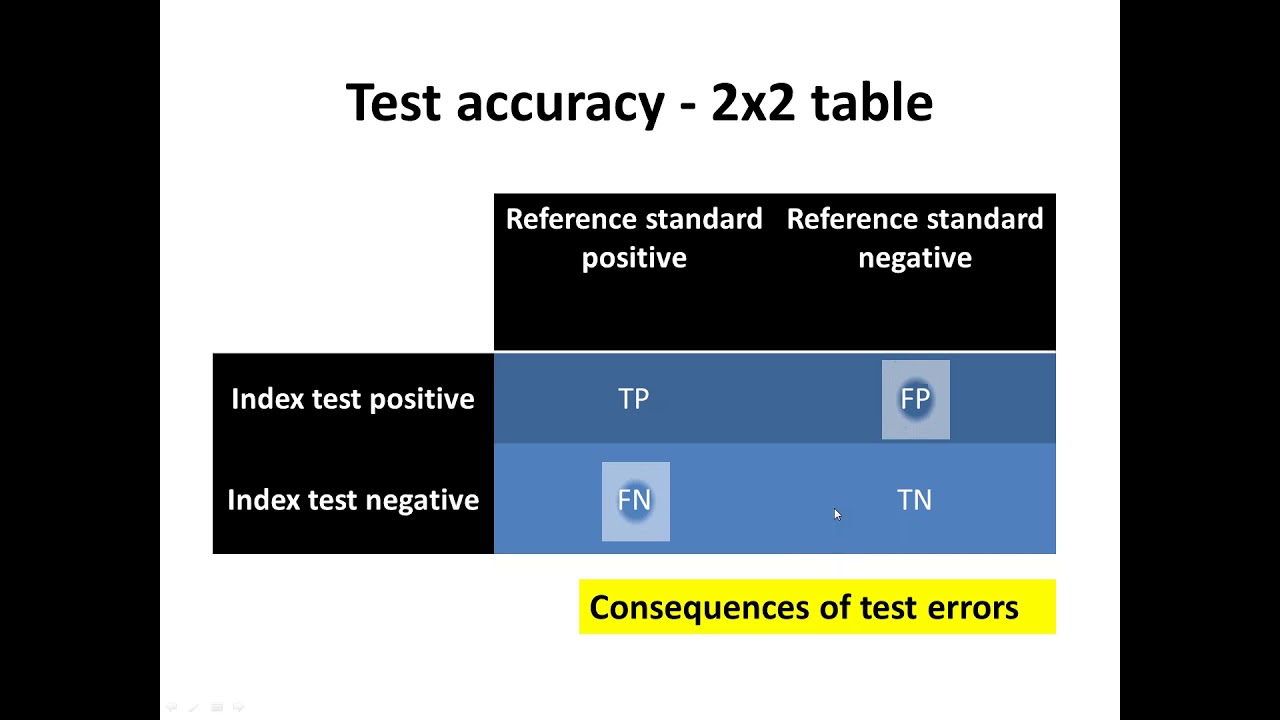

Jon Deeks - why are systematic reviews of diagnostic tests needed but so complicated