Interview with Ronnie Gale Dreyer on Eclipses
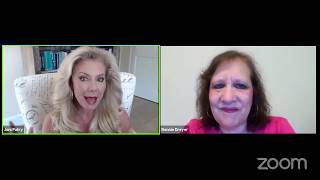
Ronnie Gale Dreyer, a Vedic astrologer who studied in India, explains how to use eclipses for prediction. She covers sensitive degrees, nodes, and planetary stations, then maps out 2020's six eclipses and the nodes' shift from Gemini/Sagittarius into Taurus/Scorpio. Solar eclipses can illuminate geopolitical hotspots like the Saudi Arabia region.
Questions this video answers
October 25–27 (year implied 2019) in Dallas, Texas (futureofastrology.com).
December 26 (solar) and January 10 (lunar) — presented as a connected pair.
Jan 10, 2020; June 5, 2020; June 21, 2020 (solstice, annular); July 5, 2020; Nov 30, 2020; Dec 14, 2020.
ronniedryer.com
Chapters
Okay, so I see webinar. Webinar is now Streaming live on YouTube. That's what it says, live on YouTube.
It's coming up. Setting up your webinar for YouTube live. Okay.
All right, here we go. Now. We are live now, but I'm going to. Yes, I'm going to go right to. There we go. Well, we're here, so welcome, Ronnie. I can't believe we're here. Hi. And now we're doing another YouTube live, and everyone can, at the very end, ask any questions. But I just want to introduce my very dear friend, Ronnie Gail Dreyer. She. She is amazing. She has been doing Vedic astrology longer than I have, and she was one of the premier speakers at the Conferences Day when I was a student. So, I mean, she is an authority. And I've got her book. She wrote the first book on Vedic astrology in the west by a woman. I'm so proud of you. And she. She had so much courage. She went to India way back in her studies and studied under master Vedic astrologers. And you lived there for a while, right, Ronnie?
I was. I was in India many years ago, but I stayed there for close to a year and studied every single day. In fact, it's in the introduction to that book that you just showed, which is actually still in print. It really needs a nice bunch of erratas and corrections, which I'm trying to get the. And it's also available on ebook now, so it, like, has a new life. It's quite amazing.
Oh, it is one of my favorites.
I know you can get it from Amazon, but I stayed in India for a while and I would get up every morning and study with two teachers, actually, one teacher from the university there and one teacher from the bazaar. And I kind of like had an intense, really intense, intense course in Vedic astrology that has really lasted me, you know, a lifetime, really. I mean, there was no other. Yeah, it was brilliant. It would be so almost impossible to do it the way I did it nowadays. And the only thing about being old is that you had experiences.
Well, there's a lot. There's a lot to it. I wouldn't say that the only thing, but.
Yeah, but.
But I'm so excited that you're going to be at the conference and you're speaking on one of my very favorite subjects. And I have to share with you, I did get so involved and want to know about eclipses. Because of you. When you first started doing those talks on eclipses, I thought, wow, this is so powerful. And this is the real deal. This is, you know, I remember, I remember.
You know, I learned eclipses many years ago, but many astrologers were not really using them so much, especially with Vedic astrology. A lot of the Vedic astrology, when we do the eclipses, we're really kind of putting in just our own experiences with the eclipses when it comes into the houses and when it comes into the houses of the chart, when it hits a planet. And then of course, in a mundane way, the way you use them brilliantly, but there's really not a lot about them in the Vedic texts. There is on a mundane level, you know, there is in the classic text and the tablets and the omens, but individually they really didn't use them. And so a lot of the things that like you have come up with, that I've come up with that a lot of astrologers have come up with really has happened through experience and just seeing. And you know, what I'll share with everybody is I can remember back now I'm going back to like 2003. And I can remember because your birthday is November 8th, which is common knowledge. And my birthday is May 7th. So our sons are exactly opposite each other. So whenever there, there is an eclipse that occurs on one of those degrees, we are both experiencing it.
Yes.
You know, even when it. So I remember talking to you about that coming year about both of us having, you know, these eclipses from 2003 to 2004. And that was a very important, monumental year. I know in your life and also in mine, some things more tragic than others. But I can remember starting to talk to you about it and I was really not full fledged. Constantly doing eclipse talks then. And both of us have sort of, I think, moved together in eclipses. That's what's exciting is like we're both really working with them a lot and a lot of astrologers aren't. And, and I think that, you know, if you get those eclipses down, you know, boy, you can tell like the story of what's going on in the world in your life. They are so powerful.
Well, you know, you used to always say, and this really triggered a lot in me and how I view eclipses today, what we said that something out of the dark comes out of an eclipse, Something from your past or something that you didn't know about, Something surfaces. And you're the one that taught me that. And I always think about that and I always say, you know, go back 18 and a half years ago, think about what happened before, what Came up that, you know, was a surprise you didn't know about, surfaced from the past. And you really gave me that concept. I have to give it to you. I mean, really.
And I have to tell you, I don't know where I got it from. I might have learned it from somebody else.
It works.
And I just kind of always thought, wow, secrets. As you always say, secrets come. Come out. Things come out during eclipses, you know, I always always, like, you know, kid around people and say, you know, if you're. If your spouse is having an affair or your spouse is, like, spending money that you don't know about, you know, just watch those eclipse periods, you know, those are the things that, you know, will come to surface, you know, or, you know, or if you have even a health issue, the diagnosis will, you know, maybe come to light, you know, during those things like that.
So Ronnie, also, she does. She does all these sensitive degrees. Every. Every year you have these great classes. Tell. Tell people about what you. What you've been doing. I love those classes on the sensitive degrees for the year.
So what. I started doing this about 10 years ago. I mean, it started kind of very small, and I thought, okay, I'm going to just do something at the beginning of the year. And I do it for my western. I do it actually Western and Vedic, because, you know, those degrees are going to be sensitive in either system. And I just kind of give people charts in both systems. And I used to do it. I used to do it live. I used to do it, like, live in New York City. And then when webinars started, I would do two of them. And then I thought, you know, this is. This is crazy. So I. What I do now is I have the option. I'll do. I do this with my classes anyway. I do them live in New York City. And at the same time, it's also a webinar because you're putting on the screen really the same thing that you would do live. And with the webinar, you just have to know to sort of connect with both audiences. So that just takes, you know, that's just. You have to finesse that. But what I do now, and it's getting, like, larger and larger in terms of audience and in terms of handouts. I just show people. I do the ingresses, you know, for when each planet goes into a sign, when each planet goes. The dates, when they go into an akshatra. I do the eclipses. You know, there's, you know, usually four or five during the year. I mean, 20, 20 we happen to have six because they come in pairs. And this next one, you know, is going to be December 26th and no. And January 10th. So it sort of starts the new year. So I do all the eclipse degrees, all the lunation degrees, and I give you a lot of charts. And I really work with these charts the whole year. Because when you do a reading for somebody, at least when I do, I like to see if there's anything, you know, in their chart where there's going to be an eclipse degree or a full moon or new moon or also a retrograde or direct station, because those planetary stations are really the bookends of the retrograde periods. So I work with that. And then I talk about if there are any really strong aspects, you know, during the year. Like this year last year, I talked a lot about the Saturn Ketu, you know, because if you use the true node, it. They. They combined three different. And now we're sort of moving into that final Saturn Ketsu this month. Right now. Yeah, yeah. So that's why I think there's going to be a lot of tension still. And then in October, they're sort of separating and moving away. And next year is going to be a really in. I mean, I don't even know. I mean, I started doing two hours, then it went to three hours. But this next year is going to be six eclipses, really. And there's going to be Mars retrograde and Venus retrograde, you know, because the other retrogrades, Mercury, Jupiter, Saturn, and if you do the outer planets, they retrograde every year, but Mars and Venus, they don't every year. And like in 2018, we had Mars and Venus both retrograde.
Right.
So we're gonna have that, you know, next year. So this is what I talk about.
Yeah.
Sensitive degree thing. And you know, if you go to my website, which is ronniedryer.com and you sign on for my newsletter, everybody will get notification in advance when that particular workshop will be. It's usually in December. Oh, yeah. But it's gonna have a fascinating year ahead. I mean, it's gonna be as you've been already talking about, you know.
I'm.
Really warning people, give us a little.
Bit of your insights, especially about the eclipses and what we can kind of expect in 2020. Give us a little teaser. What's gonna be happening.
You've already been giving teasers. But before I do that, I also really, really wanted to tell people that if they haven't signed up for your conference or they're kind of toying with the idea of coming to Dallas. It's such a great conference, you know, futureofastrology.com you know, a little plug for Joni's conference. And I loved speaking there last year, and I'm going to speak there again this year. And the faculty is primarily women, which is a really kind of super thing. And we have people there who don't usually come to conferences, and that's what's great. I mean, I speak at conferences, but Juliana Swanson never speaks at conferences, even though she's got a wonderful following. Edith Hathaway does speak at conferences, but hasn't lately. And also there's Carol Allen, who is just a master at relationships. So really, by coming to your conference. And it was great because I got to meet Carol. I mean, Carol and I know each other for years, but not really, you know, in person. That was wonderful. And Juliana, I also met at the Sedona conferences, where I met you years ago. And I haven't seen her in the flesh in many years, so that was great.
Oh, it is so much fun. So, once again, this conference is coming up here. It's October 25th through the 27th in Dallas. And, you know, Dallas is so easy to get to. The conference is like, what, 15 minutes? The hotel from the airport, so you're there. And one thing I love about this conference is how we get to know everyone, because I sponsor a dinner party at my house on Saturday night. This is all inclusive. So it's the whole three days. It's not like post or pre conference. No, this is a whole package. You get dinner, and we get to really know each other, share our thoughts, ideas about Vedic astrology. This is the real thing where we can, you know, merge together and get to know each other personally instead of just, you know, on YouTube or on Facebook. But this is finally, you know, getting, like you say in the flesh. When we get together, it's so different. And, you know, with social media the way it is today, we hardly get to really, you know, come face to face and, you know, get the vibes from everybody. And everyone that was here last year so said it was the most, I mean, loving conference ever. And I'm not even exaggerating, am I?
No, it was wonderful. So before I talk a little bit about what I'm going to talk about at the conference, I definitely wanted to plug that because.
So Ronnie's talking about Eclipse Conference. So give us a little idea of what your talk's going to be all about. I'm excited.
Well, the thing is with these eclipses, I mean, the fascinating thing, I think with next year, year, first of all, like I said, because we're dealing with the solar year, you know, between January 1st and January 1st, we wind up with six eclipses, which is completely crazy, especially if you're teaching a class. You've got to really like fit them in. But the thing also is, in a way, it's kind of like seven eclipses because eclipses come in pairs, you know. So there you get a lunar and a solar or solar and a lunar. And there are two weeks, of course. So the thing is, is that when you're looking, you know, at the eclipses starting in, you know, 2020, you know, you can start with January 10th, but you really have to start with December 26th because it's a pair, you know. So, you know, just to talk about one and not the other when they're, you know, because the two weeks are really like eclipse season. I mean, some people expect extend that. But really those two weeks, you know, between eclipses are very important. So in a sense, when you talk about 2020 in a lecture, it's sort of like you got to do seven, you know, seven eclipses, which is very daunting. So you have this like December 26th eclipse and then you have the January 10th. And then of course this summer you have three back to back. Now sometimes you have that, you know, we had it in 2018 also three eclipses during the summ. Why it becomes really, you know, really daunting. And then you have June 5th and June 21st, which is the solstice. So that's going to be a really. That was going to be very important because that's a solar eclipse and that one is an annular eclipse. So it's, it's very close to being like a total eclipse, very close together with the nodes. And that one is of course going to be at the same degree that the eclipse of June 21, 2001 occurred because you get the 19 year, what we call the Metonic cycle. So every 19 years, certain eclipses reoccur on the same date. And that was an important eclipse, of course, for 9, 11, 2001. I don't want to belabor that that's the only theme of the year, but it does become something you've talked about. And you can't ignore it. You know, you can't ignore it because you do get that with the sorrow cycle, it's 18 years. So this year we had the sorrow cycle of 2001, but next year we have what's called the metonic cycle of 2001. And so you have June 21st on the solstice, and then you have July 5th. So those three eclipses again, there's three, you know, instead of two. And then we have November 30th and December 14th. So we're having, like, you know, this amazing, you know, number of eclipses. And of course, because, you know, we have now had, you know, they go about the same signs every year and a half, you know. So these eclipses lately have been in, you know, Gemini, you know, and Sagittarius. And then, of course, what's going to happen is they're going to start moving into Taurus and Scorpio. So, you know, that's really the thing that, you know, begins to, you know, get very, you know, very kind of interesting, I think, you know, especially because of the fact that the moon, you know, is debilitated in Scorpio. So when you get those eclipses, you know, with the moon in Scorpio, you know, that's. That's really what starts to, you know, starts to occur. So it's kind of like a really, you know, I think it's very, very, you know, it's kind of daunting.
It's very interesting, you know, and at the same time, it's you know, kind of a little, you know, scary sometimes, you know, to see all of that, you know, happening, you know, at once, I think, when you're. When you're dealing with eclipses. So that's kind of really the important thing, you know, is that eclipses go into, you know, into Taurus and Scorpio after the, you know, the Gemini and Sagittarius eclipse eclipses, you know, and that's kind of like what you, you know, what you wind up, you know, getting, I think, as the year goes on. So those are the things that you kind of look at. And of course, the nodes follow the eclipses, you know. So, you know, we're really looking at, you know, the nodes all year staying in Gemini and Sagittarius, and then they move, you know, next fall, next September into Taurus and Scorpio. And. And of course, the interesting thing with the nodes, I think when they go into Taurus and Scorpio is that that's going around the same time that Mars is retrograde. And that's also going to be around the same time goes retrograde. And then at the same time, we're going to have the election.
And even though I realize we're talking to an international AUDIENCE and the world does not revolve around America. In fact, what happens in America does influence the world. I mean, you can't really deny that. So I think that that's one of the things that becomes, you know, really interesting for next year, especially when you have those November and December eclipses because they are going to be, you know, at a time in the fall, next fall when there's going to be, you know, really a lot of, you know, I think a lot of crazy activity, you know, in there because of the fact that, you know, Mars, you know, Mars will be retrograde and Mars is retrograde, you know, like September 8th next year and it stays retrograde, you know, all through the end of November because it's a 72 day retrograde. So it's.
So that, yeah, I know.
It is so much to consider and you know, things, I mean, it's going to be craziness going on. It just has to be because there's so much planetary energy happening.
Right, right.
Ask you a question. I've wondered about eclipses and I've never had an answer. Maybe, maybe you have or not. But what does it mean when the lunar eclipse happens before or after the solar eclipse? Because you know, you can have, you can have one happen before or you can have one after and sometimes you can have them both. The solar. So what I'm, what I'm talking about for the audience to try to understand is when you have a solar eclipse, that's the new moon. But when you have a new lunar eclipse, that's when Rahu and Keter with the full moon. So when you have Rahu and Ketu with the new moon, which means the new moon is when the sun and the moon are conjunct with Rahu or Ketu and then two weeks later or two weeks before you have the full moon and it's considered an eclipse depending on how close it is to Rahu or Ketu. But does it mean something to you if the lunar eclipse happens before the solar eclipse or after the solar eclipse? Does that mean anything?
Well, and it's funny because whenever I teach eclipses I always say that.
In the book Briyat Samhita, which is like a book on not just mundane astrology. It's a really large collection by Vara Mahira of things that do happen, you know, let's say on a mundane level. It's also, also things that happen on the level of, you know, transits. He talks a lot about transits and he talks a lot, for instance, you know, about temples and about all these, you know, different things that basically have to do with anything other than just, you know, natal astrology. And so the thing is that he also says in the chapter where he's talking about Rahu and Rahu's transits throughout, you know, different regions, he does say with eclipses that what he's trying to do. It's an interesting text because he's trying to tell people that there is a very definite astronomical.
Reason that eclipses are formed, while at the same time, he's also saying that there's a lot of things that are, you know, kind of, you know, astrologically related that are not necessarily proven astronomically, which we know that there's, you know, science. This, the basis of astrology is, you know, scientific. But the thing is that it's not necessarily that the, you know, sciences are going to also back up all the astrology. So when people say that, you know, eclipses are you know, really, you know, very difficult, and, you know, I'm trying to see if I'm here anymore. Okay, okay, okay. Now I see you again. Now, I think that when you say that eclipses are really kind of, you know, very, very, very difficult, you know, when you see these texts, the problem really is that in ancient times, you know, people had no idea what it meant that the sky would turn dark. So, for instance, on the eclipse of Aug in Aug 2017, which was a total eclipse, and everybody was running to places to actually experience it, you know, I mean, Indian. Indian gurus would say, don't do that, because you don't want to, you know, be under an eclipse, you know. And I had, you know, clients. I was telling people, like, where to go to see the eclipse. And I was saying, you can even go on TV and, you know, it'll stream live. And I had some people, some students of mine, yell at me. They said, well, you shouldn't be telling people to go to an eclipse because, you know, in the text, they tell you to pray, to meditate, you know. And I said, well, you know, a lot of that really had to do with the fact that there was no knowledge about why they occurred. And people got freaked out by the darkness, you know, especially that total eclipse. I mean, we had darkness. We had the animals, you know, you know, making their sounds because they thought it was nighttime, you know. But I still think that on eclipses, you need to meditate, because eclipses, whether they're. Whether you should see them or not, they are intense periods. They can be difficult, challenging, and they can bring wonderful things too. I mean, people get promotions under eclipses because you get, you get noted, you know what I mean? You get seen, you know, because again, when we were talking about secrets coming out, what happens is that suddenly you come out of the woodwork, people notice you, you know, so it's, you get both. But going back to your question in this text, they actually say that because the, the solar eclipse is a new moon and the lunar eclipse is a full moon. If you start with the solar eclipse, then go to the lunar eclipse, what it really means is that the eclipse period is a waxing moon. So the waxing moon is supposed to be more of a period of growth. So you're going from the new moon to full. So they do say in those texts that in terms of the world situation, it's better when you have an eclipse period to begin with the solar eclipse, because then you're doing the waxing moon, begin with the lunar and go to the solar. You start starting on this full moon energy, but it's waning, you know what I mean? It's going down. And they do say that there's a lot of agricultural growth and fertility and all the positive things that you think about when you think of that waxing cycle. So they do say that. And then they really do say for the full to the new, you know, that there's going to be more, let's say more destruction, less growth, more drought. I mean, so that's what they say. But I have to tell you that I always tell people that because it's in the classical texts, but I don't always find that it works like that. You know what I mean? It just doesn't always.
I know because I remember, I couldn't remember which way it was, but I looked into that before and I remember observing what was actually happening and it wasn't very accurate. You're right. It didn't happen the way that it was supposed to. To in terms of the events with the full, I mean, with the lunar eclipse before or after the solar eclipse. So I, yeah, I thought the same thing. So I thought maybe I have this wrong with this theory, but it makes a lot of sense that yes, the full moon following the new moon or the, in terms of the eclipses would be better. So. Right.
So that's basically, I mean, you know, that's really, you know, why, you know, why they say that? You know, because of the fact that, you know, that is really, you know, that is really what's, what's happening is that you're going from a New moon to a full moon, which is waxing when you're going from solar to lunar and you're going into a waning cycle when you go from lunar to solar. Now, when you have these eclipses next summer, for instance, you know, July, you know, July, June. I'm sorry, when you get the eclipses that go June 5, June 21 and July 5, you know, then what's happening, of course, is you're starting with a lunar, you're going to a solar, but then you're going from the solar to the lunar. You know what I mean? So you're going from, you're going from full moon to waning to the new moon, and then you're going into the waxing. So it's kind of like, it's like an interesting thing. And also, like I said, because that new moon next year does occur on the solstice, it's a kind of, I think, dynamic eclipse next summer. When you have these three eclipses, it's very strong. And then you have also some of these eclipses, they're not always going to be 100% visible everywhere. And that's the other thing that I'm going to talk about, you know, at, at your lecture especially, you know, is the fact that these eclipses also have their areas where they can be, you know, like, seen 100%. And the interesting thing, and that only goes for those solar eclipses. But the, the solar eclipse, for instance, of December 26, the one that's coming up, that eclipse. And because the conference is in October, I'm still, like I said, going to talk about this next December 26th eclipse because it's connected with the January 10th one. But the, the eclipse will be 100% visible actually through Saudi Arabia, which is kind of interesting, especially because just now, this last few days, you know, there were oil fields that were destroyed. And this might become something kind of important in the next couple months, you know, because, you know, especially, I mean, I don't want to get into politics particularly, but I mean, if the United States is saying Iran did it and, you know, we're already setting the stage, you know, for tension, and then when you really see that the eclipse can be 100% visible in that area, it becomes a little bit interesting to sort of observe, you know, so they're going to be visible. And the one on June 21st on the Solstice is also going to be, you know, quite visible around that area as well. Saudi Arabia, through India and Asia. So, you know, again, we're going to talk about some hotspots. And I haven't even done half of the research that I need to do for the talk, but I can already see, you know, wow, I know you're.
Going to be busy because I know you're going to research it to the extreme degree, but you've been doing a.
Lot of this eclipse stuff already for 2020. I mean, what do you think is gonna like, be sort of going on?
I mean, I think it's very interesting that the eclipses will shift into Taurus Scorpio right before the elections, pretty much. I think that's gonna add, you know, more intensity, hostility and you know, the typical stuff. Stuff that, that these presidential elections bring about. But I think it's going to be worse if we can even imagine that because it was pretty bad last time.
I know.
Yeah. So that. That's one thing I'm seeing. And just there's that eclipse that's coming up December 26th. I mean, how many times do you have Jupiter involved with an eclipse? That's not that common. But the last time we did it was. It was. Well, I don't know that that was the very last time, but one of the times was September 11, you know, 2001, because Jupiter was in Gemini. Now it's going to be in Sagittarius. So it's influencing eclipses by being with Rahu and Ketu.
Well, that's interesting. That's the. See, that's the interesting. Also, you know that you brought that up.
Listen to that omen that just. I just heard a siren.
Oh, I know, because I'm not on a mic. You're going to hear it outside.
But I think you a reason for that, what we're talking about.
Right. Interesting. Because Jupiter is conjoining the sun on December 26th. It's true. So that you really are getting, I think, a really fascinating sort of thing. And Jupiter, though, also, you know, is going into the sign of Sagittarius and which is going to go into in early November. But it's quite fascinating also because, you know, when you have a planet like Jupiter going into its own sign, you know, sometimes it's not as wonderful as people think, you know that. Because Sagittarius can be very fundamentalist, you know, first of all, so it can be like, you know, more fundamentalism throughout the world.
That's exactly what happened in 2001, you know.
Exactly.
But also thinking about, you know, Jupiter being in Sagittarius, the last time it was there was 2008, and that was a horrible time. For the economy.
Exactly, exactly. And why, and why did that happen in 2008? Because people ignored the signs that it was happening. It was evident. And it was again that Sagittarius like, oh, no, it can't happen. You know, it's that over optimism that you don't pay attention to details.
Yes.
And I think that that becomes really, really, really important. And then Saturn's gonna move to Capricorn in March. So, you know, I mean, sounds move to Capricorn and Jupiter is in Sagittarius. It's gonna be an interesting sort of, I think, play.
And also the Nakshatra is hugely important. I mean, when Jupiter's in law, this is a whole different scenario.
What you think, right, and you're getting.
The Jupiter and the Ketu. You're getting Jupiter and Ketu.
Jupiter's in Ketu and it's in Mula.
And Mula's ruled, ruled by Ketu.
I mean, this is not like the joyful Jupiter, jovial Jupiter of optimism and happiness and, you know, joy. It's, it's going to end. And you know, a lot of people will say, oh, we're, we're fear mongers. But you know, the facts are this, that this is all about cleansing and something needs to shift and change. And unfortunately, people don't wake up the easy way. They learn, they usually learn the hard way. And if we're not going to wake up easily, it's going to, you know, something's going to shake us to wake up because.
No, I agree with you. I agree with you. I think it's, you know, thank you for pointing that out, which, you know, obviously is going to be in my talk too, that the Sun, Jupiter is going to be, you know, connected to that eclipse. But it's also like, what about Jupiter? I think that Jupiter, Jupiter for me is really one of the most misunderstood planets, I think, because we so want to always be optimistic. I mean, who wants to be negative? When you want to be positive, you want to think that things are, you know, expanding and going well. But, you know, like you said, you always need, you need Jupiter and Saturn working together.
And I think that's important. And what's happening now is that Jupiter and Saturn are not really working together. So they're, you know, each of them are ignoring the other. And then when you get to the conjunction, you know, next year that'll be a little bit different. But what really happens is that like you said, when you go back to 2008 and the economic crash, the signs were all there. They were there to see. Anybody could have seen that this was happening. And everybody just chose to ignore it because who wants to have to deal with that? You know, so it's really that I think definitely that over. Over optimism, you know. And the other thing that I like when I do eclipses, in fact, even though you have these, you know, you have the eclipses two weeks apart, of course, but then what you also have are kind of like twin eclipses in a way, where you have an eclipse and it's, you know, kind of. Because sometimes you get a solar and then six months later you get the lunar and they're at similar degrees. So what you're really going to have, you know, especially with this January 10th eclipse, is the January 10th eclipse is going to be, you know, at a very, very similar degree to where the July 13, 2018 eclipse was. So in a sense, that was, you know, somewhere in your chart. It was. If it was conjoining something in your chart, then what it really means is that it's also going to be at a similar degree on January 10th. And so, you know, you really have to look around, you know, like, you know, all those degrees around 25, 26, Gemini Sagittarius. But also July 2, this past summer, we had a very. A total solar eclipse. And next July 5th, we're also going to have, you know, a lunar eclipse, but it's also going to be on a very similar degree to the July 2nd eclipse. Summer. So. So really you kind of, when, when you look at what's going on in your life and the areas of your chart, you know, like especially looking at Gemini Sagittarius in your chart, even if it's not hitting a planet, you know, in your chart, it's in those houses.
You know, and that's where I say, you know, it's not good or bad, but wherever the eclipses are, are going to be where the most changes are going to occur.
Right, Right, Exactly.
If it's in your 10th house, you're good. Something about your career job is going to change. Then, you know, the opposition house, of course, is the fourth house. So chances are a job could promote a move, you know, those kind of things. They work tandem together throughout the. Throughout the year. But wherever they are, definitely I say the biggest changes in your life is due to occur.
Yeah, for sure.
They're powerful eclipses.
Oh, definitely.
And another. Another technique that I think really works is when you take those sensitive degrees of the eclipses and you watch where transiting planets cross over them later.
Exactly.
Or do you think it's even before, but one way or another, that's when the events kind of are triggered. That was actually what triggered September 11, I think, in 2001, because the degree of the eclipse, Mars opposed it exactly on that day. What do you think about that? What is your experience with that?
That is something I also always work with. At first, I always did it with the nodes because in order to have an eclipse, Rahu and Ketu have to be within a certain, you know, orb of the full moon or the new moon. So the, the node is always going to come to that eclipse degree, sometimes prior to the eclipse, sometimes after. When you have like a total eclipse or an annular eclipse, where to begin with the nodes are very close to the sun and moon. That can happen within two months. It can happen in a very short period of time. And sometimes people make the mistake of thinking that everything is going to happen around the day of the eclipse, but it happens when the node hits that degree or a planet. But you will always have the node hitting the degree because that's why you have an eclipse. The nodes are always going to be there. And if the node occurs prior to the eclipse, I definitely, like feel like the energy of the eclipse begins. Then, you know, it really begins when the node hits it even prior. But then also, for instance, this year on January 6th, you know, we had an eclipse. And that eclipse, you know, was at 21 degrees of Sagittarius. And so basically we have had Ketu, actually right now is on that eclipse degree. It's been happening the last couple weeks. Everything depends, of course, if you use true nodes or mean nodes or what your orb is. But it's really been around that degree. And I think it also was unfortunately stimulating a lot of those shootings that we were having as well. But also that meant that Saturn was also on that degree three times this year. So we had that January 6th eclipse, 2019, a solar eclipse. And Saturn was on that degree in February, again in August, when it retrogrades and it's going to once again be on that degree towards the end of October. So we're not finished with the eclipse of January 6th. If you have something in your chart, for instance, close to 21, you know, Sagittarius or Gemini, then you're still getting the Saturn transit, you know what I mean? So. So it makes the transit of Saturn, I think, more intense because you also have the eclipse and the node there as well.
Exactly. So, I mean, this is, this is heavy, you know, Saturn with the nodes, Jupiter now is going to be tied up with the nodes and the eclipses. So there is so much that it's about to come and happen. It's just astounding. And you know, all of us are using all of our tools and techniques and understanding from our learning and from the past cycles to better understand what the future cycles are going to bring us through. Eclipses. Eclipses, I say this repeatedly. They're the most powerful tool for prediction we have.
I agree with you 100%. I use, to tell you the truth, I use like eclipse degrees and I use also those planetary stations because I think that those degrees.
Are just so intense. And you know, to me that's like, that's why I have that, that whole list, you know, that I give my class and that I basically just look at whenever, you know, whenever I do readings because it's, you know, it's, it's just really so very important when you get those degrees and also when you get degrees that repeat themselves. So when you get, you know, planetary stations and they're going to be around the same as a lunation, you know, a full on your moon or on an eclipse degree, you know, that degree in the sky, even if it's not hitting anything in your ch chart, you know, you know, in the world, it's going to, you know, do that, you know. So I mean, you know, I'm giving, so for your conference and giving a two hour talk, which of course, you know, one can talk all day. But aren't you talking a little bit also about the eclipses for next year?
I will be because I'm going to be giving my 2020 predictions.
And that's going to be a lot of fun. So that's going to be right before. No, that's going to be Friday night where I'm going to be doing my 2020 predictions and of course, you know, that's all about the eclipses to me. So I'm going to be talking about the eclipses in reference to what's going to be happening according to our predictions because, man, there's going to be a big, big change this year.
Yeah, yeah, yeah, yeah, yeah, yeah. I agree. You're like really, you're really putting yourself out there with predictions. I know I haven't done that yet, but I mean, maybe by October I'll.
Just, I'll say this about you, Ronnie. You and I do astrology similar, alike.
I know.
Always notice that the way you do your readings, the way you do everything, it's. We kind of, yeah, we do the same Stuff. Maybe it's because I didn't mention this, but both you and I started with Western astrology as well. Yeah, we did western tropical astrology before we got into the Vedic sidereal astrology. So maybe that's why we still have some of those, you know, reference points that we came from and understanding that we took with us into the Vedic. Now you use the outer planets.
You know, I use the outer planets for transits for sure, because I think it just adds way too much. And you know, in India they do also nowadays most modern astrologers really do add Uranus, Neptune and Pluto. I think years ago, even BV Raman and his astrological magazine would use Uranus, Neptune and Pluto. I don't use it in the natal chart. When I'm looking at the Vedic chart, though. I mean, I put it in for the handouts because I know there are people who like seeing it. So I do it, but I kind of focus much more on the others. And I think the nodes, for instance, give you that same energy as, let's say Uranus, Neptune and Pluto does. And you can't do the dashas with the Uranus, Neptune and Pluto. So, you know, but I'm not gonna say that, oh, if I see that you have like a really strong, tight conjunction with an outer planet that I don't mention it. Oh, you know, because I do. I do, you know, and, you know, to say, you know, to say I don't or that it's, you know, so, you know, classical that, you know, you cannot use it is ridiculous because you're moving, you know, the world changes all the time, you know, and I think that the fact that, you know, Indian astrologers are just as interested in learning astrology from us, you know, because, you know, it's important. I think it's going to give the same, you know, the same, you know, the same kind of intensity. But, you know, I find that, you know, Rahu Ketu and the eclipses, I think that they are so intense by itself, you know, that sometimes you, you know, sometimes, I mean, the Pluto and Neptune and Uranus are definitely going to be there, you know, but you can find everything you need oftentimes just by looking at like what we've been talking about, you know, just because they're so important. And I think also, you know, I shouldn't. We shouldn't say everything is doom and gloom because even though we're talking about sort of like the negative side of Jupiter, the fact is that Jupiter still is Jupiter. And I think that, you Know, if you have, like, an eclipse this December 26th, if you have that eclipse in your chart, you know, you are getting a sun, Jupiter.
Aspect. And I think also that the Jupiter, if Jupiter then hits the eclipse degree, you know, a few months later or before, oftentimes it will maybe give you an offer or give you some, you know, opportunity, you know, that you haven't had. It's not. It's not going to be like the Jupiter is always terrible, but. But what you say is true, that when you do have it in Sagittarius, you have to beware of, you know, the other side of it. You know, there's always that. That other side of everything.
Well, I think people that have Sagittarius ascendants or moons happy to have Jupiter come into Sagittarius after having Both Saturn and K2 there for so long, beating them up. I mean, it just seems like every day I have somebody with a moon arising in Sagittarius and going, you know, when is this gonna be over?
I know, I know, I know. It happens a lot. And of course, when you do have. When you do have difficulty aspects, what happens is you're going to get more clients who have those things in their chart because they're feeling the stress. So, you know, if I always say, oh, gee, how come I'm getting so many clients now who have, you know, their rising sign or their son, their moon, Gemini. Well, it makes sense because they're feeling the, you know, the pressure and intensity, and they need to figure out what to. What to do with it. But I think with eclipses, the most important thing is definitely I always tell people, whether it's in your chart or not, you know, it is something that's going on in the sky. You always have to meditate or just take a breathing space. You know, whether. Whether you do, you know, actual meditation or not, you need to reflect. I mean, it's really a time when you do need to go inward. You need to pace yourself, you know, and you do need to, I think, assess, especially if you're somebody probably like. Like us, like, we run around all the time with activities. You know, we really need to, like, make sure that we have that space for ourselves and, you know, have those few hours every day where we can unwind and look inward. You know, whether we do actual meditation or not, we have. We should be in some kind of, you know, reflective or meditative, you know, state. And that goes for any time you're in an eclipse cycle, whether it's hitting something in your chart or not, you know, because it's in the sky, it's in the world, and, you know, you're going to feel that intensity.
Absolutely. That's a great, great point that I think you're leaving everyone with, because we do need to be more reflective during these times. Go within. I mean, what is an eclipse? When it darkens the light and when it's, you know, at our times and we're alone at night and, you know, reflect. Go within. That's when eclipse energy is trying to teach us. So everything has a purpose and a meaning and what it's used for on a positive level. And that's what we have to tune into, including all this energy that's going to be happening this coming year. Something good always comes out of everything. And I think, you know, everything happens for a reason. So we need to ask ourselves, what is that reason and why? Why are we going through whatever we're going through personally or globally? And I think that. That. What is that? That gives us growth, and that's what we're here for, to grow and explore awareness, our consciousness. And that's what. That's what astrology really is a tool for. So. So can you see any questions or anything, Ronnie? I can't really.
Well, if it's the problem, I'm gonna have to turn my. Wait, let me turn. If I turn my.
We should take a little. Just a few moments if we can find them on here.
It says view stream on YouTube. It's just. I don't want the sound because I just want to make sure the sound is not going to edit back. That's the problem. Let me. And then I could see if there are any questions.
It's.
Said it started streaming.
So I can see you on YouTube. Also.
Have YouTube now on my screen.
Yeah.
I have YouTube on my screen.
I'm trying to think if there. See if there are any questions.
Delay. I know, I know.
That's why.
Let's see.
As far as I can see, I think it's where it says comments. I don't see any comments.
No, there are comments on the chat in the chat box.
Oh, okay. Then you're getting it. All right, good.
Well, there are comments, but there are not necessarily questions.
Questions. Does anyone have a question?
Tsunami. Somebody wants to know about Tsunami.
Tsunamis and about Rahu going into Ardra.
Okay. Rahu going into Ardra. They want to talk about Rahu going into Ardra. And if you can predict tsunamis and otherwise, there's a lot of just. Hi, and thank you for the Talk. I mean there are people who are commenting but not questions. But the one question is about Rahu going into Ardra, which is soon.
What about the 25th?
Yeah. So it depends on what node you're using. I think if you use, I think we use mean, it might have gone into it already. But yeah, it's going to be an Ardra for sure for a while. And of course it's ruled by Ardra, you know, I mean Ardra is ruled by Rahul.
So tsunamis, you know, I don't know if there's, I mean, I don't know. I don't really predict tsunamis, but I mean, I predict, you know, but I mean there are going to be a lot of changes. I mean you've already looked at some of those Earth changes, haven't you?
Yeah.
In the next year.
Yeah.
What have you been seeing?
Well, you know, another thing, this is off the subject but I went back to all the different times that Pluto conjoined Saturn or, or, or squared it or opposed it. You know, a hard aspect between Pluto and Saturn which is actually every nine years and, but you know, Pluto and Saturn conjoined about every 33 years. So I found that that was a time when there was more Earth changes and earthquakes and disruptions such as that when Saturn, Pluto are in hard aspect. But.
The subject. So. But it made me think about it when they're asking about tsunamis.
Yeah, I think when I'm looking at, I mean Rahu is going into Ardra, I think around the, I think it's around the 25th as you say. But you know, I think it also depends. It's kind of like really around that degree now. You know, depending if you use true or mean. Which do you use? True or mean?
You know what? I use both.
I do. I used to just use the true node and then I started seeing things happening with the mean node. So I don't. What, what do you use?
I've been used. I use true. And I think that's also because I think I started with Western astrology and I basically always used true. Not that I mean people used mean to. But most people when I was studying Western astrology were using, you know, the true node. And I think with the, with the true node, you know, what is going on is that it just, it's moving a little bit differently because it kind of retro, it will go retrograde, you know, back and forth. So that's kind of like the difference also because of the. It's not an average, like yeah, don't.
You think it's significant that the nodes kind of Rahu and Ketu kind of stand still for three months around eclipses?
Yes.
The true node, that is.
Yes.
Then they move really fast.
Right.
That's why some people look at them. I want to explain just for a second what it is. A mean node is where you take how much it moves within a year and a half and it basically moves one degree and a half per month. But with the true note, it's where it really is. And, and with that, it can stand still for three months around the eclipses and then shoot, shoot, you know, the shoot backwards really fast. But yeah, but I always looked at the true node too. And then I started seeing some things happening with the main node.
So, yeah, I mean, you know, I also will show people in that eclipse lecture about what exactly what you're saying that how the nodes, you know, kind of hang around during eclipses, like about a month before you start seeing that that node is going to be like around the same degree and then it moves, you know, quicker. With the mean node, it's sort of like doing the same because it's an average. It's not, it's not doing that, you know, sort of retrograde direct motion. So that's kind of like where, you know, where the differences are, you know, in terms of, you know, what you're, you know, what exactly you're using. And if you're using, you know, the, you know, of course, using the truer mean. But you know, with, with the true nodes, basically they are. It is going into Ardra.
In the Next, let's say 10 days. And with the mean node, it's already gone into Ardra. So that's the difference. So you can really say, even though it's very specifically by degree moving into Ardra in, you know, maybe around the 25th, it's so close to it now, you know, so it's so cuspy, you know, so that is definitely what's going on. And it will of course be there, you know, for, you know, for some time. And so I think that what will happen is that, you know, we're going to find again, these nodes are going to just be quite more intense. Right. But you know, they're in their own sign. You know, Arjuna is ruled by rock.
Well, I think it's. It's almost time for us to wrap it up because what I said we'd go for. I didn't know we'd go for an hour, but we did because.
Interesting and fun talking about all this, but we gotta wrap it up. So once again, Ronnie, your website name, ronniedryer.com Ronnie Dreyer.com so go check, check out all of her, all of her stuff. She's an amazing, amazing astrologer. And I'm so excited to see you in Dallas. We're last and remember, everyone, the conference that we're talking about is future of astrology.com and the conference is here in Dallas, Texas, and it's October 25th through the 27th, so check it out. We'd love to meet you and, you know, talk about all this in greater detail. So anything else you want to add, Ronnie, before we close?
No. If you go to my website, you can sign on for my newsletter, which I send out once a month. And in between also, and Joanie also, I know has a newsletter in university. And it's just a really fun I mean, I really loved going to Dallas last year, so I'm really happy to. I've never been I was the first time I'd been in Texas, which is in all these years.
I know we actually I took her to the state fair. That was hilarious, right?
We went to the state fair, which was fun. But like you say, the air, the flying is so easy because there are also two airports and they're both fairly close, you know, to the hotel. You know, I actually flew it last year. I flew into one and out of the other. But so it was kind of really easy. And the flights are, they're really not expensive. Actually, you know, I don't. Well, I don't think so.
Compared to other places, it's a great deal. So, gosh, I think we're going to be cut off in a second here. So we are going to close. But thank you everyone for listening and I hope you learned something new. That's what it's all about. Thank you for joining us.
Bye. Thanks, everybody, for attending.
More from Joni

Everyone Is Watching the Midterms, but Mars Is Activating the Same Degree in Every Leader's Chart
October 13th Prediction: Prepare for Deep Shifts #astrology #vedicastrology #predictions



Why November 2026 Is the Most Treacherous Month of the Year, and What Comes Next
Virgo New Moon October 10: Saturn Is Asking the World to Get Serious About Security and Money
The New Moon in Virgo: What You Need to Know #astrologypredictions #virgo #vedicastrology
Pluto Turns Direct Oct 15! Here Is What Changes This Week | Vedic Astrology Predictions