Interviewing Vedic Astrologer Ronnie Gale Dreyer
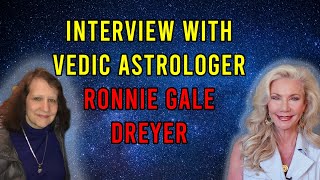
Interview (YouTube, May 23, 2023) in which Joni Patry interviews Vedic astrologer Ronnie Gale Dreyer. Ronnie recounts traveling to India in the 1970s, studying Jyotish in Varanasi with both academic and bazaar teachers, returning to the West and writing a 1990 book on Indian astrology. She later earned a master's in Sanskrit (Columbia), wrote a thesis on five chapters of the Vriddha Yavana Jataka (Sri Jataka), and has been involved in founding/contributing to conferences (AKFA/AQVA). Ronnie describes astrocartography (locality astrology), credits Jim Lewis for popularizing mapped relocation charts, shares anecdotes about meeting Lewis and later meeting her husband Ken Irving (editor of American Astrology) who helped finish Lewis's book posthumously; she and Ken reprinted the work via their publishing company Words and Things. She will speak about astrocartography and the philosophy of place at an upcoming Vedic Astrology conference in Dallas (June 2–5).
Chapters
Sam.
Well, hello, everyone. Well, I. It is my pleasure to introduce one of the speakers at the conference, and it's Ronnie. Gail Dreyer. Ronnie has been at all of my conferences because Ronnie and I have become very good friends over the years. And it all started when we met at the conference ourselves.
Right, Ronnie?
And it was AKFA conference. But I want everyone to know Ronnie is one of the original Vedic astrologers in the United States that really started writing books and being out there. You were one of the originals at the first AKFA conference that was in California in 1992. And since then, then you wrote a beautiful book on Vedic astrology. It was one of my favorites back in the beginning. And then we hooked up in Sedona, I think it was in the late 90s. And ever since then, we have been fast and furious friends because one thing that we just connected with is our sun signs are exactly opposite. I'm born in November, you're born in May. And there's something about that exact opposition that we have always connected with. And we all. And we also done astrology pretty much the same way, you know, and we both started with Western. And you've taken off with so many interesting things. We've got so much to talk about and inform everybody about, about your masters in Sanskrit and your time you spent in. In Amsterdam and how you got into astrocatography. We're going to inform everybody about all this fun stuff and. Yeah, so go ahead, Ronnie. Go ahead and just tell us how you got into astrocatography or Vedic astrology, because the one thing you did that is amazing is you took it to the max. You went to India to study with the Indians way back in the day when it wasn't an easy trip, especially as a single woman. And we wrote all about your journey to India in my astrological magazine, Joni Petrie's Astrology Insights, the December issue, we featured you and your fabulous story to India. Tell us how it all began and your trip to India and where you are today.
Okay, we're gonna try to make this a little short anyway. The. Yeah, we're gonna have to, because I do want to get into astrocartography because that's what I'm gonna be speaking out at. Speaking about at your conference.
That's what I want everybody to know. You can come and meet Ronnie at the Vedic Astrology conference, which is June 2nd through the 5th in Dallas. There's a link down below. You can click on it and be able to sign up and buy a ticket. By the way, Dallas is easy to get to. It's a major airport. But we'll have an opportunity most of all to meet Ronnie and take her class in astrophotography. Go ahead, Ronnie, tell us your story.
Well, you know, in the. In the. You know, of course this is going to show how old I am. But in the mid-70s, a lot of people were going to, you know, Europe and Asia and. And I graduated college and my parents gave me a round trip ticket to Europe. The only thing was that I stayed. I didn't come back within a few months. I wound up traveling and then working and traveling and backpacking and just doing what a lot of young people did in those days. And it's very different because we. Then I was in Greece and we took a bus and. And that bus went through Turkey, it went through Iran, it went through Afghanistan, Pakistan. I mean, you can't even go to these places anymore. And it was an amazing, amazing journey. And then when I got to India, you know, I was with. I had already studied Western astrology because I was living first. I studied it when I was in America, when I was in college and met a lot of people who were doing it. And then when I lived in Amsterdam, in where a lot of people were living who were from many different countries, they also had a lot of courses in all these New age subjects. And I found a wonderful American teacher and learned a lot of Western astrology. But then I wanted to travel that to India. And all the people on the bus were going there to study either music or they were going to an ashram or they were going to do drugs on a beach. I mean, everybody was kind of doing, you know, all these different things. A lot were going to. It was the 70s and they were going to do. A lot of people were going to ashrams, they were just going to travel. And some were studying music. And I thought, well, what am I going to do? I mean, I didn't really have one particular teacher I wanted to travel with. And then I thought, wait a minute, I'll study astrology. Because in India it's been used for years and years. It's never stopped being used. And I started making inquiries and I wound up in Benares, Varanasi, which has now it's a very huge university, which it still had then. It's called Benares Hindu University. But they did not teach astrology then. They do now. I mean, it's really in all the schools now. And they directed me to another school. And I rode my bicycle across the city of Benares with all the cows and all the bazaars. It's crazy when I think about it. And I found a teacher. I found a teacher in the office. I went there, and he was a mathematician professor. And, you know, there's so much mathematics in Jyotish. And he told me he would tutor me every day for an hour. I had to learn the Nakshatras. I had to learn them overnight and recite them to him. And I recited the 27 nakshatras. I had no idea what I was saying. I just had a good memory. I memorized it. And he said, okay, now I see you want to learn. And that's what we did for an hour a day. And he taught it in a very academic way. And then I found another teacher from the bazaar who taught it in a very commercial way. And. And that's what I did. And I learned it and really had a wonderful education and came back with these books. And then when I went to the West, I had to find people, you know, because in those days, you know, in the 70s, people were not into Indian astrology at all. I mean, if you mentioned it, they were really scared. You know, they thought, oh, no, I don't want to know when I'm going to die. Or, you know, it was really taboo. And it took a lot of people from the west, people like us, who made it more palatable. And also, of course, you know, with social media and with Hellenistic astrology coming back, people are getting much more interested in the classical systems. And, you know, my thing and what I love doing is taking all these classical systems, you know, reading about snake bites and, you know, other things that are going on that you can't relate to, but you can translate, you know, into modern terminology. And, you know, maybe a snake bite has to do with some kind of toxin or some kind of infection. You can, you know, relate it also to poisons can be alcohol or drug addiction. So all these. All these things that had, you know, very specific meanings, and that's what I love doing. And, you know, once I moved back to America and James Braha's book had come out, and David Frawley's book had come out, and I had wanted to write a book about Indian astrology, and I got a contract.
And James's book had come out. It was in 1986, and my book came out in 1990. And after that, I got invited to speak at the conference in 1992 in San Rafael. I met Dennis Harness and I met Dennis Flaherty and Stephen Kwong and David Frawley and Dennis, those were the three people who created the conference. And yeah, Dennis Flaherty was there and Edith Hathaway was there, and a lot of people. Christina Collins. No, she was at the second one. Anyway, there were a lot of people who were. And Bibi Rahman was there. He gave the keynote, you know, and Bibi Rahman, for those who don't know, he was like the primary Indian astrologer and writer. He really did a magazine and. And made really popularized Indian astrology in the 20th century. And his daughter and children are still, in fact, carrying out his legacy with magazines. But the. You know, and it was wonderful. And then AQVA formed, and then we just kept getting invited and going to these conferences and meeting more and more people. So. And then I met Joni when the conferences moved from California to Sedona, because Dennis moved to Sedona, and that's history. And we just became very friendly and we've all just been practicing. And of course, so many people now are doing Indian astrology, which is so much. I mean, when we started, when I was. When I came over into the conference in California.
They had a nice crowd because there were certain groups, like, if you did TM in Fairfield, the TM people were very into Indian astrology. And the fellowship, the Self Realization Fellowship, was. Was into it, because if you read Autobiography of a Yogi, you know, you see that Yogananda's teacher did astrology and was into it. So there were certain groups that were very interested in Vedic astrology. So little by little, you know, we all met and, you know, really kind of. We were a very small group at the time, but even now, so many of us know each other because of those conferences and, you know, just because we've been, you know, in the trenches for so many years. Yeah. And. And. But I still was doing Western astrology as well, and it was, you know, kind of doing it side by side. And a lot of people now, of course, are putting the Uranus, Neptune and Pluto into their charts, you know, and. And of course, the Internet has brought about so much of that because people are reading about, listening to so many astrologers talk about Western astrology, Indian astrology, and figuring out how not to combine it, you know, because I've always been kind of against that. You know, I feel like you have to do them side by side. Don't mix up the zodiacs and don't mix up the aspects. You know, but you can use the Uranus, Neptune and Pluto as you do according to the sidereal zodiac. And Many people in India, because of the Internet and just because people in different cultures are always interested in the other culture. I mean, when I went to India in the 70s, people were still interested there in learning about progressions. You know, they wanted to do secondary progressions and solar arcs and all the techniques, you know, that you could, that were part of Western astrology. And we in the west were interested in the dashas, you know, and navamsha and just everything connected with Indian astrology and the remedies and the prayers and the mantras. So, you know, everybody wants to, you know, kind of learn, I think, about the other's culture. And the Internet has just made it, you know, much easier. You know, it's. It's. It's just so much different than when we started, you know, Totally, totally different. I mean, if I wanted to talk to this audience, I had to go travel to different groups and different conferences, and now we can both talk to a zillion people, you know, online. It's, you know, I guess people growing up now don't know any different, but we did. So it's just. It's a whole different.
I miss so much coming together at the conferences. That's why I wanted to have this conference in Dallas, because I really do miss, you know, coming together. It's just not the same doing everything.
Not the same at all. Yeah, it's not the same at all. I mean, yes, it was wonderful during the pandemic, at least, being able to zoom and being able to hear people and still learn. But it's not like, you know, it's not like meeting people, because I think half of a conference, maybe even more than half, is not just the lectures and the learning. It's the networking. It's the meeting people. It's talking to people. You know, that's. Yeah. So I'm thrilled that you're doing this, because the ones that you did in 20, 19 and 20 were not one. No, sorry. 20, 18 and 19 this morning was the pandemic. Yeah, they were wonderful. You know, so I'm really. I'm so happy to come back to Dallas, you know, to see everybody.
We are going to have so much fun. So.
I know.
Ronnie, you know, you actually went back to school later on, which I can't fathom that you did this, but you did. And to get your master's in Sanskrit, you can actually transcribe or translate some of the ancient books to really see what the meaning is. Tell us a little bit about that experience.
Well, I have to keep it up Because I'm definitely, you know, losing a little bit. But I am involved in a translation group once a month with. With actually Sanskrit scholars, which are not. Which is not me, but I'm learning a lot. Well, you know, at a certain point, I just decided, you know, I had written a couple books and I was teaching a lot of classes. And my passion, one of. One of my passions is yoga, and I love yogas. And for me, it's like, if you can find the yogas in the chart, to me that's like immediate. You can get so much out of the chart. And I started writing a book about yogas. And what happened was when I started looking at the different texts, the classical texts and how they translated it, I realized that this is just not going to work because so many of the texts, they disagree. The way that the Indian translators sometimes do the translations, they're very kind of short shorthand. And, you know, you kind of really need something else. I thought, you know, I really, for years wanted to go back to school and wanted to learn Sanskrit, but I thought, do I even have the time because, you know, to devote yourself to a language? And I thought, you know, all those years later, I was in my 50s and I thought, do I even have the brain to do this? Because you really, you have to make time. It's really different when you go to college and you have all that's. That's what you're doing. You know, the money is paid for or you're paying back a loan, and that's what you're there for. But once you go into your normal life, you know, family, profession, it's really hard to make that time. And you really have to set aside time and just say, okay, now I'm going to be in school again. And it was one of the best experiences of my life. And I was lucky because Columbia University here had a really brilliant South Asian department. So I studied Sanskrit, I studied Hindi, and I was allowed to. I had to do a master's thesis. And I did it on five chapters in an ancient text called Vriddha Yavana Jataka. And the five chapters were about women's astrology called Sri Jataka. Sri means women. Jataka is the study of astrology. And they, they. Because when you do Indian studies, astrology is, you know, it's just one of those studies. Nobody looks at you like you're crazy, you know, because, you know, you it. For years, I think a lot of us were a little bit shy about saying what we were doing. And it was. It was Great. And I learned a lot by, you know, doing this thesis. And so really it was a great experience. And not only that, just being back in school, I mean, I have the sun in my ninth house and I, you know, the sun is my ruling planet. It's in my ninth house with Mercury. Mercury is not combustible. If somebody paid me to go to school for the rest of my life, that's what I would do. I would just go to school, you know, I would. I love it. It's just, it's learning, you know, and we learn every day, I think by doing readings, by teaching, by going to conferences. I mean, we're always learning. That's how I look at life. I mean, I always look at life as a series of learning experiences, no matter what I do. And I hope, I hope so anyway, you know, and once you stop learning and expanding your horizons, then you know, it's, it, it just doesn't get interesting anymore. So anyway, I am now finally finishing that yoga's book. I mean I. Now I'm finally coming back to it. Yeah, right.
Let us know when that comes out because I want to be the first to get a copy. So about how you got into astrocatography and met your husband. All of this because you're going to be teaching about astrocatography. And for those of you that don't know, this is about where you should live, where is going to be the best for where you live. There's a whole system called astrocatography. Ronnie. It has the information on it because she started with the original founder, Jim Lewis. Tell us that story. It's amazing.
Yeah, so astrocartography. And again astrocartography has become so popular now. A lot of the popularity in the last three years especially, I mean it's been popular since Jim founded it in the, in the late 80s, but. Oh no, I'm sorry, in the late 70s. But I think the thing is, is that once the pandemic hit and people started being able to work remotely, the idea of living in different places but still being able to keep a job became a reality. So you know, a lot of people have to live in certain places because they're tied to a certain professor, a certain job. But that changed a lot during the pandemic. And so during the pandemic it kind of exploded online. And I know that because again this little plug. But you know, my husband Ken Irving co wrote the book the Psychology of Astrocartography. I'm just gonna set it up, it'll be at the conference. But you know, Jim Lewis.
I shouldn't digress too much. Jim Lewis was an amazing astrologer. And he was in his heyday, really in the, you know, late 70s, 80s. He didn't create the system of locality that had already been around from the fact that when you were born, if you're born at a certain time, your chart will look different no matter where you are in the world at that particular time. But the planets are going to turn around the chart and be at different angles in the chart. So the idea of the angles become very important. So let's say you're born at sunrise in New York. That means that let's say you're born around 6am so if you were born at 6am in New York, that means you're born at 3am in California. So in California at that particular time, all the planets are going to be exactly at the same degree, but the sun is no longer going to be on the ascendant because it's not rising. The sun will be maybe in the second house or the third house. So that's kind of how it works. You look at the chart from different places in the world and you see which planets might be stronger in different locations. So maybe you'll have. Have a strong Venus line somewhere. Maybe you want to move to a place where you'll find love or you'll find, you know, creativity. But it's not as simple as that because what if the Venus in your chart has terrible, you know, is with Saturn and Mars? In that sense, you don't necessarily want to move to your Venus line because if you move to your Venus line, you're going to get Venus with Mars and Saturn. You might actually want to mute it a little bit in your chart and not move to a place where it's, you know, powerful. And when you say powerful, it simply means that those planets are going to be in different positions in the chart no matter where you were born. So if I want to move to California from New York, that's what I would do. I would take the time I was born, which was 1:20pm in the afternoon, and then draw the chart up for 10:20am in California. So it would be exactly the same chart in terms of the degrees, but the places where they are in different houses will change. And that's what the top is going to be about. And it's a system that was created long before Jim Lewis. But what Jim did was he created these beautiful maps of the world and he trademarked it and had worked with a computer company and when you ordered your relocation chart, which was. He trademarked the word astronomy. Asterisk, carto, asterisk, graphy, astrocartography, you kind of got this map with the whole world on it. Now, nowadays you can go on any computer program and you can see exactly what he, you know, sent to everybody. And then he would also give you a pamphlet, you know, with very general explanations, you know, if you have the sun on the ascendant or the midheaven or whatever. But the interesting thing that I'm really looking forward to is, you know, I've. I've this lecture, these lectures, a lot of times, conferences, hour and 15 minutes. What I'm going to be doing at Joni's conference is for two hours. So not only are we going to be able to really look at a lot of, you know, interesting charts of interesting people, but I also want to kind of approach something philosophically that I've not ever done in this kind of lecture. And the idea is, what is place? How do you feel about place? What is your place? And what does the word place mean to you? Is it physical? What does the word place and location mean in our lives? And it just reminded me of, you know, in. In the 70s, there was an author, 60s and 70s, called Carlos Castaneda. And have you ever read the books of Carlos Castaneda? He talked about the teachings of Don Don Juan or Don Juan, and they use psychedelics to kind of explore the psyche and talk about things. And one of the lessons I do remember from one of those books was that he told Carlos Castanede, I mean, it was fiction, it wasn't like a real person, even though he made it seem like it was to find your place wherever you are in the world, find your place meaning that you can be anywhere in the world, but if you have a certain sense of calm and peace, you can kind of find your place anywhere. So it's very, very interesting to kind of match up, I think, that sense of place and location with actual places and locations. And so, and I'm really looking forward to that because I've never really talked about that in this kind of lecture before.
Let me ask you something. The way that I was trained to look at astrocatography is that you would really look at what that planet's about from your Vedic chart, then place it into the astrocatography. So you kind of get this different meaning, because if you've got a difficult planet, such as a difficult Mars or even a difficult Jupiter, you may not necessarily want to go to your Jupiter line. Even though we think Jupiter is a great benefic. Isn't that the way. Way it is? Ronnie, tell her.
Well, that's what I was saying about Venus. That's what I was saying about Venus. If, let's say a Venus conjunct Mars and Saturn, you might not want to go to a place that has Venus angular. But the other interesting thing is that you can do astrocartography or locality astrology, no matter. It doesn't matter. It's not zodiacally formed. It doesn't matter if you do tropical or sidereal. That is not an issue at all. But what I will be talking about, and I know, and I know Joni, you use a lot of Uranus, Neptune and Pluto. So Jim, in all his explanations did use it. And he you and the angles are the things that are most important. Now, most people, if they're doing whole sign houses, they know the ascendant, but they don't really know the midheaven. They don't know the IC and they don't know the descendant. So I will be talking about that. So people get an idea and it will be very visual as well. But the interesting thing is that, you know, Jyotish is so varied and vast. The whole sign house system is the most common system. But we also have what's called sripati and sripati does use the angles, so they use unequal houses. So it is in fact a tradition of Indian astrology to use the angles not necessarily in locality. You know, people in classical times didn't move around. They didn't like really move all over the world.
So this is a modern system. But I am going to be using the Vedic chart to show the different circumstances and show that. And I think when Jim, going back to Jim Lewis, he was an amazing person. He died way too young. He died in 1995. And he had really created this astrophotography. He traveled all over the world and he would sell maps all over the world. And I met him when I was. Well, I lived in Amsterdam, but I visited my family in New York in the summer. And he was speaking at an astrology center here in New York. And I went to his lecture and he was from San Francisco, I could say it now. He was gay. And he was very closeted at the time because he just thought if he was talking about astrology in the astrological world in the late 70s, you know, with a lot of older women and the afa, all these very kind of, you know, state, you know, groups, he was really afraid that he Would, you know, not be accepted. I think he would have been, frankly. But when I went to the lecture, I mean, because I, you know, I knew a lot of, you know, I had a lot of gay friends, so I kind of thought immediately that he was gay. And I went up to him. I mean, I just went up to him after the lecture and I said, you know, and I did, at the time, I used to bring people. I used to organize lectures for astrologers from outside of Holland. And I said, you know, I really would love for you to come to Holland, to Amsterdam. And I don't know what got me the nerve to say this. And I said, you know, I didn't say it outright. I said, but, you know, Amsterdam is very much like San Francisco.
That's huge.
Yeah, I know. And then later on, I saw that he was going to speak at a conference in Switzerland, you know, and I wrote him and I said, would you love to come to Amsterdam after I met you last year? And he was like, oh, yes, I'd love to come. And I set up a series of workshops and lectures, and we became fast friends. And that's really what happened. And then he came back to Amsterdam to Europe. Every time he came to Europe, I would bring him over to Amsterdam. Then I moved back to the States.
And then I was working on my book, one of my books on Indian astrology, the first one. And I wanted to write a chapter about the difference between tropical and sidereal astrology. And Jim said, oh, you must meet my friend Ken Irving, because he's the editor of American Astrology and he lives on Staten Island. So when I come to New York, let's all meet. And that's what happened. And that's how I met my husband. So Ken, later on became my husband.
I don't think you ever told me that. That much detail about this. It's so nice.
Yeah, I know, I know. Well, maybe there wasn't the opportunity. I have a lot more stories I can tell.
But, yeah, it's a great. It's a great story. He was a wonderful person when he passed away, and he never had time to write like a lot of us, because he was traveling again. In those days, you had to physically travel all over the world in order to sell your product, sell yourself, meet people. And finally, British publishing company said, we would really like to give you a contract to write the book. And he had all these notes, and he said, wow, great. And he started writing the book. And then, unfortunately, he developed cancer. He developed brain cancer. And we knew that his time was limited. But Ken was the editor of American Astrology and a professional editor and he was a good friend of Jim's. And I said to Jim, you know, maybe Ken could help you do the book. And that's what happened.
Thank you.
That's what happened.
Have this great book and all this information. If Ken didn't help him, and he.
Wrote the book with Ken and he did it posthumously also, because after Jim died, he had to finish the book. And then it was published by Penguin, it went out of print. And Ken and I actually have. We've created our own publishing company called Words and Things and we reprinted this book. So the book came out, was reprinted by us with some additions to it. And that's really the story. And well, there's a lot more to the story, but that's really all about astrocartography. And listen, it is such a great, It's a great subject and people are. It's a great tool. It's a great tool.
We need this tool. Let me ask you something. I heard, I think it's. I think it's probably a rumor, but I had heard that Jim Lewis was in a terrible accident in Australia and that was his Mars line and it was his worst line. Is that true?
Yes.
Oh, okay.
He never got.
Her. I have to look it up. But, you know, I can introduce the lecture with the story like that, you know, also hours. But I think it was, it might have even been Amar's Uranus line. I'm not sure. Yeah, but he definitely. Yes, he was in an accident. I think he stepped on the street and a car hit him. And, and you know, the other thing was, I think that was the other reason he got so fascinated with locality astrology was because he also was a traveler. He traveled all over the world. And when you start to travel, like, your chart would be interesting because you've traveled all over the world. I've traveled. And when you start, you know, looking at your own chart and you see what the influences are, it's. It's quite amazing. And, and I think for people who do travel. But the interesting thing now, I think when I talk about like a sense of place, is we can also see countries that we're involved with business wise, remotely. You know, we live in a global world now. And so you don't have to even travel to a place maybe your, your, your partner or a good friend is from a certain country. And then you might have, you know, a Jupiter line through that country or a Venus line. It's fascinating. It's fascinating. Yeah, it really is wonderful. It's a great topic. It's a great topic.
It is. Because, you know, it's rare that you see this at a Beta conference. It's always at the Western Conference you see Astro. So this is, I think we have a really complete subject matter. We cover everything. It's such a well rounded with topics, I think at this conference. And the speakers are also different. So I'm looking forward to this time together. Ronnie and I are going to spend time after the conference together so we can catch up. Yeah, we have so much fun together. But I just wanted everyone to meet Ronnie here online because she's amazing and so full of information and I learned something from you all the time, Ronnie, and we love to share, so.
And you too, Johnny. And you too. And we're also going to. In the lecture, I'm going to talk about eclipse paths through different places.
Oh, yeah. That's our connection too. We love to talk about eclipses, you.
And I for sure.
That is so cool. Well, thank you everyone for joining us. Any last things you want to say? Ronnie, before we close?
I want to tell people to come to the conference, not just for me, but. Oh, my God, look who's speaking. James Braha, Juliana Swanson, Mark Boney, Simon Tchaikovsky, Shrikala. I mean, I can't even tell you how many wonderful people. Kapil Raj. Great people. And Joni, of course. But, you know, it's. You know, you have an amazing roster of people. An amazing roster of people. So I'm really, I'm really looking forward to it.
Thank you so much for taking your time out today to join me on my YouTube to be able to tell the world about what's happening and for them to learn more about you. Ronnie Geldrock, what a legend. Thank you for joining today. All right, thank you.
Bye.
Okay.
More from Joni

Everyone Is Watching the Midterms, but Mars Is Activating the Same Degree in Every Leader's Chart
October 13th Prediction: Prepare for Deep Shifts #astrology #vedicastrology #predictions



Why November 2026 Is the Most Treacherous Month of the Year, and What Comes Next

Virgo New Moon October 10: Saturn Is Asking the World to Get Serious About Security and Money
The New Moon in Virgo: What You Need to Know #astrologypredictions #virgo #vedicastrology
Pluto Turns Direct Oct 15! Here Is What Changes This Week | Vedic Astrology Predictions