🧑🏫 An Introduction to Self-Unfolding and Aletheia w/ Steve March
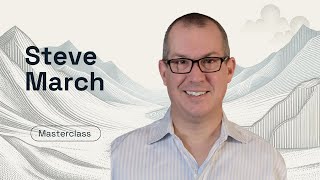
Steve March, a former software engineer turned coach, introduces Aletheia coaching and the Four Depths model for personal unfoldment. Instead of fixing what's broken, the approach asks: what if nothing is missing? He walks through four practices including poetic attunement, feeling emotions fully, and treating change as ecosystemic.
Good morning. Good morning.
The money is not a copper. Today's thing.
Hey, Mark. Both Marks. Hey, Adam. Hey, Bruno. Hey, Venus. Hey, Colleen. Hey, Spencer. Hey, Diana. Lovely to see your faces. If you'd like to share in the chat in three words, how are you feeling on this Monday morning? Hi, Katie. Hi, Ron. Hi, Nick. We'll be starting in about a minute's time. For those of you just joining, you'd like to share in the chat, what is alive for you in this moment in three words. Okay, well, welcome, everyone. Happy Monday. Welcome to the start of week four. I am also letting people into the room. One second. There we go. Okay, let me make it so everyone can see. Steve. Good morning, Steve.
Hello, everyone.
Christine, if you could mute yourself. Thank you. It's so wonderful to have you here. Steve. I've mentioned you at least in two or three occasions in the kind of the core curriculum of nsm. And I'm really just such an enormous admirer of your work and the kind of the body of work that you've created and grateful for you taking the time to speak to us today. This format is going to be, as usual, kind of like a Q and A session. I'm going to start off with some of the questions, and if you guys want to either write questions in the chat or just raise your virtual hand as we go, and we'll kind of come to all of the community questions for the second half of this session. But, yeah, we'd love for this to be as interactive as possible. I imagine there's a lot of collective curiosity in the room today, but maybe so. I'm trying to think, what's a good jumping off point, Steve, for people who are not familiar with Alethea and your work? What was the inception of Alethyia? And how did this, this vision and this very comprehensive curriculum unfold from your own internal explorations?
Well, first of all, Johnny, thanks so much for the invitation to be here. I have the sense that there are a lot of people from your community that are flowing into my community and vice versa. So we have a nice collaboration that's starting to happen here. I really enjoy it. Yeah, there's so many different origin stories for Alethea, but the one that's sort of popping to mind right now is I started coaching in 2000. I was working in the corporate world at that time, you know, previously trained as. As a computer scientist and was working as a software engineer. And then I sort of migrated from that into management and started to move away from the technology side of the world. Into the people side of the world much more. And I found myself in meetings with managers and executives at the company that I was working for, essentially trying to coach them, but one not knowing what coaching was and really, to be honest with you, not being very successful at it. Now, I was trying to help them to do things like show up in a different way at their next staff meeting in a way that was more approachable, in a way that they listened more, things like that. And I had recently moved to San Francisco, where I now live, the San Francisco Bay area. And I had met somebody who introduced himself as a coach. And I said, well, what is that? And as he started to describe what he was doing, I realized that's what I'm trying to do, except I realized I didn't really know how to do it. And so I wound up getting trained as a coach. And as many people do, after getting trained, they wind up going to many, many other trainings. And, you know, this was the early 2000s, and I spent probably, you know, a good part of the next decade getting trained in different coaching modalities, therapy modalities, somatic modalities, you know, being engaged in the diamond approach, spiritual work, many, many, many different things. And there was a question that kind of emerged in the midst of that. And what I noticed was that all of the different methods that I had learned worked. But that was surprising to me because they were all so different from each other. I think, kind of naively, I thought, like, you know, you know, everybody's working with human beings, and most likely everybody's got a variations on a theme, you know, maybe a couple little minor modifications here, there. But what I found were dramatically different approaches, and they all worked. And so I wondered, what does that say about what a human being is, that all of this can work? But I also noticed that all of these different methods failed to work. And I wondered what that says about the methods that they fail to work. And I sat with that with those questions for a couple years until I had an integrating insight, which is that all of these different methods work at different depths. And that when a client is in contact with themselves and attuned to themselves in the world at a particular depth, that meeting them there with a method that understands and specializes in attuning in that way is really skillful and it works. But if the client is attuned to themselves in a shallower or deeper depth, and you try to meet them there with a method that doesn't really have much visibility into that or awareness of that particular Depth, then it kind of feels clunky and awkward and it doesn't really work as well. And that then led me to this curiosity because I'd been very inspired by integral theory. You know, could there be a methodology that integrates working with all depths and that head depth is a major and central concept? And that's really kind of the birth of, of Alethea coaching as a method that actually understands depth as a core concept and tries to attune to where the client is and then meet them there in a skillful way.
I love that. And for again, everyone in the room here, what are those four depths? And how do you notice people moving into them and out of them? Maybe in conscious or not in conscious awareness?
Yeah. So when I started to have this idea that they all work at different depths, and I looked at all the different methods that I had been learning over the last 10 years, in my mind, they kind of pretty cleanly fell into four categories. And I could start to see, oh, these kind of work a little bit like, you know, like the others in this group, et cetera. And so I created a model called the four Depths, which you just named. I call it the four depths of cosmos, Psyche and soma. Because it's really four depths of the outer world. You can see the cosmos, these are four depths of the psyche, the inner world. But these are also four depths of the body. And the body is what embeds the outer world and the inner world and the inner world and the outer world. And so we can attune to all of this through these, in these four different ways. The shallowest depth, which is the depth that most of us tend to occupy whether we're conscious of it or not, I call the depth of parts. And even as I speak about it, you can just palpate this and feel this right now, because these depths are here right now, always available at the depth of parts. Everything, everything is experienced and perceived as separate. So if you just look around the room that you're in, you'll see it's just filled with separate objects and things. They're identifiable, they're nameable. But even if you peer inwardly, you can begin to notice parts of yourself. You know, many of us live in a way that we have our head, our heart, and our body as different parts. We have those be separate from each other, and we wouldn't confuse a thought for an emotion or an emotion for a sensation. Right. Those are all separate from each other. But even if we borrow the language of, of something like parts work, which is starting to get quite popular and which we include in our coaching method. Everybody, you know, probably has parts that have felt hurt, parts that have felt not seen, parts that are then defensive and protective. Maybe you have like an ambitious part, or maybe you have a lazy part. I definitely have a lazy part. You know, it's like. And I have to. I give that part some time when it needs it, you know, so even when we peer inwardly, we can begin to see this kind of world of separation. And yet this is really a fragmentary world in so many ways. And. And when we're attuned to this depth, what we can't see is we can't see wholeness that actually requires being attuned at a deeper depth. So beneath the depth of parts, if we keep going down in depth, we have the depth of process. And the depth of process is like when you attune to this depth, you attune to the way that everything is a fluid flow of experience. So if you're attuning to the outside world, just try for a moment to attune to everything as impermanent. You know, there are some things that are, you know, moving so slowly that you're convinced they're permanent. You know, like maybe the floor you're standing on. But of course, it hasn't always been this way. I mean, I'm sitting in my. I'm standing in my house right now. The floor I'm standing on has been here for over a hundred years. The house is that old, but. But not before that. And who knows how much longer it will be this way. So everything is impermanent. Everything is in a kind of flow. And of course, you know, you can see this in nature. You can see plants growing, you can see wind moving the leaves. You can see water flowing through street streams and creeks and rivers. And so in. There's a way in which everything is in flow. And when we peer inwardly as well, we can feel the flow of thoughts, the flow of images, the flow of emotions, the flow of sensations, and that our access to that experience is bodily. So we sense into the body to feel the flow of these things. And that's very different. It's a very different view than feeling. Everything is separated. Things are starting to get a little bit more connected inside of this flow. And then if we go one level deeper than that now we get down into the depth that I call the depth of presence and absence. This is really the first depth that innate wholeness begins to come into view. And at this depth, you can begin to sense into it by wondering who or what is actually aware of the world that you see, whether it's at the depth of parts or at the depth of process. Because that's what you become aware of at that depth. You become aware of yourself as presence. But presence has this curious phenomena, and which is why many of us don't know about it. We're not aware of it because it can also kind of occur as an absence. So a metaphor for this is you're staring at your computer screen right now, you know, looking at, looking at me and Johnny, listening to us. What you're not paying attention to is the space between you and the computer screen. Except now you are, because I just named that. Right? So that space has been there and in fact has been in some way almost like a medium through which you've been experiencing everything that I'm sharing right now. But before you turned your attention towards it, it wasn't there. So presence has that kind of that, that way that it shows up is that oftentimes we're so focused on what we feel, what, what we sense, what we think that in some ways we actually completely miss who we are, that who we are is somehow in the background. And, and as a result, we often walk around with a. A kind of case of mistaken identity. You know, we believe that we're our parts. We believe that we're the angry one, or the sad one, or the hurt one. But at this deeper depth, you actually drop into realization that who you are is presence. And presence is the you that's actually not hurtable, right? So it's the you that's simply here now. It's the you that is deeply resourced and can actually be with anything and everything. Even if what you're facing is challenging or painful, that you have capacity to actually be here. And then the final depth, the fourth depth, is the depth of non dual presence. And this is also a depth of presence, but it's a more radical and inclusive kind of presence in which this seeming duality between absence and presence is actually resolved into a non duality. And so this is definitely the deepest. This, this is a spiritual depth. This is the depth in which we drop into a sense of profound inner stillness or silence or spaciousness, even in the midst of movement and sound and, you know, boundaries and separation and everything. And so in some sense, the depth of non dual presence is the opposite of the depth of parts. The depth of parts is attuned to through separation. The depth of non dual presence is attuned to through non Separation. So this is where we really realize that fundamentally we belong exactly the, exactly the way we are. That this is really the. The deepest depth that allows us to feel a sense of a secure base, resolving lots of attachment issues and other things. So what I noticed when I started to coach with an understanding of depth is that I thought clients would work at a particular depth for say, you know, six months or something and then graduate to a deeper kind of work. But what I found is that when I was sensitive to depth, clients were moving up and down in the depths spontaneously, actually over the span of even just minutes. So I had to form Alethea coaching in a way that could seamlessly flow with that kind of movement up and down in the depths. Instead of just taking, you know, coaching the client using a parts method for six months and then use a process method for however long that takes, and then use a presence method for however long that takes, that. That's not the way it actually works.
And I think it might be helpful to give an example of, let's say, in my experience of engaging with Alethea. And I'm also trying to map this to the NSM curriculum as well. So for you guys listening, I would imagine that practicing ape, which kind of increases your attunement to your internal landscape, will help to bring you aware of the second level of presence. So any emotions that might be present, any sensations, anything that is below the level of, say, parts or narratives. And then in my experience, if I do something like somatic surfing, kind of going into that emotional process, often on the other side of completion, there is this sense of like, I experience it as almost like joy, perfection, like integration. And that is what I correlate with what you describe as presence. Sometimes there's almost this like, nothing needs to be changed, fixed, everything is actually perfect kind of exactly as it is. With that in mind, the other concept that I almost want to kind of drop in as a premise for this conversation is your idea of self unfoldment and how it differs with self improvement. So could you speak to that briefly as well?
Yeah, yeah. I'm not as familiar with your curriculum, although I'd love to take your class sometime because it sounds like from the descriptions that you offered, I agree, your mapping sounds. Sounds spot on to me. So, yeah, you know, often the first move in starting to learn to coach in this way or practice in this way is to shift paradigms. And the prevailing paradigm in our culture is what I call the self improvement paradigm. And the self improvement paradigm is sort of fed by this prevailing sense of self deficiency, you know, it's, it's as if we're all walking around really feeling a sense of not enoughness and some of us more own that, some of us are so defended against that that we don't even really want to recognize that, you know, we like to walk around and put on a, you know, kind of a, kind of puffed up, sort of, you know, defensive, you know, sort of, you know, a way that we don't want to land into that, that, that sense of self deficiency and that self, that sense of self deficiency prevails because we're really attuning to the world in this fragmentary way at the depth of parts. When we attune to the world in a fragmentary way, it shouldn't be a surprise that we feel not enough because we're actually not in contact with our innate wholeness which requires this contact at a deeper depth. So the self improvement paradigm is what prevails. In fact, the coaching industry has thrived inside the self improvement paradigm. When I started coaching 25 years ago, almost 24 years ago, I was coaching in a self improvement paradigm. And for a while as a coach trainer, I even taught a methodology that was basically self improvement. We called it development, but development has just become the new self improvement. And so I had to, after working with that within that paradigm for well over a decade, sort of have a moment of honesty with myself, which is what I saw repeatedly was that trying to improve ourselves doesn't deliver us from self deficiency, it actually reinforces it. And this was a hard realization to come to because of course all my intentions as a coach and as a coach trainer were to try to help people to, to, to make contact with their, their sense of wholeness and to feel good about themselves in some way, to feel, you know, that they had actually improved. What I noticed is that in the self improvement paradigm we launched self improvement projects. And self improvement projects, the way I think of it is they can kind of go one of three ways. They either outright fail, in which case we conclude, I guess I'm not enough, or they generate mixed results, which is a very common experience. It's sort of like something has changed here. It's a little bit better, but I didn't really get what I was hoping out of this. And that also generally circles back and reinforces the sense of not enoughness. But then strangely enough, even when self improvement projects succeed, usually they've succeeded because we've taken a narrow view of life. You know, it's like we've really wanted to like lose the 20 pounds or something like that. And it usually is like a number. Like we're going to hit this number, we're going to do this thing. It takes extraordinary discipline and we even succeed. Except that success then casts this large shadow on the rest of life where we then look at all the other places that need improvement and it kind of just circles us back into deficiency and so that that moment of victory is fleeting. Right? So I began, when I really kind of got honest with myself and said, look, this isn't working, I began to wonder, and this is kind of like another origin story of Aletheia, like, could there be an alternative to this? And the alternative that I was experiencing inside of different wisdom traditions and spiritual traditions, which had been around for a long time, was not. They were, there was, there was change in transformation coming there from those practices, but not inside of a self improvement agenda. Instead they were, they were unfolding. I started to articulate what I called the unfoldment paradigm, which is a real contrast to the self improvement paradigm. In the self improvement paradigm, you ask the question what is missing? With the belief that if you can figure out what is missing, that you could develop it or build it or fix it in some way so that it wasn't missing anymore. The primary question in the self, or excuse me, in the unfoldment paradigm is what if nothing is missing? What if you're already a whole human being? And so notice that I pose that as a provocative proposition. What if nothing is missing? I'm not making a claim that nothing is missing. I'm actually inviting you into an inquiry like what if nothing is missing? So if I say that to my clients, some of them will come back and say, well, it feels like something is missing. And then I just say, what does that feel like? And now we're talking about what's here, which is a feeling of something instead of talking about what's not here. And when we get connected to what's here, when we get present, when we, when we drop into our bodies, when we sense our felt senses, when we, when we feel our emotions, that leads to a kind of unfolding pathway that results in a kind of deepening self contact. And as we deepen in our self contact down through these steps, just following and feeling and embodying what's actually here in this present moment, we land into an embodied and direct realization of our innate wholeness. So when we get down to the depth of presence and absence, one of my checking questions is what's missing now? And clients will often have a moment of shock and surprise, and they'll say, nothing. I feel whole. And wholeness can actually manifest in a variety of different qualities. So wholeness can manifest in love, Qualities of love and compassion, strength and courage, perseverance, steadfastness and will. Joy, pleasure, bliss, passion. That's a big coaching topic. Want to have passion in life. Peacefulness, power. It can manifest in a lot of different. A lot of different ways. Each one of these is responsive to a particular need in life. So when you encounter suffering, whether it's someone else's or your own, you know, a deep response, a response that comes from the deeper depths is compassionate. You feel spontaneously compassionate towards that suffering in the face of that suffering. When you encounter a boundary violation, you know somebody has stepped across or violated a boundary that you care about, no matter what kind of boundary it is. The. The natural response from depth is one that restores that boundary. And that takes a lot of strength. It takes courage and strength. It takes a lot of energy to restore boundaries and actually have them function as boundaries. So that becomes a spontaneous response.
I noticed that even though I'm very familiar with your work, even just listening to you redescribe that, there's like a sense of both, like, almost like goosebumps and also like relaxation in my body as I. You kind of describe the unfoldment paradigm and a few things that I'm wondering. One is, you know, for people listening who haven't had that lived experience of. I actually feel whole, complete, and there's no sense of not enoughness. Do you. Do you recommend, like, holding that question of what if nothing is missing as a. As like a possibility to explore until one is able to kind of fall into that third depth of presence where it becomes an embodied reality? What's your. Is that typically what you would recommend to people?
That question is often the opening of a possibility that then you want to start to explore within. And the way that you explore that is. So the question of what if nothing is missing? What if I'm already a whole human being? Is really an invitation into getting to know yourself in a deeper. In a deeper and deeper way. And the good news is, is that in every single moment, you can start to do that right now. There's no precondition that has to be fulfilled before you can do that. So everything that you actually need is right here, right now. Oftentimes, however, you know, we're swept up in the pace of life. We're swept up in the busyness of life. You know, we're on the way to somewhere. Our eyes are on the prize, not on what's here, you know. And so we're moving in some sense away from ourselves and away from what's here, you know. And so really what we want to start to do is to shift back into what, what in our trainings I call an experience near approach. And I'm borrowing the term from a well known psychoanalyst named Heinz Kohut. He talked about experience distant and experience near. Most of us are living in a kind of experience distant fashion where we're not actually in contact with our experience. And this, by the way, is why we don't learn from experience. We all know that you learn from experience, one learns from experience. Except we all have experiences we don't learn from. How come? The reason why is because we're actually living in an experience distant way. We're distant from our bodies, we're distant from our emotions, we're distance from even our thoughts and images. You know, we're distant from our own direct, immediate inner experience. When we're ego identified, we tend to be externally oriented, you know, and, and frequently, often. And this, you know, Freud noticed this in something he called the pleasure principle. You know, we flee internal hurts by seeking external pleasures. And so a lot of us are kind of caught up in that kind of, that kind of move. And so instead of being experienced near, we actually flee into the external world away from our direct experience, ironically, in search of an experience of pleasure, in search of an experience of victory or, or accomplishment or something that we find desirable. Yet when we do that, and as I said, you know, oftentimes it doesn't work out, we're unable to fulfill that desire, we're unable to gratify that desire. But even in the cases when we do that, gratification is short lived and then the cycle starts all over again. So what we're really working to do is to reverse that in some sense and recognize that at the end of whatever projects we have for our life, if you really dig into it, ultimately what people are really wanting is they're wanting to feel loved, they're wanting peacefulness, they're wanting a sense of wholeness, they're wanting a sense of integrity. And it turns out that all of that is available right now, in this moment. If we actually come back into our direct experience and work through the depths to deepen in, we can realize that right now that it doesn't have to be on the end of some enormous, disciplined effort that we, that we put in where that gratification is just fleeting and then we've got to start all over again with the next one.
Yep, yep. So this is reminding me of Francis Weller has this beautiful distinction between primary satisfactions and secondary satisfactions, where primary satisfactions are exactly the qualities you just described of a felt sense of peacefulness, joy, connection with loved ones, sipping on hot tea. Whereas secondary are the things that we think will bring us that internal good feeling, a like on social media or achieving a work goal or something. I want to return to the, the self improvement piece because I can almost like hear the, the cacophony of people's parts in the room that are like. But I've done these things. I've actually engaged in self improvement projects that have made my life better. What do you think is the proper role for self improvement, if there is one?
Yeah, I'm glad we're returning to this because one of the things I don't want to be misunderstood about is I'm not suggesting that we leave the self improvement paradigm behind and only switch to the unfoldment paradigm. It's more a matter of the right tool for the right job. So there are legitimate instances in life where something is missing that, that if we put in disciplined effort that we can address that. And namely that those are skills. So skills are legitimately missing. You know, like there's a lot of things I can't do. There's a lot of things all of us can't do that we probably wish we were more skillful at. Those can be legitimately missing. And in order to cultivate skill, it takes dedication, it takes practice. You know, if we're really serious about it, we want to reach out to people who are masterful with that skill, experienced in that skill, know how to teach that skill, and ask for their help, their support, their coaching, their feedback, et cetera. All of that is framed inside of a, inside of the self improvement paradigm correctly. That's great. The challenge is, is that oftentimes we try to improve something about ourselves because really what we're after is that sense of wholeness, that sense of connectedness and integrity and joy and you know, satisfaction, something like that. That's the error, right? Because that has to do with actually how we know ourselves as a being. And so the field of self development has, you know, really shifts the conversation into our own way of being our own and the realization of who, who and what we are when it comes to that. The unfoldment paradigm is really the ideal way that you want to work and when it comes to that, what you recognize is that from the beginning, you've always been whole. You've always been a whole human being. You know, we don't look at a newborn baby and think, whoa, what a pathetic human being. Like, they can't do anything for themselves. They can't speak, they can't change them. You know, they can't feed themselves. I mean, come on. You know, we just have to improve, improve, improve everything here. Like, we don't do that with little newborn babies. You know, we look at this little newborn baby, like a miracle. It's like, oh, my gosh, look at this being, you know, this, like, little bundle of love, you know, it's like. And they're so soft and precious and, you know, right there. We're immediately relating to them, you know, in a way that we all want to be related to. We all want to be related to as love and preciousness and wholeness, right? And what happens is we get born in that state. In some sense, we're born actually inhabiting the deeper depths because we haven't been socialized and we haven't developed language, which is what enables us to inhabit the shallower depths. That happens, of course, over the span of ego development. In the first three years of life, we develop the various layers of ego structure. And then throughout the remainder of our childhood, we continue to develop our ego. And we really start to identify with this sense of being a separate self, with being an ego self. And in some ways, that is a. I describe it as a surfacing process moving up from the deepest depth where we're born at up into the depth of parts. But then what happens is, through that process is that we lose contact with the. The depth of ourselves. We lose contact with our wholeness and instead identify with our separateness, with our. With our fragmentary nature, with our fragmentary selves. And so in some sense, the work that we're doing as adults is one of dropping back down and recovering something that's always actually been here. It's been here literally from the moment of birth. And recognizing that that actually is our birthright, in some sense, is to. Is to feel deeply loved and loving, to feel precious, to feel strong, to feel courageous and so much more.
Yeah, it's so beautiful. I also think of the image of, like, a. Like a sapling oak tree as well, that, like, none of us would judge and, like, oh, that's not as good as a, like, 100-year-old giant oak tree. There's no deficiency there. We just. We see it as an inherently unfolding process that it doesn't have to try in order to grow. The growth happens naturally.
That's right. I sometimes say that unfolding is living and living is unfolding. So unfolding is how nature lives. Right. If you look at a plant, you know, a plant unfolds, right, that, you know, that acorn, you know, if, if the conditions are right, meaning it's got water and, and nutrients, nutritious soil and sunshine. It's absorbs the water and splits open and sends down a tap root and sends up its first leaves. It eventually becomes a beautiful oak tree in relationship with its environment, in relationship with its surroundings. This is essentially what we try to do in Alia. Coaching is that it's not the coach's job to unfold the client. It's not even the client's job to unfold themselves. It's life's job to do the unfolding. And so what we work to do is to recognize what are the conditions that are needed to support unfoldment. Just like the, you know, for the acorn, it's the water and the soil and the sunshine, etc. So how do we bring those conditions and have those conditions be true? And it turns out mostly that's a matter of noticing what thwarts unfoldment, what is getting in the way of this natural process that wants to happen and how can we slowly work to relax those things that thwart unfoldment, and then unfoldment just simply begins to happen on its own and starts to quicken.
Yeah. I think there's two things I'd love to highlight here, and this is so, so good. Thank you, Steve. One is that from what I've seen and I've received many Alethea kind of sessions, it is that paradoxically for me, when the change agenda is let go of, when I let go of the desire to transform, it's actually far more efficient and productive as a means for doing emotional work. And then secondly, could you speak to what are some of those conditions that, when they are present, unfolding tends to happen at a faster rate. And the reason that I ask that is we're exploring emotional fluidity is like the theme of this week. And so any specific practices or ways of looking that can help to work with some of the emotional armor, tension protector parts that arise for people would be really helpful.
Yeah. So in order to really establish yourself in the unfoldment paradigm, there are, I call them four enactments. There are four, four ways that you can sort of enact yourself into that and the first one is to begin to notice how you attune to yourself, others in the world. And the prevailing attunement in our world right now is the technological attunement. And this was something I learned about this from reading the philosophy of Martin Heidegger. He was speaking about this back in the 1930s in living in rural Germany. And he was noticing the ways that tractors and farm equipment were starting to really take over. And he was seeing a technologizing beginning to happen. And of course, if he were alive today, I think he would say, well, yeah, this is what I was pointing to. Because here we are in this highly technologized world. Notice that the technological attunement, when we attune to things in a technological way, that really feeds into the self improvement paradigm. I can say a little bit more about this. Which is the real concern that Heidegger had and that I shared, is that the technological attunement, you know, when we, you know, first of all, what is technology? Technology is a capacity standing in reserve. That's the way Heidegger talked about it. So, you know, right now I have a car in my driveway. It's a capacity standing in reserve. I have a bicycle in my garage. No one's using it right now. But that's also true of this pen, this mechanical pen that I have on my desk. Right. It's just sitting here, you know, this keyboard. Right. Obviously, it's just the capacity standing in reserve. I'm not doing anything with it right now. That's the, that's the nature of technology. The problem happens when we start to look at ourselves and each other in the same way. And you know, you might go to the grocery store and you know, to be honest with you, the, the cashier has stopped being a human to you. You just see them as a capacity standing in reserve waiting for you to bring your groceries up. And they, you know, scan your groceries and make some kind of financial transaction. But it turns out the reverse is also true. That person is who, you know, the grocery store clerk who's got a job there is also viewing you as a technology, a technology for them to actually earn a living. And so we do this to each other. And the real danger here is that this hides what it is to be human. And so notice, like in the self improvement paradigm, we feel deficient and we're like, well, maybe I need to get more training because I need to be able to get a job so that I can sort of transact for money and earn a living. And so we very much view ourselves in terms of trying to be better and better technology that that enables us to actually transact for a paycheck. And that whole view fits nicely in the self improvement paradigm. The alternative to this, which is really what we need to do to shift into unfoldment, is to adopt a poetic attunement. A poetic attunement actually discloses what it is to be human. And when we adopt a poetic attunement, the way that we do it in Aletheia is by really embodying and enacting our love of truth, beauty and goodness for its own sake. And so when we turn into exploring what's here in the present moment, our question is, well, what's true? What are you feeling? What are you sensing? What are you thinking? What are the images that are here? What is your actual experience? And frequently what we'll notice as we begin to follow that sort of thread of truth is that is that alongside that there is beauty. There is beauty to what we discover about ourselves. There is fundamental basic goodness here that we begin to discover about ourselves. So one of the first things we have to do to meet the conditions for unfoldment is to attune to ourselves and each other in a poetic way. And you know, mostly it's the poets and the creative people that have learned and remembered how to attune to the world in this way and. But unfortunately they've been marginalized in our current society. And instead what's taken center stage is the technological attunement where we're constantly figuring out how we can function better, how, you know, where we're looking for, you know, this kind of language, like I need more bandwidth, right? I'm trying to, like I need to be better at multitasking, right? This kind of language, we feel it almost like, well, of course, like everybody needs more bandwidth and to be better at multitasking because that's what you need. Except that's technological language being applied to human beings.
Even burning out as well, like a machine burning out is similar.
Or I've crap, right? You know, I need self 2.0. I need, I need an upgrade, you know, I need to level up, you know, this kind of language, which we're all starting to become unfortunately familiar with. This is all I have a friend of mine who calls this compumorphizing, which is the opposite of anthropomorphizing. Instead of bestowing human attributes on things like what, your car, whatever, you know, you name your car, you bestow computer aspects or technological aspects on yourself as a human.
Wow. Wow.
Right. So we're committing, compomorphizing in some sense. We're turning ourselves into technology. And AI, by the way, is not helping in some sense. That's a whole side note. I'll just go through the other enactments a little bit more quickly. The second one is from dropping change and improvement agendas, which you, you mentioned, Johnny, into what I call letting be. Letting unfold. Letting be. Letting unfold is a necessary way that we have to orient to what's here. And we want to let our feelings be and then let them unfold through feeling them. You know, since you're moving into the emotional module, I'll give you my. My one, the one principle that we work with in Aletheia coaching with, with emotions is that the thing to do with emotions is to feel them. It's literally that simple. Except that mostly that's not what we do, right? We're trying to avoid feeling them, we're trying to improve what we feel, we're trying to change what we feel. None of that is actually letting it be. And as a result, it doesn't unfold. So if you actually let. Let your emotions be and moving into the third enactment, you actually embody and feel them, they will unfold, and they will unfold in a way that will take you closer and closer to a realization, a direct, immediate, embodied realization of your innate wholeness if you feel them. Now, I know some emotions suck and you know, nobody wants to feel hurt, nobody wants to feel pain. It's natural to have something in you that wants to pull away from that. And yet the way is always through. And, you know, and Johnny, maybe you found this research because you're very tuned in to the neuroscience of this, but I keep wanting to go back and find this, but I, I was listening to a radio interview many, many years ago, and they were saying that if you actually feel your emotions, they only tend to last about 90 seconds or.
10 to 12 seconds by some other. Other researchers.
Even faster, right?
Yeah, yeah, yeah.
And that. And, and so the reason why we can seem to get stuck in feeling emotions, like we get stuck in grief or we get stuck in. In depression or something like that, in my view is metaphorically, it's a little bit like driving down the road with one foot on the accelerator and one foot on the brake at the same time. And so you're burning your engine up, but you're not going very far. And so we wind up getting stuck in emotions because we're really not fully feeling it. So what we want to learn to do is to take the foot off the brake. You don't have to push your foot further on the accelerator. You just have to take your foot off the brake so that you can actually just feel what's here and then move through it.
Could I just speak to that? I'd be curious to hear your perspective as well. A trap or a pitfall that I often find myself, or I used to find myself falling into more was one of really accepting that mandate. The mandate of, okay, I'm going to feel this emotion. I've acknowledged that. Let's say there's some sadness here and I'm going to feel it. The. The pitfall would be I would almost like try to feel the thing without actually acknowledging the resistance. And for me, the move of noticing, oh, I'm resisting this, and kind of bringing my attention to that and almost bringing loving presence and awareness to the resistance. That would then soften and then the underlying emotion. And sometimes there'll be multiple layers, will then kind of surface and that will naturally feel. And I guess that could be like, I'm trying to push down the accelerator more instead of like, noticing that the brakes on and like lifting my. My foot off the brake. How would you frame that in. In Aletheia terms?
Yeah, there's. First of all, I'm in agreement with what you're saying. There's. Sometimes people will think that they're really feeling the emotion, like they're really trying to it and what I call that wallowing. And so you sort of like wallow in an emotion because we're really just in it. But the problem with that is we're not feeling it, we're identifying with it. And when you identify with something, it tends to stick around a lot longer. Like, it's. Essentially, you've kind of grabbed a hold of it and you said, this is me and I'm not letting go. Well, then you're going to walk around always being you. Right. So it's. This is, in fact, a lot of times what we do with hurt is like we identify with it. Instead of feeling hurt, we say, I am hurt.
I'm a victim.
Right. I'm a victim. And so there's a real big difference between feeling hurt and actually identifying with hurt. And it turns out, curiously enough, that feeling hurt doesn't hurt you, that you actually have the capacity as presence to feel hurt and to actually come out whole on the other side.
Right.
And that. That's the. That's one of the things that has to be worked through. But I also agree with what you're saying in terms of the resistance to the feeling that we first have to acknowledge the resistance. We have to acknowledge the part of us that doesn't want to feel that or that is the part of us that's trying to change or improve that feeling. And then we have to honor that part's good intentions. And that part needs to feel seen and understood for its, its own emotional truths, which is usually something like fear. Right? Because it's afraid to feel for you to feel that and would rather you feel something else. You have to, to honor that, allow it to feel seen, understood, loved and valued for its goodness. And then when that happens, it will spontaneously relax and melt. And this is actually correlates to what you were earlier talking about in terms of the melting of emotional armoring and things like that. That melting actually occurs because in some sense its emotional truth has been honored. And then that lands you into a deeper contact where now you can work with an even deeper emotional truth, which is often. I feel hurt. Yeah, no, yeah, something like that. And then you honor that and then that will soften and relax. And then that lands you into an even deeper sense of self contact. And it's in that deepening process that you, that you actually eventually land into the embodiment and recognition that there's a you that's not her. There's a you that's just here, that's present, that's open, and that actually is deeply, deeply resourced for meeting life no matter what.
There's one more, one more thing that I want to speak to. I think this is such a juicy topic, something that students will often say is a sense of like, oh, I feel like if I kind of open up Pandora's box, if I take the lid off my resistance, I will feel the thing forever. I'll be lost in my sadness for the end of time and what I see happen. And this is something that for those of you who attended Joe Hudson's session last Wednesday, he's exceptionally good at. People will kind of drop into their body, they'll make contact with the thing, and then they'll bounce back up into their mind and back into the story. And it does feel as if the emotion lasts forever when we're constantly ping ponging back into the story and the story is reinforcing the resistance of the emotion. And so what I found is, and this kind of comes back to your piece around, like, what are the conditions that need to be present when There is a sufficient amount of embodied safety combined with presence, then it becomes possible to kind of linger with the sensations. And that's when the melting process begins to happen. Yeah. Do you have any, I don't want to say the word tools because that's kind of like technological, but like, do you have any practices, enactments for helping to increase that sense of embodied safety presence during these, what can be, you know, pretty intense processes sometimes.
Yeah, yeah. At the beginning of our coaching conversations, we practice setting what I call a presence anchorage. And the way that we set a presence anchor, I can run it through, run you through this right now is, is to simply follow your curiosity, to explore in a very, very slow way exactly what's here right now. Maybe your curiosity takes you into the external world, maybe it takes you into the internal world. It doesn't matter. The point is to slow down and actually let your, let your, your awareness actually register what's here. And so if you're looking externally, what I like to do is to not just look at objects because objects pop us into a sense of separation, but to look at colors, gradations of color, texture, listen to ambient sounds, notice if you're a tactile kind of person, reach out and touch something. This is really this kind of slowing down and letting yourself register. What's here is giving the neuroceptive capacity of your autonomic nervous system, which is constantly in the question, am I safe? It's just giving it an opportunity to actually check that out. And if your curiosity is brought internally, the same is true to really sense in, sense into your body, sense into what's here. What you'll notice is after you do this for sometimes it's just like five or ten seconds, is that something in you will suddenly settle or relax. As you're just noticing, orienting to what's here, something in you will settle. And then where do you notice that settling in you? You know, it's often somewhere in the torso, but it can be anywhere. It could be in your hands, it can be in your feet. And then what do you notice right there in that location? Like what is the settling actually feel like? So it might feel like you suddenly feel something settle in your belly. Your belly starts to feel more solid. That becomes a presence anchor for you for some period of time. And it's a presence anchor that we can pendulate back to if we need to. If the client has navigated outside the window of tolerance in a way that seems, that seems intolerable for now, we can bring that back in and then pendulate and titrate back and forth.
Beautiful. So I'm going to open up for group questions in a moment. Before I do. We've been encouraging a philosophy of self experimentation in this cohort. And with that in mind is the kind of based on the fact that many people here are hearing about Alethe for the first time, what might be an experiment or a prompt that students here could play with, run with, and kind of integrate into their, let's say the next two weeks of their life.
You know, my suggestion would be to actually work with the poetic attunement. You know, you could try a couple experiments like, you know, find an object nearby and then, and then practice switching between the technological attunement and the poetic attunement. Like, look at it as technology. Look at it in terms of its functionality. How well does it function? Is it broken? Is it dysfunctional? Is it efficient? Is it optimal? And then shift and look at it poetically, look at it through your love of truth, beauty and goodness. And then you can up the ante. Look at yourself, right? Like go to a mirror or look in the zoom, look in the, you know, at yourself in the self view in zoom and orient to yourself technologically as somebody who functions or doesn't somebody who's optimal or efficient. These are, these are technological terms. And then shift into a poetic attunement. Engage your love of truth beating goodness for its own sake, and just notice that what you're looking at is truth, beauty and goodness. What's it like to experience yourself? What's the difference? And to notice that shifting between the attunement we come in aletheia work, we come to this experience in many different ways where it's as if nothing has changed, except that everything has changed. Shifting attunements is like that. It's as if nothing has changed. It's still, you're still here, except your way of attuning to and therefore perceiving. Everything has changed. What flows and unfolds when you attune poetically to yourself, to your family members, your friends, your lovers, your co workers, to the world at large. So that, that is, that's really the first step in shifting into the unfoldment paradigm. And it's such an easy step to do. But most of us are completely unaware that it's even a possibility. We feel like the attunement that we have to the world. We don't even know the phenomena of attunement. We just believe that the world that we perceive is the only way to perceive the world. That's our default. And perhaps if you are a world traveler and you have been exposed to other cultures, you will have a sense that other cultures perceive the world in a different way. And if you are a historian and you understand, you go back and you study history, you'll recognize that past cultures perceive the world in different ways so that that shift is possible. It's happened many, many times. And actually, one of my personal beliefs is that in order to address a lot of the kind of polycrisis, metacrisis, sort of issues that we're having today is that we actually need to learn to attune to ourselves in a way that brings, that discloses what it is to be human, because the technological attunement is hiding what it is to be human from us. But these problems, I don't see these problems as a call for better technology. Technology, of course, will play its role in helping where it can. But more fundamentally, the problems that we're experiencing are a call for the. The human spirit, A call for us to show up with courage and compassion and love and perseverance. And that. That's, I think, what it's going to take, except that attuning technologically doesn't, doesn't allow us to see that in ourselves and in, in each other.
Yeah, I, I absolutely love that. And for anyone who is curious about other resources and Steve, feel free to correct me if you disagree here, but the work of Iain McGilchrist and his book the Master and His Emissary and the Matter With Things, he's speaking to the left, right brain kind of hemisphere distinction. And I believe there's a huge amount of correlation between technological attunement being a left hemispheric way of viewing and poetic attunement being the right hemispheric way of viewing. And the idea of the master and his emissary is the right hemisphere. The poetic attunement should be the master. And the left hemisphere, or technological attunement, is in service of that which sees through truth, beauty, and goodness, as you said.
Yeah, the poetic attunement transcends and includes the technological attunement, but the reverse is not true. So you can't be technologically attuned and actually perceive the world poetically. It's not possible. But the reverse is.
Okay, well, this feels like a great point or a great moment to open up questions from you guys. So please feel free to raise your virtual hand if you have a question or curiosity or Something that you would like to run by Steve. And if not, I'm more than happy to keep firing because I have thousands. Okay. Tarek. Hey there. Hi.
I was wondering if you can talk more about in poetic attunement of objects, what that looks like or feels like. You mentioned viewing like an object through the lens of truth, beauty and love. And the main thing that comes to my mind is appreciating the aesthetic beauty of an object if it is aesthetically beautiful. But that almost feels a little bit technological. And many objects may not be aesthetically beautiful. So I'm curious, you know, if you can talk more about how to poetically attune. The poetic attunement is actually a non dual attunement. And really what you start to attune to is not just the external object, but you attune to yourself beholding the external object. All of it is together, all of it is, is, is the same percept in some sense. And it's really recognizing that objects don't exist, separate, that they exist inside of a vast and complex ecosystem. So even if something as trivial as the cup I've been drinking out of, like, like, you know, this cup which holds water, wouldn't exist without my need for water, I mean, you know, you can suddenly sort of like begin to pull in the entire world into it. You know, I'm not sure where this is a metal cup. I'm not sure where the metal was mined. You know, I'm not sure where the paint came from. But, you know, you could just feel into the way that even something that seems so separate apparently is actually an expression of a vast ecosystem that is itself alive in some sense. I didn't. I didn't get to all of the four enactments in what I was describing earlier, because we got onto some other juicy topics. But the fourth enactment is in Aletheia is we tend to take the view in our culture that it's the individual that is changing and transforming. Yet that view is really a view of separation. In Aletheia, we adopt the view that it's the complex ecosystem itself that is the locus of transformation. That even when you're. Even when you're inquiring into like, how do I feel? That feeling is a point of contact with a complex ecosystem. It's a. It's arising in relationship. It's not actually how I feel separate from the world, it's how I feel fully in the world. And so the poetic attunement begins to attune us to that view, to this view that we are fully in the world and it's actually the everything that is unfolding and it's unfolding through us, it's unfolding around us. So our relationships are unfolding, our health is unfolding, our careers are unfolding. But that's not something that's separate. It's something that's happening in the complex ecosystem. So when you attune to objects in the poetic attunement, allow it to take you into the world, allow it to take you into the non separateness. Thank you. Yeah, you're welcome.
Thank you. Thank you. Tarek Venus.
Hi, Steve.
Hello.
I want to ask about if I have a feeling, and I'm aware that I'm aware of this feeling and I'm aware that I'm kind of resisting it, but I want to fully embrace it, but I just don't. Don't know how to make it to the unfolding. So if you have any suggestion about that.
Well, it sounds to me like you have a part that feels something, another part that doesn't want you to feel that.
Yes.
And you have a third part that wants you to feel it. Does that seem true? So the part that wants to feel it and the part that doesn't feel it are like in a tug of war against each other.
And the third part seeing this. Yes.
Yeah. So the thing to do is to work with that tug of war. We call that a polarization or polarization. It's when two parts are kind of pulling in. They want opposite things. Right. And so each one of those parts needs to feel seen by you. This is what we do with a practice we call parts work, you know, which is similar to internal family systems or voice dialogue. There many different versions of parts work now popular in the world. And so you would actually turn to each of those parts and really acknowledge them and let them know that you understand their good intentions in not wanting you to feel the emotion. When parts feel seen and when they feel understood and acknowledged and appreciated for their good intentions, they begin to relax. And so instead of there being this tension between two parts, each of them starts to relax a little bit more. And then that allows you to feel what's here a lot easier. So it's a little bit more involved than something I can give you, like a simple tip or trick. But what you could also do is you could also see how possible is it to just honor and acknowledge the truth that there are parts of you that are reacting to this emotion and see if even just that acknowledgment by itself is enough, sometimes it is for you to then just be able to feel that emotion more fully, more deeply, embody it more fully and deeply. Sometimes that's enough. But oftentimes you have to work with the, with the two parts that are polarized. First. Yes.
Thank you.
What, what do you feel right now as of hearing that?
I. I feel like I'm having doubts of my, my feelings. Like the first feeling and the second feeling and the third person and third feeling, you were saying? So this third one is looking at the first and second and I will tend to ask myself a lot of questions, what's the truth? And try to understand acknowledging the feelings. But normally it, it takes really long time, a period like say a couple days or even up to weeks to kind of sink down. And I just don't, don't know which is the truth.
Right.
So you have a part that's self doubting.
Okay.
Yeah. So about my feelings, it sounds like it.
Yeah. Okay.
Yeah. So it sounds to me like you feel something but then you doubt. Is that the true feeling? Yeah.
Yeah.
This is what happens with a lot of us is that we all have a group of parts, constellations of parts that are trying to protect us from feeling hurt. And so they're, they're really relating to all of these different feelings in different ways. And it's really working through all of that. And sometimes it takes some work, some time and effort to work through those to make, to have your direct feelings just simply be more available. Because here's what happens. We have a feeling and then we react to that feeling and then we oftentimes react to that reaction and then we react to that reaction. So we have to kind of work through those to get down to that. That's what parts work is good for.
I. I think I just received was fear, fear of feeling, of fear.
That's usually what's behind self now.
Yeah.
Right.
Thank you.
Thank you, Venus. Hey, Mark. Thank you.
So my question is almost what I would like to say to start the process if I could, speaking to myself 25 years ago, because I think some of what we went through and we learned last week is a lot of times we want to talk from our, our head down into our body into our heart. And that really doesn't get us anywhere. It's really now in the past year I've learned more feeling it in your body and then going upwards. But I've been a person that's gotten very trapped in the past and would feel that trauma and go through some of these horrible periods for a year without digging myself out of it. So I'm, you know, I'm thinking, how would I. How would I say that to myself 25 years ago, but also in the perspective of also being of service to others that I find that are in that same boat today?
Do you have an answer?
I don't.
Not yet.
Yeah, I mean, the one thing I'll say, because you, you talked about this head, heart and body kind of distinction is that sometimes in this work, what. What I hear is, you know, get out of your head and into your heart and into your body. And I think it's a well intended suggestion, but I think it's also a tricky one because I think the reason why people say get out of your head is because a lot of times when we're in our head, we're in this kind of fragmentary view. We're in this, you know, carving up the world, categorizing the world, and that actually takes us away from any. Any recognition of our innate wholeness. And so that that kind of fragmentary way that we can be thinking can be very problematic in that way. The challenge is, is that we can also be fragmentary. When we drop into our heart, we can have mixed emotions, you know, and so the heart also has the capacity to fragment. Turns out the body does too. You know, when you drop into the body, well, you. Your body can be fragmented. It can have, you know, there are different segments of emotional armoring. This is one of the discoveries of Wilhelm Reich. And the body can be fragmented as well. And so, but.
Or.
And the mind can actually orient towards wholeness. The heart can orient towards wholeness, and the body can orient towards wholeness. So the actual injunction for practice is not get out of your head and into your heart and your body. It's learn the ways that you are in those centers in a fragmenting way and learn how to turn into being in those centers in an integrating way. And when you do that, your head, your heart and your body get integrated together and they function as a totality.
Very helpful. The way I would have described it in the past was compartmentalizing, which now I see you can do it. You can do it in all three ways.
You can do it in all three centers. That's right. And so, yeah, I think compartmentalizing was the word I was kind of searching for. Thank you. But, yeah, right. This is, you know, I first bumped into this notion in the Sufi world. You know, they have this notion that, you know, that the heart can sort of. That all three centers can sort of turn towards this, the egoic world, or they can turn towards the spiritual world. And so that's the kind of thing that we want to take responsibility for. And of course the spiritual world here, if you don't think of yourselves as spiritual, you can just think of it as integrative. It's like fragmentary or integrative. And we have that, that choice in some sense. And so, you know, it's kind of back to the like, how do we create the conditions in which unfoldment spontaneously occurs? We learn the ways that we're fragmenting and, and we can appreciate the roots of that, maybe how even that got us through a certain moment in childhood, but also the limitations of that and then learn to relax that which spontaneously orients us towards integration. Right, that's the, that's a lot of the real work here.
Yeah, I think so. And I, I think too, I know if I'm speaking for myself in the past, it was always looking at things very black and white, that if you do 1, 2, 3, you will get ABC. And I think part of the self unfoldment is learning to live sometime in the grain and the shadows, knowing that those answers are going to come, but it's not necessarily in the way we want it, when we want it, but to live through it and live in it.
Yeah, I really think, I like what you're saying and I think that, you know, unfolding is how you navigate complexity. And we live in a complex world. I mean, this is what the complexity scientists are telling us. This is, this is science now, right? We live in a complex world. And it's not, it's not that. What we need is to simplify the world because it's complex by nature. And when something is complex by nature, that's just what it is. So how do we actually learn to, to navigate a complex world? You know, the line from A to B, the line from where we are to some sort of desired future is never going to be straight. It's, you know, much like you, you know, might navigate, you know, you know, a sailboat across the ocean. You don't navigate in a straight line. You know, you, you are inside an ecosystem that you have to take into consideration, which includes the weather, the winds, the currents, the capacities that you have. And yet still, even though you're being thrown this way and that way by life, you can still wind up navigating to the place you want to be or, or, or a desirable future of some kind of. Right, that's, that's Unfoldment.
Right.
Thank you so much.
Yeah, thank you.
Thank you.
Mark.
Hey there. Dorothy. Dorothea.
How old are the youngest Alethea clients.
We do have, mostly what I work with is adults, but in our classes we have had, people have learned this and then begun to use this with their children. And I had a couple, a couple of my participants who actually came to me and said, you have to teach this to children. And I said, no, I'm, I'm actually, I don't have my wife and I don't have any children. I'm not a parent. I said, you need to teach this to children. And so the two of them are now on faculty and we, they teach a class called Unfolding Thriving Parents and Children. And I have seen videos of them working with children as young as 6, 7 years old. Now, of course the work is different than it would be with an adult, but they're basically utilizing the same principles and practices. And I've actually seen, I've seen children actually in contact at all four depths. There are certain depths that you know, as children are moving through ego formation, ego development, that they're surfacing up through the depths. So there are certain age ranges where if you're really going to enter the world of the giant, you, the child, you need to be attuning to them at the depth of process. For example, you know, this is the age at which they're, you know, they're filled with, they're living in a fantasy world that is highly imaginary. They have imaginary friends. That is, that is exactly how it is in the depth of process for a child. So I do think it's an area of research for us, but we've been doing that work now with parents and children for I think about four years now. And we get really amazing stories coming back from us, back from that work. So I think it can be applied.
Great. Then the funny question is how can you convince a 14 year old who is habitually running away whenever emotions come into play?
Yes, teenagers are another question. Yes, in fact, this is, this is where the two women who are running that class for us, their names are Emma and Angie. And Angie's children are teenage. Emma's children are just beginning to move into that and, and they're working on also a course that will cover working with, with teenagers, which is a, you know, as you're alluding to as well, a particular unique challenge. So that can be found on your homepage. Yeah, you can find more about unfolding thriving parents and children on our website. Yeah, for sure. Great.
Thank you.
Yeah, you're welcome.
Joanna, Steve.
Hi.
This has been incredible. Thank you so much. I love the flow of the conversation very briefly because I want to hear other folks questions as well. I'm just really lit up around truth, beauty and goodness and how this immersion conversation through self experimentation. And I would love to hear just a little bit more if possible from you around the polarity, like the newel, the, the dual and non dual as it relates to truth. Dual, non dual as it relates to beauty. Like the polarity thing I'm so curious about. I would love to hear just a little bit more.
Well, you know, this orientation to loving truth, beating goodness for its own sake is it sort of like allows us to get connected to, to truths at whatever depth that we're at, but in a way that we kind of sort of can follow that vein of truth to the mother load. You know, it's, you know, like which, which is at depth. And so we start out by just noticing like, so what's true right now? How are you feeling? What are you sensing in your body? And even something like, I don't know what I feel like, okay, so there's nothing wrong with not knowing what you feel if you recognize it's just true. Like, I don't know, like, okay, do you want to take some time? Do you want to maybe take a breath? And, and there's no sense that you should or shouldn't be feeling it. But maybe if you don't know, like what don't you know? Right. Or even. It's kind of funny, knowing and not knowing is. It's an interesting polarity in and of itself because you can say, well, what I know is I don't know. Right. So you know, a lot of times we're playing with those kinds of sort of things and just, just simply following what's really here and not, not saying that anything here should or shouldn't be here. If it's here, if you're feeling that is what to be with, that is what to embody, that is what to explore. And, and that will take you by feeling that that will take you deeper and deeper in. Right? In terms of like the polarity that exists at the depth of presence and absence. When we drop into that depth, we tend to drop in through either what I call a portal of presence or a portal of absence. Like we'll drop into this sense that, oh, like I'm strong, I'm courageous, or I'm love, or we'll drop into the very presence of that and it will Be palpable. And we'll get that. But sometimes what we do is we drop into the sense of. It's like there's something missing. There's might even feel like a. Like a hole in the chest or an absence. It's like. And so what we do with that is we then just explore it, like, oh, there's something missing here. It feels like there's something missing in your heart, or it feels like there's something missing in your belly. What does that feel like? And as we go into it, as we go into that something missing, at some point it will actually flip, and a nothingness starts to become a palpable somethingness. So a lot of times when a client is beginning to explore into that, and it takes a bit to get there, we've had to usually work through the fear of exploring absence and things, but the client might, with encouragement, go into that absence, and I might say, you know, what's in there? And as they're going in with their awareness and exploring, at some point what started out being a nothing, it dawns on them, I'm in here. And then it starts to become a something, and you can start to palpate it. Like, so is it a. You know, is it a big nothing or a small nothing?
Is.
Is it a hot nothing or a cold nothing? And very quickly they say, no, it's small and hot, or it's big and cold or whatnot. And we start to find ways of making distinctions that just reverse and flip the whole thing around into presence. It's a little bit like in Chinese medicine and Daoism with the yin and yang. If you go deeply into yang, yin is born. If you go deeply into yin, yang is born. And so at that depth, absence and presence functions in that way. And when you realize that, you stop connoting good and right with presence and bad and wrong with absence, and you start to notice that they are together, an encompassing wholeness. And in fact, we need both. It's like inhaling and outhaling and exhaling, right? I sometimes joke, it's like the people who think presence is good and absence is wrong. They're like the inhalers. They're only like, down with the exhalers, you know? But that's not the way life works. You have. You need both to live, right? You need inhaling and exhaling. You need absence and presence. Both are resources. So that's the way that functions. So helpful.
Great. Thank you, Joanna. Hey, Katie.
Hello. Hi, Steve. I listened to your podcast with Johnny a few months ago. So I'm stoked that you're here. Thank you for being here. I have kind of a two partish question. I love, I love all the things that you're talking about. The first question is how can we start to bring some of these things like the unfoldment paradigm, the technological versus poetic attunement into an environment that is very much technological and fast paced like work for me personally work in healthcare settings. And then the second piece of that is how do we, besides we're starting to trying to embody these things ourselves. How do we start to shift these systems into more. Something like this?
Yeah. In. In Aletheia coaching, we work with something that I call a developmental container. And it works on some basic principles that as far as I know were first written about by one of the sort of grandfather of organizational development, Kurt Lewin. And basically the idea is that systems have a kind of natural goal orientation to them and that within them that they basically have both driving forces and restraining forces. There are elements inside of us that are moving us toward that goal, the fulfillment of that goal. But then there are also elements that are restraining and holding us back against that. These are often in some kind of relationship in which there's a kind of homeostasis between them. And so it feels like we have this goal but we're not moving very fast towards the fulfillment of it. I call these restraining forces impediments. We have impediments. The typical common sense when you feel something like that is to believe that you have to somehow increase the driving forces that we have to, you know, we need a pep talk or we need to really try, or we need to make an extra effort, or we need to do something with more discipline or you know, somehow amplify that side of things. But what Lewin noticed is that when you try to increase the driving forces, the internal restraining forces or impediments increase to match that. You can find yourself trying harder and harder and harder, but it still doesn't seem like you're getting closer to that goal fulfillment. An alternative strategy is to take those restraining forces or impediments and to work to reduce those and allow the natural driving forces then to work in a less encumbered fashion. And so this is the way that I have brought this kind of work into organizations is to say, so you know, what is the goal that you're working for? And then to do a bit of an analysis like what are the behaviors that we're seeing that are driving us towards the fulfillment of that? What Are the behaviors that we're seeing that are actually restraining the fulfillment of that, and then how can we actually reduce those restraining forces? That's an inquiry that we go into in a private setting with our coaching clients. You know, what are. What are your goals that you're bringing into coaching, and what are the impediments that are actually getting in the way? And then we work to reduce those impediments in an unfolding fashion. And that's really where you can begin to bring in unfoldment is the way to reduce those impediments. The most effective way that I found is through relaxing them. And, and that's essentially the path that we take in unfoldment. So it is possible to. To do this inside of. Inside of organizations. And I actually think that organizations really need to recognize these two paradigms, the improvement paradigm and the unfoldment paradigm, and start to recognize which. Which paradigm is right for the job that that's in front of them.
Yeah. Thank you. And then how about as an individual working within the system, how can we start to. To shift it within ourselves in that environment?
Yeah, well, I think. I think a lot of it is learning to. Learning how to enact the unfoldment paradigm for yourself. You know, shifting into a poetic attunement, learning to let be, let unfold. And this is. You know, sometimes people mistakenly think that letting be, letting unfold is. Is. Is passive as opposed to active. But actually, what unfoldment requires is deep participation. And so letting be, letting unfold is actually a lot harder for people than trying to actually change something. Right? Trying to actually improve something. To let it be, to let it unfold requires this kind of deep participation, which means that you're actually noticing what's here in the first place. Noticing and sensing, you know, your body, noticing your felt sense, working with your emotions as they are. This is all really the kind of participation that's required in order to create the conditions for unfoldment. So, yeah, I mean, it's a. It would take me probably a lot longer to describe, like, everything that you could do. But these, I think, are some of the basics to. To actually begin to work with. You know, the premise here is that we are already whole human beings and that at depth, what we find when we actually make contact there is that we already have the love and the perseverance and the compassion and the strength and the courage that we need to actually face the lives exactly as we're confronting them. The challenge is, is that we're flickering about so much. We're busy and we're only in contact with ourselves in a superficial kind of way. And I don't mean that pejoratively, I just mean that descriptively. Like we're just in touch with the surface of ourselves. So that has us feeling somehow not enough and overwhelmed by this reality. But as we deepen contact, we find we're not overwhelmed by this reality. We're designed as human beings to thrive in this reality, you know, to thrive in the midst of complexity. It's not overwhelming at all. So, so really it's. How do we deepen that contact with ourselves then? Everybody's journey with that is going to be different because everybody's impediments are slightly different.
Thank you so much, Steve. I have a gazillion more questions, but of course we cannot go through there now. But I look forward to engaging with your work more in the future.
Thank you.
Thank you, Katie and thank you, Steve. I want to honor our time commitment. We've already gone a little bit over. Thank you so much. This has been fantastic. I think I speak for everyone that this was just so rich. Several people have asked for a transcript, so we'll be sending that out as well. For people that might want to kind of go deeper, learn more about your trainings, what might you recommend as next steps or what kind of things do you have on offer?
Yeah, so you could certainly go to our website, sign up for our mailing list. We do offer free events from time to time and that are ways to get a taste of some of what we're doing in Aletheia. The website is integralenfoldment.com you can probably share that with people so they have a direct link. We have a four level coaching curriculum that actually takes about four years to go through. It's quite a deep curriculum, it's quite a comprehensive curriculum. Everybody starts with level one. The next level one class that we're launching is going to be in early January or mid January, I can't remember now. And we usually launch three of those per year. And so I think the next one after that is going to be April or May and then there'll be one in September of next year. That's our typical cycle. And yeah, if you're interested in our work with parents and children, there's no prerequisite for that. It's actually possible to jump straight into that and you get a taste of our curriculum, but really tuned in specifically for working with, working with yourself as a parent and working with children.
Beautiful. I'm just copying the links into the chat here for everyone. Well, Steve, thank you so much. It's been phenomenal. Thank you for your time. Thank you for your wisdom. Yeah. Let's everyone unmute and say thank you so much. Steve. Three, two, one.
Thank you so much.
Thank you.
Thank you, everyone.
Take care, everyone. See you on Wednesday. Thank you.
Appreciate you being here. Bye. Bye.
More from Jonny

🧑🏫 A Panic Attack for Joy? Unpacking Blissful Jhana States w/ Stephen Zerfas at Jhourney Replay


👨🏫 Guest Masterclass: The Art and Science of Functional Breathing w/ David 'Jacko' Jackson

👨🏫 Guest Masterclass: Nervous System Functioning & Cultivating Greater Regulation w/ Satori Clarke

👨🏫 Guest Masterclass: Our Inner Cyclical Seasons & Menstruality w/ Zahava Rose

👨🏫 Guest Masterclass: Tools for Nervous System Regulation + Emotional Expression w/ Satori Clarke


👨🏫 Guest Masterclass: The Science of Touch & Leveraging our Human Physiology w/ Eddie Ulm

👨🏫 Guest Masterclass: The Art & Science of Functional Breathing w/ Conni Biesalski


👨🏫 Guest Masterclass: Increase Body Awareness Through Self Touch w/ Tessa Carolyn