👨🏫 Guest Masterclass: Build Unshakable Confidence in Public Speaking w/ Tristan de Montebello
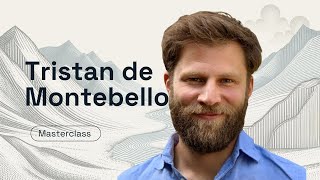
Tristan de Montebello, CEO of Ultra Speaking, teaches how to overcome speaking anxiety through exposure therapy and practical drills. He emphasizes speaking before thinking to access flow, using pauses strategically, and retraining your adrenaline response through deliberate practice to build genuine confidence.
Can you hear the music?
Wow.
Vibes.
Vibes. I would like death metal, please.
Maybe I'll do that as a joke. One session. Just some slayer.
Yeah, you just that way you put the nervous system at the max and then you do some vu hums. Have you or would you look. Oh, hello.
Good morning everyone.
Good morning, Michelle. Hey, Charlotte. Hey James. Good to see you. Hey, Brandon. Hey, Pete. Okay, we'll be starting in about two minutes time. If you'd like to share how you're feeling in this moment in five words in the chat, we'll start at three minutes past.
Hey, Johnny.
Hey. Morning. Hey Charles. Hey, Caitlin. Goodwater. Those of you just joining.
Yeah.
How you're feeling in this moment in five words or three.
Sa.
Okay, well, welcome everyone. Welcome, Tristan. Great to have you here. Take you off mute there. I'm still going to let some people in through the waiting room. Ocean is in Perth right now and it's 1am time, so she will not be joining us today.
Cool.
Well, I am. Man, I'm so excited for today for some context. Tristan is CEO of Ultra Speaking. He is also an alumni of Nervous System Mastery. And yeah, I mean, I mean, it's funny. Like you wouldn't think that Ultra Speaking or a speaking course has much connection with what we're doing here, but I took their course last year and I love both how they use games to teach and play. But my experience of Ultra Speaking was that it was basically like a personal development training in disguise. And I know you hear that a lot and I think there's actually a lot of interesting intersection and overlap between public speaking and the stuff we're exploring this week with emotions, nervous system regulation, obviously. So yeah. Welcome Tristan. It's good to have you here.
Thank you, Johnny. Yeah, it's great to be here. The way I wanted. I was thinking about this whole session and thinking about the intersection between Ultra Speaking and Nervous System Mastery. And I was thinking of all the things I could say and then I realized that it would be much better to start with a question because I want to find out where everybody is at right now. So the question I have for you is as follows. Why do you think we all experience anxiety, stress and nervousness? Sometimes debilitating anxiety when it comes to communication, when it comes to speaking. Although we're literally evolved for this, speaking is one of those skills that you don't have to teach when you're a kid. You learn how to speak. We have two areas in our brain that are dedicated for language learning. You don't have to teach someone to speak, you can learn to speak before you even develop complex thought. So why is it that as beings who are evolved to do this and to do this effortlessly, easefully, we struggle and experience stress and anxiety? Let's see some thoughts in the chat, and then we can turn it into a conversation. I see a lot of fear of judgment, fear of rejection, fear of being excluded. Good one. Exile lead to death. Yeah. Evolutionary reasons. We got a smart crowd here. The trauma, fear and lack of safety. Yes. Fear of shame and abandonment. Standing out is vulnerable. Yes. We're afraid to be judged, to fail in front of the public. So there's a lot of fear of judgment, need for safety, trying to do it right. Evolutionary reasons, learned behavior. That's a good one, Kelly. That it is not safe to be authentic. Do I want to communicate this or that? Fear, judgment, rejection, ostracism, childhood school experiences. Yeah, that one ties into what Kelly was saying. Learned behavior. I think a lot of us, especially those of us who experience intense anxiety, fear, it comes from a lot of learned experiences. Often times around the age where things start to matter. The end of high school, around high school, college. The voice is a portal to our true self. It's very revealing. Yeah. Will I be able to articulate clearly? I think we did. We hit on a lot here. Kelly, can you tell me a little bit more about what you mean by the voice is a portal, a portal to our true self? That it's very revealing.
Yeah. I just feel like when we make the choice to communicate and use our voice, it is a part of our authenticity that's shining through, or a mask. Then there's kind of a spectrum there between authenticity and the masks of our personality or our protection that we put on. And just in my own journey, as I've healed my voice and I allow more of my authentic expression. Expression to come through, I've had to work through a lot of fear, the vulnerability, what everyone says, that shame, feel, fear of rejection. And it's. It's a learned behavior to silence ourselves and to not speak authentically in order to stay with the pack or be accepted by our family, to retain that secure attachment. And so when we get on the path of healing our voice, we're just showing more of ourselves. And if we've lived for years or decades not doing that, then it's just very. It's very revealing while also being very intoxicating and exciting and liberating. So I almost feel like there's, like a tipping point when you get to the other side and you realize there's no going back to that sheltered expression anymore.
Wow. Ladies and gentlemen, give it up for Kelly. We're gonna leave the rest of this workshop. That was amazing.
Thank you.
Yeah, there's. There's excited for this. Yeah. So much that you shared. Thank you for sharing that. It's a learned. It's a learned experience. Very much so. There's the. The path of exploring your voice is a path of unlearning. As we go through life, we add more and more masks and filters that come out as symptoms and whether these symptoms are internal. The voice screaming in the background, all of your inner talk that's just so loud that it's almost impossible to ignore. The physical symptoms of experiencing anxiety, stress, heightened heart rate, sweatings, you. We. We all have. I used to blush like crazy anytime people would look at me. And then there's all the symptoms that are the ones we want to fix. Rambling, mumbling, not pausing, body language, and all these. The symptoms are what everybody wants to fix. And that's what drives me crazy about the way communication training is seen. We think it's a game of solving symptoms when I think it's an inner game of building trust. And you can see how those two are almost complete opposites. If you're already too much in your brain, you're overthinking, you're being hard on yourself as you speak, you're thinking, ah, that didn't sound good. That person there looks like they're bored. That person doesn't like me. I'm the dumb one in the room. Oh, why did I say that word? Something's wrong with my voice right now. Why don't I feel like myself? All of these things in the background, you can try to go out and solve them by fixing the symptoms, how to be more articulate, how to look more confident. Or you can go on the journey that Kelly was describing. A journey of growth, of reflection, of thinking. I'm going to go inside. I'm going to try and find what the root causes of all of these symptoms are, and I'm going to try to solve them. I'm going to solve for the root. I'm going to solve from the inside out. And when you do that, the wonderful thing about communication is that it's interlinked with everything else in your life. It's a meta skill. So anything you solve on this journey is going to help you everywhere else in your life. Suddenly, you start standing up a little bit taller, a little bit more confident. You can feel that everywhere Else if you're a little bit calmer, you feel that everywhere else. So that's what I think.
The.
The game of following, of pursuing trust, figuring out how can I trust myself so much that I can start shedding the masks and the filters that I've been wearing this whole time? And the way we do that at ultra speaking, and we're going to do a little bit of this here, is that we practice. There's no way you can get better at speaking without speaking. You need to practice. You need to be at the edge of your comfort zone ever so slightly, because that's where growth happens. And not only that, it needs to be fun, because if it's not fun, you're not coming back. There are no sports out there in the world that are popular, that are not fun. People dedicate their lives all over the place to these sports because it's a fun experience. And communicating at its essence is a very fun and exciting thing to do. There's some that type two fun. Yeah. I don't know if this one's type two fun. Sometimes it's type one, type two. So let's explore. I'd love for this session to be a little bit of an exploration together where I try not to give you all the answers and we try to uncover some of the answers as we go. And the way we're going to do that is by playing some of the ultra speaking games. And I'll ask for some volunteers. So please get ready to raise your hand immediately when I say, who'd like to volunteer as your comfort zone challenge? And we'll just play a few games and we'll try to see why do these games exist? Which part of the route are they trying to tackle? Why would this help in building trust? So let's get started. Who wants to be our first volunteer? Who is the bravest of us all? Nice. Eduardo, you're the one who's on the top left of my screen, so you get to go first. Let me share my screen. What's up, Eduardo?
All good. And you?
I'm doing well. Tell us where. Where you lie in the speaking spectrum. To me, first of all, there's two categories there. I don't look forward to speaking or I avoid speaking. And I look forward to speaking in these two. Where would you say you are?
I would say I look forward to speaking.
Nice. Generally, usually in a big group, the first person to volunteer does look forward to speaking.
Yeah.
So where's your edge, then? Well.
I'm not a native English speaker, so sometimes When I have to communicate with something more unprepared, I tend to pause a lot and tend to try to always try to find the right words. That gets me a little bit tangled.
That's an easy one to solve. Play around with that in a sec. I'm French. I know it doesn't sound that way because I lived the first 10 years of my life in. In the US I grew up in Paris, and so my native tongue is French, and so I know exactly the struggle you're going through. You're speaking English, and then suddenly the word comes in for me in French, and then I try to translate it. If you try to translate, you're already out of flow and speaking the whole point. And this is going to come up a lot here. Speaking is a subconscious process. If you're doing it right, you're not thinking about it, you're in flow. But the moment you pull out of your brain and you start going into translator mode, and I'm spending a second on this because English as a second language is very common, and this is the most common thing I see. The moment you go out into translator mode, it's a. It's a hit or miss. If you spend more than a few milliseconds there, you're out of flow, it's gone. You know that feeling? Yeah.
Yeah.
So my rule is I have a hundred milliseconds to decide, and then I have to move on. So I'll. I'm trying to find the word desert, and I'm saying. And I was walking in, and I'll be like, oh, how do you say that word? And I have it in French, and I'm trying to translate it. If it's there for me, I go with it. If it's not, I find a way around in this vast expanse of sand. Okay. Or in that big land that has lots of sand. The word's not coming to me right now, but I'm in there. And then as I speak, the word's gonna come back to me 100%. So I just keep going on the thread and then I pull on to desert.
Makes sense.
That's the key. Don't let yourself get pulled out of flow. Once it starts pulling you out, give yourself a. Just a moment and then make a decision and commit to go right back in there. Okay, so we're going to play a game that's not going to play on this. It's not going to give you the opportunity for this, or maybe, actually. But maybe we'll give you. I'll Give you a rep just to see where that goes. So the game we're going to play right now is called Rapid Fire Analogies. So I'm going to share my screen here. Every one of these games exists for a reason. They're all trying to figure out how to solve for the root cause of our speaking anxiety. And they each hit something very different. And they're all very fun if you learn how to play them. This one's called Rapid Fire Analogies. And this is what started ultra speaking. The way it works is we'll do four seconds. I'm going to just show you first. What you're going to see goes ready, set, go. And then you're going to see two random words linked together. Like push ups are like social distancing because. And what you have to do is you have to read this whole thing and keep going without pausing. So there should be zero pause after. Because video games are like cartwheels because they put you upside down. Luck is like blanking because you go inside out. Now here's the important piece. Here's the important piece. You just read and see what your brain comes up with and fill the blank.
Okay, so I complete the sentence?
You complete the sentence, yes. Now it doesn't matter whether or not you make sense. Okay, so at least for rep number one, your goal is just. Can I get one out for every single one? Ready?
Okay, I'm ready.
Here we go.
Daydreaming is like a mirror because you see yourself. Good. Blue cheese is like cash because it's expensive. Having kids is like a police car because classical music is like fasting because recycling is like french fries because. Oh my God, Scissors are like breaking up because they caught.
Okay, what happened internally between. What was the difference in how you felt internally between the first two and the last six or last four?
Well, the last. The last ones. I guess I was trying to make sense. I was trying to understand the first part before saying something.
So at the beginning you figured out how to play the game and you just went with whatever was there. In the second one you started having an interrupting thought.
Yeah.
Of like this. This idea that popped in your mind, Is it that good? Let's try to find a different one. Oh, no. Time's running out. We gotta move on to the next one. Oh, man, I can't believe we missed the night we missed the previous one. Now you're fumbling on the second one. And now it's right. It did. This is exactly what happens to us when we speak and things go wrong. This is what anxiety is. I'm out there, I'm speaking. Suddenly I say something that doesn't make complete sense or the way it comes out is not the way I wanted it to come out. And instead of just resetting and continuing staying in it, I somehow trip within myself. Everything just goes wrong, right? I start bumbling. I'm listening to the noise in my mind. I'm trying to pick myself back up. The first skill we teach at Ultra speaking, that's a skill that's going to get you out of a lot of problems. But that's more than anything, a skill of getting back into flow is the skill of speaking before you think.
Wow.
Everybody teaches think before you speak. We say speak before you think. Now, obviously, we can debate this at the end, we'll have some questions. There are many, many cases in which you have to think before you speak. But if you want to experience freedom in your ability to communicate, you need to be able to master the ability to speak before you think. And that's what I want to see here. So for this next round, you're going to go again. The way I'm going to make it easier for you is I'm going to make it go faster. So if you thought that was too fast, now you've lost a second, a quarter of the time for every rep. That means you just got to race through. And I don't care what you say. You could say, life is like a bicycle because the sky is blue. Grass is like an airplane because I don't like you. It doesn't matter. Whatever is in your mind, I want it to come out. And I'd love for it to come out with confidence. So we, we say stay in character, meaning, like the whole time, regardless of what's happening. Can you embody the confident version of yourself? Ready? Here we go.
Visiting your grandma is a skydiving because it's hard. A pumpkin is like buying coffee because it's hard.
Yes.
Curtains are like glue. We, because I don't know. Vulnerability is like a banana because it's delicious. Singing is like politics because it's complex. Artificial intelligence is like going to brunch because now I stop to think.
So that's to be anticipated. They put freestyle rappers under an FMRI and freestyle rappers. Freestyle rapping is the quintessential flow state. Right? It's when you put a beat on and you just start getting in the beat and just saying words. You find ways to invent a rap as you're going. What they found out is that when people were in flow, their brain was lit up a certain way. And at the very end, in the very last line of the very last verse, the brain would explode, explode. And the reason is they were pulled out of flow because. And this is so important to understand about speaking the words come after you finished the thing that makes the words. The words are the symptom of something, of an act. Okay. So as you're speaking, when the words are coming out, you've already finished that thought. So when you see the last one and you're reading the last one and it stops, you're realizing, oh, this is the last one, I'm done. And so again, distraction. So you're distracted in that moment and it's hard to stay in. You weren't expecting it, so it pulled you out. So the only thing you need to do is just know when I get to the end of these things, of any of these games, but speaking in general, it'll always feel like I'm already out of it. And so you must make an intentional effort to run through the finish line or to land the plane. Doesn't matter that you had a perfect flight if you don't land the plane. So tell us how this one felt. Definitely looked different. Yeah.
I guess listening to the fact that no matter if it made sense or not, I should just keep speaking, it gave me give myself some permission to just sound dumb. I guess so.
Well, let's.
Yeah, I think that usually I have a lot of filters before I say things, but a lot my work has made me that way in some. Some cases. So yeah, I have a lot of layers built on top, but.
And you feel the. So no, no, that's very important. So in a professional, in your line of work, you feel like it's important that you filter yourself?
Yes, it is very important.
What do you do?
I am an independent software developer, but it. I also do project management, I run meetings, I do graphic design, I do a lot of things. So.
So where do you need to filter yourself most?
Mostly when I am talking to clients and when they are speaking about what they want, I should be able to understand without confirming or committing myself to something before I put a lot of thought through it and see if time and budget are going to make sense to what the client is saying that they want.
Okay. So I see that as slightly different as filtering, but I see what you mean. You're trying to be very careful not to over commit or not to say something that they'll then use against you. Basically.
That's the right word. Being very careful with what I say.
Yeah. Okay. I think a lot of us can resonate with that feeling of being very careful with what you say. And I think that's one of the things that holds us back in a lot of situations. So it'll be very interesting for you to come in with a little bit of a different energy, a little bit of a more confident, slightly unfiltered energy where you can preempt the situation by saying, hey, we're going to. This is going to be a conversation. And at the end of it we'll recap and I'll tell you what I can and can't do. So you can. You can kind of gift yourself a little bit of a space to be more open. Filtering is one of the hardest things to do because it's like living a lie. Same similar with the mask. I talk a lot about masks and filters. Both of them are slightly similar. It's. I'm going to show up in a way that isn't completely me. And oftentimes we get trapped in those. It's like, oh, when I'm in with this group of friends that weren't friends for a long time, I'm a different version of myself. Do you resonate with that?
Definitely, yeah. Yeah. I get involved with many different kinds of people on groups and group ages and nationalities, and I totally.
How I am.
I talk and act differently with each of them.
Yeah, that's not a. That's not a way to live life.
Definitely.
That's heavy because you have to remember who you're supposed to be with everybody. So you need so much consistency. That's why I love the analogy with living a life you've ever been in a lie. Then you. Anything you say first has to go through the filter of the character you've built, but also of everything you ever potentially said in the past and whether or not it could give you up. It's so much simpler to live in truth because there's no filter. There's no need for anything. And I'd like to argue that in almost every scenario it's possible to be mostly unfiltered. So there should be. I don't like to think of it as a filter. So as a software, like, I'm sending this information and it has to go through this filter first. I like to think about it as a listener, like a keyboard listener. It's always there. It's always slightly on alert in the background, but it's a very light touch. So, for example, you'll be speaking and Suddenly, the listener in the back will kind of turn on and be like, are you rambling right now? Is this interesting? Have you paused? So it'll be like little things that pop up here or there that I'll just have very lightly in my awareness. And this comes from a lot of practice to have them be very light. So I have them there and I allow them to come in if I'm ready. If it feels right, I can allow it to come in a little bit and taste it a little. Is this is something up here and then what? Either I let it go or I make a change. But it's very different from weight going through the filter. Okay. It can come out. That's a very, very different way of being.
Yeah. The sequence is the opposite, basically.
So I want to give you one more go for this one. No filters, no masks, all in. I'm going to give you more. So I just want you to get a ton out. We're still going to stay on three minutes, so it's still going to go insanely fast. And I want you to do 12 in a row double what you did. So just like. And I love what you did. There are some that the first two came out, it was like, bad, bad. And then, boom, they started working. Anytime you don't know, just like we talked about in the beginning, the word that comes to you in your language instead of English and you can't translate 100 milliseconds. Do I have it? No. Boom. Go with the other one. Doesn't matter. Keep going, Keep going. Okay, here we go.
The stock market is like a molecule because it's huge. Goal setting is like a pill because it's comfortable. Calendar is nails because it can hurt. The horizon is like taking a selfie because it looks cool. Headphones are like pancakes because they're delicious. Leaving home is like CPR because you could die. Toothpaste is like a balloon because it can burst.
Yes.
Building a bridge is like a gardening because it's nice. Popsicles are like batteries because they can finish. Foam rollers are like a camel because they're funny. A tech dog is like marriage because it's long. A schedule is like texting because it takes time.
Let's go, let's go. Woo. Give it up for Eduardo. How insane is that?
That was. That felt so exciting.
That felt so exciting. Okay, so tell us what changed? Because the first time you went and the second time you went, there's something that was. You're holding on to. And this one just not only did it flow but the quality was so much higher too.
Yeah, I see that. Well, I guess that I, on the third one, I was definitely having fun. So I, I felt my heart racing, my body temperature getting a little higher, my body posture getting more like on top of the, the game. So I felt that.
What else? What if you were to describe, let's say somebody is going to come next, somebody's going to give it a go, what advice would you give them? What advice would you give yourself from 10 minutes ago?
Just enjoy it. If you just enjoy it and do not judge it at all, it helps a lot. It makes the flow better. Yeah.
So how, when I say, how do you do that though?
Well, when I say enjoy it, I guess you should not focus on make it perfect. But when you get it right or when you think that it will. It went through. I, at least it went through. Just enjoy what you said.
Yeah.
Wow.
Yeah. And I really, I also think a.
Couple of them went a little bit funny, at least for what I can recall, and that made me feel happy and just enjoyable.
So here's the thing. Most people do, most of us, I. You go through life slightly blunting your edges, right. You say a joke one time or you show up the way you want to show up and then somebody gives you a little remark because they're snarky and they don't feel good in their own, in their own being, you know, as a 15 year old or whatever, and they say, oh, that's not funny. You're weird. And you're like, oh, maybe I shouldn't show up that way. That was, I like talking like that. I'll just keep that for my siblings, not here. And sometimes you don't even do it. You're like, I don't know how this is going to land. So let me be like these people are right now. And everybody's thinking the same thing. So everybody's looking at everybody analyzing and thinking, what? How am I supposed to be right now? And everybody's trying to be how everybody else is being. So what happens is over time you end up a version of yourself that's not really you. And so you're holding in, you're holding this tension and you're holding all of this tension trying to control what's coming out because you think the version of me that's. That wants to come out can't come out because what if people side in this one, this last one, you said, I'm just going with it. And so some of the stuff that came was funny and it was funny to you, and so you just kind of laughed and let your. Oh, that was a funny one. I like that one. And so now you're. You're connected to yourself and there's no more tension. And as a result, all of them get better. You get smarter by releasing the tension. So we create the tension because we want people to think we're smart, we want to belong. We don't want to say something dumb. But it's by releasing the tension and getting into flow that we actually come out as smarter because you have access to all of you.
Wow. Makes total sense.
That's awesome. And I, I saw someone say I love someone. Put this. Nicole, super near super neat to hear people who like speaking still have the same physical sensations as those who aren't comfortable with it. Nicole, I love that you put that out there because we all have. Ramit Sethi calls it the snowflake effect or something like that, where we, for some reason, every single human thinks they're completely unique in their problems. It's like, yeah, that might work for Eduardo, but in my case, xyz. So being able to see someone, even someone who looks forward to speaking, someone who enjoys the notice. Oh, they also experience the same stuff going through their body, except they're interpreting it differently. And I think that's such a. It's so important to notice that. And you, you can create an intention to interpret it differently. So the next time you feel nervousness or anxiety or this or that, say, what if I saw this as curiosity, excitement, but just my body's aroused and excited to test this new thing to see what's going to happen. But there is no, there's no replacement for confidence and trust, which comes from practice. The only one right now who can truly say, yeah, I can do this, and it's fun.
True.
Truly with confidence is Eduardo, because he did the reps. So you might be thinking, I think I can do it. Or you might be like, I'm pretty sure I can do it. But there's always going to be something there of like, are you. You haven't tried yet. So putting in the reps, proving to yourself that you can do it is so important in building trust. Eduardo, thanks for stepping up. Thanks for raising your hand. Awesome.
Very powerful things. Thanks.
Who has a question related to what we just saw? You can just speak up if you'd like, because there are already so many hands up that I won't know. You can put it in the chat or, or just hop in. Remy. I totally resonate with that. I used to do concerts. I'd play guitar and sing. And the only moment I felt comfortable was once I started singing everything in between. I, I just did not know what to do with myself.
I, I can. I'll share an observation briefly. There was a moment that Eduardo kind of talked about the tension. And I think it's really interesting how we're exploring emotions this week in nsm and it's that exact same tension and contraction that kind of inhibits that natural arising of the, of the emotions. And I think it's, it's. So there's such a parallel there with speaking that I, I just thought was interesting to name.
Please keep coming in. I love. We had, we recorded a podcast episode that's coming out in a couple weeks with Johnny and it kept, it was a constant back and forth of. He would say something and I'd say, oh my goodness, I see this all the time at Ultra speaking. Or I'd say something in Ultra speaking and say, this is what explains that. So please continue coming in and explaining.
I'll just chime in every.
Yeah, awesome. Charles, who had a question? Yes.
Can you hear me?
I can hear you from afar, but I can hear you. I.
Just go ahead. So I think, I mean, one of my doubt is about the hormones. It's like adrenaline, which is so hot when you are trying to do public speaking that all your confidence, interest or your mental balance goes off for a toss, right? So like, as much as you want to push yourself for confidence and trust, how do you deal with that emotion with that hormone adrenaline, which makes you a hardcore faster, maybe just makes you numb.
The short answer is exposure therapy. You're experiencing a much, much lesser version than people who experience true panic attacks. So what the way a panic attack. I like thinking about it this way. The way a panic attack works is one time you've had a true panic attack where it says your nervous system goes completely out of control to the point sometimes where you're, you're, you'll be totally incapacitated. Okay. What happens is, let's say that happens when you drive a car because you had a, I don't know, you had an accident. Next time you walk towards your car and you sit down in it, you turn the car on and then suddenly you feel your heart go and just go a little bit faster than it usually goes. Or at least that's the thought you have. And you think to yourself, oh, oh no, my heart's beating fast. Is this going to be the time I get another panic attack? More Cortisol, more adrenaline. Your heart starts beating a little bit faster. Oh, no, it's going. It's going faster. Oh, my goodness, now I feel some tingling. That's exactly what happened last time. Next is the headache. Oh, good Lord, here comes the headache. And you just go into this hypersensitivity that creates this vicious cycle that turns into what becomes a panic attack. The way you solve for that is you go to a parking lot and you hang out in the parking lot. You don't walk into any car, but the moment you're going to get to the parking lot, your nervous system is going to start turning on and it's going to be a little bit scary. And you're going to notice, ooh, my heart's beating faster. You're just going to stay there until your heart calms down and your nervous system comes back to rest. And you're going to do that a second time. And you're going to do that eventually, pretty quickly, actually, you're going to walk into the parking lot. It's going to do nothing. So then you're going to walk into the parking lot and you're going to open the door of the car, and you're going to sit in the car and you're going to notice, oh, my heart rate's coming up a little bit more. And you're just going to hang out in the car, and then you're going to sit in the car and turn the car on, and you're just building up. You're exposing yourself to this thing, teaching your nervous system, hey, it's okay. You're actually safe, just like you would a child. So when it comes to speaking, it's the same exact concept. People who have the most anxiety, the most adrenaline tend to also be in the same category of the people who avoid situations where they could be called on to speak. So it's the opposite of exposure therapy. If you're scared of the cars and you go live in a forest, your fear of cars is only going to go up. And the moment you hear the noise of a car far away, you're going to heart's going to race. But if you live in a city, even if you were that same person, the noise of a car will do nothing to you, Right? So the solution to your problem here is you have to start switching your mindset from one of avoidance to one of going towards to one of attraction. You want to start saying, I'm going to go put myself in situations that raise my heart rate, that give me that feeling of Adrenaline. And for some people, I know for a lot of ultra speaking students, it was, I'm just going to play the games by myself alone in my room. One of my students, I think for two months, two whole months, didn't see a human being in practice and spent two months playing the games because. Because that was. That was still raising his heart rate. He had debilitating anxiety around speaking and then eventually that didn't do it. And so he started joining some classes with other people playing the games. And that would raise the adrenaline. And so it's the same idea depending on where you are. So I talked to the whole group. Now, it really depends where you're at, but we all have an edge. For some of us, it's just being in a room like this with our camera on. One of our coaches, our top coaches, Santosh, for the first two months, he came to all of our workshops with his camera off and audio off. Then he turned his audio on and asked a question. Then he showed up with his audio on and camera on. Then he started going to every single class. And now he's one of our best coaches. So everybody has a different limit for other people. You wanted to raise your hand and be a volunteer or you wanted. You had a question in your mind right now and you didn't ask it. That was your comfort zone challenge. And most people here have something that came up during this session that is a question and didn't raise their hand. And it's okay. But I encourage you to raise your hand because that is the path. Every little instance where you can take one step in that direction of the thing you were avoiding is a step towards the tipping point. While you're here, you want to play a game? Yeah. Rachel, you have a question. Can it wait for a rep or do you want to ask it right away?
No, no, it can totally wait.
Okay.
Okay.
I want to give you a little bit of adrenaline. I'm going to give you an easier version of rapid fire analogies that's going to complete your brain a little bit. Analogies. Rapid fire is two words that have nothing to do with each other. So they're purposefully built so that your brain struggles to come up with an idea. This one, your brain always is going to have an idea. It's the same concept, except now we have a qualifier. Fasting is crazy because you don't eat for so long. A police car is important because otherwise there would be crime everywhere. A dentist is sensational because they fix your teeth. I just want you to get something out for every rep. So this is your opportunity to get over the adrenaline. You ready?
So if I got right, it's same as the last round, right? Which I thought of.
Same exact thing.
Okay, let's go for it.
Here we go. Wait. Oh, that's funny. Sorry, I thought I was sharing my screen. That's why I was just waiting for you to go. This is much better.
Yeah.
Okay, you ready? Here we go.
Yeah.
A newspaper is disturbing because it's funny. And I think it's depressing because it's. It helps me focus. Meeting your soulmate is unfair because it leads you to heaven. Good sleep is wrong because it can make you awake. Patterns are terrible because they are long. A paper bag is beautiful because it's natural.
Yes. Let's go. No, man, I have a question. I have a question for you. Where. What was your stress level. Uncomfortability level in the beginning of this? Like before going in? Yeah.
So I think that was pretty normal when you were answering my questions. But the moment you asked me if I am ready to go, for a while, my heartbeat actually went up. But then again, I told myself, let's apply curiosity here. It kind of went down. And opposite of curiosity rather than here. On a scale of 10, it was somewhere around three to four.
How much? Three.
Three to four.
Three to four.
Nice. Because I gotta say, I. I didn't notice.
I.
You know when you said. When I asked you and you said, okay, here we go. Yeah, it looks like, okay, here we go, I would have reacted exactly the same way. This is an important piece of the puzzle. So important for everyone. People cannot see what you feel. I cannot see what you're experiencing internally unless you show me. This is so important because if you understand this, that when you walk up on a stage or you enter in a group of friends or you're talking in whatever situation and you feel super stressed, you're like, oh, my goodness, I just fumbled that word. Or oh, I'm sounding so dumb right now. Or I'm sure they can tell that my voice is trembling. I can almost guarantee you. And I say almost because there are always exceptions, but I've proven this hundreds and hundreds of times in front of large groups. Nobody can tell when you came up here if you hadn't told us. I tend to experience adrenaline. I'm nervous. It would be invisible. How can you tell the difference between blanking and pausing? If I tell you. If I say, oh, my God, sorry, I'm blanking right now, then you know I'm blanking. But how do you know that that pause I just did two seconds ago was a pause that I chose to do, or that I'm using to think, or that I'm comfortable with, or that I was extremely uncomfortable thinking, oh, no, what do I do Next? I have 40 minutes left in this workshop. Where should I go from here? Could you tell the difference? Impossible. So this should be supremely reassuring that your inner world is your inner world. That's why we talk about staying in character. Your inner world is safe within you. So when you're out there and you feel the adrenaline, you think, oh, everybody can tell that I'm so nervous because I'm feeling so much adrenaline. But if that's not the case, and that's not the case indeed, then it's so much easier to let it go, Right? It's so much easier to be like, well, okay, I'm feeling a lot, but nobody can tell anyway, so let me focus on the thing I'm doing. And before you know it, like you said, I'm just going to go in and play the game. It just disappears. Let it go. Yeah. Like Remy saying for me, I. I see the analogy. I like waves. So I see the analogy with a wave. There are two types of waves. There's the wave that's coming towards the shore, and there's the wave out in the ocean. The wave coming towards the shore will build up as it hits the ground, and it'll lift up, lift up, lift up, and eventually it'll break. That's what happens when you have adrenaline and you focus on your. On all the adrenaline, and you're thinking, oh, my goodness, I'm so nervous right now. Everybody can tell I'm so nervous. Why am I always so nervous? Now people don't think I'm confident. They probably think I don't know what I'm talking about. That's just building up, building, building, building. And eventually it breaks. And now everybody can see. I can't tell you how many times I've had somebody say, oh, my goodness, I'm sorry, I'm blushing right now. And I go, stop, stop, stop, stop, stop, stop. And I turn to the audience, I say, please be perfectly honest. Did anybody pick up on anything related to blushing? There's never a hand that goes up because that first moment when you feel the warmth in your body, it's invisible. Now, here's what used to happen to me. I. Somebody would, like, people at the table would look at me and I'd think, immediately, oh, I'm blushing. I could feel the heat Coming to me. And I'm like, oh, no, I'm blushing. I'm blushing. I'm blushing. And now I try to answer while thinking, oh, my goodness, I'm blushing. I can't believe I'm blushing. Oh, no, this is gonna. This is gonna feel so awkward. I know what happens next. What happens next is I try smiling and I forgot how to smile. And I'm like, because I don't know how to do it anymore because something's wrong. And I'm like. And then I feel that, and I'm like, oh, no. Now everybody can see that I'm trying to cover the fact that I'm. I can guarantee that that moment, by that moment, people can tell I'm blushing, can tell there's some awkwardness within me. But since then, since I've solved this, since I've understood this very simple fact that people can't see what I feel. I've had many instances of, oh, my body just warmed up and I go, okay, fine. And that becomes the swell outside in the ocean. I've been in the ocean with swells twice my size. Monsters. Like, they look like buildings, but you just go over and they pass you and there's never any white water and there's never any breaking. That's what happens when you don't give it attention. Thanks for your question, Iman. You got lots of props in the chat too. You should look at those. Rachel, let's take your question and then let's move on to another idea.
Cool. Well, I just would love your feedback because. Or I guess, like your. How you view this. Because I have, like, there's definitely times that I have to filter myself, you know, when I'm like, with clients and I have like, you know, just like random things that pop into my head and then. But I do notice that I, I will show up differently with some people, like some of my friends who feel like more maybe like serious and or, like sensitive. I feel like I won't, you know, I, I do filter myself a little bit and, and not say, you know, the weird, funny that came into my head, that could be also inappropriate, you know.
So what's your question?
I just. Yeah.
What?
Because I know that you were. Or you were talking about that earlier and you were saying that that's. I forget your language, but you were saying that that's really sad. And so I'm just curious. Like, in. In some situations, I do feel like the filter is necessary and just kind of want to know your thoughts on that.
Yeah, I agree. I Do think they're. That's the social side of communication that we do have to learn. So we, you put a kid in any environment, they're going to learn how to speak, but they're, they're going to have no manners, they're going to be completely blunt, they're going to have no empathy, they're going to have no capacity to judge when it's, when it's not okay to say something or when they've gone over the line. So I do think that there's value in knowing how to navigate social settings. And you know that there's some people you, but you have to. I guess the difference is my barometer is always do I feel like myself? Because I can totally feel like myself when I'm saying super inappropriate jokes and just joking around and having a blast and you know, just being super goofy. But I can. There's also a version of myself that feels very much like myself where I'm very focused and very much, much more serious. And there's a version of myself that navigates situations where I have to be much more proper. But the barometer is always where how true to myself am I right now? Am I, did I come at it? Does it feel icky and heavy? Is it effortful to be this version of myself or is it effortless? I think most people, and some there are exceptions to this, but most people have the tendency of over guarding, over filtering. That's why I insist on this a lot. Because most of us are so different in our real life, in our day to day life than we are at work. And I don't believe you should be, you should be at work the same you are with your super inappropriate friend. But if the gap is too big, something's wrong and that's going to weigh on you. So my, my philosophies there is look for effortlessness and always play at the line. You want to, you do want to figure out that joke that you're like, maybe I try it a version of that, maybe I let it go and see what happens. You want to, you want to play at the line because you can't find balance if you don't go over. No, you're never going to be able to do a handstand if you're never allowing yourself to tip too far. That's the only way to find balance. You got to go a little bit too far and then come back and a little bit far come back and you just go smaller and smaller and smaller. So that's, that's when you know, you're in the right place. I feel like myself and I'm playing at the line. Does that help?
Yeah, that's beautiful. I love that.
Awesome.
Yeah, thank you.
So let's check in. Where. Where are we at right now? Let's see. I got to catch up on a few of these chats too. Hey, Charlotte, Good to see you. Oh, you have a question around pausing. What goes through your mind when you take a pause before you answer?
Sir.
I. I definitely want to talk about pausing. Let's see, what's this one? I was wondering if it's better to have a well rehearsed speech or talk or to be in this flow. That is a very great question. Okay, those are two phenomenal question. Let me say one thing really quickly.
On.
Memorization, there's a difference between well rehearsed and memorized. And I think in most cases, memorizing is a very bad strategy. It's a bad strategy because that's not setting you up for a state of flow. It's not setting you up for freedom in the moment where you speak. In addition to that, if you memorize word for word, your memory, you're adding link after link. Each word is a link. So you got a chain. The moment, 1 node A of that change, that chain is cut. You've lost access to everything and you're stranded in the middle of the desert. So if you're memorizing, it always will come with that, with fear, unless you spend days and days and days and months and months and months memorizing. Which I did. The reason Ultra Speaking exists is because I met the co founder, my co founder, Michael, when I was starting a crazy learning journey to see how much I could improve my speaking skills in a short amount of time. And I ended up discovering that there is such a thing as the world championships of public speaking and being the last person to sign up. And over the course of six months, I competed with the help of Michael in this competition. And I made it to the. To the top 10 in the world, to the finals. And that's what started the whole snowball effect of what became Ultra Speaking based on a lot of the things we learned there. And the first three months of that competition was specifically me learning words by heart. I would write things down, edit them, edit them, edit them, edit them, learn them by heart, go on a stage and play theater. And I would play everything out and walk the stage and this and that, and be a public speaker. It's extremely hard, extraordinarily hard, to be natural and to come off as natural when you're doing that, you try stand up. Comics spend their entire life trying to. Trying to do that. They know every word of their jokes, and they work so hard to make it sound like it's the first time they're saying it. It's much more interesting to rehearse in a way where you're un. Remembering the concept. So you know the one thing, the direction you want to go in, which we call the one thing. And you know the bookmarks you want to hit along the way. So we have a technique called the accordion method, and we won't go into it today because I don't have time, but you can. You can look it up. On ultra speaking, the concept is you choose a one thing. Your direction for your talk or your presentation or whatever it is you're preparing. And then you put a timer on, let's say for five minutes, whatever. Time doesn't matter. It just has to be a lot shorter than your speech. And then you give your speech. And the only rule is you have to stay in character the whole time. And you have to keep speaking for the whole five minutes. You can take a pause, but you can't stop three minutes in. And then once you're done on your piece of paper, you look at your one thing and you think, is this still the right one thing? And then you look at the other pieces. You probably have a story there or an anecdote or something, and you try to find keywords to remember them. And there should only be three keywords. Most of the time, each one is reminding you of something you hit, and then you change your timer and you put it to three minutes, and you go again. And now you have your one thing and the three things you need to hit, but you have less time. Then you do two minutes, and then you do one minute. So what you're doing is you're forcing your brain to get rid of all the noise and get more and more clarity on what it is that's important in your talk. And you go down, all the way down to 30 seconds. You do 30 seconds twice, and then you build back up. And that first five minutes is going to feel super messy, yucky, disgusting, but it doesn't matter. The purpose of that is to get everything out of your brain. And the next time you get back up to three or five minutes, suddenly it feels like you have infinite space and so much clarity. And in that way, you've rehearsed in a way where you haven't learned the sentences by Heart. You haven't learned the words by heart because you can't. Since we've constantly compressed time. If you rehearse in the same amount of time, your brain is going for safety. It will learn it by heart. There's no other way. But if you constantly change the time constraint, then you're. You have no choice but to remember something else, that when people walk on a stage or walk, go into the meeting or whatever it is you've prepared, I always say it should. It should hold in the palm of your hand, you should write, be able to write the one thing. And then like toothpaste crackers and conclusion or whatever. And like toothpaste reminds me of this whole story or this study I had read on people taking care of their teeth that influence blah, blah, blah, blah. Once you've told the story in many different time constraints, you have total freedom. So that's how I think about rehearsing. Rehearsing is important and extremely valuable, but you don't want to learn things by heart. So instead of having a chain, if you do the accordion method, you end up with a very solid, beautiful tree. So now it doesn't matter that you forget a branch, break the branch off the tree. It's still a magnificent tree. And not only that, there are tons of branches that are unexplored, whereas the chain is very linear. Once you're on it, you're on it. In the tree. You have a infinite amount of branches and leaves and things that you can explore while you're talking. So you've trained for five minutes and your talk is 10. Now you have so much space. There might be something that comes up, an insight in the moment. Michael, who was coaching me, my co founder, used to always say, let's find out what your brain comes up with in the moment. That's such a valuable way of living and such an interesting way of exploring speaking. So let's do pausing. Who wants to volunteer and play a pausing game? Steve, we had, actually. We had, we had. Okay, we'll go with. We'll go with Steve.
Oh, no, that's too much for me.
Okay, Steve, what we're gonna do. How do you feel about pausing in general? Is it something that you feel comfortable doing, tend to struggle with?
No, I absolutely struggle with it because I generally, my problem is that I keep on talking until I run out of breath, and then the panic attack comes because then I think, okay, am I just dying or is it just. Do I need to paus. Do I need to pause for 30 seconds? Or maybe A minute. And then within the social situation that you're meeting with a client or something like that, it's. It feels so totally inappropriate and awkward. So I try to prevent coming in the situation that I run out of breath. But. Okay, I'm already talking too much again, I think.
No, you. That was perfect. Okay, that was perfect. I can guarantee you that there are a lot of people in this group that have the same thing as you. I see this a lot. To build the trust, we need to demystify it. So you need to. It's. It's simple. Pausing is the most valuable and the most powerful tool in speaking. If there's only one thing. If I were stranded on a desert island and I had only one thing that I could talk about related to speaking, it would be pausing the breath that comes with it. But it's the hardest thing to do, and it makes no sense because all I have to do to pause is do nothing. Isn't that insane? There's no skill to pausing. Just stop, do nothing, Wait, wait long enough. But it's hard. Much, much, much complex.
Because do you pause to make up your mind or do you pause to focus on your breath and trying to calm down a bit?
You do both. I'll use pausing to refine my thinking. So in the moment, I think, wait, what do I really want to say here? And I'll slow down or I'll stop and I'll contemplate and I'll wait. What I.
What?
Pausing is the art of not doing. If you stop speaking and go, okay, what should I do here? Is this, this, is this, this, this, this. Little faster, faster, faster. Come on, quicker, quicker, quicker. The time's running out. Come, go, go, go, go, go, go. Yeah, I know I don't have it now. I've been waiting for so long. That's not a pause. Yeah, pause is like, ah. And then you wait, and then you notice something pops up and you're like, oh, that's cool. And something else interesting, you're like, but what is it? Oh, that's interesting. Wait, is there anything else? Ah, okay, I'm ready. Here we go.
But. And then it can feel so awkward when you're into like doing an introduction elevator speech. 15 seconds. So then I think there's no room.
For pausing in that feeling awkward internally is not the same as looking awkward externally. Yeah, I can't see what you feel if you've never paused and if you hold this feeling of pausing is awkward, then it's going to feel awkward for you. Of course if you learn any skill, if I get you on a bicycle and you've never ridden a bicycle, it's going to feel extremely awkward. It's going to feel impossible even. And then you're going to learn to ride. And then standing on the bike is going to feel. Sitting on the bike is going to feel super familiar. And then you're going to be able to do it without even thinking that you're doing it. It's the same thing with all of these skills. You just haven't spent time feeling comfortable pausing. So true. Good news. I have a game for that.
Nice.
And it's called snow globe. Can you guess why we call it snow globe?
No idea.
When you're speaking, the feeling you described of, like, I'm running out of breath, I'm words, words, words. To me, that's the feeling of I'm shaking, shaking, shaking, shaking the snow globe.
Okay. It indeed feels like that.
Yeah. And so the thing I'm trying to share, that we have that light bulb in the back. The thing I'm trying to convey is within me. And so I'm. But I'm shaking the snow globe so much that there's so much snow that I can barely see through it. Well, what happens when you stop shaking a snow globe light? Then you can see. So the act of speaking, speaking is segments and gaps. Segment, gap, segment, gap. The segment is the moment where you know what you're saying, you're on a roll, you don't need to think. It's like, oh, I got something interesting. A segment by definition has an end. The moment you get to the end, you feel it. It's like, oh, this feels different. Now. I'm on uneven ground here. I'm. It's not as clear where I need to go. During the segment, you're shaking the snow globe. When you get to the gap, you have to stop and let the snow come down so that you can reorient. And with the magic of speaking, is that the very act of speaking is changing you. A lot of speaking is thinking out loud. And when you're doing it correctly, when you're in flow, it's a flow state. You should be discovering the words as they come out at the same time everybody else is. So by the time you finished speaking, as time you finished a segment, you're a changed person. Your thinking is slightly different, the moment is different. And because the moment is different, you have access to a new insight. You have access to a slightly different perspective of the thing you're sharing. So either you keep on speaking and you're limited to that first perspective you had at the very beginning. Or you stop, relax, look around and you can see. Oh, interesting. I can see more nuance. And then you type. That brings up a new segment here. I got one.
Boo.
And you go on the new segment and then eventually you get to the end of that one. It's the same process when you're training. You need to exaggerate everything. So we make long pauses. The more you train, the more you'll be able to access the state of calmness quickly. To the point where sometimes you can pause just by slowing down or get that clarity just by slowing down in a gap. And sometimes you need a two or three second pause or more. But a three second pause feels like seven years when you're the speaker. So let's give it a go. This game, you're going to get a random title. Okay. I'll show you what it looks like, actually. So this will, you'll get a different one than this. If money were no object, what would you do all day? And you'll just start speaking. Okay. And what's going to happen is that I'm going to force you to pause because this is going to start going down. And at the end of this you have to stop speaking. And only when you're ready, you pick back up and you start speaking again. And then you're going to get another one and you'll do the same thing. Okay, so this keeps going. The only thing that I want you to do is whatever you're saying, make sure you end it by the end of this.
Okay?
Okay, here we go.
Living in a diverse world brings more meaning and variation to the things we see, the things we do and the things we enjoy doing.
Take the breath.
It gives us the opportunity to have different visualization of what we see and who we work and live with. And it's not only in your daily life when you go to work or go to the stores or have a meeting, it's in all kind of things with nature and animals. And the clue is to enjoy the diversity and see the beauty in every aspect.
Nice, nice. Tell us how the pauses felt.
Oh, awkward. Because, well, physically it felt good. But, but my mind went all the way that I, I thought, oh man, this is such an immense question. I don't know where to start. I don't know where to end. So it, it felt, I was just rambling about it, not coming up with the, the good words or arguments or sentences, but.
So is that, is that what you were thinking about in the pause. Okay. Physically, it felt good. That's huge. Yeah, yeah.
So I think that that was a very learnful experience.
Good. So during the pauses, you were thinking like, I can't. I'm struggling to get to the root of this. Or how can I make this more interesting? What was going through your mind?
Exactly that.
Exactly that. Okay.
Yeah, yeah, yeah.
So now I want you to go again. And this time during the pause, I want you to not think. Okay. And I want you to take a much bigger breath. Let's exaggerate that. Because what I. What I'm trying to achieve is that you release everything. So you get to the end and then the only thing you're trying to do is that feeling of, oh, that felt good in my body. Enhance that time a hundred meaning. Forget all of what you're talking about, all of it. Don't think even an instant about that. Act as if it were completely done and just go. Or okay, and only once the breath is completely done, like it's it that that feeling happens like a second or two after the end of the out breath. Then look around, look inside of your being. Because the way I imagine this is your subconscious is a butler who always has a great idea ready for you. So you have your personal butler inside of your mind right now. What any given time is waiting with a perfect idea, a really interesting insight, an edgy version of what you're talking about. It's always there for you, but the only way you can access it is by silencing your thinking brain, which means going completely in your body and just. And allowing for everything else to kind of quiet. And then, boop, the butler's going to appear. So for this next one, you. You go again and only start speaking once you see the butler. Once you feel like, oh, that's an interesting idea, you'll be doing this right. If I see you almost skip a whole revolution where you're going to have a pause, you're going to be in and you're going to. It's going to start again and you're just going to still be thinking. That's you doing it correctly. Ready?
Yeah.
Easy one.
The purpose of life is actually an easy one because when you start looking at it, you realize that the purpose of life doesn't exist.
Nice.
Yes.
Good.
You come to the world with an idea that you're building up something, growing into something or someone. But it's all in your imagination only. You simply start each day doing what you enjoy most and start walking outside and the next day you realize you can do it all again. And maybe that simply was the purpose of life.
Wow, that was a beautiful speech. I'd love to see some reflections in the. In the chat. Like, how did Steve come off to you there? What was. What was different? And Steve, tell us. You. You really gave yourself permission there. It was beautiful. And I love that you closed your. You closed your eyes. Like you'll notice. I. I'm sure you. I don't know if you notice, but when I think, oftentimes I'll look up into the somewhere. I look away because it helps me empty my mind or I look into. Into nature out there. So closing your eyes kind of allowed you to go in. Right. Tell us about that.
It.
It was mostly. Yeah. I closed my eyes maybe more to force myself into the breathing, not get distracted. And I felt a trembling in my body while inhaling. A little bit panicky, thinking, what did I say? And what am I going to say?
Nice.
And each time when I exhaled, I thought about the butler and I felt let it go. Just so I took the moment of breathing out to forget what I was thinking and just trust in whatever comes up when I start talking again.
Did it work? Was the butler there?
Absolutely. It's too early to judge if the butler gave me something that made sense, but at least I let go of the idea that I need to have the. The thought of. What was I. What I was going to say.
Yeah.
Yeah. And that's exactly what this is all about. Releasing the need.
Yeah.
To perform. Releasing this. This desire for control over the outcome that is.
Oh, yeah. That's absolutely the problem.
Yeah.
Yeah.
We need to be in a state of surrender to the process.
Yeah.
Take a moment to read through the. The reflections we have. Well, that was striking.
Thanks, man.
Sort of commanding. Yeah. Lots of beautiful things there.
Very cool.
My pleasure. I recommend for. When it comes to learning, I. I believe it's extremely important to exaggerate the thing you're trying to learn. A pause in deliberate practice, if you're truly trying to learn how to pause is only valuable, only counts as a rep if you've waited long enough for the next insight to come. Most people will pause long enough that it starts feeling uncomfortable and then they start speaking. That's not a pause. And the reason why we do that. And I've seen that last 20, 30 seconds, just somebody just waiting and waiting and waiting and waiting. And it's actually a wonderful experience. It's a wonderful experience when you're in the audience because you get to relax as well. And as long as the person in front of you looks confident as they're doing it, you're like, I think things are okay right now. I think this is intentional. People will always think things are intentional at first, but this was part of practice. And Josh Waitzkin, who won the World Championships of Tai Chi, push hands the first time he went to Thailand to compete, got they. They tricked him because it's a very. They're very proud of this sport and they didn't want a foreigner winning. And he had made it to the finals. And so they said, oh, we're going to push back the final. And so he went and had a huge meal. And he was relaxing after his meal. He just finished. And then they said, oh, it's happening in five minutes now. And he got completely caught off guard and was totally out of his element. And so he spent the next year creating a way for him to get into the zone. And the way he describes it, I think the process he went through would last more than an hour at first. And every single time after training, before training, he would spend this entire hour going through every step that included breathing exercises, music, visualizations, like he had a whole process and that got him to the zone. And once he had mastered getting into the zone, he started trying to master compression. By the time a year later, he made it to the finals again or the competition, he said that all he needed was a single breath and he would be completely tuned in and he won the world championship. This is what this is about. Spend the time first understanding truly what is available to you within a breath, within a real pause. And once you get it, truly get it, then play the game of trying to compress it to the point where all you need is a quick a breath to access the butler. And one easy way to do it is you play reverse snow globe. So you're in silence the whole time and you only speak during the moment where it says breathe in, breathe out. Thanks for stepping up, Steve. That was awesome. How does this work, Johnny? I could go on infinitely, you know me about this, but I think we're at time.
This is. Yeah, this has been so great. There was someone in the comments was saying we need to have a part two. This has not been long enough with you, so you have been summoned. So maybe we'll. We'll find time for part two or next cohort. But in the meantime, if people want to do more reps for themselves, learn more about what you guys are up to, what would be the best place for them to check out.
So if you go to ultraspeaking.com, you have access to most of the games and some of our self paced courses for free. And then. But we also have cohort based courses and year long memberships where you can get access to unlimited cohorts, all of the games, all of our self paced courses, and all of that. If you want, we have two main courses, fundamentals L1 and professional L1. If you want to learn to get into flow, to feel like yourself and to reduce your anxiety, then you want to go with fundamentals. If you feel like you're already advanced and you want a little bit more tactical things, getting more influence, buy in for your ideas, speaking to executives, preparing talks, then you go to professional. But a lot of people go through the whole process, so ultraspeaking.com, you'll find everything there. Thanks, Johnny.
Amazing. Well, thank you so much. Yeah. Does everyone want to take a moment and just share some appreciation for Tristan in the chat as well? I feel like a nice way to close. This was. This was so much fun. Yeah. And as I mentioned, I've done ultra speaking and I just, I get blown away every time I see this happen. And the, the butler in particular was something I used in a podcast last week and I paused for like, like 15 seconds. It was super edgy.
I love it.
Yeah. Beautiful. Beautiful. Well. Oh, man. Dude. Thank you. Thank you so much. Enjoy. Enjoy your day in Hawaii and we'll see you again soon.
Wonderful.
Any. Any parting words before we, before we go?
From me? Yeah, My parting words is we had this as a slogan one at one time in the early days. Speaking is just a game. Learn to play. I think it contains so much of the philosophy here and the freedom that's on the other side. And we've heard this from some of the participants too. Like when you start getting it, when it starts working, it's so fun. And it's just, there are rules to this game. There's a lot of techniques, and you can learn them and achieve just a magnificent level of freedom in your ability to feel like yourself and navigate the world. So treat this as a, as a skill just like any other, and a game that's really, really fun, the better you get at it.
Beautiful. Well, we will wrap with that if you guys want to unmute and say, thank you, Tristan.
Cheers, Tristan.
Thank you, Tristan.
Thank you.
Thank you, Tristan.
Tristan.
Thank you. Thank you.
More from Jonny

🧑🏫 A Panic Attack for Joy? Unpacking Blissful Jhana States w/ Stephen Zerfas at Jhourney Replay


👨🏫 Guest Masterclass: The Art and Science of Functional Breathing w/ David 'Jacko' Jackson

👨🏫 Guest Masterclass: Nervous System Functioning & Cultivating Greater Regulation w/ Satori Clarke

👨🏫 Guest Masterclass: Our Inner Cyclical Seasons & Menstruality w/ Zahava Rose

👨🏫 Guest Masterclass: Tools for Nervous System Regulation + Emotional Expression w/ Satori Clarke


👨🏫 Guest Masterclass: The Science of Touch & Leveraging our Human Physiology w/ Eddie Ulm

👨🏫 Guest Masterclass: The Art & Science of Functional Breathing w/ Conni Biesalski


👨🏫 Guest Masterclass: Increase Body Awareness Through Self Touch w/ Tessa Carolyn