👨🏫 Guest Masterclass: Q&A with a Psychedelic Guide w/ Dr Michael Yang
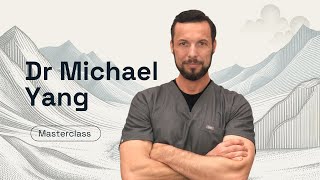
Dr. Michael Yang explains ketamine's effects on the brain, from low doses that feel like "three beers in a jacuzzi" to higher psychedelic doses, and how to use it clinically for depression, PTSD, and suicidal ideation. He covers dosing, safety, integration work, and the ethics of scaling psychedelic care.
Welcome everyone. Good morning. Looks like it'll be a slightly more intimate group this morning, which is kind of great. And welcome to Dr. Michael Yang. How are you?
Hi, guys. Very, very good. Thank you for having me. I feel like it's a tradition of ours now to have mild technical difficulties at the beginning that are entirely of my own doing.
Yeah, it feels like it's a tradition now. Well, I want to briefly read your bio in case people haven't seen it from the session, but Michael is a. And please correct me if any of this is wrong or needs updating, but you are a integrative medicine specialist based in la, recently returned from Australia and specializing in ketamine treatment. After completing your doctoral work, you went on to PhD at Pan American University studying the intersection of pain, metabolism and depression. And during your training, your academic knowledge and the family secrets that we might get into of being raised in a household of physicians and folk healing grandmas were added upon through extensive travel and study throughout Europe, Central and South America, witnessing what traditional medicine looked like around the globe and how they can be applied in a more medical context. So with that as a prelude. Welcome. Welcome, Michael.
Thank you.
Thank you.
I think that's a pretty good summary. Just so I am clear and I apologize. I was saying. I just. Honestly, I touched down in LA about 90 minutes ago after 15 hours from Sydney. I was down at south by Southwest speaking on psychedelics and mental health. So I can give you everything that is fresh from. From down under, including the fact that they don't say down under, which I thought that they would. And so I looked foolish and I said, I'm down under. They said, we don't say that. I said, do you drink Fosters? They said, no, we don't drink Fosters.
So does the toilet spin the other way around when you flush it?
Yes, absolutely. That is true. Yeah. Yeah. That's the only true thing. And they have. And kangaroos drive the buses. If you've never. Have you been to Sydney?
I spent time there, yeah.
It is delightful. I didn't. I truly didn't know. I've been lucky. I've traveled a lot, but Sydney is one of the places I hadn't been to. It is just a magical city on. On so many levels. We. Not to mention. And just the city itself is incredible. But the number of people we met were really wonderful. So I thought that maybe for. We have 90 minutes. I thought so for 45 minutes I can give a sort of rundown of what we've been involved in and what I think will be most relevant for the NSM community. And then we'll take Q and A. Is that right?
Yeah, that sounds. That sounds perfect. And if people want to add or write questions in the chat while we're going, and then we can. I imagine there'll be at least 30 minutes to 45 minutes of questions, but that sounds, that sounds great to me. Yeah.
Do you want to just pop in with questions from the chat while I'm doing, while I'm just lecturing?
Yeah, I can do that. If they're, if they're super relevant, I can do that as well.
Sure. I'm happy to do it. Yeah. Okay, so then maybe I'll just segue on to what you had mentioned about me. All those things are, are accurate and true. So in the last few years at the clinic here in Los Angeles, in the clinics between Los Angeles and Santa Barbara, we've been sort of running in stealth mode as it were, trying to best figure out how to. How to use psychedelics for mental health. And that runs across the entire gamut of, of severity of conditions. So we work with, with patients who are suicidal at the most extreme. So a lot of patients with deep depression, with suicidal ideation, suicidal attempts. I'll speak specifically to ketamine. If there are questions about other psychedelics, I can talk about that as well. But the ketamine is very much, at least in the U.S. top of mind, because it is the only one that is currently federally legal. That, of course, as we all know, is changing very rapidly. There was hopes that this year would bring in maybe MDMA or possibly psilocybin. That's not going to happen maybe for another year or two. It really depends. And it seems to be changing sort of month to month. The ketamine, just to give the smallest amount of background, is an anesthetic that was FDA approved in 1970 in the U.S. it was developed as a specifically in response to PCP, which is an incredible anesthetic, but it was having all sorts of secondary effects when people were using it in the operating rooms. And so ketamine was developed as a response to have similar anesthetic properties, but without being quite so psychedelic. Psycho. Psychotomimetic is the word psychotic memetic, meaning it simulates a sense of psychosis, which, by the way, is a more common word used previously to describe psychedelics, not necessarily before, but in the more mainstream medical community, the idea that psychedelics were just essentially mimicking psychotic states that you would see maybe schizophrenia, for instance. So psychotomimetic was a Word that we used before, Ketamine has been used billions of times. It's more frequently used in patient, child patient population. So if a kid walks into or limps into the emergency room with a broken ankle, even little, I mean talking very little kids, Ketamine is a very popular choice to anesthetize them so that then they can get their, their ankle fixed. We in the psychedelic psychotherapeutic mental health models are using lower doses that are not full anesthetic. They're a mid range and they're sort of a funny thing to know about ketamine is that it has a step function effect. So when we typically think of say alcohol it's more drink, more, more drunk, more drink, more drunk kind of in a really straightforward access, twice as four margaritas is twice as drunk as two margaritas, give or take. Ketamine has kind of interesting step function. So the lower doses is what I call three beers in a jacuzzi. The effects are floaty, very easy, very nice feeling. And then at a higher dose, usually in that 50 milligram range, give or take, you jump into more of this psychedelic experience which is very, very different. The psychedelic I say almost in quotes because ketamine is not what's considered a traditional psychedelic. Serotonin based drugs like psilocybin, mescaline, dmt, lsd, although slightly different, but mostly in the same category. Ketamine is its own brand of drug. I don't mean brand literally. It's its own type of drug based on the receptor sites that it activates, mostly NMDA receptors. I won't get into the details of how it works. You can just do a Google search, do an image search for academy modes of action and you will see the, you know, literally 12 modes of action that happen on the pre and post synaptic junctions, different parts of the brain affecting astrocytes, affecting secondary neurons. So it's a very complex mechanism, but that's not specific to ketamine. That's it turns out that the psychopharmacology of any substance is incredibly complex. But suffice to say that it works predominantly on these NMDA receptors, glutamate type receptors and as I was saying, so there's a snap function that happens probably because we're not sure, probably because the because the medicine acts on different receptor sites, not exclusively NMDA receptors, also on opioid receptors, also on serotonin receptors, also on dopamine receptors, calcium channels, et cetera. So it's a complicated drug and at different dosages it seems to have different functionality. So there's a group of people who use it in a therapeutic setting that opt for these more low band dosages. And you're having the ability to chat with the patients that they're able to discuss what's on their mind. So the idea that they're doing ketamine assisted therapy, what they call cap kap, you're having those, you're facilitating a conversation. What we do in the clinic, we fall into this other category where I believe, we believe that it's in the higher doses where people are touching God really out there. Experiences that are doing two things more effectively. One, you're just bathing the brain in more of the chemical. In our clinics, we go for a longer period of time than a lot of my colleagues as well, based on the idea. Idea that more time in the soup is more therapeutic, as it were. And you're getting these experiences that you're not getting with the three beers in the jacuzzi model. It's not just kind of easy and fun. People will have these deep. I don't use the word dissociative. It is technically dissociative anesthetic. But I think dissociative is a really loaded word. Now you hear it used in very negative context, trauma related. So somebody will have a triggering trauma, a trauma history that was triggered by some event, and then they fall into a dissociative state. This is a different thing. I use distance versus say as an alternate word. One of my patients really clearly says it sets it up where her experience is. She feels like she comes out of ant world, which is the world that we occupy on a daily basis and into human scale. So she's got this really deep therapeutic distance to where she understands still what's happening. But she has this very broad space between her experience of it and the emotions. So typically, sort of we live right up against that emotional space where it's hard to make any distance. Right. And so then we get reactive. Right. This is very, I think, specific, rather relevant to the NSM philosophy and the work that you're doing. It's how do we create that therapeutic distance to where we have inputs, environmental inputs that trigger an emotional state, trigger trauma states. Reactive. Right. So if we can put some distance between those two things, then we can go from being reactive to being hopefully proactive, and if not, then at least being contemplative in how we respond to stimuli. The ketamine seems to do that really well. The ketamine seems to do that really well. I am a little bit Drug agnostic. So people ask me all the time that we were talking about this in Sydney a couple days ago, what happens when MDMA comes become something we can use frequently, what happens with psilocybin, what happens with dmt, what happens with any of these other drugs, Ibogaine, etc. I hold the slightly less popular point of view that I'm not, that I'm not that excited about any specific molecule. I will. The thing I say constantly is if you think that we really have to worry that much about the individual molecule, go out, go outside of a bar at 2 in the morning and look at a bunch of 55 year old grizzled men crying on each other's shoulders and tell me that alcohol is not a therapeutic drug. Right. I'm much more interested in the interpersonal dynamic, setting up a safety, safe space where people can really be vulnerable and open. And then if you can introduce, not necessarily, but then if you can introduce some sort of drug that increases that altered state, you're more likely to have these therapeutic moments. So that can be again, that can be drug based, that can be breathing, that can be tennis, that can be any number of things, right? Something that alters your typical state of consciousness and then sets you up for this increased neuroplasticity. Different experiences. It can really be so many. And we're seeing that now in the market, right? The, the rise, the very recent but very kind of dramatic rise of breath work, right? If anybody's been in the yoga community for years, you know that pranayama has been around for thousands of years. Very similar to chanting, right. When you look in the other Buddhist traditions, you see chanting not exclusive to Buddhists. We can see liturgy in any number of church traditions, right? It's, it's not necessarily the words per se, but it's this mantra, this chanting that puts us into these altered states. So those can be very, very effective all the way down to the sort of most interesting kind of exciting current stuff where they're using optic stimulation of various brain centers. Just by shining lights on the retina, you're able to use these long pathways, these projections into various parts of the brain, which is all to say in a slightly convoluted way that we work with ketamine in the clinics, but we are also working with other techniques. I think we're doing something very specific to us. I've developed some, what I think are pretty groundbreaking techniques. So at this stage I will often start patients on the floor. So we do a lot of intuitive movement work. Some of that is facilitated. Some of that is purely intuitive depending on how a patient is going to. The idea being that can we jump the line from pure experience over that middle bit of thought and judgment and into the embodied component, right? Because the body has this innate intelligence. I tell the patients, listen, you can ride a bicycle and you can ride a bicycle while on a phone, you can ride a bicycle while doing all these other cognitive tasks, but your body is doing something incredibly complicated, successfully manipulating a bike through traffic, things that robots can't do. So the body has an intelligence. It's not some sort of spiritual thing. It's a very clear, right. There are loci in the brain that are responsible for this information, right? It's taking sensory inputs on a subconscious level and processing them in a very high level and putting in motor outputs. And if we can get from the medicine drug induced experience and hop right into changing the embodied experience, I've seen that to be very, very useful, very, very useful. What I find is potentially problematic, maybe not problematic, maybe leaving some money on the table. The ketamine experience, along with the other psychedelic experiences, it can stay right here. So it can be wonderful and beautiful and powerful and engaging and transformative, but it can also do all that right here. And then we're missing everything below the chin, right? We're missing a lot of opportunities to bury some new information into the system and similarly also dislodge some of the current system because very simple, right? How am I feeling? Sad face, right? Very clear. Meanwhile, I'll ask patients, I'll take a. I was thinking about a case a few weeks ago, very deeply depressed patient guy, 50 year old man and he's I've seen a number of times, I said, you don't have to believe this, but just give me the shape, show me what happy looks like. He's a little reluctant. I said, no, no, no, you don't have to feel it, you don't have to believe it. Just show me. Okay, right. And immediately he's communicating something and I understand what he's showing me very clearly. Like that is a brand of happy. Everyone kind of has a different variation. But you know, we all kind of know what happy looks like. And, but then I'm watching him and he's watching me watch him and he sees what's happening on some fundamental level. He is experiencing a shift, right? And this is kind of goes back to a lot of what Amy Cuddy talks about. She did really well in her TED talks, I don't know, maybe a decade ago, already talking about power posing or what have you. So this will probably be familiar to a lot of people, the embodied work, the stuff that happens in the shapes, right? There's some interesting stuff, simple examples of people with older people with arthritis. Their hands are kind of clawed like this. Some of that is the joint pain, some of that is a new mental map that the mind creates. And all of a sudden, range of motion is limited from, to this as opposed to full hand action. And so we're playing with this idea that it's this feedback loop to where I'm sad, I look sad, I look sad, I feel sad. And when we transform that under the influence of the medications, we're able to achieve some really interesting results because the brain starts remapping, right? If it's remapping your physical space, it's also remapping your mental space. So I think we're doing some work that is very, very interesting. It seems like we're collecting early data, we're not conducting massive trials. I would love to do that one day. But at least clinical data, case by case, I'm very optimistic. It's very cool work. It's very interesting work. Just watching people do it, to be honest. They're on the floor, headphones, mask, and they're moving, and they're moving. You're watching them move, you intuitively know something very interesting that's happening to them. And they'll pop out and they'll tell you that half the time or more, the movements are just coming through them, right? They're intuitive. They're not willing the motion so much. It's come. They're channeling it necessarily, you know, channeling it from space or from aliens or whatever. But it's a subconscious thing. So what a funny deal, right? We liberate the body a little bit. Liberate the mind in a certain sense. Liberate being a very tricky word. I understand. And then things start to happen, right? So we're able to play with these alternate forms of intelligence. I know that hopefully this is making sense. The words I'm using are not intended to be technically precise. So I hope this doesn't get anyone all fired up saying, well, that's not the right word for intelligence. Whatever. I hope the meaning is coming across. So anyway, that's some of the work that we're doing in the clinic. Getting some very interesting results, Very, very positive results. Ketamine is one of the only two modalities that are hyper quick in resolving deep suicidal depression, the other one being electroconvulsive. Therapy, shock therapy. For those who have a picture of shock therapy from the 1960s like One Flew over the Cuckoo's Nest, it's much more, it's gotten much better. It's still very, it's very intense. But when a person is know, suicidal, you have to do everything you can to help them. One of the main problems with ECT is retrograde and basically you get amnesia from future what you're about, what you're, what you will experience in the short term after you have the treatment, you will forget and everything that you did up until that point, again short term you will forget. So this, this double sided amnesia is one of the problems with it. And there's a series of other, you know, possible side effects. But again, in the balance of a patient who may not be here tomorrow, well worth it. Ketamine is an alternative therapy. We see, we see changes in the neurons within a couple hours of therapy. So you'll see new little budding sites. So we all know what a nerve looks like. It's, you know, sort of has all these branches very much like a root system of a tree. And what the ketamine does is it stimulates bdnf, brain derived neuro, neurotripo growth factors which basically are the fancy word for a molecule that stimulates nerve growth. So the analogy is a tree that has a very robust root system is able to both communicate and to process nutrients very effectively. Meanwhile, a tree that has attenuated a smaller root system is not as healthy. So we're seeing that happen directly as a result of the ketamine. We're seeing healthier nerves. And that is one of the proposed mechanisms for how and why we see changes in depression so quickly. And it also, there's some interesting stuff that, because the question of course becomes well, how long will the results last? And it changes for different people. Some people it's brief, a few days, some people it's weeks, some people it's months. I think there are various reasons for that that depend on the patient's condition, a number of factors a little difficult to predict. But we, the way that we treat, as you probably know, is we'll have, there's no specific protocols, but it's maybe a treatment a week, two treatments a week, maybe even a little bit more than that. Compounding. Some of these treatments in a short term together seem to have this short term high input change on nerves and that's what leads structurally. Right, so you have receptor site change, nerve shape change and that leads to these longer term effects. These longer lasting effects. It's very interesting stuff. Very stuff. Look up the word habenula. It's fun to say H A B E N U L A. It's a very specific part of the brain, as opposed to most parts of the brain. It has kind of one specific function versus other parts of the brain that are doing different things simultaneously. There is no behavior. Know the older models for how, how the brain works, like, well, this part is for talking and this part is for smelling and this part is for, you know, parking my car. It turns out that it's infinitely more complex than that. And we're now talking about networks. We're not talking so much about sort of individual centers as much. And the habenula is kind of this fun spot where it's kind of the part of the brain that just makes you feel bad. It sucks. It's the sucky, I feel not good part of the brain. And ketamine has specific activity on the habenula which can explain how it makes you feel better. Right. The symptoms of depression are low energy and disinterest. Right. These are certain areas, these are feelings experiences that habenula in particular has influence on. So the, the drug goes in and activates, actually doesn't activate, technically speaking, it downregulates habenula activity. So you have this improved experience. Right. Decreased depression. So that's kind of the bigger picture for what we're doing with the more depressed patients. Right. Again, like I said from the very beginning, we treat a range of folks. So we have our people who are classically treatment resistant depressed, which means they have failed one or two, sorry, two or three pharmaceutical treatment regimes. And then you have people who are less severe. So you have anxiety, depression, ptsd, addiction, for instance. And we don't really work in the pain management sphere, although there are some people that do that have used ketamine that are using ketamine for chronic pain. Again, very interesting stuff because pain after a certain period of time, after a few months, you know, your shoulder may no longer have a problem in the shoulder, but still you experience pain. And the pain is very real. The pain is just pretty much sitting in the brain.
Right.
So you've now rewired certain sensory pathways to opt for more pain experience. So you have things that didn't hurt before now hurt. Things that hurt a little bit before now hurt more. Hyperalgesia, one of the common, fun, technical words. So there are people who are using for chronic pain as well. And now there's some interest in using psilocybin for chronic pain as well. None of that stuff should be too surprising. I think there's so much crossover between, like the stuff that I studied. So depression, pain, metabolic issues, appetite, et cetera. There's overlap between all these circuits. So it's not super surprising to see a drug that's useful in one domain possibly be useful in another. And then we have a different category of patients. Then we have a patient that comes in that is not so severe. I work with very high level patients. High level, I don't love the word, but I think maybe you'll know what I mean. So like C suite executive types, coaching types. I was just working with a patient just right before I left a couple weeks ago. He's the head of a big social network that we've all heard of and he's trying to make some big life decisions. And stakes are very high on a personal and a professional level. And to get increased clarity, right, can involve getting some more of that emotional distance and to get more calm, right. To better master the nervous system. What I find a lot of times is ketamine and the psychedelics accelerate that nervous system mastery, as it were. So as opposed to sitting and breathing and meditating for 2, 10, 20 years, the drugs will give you a snapshot of what it's like. So the metaphor I use all the time is if, if the 20 year meditator is sitting up, is the astronaut up in the space station orbiting the Earth? We are all down here. We are 6th grade scientists and to take the drugs is to take a rocket straight up to the space station. You know, it's interesting, you know that the worldview from there is expansive, incredible, you know that it's a weird experience like nothing you've ever before. You know, intuitively there's something about this that is right and that feels very connected to you. But you also know that this is not. You didn't burn it, right? This is not something you gradually work your way up to like a real astronaut would over the course of decades of study, which partially is why I think the psychedelic experience for people is so shocking, right? It's beautiful. Again, it's enlightening, it's. But you hear this all the time. I had a trip. It was really intense. I didn't know what to do. It felt weird. I felt awkward, I felt anxious, I felt scared. These are all natural responses to taking a 12 year old and launching them into space, right? It may be all those good things, but it can also be very disorienting. And to the point where I have patients on the table or on the floor, as it were, in the throes of a ketamine session. And they'll be silent, silent, silent. And out of nowhere they'll just ask in the most calm tone of voice you've ever heard, am I dead serious? It's not a joke, it's not a metaphor. They want to know if they're dead. They're having such an experience that is so distant from their day to day, their life, but they still are alive. They're still processing information. And they think the only thing I could possibly be is dead. Because I'm not sleeping, I am not awake, I am not sober or whatever. My standard day to day self, am I dead? And I ask them, I tell them no. And they pause, they kind of pull it in, they say okay. And they go back the mo. The less common but not entirely uncommon question is the follow up is like, am I God? So you go from dead, all right, because you lose that sense of time, you lose that sense of self. This doesn't happen with everyone. I think this is sort of a real magical moment that I think patients are really lucky to get to. It's such a deep fragmentation and splitting that happens to where it's no longer outside. Inside, it's just everything. Well, there's only two things that can be everything. It's either nothing, which is I'm dead, or everything, which means I am God, meaning that everything is God and I am the universe and the universe is me. And there's no me or the universe. It's just I experience existence, wholesale existence, right? And of course I take a, you know, I quietly chuckle to myself because that question in this realm is, am I God? And I say, no, you're not God. And they say, okay, and then go back. It's. It's amazing. It's really an amazing thing. It's an experience I wish for everyone to have at least once. It's, it is really special. It's not like anything else. For the people who have done sort of Party Recreational Academy, which I personally don't understand, it doesn't seem very fun to me. It's such a different experience. The people who have done the other psychedelics, this is such a different experience. Even for the people who don't do it, say therapeutically, just as a pure experience. This is what I say. I do not advocate people using prescription drugs or recreational drugs or illegal drugs without there all the legal things that my attorney would want me to say. I said it Here, please know that. But were I speaking completely outside the bounds of any kind of medical advice, that is not medical advice. I'll be hyper clear. As a pure experience, what I have heard from my patients is it is like nothing else. It's a very special thing which we can say about a lot of stuff. We probably, you know, going to Thailand for the first time is very special thing, very unusual if you've never done it. Highly recommend that as well. That I can recommend. No problem. My lawyers don't mind. Go to go to Bangkok. It's, it's a really great place. Go diving. It can be used psychedelics, I will say wholesale. I will not be surprised if in the not too distant future we see, I feel like we're kind of here, it's going to do this. I will be shocked if we don't see a complete hockey stick. And my equally less popular point of view, my equally unpopular point of view is that alcohol is just going to tank. And you're seeing that in numbers already amongst the young folks. It makes me feel like terror, makes me feel terrible. It, it's, it is poison, it does pickle you, it's fun. But the interest in alcohol is declining and I, it seems clear to me that the psychedelics are going to take at least part of that experience in a different direction. So that's a little bit about ketamine, that's a little bit of how it works. That's a little bit about how the patients that we see. We also work with a lot of therapists. I have therapists in house, but we work with therapists, a lot of various kinds. Psychologists, psychiatrists, social workers, coaches, a lot of coaches. They find, and we find when we work together that we can accelerate a patient's progress, as it were, for lack of a better word, in that same way. Right. So we're giving somebody an experience of going into a deep, deep meditative state, going up to the space shuttle that they would not get. It facilitates talk therapy wonderfully. We work with any number of therapists doing any really different modes of therapy. I think at least here in the states it's mostly talk therapy. But we do work with movement therapists. I work with one specific art therapist. It all kind of piles on and each person has a different set of preferences, I think different ways of accessing kind of deeper layers of who they are and what's going on in there. So I do feel we've over indexed on the talk therapy part historically. It's been 150 years, right? We Have William James Freud, et cetera. That's all a product of that late 1800s place where we were socially, politically, economically. You look at the work that people are doing in CBT, cognitive behavioral therapy. We are now in CBT 3.0, which if you read the literature, it's funny because it sounds very little like CBT at all. Because CBT 3.0, we talk about mindfulness now we talk about breathing. We talk about all these things that are not really cognitive and not really behavioral either, even though that's the name. So CBT 3.0 is kind of a different thing. It seems that a lot of different schools of thought are converging on these. This sort of new paradigm that, that we're discussing and that I think NSM has really nailed. I, for those who don't know, I use that phrase in my clinic now, I will talk about nervous system mastery. I don't know a better. Honestly I have. Once I come up with something, I will try and be an original. I have my own thing. But until then, I talk about nervous system mastery with my patients. I said, this is the name of the game. It's not religious, doesn't have to be. It's not spiritual. It doesn't have to be. All I want for my patients is that they can take whatever methods are necessary to calm down. And I think there's a whole slew of evolutionary reasons why that's important. What we've built culturally, how that doesn't necessarily match with our biology, and why. Here we go. At this panel I was speaking on and Sydney a few days ago, somebody in the audience at the end said he was looking at some statistics saying that 45% of people in Australia have some sort of mental health or will not necessarily in the moment, but will have some sort of mental health issue. That number is not inaccurate. It's on the high end. It depends on what you read here in the States, some of the more conservative figures are people will are 25% likely over the course. They're like to have, have a mental health problem. That's a huge number, right? If you look at that 45% number. And he said, what can we do to prevent that? Are there treatments? Are there psychedelic treatments? Are there any treatments that we can kind of prevent that and what can we do kind of writ large to which I said, if you have. If 45% of your roses are white, you don't have a white rose problem, you just have white roses, right? 45% of a population is no longer an Aberrant condition. It's no longer a disease state. It's just a portion of your population has this phenotype, this way of expressing. I said, so at that point we need to really quickly turn and stop asking, what are we going to do for your depression? What are we going to do for your anxiety? What medications are we going to give you? We have to say, well, wait, if 45% of the population are experiencing a problem, then surely we have to turn and look outside and figure out what the stimulus is that's causing those reactions. Right? We have to turn the camera away from the provider patient relationship and start saying, okay. When patient comes to my clinic and they say, I'm feeling very anxious, I said, me too. Yeah, yeah, Yeah. I have 100%. There is no reason to not feel anxious. Pick up the paper, it will give you front page 17 different reasons to feel very anxious about what's going on if you don't feel anxious. I often, and I'm not even kidding when I say this, people who are not having some degree of concern, I am more concerned for them. Right? The state of the planet on all levels gives us ample reason to be nervous and sad. So which brings us sort of to maybe, how are we doing on time? Are we doing on time? Oh, no. Can someone tell me how we're doing on time?
We're 11, 11:45.
So are we right there?
Coming up to.
Oh, perfect. All right, great. But I intuitively felt it by, by which I mean pure luck. A lot of the people in the audience in Sydney were or business. A lot of for it doesn't matter. I said, listen, here's what you need to know. You're not necessarily here for the touchy feely. You're not here for the philosophy, you're not here for the clinical. I said, if you are a business person, here's how medicine works in the States at least. And I think this is pretty universal worldwide. In Australia as well, you have this high acuity care, right? Surgery, basically, right. That will always be a profit center. It's highly specialized, it's very expensive, that will always be a good money maker. It's that second tier of care that we have trouble with. Primary care, pediatrics, psychiatry, very high touch, very low money. And that's why it's so hard to do. It's hard in the States. Like that's people have a problem. By the time you get to an orthopedic surgeon, everything's great, everything's well oiled. You come in there, bang, bang, Bang. Four hours later you have a new hip in that cost you $60,000. Cool. If you have these other sort of lower tier problems, it can be very challenging, very frustrating. And I said, listen, there is a third and lower tier, which is the very long tail of wellness, of health and wellness, mental health and wellness. And instead of going from minus one to zero, think about going from minus one to zero, from zero to plus one, two and three. And that plus one, two and three takes a lifetime. If you have a good system, a good network, a good business, if you're a good therapist, you can capture in the best possible way, capture that patient for their lifetime ultimately, because we need guidance, we all need guidance. And I mean the Buddha said it very clearly 2500 years ago, get yourself some friends. You're on this path. Get, get yourself some friends. Again, why NSM is so awesome, right? It's not just a singular lecture thing just at you, the individual. It's a network of people that are all trying to do a similar thing. And there's so much power in that, there's so much utility in that. And from a business standpoint, for all the people there, there's a lot of opportunity there. So from that point standpoint, and also from a personal standpoint, like me, everyone else, I assume on this, on this, on this meeting, lecture call, talk, we are in it for the long haul. We are interested in development and improving ourselves. Improving being a really tricky word. But you know, changing, growing, progressing. And we all acknowledge that that's a long term process. How do we do?
Nailed it.
Thank you. I'm so jet lagged. I need the strokes.
Yeah, that was, that was fantastic. I felt like I, I have so many questions myself and I'm trying to curate them in my mind to see what would also be useful for other people listening. I think one thing I'd love to touch on is let's, let's say for people on the other 16 people on this call, they may be considering something like ketamine therapy. What is your, what in your opinion are the differences or benefits between say going with something like Mind Bloom, which I know is becoming increasingly popular and I assume is a much lower dose than something like what you would offer in your clinic. And maybe that kind of speaks to the three beers and jacuzzi model versus the step function increase. And for people who do have access to a credible, safe clinic, what are some practices for preparation? The experience itself, integration? Is that, is there anything beyond kind of embodiment and all of the kind of Nervous systematic practices that you would, that you've seen have improved the outcomes for patients. And outcomes being general sense of joy, well being and satisfaction.
If I understand the question correctly, I have a lot of misgivings about blanket giving out drugs to people at home and hoping for the best for people who are not drug naive. Naive in the clinical sense. Right. If a patient has come in for four, five, six visits in a clinic with the ketamine, it feels much more safe to send them home with maybe some lozenges at lower doses because they're really familiar with the landscape at that point they know what they're doing. Fortunately it's a very safe drug. To be honest, I'm surprised Mind Bloom has not had more problems because they are very big and they've seen a large population of patients. The fact that on the one hand they haven't seen a lot of problems just goes to show how safe the drug is. But I wake up every day thinking this small part of my brain says surely today will be the day that somebody at home has a really tragic end, unforeseen event. For those reasons, I, I don't know. I understand that it's expensive to go in currently and I'm looking forward to a day, I think very soon where insurance will cover ketamine. We purposely try to keep our costs as low as possible in the clinics. Not everyone does that. Mind Bloom is a very affordable option, relatively speaking. So from that standpoint it's quite rate. I think there is value to the three beers in a jacuzzi option. But I also know that people will figure out ways to take more at once. They will try and find these higher levels of, you know, of high. I can tell you that at least one of my patients was a mind blown patient and he legitimately dropped his medicine into the toilet at some point and he lost, I don't know, six or seven pills. And he said the process to get more back was he called up and said hey, I dropped it in the toilet. They said cool, we'll send you some more tomorrow. It was that easy. And he is a very trustworthy, he's very, his situation is true. I don't feel comfortable with that model. So I err on the side of caution. The reality is that 99.9% of the time it'll be fine from a safety standpoint. From an effectiveness standpoint, I think that it's worth it to find someone who is good. I think we do a great job. If I didn't think that it was a If it was different, I would have my own mind blown or I would just stop doing this. I think we, I. Because I think we do it better, I think we get better results. If I thought we were doing same or worse, I just wouldn't do it. I would refer everyone to mind blue. Having a place that you go has a ritual aspect to it that is powerful getting with a person. I spend almost all my time with the patient on various levels creating a safety, a deep, deep safety where they can actually go and do the exploration. I don't know to what degree that's happening with the mind bloom model.
Yeah, no, thank you for that. That's a really helpful answer. And then the other, more curiosity I had. And then I think we'll open up questions to the room is around the, around the emotional piece. And what in your view is the difference between that kind of psychological distance that you said ketamine opens up versus something like if someone is on MDMA or they're just like deep kind of in the emotion, but they're not like looping. Is. Is there a different almost like mechanism going on to your mind or is. Is the same thing happening but just they are identifying with a different end of the spectrum, so to speak?
Well, structurally, yes. Right. Structurally for sure. Something different. Right. Because this, the serotonin drugs hit the serotonin receptors predominantly and MDMA is one of the two strongest pure serotonin pumps on the planet that we know of. So it doesn't. MDMA doesn't fall into the category of psychedelic directly. Right. It's purely an empathogen. It's a. I feel good, I feel happy, I feel that love feeling. So it's different. It's different. The model that I would really love to see play out in a research setting would be take someone who's really struggling, give them a bunch of MDMA just to kind of blow their heart open as obviously very non technical term. You know, give them an incredibly deep sense of like, okay, I feel good. I haven't felt good in years. I've wanted to stop living. So that's how bad I have felt. And I feel good, I feel good. And then can we give them a ketamine type experience where now they feel good but then they have deep perspective and then when they have that therapeutic perspective, can we load them up with psilocybin to then give them that experience of that universal calm one with everything thing? Like could we layer these things together for maximum therapeutic effect? That's what I suspect will probably happen in the future, something like that. I think we're way away from that. But I'll go back to what I said at the beginning. I don't think so, because in the academy experience, people do have deep emotional experience. I do a lot of hand. Literal hand holding with lots of tears. I have grown men crying a lot. There's a lot of emotion. That therapeutic distance isn't a shutdown. It's a therapeutic safety distance to when then they can feel the thing. Because when you're right up against it, it feels really scary. Right. I had something terrible happen to me. I have these horrible thoughts about something. They're scary, they're sad. If you make that space, then you can feel the thing because it's not terrifying to you. It's not like you're all the way out here where you don't care. It's not a don't care. It's a perspective. You know what I mean? Right. Sometimes when you're just right up against it, it's just. It's too much. It's overwhelming. And then you shut down. If you can get therapeutic distance from it, then you can have the very deep emotions. And that's why the ketamine is very effective as well.
Yeah. And I appreciate that you didn't use the word dissociative, which I think is often used in the context of like, as a. As you. As you say, a defense mechanism against feeling the thing. So almost placing in a larger context.
And it's pleasant and it's. By the way, it's pleasant. Right. It really depends. The experiences can be. Can vary quite a bit and they'll vary from treatment to treatment, but by and large, once a patient gets accustomed to the therapy, after a first or second visit, sometimes people take to it like, you know, fish and water, and they just dive right in. They feel good. It's wonderful from the very beginning. But invariably people learn to really enjoy it. It's a very pleasant experience. And you can still get these catharsis and this emotional work and stuff will come up. But I don't want to. The last thing I want to do is leave the impression that somehow MDMA and psilocybin are fun and great and enemy is like this weird out in space, like dark, trippy travel stuff. It has that. But it also has like, people find it delightful. Like it's a very. It can be very, very positive. Very pleasant as well. Sorry, go ahead.
No, no. And then that just puts mind another question around. What, what is the general, I guess like prescribed or Practical approach, is it four to six sessions spaced out over a few months. What's the cost involved? Just for people who are like, curious from a practical point of view.
The protocols vary quite a bit. For the acute patients who are in deep distress, it like, again, it tends to be. The standard is probably two a week, two to almost three weeks every second or third day for a treatment of about five or six. That's for people who are very acute. For people who are less acute, our usual program is once a week. And my treatment philosophy in this realm oftentimes is are you consistently feeling better? Are we making improvement? Right. And we can gauge that. We can do surveys if you want to be technical with it. But patients typically, they'll know like, oh, you know, I'm having less episodes of X, I'm feeling generally better. And they're doing better and better and better and better over time. It's when they plateau or regress that, you know, it's time to change either the medication or stop entirely and go in a whole different direction. So the, the initial round typically tends to be five or six visits cost wise. In the States, you're looking anywhere from 350 on the low end, I think up to $700 on the, on the upper end. Insurance can play a part when it comes to the, the interactions.
Is, is that per session or is.
That, that's per, that's per session. That's procession. So it's, it can, it can, it can add up. It could definitely add up. But you know, the funny thing is, is that not funny? But the way that I see it is if you're really sad and you've tried a bunch of things and then somebody says there's a decent chance that if you give up $2,000 that your life will change in a meaningful way. It's not like a sales pitch for like a new sweater. Like, this is everything. I remember a number. It's kind of silly. Funny story where a couple years ago we were considering really starting off big and I, I know some people in venture capital sort of doing, you know, some raising, some money raising and I had my little deck and everything and you go around, you kind of shop it out and what they're used to seeing is, oh, I've got a great new idea for a microphone. I have a great new startup to help you deliver hummus to your PETA or something. I said my addressable market is sad people. That's literally everybody like this. The scope is so broad and the stakes are so high. And of course, I understand that two grand is a lot of money for a lot of people and I'm desperately hoping that we get a shift in the insurance policies very soon. But if this isn't like, I don't know what's more important in terms of work to be done. And on the other side, we're working with some grant writing agencies right now. We're looking at to get some subsidized funding for the veterans out there. The VA does have a program, it does have a ketamine program. So if there are any veterans or anybody listening knows veterans, I highly recommend looking into. The VA does have some work in this, in this field already, so it can be accessible to vets, obviously. My God, it's hard to think of a more needy population in this regard. Yep. So that's, that's the thing on pricing and that's the thing on general protocols. IM versus iv. That's a big question comes up. So I. Intermuscular injection, either shoulder or bum or an iv. The im, the muscular injection gives you a chance to do movement with it. The. And it, it has a different treatment experience. But I have seen both and at first I really thought IV was the one, is the gold one. And now over time I realized that I'm pretty agnostic about that as well. So people get. Can get kind of hung up on. Well, I read this study and it showed this and X, Y and Z. We don't know. We don't know. And, and clinically and intuitively I don't think it really matters that much. So. But that is a question that comes up a lot.
Got it. Yeah. And it makes sense that having some possibility of movement during a session would, could bring more benefit as well. Well, that feels like a great segue to the rest of you guys. I would love to open up the floor for questions. Feel free to either write in the chat or just raise your hand and we. I imagine we'll have time to come to everyone today. So. Yeah, Ocean, looks like you're first up.
Hello. Oh, am I?
Yes, you are. Hi. Hi.
I'm here.
We are here.
We are here. Yes. Thank you so much. I'm sure I can speak for everyone here. That, that was fascinating and your perspective is deeply. Yeah, it's very integrative and encapsulates a lot of different topic areas. I'm really curious to hear your perspective on something. So I, for context, I teach a movement practice called non linear movement method. And the basic premise of it is that you put someone like in A room in, on, on a, on the floor in their space and play music that has no singing or any kind of like sounds. And it's, it's quite kind of low fi, very sort of low to the ground music and get them to move their body however their body wants to move. And so when you're sort of talking about the mental models and the hands, I was really interested in that and I'm interested in how the body stores our identity and how we feel and how moving it in different ways can loosen that up. And I was teaching one of the classes once and there was a lady there who had recently, before the class, done a ketamine experience. And she said that the movement therapy felt very much like her psychedelic experience. And I've heard previously around, like the use of music in psychedelic therapy settings and how it can enhance that. And I'm really curious to hear what your kind of perspective on that is as you seem to have such a wide perspective of the space.
I will answer that directly and obliquely. And first of all, it sounds like you're basically doing in large part what we are doing minus the ketamine. We again, we put them on the floor. It is nonlinear is a great word for it. And we do get them again moving around. And it is intuitive. The music component is mission critical. Mission critical. The music is so important and it can, I have different flavors. I'll use stuff that's, as you say, lo fi, low to the floor. For people, I think oftentimes who are maybe a little more anxious. I have some composers that I like that are much more narrative, that almost sound like a soundtrack. And they tend to be really evocative. And people will start really going places and every single person, every single person will tell you the same thing is the music is really key. It's really important, especially when you have that, that, that fragmentation that's going on, the music almost becomes an actual part of your self. It's not, you're no longer a person listening to music as it were. Like it is as viable as any other part of what you're experiencing in the moment. So the music is really important. I, I, and obliquely, I'll say this is that I didn't mention this. I probably should have. The other thing that we do that I think is a little bit different because we historically have been an integrative medicine clinic is ketamine psychedelics. Great, Fantastic. If you're not sleeping, you're not mastering anything. You're not mastering your nervous system. You're not mastering, like putting on your shoes properly. We work with all of those elements, right? There's no good work that can be done if a person doesn't have their nutrition set, if they don't have. And I don't mean just the really basic stuff, right? We also do medical management. So people who are diabetic, for instance, there are all these crossovers between what people are having medically as issues, right? Because if you look up depression and secondary symptoms, it's a long list of things that break down. And likewise, if you have any number of these other conditions, depression can be a symptom of that. So taking a 360 approach is really, really important. And sleep, I think, is probably, it's all over the news now. It's shocking to me, 20 plus years into my practice, and then now, finally, people are talking about how sleep is important. Like it's a thing that you do a third of your life. Surely it's important. So that's, that's really critical. But yes, to your, to your question, I couldn't agree more. That getting the music right, which is easy to do, but ignoring it would be a fool's errand.
And just, just out of purity. What, what is it about the music? Like, neurochemically, like. Yeah.
Oh, God, I don't know. I don't know. I, I, that's, I'm not a neuroscientist. That's. I1, we don't know. I know. We don't know. I2, it's, it's certainly not my specialty. I will say this, though. All my favorite philosophers, ancient and modern, will all tell you that music is one of the most critical parts of being a human. It's, it's the thing. If you look at Schopenhauer, one of my, one of my favorite therapists, one of my favorite philosophers, it's the only thing that probably makes life worth living, which are really strong words, right? But it's from a very thoughtful man. So it's something that's in us, right? And we could talk about the rhythmic nature of our heartbeat or the nature of sort of our external reality, where there is a certain rhythm to nature. There's a whole vibration thing, right? We could talk about that indefinitely. These are things that are baked into our brains. There are some really specific circuits, very direct projections from our auditory cortex to our emotional regulatory parts of our brain. So there are very clear pathways between the listening and the music parts. You know, I'll do, I'll do something better instead of pretending to be Smart about this. Look up. There's a wonderful book. It was written a few years ago by a psychiatrist, very famous British guy who recently passed away. Oh, God. He was the one that wrote the man who Mistook His Wife for a Hat. Very famous. And I can't remember his name.
Olivia Sachs.
Thank you very much. Yeah, so he wrote a book, I think, called Musicalia, was it? Or music. Something great. Great. If you haven't read Oliver Sacks, the 16 people who are listening, please do. He's just delightful. A wonderful man on a lot of levels. Lots of really deep, wonderful insights. So I would refer you to, to that book.
Thank you so much.
Of course. Beautiful.
Thank you. One, like, very brief follow up to that. Do you have a playlist that you play or will you be DJing in real time during the journey? Depending on what is arising.
Despite wanting to always want to be a dj. No, I. I pick. I have two, like I said, two sort of general moods. I will give a patient a chance to kind of sample both initially.
Yeah.
And then kind of what they gravitate towards. And then I'll play that with. Very rarely, but it does happen. They'll want to switch or even turn off the music sometimes when they're feeling, which is like it's all so, so much which goes silence. And that can still be really great. But no, I, I don't. I don't really do it in real time.
Nice. It sounds similar to Breathwork. And yeah, there's a lot of overlap there.
Oh, for sure.
Welcome.
Yeah, thank you.
Thank you so much. Michael. Very fascinating talk. My question is around the embodiment, kind of similar to Ocean's question in a way. I'm wondering if you see a strong correlation between the accuracy, the clarity of the mapping, between the mind's mapping of the body and mental well being in general. So in other words, if there's a lot of sympathetic tension, if I'm trying to move a specific part of my body, or if that's very, very clear, do people have more clarity of mental well being in general? If that's.
If I articulated that well, I'm not. Maybe I can repeat it back to you to make sure that I understand what you're asking. Are you in essence asking, are certain body parts or certain movement patterns more associated with certain brain or mood states? Is that not necessarily that.
That specific, but more like if I have a very clear conception of my body and my mind and I'm able to very precisely move parts of my body without sympathetic tension, is that correlated with Kind of a greater sense of mental well being.
Oh, I don't know. I don't know. I mean that, I don't even know how we would really study that. We would have to have some sort of metric that would break, bridge aware kinesthetic awareness, which is already hard to understand and then map that onto sort of mood. It's fascinating. I love the question. I don't know, I can kind of give you an intuitive answer. I do find that the more people are kinesthetically aware the. There is a certain, a type of fluidity that, that I, I intuit and this is completely like I'm very free form. But I hope this doesn't get quoted out of context. But, but here is a curious thing that I didn't notice. There's a difference between people who are physically competent mean, I mean like an athlete, right. They can, they are very fluid and fluent with their body, bodies but that doesn't mean they're not, there's not still this restriction where they can still be tight. Right. You can be competent and fluid and even loose or yoga, whatever. But there can still be this, not a technical holding but like a sense of holding and constriction. You still embody it. Right. So you can still open up even if you are more supple as it is. But I think I, I'm not afraid to say, I think that if you are more constricted in whatever sense there is going to be sort of some physical mental correlation there. So maybe the take home is that I, that I can definitely endorse is for people who are not active, they need to be. And this is clearly like an evolutionary part of who you are. That's a fundamental thing. And the fact that we are so generally inactive is both shocking and sort of terrifying in terms of long term health. So I know that's a really roundabout sort of imprecise answer, but that's probably the best I could do with that. Maybe the only thing I would add to say. No, I really think that's it. I think we're underdoing the movement thing. I think we're really underdoing the movement thing even for people who are active for an hour a day. And that's not to say that we should do physical labor. That's a different thing altogether.
Right.
We have over indexed on exercise and maybe under indexed on movement. Yeah. Take from, take from that bumper sticker, what you will. Yeah, I hope that's a little bit clear.
Yeah, yeah.
So maybe.
And that's a great answer. Maybe I can add a little bit more color. There are various yogic practices that involve tensing very specific parts of the body. And I found a lot of trouble doing them myself without developing sympathetic tension in other areas. And I also have a friend who's going through a therapy where essentially they're trying to improve the accuracy of the mapping between his mind and his body, where it's very specifically moving certain parts and, you know, reducing that sympathetic tension, essentially.
Well, I mean, just in brief, there's the purpose, I believe, sort of in the overarching sense of any of these types of practices is getting, being able to hyperfocus. Right. So whether we're talking about breathing, whether we're talking about mantra, whether we're talking about any of the bajillion ways to meditate, I would probably qualify what you're describing, at least I think in broad sense as a meditation. Right. Because what is a meditation? Meditation is taking your nervous system and laser focusing it, whether that be on our breath, whether that be on moving, just our pinky. Ultimately, what you're building, it doesn't matter that the pinky per se is moving, but it is our ability to marshal all of our attention. Right. And if we can get very, very good at this, presumably we can take that focus and then put it wherever we want to put it.
Thank you very much.
Of course, yeah.
Thank you, Michael. I'd also recommend the, the book the Extended Mind by Annie that I think is very tangential to what you asked. Jasmine slash Yasmin. Hi.
Hi.
Yes, thanks. Hello, all. Quick question. Oh, my question is actually about dependency and withdrawal symptoms with ketamine. Does that happen? What are the symptoms that you see, especially in these people that you're taking through deep treatment with high doses, multiple, you know, like pretty close in a row, and then kind of. What are stages where if you space it out and you don't see that or do you not see it at all?
The greater concerns with side effects and dependency are seen with routine use that you'll usually see. Like in a, in a recreational party scenario, there is something that is ketamine bladder. That's what's called. Basically you can have long term damage to the bladder with repeat use. You see less of that with an injection because you're getting full metabolism of the drug versus the way that people take it recreationally, which will be eat it or put it in their nose. And a lot of, a lot of it goes to the nervous system, their digestive system. So it's going places. Not really intended to go a lot of ways. And then you. You're seeing those symptoms more with very repetitive use. Very repetitive use. There's also concern with liver and kidney toxicity, but again, that's dosing over and over and over and over and over again. In the clinical setting, after five or six visits, you're. You're. You're not seeing that. It's very, very unusual. I would be remiss to say that anything is completely foolproof, that no one has a bad reaction. If you have a allergy to ketamine, do not use ketamine. Everyone can be reactive to any substance. I think that kind of goes without saying. But to be explicit, to be explicit about it. So in terms of dependency in these doses and this range of frequency of treatment, I have very little concern. Needless to say, for people who do have a history of dependency and who have a history of use and abuse, that has to be taken into account.
Okay, thank you. So you don't see a lot. Are there withdrawal symptoms after these, like high dose, multiple in a row or not so much?
No. The drug is incredibly short acting, so patients walk out of the clinic sober, clear. I mean, we don't recommend driving or operating heavy machinery, but they, in theory, are completely good to go. Right. And that's why it's used in the clinical setting the way that it is with children in the operating room or emergency room. It's very fast, real high up, real quick, straight across, fix what I need to fix, and back down and done.
Awesome. Thank you.
You're welcome.
Thank you very much. Welcome, Will.
All right. Thanks. Yeah.
And thank you, Dr. Yang, for doing this talk. My question was maybe not super well formed at the moment, but I'm a bit curious about kind of your history of family secrets. I think that.
Okay, how do I put this?
A lot of the kind of newer psychedelic startups, I'm a little concerned about how, like, instrumental and maybe overly rational they are, you know, And I know you meant this probably in a good way, but you talked about kind of capturing clients for their whole life. That sort of discussion in the psychedelic space kind of makes me uncomfortable when I think about, you know, what the future potential of these compounds could be. I'm just curious, you know, how your experience, given that you have a family tradition of, I guess, healers, if that has changed. Excuse me. Your perspective on the business aspect, or if you have any similar concerns to kind of what I'm bringing up.
If the question you're asking is do I have reservations on how we manage our Health care systems in the 21st century. The answer is, oh my God, yes, look around, it's a nightmare. That's. That's a given. So that's very much the case specific to my background. You know, my grandma was in folk medicine. My mother was a PhD in neuropsych and then in Chinese medicine, Soviet Union. She was at the Pavlov Institute working with schizophrenics very early on at a very interesting stage when neurology and psychology were just starting to kind of meet up. So I have that background and some other stuff. So I, I kind of grew up in this weird liminal space between kind of east and west, although I don't really love those terms. But you'll know what I mean when I say that. Yeah, that should give a little bit of background. But to answer your question specifically, or at least somewhat specifically, is when I say capture, I think it's important to understand that we live in the time that we live in right at the moment. Medicine and money are they work together for better or for worse. I generally feel that that's not a great pairing. One is profit driven and one should be arguably very preventative. Prevention doesn't pay a lot of bills. But we know that half of cancer is arguably preventative. Right. We know that heart disease is largely preventative. So the things that are sort of killing us are things that we could do a much better job of preventing, which is a very low cost approach, very high touch, very low cost. Specific to the psychedelics. I, I think I'm with you. I hope I don't get fired for this from the community or the world or who knows, or, you know, as if anyone cares. What I think is, that is, yeah, we're touching on something so important and so fundamental and the stakes are so high and to have. I get nervous when people, when physicians start prescribing psychedelics they've never taken. I find that to be insane in a certain way. You know, how it's not like giving somebody an asthma medication. You're talking about unpackaging something that is so profound and personal and has deep, philosophical and possibly spiritual, you know, depending on individual, you know, considerations, you can be really opening up a can of worms. I do share your concerns. I think we need to really tread cautiously and in a big money venture capital environment where anything goes. No, I don't. I feel like move fast and break things when it comes to consciousness is probably not the best strategy. But we kind of live where we live and hopefully I'm opt I tell you, I'm optimistic, though. I'm optimistic. I mean, I'm on, I'm on, I'm doing this and you're here with me and like we're exploring these ideas together. That leaves me very optimistic. I've heard the word socialism on social media the last four years more than I have in my entire life. Not that social, you know, in the sense that like, things that used to be formerly taboo, like psychedelics, like, you name it, are kind of welling up in, in the zeitgeist. And I think that can only be a good thing. Right. The more intellectual freedom we have, the more likely we are to make these, I think, good choices. I know I've meandered a little bit, but I guess. Short answer, yes, I don't love it, but two, I'm very optimistic and I think we're going to figure it out.
Yeah, no, thank you. That was a very nuanced response. I appreciate it.
Thank you.
You will. And welcome. Rocky.
So I have a two part question. The second part is predicated on the first. I'm assuming that integration is a big part of this. Is that the case? Like having support during and after?
Is that the. Would you like me to hear both parts of the question? The first part.
Well, then the second part of that is, if that's so, how do we find somebody good or how do we evaluate somebody to make that choice?
I will give you a two part answer. My first part answer is I am deeply intimidated by the number of books behind you there is that. That is such a deep library. And my second answer is absolutely. I didn't really mention it in the first part of the chat is what I figured out is that the drug component gives you the day, the moment and maybe a couple good days. And then you have this gap in between until you get to the next treatment session. And so say you got Friday and you get a couple of good days to the weekend and then you're back to life. That kind of put you where you were on Monday knowing that you still got a few days until you get back into the clinic. So I developed a program that is really, really heavy on the integration. And that's daily work. And again, Nervous System Mastery 101. The thing I tell people all the time is how long does it take to learn a Chopin concerto? Right? It's an hour a day for two years. How long does it take to develop a good forehand in tennis? It's an hour a day, two years. There's something. There's Sort of these crossovers between developing these fine motor skills, and I would include mastering this thing in that category. It's just setting up those new neural pathways. And so when we rely on the drug to do the work, we're missing a lot of opportunity. And if it was just a drug alone, all of the Bay Area would be a bunch of floating gurus right now. Right. And so we know that the drug facilitates the change that we're trying to make. It accelerates the change we're trying to make. But what it does is it does a really good job of dislodging some deeply held memories that lead to certain beliefs, that lead to certain behaviors, that lead to certain emotions. Right. And that's why we can go to therapy, talk therapy for 20 years. And maybe we haven't made that much progress, because those memories. This is at least one theory that seems very plausible that those memory blocks are essentially so deeply ingrained, we need a little bit of a chemical, boop, pop them out, maybe take a look at them, re examine them either, you know, change them, throw them out, create new ones. And so the drug does that part and the integration does this thing. And so you're absolutely right. That is so critical, and that's a huge part of the work that we do. And in terms of how to find someone. Oof. That, that's a tricky proposition. You know, I'm happy to connect with you depending on where you are. And a lot of the work that we do, we do, I, I have some remote clients, patients, people that I work with, so maybe that's an option. And if not, then, you know, we can figure out something that will make sense. I'll find, I'll find you somebody.
Okay. And I guess just a little clarity. Does the integration actually occur during taking the drug, or is it afterwards, like it sounded like from your answer, that it doesn't have to be in that moment. You can take the drug, go internal, and then afterwards you have the integration. Is that correct or not?
Sorry, my phone did something weird there. That is correct. That is correct. So the integration. I, I, I don't, to be, to be fair, I use those words mostly as placeholders. There's every interaction is an integration. Right. And I'm not being obtuse about it. You know, a patient comes in, how have you been? Where have you been? You know, psychologically speaking. Right. What are we going to do today? Then we get into it, and then sometimes they pop out and they need some reassurance, need some handholding. Is that integration? I Don't know, maybe I, I think probably. And they start to come out and then we maybe talk, maybe we don't. I tell them, you can tell me everything. You can also tell me nothing, right? And sometimes they're, they're just pulling it in and they're good to go. They don't need it, they don't want it. And sometimes they're just everything I need to tell you everything. And it depends, right? And maybe it's the next day, maybe. And so being really flexible is really critical. To the last gentleman I was speaking with, that also makes the business models tricky because it is very individual, right. It is very high touch to really to do, to do the best work. I think we can do a formula, formulaic approach. But my experience has been you have to know, right. Sometimes it's just a look, right? Sometimes it's just a look. You look at each other and you know. And that will change somebody's experience of something. Sometimes you just put the hand on the shoulder for a minute or maybe it's 45 minutes and you're running over time. But that's. You need them there. They need, they need that to do whatever they need to do in that moment. So yes, integration is critical during the session typically not because the dosing tends to be higher. So the patients tend to be going inside quite a bit and then helping find people. Maybe we do, maybe it's a project we do together. Maybe we can find a, a network of people across the country we, that we both like. How about that? Okay.
Thank you.
Okay. You're welcome.
Thank you very much. Rocky. That was a great question. I also just want to briefly speak to Nikki's question which was in the chat. Nikki, I believe is still here. Nikki says, I realize it's a long shot. I've been interested in this topic and know it's helped so many. However, it's not an option for some. My question, if psychedelics or most drugs medications are contraindicated or not tolerated for someone like myself or many others I'm in communication with supporting is there an alternative that could create a similar experience? And I'll speak to that very briefly myself in the sense of conscious connected breath work, facilitated breath re patterning, somatic experiencing. Hakomi. It's my belief that these somatic based modalities touch on a lot of the same similar mechanisms to what Michael was speaking to. There's obviously important differences as well. But my, my 2 cents on that would be find a skilled, experienced, somatic based practitioner and form a Long term relationship. But I'm also very curious to hear your thoughts, Michael.
I would echo that. The question that we of course can't get into is what is it about the patient and their condition that makes these things contraindicated? So for instance, the only technical contraindications for ketamine are essentially uncontrolled thyroid, uncontrolled heart condition, psychosis and manic phase of manic depression. Beyond those criteria, there's really not a lot that says that contraindicated. So my question might initially be, well, what is it that we're actually working with? Perhaps it's a dosing question versus say something that's, that's more an absolute hard stop. But if it turns out that the medications are not a good choice, then honestly I would consider looking at second tier medications just in terms of mass efficacy. It depends what we're trying to accomplish. But if not that route, that. Absolutely. I think you had a very comprehensive list there. And then getting with figuring out the therapy that does feel at least in the short, like in the moment, the most safe and productive. So that could be because not everyone is ready for the movement stuff. Right? I think most people are because it can be incredibly gentle. But for some people who maybe have a trauma history that is specific to something body, for them the talking is really good. Like they feel safe up here, so you start them there. Right. For people who are really locked out of this, this can be really good. So it depends, but I think you articulated it really well. It's just, it's really patient to patient. I haven't, I have never in 23 years found a patient that didn't have some thing available to them.
Yeah, that's a great answer and that's great to hear. So we are 1230 on the dot. I want to say thank you so much. This was incredibly helpful. Fascinating. I have a ton of my own questions and research threads to follow. Do you have any final words? And for people who are interested in learning more about you, your clinic, your research, where can we direct people to?
The easiest thing to do is go to our website, which is getcare.com that's C-A I R E. I hope maybe you'll link it getcare.com you can find me on the socials. As of the. Here's my grand announcement. As of today, as of this very phone call, I've decided that I'm gonna have to do more active on social because I am currently not active at all. So maybe if. Where can we follow you?
Yeah, you Can.
I'm so embarrassed. I think, I think my Twitter handle is Dr. Michael Yang. I think that's my Twitter handle. I think that's also my Twitter, my, my Instagram handle. Oh, God. I've, I, I have never felt, I haven't felt this embarrassed in a really long time. I have no idea what my social handles are, but I know that's our website for sure, so that's where you can find me. Please send me your questions. I'm happy to do any follow up. As always, it's really a pleasure. I think you're doing such important work and you have such a good cohort of people. Like I said last time, I look forward to working with you as long as you'll have me. So I hope I answered some, some good questions. And as far as final words, I think. Yeah, okay. Yeah, I think I got this. The final word will be a few things at once. Community is so critical. Community is so critical. I think you're doing a great job building, building one. So good for you and good for all the people who are involved in it. Find people that are of like mind. It makes the journey a lot easier. Don't get bogged down in the minutia of things. It is as simple as you think. Breathe, move, sleep. Do some sort of meditative practice and find something that you like that's meaningful to spend your time on and just lean heavy into those four or five things. That's it. That's it. And I think that's largely, you know, what you and I have discussed, you know, the many times we've already spoken. It doesn't have to be convoluted. I think that when things feel confusing, that's the disease. You know what I mean? Like, it doesn't, it doesn't really that way we're fooled into thinking that it's all over the place. But really. Right, it's that clear focus and, and anyone can feel better, really. I think it's important to end on a true but optimistic note is that anyone can feel better. No matter where you're at, you can improve. You can have a better experience. I think you can have a more meaningful experience. It really can be done. And I've seen people come from really tough places to get better. And I've, people, I've seen people come from really mediocre, lame, middle of the road, stupid places and do really, you know, bigger things. And so I, I probably would, I would end with that.
Well, thank you so much, everyone. If you'd like to unmute and say, thank you, Dr. Michael Yang. We'll end with that right there.
It's like my birthday.
Two, one.
Thank you.
Thank you, Dr. Michael Yang.
You guys, thank you so much. Take care of you guys.
Bye.
More from Jonny

🧑🏫 A Panic Attack for Joy? Unpacking Blissful Jhana States w/ Stephen Zerfas at Jhourney Replay


👨🏫 Guest Masterclass: The Art and Science of Functional Breathing w/ David 'Jacko' Jackson

👨🏫 Guest Masterclass: Nervous System Functioning & Cultivating Greater Regulation w/ Satori Clarke

👨🏫 Guest Masterclass: Our Inner Cyclical Seasons & Menstruality w/ Zahava Rose

👨🏫 Guest Masterclass: Tools for Nervous System Regulation + Emotional Expression w/ Satori Clarke


👨🏫 Guest Masterclass: The Science of Touch & Leveraging our Human Physiology w/ Eddie Ulm

👨🏫 Guest Masterclass: The Art & Science of Functional Breathing w/ Conni Biesalski


👨🏫 Guest Masterclass: Increase Body Awareness Through Self Touch w/ Tessa Carolyn