AP Tech Talk - DEKEMA Trix Press & AP System
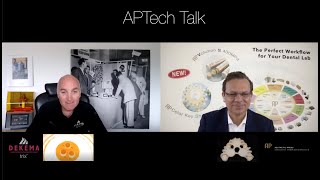
Jörg Müller of Aesthetic Press and Stefan Müller of DEKEMA discuss how they developed the Trixpress, a digital-to-press workflow that handles everything from CAD design through printing to final ceramic pressing. DEKEMA traces back to the 1930s and pioneered vacuum furnaces; the partnership added multi-ingot pressing and flexible investment rings to streamline dental lab work.
Chapters
Welcome to AP Tech Talk. I'm Jörg Müller. Today we're interviewing Stefan Müller from Dekima. Learn about the growth and development of both of our companies and why these fantastic furnaces work so well with the AP system. ¡Bienvenidos a nuestro little workshop here! At Aesthetic Press and the Kemmer. And we want to just share today a little bit our experiences that we have gathered in the past working together. We want to have like a very nice easygoing chat today where we just exchange a little bit our experiences of our materials, what is new, what we're doing, so that you get the best idea about both of our companies. So good morning, Stefan.
Good morning, Jörg. Great to meet you. Thank you for the invitation to this talk. Thank you to your customers to join. And yeah, let's start, I think.
All right, so let me just introduce my company a little bit. What are we doing? Where are we coming from? So I used to have my dental laboratory in San Francisco in the late '90s and early 2000s, out of which I have developed as a certain workflow, the pressable ingots, and my goal was always to standardize production to have reproducible results. And so out of this idea, the certain products did evolve, and then at one point I just made over the switch to found this company, Aesthetic Press. And so coming from the experience as a technician at the bench. That's where all these products have been created and developed and tested. So, and that's in that time when I had my dental laboratory, that's when I also started using the DEKEMA furnaces, which I got to really value and appreciate because the quality level of these ovens is just phenomenal. What I really, really like about these ovens is that they're not only very precise and the quality of the heating chamber is phenomenal, but for me as a technician, most importantly, it is important to, to program these ovens very quickly and eventually to change a program, to modify a program. With a touchscreen that is just phenomenal. So, but I should not say too much about the products anymore. I'll let Stefan now take over. Stefan, what can you tell, tell me a little bit about you and your company.
Oh, thank you. Unfortunately, I'm not a dental technician. I even cannot try as a physicist. I have two left hands, you know. Yeah, that's how we have to work. We try to work with our brains and yeah. Looking at DEKEMA, DEKEMA has quite old history, starting in the '30s with designing dental furnaces, designing dedicated furnaces for dental technicians even at that time. Our founder, which you, by the way, see here, Dr. Hindenberger, with a furnace out of the '50s at an exhibition in Hungary at that time. He created the first vacuum furnaces even for every company at that time. And during the '60s, he decided to build his own furnaces finally. Out of that in 1972, he then created the famous Austromat 2001A. Being an Austrian guy, he wanted to build an Austromat. And out of that, he always was dedicated to precision as you told. To easy way of use and to build the best instruments you can use with the best repeatability. And finally out of that we decided to proceed with any kind of furnace which has to be accurate like sintering, like pressing. And the next step now was to even dedicate our R&D to printing, 3D printing using for a press process which is completely, more or less completely, automated, completely digital. But surely you can also use these printers for very precise standard daily printing work in your dental lab. Yeah, so everything designed around dental.
So, Stefan, that sounds really very interesting. So It sounds like you have come with your company a very long way and it has evolved to an incredible of a bandwidth of product workflow. And all the details that have gone into the products are just amazing. And that's something that I really have come to appreciate and value The ease of use, the technical support, which is for me as a user extremely important that if I need help, I get help. And not only do I get help, I get an extreme competent help. So if I have something, then I know that I can, I have a fallback where I can call the company and get help instantly. That's very, very important. And now I can see you have evolved from beautiful porcelain furnaces, you have sintering furnaces, now you have a printer. So that's a very exciting story. So how have you developed all these individual elements? How have you come from producing and manufacturing your porcelain furnaces now to a printer. That's amazing. What can you tell me about that?
I think that's also a story of us two, because we both met when you started creating your own ceramics and you needed for your production line, you needed ceramic furnaces to pre-sinter, for example, your press samples. So it was always a work cooperating with our direct partners, the manufacturers of ceramic, the distributors of ceramic, And this is, you started with the 3001, as you told, in the laboratory in San Francisco. But when you then started in Germany producing your own ingots, producing your own ceramics, and you needed these, these very accurate instruments, the very accurate devices, this was how we had to cooperate and how we wanted to cooperate, always starting to work with the customer, to work with the customer as a manufacturer, with the customer in the lab. Very easy. Isn't that it?
Very true. Very, very true. I mean, I also see when I started out with my idea to standardize production in the pressable ceramics, and I started with that in early 2000s, I remember when I started out, I had the one ingot for all shades. That was the original press ceramic idea that I had. And of course over time the system evolved for the value-based ingots. We have 3 or 4 now. We have the light ingot, the dark ingot, the dark plus ingot, and we even have a customer who requested to have a medium value-based ingot. So over time, of course, as we listen to our customers and we see the demand and the need out there, we modify and adjust. Our portfolio. And what was at one point one product now has evolved into this product wheel, what you see here in the background. And so yeah, that's a very nice and exciting process as we all grow into our expanded product line to help meet the needs of the technicians and the customers.
Just think, just think of our multiple press system, of your multiple press system, how much time we both spent to work together to create two systems where you can press many ingots at one time, where you can shorten pressing processes tremendously to maybe one-third of the time you normally need. And both, we are not competitors, we are cooperating, and we use each of these systems for the customers and their needs, whatever they want. I think—
Yeah, absolutely. I remember when in 2010, I was the first one to press a full arch implant case with pink and white. And I think still up to this day, nobody has done that as well. So to be able to press such a large restoration in a ring is a challenge and you have to experiment a little bit to get it going. But at the time when I did that, there was not even an investment ring out there who would allow me to do that. So I had to manufacture my own one. As a technician, you get creative and you invent new things and you just sit in your laboratory and you don't stop until you found a way to make it happen. And out of this, that's where all these products came about and how they were developed out of a need to improve, out of a need to create something that doesn't exist yet, where you see the market, there's a niche, there's something that is missing. So it requires creativity to search for new ways to get things done much better and more efficient. And that's, I think, that's also something that you have done with your products. Thank you. Yeah.
So as you see, time is passing. There are so many things to talk about, especially about your workflow, about your circle, and how we can take part of that, how we can implement our instruments to make your company successful with your customers. This will need quite a lot of talks in the future, I already realize.
Yeah, we will definitely have more follow-up video clips, but before we, we close this for today, I wanted to ask you about, quickly, about one of your very, very nice inventions, the Trixpress system. What do you think is the main advantage of the Trixpress system versus what we see on the market?
What you basically get with the Trixpress system is a complete workflow from the manual wax-up which we digitize to the finished crown printed and pressed. So the workflow itself is self-consistent and it's safe. You don't have the failures in between. And I think this is the most important for everybody, that you can— that you just exchange your current analog process with digital instruments, with digital process, without losing confidence in the pressing process, but getting much more confidence in the results through the digitized process.
Yeah, I mean, I saw the video clip and I remember when you presented this new system at the IDS, the last recent IDS in Cologne, and I remember there was this huge crowd at your booth waiting, and they all got excited to see the new invention and the video clip that you presented. I was really amazed to see how everything is integrated from the CAD design over the printing process, and then everything is being printed with ready to go to get invested, and then a short time later we have the finished products or the pressed products. On the bench. I think that is phenomenal without a technician actually having to do something manual until the point when the porcelain is on the table. I think that's incredible. That's something that I haven't seen anywhere else before. So that's a great invention.
Just watch the videos on YouTube. You still can review them from IDS and It's a very easy way to get some information about the system.
So Stefan, tell me, since obviously I also do a lot of press-over, that's what I started out and believe it or not, till today, I still have a lot of customers and big customers in the United States who do a lot of press-over metal. So metal is not dead. You know, it's just maybe being perceived that there is no metal ceramics, but that's not true. There is still a lot out there and people who know the system, who took the time to get used to it, that do this on a daily basis very successfully. Basically, in my opinion, it doesn't matter whether you press over metal or press over zirconia. It's the procedure, it's the same thing, and the results can be both really very rewarding. Now, my question to you is, with your printed process, and that the units are already screwed up and ready to go for being invested, how do you do that when you want to combine that with press-over-metal or press-over-zirconia? Is it possible to design the coping in a way that you just put the coping into the printed crown? How do you do that?
That's a very good question. Surely we are working on that, no question. What we currently do, we do full contour single crowns. This is a software-based question more or less. It's not a printer or a pressing question because with the analog Trix system, which we already have since 2000 and 7. We already did this press-over zirconium samples with 13-14 unit bridges on a regular basis. We have quite a lot of samples for that also here. Implementing that into a digital system, you always have to find a solution to be able to remove the the zirconium or the metal before printing, because you cannot handle the metal or the zirconium base during the print. And we are currently working on that. Next question on that, surely, is always that you have multiple structures. As I said, currently we work on single-unit contour crowns, full contour crowns, because that's a 95% of the market. But we surely proceed with the steps which you just mentioned. We are going to more than 1, 2, 3 Unicrowns with multiple colors and then doing the press over metal or press over zirconium steps.
Yeah, what I find so amazing about the regular Trixpress system is that you have your individual pressing elements and you can vary them, the position in your investment ring, very nicely as needed. As opposed to other systems that are just having one investment option, you know, to screw up your units. And here with the Trixpress, it's way more flexible. You can press more, you can press different colors. All in one ring if necessary. I have examples of that. And quite frankly, I'm very excited to see what the future will bring when we can actually combine these designed and printed units ready to be— ready already screwed up on the pistons, and then we can attach either a PFM or zirconia frame into that and get the press results. I'm very excited to see that happening at one point. So coming to an end here eventually, I want to say thank you, Stefan, for your time and for the information that you were sharing with everybody here in the dental community. One more word from your end before we wrap it up?
Thank you for the invitation. I really appreciate your time. It's always a pleasure working with you, working with your customers. I think we really should mention that one of our most, most positive points is that we are small companies, which makes us flexible and people talk directly to the right people.
Absolutely, absolutely. So again, thank you very much, Stefan, for your time, and I hope we were able to raise a little bit more questions or curiosity amongst our colleagues in the dental technology field, and we will shortly see you soon again. All right, thank you.
See you soon. Bye-bye.
Bye.
More from Jörg
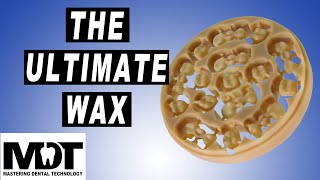
What is the best Milling Wax To Save Money in the Dental Lab and Mill Faster in 2020.