Ozempic: Miracle or Muscle Killer? Unlocking Longevity Through Lean Muscle Mass: with Robb Wolf
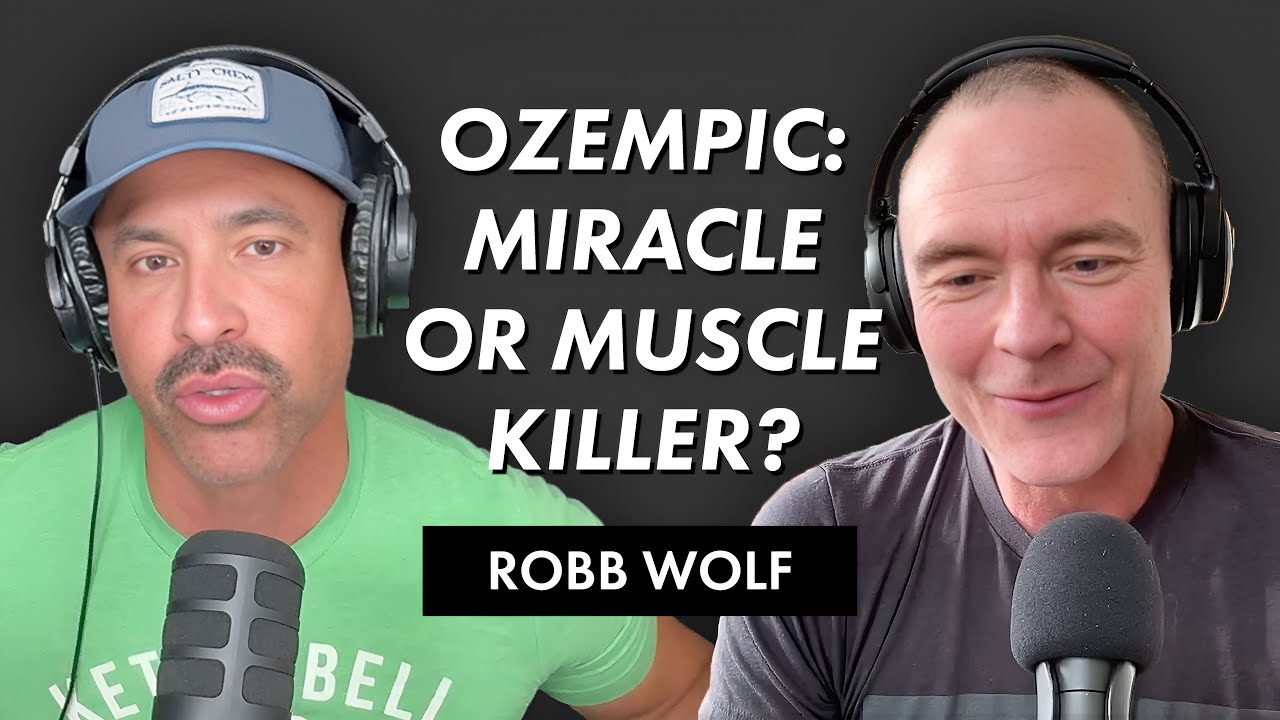
Robb Wolf and Jorge Cruise discuss why Ozempic's appetite suppression comes with a muscle-loss risk. They argue lean muscle is the real longevity drug: aim for a gram of protein per pound of body weight, lift weights, and get sunlight. Muscle protects you from injury, supports immunity, and keeps you independent as you age.
Chapters
What if I told you that longevity is all about lean muscle mass and that the greatest indicator of healthspan and lifespan is how much lean muscle you have? Join me on today's podcast as I sit down with my buddy Robb Wolf. He is extraordinary. He's been on the podcast several times. He's a chemist by training and a genius when it comes to health, nutrition, and fitness. And it's been 2 years since our last chat. And in this episode, we dive deep. We start off by revisiting our past conversation about Kim Kardashian's vegan burger endorsement and explore how meatless burgers have evolved over the last 2 years. But I think the thing that you're going to find most important and critical is we talk about longevity and how lean muscle mass is really critical, especially as we age over 50— more important than in your 20s and 30s and 40s— and this thing sarcopenia simply put, is age-related muscle loss and why it is crucial to manage it, particularly if you're using a GLP-1 drug like Ozempic. You know, we're gonna talk about, is it a miracle drug or does it potentially harm muscle mass? Rob helps us unpack these questions clearly and simply. And I'll tell you something else I wanna share with you right now before we dive in here. Zero Hunger Water has been a passion project of mine for a couple years. You guys have heard about it. We almost launched it about a year or so ago. And then we had some challenges that came up and we had to take a step back. Sometimes you have to take a step back to go two steps forward, right? And so I'm excited to say that we are stepping forward this year. There'll be more coming out this summer. News information is not available yet, but a lot of you've been asking me and I thought I'd address it here that for me, it's something I'm committed to doing. It's really the culmination of all these books that I've written. And it's really a simple way to erase your hunger by drinking something better than a diet soda that's good for us and more importantly, actually makes you feel less hungry and turns off cravings and gives you control back. So all that's coming up this year, guys. But more importantly, right now we got Rob Wolf. So let's get started, guys. I'm so happy you're here. Let's get started.
Did it go up and then I caught it on the way down?
So tell me, so the last time we spoke, we talked about Kim K's endorsement. It's like 2 years ago.
Yeah.
I can't thank you enough for being on here, but Beyond Meat was new back then. And just, so what's the latest on Beyond Meat? Tell me.
So, so many of these meat alternatives that were supposed to be more sustainable and all these different things, it never penciled out. Like, it costs a lot more energy and a lot more infrastructure to make them. Then it— what's funny is I'm a chemist by training, so I've done some physics, I've done some engineering stuff like that. And I just very back of the envelope, I was kind of like, okay, well, let's think about sunlight, grass, and cows. There's a lot of history behind that system. And let's think about, you know, vats of goo that you, you grow something in, and, and which one of these things is gonna, gonna be more efficient. And I knew that the, um, the, the fake meat thing was not gonna work. If you're on a spaceship traveling between the stars, yeah, that's a great idea. When you've got a planet and a sun, you know, grasslands and stuff like that are awesome.
And, and is it more damaging to, I don't know, just the resources and the processing, or is it just a lack of quality? I would say things like fats and proteins and collagens. What's, what, which one is the worst one, or are they both pretty low in the totem pole or whatever?
That's a really great question, and it's a better question than my answer is going to be. So I—
oh, please. And then we'll officially start.
Those qualitative things are a little tough to pin down. Um, they are very nutrient poor. The macronutrient profile is, is terrible. Even the supporters of these technologies said that, uh, people eating them did not fare well. Like, people got sick, people had nutrient deficiencies, stuff like that. And what people forget is, when you want to— so if you're going to make meat, let's just talk about cows Yeah. Again, sunlight, grass, cows. There's a cycle there.
And it's gone back. I mean, just for anyone, if we're going to share this, I mean, agriculture was only from my memory, from all the talks we've done and everyone else out there, 7,000, 10,000 years ago. Right. So prior to that, we were eating animals for the most part, right?
Sure. We hunted and gathered, like, depending on where you were on the planet, we did a lot of gathering of vegetable matter. But the thing is, is that when you want to grow something that looks like meat in a vat, you know, you've got a little container and it's, you know, 5 gallons and you're going to go, you got to put something for it to grow on. And this is where you got to have soy and corn. And like, it doesn't just like magically grow out of the air. Like over in my window, I have these saprophytic plants. Like they just pull moisture out of the air.
Yeah.
Yeah. Nutrients and everything. Yeah, it isn't a saprophyte. Like, it doesn't just, like, you know, you can't hang it up on a wall and it grows. You need all these inputs. And so what they— what, what was discovered is, and it was discovered kind of the economic process, is, um, it's really expensive, really inefficient. And people kept saying, well, what if it scales? What if this— it's like, well, keep gambling your money on that. But, um, yeah, yeah, yeah.
So, uh, well, the good thing is, is it true? And then we'll officially start that the— and I remember we said this over many podcasts back in the good days, uh, when we were talking during COVID I mean, gosh, that seems like another life ago. But the, uh, my favorite meal was, you know, not that I'm busy these days, but I'm a little busy. And I think most people, if we're going to be listening or watching this, they don't know what to do with their extra time because we're all working, working, working. But the optimal meal, still a ribeye.
I, I think it's hard to beat. I think it's hard.
Yes. Yeah, I do.
I knew you would say yes, especially if you do a little, uh, reverse sear on it. You know, you put it—
oh, tell us, unpack that. Yeah. What do you mean?
And you can do this with any cut of meat. And the cheaper cuts of meat, like a sirloin, can be a little tough. But yeah, if you ideally have an oven that goes pretty low, but if not, the warm setting, 190 degrees, 200 degrees is fine. But you put the cut of meat in there and you slowly as you can bring it up to about 125, 130 degrees internal temperature. And, and, uh, ideally it's a long time. And ideally, like, I have this pretty cool electric range that goes as low as 130 degrees. And so it could, it brings this thing up over hours. And what happens with that is all of the, the gristly, gnarly, chewy bits get melted. Basically the collagen gets melted. And what you're left with is something the consistency of like stout butter. And so you, you bring it up to about 125, 130 degrees, you know, medium rare, and then you get a super hot pan, super hot griddle, 1 minute each side, and you're done.
Kind of sear it.
Yeah, yeah, just sear it. And that's where they call it the reverse sear. You kind of do the front end cooking, but you do it very slowly. You bring it up to, again, about 125, 130 degrees. And my family, I really like the fattier ribeyes. My family, the girls, like the leaner cuts. And so I'll get a ribeye. I'm with you. Them sirloins. Yeah, yeah, yeah.
Well, one of these days we're going to eat a ribeye together, maybe either at your place or my place, but one of these days.
Oh, I'll cook for you.
The paths will cross. Please, I'll bring the ribeye. Well, you probably have the best ribeyes too. Anyone you want to shout out to where they can get good ribeyes these days?
I go to Costco. Oh man, still. My really good friends have a bison ranch, a roam-free bison ranch, usually in Costco you'll see their their chili and some of their fajita stuff. And they're—
give them a shout out. What name? What's the brand?
Uh, uh, Rome Free Bison Ranch.
So I'll put it in the show notes.
All right, cool.
Shout out to them. Well, let's officially start. It's been too long. I'm just so grateful that we all weathered, uh, COVID and so many other storms, literally, and fires now in California, right? But, uh, I'm just so excited to have you back on here. It's been a while. And you know, when we chatted, what was it, about a week or two ago, talking about what we could we could talk about. I mean, I just thought, um, right now, you know, in my opinion, you know, Miss Oprah Winfrey, who started my career back in 1998, you know, so I was a kid, she, you know, has always been a trailblazer, especially for people that have followed my work over 20, 30 years, you know, because she's now just turned 70. 70 years young, and she looks stunning. I mean, you know, she's not going to be— she will not take this in any offense that she looks sexy as ever, you know, Oprah at 70, and she's got her tight little waistline. But then she revealed on a— it was an ABC special, I don't know if you caught it, but it was March 17th. In my head, as a guy who writes diet books, it kind of shifted my thinking. And for a minute I was like, hmm, you know, GLP-1 drugs is what she was basically sharing with her audience. And obviously she's been using them for a while, and she wanted to remove that stigma and shame. And, and obviously I've come to embrace it to to when people need it, then you use it as a tool, right? And so, and I know a lot of the conversation you and I had was, well, what if people are using or considering GLP-1? What are the consequences?
Jorge, excuse me one minute. Of course. My daughter is—
No, no, we'll pause.
Somehow linked into my headphone.
Oh, she talking to you?
Give me one second. No, no, no worries. One second.
We're gonna pause, guys. Stand by. We'll be right back with Rob Wolf.
Are you running music? You're not, huh?
That's okay, we can't hear her.
So, I mean, okay, I think it's okay now. That is—
is it okay? All right.
Yeah, did the music come through for you?
No, no, we're good. You sound good. Yeah, it's a VIP lane. You can only hear your daughter. What's she listening to? Taylor Swift, I bet.
It was some sort of rap, and she said, no, that's not me. So I don't know what's going All right, I apologize.
No, not at all, not at all. We're back. All right, Rob, so this idea of like using GLP-1, which basically— I mean, take us through this because we've talked so many times about ways to turn off hunger, right? And obviously GLP-1s do that like strong, like for most people. And then, so then there are fasting, which I've always loved, you know, and we talk about intermittent fasting. So I want to get your take on that. I'm just making a mental checklist of things we could talk about, right? And then, but obviously when you fast, you have to be cautious if you're not eating every, you know, 3 hours, maybe you're eating 1 meal a day, the OMAD, or maybe it's 2 meals a day, whatever. Mark Sisson wrote a book on 2 meals a day. And whatever that is, and now that you're eating less, there's this concern of losing, because a lot of people are getting what they're calling Ozempic face, Ozempic butt, you know, where the muscle that kind of gives your body shape, right, is not there as much. And so I thought, and then we were talking, and the official term, right, give them the dollar word of the day here, right?
Sarcopenia. Yeah.
Yes, well said. And, uh, so I mean, if anyone is qualified to at least chat with me about this more than I am, I thought it would be you. So does that sound like our plan for today for everyone watching and listening?
Sounds awesome.
Yeah, let's do that. Because I think in today's world, whether, you know, you are exercising or not, or eating healthy or not, but you want to control your hunger— I mean, fasting is great, and maybe start with that, Rob, because we've talked about why intermittent fasting is good and you're still doing it as well, and maybe talk about how you utilize it in your life. And then we'll jump forward to like, how do we prevent muscle loss? Because— and then explain sarcopenia, please. But start off with what fasting is and maybe how you're doing it these days, because I'm taking notes.
Yeah, yeah, yeah. Uh, you know, there's so many ways to do fasting. Like there's a 5:2 where you eat normally for 5 days and then you either don't eat for 2 or you eat fewer calories for, uh, those 2 days. Uh, there's the fasting mimicking diet that Valter Longo developed, which is always kind of, kind of funny. You're still eating, but you're just eating a lot less. Like, you eat about 500 calories a day.
Tell people what that one's about a little bit. That one, how do you break that one down?
You know, it's— I really like Valter Longo, but it's, um, uh, what they ended— they had a product called Prolong, which was really not great food that they would sell to folks, but it's convenient.
I think I've seen this.
I remember now. Yeah. It arrives to your door and convenience is king. So, I've got to acknowledge that. But, it was basically the studies that they did, there's just this reality that so much of the problems that we experience are overeating. And, that sounds ridiculous. It's like, "Oh, yeah, obviously." But then, people get really geeked out about fasting and intermittent fasting and caloric restriction and all this type of stuff. And, all of it's good, but it's mainly good because we're not overeating. So, it's just, you know, that is really the magic. And, I was one of these folks back in 2005. I wrote a pretty comprehensive article on intermittent fasting. And, I think you remember my wife and I co-founded the first and fourth CrossFit affiliate gyms in the world. So, we were earlobe deep with Type A CrossFitters, which they're really—
Yeah, yeah. I'm wearing a kettlebell right now.
There you go.
Yeah. I love kettlebell. I love CrossFit, right?
Yeah, absolutely. Yeah, I love 'em, but they're crazy. You know, they go—
Well, they are. They're intense people.
—everything to the nth degree. And so, I suggested this thing of maybe if you fast for 16 hours and eat for 8, that there might be some benefit there. And so, these folks being the CrossFit people that they are, they're like, well, what if I fast for 20 hours or 22 hours? And it, you know, and it went to the races.
And that's more the OMAD, right? The one meal a day, right?
Yeah. And in a group of people though, that are exercising right at the limit of human performance. So fasting is good, but it's a stress. Exercise is good, but it's a stress, you know, uh, studying math is good, but it's a stress. And it, when you, when you throw that total stress load together, um, it, it, it ended up being too much in this population. So I released that, that article in 2005. By 2006, I was like, I don't know if it was a good idea to release this because it was kind of a, it was kind of a 50-50 toss-up. Like, some people benefited. They're like, well, I don't need to eat 6 meals a day, so that's cool. And so people just over-exercised, over-burned themselves out. And would you say sarcopenia was happening to them a little bit?
So they were breaking down muscle?
I, I think it was just, um, that probably would happen over the long haul, but these were younger, fitter, athletic people. The problem is they were just, like, burning the candle at both ends, literally. They're exercising real hard, not fueling adequately. You know, at the end of the day, it's, uh, if your daily caloric needs are, like, 4,000 calories, which would be the case with a lot of these people, very, very active, you can't eat that in one meal. You— it'd be hard to eat it in two meals. Like, it's a massive thing. So the, the big—
and do you still prescribe about a gram of protein per weight, per pound of weight?
Yeah, ideally body weight. Yeah. And mainly because it's, it's very very satiating, which we'll end up talking about satiety and, and whatnot a ton today. But, and that was the whole premise of so much of the work you do, the Zero Hunger thing. Like, we gotta find routes to a spot where we're not hungry because there are a few serial killer people out there that can be hungry and not overeat. And then there's the rest of us. Of course. Yeah.
God bless those people. How did they do it? Because I know I was a sugar addict. You know my backstory and sugar. I mean, not that we need to tell people this, this not only is not good for you, it raises insulin and causes some belly fat, but it causes— tell them a little bit about this, Rob, from your perspective as a chemist, about how it feeds— I don't want to say hunger, but it kind of does, right? It does.
And, and what tends to happen is this doesn't happen with everybody. My wife is very insulin sensitive, and she can eat a fairly carby meal and her blood sugar is just flatlined, you know, it doesn't really go up much. If I ate that meal, I would go up and then I would crash. Me too. And it's on the crash that you get really ravenously hungry, and then we will tend to go back and eat more. And so that's where it's different from person to person. There are some commonalities like adequate protein and appropriate glycemic load and whatnot, but at the end of the day, when people are successful with say, like, weight maintenance, weight loss, weight maintenance, they figure out a strategy for managing their hunger, for managing their, their satiety. Yeah, for many people, some intermittent fasting is the bee's knees, because for some people, they're not going to go paleo, they're not going to go keto, they're not going to go vegan. They still want to eat what they want to eat. But if you tell them, well, you can, you can eat more or less what you want to eat, we'd like to see you get a gram of protein per pound of body weight, like we can weasel that in there. That's the caveat. Yeah, that's the caveat. You know, work with us a little bit. But beyond that, if you just eat between this window and this window, you can kind of do whatever you want. And it sounds appealing to some degree, right? Yeah. I mean, it's kind of like, well, let's give it a shot for 30 days and see how it goes. Like, you know, not too, too crazy of a greasy used car salesman peak process to get them doing that. And a lot of people find that they're like, I'm cool with this. And they'll lose weight, they'll get more metabolically healthy. And what's interesting is it may have been like, uh, pizza and burritos and, and beer in a narrow window, but they get healthier and they're like, oh, this feels good, now I think I'm going to improve my food quality also. And then they take another step. And I, yeah, I feel like that. And remind me, when we do talk about the GLP-1s, there's an interesting artifact that we're finding is that whatever the other challenges are, people on GLP-1 seem to desire healthier food, ironically. So, like, this is a good thing. It is a good thing. It's one of these— yeah, it's one of these paradoxical things because people want to freak out and be on one, one side of a camp or another, and there's just some really interesting elements to that. So, so in my own life, I, I can't say I do a ton of, of intermittent fasting I coach jiu-jitsu a couple of days a week. I lift some weights. I love that. And I have some gut and autoimmune issues that, like, I can't do giant meals.
Well, take us back to that story forever in a nutshell, because the way you got involved in this world of health and wellness was because of what you're just talking about. And how young were you?
You were a kid, right? I was 25 years ago. And— Oh my gosh. God bless us both. We're young. I know. Yeah. And— Back in the day. I, I developed ulcerative colitis. I'm about 165 pounds right now. Uh, the low ebb of this inflammatory bowel disease that I had, ulcerative colitis, I was about 125 pounds. Whoa. So if you imagine 50 pounds less of me.
So you were, you were a little guy. I mean, tiny, like thin. Yeah. And, and how did you feel with that at 25 years young?
Awful. Awful. I was dying. I, I was dying. Oh my God. Wow. The standard of care for that stuff is a bowel resection. They just cut chunks of your digestive tract out. They put you on immunosuppressant drugs that make it really easy for you to die from infections or cancer. And so, I wasn't excited about that as an option. And, I started poking around and looking at options. And, mind you, this was 1998. So, a long time ago, early, early internet. But I found some, some material that suggested low-carb, what we would call keto or paleo type approaches might be helpful for these inflammatory gut issues. Yeah. Yeah. And man, I was, I was so sick. I was like, well, I've got nothing to lose. I was actually eating a vegan diet at the time. And I, I think that that was a piece of it, but I was in a graduate program. I don't wanna hang it all on the vegan diet. I, I, I, I was in a graduate program. I was sleeping 3 hours a night. I lived in Seattle.
3 hours a night, Rob? How did you stay up? Was it coffee or were you using magic pills or what were you doing?
A little bit of everything? All of it. All of it. But you know, I was a young go-getter grad student and you have to show how hard you work, you know? So you would—
Like how doctors are, all these people who can't sleep. Yeah. And a ton of bullshit.
You're just, you know, keeping up with the Joneses.
And what were you studying then? Was this nutrition or chemistry or what?
This was biochemistry and I was, I was heading into a, a, you know, graduate track in that.
Got it. Yeah. Okay. I got it. Yeah. So paint the picture from there now to now where you were saying, yeah, jump in.
Yeah. So, so at this point, I've dramatically improved my gut health. I still have some autoimmune conditions that I, I manage, but what I find, and I use a ketogenic diet, largely ketogenic diet to, to do that. But what I find is that, I, I can intermittent fast, but like I, because my activity level is high enough, I eat a breakfast, I eat a lunch, I eat a dinner, and you're good. Good. And yeah, yeah, I'm good. Yeah, I'm not eating 6 meals a day, but I'm also not eating one.
Yeah, yes, yes, yes. But you're drinking— you're drinking some element as well.
Obviously we want to talk about— right now this is actually black tea, just straight up black tea.
All right, well, black tea, drinking black tea. Do you do coffee these days or no?
Ah, post-COVID, post-COVID, I lost my joy for coffee.
What do you mean?
It's the only like lingering effect. I, I, oh gosh, I'm sitting back now.
I'm ready. I'm ready.
Tell me what you're going to tell me. Yeah. Whatever, whatever I have, it could be catching, but, um, love coffee, love dark brew. You know, my wife's Italian, so we, we would enjoy coffee.
Those are the good coffees in Italy. Yeah.
Good coffee. And so what happened? Yeah. Tell us. So when I, the first time I, I had COVID, uh, and there's kind of an interesting backstory with that. I, uh, for 3 days I would go to bed and I was so exhausted, and I was just like, God, I guess I'm just getting old. Like, I, I'm just so exhausted. Yeah. And then one, one night our dog started freaking out. We have a Rhodesian Ridgeback, and he started freaking out, barking, and my wife let him out. And when she opened the back door— this is when we were living in Texas— she said, oh my goodness, there's a skunk back here. And I popped my head back there, I was like, there's not a skunk back here, what are you talking about? I had contracted COVID and all of my olfaction, all my sense of smell, sense of taste was gone. You know, I couldn't smell a skunk. Nothing. And mainly everything came back, but like my desire for coffee is just now like all one day out of 10 I'll have a cup of coffee and I'm still kind of like, eh, it's okay. But I actually enjoy black tea now quite a lot, like a good British black tea. So that's what I'm— rocking right now. You know, that is my lingering aftereffect. And you remember our buddy Paul Saladino, of course, right?
Um, so I just saw one of his videos on his Instagram, and, uh, he's talking about coffee and obviously the concerns of it, you know, and, and possibly the, the leaching of salts and minerals. Were you ever a big coffee drinker back in the day and all that?
Really big enough? I'm really not. Or decaf? What do you think?
I, I, for those that want—
I love I love Paul. I love Paul. Yes. And I think he's a little on the scaremongering side. My— well, a little bit.
Just tiny bit. Just a little bit.
Yeah. In, in, uh, but we love Paul.
He's— he does— I love Paul.
I think he's great. Yeah. You know, uh, so what do you mean? Tell us. The diuresis, the diuretic effect of coffee generally, caffeine in general, after you've been using it about 3 days, you, you— it's not really a diuretic. Your body has adapted to it. Um, when you're novel to caffeine intake, then yes, you pee like crazy. It's like taking a water pill. Um, after you've been using it, so I'm, I'm really not, I, I, I'm not concerned.
It's not as bad as it could be. Yeah. And then obviously if you take in some electrolytes, you're gonna make up for it, right?
So yeah, yeah, yeah.
Don't be scared of salt, to say the least. Maybe we'll save that for the very end if we have time. Yeah. But, uh, so, so let's get back to the story about fasting. So out of all the fasting methods, basically, if I remember my terminology right, was that my last book was already 6 years ago, was the, the, was it called Cruise Control, right? It was about intermittent fasting. We gave people some options, but I remember that the, the big word of autophagy, right? Tell us a bit about that and why that's good for us of a certain age, whether you're over 30, 40. You know, people of a certain age nowadays don't have any energy and they feel like they're going to die today, you know, right? And they, they don't feel great all day at all. Why does fasting help us improve? What would you say more so, energy, longevity, a little bit of both?
Maybe a little bit of both, but I'm a little bit of a contrarian on this, and I, I think we shared with, with your community. I, I did a talk, uh, right at the beginning of COVID It was kind of a bummer because it's like the best talk I've ever put together. It's, uh, Longevity: Are We Trying Too Hard? And if people search on YouTube for it, it's about an hour and a half.
We'll put the link in if you send it to me, buddy. Just text it to me, we'll add it to the show notes.
It's pretty technical, but even though it's, it's technical, I, I lay things out like a TED Talk, or longer, longer, uh, like a really geeky TED Talk on a lot of metabolic stuff. Like, it's pretty, it's pretty solid.
It's not pretty. Give us the mini version.
What would you say the mini version is? Is that— and this is, it's kind of died out a little bit, but, uh, we had people dramatically restricting protein because they wanted autophagy. They had— we had people really avoiding— did you say in general, you mean protein?
I hate to interrupt, but so to get autophagy, people were told to lower protein or just to eat in a time-restricted window, or both?
Or both, yeah. Really? It's because protein stimulates mTOR, a mammalian target of rapamycin, which is this gene that when overexpressed is bad news. It's pro-inflammatory, it leads to aging, it enhances cancer potential. It's probably an underpinning of cardiovascular disease. But from my perspective on this, and I think many people have arrived here also, I think even folks like Peter Attia that were super geeked out on fasting, um, they've arrived at this spot where it's like, okay, yeah, the, the gnarly detrimental thing is overeating. Full stop. Period. Done. Bingo. But, but if you aren't overeating, it doesn't mean that not eating is dramatically better. Um, and, uh, what we, what we saw in this overfed state, both in humans and in animals, is that autophagy, which is this cellular turnover, is suppressed. And we tend to get these cells that are called senescent, where they're still alive but they're almost like a zombie cell. Like, they send out negative chemicals and they're inflammatory, and they're not really helping us. And that happens in the droves in the overfed state. But if you're not overfed, it's not that big of a deal. And a little bit of fasting is probably a good idea. But here's the funny thing. If you go get a tan, it stimulates autophagy. If you lift weights, it stimulates autophagy. If you do cardio, it stimulates autophagy. Love that. And we know for a fact, like, adequate sunlight exposure will reduce your likelihood of all cancers far more than it increases your likelihood of getting skin cancer. And I'm not suggesting you, you turn yourself into a leather handbag, but like 20 minutes front, 20 minutes side, you know, wear a hat and, you know, long sleeve clothes after that. Yeah, you'll be good to go. You'll have great vitamin D, uh, your skin will, will, it will photoage a little bit but not terribly. And, and there's all kinds of mechanisms for repairing that and whatnot. And we're stimulating autophagy.
But if we— with the sunshine, yeah, yeah, yeah.
And add sunshine into it. We know for a fact those things improve our lives today, and they probably improve our lives tomorrow. All of this fasting and all of this protein restriction and whatnot in it for the goal of autophagy, I, I don't know. Like, eat enough food to maintain your, your, your whatever healthy body weight you are and ideally maintain an active lifestyle. Yes. 2 days a week, 3 days a week of some weights, get out and do a walk. Maybe do a little bit of harder intervals, you know, Mark Sisson style every once in a while. Oh, yeah. It's nothing crazy, but we just, we just know that that works. Like, I mean, we have great, great data on that. I love that. I love that. And again, the thing that I really like about it is our life is better today. We don't even know if we have a tomorrow. Like, you know, I mean, you could get hit by a car.
Forget the world coming to an end. Yeah, a car could just hit you. I mean, I've had— I've, you know, people pass, you know, unexpectedly. So I agree, live in the moment.
Yeah, it, it, it— live in the moment, but, but improve your moment.
Like, yes, yeah, and enjoy it to some degree, and enjoy it. Yeah, and don't feel bad about getting a gram of protein, which may stop autophagy. We could say that, but you know, it doesn't.
It doesn't if you're not—
why was it linked to that? Tell us a little bit of that, because I've—
because the first time I'm hearing of it, Rob, because people were just overeating at the macro level. When we're overfed, all kinds of the, the body way under— everybody would accept it, like, uh, like anorexia, dramatic under-eating is horrible for us, right? One of the crazy things about anorexia It may be surprising to people. They have sky-high blood lipids, terrible cholesterol. They look awful. And there's all kinds of interesting mechanisms that goes into that. But that is a terrible stress for people. Overeating is a terrible stress. But if we're not massively under eating and we're not massively overeating, yes, just, you know, find our satiety level ideally. Yes, yes. Lift some weights. Do a little bit of cardio, have some fun, then you do great. And we want some autophagy, but we don't want like all the autophagy all the time.
And if someone were to fast, what's a range where— I feel like with me, for the most part, if I can, I try to stop eating before bed, obviously a couple hours ideally, because I just don't sleep if I have food in my stomach. That's smart. Avoid eating at night, I mean, obviously. And then you have breakfast— well, you have your breakfast, lunch, and dinner, as you said, right? But if someone is trying to maybe reduce one meal. What— is there any suggestion in the science if it's better a morning meal, a midday meal, if you're going to skip one meal, or just skip the snacks? Maybe. What do you think?
Just skip the snacks is a potential— like, the, um, I think the science suggests that skipping the evening meal is better. Yes. But the social side—
yes, you have no social life. You go out with your friends, what do you do? Well, are you drinking wine these days? Yeah, I have kids. You're— are you drinking? I have wine a little bit. Yeah, not that much.
It's funny, like, I really, I really don't like alcohol anymore.
Yeah, no, and it really lowers collagen production. And whose video was I just watching early this morning about how alcohol has been linked to, well, rapid aging? One glass a day. Yeah, can turn your skin— and, you know, we're getting our vitamin D hopefully, so we have enough, uh, wear and tear on our skin. But to add alcohol, I mean, I feel like You know, it's, it's tricky, but you, you avoid it as well, right, Rob? Yeah. For the moment.
Every once in a while I'll have like a, uh, Montana has it where, where I live, they have a lot of great local ciders. Every blue moon I'll have a cider. Um, yeah.
Yeah.
It, it just ends up not being worth it for me. It kind of sucks. Yeah. You know, they had that, I, I want a new drug. It's just like, yeah. Yeah. Yeah. Nothing works anymore. It, nothing is worth the, the cut. We're gonna talk about cost benefit stuff of, uh, Ozempic and, and GLP-1. Be at some point. The cost-benefit of, uh, intoxicants are just not good when you're, you're 50.
Yes. And you know, I'll ask you this because I was reading— what was I seeing? A book on sleep, I think. Walker, do you— have you met him? Um, the guy who's the sleep expert? And talking about sedation from alcohol and how if you want to sleep at night, even though it knocks you out, you're just sedated and you don't get the REM sleep. Yeah. And then he even adds if you're using cannabis, which so many people now— I mean Last time I was in New York, it just smelled like a cannabis shop. The whole city is all cannabis now, right? I mean, California had it, but then New York. And, and I know if you do it, I guess, midday, it's not as bad because you get some REM sleep at night. But I think most people use those kind of evening treats, whether it's a little cannabis or a wine, to sleep better. But is that true from your perspective, that the quality of sleep with those kind of aids, you lose the REM sleep? Is that something you've heard as well, Rob?
Absolutely. I would say I'm not really a fan of cannabis either. I wish I was. It's all legal now, but I just don't like it. But from my take of the literature, alcohol is far worse for sleep. And it's kind of ironic when you think about police, fire, military, where the culture encourages alcohol and you'll get kicked out if you're using cannabis, Cannabis, goodbye, right? Cannabis is not great for sleep, but if you look at normal sleep architecture, like they wire you up and they do a sleep study and they see like deep sleep and REM sleep and everything, cannabis, it alters normal sleep, but it doesn't— it's far more benign than alcohol. Now, there's a dose-response curve on that. If you just smoke a whole blunt before bed, then that's going to be a thing. But, you know, like really, really small doses, a half a milligram to maybe 1.5 milligrams of THC in the peri-bedtime window, particularly with CBD and CBG, which is the way that we historically— this is one of the things that's changed with the intensification of marijuana over time is that we used to get about equal ratio of THC, CBD, and CBGs. And the CBD and CBGs tend to reduce, like, the anxiety. They tend to be anti-inflammatory and have all these other things. Now we've so intensified the, the, uh, intoxicant side that this is where, like, people will have psychotic breaks from rather large doses of, uh, uh, THC. We had a friend whose daughter committed suicide. Oh my gosh, tragic.
And this is what form of, of cannabis?
This is a cannabis been modified, you know, like, like the edibles and stuff like that. People are taking like 30 and 40 milligrams of this stuff at a shot. It's— it— I, I would be in a funny farm if I did that. Like, I would go—
yeah, totally, totally. So it's actually better to do a little old school. It's what the ancients did, because cannabis is not new. From— it's been around as long as man has, right? I think, right? I mean, I don't know, but I see stories of it.
Yeah, I, I do think that if somebody were in a push comes to shove scenario, they were having some sleep issues, if you if you were thinking about having a glass of wine or like a really small amount of THC, I think you could make the argument that the cannabis THC is probably going to be more benign. But it's got its downsides. Yeah, yeah.
And skip the alcohol. I hear you. No, thank God. I mean, I've been now through almost— no, it's been almost 5 years without alcohol, sober. And it's made a huge difference because when I had my midlife crisis that everyone knows about, You know, I just— second divorce did it to me, and I just started to go to Costco. As much as I love my ribeyes, I was buying tequila at Costco. And you know, that's a lot of tequila, right? You buy a lot of stuff there. And I'm glad that that has been a character defect that no longer is something that I have to struggle with. And it took a minute, you know. I had some good people, and the Serenity Prayer has helped me tremendously, you know, uh, kind of reconnect to my faith and just saying, God, You know, you know, I got to do better. I got to be wise. Wisdom, right? The wisdom to not do the things that cause problems. But with that said, let's jump to GLP-1. Should we do it? Because I know you've got a couple of great things that I'm going to be taking notes on. And please, everyone that's watching, this is the part of the show I think that— I think so many people— I mean, you tell me if I'm being too dramatic, but I feel like because of what Oprah did, and I know she's not the one that controls the world, you know, But she's had influence in the past. And I know a lot of celebrities, you know, on the West Coast and on the East Coast are using a lot of these. I was watching the Golden Globes recently. Right. And it's so funny how they opened the show up talking about, you know, welcome to the Golden Globes, brought to you by Ozempic, you know. And it was kind of a joke that Nikki, that comedian that does all the roasts, she's kind of funny, that blonde gal. Yeah. Gorgeous. But everyone has lost the weight. You know, everyone is looking tight for the most part. And so I think it's— and not that it's a bad thing, but I think it's good to focus in on rather than how many pounds you lost, are you controlling your weight, right? Are you overeating and all that? And so now we've entered, say, and this is my thought, have we entered a new chapter in wellness? Because, you know, I've written God too many books, you know, mainly fitness, but then also diet. And I feel like as a diet author, you know, I think no one's really going to buy diet books anymore because if they really want to solve it, they're going to do GLP-1. GLP-1 or something like that. It's quick, it's expensive. So maybe we can start with that and how it came about. And I know it's— I know the source is interesting, so maybe tell us what you know about it. But obviously it turns off hunger, and then if anything, some people don't eat at all, which is not good, and they're not getting a pound or a gram of, of protein for their weight. But let's just identify what is GLP-1, and have we entered this— what should we call it? I mean, kind of like a hunger control revolution rather than the diet revolution. It's just control hunger. And I'm not saying that's good or bad, but it just seems to be the new paradigm. Maybe. What do you think?
At a minimum, it's a different world. Like at a— it is, right? Yeah. Different world. And yes, you know, uh, so GLP-1's a glucagon-like protein agonist. So they, they act in the way that the, a molecule that we produce in our body, glucagon-like protein 1, and what glucagon is kind of a regular counter-regulatory hormone to insulin. Insulin tends to stick things in cells. It stores carbohydrates primarily. Interestingly, one of its primary functions is to suppress the release of glucagon itself, which— glucagon is a problematic hormone for, like, type 1 diabetics. They don't produce insulin at all, and glucagon causes the release of carbohydrate out of the liver, could reduce— produces a release of glucose out of the liver. And so you could have someone that's not eating anything, but they could have a blood sugar level of 300 or 400 because their own body is just releasing this, you know, this product. And it was back in, I believe, the mid to late '80s that these researchers discovered that Gila monster venom had this effect similar to these glucagon-like 1 proteins. Like, this was one of the first examples And there's some shorter-acting versions, some longer-acting versions. Broadly, like, the mechanism or the pharmacology that they do, and interestingly, they actually cause a release of insulin, which is kind of interesting. So, for the, you know, insulin brings down blood sugar levels. With insulin resistance, you know, we talked about how people who are insulin resistant, their blood sugar tends to go too high and then it tends to crash too low. Elevated insulin over the long haul seems to be really bad for everything, you know, aging, cancer, cardiovascular disease, and whatnot. But it releases insulin, it antagonizes the release of glucagon. And so, net-net, what's happening is we're putting nutrients into cells and we're not dumping more nutrients out. It's kind of interesting. It slows gastric emptying. And it also— the primary thing, the real big takeaway is that it dramatically improves satiety. And I, you know, when, when you crack the show open, yeah, I, I think circling back to Oprah is a pretty good spot to go because you couldn't have a smarter, more connected, more resource, you know, uh, uh, you know, intensive person. And Oprah has struggled with her weight her whole life. She'd have some successes, she'd have some failures and, and back and forth. And this Ozempic intervention seems to have really worked, and maybe it's worked over the— for the long haul, like, time will tell. Yeah, but you and I, when we were talking about, you know, what could we tackle on this show, um, yeah, people get really polarized over these GLP-1s. They're like, oh, they're terrible, or no, they're, they're the best thing in the world. And there's just a reality that, um, there's a, a cost benefit story to this. Some people get gastroparesis. Their stomach literally quits working, and it may never work again, which is bad. That's— but how so?
We'll break it— maybe lay it all out, and then we could break it down. But continue, because you've got a list of these, right?
I don't know that anybody fully understands the mechanism, but we know that the— one of the benefits of these GLP-1 drugs is that they slow gastric emptying. So that, that in part of the slowing of gastric emptying is that people also experience less hunger. Yeah. In some people, it appears that, that— so what happens, we eat food, the stomach churns, and it moves things into the small intestine, then the large intestine, and the gut squeezes. It's literally like squeezing stuff through a tube. Yeah. If it squeezes really fast, then things move through really quick and you could end up with diarrhea because you move things through so fast that you don't remove all the water and whatnot. Yeah. If you just turn off gastric emptying, if it doesn't squeeze at all, then you put food in it and it just sits there, which is terrible. Like the food's just going to like rot in your system and that you've got to be—
er, for that, or who knows, you could die, right?
Yeah. And I don't know what they do with these people. I like feeding tubes and stuff like that. Don't really work that effectively because they're, they're not gastric mobile, like they, they don't move stuff around. So I'm not exactly sure how they, they treat that, but it's pretty bad. You mentioned the sarcopenia. People lose muscle mass, and one of the prime indicators of aging is a certain amount of muscle mass loss. Like, one of the things that characterizes HIV turning into AIDS and AIDS going from manageable to fatal is a certain loss of muscle mass. Like, when people lose a certain degree of muscle mass, they're dead. They, they're just done. And this is kind of what happens with us in the aging process. So if you've got a drug that really enhances loss of muscle, enhances sarcopenia, it's concerning. But like, so we've got— those are some of the big side effects, like the gastroparesis, the, the, uh, the, um, uh, I guess like the motility and then also the loss of muscle mass, sarcopenia. The flip side though, like what we were talking about—
yeah, let's talk about that.
We know that obesity is dangerous, like really, really, you know, pan— you know, 10, 10 alarm fire dangerous. So I don't know who's right, like any given individual Is it going to be a net win? Is it going to be a net loss? If you're the person that ends up with gastroparesis, it's probably going to be bad. But also, if you were 5'2" and 350 pounds, like, life was probably going to be short and difficult. So I— this is kind of where I am with this stuff, is, is that I think people need to understand that there are potential downsides. Like, it's not a free lunch. It's, it's not It's not without its risks. You may be the person that it works great, and you do the smart things where you continue to eat enough protein and you lift some weights, and my goodness, you get, like, a shockingly great transformation, you know? Right. Like, it—
and Oprah's doing that. She works out every day. You see her on her Instagram walking, exercising, you know? And, and, but, you know, I don't see her eating a lot of protein. So even people who are using an Ozempic or, or GLP-1, protein. Talk to us about that. Why more so with that? Because of the, the less frequent meals? Because they are now doing OMAD, or 2 meals a day, right?
They literally oftentimes are eating very infrequently, and they're eating a lot less, which reduces the anabolic signaling. Like, when we eat protein, yeah, it turns on muscle protein synthesis signals in our body. It's like, okay, let's build, build or maintain some muscle. Yeah. So that goes away and the Ozempic itself turns on some switches where it's like, hey, you don't need that muscle, just get rid of it. And so it makes the muscle just go away. So we've got two—
it kind of cannibalizes, cannibalizes the body.
Yes. And that's a, like you alluded to this, like the Ozempic face and like person goes from having a nice backside to like no backside. No backside. Because their, their muscle is gone. Wow. Yeah. So, this is where, like, it— and it's on the best of days, it's hard to get people to eat better and it's hard to get people to exercise. But, I would just say that if you're entertaining the idea of Ozempic or some of these GLP-1 drugs, man, twice a week, do a full-body workout and try to get a hunk of protein at every meal, palm-sized protein, 2 or 3 of those a day. If you need to do something like a shake, you know, a whey protein shake or something because they're easier to get down, do it, you know. But, um, the, the really— aside from the gastroparesis, which I don't, I don't know, you're only going to find that out by, by doing it, and hopefully you're not a person that it happens to.
But, and what are the symptoms of that if someone is on it and they're like, well, I don't poop that often? Is that what it's—
the frequency of the bowel? They'll stop, they'll stop pooping entirely and they'll get bloated, and then they'll go, how bad is the poop?
Like no poop? Nope, none.
And, and it'll go for a couple days and, and then you're in the emergency room. Oh my God. It's bad. It goes bad. And it goes bad.
And not that we're gonna give a class on pooping, but you have to poop at least once a day or after each meal. I used to do this with Dr.
Oz back in the day. The funny thing with that is if you're really honest in looking at the literature, yes, some people poop 3 times a day and some people poop every 3rd day. And that whole spectrum is normal.
So, okay, so no concerns with the— okay, all right.
The main thing is just what has been normal for you, what's been regular for you.
Yeah. All right. Oh, that's very good. That's very good. Yeah. Oh, wow, very good. All right, so now tell us about sarcopenia, because we meant— you mentioned it here, and now maybe go a little deeper, because it's, it's like a French word. It sounds very, uh, right? It doesn't sound like English, uh, but it is English. And what does it mean? And let's go a little deeper, because it can happen to us without GLP-1. It can happen with us just by getting old. I hate to say it. And, and why, and why, you know, and can you have sarcopenia and be overweight? I don't know. I mean, I guess, right?
Tell us a little bit about it and then let's tackle that last one. Um, please. Yeah, in general, when people are, are carrying around excess weight, they will oftentimes actually, uh, uh, build more muscle because they're literally doing weight training all the time. They're carrying weights all the time.
Well, there's a positive. That's the silver lining, right?
There is kind of a silver lining. And this is one of the things that if you're really overweight— and it's so funny, like, particularly females, not to pick on them, but they're like, oh, I don't want to get too big or too muscular. And it's like, give me a break. Like, let's just get you jacked and lean and strong and like call it good. Like, you're, you're not gonna— you're not gonna be like, you know, manly unless you're not gonna look like Arnold.
Maybe like Sigourney Weaver in Aliens. Do you remember?
Right, right. She looked amazing.
Yeah, yeah, yeah.
So, that's an interesting thing is that for some people. Now, the flip side of that is that we have what we call skinny fat, where people are pretty slender, but they have no muscle amount on them. And these are the folks that, like, they may look pretty good, they may be pretty hot, but if they slip and fall, they break a hip. If they slip and, you know, they get sick. Part of our immune system, a big part of our immune system is the muscle that we carry on us. If we get really sick, we tend not to be hungry, we tend not to eat, we do tend to fast just instinctively. But the immune system makes antibodies, which are proteins, out of our body's proteins. And so we'll be hot, we'll have a fever, we'll feel like shit, we don't want to do anything so that we don't run around. And then our body will mount an immune response, we'll lose a little bit of muscle, but then we get back into it and we're, we're active and whatnot. If you're already sarcopenic, if you're already devoid of muscle, you don't have any resources. It's kind of like you want to go buy a new jacket, but you already spent everything. You have nothing in the bank. You know, your muscle is, is your bank account.
And who's that gorgeous doctor who's on the, on the internet? I haven't met her yet.
She has a book. Gabrielle Lyon.
Love her. Yeah, you've met her, right? You know her? She's a dear friend of mine.
Yeah, you'll have to connect me, please.
I think you've mentioned that. I've never took you up on that. But she talks about how— and shout out to her, doctor, one more time, give her name out—
Dr. Gabrielle Lyon. She's gorgeous.
Yeah, she could be like Sigourney in, in Aliens. Definitely, uh, looking great. But she talks about the organ of longevity is muscle. Why? So tell— now go into that, because if we're losing muscle from what you just said, and that's sarcopenia. And am I pronouncing it right? Pronounce it for us one more time.
Yeah, yeah, this is the word of the day.
Yeah, you know, why do we get old if we're thin? Because I mean, I could see us getting like a fractured hip, which, you know, I guess that is old. I mean, if you have weak density bones, right, that's not, that's not a youthful thing. Now you don't see the bone density looking through skin, looking at someone, but tell us why what Dr., uh, Is it Gabriella Rhys?
Lion. Gabriella Lion. Yes.
Okay, my apologies. Why is she right? Why is she right about how muscle is this organ of longevity?
So like part of it is just our physical capacity to do things, you know, going up and down stairs, lifting and moving things. Yes, yes. Just a basic physical capacity. Uh, cultures that sit on the floor and do a lot of kneeling and, and sitting, not in chairs, tend to not end up in old folks homes the way that we do because they maintain that lower body capacity. Like, there was this interesting, uh, sit-to-stand test. Like, if you could sit cross-legged on the floor and stand up, then it, it gauged, uh, how likely you were to die within the next 10 years and all that type of stuff. Wow. Wow. And some of it is, it's just if you lose enough muscle mass Yeah. We tend to lose power faster than strength and power is the ability to, uh, uh, produce force quickly. And so, like, if you think about tripping, you don't need a 400-pound deadlift to, to right a trip, but you do need quick foot movement. Yes. And, and, uh, to be fast. And one of these things that just seems to be a hallmark of aging is old, old people move slow. You know, it's one of those what, you know, one of those jokes, it's like you guys hump like old people. It's like, it's just slow, you know, nothing, nothing dramatic, nothing, you know, spectacular about it. Yeah. But the, to the degree we can maintain muscle mass, maintain strength, and maintain power. Wow. It's these catastrophic events that can occur. And I, I think it was Peter Attia a couple of, couple of days ago, he was talking about how some people that age really well, like, yeah, they're lifting some weights. Yeah, they're active. Or maybe they're just, just generally active. But what they end up experiencing is a lack of an event that takes them down. They don't tweak their knee. They don't break an ankle. They don't end up with a cardiac stent. It's these events that make us bedridden that then we lose all this capacity.
It goes.
And once it's gone and you're older, it's so hard to get it back. And your motivation to get it back is much lower. And so he, he was making the case that a lot of effective aging is definitely the stuff that we're doing right. But a decent chunk of it is luck. Like you just didn't experience, you know, you didn't, while you were skiing, you didn't tweak your knee. So you didn't end up in the hospital and you didn't end up bedridden. Or if you did tweak your knee, you continued working out so that that didn't cripple you literally. Yes. Yes. So they're, they're, they're looking more and more instead of aging being this like linear decline that it's like a bowling ball going down steps. Whoa. We're largely maintaining and then boom, there's a huge, you know, a big event happens in our—
and it's an event usually. Yeah. An injury of some sort. Right, right. Rob. Yeah.
Injury, illness. Yeah. Something like that. And it's hard as hell to come back from it. And it, it's just, uh, uh, if you get, if you have good muscle mass and you get in a car accident, airbag deploys, you're still going to be sore, you're going to be stiff and everything. But if you don't have adequate muscle mass, like your head, you don't have muscles in your neck to prevent your head from just like snapping around. And so, yeah, of course, with a traumatic brain injury, and then that traumatic brain injury leads to inflammation in your brain that accelerates neurodegeneration. And so there's just all these million different ways that, um, adequate muscle. And also, I mentioned the deal with the immune system, like our muscle is a reserve of protein for our immune system to use in times of illness. So, there's just all the— there's like, there's just a million reasons why that— and having adequate protein, having adequate muscle mass is really important, really valuable, a great hedge. And we're not suggesting that you become a bodybuilder. You don't need to eat 10,000 calories a day to do that. But, you know, a 2 or 3 day a week full body workout and a gram of protein, you know, per, per pound of body weight. Good sleep, sun on your skin. That's all we're, that's all we're, all we're saying.
Keep it simple. I love that. I mean, that's, that's your brilliance. You can take—
get jacked, be lean, stay horny, like, all that stuff. Stay horny.
I love that. There you go. Well, you know, they say, I mean, obviously, and who said this? I think it was Dr. Andrew Weil that told me this years ago. You know, the, the guy with the beard, you remember, Dr. Weil, or he has all those True Food restaurants. Yeah, that, uh, for men at least, and for women it's harder to gauge, but if you're healthy, you wake up with an erection. We're going to go there for a second, and that's a good sign that you got good things going on in your body, right, Rob? So yeah, yeah, so amen for, for, for being horny, as you said there. Yeah, yeah.
So again, like, if people were kind of like, I don't know what— if I'm buying what this guy's selling, yeah, yeah. You look pretty good naked. It's not like an onerous ask. We're just asking you to lift weights for 30 minutes, full body, 2, maybe 3 times a week. Go for a walk and get some sun on your skin. And like, life is generally going to be better. Your sex life is going to be better. You will feel better about yourself. Like, that's, that's the greasy used car salesman pitch in, in like, you know, your Zero Hunger approach and my— the stuff I've been pimping for 25 years, you know.
Yeah, your life is, is what you preach, you know, and I think I think, right, you know, that's the best thing, at least being an author and reverting so many darn books. I feel like they always say authors write books that they themselves need to read or learn more about, you know. And, and I think every book I've ever written has mainly been for me so I can talk to smart people like you and learn and, and then and try to, you know, share it in a way that's, uh, user-friendly. And I think that's why you and I have always gotten along so well, because as smart as some of us can be— and you're definitely a little higher on the pay grade with the intelligent factor— but you can break it down to the Oprah people out there, you know, and to the simple folks, you know.
And I appreciate that because I hope if somebody has spent 25 years doing something, hopefully I can convey it in some reason. Yeah. You know, so thank you. Yeah.
No, no, no, you've done, you've done a good job of that. Always, always. And I think not only are, have you done this in a way that's user-friendly, but it's just so genuine, you know, because you walk your talk with your family, your wife, and all that. And you know all the right people and Why, even if you're older and you've lost your muscle or you're on a GLP-1 and you're like, ah, you know, I look good enough and I'm 65 or 70 and, you know, and, you know, I don't have time to exercise. I don't have time to get that much protein. It's uncomfortable to eat. And I mean, is there a reason why we shouldn't give up hope? Because I feel like if anyone has inspired me, it's been a lot of your work. I mean, you've mentioned some great names from Mark Sisson to Peter, to all these great folks that are in midlife and working hard. But why do we have that perspective, and how can we give people that mindset? Maybe we'll end on the mindset, because I feel like if you talk about how you've done it— because I mean, I know you conquered it like I did early in life, because I, when I was your age, when I was doing, when I was 25, early, earlier 20s, more college and late high school, I was overweight. That was my issue because I was a sugar addict, right? It was a sugar addict. And you had your, your, your situation at 25, but you've overcome it. So I feel like we appreciate— I mean, sometimes when you lose it earlier, you feel like you're going to lose it early, you, you kind of snap out of it. And like Tony Robbins has told me for years, you just, you know, you, you end up feeling that, that consequence, and you get like a compelling future. For those that may not have that anymore, what do you do for that mindset, Rob? What's your two cents to keep at the jiu-jitsu, to keep, you know, looking like a rock star, to stay horny? Like, how do we, how do we get that mindset? Help with the mindset of being like actively alive, you know, and, and participating and not giving up. Because I feel like people say screw it, you know what I mean?
It, it, it's one of those features of, of aging that, you know, you see folks, um, yeah, and I'm, I'm guilty of it. Like, I, I, uh, I hate putting new stuff on my schedule. I just kind of want to coast through my day, like doing podcasts. Well, that's kind of, you know, it's like, oh, I got to schedule that thing But then when I get into it, it's like, oh, I love this! I'd love— I love Jorge Cruz, hey? Like, I loved doing all this stuff. Yeah, still trying to help people and everything. But I think a piece of aging is just that we get a little not resilient. God bless my father-in-law and his wife, but we tried them to come out to visit us, and well they were down for those, like, "Hey, we want to do something on this day." And he was kind of hesitant about coming over here because you know how old he got before me so there wasn't really any reason why would he be able And to make time or it whatever else. So yeah, was no doubt at all. Well, thank you very much guys. Thank you. literally Bye-bye now. See ya later. Okay. Good night everybody. Have fun tonight everyone watching live stream right now if anyone wants to join up after 10 PM Eastern Time US Central Standard Time Pacific Time West Coast. All righty folks, thanks again.
We'll see y'all next week.
Take a care. Ciao ciao! week before a doctor appointment, but his wife was like, well, I have a doctor's appointment that next Tuesday. Oh gosh. Yeah, but we're going to have you here through almost 10 days before and get you home 3 days before the doctor's appointment. Perfect. Yeah, yeah. I don't know, like, and so, and we get that way as we get old. We just get—
I'm kidding. Is there a term for it in psychology? What have you heard out there? Because you get your fingers on stuff, you know. I don't know.
I don't know. There probably is a term for it. Not resilient, you know, unadaptable, old. And so, I think that that's a thing that we really have to fight, you know, and, you know, when I was growing up, one of the things that launched me into doing what I'm doing was my own health crisis. But prior to that, my dad, smoked since he was 12, drank a lot, uncontrolled diabetes for a number of years. Yeah, yeah, he made it to 70, but, but, you know, the last, the last 20 years were a train wreck. Like, he could have died at any time between 50 and 70. I, I feel like, you know, it's— did he ever stop the smoking or no?
No, no, no, no.
All right, well, and in fact, uh, he lost his big toe, then part of his foot, then all of his foot, then all the way up to below the knee. Amputation, and I was tasked with doing diabetic wound care on my father as they cut piece after piece off of him. And, and when, when, you know, I remember, you know, when he was debating this stuff, I'm like, Dad, if you would quit smoking and we could get your blood sugar under control, this would stop. It's too hard. I'm not going to do that. Well, Rob, I'll tell you what, I'm going to let them take the toe and then I'll be good. Like, in his head It was like if they cut off his toes, diabetes was going to be fine. I'm like, it doesn't stop there, man. They just keep cutting pieces off of you. And so, you know, he had a below-the-knee amputation at the, the end of all this stuff, the last probably 6 or 8 years of his life. So like, holy smokes, and all that stuff. And I just said to myself, there is no way on God's green earth that my kids will ever go through that, conducting diabetic wound care. On me. So that was part of my gig is just like, um, you know, there, there are seasons to life and at some point we probably will become somewhat of a burden on our kids. But man, there's, there's way different ways in which this plays out. I, I know folks in their 80s, even their 90s, they're pretty independent and they're not like a, a catastrophic burden on their children and grandchildren and stuff like that. A little bit of that's luck, but pretty consistently these people have like worked out a little bit, taken care of themselves, uh, maybe have a drink here, but not a drink every single day, not 5 of them a day. You know, there's just, there's just some patterns there. And so I, I don't know what the thing is that motivates a given person. For me, it's like I really don't want to be a burden to my children. And also my dad never lived to see his grandkids. You know, I want to live to see grandkids. Yeah, I got started late. I didn't start having kids in my 20s. I started having them in my 40s. And so I, I have to make it a little ways to be able to do that. Unless my, yeah, my kids end up having teenage pregnancies, which I want. I want grandkids. I don't want them like that. That early. No, no.
Yeah. Let's do it at the right time. Yeah. And you, all you have to do is live a little longer. And, you know, I was lucky. My grandmother lived to be 103. But my mother passed at 64, and I didn't do wound care on her, but she had a hip problem. And I don't know if I've shared the story with you and everyone listening, but she took a lot of ibuprofen to kind of be able to walk before the surgery. And secretly she was doing maybe a handful, like if they were M&Ms, like 6 or 7 with a little bit of water, no minerals. And then within a year she lost all renal function and had a fistula put in her arm, and she passed. And 64. And I think that was, for me, my big holy smokes thing. I don't want to be an addict to Tylenol, let alone, uh, other things, you know. And I saw what— how she died. And, and I think something visceral, like what you did with your mom and what— I guess with your dad, with your dad, and what I did with my mom, it just really gets you to appreciate your health, you know. And I think maybe that's, that's the key, right? Right, Rob, in the sense of looking at the, the worst-case scenario, but also the best-case scenario. What has kept you positive? I mean, obviously we've talked a lot about a lot of things that can, can keep us positive, whether it's grandkids or, you know, or travel or having fun or, you know, whatever it is. Why do you think in today's world people don't focus in on that? Because I feel like a compelling future— you've got it with your kids, and, and then you had, like I did, like a slap or like a wake-up call, a slap of like, you know, your life is fragile with seeing your father go through that and take care of your health. And I had that with my mom. But if anyone doesn't have grandkids and maybe they live alone, you know, what would you tell them to do? Because I know community can be important, right? Robin, you have a community.
Tell them about your Rebellion, right? Yeah, yeah, the Healthy Rebellion. It's a group of folks that we got to— we formed it right at the beginning of COVID which was very auspicious. Time to have a health rebellion. Um, yeah, you do. Hey, I'm really glad you mentioned this because actually thinking about my mom. So yes, yes. My parents didn't manage their finances well. You know, I came from, from white Western standards, a pretty poor family. Like we were on government assistance. We got like the, the cheese and dried milk and it was a pretty big deal at various points and everything. But there was this point where my mom was, was sick enough that she ended up in this kind of government housing. Renting scenario. And what's fascinating about that, it— and I said this to her, and I, I don't know that it clicked, but her rent was only ever going to be a certain percentage of the, like, the Social Security income that she had. It was like 30%, and her doctor was paid for, this was paid for, that was paid for. Effectively, she was independently wealthy if you really put the right mindset on it. She never needed to worry about money again. Like, so long as she didn't do something really stupid and like run up her credit cards or something like that, her rent was covered, all all this, you know, social safety net stuff had come in. I'm like, you don't need to stress. So what are you gonna do? Like, I, I lived in, in Chico, California. She lived in Redding, California, far North California. I was like, here's a list of things you could do to volunteer. Because my mom knew how to sew. She was very, very smart. There's these kids that need help reading. There's this, there's that. I had a list.
She was living alone.
Your dad was living alone. Yeah, yeah. And she had a gig where the— where she lived in this, this assisted living scenario, they had a shuttle that would take them anywhere to do anything. You just had to book it. You didn't have to pay for it. It was all part of the— part of the thing. My mom fucking refused to do that. She wouldn't do anything to help herself. She wouldn't go make a connection with another human being. And there were kids that needed help, there were adults that needed help, there were all these people. My mom was a treasure trove of wisdom. She grew up at the end of the Depression, left Arkansas at the end of the Depression, lived in a logging and mining camp in Northern California. Wow. Had children at 16. Like she had some amazing life experience that could have enriched and helped people and it would have given her yet more reason to live. But my mom wouldn't do it. And I don't know why I could never. Get her to, to take that next step. But that, that is something like, if you don't have community, you need it. And there are people that need you as much as you need them. And there's just stuff out there. Like, I, I coach jiu-jitsu, and I love the people that come in. I have young people, I have older people. Like, that's just a way that I get to connect with people. I do some like kind of business mentorship stuff, like really just full of piss and vinegar kids that seem to show a lot of promise. I give them my time. I don't charge them for it. They have a bunch— they pay for it in what I ask of them to do within their own business and stuff. And I like kick their ass. It's not a free lunch, but it helps them to succeed. That's great. You know, if you don't have that why, if you don't have that community and you haven't reached out to people and you're not part of a network more, then like going to the gym is kind of tough. Oh, why am I going to do this? Who cares? You know, I mean, and I get that. And unfortunately, because our, our society, like, we're so mobile, we move so much, we don't have multi-generational families, like people move for work opportunities and everything. There's really great pieces to it, but some of the downside is we don't have much community and you have to really work hard to, to make that fresh every day. Yeah.
And it's tough because you would think with all the amazing technologies that we have and social networks that we'd be more connected than ever. But, you know, people may be following 3,000, 4,000 people, but do they actually talk to one of those 3,000 people? Right. None of them. And call them and have a conversation like we're having, or just even a phone call. I mean, people don't even want to talk to— like, sometimes on the phone they're like, they'll text you or or email, but don't call me. Don't call me, right? Alone, a Zoom call, because, oh, I hate Zoom from COVID you know. And right, yeah, no, but I mean, but there's levels of it. But I agree with you, community is so important. And, uh, and if people want to check out your community, we'll put that in the social notes. But tell them how to get a hold of that and all that, Rob.
Where is it? You know, we largely— we kind of— it's a closed community now. Oh, it's closed? It's actually hard to get in. You have to do a donation to one of these charities that I have. It can be like— it's kind of a pain in the ass to get in there. So, all right, well, you're at capacity.
That— this is we call a quality problem. Well, good for you, you've worked hard to be at capacity. And let's end on this because this is something we've always talked about in the past, but our love of salt, you and I, and, and the benefits. And, and, you know, we've been talking about hunger control, and you know I love my Zero Hunger Water that obviously we did with you guys originally and all that, and I'm still working on it. It's not out there. You guys have some great products. But why are certain minerals, and particularly salt, as your shirt says there— what's it say there? Salt Salt dealer. I love it, I love it. You salt dealer, you naughty man, you. Oh my gosh. So let's end this. Why has salt been so vilified, and why do we need to— like, not that you're Dr. James D. Nicolantonio, because we love him, right? The author of The Salt Fix and the mineral, uh, all those mineral books, amazing books. But get— let's end on that, because I think that's one of our shared other passions, is the love of minerals and salt and sodium seems to have been the, the Wicked Witch of the— of the— was it— what's the, the, the West? Yeah, yeah. And then it turns out it's not, it's the good guy, right? You know, but why is it the good guy? And how can it even help with hunger? Correct, right?
So let's tackle the hunger part first. Please, let's do it. Something that I, I think, um, whether you knew it or not, whether you arrived at this just instinctively because of coaching and working with people, but there are different appetite centers in our brain, different senses of satiety. We seek out certain things like protein, carbs, fat, but we also seek out sodium specifically. There's this whole thing called sodium appetite and sodium satiety, and we will go over hill and dale to to get adequate sodium. There are these pictures of like Italian ibex that climb these dams in the Italian Alps because the water seeps through the dam very slowly and it leaves a salt residue. And these animals will do precarious, crazy stuff to get to these salt licks to get the sodium because it is— we have lots of vital nutrients, but But sodium is the only vital nutrient that we have a taste for. You know, sweet, salty, sour, umami. It, it is a whole, you know, fourth or, or fifth of our, our flavor recognition is devoted to sodium. And it, it's critically important for appetite control. And it's interesting, what's interesting about that is that 85% of the sodium that people get in the modern diet is from processed foods. And that's not great because the foods are hyperpalatable. They're easy to overeat, eat too much. The carb spike goes up, and it's usually a carb-fat combo, uh, very easy to overeat, too many calories, too much of an insulin load. Like, every— everything goes kind of crazy. But what we find with, like, traditional foods, whether it's miso, whether it's pickled vegetables from Indian food, is that you had, like, on the periphery, like, the, the, or In the middle, you had kind of minimally processed whole foods. You had fish and rice and, you know, whatever. And then on the edges, you had these condiments that were very, very salty, and people would eat those salty condiments. And these people tended to not overeat because it wasn't engineered food, but, you know, designed to, to bypass our neuroregulation of appetite. And so in traditional cultures, that sodium salty thing was a really important piece. People don't appreciate that the general Japanese diet, people consume 10,000, 11,000 milligrams a day of sodium. In the United States, we consume 2,000 or 3,000 milligrams of sodium. So what— I don't know that it necessarily needs to be there, but that when we've talked before, there's a a population-based study that shows that there's this, this U-curve of morbidity and mortality, death and illness relative to sodium intake. And at very low intakes below 2 grams a day, the morbidity and mortality is very high. And then it drops at about 4 to 6 grams of intake per day. And then you have to get all the way up to 8 to 10 grams of sodium intake per day to be as at high risk for morbidity and mortality as people eating 2 grams per day. Wow. So it's far more dangerous to consume too little sodium than too much. And this study was mainly conducted within type 2 diabetic heart patients, which you would assume would be like the most problematic people to, to experience sodium-related issues. And this is largely where sodium got the bad rap is that— Yes. Uh, hypertension is a terrible component of cardiovascular disease. It's kind of a, a not sexy piece of it. It's like, oh, I have high blood pressure, I took some water pills and it, it made it better. The water pills don't really help as much as what we would want, and sodium restriction doesn't do what we would like it to do, because if we eat a zero sodium diet but we're insulin resistant and the insulin resistance is what causes us to, to hang on to the sodium, all that our body will do is mine sodium out of our bones and keep our blood pressure high. And then we actually get this kind of crazy inverse response that if sodium is very, very low, then renin and angiotensin and these other adrenal hormones are ramped up so that we retain sodium, and those hormones themselves increase blood pressure. So what's interesting is there's some cross-section of people out there that have high blood pressure because they're eating such low sodium that they will, they will actually reduce their, their blood pressure by consuming more sodium. And then there's other people, lots and lots of the population that have high blood pressure. Sodium's not really helping them, but it's also a low sodium diet isn't gonna, gonna necessarily help 'em all that much. Improve it. Yeah. What they need to do is eat a lower glycemic load diet and they need to lose some weight. Bingo.
So their insulin I was going to— I was going to ask you to talk about that for a second, maybe unpack that a little bit more. How, from what my memory serves me, right, from our last talks or few talks, was that only when salt is paired with a high sugar carb diet, right, you pair the two, then blood pressure goes up. But if you don't do the high carbs— oh, fireworks! But if you don't do the— that was great. If you don't do the high sugar and carbs, which we already told people to cut down Yep. Then salt is not gonna cause high blood pressure. Is as simple as that, or you take it a little further?
No, that, that, that's pretty much it. And this is one of the ironic features that makes it hard physically for people to change eating. They're eating a high-processed diet. They're getting a lot of carbs. They're getting a lot of sodium. Yeah. They go paleo, they go keto, they go vegan, whatever it is. But whatever they do, they tend to reduce their glycemic load because they're not eating the processed carbs. Carbs, and they reduce their sodium intake. And when the insulin goes down, then we tend to reduce— we, we don't hang on to sodium the same way. So people will start eating better and they feel like absolute garbage because they're brain fog and fatigued and they get cramps. And this is particularly bad with fasting or with a ketogenic diet because the lower the insulin, the more pronounced this, this effect is. This happens with just about any type of dietary change. Wow. But, you know, you're trying to do good and you're like, man, I changed my diet, my sleep sucks, I've got cramps, I have brain fog, I felt better eating like a cockroach, you know? And, and the person is legitimately— they're describing a legit problem. But the, the irony is the solution is you just need some more sodium and like a dozen olives has a gram of sodium. A really good, like, kosher dill pickle, big pickle, has like 1 to 2 grams of sodium. Yeah, I love those. So, like, yeah, they're great. So, there's, like, great dietary sources of sodium that you can use to, to prop that stuff up. And, if you think again about, like, just traditional cultures, they have, like, chutneys and pickled foods, kimchi, sauerkraut. These things are really, really salty. And you don't eat a giant bowl of it. Usually you do a little ramekin of it, and it tastes good. It's usually good for your digestion, and you get some great sodium out of it.
Yeah, this is why I love you so much, Rob. You know the stuff that just for me has worked, you know, and I think it's working for you still and for your community and the Rebellion. And I feel like for anyone that this is— we're rocking the boat or shaking things up. I mean, Do you have any books or anything you recommend? I know you have some books yourselves. Would you mind sharing the books you've written? And if there's anything new that you're reading, tell us all about it, because I'd love to ask you what you're reading. Sure, sure.
Uh, uh, The Paleo Solution, Wired to Eat, and then all— does that one please work there?
Oh, oh, yes. And it's a documentary as well, right?
It's a documentary film. That, that film is free. On fabulous YouTube now. So yes, and that was Ben Bella, right?
I'm working with Ben Bella.
Ben Bella, yeah, they're great people. Real quick backstory with that: Ben Bella published a ton of vegan books.
Yes, the famous one about China, right?
Tell them about that. Yeah, The China Study.
Yeah, and shout out to Glenn, our publisher. You know Glenn, right?
Yeah, of course. And, uh, when they read Diana Rogers and, and my, uh, proposal on this, they just felt like they had to publish this book because they were so blown out of the water that maybe regenerative agriculture is a major solution for climate change, for food security, for re— you know, establishing aquifers in our land and stuff like that. Like, it's a really a multi-pronged solution that gets a very bad rap. And so I think in this this time where people are ever more concerned about topics around like climate change and stuff. You live in San Diego and a bunch of San Diego and LA are burning down. Like, some of our suggested solution would be that we take grazing animals and, and graze a bunch of that understory so it can't burn. And, uh, amen, makes sense. Yeah, get them out there. Yeah, yeah.
Wow, that is provocative. We could sell that to the governor of California. Get some goats out there, right?
You know, there's, there's great, uh, up in Berkeley there's some great video where they, uh, this, uh, this area was massively overgrown. You know, you had to kind of like wood trees, but they had an understory. And usually these redwoods, they would get fires every couple of years, but the fire goes through because the understory isn't overgrown. But because of human intervention, they've allowed that understory to grow, and then if that burns, then it can burn the whole tree. So it goes— it's amazing. Goats are so fascinating because they'll stand on each other's backs to eat shit that's really— no way. So they're determined. Yes, they're determined and they're very effective. And they, they showed some— there's some great documentary video of— they'll show an area and man, it's overgrown and you're like, yeah, like a match in that would be really bad., and they run the goats through it, and the goats have like brought it down to the ground. They pee, they poo, it nutrifies the soil. It's a good thing for everyone. It's a win-win. It's a great thing for everything.
Yeah. Wow. And tell them again, the book— show them one more time the book covers. I think— Sacred Cow. And tell them it's a movie. And who was your co-writer again? Tell us about Diana.
Diana— Diana Rogers. Yep, there it is, guys.
Get this book and get the movie. Is it available everywhere movies and books are available?
Yes, but it's for free on YouTube. So just— Bingo. Sacred Cow. I'll go to YouTube. Movie. Yeah.
And go to Amazon and get the book from Ben Bella. So that'd be great.
Or you use Bookstore. It's been out a couple of years. There you go.
It has been. You can find it there too.
Are you reading any new books?
Anything new that's fresh on your list for 2025 that we should all be eavesdropping or not yet? And then we'll do another podcast on what's new and how—
I don't know if this is interesting to folks, but— Tell us. I've been following like the energy sector a lot. And I think if you're interested in things like climate change and energy, you know, solar versus wind versus this versus that. There's a really interesting podcast called Decouple, and it's a doctor, a Canadian doctor, MD, who has taken an interest in this energy topic. And what's interesting is he's, he's not a physicist, he's not an engineer, but he's, he's well steeped in science generally, and he's very curious about this topic. And he has, in my opinion, one of the best shows about energy and, you know, like where we get our energy from the world and everything, which is what makes the whole world go around. And it may be a little tangential. A few of your folks might be interested in it, but it's a good one. He does an outstanding job. Yeah. And again, the title is Decouple.
All right. Perfect. Perfect. Well, Rob, I can't thank you enough. If anyone wants to get a hold of you, remind them where you're available.
I don't do much social media now, but X is Rob Walker. Wolf at @robwolf. R-O-B-B-W-O-L-F. 2 Bs. 2 Bs always. 2 Bs. Yep. And I, I just don't do a ton on most of social media. I do have a Substack, which I am writing for more often.
Who are you? You like the Substack?
I, I like it. It seems like a good, good place. What's your Substack?
Tell them that as well, please.
I think it's, uh, robwolf.substack.com, I think.
Perfect. All right, thank you, Rob. Means the world to me. Thank you so much. Great to see We'll see you on the next one. All right, thanks, brother. Take care.