How Does the Air Quality in Our Homes Affect Our Health?
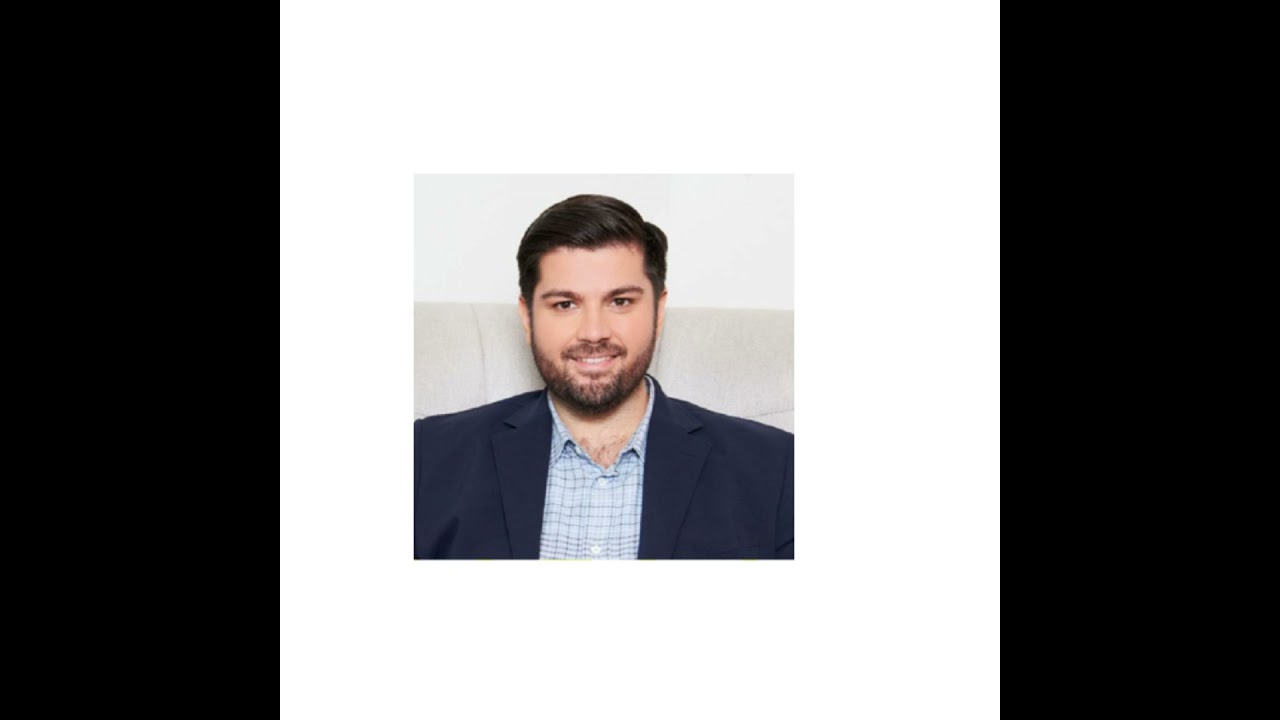
Michael Rubino, founder of Home Cleanse, explains how mold, bacteria, and mycotoxins trapped in modern homes trigger respiratory illness, joint pain, chronic fatigue, and cognitive decline. A DNA dust test identifies 36 mold species for under $300, and his foundation is pushing the Healthy at Home Act to classify water-damaged buildings as health hazards.
Chapters
Welcome to the Living to 100 Club Podcast. Here's our host, Dr. Joseph Casciani.
Well, hello to everyone joining us today on our podcast. You're listening to one of our Successful Aging episodes this month on the Living to 100 Club program. And I am your host, Joe Casciani. Each week, our conversations educate and inspire, helping you get the best out of all the years we're given, regardless of what obstacles come our way. You can learn more about our club at our website, Be sure to take a look at our new training and activities manual, Better, Longer, and Happier: A Guide to Aging with Purpose and Positivity. This is a series of 12 modules in a card deck format developed for activities directors at senior living communities to learn more about psychologically healthy aging, and the modules help to engage senior residents in activities that are cognitively challenging and foster a positive mindset. Modules 1, 2, and 3 are now on sale. Visit the website livingto100.club/blh. Now on to today's program. This Living to 100 Club podcast invites as its guest Michael Rubino, the founder of Home Cleanse. HomeCleanse is dedicated to addressing poor indoor air quality, a factor that has worsened in recent years, particularly as our homes get more energy efficient. Because energy efficiency impacts ventilation and air exchange, particles and toxins can increase, which in turn, which in turn contribute to spores and mold growth. Our, our guest educates us on the relationship between poor air quality and respiratory-borne illness. He also shares recent research showing how poor air quality contributes to skin conditions, poor cognition, even dementia. We review simple methods to detect poor air quality and recommend solutions with poor test results. First, a little background. Michael is an air quality expert, environmental wellness advocate, founder, speaker, podcaster, author, father, and husband on a mission to bridge the gap between our homes and our health. Michael put his background in construction and remediation to good use and founded All American Restoration, in 2017, which more recently became Home Cleanse, an organization that operates in 50 states. Home Cleanse has become America's go-to source for information, services, and products to create healthier living through cleaner indoor air. He's also the president of Change the Air Foundation, a nonprofit organization giving every person the knowledge, resources, and support to achieve better health by breathing safe indoor air through education, impacting public policy, and funding research. Well, Michael, welcome to our program today.
Hey, thank you so much for having me.
Great. Yeah, you're very welcome. I always like to open by asking our guests to tell us briefly about the journey, maybe the touchpoints that brought you to where you are today. Yeah.
So basically, after I finished college, I had moved back home to take over the family business, which was— my dad's been a restoration contractor since I'm 5 years old. And, you know, I was learning marketing at the time and installing new marketing tactics and sort of, you know, modernizing the company that was in existence since 1993. And part of what I did was I was also learning the sales aspect and going, you know, door to door when people called. And right around this time, it was about a year after Hurricane Sandy had happened. And so many times I was getting calls and going into people's homes, I was noticing that, you know, they were complaining of different ailments. The first woman's house that I walked in, I'll never really forget this story. It was a woman in probably about 65, reminded me a lot of my grandmother at the time. At the time I was in my, you know, early to mid-20s. And as I sit at the kitchen counter, I noticed she had a walker, I noticed she had a cane. And, you know, she just started kind of telling me about all these things she's experiencing, particularly joint pain, which was something that she really never had experienced before Hurricane Sandy happened. And she swore to me it was the house. This was the first time for me that this thought ever crossed my mind. Like, our homes can make us sick. What do you, what do you mean by that? She gave me two reports. One was a laboratory report showing levels of mold and bacteria in her home at that time. And the other was a report of a, you know, big box chain company that had supposedly remediated her house. And it was the actual scope of work. So I looked through the scope of work, nothing really struck me as out of the ordinary. It looked pretty standard, all the scopes of work that I would see at my dad's office. And then of course the mold report that showed all these different levels of mold and bacteria. And I was like, how could that be? These are off the charts. I told her, you know, this is my first project ever, right? So I told her, listen, I don't understand this fully, but what I do know is we have to set up engineering controls and containment. We have to open this wall. And see what's going on. And she agreed. So I gave her a price of what it would cost for the labor materials to do all of this work. And when I opened that wall for the first time, it blew my mind because the wall looked like, just like the wall behind me, it was perfectly white. You would've never guessed there was a problem. And as soon as you cut into it and saw behind it, the entire backside of the drywall was covered in black fungus. And then the wall itself behind that was covered in black fungus. I mean, the 2x4s and the drywall behind that. And that was, it was remarkable to me at that time. It was right by her HVAC unit. So there's one thing that I really noticed in this story was, you know, we have this, okay, so first off you could fix something, but it comes back, right? That was new information to me. The second thing was, you know, okay, so we had mold in this wall. We also saw mold in the HVAC. So obviously it was getting from in the wall into the HVAC. And I started to think, well, what about all these spores across the entire house? This is totally impacting each of the breaths she's taking because that's how she's inhaling this stuff. It's not like she's eating the wall or touching the wall, right? So it was at this point in time that I realized, oh my goodness, like there is a total, uh, fallacy with the way we, remediation companies look at fixing and restoring homes. It is completely cosmetic instead of scientific. And that's where this journey really began, where I realized, okay, well, this is impacting more and more homes. We're taking 20,000 breaths per day. We're inhaling things we have no idea because we can't see them, they're so small. And we have industries building homes improperly, restoring homes improperly, and maintaining homes improperly. Therefore, we create this environment where, you know, and this is obviously not even mentioning the energy efficiency piece yet, we create this environment where the homes in which we live might not be as healthy as we thought.
Wow. Wow. Yeah. So real kind of learning point for you. So you saw more of that, I take it, as you continued and you started to scratch below the surface.
Yes, yes. So that was the first one. Then the next one, it got more and more bizarre to the point where I was like, what if this is all somehow connected? And I went on this journey of figuring out, okay, no matter what ailment they're dealing with, no matter what situation there is in their home, we need a process that works from home to home every single time, 100% of the time. And so I had to take into account, well, there's different mycotoxins that different molds will produce. How do we make sure that the process removes all these different mycotoxins? Well, there's gonna be different strains of bacteria in this home compared to that home. How do we make sure that everything is encompassing? And I'll tell you, there was a lot of trial and error in here, but I finally figured out this recipe of, and, and honestly, anybody could do it once you understand the fundamentals. But this recipe of how do we go into people's homes and make sure that their homes are safe. And it's the pattern of people complaining that they were sick right after a massive water damage event or a storm or a hurricane. This happened not just in the Northeast. This happened in Florida, happens in California. We— I've been to homes in Iowa and Michigan. I mean, pretty much you'd pick a state, we're going to have an issue there with people not understanding what to do when they have these water events. And then not realizing that they're creating an environment for a totally offshoot microbiome that you don't want to have in your home. That's then impacting the body every time they breathe. So it's, it's been a remarkable journey. And as of today, we've helped thousands of people, you know, miraculously recover from the most chronic situations to even the most acute, I just have allergies and I just want them to go away situations. And it's really provided me that affirmation to realize like this is an important endeavor.
So you started Home Cleanse and you are able to scale your learning experiences and bring it into homes around the country, it sounds like. So, um, uh, where, where are your clients? Are they always in areas where there's been flooding and storm damage, things like that? Or are you in neighborhoods without these Events.
Yeah, so this one client, her name is Shannon. She was in a very small town of Florida. And just to give you an example of the different sample sets here, and this small town wasn't really impacted by a hurricane per se, but it had some water damage just due to, you know, natural maintenance issues that needed to happen inside the home. She had thought that she had fixed the problem. Shannon Hill is a mother of 3 and a wife. To a firefighter. And when some, when some of these leaks happened, she thought that she had fixed it. Truthfully, her husband came in, he kind of dried the place out. He thought all was fine and didn't realize there was a potential for mold and bacteria to grow. Fast forward 3 years later, Shannon ended up getting so sick, she was diagnosed with POTS, probably 7 other things too. And she actually had a GJ feeding tube installed into her lower intestine to essentially give her the nutrients she needed to stay alive. She was extremely depressed because she went from a high-functioning nurse practitioner to someone who barely can get out of bed in the morning. She was bedbound 95% of the time. She couldn't care for her kids, couldn't make her kids food, couldn't even hold her kids. This is how sick she started to decline over 3 years. She went to 40+ different doctors. No one really knew what was wrong with her except for, you know, these other random diagnoses that they had at the time, all of which were just ended up being disproved by different doctors. So you can imagine the amount of confusion someone's in when they're like, oh, I have this. But then the next doctor says, you don't have that, you have this. And then you get to this, this whirlwind of what, what do I have and how do I get better? Right? What's going through her mind is, I just wanna get better.
Yeah.
So finally she finds a doctor who says, I bet you have an air quality issue. This is where I think your problem is. You need to get your house checked., you know, for mold and bacteria. Somehow through the, you know, grace of God, she ends up finding me. We go in her, into her house. We find all kinds of problems. I tell her, you need to immediately move out of this house. Okay? So she gets an RV, parks it on her property, moves into the RV. Within 7 days, the GJ feeding tube is gone. She's walking again. She's making her kids breakfast, lunch, and dinner. Like, like the most miraculous recovery. If you, if you actually go on my YouTube channel, you'll see this cuz we, she, she wanted to share her story. What's really interesting is that's probably one of the most extreme cases I've ever experienced. Okay. So I don't want people to think that, that, you know, that this is the type of miracles I perform every single day.
Or it's happening all over. Yeah.
Or it's happening all over. Right. But that just goes to show you, you know, how much little we know about the dangers of what we can be breathing in. Right. And if you look up pretty much any infectious disease on the internet right now, you will know that air transmission is the greatest route of exposure. What, what was remarkable about this, this, this story and the affirmation that came with it really was, okay, if we can help someone from that extreme level, and I'm, I'm not saying that all illness is gonna stem from air quality, but just follow me on this. Think about all of the quality of life improvements we can make for somebody who isn't chronically ill, but is dealing with perpetual sickness where they're frequently sick or they're dealing with perpetual allergies. I mean, there's a whole laundry list of people that are dealing with a poor quality of life because they're, they're dealing with these nuances with their health that they just can't seem to shake. And what if all of those issues can be improved upon with air quality? You have the, the work that Dr. Dale Bredesen's doing about the early onset of dementia, inhalational Alzheimer's, all of those things where environmental toxins are attributing to those illnesses and allowing those illnesses to set in much more, much earlier on than they ever would normally set in. I mean, we're talking people in their 40s developing dementia. That's unheard of. And yet all of this are being traced back to environmental toxins increasing the susceptibility. These are things that if we really start to study and look at, we might find some miracles in medicine in the future.
Right. You know, I, I think it's important for our, our listeners to just to distinguish when you talk about kind of the onset of dementia, these are what we call preventable dementias. These are, we're identifying risk factors. These are modifiable risk factors. These are not the dementias that lead to Alzheimer's necessarily or other primary degenerative dementias. But these are, these fall under that category of preventable dementias like alcoholism and hearing loss and a number of risk factors. But the environmental toxins is, I think it's kind of working its way to the top of the list as a risk factor here. Yeah.
Yeah. I mean, even the cancer research out of the UK, they published, it was late last year, you know, a new study that they think air quality causes 10% of cancer cases. You know, and outside of smoking, we really didn't understand much of what caused cancer, right? A lot of, lot of terms have been thrown around like radiation or, you know, obviously we know that smoking is the number one cause of cancer. But in recent times, one of the most, I would say marvelous, but traumatically marvelous discoveries is that there seems to be an increase in cancer cases for people that have never smoked a cigarette in their life. And that starts to draw the, you know, the really starts to raise the question, well, what is causing these things outside of smoking and how do we prevent it? And I think it's, it's interesting to see all of these studies that have been coming out in recent times where we're actually starting to pay more attention to the quality of air we're breathing.
Sure.
We take 20,000 breaths per day. We consume more air than anything else on the planet. But for so many decades it's, it's really not been on the list at all. And I'm just so glad today that here we are, we're sitting here talking about this and that means that we're heading in the right direction, right? More people are becoming aware and when you're aware of something, you can do something about it.
Yeah. Yeah. And you and I spoke earlier about this new database or repository of information And we'll get to in a little bit, in a few minutes, but it's just astounding that we can kind of put your findings or findings on the air quality in different homes into this database, and physicians can put their questionable or, you know, stumbling diagnoses into the same database and maybe see pairings that hadn't been possible before. And this is what you're talking about, is affecting the respiratory conditions and other factors. So we're linking those two, the medical with the environmental, and it's all in one place so we can see links. That's just brilliant in my opinion. Yeah, so let's talk about the— we'll get to that in a bit. I want to understand this, you know, the— these energy-efficient homes and more, you know, in the past decade or two decades where very efficient with, you know, keeping out cold air and hot air. And yet you say this contributes to kind of poor air exchange. Is that what your argument is?
Absolutely. So let's take us back to the 1970s, right? Richard Nixon's president. We're dealing with a global energy crisis. What do we do? Well, we need to make, we need to use less energy.. And one of the biggest things we can do to use less energy is actually to prevent energy loss. If we prevent energy loss, we won't need to use more energy. So we go on this whole energy efficiency kick with homes and buildings. All right. And so with that being said, the whole goal of this is to make homes and buildings tighter, make them more efficient so that there's less heat loss or less cooling loss. So that it actually costs less money to heat the building, cool the building, et cetera. Now, in order to do this, what we typically do today is we encase the entire building in usually like a spray foam material. And what that does is it actually, it has the best R-value per density, which is why it's, it's so much recommended. However, one of the trade-offs is it acts as a pretty decent air barrier. Which means that we're now not exchanging as much air from outside to inside as, as we would have in like, let's say, a 1950s balloon-framed home. And when we take a look at that closely, if we lose the ventilation ability, that means that we're breathing in a set volume of air indoors. So to paint that picture for you, we are trapped in these balloons.. And so every time I exhale a breath, every time I spray a chemical, anytime anything happens, water damage or mold or bacteria, right? Those particles are gonna stay inside the building in higher concentrations than they would if we had fresh air exchange. You may have heard this little saying, or maybe not. It's, it's more of a scientific saying, but the solution to pollution is dilution. So we've essentially taken away the ability for dilution to occur, which means that every time we take a breath, 20,000 times per day, I'm gonna be inhaling more particulate matter than I normally would in a more ventilated space. So this increases all kinds of risks for pretty much anything, but including our own bacteria that we excrete to constantly be coming back into contact with the body and not escaping. So there is a, a, a slew of homes that have been built within particular years that have not been built with any sort of air exchange. We could fix that, but that's the main point that I'm making. In Canada, they've done it really well where they actually made it part of building code to have what's called an energy recovery ventilator as part of their building system. That means that that is gonna constantly bring in and exchange fresh air. So we haven't made that part of the building code in the US. We need to follow suit on that as soon as possible because even today homes are being built without them and they're very, very tight with virtually no air exchange. So that is kind of the evolution of how we got to this point.
But when you have HVAC system, I mean, isn't there air being exchanged when these systems are on? We're taking in air from outside, we're cooling it or heating it?
Uh, sometimes depends on the way the HVAC's set up. For most of the time though, if you ever, you ever driven in a car and you know when you turn the AC on in the car, it kind of gives you two options. Option one is normal option where it's bringing in fresh air from outside, going through the car, the filter, and then bringing that air in conditioned. But then there's also that little arrow that kind of circles around. And when you click that button, most people click that button because you get the AC running faster, right? Because it's constantly taking the already cool air, reconditioning it, and putting it back, right? So it gets it faster. It's not bringing in that hot fresh air in from outside and then conditioning it. But what that does is it, it just recycles the air inside the cabin.
Sure.
And most homes, that's what you're doing. You're recycling the air inside that cabin, except in this case, it's not the car, it's house.
Interesting. Yeah. Okay. So normally you would use that button in your car when you're driving through a dust storm and you don't want any air coming in. Otherwise you really want the air to come in, whether it's being heated or cooled, you want that exchange, right?
And most of our homes have that button checked with no way to uncheck it, right? So we're just constantly breathing in the same air recycled.
Fascinating. It's the default is on. Yeah, it's always on. Well, how do we measure the air quality in our homes? You mentioned the dust test. What, what, what is that? What does it measure and how do we get it done?
All right. So before I tell you what the dust test is, I think it's important for you to understand why I created it in the first place.
Sure.
Basically, the dust test is a test using PCR technology. Yes, same PCR COVID swabs. You know, we're talking the same technology that analyzes the dust DNA specific to give us the specificity of 36 different species of molds, toxins, et cetera, to understand what we're being exposed to. Now, why I developed this, I think is a very important point to make. Before this test really was in existence, people, people's main way that they check the quality of air inside their establishments is by hiring an inspector to do an air test. And they would come in, they would set an air pump in the center of the room. They would collect that sample, about 75 milliliters of air, which would take them about 5 minutes. And in that they would understand using microscopy, somebody would literally look under a microscope and physically count how many mold spores they see. So very inefficient compared to DNA specific, and there's no human error. Okay, let me tell you why this is such a problem and why people usually get a false sense of security using this method. Because first off, 75 milliliters of air is not a lot of air to say that I have screened your entire house with this one sample.
Mm-hmm.
Just to put it in perspective, if you took a 2-liter bottle of Pepsi and you emptied it, that is 2 liters. 75 milliliters is basically a very small portion of that bottle.
Wow.
Now think about your, your space. You live in a 1,000 square foot apartment or a facility. Think about it from this perspective. You, you are getting a bottle cap of air compared to this massive amount of airspace. So it's not enough information to say that just because that one test in the center of the room is, looks normal, that your entire space is normal, right? Mm-hmm. So as a screening tool, and that's how it's typically incorrectly used, Yeah, it doesn't provide you a lot of value. However, here's why we wanna measure the dust. Anything that's going on in your environment is going to aerosolize. If you've ever sat near a window on a sunny day and you saw a ray of light refract off all the particles in the air, you know what I mean? There's a ton of stuff in the air. Well, it eventually settles and becomes part of the dust and it settles on our top of our furniture. It settles on the floor, on our baseboard moldings, ledges, you name it. So what we wanna do is we want to go around our, our space. We want to collect different pieces of dust from random rooms across our place to get a more accurate representation of what we're actually breathing in because what's in the dust is getting into the body. Hmm. From there we can then make educated decisions to improve the quality of air that we're breathing. So where people used to just pay a lot of money, by the way, to get these air tests and they, they'd actually don't provide a lot of value. For a fraction of the cost, you now can get DNA-specific analysis to then understand what am I breathing in? And then that empowers me to make a decision on what can I do about it? Because now if you call an inspector with this information, you could say, hey, I see these couple problems here. I want you to help me figure out where they're coming from. So it's putting people into the driver's seat.
So the dust itself is always the air particles that settle. We use that term aerosolized. What was the word?
Yes, aerosolized.
Aerosolized. A-I-R-S-O-L?
A-E-R-S-O-L-I-Z-E-D. Aerosolized. So I may have forgotten a no in there. Sorry. But basically aerosolized is a term used to describe particles aerosolizing into the air. They're becoming airborne, right? And they will float depending on the particle, the weight of the particle, the size of the particle. Some of them can suspend for a really long time, hours, some days. But eventually they all, you know, there is gravity here, right? They all make their way to a surface.
Okay.
And so The problem is, is that particles can re-aerosolize, right? So if I move through and walk through the room, that force of me pushing through the air can generate particles to get re-aerosolized.
Mm-hmm.
The HVAC system turns on, just that sheer force of circulating that air again can cause things to be aerosolized. But one thing we know is, and everything becomes a part and parcel of the dust and eventually settles to the floor. Yeah.
So when it's stirred up again, we get another chance to breathe it in rather than just sitting there.
24/7, you, you constantly have, you know, opportunities to be breathing this stuff in. And other, other thing to, to mention is, you know, most of us when we think of dust, we think our dead hair and skin cells. And that's true. A lot of it is our dead hair and skin cells. But also a lot of it is contained in, there's all these microbiological contaminants contained in, in these dead hair and skin cells that we can't see. And that's what we wanna worry about.
Okay. So we can do this test. Is this something that we can collect ourself and send in somewhere? Or is this sent to your company or what?
Yeah. So if you buy this test, which you can do so by the way on thedusttest.com, this test will ship to your house. It has instructions, very easy to use. You'll get a vacuum sealed, almost looks like a Swiffer cloth. It's a sample collection material. You go around your place, you collect dust from various parts of your home. There's a whole video that shows you how to do it, but it's really that simple. You're just collecting dust and you send that in and it goes to a third-party accredited lab. That third-party accredited lab uses the PCR machines to analyze the sample. It'll tell you down to the number how many different particles per milligram of dust. For all these different species. So we can really get to see, it also tells you how, if it's normal or not, right? So what normal is defined is defined by the EPA. The EPA did 2 studies, one called the American Healthy Home Survey 1 and the American Healthy Home Survey 2, where they analyzed about 1,500 different homes and they saw what is, what is normal in the average home in the, in North America.
So you can look at that report, you can see when it's in, say, within normal limits or exceeding normal limits. Then what? Let's say we, we get into the red zone in a lot of these particulate measures. What, what do we do then? We call in somebody to fix it.
Exactly. So let's say we have Stachybotrys, this toxigenic, what, what, you know, the media typically refers to as toxic black mold.
Hmm. Well, good.
We have Stachybotrys. Okay. We're gonna want to, two things we know. One, Stachybotrys requires a lot of water. It's a hydrophilic mold. Number two, we also know that it takes at least 3 to 5 days to grow, right? So if I see this on, on a test, first question I'd ask you is, do you have any water events that occurred recently that you're aware of?
Mm-hmm.
You know, is there a shower leaking? Maybe there was a roof leaking, and 9 times outta 10, the person will offer to you right off the front. They will say, oh yeah, I just had a roof leak last year and, you know, I thought it was dry, but no one really did anything. And then you come to find out, well, the insulation got soaking wet. They never dried it, right? That wet insulation sat on that drywall for probably 2 weeks before it was fully dried. And boom, that's where the stachybotrys is, right? So the test helps prompt people to ask the questions that they thought were fixed, but really they realized through this test it wasn't actually fixed.
And you might get some clues as to where to look for the culprit, right?
Like I said, 90% of the time people know once, once they have that validation, they're like, oh yeah, I know where this is from. And that's what's so great cuz now they can really hire the right professionals to do something about it. The other interesting thing that you really started to touch on, and I don't know if you want me to go there just yet, but the correlation with the medical side of things.
Sure.
Is was really remarkable.
Yeah. Yeah. Yeah. Let's do that. I mean, oh, just quickly though, if our home is mold-free, is our air quality good?
So there are obviously other influencers of air quality such as, like, radon, lead, asbestos, right? But mold is one of the easiest things to detect when it comes to water damage. Mm-hmm. And I find that homes typically have the worst air quality if they have the most water damage. And that's why we look at, at mold so closely because if you have water damage, you're gonna have mold, you're gonna have bacteria, you're probably gonna have termites, you're probably gonna have pests and animals and all these things that want to live in the home because everything loves and needs water, moisture.
Mm-hmm.
And moisture, right? So we find that mold seems to be the easiest thing to use to detect moisture and then you resolve the moisture, you remove the byproducts of moisture like mold and termites and bacteria, and you create a totally different quality of air that you're breathing inside that environment. And of course there's other things to consider like radon and lead and asbestos, but that seems to be the main driving force behind all these different things we're seeing.
Wow. Okay. Well, that's great information. Um, let's jump into the, uh, correlation between the incidence of these toxins in our home and, and medical conditions? I mean, you mentioned several of them, cancer and risk factors for dementia and respiratory disease, but what else are we learning about this?
Yeah, I think one of the really interesting things that we've been seeing is, you know, you can now test the body for, there's what's called the organic acid test. And there's also what's called mycotoxin testing. And when you take these tests, these toxins that are found inside the body can correlate with the specific species of mold that you're finding in the home.
Mm-hmm.
Sometimes maybe it's not the home, sometimes maybe it's the workplace, but you act, but using both the dust test and the test that you can do with your doctor, mm-hmm, we're actually seeing like in 99% of the cases, a direct correlation. I'll give you an example. Wow. A client recently came to me, had high levels of ochratoxin A and all the other toxins looked fine, but ochratoxin A was off the charts. And when we looked at, at the report from the home, what I found very remarkable was the exact mold that produces ochratoxin A was off the charts and inside her HVAC unit. And HVAC unit, that's like the lungs of the home, right? So if my HVAC's contaminated, that means that the air that I'm constantly recycling is gonna have a ton more output than if I just had a little mold in my shower, right? So this is a, this is a bigger deal. And all the other molds that were on there were in normal ranges except these Aspergillus species. And that's the exact species that produces the toxin that was completely elevated in her body. We were able to draw a direct correlation to that. And actually after her HVAC system was cleaned, new filters were installed, right? When she retested, these levels went down. And the last time I spoke to her was, hey, thank you for all your help. The levels went down. I'm feeling so much better now. I think this provides us a really good opportunity in this phase of research because if we can start to draw correlations between homes and buildings and the health of the occupants inside them, yeah, we can start to collect what symptoms are they experiencing.
Yeah.
And we can really start to put this together and provide this to, you know, EPA and CDC and all these other governmental organizations because they have been doing the research, but unfortunately there hasn't been a massive amount of federal funding for them to do that. And continue that project, which is something that we're starting to get more attention on. It would be really interesting to see, and this is data that we are starting to collect and can, will continue to collect. But if I know that in 73% of the homes that have Stachybotrys, they will have chronic fatigue, that is something that the entire medical system would need to know. That number is arbitrary. I just made it up. But this is, this is where we are heading in terms of research. We want to be able to, to, to really see and put together lists of symptoms that we can trace back to certain species of molds in certain percentages, cuz that can help us understand, well, when we have this bacteria or we have this mold, we can expect this health outcome at this, in this percentage of people. And that would really help us really understand How do we make new medicines to combat this? How do we create new policies to protect people when we're building homes, when we're restoring homes, and then of course maintaining homes? And that's a direction that, that I really wanna see this headed in.
Mm-hmm. Yeah. And you can go in the other direction too. When you identify the toxins in the air, you can then go in and investigate what's going on medically with this person. And it might have been undetected or maybe it was, you know, the symptoms were atypical. So, uh, great information going both directions.
Yeah, absolutely.
Yeah. So what is the, um, tell me again about the, the database or repository that brings all these findings together?
Yes. So essentially we have a database now. Uh, we actually, um, have more, uh, data than the EPA does on homes, uh, all across the country as people continue to buy tests and use these tests to understand the air quality inside their home. And this repository is, is an amazing thing to have because using this repository and the, and by partnering with doctors who are also in support of this technology, that using that technology to correlate certain illnesses in their patients, we actually, like I said, can build this, this new foundation of information to be able to, to discern what illnesses people are getting from mold inside their homes or bacteria inside their homes. Essentially, developing a new understanding to how environmental toxins impact different subsets of the population is going to be vital in how we be able to personalize medicine in the future. Because environmental medicine, for example, it's a specialty trade. You know, it's like being a plumber inside of a contractor. You know, doctors have different specialties within a subset of being a doctor of medicine. And what's really interesting is if you talk to, to most practitioners, they'll tell you environmental toxins really wasn't a big part of my education. You actually have to go down that specific path. And unfortunately, there's not a lot of doctors that do go down that specific path. So when people need help, there's not a whole lot of information that they have. So we're really at this new frontier as we understand if this is, if this needs to be a bigger piece of medicine, the way I believe it, the way the data is starting to look, this is gonna help us really transform medicine because you're gonna have more doctors start entering the field because they see an opportunity to help people where there's not a whole lot of help. And you're also gonna start to see even general practitioners becoming more educated in this subject. That have more resources so that when they do all these tests and everything comes up normal, yet you know you don't feel well, they will have a resource to be able to send to you to see if your home is the culprit. Yeah. If your workplace is the culprit. And that is where this is all headed.
Yeah. Which is exciting. Oh, I think that's so exciting. I mean, that's, that's one of the pioneering breakthroughs in medicine as far as I'm concerned in recent, recent years. What is the name of this database? Do you know?
So it's, it's a, it's, we don't have an exact name of the database, but it is basically the database of tests that are taken when people use the dust test, right? So when you use the dust test, you're helping to support amazing research that is so desperately needed, and you're also getting information regarding your home. And I think that is where, you know, that people can really show support and get the information to make sure that they're not being affected by their own home.
Hmm. So this company that does the analysis, you said it's a third-party company, they do the analysis. Do they send those results into this database?
Correct. So basically, EMSL Analytical is one of the largest environmental labs in the country. They have multiple locations. They're the ones who service this. They're completely licensed and accredited. And have the PCR technology. So anytime someone buys this test, we send them the, the package, which includes like the sanitized cloth, the instructions, everything they need to collect the sample. Their return slip that's already pre, pre-provided goes directly from their house directly to the lab.
Wow.
Lab then through an online system uploads the results into our database. And then our database sends them a fully customized report that is much more consumer-friendly. That's kind of how the whole transaction takes place. So we have a, you know, a pretty substantial database at this time, and we're very excited about being able to utilize that data. You have privacy, don't worry, we're not writing a story about you specifically, but as we culminate that data and we can tie it to different regions and different geographical locations, and of course tie them to different symptoms people are experiencing. That's where we can really make the argument for how important air quality is to human health.
Yeah. Yeah, I think that's beautiful. I just think that's great. That's great. So in the minute that we have left, tell us about Change the Air Foundation. What are you up to?
Yes. So we have a very important thing to discuss called Change the Air Foundation. Change the Air Foundation is a 501 nonprofit. It exists because I quickly realized in my quest to help people create healthier environments and live healthier lives, well, I can't fix one house at a time. There are way too many houses out there, not, not just in the US, but of course across the world. And one of the biggest challenges we have is we have an ed— misinformation and a lack of education around the importance of air quality. And then once you are aware of the importance, just how do you take the right steps? So that's, education's a big pillar for us.
Mm-hmm.
Research, we already discussed this. There's a big lack of research. There's hundreds of, of medical journals, which is a step in the right direction, but there's a clear lack of correlation directly between individual samples and the effects that they have. We want to fill that gap on the research side and really make, make a big awareness campaign around that from a public health perspective. The third thing is public policy reform. You know, mold, for one example, or water damaged buildings, really the best one, is not considered a health hazard in any state in America. We are kind of at that point where you remember when we used to paint buildings with lead-based paint and you remember when we used to install asbestos insulation?
Sure, sure. Yeah.
Okay. Well, it took many years to really understand the health effects of that and to decide that that is a health hazard. We are at that same point with water-damaged buildings. Now, everybody knows it's not good to live in a water-damaged building. There's tons of medical journals that talk about the effects of that and how it affects human health. But still, not today in one state in this great United States is it classified as a health hazard. And because of that, it allows misinformation to exist, right? So we want to close that loop. We just passed our first bill in the Iowa Health Committee for public policy reform. We have 13 other states where we are currently actively advocating for public policy reform in. We have the second air quality federal bill to ever be proposed in the government, and it is the Healthy at Home Act of 2023. So we are really fighting a massive fight for you to make sure that you are better protected against indoor air quality. And I'll tell you, the government is very behind this in all the conversations we've been having. But, you know, there are a lot of other outside organizations and lobbyists, you know, that naturally are scared of change and are pushing back. And so if you cared at anything about anything that I said today and want to help support, please visit changetheairfoundation.org.
Okay. Well, you're doing some good stuff. Gold stars to you, Michael, I have to say.
Thank you very much.
Yeah, you're welcome. I'm glad to be a part of sharing this, this work that you're doing, but we are out of time for today. Just before we wrap up, I want to remind my listeners to visit my website, livingto100.club, sign up for my email list, and download a free copy of my 9 Tips to Make Living Longer Enjoyable. And if you're affiliated with a senior living setting or organization, be sure to look for my new training manual and activity guide, Better, longer, and happier. Michael, you mentioned the dusttest.com. That's the website where people can purchase the dust test?
Correct.
Does Home Cleanse have its own website?
It does. It's homecleanse.com if you need any air quality products or services.
Great, great. And people can contact you if they're interested in getting more information. They can contact you through the website. Absolutely. Yeah, great. Okay, well, that's super great, very important, valuable information you shared. Thanks very much.
Thank you so much for having me.
Yeah, you're welcome. And thanks to all of our listeners for tuning in. Hope to see you next time.
More from Joseph

The Hidden Cause of Aging? How Chronic Inflammation Affects Your Health with Joel Brind








