How Old are You Learn Our Different Types of Age A Living to 100 Club Podcast with Dr. Lisa Rill
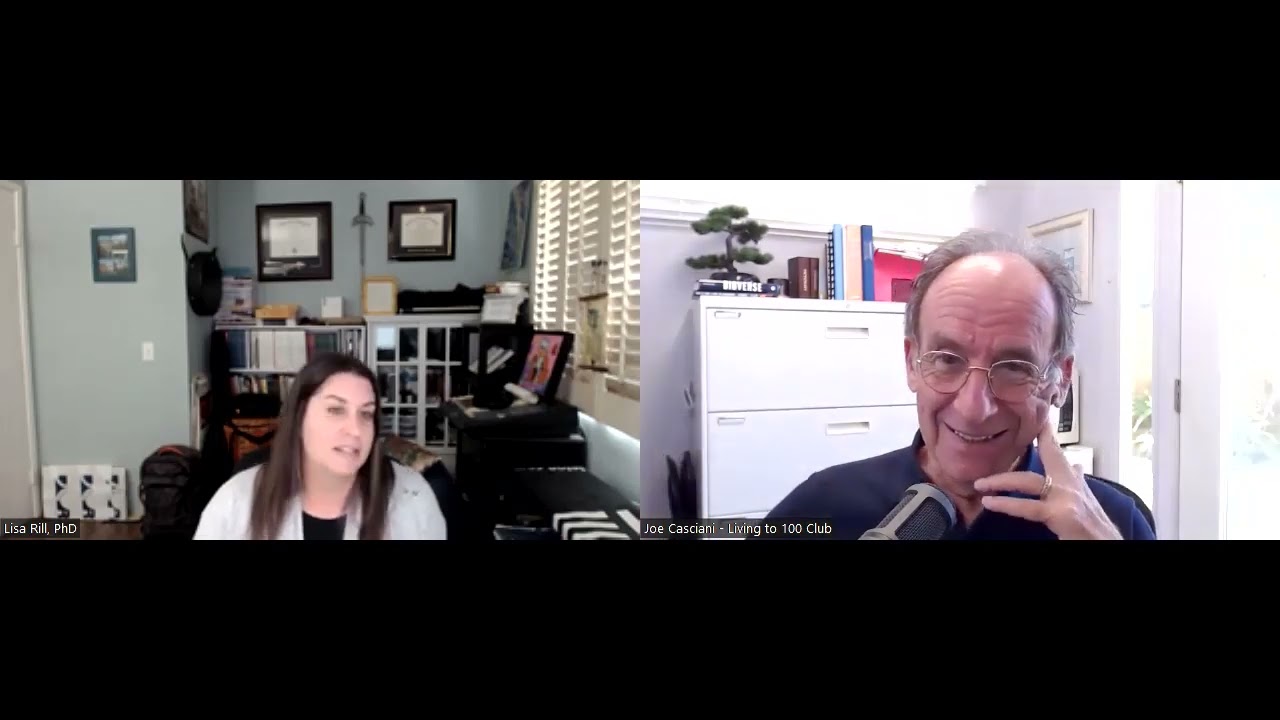
Dr. Lisa Rill, a geriatric sociologist, explains four types of age: chronological, functional, subjective (how old you feel), and biological (measured by biomarkers like telomere length). She argues that subjective age links to health outcomes and that cultural stereotypes about aging fuel ageism in everyday language and retirement norms.
Chapters
Well, good day to everyone. I'm Joe Casciani, your host for the Living to 100 Club podcast. Our conversations are all about aging well and doing what it takes mentally and physically to live longer and healthier. Our guests share insights and recommendations about successful aging, stories of perseverance, and inspiration about our future. On today's program, we look at the positive ways to view aging. Our guest is Dr. Lisa Rill, a professional with a long history in geriatric services and research and currently Executive Director at Senior LifeSource, a nonprofit organization that provides education on aging for all ages. We discuss a number of topics including the difference between chronological, functional, and subjective ages. When does aging begin? How do we define someone as old? When do we consider ourselves as old? We welcome this conversation about the various perspectives on positive aging. First, a little background. Lisa Rill received her PhD in sociology specializing in aging and health. She served as a geriatric social worker and worked as research faculty for the Claude Pepper Center on Aging at Florida State University, addressing quality of life and long-term care. Dr. Reel is an editorial board member for the Certified Senior Advisors Journal and a Certified Eden at Home Associate Mentor. She is currently the executive director at Senior LifeSource, a nonprofit organization that provides education on aging for all ages. Lisa, welcome to our program.
Thank you so much for having me.
You're very welcome. Looking forward to this conversation. I always like to open by asking our guests to tell us a little bit about the journey that brought you to where you are today. It's been a long riding road for you, but Give us the highlights.
Yeah, sure. Um, well, it started around 22 years ago. I worked as a social worker in nursing homes, and I did that for about 5 years after undergraduate. I really enjoyed working with the residents and getting to know them and just spend time hearing their stories of life and It was really great. Unfortunately, it was also difficult sometimes with some of the bureaucracy—
Sure.
—working in the industry to really provide the care that I wanted to. So I eventually left that to go to graduate school with the high hopes of learning more about the industry and how maybe we could help improve the care and quality of life. For our elders. So I, I went for sociology and my PhD in aging and health. Gerontology wasn't as formulated as a discipline at that time, so I took the opportunity as a sociologist to really engage in aging for my background. And then after I graduated, I got that position as research faculty at the Claude Pepper Center on Aging where a lot of my research focused on, again, quality of life in long-term care, hoping to improve processes and procedures. I did that for about 8 years, and then I really wanted to get back to the people and help educate others and everything that I've learned. So when I moved out here to California, I joined Senior Life Source as the executive director and hoping to educate everyday people and everyday things about aging for all ages, really. Hoping to prepare people that could be confident advocates for themselves.
Yeah, yeah, that's important. Sure. And that's a lot of varied experience in different settings that you had some exposure to the older adult world industry. So clinical social worker in nursing homes, researcher, How did all these roles really inform your ideas on positive aging?
Yeah, so, you know, my career path is somewhat unique. So having that insider knowledge of the aging industry from the perspective of a social worker working with older adults in the nursing home, and then a more macro comprehensive level of understanding of the system from from my time as a researcher. So it really allowed me to experience and examine many different faces of aging. So with a world focused on these negative ageist views of what it's like to grow old, and it being just so ingrained in our everyday lives, that I was really drawn to finding the positive things for aging. And to do that, I had to uncover ways that challenge these commonly held ideas that aging is something to fear, or even worse, that it's a disease that needed to be cured.
Yeah, we still see that, don't we? We'll get into that a little bit more. Yeah. So you could see all the challenges, of course, especially in the nursing home setting. Then at the research level, you could see still the views and some of the real challenges that come with aging. We know that that negative stereotype is such a— I mean, it's not valid, but there is a very small percentage of older adults that do have this physical decline and do become— I mean, maybe 5% or less, but they do become dependent on networks and healthcare providers. Yeah. So let's talk about the different types of ages. And I mentioned that in the intro— chronological, functional, subjective, biological. Tell us what these are and what they really connote. Sure.
This is one of my favorite topics. Yeah. Although it sounds simple, you know, when do you become old? There are multiple ways of defining old age. So just a quick side story. When I took my first Introduction to Aging and the Life Course class, my professor asked the same question. And so many, like others and myself, we automatically thought 65, right? And she asked us why. We really couldn't come up with a good answer other than, well, it's retirement age. And she replied by saying, like, well, but retirement age is different in other countries. So the point is that the thing that I really love most about sociology is that it forces us to think about everyday things that we just take for granted or we think of as just common sense, and then we question why is it so. And I feel that that's how we progress as a society. So back to your question, um, when is someone old? Gerontologists, who are people who study the aging process, use various measures to describe and, and categorize the aging process. So let's start with chronological age. This is the simplest way to categorize age. It's measured in terms of years and months and days since birth, but it's somewhat arbitrary. According to social or cultural norms. And it's used to determine eligibility for certain milestones in life. So think about your voting age, driving age, drinking age, retirement, right? So why, for example, is retirement age 65 in the US? Well, it started as this arbitrary decision based on the retirement age used in Germany. Mm-hmm. So which, um, actually in 1881, it became the first nation to adopt an old-age social insurance program. And then in 1935, when the US chose to implement a retirement program, some of the existing pension programs used age 65 as a retirement age and others used 70. And so they did this study and they found that 65 produced more usable and manageable system that could be self-sustaining with moderate payroll taxes. So then they just adopted the retirement age of 65. So since then, chronological age, um, this marker has been used to identify older adults. Okay. Now, social gerontologists like myself use chronological age as a marker in our research. So the choice usually depends on the topic being studied. So we like to distinguish between older age groups, right? It's not just 65+ because there's so many years, so much diversity, right? So we like to break it down to young old, which is 65 to 74, middle old, 75 to 84, and the oldest old, which at one point was age 85 and older, But now, as you know, these categories are starting to change as more people are living past 100. So otherwise, this categorization of chronological aging is not a very useful measure for defining old age.
Okay. So, mm-hmm.
No, go ahead. So that's chronological age. Chronological, okay. Now, when determining old age, right, there's more to it than just the this number, and that's where functional age comes into play. So functional age takes into consideration different factors such as an individual's ability and their appearance. So, you know, people become old when they no longer can perform major roles of adulthood. And as we know, people's bodies age at different rates, right? So A common measure of functional age includes someone's ability to do activities of daily living. And what we mean by that is, you know, your personal care such as bathing and eating and dressing. Mm-hmm. So an example would be, you know, if there's someone who's 65 years old chronological age, they could have a functional age that is much older maybe like 85 because they use a wheelchair to get around, while another 65-year-old could have a functional age that is younger, maybe around 45, because they're, they're still able to run a marathon. So, but just like chronological age, functional age also has its drawbacks. So the main problem is that it's inherently ageist because it focuses on characteristics that decline with age, such as eyesight or hearing, right? But it ignores the attributes that improve with age, such as wisdom and happiness. Hmm, okay.
So is there a scale, or is there, um, regarding functional age, is there a way that we can determine our own functional age, or is it just More arbitrary.
Yeah, I would say it's also arbitrary. Okay. Which brings us to more of what we would feel as a subjective age, which is probably how most people define their age without even knowing. So subjective age is, you know, how young or old a person feels, and then their perceptions of when other people become old. So I'm sure you're familiar, you know, with that saying, "You're only as old as you feel." So, and the key factors that influence one's subjective age is identity of their— sorry, their subjective age identity is their health, their activity level, their cognitive abilities, and also gender and social class influence. Someone's subjective age. So, um, an example is that one person may be 75 chronological years and feel much younger because they're healthy and active, while another person who maybe is 55 could feel a lot older because they have mobility constraints. So, um, Now the perception of when other people become old, that also shifts by age group. So people ages 18 to 29, they tend to think that old age starts around 60, while people who are older, around 65 plus, tend to think of others as old starting around 74, 75. So it's really interesting. And one of the theories behind this, you may be familiar with this, with this feelings associated with subjective age, is this thing called age group dissociation effect. And what this is, is that individuals tend to psychologically disassociate themselves from stigmatized groups. And unfortunately, there is a significant amount of stigma attached to old age. Right? So in other words, as people grow older, they view themselves as becoming a part of this group that they have these negative views towards their entire life. So it creates this need to distance themselves from the group, and they can do that by reporting they feel younger than their actual chronological age.
Yeah, I remember just a brief incident. My father-in-law had his sister in a nursing home, and he was probably in his 80s. And we took him to visit his sister and had the visit and all that. And as he was walking out, he said, look at all those old people in there. And that's the same thing, right? We're disconnecting from that, from that group. Yeah. Now, I love the concept of subjective age. I've read some research. You're familiar with it. A lot of studies showing that people who think of themselves as younger than their chronological age actually cope better with stresses and tend to take more preventive healthcare steps. And actually, Ohio Longitudinal Study, I think, found that people with that younger subjective age also live longer than people who see themselves as older. Than their chronological age. So again, it's that, that whole notion of mindset and where we think we are. Yeah. Exactly. Yeah. Well, fascinating. And then we have the, the whole concept of biological age and biomarkers and what scientists can use to detect how fast the body is aging independent of chronological age and the biomarkers. Um, that can really determine those telomere endings and a lot of those other— you may know more about it, but these, these ways to really identify the actual age of the body. Can you tell us more about that?
Uh, yes, a little bit. Um, you know, there's not 100% agreeance on, on this one. So some people use functional age and biological age interchangeably. But others suggest that, that they are different. So they say that biological age are tests that require, like you were talking about, blood DNA samples and analysis like that, whereas functional age complements biological age by validating that a person can actually function at that indicated age.
Okay. Yeah. Yeah. And I know we're seeing a lot of research on this and I'm not that close to it, but There are ways to detect, is our body aging faster than it should for our chronological age? So that's another way to— we don't want to say, well, my biological age is 55, but we don't really know unless we go through the test, of course. So that's helpful though, to have these different scales, different ways to view the chronological age, how many years we've been alive, functional age, how well we're managing our role, and then the subjective age, what do we view in ourselves. Yeah, that's good. How about social roles? How do they come into play?
Yeah, that's great. Social roles are expectations or guidelines for people who occupy a given life position, right? So, and over the course of our life, we move through these different social roles. You go from a child, student, spouse, parent, grandparent, right? These are all different social roles. And every social role has a different meaning. So for example, if I ask you to imagine a retiree, you might think of an older man playing golf. Or if I ask you to picture a widow, you might imagine an older woman with white hair, maybe a sad appearance. But social roles don't always conform to these images. So consider, for example, someone maybe that joins the military. They can retire after 20 years. So if they entered the military at 18, they can retire at 38. So it's not the typical image of a retiree. And likewise, not all widows or widowers are older. Some of the widows from the unfortunate tragic event of 9/11 were in their 30s when they lost their spouses. So again, social roles aren't always a useful way to define a person's age.
They're almost a negative, a negative take. I mean, it sounds like we have these expectations of what you should be doing at 60 or 90, and they, they sound like they're more limiting, at least until we let go of those old views. But they tend to be limiting rather than expanding. We think of a 90-year-old as being helpless or dependent, and that ain't so. We know that's not so for many, many 90-year-old. So the whole concept of social roles. Well, that brings us into this whole view about ageism. And, you know, we still see a lot of these negative stereotypes about older adults and what you should be doing in your 60s or 70s or 90s. So why do you think we still have these negative stereotypes out there? What's, what's, what's going on? What's keeping them around?
Sure. This could be like a whole nother podcast. So we could focus on, but, you know, the short of it is it's so just ingrained deeply in our culture, our society, that we don't even realize that we're doing it. So something as simple as someone saying, oh, wow, you just turned 65. Well, you look great for your age. You know, why do you say for your age? Why all of a sudden Does that matter? And of course it makes you feel good. And that is how deeply ingrained it is because you want to feel good at feeling, looking younger. So it's these, even these simple everyday activities that you don't even think is influencing these ageist ideas. So it's really hard unless you think about it to separate it from your everyday life. Society, you have to really think about these things, and nobody likes to do that. So, um, and, you know, everyone's guilty of it.
I was guilty of it until I kind of realized, wow, yeah, yeah, even, even the, the notion of retiring at 65, and it means, well, we probably shouldn't be thinking about working anymore. Now, that's, that's invalid. I mean, that's not fair, right? We can work as long as we want. And 65 is that marker, but it's got a pejorative. It's got a real negative connotation to retire at 65. So, if we change it to retiring at 70 or 75, that would probably open up, kind of give our society more positive views about how capable we can be in our 60s and 70s and later. Yeah. Yeah, so we still see that. We still see it in, in commercials. We see it in TV programs and movies. I don't know if it's as prevalent in other countries as it is here in the U.S., but I wouldn't be surprised if it was.
It definitely is. The World Health Organization is definitely working towards dispelling ageist views on a global level. They're very active in that. And it's just, it's the last, I like to say, -ism or -ist, ageism or ageist views that's really accepted in our society. We've got a lot of attention going on around racism, sexism, you know, things like that. But again, it's just so ingrained that we don't even think of it as damaging as these other.
Sure. So what are your recommendations? What is— well, it gets into social advocacy and kind of raising our awareness, raising our consciousness about the capabilities of seniors living on to our 70s, 80s, 90s. So what are some of the steps that we can take to shift this view? I mean, We see it. What can we do? Sure.
Well, I like to focus on one part of senior advocacy, and that is understanding that all individuals are entitled to this self-determination as they age and where they live. So this includes being empowered with choice, dignity, respect, and living with purpose throughout all your stages of life. So we, we should have control and the knowledge to decide how we'd like to live through our extended years, right? So we could all kind of agree on that. But when it comes down to actually doing that, that's when things kind of get a little, a little messed up. So self-determination can be violated if an action is taken maybe by a family member in their quote unquote best interest. Right, of the older adult, maybe an older parent, without taking their desires into consideration. And this is really common occurrence when maybe an older adult wants to age in place in their home, but the family doesn't feel it's safe. So it's really important to work together to find the best solution. The family members need to listen to the older adult and find out options that are compatible as possible. So, you know, in the end, if the older adult is competent, the final decision should be their choice. And, you know, this can be an unpopular opinion, but, you know, life is about making risky, uncertain choices. And just as some of you send your children off to make their own choices at 18, knowing they might not always choose the best safest path, you know, this should also apply to older adults and not end once a person reaches a certain age. So, you know, without choice, you can quickly lose your sense of purpose and your quality of life. I have example of one of my friends calling that, you know, my father keeps climbing the ladder. How do I get him to stop? It's not safe. He's at risk for falls. You know, he— I think he was a painter. And I'm like, listen, you know, all you can do is voice your concerns, help create a safe space, you know, talk to him about it, maybe a way that you both can feel comfortable. And in the end, you know, it should be his choice. She didn't really like that at first, but she understood. Yeah. Sorry, go ahead. Yeah, no, so I'm just saying it's aging with dignity. And feeling empowered to make one's decisions, you know, being treated as a competent human being, making decisions together about your care. And this can really be achieved once we understand all the different aspects of the aging process, so the positive and the negative.
Yeah, so respecting the person's right to make his or her own decisions, allowing them the freedom to make those decisions. And as you say, we can express our opinion here's my argument, here's why I don't think you should be driving anymore. And you know, the other person says, well, it was just a mistake, I couldn't find the car. So yeah, you look for some compromises. And frankly, I, you know, I had someone on my program just a couple weeks ago. She was talking about how families often make the decisions for their parent or sibling. And when the when the older adult goes along with it, she, my guest, said, well, that's another example of ageism. We're letting other people make our decisions for us, even though, you know, there might be reasons for that. But it's up to us too, as an older adult, to dig our heels in and not be so willing to yield. I mean, we want to listen to reason, of course, and other arguments, but we should view ourselves as still being capable and still having a degree of functional performance and a lot of that. So it's our own shift too, right? It's our own attitude about aging and staying independent, as independent as possible.
Yeah, exactly. And that goes back to your self-perceptions of these ageist views of even yourself and how ingrained it is. And, you know, nowadays there are so many wonderful resources out there that can help you through all these different situations, even starting a conversation, how to do that, you know, it's difficult. And people are at different stages in life, so just knowing that there's ways to work through it and people that you can connect with that can help you in those situations.
Yeah, I mean, aging in place is one of the big ones, right? Because Most of us want to live in our own homes and we don't want to go to an assisted living facility, but at the same time, we have to look at what are the risks and what are the options, what are the opportunities. And you're right, this conversation is indispensable. We really need to have it because when we put it off, then we're making crisis mode decisions and they're usually not the right ones because we're acting, you know, just on impulse, off the cuff. And we need to think through what the options are and take the plans and preparation to, to say, okay, down the road, if and when such and such happens, here's what we're going to kind of consider. Yeah. Okay. I can see that. Yeah. Yeah, it is a lot about educating and staying informed ourselves and making informed decisions and letting our family members know, look, I respect your, your opinion. I respect your desire to keep me off the ladder or keep me out of the car, but here's where I am. And these, these conversations are indispensable, as I said. Yeah. Well, well, tell us about Senior Life Source. What, what do you do? What's the mission of this organization? What are some of the successes?
Yeah, so, um, mentioned it briefly in the beginning, Senior LifeSource is a nonprofit organization. We serve the greater San Diego area by providing education on aging for all ages. Again, we don't want you to wait for that crisis situation. So we provide interactive panels, virtual and in-person, with local experts. So our mission is to help them become confident advocates for themselves and their loved ones and we do this by preparing them with knowledge and trusted resources that they need to make their informed decisions on any aging issue. And the end goal is to enhance their quality of life through education by connecting people to their community resources. So why is this important? Well, you know, we're an aging society. By 2030, we're gonna— the U.S. will witness a demographic shift that we've never seen before. Where older adults 65+ will outnumber children. So a critical issue that we're all kind of facing as this newly aging society is figuring out how to suitably care for ourselves and our loved ones as we age through these extended life stages. So one of our successes, I would just like to say, you know, you were a part of it. Recently we did an event with AARP California, a panel of experts, and we talked about helping socially isolated seniors who are concerned about COVID and safely re-engaging in the community. So we help provide tips and stories and resources of others who had successfully re-engaged in their community. Really, it could be on any topic on aging and really just connecting people to their resources so they can get assistance in whatever they need.
It's a great program, great resource, very important to provide this education and to, as you say, collaborate with other aging organizations and spread the message about successful aging. How to manage the changes that come along. Yeah, that was a great, that was a great panel. I was very, I was very happy to be a part of it. It was a great discussion talking about social isolation and steps we can take. So yeah, it was a good, it was a good model. And I really think that's smart because the more collaboration we can do with other organizations, the better. Yeah. Yeah. Great. So we're just about out of time. What would you hope our audience takes away from our conversation today, Lisa?
All right, so let's return to the original question, right? When is someone old? By now, I hope you'd be able to answer this question with the key takeaway being, well, it's not just one simple answer. So the point is not that it's impossible to define old age, but rather knowing that regardless of what definition a person chooses to use, there's gonna be variability between one person to the next. And even though there's 53 million individuals aged 65+ in the U.S., you know, they are a heterogeneous group, there are general patterns that can be observed in adult development and in just the aging population. So the definition that social gerontologists like me use really depends on what we want to know in our research to examine these trends. For instance, we might look at older voters and their trends of voting. So with that, you know, now that you understand all these terms, you Consider yourself as old? Never. Never.
Never. Yeah. Yeah. Wow. Well, thank you. That was good. And that's important to remember. That's how do we view ourselves and how do we view our continued functioning. And there's always opportunity for moving forward at any level. Yeah. Yeah. Well, it looks like we're out of time today, Lisa. But before I wrap up, I just want to remind my listeners about visiting the website livingto100.club. Sign up for our email list and download a free copy of my 9 Tips to Make Living Longer Enjoyable. While you're there on the website, be sure to peruse our library of blogs and podcasts, and also you'll find my email address and an option to set up a brief call. I'd love to hear your thoughts on this episode and, and others, so let me know what you're thinking. Finally, if you're interested, reach out to me to schedule a presentation for your group in person or online. I think there's real value in helping older adults feel inspired about their future. Lisa, thanks so much for being a guest on our show today. For those who might want to contact you, how can they do that?
Sure. My email is simple, lisa@seniorlifesource.org, or you can visit my website, @www.seniorlifesource.org.
Lisa@seniorlifesource.org, and the website is seniorlifesource.org. Great. Well, thanks again. I really enjoyed this conversation. I learned more. Yeah, thank you, and thanks to our listeners for tuning in. Hope to see you next time.
More from Joseph

The Hidden Cause of Aging? How Chronic Inflammation Affects Your Health with Joel Brind








