Is the Current Long-term Care System Untenable for the Baby Boomer Generation?
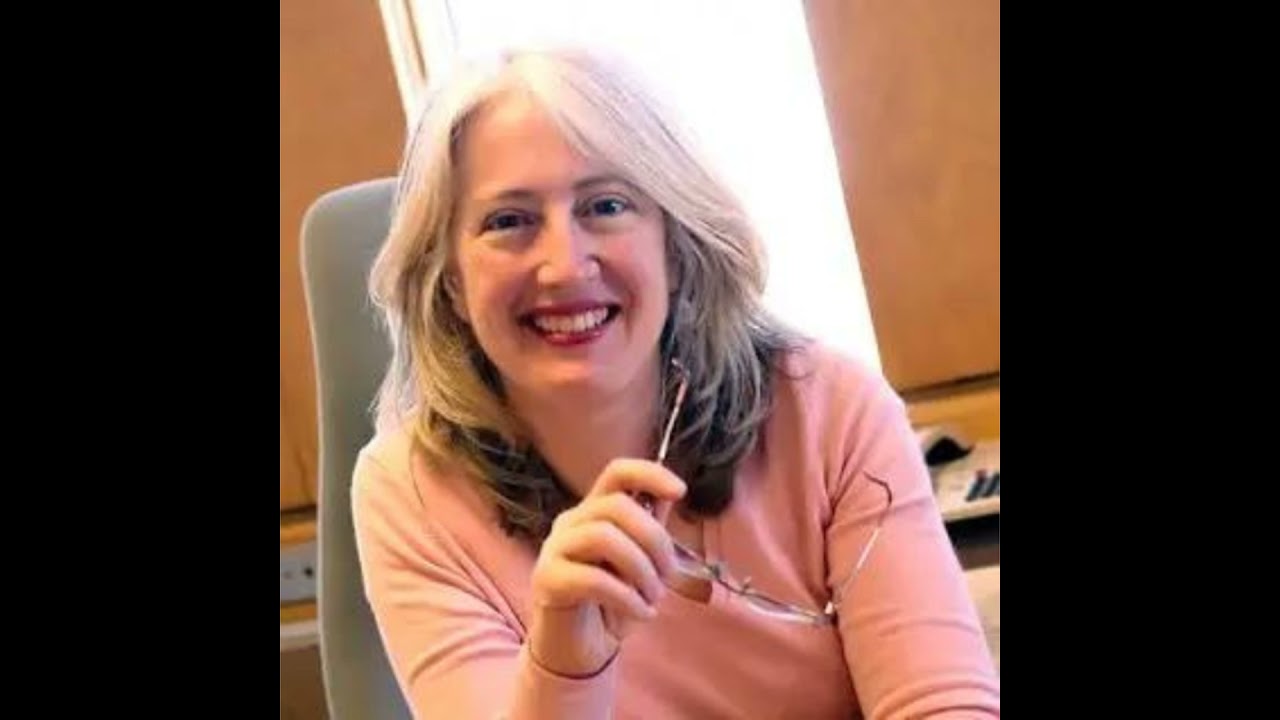
Dr. Frances Woolley, an economist at Carleton University, argues the U.S. long-term care system cannot handle the aging baby boomers. About 70% of Americans who reach 65 will need some form of long-term care, yet the system lacks risk-pooling and funding. Other countries like Germany and the Netherlands pool risk through national policies and pay family caregivers, models the U.S. has largely ignored.
Chapters
Welcome to the Living to 100 Club Podcast.
Well, hello to everyone joining us today on our podcast. You're listening to one of our Successful Aging episodes this month on the Living to 100 program, and I'm your host, Joseph Casciani. Each week, our conversations educate and inspire, helping you get the best out of all the years we're given, regardless of what obstacles come our way. You can learn more about our club at our website, and be sure to take a look at my new training and activities manual called Better, Longer, and Happier: A Guide to Aging with Purpose and Positivity. This is a series of 12 modules in a card deck format developed for activities directors at senior living communities to learn about psychologically healthy aging. These modules help to engage senior residents in activities that are cognitively challenging and foster a positive mindset. Module 1 is now on sale. Visit our website livingto100.club/blh. Now on to today's program. On today's podcast, we invite Frances Woolley as our guest. Dr. Woolley is an economist at Carleton University in Ottawa, Canada. She's an authority on challenges ahead as the baby boomer generation contemplates the risk of needing long-term care. We discussed the demands on healthcare systems as our population ages, the shortage of long-term care beds, and the inequities in paying for this care. As families now make huge sacrifices in caring for a spouse or a parent with little or no outside help, eventually this care shifts to a state here in the US or a provincial system in Canada that may be fragmented and inequitable? Can the infrastructure keep up with the improvements needed, considering constantly changing decision makers and uneven political influence? How should the risk of needing long-term care be shared among individuals, families, and governments?: Is it possible to raise public funds to face the looming crisis as the need for dementia beds mushrooms? First, a little background. Frances Woolley is a professor of economics at Carleton University, where she's taught since 1990. Her research centers on families and public policy. Dr. Woolley's most cited work is on modeling family decision-making. Measuring inequality within the household, feminist economics, and tax benefit policy towards families. Recently, she spent more time researching the provision and financing of long-term care, inspired in part by the challenges her family faced when her father needed care at the start of the COVID pandemic. Frances' true passion is using economics to explain everyday experience and in sharing her love of economics with her students. She served as Secretary-Treasurer and also President of the Canadian Economics Association, co-editor of the Canadian Tax Journal and the Review of Economics of the Household, and as Associate Dean of the Faculty of Public Affairs at Carleton University. Frances holds a BA from Simon Fraser University an MA from Queen's and a PhD from the London School of Economics. Dr. Woolley, welcome to our program today.
It's a pleasure to be here. Great.
I'm looking forward to our conversation. This is a thought-provoking topic. I always like to open by asking our guests to tell us a little bit about the journey that brought you to where you are today. I covered a bit of your background, but What are some of the, maybe the milestones that took you to where you are today?
Oh, yeah, you know, it's hard to say. I mean, in terms of the long-term care, I'd like to pick up on that part of it. You know how you were saying about, you know, how my father needing care made me really start more interested in researching this area. And for a long time, I just found the prospect of long-term care just too scary to think about. It was just so awful, I couldn't think about it. And then when my dad needed care, you know, we dealt with it. And, you know, when you start dealing with it, when you get down to it, it was— it became much easier to write about it and do research about it because it was, it was, it was tough. It wasn't easy. But having had experience, it wasn't this kind of fear of the unknown. So that's kind of what brought me to here.
Sure, sure. Yeah. So professionally, or, you know, in your academic world, you were close to it, but not as immersed as, as you were when you we're dealing with it on a personal level. Exactly. Yeah. Yeah. Yeah.
And do you know, people say that the personal is political. I mean, for me, I'm in an incredibly privileged position to be a university professor and able to do research. And to me, having that privilege, you're really responsible to do research that matters to people. And answer the questions that matter to people. And I think right now, long-term care is one of the issues that matters the most from a public policy perspective, and it doesn't get the attention because it's scary. We don't want to think about it.
Yeah, yeah. Well, let's take a deeper dive into that one. You've told me on an earlier call when we had our conversation that, you know, the whole demographics, aging, the boomer population is going to strain the healthcare systems in developed countries like the US and Canada. What, why, why is that? Why aren't we keeping up with to meet the demand of the population growth?
Well, you know, I think I would distinguish between healthcare and long-term care. I mean, what you're saying is true. There's issues with healthcare, but healthcare healthcare and long-term care are different. So healthcare is, you know, all those things that kind of doctors provide for you. So, you know, if you get sick, you need healthcare. Long-term care is more kind of help with the activity of daily living. So it's, you know, you need help getting dressed, you need help, you know, preparing your meals. You don't need a doctor for that. You don't need medical care for that, and it's not covered by Medicaid, right? So you've got the healthcare system, you've got the long-term care system. They're different. They're both in crisis. Okay. Now your question is, you know, what is the, you know, what's the cause of the crisis? You know, every country is different and the United States is really very different when it comes to healthcare. Um, my son and daughter-in-law live in the U.S., and my daughter-in-law is currently pregnant. And I'll tell you, if she was in Canada, she'd get a fraction of the tests, a fraction of the care that she's getting in the States. Um, so, you know, the U.S. is, is You know, the US, if you get good care in the US, you get the best care in the world, but not everybody gets that. In terms of, you know, why it's challenging is, you know, people tend to need more, you know, people are like cars. Like once you get a certain number of miles on the engine, stuff starts going wrong. And if you have an aging population, you've got more, old cars on the road and they need more maintenance and you don't have any more mechanics than you used to. In fact, you probably have fewer mechanics because your mechanics are retiring and it's just that, that simple.
Well, yeah, and the, as you said, the healthcare system is different from long-term care, but the growing need for help with ADLs, activities of daily living, and shortage of these assisted living facilities. I mean, where I live here in Southern California, they're just building one after another of the independent and assisted ALFs. And the nursing home, I think that, that whole demographic is still there, but I think it's not growing as fast as the ADL assisted living facilities is growing. So you're thinking that with the advancing age of the baby boomers are our populations, we're just not going to have the care available? We're not going to have the systems in place?
You know, it's a matter of supply and demand. You know, if you've got money, you can get care. Yes. Right? But if you just kind of do the math on how many what you need to provide assistance with the activity of daily living, especially when somebody has, say, dementia, right? Dementia is the really, you know, and again, like, it's back to like, this is a scary topic. Yeah, yeah. You know, it's hard to think about it. Like dementia, that's the worst, right? That's the one thing we don't want to think about. So it's hard to even start having these conversations. But if we're thinking about dementia care, 'cause that's the one that's the really, really tough one, you know, somebody's got dementia, They need a person there available to look after them 24 hours a day. If you're going to pay people a decent wage, that's going to be expensive. And there's just no real getting away from that, right? So, I mean, that talks to, you know, so I think that there's just, you know, the issue is this just a certain amount that long-term care costs because it's, you know, you need a place for people to live, you need people to look after them, and that just is expensive. You can't really do much to reduce the cost. Like, it's not like we're going to get some, you know, magic technology. This, it's just those costs are there. And I think the, the, the The issue is really the issue with the shortage of spaces is a lot. It's, it's to do with two things. The number one thing is, is there the funds available to pay those costs? Right. And if you don't have the money, you're not— if you don't, if you don't invest the money, you're not going to get those facilities. And then the other thing is this, I In every place has specific issues, but you know, there's issues with building housing everywhere, like with things like zoning and permitting and so on. But a lot of it just is like, it's expensive and who's going to pay for it?
Right. And you've said that it's kind of this black and white or all or nothing situation where you can either afford it privately, and if you can't, you go on to Medicaid. In California, it's Medi-Cal. So there's that big long stretch from the affordable care and the people that cannot afford it. So you're saying even in Canada, I think you said that the systems cannot keep up with the demands and the reimbursement for this care is still strained. It's, I mean, I know in nursing homes, skilled nursing facilities, Medi-Cal barely covers the cost of their care. That barely— yeah, it's almost a break-even situation.
Yeah, yeah, yeah. And so, yeah, go ahead. So like, why, you know, around where I live, um, there's a lot of fancy for-profit facilities going in to cater to people who have money. Yeah, because that's profitable. But building a home that is going to cater to Medi-Cal or Medicaid patients isn't profitable. So people aren't doing it.
Yeah. Yeah.
And the other thing is there's like a kind of a logistical thing, right? You need to get the money up front to build a facility before you start collecting revenues, and that's a big issue. Now, if you're like a big international company that runs profitable long-term care homes, then maybe you can get that capital up front. But if you're, say, a nonprofit organization or a municipal government or something like that, maybe even you want to build a nursing home, maybe, you know, you're a nonprofit association, you want to build a nursing home, you're prepared to, you know, raise funds so that it, it works works with Medi-Cal, where are you gonna get the money upfront to build the home? And that's a big issue. Right. And it's a political issue as well as a practical issue because a government doesn't, like, if you're, you know, if you're, you know, the governor of California, you know, you put a whole bunch of funding into building new nursing homes, those homes don't open until you're no longer in office. So you're not gonna get the credit for this on the next election cycle. Right. There's a lot of practical problems here.
And the person who replaces the current governor may or may not have the same frame of mind, and there may be changes in the funding, that whole apparatus. Yeah. Yeah. So we've opened the Pandora's box here. How should we, how should we be paying for long-term care?
Well, you know, let's get back to, to, to cars, right? You know, you have an older car, you know, there's a risk it's going to break down. I don't know you, I drive a— my car is 9 years old, not going to replace it anytime soon. Live in a cold climate here. I'm up here, it's the snow on the ground here. Sometimes the car breaks down. So you know what I have? I have roadside insurance. And so if the car breaks down, I'm gonna call a number, gonna get a tow truck, it's gonna help me out. Okay? If I get in an accident, I've got car insurance, that's gonna help me out, right? So with a lot of things, there's a lot of bad things that can happen to us in life. But for most of those bad things that we have in life, we have insurance. We share those risks. Long-term care is one of the, you know, needing a whole lot of long-term care at the end of your life. That's one of the biggest and most expensive risks. That's one of the most expensive things that can happen to you in your life, right? Needing a lot of long-term care. And it's the one thing that we don't have insurance. We don't have a mechanism in place for sharing that risk. Unless, you know, you're low income enough to qualify for Medicaid or Medi-Cal. And I'm talking here about the states as if it's we. Other countries actually do— no country— countries don't do— there's no country that really does terrifically on this, but there's a lot of countries that share that risk more than is done in the states.
Yeah. So we have insurance for all of these other Risk that we do good risk management in other areas of our lives, but not so well in long-term care.
Yeah, and that is the fundamental question, right? Who— how do we share this risk? You know, we know that, you know, we're all going to eat blueberries, we're going to exercise, we're going to get enough sleep, we're going to do everything we can to keep healthy and living to 100. But, you know, some of us are going to be unlucky. Some of us have just got, you know, we just got unlucky with the gene pool or whatever. Some of us are going to need that care. And how do we share that risk?
Yeah. Yeah. Well, we know living to 100 is not in the cards for everyone. I mean, we know that. Yeah.
Well, you know what? If I just drop down and have a heart attack, you know, I could be like, you know, live a good life, have a good fun retirement, then drop dead of a heart attack. That wouldn't be too bad. It's that. Yeah. It's not the, the not living, it's the prospect. As I said, this is a scary topic. Yeah. Right. And this is something that scares me, that the idea of needing a lot of long-term care.
Yeah. Yeah. I think what you refer to as flattening the curve where we're living healthy, healthy, healthy, and then we drop off and we want to drop off a cliff. Yeah. Yeah.
Yeah. I always figured I was, I always figured you need 3 things. You need, you need, you need a healthy mind, you need a healthy body, and you need enough money to get by. And if you've got all 3, it's all Awesome. Yeah. But what you don't want is one of those to go while the other two are still functioning.
So why can't families and home care agencies cover this need? I mean, I, we know there's a lot of outfits that will go home.
Yeah. Okay. So there's, there's the who provides the care and who pays for the care. As I said, a lot of people prepared to provide the care as long as you're willing to pay enough. You come and you say, you put an ad in the paper and say, I'm gonna have somebody, I'm prepared to pay $1,000 a day for somebody to come and look after me in my home and wipe my bum. You're gonna get applicants. It's the who provides the care, who finances the care, different questions, right? And if we're talking about, and the big, the really tricky thing is who pays for it, right? Some people will, people do, they will save up enough to pay for it or their families will pay for it. But again, we're talking about sharing the risk. You know what, if my car, if I have a car accident tomorrow and I smash my car, yeah, I have enough money in my bank account to pay for the damage the car does and to buy a new one. But I don't want to drain my bank account I want to share that risk. Okay. If we have families paying for long-term care, we aren't sharing that risk. Yeah. So how do we share the risk? Like, how do we, you know, share the risk of paying for this care between families and between the community as a whole?
And one model we discussed is what's occurring in Australia. I'm not sure how— Yeah. How expanded it is, but the government is taking kind of a portion of the equity or the ownership of the home, kind of like reverse mortgage, but the owner or seller doesn't reap all of that. The government takes a portion of it to cover future costs. Is that viable? That sounds like a pretty innovative program.
Yeah, I mean, you were saying earlier about how long-term care in the States is kind of black and white, right? Either you qualify for Medicaid, Medi-Cal, and then you can get a space in a long-term care facility, or there's really— I mean, there's some, like, I wouldn't say that there's none, but you're pretty, you know, there's pretty limited support. Okay, other countries are not like that. Okay, and Australia is one of those countries that's not like that. Now, there's a trade-off. The trade-off is that there's taxes in these other countries tend to be higher, and so you have higher levels of taxes. But those higher levels of taxes buy you assistance with providing long-term care. So say you're in Australia, you need a certain level of care Okay, so you go into this, like, there's a checklist. It's like, you know, can you walk? Can you do this? You know, how functional are you, right? Are you like Joe here who's sleeping around having podcasts? Are you maybe not quite so like Joe? Maybe, you know, you can't, you're having problems working your computer or whatever, right? So there's a checklist to figure out, okay, how much care do you need? And there's like a statement. A set test that figures out how much care you need. Okay, if you need care, it's like, okay, you need care. There's some money that's going to come from the government out of general tax revenues that's going to pay for that care. So it kind of works more like, like Medicare, right? You're going to get, you know, you need that care, you get it, but you're also going to need to provide some of the costs yourself. You're going to have to cover some of the costs yourself. And the amount that you pay, again, it's not black and white. We're going to say, okay, we'll look at your assets. We don't want to like bankrupt your spouse or anything like that. We want your kids to still be able to inherit something. So we'll look at your assets. Some of those assets are going to need to go towards long-term care. So there's a sharing here. Right? It's like, okay, this is your level of care. You're going to get some support from everybody in Australia. Like works with like, like the words with the way Medicaid, Medicare works. And then some of this, you're going to need to pay out of your own resources. Right? So there's a sharing. Sure.
And how do the, how do the residents feel about that?
I mean, that's, there is no place there is no place where people are happy with their long-term care system.
Um, but, uh, that's a given then, right?
Okay. Yeah, yeah. Um, um, but, uh, there's— I would say that there's, there's been, um— I would say it's a system that works well in many respects. Um, I think the number one concern in Australia, and I think the number one concern everywhere with long-term care is the systems need more money, right? I think people are happy with the Australian system. They just need, it just, there needs to be, it's the same issue, not enough money for places, not enough money for home care that every system in the world has. But I would say it's at least got the bones there, right? But it's, it's, you know, it's a big challenge. Like, how do we, you know, who pays?
Yeah, yeah. Well, there's, excuse me, there's a lot of moving parts too, and the population is changing and getting healthier and all that. But, um, yeah, sounds like, as you say, it's the bones are there, the structure is there, and it, it will be a lot of tweaking, a lot of shaping. How long has this been in place? Um, oh, good question.
There's a big reform, a big reform. Um, I, I'm not sure it's within, but it's, it's this century, right? It's not, it's not, you know, I'm wanting to say 10, 15 years, but don't quote me on that. I think one of the big things that is different about the Australian model And if also, if you look at the German model, the Netherlands model, so these are the countries where there's strong long-term care systems. Those, all the countries with strong long-term care systems have something in common, and that long-term care is handled at the, there's a strong national policy, right? That it's something, it's not delegated down to the level of the states or the municipalities, there's a national policy, right? And I think you see that in every country that if things come down to the state level, there's always like a temptation for a state to say, well, you know what, maybe if we don't have generous policies, old people won't move here, right? So to get a good policy, you need to have a national policy. And that was what really happened in the Australian case. Case, there was a deep-seated dissatisfaction with their current system, and that all the states in Australia got together and said, okay, we agree that we're going to have a national system. And that's where they got to where they are. So again, the challenges: practical, political. Sure. Is Canada moving closer to that? You know, we're, it's again, Canada is in similar in many ways, well, same and different from us, but I think in Canada we have many of the similar challenges that we know we don't have a national system. And if anything, Canada's becoming more fragmented. So, The things are, more things are happening at the provincial level and more provinces are kind of going their own way. And yeah, it's, I mean, there were some huge challenges during the pandemic with long-term care in Canada and the wait lists are long here. You know, there is no country that has really nailed this. Um, and again, I want to go— it's frightening. People don't want to think about it. Yeah, politicians don't want to think about it. It's scary.
Yeah, no, I think that's a great exposé, um, Francis. I think that's, that's great, the insight that you share here. Um, you know, I can see that you can make an argument for both sides. You want the national system And it's, if it's provincial, it's fragmented. And if it's, um, the states would say, oh yeah, we, we, we should be allowed to create our own laws here. And kind of like our immigration, I mean, there's the federal laws and there's the, the, you know, the states are butting heads against the, the feds for the immigration laws and they want to be able to protect their own states. And the feds are saying, no, it's got to be, it can't be different from one state to another.
We have, we have that too. Yeah.
Yeah. I think that, you know, maybe it may apply to this, the same thing with long-term care and sharing the risk here. So, yeah, that's a thorny, thorny problem. Thorny issue. You're right. Yeah, it is scary. Sure. Yeah, sure. Yeah. And I can see where families would not, here in the US, it would be very new. It's kind of the nationalizing the healthcare. Families would not be so in favor of putting up a 20% value of their home to cover their long-term care costs. That seems so anathema to our way of thinking. Yeah, yeah.
But, you know, like with— but, you know, people are, you know, because long-term care is not covered through Medicare, it's only through Medicaid in most states. It's only through the Medicaid, right? You know, people do have to— people do have to run down their assets. I mean, people, you know, I mean, the— I mean, California's got rid of a lot of the asset tests and other states are following suit. But, you know, any income that you have, if you, you know, you have to— any income that you have goes to pay for these costs. So, I mean, in some, the US system historically has been one of the ones that's put the most responsibility on individual families that, you know, if you have any resources at all, you have to pay. Sure. So it's You know, it's like, okay, how do you, how do you share that?
Any, any other solutions or innovations that you're aware of? Anything else on the horizon?
Well, I think one of the big things that a lot of places are challenged, are really struggling with, is how do you strike the balance between home care and institutional care? I think most people would rather be at home than in an institution. And, you know, if— and there is sort of the— there is potentially possibilities for saving costs if you know, people can be cared for in a less expensive way at home than an institution. So how do we kind of, when we're thinking about the practicalities, when we're thinking about, okay, how do we support people as they go through this journey? How much do we pay for home care? How much do we pay for institutional care? Right? And how much is— so how, you know, what supports are available in those two settings? And that's, I think, something that's a real struggle.
Yeah. Are you seeing any trends? Are you seeing it? Is it trending more toward institutional kind of sub—
well, it's one of those things that it kind of goes back and forth, right? I think home care is always very popular in theory. People say, yeah, this is what I want. I want to be cared for in my own home. But it's hard to do. Right. So, you know, the thing is, okay, so just in practicalities, if you're trying to provide care in the home, there's transportation costs. Like somebody's got to get to the home. Sure. And back. And if you're living in a rural area, is somebody gonna have to have a car to come to your home? Hmm. Right? And that's a big practical challenge with providing home care. Again, it's like with these things, it's, it's a lot about just having the resources. And if you need to pay for somebody to drive to your home and back again, it's more. And I think there's a— when you think about, you know, government policy and you think, you know, I think there's always like this question of why can't we have nice things, right? And having care in the home as you get old is a nice thing. Yes. So why can't we have nice things? Right. And I think one reason is that it costs a lot. Right. But then it costs a lot to have somebody in an institution as well. So, you know, maybe there's some, some room there. Sure. I think one of the Why can't— you know, if you're thinking about why can't we have nice things, one of the challenges is the fear that these services will be abused. Okay, so if we have home care available to help with meal preparation, to help with housework, to help with laundry, if those kinds of services are available, then everybody will want them. Right. You know, I'm not sure. That doesn't seem like a good reason why we can't have nice things. But I think it's like, if we have nice things, everybody will want nice things. So we can't have nice things. So I think that's the challenge that there's. I think that there's a fear that if governments provide assistance, families will step down and families won't provide the care. I'm not sure that that's accurate, and even so, I think it's pretty harsh to, you know, there's a limit to the amount of sacrifices we can expect people to make. But I think this is the big challenge.
Yeah.
Like, how do we strike this balance between care in the home and institutional care? How do we make care in the home affordable? How do we, you know, how do we solve these problems that prevent us from having nice things?
Yeah, no, that's the other side of this. If we can provide a, suitable level of assistance in the home, then people who can't afford to pay may not want to pay as much if other people are not paying as much. You're right. I mean, it can be individualized and customized, but then everybody should be entitled to it. And that's—
Yeah. If a bit of help, if a bit of help with, you know, grocery shopping and food preparation is enough to allow you to stay in your home and out of an institution, that's a great deal for everybody. Um, so it's like, how do we do that?
Yeah. Yeah.
How do we, how do we, how do we provide people with those supports? Um, there's, you know, there's, there's other things about it too. I mean, there's like this, this, um, sorry, you, did you have a question? Were you going to ask me a question? No, go ahead. Yeah. Um, and I think there's also questions about how we can support family. And one thing that, say, the German system allows— it's because the German system is very interesting, it's like a model for other, other countries— is with Germany, there's much more, okay, we're going to give you an allowance and you can use that home care, or you can use that for a nursing home or institutional care. Okay, so there's more like, we're going to trust you, we're going to give you some money, and we're going to allow you to spend it. But one thing that the German model does, which is super interesting, is they allow people to pay family providing care. So you could pay your daughter, you could pay your son. Okay. Yeah. Right. So if the choice is like, if your son or your daughter says, you say like, come and look after, like, no, I have to, I have to have a job so that I can feed my kids. It's like, okay, you know what, we've got this money that's coming in from the government. We can use that and we get to choose how to spend it. We can use that to pay for you to come and support me. And again, it's like, wouldn't that— can you imagine how many— how— what a game changer that would be for so many families?
Sure, sure. Yeah, well, families can get paid now, can't they, for some of the support in-home? Isn't that IHHS system? Maybe you're not so familiar with it.
No, you know, I should, you know, I'm a Canadian, right? So I don't know. Yeah, you better, you better. Can you give me, can we just like pause for a second and stop the— Okay, so.
Okay, so as you mentioned that. Model in Germany where people can be paid to provide care for the needy family members, parents or siblings or adult children. I think we have some version of that, at least here in California, in home support services. So it's probably close, maybe not as, you know, as well-developed or as expansive as the German model, but You probably are familiar with some of that here, maybe. There's a few states, I guess, that have that.
Yeah, I mean, you know, California is so interesting because it is a model for so— in so many policy areas, and this is exactly the kind of the IHSS that you mentioned.
Sorry, just a second. Sure.
The IHSS that you mentioned is exactly the kind of service that I'm talking about, and it's potentially a game changer for families. But there are not many states in the US where that's available. And, you know, in Canada, there are very few provinces that have something like that available. Yeah.
Well, I think our systems unfortunately are just not keeping up with the growing population and the demands. I mean, one thing I like to think of is people staying healthy longer, you know. Yeah, living healthier lives, kind of improving lifestyles, so some of that dependency doesn't occur until very, very late. But, you know, like I said, we Everyone knows that, that we— some of these things we do not have control over. So yeah, directly lead us there. Yeah, yeah.
I think we, we all want to fall off a cliff, right? Just, just go healthy, healthy, healthy, and then boom. Yeah. And let's just, you know, we can work on the healthy, healthy, healthy bit anyway. That's right.
The cliff comes at some point.
Yeah, well, that's a whole different conversation. That's right.
So thanks very much. Any takeaways, any final takeaways? What would you hope our audience remembers from this conversation?
I would say talk about it. Talk about it with your family. Think about it and prepare. You know, the odds are something like 70% of adults who survive to 65 in the United States will at some point need some kind of long-term care. So, odds are this is coming for you. Okay? So, plan for it and talk to your family and think about what those expectations are and find out what the services are. I would say one of the biggest things in Canada, and certainly in my country, I would suspect from the reading I've done in your country as well, one of the biggest myths is people think, well, when I'm old and I need help, you know, when I'm, you know, if I have one of these, you know, things that happens when you get very old, it will be covered by Medicare, and it's, it's, it's not. So inform yourself about what's out there and talk to your family. And if you're not happy with the system, there's, there's other systems about. And, you know, be, you know, use your time to be politically active and lobby for change. For sure, for sure.
Well, that's great advice. That's great advice. Talk about it. Plan, learn what, what services are available, what their expectations are. That's great. That's great. Yeah. So, uh, looks like we're out of time for today, Francis. But before I wrap up, I just want to remind our listeners to visit my website, livingto100.club, sign up for my email list, and download a free copy of my 9 tips to make living longer enjoyable. And if you are affiliated with a senior living setting, be sure to look from my new training manual and activity guide, Better, Longer, and Happier. Frances, thanks so much for being a guest on our show today. For those who might want to contact you, how can they do that?
Well, just have to spell my name, F-R-A-N-C-E-S W-O-O-L-L-E-Y. Google me, I'll come right up. I'm the top hit, right? Oh, well, I think there is somebody else, but if it's like an architecture or so, will it's an artist or something, it's like an economist in Canada, that's me. Okay, so just, just Google me. You can get my hit, you can get, you can get all my contact info.
Terrific, terrific. Well, uh, again, thanks so much, and thanks to all of our listeners for tuning in. Hope to see you next time.
Okay, thanks so much, Joe. You're welcome.
You're most welcome.
More from Joseph

The Hidden Cause of Aging? How Chronic Inflammation Affects Your Health with Joel Brind








