Sexual Health for Men Over 50
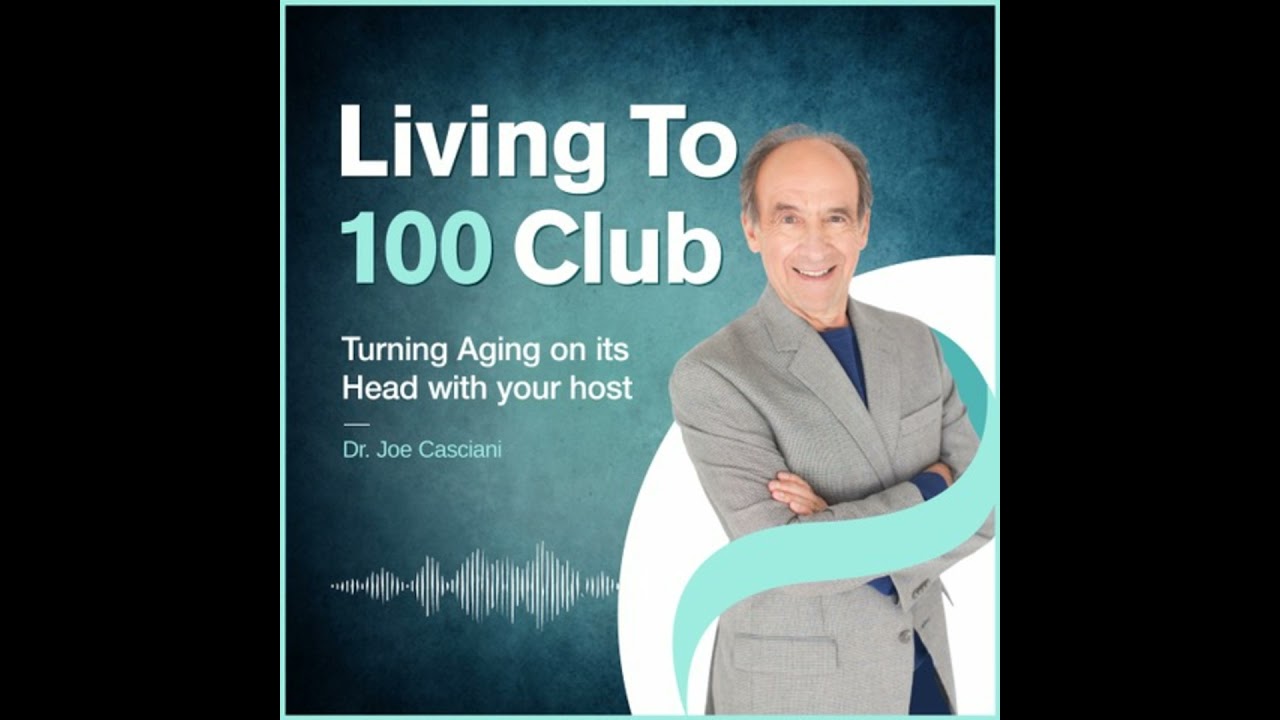
In this episode of the Living to 100 Club, host Dr. Joseph Casciani interviews award‑winning urologist and sexual‑medicine pioneer Dr. Judson Brandeis. The conversation begins with Dr. Brandeis’s extensive background—training at Brown, Vanderbilt, Harvard, and UCLA, early work in surgical robotics, and recent focus on regenerative urology (shockwave therapy, platelet‑rich plasma, stem‑cell injections). He describes a holistic, Maslow‑pyramid model for men over 50 that places physical health, emotional health, relationship communication, and sexual health as sequential foundations for satisfying intimacy. The discussion moves into specific clinical topics: the prevalence of erectile dysfunction (ED) by decade, the physiology of penile blood flow, and how to improve it with nitric‑oxide boosters (Affirm) and daily PDE5 inhibitors (tadalafil). Dr. Brandeis explains his "Male Rejuvenation Protocol," emphasizing testosterone monitoring, muscle‑mass preservation, and combating sarcopenia through nutrition, protein absorption, inflammation control, and high‑intensity focused electromagnetic (HIFEM) therapy. He outlines his research studies (Mensella 2, IA Strong) and the role of supplements such as Spunk for prostate health. Prostate enlargement is broken down into symptom categories (obstructive vs. irritative) and a tiered treatment ladder—from beta‑sitosterol‑based supplements to alpha‑blockers, 5‑alpha‑reductase inhibitors, and office‑based or surgical interventions (Rezūm, Urolift, Aquablation). Dr. Brandeis stresses the importance of patient preparation for medical visits: a comprehensive written health history, medication list, recent labs and imaging, and a prioritized question list to maximize limited appointment time. The conversation also covers the partner’s role, especially post‑menopausal changes, recommending estrogen therapy or silicone‑based lubricants, and encouraging couples to explore intimacy beyond penetrative erections. Dr. Brandeis promotes his 900‑page book, The 21st Century Man, which compiles expert chapters on every organ system, lifestyle, and longevity strategy. He concludes with a call to focus on healthspan versus lifespan, using the book as a practical roadmap. Key takeaways include: adopt a holistic health hierarchy, address vascular and hormonal factors early, use evidence‑based regenerative therapies, prepare meticulously for doctor visits, and involve the partner in sexual health planning.
Chapters
Welcome to the Living to 100 Club Podcast. Here's our host, Dr. Joseph Casciani.
Well, hello to everyone joining us today on our podcast. You're listening to the Living to 100 Club, and I'm your host, Joe Casciani. Before we introduce our guests, I'd like to remind everyone that I'm available for public speaking events, particularly to community organizations and senior groups. I love to talk to others about aging well and making it over those hurdles. There's an option on my website to book a call to discuss a presentation for your group. I also offer one-on-one coaching for help bouncing back from struggles and setbacks. You can see this option as well on my website. And one last item of self-promotion: if you're looking for a consultant or trainer on clinical topics like dementia or depression, this is my wheelhouse, so feel free to contact me if there's a need in your group or organization. Contact options are on my website, again, livingto100.club. Now on to our podcast. In today's program, we discuss the topic of sexual health in men. Our guest is Dr. Judson Brandeis, an award-winning urologist and sexual medicine expert who has pioneered surgical robotics as well as numerous innovations in sexual medicine for men. We'll talk about strategies to continue enjoying satisfying physical intimacy as we age and how to adapt to the way sexual performance changes with maturity. And we'll discuss his new book, The 21st Century Man, a 900-page advice book with contributions from over 50 health practitioners and over 100 chapters. First, a little background. Dustin Brandeis, MD, is a board-certified urologist who trained at UCLA and currently practices sexual and rejuvenative medicine for men in San Ramón, California. He was a pioneer in surgical robotics, green light laser, and MRI prostate biopsy. Dr. Brandeis was the chief of urology at John Muir Hospital and Hill Physicians from 2012 to 2018, and he was voted top urologist in the San Francisco Bay Area in San Francisco Magazine from 2014 to 2022. Dr. Brandeis has appeared on The Doctors show and dozens of podcasts and webcasts He performs clinical research on shockwave therapy, PRP, Peyronie's disease, and erectile dysfunction. Brandeis MD in Northern California is at the leading edge of male rejuvenation and sexual medicine. Judson is the CEO of Affirm Science, which creates supplements based on the most recent scientific data, including Affirm, Prelong, Support, and Spunk. Judson, that's quite a list of accomplishments. Welcome to our program today.
Oh, Joe, thank you so much for having me. It's really a pleasure to be here.
Great, you're most welcome. I always like to begin by asking our guests to tell us a little bit about the journey that brought you to where you are today.
Oh gosh, it's a long journey, as you can tell.
Yes.
So, you know, I always wanted to be a doctor, and I went to Brown University, and I was actually a history major but a pre-med. And then I went off to American Red Cross, did research with Harold T. Merryman, who figured out how to freeze blood. And then I went off to Vanderbilt to do medical school. During medical school, I did a year of research at Harvard Medical School in the lab where they figured out how to do the first living-related kidney transplant. I became really interested in kidney transplantation. Then I went off to UCLA, did surgery training and urology training, started out by doing kidney transplants, and then I decided I really enjoyed doing general urology. So I moved up to Northern California, started with a group in Northern California, helped build the surgical robotics program at the hospital. One of the first— we had the second robot in the country, actually. So we were doing this 4 or 5 years before UCSF and Stanford and UCLA. And about 3 years ago, I became really interested in regenerative urology, so how to help men who can't have physical intimacy anymore regain the ability to have penetrative intercourse and helped pioneer shockwave therapy and platelet-rich plasma and stem cells and a bunch of other things that can help men regain erectile function at an age where it's beginning to wane.
Well, yeah, so we'll talk a little bit more about regenerative urology in a few minutes. That's quite a long list of experiences, professional involvement. I, I can really commend you on these long lists of credentials. So I'm curious about your, your current professional time. How do you, how do you spend your week, Judson?
Yeah, so I have a private practice office in San Ramon, California called Brandeis MD, and, and what I do, I don't take insurance, it's a private pay office, so I can spend an appropriate amount of time with patients because these days you only get about 15 minutes with the doctor if, if you get that. And I just don't think that that's an appropriate way to see patients. So I spend a lot of time with my patients and I really get to know them inside and out. And we— I take a very holistic approach to sexual function. So I think of like the Maslow's Pyramid.
Sure.
So the Maslow's Pyramid of physical intimacy for men over the age of 50, you You know, when you're younger, it's different, but after 50, you know, at the very bottom is physical health. If you're not physically healthy, then you're unlikely to be able to generate the blood flow to get an erection. And then you have to be emotionally healthy. So if you're depressed or anxious or don't have good work-life balance, uh, you don't get to move up the pyramid. If you don't have good mental health, if you don't have good relationship health, if you and your If you don't know how to communicate with your spouse, then it's unlikely that you're going to be able to achieve physical intimacy with your spouse. And finally, if you have all of those ducks in a row and you have sexual health, then you can have physical intimacy with your spouse. And that really is a leapfrog to a good life.
Yeah, this really is a holistic approach. It's hard to address one without addressing The whole constellation, right?
Exactly.
Yeah, yeah, and that's really positive that you can spend more time with your patients because the typical insurance might limit your face-to-face contact and tie your hands professionally.
So yeah, I mean, I had one of the busiest urology practices in the San Francisco Bay Area and great relationships with my patients, but I just, I wasn't satisfied with how I could take care of patients. It was just like a, like a treadmill, like a hamster wheel, and it just really wasn't satisfying. And I, I really wanted to do something where I could make a big difference. And, you know, we help guys, uh, achieve physical intimacy, but we go way, way beyond that. You know, I talk to my patients about cardiovascular health, about weight loss, about muscle building, about hormone levels, uh, and then just being in, in medicine for 25 years, I have, you know, a large Rolodex of colleagues so that if my patients have other issues, I plug them into, uh, you know, really reputable colleagues. And then even I have unique perspectives on things. So I had a patient who was just here an hour ago and he had eczema or psoriasis that came periodically, like when it got cold. And I know a fair amount about near-infrared light therapy. And so I just pulled up psoriasis and near-infrared light therapy, and, you know, lo and behold, there's, uh, you know, that's a, a, a little bit of an alternative but proven technique for improving that condition. And, you know, I just, I, I printed out a review article and, and told him where I could, he could get it. And, you know, he's going to try it. So, uh, I've, I've learned I've been brought up in the kind of Western medicine, high-tech culture, but also I'm very much in touch with the alternative medicine world and some of the things that they do in alternative medicine.
Yeah, where you get to understand the whole person.
Exactly.
Everything that's going on, because it's hard to tease out one system from another. Yeah, yeah. So other things in your, your professional work besides your practice?
Yeah, well, I do, you know, we do clinical research, so I have a number of, um, of clinical research studies looking at the use of platelet-rich plasma and growth factors. We also— I'm starting a study called the Mensella 2 study, which uses high-intensity focused electromagnetic waves to improve erectile function. I've already proven that it improves the duration and intensity of orgasm and ejaculation, which, you know, I'm not curing cancer, but I had a patient the other day who— he's 65 and he's an attorney, and he hadn't had an ejaculation orgasm in 5 or 6 years. And he just— he came into my office like with tears in his eyes, and his face was all red, and he hugged me and he said, you know, that's the first time I've been able to climax in 5 or 6 years. And so it's really, um, it's really, uh, it's really wonderful sometimes, the connections that I have with patients. Or starting another study called the IA Strong, the Industrial Athlete Strong Study, which uses a similar technology of high-intensity focused electromagnetic waves to build muscle. Oh, right. So, you know, this in your population— and I talk to my patients about this a lot, about the aging process. So there's something called sarcopenia, which is a fancy word for losing muscle. And as you age, there's a number of reasons that people get sarcopenia. So first of all, they don't eat enough protein. Second of all, their intestines don't absorb enough protein. Third of all, they don't take in enough macronutrients, you know, vitamins and minerals, and their intestines don't absorb macronutrients. And part of that is because we all get chronic inflammation because we live in a world of of plastics and pollution and so on and so forth. And then on top of that, our hormone levels decline. So not just testosterone, but IGF-1, human growth hormone. Our nerves don't work like they used to, you know, both in our brain but also our peripheral nerves. And then we don't produce as much ATP, so our mitochondria don't work like they used to. And then even within our cells, the Golgi apparatus and the endoplasmic reticulum, which make proteins aren't as efficient or as precise in making proteins. So all of these things contribute to sarcopenia. And so at the age of 40, you begin to lose about 0.8% of your muscle mass per year. And then at the age of 70, you begin to lose 1.5% of your muscle mass per year. And that just happens, you know, that's an average, but that's, that's sort of the, the cycle of life. And as you get older that sarcopenia accelerates. And when I talk to my patients, especially my patients who are in their 70s, I do a sophisticated body composition analysis scan on all my patients. So I look at their leg strength, I'll look at their, their weight, how much fat they have, their arm strength, their trunk strength. And a lot of these patients are carrying around 30 or 40 extra pounds. And a lot of people's legs are weak. And so if you're top-heavy and you have weak legs, guess what's going to happen?
Yeah, you're at risk for falls. Exactly.
And the mortality from a fall at 5 years is 50%.
Wow. So that's a big preventive factor to look at, that balance and muscle strength. And so is it nutrients, micronutrients that we're talking about?
You know, it's, it's a, it's a combination of a lot of things, but I developed what's called the Brandeis MD Male Rejuvenation Protocol. Which is a muscle building protocol. And there, there are 12 aspects of this muscle building protocol, and one of the most important ones is testosterone. So that's something that, uh, that's left off of a lot of lab panels, but really is absolutely critically important to check, especially as men hit 60 or 70. And a lot of insurance-based physicians will look at those numbers and say, okay, they're within normal limits. Right, but understand that testosterone is the most important growth hormone in men by far. Nothing even comes close. And if you plot the decline in testosterone against the decline in muscle function, muscle mass, and strength, it's a 1-to-1 correlation.
Yeah, high correlation. Yeah.
And so part of the reason we get old and we get weak is we lose testosterone. But then You know, you come into your primary care offices, and I'm not meaning to badmouth primary care in any way, shape, or form. They got a lot of things that they have to do. But they look at your testosterone, it's 300, it's sort of within normal limits, and they say, oh, you know, it's in normal limits, you don't want to mess around with that testosterone, it causes prostate cancer, and it'll, you know, it'll make your testicles shrink. But first of all, it doesn't cause testicular cancer— I mean, prostate cancer. You know, if you have aggressive prostate cancer, you shouldn't be on testosterone. But other than that, It's, it's fine. And the things that testosterone does for you— first of all, it gives you more energy, it gives you more drive, it gives you more mental focus, it gives you more libido, it helps you build muscle, it helps you get rid of fat, it helps you sleep, it helps with joint pain, it helps with depression. I mean, and those are, those are just the sort of obvious ones that I can now rattle off the top of my head., but testosterone does a lot of wonderful things, and most doctors will bring it back to what a quote normal range is, 500-600. You know, I've learned over time the benefits of bringing it up to 1,000, which is the level that it is when you're 20.
So minimal risk factors unless you're already vulnerable to or a candidate for prostate cancer.
Exactly.
In case you shouldn't be on that replacement therapy. Otherwise, very little risk.
Yeah, you may lose some hair on your head, but, you know, by that age most people are, you know, either don't have much like me, or—
behind already.
Yeah, or, you know, they don't get— they don't care, you know.
Yeah, so fascinating range of work and interest, uh, the research and the private practice. I admire that. Uh, let's talk about your book for a minute. I My listeners can't see it, but I have a copy of it here. It weighs probably 5 or 6 pounds. Yeah, it's expensive to ship out 1,000 pages. Yeah, it's, it's a great book, The 21st Century Man. I love the title. And you collected a range of contributors from your colleagues, professional colleagues over the years. So what drew you to really compile all of this work into one Unbok?
Yeah, you know, that's a great question, and I've been really, really blessed to have an amazing education. Uh, you know, I went to Brown and then Vanderbilt and then Harvard and then UCLA, and it's, you know, I feel an obligation to share all of the knowledge that I've gained all of, you know, all of those years and all those amazing institutions. And then, um, you know, everyone has a their own life's, you know, set of skills that they're good at in life. And one of the things I've evolved to become really good at is to explain really difficult medical concepts to patients in a way that they can understand and also motivate men. So it's, it's, it's tricky to understand how to motivate men, but I've, I've kind of seen thousands and thousands of men over the past 25 years. I've figured out how to motivate men. I can get them to stop smoking, I can get them to stop drinking, I can get them to lose weight, I can get them to exercise more. And really, it's, it's about presenting data. Guys respond to numbers. You know, I had a patient just 2 hours ago who's been smoking for 20, 22 years, and at a relatively early age, he's coming in to see me for erectile dysfunction. And I just said, you know, how many years of life do you think that you're going to lose if you continue to smoke for the rest of your life? And I said, it's 13 years. You're going to lose 13 years of your life. Smokers die 13 years younger than non-smokers. So is it really worth it smoking a cigarette if it's gonna cut your life short by 13 years. It's going to give you erectile dysfunction. It's going to give you lung cancer, bladder cancer, kidney cancer. It's going to make you have a stroke. You know, I just rattled off all the bad things that can happen to, to smokers. And then I explained the pathogenesis of how the toxins in tobacco smoke affects the endothelium, the inner lining of blood vessels, and how it clogs it. And then I showed him a picture of a clogged pipe from under my sink from my own house, and a kind of a light bulb went off, and he said, "You know, I really need to do it." Yeah, you know, I just, I really need to, you know, I've heard this before, but, you know, for some reason, the way that you said it just makes sense to me, and I just have to do it.
Yeah, I can see the importance of presenting that list of that range of factual information. Judson. But I think what gives you the advantage is that you know your patients so well and you understand their whole life, their life story almost. So it's more than— because we know all the time that PCPs will frequently give the reasons for losing weight, but that doesn't change behavior.
Yeah, I think, you know, there's a great— sorry to interrupt you, but there's a great chapter in the book that I wrote And if, if you're— if your listeners don't want to buy the whole book, even though I'd highly, highly recommend it, go to the website. It's called the21stcenturyman.com, all written out in letters, the 21st Century Man. And I wrote a chapter and even did a video on how to make the most of your doctor visit. So I know a lot of your listeners probably bring their, their parents or their spouses or someone to the doctor. And you get to the doctor, you wait around a long time, you get in the room, the room's cold, it's unfriendly, uh, the nurse rushes in, takes some vitals, she rushes out, the doctor rushes in, he's looking at his watch or she's looking at their watch, um, you know, they're typing on the computer, they ask you a bunch of questions, and then they're kind of looking around like it's time to go. They e-prescribe a couple of prescriptions you sort of ask a couple of questions at the end, kind of in a panic, and that's it. Yeah, adiós. Okay, but that doesn't have to be that way, right? You have to view— and I use the word have to because you have to— if you want to get the most out of a doctor's visit, you have to be prepared, right? Like, my attorney is $750 an hour, so every minute in his office is $11, right? That's a, that's a lunch for me. Yeah, so every minute is lunch. So I'm really prepared, and I send documents into my attorney beforehand talking about like, this is what I want to talk about, here's the background, right? So you have to have the same approach when you go to see the doctor, because guess what? 20% of doctors are going to quit in the next year or two because of COVID So it's gonna— you think it's hard to see a doctor now? It's gonna be even harder.
Yeah, greater shortage.
Okay, so what you need to do, first of all, keep a medical history document, right? So medical problems that you've had, surgeries that you've had, a list of doctors that you see with their phone numbers, their emails, their websites. Um, do you smoke? Do you drink? What's your family history, etc., etc.? You know, as much information as you can pour out on one piece of paper. And there's a bunch of websites, including The 21st Century Man, where we have those kind of paperwork things that you can fill out. Okay, then you make a long list of medications and the doses and maybe even how long you've been taking them, right? Because every medical office visit you go to, they say, what medications are you on? So just hand them a piece of paper.
Right?
Then make a list of every lab you've had for the past year or two, right? Because when my patients don't have their labs, then I have to either go look it up or my staff has to go look it up, and it takes away from the time that I have with the patient.
Sure.
Then I make a list of imaging studies, right? What MRIs, CAT scans, ultrasounds. So first of all, I don't have to duplicate anything, and third of all, I don't have to go look for it. It's right there, right? Then make a, a history of present illness, right? So say you're going to the doctor for back pain. So my back pain started 3 years, uh, 3 weeks ago, but I had a similar episode 3 years ago, and this is what happened. I needed an epidural, or I needed an MRI at that time. Now this back pain was a little bit different. It started on the left side instead of the right side, and it started out as a 10 out of 10 pain, and now it's a 5 out of 10 pain, and and I took Motrin and Aleve and it's better when I'm standing and worse when I'm sitting. Whatever the history is and whatever information that you can think of, just spill it out on a piece of paper. The doctor's gonna go through it and pick out what's relevant or important. And then make a list of questions. Right before you go to the doctor, make a list of questions, hand it to the doctor at the very beginning of the visit. And you know what? The doctor's gonna smile. Yeah, because you've done a lot of the work.
It cleared the way out.
Yeah, I mean, the doctors, they want to help you, but the system is rigged against them to help you. They got 16 minutes to, to do everything for you, and if you help the doctor out, then at the end of the visit, both of you guys are going to be happy.
Yeah, yeah, that's important to be prepared, to have some structure, not keep it open, you know, loose-ended. Yeah, I can see that. And again, you, you can take the time with your patients. You're not limited by the, um, the procedures, the CBTs, for your business. So, right.
But you know, even me, like, I, I— there are first-level questions, second-level questions, third-level questions, fourth-level questions, right? And I have, uh, you know, tons of videos. I, I just looked at today, I have 90 videos on YouTube. Right, on a wide variety of subjects. And I, and I have them in playlists, and I encourage, you know, I make videos for when my patients try to book appointments and suggest, okay, you know, you should watch this group of videos so that I don't have to spend my time going over. You can get that information from the video, and then you can ask me more sophisticated questions, because I like when my patients push me.
Yeah, when they're educated about the content and they can zero in on those topics. Yeah, that's really good. 90 videos on YouTube, is that what you said? Yeah, yeah, that's great. So let's jump into your specialty a little bit more, Judson. Help us understand, you know, we have a lot of changes in our sexual performance for males with age, and what's— how do we draw the line between normal and what's not so normal?
Yeah, so normal is— there's a difference between normal and desired, right? So the Massachusetts Male Aging Study defined what normal is in the United States. So 40% of men have erectile dysfunction in their 40s to some degree, 50% of men in their 50s, 60% of men in their 60s, 70% of men in their 80s, 80% of men in their, you know, 80s, and so on and so forth. So as you get older, more prevalent. So 50% of men over the age of 50 have some degree of erectile dysfunction. So that's normal. So, you know, first of all, stigmatize it. If you have erectile dysfunction, just understand that it's, it's part of life, it's part of growing old, but it's directly related to circulation, right? So the better your circulatory system is, the better your erectile function is. And the heart pumps, and the two last places that get blood are the toes and the penis.
Yeah.
Right? But you don't get toe erections. As blood flow declines to the toes, you get cold feet. So you put socks on and you're fine, right? Your feet don't cease to function until you're really end stage. But the penis is different. If you don't generate enough blood flow to the penis, it doesn't get a rigid erection. You get a full penis, but you can't do very much with a full penis, right? And so what happens is you generate enough blood flow in the penis that the inside of the penis swells and blocks the veins that are returning blood from the penis, right? And so if you don't achieve that blood pressure, things don't work. So think about it this way: if you're standing on the top of a building and the building's on fire and the next building is 6 feet away, if you jump 6 feet, it's a good day. If you jump 5 feet, it's a long way down. So say the blood pressure in the penis has to be 100 millimeters of mercury, right? Your blood— regular blood pressure is 120 over 80. So if it's got to be 100, if you get it to 95, it's going to be a frustrating night. And so I work on the signal and then also the pipes, the arterial inflow to the penis, and that's the way that we address treating erectile dysfunction.
So that's the vasodilators you're talking about, right?
So the signal really comes from the nerves, and nerves release nitric oxide. Onto blood vessels. So nitric oxide is the second messenger that nerves release that opens up blood vessels, and that's all throughout the body. So we have a nitric oxide booster called Affirm, A-F-F-I-R-M, that we sell at Affirm Science. And that, you know, it's really interesting, when I started to do what's called Gainswave or shockwave therapy to improve the blood vessels I wasn't sure that it worked, and so I wanted a hedge. I wanted something else. And so I didn't want to put people on Viagra because then you didn't know if it was the Viagra that was working or the shockwave therapy that was working. And when I was at UCLA, one of my professors, Lou Ignarro, won the Nobel Prize for discovering nitric oxide as a second messenger. And he and another one of my professors, Jake Rafer, wrote a paper in the New England Journal that defined how Viagra works, which is to block an enzyme in the penis called PDE5 that keeps the effects of nitric oxide sort of relevant or strong. So boosting nitric oxide helps circulation all throughout the body, and my patients were telling me they wanted to stay on it because they were cognitively sharper. Better short-term memory. And in fact, there was a study about 6 months ago that came out that said that Viagra— the people that took Viagra were 20% less likely to develop dementia, right? And everyone said, wow, that's great, you know, that's amazing stuff, that Viagra. But it's not really Viagra. What it is is the vasodilation that Viagra caused And I guarantee you, if you took a nitric oxide booster like AFIRM instead of Viagra, you would get a much more robust response against developing dementia because something like a nitric oxide booster vasodilates everywhere in your body, whereas Viagra is very specific to the penis and only works a portion in the brain.
So the vasodilator from a product like AFIRM or the nitric oxide really serves to oxygenate the whole body, including the brain.
Exactly.
That's a buffer against the deterioration that we see with dementia.
Exactly. So, you know, to maximize the signal, I'll give people a nitric oxide booster and I'll give them a PDE5 inhibitor. And the one that I really like is daily-dosed tadalafil, or Cialis, because that stays in your body for 24 to 36 hours. So you can take it every day and get benefit. And it has an FDA approval for improving urinary symptoms also. So it's almost like you get two birds with one stone. You get improved urination, you get, uh, penile vasodilation. And I'll have patients take it before they go to sleep because you should be getting 30 to 60 minutes of erections every night when you're asleep. And as you get older, you don't get that. So then the penis doesn't work as well. And also, a lot of my patients in their 70s and 80s complain that their penis is a lot shorter than it used to be, and the reason it's shorter is because it's not stretching like it used to, especially at night.
So let me ask you about prostate then. You mentioned urination, urinary difficulties. What is good prostate health? What does that look like?
Yeah, so a lot of folks don't even really know what the prostate does and where it's located. So the only function of the prostate is to make semen, and semen is basically sugar water that accompanies sperm on its journey. And the prostate lives right below the bladder, and you can think of it like there's a tube that goes from the bladder through the prostate and then out through the urethra. Now, as you get older, the prostate grows, and as the prostate grows, it begins to pinch off that tube that goes through the urethra. Now, it's a very simplified explanation, but it's sort of a good way to think about it, and you can develop what we call obstructive urinary symptoms or irritative urinary symptoms. So obstructive urinary symptoms include a slowing of the stream, a hesitancy, so it takes a while for the urine to come out, an intermittency, so a stop and start of urination, or a residual urine. So you feel like 5 minutes later after you finished urinating, you still have some left in there, right? Which shouldn't be the case. You should be able to empty your bladder completely. And then you can also develop irritative symptoms. Usually after the obstructive symptoms, you develop irritative symptoms, and that's daytime urinary frequency. So instead of going every 3 hours, you go every hour. And urgency, so when you have to go, you have to go right away. Or nighttime urination, so you used to be able to sleep through the night, now you got to wake up 2 or 3 times at night to urinate. Or some burning on urination. And those are all symptoms that, especially as you're getting older, that maybe your prostate is growing and it's impinging or constricting the tube as it goes through the prostate.
And treatment is typical medication?
Yeah, so, you know, honestly, I could talk for an hour about treatment.
Sure, sure.
It's a pretty robust subject, and there's a— I wrote an amazing chapter on the prostate in The 21st Century Man, both on enlarged prostate and advances in prostate cancer, and also prostatitis or infection of the prostate. But just to give you kind of tiers of, of interaction, so if you have really mild symptoms, you can take supplements. So there's a a supplement ingredient called beta-sitosterol, which is in a number of prostate supplements. So I actually created a prostate supplement called Spunk, which has beta-sitosterol. It's got pygeum, which is from— extracted from pine. It's got flax, it's got pumpkin seed extract, and it's got some magnesium and zinc. Those are, those are good if you have mild symptoms. If your symptoms get beyond mild and they're really impacting your quality of life, you should go to your primary care doctor or your urologist, and they'll probably either put you on what's called an alpha blocker like Flomax or Uroxatral or Hytrin or terezosin. And what those do is they relax the smooth muscle on the inside of the prostate and open up the urinary channel, or they'll put you on a 5-alpha reductase inhibitor like Finasteride or Avodart, and what those do is they shrink the prostate, or they'll put you on a combination of those two. And it's sort of beyond the scope of all this, the pros and cons and side effects of all those medications, but let's just say, you know, nothing in life is free, and so each of these medications have their own unique side effect profiles. Now, if you progress beyond Medication. You're on medication and either it bothers you a lot or medication just doesn't seem to be working anymore. There are office-based procedures. One of them is called Rezūm, where you inject steam into the prostate. Another one is called Urolift, which you staple the prostate lobes up to open up the channel. Then beyond that, if the prostate is still too big, treat in the office, then you can go to the hospital and remove prostate tissue. And there are a number of different ways. You can use electrocautery to scrape it out. You can use a laser to vaporize it. You can use plasma. There's this new technique called Aquablation®. It really depends a lot on your symptoms and the shape of the prostate and the size of the prostate and the experience of the urologist. But when you get to that point, you know, you should really look for a board-certified urologist.
Hmm, sure. So you got mild symptoms, you got moderate, then you got more serious, severe symptoms.
Exactly.
That's all going to dictate what the approach is for that. Yeah. Thanks for that. That's a lot of useful information. I know our listeners appreciate that. So just looking at the time here, and I wonder if we could touch on what you consider healthy sexual relationships in our senior years. I mean, if we, If we're looking at some decline in sexual performance or erectile dysfunction that's age-appropriate, what's a healthy sexual relationship? What does that look like?
Geez, you know, it's really all over the place, to be perfectly honest with you. I mean, I have patients in their 70s that are having intimacy at a much higher rate than people in their younger years. So, But there are a couple of things you need to consider. One is the female partner. And I learned this because I had— I mean, I used to be a female pelvic reconstructive surgeon. So the greatest teacher of female reconstructive pelvic surgery was at UCLA, and he taught me. So it was pretty natural when I went into practice that I did that. So I knew a lot about it. I remember specifically one patient who came in. He was in his late 60s. He was really having— struggling to get erections. Uh, we were able to really help him. He was able to get a really strong erection. He was excited, you know. He took his wife out to dinner. They got a nice bottle of wine. And I didn't hear from him for a couple weeks. I was like, oh man, what happened? And he came back, you know, a couple weeks later, and I was like you know, waiting for the, the story. And he's like, well, you know, my wife's postmenopausal and she's not on estrogen, and it really hurt her, and she started bleeding, and she was crying, and she said, you know, she never wanted to have sex again. So I learned that you really had to manage the, the female partner through the, through my patients. And so there's an amazing chapter in the book on what men need to know about menopause, right? Because if you don't understand what's going on with menopause, your 50s are going to be pretty miserable, right? And I really encourage my patients to have their spouses to consider estrogen. Really, it improves a lot of stuff, including the quality of vaginal tissue. There's also a chapter in the book on lubrication, right? Because if, if your spouse isn't going to be on estrogen, then you better use a good lubricant like a silicone-based lubricant. Otherwise, you're going to have the same experience that my patient had, which is your spouse is not going to be really comfortable. And then the other thing is that you don't necessarily have to have an erection in order to have really good physical intimacy. I mean, some of my, my patients who have, you know, the, the best sex can't get an erection, right? So they find other ways to, to interact with their spouse in an intimate way. You know, you can ejaculate. Ejaculation and erections are two totally different things. So you can ejaculate through a flaccid penis, you can experience pleasure through a flaccid penis. And women, you know, only a quarter of women are able to achieve orgasm through vaginal intercourse. So most of it is clitoral stimulation. And so sometimes guys put too much pressure on themselves to have penetration. And if they had focused on other aspects of intimacy and physical intimacy, they might do just fine.
Yeah, well, that's some very useful information. It sounds like there's some really essential chapters in your book. I certainly would recommend our listeners to look at it and purchase a copy. Let me ask you, what would you like our listeners— we're running out of time here, Judson— what would you like our listeners to take out? What's a, what's a, what's a big takeaway from today's program?
Geez, um, you know, for your audience, your audience knows all about the witnessing the aging process, and it's inevitable. You know, like Lenny Bruce said, you know, no one gets out of here alive. But there's a difference between lifespan and healthspan, and there are a lot of things in the book. You know, there's 101 chapters, and this is really informed by my experience with all of my patients coming in. I talk about really every problem that any patient has ever brought to me, and then the level of expertise of the other folks that write chapters in this book is really just incredibly outstanding. And so there are things to do in really every system in your body to forestall the inevitable aging process, to keep your vision sharper, keep your hearing sharper, keep your thinking sharper, keep your gastrointestinal better, your circulation better. There's a chapter written by Will Workman, who's the team physician for the Oakland A's, on how to avoid hip, knee, and shoulder replacements. I mean, you can live healthier, not just longer. And really, that's why the 21st Century Man is such an essential resource.
Yes, you're right. We know so much more today about living longer, longevity, lifestyle changes, potential changes that we can adopt and really put into practice and live much longer. Yeah, that's, that's great. Great information. Well, it looks like we're out of time for today, Judson. Before we wrap up for this program, I want to remind our listeners about a co-sponsor for our program, A Mighty Good Time. Are you looking for ways to engage and stay active? Check out almightygoodtime.com. It's a one-stop shop for events and activities for those 50 and over. It's free to search and it's free to post. almightygoodtime.com. And be sure to visit the Living to 100 Club website to sign up for weekly podcast announcements and monthly newsletters. And while you're there, be sure to download a free copy of my 9 Tips for Living Longer. Lastly, pick up a copy of my book, Living Longer Is the New Normal, all about maintaining a positive mindset in all we do. It's on, on Amazon as an ebook or hard copy. We've been talking today with Dr. Judson Brandeis. Judson, for those who might want to contact you and to get a copy of your book, what's the best way to do that?
Sure. So to get a copy of the book, just go to The 21st Century Man, all written out in letters, The 21st Century Man. And to learn about my medical practice in Northern California, just go to brandeismd.com, B-R-A-N-D-E-I-S-M-D dot com. And then if you want to watch me on YouTube, we're up to 90 videos now. Just go to YouTube and then put in Brandeis MD. And then if you're interested in supplements like Affirm Nitric Oxide Booster or Spunk for your prostate or support to boost your testosterone levels, just go to AffirmScience, affirmscience.com.
Great information, great resources. Thanks so much for being a guest on our program today, Judson, and thanks to all of our listeners for tuning in. I hope to see you next time.
My pleasure, Joe. Thanks for the opportunity.
Yes, you're welcome.
Hey everybody, Jared Sebaste here, host of Retire Repurposed. This podcast is dedicated to help people transition into fulfillment. Fulfilling and purposeful retirements. Retirement is a big life change. In fact, the two most dangerous years of a person's life are the year they were born and the year they retire. Few people could just flip the switch from working a career 30 or 40+ years, retiring on Friday, without methodical steps to living what we call a repurposed retirement. To listen now, search Retire Repurpose on your favorite podcast platform, Senior Resource, or Life Audio.
More from Joseph

The Hidden Cause of Aging? How Chronic Inflammation Affects Your Health with Joel Brind








