SnapSlide: The Breakthrough Single-handed Closure of Pill Bottles
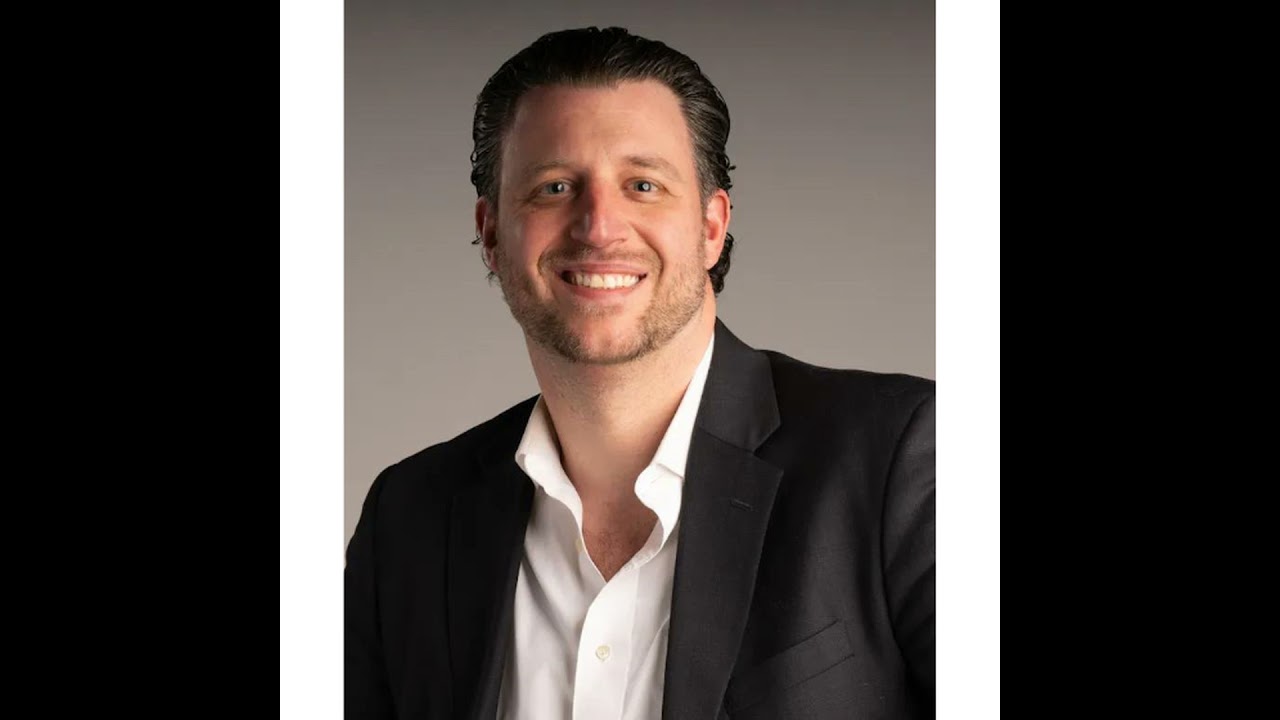
In this Living to 100 Club podcast episode, host Joseph Casciani interviews Rocky Batesell, CEO and inventor of SnapSlide, a novel child‑resistant, one‑handed closure for prescription and over‑the‑counter pill bottles. Rocky recounts his personal journey from a brief stint in medical school to inventing a linear‑action cap after witnessing his grandmother struggle with traditional push‑and‑twist caps. He explains the design philosophy: replace torque‑based threads with a simple linear slide that can be opened and closed with a single thumb press, providing an audible “snap” for confirmation while remaining child‑resistant. The conversation outlines three user segments – primary (single‑arm users, amputees, stroke survivors, ~12 million US), secondary (limited dexterity due to arthritis, Parkinson’s, MS, ~60 million US) and tertiary (general consumers seeking convenience). Rocky describes the massive scale of the market (≈4 billion prescription bottles and 10 billion OTC bottles annually) and the environmental benefit of eliminating threads, saving roughly one gram of plastic per bottle. He details the manufacturing hurdles: moving from a one‑cavity prototype mold to high‑volume multi‑cavity injection molding, navigating the pharmacy‑centric supply chain, and securing adoption by wholesalers and retailers. The episode also covers product development for OTC bottles, integration of tamper‑evident seals, and a timeline targeting production ramp‑up by Q1 2025. Rocky shares the company’s advocacy strategy – a Facebook community, a petition on snapslide.com, and calls for consumers to request SnapSlide at pharmacies. The interview closes with reflections on independence, perseverance in the face of industry inertia, and encouragement for listeners to support the innovation.
Chapters
Welcome to the Living to 100 Club Podcast.
Well, hello to everyone joining us today on our podcast. You're listening to one of our Successful Aging episodes this month on the Living to 100 Club program, and I'm your host, Joseph Casciani. On each program, our conversations educate and inspire, helping you get the best out of all the years we're given, regardless of what obstacles come our way. You can learn more about our club at our website, And be sure to take a look at my new training and activities manual, Better, Longer, and Happier: A Guide to Aging with Purpose and Positivity. This is a series of 12 modules in a card deck format developed for activities directors at senior living communities to learn more about psychologically healthy aging. All the modules are now on sale. Visit the website livingto100.com club.com/blh for more information. Now on to today's program. On this Living to 100 Club podcast, we welcome a designer of a breakthrough product for anyone struggling to open childproof pill bottles. Our guest is Rocky Batesell, CEO of SnapSlide, a packaging innovations company dedicated to making it easier to access, use, and store pharmaceutical products. We discussed the mounting medical accessibility issue for the millions of Americans with loss of hand dexterity due to arthritis, Parkinson's disease, multiple sclerosis, stroke, and a host of other disabling conditions. Whether prescription medications or over-the-counter bottles, The patented SnapSlide closure allows for one-handed opening and closing. Is this the future of medical packaging? And how can older adults advocate for themselves when it comes to accessible medical packaging? Just a little background on our, our guest. A native of Scranton, Pennsylvania, Rocky Batesell is the inventor of SnapSlide. And currently serves as the company's chief executive officer. He earned a bachelor's degree in biology from Marywood University in Pennsylvania, and while enrolled in medical school, he noticed his grandmother struggling with a traditional push-and-twist child-resistant cap on her prescription bottle. That inspirational moment led him to pivot his career into the world of entrepreneurship. And he set out to design the very first prototype of what would eventually become SnapSlide. After securing patent protection, Rocky ultimately formed a company around his groundbreaking innovation. As the company CEO, he's dedicated to advancing engineering, diversifying applications, and leading SnapSlide's mission to bring this adaptive solution to those who need it most. This year, Rocky was honored by Ameripen to be one of three panelists to speak at their annual summit in Washington, D.C. on the topic of inclusive design in packaging. Rocky, congratulations on your accomplishments. Welcome to our program today.
Hey, thanks, Joe. Happy to be here.
Great, great. Yeah, happy to have you. Looking forward to our conversation. Me too. I always like to open by asking our guests to, you know, tell us maybe the highlights, what brought you to where you are today, maybe some of the, you know, um, highlights, uh, points that stand out for you.
The, the highlights and lowlights? Yeah, well, the journey.
We could do a little of that if you want, but Let's, let's start with highlights.
Yeah. All right. So he's good bio. I was a medical student. I left medical school, did a year in med school, and my heart wasn't in it anymore. Felt driven into something else. So I left medical school into the abyss of unknown. Didn't know what I was going to do and just figuring out ideas, trying to like find my way. And my mom came to me one day and was like, Rock, you want to think of something? Think of something for these pill bottles. Graham can't get into them. I have to go over, open them up all the time for her, and then she leaves the cap on them. And then she knocks them over, the pills go all over the place, so she gets paranoid. And the grandkids come over, so she puts it on, and the whole process starts all over again. I thought that was interesting. So I started looking and I realized that child-resistant closures haven't really evolved much in over half a century. Some iteration of a push and turn mechanism that obviously requires two hands, requires significant force and dexterity. And during medical school, I learned that less muscle movement is better, you know? Sure, sure. So I was, I was thinking, I'm like, that's interesting. And, uh, I'm like, all right, so there's 4 billion prescription bottles annually, about 10 billion over-the-counter packages. So I knew the scale was immense and price points are very low. So I knew this had to be simple. And I also knew one of the criteria is child resistance, which requires a two-part simultaneous open mechanism, like a push and turn or a squeeze and turn.
Learn it. Sure.
I knew it had to be simple. I knew it had to be, um, two parts, and I knew it required— needed to require less dexterity for my gram. So I started thinking, and I'm a big research guy, I love my research, so I just bunkered down and just started researching bottles and closures, and I started to see that are not just my grandmother, but 60 million Americans that have arthritis, you know, and Parkinson's, neuromuscular conditions. And then you go into hemiparesis after a stroke. 80% of stroke patients have some form of hemiparesis on one side of the body, which is the inability to move one of your limbs, you know, amputees. So I was wondering, okay, people with arthritis that have both their hands, they struggle, but how in the world could somebody with only one arm use it? You know? So I was like, all right, how do we solve this problem that's been overlooked for half a century? And, uh, what I created was a very simple mechanical invention that still requires two parts to open it and, uh, just requires one hand. So I use the linear mechanism instead of torque. I removed torque from the equation and less muscle movement. Just take your thumb and worked around the perfect forces to allow you to easily open it and close it, which is interesting because closing, you know, you— everybody talks about opening, opening is a pain, but a lot of the time closing is equally as frustrating.
It can be just as tough, sure.
You know, you have these threads you got to put it on and you got to engage it. It takes course, not to mention you're juggling 3 different things: the cap, the bottle, and the pill. A lot of people drop the cap. And as I was doing my research, I found all these different, like, things people said, like, ah, I drop the cap all the time. I hate dropping the cap. You know, I, I hate opening it. I hate closing them. It's one of those overlooked things that, you know, it's one of those things that, hey, been around forever and It is what it is. Something else comes along. So it's been a road. Hand protection, development, optimizing those forces for high-scale production. And here I am.
Great, great story. Great journey there for you. So yeah, you say over half a century, there hasn't been any development in this traditional cap. What's going on? Why is that? Why haven't the manufacturers said, well, maybe we should improve this?
A great, it's a great question. And I don't know the exact answer. So child-resistant caps came around in 1974 after the Poison Prevention Act. And needed a two-part mechanism. You gotta go through the proper Consumer Product Safety Commission test. Then there's actual protocol. And I think after that, then they figured out, okay, the turn is the way to go. Mm-hmm. The production of these packages, they're huge injection mold machines that require pretty capital intensive, and they're just turning out units. And the packaging is a weird space cuz you're dealing with the businesses, the, the pharmacies, and you're not, really interacting with the consumers at all. You know, your, your customer is the, the businesses.
Oh, okay.
So they lose, I think they've lost sight of that consumer, what consumers want, what consumer, how to make the lives, life easier for the consumers. You know, they're always addressing cost, how to get cost down, how to, how to get better, uh, production capacity., you know, on the current push and turns. And instead of looking at the consumer, how do, how do we make it better and go outside the box a little bit instead of the torque? What's another mechanical operation that could make it easier? There's tens of millions of people that— Yes.
Yeah. Yeah. You, you cited the, the millions of people that are just struggling. For many different reasons. And that's an interesting, um, uh, explanation though, that the manufacturers are selling the bottles to the pharmacies in bulk and, you know, by the cases, and the pharmacies distribute the bottles. So who does the consumer go to? Pharmacies should be going to the manufacturers. I don't know, but I can see that where they say it's not broken, why fix it?
Yep.
Well, it is broken, but nobody's fixing it until—
Like what Henry Ford said, if, uh, people ask me what they— if I ask people what they wanted, they say a faster horse.
Yeah.
Yeah. Like, well, yeah. Which torque, I mean, it's physiologically, I mean, it's, it's there, you know, I mean, working requires a lot more effort, a lot more force during the opening process, all the way through the entire dispensing. Dispensing a pill, you're holding 3 different things, putting it back on, you know, just, we could do better.
Yeah. So you said with this one, the traditional one, there's, there's the twisting, you gotta, you know, press that little lever down to clear the spacer, whatever it is. And that's the torque that is required. So how does yours, you talked about the linear action, how does yours work with just one hand and I know it's hard without, you know, demonstrating it, but can you describe it for listeners? Yeah.
Oh, a little description. If you want to check it out, snapslide.com. Yeah.
Yeah. Okay. I'll be sure to put that in our notes. Yeah.
But, so a little audio description, it's tough to describe something, but so imagine a pill bottle. Okay. With the, cap on it. Now, instead of having to twist this thing off, you press, put your thumb or your index finger. I've seen some people that had really bad arthritis that their hands are odd, that they use their knuckle. Everybody has a different snap-slide approach on how to open it, but basically you press the tab which is in the back and you just press this and you slide it open. Just on a linear, linear line, no turning. Okay. Just allowing that to be open with one hand. Now you don't have to use one hand. Some people find, use it with two, you get a little bit more stability, you know? So you don't have to use two hands, but if you only had one arm to operate, if you were an amputee, you'd definitely be using it with one hand. Also, the cap doesn't remove. I incorporated a slider in which it's attached to the closure mechanism.
Mm-hmm.
So when you're doing it, you don't have to worry about dropping a cap.
Yeah. Stays connected to the bottle. Well, yep. Yeah.
And then closing, even simpler, just shut it closed.
Yeah.
And I wanted that, I wanted a snap sound, some auditory assurance.
Uh-huh.
Auditory stimuli that, yeah, boom, you hear it, you know it's closed.
Yeah, it's sealed. So if it falls over, you know it's— yeah, yeah. Interesting. And you described some of the numbers. I mean, 40 billion bottles a year just for prescription meds, and then another 10 billion for over-the-counter bottles. That's a lot of bottles. And a lot of bottles and a lot of users. You say 60 million with arthritis and Parkinson's and neuromuscular disorder, and 80% of stroke patients have some impaired psychomotor ability. So that's a lot of people. Yeah.
I mean, a lot of people, that's a lot of people. 4 billion prescription bottles, 10 over 10 billion OTCs.
Okay.
When we're breaking, when we're breaking this down, we broke up our demographics into primary, secondary, and tertiary. Who does SnapSlide benefit the most? So the primary demographic are those that only have use of one arm, whether it's an amputee, hemiparesis after stroke, neuromuscular conditions, brachial plexus injury, which is the main nerve going off your spinal cord to control your arm. You damage that, you're gonna have limited movement. So if you don't have one arm, there's about 12 million people just in the US alone. Even people that break their arm, they're in a cast. You're in a cast for 2 to 3 weeks. How you getting your meds? Um, so 12 million people in that demographic. That's just in the US alone. And then the secondary demographic are you have both hands, but you have limited dexterity or strength to use them. So arthritis being the big one there. Parkinson's, MS, other neuromuscular conditions, uh, over 60 million people in the US alone. And the tertiary demographic is everybody else that takes meds that just want— they're able-bodied, they're able to do it, but they just want more convenience. They just, they don't want to worry about dropping the cat. That's like my dad. He's funny. He's, uh, He's a surgeon and he, he's always moving, right? He, uh, he uses Snap Slides all the time and he's like, Rock, and he's like, I was always able to open the push-in terms. They were a pain. I didn't like them, but I use this because it's just so much faster. Yeah. Able to get my boom, pop them out. Yeah. I'm like, hey, Dad, that's, it works pretty good.
Yeah. Yeah.
It could speed up your day. That's it.
Yeah. So he's got pretty good. Motor dexterity. We can be sure of that, right?
Yep. Yep. He's good. Yeah.
So yeah, I stand corrected on the bottles. The prescription bottles is 4 billion and over-the-counter 10 billion. Are there, are there differences between these two types of bottles? I mean, prescription versus over-the-counter.
Yeah. So a prescription bottle is where you go to the pharmacy, you pick up a prescription, it comes in that amber. Yeah. Vial. Pharmacy fills it. That's the prescription vial, vials. Over-the-counter, OTC, or over-the-counter drugs like Tylenol, aspirin, stuff you don't need a prescription for that you go pick it up on store shelves. So the pills are in it. It's filled at the pharmaceutical company and then delivered to the retail store. Okay. So they need, uh, OTC bottles need a tamper evident. Induction seal in it. 'Cause you need to be able to withstand shelf life.
Okay.
We're currently working on right now. We're in development of OTC, Rx prescription bottles, first, first launch product.
Do the OTC bottles have childproof caps or they just have screw-off caps?
Yep. Most of them have childproof, child resistant. Oh, okay. Child resistant. Mm-hmm.
Plus they have the seal. They have to be sealed so there's a long shelf life.
Which is also a pain in the butt. You know that seal? You gotta like puncture through that thing or pry it off. Yeah. I always hated those things. So we're trying to, when you invent something new, what's a curse is also a blessing afterwards. 'Cause it's, everything's custom. Everything's a redesign, you know, figuring out there's no blueprint on it. But as you're going, you're able to find improvements, different stuff that you could do to make it better. So we have a cool thing to make that induction seal easier to come off too, for the OTC, the OTC world. But it's one of those things that makes it hard initially because you're like, oh, you gotta— there's no blueprint on it. Like I said, you have to figure it all out, and that's a lot of time, a lot of trial and error, a lot of a lot of resources to get it done. But as you go, you find better adaptions, better things you could do. Mm-hmm. Um, yeah. Wow. Versus status quo.
So you are working on a product that'll incorporate that seal plus the snap slide in one, one unit. Yeah.
Yeah.
I mean, you're, you're right about those seals. They just don't come off. They use the best glue ever manufactured. To seal them so you can't lift it off. You always gotta, you're right.
You can't do it and then you gotta, you gotta get a knife, you gotta puncture it, you know?
Yeah.
Like aspirin. Aspirin, it's a great drug. One of the most widely used drugs. It's amazing. And cardiac aspirin, it's a great, uh, antiplatelet, you know, thins your blood. What's, when you're, you have angina, possibly taking a heart attack, what's the first, first First Aid 101 and pop an aspirin, right?
Sure.
How do you do it if your arm is debilitated? You know? So just this one-arm access, even in the most extreme conditions, it could come in handy. Like, all packages should have, uh, should be adapted.
Mm-hmm. Yeah.
Solution out there that is cost-effective.
And for people who are living alone, that's gotta be more problematic because there is no one there to hate., you know, um, give me a, you know, give me a boost, help me get this, this lid off or whatever.
So 100%. Yeah. One thing that I, I overlooked, I didn't appreciate it to a degree when I first started, is I hear it a lot, is this independence fact that you don't want to count on your caregiver, your husband, your wife, your kids to open your— to do anything for you.
Yeah.
Especially opening your medication packages. Yeah. You know, and if I could come up with something that could make it a little bit easier for them to do that, then job well done.
Yeah. Yeah. That's a good point. I'm glad you brought that up because we, we do want to stay independent as long as we can and rely on ourselves and our own abilities. And to have to depend on another person just to take our medications, that's stressful. It creates some anxiety. You know, it kind of creates this feeling of, gee, maybe I'm not doing so well. Maybe I'm not going to be able to stay, you know, independent. So yeah, that's an important feature. I can see that. They don't want to have to depend on others for some simple activities of daily living. Yeah, exactly.
It's one of the most widely, yeah, performed acts of everyday living, you know, opening up a bottle. And 90% of people do it multiple times a day, whether it's your prescription or your vitamins, you know, you're opening up a bottle, you know, maybe multiple times. And that's one thing I noticed is your independence. I don't have to Yeah. Worry about somebody else doing it. I could do it. Yeah. You know, that, yeah.
Kind of like giving up the car keys. Who wants to give up the car keys, right? Yeah. I mean, we want to stay self-reliant as long as we can.
Yep.
So where are you in the process? Are, are there some, some manufacturers that have adopted your technology or where are you?
So we're currently working with a manufacturer now to ramp up production. We got demand coming in from pharmacies across the country, up in Canada as well. We launched our social media and our PR earlier, early May we launched. We finished everything we had to beginning of the year. And since we launched, we've been getting significant demand from pharmacies to wholesalers to just regular consumers that want it. I've been sending Snap Slides out to, uh, consumers across the, across the country. I'm blowing through samples like crazy because we need the— we have a one-cavity mold right now that produces the samples. They're good for testing and samples and getting them out. When it comes to production, we need multiple huge machines that produce 30-plus parts for every 10 seconds, as opposed to a one-cavity mold, which produces one every 10 seconds. You know, still the same part, but you just get so many more, about 4 billion or tens of millions, whatever the scale is, you need that larger capacity.
So that's—
and it's capital intensive. It takes a lot of time. It takes working within the industry, you know, to form the alliances within the wholesalers, the pharmacies. Entire supply chain. So a little, a little more, a little more challenging than your traditional consumer product that you can just pop it on and sell it on Amazon.
Yeah, it's not an easy retail product. Yeah.
Yep.
So you're selling to, uh, pharmacies mostly?
That's our, that's our model.
Yeah, because if they adopt that model, then they can switch from the older system to this much more modern, much more beneficial system. And it really doesn't affect the pharmaceutical companies that are making the drugs, right? Or the aspirin. It doesn't affect them cuz they're just selling the, the actual pills to the pharmacies.
Yep.
Right. Yeah.
The pharmacy, they gotta switch a bottle, you know, they're using a bottle anyway. Cost anything to the consumers anymore. Snap size is not any more expensive. In fact, interesting, we're able to remove torque. Remember I was telling you when you're going down the development road, things come into your radar that you never even thought of before or were trying to do. But removing torque, you know, torque, they have threads., right? And these threads have layers. You got multiple layers of threads inside the cap and also on the bottle. So we're not using threads anymore. So we're able to get rid of all those, uh-huh, that layer, which saved a tremendous amount of plastic. We're able to slim down plastic about a gram per bottle by removing, removing torque, getting rid of threads. Which a gram, you know, I got that, what's a gram of plastic? That doesn't sound like a lot, but 4 billion.
It adds up. We know it adds up, right? With millions of bottles. Yeah. So that's the old screw. Archimedes, the Greek inventor, just created the screw. It's been so, you know, invaluable for all of humanity ever since then. And now we don't need that anymore with your, with your top. Yeah. Saving the plastic. Yeah, so it's an interesting little perk and the space too, I guess, on the bottle, right? I mean, if you don't have that, that quarter inch of threads anymore, you have that extra space. You don't even need that extension.
Yeah, very good, Joe. Most people don't make that correlation. Oh, it's plastic, good. They don't think about the space savings. Yeah, yeah, that's interesting. Tremendous amount of space savings.
So when, when does the consumer start seeing these on the market?
I would like to have production revved up by Q1 of 2025.
2025. Okay.
Yep. So that's our main objective right now. Get the production ramped up to fill the demand and hope to get one of these large retail pharmacies Yeah, yeah, nationally.
Such a valuable product, and, uh, just seems to— I'm sure seems like it's taking forever to use.
Yep, just turning that ship, that big cargo ship in industry, you know. Nobody wants to change. Everybody talks a big game about innovation and change, but when it comes down to it they resist.
Yeah, yeah.
So the struggle to penetrate through, but you never give up. You have something good, and yeah, you know, more, more support you get behind you, the— it's clear, it's a— it makes sense, you know. Oh sure, yeah, no, it does.
It takes that when once you have a good product or good idea, good patent, it takes that tenacity, right? That perseverance and keep pushing, because you know you're going to hit barriers, you know because, you know, people haven't done this before and there may be a lot of reasons why they haven't done it before.
Yep.
You, you've got a solution, so you'd be better prepared.
Yep. I'm no, I'm no stranger to the barriers. I've been since day one when I had the idea, there was barriers. You know, this can't be done and you never get a patent. It's too simple. It's out there. Uh-huh. It can never be molded. He's like, yeah, that's right. But it's different. You know, people, people are scared of different. Change. Sure. You know, it's, they're not used to and they jump right to the negative. No, it can't be done. You know, the closures are the way they are for a reason, you know, like, because there isn't an alternative. Why not? I think it could be manufactured. I think it could be scaled, you know, and sure enough, you take the beating and you keep on going.
Yeah, you get knocked down, you get back up. I mean, I talk about that all the time when I talk about stepping out of our comfort zone where it's safe and predictable and familiar, and we step out of the comfort zone and there's all the unknowns and, you know, a little anxiety, but also so much opportunity, so much, so many new doors that can be open when you get out of that routine.
And it is, it is scary, no doubt about it. Yeah, I'll get out of my comfort zone. It's Yeah. Scary thing, but yeah, you know, you gotta take that plunge, you know, you gotta, yeah. Yeah.
Well, you find the manufacturers or the buyers that are gonna see the value in, in this new product over the other one.
Yep. And that's why we started to go, packaging industries don't go to the consumer like we were talking about before.
Mm-hmm.
Um, we took the approach, we'll go into the back door, you know, through the industry. Yeah, we're also one of the few that actually go into the consumers, trying to have a consumer face, consumer facing, to get the consumers aware that, uh, yeah, there's a problem and there's a solution here. So we, we, uh, we launched our Facebook, uh, SnapSlide at Facebook, and, uh, the response has been overwhelming. We're launching early May and already up to pushing 10,000 followers. Yeah. 6 weeks or so. So it's resonating. It's such a simple, in a world of all tech and complexity, you know, just, just a simple thing kind of resonates.
Yeah. The consumers get it, right? I mean, the consumers get it.
Yeah.
And that's who's, that's who's, um, who your followers are. These are the consumers that are saying, hey, I, I, you know, I endorse that, I love that, I think that's a good— so what would you say to the consumers on, on, on our, uh, call here, um, Rocky, uh, if they— if what could they do to advocate for SnapSlide? What, what would you ask them to do?
You have Facebook, follow us on a on SnapSlide Facebook. Go to our website, snapslide.com. Fill out the petition on the homepage. Join Team SNAP. Go to your pharmacies, whether it's the CVS or the local drugstore on the corner, and ask for it. Start making, start making some noise.
Yes. Krishna.
You're sick of the old prescription bottles, sick of that. Mm-hmm. Turn mechanism. That's funny. People I talk to, it's one of those things they're like, oh, I knew I hated it, but I never like thought about it.
Yeah.
I don't like those. I don't like 'em. Yeah. You know, they are a pain in the butt. Yeah.
Hello.
Let's, uh, sure. The more noise, the better.
Okay. That's good. What do you— I missed what you said on your website. You have something on your website that visitors can do?
Yeah, join the cause. It's just a quick, uh, right on the home screen of the website. You see join the cause link and it's just like 2 questions about—
Okay, sure.
And yeah, it's kind of like a little petition. Uh-huh. We have almost 1,000 petitions signed already. Mm-hmm. Mm-hmm. Or Hamid.
Okay.
More, the more the merrier. We need to build that, build that awareness, you know, build that noise, that demand. So these pharmacies and these big retail pharmacies and start, start waking up to what the consumers need.
Yeah. Okay. That's good. I like that. So what, what would you like our listeners to take away from this conversation? What, I mean, you, you mentioned the advocacy already, but visiting Facebook, going to your website, filling out the quick survey, um, what would you like them to remember from our call?
Solution. I mean, yeah, solution come the name SnapSlide, um, yeah, follow us, uh There's also a comment on our website. You want to drop me a message, you know, I love to talk and get anybody's, uh, experiences, you know, they struggle with what they think of current CR packaging. I love hearing what people have to say. You learn so much.
Yeah.
You know, you can't sit in a bowl, you know, gotta just get out there and like ask people and you get some things that you never heard before, they're like, wow, okay, you know. Uh, just like to, like to talk to people, like to understand them and learn based on their current situations and how we would improve and just do it together, you know.
Yeah, okay. All right, that's good. So the website, um, they can leave a message for you and leave comments, feedback, questions, uh, suggestions, whatever. Yeah, that's good. So you're open You're open to—
I'm open.
Any and all of it. That's great. That's great. Yeah. Well, uh, looks like we're about out of time for today, Rocky. But before, before we wrap up, I just want to remind my listeners to visit my website, livingto100.club, sign up for my email list, and download a free copy of my 9 Tips to Make Living Longer Enjoyable. And if you're affiliated with a senior living setting or organization, Be sure to take a look at my new training manual and activity guide, Better, Longer, and Happier. That's at livingto100.club/blh. Rocky, thanks so much for being a guest on our show today. Again, your website is snapslide.com.
snapslide.com. Joe, I have a question for you. How many, how many hundred, how many people you have in a hundred in your club?
Oh, um, I don't get their ages, so no, no.
My grandmother who inspired Snapchats just turned 97.
Oh wow, good for him.
More years.
Yeah, you know, I, I think, um, it's great, but I, I think the number gets in the way. You know, I was reading about Cyndi Lauper, you know, the singer, and, um, somebody asked her her age. She said, I'm not a car, what difference does it make?
That's it.
Isn't that a great line?
So just the number.
Yeah, just the number.
Just do everything you did when you were younger. Have fun, you know, enjoy it.
Yeah, doesn't say anything about what we should or shouldn't be doing or whatever. It's just whatever we—
the world is still your oyster. Yeah, it's all in your— on your mind.
All in your mind.
Exactly right.
Letter—
you still get a letter from the president?
What's that?
Do you still get a letter from the president when you turn off?
I don't know. I don't know. Uh, they used to, right? Um, I don't know, we got a lot of people out there now. Yeah, now we got the supercentenarians that are, um, over 110. I mean, you know, this guy, they just wrote his obituary. It'll take a minute. His name was, uh, Monty Makoff, and you know, he was a kind of a— did a lot of different jobs, and in his senior years he started making sculptures out of metal. And he had his first gallery exhibit at age 100.
Get out of here.
How about that?
That's wild.
And he was the oldest, he was the oldest man in the US up until he passed away last, I think a few weeks ago at 111. So your first gallery exhibition at age 100.
Keep the mind going. Yeah, you know, keep, keep that mind going. You know, he got into sculpting when he was 80.
Keep going.
Now it's all purpose.
Keep doing purpose, resilience. Yeah, whatever we want to call it.
Yeah, where, where was that? What, what, where, where was the—
oh, I, I just read about his obituary. Um, let me see if I can bring his name up again. Mori Markov, 1914 to 2024. Um, so 10, um, the oldest, you know, the oldest in the US until he passed away. Yeah, I'm not a car, right?
No, probably still in good shape too.
That's amazing, you know, it is.
It's incredible.
Well, great. Thanks so much for being on the program, and, um, I look forward to, uh, seeing your products at our pharmacy.
Thanks, Joe. I appreciate you having me. Thanks to all your, uh, listeners as well.
Great. You're welcome.
More from Joseph

The Hidden Cause of Aging? How Chronic Inflammation Affects Your Health with Joel Brind








