War Horses and Wounded Spirits – Healing Veterans through Horse Therapy
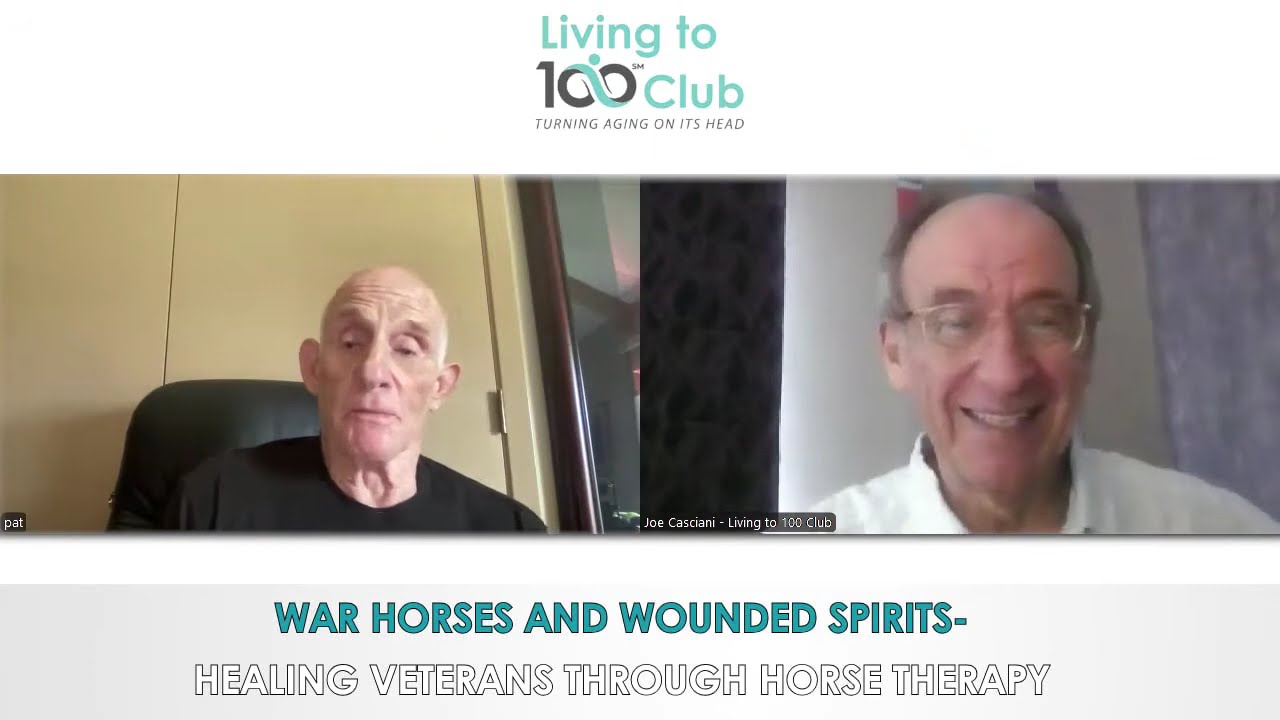
In this episode of the Living to 100 Club Podcast, host Dr. Joseph Casciani interviews Andy Brown, co‑founder of War Horses for Veterans (WHFV). Andy explains how his lifelong passion for horses, a career in a pipeline supply business, and a personal near‑fatal riding accident shaped his desire to give back to service members despite not being a veteran himself. He describes WHFV’s week‑long, low‑capacity equine‑assisted therapy program that serves U.S. veterans, first responders, and special‑operations personnel with traumatic brain injury (TBI) and PTSD. The conversation covers the therapeutic mechanism of horses—how they sense fear, require calmness, and help participants lower defenses and develop mental toughness. Andy shares his athletic background in rugby, football, and Shotokan karate, emphasizing mindset over physical strength. He outlines the organization’s scale (10‑14 programs per year), annual operating cost of about $1 million, and primary fundraising through the War Horse Derby, which raised over $500 k this year. The interview touches on the organization’s values of respect, the Golden Rule, and mentorship, noting that successful participants are often invited back as mentors. Andy discusses future plans, including a visit from Israel Defense Force (IDF) special forces, and provides logistical details: the farm is in Stillwell, Kansas, a suburb of Kansas City. He invites listeners to learn more, donate, or volunteer via whfv.org, highlighting tax‑deductible contributions and a monthly donor program. The episode ends with a call to action for listeners to stay positive, inspired, and thriving.
Chapters
Welcome to the Living to 100 Club Podcast. Here's our host, Dr. Joseph Casciani.
Well, hello to everyone joining us today. You're listening to the Living to 100 Club Podcast, and I'm your host, Joe Casciani. I'm passionate about helping people embrace psychologically healthy aging. Staying positive, finding purpose, and making the most of all the years we're given, no matter what challenges come along. This podcast is part of a larger mission that I call the Living to 100 Network, which brings together 3 powerful tools. Number 1, these podcasts. Second, my Better, Longer, and Happier card deck series. For programming in senior living communities. And third, my new Living to 100 community, a place to connect, learn, and thrive together. To visit more, you can visit my livingto100.club for podcasts. Join my group forum at livingto100.community. And for the card decks, go to Living to 100 Solutions. Thanks for being part of the journey. Now let's dive into today's conversation. In today's episode, I welcome Andy Brown, co-founder of War Horses for Veterans, a transformative equine experience that has helped hundreds of veterans heal from the invisible wounds of war. Andy shares his personal journey from his days as a Princeton athlete to recovering from a near-fatal riding accident and how his life experience shaped the founding of this remarkable organization. We explore the power of animal-assisted therapy in helping veterans with traumatic brain injury and post-traumatic stress conditions regain confidence, peace, and connection. First, a little background on Andy. Andy Brown, with his wife, owns a pipeline supply company, and over the years he's employed numerous veterans of war. Andy has been a trail rider also since his childhood and has always been passionate about horses, with an equal passion to empower veterans. Pat and Andy both emphasize— empathize with our fighters, first responders, as well as with their horses. They see a strong link between the two and provide our veterans and their horses with that connection by opening up their home and farm to combat veterans. Andy, welcome to our program today.
Thank you.
Great, glad to have you with us today. I'm looking forward to our conversation.
Yep.
Take us, take us back to the beginning. What led you and your your partners to, to start War Horses for Veterans?
Well, I just, I always felt that, uh, not having actually been an Army veteran myself, that it was important somewhere along the line because I always admired what they always did. Uh, I felt like if there was anything I was going to do in my life I wanted to, to give back.
Sure.
And, you know, obviously when you go into business, there's a certain element of wanting to make enough money to, to have a, a life that you can live appropriately when it comes to financing.
Sure.
Your family and if you have any vocations that you're trying to enhance, uh, that you like to do. And to me, you know, just having money doesn't do me any good if I'm not helping somebody with it. What good's it going to do me? I'm not an amasser. I'm not a collector of things. I'm a collector of good experiences And that's what my whole goal was when it came to where I place the best value on spending money that I have made. And that has been in helping the veterans of our country. And it so happens, veterans, it turns us, uh, from this point of view, from the IDF, Israel Defense Force.
Wow. Wow.
And they're coming in, as a matter of fact, in less than a month again. And this is their second visit. The first one was successful. It was short and sweet, and we only had 3. But this time we had to turn them down to where it was just going to be 7. Our typical time with, with veterans is a, is spent. It's a week program, and we just don't like to have a lot of people come.
Sure.
We've gone from 10 to 12 to 14 programs in a year's time, and that's a lot. And I can tell you that that's a lot.
Sure, that's a lot.
Yeah, you can imagine when So we, we really try and minimize the amount of people that we see so we can have the top quality and get the most out of the people that, that work for us.
Sure.
That work with us, I should say.
So you've had a, you've had a comfortable career with your, your, your business, and you, you've always been connected to veterans and the cause and wanted to make a contribution, so you started War Horses for Veterans. And this is all about helping veterans recover from injury, trauma, PTSD. Yeah.
And, you know, having been a hardcore athlete myself— when I say hardcore, I mean I did things that involved a lot of contact. So as a result of that, Having had that experience, I found out that the only way to really enhance what I was doing was to be able to communicate to people how to be tough. Yeah. That's, you know, toughness is a matter of mind. It's not a matter of, of being tough. It's just a matter of your mindset, your mental mindset.
I agree 100%. Sure. Yeah. Now, when we spoke earlier, you told me about your own accident, your own, uh, very severe accident falling off a horse. How did that, how did that shape your, your mindset about your, your new contribution? How did that influence—
Well, I mean, it's been a— this has been a tough road for me because as, as many injuries as I had, I played football, rugby, and I practiced martial arts for almost, well, at least 45 years.
Wow.
And you know, the fighting, I just like that type of a contact where I'm facing, I'm really facing myself.
Well, that's okay.
I'm facing others.
Yeah.
I find that I'm really facing myself and And I'm facing myself because I feel I have to be— to put on a good front for others so they know that when they're dealing with me, they're dealing with someone that doesn't like to, you know, take a whipping approach to it. I mean, I want to be head-on with them.
Yeah.
Let them know that I'm dead serious about everything I'm doing and that'll promote a very strong feeling from me and from them.
Yeah. So you've, you've been an athlete much of your life, and you've learned how to develop that fire and determination and competitiveness. And then with your own injury, you've been able to kind of serve as a, a role model for other people to help them kind of create their own mindset to—
Yeah. And I learned the right, the real mindset I've learned has been from my martial arts practices. Started when I was 30 because up until then I played contact sports doing rugby and football, primarily rugby when I got into college and played till I was 29, and then I got out. I was kind of missing something, so I decided I would go and join a karate group, and that's where I found my mentor, uh-huh, who was John Beltrum, who was one of the top karate men in, in our style, which is, uh, Shotokan Karate of America. And he's actually pretty well laid up himself. He's, he's He's 9 years older than I am, and, uh, he's— he had a lot of trauma physically over, and primarily as he got older. So, you know, he's been an inspiration for me. In fact, the shirt I have on, which you can see, uh, Don't Pray for an Easy Life. Okay, then in the back it says, don't pray— says pray to be strong.
For horses, for veterans. Yeah, you'd have to stand up. I can't read below it. Oh, pray for— pray to be strong. So yeah, I like that.
And it's really— I mean, he and I have— we've always been in sync. Uh, yeah, attitude is everything.
Yeah.
So yeah, all I can tell you is that I've taken these little statements, these little aphorisms that I've gotten out of my karate.
Yeah.
And I put them on these shirts that War Horses presents to people that come.
Sure.
We do nothing but, but the best of the best when it comes to, yeah, those people, Special Forces, Rangers, uh, You know, even of course the, the first responders, those are the guys that have had a tough, tough life. And so I am so respectful of them and I wanna make sure that those people understand how much respect that we have for them. And then, uh, it's been a very successful program because of that, because I think I have a way of being able to emanate Present myself in such a way that everybody knows that everything I do, I'm dead serious.
Yeah, yeah. You pass these values on to others too, because your drive and your, your respect for others and your desire to contribute, to give back, that spills over to your people that come there for, for their own programs. Can you share— oh, go ahead. Yeah, go.
No, no, no.
Can you share maybe a story or two of— I know you've worked with a number of people, first responders and veterans, and can you share maybe an example or two of some, someone that really made a change, some major big transformation?
Well, uh, boy, I, I didn't see that specific, uh Yeah, question that was part of the—
I threw that at you, didn't I? Well, um, what kind of changes do you see? Maybe not specific, but what kind of changes do you see overall in your—
well, I mean, we have all kind of people that come in here.
Yeah, yeah.
And the format is, is really pretty open, and it's, it's not as austere as it may sound because These guys have sacrificed their entire life to, to make this a better country and to make themselves, uh, it's kind of like do unto others as you would have others do unto you, which is my mantra, the Golden Rule. So these guys, gals come in I feel like it's important that they see in me that I believe in the Golden Rule and that I don't just preach it, that I believe it.
Mhm.
I like to be a living example of what that is. So yeah, then people that have come in, I mean, I'm, I just turned 75 and, you know, I like to think this I'm in the last third of my life. Yeah, hopefully it'll be a successful life. But yeah, I mean, I've never had this sort of a trauma before. This is a TBI, and so, which mean— and I, I had anywhere from 3 to 5 brain bleeds. So I don't know how much of that has affected where I'm going with this thing, and all I know is it Attitude is everything.
Yeah.
And I'm just trying to pray to be strong.
Yeah.
All I ask God for him to do is help me and, and, and to help me help others.
And that goes a long way. I know. I think the expression is you walk the talk, right?
I do.
What you say, you walk the talk.
Yeah, that's what I'm trying to show. Yeah, these veterans.
Yeah.
And particularly the first responders.
Yeah.
You know, and I— we specifically work with the veterans that have gone through advanced training. So I mean Rangers, uh, what can I say, Special Forces. That's the group Selected. So, and I went up to Fort Lewis. I've been up there a couple times and I went up the last time to, to welcome the 100 and I guess it was the 150th or the 50th. I can't remember. Anniversary of the Vietnam War. And those guys are a tough bunch of guys.
Yeah.
And I mean, when I say tough, I'm not talking physically tough. I mean mentally tough.
No, mentally tough. I, yeah, I believe that. Yeah.
Mental, mental toughness is, is so much more important than physical toughness.
Yeah.
I think.
Yeah. Yeah. I agree. I, I think our attitude gets us over a lot of those steep challenges. All right. The attitude can get us beyond those, you know, big setbacks.
Yeah, there's always somebody bigger and tougher, no matter. Yeah, someone who's, who's more devious or whatever you want to say. Yeah, you know, but all I know is that, you know, there's, you know, win if you can, lose if you must, but always cheat. And that's what it is according to Mike instructor's statement about winning a fight.
So, okay.
You know, no, whatever it takes. It's gonna be the, yeah, it's gonna be the proponents that, yeah, that have the most stick-to-it-ness.
Mm-hmm.
And willing to go ahead and submit themselves to whatever it takes.
Yeah.
To, to get the outcome there. Yeah.
They're, you see, well, it is that mental toughness that's key. Let, let me ask you though, um, a number of the people that come into your program have never had experience with horses, right? They've never ridden horses. And when you and I talked, this really struck me, that you found that somehow that experience of connecting with their horse helped them to kind of lower their defenses, drop their guard, lower their walls a little bit. Can you— what's your, what's your sense of how that happens? What's going on?
You know, a horse particularly is very sensitive to, to people, and, you know, particularly ones that you have trained to ride. So when you're working with a horse, an animal of that size, which in my case I got injured by having my horse frightened by a deer. Yeah. On his hind legs, and I was probably about 12 to 15 feet up in the air, and I fell down.
Wow.
So as a result of that, all I can say is that the guy that was with me— because I don't know what happened, and I, to this day, I don't know— but what he told me was that my horse was very careful. He, he fell on me, and when I got up He was extremely careful when they moved it because he didn't want to— for some reason, I don't know what I emanated, whatever it was, he did not want to hurt me getting up.
Wow.
And so that is kind of the whole thing about animals, particularly animals of that size. If you, if you, if you show a nervousness, they will sense it. So you have to learn to be strong and calm around them. And being strong is not being— it's being mentally holding any sort of emotion, if you can, internally, that is an emotion of fear. Because horses will always sense fear. And so I think, as will animals, particularly animals that people are known to be afraid of, like bears.
Yeah.
Sharks and stuff like that. So you have to basically emanate a sense of calm. And I think that's just something that I, I discovered when I first started working with horses at a very young age. I've been riding since I was 12. And so, you know, and I started, I started learning how to, to, to, to jump before I learned how to ride, cuz we were riding in the Fort Leavenworth fox hunt. And then, uh, after that I decided that what I really wanted to do is trail ride. So that's what I did for the rest of my life.
Yeah.
And that's something that I'm, I'm hoping to get back to, but whether I can get back to it or not, I don't know. And it's gonna be something done for, you know, almost 50 years of my life. So yeah, tough for me not to, not to go back to it, but it is what it is. I have to, I have never known.
We never know those things, right? But sounds like you're saying the, the animal, the horse, can sense that fear and help the person relax, let go of some of those emotions. And I'm guessing probably also to be vulnerable, to let ourselves— when we drop those defenses, we're vulnerable. And, you know, we can sometimes, um, let people in, maybe even let the experience in with the horse that, it's okay just to, just to be there, just to be with it.
They always— there's a saying, the outside of a horse is good for the inside of a man. Oh, or woman. And whatever the case may be, that is exactly as it is. So I can only say this much, that I've dealt with a lot of horses, and this horse, although I must say I've been riding for 20-some-odd years and Uh, he just got spooked, which will do no matter how good a rider you are, how many times they've been out on the trail. Because I ride on the trail, it's open to, to all sort of environmental and external outside phenomena.
Sure.
And so it just, it works out that You know, when you're exposed to that, you have to be ready to handle anything that comes along.
Yeah.
And I, in this case, I like to think I handled it as well as I could. But they always— they said to me that it was remarkable that I did somehow manage to live through whatever it was I was. And I was like a vegetable when I got out. Yeah, I couldn't walk, I couldn't talk, but I think all my years of training with karate particularly, and being around animals that I've done my whole life, which I happen to love animals.
Yeah.
So much that I'm willing to let them into my life. And so that's, yeah, I think that's just something that you have to learn how to do. And it's not easy. You have to be, learning comes from wanting to learn.
Uh-huh.
So that's kind of—
they've let you in, they've let you into your life too, right?
Yeah. Yeah. So anyway, that's—
yeah, yeah. Well, your struggle and your recovery is certainly such a powerful message for people that you work with. I mean, it's— we don't always win those battles, right? We don't always win the war, but that drive and determination can be really Well, just that central ingredient that we need.
So I'm hoping to emanate that, yeah, feeling and that idea to, to all these guys that come in, because no matter what, I mean, the first responders have really as tough a job as there is, because like, uh, war veterans, they are not— I mean, they are exposed, you know, on a daily basis. And it's not going to be something like it's always all the time, but when they get exposed, it's, you know, they have to put on their best front.
Oh yeah, sure.
It's not something that, you know, and, and, and it has to be done appropriately.
Yeah.
Because, because of the public phenomenon about it.
Yeah.
Where if you're a warrior, it's different because the kind of thing— I think anything goes. And in today's world, it's very, very tough to—
yeah, both, both very challenging, but you're right, different, different types of challenges, different settings. Yeah.
Yeah.
But tell us, um, tell our listeners about the War Horse Derby. What's that all about and how can our listeners support your your mission?
Yeah, on www.whfv.com, that's our, that's our website. You can learn about it. It's— we use that as a way to raise money, uh, which is all totally on us. I mean, we don't get any government funding, and we basically It costs about $1 million a year to run our organization.
Wow.
And there's only like 4 or 5 of us that are constantly participating there.
Mhm.
And my wife and I are the, are the big donors.
Mhm.
And I started this organization with a guy that said, certainly a better horseman than I am. I'm not a great horseman, I'm just I'm just a tough guy that can take the falls. I mean, I've been thrown so many times, and that's probably as much for my lack of horsemanship as anything. But, uh, I feel like the people that we are exposed to on a daily basis appreciate what we're, what we do and what we bring to the market. And I think that the, that the people in the United States government, the military, they appreciate what we do. And I know that the people from Israel—
sure, yeah, of course.
Well, being, being Jewish myself, I mean, I know what it is to have people that don't like you, because that's part of prejudice. That's a horrible thing, but All I know is that, you know, it's, it's, it's the hits and the ability to just turn my— turn the other cheek and say, hey, it's, it's okay, don't worry about it. Yeah, that's just life. And, you know, if you're— if, if you can't— what did Harry, uh, Truman say? If you can't take the heat, get out of the kitchen.
Out of the kitchen.
Yeah, you know, if you can't take it, that's just It's tough luck.
So you're largely philanthropic. I mean, you're looking for the financial generosity of others. I mean, it's self-funded, but you also welcome donations.
And that's what happens at the War Horse Derby. That's our biggest fundraiser.
Yeah.
This year we— I'm trying to think— we raised over half a million dollars.
Wow.
Which we needed. And then of course, uh, we have funds that come in from various things that we put on our website.
Mhm.
And then when, uh, and you can join, you'll see ways to join, what we have to offer. And then, uh, and we have people that have come in and so continually people will continue to donate. And, you know, every year is not always a great year for us, but fortunately in my lifetime, uh, I was able to work and make enough money to provide the funds that we were short.
Sure.
Because again, I'm not a collector. I want to help people.
Yeah.
And best, best thing I can buy Yeah, my life is the happiness of those that I'm helping. Such a tremendous feeling that I get, as opposed to a gift or something material that I buy for myself. That is it. It's a wonderful feeling of happiness. And I think these people that come in and visit us, I give them gift. It's called the gift of how to enjoy life with what you have. And that what you have is not how much you— how much you have on the— in your bank account, but it's what you personally have, the happiness that you have as an individual that you have to inculcate in your body. Yeah.
So yeah, not holding on to things but passing it on and contributing because contributing to, to others and to the organization. So that website is WHFD, I guess. War Horses—
War Horse, which stands for War Horses for Veterans.
The what? WHFD.
FV.
Oh, FV. War Horses for Veterans.
W.org. Okay, and that is a website that you can go to look up about us. It's very, very well done, the website. And on that website, and you know, there's my name on there, and if anybody wants to call me, I'll be more than happy to talk to them, take their calls. Good, take your calls, and it's a pleasure for me to to be able to help anybody that needs to help, you know.
Well, gold stars to you. You know, I, I was so impressed when we first talked, and I, I'm more impressed today because you, when you talk about sharing your values and kind of emanating the, uh, that mental toughness and how it spills over to others, I mean, that, that's such a strong gift, I think, to other people. So gold stars to you.
Yeah, I appreciate that. And again, mental toughness is the toughness that I personally strive for.
Yeah.
And physical toughness is no, is no better than the mental toughness that you bring to the table.
Yeah. What do you see for your, for the future with War Horses? For veterans? What do you, what do you hope to see maybe in a year or two or five?
Well, I hope this year our, our visit with the IDF, Israel Defense Force, which is Special Forces, really goes well. And I'm hoping that they see value in what we do. I mean, they've already been once and were very impressed with us. So I think the guys decided that after all this crazy stuff going on right now that they can all use a respite. And, uh, I mean, I'm sure we could have had— I mean, if we could have taken more, we would.
But of course, yeah, you have to cap it. Of course.
Well, we have a— and, you know, we have a capital problem that we, we can only take so many. And we, we, we try and at the most get it to where it's once, once a year where people come in and And now again, when I say that, once the people have been through our program, and if they are a mentor, which we hope that they are, expressing themselves, their ability to, to be able to, to be strong enough that we see a great value in them.
Yeah, for them to be mentors for others.
Yes. Uh, then that allows us the opportunity to invite those people back, particularly those that have done very, very well at the program. And, you know, it's not that hard to do that well. It's just the kind of people that we take in all seem to have— not everyone, but there's a handful of them that do really express a willingness and an ability Yeah. To help others. And so it's, it's important to us as it is to them, or to them as it is to us, that we acknowledge that. And we always invite those people to please come back. And it doesn't have to be for a program. If a person comes and they, they love what they have gotten.
Yeah.
That's a kind of a for life deal.
Just to make a visit.
Yeah, if they want to come, anytime they can. Yeah, we have, we have people that have been here that been through several times, and it's on the website, so you can see. So, uh, you know, that's good.
Sure. Yeah, returning, we sure welcome that. We welcome reinforce their, their own ideas and what they've learned, continue to share it.
Yeah, I mean, you know, we're not going to turn people down just because, you know, I mean, it's more stuff that we have to do, and we're happy to do it, and we're happy to help these people. And, you know, it's a value, I think, for them and for us to share with each other. And I think this visit that we're going to have with the IDF, particularly with everything they've been going through this last year will be very, very helpful to them.
Yeah, they're going through a lot. I'm sure it will be a big gift for them too.
Yeah.
So we're just about out of time, Andy. What's, uh, what's the final takeaway? What do you hope my audience takes away from this conversation?
Well, that they, they see value in what we're doing, have a chance to come in and maybe do something they've wanted to do all their life, which is ride a horse. It's not like going to, to the zoo when you're a kid and you're getting, you're getting on the little ponies. No, you're actually facing an animal that usually weighs a minimum of 800 or 900 pounds, and then you have to deal and express a sense of calmness with them.
Sure.
And then when you do that and And we are with you the whole time as you're making that initial connection. It becomes a big glow that we see in people's face. And so there's always that feeling of connection.
Yeah.
We transport with the animal and with the animal transports back to us. And when you could put your face next to a horse, mm-hmm. And you've got calm enough and he sees that you're calm with him, there's nothing better than when he goes ahead and muzzles you with his, with his nose.
Wow.
It's just a great, it's a great feeling and it's a great feeling for them. So it works two ways.
Well, it shows, you know, I could just, just get that sense from you that you feel proud of what you've done and, um, kind of glad that you've been able to do it. True.
Very, very proud. And I'm hoping that those that come to see us will feel just like I do when we have a successful visit with them. And yeah, that visit hasn't have to be anything other than we have a, you know, 4 or 5 days together, and maybe one day that they have, oh, that was a great feeling.
Could create that spark.
The one day doesn't need to be any more than— it's just you know, enjoy, you know. Yeah.
So if any of our listeners know of someone, they may have relatives or friends who would benefit, they can go to your website, whfv, as in veterans, dot org or dot com?
Dot org.
Dot org. whfv.org. Learn more about it, make a contribution, talk to you if they would want to, you know, have a conversation. And there's a lot, so people can reach out to you through, through your website.
Yeah. And, and if you come and you have a great experience and you feel like it's been lacking in your life— yeah— and we see you as a really quality kind of a person that we love to invite back, which very rarely doesn't happen because it's a great opportunity for us and for them, you're always welcome back. And we have people like that have come in and they've had such a great experience, they call us up and say, hey, mind if I come in? And you know, we have a bunkhouse, uh, and the only cost is, is for your transportation to get to our place. Yeah. And then once you're there, we pretty much see to it that you're well taken care of. And if you're not part of the program, why, we sort of work it out with you so it becomes a pleasant experience for you, for us both.
And where is your place? Tell us where your place is.
It's in Stillwell, Kansas, which is a suburb of Kansas City, basically. It's a It's, uh, Kansas City, Missouri.
Sure.
And it's south Kansas City, about, oh, you know, 40 miles south, which is right, you know, a hop, skip, and a jump. And, uh, yeah, uh, you know, it's— we are the, the one area that is, uh, a farm area still in that area, but it's You know, it's remarkably, uh, it's remarkable, remarkably residential.
Residential, okay, but not taken over yet by commercial.
And, um, no, no, it hasn't, but I mean, is it going to be?
Yeah, probably so.
Ultimately, yeah, going to be. So, you know, for those that want to come in, if they want to give me a call or say that they Okay, we have a great group of people that will field their calls, and worst comes to worst, if they want to talk to one of the founders, which is me, or talk to my wife Pat— sure, all they have to do is ask for us. And once we know why they're calling, yeah, happy to talk to them, because at this point in my life and my, my wife's time, what else am I going to do?
Yeah, well, you're a very generous person, Andy. Yeah, so it all starts with the website. People have any questions, they want to explore, get a little information, talk to you, make a donation, which is very important— whfv.org.
Yeah, and that's it. And, you know, there's no, uh, there's no limits as far as people that want to make a donation. Of course, I'm only mentioning that because, you know, it can be small or it can be large. Yeah. Do you want to join? We have programs that you can join on for a monthly contribution. Yeah, is a program that we have set up. That's great if you want to go ahead and, and, and, you know, give to us. It's all tax deductible. So I'm—
of course, sure—
just say that not from a business point of view, but you will know it. We are code approved by the IRS, and everything we do is 100% legitimate. Legitimate.
Yeah, yeah, yeah. No surprise. I'm not at all surprised to hear that. Yeah, I can see with your values and, yeah, your own principles that, um, you want to make things go the right way. And again, kudos to you for all that you've accomplished and setting the vision with you and your partners to keep doing this. That's great.
Yeah, will do. And we appreciate the opportunity to expose ourselves to you doing obviously an incredible job.
Yeah.
And we would like to see those that happen to partake in with us have that opportunity to be be like me and make it to 100, or at least happily.
It's all mindset. It's all mindset. Yeah.
Mindset.
Yeah.
That's it. So appreciate the time we have with you. Uh, I will just say that I love what you're doing and thank you. We appreciate anybody that wants to get ahold of us.
Thank you very much. And thank you for being on my program and thanks to your wife Pat for helping to get this set up. And, um, I'm glad we could talk, and I'm glad to share. I'm— I always say I'm glad to be the messenger here on these important conversations. So just before we wrap up, I just want to remind my listeners, visit my website for my blogs and my podcasts. That's livingto100.club. Visit my new community for a connection. That's livingto100.community. And if you're part of a senior living community, visit my livingto100.solutions for my 12-module card deck series. It's a powerful tool. Andy, thank you again for joining us, and we have your website. And to all of our listeners, thank you for tuning in. Until next time, stay positive, stay inspired, and keep thriving.
Thank you.
More from Joseph

The Hidden Cause of Aging? How Chronic Inflammation Affects Your Health with Joel Brind








