WellBe Senior Medical: Re-inventing At-home Care
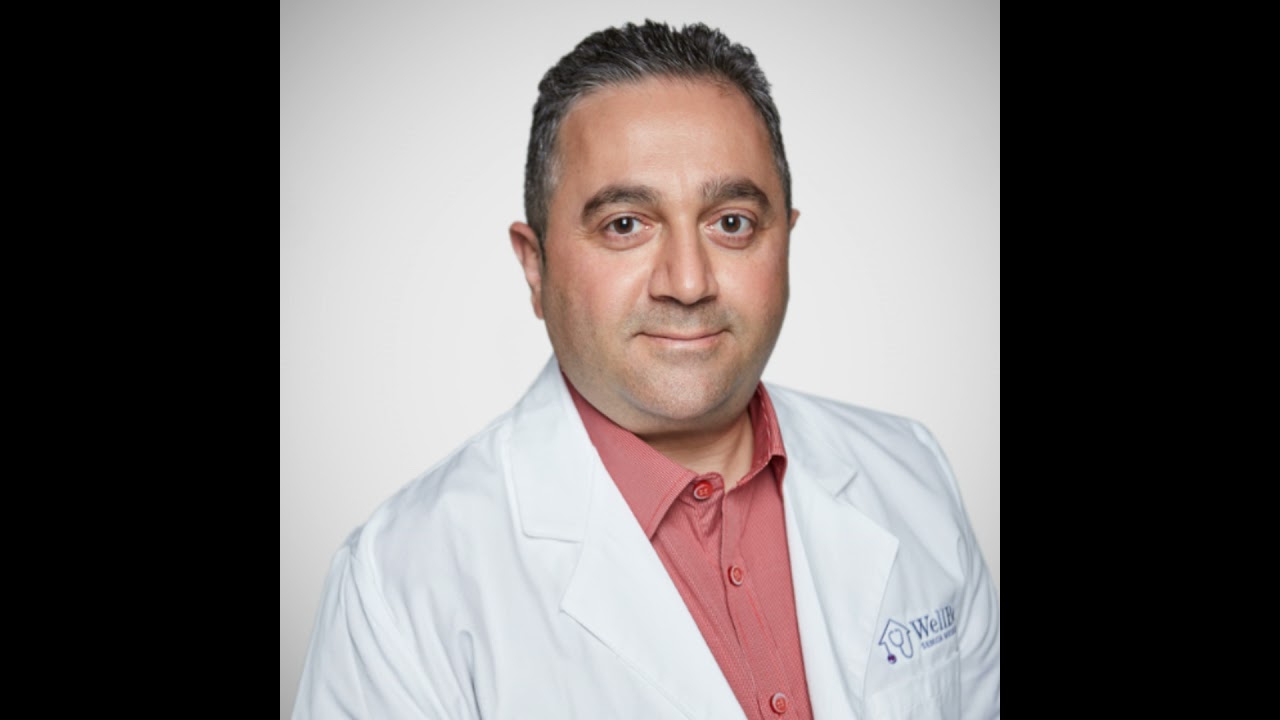
In this Living to 100 Club podcast episode, host Dr. Joseph Casciani interviews Dr. Iyad Houshan, Chief Medical Officer of Wellbee Senior Medical, about the company’s innovative, full‑risk, home‑based geriatric care model. Dr. Houshan explains how Wellbee aligns payers, providers, and patients by assuming full financial risk for the sickest 10‑15 % of Medicare Advantage members, allowing clinicians to spend the time needed for comprehensive, multidisciplinary care in the patient’s home. The model includes physicians, nurse practitioners, licensed clinical social workers, pharmacists, and behavioral health specialists who provide 24/7 support, address physical, psychological, spiritual, and social needs, and bridge gaps that arise after hospital discharge. The conversation highlights the shortcomings of traditional fee‑for‑service, fragmented primary‑care and home‑health services, and the hospitalist model, and shows how Wellbee’s approach reduces medical loss ratio (‑39 %), total claims per patient (‑26 %), achieves a 4‑star NCQA quality rating, and enjoys 95 % patient/family satisfaction. Dr. Houshan shares patient anecdotes that illustrate the importance of psychosocial assessment, informed consent, and loneliness mitigation. The company, founded in 2019, now serves about 120 000 members across nine states (North‑East and Midwest) and aims to make this home‑centric, simplified care the national standard for seniors.
Chapters
Welcome to the Living to 100 Club Podcast. Here's our host, Dr. Joseph Casciani.
Greetings to everyone joining us today on our podcast. You're listening to one of our Successful Aging episodes this month on the Living to 100 Club program. And I'm your host, Joe Casciani. Each week, our conversations educate and inspire, helping you get the best out of all the years we're given, regardless of what obstacles come our way. Remember, you'll find this podcast and our complete library of podcasts on our sponsoring platform, SeniorResource.com. Today's program introduces our listeners to an innovative home-based medical care program, Wellbee Senior Medical. Our guest is Dr. Iyad Houshan. We discuss the benefits of at-home medical care with older adults faced with multiple and complex health challenges. We learned about the full risk model of reimbursement versus the traditional fee-for-service model and how this incentivizes WellBe to provide a comprehensive holistic services program. We also learned how this comprehensive care model reduces the need for frequent acute hospital skilled nursing readmissions and avoids the problems with home health services that are too often fragmented and ineffective at avoiding readmissions. First, a little background. Dr. Iyad Houshan is the Chief Medical Officer at Wellbee Senior Medical. Prior to joining Wellbee, he served as a Senior Medical Officer at Alignment Healthcare from January 2017 to June of 2019. In this role, he was responsible for managing the clinical program at an innovative Medicare Advantage provider that offers an integrated care model, proactive healthcare, advanced technologies, and alliances with major healthcare partners. Dr. Hoosan began his educational career by obtaining a BS in chemistry from UC San Diego. He then went on to obtain an MD from Ross University School of Medicine, and after completing his medical degree, he pursued a career in general education and obtained a position at San Diego Miramar College. Iyad later went on to complete an internal— Iyad later went on to complete an internal medicine residency at the University of Nevada at Reno. Dr. Houshan, welcome to our program today.
Joe, thank you for having me.
Oh, you're very welcome. I always look forward to these conversations where I can provide, you know, I can serve as kind of the vehicle for useful information for our audiences. So I always like to begin by opening by asking our guests to tell us a little bit about the journey that brought you to where you are today.
Yeah, I, you know, thank you for the introduction. I actually spent the last 15 to 17 years kind of, you know, building, refining, executing on care models that are really designed to assume full risk. We always talk about those full risk models that deliver high quality at a lower cost, but most importantly, doing it with the highest patient and family satisfaction. Kind of did that on the health plan and the provider side. So been on, on both sides of the aisle, if you will, from a payer perspective and a provider perspective. Waited for a very long time to land at a place where you really have full alignment between the payer, be it the health plan today and/or, you know, call it CMS indirectly. The provider group, and most importantly, you know, an important, you know, part of this whole alignment is the patient. So when you align health plan, provider, and patient, I believe that's where you will make the biggest difference, where we have all stakeholders at the table to really make healthcare easier and make it simple.
Yeah. And you're bringing that expertise to Wellbee Medical, I know.
Yeah.
Yes. So I'm, I'm really fascinated. This is such an innovative model and I'm really interested to learn more about it and share it with our listeners. So what is Wellbee Senior Medical and how is it different from other healthcare providers?
Yeah, we are a geriatric full-risk provider medical group that we bring care to the home, to the patients at home, whatever they call home. It's a— so speaking of the care itself, we're trying to really switch to the place where now we're providing care in full color. Normally, you know, you would go and you go to the primary care physician and/or specialist or to the hospitals or to the SNFs. I believe you see, you see care in black and white. Full color is when you actually go to the patient's home, whatever they call home. That's where you see most of, you know, you get an insight as to what got the patient there.
Right.
I always say, you know, we pretty much for the most part, we try to take care of the patient's physical, psychological, spiritual, emotional needs. But especially for older adults, seniors, and the most complex cases, there isn't a lot of medicine. There's a lot of psychosocial that no one addresses.. And the best place to address those is the home. So WellBe is the model that brings the care to the home. So the patients are not waiting on us, we're waiting on them. We provide the multidisciplinary team to be in the home setting to address those needs in the home and try to see at it, look at it from a patient lens outwards. Everyone looks at the patients downwards, like, you know, payer, provider, where the patients are. We actually stand with the patient and look out and to see, okay, what do really patients want? How can we provide the care? How can we really address the patient's needs? And that's, and that's who we are.
It's interesting when you said, if I understood you correctly, that even the most complex cases do not necessarily require a lot of the medicine, medical approaches, but really the psychosocial support and intervention. Can you explain and elaborate that?
Yeah, absolutely. So going, you know, I had one of my patients I saw about 3 weeks ago, sitting there, a 78-year-old gentleman who I've been caring for, for, you know, about a month or so. We just got him involved with our care. The patient's been diabetic for over 40 years. And walking into this, you know, you go in and you assume that the patient knows diabetes, they know what diabetes is all about and all of this. And for us, we say, please don't assume that's the case. And had a frank, open discussion with the patient to really see, what do you really know about diabetes? What do you understand? I'm always surprised as to, how much misunderstanding there is, how much misconception there is. And, you know, we had to have a long talk to talk about diabetes. I didn't jump to their hemoglobin A1C or, "Are you on insulin? What are medications you're taking?" I'm actually looking around the house before I talk about diabetes. I'm looking around and I see, you know, a lot of canned food and, you know, chips here and there and stuff. So, My first question was literally, how can you actually, who pays for your food? Are you able to really pay to be able to provide and put food on the table? To my surprise is that, you know, they're really struggling. I can't tell this patient, you know, talk about diabetes and diabetic control and everything else if they really can't afford to buy food.. And come to find out also this patient was worried about, you know, the stability at home. It's like, are they going to live there and things like that. So this is where, you know, when we talk about that, that's kind of the example I bring to, we have a lot of assumptions here where unless you're sitting with the patient in their home, you really can't see the full colorful picture.
Yeah. Yeah, that's a great description. And Sounds like the, what I call psychoeducation component, is really a big part of the care because, as you say, patients don't necessarily know all they need to know about their condition, and they can't make informed decisions when they don't know everything. And even though they might have had it for years or decades, they may not know all they need to know to stay well.
Exactly. And we talk a lot about, you know, ineffective primary care and disease management, not because our PCPs are not they don't know how to do it. They do. But today it's ineffective. The care is fragmented. There's lack of physician advocate to be advocate for the patient and physician advocate themselves. They lack that. Right. And we also mentioned about kind of misalignment on incentives. And when I say incentives, I really don't mean all financial incentives. Incentives mainly also on on outcomes, right? So we need to talk to the patients about what their wishes are to understand what their outcomes, what they're looking for. You know, in previous lives, everybody talks about, okay, admits per 1,000. This is how you really measure how effective, you know, your model is. I really think it's a byproduct of how you get there is how you should measure, you know, the outcome. Meaning if I'm able to, Leave this patient be at home and let them age well at home, right? Or in the comfort of their home. That's where I believe that's an effective care model for the patients. So they're really not utilizing other unnecessary services and have the availability. Also, you know, being very simple, we make things very complicated. Our motto would at Wellbee, we talk about How can we simplify healthcare in general? You know, it shouldn't be complicated, it should be very straightforward. So simplifying the care is what's making our patients, you know, almost in tears when they're talking to us. Like, I've been, you know, at this for like 40, 50 years and no one really talked to me and to make me understand where we are in care, George. Yeah.
And listened, right? Yeah.
Correct. Correct.
Yeah.
And the model, the model that we have, sorry, just, you know, the model that we have where we created the financial incentives in a way for us to be able to spend the hour, the hour and a half and 2 hours with the patients face to face. I'm not bogged down by, you know, I got 5 other patients or 6 others waiting in the waiting room that everybody needs to get in and I'm just doing, you know, quick review with the patient. So we're sitting there, we're listening to them, and, and listening to your, to your points, it's active listening. It's not listening to ask a question, it's listening for understanding, which is, as you know, it's, it's a major difference between the two.
Yeah, yeah. I was going to ask about the, the full risk model, um, in a few minutes, but you mentioned it already. So, um, when you're talking about taking enough time to spend with the patients, you're assuming total care, and you're not bound by the constraints of the usual CPT codes, procedure codes, that say you're going to get paid for X number of minutes for this procedure. So you spend the time that you require, that the patient requires, and on a long-term basis, this pays off. I mean, you, you know that you've adopted this model. You, your company must strongly believe that. It does pay off, this full risk model.
It does, absolutely. And then, you know, when we approach, for example, the patients that we care for at Wellbee, they're sickest of the sick, right? So we approach Medicare Advantage health plans, we say, you know, give us your top 10 to 12% of the patients who are actually the sickest. And the way that's defined today in terms— we talk about medical loss ratio. So the patients who have in a medical loss ratio of 100 or more. So we try to take those patients, kind of how we figure out through our proprietary algorithm to say we can take the health plan data and information claims, put that in to give us the targeted cohort, if you will, that we're going to go after and provide the care for. Then from there, we decide, you know, what we talked about, the benchmark is how we're going to compare ourselves to align the incentives there. And then the final part is the intervention. The intervention is having this fully employed multidisciplinary team providing 24/7 care to the patients at the home, whatever they call home. But the most important part is when we have physicians, social workers, licensed social workers, front office, back office support, pharmacy, behavioral health, trying to really close that gap with physical, psychological, emotional, spiritual needs for the patients in the home setting. So packaging all of that enables us to actually take the time. And I'm not on the clock. I'm not, you know, going to bill for the level of the visit. Quite frankly, we don't care much about the level of the visit as long as we've taken care of the patients. I have providers who would go to take care of the patients. Like, we do a— first time we see our patients, we do a comprehensive visit, right? It's supposed to be a full head-to-toe assessment, an hour to 2 hours work. And Some providers find themselves, they're sitting there talking about the patients and talking about their grandchildren, what's going on in their life. That's what their needs are. Or we can go from, from an initial visit that we want to take care of the patient to, well, let's figure out a way to get you in a better financial and/or stability for food and housing. Right. And that's where we switch. It's like those are the patient's needs now. So what do they need now? We attend to those, and the patients are actually best at telling you that if you ask the right questions.
When I worked in nursing homes, I always— we were always advocating the role of the, you know, the importance of the role of the behavioral health practitioner and trying to help the staff see them as really an integral member of the team. So you could provide all different, you know, multidisciplinary approaches. And I could see the value of this for at-home patients even being greater, where you really need that multi-interdisciplinary care. So every discipline contributes to the total care of the patient. That makes so much sense. And the fact that you have the LCSWs and the behavioral health providers on the team, that's really crucial. I admire that. I think that's necessary.
Yeah, yeah. And we've launched actually, so company formed like in 2019. We lost, we saw our first patient in the middle of pandemic, which was in July of 2020. We didn't know where this was going to go. I mean, are patients going to say, you know, we can't see you anymore and stuff. But come to find out today, we're in 9 states, about 120,000 members. And the reason for that growth is the patient and family satisfaction. We measure that very closely. It's one of the things that were, you know, near and dear to my heart. So 95% of our patients, they're satisfied or very satisfied with the care. So to us, this is answering the question, what do patients want? If our patients telling us they're satisfied, they're happy with the care, we're likely delivering the right care to the patients at the right time.
Sure, sure. Can you give us just a quick overview of the types of patients? You mentioned some of the sickest patients with the plans, but ages, types of, you know, different diagnoses, and where do they live, what, what their history of, you know, maybe prior hospitalizations, just a quick snapshot?
Absolutely. So the population that we manage is They're like I said, they're the top 10 to 15 Medicare Advantage health plan, the top 10 to 15%. So they on average have 7+ chronic conditions. They have, you know, high prevalence of Alzheimer's, schizophrenia, serious mental illness. Their MLR averaging about 105 or more. And there are about 12+ medications on average, and we're seeing 16 and 18, some in the 20s, that they have that. There's a lot of, you know, utilization of hospital beds, for example, within the population that we have. So they're chronically ill. They have multiple chronic conditions, high disease burden with multiple medications and a lot of Alzheimer's, schizophrenia, and dementia for that matter as well. And if you look at any particular Medicare Advantage book of business, those are the top sickest of the sick of the population. To give you an example, if you take, you know, if you actually take the— and I'm here using cost as a surrogate— if you take the cost of the top 10% to 15% that we have, and you take this from a particular health plan, this actually decreases their MLR by 8 to 9%, just if you take this, this specific sub-cohort. So that, that's kind of the view of the, of the folks that we manage. They're, they're severely ill with high disease burden. And, and we're discovering a lot of psychosocial challenges that, that we need to attend to. Where we're finding that to be a rate-limiting step to really start managing their chronic conditions. You know, so that's kind of a little bit on the overview.
Yeah, yeah, I can imagine the psychosocial challenges. I mean, that's a big part of their compliance and, you know, understanding for them what, you know, what their disease looks like and how to manage it. So, um, I'm just wondering, let me think here. Oh, I lost my train of thought. You have, um, the sickest of the sick, and I, I remember hearing that the top 20% of Medicare patients exceeded the cost of the lower 80% of Medicare patients. I'm guessing you'll probably find some of the similar ratios, right? These are the sickest and then the most expensive compared to everyone anyone else on that? Continue.
Correct.
Yeah, correct.
And one of the, one of the discoveries that we've had, I mean, historically over the years, is it's, it's actually a proportional, a proportional relationship. In our healthcare today, the sicker you get, the worse the fragmentation. And that's why we're here today. So the sicker the patients are, you have increased and worsening of the fragmentation of care because No one is sitting saying, you know, I am the responsible person with this patient. I'm advocating, I'm sitting side by side to really try to take care of them. I can bring plenty of clinical examples to highlight that, right? So, you know, when you're sick, no one is like, go to the cardiologist. Okay, you go see your cardiologist and they say, oh, you're very sick, go to the hospital. And they go to the hospital, hospital starts, you know, reinventing the wheel from scratch. No one knows,, you know, what the patient's doing. You get them in, they get a lot of procedures in the hospital, who come to find out on several times, oh, those actually were done about 2 and a half months ago. And oh, by the way, did anybody talk to the patient about their advance directive as to when we do the angiogram, you probably should have a plan. If this angiogram is positive, are you really going to get a surgery? And a lot of, some of my patients say, I don't want anything to do. I don't want surgeries. I don't want a CABG., right? And those are the wishes that should be considered when we start doing things in the hospital. So that's why I'm saying the sicker you get, the fragmentation gets worse over time.
Yeah, it's almost as if there's more specialists on the case, right? So there's not that one overriding— I mean, the hospitalist model, I— for acute care, I don't know if that's still in place. I think it made some efforts for one person to be overseeing everything. Is that still around, the hospitalist?
Yeah, the hospitalist is still around, and it actually adds to the confusion, per se. Hospitalist is great. I've been hospitalist most of my life. I worked in the hospital, used to admit patients. But it's very episodic. It's that acute unplanned episode. The patient shows up, and they're coming to me for CHF exacerbation, let's say. I take care of the patient, fine-tune their medications. 3, 4 days in the hospital. Now they're really looking really good. Now you send them, discharge the patient home. One, there's no one to reconcile and close the gap between all the care they got in the hospital and what they're getting at home. So they go home and no one, as much as you try to explain what happened in the hospital, patient's like, okay, you, Dr. Houshan, gave me some medications and my Dr. Smith gave me the other medications. Do I take yours or his? And you know, is this the same? And it could be probably the same name, but they look different. The patient tell you the football-shaped pill and, you know, square-shaped pill, that kind of thing. So there's med rec that doesn't really happen. So it exists today. That model works for the acute unplanned episode, but the handoff and the longitudinal care from there, it actually gets worse. Because now you have a hospitalist that fine-tuned the patient, got them in a good place from a compensation call for congestive heart failure. They go to the home, there's no one to receive them at home. Their primary care physician probably will see them, let's say, in best-case scenario, in a week or two. That's why most readmissions happen in the first 1 to 2 weeks post-discharge because no one closes the gap. Now at WellBe, when the patients end up being hospitalized, we're involved in their hospital care since day one. We make sure that we advocate for the patients and everyone addresses their goals of care. What is it that they want? But most importantly, we're able to see them the same day. We've actually multiple examples. We're waiting for the patient in the driveway when they come from the hospital, waiting in the driveway to get them. And try to take care of them in their home at that point in time, which to the patients, it's a gift. Because now they're like going from a lot of care to almost no care at home. We try to close that gap and try to translate what happened in the hospital, right? We have all these people coming around. I can't tell you how many times a day I hear this. We say, you know, to the patient, What happened at the hospital? I don't know. I went down to get some x-rays, some blood work, and people came and talked to me, and, you know, and then I read certain things like, how about this? Here's what I see that happened. Oh, well, no one told me this. No one told me that, that kind of thing. So we're making healthcare simpler, easier, speaking patient language with the patients, for the patients.
Well, don't the home health agencies do this? I mean, aren't they? Assigned to follow the patient after discharge.
And this was—
where does that ball get dropped?
This is the original design. Now let's say we discharge a patient, we say home health PTOT and home health for med rec, right? Normally it takes the home health agency probably 4 to 6 days to open a case. When they open the case, they're there with the patient. They don't have the medical records for the patient. They don't really know what happened in the hospital. They have no access to their discharge summaries and/or their H&Ps. They can't even reach the discharging physician who sent them there. So they go there and they try again to reinvent the wheel. Speaking of more confusion, right? So now they're like, oh, why you're on this and that. And, you know, so, and they try to reach out to the primary care physician who really is not, is not involved in that hospital care.. And the hospitalist, the way it gets done is, is based on shifts. So I'm doing, you know, 7 shifts, 7 on, 7 off for the most part. So if the patient got discharged, they try to call my colleague in the hospital as a hospitalist. The best they can do, if I was a good hospitalist, I actually dictated my discharge summary and I put that information in the record so somebody could at least read it off. But it's not the same as reaching me. The discharging hospitalist to really give a full insight as to what happened during that hospital episode. And to add to that, what are my expectations for the patient when they go to the home?
Yeah. So you're the equivalent of the ideal hospitalist, but in the home, home setting.
Correct.
It's overseeing the full range of care, all of the different disciplines working on the patient.
One of our promises to our patients is, you know, we, we take care of them from, from prevention all the way to we're holding hands at the end of life because we wanted to really decrease that fragmentation, have one person or one team managing all along. And similarly, we try to manage the patient every setting. If they're at home, if they're in a SNF, if they're in a hospital, In a hospital, if we don't have privileges, assuming we're not there, we have clinical liaisons that go there. Our physicians start talking to the hospitalist during the hospital stay. We send our records to the hospitalist, which again, I can't tell you, you know, they look at it, oh my God, somebody sent me these records. Look, here's what the patient's wishes, here's their advanced directives, here's their POLST. No one has that because the hospital is just, again, this episodic. They're trying to see it at that point in time, try and stabilize the patient. And turn them back into the community. But the community has no line of sight into this. And there's this delay between when the patient in the hospital and the services that are provided. That's where the confusion takes place. I mean, imagine 85-year-old with mild cognitive impairment, you know, how are they gonna understand everything that happens in the hospital? Even the sharpest family members, You know, it's very tough to do. And I can share this, this one thing with you is that my mom passed at 92. And she is probably the cheapest patient on Medicare's ever because she has zero hospitalization. No, no procedures, no acute unplanned episode, all of that, because I am actually with her along the way. So this is the type of care we provide to our patients all along is we are your, your doctor in the family. You're the trusted physician, trusted doctor in the family, or provider, or the nurse practitioner, or the psychologist, somebody that knows healthcare. We're there by your side to make sure that you get exactly what you want and you get it easily. And there's someone there to, to explain it to you.
Yeah, yeah, you've heard the expression of flattening the curve where we're trying to keep the patient at an optimal level as long as they can live, rather than the typical kind of decline and steady deterioration of it. So we're trying to keep the patient level, and then at the end of their life, that's when they pass away. But like your mom, she was relatively healthy and did not generate a lot of cost, a lot of hospitalization. So that's flattening the curve.
Yeah, she actually had a lot of chronic conditions. Yeah, multiple chronic— looks like any biotypical WellBe patients. Yeah, but has zero, zero utilization. Because we're able to manage the chronic illness in the home, we're able to manage all of her symptoms, able to manage her medications, able to be with her all the way. And then you know how it is, it's, it's very hard to really differentiate normal aging from chronic disease management. You know, it's like she would tell me, oh, my knee hurts, and, and my primary care sent me to the orthopod, and the orthopedic surgeon wants to do total knee replacement. So for me, I'd say, Mom, your knee hurts because this is an 87-year-old knee, and as long as you're functional, maybe we should stay with that. Let's work on how we manage, you know, Give you a little bit more exercises, strengthen the muscle around the knees, and get you on some medicines that really don't affect your kidney that can help you with that. And sustain that as long as you can because the moment you get total knee replacement, you're going to have problems, not with the surgery because we have excellent surgeons, they do great job at it. But what happens after the surgery? How you going to recover? You know, your baseline is low. You don't have tons of muscle mass. You have to start exercising and working out again. And by the time you fix the one knee, the other one's gonna go out as well. We have to attend to that one. So it's mainly those descriptions and the way we translate healthcare to the patients day to day to try to really understand. Sure. A lot of times I find myself telling the patients who went to see a, let's say a specialist who they have a consent form to sign. I'm like, have you read the consent form? They're like, no. But you signed, you signed on the dotted line, right? Let's read it together. Just reading the consent. Okay, there's a potential of blood loss, potential of infections, potential of dying, right? Patient's like, no one told me that. Well, it's there. You're signing up for it. It's not really to scare the patient, but That's what I call true and informed consent. It's, here's the, here, here's the consent, here's what it says, and I'm going to arm you with a lot of information. I'm going to enable you a lot of education information. Then you make the decision best for you and your family.
Yeah, yeah. We've always said there's two parts to that form. There's being informed and there's consenting to it. So yeah, you take the time and explain what all of the pros and cons are. Sure. So I'm thinking, uh, Iyad, with these populations that you're working with, and aside from the incidence of maybe some early dementias or, you know, chronic mental disorders, um, you have a lot of depression, you have a lot of adjustment disorders, you have a lot of people really having difficulty managing these medical conditions, especially the acute onset, the stroke or the fall. How much does psychological support come into the picture with Wellbee?
It's, it's actually huge for us. And this is where they call them differently. We have LCSWs on our, on our team, and they are an integral part of the team because to your point, is, you know, a stroke is a stroke. Okay, we understand it very well. But how do you cope with a stroke? I think the first step is to cope with the depression, that potential depression that could be there. You really need to treat that first and address it, and then you could actually start getting the patients to a better level of functioning per se. So we do a lot of that. We have a full behavioral health program that is run by our LCSWs.. And we utilize, you know, all modalities of therapy. And we utilize psychiatrists when needed, when it's time that we have them in the network to work with us to adjust certain medications that we're not very well versed in. But it's very big for us, behavioral health component with our patients.
Yeah, that's good to hear. That's good to hear. So you've been at this how many years with Melba?
Company 2019, we saw the first patient in July of 2020. So it's probably 3+ years now.
3+ years. Do you have any outcomes research yet? Any findings on—
Absolutely. Absolutely. So we have, I shared with you, we use a third party to first foremost measure, patient family satisfaction. So 95% of our patients are satisfied, very, very satisfied with WellBe providers and the services we provide. We have actually been able to reduce medical loss ratio grossly about 39%. And we also were able to reduce 26% on total medical claims per patient. Now, I love all these outcomes. The one that's, you know, near and dear to my heart is we were able to provide and we hit 4-star quality. This is NCQA star level for the patients in 2022, which if you talk to anybody in the industry, especially those are, this, this tier of the population that we manage, they're very hard to comply with all the STAR measures, right? The mammograms, the colonoscopies, the metadherence, all of those are very hard. We're able to achieve a 4-star for 2022. Actually, we're like about 4.3 and 4.4 in certain markets. So this is one of the biggest accomplishments, I believe. And we're here to start, you know, continue to do this year over year over year.
Wow. Well, congratulations. That's great.
Thank you.
That's really impressive. Yeah, yeah, yeah.
We're very happy with that.
Yeah, yeah, yeah. Well, it sounds like, uh, the best, most talented minds are on this program. And, uh, from your history and Dr. Kang's background and everyone else on the team, sounds like you're really making the right moves. That's good.
Absolutely. And, and you know what, what keeps us going is, is the patient stories that keep coming every single day and the difference that we make. We call it the Wellbee magic. So we bring the magic to the home and, and we're changing lives as we go every single day. Some of the things that, for example, our teams are busy now trying to contact certain patients that Wellbee may be the only family they have. You know, this time of Thanksgiving and the holidays, and we, for a lot of our patients, we're their only family. So we're busy at work trying to make sure that we're there to support them, you know, and make sure, you know, we're really showing compassion towards the patients and try to be there for them. But, you know, with your background, you probably know the rate of depression and worsening are worse at this time.
Sure.
So all of us have all of our pencils sharpened. We're ready, ready to take care of all the patients. But also, we're proactively reaching out. So we talk to our nurse practitioners to say, if your panel of patients that you see, who do you think would benefit from, from somebody to talk to, somebody to get a phone call? I mean, I make a few calls every day just to chat, you know, just to talk to the patient, say we're here for you. And if you just want to talk about anything, we actually, most of the time, we don't bring anything medical. We talk about everything else.
Sure.
You know, and it's a joy to them, but it's really gratifying to us and to all of our providers and to all of our WellBe employees.
Yeah. Yeah. That means a lot. I mean, not only the reassurance, but just the fact that they're not alone. They're not going through this alone.
Sure, exactly. I'm hoping loneliness one day it will make it to become an official diagnosis because we do a lot of work around that at Wellbee.
Yeah, yeah, for sure, for sure. Now, um, what part of the country? You mentioned 9 states. Are you mostly in the East, uh, Central, West? Where are you?
Yeah, we're, we're both, uh, we are, uh, in the, in the North, uh, and East. I can tell you where we're in Atlanta, we are in Chicago, we're in Pennsylvania, West Virginia, we're in Utah, we're in Oregon, in. Um, so, um, in a way, uh, mainly on, on the north and the east. And there's, there's a few more coming actually next year as well.
Wow. Well, that's good. You're, you're making some real progress. That's great.
Yeah, absolutely. We're like, we're trying to, you know, um, this possibly a lot of people say it, but we're trying to make sure this this care that we're providing becomes the standard of care for America for all of our seniors, where we bring the care to the home, try to treat the right patient at the right time, providing 24/7 service to our patients. They don't get an answering machine, they get a live person. Yeah. Well, someone answers the phone.
Yeah. Well, gold stars to you and the team at Wellbee Medical. Uh, it looks like we're out of time for today. Uh, Eyad, But before I wrap up, I just wanna remind my listeners to visit my website, livingto100.club, sign up for my email list, and download a free copy of my 9 Tips to Make Living Longer Enjoyable. You also see an option to contact me with your questions and comments. I welcome your feedback. Dr. Houshan, thanks so much for being a guest on our show. For those who might wanna learn more, how can they do that?
They can, they can go to Wellbee.com and be able to learn about all the services that we have and how to become a Wellbee member. They probably need to be with our partner health plans to get Wellbee services, but they can go to Wellbee.com to do so.
Wellbee.com. That's great. Well, thanks again, and thanks to all of our listeners for tuning in. I hope to see you next time.
Thank you. Thank you for having me, Dr. Pashani.
You're most welcome.
More from Joseph

The Hidden Cause of Aging? How Chronic Inflammation Affects Your Health with Joel Brind








