#174 - Your Body Can Still Heal: Stem Cells, Longevity Films, and the Science of Aging Better
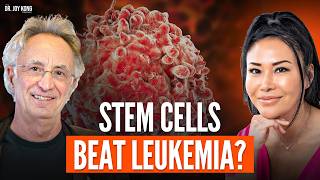
In this episode of Dr. Joy Kong’s podcast, host Joy Kong, MD interviews filmmaker and wellness influencer Laurent Golestein. Laurent shares his 50‑year journey from early interest in homeopathy and naturopathy to entrepreneurship, chiropractic software, and ultimately producing longevity documentaries. He discusses his personal battle with chronic lymphocytic leukemia (CLL) and how an umbilical‑cord stem cell infusion at Dr. Kong’s clinic dramatically halved his white‑blood‑cell and lymphocyte counts—an effect not seen with 22 hyperbaric sessions, cryotherapy, high‑dose vitamin C, or other modalities he had tried. Laurent describes the measurable benefits he experienced after the treatment: zero joint pain during a five‑day US Open table‑tennis tournament, sustained energy, and resistance to a cold. The conversation expands to the broader landscape of bio‑hacking: stem cells, red‑light therapy, peptides, IV therapy, and the concept of “stacking” multiple interventions for synergistic healthspan gains. They explore Laurent’s documentary series, beginning with Your Second 50: Rising Above the Fears of Aging and the newer film Listen to the Lion, which blends personal stories, nature, music, comedy, and spiritual themes to inspire viewers to awaken their inner “lion.” Laurent outlines distribution channels (free Vimeo streaming via yoursecondfiftylife.com, live screenings at Life University, Devaspreet conference, etc.) and future plans for a third film Your Second Fifty: Into the Mystic. Joy emphasizes the importance of understanding the mechanisms behind stem cells, positioning them as “energy medicine,” and highlights Chara Health’s regenerative‑medicine services. The episode weaves personal testimony, scientific curiosity, and community‑building to illustrate how emerging regenerative therapies and storytelling can reshape perceptions of aging.
Chapters
I was diagnosed with chronic lymphocytic leukemia, which means that my white blood cell and lymphocyte counts have been very elevated. I'm talking 10 times more than normal. Every 3 months I do a blood test and we monitor the changes. Hopefully, if there is a way to go down. I had the best results I've had by far since the diagnosis. They were down to almost half.
Wow. Has it ever gone down before?
Never. I did 22 treatments in a hard shell, but it did not have any impact on the blood. Only the stem cells did.
Hello. Welcome back to the Dr. Joy Kong podcast. I'm so happy I'm back here with you because, you know, my purpose is to help you live a longer, happier, and healthier life. and I bring together experts in the field to help you, inspire you, and give you practical tips on how you can live a better life. So today, I'm really excited because I have Laurent Golestein with us, who is a wonderful filmmaker who has made great contribution to the field of longevity, biohacking. And so we're going to dive deeper into this. And Laurent, thank you so much for being here.
Well, thank you so much, Dr. Joy. It's a pleasure to be on your podcast. I'm very excited because I met you a couple of years ago and it's been a very interesting journey. And I have to say that I have felt a real positive difference after the treatments I have had in your clinic. And so I'm happy to talk about that and to talk about how we met and And, you know, I feel that the way you're contributing to that space of longevity and biohacking is really significant.
Oh, thank you so much. I really appreciate that, Laurent. Let me introduce you a little bit to our audience so they understand who you are a little better. You were born in France. So Laurent is a prominent wellness influencer, an award-winning filmmaker of 6 films. 4 dedicated to health. And, uh, he has consulted with over 3,000 physicians and interviewed more than 2,000 global icons and everyday interesting people ranging from famous musicians to elite clinic directors. He has personally vetted and championed cutting-edge therapies like stem cells, PRP, hyperbaric oxygen, et cetera. And Laurent's current mission is to transform the global perception on aging. His latest film, Your Second 50, listen to the lion, he explores the frontier of healthspan and longevity, blending advanced biohacking with the power of mindset and belief. So today, Laurent continues to champion breakthrough clinical solutions that drive unprecedented success for practitioners and life-changing results for patients. Tell us a little bit about your journey and What makes, makes you so passionate about health and to the point where you're making films about it?
Well, first of all, thank you very much, Dr. Joy, for this wonderful introduction. It's interesting because my journey started when I was in France growing up. And what I remember is being 18, 19 years old and already being interested in homeopathy, for example. I started buying books on homeopathy, and I started taking homeopathic remedies, primarily to help my own issues. And that came from somebody telling me, somebody who was interested in homeopathy at the time, telling me that I should look into it. It's funny how in life, sometimes it's something somebody tells you, it appears insignificant at the time, time, and then you realize later on that it has shaped your entire destiny in a way, and what you've decided to do with your life. Now, when I— now I remember who that person was, and I really can pinpoint that this is when my journey started. I was only 18 years old. And what I remember as well is like, yes, it started with homeopathy, but then when I was 21 or 22, My primary physician was a naturopathic doctor. That was very unusual at the time. He was my primary physician. And then I remember going to— I was always going to health food stores, always going to health food stores. I was buying supplements. There were not a lot of supplements at the time. My chronological age is 71. I just had a birthday. Couple of weeks.
Oh, happy birthday.
Yes. So that's my chronological age. So I'm going back then.
So when you were 18, that's almost 50 years ago.
100%. It's more than 50 years ago. It was in the early '70s. So it's a long time back. And at the time, the health food stores in France, in Europe in general, there were a few products. What was popular? Ginseng was very popular. Royal jelly. I mean, byproducts of the bees, pollen, royal jellies, ginseng. These were the things that were very popular. And it was the birth of the organic food movement. And I remember I was always buying that biological— it was called organic bread and organic fruits and vegetables. And that goes back to the early '70s. So This is really the beginning of my journey on health and wellness and getting interested in things that are not mainstream but more alternative as far as how we can heal our body and perform at our maximum potential. And then, much later, I got involved in the chiropractic profession in a big way, and that was back in the late 1990s. And, and that deepened my interest, my connection in that space of health, wellness. And then it became my interest in longevity.
So you said chiropractic. You were helped by chiropractors in France, you're saying?
Not in France. That happened when— because I moved to Canada back in 1984. I started, you know, I was as an entrepreneur in Canada starting various companies. In the late 1990s, I had the opportunity to buy a company that created a software, a patient education software program that was tailored for chiropractic clinics and other clinics, dentists and optometrists in particular. But when I bought the company, I decided to focus on chiropractic again because I love the philosophy that chiropractors have that the body as the innate ability to heal itself. The power that made the body heals the body.
You know, I guess that explains why chiropractors love stem cells so much.
They do. They do. And because I got so involved in the profession, I— my company became, you know, decent size. I had 40 employees. Every weekend we would be attending various conferences, chiropractic conferences, state association, seminars, technique seminars, whatever. And so what it means, every weekend I would be flying to a conference, I'd be speaking at, and I would be listening to the speakers that chiropractors would bring. And they would bring all kinds of speakers, not just chiropractic speakers, but people like Dr. Bruce Lipton. That's how I found out about him. That's how I discovered him back in 2002. And also scientists and people in all kinds of fields. And that's what I kind of like about the chiropractic profession too.
And Dr. Joe Dispenza.
Of course, exactly. So I have never met him personally, but he is a chiropractor and he went way beyond, of course, just the scope of chiropractic. So that really deepened my interest in that world of— I don't like to say alternative, I don't like to say complementary, Because for me, this and what you're doing with stem cells and is— should be more mainstream. It should be mainstream.
Absolutely.
Because the current allopathic Western medicine model is awesome when it comes to crisis care, when it comes to acute injuries, they do some amazing things. The approach is, in my opinion, too compartmentalized. I like the holistic view that chiropractic as a profession is embracing as a whole. And not just chiropractic, but naturopathic physicians, and we can go broader than that. I had the opportunity— I had closed down my previous company in chiropractic, and I started in 2010 a video production company that became 4 years later a video and film production company. And how it happened is I met a guy by the name of Frank Moffat. Frank Moffat, I met him at an RV dealership that we were shooting a video for that RV dealership, and he happened to be there, and he happened to be a friend of the owner of the RV dealership. And Frank had just released his book called, Your Second 50, and the purpose of his book was to help people have a better life in their second 50 years by taking care of the physical, mental, emotional, and spiritual components of life. And when I met Frank, I told him, look, I am fascinated by the concept of time and how we can maybe find ways— we cannot slow down time, but maybe we can find ways to maximize the quality of time and what we can do with that finite amount of time that we have while on the planet. He loved the idea of doing a documentary, a film from the book. We went for dinner that day in Calgary at the Cactus Club, and we each had a napkin. And it's a cliché, but it's exactly how it started. That was the birth of my first film. We each had a napkin, and because Frank was very involved in the music industries, his kids are very famous in the music, especially in Southeast Asia. They are huge, and their name is the Muffats with like tens of millions of views on YouTube. So because he had that background in music, he knew a lot of important people in that space, including people like Naomi Judd. Who we were lucky to have in our film as one of the cast members. And I knew all the people like, you know, Bruce Lipton and Donny Epstein and Bob Proctor and the people who were kind of around that chiropractic family, if you want. We put our heads together and we started calling all these people we knew and they say, yeah, I mean, you know, I love your second 50. I mean, you know, So, and that was the birth of— that was the first film that we released a couple of years later.
Yeah. You know, I was just thinking when you were talking about the second 50, because I just came back from a Tony Robbins event where Dr. Peter Diamantis was speaking. But I'm going to Dr. Peter Diamantis' event in just a, I think a week or two. It's called A360, focusing on longevity and AI. And, and the merging of the two at some point. But they showed a short film, like a short clip of people in the future. I forgot what year, maybe 2060, but people in the future reminiscing, talking about how in the past my grandma and my grandpa used to worry about death, that this thing called death was always hanging over their head. And they were declining and physically they started to, you know, lose their vitality. And so this person in the future was saying, can you imagine that they had to deal with that? So, I mean, that's a mind shift, right? And I think it's very, very much possible. And Laurent, you know, I'm hoping that you're gonna start, next film is gonna, you know, at some point in the future is gonna be your third 50 and your fourth 50, you know, that, that will be, wouldn't that be fun and amazing?
It would be fun for sure. We might not be there quite yet, but we are getting closer and closer. And I think there is more and more conversation around it. And there are people like Brian Johnson in particular, I'm thinking of him, but also Dave Asprey to some extent too, who are really pushing the envelope. Um, and, and they are experimenting.
They are the, they are the, I mean, no, that's where the real power is, is scientists who are actually discovering. I mean, they are marketers, promoters, and biohackers, but the real power comes from the scientists who are actually discovering incredible technologies. Yeah.
Yes. I, I 100%. And, and there is more and more, I think, coming out.
What did you gain or learn, or what did other people learn in this film?
So the new film, why did I want to do it? 12 years later, after doing Your Second 50: Rising Above the Fears of Aging, 12 years after that, I decided, well, it's time to revisit that concept. And for a couple of reasons. What motivated me, number one, was I was very aware that a lot of things had changed in the last 10, 11 years. A lot of things have changed. 10, 12 years ago, we didn't talk about red light therapy. We didn't talk about stem cells, exosomes, peptides. Nobody even really heard about these things. So, but now people are talking about it. They are thinking about it. So that was one motivation. The other motivation was that I was turning 70 when I started doing the film. And, you know, 50 didn't bother me. 60 bothered me a little bit. 70 really bothered me because it creates— it puts more urgency, making sure that the decision you're making are decisions that are going to have a positive impact on the few years you have left. So That was a big motivation for me to revisit that concept. When people ask me, what is it, Laurent, that you really discovered in the process, the 2-year process of making that film? It's almost 2 and a half years if you include all the editing process. And I always go back to stem cells. I mean, making the film deepened my understanding of how important the work that stem cells do is in our bodies and how unfortunately as we age, the quality of our stem cells diminishes, but also we don't have as many. And that became the most kind of important thing that, you know, when I talk to my friends, even friends in France, and I really want to share from my heart what I think they should do for themselves, I always go back to number one, stem cells. So yes, of course, chiropractic, you have to take care of your spine. I mean, all of that is important and it's kind of essential as well because we have to take care of our physical body at a structural level as well. But stem cells keeps coming back for me as the cornerstone of what people should look at.
So what do you see as so different about stem cells compared to the other modalities?
They, because they are, I mean, what I understood is they are the repair system in the body and they are that, they are what made us. So, you know, I mean, so to some extent, we, I understand that we can slow down the aging process by introducing more new vibrant stem cells in our body that are all excited to go and do their job. And so, you know, and I interviewed, as an example, the interview I did with your 9/11 first responder, Ron, Ron Pastino. That's right. Ron, great guy. And his journey was also very fascinating for me to hear. I mean, The fact that he was able to heal the lung disease with the stem cells, I mean, that was, that was kind of revolutionary, right?
Clearing the images on CT scans, the lung lesions pretty much gone. I mean, that's remarkable when half of his colleagues have died in their prime because of the toxicity and damage of working in that, in the pit.
So that is really the number one thing I would say that was new for me, that I really got from making, the process of making the new film, Listen to the Lion, is the stem cells. I mean, I called it Listen to the Lion, the film, and I know you wrote The Tiger of Beijing, so we're not very far off.
Cats are the best.
There's two reasons. First of all, I dedicated this film to maybe my all-time favorite artist, who is Van Morrison. And one of his most influential songs, actually a 10-minute song, it's not like a 3-minute easy-to-play-on-radio song, is called Listen to the Lion from his album Saint Dominic's Preview, which I encourage everybody to listen to. It's so beautiful. So, that was one of the reasons, but the main reason is what it symbolizes. I feel that people, most of us have this lion, or this tiger in us that wants to come alive. But because, but we are taught from childhood to snuff it down, to keep it quiet. You know, as a kid even, you know, I mean, often the parents tell their kids, you know, like, you know, "Be quiet," or, you know, all these things they should not do. And after a while, and then society comes into play, and then, you know, we hear things like, "You're no spring chicken anymore, you should slow down." All these negative belief systems that are put onto people, they are words of power. And after a while, people forget that lion, they don't give it that voice, and they give up on maybe what their destiny is a big word, but what they were really supposed to do, they give up on even a simple thing like practicing your sport because they've been told they're too old to do it. And that is a myth. That's not true. In the movie, I have a 75-year-old woman who still competes in hockey in Canada.
Oh, wow.
And she's 75. And when you look at hockey on the ice, it's very demanding on the body. It can be physical. It can be violent. And she's a very good player still, and she's 75. So all these myths can be turned upside down. And what my greatest desire would be when people watch the film is that they awaken that lion and get that voice to come out again and be— and that they eventually become the director of the orchestra of their healthcare team, of, you know, Because ultimately the power is in our hands. Yeah, but we need to give people the proper tools. And I think with the stem cells and the work that you do, you have— you hold one of the most important keys.
Yeah, you're right. I mean, this is one reason why I'm so passionate, because, I mean, I love holistic approach to health, and I really can't imagine anything that's more holistic. Than the DNA, which contains all the intelligence that can make us. All of a sudden, every organ, every system that's functioning in the body can be spurred into action. So you're targeting everything all at once. It's a blasting of the body with signals that it often has lost because of aging, because of disease. So yeah, it's really a beautiful way of keeping us young and vibrant. So, and I know you had personal experience with stem cells, um, that you did come to our clinic and you get treatment. Do you mind sharing what, why you—
I don't mind sharing at all. First of all, I was willing to overcome, you know, some preconceived maybe concerns or potential anxiety people may have when they do something that's outside of the kind of the very well, you know, I would say perceived and accepted scope of the traditional way of dealing with, like, you know, the allopathic traditional way, because stem cells is a little bit outside of that. It's going to be, I believe, mainstream at some point, but right now it's still a little bit. So, you have to be willing to go a little bit on a leap and say, you know what, I see the potential. It makes sense to me. I see how it can be helpful. So I was willing to just be okay with that procedure 100% and go with the trust factor. And it was great. I mean, the experience at the clinic was very comfortable. Staff is very knowledgeable. It was a pleasant experience. I was there for a couple of hours for the whole, you know, procedure. And after that, what's very interesting is that I had several ways of being able to measure whether or not it was working for me. Because— and it's sometimes difficult— in my case, I take a lot of supplements. For example, I take maybe 40 or 50 pills a day, supplements every day. Breakfast, lunch, dinner, take supplements. So at some point when you introduce a new supplement, you might not find it, you might not feel any different because unless you're really deficient in something and you introduce a supplement that would fix that deficiency, if your baseline is good and healthy and energetic, you're not necessarily going to feel a lot of difference. In the case of the stem cells at your clinic, 3 or 4 days later, I was competing in the US Open in Las Vegas, table tennis. So table tennis is my sport. I've competed all my life, my entire life, and I still compete at a fairly high level. I mean, the US Open is, I would say, high level. There's 1,500 players, and it's the entire week. What it means is you have to play 5 to 6 days in a row, like every day, several hours a day. So typically in the past, um, every time I've been competing, I would get some aches and pain. I would get some aches and pain in some articulation— my left knee, my left ankle, my, my elbow, my arm, shoulder— that, you know, I mean, because it's very demanding on the body and it's very common to have aches and pains, especially in my age group. But the first thing I noticed, I was able to compete every single day during the US Open, and I had zero aches and pain.
Wow.
None. Zero. And that was something to me that was already quite, um, different and exceptional. And, and very— I was very happy to see that. Also, my energy level was definitely higher. I was able to sustain my energy throughout the day where I typically otherwise would have a substantial drop in energy in the afternoon after playing already for a couple of hours. So that's the first thing I noticed. Then the day after I wrapped up the US Open, we drove back from Las Vegas to Vancouver. I mean, that's, you know, 2 and a half days. It's a 2 and a half days drive. And we have a— my wife and I have a camper van, a Sprinter van. And so I start driving, and I don't know, we left Vegas, it was maybe 8 or maybe 9 in the morning. And here it is like it's 9 o'clock at night. And Jennifer looks at me and she says, well— and we are We are hitting Oregon by then. We are in Southern Oregon. And Jennifer is asking me, wait, don't you want to stop? Don't you want to stop? Are you not tired? Like, and I tell her, no, let's go north of Portland so we won't have to deal with the traffic in the morning in Portland. Yeah, traffic. So I said, and I had no problem doing that. And she looked at me like with a look of like she was stunned. She said, I can't believe it. And so we arrived, we found a a place to, to park. Was like midnight, and it was not a problem for me. We drove all the way north of Portugal. Second thing that was unusual, the third thing that was— yeah, I mean, 100%. The third thing that was unusual was that Jennifer, my partner in the van with me, had caught a serious cold. I mean, she was coughing all the time, sneezing, coughing, and we're together in that confined space, and here I am after competing for 5 days, which means my immune system took a hit because when you're really stressing it like I did, I would have been normally more susceptible to catch a cold. I did not catch that cold. I did not catch it. So that was also interesting.
Hello, my loyal listeners. I want to interrupt this podcast for just a second. Because I want to let you know that if you're looking to help solve a major health issue, or you're looking for health optimization and just for longevity purposes, you can find us at Chara Health. We are considered the leader in the regenerative medicine and longevity space, and we utilize modalities like stem cell therapy, peptide therapy, plasmapheresis, ozone treatments, laser therapy, all to create a beautiful symphony to get you to where you wanna be. You can find us at www.chara-health.com. That's C-H-A-R-A.
And then what really impressed me the most out of all of it is about a week after arriving back in Vancouver, I did a blood test. 4 and a half years ago, I was diagnosed with chronic lymphocytic leukemia, which means that my white blood cell and lymphocyte counts have been very elevated. I'm talking, you know, 10 times more than normal. And so every 3 months I do a blood test and we monitor the changes. And the goal is obviously to make sure that they don't go higher, that they don't keep getting higher. So we want to make sure they kind of stay stable at the same number, or hopefully if there is a way to go down. Well, the results were staggering. I had the best results I've had by far since the diagnosis. I would say they were down to almost half, and that was really significant for me.
So that's very impressive. Has it ever gone down before?
Never. I've tried everything, including, for example, hyperbaric. I had great hopes with hyperbaric treatments. I did 22 treatments in a hard shell at 1.8 atmospheric pressure, and I felt great during the time. I was like, really? I also felt even that it it changed my outlook on life. Like, I was more positive. It was really— I was more happy, more positive. So the oxygen therapy was powerful, but it did not have any impact on the blood as far as the level of white blood cells and lymphocytes. Only the stem cells did.
Yeah. What else did you try?
No, I've done everything. I've done cryotherapy. I've done— I do IV therapy on a regular basis. I've done— Yes, that's a good question you ask me, because another thing I did, for example, when I found out about the diagnosis, one of the things I did was high-dose vitamin C. So I would go 3 times a week to a naturopathy clinic, and I would get 35 grams of vitamin C in the blood. 2 or 3 times a week. That's high-dose vitamin C because I had read science papers, scientific papers showing that it could have a positive impact. But that didn't— I mean, again, it's hard to tell. Maybe if I had not done that, the results would have been worse. But I didn't see a drop in the lymphocyte count or the white blood cell count doing that. So that's another thing I did. Quite religiously. And then I've been also taking high dose of some specific supplements that are supposed to make a dent, again, without seeing a drop. The only drop that I saw that's a substantial drop was after the stem cell treatment I had in Los Angeles at your clinic.
Yeah, that's really nice.
There's no doubt about that.
Yeah. Yeah. And of course, there are plenty of research using stem cells, especially mesenchymal stem cells to treat cancer. I mean, that's a— the research is pretty active with quite good results. So, and I know probably part of your reservation, I'm sure you've heard some people were worried about stem cells and cancer, right? So the— I used to not give stem cells to people who had cancer in the last 5 years because of certain circulating ideas about the potential exacerbation. But those tend to be cells from the person's own body. So there's very important distinction. If you had thought about using your own stem cells, I would have tried to talk you out of it. Because yes, there is a potential that your own stem cells, being older, been already not able to keep your immune system in check, resulting in the proliferation of the lymphocytes, and then putting more of these stem cells in your body with more signals or growth factors without the check and balance of restricting cancer cells, which younger stem cells has the ability to do, then you're, you have a potential of making your condition worse. So that I would definitely against, advise people against. But for umbilical cord cells, these younger cells contains just more potent intelligence. There's no other way of describing it.
Well, and I took a leap of faith and I had, yes, I had heard all these things that you're mentioning when it comes to cancer and stem cells. But then you talk to me, you explain it to me in detail and I trusted your experience and I'm happy I did.
Mm-hmm. Yeah.
And I encourage, I encourage other people to do so.
Yeah. How amazing. But I always think incorporating a lot of modalities are important, right? Everything is, is important. That's why we make sure patients take certain supplements. We use red light or other laser technology. We use peptides that have anti-cancer properties. So it's a, it's a symphony that we're trying to create in the body.
Yes, it is. I believe in stacking when it comes to longevity, biohacking. I'm not a huge fan of the term biohacking. I get we can call it healthspan, we can call it biohacking, we can call it longevity. But in that space, I think there is consensus that it's better when you actually stack. Different modalities, different things that all contribute to make the body work better. I believe that's definitely a key. The body doesn't respond necessarily to only one thing. It's a combination of different factors. And I think that goes along with that holistic approach as well. You know, you're talking about a symphony. Yes. It's so mysterious how our body even works.
It's very much a mystery of how we even, we can even become who we are from a single cell. We can track how the cells migrate and do their work, but I don't know, we don't know how, we don't know how they know. So it's very much a mystery.
Yeah. And, and you've been like at the center of trying to understand more about that mystery for many years, because if you're looking at stem cells working in that field. You're at the heart of it. You're really at the heart of it, are you not?
Yes, definitely. You know, I'm trying to do my part to educate other doctors. I, I found an academy because there's urgent need for doctors to not just give the treatment, but really fully understand what they're doing. It's amazing how many doctors who are doing stem cell therapy have completely the wrong information. Because I hear them talk, right? On YouTube, I see the videos. And sometimes prominent figures. And it's very concerning. So, so that's why I've been tireless to give people information so, so they, they really understand. It's not magic. There's a real reason and mechanism how these cells work. And, and there's so much misconception all around it. So even though I've talked for 10 years, um, to tell people the correct information, the myths are still circulating. So I'm glad that you're doing the documentary. You know, you were getting the word out more so that people are getting the correct information.
Well, and, and so far, I mean, the documentary, that new film has been very well received. It's been really heartwarming for me. And it's not my first time. I've done 5 documentaries before that. So, I'm used to show my films in a theater and then, you know, see how the audience reacts. And what makes me feel so good is I can see the audience reacting throughout the film. There are people— people are engaged. That's what I wanted to do. I didn't want to have just a collection of talking heads. I wanted to create a film that was more of an experience for people to go on a journey. That's why nature is omnipresent in the film. My belief is that the two greatest healing forces available to us, and interestingly enough, they are free, are nature and love. Nature is omnipresent in the film. Music, the music tracks, very important because It reaches, it touches people emotionally. We have an amazing collection, of course, of cast members like yourself. And also we even have a comedian, a very famous comedian that comes in and out, that brings some, you know, kind of relief, comic relief, and introduces various segments in the film. And then we end on the spiritual side and the philosophical side of life. I even have a Jungian therapist in the film that brings some of Carl Jung's philosophy. Because ultimately, it's all about our own personal journeys, and it's all about what it is that we, you know, want to do in this world while we are on this planet, and how we can maybe contribute. To kind of reflect on that, I think, is important. So that's the film I wanted to create. And to see— we've done 3 big premieres so far, Los Angeles, Miami, and Tampa. And the Los Angeles, the film was not completely ready, but Miami and Tampa it was. And to see the audience react so positively at the end, people, you know, getting up and cheering. Is very, very heartwarming for me. And then people come to me and they say, "I need to see it again because there's so much information." And yes, there is a lot of information. I can see that it might feel a little overwhelming for people, but what I'd like to say is, it is, there is a lot of information, but look at what really resonates with you. What resonates with you, deep down that you see one thing. It could be stem cells or it could be something else. Could be red light therapy. I don't know. It depends on— every person is different. What really resonates with you and then go and explore it deeper after the film is— after you've watched the film and then maybe go back and see the film again.
So, yeah. Where people can see this film?
So they can just go to our website. Yoursecondfiftylife.com. It is spelled out in letters. There's no digits, no numbers. It's in full, yoursecondfiftylife.com. And there they can register to watch the film for free. We don't ask for a credit card. There is no upsells. It's totally open. I don't like myself as a consumer. When I go to a site, I want to watch something and there's all kinds of new windows that pop up and new funnels and new landing pages drives me nuts. I don't like it. So I didn't want our audience to have the same. So I make it super easy. You just click, you have to put your email address and put whether you are a healthcare professional or a general public, and then you can instantly watch the film on my Vimeo page. And then we are doing events, we are booking all kinds of events. The film is going to be shown at Life University in Atlanta, April 30th. They are expecting 1,000 people, and they've already started promoting it. That's Life University, one of the biggest chiropractic colleges in the world. It's going to show at Changing Life and Destiny in Dallas at the end of April, I think, or end of May, I can't remember. End of April. It's going to show in Austin at Devaspreet biohacking conference. This is just to name a few. Oh, that's in Italy? Devaspreet, yes.
Oh, I will be there, yeah.
Oh, cool. So, there are many avenues that the film— it's great to have the film available online. For me, the most exciting part is to do physical events. Why? Because it gives me an opportunity to actually meet people face to face, to talk to people, to meet people. And I've had that experience now for over 12 years because I've done 6 films. And it's amazing how many people I've had come to me after seeing the first or second 50, or after seeing our film on chronic pain, on a scale of 1 to 10. And they would come to me sometimes with tears in their eyes and give me a hug and telling me, thank you, you give me hope again, and things like that.
Wow.
That is why I'm doing what I'm doing. I mean, there's no greater feelings than that. As you know, because you're a doctor, you know, when you get people coming back to you and saying, thank you, you know, it changed my life for the better.
I mean, you know, that, yeah, that's amazing. So what's next for you?
But the next is, I'm already thinking about, um, the next, your second 50. It will still be second 50 for the third one. I like that trifecta of the Number 3 is very powerful. I feel I have a trilogy and I only have 2 spokes of a 3-spoke wheel. I need the third spoke and— or spike, whatever you say. Spoke, I think. It's so— sorry, I'm French. I'm from France. English is my second language. Even though when I speak French sometimes now to my friends in France, they say, Laurent, what happened to you? You can't even speak French. Properly anymore.
Me with Chinese sometimes.
But anyway, I think that the trilogy is where I want to be. And the last, your second 50th film, will be in that space of spirituality, philosophy of life. That's what really motivates me the most, no? And at the end of Listen to the Lion, We have a beautiful segment. I say beautiful because that's my favorite part of the film. And it's the favorite part of a lot of people who've seen it that goes there. But it's short because I could not make a film that would be 2 hours long. I had to stay within 90, 95 minutes for many reasons. So I could not expand that segment. And then I realized, no, Laurent, this is the trailer. This is the preview of the next film. And I've mentioned it to already a few people and they're really excited about it. So that's what I'm working towards. And I think that it will be called Your Second Fifty: Into the Mystic, from another Van Morrison very famous song, Into the Mystic. And so that's—
I love it.
—where I'm headed. I hope, if the stars align. Yes, yes, yes.
Well, you have a lot of tools. To make sure, and tools and your health and connections in the world to make that happen. So I, um, I, I look forward to, um, you know, to seeing that coming to fruition. And also, I think the world of energy medicine is advancing, and I think that's the future of medicine. Of course, personally, I think stem cell therapy is energy medicine, is energy therapy. I can't think of something that's more energetic than allowing the DNA to express itself. So I think that's energy medicine, but there are a lot of energy devices and energy communications that I think can come into the world that can be quite shocking, especially when we involve the quantum. So that will be really fascinating. You know, when we, when we have more of these, these two kind of new mysteries, sometimes these therapies are a mystery. I think stem cell therapy itself can be a mystery because we know it works and sometimes we don't know quite how it worked.
Yeah, we, but more and more is going to be discovered as we go. I mean, it's advancing very fast. If we look at how much we know today compared to, let's say, 40, 50 years ago, I mean, Yeah, it's interesting too, because the things that were talked about back even 100 years ago, you were talking about energy frequency, I mean the Rife machine, you know, that's 100 years old, so that German scientist or physicist or whatever he was, I can't remember, was really onto something, and now we are going back full circle to explore deeper this, you know, and now quantum, of course. So these are very exciting fields. And I think it's, it's, it's beautifully represented in that big tent, that big family that is that space of longevity and biohacking. Right. Right. It's a big tent. It's getting bigger and bigger. And I feel like I've been welcome in that family in a way, because I've been going to so many of his conferences and interviewing so many experts. And it's very— people are really connected with the same goal, the same passion for advancing things when it comes to our health, our healthspan, longevity. And I think that's beautiful. And I'm excited about the future.
I know. And thank you for your part in this. So besides the yoursecondlifelife.com where people can watch the film, are there other places where people can follow your um, your movements?
We have, of course, the Facebook group, Your Second 50, the Facebook. They can go on my LinkedIn, which I post fairly regularly, Laurent Goldstein LinkedIn. But it's really the film. I think we are going to launch an online summit, Thriving in Your Second 50. All of that is in that main website. That's kind of the hub. For your Second Fifty, which is really becoming more of a brand, you know, that your Second Fifty brand. And so we'll see. It's exciting. There is a lot of potential in that space. And again, I, I'm very grateful to have met you and it's been a great relationship and I'm always happy to contribute to whatever you're doing if I can at some level.
Yeah, you've been wonderful, a wonderful person, and really appreciate all the work you've done. Okay, so we are going to say goodbye to our listeners, and it's been such a wonderful conversation. I think they've got a lot of things that they can take away from this. And thank you so much, Laurent. It has been such a pleasure. Thank you very much, Joy.
All the best to you.
Thank you for watching and listening. If you enjoyed this kind of content, please subscribe and turn on your notification bell so you don't miss any of my future content. And if you want to learn more about regenerative medicine or other modalities in anti-aging medicine, please go to my YouTube channel, Joy Kong, MD, and there are all kinds of videos to help you keep learning.










