#178 - From Felon to Biohacker: The Wellness Revolution
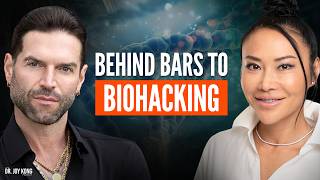
In this episode of Dr. Joy Kong’s podcast, Dylan Gemelli shares his tumultuous life story—from a multi‑sport athlete and model who fell into drug dealing and received a 15‑year prison sentence, to his redemption and emergence as a prominent biohacker and wellness educator. He describes the pivotal moments that sparked his shift toward self‑directed health, the rebuilding of his career through cell‑phone sales, bodybuilding forums, and a YouTube channel that grew to millions of views. Gemelli outlines his core biohacking philosophy: taking personal control of health through curiosity, questioning mainstream medicine, and integrating simple daily habits such as sunlight exposure, gratitude, nature walks, and morning prayer. He then dives into practical health advice, emphasizing electrolyte balance (hydration, sodium‑potassium ratio, magnesium), the universal benefits of creatine, and a baseline supplement stack (vitamin D3 + K2, magnesium, methylated B‑complex, essential amino acids). The conversation moves to advanced compounds—SARMs and peptides—explaining their original medical intent, why they never received FDA approval, how they circulate in a gray‑market of “research chemicals,” and the pitfalls of labeling, pricing, and quality control. Gemelli details several peptide stacks (BPC‑157, TB500, GHK‑Cu, KPV, Tesamorolene) and their purported healing or performance effects, while warning listeners about the legal and safety complexities of sourcing them. Throughout, he stresses accountability, the importance of mindset, and the role of personal experience in shaping his wellness teachings.
Chapters
I got a 15-year prison sentence.
Oh my goodness.
When I was 28. Screw up once, screwed up again, screwed up the third time.
Oh my goodness.
You just don't get it. I battled an eating disorder from the age of 11.
Really?
Think about modeling, working with bodybuilders. I'm on set, I'm on camera, I'm on this, I'm on that. So I started studying nutrition when I was 11 because I was nuts. Biohacking is really you taking control of your own health. It's just alternative methods that maybe go against the grain. So we should be able to decide for ourselves that is for me or that is not for me. Why aren't we always looking for something, asking questions, looking deeper, and, and looking for different methods and ways?
Hello, welcome back to the Dr. Joy Kong podcast. Here in studio, I have the pleasure of interviewing Dylan Gemelli. But you know, I'm here for you to always accelerate your health and wellness and everything that's good about life. And today I'm super excited. Dylan, thank you so much for being here.
I'm happy to be here. Thanks for having me.
Yeah, I'm so excited about our conversation, but I want to introduce you just a little bit to the audience. So Dylan is also known as the Wellness Revolutionary. He's a prominent figure in the fitness and biohacking industry. He's known for his expertise in fitness, nutrition, cellular health, neuroscience, and anti-aging. Dylan is the creator of Dylan Gemelli Podcast, which features enlightening discussions with experts and influencers in all aspects of health. His, his podcast is number 1 in health and fitness in October 2025 and top 10 overall. His work focuses on improving quality of life through the mind-body connection emphasizing that our minds and bodies are not separate entities, but rather two sides of the same coin that influence and interact with each other. And Dylan also has been involved in educating people about peptides, hormone optimization, as well as hosting many motivational speaking seminars. He has built his Instagram to over 1.5 million followers and has a very strong presence on YouTube. Where his channel, Dylan Gemelli Biohacking, has over 80,000 subscribers and features hundreds of videos on health, fitness, and biohacking. So, and I know you are much more than fitness and biohacking because you also have a very interesting life story, which I think may be really, really interesting for the audience to, to, to hear. Because you can inspire many by your own journey. Of course, a word that keeps flashing is prison, right? That's something that not many people have experienced. So what happened? And you were young, right? What happened in your life?
Kind of young, kind of. I always say it was young as my excuse for the choices, but I don't think that's a good excuse. So, you know, I was a four-sport athlete in high school. I was always just obsessed with sports. My dad started training me when I was 3. I have pictures of the Hulk Hogan, like, little mini kid set, and he was training me in pretty, pretty hard in basketball and baseball, especially like growing up, and got more into football and tennis along the way. But, um, I played college basketball and I got hurt twice. I lost 2 scholarships and I kind of just Oh, what am I going to do? You know, I didn't really know what to do. And my mom kept pushing me into like modeling. And I mean, to be honest with you, I always was a little too feminine for me. You know, I'm like a sports guy, but I loved fashion and clothes. Oh, and I started looking at it and I was like, I got into the understanding. It's clothes, it's women, it's money. It's all of these things that sounded great to me at 22 years old, 21 years old, you know, back then. That stuff would mean the most to you as opposed to now where it's pointless, you know. So quickly, just to get through it, I went to this big competition. I got picked out of, I don't know, 15,000, 20,000 people. I was in the top 5 and immediately went to Milan, start modeling, got a contract.
Wow.
Well, you know, it's a— it's not what you think in terms of glamorous lifestyle by any stretch. And that's a whole nother topic. But I fell into this trap of wanting to be the man and worry about what everybody thought. And all I really cared about was how do I look? What am I going to be able to do that night? How many different types of shirts and custom suits can I buy? And long story short, I could not afford the lifestyle. Like, I just was way in over my head. So I started to sell drugs because I was around it all the time and I saw everybody doing it.
Okay.
And I thought to myself, well, I can get away with this easy 'cause I'm a pretty boy. No one would suspect it. I'm in this, you know, industry. And let me tell you something, career path, there's always an end when it comes to doing illegal stuff, right? And I found that out the hard way because you come into this mindset that you're going to be invincible and no, that can't ever happen to me. And it's always gonna happen to you. So I got a 15-year prison sentence.
Oh my goodness.
When I was 28. I'm 44 right now. Whew. Of course, my parents, I drained their bank account. They got me the best attorney in the state who actually got me a deal where it was conviction, but it's called a suspended sentence, meaning it's there, you're convicted, but we're going to put you on probation 2 years. But if you screw up, you're going to get the sentence. Well, what do you think? I mean, you think about my story here. Screw up once, slap on the wrist, you go to jail. I did 2 weeks in jail. Screwed up again, not so much a slap on the wrist. 100 and what, 132 days in jail and 2 more years probation. Screwed up the third time.
Oh my goodness.
You just don't get it. Thankfully, within that time frame where I was located, the laws were quite different. So that 15-year sentence had a lot of loopholes for me to get time served, good behavior, get through your, your programs. I was out in 2.
Hmm.
And I got sent to Maui because my parents lived in Maui. So I got released and sent to Maui with 5 years parole. I did 1, perfect behavior. They let me go. So basically right around that time, I'm 30 years old and I'm just starting from scratch. With nothing. I had some clothes, a pretty not nice car, and a little bit of money I had saved in the bank. And it was like, okay, what are we gonna do? Yeah, you know, are you going to fall back into this trap that you were already in and be just another person in this system? And that was easy to do. It was easy to feel sorry for yourself. It was easy to do all of that, but I didn't. You know, I had a conversation in there with my mom and I never forget it. And I've told this many a times. I remember where I was sitting. I remember the month, I remember the time, I remember the whole thing. And she, we were talking and I was doing the woe is me conversation.
Oh really?
Oh yeah. Oh, it's so terrible in here. And I had, I, I had just gotten strip searched in front of people and it was like the 10th time. And you know, it's the most degrading and ah, troublesome in your head type of thing. And, you know, I went from this lifestyle of all of this flash and all this money to the lowest you could be.
I see.
I mean, just everything stripped from you, including your dignity. And I was telling her, and she, she just said to me, she said, do you understand and ever listen to yourself and how selfish that you are? What about all the people that you hurt that are worried about you, that are scared, the people that invested time and money in you that you just obliterated? And I just got quiet because I didn't know what to say. And I'm never at a loss for words. And then she said, and this made me start to cry, were my— were me and your dad really that bad of parents? And that's when I said no. And that's— that was the moment I took accountability and stopped being selfish and start realizing this is— this is a Dylan problem. It's— it's not an everybody else problem. And I said, no, no, no, no, no, stop. After I composed myself, I said, this was me. I said, there's nothing you could have done differently. I made these choices. I did all of this. And from that moment on, that's when I started to become a different type of person, accountable for everything that I did wrong. And that kind of led me into the direction that, and far more prayer, far more intricate understanding of what I was, you know, put here for with God and talking to him and understanding. You screwed up, you screwed up your path, but it doesn't mean you can't fix it. You just took a different direction. And there's time. I got what I needed. I got what I deserved. And I— what happened to me shaped my life. I wouldn't be sitting here with you if that didn't happen. I wouldn't have met my wife because I wouldn't have got sent to Maui. I wouldn't have been in the fitness world that, that I started in. So if you look back and you change any of this, or you complain and, oh, I wish this didn't happen, or I didn't do this, but then I wouldn't be here. I wouldn't be able to teach people. I wouldn't be able to to have this discussion with you to help other people. So sometimes, and you learn this like in scripture, the cross you carry, the suffering that you have, it's for a purpose and a reason. You go through it because you, you, he knows you can. And then you did this to help other people see. People listen to me because they know, man, this dude, he went here, he's the realest guy, he doesn't talk about anything that's not true. I don't fear people. You know, saying whatever about me or judging me. I don't care. If you think that, then that's fine. I'm here for a special purpose. I understand what it is, and that's what I do. And it correlates into everything health and fitness that I talk about, and neurologically, because the mind and the body put together is how we become healthy. But if you have problems here, stress, anxieties, worries, things that you can't let go of, you're never going to get right. So I try to piece this all together and inspire people in everything I talk about.
Yeah. And so how did you rebuild your life?
So, you know, it's funny— well, it's not funny, but the way that it happened, I guess. When you get out of there, you think, oh, I served my time, I paid my price, I did all this. It never ends. I have two felonies. So everybody looks at you a certain way, no matter who you are, no matter what you've done. It doesn't matter. Any place that I went for, applied for a job, I got it. And then as soon as they ran my background check, I'm sorry, Mr. Gemelli, you know, your file's kind of bad. Yeah. So thankfully I was able to find a job where they didn't do background checks and it was selling cell phones at a very, very poor company in Maui that had island cell phones that were terrible. But I understood quite quickly when I was in there, man, you're good at sales, you're good at talking to people, and you're good at making people smile, you know, because I would bring people in there, have these conversations. I would, I would make people happy by deals I was giving them and things I was doing for them. And I genuinely care. So within that time at night, I would start to study everything about bodybuilding, the body, because I got these emails about testosterone boosters and supplements that were all really popular. And so I spent all my time at night just studying, just reading. And then anytime there were no customers in the store, I was in the back on the computer reading.
Wow.
So I got into these bodybuilding forums, and some, some owners of some pretty big companies saw me in there and my interactions and me talking to people and said, hey, you got any, got any skills on, on the camera? I said, I think so. I sent him some stuff I had done prior, and They wrote back and said, yeah, we want, we want to do stuff with you. We want to make you this entity on YouTube. We want you to get on there and talk about steroids and these research chemicals called peptides and SARMs.
Oh, and when was this?
2012.
Wow.
I said, well, there's a couple problems here. One, I just got out of prison, so I don't know that talking about steroids that are illegal is really what I want to do. And two, I don't know what the hell SARMs and peptides are. So I got to learn these, and I got to make sure it's okay for me to talk about this stuff without putting me right back into the situation I just got out of. It's fine to talk about whatever as long as you're not selling them, or, you know what, so okay, it's fine to do that. All right, well, I better learn about SARMs and peptides because nobody knows what the hell they are. And why does it say they're not for human consumption? What is all of this? You know, because there's very little information. Yeah, so I had to dig pretty deep. Well, I started doing this and within a year and a half I had a million subscribers on YouTube. Nobody was talking about any of the things I was talking about and I had a personality that was resonating.
Hmm.
And I got— eventually the channel got shut down. So, well, I was making a lot of people angry with some of the things I was talking about. It was taking away business from, from people that were doing underground things, illegal things. There were companies that I was working with that were having problems with other places, and all of this together, people were just reporting my channel over and over and over and over till it got shut down. So you imagine how devastating that was. So here we are starting from scratch again, started over. Yeah, COVID time comes. I didn't talk about anything about COVID nothing, but they're looking for channels talking about alternative medicines or anything out of out of sorts, shut down again. Oh, you rebuilt?
Yeah, it was shut down again.
Yeah. So I started to work on Instagram. I said, okay, forget it. We're going to start working on Instagram and social media more. We'll do YouTube, but I'm not going to spend every waking hour on it like I had been. So eventually I got invited to speak at the Mr. Olympia, which was my gold shining moment because it was with doctors, practitioners, and then Dylan from YouTube. And I went in there and I mean, I significantly held my own. I mean, it went— it couldn't have went any better when I was there. And I talked to you a little bit about this before. I was doing a podcast that I was co-hosting with the former Miss Olympia. Her name was Monica Branton. She was being sponsored by Stem Regen. That's where I met Christian at Stem Regen and Ryan and Erica. Well, they were watching me. Speak and took a liking to me, and I hit it off with them really well. Well, I made all these contacts, right? Mr. Olympia. I was so jacked, like, man, I got so much going on. This was my huge break. Me and Queenie fly home, and I got COVID like the next day when we got home. I went to the gym, worked out, and I called her and I said, something's wrong, I feel horrible. Grabbed a test. Next day I woke up, I couldn't move. And so, you know how upset I was because I had all these calls to make, all these things to do. And I was like, okay, am I gonna pout and mope like I always do, or am I gonna say, God, there's a reason, what is it? And I'm just laying in bed, and I thought, well, there's nothing I could do. So I started to look at Stem Regen and just kind of play around on Instagram. And then I, I had heard biohacking multiple times, and I thought it was just some weird cult crap that, you know, whatever, it's some strange category or term. And then I was like reading and I was going digging in more. I was looking at all the people Christian talked to, and then it was taking me here, was taking me there, was taking me everywhere. Took me to like Dave Osprey, Ben Greenfield, all the bigger names of people. So I start looking at what are they talking about, what are they doing? And then I quickly realized this is what I'm supposed to be doing. I told my wife, I said, we're going to make a pivot. You're just going to have to trust me.
Mm-hmm.
She always does. So, okay. All right. Whatever's going to make you happy, you know? I mean, and from that moment on, here we are today. That was— let's see, that was like November of 2024. And then they— Christian and Ryan— and then they flew me out to Eudaimonia. It was my first convention. And then from there on out, we started the podcast and just rolled. And that's— it's just been this evolving craze ever since, right?
So you're embracing biohacking, but you were doing biohacking all, all along, right? You're just giving it a new name and with a new crowd, kind of.
Biohacking is really you taking control of your own health. It's just alternative methods that maybe go against the grain, so to speak, which really don't. It's just that structure that we've been given and seen that everybody's kind of just told, well, this is it. I have no problem with that. Go ahead, take every pill or medicine or whatever. Do whatever makes you happy and whatever you feel is good for you, but don't take away the opportunity from other people to have other methods or other ideas or other ways. Because you know this in everything that you do, everybody reacts differently to certain things. Everybody has different different genetics, everybody has different allergies, everybody has different body response, and there's always multiple ways to go about things. And I'm all about looking for every single improvement, change, or whatever else there is. Science is ever-changing. That's what it's meant for. It's to ask questions, it's to learn, it's to improve. If we didn't ask questions, if we didn't make changes, well, we wouldn't have cars, we would still be listening to cassettes, or we wouldn't have CDs, DVDs. None of that stuff would ever exist. We— who knows what we'd be doing we'd be walking everywhere with nothing. You know what I mean? So why aren't we always looking for something, asking questions, looking deeper, and, and looking for different methods and ways? That's what I'm all about, right?
Yeah. So biohacking is the same as, um, the forefront of medicine, right? Where the holistic or the functional medicine is always looking at what research, where new things have popped up, and, and how can we utilize it. So it's really about taking the control back into your own hands, right? Instead of submitting it to wait until the FDA finally wakes up and give you the green light. Yes, you're giving yourself the green light.
Why do we not have the say in how we take care of ourselves? Why do we not get to make our own decision? Who is anybody to force anything on anybody? It's just— it doesn't make sense. Like I said, take every vaccine you want, take every statin drug or whatever. I don't care. I really don't. I just want people to know what you're getting involved in with it. And if you are okay with it, or if you think otherwise, man, that is great. I always just say, just look at all your options, do whatever you want. I'm not going to lose sleep over it either way. You know, when people make attacks at me or anybody else, I don't have a, a dog in the race. I don't have some company. I don't sell anything. I don't do anything. But you look at some of these places that force things down your throat, and then you look at the motive and you ask yourself, why? Why does somebody get offended when you ask them a question? Why is it not a simple answer? Why does somebody tell you you have to do something? Why does somebody tell you you can't reverse this or that? That is just simply untrue. It's just simply untrue. And I think everybody should have their own opportunity to make their own decision. I'm not saying that it should be Wild West and everybody can sell whatever they want to people that could hurt them. That is not what I'm saying. But I'm saying you, me, everybody else, we should be able to decide for ourselves. That is for me or that is not for me.
Yeah. Well, let's, let's go to some of the, the things that you've looked at to accelerate human health.
Yeah.
So for you, what were the— I love the biggest bang for your buck, you know, when it comes to health. So what were some of the essentials that you felt has made it really, uh, you know, essential for you to achieve a peak level?
There's things that you need to buy and there's things you don't need to buy when it comes to this. I actually did a short, like, podcast because I normally just do interviews, but then people want me to just kind of riff on a topic, so I do that, you know, here and there. And I did one called Biohacking on a Budget. Oh, because everybody thinks when you hear that term, it's like $8 million red light beds or this shock therapy or this, this, this, or this. That's so much money. And I understand that because sometimes it can look like that. You go to some of these conventions and you go up to some of these booths and I'm like, oh sweet. You know, they invite me over there and I'm like, well, how much is that? Oh, 80. And I'm like, 80 what? 80,000. I'm like, okay, now I understand why people, you know, think certain things. That is not what it is. I'm talking first thing in the morning, waking up and going for a walk, 15, 20 minutes, getting outside, getting out, get some sun. And I always, I say this and I've told every interview I go on, I'm not saying stay in the sun all day. It's not what I'm saying. 'Cause people are like, oh, the sun, the sun. I'm talking the right amount. And it's just like you could drink, you could feasibly drink too much water and kill yourself. Like too much of anything is not good. Right. Get the ample amount that you need to get the, the sufficient vitamin D that you need without having to rely solely on a supplement or whatever the case may be. You want to get from sunlight. Two is good old vitamin G, and it's called gratitude. And you would be shocked that having a little bit of gratitude every day on how that affects overall health. Mm-hmm. It is essential for having that sort of mindset and understanding in your heart that the more grateful you are and appreciative, the better you feel, the less stress you have, the less inflammation you're going to notice in your body. Okay? And somebody that's negative that will say, oh, that's BS, check their blood panels and check their attitude. I implore you. Right? 3 is the— and this kind of ties into gratitude, but it's getting out in nature, being appreciative of what's around you. When you have that appreciation and you see and you breathe the air and you see what's around you, that appreciation goes a long way. So those are like basic essentials. Now for me, it's prayer every morning. I know some people that makes them angry, and that's fine, do whatever you want, but have some sort of meditative state or something where you're quiet, you know what I mean? Where you block out noise, get away from staring at the screens too long. And I'm not one to talk because I, I suck at that too, but I'm saying it's good for you to not stare at screens and to be alone, just a little bit of quiet time, whatever that is for you, great. 20, 30 minutes of prayer in the morning, for me, if I don't do that, I'm a mess. Travel, whatever, that is prioritized. I don't care, that is coming first. Now, if we're looking at like nutrients, vitamins, and things like that, some things that get overlooked— magnesium, potassium— like, your electrolyte balance is really the key to all of your stability, your heart rhythm, everything that your body runs on. If those are out of whack you're going to have a lot of problems.
What's your suggestion of how people can achieve good electrolyte balance? Yeah, well, or even just have adequate electrolytes.
One is hydration. If you are dehydrated and you're lacking like a lot of water inside of your body, that will throw your electrolytes off. Two is one of the things that I've always noticed with like Western diets especially. So you look at your sodium potassium ratio. I'm not scared of salt. Salt is very important. People have this grave fear of salt, but more often than not, people eat way too much salt and not enough potassium. They have it backwards. You really realistically should be eating like 4,700 milligrams of potassium. Now, some numbers will say 3,500. You really, you really want to be closer to 4,700. But people don't prioritize potassium-rich foods. Don't understand how important they are, and people overeat salt. And when those ratios are imbalanced, then that potassium gets low, and then you start to have these problems— cramps, muscle twitching. These are all things that correlate. Now magnesium as well, and, you know, magnesium-rich foods, but also supplementation properly. There's 800 different forms of magnesium to pick from that confuse people. You know, there's a couple standard ones. I like glycinate for the sleep aspect of it and taking it before bed. But remember too, you— if you go too heavy on electrolytes and drink like 800 electrolyte drinks a day and overcompensate, that can also be problematic. So it's a balance. And testing is a little iffy because it's like if you just drank some before, you know, or whatever, it'll show. It's really— my key is always go food first and then supplement, because it's called a supplement, right? It's used for supplementation. So get it through your foods first. And then make sure that you take the right supplements. But the hydration is really, really important, and people forget it's not just sodium and potassium. There's also chloride that's very important. And then you will get your carbon dioxide levels measured, because if one's off, it can throw those off, and it can have a slew of problems. So you have to look at the whole big picture of, of what you need to be taking in. Sometimes some of these electrolyte drinks, they're so salt-heavy, like there's salt. Like, I've seen 2,000 milligrams of salt. That's unnecessary in a drink. I like to find ones that have really good balance of everything in them, um, and I like to get ones that are a little bit higher in potassium personally because I think more people are lacking there.
Is there a good brand that you like?
I don't really have— for— I, I use one called Modus Light, um, that they've improved the formula on. That's got some fat loss benefit in it too. That's a good one to, to do. There's there's different ones that I would— I don't want to say avoid, but just do me a favor, read the labels and make sure it's not filled with sucralose and all this other BS that you don't need in a drink. I understand that some of the ones that are better for you aren't going to taste as good, but this isn't, this isn't treat time, it's like body time. So just remember, sometimes to make things good for you it's not always going to taste the best, but it's better than having 20 different dyes and all kinds of sweeteners that are not good. Yeah, so, right, I, I understand. I like the good ones too, but, you know, better ways to get treats during the day.
Okay, so electrolytes and, um, supplementation. Any other supplements you think are really crucial?
Well, I will say this, creatine is my favorite supplement because of the multitudes of things it does and the long-term benefits that it's going to have.
So what are the, the main benefits you're looking at?
Yeah, so one of the things that creatine's always fallen into this, oh, it's only for bodybuilders, it's only to get muscle or strength. Very true. I mean, it's, it's great at that, but here's where that correlates. So one of the things that I really started to focus on the past few years especially is trying to work with women that are going through any sort of menopause state. And as they get older, because like my mom's older, you know, and a lot of my friends, my wife, they're in that middle-aged kind of category where I'm starting to see and understand. Like I've had friends come to me like, oh, you know, what should I do? My wife's kind of getting into the stage. My wife, um, and, and so I thought, man, you know what, I'm way too focused on certain things I need to expound. Well, creatine kept popping up as one of the ways to help throughout this whole process. Multiple reasons. One is cognitive benefits, because as you go through those stages, I'm learning and understanding more like that sometimes when women have, you know, where people, oh, they're PMSing or this, you got to understand it's a hormonal change and there's things they just— you can't control. I never understood that. It took me a long time to get it. I do now, so I'm far more sympathetic. So some of the things that happen are brain fog, inability to focus, and it affects your— the way that you're thinking. Well, creatine has that really nice benefit cognitively, long-term, on top of the bone density loss, which is another big issue when you're going through that stage of life. And sarcopenia as you age, as we know, is dangerous when you start to lose muscle. So you're taking this creatine, and for women you don't have to do like huge doses, and you're getting all of these benefits with it. And look, for kids, like high schoolers that want to— well, I want to take this and this and this. And I always talk to parents like that are my friends now that have kids, and it's like, dude, listen to me. Nobody knows better than me because I coached people, bodybuilders, steroid users for a decade. Trust me when I tell you there's all of these things that are going to ruin your kid's life, but there are a few things they can do, and creatine is the first thing that you can always do from teenage years to 100. There's efficacy, there's safety, and there's reason. So that's why I love it, because it's for everybody.
So regular intake, it's fine, just ongoing? There's—
do people need to take time off from it, or you you can, but if you're just taking the normal standard dose, you're not going to— unless you're eating 100 pounds of beef every day, you know, something crazy, you're not going to overdo it.
Thank you for watching and hope you're enjoying this episode. And if you do, please subscribe. And if you're into biohacking and want to supercharge your health routine, please contact us at Chara Health. We do provide telemedicine service, so we're here to guide you from anywhere.
Listen, I have people I highly, highly respect that I think the world of that I disagree with on the whole loading phase. I, I find that to be the most unnecessary thing to do where they, they'll want you to do 20, 25 grams the first couple weeks and then drop down to a standard dose. That is completely unnecessary. It is just not necessary. That's where you could have some side effects, some bloating, some, you know, issues like gut issues, and it can be heavier on your kidneys. It's just not necessary. I'm sorry, I disagree with that.
Yeah. So what's a good dose for— 5 for both men and women?
You know, women can certainly do 5. I normally, you know, like my mom, I ever do 3, 3, 3.5 is fine. You can certainly do 5.
Did she notice a benefit? Yeah.
Oh yeah.
What does she—
well, and, and for her, she's always got a lot like pains as she's gotten older especially. And I, I can certainly see the difference in her, like, here, whereas a lot of— because I talk to her every morning, you know, and it's definitely served a purpose to her for sure and how she feels. Um, and, and my always concern as you get older, men and women, is like the bone density loss. Some people have it far worse depending on what they've been through. People that have yo-yoed up and down in weight especially have more trouble because of all the pressure they've had on joints and ligaments from up and down.
Yeah.
And that's one of the things that, like, if we ever talk about GLP-1, why I— one of the many things to discuss that no one ever talks about is when you yo-yo weight, the stress and strain it puts on your heart and joints and ligaments. If you do that, that's why I always hate when wrestlers cut and gain so much, and fighters. It's, it's not good. It has a long-term negative effect. And people that ask questions that don't understand why it's sitting right there, you know, and it makes sense if you think about it. Um, but yes, creatine is one of my favorite, favorite supplements that I continuously use that I find to be great for long-term use.
It's great to know.
Yeah.
And what else?
Um, basic ones like that I use. I always use a magnesium supplement. I always do for like, like we talked about. Um, It's not like multivitamins, but vitamin D3, K2. But you got to be careful with K2. Taking too much can give you some problems. But see, so D3 is going to help with your calcium, but K2 keeps it from getting into your heart and your arteries, right? Because overdoing it like a lot of people do, that can, you know, get in into your arteries, and that's how you can start to get atherosclerosis, plaque buildup. So you got to be careful there. Um, B complexes, methylated B complexes, very important. 2 that I would recommend. Um, but aside from like the basic stuff that we know, like just some things that I tend to use— I've always used essential amino acids, but if you get them in your protein powders and foods, you really don't need to use them.
That's assuming good digestion, right?
Of course, if you can't— see, I don't, I don't rely on just whey protein. I like beef protein isolate I like to get a lot of animal proteins. I do a little bit of whey because there are good benefits there, but it doesn't agree with everybody. Now, plant-based proteins I don't love, but I don't hate. I'm kind of in the middle. You're missing some aminos in there that you, you know, but you can make up for that. I've always drinking essential amino acids. I always like them. I've always felt that they do a little bit for me. I don't think they're like going to be the biggest game changer in the world, but I find benefit there enough to me to use them. Yeah.
Yeah, we actually have that as part of our stem cell protocol.
Yeah.
I want to make sure everybody has enough building blocks for everything, right? It builds proteins, enzymes, peptides. Actually, talking about peptides, I want to get into— since you've been in this arena for now, what, 14 years?
Yeah.
Since you were first told about SARM and peptides. So can you explain, you know, what is SARM and what Yeah.
So SARMs are selective androgen receptor modulators. Now, when they were created, they were initially made for preventing muscle wastage. So think at that time it was osteoporosis, osteoporosis patients, HIV/AIDS patients, cancer patients. Why? Because they're losing muscle at a pretty rapid rate with those diseases. And obviously, like we just talked about, that can kill you. And it's not just bad because it's muscle loss and being frail. That can kill you if it's, if it's bad enough. So that's what they were designed to do, was help people to hold muscle. Because the good thing about SARMs was, is you can actually lose weight or fat and retain muscle and/or build it depending on your diet. That would be like a recomposition diet where we're, you know, we'd have to structure that pretty well, but they give you that ability. When I started, there was only 2 to pick from. Now there's, I don't know, 20, 15 to 20 maybe. And they're always in development.
Which are the most popular ones?
Well, MK-2866, also known as Ostarine, always been— that was like the first one. And that's always been the most popular because it does the most. Like, it doesn't do anything substantial that's like, wow, it adds 20 pounds or wow, it makes you so strong. But it does a lot of little things really good. And it had healing benefits. So everybody was okay, this is helping heal injuries. That one would be very popular. Now, one that's called Carterine, GW-501516, it's not really a SARM, but it's grouped with them. That one was always my favorite because I'm a cardio guy. So that one was really increasing endurance, but it was actually created initially for obesity. It was like, it has the ability to really cut a ton of weight, but in a different mechanism of action than like a GLP. But it also was for cholesterol, so it was lowering your bad cholesterol and raising your good cholesterol. But like I said, I used it because of the massive increase in VO2 max and endurance, which is why they banned it, because a lot of cyclists were using it especially.
How were these made? Were they— how do they Were they synthetic?
Yeah, they're, they're all synthetically made.
And so these were pharmaceutical drugs, right?
Yes.
So has gotten FDA approval?
No, they never made it all the way through.
Okay.
So like Glasgow, Glasgow Klein— sorry, I'm trying to spit it out— was one that is behind a lot of these. They would get to like phase 2 and 3 trials, but never all the way through. RAD-140 is probably the most popular one right now. That one is— when that one was designed, it was designed to actually replace testosterone replacement therapy, but it didn't. It wasn't efficient enough to do that. But man, it can increase strength and size a lot.
So what happens when something was designed as a drug but did not get approval, but you know it can work? Now what do you do with this, these molecules?
Well, they go to the underground market. That's what's called research chemicals, which was like a world I had lived in for a decade. So I know everything about those because when I first started, like I told you, and they showed me these, the first thing it says when you go to the websites is not for human consumption. And so my antennas obviously went up and I was like, okay, explain, you know, Essentially, some people know this and some people don't. I'll make it very simple. These are basically gray area companies and markets to get around the law, right? So we label these, if you're a research company, as not for human consumption, for research purposes only, meaning that they can't tell you how to use them. They can't talk about any sort of human benefit whatsoever. Because if they do, then technically they are doing something illegal. So the FDA could send them a warning letter. If you don't take this down, if you don't change your, your verbiage, or if it's really bad, they could get raided, shut down, jailed, fined. I've seen it all. Sometimes, though, you don't see exactly the depths of what they're doing. There's other shit going on in the background that you just don't know. That's when it gets really bad. A lot of the times now the FDA will send a warning letter and, you know, it's fairly obvious what's going on. But you have to be very careful in how they're marketed and sent. Now, the problem is, is a lot of these that are being sold, you don't know where they're coming from. You don't have any idea who's selling them, who's making them, anything of the sort. And a lot of these companies now that just pop up left and right, they don't test anything, or they have fake— it's called a COA, which is a certificate of authenticity. And a lot of these places will have ones that are made, they're fake, they're old, you don't know where they're coming from. They send them from China. When they come over, well, I mean, they fake everything over there when they send it over, you know. You— and you can't even read the language, you don't even know what it says. So you're just trusting what it says, and then they'll send them here to get tested and A lot of times they'll come back as the polar opposite of what they are. Number 2, that this is the one that I shouldn't say that I find this funny, but I do.
Mm-hmm.
And I may sound like a jerk for this, but I'll explain. You go into these like Reddit forums or these different types of review sites or whatever. Oh, well, I got X, Y, and Z from this company and it's the best. And then you'll see, oh no, no, no, no, this company, no, no, no, they're the best. And you'll see they got the bottles, they got the labels, they got this, this, and this. And guess what? It's the same exact thing from both companies that are using a dropship company that's white labeling and selling you the same exact thing.
Yeah.
And there's like 85, 90% of these companies do that. So you're not getting anything different but a label and a bottle.
Yeah.
And I, it's funny to me because I read some of the things, it's not funny because some of these places juice the price and some of them do it really low, but Some of that's based on packaging, branding, marketing. That's another thing that kills me is people that have never ran a business that take these potshots at people. Well, the raws are $20 a gram or whatever, and you're selling it for $50. Well, did you ever think about the cost and the marketing, the cost of the website, the cost and the security on the website, the cost and shipping, the cost and production, the cost and staffing? The cost and all the internet and everything else and the electricity. And then you look at it because these people have never ran a business and it's like, oh, you know, that type of thing. So, but that, that's essentially it is a gray area market where the verbiage is getting people by to sell things. There's some that have been around forever and there's ones that just pop up left and right. There's a few out there that are amazing and there's a lot that aren't.
Yeah, you know, yeah, it's become very, very confusing for people.
Yeah.
And of course, a lot of people are very afraid to just buy something over the internet. Yeah, I have no idea what's in it.
Well, you have to understand, here's the next problem. These places, they can't get any place to allow them to actually sell, meaning merchants like Visa, MasterCard, all of those things that you need. Well, they have to take payments normally. They, they have two options, essentially. They can do these mirrorings and these things that appear to, like Visa and MasterCard, that it's something else is being sold. And they're all— they always eventually get caught because in that kind of industry, it's what's called a high-risk merchant because people do chargebacks and they make lies and everything, you know, and, and make calls to rip these companies off. So two, they have to either accept like e-checks, Bitcoins, or other alternative methods of buying things. So a lot of people get turned off by that and a lot of people get scammed by that. So not only do you have to worry about what you're buying, right, then you got to worry about, well, what about my information here, you know, and how am I paying for this and what's going to happen? So it's messy. But the other side of the story is, well, you can get thousands of peptides, nootropics, SARMs, and everything that you can't go to, uh, a clinic or get prescribed because they can't. There's only, only so many they can do. So a lot of the ones I talk about, well, you only got one option to go get them, you know. You can't just go get them however you want. So that sucks too. So it's like a catch-22, right? You're kind of stuck with, well, if I want to go the legal route, I'm going to probably pay a lot more. I'm going to have trouble getting what I want, but I'm going to maybe feel a little bit better about what I'm buying. Maybe, because honestly, I'll tell you this, some of the anti-aging clinics and the places that prescribe them, I know where they get them from and I know who compounds them. And it's the same damn people and they're getting them right from China and, and it's the same stuff. I've seen it. I've seen it firsthand. I've been in the buildings and seen it. And how they do it, because these people bring me in and want me to work for them, which I always decline. And so anytime that you're doing anything like this with something that's so gray and so new, there's a lot of little things that you have to be aware of and look for. I'm just involved because of all of the years of experience, the people I know, and the people that bring me in to talk that I just know a hell of a lot more than most would just in this. You know, so I always want to cover all the bases with people and tell the good and the bad.
Yeah. You know, so out of all the peptides out there, which ones do you think have— you've seen that's made tremendous difference for people?
I just put out a video that's like smashing right now because it's called Better Than BPC-157, because, you know, rightfully so, by the way, that's the most popular peptide. I don't know, it's more popular than any GLP-1. I don't care what anybody says. I see sales, I see numbers, and I see what's been talked about. The longest and is the safest and most efficient. That is the most popular, and it deserves to be, um, with the way that it heals injuries and then has the other methods of healing gut and other areas like skin and wound healing. It's the most popular. However, I put the video out on KPV, and I, and I said better than BPC, question mark. And I'm not saying it's necessarily better, but it's Right with it. And that is more geared towards like the gut and gut health, inflammation of the gut. And, you know, the more studying, the more understanding, and the more people I interview and realize the correlation that the gut microbiome and leaky gut and everything else has on our total health, that is one of the most key areas that we need to really aggressively work on.
What did you see in people when they take it?
Oh, gut inflammation healed so rapidly. Leaky gut symptoms helped. Blood panels change, and that then reduces inflammation, and it's so synergistic with BPC. So there was a stack that came out first everybody's heard of. It's called the Glow stack. It's— well, let me know. Let's go a step further back. Wolverine stack, BPC and TB500. That was the first like, wow, this is the healing stack, the end-all be-all, right? And TB500 is really, really what I would call like the Scottie Pippen to the Michael Jordan, right? It is like the gold teammate to BPC-157 that just takes it to a whole nother level. They're very similar in what they do, but they do feed off of each other well. Well, then came the glow stack where we add GHKCU, which you're very familiar with. And I am a big fan of because I'm a skincare freak, right? And so I— but I understand the value and the need for skin regeneration, strengthening, elasticity, and GHK-Cu is like gold, right? Then came the CLO stack where we add KPV, and that is to me the ultra— if I was going to put anybody on anything, it would be that because it has so many multitudes overall benefit that we all need. I don't know anybody that doesn't need all the things that I talked about. We all have injuries. We all have gut problems. No matter who you are, no matter how great you eat, there's stuff in our food you can't avoid. We all probably are at least have areas of our skin that are always going to need regenerative help or need strengthening somehow because aging is inevitable. And so it serves a purpose to literally everybody except children. You know, I mean, like it it does. So that would be— that's like my favorite, favorite, favorite. Tesamorilin is my favorite, more performance-enhancing type of, of peptide. Yeah, because it has the ability for weight loss but muscle preservation and addition. I always want to shred up and cut up and lose fat, but I don't want to sacrifice muscle. Ever.
Yeah.
And it's, you know, it's hard to do both. It's not easy because you have to be very disciplined on your diet, and you have to have the right balance of cardio training with, with strength training to where you're not messing up one or the other. And it takes a little bit of help to really accomplish it, but you don't want to take something that's harmful— steroids, even SARMs. But tesamorolene Fits the, the bill perfectly for me.
What is a good diet that fits with tesamorolene?
Depending on your goal, if you're after what I'm after, it's always gonna— it's always going to be very protein-heavy. I am a big fan of making sure you get a good amount of healthy fats in your diet. I think it's imperative. And I, I'm also not a fan of eliminating carbohydrates. I don't prefer high carbohydrates like some, like, bodybuilders do, that they do need it for what they're accomplishing. But I also don't think you should totally eliminate them. I think they're— that's dangerous ground long term. I'm more like a 40-40-20, so like 40% protein, 40% fat, 20% carbs. Sometimes I'm a little fat heavy and a little like maybe 45-35. My body really responds really well to that kind of diet, and I starved myself from fats for 15 years, like this phobia of fat.
I've done that too. Yeah, yeah. And I wasn't in good shape.
No, you'll find if you look back, you were your worst. I look at my skin, my attitude, the way that I felt, and I— yeah, I just— I'm disgusted with like falling into that trap.
Easy to stay in good shape. Yeah, yeah. I mean, more difficult to stay. Yeah, yeah.
Oh yeah, I have like— my life is totally switched when I I was eating 15 or 20 grams of fat a day, just terrified to touch it.
Oh gosh, I was making Chinese stir-fries with water. Oh, my mom was like, no, you need fat. I was like, no. Yeah, I completely bought into it. Oh yeah, but then my body was starving, so then I ended up binge eating. Like, I, I was— I didn't know what I was starving. I just, I wasn't feeling great. I wanted to eat and put more things in my body, and then I hated what I looked like.
Yes.
So then I would starve myself again. It was really a horrible cycle, which is, you know, I don't have to deal with that anymore. So very liberating.
You know how pissed off I am that I wasn't cooking in grass-fed butter the past 15 years? Like, everything I eat— I mean, just look, I battled an eating disorder from the age of 11.
Really?
Oh yeah. Yes. And think about modeling, working with bodybuilders. I'm on set, I'm on camera, I'm on this, I'm on that. I mean, it has been a non-stop struggle. So I started studying nutrition when I was 11 because I was nuts. Because— but I learned everything is low fat, low fat, low fat, because that's what it was back then. Go back and look at some of those low-fat foods and look at the stuff that was in there, and you look at it and you're like, I was eating all that for that many years?
They replaced with sugar and junk.
Everything, everything under the sun that is terrible for you. And the list of 50 ingredients, it's like looking at a Cheesecake Factory menu. And in reality, you should be looking at something with 2 or 3 ingredients on it, right? At the most. And I was doing this whole, like, starvation like you're talking about. But you have to understand the amount of training volume that I do. And, you know, I got to the point where I was— if I look at it now, I was like eating nothing but carbs because it was like 15 or 20 servings of vegetables a day. I mean, that is like pounds of vegetables that we were buying. It was insane. Egg whites, oatmeal, fat-free Greek yogurt, and, and the only fat I got was peanut butter. That's it. Now you imagine living on that, doing— I was running 10 miles a day at the time. Now I do like 15 on the elliptical. All of the heavyweight training, all of that, and not sleeping very much. Just wrecked. Fats protect our cellular membranes. Yeah, I mean that, that is just— you're just degrading your cellular health, which is the key to our survival. Yeah, right. I went into the kitchen one day and I told my wife, because I'm like Mr. Spontaneous, and I know she's been in there praying all the time for me for years since we met, for me to just like overcome this. And I said, you know what, I can't do this anymore. I said, I'm so miserable. This is what we're going to do. And I said, we're going to go to Whole Foods this afternoon. And she's like, okay, you know? And I said, we're gonna buy— and I started listing everything I won't touch, won't eat, things that, you know, I know she's been begging me. I— sometimes she would eat, make stuff, and I wouldn't even taste it because I thought it was gonna make me fat. Oh, won't even take a bite of it, man. We went there and I remember we got like avocado, salmon, grass-fed beef, like everything. And I eased into it. I was doing like 93.7 meat. I I could finally eat a couple whole eggs, you know, instead of just egg whites.
And then, like, you didn't get fat?
Oh my gosh, I kept looking at myself every day and I was like, what is happening here? Like, I'm more cut than when I was taking steroids. Wow. So then I said— it just kept progressing. I went from like 80 grams of avocados to 100, then 120. Now it's like 200. I'm eating 4 whole eggs a day, nothing but whole fat yogurt. Went from 93/7 beef to 80/20 beef, like everything. And now not only am I not fearing it and scared of it, but it's like I'm enjoying it, you know?
Right, right. It's a liberation.
Yes. Even now when we leave here, we'll go back to our VRBO and we went to Whole Foods and I'll go cook everything I'm just telling you, right?
Yeah, I know. I no longer limit myself and just, just enjoy, you know, full fat meat. Fantastic. You know, it's the best.
Yeah. And you can feel good. It's, it's about how you eat it. It's about the, the choices you make. Because yeah, you can go have the cheap meat that's fed all the crap that they put in them, and the soy and the corn and everything else, or you can get nice grass-fed meat, like grass-fed butter. And what— you are what you eat. Well, what do you think you're eating is what they're eating too, right? So if you have the things that release, uh, CLA, for example, that help with fat loss, and all of these good foods that they're taking in, you're going to reflect that, right?
Exactly.
Yeah.
And as far as carbs, you said you are incorporating 20% carbs. What kind of carbs would they be?
So a lot of it's vegetables. Um, I do peppers, onions, zucchinis, mushrooms, spinach, green onions. And then, um, you know, there are some carbs in the Greek yogurt like that I'm eating. Not abundances, but there's carbs in that that I have. I have, uh, I definitely have plenty of fruit every day. That's what I put in my Greek yogurt. So berries generally, blueberries.
So you're still not eating bread, pasta?
No, I have, um, Ezekiel bread probably 4 or 5 days a week, like avocado toast bread. But I don't have pasta or anything, or I, I don't have any other like regular bread, only sprouted bread. Yeah, you know, probably 4 or 5 days a week, something like that. I have every day, I have pomegranate juice, and that's because I found some plaque in my arteries. So that's got carbs in it that I incorporate that way.
So is that— have you rechecked it to see if it's—
all my functions have improved so much.
So you accomplished that by using what? So you—
pomegranate is one for sure. Definitely. Now I take Repatha and Vascepa. I refuse to take a statin or any of the other crap that they wanted me to take. I did heavy doses of niacin to lower my LP(a) at first, but then I backed off of that because I started to encounter some liver side effects. But diet, you know, it's funny because like my HDL has gone up 40 points since I started eating the higher fat diet. Um, the only thing that went up a little bit was my LDL, but they want you to drain your LDL so low anymore, and I totally disagree with that. Um, my particle size has drastically dropped. So great, you know.
What about the plaque?
I haven't had a CLEARLY test done to actually determine just how much is in there. But feeling-wise, I mean, I need to go have another calcium score done probably. But you know, a calcium score is just a general assessment. It's not going to give you the full spectrum, and it's only measuring hard plaque and not soft plaque. The Cleerly test will show you everything. Um, but I did have, uh, angio done, and that doesn't give you a percent, but he said we don't— there's no blockage of any kind in here whatsoever.
So yeah, great. And, um, just before we end, I want to ask you a little bit about brain health, because I know that that's something that you also have expertise in. What advice would you give people who are really concerned about protecting their brain?
Yes, so one of the things that I have learned is like the control the vagus nerve has on our entire being and body. One of the struggles that people have, some sort of trauma that happened or some sort of issue, kind of like I'm telling you about my eating, and you may be similar, that it sticks with you and You don't even know what's going on and it brings upon these fears and anxieties and you're, you're basically stuck in a sympathetic state, right? So you're in fight or flight mode constantly and that's causing added stress, your sleep, your circadian rhythms off. So when you stimulate the vagus nerve and you activate your parasympathetic nervous system, you can then get balance back and you can be more calm. You can be more attentive. You can be more focused throughout the day. Putting yourself in non-stressful situations as much as you can. That's like when I talked about prayer and things that will clear your mind in your head.
Hmm.
The answers aren't always in a pill or a medication. It's more so in your state of mind and what you're doing. Hmm. If you eat better, you'll feel better. If you are more active, you're going to feel better and you're going to ease your mind. But the mental side of things, plays such an important role in everything that we do. I spent so many years focused on fitness and nutrition, which is so important, but I missed 50% of it and never understood. I started to work with Dr. Dave Rabin and he taught me everything that I'm telling you. And then I went and studied and learned under him, and then I correlated this. So when I do everything, I start with spirit and I branch it into mind and body. And I say, for me, if you don't have the spirituality, you're always going to struggle with these two. I don't feel you can get full alignment personally. But let's just say once again, you're one of those people that just doesn't want to hear that. Fine, that's up to you. I don't— you know, I want you to have that, but if you don't, you could be the best you can be with your diet and your training. I mean, like, perfect. But if you are stressed, if you are like overstimulated, like I said, if you have pain, memories, stress, lack of sleep, it doesn't matter. And vice versa, you could be great cognitively, sleep well and everything, but eat like crap and don't work out, you're not going to be right either. So it's a balance, but the mental side of things has so much control on everything. Because think about it, you and I are talking right now about eating problems. Where does that come from? Right here, right? So So clearly it's, it's taking control of everything that we do. Why do people get angry? Why do they not, you know, sleep well? It's here. And then here can cause inflammation. It can cause and create disease. It can, it can cause so many different problems within your relationships with people, with your efficacy and how you work. And it'll make you look bad too. Your skin's not going to look good. So, you know, it, it is so important to address. I just don't— I feel like that term mental health gets thrown around too loosely and too lightly without an understanding and explanation. People lean on it. It's like, I'm stressed today, well, I have a mental health problem. No, you don't. You just need to learn how to deal with your stress. There's a difference. I don't like crutches and I don't like excuses, but I do like to address issues and fix them, you know? You got to be honest.
So yeah. Yeah, I love that. I think that's something that as biohackers, we probably get so focused on all the things we can ingest and, you know, put on ourselves rather than just go internally.
Yeah.
And modulate ourselves.
Sometimes you just got to take a look in the mirror and ask yourself, what's the problem here? Is it something I'm doing? It's hard to lie to yourself in the mirror. It's easy to lie to somebody else for people, but it's not so easy when you're looking one on one. And I'm not talking a psycho back and forth like a nutcase, you know, talking to them. So I'm talking, just ask yourself, I've done that, Dylan, whose fault is this? And I'll be like, shit, you know, like, yeah, you know what I mean? But it's good. It's good to have a one-on-one with yourself sometimes. Yeah, it really is.
And also when things don't go your way, since I just came back from Tony Robbins event in Fiji, you know, It's about why is something happening for me, right? Instead of why is something happening to me.
Yeah.
So rephrasing your life events.
I like that. I like that.
Yeah. What other tips do you wanna share that you think is gonna help my audience out there?
Well, like I said, you're gonna have good days, you're gonna have bad days, you're gonna have normal days. It's being appreciative no matter what's going on. One of the things that's funny about me that I probably do different in prayer— I, you know how most people, they get to prayer when they're desperate, when something's bad or whatever, that's when they turn and make their prayers. I'm the one that's like always the opposite. My best days is when I'm the most prayerful and the most thankful. It's like people forget what they have good, but then when I have a bad day, I'm just like kind of angry and I forget that I should just be asking for help. And so I think it's that balance of appreciation every single day that you're breathing, that you're able to do something. You know, when I leave the gym, even I say a quick prayer like, thank you for letting me be able to work out today, to have the means to be able to come to a nice facility. Like, just quick gratitude and appreciation. Listen, every single day that we go through it, it's— it really is how you view it and what you have. And what you want and what you're aiming for. And understanding the differences there and always working towards something bigger and knowing that you can is, is really what it is. It's, it's being motivated, it's being inspired, and it's being accountable. And when you can do all three of those, I assure you, no matter what deck of cards you have, you will be successful somehow, some way. But you have to have that stuff going on. And then of course, diet is always the hardest thing for people to stay consistent on. It just is. And it's— don't get angry at yourself or beat yourself up when you're, you're off, but just say, okay, I did this, this is kind of what I need to do, and, and start working on consistency and build consistency. It's easy to fall into bad habits, it's hard to create good ones.
Well, I have a good trick. I think that has saved me for years because I consider food that are not good for me, like highly processed and things with a lot of additive, I just think of them as poison.
Yeah.
Yeah. So I've always thought I can't put poison in my body. I mean, this is, you know, I need to be responsible and take care of this body. So it's the thought of poison that has been saving me. That's good.
Yeah. No, that's good that you sometimes you have to tell yourself stuff that, but you're not lying. It's, it's not a snakebite poison, but it's a long-term poison. Oh yeah, that can certainly lower your quality of life, but also the amount of years you have. So that's actually very true. That's what I tell people that I understood about alcohol over the years. Some people get so mad if you tell them, oh, one drink's bad for you.
Well, it is.
I could lie to you and tell you that it's okay. I'm not saying it's going to kill you, but it's certainly bad for you. And the more you do it, the worse it's going to get. Because, you know, you get these people, oh, it's okay in moderation. Everybody wants to use that word moderation. Yes, that's a good term to use to convince yourself something's okay. Like I said, it's your life. I don't lose sleep over it one way or another. I don't work for the alcohol companies and I don't work against them. But the fact is that just one, it does— we can— and I don't have time now to do this, but we can literally do a breakdown of every single thing that happens when the alcohol gets into your system and goes through and what it affects effects and how it doesn't, you know. Well, my grandfather's grandfather's grandfather drank every day, and it's like, okay, that's great, you know what I mean? I don't— that's okay. It's okay.
He probably would have done much better, right? Even better.
But tell me this, he lived to 90, but how did he feel from 70 to 90? Did we ever ask that question? Did we ever think about that?
An interesting question.
Yeah.
Yeah. So Dylan, this has been fabulous. Yeah. It's so fun getting to know your world and all the things that you, you know, you bring to help others. How do people keep following you?
Yeah.
Best places.
So I have Instagram, TikTok, and Facebook. Don't write me on TikTok. I hate TikTok. I only use it for work. Instagram is always the best. To get me. Um, I have the Dylan Gemelli Podcast at dylan.com. There's work being done on that website, but it's still got some good stuff on there too. And then the YouTube is called Dylan Gemelli Biohacking, but everything's just @dylanGemelli. It's nice and easy.
Yeah, fantastic. Yeah, yeah. Well, congratulations for the wonderful journey that you've, uh, you've been on.
Well, thank you.
You're still young.
Oh, I am.
Yeah.
Thanks for letting me share. I appreciate it.
Yeah, this is, um, this This was a great— thank you so much. And I hope my audience enjoyed that. And we'll see you next time.
Thank you.
Thank you for watching. And if you enjoyed this video, please subscribe. And if you want to learn more about how to enhance your health, please watch my other videos on YouTube or follow me on Instagram at Dr_Joy_Kong.










