5 Signs You Need Stem Cell Therapy
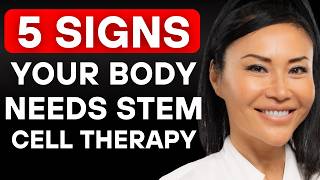
Joy Kong, MD (clinician) presents a patient-focused YouTube talk outlining five warning signs that may indicate a need for stem cell therapy: persistent aches and pains, swelling, fatigue, hair loss, and brain fog. For each sign she explains proposed mechanisms (chronic inflammation, poor blood flow, mitochondrial dysfunction, impaired local stem cell activity), gives clinical anecdotes (rapid swelling reduction in rheumatoid arthritis; neurological improvements including Parkinson’s, TBI, dementia, MS, ALS), and describes treatment modes (IV infusion and local injections). She invites viewers to contact her clinic (referred to as CHAR/CHARA Health in Los Angeles) for consultation.
Chapters
Today I'm going to talk about the five signs that your body may need stem cells. I've used stem cell therapy to help hundreds of patients transforming their lives. But one thing I noticed that some people wait until things are serious before they seek help. That's just not the smartest thing to do. Your body does give you warning signs all along the way. So if you pay attention, you could stop things at an early stage. Things won't progress as far will be easier to treat and you have a better quality of life. So what are the five things you should pay attention to? 1. Aches and pains. So this is the first sign that indicates that you may need stem cells. So aches and pains is really a sign of inflammation. When body is stuck in an inflammatory state. That's when the aches and pains are not going away. It could be caused by many things. Low blood flow, low immune function, low capability for tissue repair. So if you think about, let's just say knee pain that some people think, oh yeah, I am too much wear and tear on my knee, this is why I have knee pain. That is not true. Because if you think back of when you were a kid, when you were 7 years old, don't you think you were wearing and tearing your knees as much or way more than what you're doing now? You are climbing fences and jump off trees, right? So when you are not even doing that much and you're having aches and pains, it's really because your body is not keeping up with the tiny, tiny little damages just from normal daily life or very mild activities. But when you were a little kid, you may be doing things that are hurting your joints to a much greater extent, yet it's healed right away, it's very fast and you don't have anything lingering. This is why you'd be hard pressed to find any 7 year old with osteoarthritis. So it just doesn't happen in little kids. So this is a degenerative condition. Your knee pain is due to degeneration and your body's inability to repair. So if you're lacking the reparative potential, this is when you need to think, what can I do to promote the repair? Of course you can do all kinds of things, supplements and red light and all that. But I have to say the most powerful modality is probably stem cell therapy. The degree and the speed that it helps the body heal is incredible. One reason is that when you are lacking the regenerative potential is because your stem cells are not up to par if your stem cells are working correctly, you should have calmed the inflammation and triggered the tissue regeneration. But that's not there. So when we give people stem cell therapy, that's when there are various things that can happen. First of all, you calm the inflammation, and now you can allow repair to happen. The regeneration can happen because the inflammation and the. And the regeneration are two sides of the. Of the scale. So you have to overcome the inflammation in order for the regeneration to occur. And what stem cells can do is to trigger your local stem cells to multiply to come alive. You. Because we all have stem cells in our tendons, muscles, you know, bones, you know, actually, any organ in your body will have stem cells. A lot of times, if the tissue is not healing, it's not repairing, it's because your local stem cells cannot wake up. Somehow, it's not replenishing the tissue. So now you have lingering damage. So stem cells can help with that. The stem cells can also help with blood flow because it actually help you make new blood vessels, and it helps you repair the blood vessel lining. Now, if you have better blood flow, you can deliver more nutrients and remove more toxic waste, and all of a sudden, you're healing much faster. Another thing it can do is what's called mitochondria transfer. So, which means stem cells put in the body can actually donate its own mitochondria to your cells. Of course, this only works if these new cells put in the body are actually from a younger source. If you just use your own. I'm sorry, that's your own mitochondria, that's your own age, and that's it. But if you get it from younger source, like the umbilical cord, now we have fresh new mitochondria that can be donated to your own cells. All of a sudden, you have elevation of the energy in the cells. Now, repair can happen. The. The inflammation can go down and the aches and pains can go away. So. So these are some of the mechanisms why stem cells can help. So that's. Well, if you. You want to ask, you know, have I seen that in the clinic? You know, as far as aches and pain, yes, all the time. That's just the bread and butter of what we do. A lot of people with aches, musculoskeletal aches and pains, or just chronic pain, a lot of times it's from immune dysfunction or neuropathy. Right. All these are pains syndromes, but with different causes. But all of them have seen benefits with stem cell therapy. Some may take longer to Heal like neuropathy, some may be very fast, like pain caused by autoimmune conditions. That anti inflammatory effect can happen very fast. Musculoskeletal, that's varying degrees, but it can help tremendously. Different injuries will take different amount of time. So that's aches and pains. Two second sign is swelling. So people say no swelling. You know, people may not pay that much attention to it, but why are you having swelling? That really again is a sign of inflammation that's stuck. You got cells, different signaling molecules and fluid. Everything is coming together and trying to do something in that area. But a lot of times there's not enough element to help inflammation to calm down and there's not enough blood flow to remove the excess fluid. So this is where stem cell therapy can come in. The stem cells can reduce the inflammation, reducing swelling drastically and it can of course improve blood flow like we talked about. Have I seen that in the clinic? Yes, quite a bit. One example I want to give you is one patient with rheumatoid arthritis. So she was a surgical technician and about to lose her job. She has not been able to, had not been able to work for a few months. So she had rheumatoid arthritis, a significant swelling in her hands. She couldn't hold instruments. And during an IV infusion, in the middle of an infusion, this is only like 10, 15 minutes into the IV infusion, she made a fist like this and she started crying and she said, I have not been able to make a fist for two months. So the swelling went down so fast, literally within 10, 15 minutes of getting these cells, she was able to make a fist. And of course she went back to work. And you know, it's a, it's a wonderful outcome. And that's not the only one. I, one of the first person I knew who did stem cell therapy, she also had a lot of swelling her hands. But within a day of getting stem cell therapy, she was able to put on a ring that her mother gave her that she hadn't, hadn't been able to wear for a year, over a year. And she also had rheumatoid arthritis. And I've seen that in, in post surgery repair of quite a few patients with significant swelling. One was, I remember, is a facial surgery. The other one is dental surgery. Significant pain and swelling. And then right away stem cells were sent to them and IV infusion was done and swelling went away quickly within hours. So the swelling is a stagnation showing your body is not moving, is not able to really mount this other side of life, which is regeneration. Inflammation's great sending signals, but you can't be stuck there. So the swelling, it means your body is stuck. So that's the second sign. What's the third sign? The third sign is fatigue. If you're fatigued, don't think it's just, you know, just again, normal part of aging. No, you should be full of energy at whatever age. So if you are fatigued, one, maybe your body doesn't have healthy mitochondria, or maybe your cells are just not functioning. It may be there's inflammation, maybe there's toxicity. There could be all kinds of reasons. But the bottom line is your cells are not function functioning at optimum level. And what can stem cells do? 1, to give you fresh mitochondria, right? Elevating your, your cellular energy. The other one is to calm the inflammation. All of a sudden your cells are in this less stressful environment. It can function at a higher state. So this is what I've seen clinically as well. When patients come to me for stem cell therapy and then they, when we follow up with them, they say, I feel amazing. I feel fantastic. I feel like I'm a certified year old again. Mind you, this is people who are in their 60s and 70s. So this sharp increase in energy and, and you know, it doesn't have, you don't have to be old. You can be a young person or you can be person that's struggling with an illness. And all of a sudden you, you find this surge of energy. So that is another benefit of stem cell. So that's addressing things at more root causes, addressing why you're fatigued, which is a lack of regeneration, which is the inflammation, which is a mitochondrial dysfunction, et cetera. And the, the fourth sign that you may need stem cells is hair loss. So hair loss is a sign. One, it could be that you have lack of blood flow to your scalp into hair follicles, lack of nutrient delivery. It could also be an autoimmune issue that your body is attacking itself and it's just not regenerating, right? Everything's deteriorating. It's not forming new cells, helping the hair follicle cells to, you know, to develop so you can't regenerate. Then lots of hair loss. There's weakness, there's hair fragility. So you lose hair and you don't regenerate. So now you have thinning hair. So I've seen patients with more hair growth and less hair loss after stem cell therapy, just even after IV infusion there's a lot less loss of hair, and new hair is growing. Now we have a chance to have a fuller head of hair, so that I've seen even just from IV infusion. But we can also do local injection of stem cells, really triggering the regeneration of the hair follicle, but also helping with blood flow. Right. I mentioned making new blood vessels and repairing blood vessel linings. Now you have more nutrient delivery. Now you have better regeneration. So that's another sign that your body may need some stem cells. Uh, the last sign I'm going to talk about is brain fog. So some people can't think straight, there's a lack of mental clarity, and some may say, oh, just me getting older. Again, you shouldn't be having brain fog. So something underlying is not functioning optimally. It could be a sign of neuroinflammation. So that just inflammation in your nervous system, tissue. So that's neuroinflammation. Again, it could be lack of blood flow. So if you don't have good blood flow, how are you gonna have enough nutrients and oxygen to help you in your thinking, right. In your mental activities? And. And what we know about stem cells is that one, increase blood flow, increase oxygen delivery, decrease inflammation, and. And helping elevating energy. Right. Mitochondria transfer, and it also help with neurogenesis, so forming of new neurons and new synapses. So not only it protects your nervous system, it helps your nervous system to regenerate as well. So have I seen that? Yes, in the clinic all the time. And this is one of the most incredible things. You know, I worked as a psychiatrist for 11 years. Brain health is very important for me. But then it's also the. One of the most difficult conditions to treat. They're just not very many solutions. Neurologists may be able to diagnose, and there's almost no tools to help. But stem cell therapy, I have seen incredible things. For example, we have multiple Parkinson's patients seeing great results, going from wheelchair bound to being able to walk. Or even in this one patient's case, running on the beach, racing. His son is after two stem cell therapies, treatments. So just incredible things. Walking out of the wheelchair, people with dementia started to converse, saying thank you to our doctors and make everyone cry. And traumatic brain injury patients, right, Improvement in the gait, in mental abilities, in speech. We've seen patients with multiple sclerosis gaining more function in their mobility, reducing the symptoms, and. And a lot of the central nervous systems. And we've seen patients with even ALS gaining certain motor functions. So just very inspiring area because there's so little help for these patients. So these are some of the the benefits I've seen when it comes to brain health. So now I've completed the five signs that you may need stem cells. So do you have any of these signs? And at our clinic in CHAR Health, we help patients every day to overcome whatever challenges they face. And feel free to contact us at CHARA Health in Los Angeles. And if you're enjoying this content, please like and share and subscribe. And I look forward to continue to provide good information for you to enhance your health. So let me know, put a comment, let me know what other subjects you want me to cover. I would love to keep on this conversation and be on this health journey together. Thank you.










