Dr. Joy Kong Shares How to SLOW the Aging Process With Stem Cell Therapy | Ben Azadi
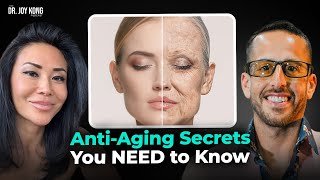
This YouTube interview (recorded May 7, 2024) features Joy Kong, MD in conversation with Ben Azadi about integrative approaches to aging and regenerative medicine. Dr. Kong contrasts Chinese/Eastern and Western medical traditions, describes aging as a systemic process (analogy: a house fire) driven by loss of stem-cell–mediated repair, and explains how stem cell therapies can slow aging and enhance recovery. She recounts starting stem cell treatments about five years ago, reports visible personal benefits and patient anecdotes, outlines clinic protocols (comprehensive evaluation, labs, pre-treatment optimization, IV or local injections), and recommends lifestyle measures (intermittent fasting, clean diet) plus supplements (vitamin D, omega‑3, fulvic acid). She also mentions animal studies (middle-aged rodents showing ~30% lifespan extension; older rodents showing much larger extensions) and gives clinic/website details.
Questions this video answers
The Center for Regenerative Medicine — THEACRM.com (noting the site is being rebranded toward Uplift Longevity Center).
Greater Los Angeles area — San Fernando Valley.
About five years ago (from the time of the interview).
Common intervals mentioned: every six months; some more aggressive regimens every two months; Dr. Kong has reported personally getting treatments roughly every three months (mentioned by host/question).
She suggested benefit for people aged 35 and older (noting some decline may begin by mid‑20s, and potential benefit from ~30–35 onward).
Chapters
There's still debate and I think the whole anti aging field, even though there are all these markers and symptoms of aging, they still haven't been able to label aging as a disease. What's funny is that aging is like a comorbidity. So okay, you have diabetes, but part of it is also because of the process of aging, because the fact that you're aging, you have higher inflammation in your body, less of a balance, and less stem cells to replace the damaged tissue. So all these things are symptoms of aging.
What's the difference between what they do in China with healthcare versus what they. What you've seen here in America?
Yeah, so Chinese, obviously it's, you know, the biggest population in the world. And you know, they didn't have western medicine. Right. So so was India. You know, the, the Eastern medicine system had worked pretty well. Of course it's not. Has its own limitations when it comes to acute diseases, you know, big infections or injuries. It has its own limitations. But as far as keeping people healthy and keeping them balanced in a balanced state, I think both cultures have done a great job. And so in China that's always part of the tradition. And Chinese medicine, doctors have always been very revered. And then there comes Western medicine, which are very much respected as well. So there are two medical systems. There are people who go through, go into Chinese medicine or going to western medicine, but people who go into Chinese medicine also have to learn the whole Western medicine system. In the big hospital, they will have all the usual departments of western medicine, ophthalmology, ent surgery. So they have these different departments, but they will also have a department called Chinese medicine. So this is all in the big hospital. And then you will have the pharmacy, and the pharmacy will have Chinese, Chinese medicine, Western medicine, depending on what doctors are giving you. So my home is very much a egalitarian system when it comes to medicine. So medications are all thrown in one big drawer. There are antibiotics, they're anti inflammatories, and there are all these Chinese herbal concoctions. So everything is all intermingled together and, and it's always kind of fun, you know, when I get a little discomfort and you know, some problems, I would tell my mom my symptoms and my mom will, you know, make her diagnosis and then go into the drawer and grab whatever that's that she thinks is appropriate. So sometimes it's western medicine, sometimes the Chinese medicine. So it was never, it was always respect for both. So that was just kind of the atmosphere that I grew up in. So when I first came to this culture came to the US that was in early 90s. I remember just talking about even something like acupuncture. People weren't accepting like they think I'm, you know, like you can tell in people's faces that they think you're a little out there. So I learned to just, you know, just leave it alone. And what's interesting is that there's more and more acceptance. I think, you know, like any of the new medicine that comes along, you call it new, but you know, it's newly accepted. It's really driven by results. So it's not going to be able to take hold if it cannot produce results. It's only because people are getting great benefits. More and more are getting benefits because there's limitation in western medical approach, it's not solving the problem. So when one person gets great results, tell their friends, things just spread like that. So it's fascinating for me to witness that even when I was in medical school, that was 1999, I remember having a conversation with this Maryland PhD student, very smart guy. Then I just mentioned acupuncture. And he said, there has been still no evidence that acupuncture actually works. I said, really? Have you looked at how much published results are out there? Granted, a lot of these publications were in Chinese, but there are reams and reams of them. So just because it's not in your language doesn't mean that it's non existent. So there were some rigorous studies because Chinese wanted to know, how does this work and does it really work? Why does it work? So, so even from then, this is 20 years ago, there's huge transformation of people's acceptance of something like acupuncture. Now acupuncture is okay, it's not crazy anymore. So, so it's interesting. And I see that same, you know, same thing is true for a lot of these now, what's called alternative therapies, including lots of herbal therapies, you know, some, some new treatments, you know, hyperbaric ozone therapy and you know, and stem cell therapy. So all these things I think again are driven by results. You're getting results. Yeah, you're getting results. So people want it. That's why I call it a grassroots movement. Because people, their needs are driving the forward motion of the acceptance of these.
Treatments, which is so important, especially because we know this medical system, this healthcare, which is really sick here, here in America, it just doesn't work. And one of the quotes, you kind of just said it, but I had it in my notes when they say There is no evidence. They're not looking at the evidence, which is exactly what happened with your college mate back in the day. Now, speaking of rules that don't make sense that you want to break, the conventional medical system is kind of similar to those rules that we need to break. You have a great analogy on what's happening in the body with the symptom and a fire in a house and how conventional medicine. Could you share that?
Yes. So I think people, there's still debate and I think the whole anti aging field, even though they're all, all these markers and symptoms of aging, they still haven't been able to label aging as a disease. And what's, what's funny is that aging is like a comorbidity. So it's okay, you have diabetes, but part of it is also because of the process of aging, you know, or you have osteoarthritis. And part of it is you comorbidly are aging because the fact that you're aging, which reduces, first of all, you have higher inflammation in your body, have a less of a balance and vigorous, you know, vigor in your, in your immune system. And you, you know, of course, you have less stem cells to, to replace the damaged tissue. And, and so there are actually a lot you don't need mitochondria, go downhill, you know, straight, straight line. So all these things are symptoms of aging. So when we talk about aging, people somehow, you know, throughout the centuries have accepted, okay, aging is part of, just part of human living. And, you know, but it's that, yes, we all, we're all gonna, you know, we're all heading for damage and death. That's true. But how you age, there's a big difference. Some people will have a heart attack and die. Some people will live to their, you know, late 90s, happily go around, you know, riding bicycle, you know, walking to grocery stores, and then they fall asleep and then they drift away. So there are drastically different ways of living and dying. So how, which way do you, do you want your life to be? So my analogy is that aging is kind of like if you look at the body as a house. So from the outside, you look at the house, you know, you, you maybe things are okay, but if the house is catching on fire, it, let's say a disease is, is brewing, which could be part of the changes of aging. People don't see anything going on on the outside. But when the fire started, you don't just start, you know, with big fire, right? You start somewhere, you start motoring, you Start, you know, you know, this brewing fire, you know, things going on before you can see anything on the outside. So when the smoke start to come out of the window, that's when we actually are seeing some kind of symptoms. But before the symptoms is merging, things are happening to prepare you for the symptoms. And that's what we need to pay attention to. How can we prevent the house from catching on fire in the first place? And that's what I think is the beauty of the anti aging, where the whole integrated medicine is optimizes system. So you're never going to catch on fire that you're, you're always keeping things at a, at a balanced state. So once the fire is on, then there's gonna be a lot of damage. Yeah, you can put out the fire, but guess what, you know, there's damage, there's carpets burned, your, your, you know, structure. Probably some, you know, if it's really bad, the house can get, can burn down.
So it's a great analogy and it makes so much sense. You know, there's, there's symptoms, but the symptoms are not necessarily the problem. They're a result of the problem. So we want to get to the cause of those symptoms. So where allopathic medicine fails, most of the time is only focusing on the after effect, the symptom. But what caused it, it could be so far removed, it could be so upstream, so downstream. So what you do and what functional medicine practitioners do is looking at the causes of those symptoms and then you take care of the cause and then, oh, it's like magic. The symptoms go away. How cool is that?
I kind of look at it as the original intelligence of who we are. That's the essence of us. So within each stem cell contains this full package of the intelligence that actually made us being a human possible. So because we all came from a single stem cell. So just look at us. We, we are all from a single stem cell. So from that single stem cell, it was able to divide and multiply and transform and migrate and forming this incredible geometry and then this complex tissue and organ systems and then a full human being. So that is pure magic. I think we still don't understand how that happens. Right. As humans, we don'. We don't know how to create cell. You know, that, that life is so powerful, so mysterious. We don't know how to make. We can burn it from a life, you know, from a life itself. We can get a cell from a live animal, but we don't know how to create it. So there's Incredible power, intelligence that we don't know how to explain yet. No one, you know, you can be an embryologist, you know, you can know how the embryo is formed, but you don't know why and how. And it's so complex, it's mind boggling. So stem cell, the single stem cell have so much potential. But with each stem cell will, you know, that original stem cell would divide into many, many stem cells. And as they keep dividing, they lose certain potentials. So that. But then there's still stem cells. The stem cells we use these days are much further down the line. Right. We're not using embryonic stem cells. Those are extremely powerful, contains, you know, wild potentials. That's why they. But when it's further down the line, it still contains a lot of information, but it's not going to fully express everything there is. So it has limited expression. So it becomes very complex. When people say stem cells, you know, I think there's this very, it's a little bit of a, you know, maybe naive view of what stem cells are. As if, you know, stem cell is a stem cell, but stem cells is not a stem cell. There's so many kinds and so many funct. One thing that I think people should know that they're, you know, just because you're getting stem cell treatment, you know, depending on where it came from, you know, or how it's made, it's drastically different. Yeah. So. So you gotta be careful what, what, you know, what you're getting.
Yeah. So talk more about that. I know that you said in the past that you get stem cells treatment on yourself about every three months. Why do you do that? And what are the sources of the stem cells that you use on yourself?
So when I first found out about stem cell therapy, and that was five years ago, and reading about what they could do and then also just seeing what it done to other people that I know and also, you know, for my patients, I just thought this is, this is too great. You know, I am, you know, off a venture spirit. So I thought, you know, I really wouldn't mind having this experiment on myself because I see the signs, I see what they can do. I think I want to do this anti aging treatment. And of course initially people were doing stem cell therapy more looking at therapeutic potentials, they were looking at treating particular conditions. And then later on more data came out, more studies came out actually looking at potential capabilities of these cells to prolong life and extend health span. Right. Making people living much more vibrantly. Or they were doing studies on animals, on rats and mice, and realizing that this simple stem cell infusion can actually extend their lifespan by about 30%. And not only that, it preserves their physical capabilities, their mental capacities, and it just. There's, you know, a lot of evidence. So. So I'm kind of glad I did that while I was doing it, you know, a little bit at the time, you know, five years ago, a little bit of a, you know, kind of experiment on myself because I know how safe it is. So. So, you know, it's a. It's a calculated risk, right? It's. It's, you know, it's educated risk. So, you know, I didn't really. I thought, okay, you know, maybe I'll just try to stop the aging process. It was. See if this just keep me, you know, at my current state. So that was. I was 45, and I didn't, you know, I didn't, you know, be an Asian. I guess people say, oh, you don't, you know, you age well. But now when I look back at my pictures, I definitely saw a lot of aging going on, you know, overworked and, you know, I wasn't taking the kind of, you know, holistic approach to my health. You know, I didn't have all the tools. So. So I was, you know, well on my way, you know, with the aging process. And then after I started doing stem cells, you know, initially was my neighbor who's making comments saying, hey, you know, what's going on? You're looking younger and younger. So this is about a year after I started doing stem cells, and I didn't really know that it made any big difference. I thought, you know, I'm just, you know, I'm doing well. You know, I'm healthy and I'm good. But it was other people who started to making comment, to make comments saying that I'm looking younger and younger. So. And then I started looking at pictures, and then I wasn't choosing, you know, to look at my own pictures, which is Facebook, you know, who keeps sending me happy anniversary photos. And that's when I. When I thought, oh, boy, I can't believe I posted that picture. I look horrible. So that's when I. When I thought, oh, my goodness, have I changed? Have I gone backward in age? So that was, you know, that wasn't my goal. I just wanted to not age. I wasn't thinking about getting younger. So that was kind of a fun, fun thing. So now I definitely have a lot of patients who are doing that, and they all love it. They can't Wait for their next treatment. So I had people, you know, do it, you know, either every six months or, you know, some more aggressive ones would do it every two months. So they just, they know what they do. It does for their body and for their mind and, you know, they feel fantastic. And people make comments that looking great. So that's the whole, you know, if you can prevent the aging process, then you prevent the whole cascade to disease. So that's what, you know, you can avoid a lot of, a lot of suffering.
Yeah, that's super cool. So your photos started to look younger. Recent photos versus older photos. Your neighbors were making comments about you. And it's obviously that visually you're, you're anti aging, you're looking younger now. Are you also testing the cellular age and other methods like telomeres, DNA methylation? Like, what are some ways that you kind of look at the age of the cells?
You know, I need to. Yeah, I really need to. I'm actually looking at. I'm so I'm still not convinced which one is the best method. I've been talking with, you know, different doctors and scientists, you know, about this, so I've yet to settle down on one that I, I can trust because I do want to bring that in clinic to quantify, but I'm just not convinced. There are a lot of methods. There's, you know, the telomeres or DNA methylation methods. There's VO2 max and there's, you know, hyper, you know, the, the CRP. There's just various tools, but I'm not convinced which one is works well. So I just, you know, right now I'm just going with what, you know, what I look like. So it sounds funny, but, you know, I tell people what you look like, what's on the outside, your face, it's reflection of what's inside. That's why, you know, Chinese medicine, you know, they look at your tongue, they look at, you know, your complexion, they, they diagnose. They do a lot of diagnosis from just, you know, your face, your eyes, you know what's going on. External, you know that what you can see. The thing is, when people age, you know, I tell them that you may look in the mirror and saw some wrinkles and you're like, oh, geez, you know, I've aged. But what you don't think about is all the wrinkling that's going on in your liver, in your heart, in your lungs, in your bones. They're all going on. All you can see is the face. But you've got to take care of everything. You know, the face is a reflection.
That's such a great point. No, you're so right. You know, I love that point. The face is a reflection. And I agree with you. There's not really something that I've settled on in terms of testing cellular age as well. It's. There's too many variables that I've seen as well. When you talk about stem cells, you do treatment at your clinic. Could you explain a little bit more the name of your clinic, where it's located? And then also, what is this treatment like for those who have no idea what stem cell treatment is?
So I'm in the greater Los Angeles area, so I'm in the San Fernando Valley. So the way I do the treatment is, you know, first of all, first of all, a very comprehensive evaluation that they have to fill out this form, you know, asking everything about their history. I actually work with our naturopathic doctor who will go over their entire history and then when they come to the clinic, labs, comprehensive laboratory testing. And then we will address whatever deficiencies that's going on, either nutritional deficiencies or hypersensitivity to various food or chemicals and their microbiome health and their hormonal balance. Just so there's a whole complexity of why a person is not optimal. And so in the meantime, you know, we have pre stem cell treatment recommendations where there are, you know, lifestyle changes I want them to make and supplements I want them to take to optimize results, and then they will come to the clinic and do the treatment. And a lot of times we combine other treatment modalities to even further enhance the benefits, you know, such as stem cell therapy or nad thera. So it's a very comprehensive wraparound, you know, treatment and depending on what kind of issues they want help with. So if they want just. If they have autoimmune conditions, they have copd. You know, a lot of these are systemic conditions. It's, you know, I use the intravenous route, but if they have some local issues like joint problems or, you know, just, you know, surface hair restoration, you know, facial rejuvenation, so some kind of a local tissue, you know, that's more on the exterior, then I can do direct local injections. And then we do all kinds of injections in the musculoskeletal system, you know, including joints and back. So, you know, I always tell people that when you have osteoarthritis, you. This is not really a wear and tear disease. It's a disease of Your body not being able to keep up with repair. So if you have damage and you know, sports injury and your body fix itself, then you're done. But if you have chronic, unrelenting, this ache and pain and stiffness and just that's your body constantly inflamed and this is a systemic issue, is your whole body not able to mobilize repair? And in those cases, I help enhance the body by doing intravenous therapy. And then for larger joints like the knee, the hip and shoulder, etc. I would do local injections because you need the cells to be delivered locally because they're within the large joints that there's very little blood exchange. So, so we, you know, depending on what they need, we, you know, would devise a appropriate program for them.
What's your website? For those who are listening who want to check you out, maybe they're in Los Angeles or they want to travel there. What's your website?
Yeah, so our clinic is called the center for Regenerative Medicine. That's T H E A. So it's just a T H E A C R m dot com. But we are in the process of changing our website. We're, we're kind of expanding our clinic into, you know, what we, you know, the. Is subsuming this regenerative portion into Uplift Longevity Center. So that's coming up. Uplift with and why. Yeah, so, so that's, that's coming up.
Awesome. We'll put your website in the podcast notes so everybody could go check it out. Is it fair to say that you could meet somebody and look at them and say, and know that that person needs some stem cells just by looking at the person.
Some more than others. Definitely. Yeah. But honestly, I would say if you're over age at least 35, you know, if not 30, because we know, you know, 25, you know, we're starting to go downhill. But let's just say 35, that's when most people notice changes, you know, of their physiologically. They're not as, you know, kind of in tip top shape as they were in their 20s at least, you know, above 35. I would say everybody above 35 should, you know, can benefit from stem cells. You know, that's, that's no question. And even when they're older, when they think, oh my God, maybe it's too late, you know, I'm in my late 70s, you know, is this going to benefit? Yes, the research supports it. Even, you know, they've done this research. It is really fun. I love this Research someone have done, they give these rats that's at the human equivalent age of 75. So rats age I think was like 20, 20 months or something. So. So in human equivalent ages, it's, it's 75 years old. So these are old rats. They look old, you know, they move old and, and they start giving them stem cells. And what's interesting is that, so there's a group that did not get stem cells and the group that got stem cells. So imagine these, you know, kind of human, 75 year old, you know, rats. The, the, the rats that got stem cells lived from the time they got cells to the time they died was three times as long as the rats that did not get stem cells. So basically you extended, you tripled the time you have, you remain on earth. And not only they live much longer, they're moving better. You know, their, their, their fur, it's got shinier and then their, you know, their mental capacities, they're running around the maze, they're able to figure things out. They basically extended their time of being vibrant and then, you know, and then they die. So, you know, we're all gonna die.
Yeah, we can't escape that. At least not yet.
The key is quality. Right. How can we enhance quality? Have a great time while you're here.
Absolutely. Yeah. And that's, that study is interesting because that was three times the extension of their lifespan with older rats. Was it rats or mice? I forget.
I think it's rats. Yeah, rats.
Yeah. So I mean they were older. So imagine being younger and being proactive with this like we're speaking about here.
Now for younger rats. So like, like a middle aged and, and that they definitely showed, you know, 30% extension of lifespan. Yeah.
Amazing. So what are some natural, besides getting the actual treatment, which is a great idea if you're over the age of 30, what are some, maybe other ways we can do it on a day to day basis. What role does fasting or extended fasting play with stem cell production? Getting rid of senescent cells. Have you looked at any of that?
Yeah, I think fasting definitely is a powerful tool. So I do intermittent fasting. I mean I'm still fasting, you know, actually before the cause. Really hungry. But you know what, I'm going to handle it. So I do intermittent fasting. I don't eat before noon every day. So you know, at least 16 hours of fast I think is a very powerful way of, you know, getting your body to, you know, to be more resilient. And of course what you eat that's the absolute foundation. You know, let food be thy medicine. Right. I think it's absolutely true. I mean, there's such power in what you put in your body. So, you know, everybody needs to really, really respect this incredible kind of vessel that we are gifted to and, and, and put the right things in the body. So that that itself is probably one of the most powerful things. Like when people are looking at losing weight, what's the. They think it's 70% diet, maybe 30% of, you know, exercise. So people used to think exercise, exercise, but now we know the role of exercise is much smaller than the role of diet.
Mm, yeah, so true. So eat clean, eat whole foods, practice intermittent fasting. Let's say you were in an elevator and you had 45 seconds to explain to somebody in that elevator, a stranger, what exactly the process of aging is so they could really understand it. What would be that 45 second elevator pitch?
The process aging is that, you know, first of all, you're running out of stem cells, so you're running out of the engine to repair damage. Because being alive means getting damaged. Just breathing, you know, creates, you know, these free radicals and that can damage your cells and DNA. So just sheer fact of being alive, you're constantly getting damaged. As long as you have enough cells to replace what's damaged, then you're good. So that's one fundamental thing about aging, is that you're running out of stem cells because they, they get damaged too. But, you know, along with that, you know, you are constantly getting damaged. Right? You can injure yourself, but you can also just by breathing and toxins and, or just breathing, you know, you're running out of healthy cells that can give you the right amount of hormones, can, you know, detox your body the, you know, correctly. And basically that's just, you know, your, your, your functioning, you know, you're declining mitochondria, you're losing mitochondria. You, you know, everything is, is getting older. So, yeah, I would say this is why I'm so passionate about stem cells, because I know all the other things are very powerful. They're all really important. But I look at stem cells as the engine to the body, like, you know, like, like the engine for the car. So if you don't have engine, you're really, you're not going to get anywhere. So. But the engine also needs fuel, and that's everything else we're doing, you know, good diet, exercise, fasting, you know, you know, the supplements are the right fuel for the body. But eventually they, if they can feed the engine, if they can keep the engine healthy, then you, Whatever damage you make, you're going to be replenished. So you've got to have the energy. That's like the mental. So I, I think one day stem cell therapy is just going to be so basic, such a basic part of medicine that, you know, you, you know, you take some stem cells to prevent you from declining, keep you from getting sick. But if you do get sick, because we invariably, you know, we can catch something then, or we injure ourselves, get some stem cells, it's going to make you heal so much faster, so much more completely. And, you know, I have people who are doing surgeries before surgery. They have to do surgeries, they get surgeries, but before surgery or right after, they would get a stem cell treatment and they heal three times as fast. So one day, you know, just like people were given antibiotics for surgery, right, that you prevent something bad from happening. And in the future, we're going to give stem cells, you know, to speed up healing process and to prevent, even prevent infection. I mean, the stem cells have a lot of functions. You know, antimicrobial is one of them. So. So it's just gonna be part of the foundation. But, but, you know, coming back to the aging, I think, you know, we, we've got, if we can replenish, you know, replace the engine, you know, or, or upgrade your engine, then you can, you can kind of really slow down this train of aging.
Well said. And I could see how much you love talking about it. You just light up and get so excited speaking about the topic. You know, it's like stem cells are where acupuncture was 20 to 30 years ago, where it was kind of like, what is that to now? Acupuncture is all over the place. That's what you're saying. Hopefully stem cells will get there even sooner than what happened.
The beauty. Stem cells has one advantage for people to accept stem cells, and that's what I find fascinating, is that for stem cells, the allopathic doctors, they. It's much easier to accept it, right? Because it came from western medicine. There's a very, very scientific, you know, this, you know, kind of origin to it. So they know, and there's rigorous studies, so know that this is not some eastern, you know, some, you know, they don't consider it, you know, fufu. So they think that this is solid. So it's, it's easier for them to adopt. And then for integrated doctors, they love it. It's like, you're bringing out the natural healing intelligence of the body. You're infusing something that's so holistic and have so many ways of helping the body. So for them that's, that's, yes, that fits into our philosophy. So it's actually easily acceptable by both worlds. But the inertia in, in, in any profession and especially something as patriarchal as medicine and then with as much existing vested interest in current establishment. So all these are serving as obstacles to the, you know, acceptance. But it's coming. I mean, I just, I laugh, you know, seeing all these restrictions and all the fights that's going on. I was like, well, just wait.
Awesome. Yeah, well, you're doing a good part, getting the message out and the research and serving your community. What are, what are three must have supplements to help support cellular function that, that you take and you recommend definitely.
You know, vitamin D. I think everyone knows that it's so essential and so many people have, you know, a lacking of it. And Omega 3 is really important and I think there are various new forms of Omega 3 coming, coming on. You know, personally, I really do not like oil. I just, I really don't like taking it. I just, I don't like the taste and it just, and it worries me because, you know, if you have this fish burp, you probably, you know, it's probably oxidized and it makes me worry, am I hurting myself or am I benefiting myself? But you know, it's true. Omega 3 is really important. So I was, you know, I still put that up there, but you have to find the right form. And, and personally I really like fulvic acid. I mean it's a strange name and they call it acid, but it's a huge, you know, this combination of, of minerals and kind of antioxidants. Right. Every, everything in one. And that came from natural, you know, degrading organic matters that's going to go back to the earth. So I really like it because it's so comprehensive and I put that in, you know, in my kitty's food. You know, I thought, you know, I don't know how they produce these cat food. I'm buying the best possible, but I don't know if what, you know, what they put in the food to have enough nutrients because nowadays modern day there's just not enough nutrients in our food. So I think fulvic acid is probably underutilized and I hope more people use it because there's some incredible, incredible results.
Yeah, that's awesome. No, I love that you shared That I. I use fulvic acid as well. And I put it in my dog's water. Yeah, I put it in my. You know, the problem of putting in my dog's water is that he drinks it and then he spills it all over my tile and then there's these black spots all over.
Oh, really?
Yeah, right. He's a big boy. That's why. And then I put it in my. I put it in my coffee, but then it makes my teeth black and I gotta walk, I gotta wash, brush my teeth right away. But yeah, I think it's great. Great for oxygenation in the body. Vitamin D is so important. Like you mentioned, I live in Miami and I look at lab work of so many people and they're still deficient in vitamin D because.
Is that right?
Yeah. Well, insulin and vitamin D have like this inverted relationship. So if you don't do the work to keep insulin down, you could keep taking all the vitamin D, but it won't get to the point where you want it to get fish oil. Doc, I've done a lot of research on fish oil and I've interviewed a lot of brilliant minds on fish oil, and I've come to the conclusion, at least for now, that I stay away from it. You know, to your point, most of it is already rant, rancid. So I just say eat the fish or even take these parent essential oils that are giving you kind of like the derivatives for your body to make its own EPA and dha. So I like, I love the suggestion. I think more important than getting the Omega 3s up is eliminating the bad Omega 6s. What do you think about that?
Yeah, absolutely. Yeah, but that's tricky. That's. That's tricky.
It is tricky because they're everywhere.
I love nuts, but I know most nuts have very high omega 6, but I, I can't.
Yeah. But anyway, what I mean by that's fine. Like eating foods that. That have those omega 6s are fine. But I'm talking about like the canola, cottonseed oils, the adult altered omega 6.
Is what I mean.
Like, get rid of those is what I mean. Yeah.
Toxins. Yeah. Read your labels because I. Yeah, yeah, the labels, that. That's the final straw. They can make the package look really healthy and really enticing. You're getting something really good for yourself. I just bought some poison.
Exactly. Especially in the keto space, you see like keto friendly, non gmo. But like, to your point, you got to read the ingredients because they are so good at marketing. Don't let them fool you. You have a book on Amazon which is titled the Tiger of Beijing, the Inspirational Memoir of a Fierce Regenerative Medicine Physician. So share a little bit about why you wrote the book. What is it about?
Yeah, so I. I know actually, some of my patients read it. They're like, Dr. Kong, you know, I thought you were going to talk about how you became, you know, where you are now. I said, yeah, that's going to be in the second book. You know, I am a fierce regenerative medicine physician, but this book is about a very distinct story, very, very dramatic transitional time in my life. It's about three years of my life of how this. From this. Who really. Yes, my dad was a professor, but we had no money, we had no connections. We're just, you know, I'm just one of the, you know, 1.3 billion Chinese, and I had a dream to come to the United States, but I had every card stacked against me. I just. There was no. I didn't know how. So from that. And to actually make it happen, you know, with the first chapter being me standing in front of American Embassy and getting my visa rejected. So this is after 18 months of relentless hard work and breaking rules, you know, sneaking into libraries to get what I needed. And I. I got rejected. So what do you do? I mean, that's a huge. That was one of the biggest obstacles in my life and seemingly impossible here. This country that's very strictly controlled and there's just bureaucracy to the yin yang. And then I was facing a powerful country that's making it very difficult to enter. They had lots of restrictions, and I think at the time was one in ten students were applying who actually were able to get a visa. So that. That's. I was. You know, I had to. When I realized I was rejected, then I had to figure out a way. So it's about determination and a little bit of, you know, this tiger, or you can call it bullheadedness, you know, just. Just going for it, however it's gonna happen. So, you know, what I did was unconventional. It was actually fueled by anger. By anger that somebody has so much say over how I can live my life. And. And I just. I just. I rebelled. I said, no, you know, you're not going to prevent me. And so it was a very interesting journey, how I made it to the US and then I spent my first two years in San Francisco overcoming the next big hurdle. Very, very difficult situation, personally. So that. And how to escape that and how to come out and Intact, in a way. There was some. There was definitely damages done, but. But still coming out triumphant, you know, it's like a soldier going to a battle. Yes. You got some wounds, you got some, you know, injuries. Hey, you won the battle. So that's kind of where I was at. And what I was going to talk about in my next book is that this wounded soldier, you know, who just won a battle, it's going to go for, you know, the. The. The bigger battle in life, which is achieve true happiness, how to achieve it, achieve full healing physically, psychologically, and spiritually. So that. That's. That's a long. That's. That's a long journey. But this first book is. It's a. It's a story. Actually. Initially, when I first wrote it, I wrote in a novel form. I didn't really want to make it a memoir because I wanted to. Just because I wanted to write a story, because it was a great story. And then I was like, you know, you know, screw this. This is my story. This is me. This is who I am. You know, that's it. I just. It's my story. So that's how it. Yeah. How it came about.
Very cool. It's a remarkable story. So that's super awesome. I'm glad you wrote it. And it's going to be a great book for your future kids and grandkids to read and learn about your story. Super cool. You've seen living in China for 20 years. You've seen the restriction that was happening over there and then coming to America, the land of the free. I'm somebody who was. I was born here in America. My parents actually immigrated here in the 70s, 1970s, from Iran, which is another country where there's a lot of restrictions. So I am so blessed and I. And I so grateful that I was born in this amazing country to be able to do what I love to do and have the freedom to choose to do that. So on that note, what are some of the things that you're grateful for to be in America, seeing how it was in China and being here, like, do you feel like this is the greatest country in the. The world? Like, what is your love for America right now?
I definitely. I'm very grateful for America. I. I do feel like I belong here. So personally, our personal style, chemistry, you know, how we, you know, just how we are as a person. I know personally, it flows better here. My personality fits better. I'm a very open, very straightforward person and very warm. You know, I'm able to express my emotions I can give hugs freely. It just feels really. So I felt kind of constricted in China, but I think each country is almost like a person. You know, you have your distinct personality, you have your strengths and your weaknesses. I love America's strength. And actually, I think there's a big, huge love affair between China and America, you know, despite whatever that's going on politically. I know the Chinese people, Chinese people love Americans. I remember since I was a kid, you know, we were like watching World War II movies and the American soldiers always giving the sign, right? Chinese kids that just love it, they're so cool. Look at their chewing gums. They just love the Americans. They just think they're, you know, just cool people. And I know Americans, you know, they love Chinese culture and love to Chinese people. I've heard a lot of people who've been to China, they just. They love the Chinese. So. But, you know, everyone has their own strengths and weaknesses. I think China's weakness was that there's two conformist. It's very judgmental culture, highly competitive. So when you're so competitive, competitive and so judgmental, then you're not nurturing this individuality of each person. You're not appreciating a person's unique strengths. You want them to be certain way because you all want to compete for certain positions and get to certain spots in life. So there's more judgment. So. So I, you know, I more appreciated for who I am uniquely here, and I love that. I'm very, very grateful and the opportunities allows that. There's these mechanisms in place. I came here, I was penniless, I absolutely no money. And then I was in San Francisco State. I thought, okay, instead of borrowing loans, which itself is fantastic, the government can lend loans to students so they can actually get education. And you can go, you can apply to any new university you want, and they might accept you. You know, like, that's not part that. That wasn't really not part of the system in China. It's a whole other system. So. So here you can choose. You can choose what you want to study, what university you want to go to and what class you want to take. So when I, you know, tried and I was thinking, you know, what can I do to not have so much debt? You know, So I looked into scholarships. Granted, that particular scholarship was for minorities, and I would. I didn't exactly because it was a little bit that affirmative action, you know, flavor, because it's for underprivileged minorities. So that's Hispanics, African Americans, Native Americans and Pacific Islanders. So I didn't fit into any of those. But I was grateful that this one professor who's in charge of this scholarship, you know, kind of all these programs to nurture students, and he granted to me. I applied because they said, you know, we can't discriminate. We can't tell you not to apply even though you didn't fit into the category. I said, I am a minority. I think I'm pretty underprivileged because I have no. Nobody in this country. So I applied and he gave it to me because he believed in me. And then he actually got in trouble at nih. That's where the money was given. And he stood up for me. He said, why did you give it to her? She's not part of this particular category. She's Chinese. And so he. Actually I heard from another doctor who told me, another, a professor, that he slammed the table. He stood up, he said, you know what? This is the best student we have. And you know that she deserves this, and I have the constitution behind me, so go ahead.
Wow, that's awesome.
I know. So. How amazing. You know, I felt. I felt that there are people who really, really care and. Yeah. So very, very lucky. Yeah. Very grateful.
Yeah. Beautiful. Well said. That's an awesome share. Is that what you shared in chapter two of your book? Is that what you're referring to?
No.
Okay. Something else that happened.
I'm not sure I share the story.
Oh, wow. Well, I'm glad we got it on the podcast. So thank you. So we're. Put your website down below. What about. Where else can we find you? I know you have a YouTube channel, so share that. Share your social media.
Handle my YouTube channels because I put a lot of these kind of 5 to 15 minute segments explaining different aspects of stem cell therapy that's rarely talked about. Actually, most of them, I don't see anybody that has covered it, like, is stem cell therapy in Panama better? Like, what are the three stages healing in stem cell therapy? What about putting other people's DNA in my body? What's your thoughts about that? And what's the difference between stem cells and exosomes? Where should I go? Go for? So there are a lot of different kind of niche questions that people are dying to know, but I really have given them a good answer. So my channel is just Joy Kong MD. So just look up YouTube and just put my name in there. You will see all my videos and you will really enjoy it.










