Get ALL the Benefits of Fasting Without Starving | Dr. Chris Rhodes
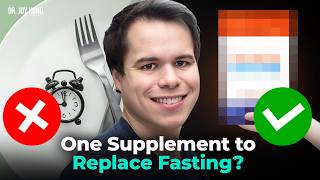
This is a transcript of a Feb 18, 2025 YouTube podcast interview (Dr. Joy Kong, MD hosting Dr. Chris Rhodes) about fasting and a fasting-mimetic supplement called Mimeo. Dr. Rhodes describes his motivation from longevity research, differentiates short (e.g., 16:8) versus true fasting metabolism (≈20–24+ hours), and summarizes a human discovery study using a 36-hour fast (n=20, 10 men/10 women) that revealed >300 plasma metabolite changes. He and colleagues narrowed those to ~24 bioactive targets and combined four naturally occurring metabolites (nicotinamide, spermidine, oleoylethanolamide/OEA, palmitoylethanolamide/PEA) that reproduced fasting-like anti-inflammatory, antioxidant and cholesterol-efflux improvements in cellular assays. In C. elegans the four‑compound combination extended lifespan by ~96%. A small pilot clinical crossover (standardized breakfast of two LÄRABARs) showed Mimeo supplementation prevented the typical postprandial loss of plasma functionality and produced effects ~30–40% (marker-dependent) less potent than a 36‑hour fast but directionally similar. The interview also covers use cases, safety, dosing (take on eating days or early fasting stages), product sourcing (natural metabolite sources), and broader nutrition/fasting context.
Questions this video answers
36 hours
20 participants: 10 men and 10 women
Over 300 significant differences (later narrowed for screening)
About 24 targets were shortlisted and 4 metabolites were combined into the final formulation
Nicotinamide; spermidine; oleoylethanolamide (OEA); palmitoylethanolamide (PEA)
Chapters
So is it very similar eating with the supplement and pure fasting produce about the same results?
I would say that they're about 30 to 40% different, depending on the marker. So pure fasting is definitely going to be better for you for those specific markers. But again, that's a 36 hour fast that we were comparing it to versus eating normally and taking a supplement.
Hello. Welcome Back to the Dr. Joy Kahn podcast. I invite some of the best scientists and doctors and pioneers in the health and longevity field to make your life better and longer. So today I have the pleasure of interviewing Dr. Chris Rhodes. So, Dr. Rhodes, thank you so much for being here.
Yeah, absolutely, Joy, thanks so much for having me. I'm really excited.
Yeah, so you're doing some groundbreaking work and I'm excited to share with my audience. Let me just introduce you briefly. So you actually received your PhD in nutritional biochemistry from UC Davis, and you have spent your research career unraveling the mysteries behind intermittent fasting and its incredible ability to optimize health and extend lifespan. So I want you to share first of all with the audience, like, how did you get so interested in intermittent fasting? What do you think it, you know, what about it inspired you?
Absolutely. So intermittent fasting was really interesting to me. I got my BS in biochemistry from Loyola Marymount University down in la. But once I got out of college, you know, like a lot of college kids, I didn't really know what I wanted to do with that, that degree. So I took a two year immunology fellowship at Stanford. Just kind of started pouring through all the research I could get my hands on. And eventually, you know, came across healthy aging and longevity research, which I thought was so interesting because it used to be, you know, this mythological thing, right, Ponce de Leon and the fountain of youth, but is now this very active, very rigorous area of science. And, and when you're in that space, eventually you come across. Because fasting is one of the only ways that we know of right now that reliably extends lifespan in model organisms. And then, you know, going a level deeper than that, it's also been shown to help treat, prevent or delay most major diseases. So it's kind of like this one thing that does everything. And what really fascinated me about it was that it does all of that without actually adding anything into the system. System, right. So it's not like this superfood or this wonder drug that you're taking, and it's activating these special pathways, but somehow fasting itself is activating this dormant, you know, longevity bio program that we all already have inside of us, but just isn't ordinarily turned on. And when that clicked for me, it actually made me really mad because I was like, great. So my body knows how to live to be 120 years old and in perfect health, but it's just not, not doing it. So that's, that's the emotional catapult that really, like, how can I. I need to uncover what's happening during a fast, what's going on in the body, and is there a way that we can recreate it so we can get these benefits, but you know, without having to do this arduous lifelong fasting kind of approach?
Okay, so first of all, what do you think qualifies intermittent fasting? Like what, what, how many hours do person needs to fast to, to be called intermittent fasting?
Yeah, what a great question. So this is a big problem in the fasting research field as a whole, is that there's so many different definitions of intermittent fasting. And you can see when you dive into the literature that there are certain lengths of fasting that, you know, we call intermittent fasting, but really don't offer much additional benefit beyond caloric restriction. Right. So biologically, biochemically speaking, in order to really enter into fasting metabolism, you have to go for 20 to 24 hours without food. And that's just to kind of, you know, start entering into true fasting metabolism. And that's because it takes around 20 to 24 hours for your body to deplete its glycogen stores. So all of the stored carbohydrates in your body. So up until that point, your body's gonna be preferentially breaking down glycogen. It's gonna be using glucose, staying in that carbohydrate metabolism, postprandial metabolism kind of kind of zone. And then after that, you're gonna have this met switch from carbohydrate metabolism to lipid metabolism and ketone production.
So you're saying the popular 168 style, the 16 hours versus, you know, eight hours of eating, is that not, not going to produce enough benefit? Or, I mean, is it still quite beneficial? What are your thoughts?
So it's, it's a mixed bag. When you look at the actual literature for 16:8 fasting, typically it's not enough to produce any kind of additional benefit beyond what you would get from normal chlorop restriction. There's some benefits that you can get to metabolic states like helping to control glucose levels or helping to, you know, normalize lipids or cholesterol levels. But these longer term benefits that people typically associate with fasting, like immune cell regulation or autophagy, or these lifespan extending effects, they're not going to be achieved until you at least get past that 20 to 24 hour mark.
I see. Okay, so what about prolonged fasting? There are also people who are doing very long fast, week long or even longer. What are your thoughts on that?
Right, so prolonged fasting in the sense of like multi day fasting, those are, those are, those are some where you can, you'll definitely get into these later stage benefits of fasting. You'll definitely be activating autophagy. You'll definitely have some immune cell reset. About 72 hours of fasting is where you kind of see this, the immune system quote, unquote, go to ground. Right. So it'll really knock down a lot of unnecessary or extraneous like autoreactive cells and kind of go back to the baseline regenerate from the stem cells, which can be really, really helpful for people who have autoimmune disorders. So there's a, there's a clinic out in Santa Rosa that does prolonged fasting like that. People will come in, they'll do a week long fast, a two week fast in a medically supervised environment, which is, you know, if you're going to do a two week fast, that's where, that's where you should do it. You should be supervised. Um, but you know, people will come in and they'll get symptom ablation for, you know, six months. Right. So they can really, it can be really helpful for autoimmune diseases. It can be really helpful for cancer, especially helping to prevent some of these negative side effects that can happen from chemotherapy. Right. It can sense as high as cancer cells while also maintaining host cell stability. So there's definitely different advantages to prolonged fasts like in the multi day, you know, multi week range. But they're not going to be something that's going to be achievable for everybody. And kind of, they're the, the last resort that a lot of people go to. And that's kind of more or less what the clinic is set up for.
So what did you find out about fasting in your research?
So when we looked at fasting, we were looking at a 36 hour fast. And the reason why we decided to look at a 36 hour fast was because that is in the literature where you typically see the best lifespan extension, this continued pattern of alternate day fasting. So one day of eating, which is typically, you know, 12 hours of eating, then followed by a day of fasting, which is, you know, one sleep cycle, 12 hours plus 24 of non eating. Right. So 36 hours total. And you kind of just rinse and repeat that for an entire lifespan of the organism. So we wanted to look at a 36 hour fast in humans because we wanted to line up with the literature, but also make sure that we were getting deep enough into fasting that we were going to see these metabolic changes. So we had 20 people, 10 men, 10 women, to avoid a gender bias, come in and do a 36 hour fast. And we looked at their before and after and what we saw was that we when people fast for 36 hours, they became much more functionally enhanced in their plasma. So their plasma became anti inflammatory, it became antioxidant and cellular protective, it became cardio protective, had better cholesterol efflux capacity, which is essentially the gold standard marker for cardiovascular risk. And that's really impactful because in the nutrition world it's very rare, right, to take already young, healthy people, have them do something for just, you know, one day, right? 36 hours and then all of a sudden basically they're super people.
Sounds like we should tell the Olympic athletes to start fasting.
The really interesting part about that for us was, you know, what, what's going on, right? What is the difference between one state and the other that could be causing these beneficial effects to happen? So we did what's called comprehensive metabolomics, basically looking at all of the small molecule components of the plasma. And what we found was that there were over 300 significant differences between a baseline state and a fasting state. And so we basically screened through that list of 300 molecules looking for ones that already had some kind of literature, you know, results for being bioactive. So whether that was it has anti inflammatory properties or it has antioxidant properties, it can promote autophagy, whatever it was, we were able to narrow that list of 300 down to around 24 targets and then screened through those molecules looking for ones that could recreate these beneficial effects of fasting that we were seeing in the plasma. And eventually we were able to find this synergistic combination of four of those metabolites that when we combine them together, they could recreate these beneficial anti inflammatory, antioxidant, cardioprotective effects of fasting in human cells.
How are you able to prov of that?
Yeah, so basically what we did for that was we took human cells and then put them in to Various stress conditions. Right. So whether that was putting a pro inflammatory stressor on there or an oxidative stressor on there, or lipid loading cholesterol into the cells, and then we added in the individual metabolites and then looked at what happened to cellular functionality after that. So we were able to see within the cells that S metabolite produced this effect. That effect. That effect. And then ultimately, you know, started doing combinations of them to see if we could get, you know, effects that were greater than the sum of their parts.
Did you create something that's actually usable using these four compounds? Like, how are you utilizing this information?
Yeah, absolutely. So we were able to show that these four compounds together could recreate these beneficial cellular effects of fasting. But then also really impactfully, we did C. Elegan lifespan extension analysis as well, and we're able to show that these four molecules together could extend lifespan by 96% just through supplementation. No caloric protection, no fasting required. So basically, these metabolites can, you know, help to activate these synergistic complimentary pathways within cells, within organisms to recreate the benefits of fasting. And the great part is, is because they are, you know, naturally occurring human metabolites, they can also be used as supplements. And that's essentially what mimeo is. Mimeo is our fasting memetic product that's the combination of those four molecules. And basically what mimeo is doing is just taking what your body would naturally produce during a 36 hour fast, giving it back to people as a supplement. You can recreate fasting at the molecular level, activate these same cellular health benefits, but without actually fast.
Hmm. So are these molecules actually synthesized outside of the body and then put together?
Right, yeah. So essentially these are naturally occurring human molecules, but they also occur within the food stream as well. So, for example, the four molecules that we identified were nicotinamide, spermidine, oleoyl, ethanolamide, OEA and palmitoyl ethanolamide. Pea. And all four of those molecules can be extracted from natural sources. Nicotinamide is a vitamin B3 derivative. Spermidine is a metabolite of arginine, just a, you know, simple amino acid. Palmitoyl ethanolamide is produced from palmitic acid, and oliol ethanolamide is produced from oleic acid, like you would find in olive oil. So these can all come from natural sources. And in our supplement they do.
Hmm. Okay. So, so the. You put all these molecules, molecules together and then fed it to C. Elegans. And so how long do they live?
Usually So a C. Elegans will usually live for about a month. That's, that's like the typical lifespan of C. Elegans. And that's usually for like pretty long lived worms.
So you made them live almost two months. Okay. And are you planning on doing experiments in mammals?
Yeah, so we, I've already done a pilot clinical study with the mimeo formulation in humans. So what we did for this study was we had people come in, eat a standardized breakfast alongside a placebo control. Then those same people, after a washout period, come in, eat a standardized breakfast and then with supplementation with mimeo. And we looked at the before and after on their plasma functionalities, just like we did in the discovery study. And what we found was that when people ate a standardized breakfast with the placebo, there was this big loss in plasma functionality. And that's very typical of the postprandial response. Right. You have all this food coming in that's, you know, taking the system, throwing it out of homeostasis. Lots of metabolic chaos that's happening.
Great. You, you create chaos. Yeah, good news.
And then, yeah, dietary inflammation, that's another big thing that happens. Right. So, you know, lots of perturbances to homeostasis that happen when we eat. So.
And what did they eat? What kind of breakfast was it?
Yeah, it was like nothing crazy. It was two Lara bars. Right. So essentially like dates, cashews, blueberries and.
That was it supposed to be Gustav?
Exactly. Right. So yeah, it wasn't like, you know, a, you know, a Big Mac from McDonald's and a milkshake or anything like that. It was just pretty, pretty standard what someone would normally eat. So what we saw was that created chaos. So what we saw was that when they ate that breakfast, but with a placebo control, there was a. Their plasma became pro inflammatory, they had less antioxidant capacity, they had lower plasma cholesterol efflux capacity. What was really interesting was that when they ate that same standardized breakfast, but then with supplementation with mimeo, we were able to not only prevent all of that loss of function from happening, but actually add gains of function on top of that. That mimicked what we saw during a fast. So instead of being pro inflammatory, their plasma became anti inflammatory and antioxidant and much better cellular plasma cholesterol efflux capacity. So that was really cool. So basically, yeah, we showed in that, in that study that we could recreate these beneficial effects of fasting even when people are eating.
So did you also measure what those levels are when they just Purely fast. Fast. Okay. So is it very similar eating with the supplement and pure fasting produce about the same results?
I would say that they're about, if I'm remembering correctly, 30 to 40% different depending on the marker. So fat like pure fasting is definitely going to be better for you for those specific markers. But again, that's a 36 hour fast that we were comparing it to. Right. Versus eating normally and taking a supplement.
So eating normally, taking a supplement is 30 to 40% less powerful than just fasting itself.
Correct.
You're still going to be better off just fasting.
Yeah, you're still, you're still definitely going to be better off just fasting in terms of, you know, getting to these enhanced plasma functional metrics. But you're going to be better off fasting as long as you're doing a 36 hour fast?
Yeah. Did you try the fasting with your supplements?
We haven't tried fasting with the supplements. You know the main thing that we wanted to prove out here was that we could achieve these fasting like benefits even when people are eating. But we know that people do use mimeo as a fasting enhancer and it can be really beneficial for that, especially if people are doing more short term fasts. Right. So if you're only doing a 16, 8 fast or if you're doing like a one meal a day kind of schedule, then this can really help to enhance the benefits of the fast. Kind of more to that 36 hour fasting.
Mark, does it make the fast less miserable?
Yeah. So there are two molecules in MEO that actually do help with fasting. So one of them is oleo ethanolamide OEA that's involved in the gut brain access and actually helps to stimulate satiety and reduce appetite. And that's, that's been clinically proven in you know, three or four different studies that OEA has this very profound effect on appetite suppression and then weight loss and anti inflammatory effects as well. So really cool. And then palmitoylethanolamide is part of the endocannabinoid system, stimulates through CB1, C, B2 receptors. So kind of behave like your body's natural C, B, D almost that has mood enhancement effects, cognition enhancement effects, but then also pain relief or discomfort relief effects as well, specifically on NER nerve pain and neuropathy.
Hmm, wow, interesting. So the goal is to harness the benefits of fasting through these molecules. Right. So whether or not you are not fasting, you can reap some of the benefits of fasting or if you're fasting, you can enhance the result of your fasting, maybe making the fasting a little easier to tolerate. Correct. Okay, so if you are doing fasting, I mean, do we know what the ideal length of fasting is? Do we know what's the ideal to achieve the best, you know, outco outcome for human longevity and health?
Right. We don't really, we know that they're like. From the research that we've done on fasting in humans, we know that there are some of these shorter term fasts that aren't really all that impactful. Right. We know that there are these long term fasts that can be very impactful. Right. From the clinical data, from the Santa Rosa, Santa Rosa side of things. So we don't know what the ideal range of fasting is right now from a human data perspective, from an animal data perspective, it's pretty straightforward. And it is more in that alternate day fasting realm. Right. So that kind of like 36 hour repeated fasting mark is typically where we see the best lifespan extension, where we see the best disease amelioration.
When you say animals, are they mostly rats and mice?
Yeah, rats, mice, dogs and then some. We haven't really done like primate studies with.
Do they compare prolonged fasting with 30 day alternate day fasting? Is that, did they do the comparison?
I don't think that anyone's ever done a comparison of multi day fasting with mice and alternate day lifelong fasting. Usually when we study multi day fasts, we're looking at an acute before and after rather than a sustained lifespan extension kind of, kind of experiment.
Yeah, we definitely know that multi, multi day would not be good like in Auschwitz and North Korea. Right. We all know what happens to people who are chronically starved of nutrition. But then there must be an optimal range. So you do need to feed your body, you do need the fuel. But then how do you harness what's the best way of doing it? I think there's such a great range, it's all over the place. People are doing 40 day fasts. Right. This how it's actually good for you.
And it might be, I think when we talk about what the ideal range of fasting for humans is, I think we also do have to take into account what people can achieve. Right. Or what is, what is reasonable for people to, you know, incorporate into their daily lives. Right. Any, any health intervention and any longevity intervention is going to be most effective when it's done consistently and you know, initiated as early in life or you know, into maturity as possible. So you know, we can say like maybe the ideal range is like a week long fast. Right. But how many people can actually achieve that? How many people are going to achieve that? What is the, what's the relevance of that recommendation versus something like even alternate day fasting? Right. We could tell people alternate day fasting is the best way to achieve these lifespan extension results. And maybe people can do that. I, I personally tried to do that for two years while I was in Stanford. That's kind of, you know, how I got going with the research. I was doing alternative fasting and then taking my own plasma, my own.
You are a disciplined person. That's tremendous.
Yeah, but it was really hard. It was an incredibly difficult lifestyle, especially from a social standpoint, because you're missing dinner with family, meals with co workers, with friends, you know, no one wants to sit across the table from you while they're eating and you're just like holding a bunch of walls watching them eat. Right. So it just doesn't really like fit into human society all that much.
What do you think it did for you though, since you did it?
I was actually tracking my own cellular data, you know, while I was, while I was doing it, so I could see for myself that there were these profound changes in cellular functionality. The same as what we saw in the discovery study where I became more anti inflammatory, my cells were more resistant to stress. They had much better just markers of all functionality had, they had better autophagy that was, that was happening. So it was really, really interesting. And that's what kind of got me hooked on it in the first place was when you do something and you can actually see that it's working for you at the cellular level, you very, you know, into that health.
Right, right, right. Positive reinforcement and reinforcement. A good thing to be addicted to.
Right. But that's why from personal experience like that lifestyle is just, you know, it's not going to be sustainable long term for people. And that was one of the reasons why I really wanted to do the research into fasting. To eventually create Mimeo was to allow people to get these same beneficial effects of fasting, but without having to completely devote their life to it.
Yeah, very interesting. So if people do take the supplements to try to reap the benefit, the fasting, let's say we're doing 36 hour alternate day fasts. How often should you take the supplements?
So if someone was doing alternate day fasting and they wanted to take Mimeo at the same time, it would be beneficial to take Mimeo on your eating Days, for sure. It can also be beneficial to take it in the early stages of your fat to, like we said before, help people kind of get over that initial hump, suppress some of the appetite, give them a bit more of the mood elevation, cognition enhancement, and, you know, potential discomfort relief from the pea and the oea. So I. They wouldn't need to take it at the 36 hour fasting mark because that's, you know, kind of either their body would already be producing those molecules at that point, but it could still be beneficial during the eating phases like we showed in our clinical study, and then also, you know, in those initial stages of fasting.
Mm, yeah. Would you tell people to do this like all the time or do. Should they take it like a month on, a month off? Like, how do you think is the. Is a good approach for reaping the benefits?
Yeah, what we've seen so far is that there doesn't really need to be any kind of cycling here because there's not really a physiological adaptation that happens to these particular metabolites. So number one, they're all, you know, natural human molecules. So your body kind of inherently knows how to take them up, metabolize them, utilize them, and excrete them, you know, very safely and effectively. We've like, there have been studies of up to six months of supplementation with some of the individual ingredients that have shown, you know, no negative, severe adverse effects or, you know, really side effects either. So really good safety profile for a lot of these molecules. In the clinical studies that we've done and then the previous studies that have been done on the individual metabolites, you know, we've seen benefits from, you know, months long, three months long, two months long supplementation without any kind of negative consequence. So we haven't seen any reason to cycle on and off. You wouldn't normally produce these molecules unless you are in a 36 hour fasted state, which most of us aren't really getting to. So that's why there's kind of not a physiological adaptation like you can get with something like hormonal replacement therapy and testosterone specifically. Right?
Yeah. Yeah, that's great. I'm really interested in seeing how it will make my fasting easier and maybe I could do a little longer and without being irritable.
I mean, the hanger is real. I know from experience.
Yeah. And I'm sure people ask you about, since you are in a sense mimicking fasting, people probably ask you about your, the difference between your work and your product. And then Dr. Walter Longo's fasting mimicking diet, which has been very popular. A lot of practitioners carry that in their practice. I have done that, I have used it myself, although I could barely finish the five days and I was really miserable. So. Yeah. How do you answer what the differences may be?
Sure. So basically what the fasting mimicking diet is doing is providing you with, you know, a five day program that's pretty severe caloric restriction. Right. So at most you're consuming somewhere between 700 to a thousand calories per day. So it's, and giving you a specific diet that doesn't activate these, you know, typical fed pathways. Right. So they've specially engineered what you're getting in that, in that box to, you know, keep you in a fasted state even while you're eating calories. And one of the reasons why it works so well is also because of that severe caloric restriction side of things. Right. So taking in 700 calories a day is going to give you very effects that are very similar to fasting because it's very restricted calories. Mimeo on the other hand is not a diet. It's taking what your body would naturally produce during a 36 hour fast, these bioactive fasting metabolites, and then giving them back to you as a supplement to basically raise their concentration in your body even when you're eating so that you can activate these similar cellular health effects. These similar fasting pathways get those fasting like benefits but without actually having to fast. So we are recreating fasting at the molecular level through supplementation. Whereas Prolong is, you know, a diet that's meant to not activate these fed pathways and try and keep you in a fasting state.
Yeah, I definitely like the simplicity and elegance of your model. To do a whole diet is definitely a little cumbersome with particular types of products. You know that you get a whole box and you know, you have little morsels of each item, you know, a few, a few times a day. And that was, you know, very limited. So the fact that you can eat normally, that's, that's pretty remarkable. But does what you eat actually matter?
As a PhD in nutrition, I will definitely say that what you eat are.
There things you recommend that people eat while taking your supplements.
So I can't make any specific recommendations just because we haven't, you know, done a full like comprehensive nutrition panel and how everything cross interacts with the mimeo formulation. What I can say is that how I eat when I take Nimyo is I try to basically follow a Certain set of principles that looks a lot like Paleo, but not for the reasons that paleo people do Paleo. I'm not like, oh, this is what we were evolutionarily designed to do. But I really like focusing on micronutrient density with low caloric density. Right. So trying to get as much nutrients as possible while minimizing calories, while also trying to get as much volume as possible. So what that usually ends up looking like is lots of lean protein with very like fibrous low calorie vegetables like radishes and zucchinis and eggplants and you know, that kind of eat the rainbow situation and with limited simple or refined carbohydrates. That's kind of like my, my eating pattern. Even now I still eat one meal a day just because I like it and it fits into my lifestyle because I like to be able to wake up in the morning, have my mimeo, have my green tea and just kind of really dial in and focus on the work for the day. And then once that's done, kind of be able to compartmentalize and be like, all right, now is the time for my big food reward and relaxation. And you get to have this big meal at the end of the day that just really leaves you full and satisfied.
Even though you have the mimicking assistance, you're still doing intermittent fasting.
Yeah, absolutely. Yeah. And I, because like, this is just, you know, like I said, it's, you got to do what works with your, with your lifestyle. And I really like having the mimeo there to help support me because I think that it's really enhancing the benefits I am getting. I don't have to go all the way to a 36 hour fast and I still get to, you know, just eat the way that I want to eat.
Yeah, yeah, that's wonderful. So, you know, there's a lot of great reports about intermittent fasting and paleo style eating or keto type of eating. But there's, you know, also other camps of people who are saying that chronically, you know, restricting your calories or really kind of almost depriving your body on a chronic basis, it's very hard to eat all the nutrients you need with one meal. Right. All the protein and all the nutrition. So some people say they do amazing, just eat whatever they want and then they achieve a great lean body physique. So yeah, that's a little bit of differences and controversy there. Do you have any thoughts on that?
Yeah, nutrition is a very difficult space. From my research into it, it's different strokes for different folks, right? You have a lot of genetic complexity that happens between individual people, between different groups of people, between different countries of people, right? No, no one person is going to be the same as the other. And that's why it's. Nutrition research is very, very difficult because usually, you know, if you take a homogenous population and you put them on a singular diet, even within that, you're going to have a lot of different inter, inter individual variation. And so what works for one person isn't going to work for the other. It's the classic thing where it's like, oh well, you know, my grandma, she drank whiskey and smoked every day and she lived to be 92, whereas like this other guy who's you know, like a vegan ultra marathon runner, drop dead at 70, right. And it's, it's, it's just really hard to do. What, what I like the best advice I can give people is to try different stuff out and really just find out what works and start tracking. That's really the, the major thing as well. If you can do, you know, any kind of biometric tracking, if you can do blood marker tracking, if you can, you know, track your sleep, you can do whatever. Really get into the whole like quantified self biohacking side of things. You can do something like an elimination diet, like Whole 30, right. Where you just kind of take everything down to baseline and then add things in over time, see how everything makes you feel over time and like, you know, how it changes your blood markers or your sleep patterns or whatever it is and find that diet that both works for your lifestyle and then also works for your health.
Well, it's rare for me to have an opportunity to talk to somebody that has a PhD in nutrition. So I definitely going to ask you. One of the biggest divergence is about carbs. So you know, or besides the animal versus vegan, you know, that's a whole other can of worms. Yes. So as far as carbs versus no carbs, they're both camps are very, very vehement because there are people who, they eat lots of carbs and they're doing phenomenally well and they believe that's really important to eat all those carbs. And there are other people who said it's just terrible. You know, then you, you're gonna really impair your metabolic function and then you're, you're gonna gain weight and all that. So I've seen both camps. Some people are doing really well in either camp. So what's your answer? To how a person can find out which diet they should, they should go after.
I would say that, yeah, from a carb perspective, just from a, from a macro level, there's nothing inherently wrong with carbohydrates, right? They are just part of our, our natural metabolism. You know, most things in the body do get converted into, you know, into glucose. We, we need glucose to so survive, right? Our brains literally can't survive without glucose. Even if we go into a ke, a ketogenic diet, right, where it's all fat and no carbs, our brains still need 50% of their energy source to come from glucose. Even if we, you know, aren't taking in any carbohydrates at all. And that'll end up coming from gluconeogenesis from protein stores. But just like carbohydrates as a whole are not the enemy, it definitely can vary from person to person, especially on like how much you're actually eating of the carbohydrates, right? Like what kind of carbohydrates are you getting? That's gonna be another main factor, right? If you're getting a lot of your carbohydrates from ultra processed foods, from refined sugars, from you know, like simple, simple starches, that's gonna be where you usually end up running into problems because that can cause things like pre diabetes and insulin sign problems, insulin resistance, right. Especially if you're overstimulating at the same time and especially if you're overeating at the same time. And that's usually my recommendation for people and usually what I can always go back to as the, the end all be all of nutrition. But again, this is my bias because I exist in the caloric restriction and fasting literature. When you look at diet proportions and how everything breaks down, you definitely do want to limit protein, but mainly you want to limit calories for lifespan extension. Right. Usually you get into metabolic disorders in one way or another because of over consumption. So if you are chronically taking in food above what your maintenance level is or above what your energy expenditure is, that's where you're going to see the weight gain. That's where you're going to see the metabolic disruptions that happen as you get into these later stages of obesity, the insulin resistance, things like that. So from my perspective, it's really all about balance and making sure that we are not like overfeeding ourselves. And that will solve a lot of the issues that, you know, the very, the very specific and detailed like, oh, is it 51 grams of protein or 52 grams of protein is probably getting too far into the weeds.
Yeah. Protein is another thing that, you know, there's some doctors, of course, is really advocating for eating lots of protein, you know, to the point of one gram per pound of body weight. Right. So that's a lot of protein to cram into the body. Do you think that's really as beneficial as they claim it is or is it overfeeding your body protein?
Yeah, I mean, there's a, there's, there's a weird distinction for that as well. So protein is one of those things that can be really beneficial. Right. You need to get a certain amount of protein, especially, you know, your essential amino acids. It's 1 gram per pound of body weight is definitely a lot. And I know that, I know that that's, you know, just kind of core bodybuilder knowledge. Right. But when you actually look at the studies, maximal protein incorporation is much beneath that. I can't remember the exact number, but I think it's more in the range of 1.6 grams per kilogram of body weight is like the maximal protein incorporation. And when they do studies of increasing protein after that, they don't see additional benefit.
So that's about 0.8 grams per pound, Right?
Exactly. So, you know, it's not gonna be, it's not gonna be anything super duper, super duper crazy. I would say that you definitely wanna be careful about too much protein consumption from a longevity point of view, because we've seen that very high protein diet typically have a negative impact on longevity. And that's usually because you're kind of overstimulating these pathways that are very good for growth, right. Like MTOR, IGF1, growth hormone, things like that. But MTOR, IGF1 and growth hormone are also usually typically very bad for longevity. These are the same pathways that when you overstimulate them, shorten lifespan. And to a certain degree that makes sense, right? If you're growing, that means that you're doing a lot of cell replication. If you're doing a lot of cell replication, that means you're going to have increased DNA damage, you're going to have accelerated telomere shortening, you're going to have more chances for like, you know, mutations that happen and cancer cell formation potentially. Right. You're kind of just wearing your cells out at a more expedited pace. So that's kind of the big thing about protein that I always people with, especially things that, like we've seen the longevity research that methionine Restriction is really, really helpful. Branched chain amino acid restriction also helps to enhance lifespan. So there's specific amino acids that you kind of want to be aware of and try and avoid with protein consumption as well. If, you know, longevity is your goal, if growth is your goal, it's actually kind of the opposite. Right branch chain amino acids are really good for, you know, gaining muscle. So it's all, it's all very much a balance.
Can't have everything. What is your protein goal?
My typical protein goal is that 0.8, you know, grams.
Oh really?
So that's quite a bit that 0.8 grams per kilogram. And that's because I am, you know, what at least what I consider to be like, you know, an athlete. So that's, and that's also more or less the government recommendation as well, like for high activity individuals where like I'm going to the gym every day and I'm, you know, doing weight, weight lifting and weight training. That's kind of what I tend to stick to. And I'm, I'm there mainly because, you know, as, as I say, you know, the whole like, oh, like, you know, there's a, there's a balance between protein and growth simulation and longevity. One of the best markers for longevity going into old age like 65 + is your muscle mass at the age of 65. So typically the more muscle mass you have at 65, the better chances you have of going into longevity and, you know, having a better lifespan and health span and quality of life, typically because of, you know, issues with sarcopenia, muscle wasting, frailty, falls. Those are, those are the, some big killers.
Yeah. Need to pack some meat on you to prepare for old age. Yeah, that's fantastic. Okay, so thank you so much for sharing all these pearls. I'm pretty excited about what you brought to the world and I would love to try it myself for all kinds of reasons. You know, I'm a fellow biohacker, you know, definitely, you know, biohacking I think is all about what is the little trick, little tweaks that we can make that can really accelerate. Right. Benefits. So I'm really glad that you have done this research for everybody. So how can people find out more about your work?
Work? Yeah, if they want to learn more about the product. You can see our clinical studies. You can read through our science at mimeohealth. Com. That's M I M I O Health. Com.
Wonderful. Thank you so much, Dr. Rhodes. I appreciate you being on the show.
Yeah, thanks, Joy. Thanks for having me. It was really fun.










