Gut Health Explained: Biohacking Myths vs. Medical Facts - Dr. Grace Liu on The Dr. Joy Kong Podcast
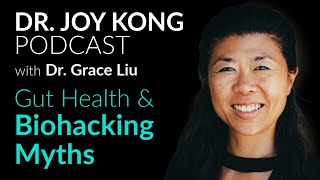
Dr. Grace Liu explains how she rebuilt her gut microbiota after toxin exposure and why specific bacteria like Bifidobacterium longum matter more than generic probiotics. She critiques popular weight-loss drugs like semaglutide for damaging the microbiome and hormones, and advocates testing over guessing when it comes to gut health.
Questions this video answers
info@thegutinstitute.com
"80, 90% of our immune system is literally the gut microbiota" (as stated by Dr. Grace Liu in the interview).
She states a target of 'at least 1% — at least 1 trillion' organisms and gives the example of '10 capsules of a high-potency formula, 100 billion per capsule' to reach that level.
Chapters
You've seen the gut affecting just about every other organ in the body. Correct.
There's no way it doesn't. Everything we deal with is immune system related. And 80, 90% of our immune system is literally the gut microbiota and the anatomy physiology of the whole GI tract, the gut. But fortunately, now I'm so grateful for the peptides and like stem cells like yours and different really great tools. We can really calm things so much faster. I find our protocols work twice as fast now.
That's so encouraging. That speaks volume of how far the science has come. No wonder people are biohacking, because we do have some really powerful tools available. Okay, everybody, I am so excited to come back to you. Welcome Back to the Dr. Joy Kong podcast. And this is the place where I share with you all the exciting pioneers who can bring you knowledge and wisdom and help you live younger and longer and just with more vibrancy and happiness. So today I have a special guest, Dr. Gracie Liu, who is a fabulous functional medicine practitioner. So first of all, Dr. Liu, thank you for coming onto the podcast.
Thank you so much for having me. It's such an honor.
Yeah, well, you are a, you know, very highly sought after, a mentor of many practitioners, and I want to just give people a brief background and let them know just how awesome you are. So you are a functional medicine practitioner, founder of the Gut Institute, and you're actually a pharmacist with a doctorate and in practice for over 20 years, specialized in complex diseases. So Dr. Liu consults and helps clients gain optimal performance through rebuilding the microbiome after damage from modern living. Dr. Lu uses nutrigenomic tools and other advanced functional lab testing to give the solutions, strategies and treatments that reverse modern gut dysbiosis and diseases. So Dr. Liu has been featured in Gaia TV, UCSF Women's Health Magazine, Bulletproof book, Ben Greenfield's book, and she's a keynote speaker and an educator and clinician and coach and has been teaching other practitioners and other functional medicine leaders her approach for gut health. So today I think we going to talk about some really interesting subjects. First of all, I want to ask Dr. Liu. I'll just call you Gracie. Gracie. So how. How did you even get interested in gut? Why is that so important?
So when I was a pharmacist, I was really into pharmaceuticals. I thought they were the key to all our health. And then I developed my own acute health crisis with pharmaceuticals and other interventions, including a dental implant that I didn't really totally need. And my health crashed. And as I was getting better. Many of my colleagues that I met in functional medicine kept talking about the gut microbiota and I was like, wow, what is that? You know, nobody really knew what it was. We were just starting to see all the second gen studies coming out about what is in the gut. And when I finally got better, it was a lot of protocols that were honed at healing the gut microbiota. And I actually developed some of my own because some of the protocols I was using weren't really working and I wasn't regaining my, my health back. But once these protocols kicked in, my health came back pretty quickly. And so now we help people to assess what's going on there because the gut is a big micro, it's a big black box. You know, kind of like an airplane, you know, when, when an airplane crashes, you know, they, they go and pull the black box to hear and see and figure out what went wrong. Right. And a lot of health is kind of tied to the gut because it all immune system related. Everything we deal with is immune system related. And 80, 90% of our immune system is literally the gut microbiota and the anatomy, physiology of the whole GI tract, the gut. And it's actually the largest organ we have. It's larger than the brain, it's larger than our surface area of our skin. And the microbes there are one to one with our own cells. We're literally hybrids with the flora. There's 100 trillion of them and we have 100 trillion of our own cells, nucle and non nucleated as you know, one to one, literally. So we are hybridized with them. They make energy for us, they out, we outsource everything to them that we don't normally do on our own with our own genetics, our own organs, our own pathways, they do it. But if people get bankrupt with their gut flora, you know, after stress, antibiotics, vaccine damage, you know, super sanitation and bleach or, um, you know, there, there are a number of ways we are messing up our guts. Emulsifiers, everyone's really into these, like emulsified coconut oil to put creamers into their food. But emulsifiers break your gut lining. And that includes those dried up coconut oil, coconut milk, you know, emulsifiers that go into coffee drinks, you know, and creamers.
H. Oh, what about coconut powders?
Yeah, exactly.
Oh no, I was using them.
Ok. We know emulsifiers are a link to increased incidence now of inflammatory bowel disease. Detergent effect.
I see.
Yeah. So we're seeing like all these different reasons why people's gut aren't getting better and you can't really hack your way out. Totally. We still have to go back down to the basics. You know, I look at the gut and we have to kind of weed, take out some of the pathogens that overgrow seed the gut. No, no probiotic is as strong as ours. I actually formulated a probiotic because I wasn't seeing results with what's available on the market like VSL number 3 or Therabiotic or soil. I love soil probiotics. But you have to use so much of them. It's really a critical number that heals the gut. We have 100 trillion. We literally need to bring in 1%, at least 1 trillion. When people take 10 capsules of a high potency like ours, 100 billion per capsule, then we're able to shift the numbers. It's just a matter of shifting populations. It becomes a number game. You can't get that game changing health improvement until the numbers change.
So how were you able to reverse your gut issues?
Well, I had mercury toxicity like a lot of people. Later on I developed mold toxicity. You know, every, every health crisis I've had in my life, there was something related, you know, similar to all my clients, actually. But the first one was mercury toxicity. I had a lot of feelings in my mouth like a lot of people. I had several snips like glutathione and other poor detox snip fut 2, which is a gut SNP that predisposes you to have low bifido in the gut. It predisposes you to all the autoimmune diseases out there, including colitis and a couple estrogen dominance genes like Gad1 and Mao A and B to name a few.
So you dived deep into your genetics.
Yeah. And then, you know, it turns out just a lot of people have these, this very, you know, similar SNPs. You don't have to have MTHFR or maybe you're just heterozygous for it, you know, but you may have like 20 other snips and you're going to get into big trouble.
So how do these affect the gut?
Well, because you don't detox. Well, these toxins attract pathogens and because they're antimicrobial. Mercury is antimicrobial. We used to use it as a cleanser in the hospital like 50, 100 years ago. And when they're antimicrobial, they're killing off not just bad things, but they're also killing off all the good keystone flora that make us who we are. And without them working for us, you know, detoxing for us, making good butyrate and good, you know, antimicrobial peptides for us, our. Our gut flora are our highest source of peptides. They make amps, antimicrobial peptides that keep everything sterile. Right. And the flora from. Even if they surpass and go into our bloodstream, they're not like, very toxic or lethal. It's because our flora, the good flora, will control and regulate all that and keep the immune system primed, you know, to keep them from invading. So when we lose them and we lose our. The tightness of the. Of our gut lining, then all hell kind of breaks loose. You know, there's a lot of invaders, and that's why people get ill and sick. And over time, we see hormones tank because it takes a lot of energy. It's exhausting to keep a tight barrier and constant pathogen, you know, invasion, invasion. So when we heal the gut, I'll often see free testosterone for men, triple. And then for women each month. Yeah, the progesterone doubles at the peak. The. The peak luteal, like day 21. If they're cycling. That's incredible.
So that's. By stopping the toxins and then. And then having the bacteria actually producing maybe important peptides for hormone production.
Yeah, well, they're. They're keeping the lining tight. So without. It's like the Great Wall of China. Right? We're both, like, related to China. You know, if you have the wall constantly going down, then invaders, invader. You know, you're spending so much extra energy in the military to keep it tight and, you know, thwarting the invaders that get through. That's like our gut lining too. We're not meant to have undigested food or flora in the gut. Going into the body, into the bloodstream, takes so much energy, it's very, very exhausting. So once we tighten the gut, I have various protocols that help with that, but the main one is to reinstall the probiotics that belong at that lining, the lining level. And that's known as the mam man mucosa associated microbiota. And there's a number of flora that belong there. Number one is Bifidobacteria longum and then Lactobacillus rhamnosus. And we have the highest strength on the market for these bacteria and its cohort. And once they're placed there, they keep everything tight. Akkermansia comes. Akkermansis is known to be a really good probiotic. When people have enough of it, it literally reverses diabetes in animal models. Bifidobacteria longum and lactobacillus rhamnosis, they're kind of known as psychobiotics. They maintain a good gut brain axis and they reverse in studies, anxiety, depression and increased mood. And we have one of the highest strengths in the market for the probiotic. And so when people don't have these, you know, they're not feeling so calm, they have akathisia, they're restless, you know, they don't know why, they have ADD and lack of focus and brain fog, you know, but once we get these back in the, the lining of the gut tightens, zonulin goes down, all these really good things happen. And then they, they tell me like, oh my gosh, Grace, I'm singing in my car again. I feel happy again. I didn't realize I was so, you know, my mood was so low, you know, or, you know, I had poor focus. They didn't realize that they had gotten so used to it for 10, 20, 30 years, let's say.
Yeah. So when you were fixing your gut, you were, I mean, did you do it through food or do you take high strength probiotics? Like how, what was your approach?
Our gut is an ecosystem just like our, our skin, our sinuses, ear, nose, throat. There's a whole terrain and ecosystem. They're kind of like a rainforest. So when I did testing, it turned out I had a lot of parasites and a lot of fungal overgrowth on the oat test, the organic acid test, and when I was digging deep, the ecosystem about them, you know, at H. Pylori. H. Pylori lives inside Candida. In fact, many pathogens live within another pathogen. Lyme. We know it's an intracellular, it lives in other bacteria. But Lyme may also live in our mucosa cells. It may also live in certain parasites. So my approaches are, we do concurrent protocols. If we're trying to reduce, let's say, Klebsiella, citrobacteria, pathogenic E. Coli, or H. Pylori. We also will do a protocol to lower the burden of the host it lives in. So H. Pylori lives in Candida. These other microbes, they may also live in other entities like Candida. So we do antifungal botanicals along with antibacterial botanicals. These are often different. They have different. So with my pharmacy background, you know, it was really helpful to look at this spectrum of activity for different botanicals and Then we, I, I use combined botanicals to knock these out. And at the same time we don't want to wipe out the good bacteria. So we're always doing high dose probiotics when people tolerate it. And so it's called a wee. It's like gardening. We're weeding, seeding and feeding. We're putting compost and fertilizer in that's just basically fiber prebiotics. And we start with really gentle ones to begin with, like polyphenols. We know that polyphenols will feed bifidal longum and lactobacilli and Akkermansia, akkermansia loves, you know, pomegranate and blueberry berry extracts, cranberry extracts. So the feeding is very gentle at first and then we'll amp it up to actually like 30, 50 grams of prebiotics eventually. Psyllium, inulin, fos, gox, xos, things like that. Our ancestors used used to eat like 130 grams of prebiotics daily in their diet.
Oh, really?
Yeah. And I know for, you know, I, I lived in China as an expat for three years and, you know, all the, all the daily meals were really high in fiber.
Yes.
Yeah. Including like cone jack jellies, you know, with soy sauce. That's glucomannan. It's known to reverse diabetes. It fills up our gut, you know, it swells and the flora love it. Yeah. And it's, you know, rich in vegetables, but they're also rich in lentils and beans, soybeans. This is a very, you know, rich sour with prebiotics for the flora.
Well, this actually brings to an interesting point about food and about diets because there are people who are adamant about avoiding plants, saying that plants are trying not to be eaten and they have all kinds of anti nutrients and they can damage your gut. So there's definitely a camp of carnivores. So some people are not so convinced about eating all these vegetables and plants. But then there's another camp that are vegans, you know, that they only want to eat plants and they don't want to eat anything that has to do with animals. And they think that is doing wonders for their health. So with, you know, with your specialization in gut, what do you say about these raging debates?
I would say whatever someone's eating, if they have permeability in the gut, eventually they're going to get allergic to it. So it's true what they're, what they're experiencing is true. Carnivores, if they were eating Plants and they had a lot of permeability. I've seen a lot of gut microbiota testing on carnivores. It's terrible. They're pretty terrible. They have every pathogen growing in there, really, literally every pathogen. So it's not a wonder to me that they find when they take out what they're eating, whatever it might be, if they take out plants, okay, oh, they feel better and they add more meat, they feel better. And then for vegans, if they were eating meat and let's say they weren't feeling well because they started develop allergies, food intolerance, because they have ability, if they take out what they're eating, let's say meat, they suddenly feel better and they eat more plants that they weren't eating, they're going to be better, they're going to feel fine. So both camps are correct. But what I would say is if you look at centenarians who have all the genetics we all have, right, because they're from all around the world, the blue zones, whether you're looking at Costa Rica, Okinawa, Japan, Bama, China, Italy or Sardinia, you'll see their diet is omnivorous. No healthy society on Earth that doesn't eat animals. There's also no society on earth that doesn't eat plants. Who's wrong or right? Right. And what these people have is they lack health care. They're usually rural area and they're not getting antibiotics, they're not processed food, they're not getting emulsifiers in their processed food. Right. So their guts are ultimately really, really healthy. And all the keystone flora, they have the flora like in our probiotic, the Bifidomaximus bifidobacteria longum. That's why they call it longum. It was first detected in people who had long, long lives. Longum is associated. There's an enrichment in people who are healthy. So it's good to have it. It's a keystone. It feeds other flora. Actually, it makes something on the outside of its shell called exopolysaccharides, eps. So they'll take. They have something called the bifid shunt. Bifid. The bifid shunt, which takes monosaccharides, you know, fructose, glucose and others, and transforms them into good food for others between meals. Other flora to eat between meals. It's known as exopolysaccharides. So they're very altruistic. They feed others. So if they're missing this big chunk of like, part of the ecosystem goes missing. Right. You know, in a village, we have like a butcher. And if you don't have a butcher, how are you going to like process an animal like beef or chicken or, you know, you need something, somebody to process it. So bifido's kind of has that role and it's very antimicrobial. They'll literally just knock out E. Coli. You see an E. Coli overgrowth in a gut, it's usually because they're missing bifido, they're deficient. So, yeah, I mean, I think carnivores, you know, they don't tolerate oxalate rich foods. Well, if we look at their gut, they're missing oxalate degrading bacteria. I have five oxalate degrading bacteria in our Bifamaxidis probiotic. Bifidobacteria longum is an oxalate degrader. So is Lactobacillus rhamnosus. And what studies show is even one round of antibiotics will knock these species out. And people instantly become stone formers. Their urine is detected to have hypoxidilurea. They're more prone to these calcifications and it could be in peripheral vasculature, breast tissue that becomes fibrocystic breast disease. Or if they're prone, can be a kidney stone later.
I see, so, so you have formulated probiotics. What, were you disappointed by the probiotics on the market?
Yeah, I was not getting hardly any results with what was on the market. And many had strep in it because strep actually is not a native to humans. Streptococcus thermophilus. It's just the food grade type of probiotic and it's super cheap and it's in all the probiotics out there. And certain clients, they had Pandas and, or they were adults and they had Pandas and autoimmune against certain flora like Epstein Barr or strep. And certain clients actually got worse with certain probiotics. I couldn't figure out why. And then we tested their anti strep antibody. They had anti strep antibodies, so they were reacting to the probiotic. So it's just like our clients. Like if we detect a gluten allergy, you know, an anti gliadin or an anti gluten antibody, would we feed them gluten three times a day? So, no, I'm not a fan of using a streptococcus containing probiotic because invariably people do have strep antibodies. Yeah, they may be just low level, but they're not very helpful to heal and we don't want to prompt them. Also, what I do is we test. We use the mosaic also. It's formerly known as the Great Plains lab. We check the anti candida antibody and the anti saccharomyces antibody. Everyone has it elevated and like, even if it's in the moderate green level, I find that's kind of suboptimal, should be way far lower. And so we don't give saccharomyces. That's known as espalardi. It's a probiotic that lives on lychee. It's not native to the human body as well. We have our own kind of sacraments, not espelardi. So we don't give espolardi either because that will trip up someone's immune system and someone who's already allergic to their own candida. We do a couple protocols. We tighten the gut and we calm the immune system. This is why I love peptides, especially Thymes and Alpha 1. We can start to calm some of the auto antibody peptides. You know, a lot of infertility people, they are women who are infertile or men who are infertile. They have antibodies to their partner's sperm. If someone wants to get fertile, you got to look at why they are leaky. You know, when you have leaky gut, you have leaky vagina. When you have leaky gut, you also have leaky brain, you also have leaky thyroid. You know, any autoimmune disease is also related to the gut. We want to tighten the gut, then we tighten the other organ that's being affected. But you want to lower those antibodies so that the body's not attacking right. The the external force anymore. And that's what my job is like. We heal the gut, heal the immune system, which is the gut, and have it stop being hyper vigilant, just calm. Yeah. And then everything. People feel great. That's how my health journey became ended. You know, I stopped reacting to everything. You know, a lot of times people tell us like, wow, grace, you know, it's the first time I don't have to take my Benadryl, you know, for my seasonal allergies. Everyone around them has terrible seasonality allergies, but they're fine. For the first time, you know, 20, 30, 40 years, they were allergic to everything. But once we heal the gut, you know, they don't have these allergies anymore. Or let's say an anaphylact fish or peanut oil allergy. Those are horrible. You know, people have to carry EpiPens everywhere, but they heal the gut and go through our protocols. They. They don't really need those anymore.
Yeah. And now you've seen the gut affecting just about every other organ in the body. Correct.
It's. There's no way it doesn't. Yeah, it's. It's. Unfortunately, it's our immune system, but fortunately, now I'm so grateful for the peptides and like, stem cells like yours and different really great tools. We can really calm things so much faster. I find our protocols work twice as fast now. You know, we get people healed up so much quickly from whether it's SERS or mast cell mold, Lyme, whatever it might be, you know, low hormones, and we're able to reverse things so much quicker and faster now. It's not hard. Not. Yeah, it was like 10, 20 years ago.
That's amazing. That's. That's so encouraging. That speaks volume of how far the science has come. Yeah, no wonder people are biohacking, because we do have some really powerful tools available, including stem cells and peptides and, you know, the. And all the things that you're doing and all the. Yeah, there. There's so many, you know, energy medicine.
Right.
It's so much going on. So, so that brings, you know, to. To mind about, you know, my audience, which are, you know, people who are searching for better, better health, but a lot of them already have pretty good health, and they just want to keep them and live longer and. And really, you know, having the best time possible for as long as possible. So there's a huge growing biohacking community, and I think they're. You're very familiar. Community. Right. You've been around it for. For quite a while, so maybe you can, you know, shed some light on what you see that's going on in the biohacking community. So I know there are some myths out there, things that you've seen that are, you know, not so helpful for people. So maybe you can share some of those wisdom.
Okay, sure. Super hot right now is Ozempic. You know, I love Ozempic. You know, everyone loves. Great on those. Epic. It does work.
Semaglutide. Right. Very popular, partially because the Kardashians.
Oh, yeah, Kardashians. And every, you know, everyone out there, anyone who looks really good, you can. You can bet, like, they're probably on it. I mean, it's pretty much like medically induced anorexia. And I tried it for a while too, because I needed it for a period of time. I had a real long consequence with delta. You know, a couple years ago I got Delta Covid SARS Cov2 and I just could not lose weight afterwards. I didn't think I had long Covid but I ended up, I, I, I, I had it. I wish I'd checked my spike protein but back then the testing wasn't very accurate. Now it is, we can, I think we can check quest, you know, and get like an accurate reading up to 25%. 25, 000 sorry, 25000 and see what the levels are. So we have all these like really, you know, cool spike protein protocols. I had done a lot of them and I had to, I had to do all of them to start to lose, you know, body fat, body weight. Despite everything, I was doing good gut and you know, working out and high protein diet, all that. So I, I added in the semi and I loved it. But like a lot of women who report out there, my period started to go wonky and I wasn't tracking my hormones but I'm pretty certain they tanked because my dream holes, you know, my, my period just started to go kind of wonky until I ate more gain weight back, you know, to res, you know, to restore like the, the signals of abundance to the body to, you know, bring that all back on. But a lot of women are reporting that now in either like different rooms and else, you know, elsewhere. You don't want to age prematurely, losing our, losing our hormones, our female hormones. And that's what semi gluti might do for people because they're not eating enough calories. You know, they're not eating a calorie dense diet enough or they're not taking. So one of the hacks I have, if people are going to do it, just make sure you're on plenty of adrenal support. You know, I Recommend at least 3 we sell my most famous, you know, bundle we love is serenogen and nano nano Mojo. And then if people have estrogen dominance and they're not in perimenopause or they're, you know, if they have a high enough level of estrogen, we add on some dragon mojo. That's a formula I made. It has two estrogen blockers like cricin and dim. And then it has some anabolic hormone support like Tribalist which is also antifungal, helps the gut and supports like cortisol normalization. So we do at least three, you know, adrenal supports and then just advise people, you know, go on some drug holidays Take, take semi gluta and get off it maybe every six weeks. See where your hunger and satiety levels are. And then there's many natural ways to raise some GLP1. One is getting in tons of fiber. All many studies with fiber show they naturally raise GLP1. You know, consulting the gut, we make GLP1 in the gut.
Can you explain to people a little bit what GLP1 is?
Yeah. So GLP1 is like glucagon, like protein, and it helps us to feel satiety. So not only is semi glutide helpful for weight because it helps improve food satiety and it actually causes food aversion, but it actually, people notice that they have less addictions for alcohol if they're on cocaine. Cocaine, narcotics, benzodiazepines. It's been studied now in many, many arenas and so helpful to reduce these. But studies show as soon as they're off it, the addiction comes back. So we still need lifestyle changes, trauma, informed therapy, and support. You know, still a lot of support. I think it's still best to get the natural GLP1 up, but we don't have ways to test it right now. You know, someday maybe we'll have a way of testing GLP1 levels in the body. But I can tell when I have naturally good satiety. You know, I feel full after eating like half my meal. You know, I can, like, just push it away naturally and I feel good. Usually this is when I'm running really a lot. I have to do a lot of cardio for me to get my natural GLP1 high enough. And my, you know, normal eating patterns are, you know, I have good satiety, you know, and I don't crave stuff. But other people, you know, they might be different. You know, they might need to do other things. And also I love fiber. You know, I get. I go on and off it because it's kind, you know, sometimes it's a pain in the butt, but, you know, doing a good fiber shake, I call it bionic fiber. You know, I get in one or two tablespoons of psyllium, some inulin, I get some pomegranate extract, which tastes really good. The one I love is called polyprebiotic. Like, it's on a lot of dispensaries. And glucomannan, which we talked about earlier before the call, you know, it's from Chinese konjac root and it swells up, so you got to kind of drink it fast. But I'll do like half A teaspoon or one teaspoon with a huge bunch of water because it'll like swell within, you know, if you don't catch, if you don't drink it fast enough, you're going to get a cement block. But it will swell in your belly as well. And so it has that benefit to, to fill our stomach. That's how our ancient kind, our kindred, you know, they, they ate these kind of foods and then they got felt full, you know. But it was feeding their gut flora. Doesn't us there's no calories. It's to feed the flora. And then the flora will trigger making GLP1 for people and create you know, that satiety and healthy gut brain axis. You know, a lot of people just don't have this because they've lost all their good flora for one and you can't resurrect what's not there. So I always recommend when people are fiber, make sure they do some good probiotic, you know, either ours or others and do some testing, you know, see what's missing. Like often people are just missing a huge phyla. Both Firmacuti and, and Clostridialis. These are our two phyla. In the gut, if you're missing these like you're kind of for life. It's like a bank. It's like, it's like a bank account. You know, you're not going to go forward if you have no assets. People can keep trying and trying or doing like semi glutide forever. But why eventually someone may look at cancer. Because you need the good flora to prevent cancer. There's one class of chemotherapy agents called the checkpoint inhibitors, PD1 inhibitors like Keytruda, bifidal longum like in our probiotic has to be present for it to work. Work actually in head to head studies, Biflo long even works better than keytruda being malignancies and metastases. Wow. Side effects. As we know, keytruda kills people. It will cause pancreatitis, liver failure, pancreatic failure, increase the risk of type 1 diabetes and death. Yeah, yeah. So flora are really, really important. Like feeding them is great, but you can't resurrect what's not there.
Yeah, that's interesting. So, so the first myth is about the very popular old epic that everybody's jumping on. Apparently has benefits for a lot of other organs. That right. Liver, brain.
Actually no organ that doesn't have the GLP1 receptors almost.
Right. Right. But the, the biohackers by jumping on this they possibly are missing the main message, which is how to. How you can increase your GLP1 while optimizing your gut.
Right, Exactly. And then they're tanking their adrenals. Like they need more testosterone. Men, you know, they're using more testosterone, they're shrinking their testicles, and they're causing their hair to fall out. You can't get around that. When you're doing bioidentical hormones with exogenous testosterone, your hair is going to fall out. They need more implants, they need more peptides and stem cells from you and me. And just putting a band aid on something you don't have to. You know, I shake hands with all these biohackers. All the of them have cold hands. Why? They are making their adrenal adrenaline go up. They're constricting their blood vessels and so their hands can't stay warm. Their adrenals just tank. They suck. And if you, if your adrenals suck, you have cortisol dysregulation. Now you're causing leaky. Get there.
Definitely. A lot of people have cold hand issues. And you think it's because people often talk about thyroid.
Thyroid. It's, it's everything. Hppat, right axis. It's all, it's all of it. It's all interrelated. It's to keep us like, like at our best, these pathways. But once we, you know, one can take over for another temporarily, but they can't, like forever and ever and ever.
Yeah. Yeah. Very interesting. Okay, so ozempic is one of the interesting trends that you are shedding some lights on. Anything else that we're gonna.
We're getting the dual agonist, like tirzepatide.
Okay.
All right, Marjaro, we're coming out now with all the triple agonists. Pharma industry is relentless. This is not gonna end like these. This is like a hundred billion dollar industry in the next few years. Wow. It's huge. Yeah. And I love tirzepatite as well. It has had great. For certain clients of mine, even for me, I tried it.
Yeah.
But it's even more stronger and it will block glucagon. Glucagon is our natural way to raise our glucose and have like impaired liver function because of like non alcoholic fatty liver disease, which is related to gut problems, of course. Candida and fungal overgrowth, mold overgrowth. And klebsiella, citrobacteria, E. Coli. All these bacteria that make alcohol and aldehydes that are fibrosing the liver. You know, and candida, that's fibrosing the liver. If you're, if their livers are a compromise, they don't have a lot of gluconeogenesis going on there. Now you add on tirzepatide, which blocks glucagon really effectively, which is great if you're diabetic. That's what tirzepati was created for. But in people who are healthy, what happens is what I, I notice I hit a wall. Like my glucose like tanks so low. So we have a lot of reports of people, their blood Sugars are below 50, you can get into a car accident or you add a little alcohol because alcohol also has a hypoglycemic effect or all these, you know, I'm not, I'm not saying dumbass, but biohackers are really into taking metformin or really high dose berberine.
Yes.
Tanking their blood sugars and they think they're fine. They are not fine. They are on the blinkers of really low hype. Like low, low, low hypoglycemia.
Well, it seems people are quite proud of having very low blood sugars. Right. Because supposedly the optimal level when you're fasting should be under 86. So it's almost, I mean, I just heard somebody, you know, did a consultation, someone was saying that her blood sugar is, you know, 60, you know, 65, 70.
You can't grow muscles without your surge of insulin. We have daily circ rhythms of it. We're not always tank like all the time. We have rhythms of everything. So people ignore the. One of the three. The three Rs I teach about are resurrecting, recolonizing the gut. The other is honoring the rhythms of all the hormones, peptides in the body. Right. So like the rhythms are key because, you know, if you're missing some of the rhythms, you're not going to have longevity. You're, you're missing, they're missing a big rhythm which is shuttling the, you know, information and amino acids into the muscles. And that's what metformin showed. Like when people were pumping weights, they weren't getting muscle growth if they were on metformin.
Right, right. But what about longevity benefits? What, what's the verdict?
We have like C. Elegans study. Ah, we're not C Elegans. We're not elegans at all. We have lots of failures where it doesn't translate. There's not like laboratory translation over to humans.
Okay, so you're not a big fan of metformin. For longevity.
As a longevity enhancer, metformin is also very antimicrobial. I don't believe in taking an antibiotic forever.
Okay. And what about berberine? Very similar.
It's very antimicrobial as much as. Yeah. And so some studies show there's, like, adverse effects now with berberine on microbiome. Well, it's because, you know, it's. If they're not seeding and, you know, feeding the gut well while they're on it, it's going to have the same effect to get people where they are. Right. Like how we got into the problems with antibiotic over utilization. They're killing off some of their good flora.
Yeah, well, bourbon is very popular. People are using it to lower lipids. Right. Lowering blood sugar. And I mean, should people take it? I mean, what. What are your thoughts?
I mean, I look at the centenarians. Are they taking berberine daily? Usually, no.
Okay. All right.
So my. What? I. I love our protocols that mimic the centenarians. Like, there's a lot of reasons why it works for them. Right. Why. Why they're having great health. And there's actually a really great Harvard longevity study. Really what it showed was diet, supplements and medications really made no difference to longevity. You know what made a difference?
Exercise time. Oh, people.
Yes. Quality of the relationships. Not their dog, not their hamster. It's with other people.
Interesting.
Okay. You know, the. The elders in the. In the tribe. Okay.
Okay. Well, that changes. Changed a lot of, you know, food for thoughts, for biohackers.
Yeah. And I bet they have great HRVs because it's all about the heart, right? Feeling the feelings when they're together, the emotional connections. A pill for that. Okay. Tried, like, doing oxytocin with our clients, like nasal injection, vaginal, blah, blah, blah, blah, blah. It doesn't work. Work. You can't fake oxytocin. It has to be real emotional, face to face, hearing each other, touching one. Another connection.
Yeah. Okay. And any other myths that you like to bust?
For now. Yeah, that's okay.
Okay, great. So for people who are looking at, you know, getting younger and maybe getting younger in all their organs, including maybe fertility and. So what's your. What's your suggestion for them?
So I'm into testing, not guessing. So, you know, there's a lot of battery of lab tests that I love to run on people. They're very similar to the Horvath clock, you know, and we can really assess globally, you know, how someone's doing. And I would put on there. I don't think the Horvath clock has the hrv, but it's really important to look at the HRV data because when there's a struggle to get that better, that's usually because there's some trauma that hasn't been addressed. And the emotional connections that person has is kind of limited or kind of struggling or challenged. Once that gets better, so many things get better because our HRV numbers tie to the vagal nerve. And when the vagal nerve is optimally, really healthy, that's the connection to our parasympathetic nervous system and to our gut. The gut heals, there's more tightening. You know, zonulin goes down, the pathogens will naturally just lower. We don't need as many protocols. And then the good flora, they flourish better when the parasympathetic, you know, that's our rest and digest nervous system. And you know, a lot of people, they're just like running, they're like, go, go, go, go, go. So their adrenaline cortisol is just like on max overdrive, you know, in this, you know, I live in the Bay Area, so Silicon Valley. And there's a lot of people, until they sell their startup or whatever, retire early, you know, they're just like, go, go, go, go, go. You know, from one startup to the next startup. And it doesn't help their longevity, you know, to have their nervous system like that, even though they may enjoy the high of it. Right. So testing I think is great because it'll show us the dashboard really what's going on and then we can work with that, you know, optimize things. So when I look at people, there's like you know, 90 to 110 different systems, you know, and now we, we're so lucky. We have the peptides, we have stem cells, we have plasmologens, we have all these really great tools. A whole bunch of Chinese medicine, Russian medicine, Native American, botanical medicine, and bioregulators. You know, I love these bioregulators to help bring certain organs like back online. And gut, gut bioregulators, gut hormones and all these things. And I like to teach how to use these. One little known, okay, here's a myth. When someone has mast cell and mold lyme issues, we really can't use a lot of bpc. Their mast cells are already turned on. BPC actually recruits more mast cells. There's actually an increase in inflammation or intolerance when BPC is put on. So we kind of avoid that. We go with safer peptides, like on first calm the mast cells, and then we use other peptides later, you know, and then I look at head injuries, you know, healing, where we get our whole hpa HPPA at access axis is really important. You know, I, I myself had a bike accident at some point, and I had, I had, you know, I've had to go through so many vials of bioregulators. Like, I've gone through probably like 10 vials of Cortison just to bring my, you know, brain fully back, get like full progesterone and, you know, look at other things to get my heart rate up, heart rate variability. But a lot of people suffer because of sports injuries or falling as a kid or baby. You know, they get brain injuries. When, when you break the brain, you're going to instantly break the gut. And it doesn't go the other way around. When we fix the gut, we don't always fix the brain. You get. It's whatever's the worst one. You know, we have to work on that. But fortunately for us, we have all these regenerative pathways that are possible. And we also have also hyperbaric oxyge glutathione IV stem cells, you know, so many different ways, ozone and other things to help bring this homeostasis back. And we really need them because never in this world have we had so many ways that our species literally is being kind of put down, you know, being extinct, you know, with the spike protein, SARS, CoV2 and all the chemical things in the air, you know, if you believe in that. And the magnitude of emf, sheer magnitude of like, like the way the power meters are and cell phone towers and all our phones and like just every. You know, we're so used to being connected, you know, we take it for granted, but we don't understand the consequences of it as well. I either. Yeah. So I, I think we need all these tools and hacks. I wouldn't have said that. Maybe five, ten years ago, I would have been like, oh, just live off the grid. But, you know, it's not possible. You have to live a life. And so I'm grateful we have all these tools so, you know, we can live the life we want, where we want, whenever we want.
Yeah, right. Does the. Do we have data whether or not EMF affect the bacteria? The.
The probiotic in a petri dish, like they zap like Epstein Barr with 5G or something. It went just nuts. It became completely hostile. And you check people. I check people's lab for CMB, Epstein Barr, HHV6, and 7 sometimes and Parvo sometimes or coxacki chronic activation across the board. Your. Our bodies can't handle it.
That's incredible.
Yeah, it's like you're like a hard drive going crazy. You know, you can't open any windows at all. Well, that's like all our clients, no wonder they up and tired and fatigued and can't have a baby or can't focus for their, you know, startup or make decisions. Can have great athletic performance if they're an athlete. You know, they have all the genetics and great training and coaches, but, you know, their. Their body's going through something, they know what it is. You know, you don't want, you know, you don't want to just keep throwing targets at the wall blind. It can all be very refined. It can all be very, very, very targeted. Yeah. Instead of, wait, you know, energy and time. Time.
Yeah. Gosh, you're such a wealth of information. So how do people work with you, you know, to really benefit from your vast, you know, amount of expertise?
They could reach out to us at our website info info@the gutinstitute.com and just book a call. Yeah, we'd love to meet people because there's so many different solutions out there. A lot of times, you know, people have try to look on their own and it's really difficult.
Yeah. I want to work with you. You know, I want to, you know, we all. I'm a biohacker, you know, I want to optimize. So I really, I've been very impressed with your level of knowledge and just, you know, your approach. So I really appreciate you being on a guest and, you know, giving us some really, really helpful information. Very interesting. So. So I want to thank you. You're so welcome.
By all that you do, Joy, you're amazing.
Like all that you run and all.
That you offer for people and looking amazing and like, helping us feel so good. Yeah. You're awesome. Awesome.
Thank you. Well, we're here all about having more joy. Right. Otherwise, what's the point? Yeah. So thank you for what you do and. And thank you for being such a great guest.
You're so welcome. Thank you.










