HEALTH OPTIMIZATION During & Post Pandemic [Dr. Fab Mancini]
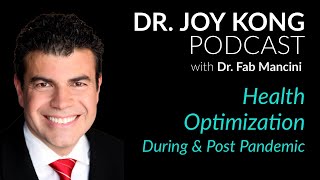
Dr. Fab Mancini discusses how the pandemic shifted people toward preventive health and functional medicine. He recommends 50% vegetables, 15-minute meditations, and sleep optimization, arguing that lifestyle choices shape gene expression more than genetics alone.
Chapters
Because of the pandemic, as you know, I'm going to give you a statistic that's going to really surprise you. For 30 years I've been asking consumers, tell me the three things that you value the most in your life. And health was less than 10% of the answers. They know what they should be drinking. They know what behaviors are very addictive. They know what they should stay away from. They know what's toxic, but they don't do anything about it. Now, during the pandemic, I've asked the same question. And over 80% of the people have put health as a top priority. So the benefit that the pandemic caused is to make us realize that we are not invisible.
Hi, Dr. Fab. I'm so honored and excited to have you as my guest. And I know you're a world renowned expert in health and longevity and you've been on all these media outlets, different TV channels, Dr. Phil, the doctors, you're a huge educator in this arena. So I'm just excited for you to share your wisdom with everybody about what you think are the most important things from your path and in all these education you provided, what do you think are some of the most important tips that you can give people?
Thank you, Dr. Joy, and thank you for having me. You know, for me, honestly, the health space has been a passion. Since I was 16 years old, I had a dream that I wanted to be a doctor. And ever since then I really started getting involved in understanding how our body heals. And that led me to become a doctor of chiropractic and an acupuncturist and energy medicine doctor, nutritionist, and really began this whole path that most conditions that we're struggling with right now can actually be prevented. I think we should start there because the mindset of most of us out there in the world is that we have to learn to live with our illnesses. What we have found in the holistic world is that there are many ways that one can actually reverse an illness or maybe even completely heal an illness. But it's not your conventional methods. It's not going to be a pharmaceutical drug, it's not going to be perhaps even a surgery, but it's going to be changing a little bit the mindset behind how you see that illness in your life. And also the behaviors we call that lifestyle that may be the root cause of that problem. Yeah, yeah.
So I mean, this is why functional medicine, even though the traditional medical route, all the doctors are still kind of poo pooing it. They don't think it's real science, even though it's based on so much research and very, very active research from all around the world, even with all the oppositions, it's growing at, I think, exponential speed. You've been in this field for a long time. What have you seen as far as the growth of this whole new way of doing health?
Well, it's interesting because yesterday I was interviewed by one of the leading medical doctors in Dallas, Texas. He's an internal medicine doctor, and his father and his mother come from a healthcare perspective, all in the medical, traditional medical way. All of a sudden, he became one of the leading doctors in Dallas, not because he was a traditional medical doctor, but as an internist. He was able to actually discover, through functional medicine, through hyperbaric chambers, which are just bringing the oxygen back into our cells, which is so important for our opportunity to heal, and many others. And I asked them that question. I said, you know, as a traditional doctor, why did you change? And why is it that many of your colleagues are still stuck in what they were taught in school? And he said, you know, it's interesting you asked that, because for me, it was. I wasn't getting results in some of the conditions that I was treating. And I am obsessed in helping my patients. And I will look at the science and I will see that there was out there things that we were not being reminded of in our conventions, we were not being taught in our continuing education. So I had to go outside of the box. And that's the way he said it. I had to go outside of the box to actually find where some of these techniques were, some of these technologies, some of these services that are allowing my patients to actually heal from things that I couldn't even begin to help heal 10 years ago, 15 years ago. So I think that both for providers, we need to be just really open minded and recognize that our oath is to support our patients no matter what. And if you have to stay open because the world is changing so rapidly and things and technology and services are coming in, that many of us are just stuck in the way we do business and do medicine and are not open, then for the consumers, I think it's very important that you don't rely only on one provider for potentially what could be some of the things you could be doing to help yourselves. You know, for years, 30 years that I've been over 30 years a provider, how many patients have come to me and said, why did. My medical doctor did not tell me about this? Or why did I not Anyone out there tell me that there was something that could help alleviate my suffering? And here I am, been suffering for 15, 20 years and nobody ever told me that there was this available. So I think open mindedness is the key to be able to recognize that there is a science that is holistic, that is non threatening. But the difference is that science is not trying to manage symptoms. That science is really obsessed with identifying what got us sick in the first place. I have found in my 35 years of being a provider, that is two things. Honestly, Dr. Joy, it is the way we think. Our thoughts are very toxic. In fact, the new science have said that the average person has over 70,000 thoughts a day. 90% of those thoughts are the same thoughts we had the day before. We are repetitive in nature, but here it is, 80% of those thoughts are negative in nature. Mentally we are very toxic. We're thinking negative thoughts. We are looking at the half empty glass rather than the half full glass. We're not looking for things that are working. We actually becoming victimized for things that are not working. We need to shift our attitudes a little bit. Then second, we realize that when the discovery of epigenetics, and for those of you that have never heard the words, for many years in science we have looked at genetics. Those are the genes that are inside your cells. And scientists were saying that they determine about 80% of who you become in life. If your parents had an illness and their parents had an illness, the chances that you were going to get that illness was very high. Well, today we know through epigenetics that the environment around the cell, which is our lifestyle, what we do in our lives every day, is what determines whether that gene is going to activate itself or not. Most scientists are saying that only 10, 15% of your genes determine your future. Even if your parents had diabetes and your grandparents had diabetes. Now, by changing your environment, what we eat, how we structure our lives, how the stress levels that we have, all of those things now you can maybe be the one that brings the change of diabetes in your family. So your children now can now have a better future. So epigenetics have really taught us that our environment, the things that we do on a daily basis, is what really is determining the health of Americans today.
Wow, that's extraordinary. Going from what we thought was 80% down to 15 to 20%. I mean that is so mind opening and give people so much hope. So what are the things that you have seen that can change how the genes are determining how we do? Let's Say we've inherited some genes that put us at risk of cardiovascular disease, of dementia, of some musculoskeletal issues. So what can we do so we can lower the, the determination of these genes?
Well, it's interesting because of the pandemic, as you know, I'm going to give you a statistic that's going to really surprise you. For 30 years, I've been asking consumers, tell me the three things that you value the most in your life. And health was less than 10% of the answers. See, most people don't really value health. And you look at it because they know what they should be eating, they know what they should be drinking, they know what behaviors are very addictive, they know what they should stay away from. They know what's toxic, but they don't do anything about it. Now, during the pandemic, I've asked the same question. And over 80% of the people have put health as a top priority. So the benefit that the pandemic caused is to make us realize that we are not invincible and that we need to protect our health. Because those individuals that were impacted by the virus more than anyone else were the ones that had an underlying health condition like obesity and diabetes and many others that were the reason that they got really sick and maybe potentially died, but that the people that were actually healthy were not that impacted by severe symptoms or even maybe hospitalizations. So when the CDC came up with that report recently that the majority of the people that were impacted by the virus negatively were people that were already sick, that made a lot of people recognize that I got to take care of my health because there is going to be other virus coming our way, and who knows what variants are going to come out in the next few months, et cetera. I think it's an opportunity for all of us to realize that health has to be a priority. We only get one body. It's that simple. I'll give you an analogy which I like because I think it's very important for people to understand. A lot of people out there are into cars. They want to buy a nice car. And let's say that you have all the money in the world and you buy a Lamborghini, which is one of the most expensive cars out there, or a Rolls Royce or a Bentley or whatever it is for you. Now, when you are going to put gas in that car, there's a little flap that opens up. And that little flap, if you read it, it would tell you the type of gas that you need to put in that Engine, in order for that car to run properly, what happens, the type of gas is usually the most purified gas, because otherwise that engine is not going to work very well. If you have a Lamborghini that can actually be the fastest car out there, one of the fastest car, you're not going to put unleaded or even leaded or even diesel gas. So imagine this. We have one body, a car we can always trade. If we break it, if we don't put the right gas, if we don't change the oil, we can always trade it in. But our bodies, we cannot trade in. What I teach my patients to do is that think of your mouth as a little flap. When you open your mouth, you're going to see and visualize a flap that says, more vegetables, less sugar, less carbohydrates, more fruits. If you do that now, you realize that this body of ours can actually last you, according to scientists, up to 120 years old that we are destined to be. But as you know, the average age of somebody that is passing on and the mortality of people is somewhere around their mid-80s. And why not live to be 100? I mean, I know I want to live to be 100. So during the pandemic, let me give you some tips of what we have found. One of the key things that a lot of people were not paying attention to during the pandemic, but the statistics kept growing and growing, is the fact that sleep is so essential to. For you to be healthy. Your body especially. Let's take your brain. Your brain is constantly bombarded with stimulus, with things that you're watching, hearing, all the senses. Well, this brain can get a little tired, especially if you're dealing under a lot of stress. Well, we're dealing with a lot of stress. I don't know anybody that doesn't have a lot of stress. And what we recognize is when the brain rests, when it can go to sleep, especially deep sleep, it can regenerate itself. In science we call the science of neuroplasticity. Neuroplasticity says today that the brain that you have right now can actually get stronger as you get older, rather than weaker, if you rested enough. The problem is that the statistics are showing that over 100 million Americans cannot sleep. They're having difficulty sleeping. When you don't sleep, what happens is that your body gets very exhausted. And then your chemistry, you start producing hormones like cortisol, which is a very bad hormone that allows your body to tear down to age and not allow you to be youthful. And Energetic. So during the pandemic, I realized that I would try to tell people what to do in order to help themselves sleep. But I would tell them to go to a nutritional store and find these different things. And during the pandemic, I just decided, you know what? I'm going to formulate, with the help of one of the top formulators in the world, some basic conditions that I'm seeing a lot of people are struggling with, and put all the best scientific ingredients in one bottle, one capsule or one powder, and let them benefit from that. And that way, what we know right now is that if you sleep really good, it's one of the best things that you can do, not only to look younger and anti aging, but also to feel rested. And it manages your clarity. It impacts your clarity, it impacts your state of being, it impacts your ability to function fully. And we all know how we feel when we don't have a good night's rest. So that at least is one.
Yeah, that's wonderful. I mean, a third of the US population have trouble sleeping. That's a really tough fact. And I see that, of course, in my practice all the time. And it's extraordinarily difficult sometimes to get people to sleep well. So what are some of these ingredients that you've found that have been really helpful for people?
Well, some of the things that we have put in there, of course, a lot of people use melatonin and all of that, and we put some of that in theirs. But what we have found is that if we have GABA and ionic minerals and some of the other things that we have found that were patent in the research, that your body needs to go into a deep sleep in order to produce something called a human growth hormone. The human growth hormone is probably one of the most powerful things that come from sleep because it's the hormone that we lose as we age. But it's one of the most powerful hormones to allow our bodies to repair quickly. When we're young, we have a lot of the human growth hormone in our bodies. As we turn in our 20s and 30s, we lose almost up to 50%. Then we go into our 50s, and then we lose another 20%. By the time we reach after 50, we're very much dealing with 10 to 20% of the human growth hormone. And that's why I think it's important for people to recognize that they need to pay attention. The other thing that I do, other than ingredients, is the fact that I share with people that it's very important that before you Go to bed. You try to eat at least two to three hours before you go to bed because your body needs to get into a more restful place instead of trying to use all that energy to digest the food. What we were finding is that most Americans, they work all day, many times they forget to eat lunch and then they get home all exhausted so they don't have time to cook. So they stop by the fast food or they order the pizza, or they order Chinese and they order all this food that may or may not be the healthiest for them. So most people unfortunately do not have a restful night. The second thing that I recommend is that you do meditation, if you can, before you go to bed instead of watching tv. We know that already the rays from the television stimulate our brain to the point that it gets us to too much alertness and we don't have the ability to sleep. As you know, you and I use Braintap, which is one of the greatest technologies. I have found that instead of just doing a basic meditation, they have device, a goggle that has the sound and the frequencies, but they also has LED lights that actually rest your brain and allows you to have even a deeper sleep than if you don't use it. It's been one of my greatest things that I've had for the last year and one that I love. So do meditation for some people if they have faith. We have found that in the research prayer just works just as well with meditation. So if you rather just pray before you go to bed, regardless of your religion, we have found that that can also calm your brain to the point that is very soothing, just like a meditation does. So those are the things that I recommend individuals to do and they work extremely well.
Wow, these are amazing tips. So the first one you mentioned about the negative thoughts, the 80% of the thoughts coming into our mind being negative. So I'm sure meditation will be a good way to to combat that, putting into a different state of mind. And the meditation such as brain tap, do have guided meditation where it brings you information that are more positive, more self affirming. What are your suggestions for people who are bombarded with these negative thoughts? Any other tips for them?
One of the things that is really beautiful about the understanding how the brain functions is the fact that now that we understand that the brain has the ability to change a thought pattern and take a negative belief system, let me give you an example. If you feel and you were raised in an environment that you were no good and you were not going to amount to Anything in life and you were never going to be successful because nobody in this family is ever successful. And that you're probably going to end up in jail or death or you're going to end up to be an addict or an alcoholic. There's a lot of people out there that struggle with that. Because those impressions, especially in the early stages of our lives, scientists say between 0 and 7 years old, are the most crucial to program the subconscious mind. The problem with the subconscious mind is it's over 95% of those thoughts that we talked about. You're not even aware that you're thinking negatively, but it's stuck in the back of your head. So for years we have learned that meditation, especially guided meditation, allows you to actually replace the negative thinking in your subconscious mind with positive thinking. So as you hear the meditation, you can actually change that pattern. But then in the last probably seven to ten years now we have actually electron microscope where we can see how a belief system or a negative thought, when it's replaced with a positive thought, you have new synapses that are born and the old ones completely go away and they disappear. So imagine this is like when you have a plant that you have all these weeds that are growing and all of a sudden you decide, I'm going to replace the weeds with some new fresh soil and new fresh plants. Now all of a sudden the weeds go away and they start dying and the new plants can actually surge. And that's exactly what's happening in our brains all the time. We are planting new seeds, we are planting new flowers that are more positive in nature. So instead of all that negative self talk, I'm not going to amount to anything. Your meditations, your guided meditations are going to be more of a self worth. I am worth of being successful. I am intelligent, I am valuable, I am going to be extremely rich. I attract money every single day, more than the day before. Whatever your guided meditation is, what we know now through science is that you have the ability to replace all those negative thoughts. So for me, I started working with my children since they were very young, because I know that we're not the best parents. We always do the best we can as parents, but there's no perfect parent. So what I wanted my children to have is to have the ability to do meditations as early as possible to start changing those patterns into more positive. And then when I bought the Brain Tap and I started using it, that's what I gave them as gifts. And to this day, they're 22 and 25, they say that it was the best gift I've ever given them because it's a gift that will change their future by being able to change all that programmation, that even if they have insecurities about their new jobs, or even if they don't think that they are capable of having a presentation in front of a CEO of a client, or if they don't feel like they will attract the perfect relationship in their life, you know, now they realize they have a tool. A tool to replace all of that. Yeah.
Amazing. Thank God for technology and for Dr. Patrick Porter for spearheading it.
My suggestion is do a guided meditation at least once a day. I do mine now three times a day because I realized that's more powerful. Based on new studies that have come out. Three times a day, 15 minutes or so is what we have found to be the ultimate. Also the second thing to change that negative self talk is surround yourself with positive people. Sometimes we have to let go of the toxicity in our relationships. But I have met so many people that are willing to suffer to not let go of a relationship of 20 years or 15 years that have drained them because they feel connected with that person. And I always said you have to be connected with yourself first. And when you're connected with yourself first now you can attract the kind of people that are going to be constructive in your life rather than destructive. And so there was a wonderful motivational speaker named Jim Rohn. And when I was 22 years old, I was able to meet him and attend one of his sessions. And he used to tell us one thing. You become the sum of the five people that you surround yourself with. So if you want to tell me who you are, if you want me to tell you who you are, just tell me who you hang around with and I'm going to tell you who you are. And he gave the explanation of why that is so. And because we're adaptive beings, we adapt to the behaviors of other people. So if you surround yourself with a negative talker, always complaining about everything, trust me, just a matter of time that you're going to be complaining too. If you surround yourself with somebody that's not ethical or maybe those illegal things, there's just a matter of time that you're going to start doing the same behavior. If you surround yourself with somebody that is a cheater or steals, there's just a matter of time that you're going to do the same thing. So surround yourself with the people you want to become. Like is what I always tell people. So Seek out people out there and maybe you don't know them directly, but maybe a friend of yours may know them and ask them for an introduction and try to befriend them, try to be around their space. And all of a sudden you'll find that your negative talk becomes more positive because now you see what is the potential in you rather than continue to be a victim like all the other people you were surrounding yourself with.
That's wonderful. I was trained as a psychiatrist, but you have given some of the best tips for mental health as far as good sleep. Let go of the toxic thoughts and let go of the toxic people around you. These are some of the best advice and not talked about enough in the whole holistic health space, especially about your thought patterns and the people you're surrounded with. So it's really nice that you brought that to light. So hopefully that's going to help a lot of people, really get them to take a look at the list of people that they're with.
I'll give you another one that When I was doing research for my fourth book, the Power of Self Healing, I had interviewed 50 people that were told they were never healed. And they were sharing with me what healed them. Some of them were my patients, other ones were other people's patients. But one of the things that I found very interesting is the fact that the people that healed knew exactly with clarity what they wanted. I have found that a lot of times people don't spend enough time thinking about what they really want in life, what they really want in this moment, what they want for themselves and their health, what they want in their relationships, what they want in their careers or jobs, what they want in their community life, what they want in their social life, et cetera. So a dear friend of mine is a guy named Brian Tracy. And Brian has been one of the most successful motivational speakers in life. And Brian teaches that we must write our goals every single day. Not once a year, not once a quarter, not once a month, but every single day. We have to know exactly what we want to accomplish in that day. Another way that I teach it is, is when I was 16, I came close to dying. And ever since that day, I learned a principle to live every day like if it's your last. And I truly live like that. I go to sleep at night not expecting to wake up. And I wake up not expecting. I mean, expecting to really have one more day to contribute. So imagine this. If all of a sudden you think that tomorrow is your last day, what would you put in that paper as to the things you want to accomplish that day, Would it be to have a better relationship with your loved one, to let them know how much you love them and care about them, or your children, to be able to go to your environment of work and be grateful for the people that gave you that opportunity? Or perhaps if you're the boss and the owner, that you're going to be grateful for all the employees that support your vision so you can have this very successful business. And if you're still hanging out to somebody that you haven't forgiven, would you call them and say, you know what? I forgive you. Or even if they're not here, would you just let go of that anger, frustration, resentment, which is killing you inside? We know that now. All those emotions change the chemistry of our bodies. So one of the things to do is to really live every day like, if it's your last, and start thinking about, if it's my last day, what would I do differently? And number two, write down specifically the three or five things that need to happen that day for you to feel like you were productive, for you to feel that that day mattered. Because during the pandemic, one of the interesting statistics is that the average person was watching over 10 hours of television a day.
No.
We have been averaging four to five hours over the last 10 years, but it more than doubled because people were binging, they were sent home, they could not go to work. Some people took that as a vacation that lasted two years. Some people are still there and they were watching everything on Netflix. The subscriptions of digital television more than triple during the pandemic because people were just trying to entertain themselves. They were trying to escape the reality of the challenges that the pandemic caused in our lives, whether we're financial, relationship wise, or whatever. To me, is your day really a day that was productive by you spending all that time watching television? I don't have any problem in you entertaining yourself if there's a show that you like or a movie you want to watch. But there is so much to do every single day to contribute to life. And that joy of contribution is what makes you happy, is that joy of contribution that creates the money that people will pay you for the value that you bring to them. So that way you can get out of the hole that the pandemic caused as far as your finances. But if you want to have a pity party, if you want to get into that victimized mentality, if you want to escape the reality, then unfortunately, you're going to end up watching more TV than you need to, overeat more than you need to, and not move your body because you're going to be stuck to that couch or that bed instead of getting out there and even doing jumping jacks and sit ups or push ups in your own living room just to get your body moving. And that's some of the things that people have really struggled with during this time.
I see. Wow. Yeah, well, so that's the bad news part. But earlier on you said a pandemic did bring people to more awareness to their health, which was what I was hoping for. So it's too bad there's a lot of people are just sitting around watching tv. But there are also other people who have done a lot more for their health. They probably have gone out into nature more, I assume, and they have started to do more self improvement because they got more time. Maybe they're reading more books, I'm hoping, and then they're maybe educating themselves on nutrition, on how, you know all the ways to enhance health to protect themselves. So maybe they're two different populations.
No, they are. And one of the things that we realize is that the people that have chosen to actually invest in their health and they're doing some of the things that you said, they're actually taking this time to work out a little bit more often. They're taking this time to maybe create smaller portions on their plates, maybe add a little bit more vegetables to that plate. I always tell people, put at least 50% of your plate vegetables and at least you'll be healthier than most people. Those people that started meditating on a regular basis, those people that actually started visiting holistic providers or medical doctors that have moved into the functional space or the holistic space that can offer them options, that was a very big thing that we started noticing for us in the chiropractic space. Most of our practices grew tremendously over the last two years because people were looking for ways to stay healthy that was holistic, that was natural, and that they would feel the benefit immediately. And they see chiropractic a lot as a wellness provider. So they will go to the chiropractic office asking for tips on what can I do, what stretches can I do, what workouts can I do, what should I be eating, what supplements should I take, how often should I get adjusted? If you believe in acupuncture, a lot of the people that went to acupunctures, naturopaths, homeopaths, they also found that there were different ways to handle issues Whether it was your allergies or whether it was the indigestion, whatever it was, there are different options. And then, of course, in the spiritual level, you mentioned something that I wanted to bring light to it, and that is being around nature. The one thing that the pandemic caused in the isolation, in getting everybody to go to their homes and not come out, is that it made us understand the value in being in nature. Just going outside, walking in your neighborhood, noticing the plants and the growth of the plants around you, the grass that you're walking nearby, noticing nature. If you live by the ocean, just watching a sunset or a sunrise, just walking barefooted on the sand, dipping your toes on the water, so that way you can feel some of that earthly energy that comes. So maybe you live by the mountains and you decided to start hiking and even though you start slow, you realize that, hey, 20 minutes of hiking made me feel alive. I could smell the fresh air, I could be around nature. So being around nature has been extremely beneficial for people and is reminding us to make time to get outside, to get away from the indoor spaces and go more outdoor space. And then emotionally, one of the things that we found out is, I mentioned one, which is forgiveness. We need to let go of the anger and frustration and resentment. But another one that was very interesting that came up is gratitude. You know, during difficult times, we notice that if you focus on what you've lost, you lost your job, you lost a child, you lost your mother or father, you lost an uncle, an aunt, you lost a friend. If you focus on the loss, that does not stimulate healing in your body. But if you're grateful and you focus on the gain, hey, I'm still here, I'm still healthy, my children are still healthy, my husband or wife are still healthy, my mom and dad are still healthy. You know, focus on what you do have. We have noticed that those people have really increased the level of health that they have because they're not beating themselves up or focusing on what they've lost, but they're actually appreciating what they do have. Maybe I had to downsize because I can't afford my new house after I lost my job, but you still have a roof over your head. Think about it. You could be in the street and that would not be a lot of fun. So be grateful for the fact instead of, oh my God, I can't believe that now we have to live in this two bedroom apartment, you know, but be grateful that you have the ability to be in a two bedroom apartment instead of on the streets, if you had to let go of your lease of your car because you couldn't make the payments, the fact that maybe you have a cheaper car or something, that doesn't look that sexy, but it still gets you to where you need to go instead of taking the public transportation. So I'm just saying be grateful. Be grateful for everything and everyone in your life. And that is one of the emotions that are the most healing that we have found.
So maybe get up in the morning first. Write down what you're very grateful for. It doesn't have to be a long list, but you need to put at least one thing there. Start the day right. Right. And then what you want to accomplish, the good things you want to bring to your life, and the three things that you think you can accomplish so you can feel good about the day.
You know, it's so funny. One of my dear friends was Louise Hay, and she published my fourth book, and I got to know her very well. We lecture everywhere together. And Luis would tell me, the way I practice gratefulness is I wake up in the morning, and as soon as I open my eyes, I give thanks to my bed for giving me the opportunity to have a restful sleep. And then I go to the bathroom, and instead of beating myself up, I look at myself and I say, I love you, Louise. I'm so grateful for you being here another day, being able to contribute and inspire the lives of millions of people through your books, through your tapes, through all of the things that you do through Hay House publishing. And she would actually go through that routine, and then she would look at the breakfast table and be grateful for that and the fact that she had a beautiful garden. And she will be grateful for the beautiful garden and the staff that was taking care of her, she will be grateful for them. And that was how she lived her life, being grateful every single moment.
Wow. Wow. Yeah. Something to think about.
So thank your bed.
Yeah, that's right. I never thought about that. Yeah. Ok. I can start there. Yeah. Thank you so much. This has been an amazing interview and so such enlightening information that you're sharing with everybody. I think it's going to help everybody, especially, you know, after we've gone through this, you know, two years of pandemic where there's a lot of suffering and a lot of confusion and really giving people a way kind of understanding what had happened and what we can learn from this. So this is super helpful. Thank you so much.
My pleasure. And if people will go to my website, I have a Lot of resources that I give away for free on tips how to be healthy. And they're more than happy to benefit from all of that. Because you said something earlier that I think is important. We have to make the time to educate ourselves and invest our time into what's going to make us healthier. And that sometimes comes from a resource. It could be this video, it could be an audio tape, it could be a podcast, it could be a YouTube video, it could be whatever it is. But make time every day to do something every single day to help you be healthier. And that all of a sudden will take its own momentum and you realize that the choices you make today is what determines how healthy you are tomorrow. So forget about what happened in the past. Your diet was terrible. You didn't exercise, you didn't do this. You gained 15 to 30 pounds like the average American. Forget about that. Begin today with some new choices. And don't try to make all the changes immediately. One choice at a time. Today I'm going to make my plate a little bit healthier. Today I'm going to move my body maybe 10 more minutes. Today I'm going to spend 15 minutes looking to a healthy resource that's going to teach me a little bit about how my metabolism works, or how can I improve my digestion, or how can I actually purify my air around me, or whatever the case may be. Make those choices every day, and little by little, you'll notice that it becomes a way of life. And now you discover the secret of what it really takes to be healthy. And that is making good choices every day, one at a time. And then all of a sudden, you'll find yourself looking younger, looking the best you've ever looked, feeling energetic, feeling a positive and abundance in your mindset. And that's how we. We do it. We have to start with where we are, and we make good choices, good decisions every day, and pretty soon, that becomes our life. Yeah.
Wonderful. And I know you've written books about all these subjects, right?
So four books. I just wrote. Another one during the pandemic is coming out in a couple of months. But I just. I just feel like I never thought I would be a good writer, but I have a lot of common sense. But I break because I do so much media. I have to break complex subject matters into simple, digestible tips. And what I believe right now is that people are looking for things that are easy to do, that do not take a lot of change in my lifestyle, that do not require a lot of my Energy, because I'm already overwhelmed. That can give me the most bang for my buck. If I'm going to change 10 minutes or invest 10 minutes of my time, what's the most that I can get out of those 10 minutes? And that's what I've been trying to help people over the years is no matter what's happening around us, is to recognize that there are things that you can do. They don't require a lot of time, a lot of money or a lot of effort. They just require for you to make a decision. I'm going to do them and I'm going to be consistent in doing little things every day until I get to the point of where I want to be.
Yeah. And I'm sure that's what you practice yourself, right. To get to this very happy, balanced place where you are accomplishing a lot in life while enjoying life every day.
And, you know, it's interesting because I look at others that help me improve the areas that I know I can improve upon. And once you get into this routine, you realize that it's a lot of fun. And every day you look for little changes that you can make to make it a little better than yesterday and a little better than yesterday and a little better than yesterday. And now all of a sudden you realize, wow, I've come a long way in the last week, in the last month, in the last year. And people around you, this is what I love. When people around you start noticing not only that perhaps your skin is a little bit clearer or perhaps your hair is a little healthier, or maybe you've lost a few pounds, or perhaps your energy is more uplifting, or maybe you're being more positive than you were before or you carrying yourself with a little more confidence than you were before. That's when it starts getting fun. Because that's the way that others will validate that the choices that you're making were worth it. And that's what I think a lot of people are looking for that validation.
Wonderful. I hope everyone start to get on that fun journey. So what's the best place for people to find you and follow you?
Well, if you look at my picture here. Dr. Fabmancini.com D R F A B M A N C-I-N I.com where my name is. You can find all the resources there and just enjoy them and give yourself permission to just try something. Just one little thing. Maybe I'm going to do a meditation for seven days before I go to sleep. Fifteen minutes. That's all. Maybe I'm gonna do 20 push ups a day, 20 sit ups a day, 20 jumping jacks a day. Don't try to change everything overnight. Just little changes. And then what's beautiful there is you're gonna get thousands of hours of resources from books, audios, interviews that I've done with very famous people about what are some of their rituals and their tips of what they do. And I hope that you enjoy them.
Fun. Yeah. Wonderful. Wonderful. Thank you so much. I love this interview and thank you for your wisdom.
Thank you.










