How GENES Affect Us... Learn About FUNCTIONAL GENOMICS & More - Harris Khan on Dr. Joy Kong Podcast
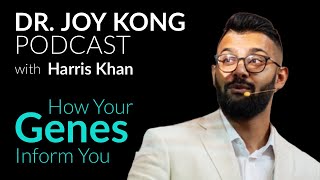
Harris Khan explains how functional genomics analyzes six health systems, from mood to cardiovascular health, by looking at how genes interact with each other and the environment. His company uses genes like FTO (satiety), COMT (mood and estrogen), and BDNF (neuronal growth) to generate personalized diet and supplement recommendations instead of one-size-fits-all advice.
Questions this video answers
"How GENES Affect Us... Learn About FUNCTIONAL GENOMICS & More - Harris Khan on Dr. Joy Kong Podcast" — created/uploaded June 6, 2022.
Mood & behavior; sleep; diet & nutrition; cardiovascular health; hormone profile; anti-inflammatory / cellular detox pathways.
FTO.
COMT (catechol-O-methyltransferase).
FOXO3 — described as having the optimal/fast version in roughly 10–20% of the population (per the speaker).
Chapters
The versions of this gene are strongly associated with a person's experience of satiety. And satiety is the feeling of being full. Right. And so when you have a variation in this gene, your mind and your body don't communicate fast enough to let.
You know when you're full from the genetic profile. Some people are geared toward being entrepreneur. Some people are geared toward scientists, literally.
There are genes that are predisposing you to certain behaviors because of how they deal with the neurotransmitters, the chemicals in your brain that influence mood, behavior. Things like dopamine, which is tied to pleasure. Things like noradrenaline, which is tied to anxiety and woe.
Hello. Welcome to the Dr. Joy Kong Show. So, I'm Dr. Joy Kong. I'm your host, longevity expert, and my purpose is for you to look great, feel great, and be great for every day of your life. And it is all about the quality of our lives. So I brought together a team of thought leaders and longevity experts to help you achieve the goals in your life, which is to be happy and healthy. So if you like this podcast, please subscribe. And now I want to introduce you to our guest who I'm really, really excited about. So, Harris Kahn. Harris, welcome to the show.
Thank you so much for having me, doctor. Appreciate it.
Yeah, I've been dying to interview you ever since I met you and had a chance of having deep conversations with you about science. And I just thought you are an incredible source of knowledge and you're so passionate and you're so good. I explained explaining and you're bringing different aspects of health and genetics, everything together. You're just really fun to talk to. So I'm excited about our conversation today.
Thank you so much. Appreciate it. Pleasure is all ours. And we're excited to tell everyone about what we're doing in the field of genomics.
Right. So I just wanted to give listeners a brief understanding. So you studied biomedical sciences, but you went into the pharmaceutical route right after graduation. Right. So you went to Canada's largest genetic, I mean, generic pharmaceutical company, and you were developing, you know, in the testing phase of billion dollar drugs in infancy stages, and then you left that to found this new company that has to do with genetics and genomics. So. And now you are the director of product development for the DNA company. I love the name. And you are, I think you're the brain behind the company. So I want to ask you about your metamorphosis. How did you go from working for a pharmaceutical company to go into genomics and what is the difference between genomics and genetics anyhow?
Sure, sure, sure, yeah. So my, my sort of journey is a little bit interesting. I got, I went, I always wanted to be involved in health and my parents certainly egged me on to get into, into the medical field. And you know, I went into, I did my, my bachelor's undergrad in biomedical sciences. But something inside me just said, you know what, I don't think I'm cut out to be a doctor. Which I by the way, later learned was because of my genetics. And I'll get to that after. But something about it just didn't seem like it was going to be a fit for me. And so I decided at that time I was 18 years old, so I was naive and I was like, you know what, I'm going to go into pharmaceuticals and maybe build drugs and see if I can support the innovation of healthcare that way. I ended up working in, I was in formulation development. So I was really involved in sort of the preliminary development of several billion dollar drugs in their infancy stages. So we were building and testing and building and testing. And I guess after doing that for a few years, I just became disillusioned with the industry because a lot of it, especially in the generic pharmaceutical side of things was it's mostly about profits and it's mostly about how quickly you can mimic, you know, other drugs. And there, it didn't really feel like there was a lot of innovation in healthcare happening. It was more about, well, how do we, how do we make a drug that's going to be super profitable? So I became quite disillusioned with that industry and I, I decided to leave. I met with a geneticist, clinical genomicist in fact, by the name of Dr. Mansoor Mohammed, who was a PhD in clinical genomics. And he had developed this incredible DNA test. And I remember first meeting him and he was like, this isn't your regular 23andMe test. This is a serious opportunity for people to develop preventative techniques for improving their health and wellness.
Question, what's the difference between genetics and genomics?
Yeah, so genetics is a study of genes. You're, you know, it's, it's like you're hardcore studying about genes and the different genes. Genomics is the study of how genes interact with each other and interact with the environment, lifestyle and diet of an individual. So genomics looks at the full breadth of the involvement, the crisscross between genetics, which is innate and the external environment, as well as how genes interact with each other. So genetics is really, I'M studying the gene. Genomics is like what is the impact of this gene on other genes and on the environment, lifestyle, diet of an individual. So that's genomics. So we got into that and we did a lot of work in customizing supplement solutions, nutraceuticals for people based on their DNA. We got really, really specific and that eventually led to an incredible amount of insights being discovered. And today we're just helping people understand how their DNA can help get their health and wellness more precision based. Right. So it's about becoming a lot more personalized and precision based with your approach to health and wellness. And that's what we specialize in.
Yeah, so I took the test, I haven't gotten the results yet. So what areas does it cover? What type of information does it give you?
Yeah, so the way we broke it down is we identified that there are six critical systems that, that if people were to take advantage of and study and understand how these six critical systems work, they'll improve a significant amount of their health and wellness. And they are your mood and behavior. So your, you know, your mental health, your how do you perceive the world around you? Your sleep, your diet and nutrition profile, your cardiovascular health profile, your hormone profile, and finally your anti inflammatory profile. So that's your sort of, you know, what's your cellular detoxification capacity? Because ultimately your anti inflammatory profile is what dictates your cardiovascular health, your dietary health, your sleep health, because they play a huge role in that overall process. Right. So those are the six systems that we look at and in each system we're understanding how the changes in your genes, the variations are influencing cellular activity. That's ultimately going to put your predisposition for certain health outcomes at a certain level. Right. So are you more likely to have insulin resistance, are you more likely to have, you know, higher levels of cholesterol, for example, because of a genetic variation? So these are the kind of predispositions we can determine. And then of course, more importantly is, well, what do you do about it? Right. And that's the big question is like, you know, are these my genes forever and am I stuck with them? Yes, but it certainly doesn't mean that you can't do anything about it. And if you're intelligent about supporting your genetic profile, you can actually do much more than you than people would have you believe.
So I think that comes to another question because what you do is called functional genomics. And then I hear people talking about neutral genomics testing. Is there a big difference between these two?
Yeah. So Nutrigenomics is one aspect of functional genomics, right? So nutrigenomics focuses on, well, what genes influence the diet and nutrition profile of an individual. And what we're saying is, well, that's just one of many systems. And functional genomics is the approach. Right. So it's about looking at the body as a system, as a system of different functions, and then understanding how these functions play a role across the board. So, for example, the same gene that influences your mood and behavioral profile, comt c u m t catechol methyltransferase. That gene produces an enzyme that's either moving really fast or really slow at clearing out neurotransmitters like dopamine and noradrenaline. That's affecting your pleasure, your sadness, anxiety. But that same gene also influences, for example, how a woman metabolizes her estrogens in the hormone pathway. And so that same gene that influences your brain and your mood of behavior also influences your hormone profile. And so when you see how they interconnect, now you can understand the big picture that. Hold on a second. Now I understand why there are heavy mood fluctuations while I go through my menstrual cycle, because the same genes that are influencing my estrogen metabolism are also influencing my mood and behavior profile. So being able to provide those insights in a functional manner, in kind of like a holistic, comprehensive manner, is what we specialize in.
That's so cool. Putting the puzzles together.
Yeah, exactly. It's putting the piece of puzzle and then you're stepping back and looking at the whole picture. Right. You want a more pixelated version, a 4K version of your health and wellness, rather than a 360p version of your health and wellness. So we get very, very finite and very precise about a person's health and wellness profile.
Yeah, and I remember you talking about things, there are several things that were so fascinating. You talked about obesity genes, right? Some people have the genetic predisposition to be obese and how certain populations have those genes, but because the dietary adaptation, they're not obese. So can you talk a little bit about that?
Yeah, sure. So, I mean, it's funny, it's unfortunately named, but one of the strongest association based genes to obesity is known as fto and it literally is called the fat and obesity gene. And while the clinical or the cellular mechanisms aren't 100% clear currently, what we do know from clinical studies is that the versions of this gene are strongly associated with a person's experience of satiety. And satiety is the feeling of being full, Right? And so when you have a variation in this gene, your mind and your body don't communicate fast enough to let you know when you're full. And so you have a hard time knowing when you're actually full. And satiety is different from satisfaction. Like, you can be full, but you're not satisfied. Like how many people are satisfied after eating a bowl of broccoli? They know it's healthy for them, but they're not always satisfied with the meal. And so they might look for satisfaction in the form of ice cream or something sweet or something just to satisfy their pleasure profile. And so when you have a variation in this gene, it prevents your mind from communicating fast enough with your body that you're actually full. And that encourages overeating, Right? And if you combine that, and here's where the functional genomics comes in, if you have a increased likelihood to overeat and you've got a pleasure profile that gets really, really excited, it binges on behaviors. Well, guess what? When it comes to your favorite meal, your pizza, your cheesecake, whatever it is, you just can't stop eating. Like it's literally genetically programmed for you to be able to, you know, unable to stop eating. So we found that extremely interesting and it points to one of the limitations of nutrigenomics is it's looking at a gene based association. One gene this thing, one gene this. And what we're saying is when it comes to diet, nutrition profile, before we even get to what you eat, it's like, why do you eat, how do you eat, where do you eat, when do you eat? All these questions we have to ask because there's a huge psychology perspective to food. Now, going back to the population genetics, what we do find, this is the beauty of the epigenetic influence, right? The adaptations of populations. What we have found is one of the populations in the world with the highest percentage of risk for obesity from a genetic level are folks from Thailand, Laos, Cambodia, that Southeast Asian population. But if you were to sit here and think about the average Thai or Laotian or Cambodian person, you wouldn't imagine someone who was obese. In fact, you'd imagine the opposite. Someone who's very thin and lean and, you know, is easy, can easily put on muscle, for example. And when you study the palate or the food adaptations of these people, what do you find in their cuisine? Well, what you find is diversity and variety in the flavor profile, in the taste profile, in the sensory profile of their food. Right? I always tell people, Isaiah, how Many pieces of fried chicken could you eat? 2, 3, 4, 5, 6 pieces? How many plates of Pad Thai can you eat? Probably not more than one. It's almost impossible to eat two plates of pad Thai because Pad Thai is designed to satisfy the person's palate, right? So if you think about the ingredients and the staples of Pad Thai, you've got the chewy noodles, you've got the umami fish sauce, you've got the sour tamarind and the sugar, you know, and the crunchy peanuts that they put in there. So there's a huge complex experience that you're eating that your mouth is like, whoa, I am, I'm satisfied right now. Like, I'm happy.
And so by the way, I'm sorry to interrupt you, but that plate of Pot Thai will be considered, A lot of people will say, no, that's not healthy for you. That's so there's so much carb.
Yeah. And it's not that it is, it's that you, you can eat a very small plate of Pad Thai and be satisfied and not have to eat anymore, right? That's the thing that you could literally eat half a plate of Pad Thai and be totally fine with it. You don't feel like you need to eat a huge heaping bowl. The problem is people, when they eat pad Thai, you know, if you're building a mound of, of of noodles, that's a big problem. But even eating a small portion of Pad Thai can be very effective. And, and if you apply that across the board, think about the most high end luxury Michelin star restaurants or sushi restaurants. If you look at an omakase menu, it's exactly designed for satisfaction. It's like super small portions, but every bite has like umami and sour and salty. And it's like, it's this whole experience. So the mind and the mouth feel so satisfied that you don't necessarily need to eat a lot, right? So the Thai people have developed this and the Laotian and Cambodian, their palate is designed for satisfaction very quickly and so they don't actually eat a lot. If you look at their pal and even their eating mechanisms, they're not eating frequently, right? They eat very, very small portions and then they move on with their day. And they have very difficult, most of them have very difficult laborious lives. So you don't find a huge percentage of obesity in that population. But if you took a Thai person from Thailand and you put them in North America and you put them in front of a computer screen for eight hours a day and you gave him American sized portions of pad Thai. He would go obese very fast. And that's the epigenetics, because I changed him from his, from his location in Thailand. It's under the heat, he's working outside, he's eating very small portions. And I brought him to America and he's working 12 hours a day and he's stressed out and he's drinking garbage, you know, Soylent or whatever it is, and he's eating huge plates of pad Thai because he's missing his home. He's most definitely going to have a much greater risk and probably a greater, a faster reach to obesity than the average person. Right. So it's that like change in epigenetic factors that can trigger and exaggerate a person's genetic predisposition.
Yeah. So fascinating. Yeah. And I think you were also, you mentioned longevity genes too, right? There are genes that are kind of marking you if you have those genes that you tend to live long.
Yeah. So, you know, when we talk about longevity, right. You know, beyond aesthetics and external things that you can use for longevity, there is an innate longevity within us that has a lot to do with the way we manage oxidants. Okay. Oxidants are like super bad for aging, right? Free radicals, reactive oxygen, they all mean the same thing. These oxidants, they initiate or they speed up the aging process by causing mitochondrial dysfunction. They contribute to wrinkles, they contribute to the graying of hair. And so from a longevity perspective, internally, cellularly, the better you are at having, or you at antioxidation, the better you are at dealing with oxidants, the slower your aging process is going to be. And now, of course, if you look at what drives the antioxidation process, number one, it's the superoxide dismutase pathway, SOD2, and glutathione peroxidase. So glutathionization and the superoxide dismutase pathways, these are two extremely important antioxidation pathways. Glutathione is the most abundant antioxidant in the body. And in fact, it's the second most abundant compound in the body after water. So you can imagine how important glutathione is to the body. And so there are genes that control, almost like a command center, how fast you're able to deal with oxidation and how fast you're able to deal with dead or dying cells or cells that have gone out of whack. Right. Because everyone knows it's the one time that the cell isn't Killed off while it's going crazy replicating, that leads eventually to the development of tumors and cancer. And so there's a specific gene in our, in our DNA called Fox O3. Fox O3 gene. This gene is like the command center of the, of the anti inflammatory process. So it's like almost imagine like this security guard with a bunch of like, you know, screens and he's watching the whole body and he spots like a cell going haywire or he spots a cell that's dying and he goes, okay, we got to go to sector 5 right now and deal with that gene or deal with that cell. So some people have a version of that gene that's like super laser fast at dealing with problems. Okay. They hired like they hired the cream of the crop security company to deal with it. Okay? That's what they got in their body. And other people, most people, the majority people, just have your regular run of the mill security guard. And so those people that have the super high version, they're rare. They're 10 to 20% of the population at most. And the unique thing is if you were to study the blue zone regions around the world, so Okinawa in Japan, you know, Mediterranean, Greece, Nepal, areas in the Himalayas, over the age of 100, beyond their, you know, stress less, eat certain foods, whatever it is, from a genetic perspective, many of them carry the fast or the optimal version of this foxo3 gene. So it literally is a gene that helps contribute to your longevity. Now I know everyone here is thinking, well, how the hell do I know if I have it right? So the first thing is get tested. Even if you don't have it, there are nutrients you can take to help speed up the expression of that gene. So even if you don't have the optimal version, you can hire or train your security guard to get better at spotting the problem. And, and there are things like resveratrol. Extremely effective, right? Resveratrol is extremely effective in supporting expression of FoxO3 gene. It's also, I mean, if, you know, if anyone here has studied the work of David Sinclair, Dr. Sinclair talks about resveratrol as kind of like his special thing. There's multiple studies that suggest that resveratrol has fantastic antioxidation properties. But beyond that, things like quercetin are extremely effective. Things like egcg, right? Green tea extract. The egcg, the epic coilatinate that you can get from, from green tea, is extremely effective in, in, in antioxidation and slowing down the aging process. So, you know, don't worry that even if you don't have the gene, you can certainly help activate the expression of that gene by introducing some of these compounds. Resveratrol is found in grapes, for example. It's found in many berries. Berries, old blueberries are extremely effective in the anti aging process. So things like that are, you know, people just, if they just turn on one or two of these hacks, they can significantly help slow down their aging process.
That's so hopeful. That gives a lot of people hope.
Yeah.
In your report from the lab test, the saliva test, does it give you recommendations? You don't have the optimal form of genes. Does they give you recommendations? What supplements?
That's exactly what we did. I mean, if you have the optimal, you know, version of genes, kudos to you. But if you don't, we certainly highlight some of the nutrients, single ingredients and even some combinations of nutrients that are going to be supportive. Right. So supplements, you know, our big thing with supplements is if necessary, when necessary, and given in an intelligent manner. Right. So if you can target what it is you're trying to, trying to treat or achieve or improve or optimize with a specific formulation for a specific period of time, you'll see much better results than trying to take 20, 25 pills at a time every single day. Because remember that you're also putting a lot of pressure on your liver to metabolize all those supplements. Right. So we take a very intelligent approach to supplements and identify where specific formulations or ingredients can support genetic expression.
That's fantastic. And well, as a psychiatrist, ex psychiatrist, I'm also super excited about the understanding of mood, personality and you even mentioned that you able to, you know, from the genetic profile. Some people are geared toward being entrepreneur, some people are geared toward being scientists. Like, can you explain that a little bit?
That, yeah, for sure. So, yeah. So it's, you know, mood and behavior is where I find is it's the most empowering thing about doing a genetic test is your understanding your mood and behavior profile because it unlocks so many answers, it gives the answers to so many questions. People say, why am I this way? Why is it that when I'm writing an email and I notice a flickering light or a ticking clock or someone is talking in a conversation, I can't focus anymore until I deal with that. Why is it that, you know, every time I watch a scary movie, even if I've seen it five times, I still jump and freak out at the same scary scene? I have the spook gene. There's an actual gene that is related to being spooked easily, Right? Why is it that I binge on my favorite? Like, I can go two weeks without watching Netflix, but the minute I sit down and watch my favorite episodes of, I don't know, Game of Thrones or whatever it is people watch nowadays, I can watch five episodes in a row, I'll just binge the heck out of it. Versus other people are like, I only feel pleasure when I'm in my business, when I'm doing sales, or when I'm, like, in the moment. That's where I feel pleasure. Like, there are people who are addicted to work because it's the only way they achieve some sort of satisfaction. And that all comes down to your genetics. Literally. There are genes that are predisposing you to certain behaviors because of how they deal with the neurotransmitters, the chemicals in your brain that influence mood and behavior. Things like dopamine, which is tied to pleasure. Things like noradrenaline, which is tied to anxiety and woe. Things like serotonin, which has to do with calm and focus, or even things like bdnf. So people out there, this is really important for people with traumatic brain injury or any kind of trauma to the brain. People with low levels of BDNF tend to be more susceptible to the severity of outcomes associated with traumatic brain injury. And here's the crazy thing. What we have found is trauma in the brain isn't just physical. Like, yeah, you can have a concussion, you fall off a ladder, you get hit on the field or something. But some people can have chemical trauma. They can be exposed to certain chemicals, and the expression is similar to that of being concussed, Right? And there's even mental trauma that can do that. You know, you always hear people, oh, I was shell shocked. You know, they picked up the phone and they found out a close relative just suddenly passed away, and they're shell shocked. And where does shell shock come from? From literally in the war, when bombs used to fall and their heads would shake because of how close they were. So they're literally experiencing a mini concussion. Now, people with low levels of bdnf, they have a harder time because you know how neurons work. They kind of work like this, and they communicate through electrical impulses. Well, when you have an injury, some of those connections die. And if you have low levels of bdnf, you're not as good at building new neuronal connections. And so that can take a longer time for you to heal. But here's the incredible thing. You know what increases BDNF levels using the sauna? Going out for exercise. So there's people, I'm sure, listeners in here who are like, man, I feel really good after I go for a workout or after I'm outside in the sun or out after I'm come out of the sauna. Like, I feel like I can conquer the day. Yeah, because you've literally given, like, a boost to BDNF levels in your brain. And it's incredible the kind of changes that people feel in their. In their brain power just by doing these little tweaks. But you wouldn't know that until you did a genetic test, right? You wouldn't know that this is my predisposition until I understand how those genes are influencing my mood and behavior profile. So when it comes to mood and behavior, I mean, some of the insights we have are just, you know, they surprise us every day because, you know, there's people out there who can spot an angry face in the crowd. They can read someone's body language right off their face. They're empaths. They immediately associate with the person's, you know, feelings. But those same people are at greater risk of ptsd. Those same people are at greater risk of anxiety and burnout. Why? Because they have emotional memory imprint. They allow emotions to influence their. Their memories, their thoughts, their. Their feelings. So, you know, they're the kind of people who have an emotional trigger, like they smell something or they hear something or they see someone, and it reminds them of a past trauma, and it's like a negative feedback loop. And it can get really difficult for these people to manage stresses because they just are hardwired to feed off the stress in a negative fashion. And again, there are ways that we can help them manage that and overcome that. Right. If, you know, you know, and this is one of my favorite hacks. A lot of people feel a lot of anxiety doing certain tasks, like paying the bills. I just don't want to pay the bill, or I don't want to go talk to my boss, or I don't want to talk to this person because they give me a bad vibe. And one of the most effective ways in helping you overcome difficult tasks is to schedule a fun and exciting task before and after that task. You see what I mean? So if you're going to pay the bills and you really don't want to pay the bills, you may schedule dance class with your partner right after you pay the bills. That's your reward. And so then what happens is it makes the accomplishing of that difficult task a little bit easier because you're looking forward to what's coming after you see what I mean? And so by doing this, you can accomplish a lot of difficulty. Like if I pay the bills on time this month or if I talk to my boss about this, I'm going to reward myself with X. Like I'm going to go out for a dance with my partner or I'm going to book a trip for myself. And that can be really effective in helping people overcome difficult moments in their life.
Interesting. Yeah, yeah. So definitely, I think stress anxiety, that, that has been prevailing theme in our society. So if people can make some little changes in how they arrange these tasks, that that's going to help a lot.
And everyone's working from home. You know, it's Covid season. It's been Covid season for two years. People are fatigued with all the stresses of being at home in life. And so it's incredibly important to be very precise with what your stress management tactics are. Right. Not everyone, like, feels relaxed when they listen to classical music, whatever it is. For some people, if they just put on earphones and they listen to skiing down a hill, they'll get super relaxed because that's their idea of relaxation. Right. So don't think that, well, I've got to listen to classical music or I've got to do mindfulness meditation to fix myself. No, it depends on your genes. And if you know what makes you happy, you can make your de stressor something related to what makes you happy. Right. Like some people just want to go run down a hill to feel better and deal with their stress, but that's what works for them. And so it's really important you know what works for you. And you do that to manage your stress rather than trying to fit into a box of what someone else told you will manage your stress. Right?
Yeah. And is your genomic, genomic testing able to tell if somebody is prone to ADHD or can assist psychiatrists in diagnosing something like adhd?
Yeah. So ADHD is a really interesting phenomenon because, you know, from a genomic perspective, there's different manifestations of adhd. There are people who, they don't do well or they don't, you know, they don't perform outstanding unless it's something they really enjoy doing. So, like, take myself, for example. I hated math all through my life. I just did not like math. And I didn't do well in math through high school, except for the year before I went to college. And the only reason I did well in math that year was because if I didn't, I wouldn't get into the college that I wanted to go to, right? So now the driving factor, the thing that got me super excited was getting into the college that I wanted to. And I was able to use that drive, that excitement to do well in something that I normally wasn't well. And I was diagnosed with adhd, but it wasn't that I had HD adhd, it's just that I didn't find pleasure in the things that I was studying, right? So I did really, really well in the things that I enjoyed learning about, the biochemistry and all that. I aced all those. But I didn't do well in math and I never liked it. And so that's why I didn't do well in it. So that's. That had been classified as adhd, but it's more about knowing where a person is more likely to excel. And if I had known earlier, I could have been like, okay, if I don't like math, why am I taking a math course, Right? Like, I'll go take courses that I enjoy. Now, another type of ADHD are people who, they get excited about new things, but if it gets repetitive, they get bored and they want to move on. Or if they've achieved what they want to do, they get bored and they moved on, right? So there are like serial entrepreneurs, like, oh, this looks fun and exciting. Let me go try this out. And they'll do it for a few days, and it's a cool little hobby, but then it becomes repetitive and they're like, you know what? I'm not interested in this anymore. I'm going to go try something else. And then next week you find them, they're skydiving, and then the week after they're bungee jumping, and the week after they're snorkeling because their brain is processing dopamine at such a fast rate that as that unless the activity is generating all that dopamine because it's exciting, they're going to get bored of it and they're not going to find pleasure in it, right? So they're the people who struggle with reading books, because reading books is very monotonous, right? It's the same page over and over and over again. But for some people, like myself, if I like the book, I'll finish it, no problem. I'll finish it like this. But if the book is boring to me, you couldn't pay me to finish the book, right? Because it's not in my interest it hasn't generated that dopamine response. So we work with a lot of children, parents, teachers, psychiatrists, to help them identify is this truly ADHD or is this a predisposition at the genomic level that we can actually do something about without the use of Adderall or Ritalin or whatever other psychiatric drugs that are out there? We can use real world techniques to help drive these often intelligent people. And most people with ADHD are extremely successful because they find their niche, their thing that they enjoy and then they excel in it and then they do super, super well. You don't have to. They were, they aren't necessarily straight A students out of college. They might be dropouts, but they're very successful because they found their niche and they excelled in that niche. Right. And that's a genetic predisposition that we can very quickly identify. We do a lot of career counseling for children this way. We're like, you know, your son is not cut out to be a doctor, I have to say, from a genetic predisposition. Right. He, he's too empathetic. He's too, and he's, you know, he might be influenced by the trauma of working in the emergency C section or the emergency section of a hospital, or he's not, he's not cut out to be a soldier or cut out to be a paramedic because he has a risk of being influenced by negative events. And when you identify that, the parents are like, holy crap, that makes so much sense because I can't even get upset at him without him making a big deal about it. Right? Like, you gotta, like, parents need to literally, like they have. We've done this so many times. We've got parents who come in with two kids. They're like, kid number one. I can yell at him all day, no problem. Like, he's not going to take it personally the next day. We're all going to be fine, we're going to hug it out, we're going to be okay. But this one, I got to be really careful with what I say to him because he might try to run away, he might think that everything's his fault. And so that's a genetic predisposition. And we help identify how those genetic predispositions are likely to drive their mood and behavioral profile while.
Right. Yeah, I see some people just naturally are tuned into what, who they are. Because I remember hearing people say, I can never be a doctor. You know, I don't, I don't think I can deal with, you know, talking with people's trauma, that's just going to affect me too much. So they know about themselves, but there are also doctors who ended up becoming doctors anyhow, even though that's what they are. And they are very stressed and they're just, you know, that that's a tough, tough way to make a living for them.
Yeah. And, you know, it comes down to either, you know, and here's the crazy thing, the body is an extremely intuitive machine. Most of us knew all the problem. Like, I don't do well with stressful situations, or I find that I need to snack and graze all the time. Like, I always need to snack. And then the genetics just explains the why. It just gives them the answer, like, oh, this is why. Right. Like, it's literally in my genes. This is why I am this way. And now I know what I need to do to counteract it in a more intelligent manner. There are people that, despite having a difficult time dealing with trauma, they do become physicians. And two things happen. Either they burn out and they're like, completely floored and, you know, they have a tough life, or they develop mechanisms for dealing with that stress. They hire a therapist or they have a support group, or they found a niche that they can function in without being affected. Like, they figure out a way which they would have known had they done their genetic test. Right. So anyways, I have friends who are psychiatrists, by the way, who they don't even flinch. Some of the stories they tell me, they're horror stories, but doesn't affect them one bit. They just completely can objectively separate their work from their life, and they're genetically programmed to be that way.
I'm dying to see what mine says because I'm kind of that way because I worked in the psychiatric emergency room for 11 years. I've seen everything under the sun. Nothing fazed me. So I was in the trenches with the sheriffs and police officers. So it doesn't. Yeah, it doesn't affect me that way. I do have empathy. I do feel for patients, but I'm able to keep it separate. So, you know, I'm interested in what the genetic test is going to.
And you know what, it's funny you say that, because the same genes that can allow you to be objective also drive the entrepreneurial drive in you, where you're like, I want to do something more. Like, I don't want to just do this for the rest of my life. I want to help improve people's health. I want to focus on longevity. I want to grow that aspect of what it is, I'm here, I'm not just here to be a psychiatrist in the emergency room. I'm here to change lives. And so that same thing that allows you to be objective about your work also drives you to venture out forth beyond the scope of most doctors who are just fine with being a doctor. You're like, no, no, I'm a doctor businesswoman. Right. Like I'm out there doing things and changing people's lives. It's the exact same genetic phenomenon.
Yeah, I do see, I can pivot very easily. I mean, when I was in China, I studied architecture, but I said, you know, okay, I'm going to come to America, you know, I'm going to seek adventure. And I came here, I thought, oh, maybe I'll do photojournalism. And then I was like, oh, that's too boring. That's writing other people's story. I think I love science. So from science I went into psychiatry, addiction, medicine. So I'm always pivoting, finding the next thing that's really, really interesting and satisfying. But I don't see that, you know, for most of my friends, most of my friends, whatever they were doing is what they're doing now. If they were doing architecture, they're architects now. If they were doing psychiatry, they're still psychiatrists. So. Yeah, I think it's, it's rare for people to actually pivot and shift.
Yeah. And it comes down to their, their proclivity, their, their likelihood of shifting comes down to their genetic predisposition for. Can you handle change? There's people here who cannot handle any change. Like, if they have to move from one area of the city to the other, like they get palpitations and they're scared about that change. But then there are people who are like, I can work in Thailand for six months and then I can work in Tokyo for six months, then I can work in like, I can move all the time. I love change. There are people who crave change in their life just to keep their life interesting. Right. So it's all a gradient. Right. And you mentioned addiction. Just so you know. You know, one of the things we've done that's unique is we've identified genetically the two types of major addictive personalities. So there's the, there's the folks who have that regular risk, reward addiction that like, I need to do something every day to achieve my sense of satisfaction, pleasure. But then there's other people who have a binge based addiction. It's still an addiction, but it's not that I need to do it every day. And you know, excuse me for bringing Frank. The best example of this is pornography. There are people who are addicted to pornography in general, and any pornography gives them that pleasure. But then there's people who are addicted to a very specific kind of pornography. They have a fetish or a kink or something, and they only derive pleasure from that. So it's not any kind of pornography. It is a specific kind. That's literally down to a genetic predisposition. Right? So there's people out there saying, I don't need to watch pornography every day, but if I want to get myself pleased, I can only watch a specific kind. And that literally comes down to, well, how do your brains processing things like dopamine, things like noradrenaline, you know, literally, it's down to that. So you have your binge addictors and then you have your risk reward addictive personalities. The risk reward addictive personalities can become addicted to all sorts of things, but are most likely, if they're successful, addicted to business. So those are your serial entrepreneurs. Those are your salespeople who are like the top 1% of sales. Those are, you know, your bungee jumpers and your skydivers and your elite athletes because they become addicted to that, to that specific methodology. Right. They're also the people at greater risk of depressive tendencies. Why? You ever heard the Rolling Stone song I Can get no Satisfaction? They can literally not achieve satisfaction if they don't have challenges in their life. So if this person who is driven by risk reward behavior loses their job or fails in their business and they don't have a challenge to work for, they can develop depression as a result of not having a challenge to work for. Right. Whereas the binge addictors, they are addicted because they just, damn, they just love the pleasure of it so much. They're like totally invested in it. And their risk is anxiety. Most of them go through periods of anxiety. Oh, I can't, I can't feel my pleasure anymore. I can't do this. Or, you know, I'm not going to be able to do my binge this week or every two weeks. And that drives a lot of their anxiety. So literally we drew a line and identify the two types of addiction. And then, so the treatments or the recommendations from diet, from lifestyle are different. We're not going to treat them the same ways because they have different personalities that need to be addressed in your test.
You can, you can categorize people either way.
That's right.
Of course, some people don't have any of these, you know, lucky ones.
Yeah. Some people are just, you know, we call them Zen masters and we actually describe them in our test. Like they're just coasting along. Right? Just kind of. They don't have a crazy reaction.
Yeah, yeah. I was like, you're just always like this.
Their. Their happy face and their sad face and their anger is one face. This is me happy. This is me sad. This is me. Like, it's just kind of like one emotion with little blips up and down. Literally, it's down to their genes and we can identify those Zen masters and, and those guys are the best operational folk. Like, they just get the job done. You know what I mean? Like, I can. They can work the same job for 20 years because it's about getting the job done. They don't care about the detail. They just want to get the job done. And post through life.
One thing I can say is that the world need all of the different types.
Yeah, exactly.
We all have our important functions.
Yeah, yeah. Because each person, if you give them the tools to succeed, they'll create all sorts of incredible things. Right. Like the binge addictor. If you give them something to binge on that's healthy, they'll go in and develop the most innovative technologies because they're just so invested in the thing that's making them happy. And so they'll perform outstandingly. Versus, excuse me, the serial entrepreneurs. Well, we need serial entrepreneurs because they're coming up with innovation and new techniques all the time. And then you guys have. You have the guys in the middle that are coasting along. Well, everyone needs an operations guy. Those operations guys kind of just coast along like, I know what my job is. I'll take care of it. And so you're absolutely right. We need every kind. And none of these is a bad, you know, genomic profile. There's nothing. It's not bad. It's just. That's who you are. So let's optimize your genetic potential and get you performing at your best based on your profile.
So fascinating. So another thing I want to talk about is I really consider what's going on in the whole health wellness space that, you know, I think we have a diet war going on. There's a war between, you know, the vegan, the vegetarian, the paleo, the carnivore, the high protein, the low protein, the high carb, low carb. I mean, just. It's craziness. Right. So a person who's trying to find a good diet and it's it's very difficult. I mean, they will try different ones and see what stick and what works. So I want to see what your test, how, how is that going to orient people towards your direction?
Yeah, you know what you brought you, you brought up such an important point. And the reality is, is that there's no diet that works for everyone, right? And more often than not, look, how would you describe yourself? You're an individual, right? Well, if you are an individual, guess what? Your diet is going to be individual to you. It's not going to be, you know, this kind of box, one size fits all, like, oh, I'm a keto person now. Well, is keto even safe for you in the first place? Genetically, there are people who, if they go on a ketogenic diet, which is a traditionally high fat, low carb, low sugar diet, they could develop type 2 diabetes, right? Think about that zero sugar diet and they could develop type 2 diabetes. Why? Because, well, they're able to metabolize, perhaps they're able to metabolize their fats very well and create energy from it. But at one point they're the production of energy which will lead to glucose, like byproducts that they'll produce for the use of energy. Those will build up in their bloodstream and if they have insulin resistance, if they're not releasing insulin at the right time, well, they're going to have hyperglycemia. They're going to develop hyperglycemia because they have an influx of energy available that's coursing through the blood, but they don't have the hormone the necessary to transport that energy into the cell. And so we always tell people, look, when you build a diet, the first thing you have to understand is how do you perceive food? That goes back to the FTO and the satiety, but also people, many people use food as a coping mechanism, right? You could tell someone till you're blue in the face, hey, you eat boiled chicken and broccoli for the rest of your life, you're going to be super healthy. They might do it for five days, six days, but on the seventh day, through a breakup with spouse, or they got into a car accident, or they lost their job, guess what? The only thing that's going to make them happy is a tub of ice cream, right? Now, if you didn't know that that was your genetic predisposition, that when you go under stress, you need to eat a tub of ice cream, literally there's a gene combination for that. If you didn't know that, you would just keep eating the ice cream and you'd be like, man, I don't work on this diet. Like, you just constantly make yourself feel like a failure. But if you knew that when you're under stress you need an ice cream experience, you could have bananas in the freezer with berries and you could quickly Vitamix and blend frozen bananas and that would be a much healthier ice cream alternative than eating Haagen Dazs or whatever it is, you know, Magnum bars that you bought, right? So you can, you can plan for those hiccups. And there's always going to be hiccups. Now, on what diet works for most people? Well, there are genes that influence your ability to metabolize and digest fats and carbohydrates. There are genes that influence your ability to deal with things like mercury or charred food. Right. So when we're helping build people's diets, first we need to understand what's your lifestyle like if you're sitting eight hours a day on the computer, you know, or 12 hours a day on the computer, as most people do nowadays, versus you're an athlete. I promise you your diets are going to be different. They're going to be completely. They're going to be night and day, an athlete who's burning and performing and needs things. They're going to have a much higher calorie percentage diet and they might have things that you as a normal person will not. And even within athletes, they're not eating the same way when they're preparing for performance, when they're preparing for an event, when they're resting, right? So the three months that they're getting ready for their big event, they're eating a different way. And in the three months after the event when they're resting, they're eating a different way. So diets have to be individualistic and they have to be developed in PR in collaboration with a healthcare practitioner, because that's important. You don't want to go out and start trying different diets yourself. You need to have someone who has the knowledge about whole food nutrition to identify works for you, Right? Let's say you've never eaten an orange in your life. You're going to start eating an orange in your life going forward. Like let's, let's say that your genes say you need more vitamin C in your life because your vitamin C transport sucks. Well, you need to be taught how to effectively build a habit of eating an orange for the rest of your life. And it's not just buy an Orange. Start eating it. No, it's like, buy an orange and put it on your side table so that you get used to looking at an orange. That's week one. And the week two is like, we'll cut the orange and leave it at your bedside table. And then you sort of build those sustainable habits, right? So we do so much in behavioral change. We work with Dr. B.J. fogg out of Sanford University to develop behavioral change recommendations in our testing. And we, we, we always believe that diets are individualistic. And we will work with you to help build a diet that you can sustain. And often than not, it will combine some paleo, it will combine some keto, it will combine some intermittent fasting, but ultimately it's a diet that works for you, not a diet that works for everyone, supposedly, right?
How much would the DNA test be able to tell you what kind of diet is good for you?
So the DNA test will point to certain things. For example, you know, your vitamin A relation, your relationship with vitamin A, vitamin C, vitamin D, your micronutrients, your ability to metabolize fats, your ability to metabolize carbohydrates. If you are a poor metabolizer of fats, you should not be on keto because you're not metabolizing your fats. You're going to put on weight on a ketogenic diet. If you are a really good metabolizer of fats, but you have insulin resistance, your genes predispose the insulin resistance. You should also not be on keto, but for an opposite reason, because you could generate, you could, you could cause hyperglycemia. So in either case, we can identify things you need to look out for, things you need to be aware of. For vegans, you know, to be completely honest with you, there's a very small percentage of the human population that can survive long term sustainably on a vegan diet simply because most of them don't realize that the, the nutrients, the micronutrients and the minerals that they need, they're not deriving them effectively from plants as they were from animals, right? So certain vitamins, your B vitamins, for example, your vitamin A, for example, retinol, palmitate, that needs to come from an animal source. Now, if you're vegan, you have to source a cultured or bacterial or algae based, you know, version of that formulation in order to get the same effect. Like you just can't take beta carotene from squash and pumpkins and think that you're getting enough vitamin A. You'll need a Very specific form of converted activated vitamin A that only comes from animals or bacterial or synthetic sources. We can get extremely precise about things to watch out for, things to work on. And once you have that information, well, now you know the foundation, like, this is where I exist. And then there's a lot of opportunity to try different things. Right. Try the kale. Kale doesn't work. Try lettuce. Try lettuce. Doesn't work. Try beets. But at least you're not trying fried chicken in the middle. Or at least you're not trying like heavy keto diets. Right. Like, not everyone should be eating a steak and cheese and avocados every day for dinner. Like, it's not healthy for most people. So the DNA, the DNA test can help really identify sort of the things you need to look out for. And then we can help you build a sustainable diet, teach you how to like, keep that diet for the rest of your life.
That's amazing. Yeah, I can't wait to get my results.
And we should probably just go through results on another podcast. Might as well. If you're, you know, like, here is Dr. Joy is like this and he's like this.
So, yeah, this is why Dr. Kong acts this way.
Now I get it. No, but you'll be, you'll be super surprised, I think, and I think a lot of it will be you already know and now you know why. It's really about the why I am the way I am. You already know most of it anyways. Right. Intuitively your body knows.
Yeah. This is so illuminating and fun. Yeah. So this test you mentioned, it can tell people about their mood, sleep, diet, their cardiovascular status, their. Their hormone issues and their detoxification, the anti inflammatory aspects. So these are the main aspects. So that. That's a lot.
Yeah, it's a lot of information and it can be. It can feel overwhelming, but we made it very easy to go through. Right. So you get your reports, their digital reports, and they get act. They get updated as we add new information. So it's kind of like a live product that every time we have new updates, you'll get a little ping on your phone, hey, your reports are updated. Go check out the new information. So it's kind of nice to have like a, like a, kind of like a library about your DNA. And what we also did is we actually built a podcast for people based on their results. So you'll actually be able to hear people. Like, you'll hear someone walk you through your results based on the results you have. Like you know, Joy, you got the ag version of the comp gene. Here's what it means for you. You know, it means you process dopamine in a medium speed and this is, this is the outcomes you can expect and this is how you're going to behave and this is how it's going to impact your health. And so that really helps people be like, oh, this makes so much sense. Like, I get it, like I understand what all these genes mean. And so we made it really easy for people to understand what's going on in their DNA.
Yeah, I think that's a great idea. We should do it. When I get my result, we'll do a podcast.
Yeah, we'll just go through your results and I promise I'll be as nice as possible about it.
Expose all my genes to the world.
Yeah, absolutely. We're looking forward to it for sure.
So there's a link to the test where people can get a $50 off, right. So when they click on the link and they can get this genetic testing done. So. And then once they get it done, they can schedule with somebody to go over the results, correct?
Yeah. So there's different programs that they can purchase to have a consultation, for example. So we'll, in the link below, they'll be able to see all the different products they can buy. For most people though, they will not need a consultation because the reports are designed to be self explanatory. That being said, if they want, if they really want to speak to a doctor or they want to, like they want to dive deep into their genomics and learn everything and become a master, we certainly have programs that they can explore, but the average person will be totally fine with just the test and they'll get the podcast. Everyone gets the podcast included and all of their digital reports.
Yeah. Thank you so much.
Oh my God, thank you so much.
You are amazing. I just love it and the DNA company, so it's my new favorite. You know, medicine is moving forward and you are making incredible contribution. So this is super exciting and I look forward to talking again maybe with my results in hand. So everybody who's listening, thank you so much for listening to the end. I know it's been a fascinating discussion and if you find great value in this, please like the episode and subscribe to the channel because we're going to keep doing amazing episodes like this. And Harris, any parting words for the.
Audience and just a reminder, you know folks, if you guys enjoy, enjoyed. And you guys learned something today and you guys want to take the opportunity to do your own DNA test, do click on the link below for for doc on Dr. Choice, Dr. Joy's channel. It'll be www.thednacompany.com. and we have a special gift for all of Dr. Joy's listeners. They'll get $50 off the test itself. And you know, if anyone ever wants to contact me or learn more about it, I'm happy to help them out. So I look forward to helping everyone access the true power of their DNA. So thank you so much, everyone, for listening.
Thank you, Harris. You are truly amazing. I appreciate you.










