How Healthy Fats Can Transform Your Body, Mind, and Spirit | Udo Erasmus
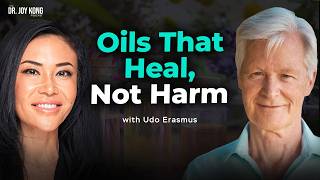
Udo Erasmus describes how industrial processing damages seed oils and explains why omega-3 and omega-6 ratios matter for health. After pesticide poisoning led him to study nutrition, he founded a cold-pressed oil company in 1986 and shares dosing guidance and claimed benefits from improved skin to reduced inflammation.
Questions this video answers
1942.
60 micrograms (Sandoz preparation).
1986.
1988 tour: 101 days, 85 cities, 35 states, ~17,000 miles by road.
Approximately 60 quintillion damaged molecules per tablespoon.
Chapters
The stories were so contradictory. The studies came up with opposite conclusions. And the one that got me was there was a study I read, it said, Omega 6 is an essential nutrient. If you don't get enough, you can't stay healthy. Your health will deteriorate. The next, very next study I Read says, Omega 6 gives you cancer and kills you.
Hello. Welcome Back to the Dr. Joy Kong podcast. You know, I am passionate about making your life better by improving your health, both physically, mentally, and spiritually. So today I have a wonderful guest, Mr. Woodle Erasmus. So he is a distinguished guest that I'm very excited to have on our podcast. So, Woodo, thank you so much for being here.
Well, thank you for having me. It's an honor.
Oh, thank you. So I want to introduce Wudo a little bit. And of course, he's known for being a founder of wudo's Choice line. And this line has some great health health food options and is found throughout Whole Foods and other health food stores. He actually grew up as a child of war. We can talk about that. And his life began with intense struggles. So, wudo, yes. Thank you for being here, and I'm excited to share your story with my audience. So what is this thing about child of war you mentioned that you. Were you born during World War II?
Yeah, I was born in Poland during World War II when it was part of Germany. My parents came from Latvia and Estonia. And when Hitler and Stalin made their non aggression pact, Latvia went to the Soviet Union and part of Poland went to Germany. And nobody from Latvia or Germany was at the meeting. They just took it. And my father loved the Russians because they're very emotional people. They were very feeling people hated communism because they took everything away from everybody. And so he left. He was given a farm in Poland that belonged to a Polish farmer. And the Polish farmer became his farmhand.
Oh, God.
And so there was a lot of tension there. So he said, look, we're living in crazy times. Let's run the farm the way the farm needs to be run. Let's work together to do the best we can, and when all of this stuff settles out, then we'll sort it out. And they became really good friends, and they helped us get out. Out of Poland at the end of the war.
Oh, really? That early? Okay. So you never really quite experienced communist rule? Not exactly, no.
Not. Not at that. I. I just experienced the war. I think the war is the only thing that's worse than communist rule. Okay, I'm not sure about that. But. But no, I was two when the war ended, I was born in 1942 and we were refugees and we were fleeing on horse drawn hay wagons, women with young children on dirt roads with no military presence. And the communists were chasing us in tanks and trucks. And the Allies, which we like to think of as the good guys, they were using us refugees as target practice, shooting at us from planes.
Are you serious?
I'm serious, yeah. And then what happened was it was winter. There were dead horses and dead people in the ditches. My mother had six kids with her that are six and younger by herself, no help. And she decided it was safer to go through the snow covered fields than it was to stay on the road. But then she had to leave four of the kids behind. So I ended up in an orphanage for a part, you know, and imagine a mother having to make that kind of a decision. She had to leave her own kids behind. She had four kids and she had two other kids with her. And then her sister heard about it later on and then she came and dug us out wherever we were and then reunited us with the family. I just remember just like not feeling safe, hungry, you know, not sure what I could trust because the story changed every day, you know. And my recommendation to parents is, don't have children, don't raise children in a war zone.
Oh, right. Wow. So how old were you when you were reunited with your mother?
I was only in the orphanage for maybe two weeks or a month or I don't remember.
Okay.
But it's all because every. Everything was turmoil. Somebody was supposed to drop us off at relatives and the relatives had already left because it was. Everybody was taken off. Right. Total chaos. Right. But there were still people helping each other, which is also interesting. And so anyway, so we were in Germany after the war and when I was six years old, I listened to adults argue about really trivial things. To me as a six year old, must have been really trivial because if I thought it was trivial, he was so intense about it and it was so important, you know, to argue. And it made me, always made me uneasy when I heard people in that intensity. And this thought occurred to me, man, there must be a way that we can live in harmony together. This little cocky voice. I'm going to find out how, you know, like a six year old don't know how complicated everything is. I'm going to find out how people can live in harmony. So that's been my driver all my life. And I was a born scientist because I never knew, you know, I was always insecure. So when you Find out how things work. You get some security out of that because you can predict and control. That's what science is about. Right?
Makes sense.
So I broke a lot of things. So I got punished quite a bit for my experiments. But I was always trying to see how something, you know, what is one of them was what is stronger. An apple or a Christmas bulb or a Christmas ball. You know those little balls on the Christmas tree? Yeah. I banged them together to find out which one's stronger. Well, of course, the glass ball broke, and that cost money, and that was not a popular result. But when it came to going, getting educated, I got into science first into math, physics, chemistry, and that was kind of boring. I've really found living things really interesting. I spent a lot of time by myself in the woods and on the meadow and watching little spiders in the grass. And, you know, I just found it really funny. So I wanted to learn everything about life, and in fact, I wanted to know what life is. And I thought eventually we would have a beaker that would be half filled with something liquid and shining, and we would be gathered around the beaker. We'd say, wow, there is life. We never found life in biology. You don't study life in biology, even though it's called the study of life. You study form and function. We'd start with. Maybe we'd start with an animal. When we start doing our experiments. By the time we were done, the animal was dead, the life was gone. And we maybe saw that if you put electricity on a nerve, then it would make the muscle contract. Then you could put a tracing on a drum. And so that was all form and function. And I even said to one of my lab partners, I said, you know, we should actually study ourselves because we have form and function and life altogether, and we don't have to kill ourselves to get to Norse. So there was like, pre shint maybe, you know, his eyes just glanced over. He didn't know what I was talking about. And then I got into psychology because I wanted to understand how thinking works. But really, I went there because it's called study of soul. Psychology means psych is. Psych is soul. Ology is study, study of soul. I thought, well, soul. I heard that word before. You know what. What exactly is that? I want to know. Well, in psychology, we didn't study soul. We studied beliefs, thoughts and emotions. And we did a little bit of physiological psychology. No soul. Then I got into medicine, because it's called health care, and I wanted to know what health is. So where do you Go, well, you go to where they study healthcare. So I went to medical school and realized in the first year, we're only learning about disease here. I want to know what health is. So I went and talked to the dean and I said, what is health? He said, we don't know, we're working on it. And I, you know, if you would ever like to see the epitome of an expression of disappointment, my face when he said that. And then we were told in med school, first year, in pre clinical sessions, that a doctor should always sound as though he knows what's going on, even when he doesn't. And that ended my medical career, because we call that lying on the farm.
Exactly.
So I went back into that. By that time I figured out I'm learning more about health in biology because I'm studying normal functioning of normal creatures in normal situations. I'm not studying disease, I'm studying normal. And there's something about health is about normal. So I ended up in biochemistry and genetics. But I still wanted to know what life is. It was a big, you know, I was obsessed. And so I left university just short of my master's degree in genetics.
Wow.
Then I used some psychedelics and the first thing that happened, I took lsd was Sandoz. Lsd, the one that Sandoz in Switzerland made the pure stuff, 60 micrograms, like a tiny dose. It's like they had little ampoules, 100 microgram ampoules. I took 60 micrograms and I rolled on the floor laughing and crying and laughing to Mozart music. And I was laughing and crying because it struck me as the funniest thing I had ever discovered is that everything that I was so studiously looking for in my studies was actually present inside of me. Huh. And I thought that was really funny. And that kind of was a big turnaround. It also kind of melted the door off my war child personality because I was always really shy and I liked books and I was very self contained, you might say you were serious. Serious, but also self contained. You know, not socially, not that comfortable. And I realized on this one experience, oh my God, there's a thousand ways I could live. And then it's, okay, well, how do I actually want to live? And so that took me a few years to try and come to terms with, you know, because we basically lost everything in the war. Like the. We lost the farm, we lost the animals, we lost the house, we lost the furniture, the dishes, the community, the culture. And I kind of like, I was, I always felt I couldn't trust any of that. And so what can I trust? Well, I can trust what I understand. So I want to understand everything. And at one point I thought that I would find peace if I knew everything about everything. Well, that's not how peace works, but, you know, so it was a. It was a wild ride. Then I decided I wasn't going to do any psychedelics because they're hard on the body. And I said, well, I only get one body. I better look after it. So I'm not doing psychedelics for at least two years. And in those two years, I looked at the Bible because that was in my culture, because I was looking for a model who can I model myself after? And so it's like, well, in my culture, the only one that really made sense to me was Jesus. Of course, I'm 2,000 years late to the party. And I had a question. My question was, what did he experience? What did he feel that made him who he was? I wanted to have that feeling. So it was a very, very focused question. What does it feel and how do I know? Well, I got a red letter edition. Everything Jesus says is printed in red ink. Everything else is in black ink. So I just wanted the red ink. Just wanted to get focused on what. And then I put things to the test and I started thinking about. I didn't ask anybody to interpret it for me. I just read it and said, what does that mean to me? You know, how do I understand it? So one thing he says, what you have done to one of the least of these that you have done to me. Oh, well, what does that mean? Well, I'm in everybody. Oh, now we're talking, right? And it turns out life and Christ are synonyms and soul and spirit are synonyms. They're all talking about the same thing. And life is solar energy. Because you look at the planet, the sun runs it. That's the energy source, right? And it radiates in all directions. And it's 15 million degrees Celsius in the sun. That gets filtered through 93 million miles. Then it gets filtered through the atmosphere. Then it gets filtered through plants, mostly green plants. And then the fraction of solar energy that remains excites electrons. They then bond and hook atoms together to make molecules. And that solar energy is stored in those bonds. Then we eat them as food. And in our cells, those bonds get broken. That energy is released. Now we call it life. And life weighs nothing, runs everything. It is omnipresent in you. Like it's all powerful in you, all knowing in you because it runs everything and everywhere present in you, that solar energy fraction called life. Right? And if you want to understand human nature, which was kind of one of my pet projects, I want to understand human nature because honestly, we have wars and we do all these stupid things, and we could live so much better than we're living, but in order to do that, we probably got to be more present in what we are. Well, that energy, that solar energy that is called life, is unconditional, empowering love for the body. So if you don't feel loved, or anybody listening doesn't feel loved, you are unconditionally loved by life within you. And you might not notice it because your focus is in your mind or it's out in the world, you know, trying to, you know, go everywhere, wherever you do go and whatever you're doing. But if you take time to get still with yourself, cut off all your distractions as much as you can, and just sit as quiet as you can, like, as still as you can, and see how deep you can go into that stillness and then see how long you can stay there. And you breathe lightly, calmly, quietly, slowly. And when you sitting still and doing that, what do you notice about the space your body occupies? What is in that silence? Well, you can actually see light in that. In the darkness, you can hear sound in the inner silence. You can feel love in the inner emptiness. And you can even taste sweetness in the blandness of your mouth. And there. And when you feel it, you feel the love, and then you realize, oh, my God, this is real. You know, I complained about the war until I was 26. I was bitching. What do you expect? I was born in a war. Blah, blah, blah, blah, blah. Right. And one day I was sitting down and I said, wow. It just occurred to me, wow. Through all my dramas and all my traumas and my war and all the crazy things that I went through, something took perfect care of me 24 7, every moment, every day, every night. And I've never given that any acknowledgement, and I've never expressed any gratitude. And I've never considered that maybe life could be a really good friend to me, because it's been a pretty good friend so far. So that was one of my turnarounds.
What a beautiful message.
Right? Yeah. And the thing is that within every human being is that unconditional love for the body. I want to do one other thing. If I say to you, Dr. Joy, whose body is that? What's your answer?
Mine.
It's mine, right?
Yeah.
Yeah. Most people will say, well, if you. Whose body is this? Well, it's my body, but do you know what you've just said? You've just told me that you're not the body. You've just told me that you're the owner of the body and that the body is your property. So then the question is, well, if you're the owner of the body, who are you as owner of the body? And most people would have to say, well, I don't really know. Well, actually, life is the owner of your body. And the truth is you are life, not the body. You own the body. You are life. What is life? Life is that solar energy fraction, right? And. And that solar energy fraction that runs everything. And if you're in touch with that, that energy, that solar energy fraction called life is also perfect health because it can never get sick and never dies. When your body and life part company, the life energy goes wherever energy goes, but it doesn't stop existing. You can't just make energy. You can't unmake energy. Energy is energy.
Well, I do feel like we have a energetic part to us, you can call it spiritually, you know, it's an existence of a different realm, but it's omnipresent and is powerful and it can. You can't live without it. But there's also a physicality aspect which is, you know, another reason that I'm here as a doctor.
Right.
I'm helping to take care of the body, the, the physical aspects. That's one thing that I'm, I'm trained to do, even though I was trained in many ways, you know, miss misguided training, but, but still, you know, that's how we were prepared, is to take care of the body. And physically, I think the physical aspects is important as well. Which kind of brings me to, you know, your body and what happened to you. Because, you know, I know we're going to eventually get to the subject of oil, which now there's a lot of awareness, but how did it even happen to you? Why did you even get interested in anything like oil?
Yeah, yeah, that's a really good question. I didn't slide out of my mother's body and say, I'm going to be the fat man. Not like, not at all like that. But the point is that for me, my biological studies took me to that. And what the masters talked about when they were living in the various masters in the various times they were actually doing that practice, that quiet practice, in touch with that, speaking from that to that in other people, and then if people were interested in becoming more fully present and feeling more loved and having a more abundant life, well, they would help them. They would help them to go there. Right? So I had done that, and I'd been doing that for eight years. And I got married and we had three kids, and my marriage broke up.
This is when you were in your 30s?
I got married when I was 30, and I think I was 36. 30, 34. 36.
So you were in good health until you were 36?
Yeah, I was pretty good. Pretty good shape. I had lots of energy and. Yeah, you know, careless in many ways. In many different ways. But, yeah, I was in good shape. And I. So I was really angry and I wanted to kill something, so I took a job as a pesticide sprayer. Pesticides are only made to kill things, so I was really good at it. And I sprayed pesticides really carelessly for three years. And I walked over lawns that I had sprayed with weed killers until the skin peeled off the bottom of my feet. I figured at that point maybe I should wear rubber boots. I used to wear a bathing suit. I had a tractor with a big tank. And I was spraying lawns and I was spraying trees and all kinds of stuff. And somebody said to me, aren't you worried you're going to get poisoned? I said, nah, I'm immune. I think we call that testosterone poison. Young men poisoned by their own testosterone until they have their first major crisis. Right. And then three years of doing that. I did get poisoned by the pesticides. I sprayed and I went to the doctor. So I got nausea, dizziness, cramps. My energy was down through the floor. If I walked around a city block, I had to rest. I was 38 at this point and always had lots of energy. I was literally. I had less energy than I do now. And I'm 82 now. Right. So I went to the doctor and said, what do you have for pesticide poisoning? She just looked at me and said, nothing. And at that point, the penny dropped. Oh, my God. My health is actually my responsibility. Really is. I was never that sloppy, but I wasn't that clear either. So I said, okay, I got the background. Let me see what I can figure out. If I do the opposite of what got me the problem, then that should help. And so I got into Medline because I had the background and looked at everything to do with nutrition and health and nutrition and disease, everything I could find. And it's a ton of stuff. And I was looking. Basically, the idea is the body's made out of food, water and air. That's it. And I was focused on food. So I said, okay, let me study food. Let's. How. How can I eat better? How do you. And so 18 minerals are essential, and 13 vitamins are essential, and nine amino acids from proteins are essential, and two essential fatty acids from oils are essential. And I was doing all of that, and I got focused on oils because the stories were so contradictory. The studies came up with opposite conclusions. And the one that got me was there was a study I read. It said, Omega 6 is an essential nutrient. What does that mean? You can't make it in your body. You have to have it to live and be healthy. You therefore have to bring it in from outside. If you don't get enough, you can't stay healthy. Your health will deteriorate and you'll get deficiency symptoms and they'll get worse with time. And if you don't get enough long enough, you die. These are really important nutrients. Not all nutrients are that important. That's what essential means. And then the third part of essential is if your health is deteriorating because you're not getting enough of an essential nutrient, but before you die, you bring enough of it back into the diet, then all the problems that come from not getting enough are reversed. A very clear definition, and we're very clear about which nutrients are essential and which are not. And that's really good thing to know because those are the essential building blocks for body construction and body function. So the next, very next study I Read says, Omega 6 gives you cancer and kills you. And I'm going, huh. Huh, what? My head exploded. And I was like, this cannot be. You know, how can you? I have to have it. And then it kills me. That was like. We used to think about God like that as a kid. You know, God loves you unconditionally, does everything, builds a book, you know, makes everything work. And if you look at him, he kills you. I don't think so. And then it's like, you know, it just totally hooked me what's going on. How can that be? Because unless somebody's lying, there's a reason why they got those results in the one and in the other. So there must be something else going on that I don't know. And it turned out that I started looking at how oils are made. And the issue is in how oils are made, when oils are made, about the way they're treated with harsh chemicals and they're heated to frying temperature before they go in the bottle, and in that process, about half to 1% of the molecules are damaged. They turn from something natural that the body recognizes because the body evolved in nature. It turned from something natural into something that didn't exist in nature that maybe life never made a way to break down or use. And if that's true, then those molecules that have been changed will be toxic. They'll go in a place in your body, in the architecture of your body, and they'll interfere with what's supposed to be going on there because you changed the molecule. Right? Half to 1%. So then I called the Oil Chemist Society, the. The organization that runs the oil industry in Champaign, Illinois, said, I want to talk to a researcher. He put him on the line. And I said to him, well, when you know this does damage to the oil, why do you do it? He said, well, one of the reasons we do it is because we can get rid of half of the pesticides in the oil. Oh, right. And in my head I'm going, oh, my God, I didn't even know there were pesticides in oils. And the other part of it was, well, the other half of the pesticides stay in. Well, that's not good news for a guy who got poisoned by pesticides. I didn't say that. But I said to him, so why don't you start with organically grown seeds, because then you don't have to deal with the pesticide problem. And there was a long silence at the end of the phone. I waited. Then when he got back to me, he was really angry. He says, I don't know what your problem is. The oil is 99% good. It's only 1% damaged. And if you got 99% on your exam, you'd be damn happy, wouldn't you say? Well, maybe I'm overreacting. It's only 1%. So I decided to do the math. So when you do the math. So my question was, I like questions. You know, questions. They frame answers, right? You ask good question, you get good answers. So the question was, if I have a tablespoon of an oil that is made the way industry makes the oils that is 1% damaged by that process, how many damaged molecules will be in that tablespoon of oil? Now, if you've heard me, heard this before, then you can't play the game. But if you haven't, then I want you to guess how many damaged molecules of oil will be in a tablespoon of oil that is 1% damaged by processing.
Oh, gosh, I don't know. Billions of molecules.
How many?
Five I don't know.
Five million. Five billion.
Five billion.
Okay, okay, so five billion. So billion is a thousand million billion. So it's got nine zeros, is that right? So your number is ten zeros too short.
I see.
Because molecules are very, very small.
Yes.
And there's a lot of them fit in a tablespoon, right?
Yeah.
Actually 60 quintillion damaged molecule in a tablespoon of oil that is 1% damaged.
I see.
60 quintillion. How much is that? Well, it's more than a million molecules for every one of the body's 60 trillion cells.
Wow.
More than a million molecules for every cell, Every tablespoon. And you take two or three a day and you got pesticides in there, and there's plastic in it because plastic leaches into oil. And then if you fry it, you have to multiply that number by three to six times because you're damaging the oil by light, oxygen, and heat all at the same time in the frying pan. Dumbest thing we've ever invented to do to food from a health perspective. And as a result, more health problems, physical origin, come from damaged oil than any other part of nutrition. And more health benefits would come from oils if we made a switch to oils that are not damaged. Then the year after I got poisoned, while I was dealing with all of this, it was established that Omega 3 is an essential nutrient by the definition I gave. And they said 99% of the population doesn't get enough omega 3s for optimum health. It's the single most widespread essential nutrient deficiency. Magnesium is about 80%. B6 is about 80%. Vitamin D is pretty close to 80%, 99%. And then it was like, every cell needs them and they have regulatory functions, hormone, like, regulatory functions. Every cell in the body from conception to demise. And then I got excited. It's like, oh, my God. If we could make oils with health in mind by protecting them from light, oxygen and heat while they're being pressed and filtered and settled and filled and put them in glass so there's no pesticides. And start with organically grown seeds. And so there's no plastic in the oil. Sorry, in glass. So there's no plastic in the oil. And then if we use them on food after it comes off the heat, not for frying, but mix them in food because they enhance flavors and help absorption of oil soluble nutrients. Oh, my God, we could help almost everybody. And I got so excited. It was like, I just found a purpose for life, you know, oh, something to do. Oh, My God, we could help so many people. So then we started working with flax because flax has the most Omega 3 in it, it'll be the most sensitive oil, it will need the most care. And we decided that if our method for making oils with health in mind works for flax, then any other oil we'd ever want to make with health in mind would be a piece of cake. So we started with the most difficult one, but the one that also was going to help the most people. And so we started doing that and we started making flaxol in 1986. People have accused me of being in bed with the oil industry, but actually I moved in with my mother in order to write the book and to do the work because I wasn't working and I'd been poisoned by pesticides. So anyway, so and then we start. And then 1988, we did a huge tour in a van without air conditioning in the US in the hottest months. 101 days, 85 cities, 35 states, 17,000 miles by road. And we started talking about the idea of making oils with health in mind and flaxseed oil. And we created a buzz. And in two years, flaxseed oil was the second highest selling oil in the health food industry. That's where we were active in the natural foods industry. And, you know, and we were on fire. I mean, I slept on the van on the floor of the van, and my driver had built himself a bunk at the back. And every two or three days when we got really hot and sticky, because it's really hot in the US in summer, you may have noticed, we would walk into a Marriott hotel like we owned it. My driver taught me that. He said, yeah, you have to look like you're all business, like you own the place. So you march in like that and then we go to where the change rooms were and the showers and we wash our clothes and wring them out in the shower and then we go back into our van and keep going. And we literally worked all day and drove all night. Did it on a plant based diet because if we ate carbs, we get sleepy and if we ate, if we ate meat, we felt heavy. So we literally did that tour after the first two weeks when we figured that out, the rest of it was like 80, 80 some days just on raw vegetables. Wow. Buy a cabbage and eat it. And we were, it was, it was exciting. It was like, it was really strenuous. I don't remember ever feeling like I was, oh, God, I have to work. It was just. We were just. I was so on fire, so inspired by how much good I could do.
So nobody was talking about oils before you started to dig into this?
That was pretty much at the height of fat phobia. Everybody was on low fat diets. I went to a meeting of the Vegetarian Society in Vegas one of those years. They were all on Pritikin diets. 10% or less of calories from fats, and that's actually too low. Probably 25% would be reasonable. Four days, maybe a little high too. And then it depends on the quality of the fat and the kind of fat, how much you can use and what the outcome is going to be. So I asked them. They. I got on the podium and they said, I said, I want to start with a couple of questions. How many of you are on low fat diets? And all the hands went up and then I said, how many have dry skin? And all the hands went up and I said, yeah. So here's the thing. There's a lot to be said for vegetables and eating vegetables and health, but you're making one mistake. And the mistake is you're not getting enough of the right kind of oil. Because if you optimize your oil intake, then it will form a barrier in the skin against the loss of moisture, and you'll end up with soft, smooth, velvety skin. And that's how we measure optimum intake. Because your skin gets at last and loses it first, because your inner organs get priority, because you can live with dry skin, but if your heart dried out or your liver dried out, you'd be history. So nature has a priority system. You know, I mean, you talk about genius, right? Has a priority system. Inner organs get it first, and the skin only gets it if the rest of the body has what it needs. And that would end up being, in our measurement, more in winter than in summer, because in winter skin gets drier and you need more oil because you burn more oil for heat. And so I maybe use 4 tablespoons in winter, always mixed in food, spread out over the course of the day, compatible with all foods, and maybe two or three in summer to get my skin soft and validated. In Vegas, of course, it was really dry, so everybody had dry skin. And then not everybody followed our advice, but those who did, they came back and said, oh, my God, my skin is so good and I have way better energy.
So these are the flax oils that you recommended people take.
Yeah, we started with flax oil, but then something happened to me and which was I became omega 6 deficient on flaxseed oil. Because flaxseed oil has about four times more omega 3 than omega 6. That's too much. The two essential fatty acids use the same enzymes to get converted into all these other molecules that are made from them. So they compete for enzyme space. So the ratio is important. Most people right now are probably 1 to 10 in favor of omega 6. That's too much. Omega 6. That'll crowd out the omega 3s. And some are 20 to 1, some are 50 to 1 even. And flax oil is the other way, 1 to 4. That's too high. So I became omega 6 deficient. I ended up with dry eyes. Dry eyes, skipped heartbeats, arthritis like pain and finger joints and thin, papery skin.
I see.
And I fixed it by eating sunflower seeds, which have no omega 3s and a lot of omega 6s in them.
I see.
When the balance came back, and then I said, you know, I'm trying to get people healthy. If flax can make them Omega 6 deficient, maybe we need to do something to get the balance better. And so we then made a blend of that is a 2 to 1. It's still got more Omega 3 than Omega 6 because they're the ones that are missing. Virtually nobody is deficient in omega 6s, but they're getting omega 6s damaged. So we balanced them both made with health and bite, both not damaged, both organic, no pesticides, and a balance where you can long term use it, you can use it lifelong, and never become Omega 6 deficient.
I see. And what kind of plants do the oils come from?
We use flax for the omega 3s, sunflower sesame for omega 6. Evening primrose oil has omega 6s, including one of the derivatives, which is called GLA. But the reason I put it in is because it's a pretty expensive oil, but it has really good polyphenol antioxidants in it. Because oils will give you fire. They're high energy, so they build a fire in your body. But if you build a strong fire in your body, you're also going to get more sparks flying. And the antioxidants are spark control, right? Yeah. So in nature, like whole Foods, you know, like sugar cane. Let's give an example. Sugar cane. Sugar cane has sugar in it. Sugar is fire, Right. It's a fuel. And sugar throws sparks. But in the cane, in the, you know, when you chew sugar cane, the fiber in the sugar cane is antioxidant. So when you eat sugar, you get inflammation in your body. When you eat sugar cane, you don't, because the sugar cane has the spark control and the sugar does not. When you use oils and they've been stripped of their antioxidants, which when the oils are made, they're degummed, refined, bleached and deodorized. Right. You're taking out all of the antioxidants. And so oils will also give you sparks and you need spark control. So then you have to take antioxidants or you get unrefined oils or you eat the seeds and nuts from which those oils come.
Is there any oil that's perfectly balanced in the omega 3 and 6 ratio that we need?
Not single oils, no, but the blend we have.
I see, yeah.
Uroz oil blend. Right. And that's what we did. The reason why we made it is because there isn't an oil that has the. There's a range of ratios that works. If you're healthy, you can go from four times more Omega 6 to maybe two and a half times more Omega 3. But because most people are missing the Omega 3s, we're crowding that end of normal. If you're sick, you're more likely to do better with more Omega 3s. But the Omega 3s are five times more sensitive to damage than Omega 6s. That's one of the reasons why people don't like working with them. And so you need to really be, you really need to give them the care they need. Very, very important. Fish oils are five times more sensitive to damage than the plant based omega 3 alpha linoleic acid. So there. And the fish oils are highly damaged. And if you put them in your fridge, you know, even if you put them in a little glass bottle, you open it, within days you can smell it, you can smell the rancidity. They react with oxygen so fast. And then that's also why you get the burps from them. And that's all because of damage done to them either by processing or by light, oxygen, heat, their sensitivities.
That's why I don't take them anymore.
So.
But the omega 3s from plants, are they different from the omega 3s you can get from, from animals?
You're actually saying the question wrong. And it's because of the way they've been advertised. The essential fatty acid is plant based. It's called alpha linolenic acid and it has three double bonds in it and they're methylene interrupted. That's all chemistry, right? That's the essential fatty acids EPA and DHA that you find in fish are essential fatty acid derivatives. They're not essential fatty acids. You don't need them because your body can make them. If you get enough alpha linolenic acid. See, essential means you can't make it from anything else. But the fish oil industry always calls them essential fatty acids, and they like to diminish alpha linolenic acid and say the only use for alpha linolenic acid is as starting material for EPA and dha. But all the good functions are in EPA and dha, and that's actually not true. And so if you get the ratio right, the enzymes in your cells will convert both essential fatty acids so that both of them can turn into the derivatives that the cell needs for the regulatory functions. Right. So the issue is that most people don't get enough Omega 3s, so then they can't make enough derivatives. So we fix that problem by getting them oils that are rich in omega 3s and that are made with health in mind. So they are different, but the one makes the other.
Where's olive oil or avocado oil lie in the omega 6 to 3 ratio?
Yeah, olive oil, avocado oil has maybe about 2% omega 3 and olive oil has less than 1%. Both are very rich in monounsaturates or omega 9s, which are not essential. The body can make those out of sugar and starch.
Okay, so very low in omega 3.
And even omega 6. 20%. That's good when you have too much omega 6 and the oils may not be damaged. Although there are no standards for avocado oil, the industry has not set any standards. Could be any junk in it. But the extra virgin olive oil, if it is really extra virgin olive oil and they're not cheating, then they have standards. So the oil, that oil is not damaged by processing, Partly because it's more stable and partly because they use a different process, because they don't squeeze the seeds, they actually squeeze it out of the flesh of the oil of the olives. And it floated off on water. So it's a different process. And then they don't refine it if it's extra virgin olive oil. So it's not damaged by that processing.
Either of all these different oils. And of course they sound harmless things like sunflower oil or grapeseed oil. I mean, they sound, you know, it doesn't sound bad, but it's really not about what they were before they were processed. It's really about how they were processed.
The biggest issue is processing. And if you think about food related illnesses you know, now there's a big deal about ultra processed foods. If you want to find one reason for why people get sick from what they eat, processing would be number one reason. Processing. We're taking things out that should be in there, and we're putting things in that shouldn't be there. And we're changing molecules into something that didn't exist in nature. And those are the three things.
Why would they process like that?
Because the industry wanted a long shelf life. So then they could make oil where you live and sell it where I live, right? Then they could make it in New York and sell it in Johannesburg, or they could make it in Kansas City and sell it in Tokyo. Right. And in order to do that, you have to have a long shelf life. But the oils by nature have a relatively short shelf life. When you break seeds and nuts, they go rancid pretty quick. So they have to do something to make them stable. And then, of course, they nitrogen flush the bottles so there's no oxygen in there. But the biggest thing is they take out the molecules, the color molecules that absorb light. And the light then damages the oil. And you know, if you fry oils, if you heat them to high temperature, then you damage the molecules in lots of different ways. But they have to do that because when they bleach the oils, they go rancid. Now they smell bad, and now they have to blow off the rancid molecules to get a colorless, odorless, tasteless oil with a long shelf life, with half of the pesticides removed in plastic bottles, you know, and then when you think about it, because these are the most sensitive of all of our nutrients and we should be giving them the most care. We actually give them the least care, both in the way they're processed and in the way we use them in the frying pan. We're doing huge damage. And that's why more health problems come from damaged oils than any other part of nutrition. But it doesn't make the news because, you know, when I was traveling, I had an interview with a very large television station. Six minute interview. They loved the interview. It was kind of like this, right? Talking about. And they said, we're going to play it on the news tonight. And I had the evening off. So I said I thought I'd watch myself on television because I never see myself on television because I'm always behind the camera, right? Or in front of the camera not being, you know. So I thought, okay, I have the evening off. And I watched the news and they never played the interview. But they played an ad for Wesson oil. I know what happened. They loved the interview. They did the interview. Then it went to the editor, said, no, we can't run that because we make money off Wesson oil. And I talked to somebody who was an ex anchor lady in New York. She said to me, the most newsworthy thing that you have, that you talk about is the damage done to oils. That has never made the news.
Yeah, yeah. And it's, I mean they, all the names don't sound bad, right? Vegetable oils, peanut oil.
Yeah, yeah. But they should be calling them processing damaged, sunflower processing, damaged canola processing damage, soybean oil or whatever, right? Yeah.
It's interesting. When I went back to China and my brother actually brought home a bottle of oil, it says peanut oil. I was like, no, no, no, this is, this is not, not good. He said, no, this is. When this is co pressed, this is actually processed correctly. No, you're shaking your head. You don't believe it.
The word cold pressed is used in advertising to imply health even when it's not there. There's no definition for the term cold pressed. Except in Switzerland, you can't call it cold pressed if it's ever reached a temperature higher than 50 degrees Celsius. But the rest of the world, they just call it cold pressed because they want it to sound good. You can call an oil cold pressed if you've heated it to 250 degrees. No, 245 degrees Celsius to deodorize it. You can still call it cold pressed. And what. And when we asked one of the companies why they call it cold pressed when it's been heated to 245 degrees, they said, well, we define cold pressed to mean that no external heat was added to the seeds when it was being pressed. But you don't need to add heat when you're pressing it because the friction in the screw pressure heats the seed and then the oil drips out more easily. You don't need to add, nobody has to add that. So they're basically just making up a definition that works even though they damage the oil. That they could just call it, oh yeah, cold pressed. And generally in the grapevine, most people think cold pressed means good. It actually doesn't mean anything. It's just an advertising term to imply quality even when the quality isn't there.
Well, that's scary. So how are you pressing these oils out of the plant, the seeds, Small.
Presses, less heat and the heat never goes above 50. Basically. I see right now in Terms of what are the issues. When you start to talk about the issues, if light and oxygen are present, then every 10 degrees Celsius that you go up in temperature of the oil, you double, triple or quadruple the rate at which light and oxygen damage the oil. So you can figure out from 0 to 250 degrees Celsius, double, double, double, double 25 times or triple, triple, quadruple, quadruple 25 times. Huge amount of damage as your temperature goes up. But if there's no light or oxygen present, you don't get heat damage just from the heat until you hit about 160 degrees Celsius. Then you get twisted molecules, trans fatty acid kind of molecules. And then as the temperature goes up from there, you get expo exponentially more damage done to the oil by the heat itself. So if you separate what. So what we did is we built a system where no light or oxygen gets to the oil while it's being pressed and filtered and settled and filled. It has to be a super tight system, you know, so that's like the seed comes in because the seed is well protected, right? But then when you break it, it's exposed. So it has to be from the time it's in the seat to the time it's in the bottle and nitrogen flushed and closed and in the fridge. You have to protect it from light and oxygen and heat and the heat that the press produces. Because the presses are small, they don't produce a lot of heat. The big, big, big presses that they have like that do like 20, 20, 50 tons of seed a day. They pressure on those is so high that when the seed cake comes out, it's smoking. That's how hot it gets.
Wow.
And then on top of that, in the processing, then they will heat the oil to frying temperature. And literally that's usually between 180 and 245 degrees Celsius. And that's frying temperature. Frying temperature. Frying starts at just like above 160. So frying is always a bad idea because it changes molecules by light, oxygen and heat acting on the oil all at the same time.
So the oil you produce and sell, do they have to be kept in the refrigerator?
They're refrigerated at the factory. They're refrigerated in the stores. You refrigerate them at home. You add them to foods after they come off the heat source. You can put them in hot soup and put in pasta sauce and steamed veggies and stuff. You do not ever want to put it on the stove, on the heat, and you definitely never want to use it for frying.
I see.
So. And then when we. In terms of shipping the oil, if it's two weeks in, in transit, it's okay on. On refrigerated. If it's more than two weeks, like when we send it to Europe and Asia and. And other places, it's shipped refrigerated. Yeah. So we're. So we're actually giving oil the care it's supposed to get. We do it with ice cream and steak. Why can't we do it with oils? Oils are just as sensitive.
So what do you think of animal fat, cooking with animal fat instead?
Well, if you're going to fry, the harder the fat, the less damage is done, so the harder the fat. So we're talking coconut. It's not an animal fat. But lard and butter and tallow. And tallow is probably the hardest of the fats. Because pork has quite a bit of essential fatty acid in it. You do the least damage. But if you're turning food brown and you do, when you use them, what, you're turning brown. You know, when you turn it yellow, you're already changing molecules. When it turns brown, you're changing more molecules, then it turns black. You've got change a lot of molecules and then it starts to smoke. Well, you. Obviously, if you turn oil into smoke or food into smoke, you've changed the chemistry and smoke is not good for you. In fact, we know that cooks in restaurants who spend eight hours in front of a frying pan because everything gets fried these days. Right. Spend eight hours in the frying pan, they get four times more lung cancer than people at home who only spend two hours in front of the frying pan cooking, cooking at home. Four times more. Not 4%, not 40%, 400% higher. Breast cancer from breathing in the fumes.
Lung cancer. Right, you said lung cancer.
Yeah, because they're breathing, you know, they're breathing. Right.
Wow.
And they stand in front of the frying pan and, you know, they have their hoods and they. All of their, you know, all of that. But it's not perfect.
Aztec statistics. Yeah. Wow. So do you think animal fats have a good ratio of omega 3 and 6?
Depends on what you're looking at. If you're animal fats, if you're talking about any of the ungulates. So we're talking sheep, goats, deer, cattle, bison. You know, in Africa, they're ungulates. They have four stomachs. They take the omega 3s and grass and they actually damp. They actually convert them into saturated fatty acids, some trans fatty acids as well. Small amount. So they don't have. You can't rely on them. Horses are omega 3 animals. That's also why they're faster than cows. Cows are slow. Horses are fast. The Omega 3s. Omega 3s make you fast. You know, we had, we, we had, we put marathon runners on the oil blend and we say, you know what they, in those days, what they used to do is carb load. You know, for a couple days before they go on the run, they stuff carbs and then they make glycogen or animal starch for their liver and their muscles. But you can only make about a pound of that. Your body can't store more than that. So then they go on their run, and about mile 20, all of those, all that starch is gone. And then they would hit the wall. Then they would have to run the rest of the race on fats. But the fat burning gets turned off by the carbs. So it would take them time to get that going. And so they would drag their butts across the finish line and beat tired. So we said, no, no, no, you guys are doing it wrong. You should carb deplete and you should tank off. You should tank up on essential fatty acids and they're stored in your body. And then run. And when you start running the race, you have your fat burning turned on full bore and you run the whole race on fats. And they didn't all follow us as usual because they were told something else by their trusted advisors. But the ones who did, they said, wow, that was amazing. At the end of my marathon, I felt like I had enough energy to run another one. And literally, that's literally the Omega 3s. We measured 40 to 60% increase in stamina if athletes did their sport to exhaustion in 30 days after they started taking the oil. And we gave it to them at a tablespoon per 50 pounds of body weight per day, mixed in food, spread out over the course of the day.
Oh.
Wow.
So you are replenishing Omega 3, but you're also giving them healthy fats that can line all their membranes, basically. Right. So all their, their cells are covered in healthy fat in fatty acid.
Oh, yeah, that's the idea. Right. And there's research that shows that when you have more omega 3s in your cell membranes and alpha linolenic acid will do just fine, then you get better hormone function at the cell receptor level. They increase the activity of the, of the cell Receptors. And so, I mean, it goes on and on, all the things they do because they place such so much of a hormone, like regulating function for all kinds of cell activities on a moment to moment basis. And they do that through different molecules that they get turned into. The kicker of all of this is omega 3s. Some people, you know, when we started, they say, oh, Omega 3, oh my God, they're even more sensitive than omega sixes. Oh my God, they're going to go rancid in your body and they're going to give you all kinds of problems. And I said, well, it doesn't seem like that. They actually seem like more antioxidant than spark producing. And not so long ago it was figured out that 80% of the Omega 3s you take in get burned for energy. So there's the fire. Fire's going to throw sparks. And the other 20% is turned into other things in the body, including very powerful antioxidants and anti inflammatories. So Omega 3, the fire. So the fire fuel actually gets turned into its own spark control. And there's no other molecule in nature that does that. Wow, this is like a really. It's like when I found that out, it's like, oh my God, who came up with that? What a cool deal, right? So it's like high energy and spark control. And so all the things that people said about Omega 3, oh, they're going to cause you problems. Oh, and there's people, you know, all the time. There's always books coming out saying don't use seed oils, don't use Omega 6s. And I just read one that said flax oil is really toxic by somebody who gets a lot of airtime completely didn't do her homework. And the guy who's behind it completely didn't do his homework. None of those people have ever talked to me. And I'm in the Canadian health food hall of Fame for starting that industry and none of them have ever talked to me.
What's the reason they said flaxseed was bad?
Oh, because if it's damaged, it's going to be bad. There used to be linseed oil, you know linseed oil? Yeah. Linseed oil comes from flax made without care, used for paint. Because when you paint it on surfaces, it reacts with light and oxygen causes cross link. Cross links and then protects your furniture. And then you smell the linseed oil has this rancid oil smell. Right? So they knew that part and then they made up the story that Somebody, and this is like, they kind of blame me for this. They don't say it. They never. They have never said it. But there was a. There was a professor, retired professor in Oregon, who came to the conclusion, contrary to about 6,000 studies, that if you take enough vitamin B6 or B vitamins, you don't need essential fatty acids. And I don't know where he came up with that, but the same guy in 1989, you know, we started in 1986 with flax oil. In 1989, he wrote. He wrote something about that I must be in bed with the oil industry and never talked to me, never tried to find out what was going on. Didn't know how we make the oil, didn't know the care we take. And he just assumed that I was working for the oil industry. And then these people on the flax oil article assumed that a huge amount of marketing money was spent to promote flax oil, which is toxic and really dangerous. And you know what? We started totally shoestring. Totally shoestring. We had no money when we started. We just had fire. We were on fire for, oh, my God, we could help so many people.
What did you see in people's health with your product?
More energy, nicer skin. When we did surveys, the one thing people raved about the Most was skin. 76% raved about how their skin. How much their skin improved. But there's all kinds of stuff. The cardiovascular risk factors go down. Omega 3s are very good for lowering triglycerides, but also for inflammatory markers like crap, you know, crp, right? And they can. They can lower cholesterol, although there are other issues with cholesterol. High triglycerides, high blood pressure. They actually omega 3s relax arterial muscle tone along like, just like magnesium does. So magnesium is good for that as well. And because they increase oxygen metabolism, they're helpful in cancer, although they're not a cure for it. But anything like cancer. Cells are fermentive. They don't like oxygen. And so people use ozone and different things to help with that. And I think Warburg in 1930 came up with that. But his. His work is not much used in the pharmaceutical industry, even though he was a very, very bright man who got a Nobel prize for the work he did. Otto Warburg name in pregnancy. Huge. Because the brain. If you take all the water out of the brain, what remains is more than 60% fat. Omega 3 and Omega 6 derivatives in more or less equal proportions. When a woman gets pregnant, by the way, women do the conversion of alpha linolenic acid into the derivatives more effectively than men. And the reason why is when a woman gets pregnant, she needs to maintain one brain and she needs to build another brain in her womb. Right. If she doesn't have enough omega 3s in her diet, the kid will get them from her brain. And I think that's because nature says, well, mom's the past, kid's the future, so if we have to, we will sacrifice the past for the future. So the kid takes some of it out of her brain. And they've shown that each child gets less than the previous child, and each child depletes the mother further.
Really?
Yeah. They think it's the reason why women get chronic fatigue, fibromyalgia, depression, autoimmune, Collagen. I think autoimmune and one other kind of disease. Women get those two to 15 times more frequently than men. And they think the depletion of essential fatty acids set them. Oh, inflammatory. Yeah, sets it up for those conditions. And so their recommendation is that women need to make sure they have a reliable, and I would say undamaged. They didn't say that, but I'm saying undamaged source of both essential fatty acids in the right ratio there. I'm saying that. Not them both for their own health and the health of their children. So that's what the researchers who did that work.
So they think the reason that women have higher prevalence of these conditions is.
Because of their pregnancies, because pregnancy depletes them, the child depletes them of it. They've also shown that the oldest children, on average, if you look at like big averages, like all of us, has the highest iq, has highest average iq, and the youngest child has the lowest average iq. And that's because of depletion of essential fatty acids over successive pregnancies.
Wow, that's fascinating.
Hair and nails grow about 25% faster. So fundamentally, you could say the omega 3s especially give all the cells 40 to 60% increase in energy to do whatever it is their job to do. You know, because they improve hormone function. It means that as people's hormones decrease as they get older, they still get normal function for longer because they need less if it's working better. Right. And Omega 3s do that too. Right. Autistic kids, when they were giving them magnesium and vitamin B6, when they added omega 3s, they got better results with autistic kids. Omega 3s dampen the over response in autoimmune conditions, says some research. So it goes. I mean, it literally Goes on and on. Oh, they. They enhance bone strength by inhibiting the bone breakdown cells. They don't encourage the bone building cells, but they discourage bone breakdown. The osteoclasts. Right. So it goes on and on in the retina. A lot of Omega 3 in the retina. Some. Some people get vision improvement.
Oh, wow.
Yeah. Obviously I don't. I wear glasses. So let's see what else. Let me. What else we're talking about. Oh, one of the things in that I found really interesting in Covid there was. They talked about cytokine storm in the lungs. The cytokines that are part of the cytokine storms are made by omega 6s and omega 3s inhibit those. And most people are omega 3 deficient. And if you look at natural treatments for, you know, for immune function, Omega 3 is always on the list. And so is vitamin C, and so is quercetin and nac and selenium. And vitamin D, of course, is a big deal. Up here in Canada, where I am, flu season, we're starting to call it vitamin D deficiency season. Because why is it you only get the same flu in winter? Why don't you get it in summer? Well, because in summer you got sunshine, you get enough vitamin D. If you spend any time outside, you get enough vitamin D. In winter, the sun is too low, you don't get the vitamin D. You don't get the ultraviolet, so then you don't get the vitamin D. And then you become prone to respiratory viruses.
Yeah. You know, the first time I ever heard about Omega 3 as something that's good for our health and for our brain was actually when I was in residency, I think that was 2007, probably one of the residents actually gave a lecture, you know, a presentation on the benefits of Omega 3 for brain health. And at the time, that was very new. It was like, oh, wow, you're talking about a supplement. So that was. Yeah, that was kind of beginning of it. Creeping into the mainstream.
Yeah. Also healing. We. We worked with athletes. Their injuries healed in a third to half the time when they took the blend with more Omega 3. So Omega 3, they make everything physical work better just because they provide the energy. Some people call it the God molecule because God is energy. And this is like the God molecule because it has the most energy.
Wow. Okay. All right. I'm so excited to try the. The product that you made. So with this special blend and the balance of the Omega 3 and 6, and apparently you have other things in it too, because you've included different plants.
Oh, Yeah, I didn't give you the whole formula. So it's flax, sunflower, sesame, also for omega 3s, evening primrose for the phytosterols, and then there's rice germ and oat germ. Rice germ for ferulic acid, which is good for energy, and oat germ for phytosterols, which basically block cholesterol absorption or reabsorption from the digestive tract. And then there is a little bit of coconut that's mostly for the antioxidants and has a nice flavor. And then there is GMO free lecithin, soybean lecithin, and that emulsifies oil so they makes oil digestion more effective. And a little bit of vitamin E to keep you fresh as an antioxidant. If you put too much antioxidant in it, it'll actually speed oil breakdown. So you have to figure out you can only put a little in. Yeah, we did. We did those tests for it and it's like, okay, I think there's. So there's nine ingredients, all of them organic except vitamin E. You can't get an organic designation because it's a processed product. But all of the rest, when we started, three of the ingredients were organic and the rest of them were in there because we thought it was better to have them in than not. And we made the commitment that every time any of those other ingredients became available organic, we would switch to organic. So we're now eight organic out of nine. And we did that over the years as the market developed.
Yeah, beautiful. So, and I think for our listeners, they actually can get a 15% off by using a coupon. Dr. Joy, to get 15% off, which is wonderful. And I hope that will encourage more people to, to really give this, you know, this very special oil a try. Kind of, you know, give the body the energy and revamp all the cell membrane.
Right.
Make it healthy and make everything communicate better. So wonderful contribution.
And mix it in food, spread it out over the course of the day, compatible with all foods. Never, ever, ever, ever, ever use it for fry.
Oh, okay. Hear that? Never ever. Yes, wonderful. Thank you so much, Wudo. It's been a wonderful conversation. I love your energy. I love, you know, how much you want to make this a, you know, a better place for everybody. And obviously your interest goes way beyond just oil. Your interest in life and philosophy and, and loving of nature and, and all that.
Yeah, I think we can do better than drift into war.
Oh, gosh.
Yeah.
It's a Pretty barbaric way of resolving conflicts. Yeah. I think we should grow out of that very immature, you know, kind of stage as humans. So hopefully we are.
We should do a whole hour on the human nature stuff if you want.
Yeah, absolutely. Yeah. Human nature is fascinating. I don't know if, you know, I was trained as a psychiatrist, so definitely.
I'm very interested to that effect.
Yeah. Yeah. So, you know, psychology, you know, mental state or even spirituality. I do ketamine treatments in my clinic. So that is, you know, definitely a form of psychedelic. Incredible breakthroughs for people. So it's. I think there's so much that we don't know. We have no idea. If you just try to use your little mind, trying to understand things is going to be slow. But if you can tap into the matrix, something that's a lot more profound. The life force.
Right.
What is it? It's energy is information. If you can tap into that, you can speed up your growth, be present.
In the space your body occupies. You might find out that there's way more goodies to you than you ever thought.
It's like fast tracking. So do you want to go the slow way or do you want to tap into the source quickly? So that's kind of how I see it. Yeah. So absolutely. I would love to have a detailed conversation and it will be really fun. Yeah. Thank you, Wudo. And thank you everybody for listening. So if you think this will be helpful for your friends or family, please share it. And again, I'm honored to be part of your health journey. So until next time.
And I lures.
Thank you, Wooda.










