How to Break Weight Loss Plateau [Menopause Weight Gain Remedies]
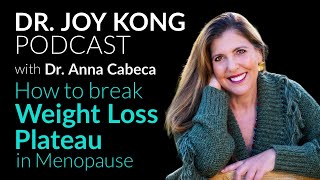
A YouTube interview (June 28, 2022) where Dr. Anna Kubeca explains why midlife weight plateaus occur and describes practical strategies to overcome them. Key points: multiple ‘‘weight control’’ hormones shift during menopause (increasing insulin/cortisol, declining sex steroids), intermittent fasting and a 'keto green' lifestyle (low carbs, healthy fats, lots of greens, no snacking) to restore insulin sensitivity, and a set of short (six-day) protocol plans to reboot metabolism. She also discusses environmental endocrine disruptors and cultural approaches to aging that influence symptoms and outcomes.
Questions this video answers
13 weight control hormones.
At least 12.5 hours between dinner and breakfast.
Each plan is six days long.
Every 72 hours (cited as a basis for the 6-day plan).
287 chemicals.
Chapters
Our patients will come in and say. They would say to me, Dr. Anna, I'm gaining 5, 10, 15 pounds and I'm not doing anything different. And I would be like, sure you're not. In my mind, I never said that outwardly, but I would think to myself, sure, you're not right. Obviously you have to be doing something different. Well, when I turned 48 and I gained 20 pounds literally without doing anything different, I was very conscientious because I'd been well over £240 at one point, lost £80 and kept it off. I mean, it was that transition time and I was like, what is going on? And that's where I recognized very quickly as the hormone expert that it takes more than hormones to fix our hormones. Here are a few of the steps that we have to take to help you bust through a plateau.
Hi, this is Dr. Joy Kong. Welcome to the Dr. Joy Kong Show. And I'm the longevity expert. I'm here to help you look great, feel great, and be great for every day of your life. And I brought some of the best longevity experts onto this platform to show you the tricks. So Today I have Dr. Anna Kubeca. I can't wait to talk to you, Dr. Anna. So welcome to the show.
I'm so grateful to be here. Thank you, Joy, so much for having me. I love the work that you do and the energy you do it with. Thanks for, thanks for having me.
Oh, thank you. You're so kind. I'm so excited about what you do. So I just want to introduce the listener a little bit. You are a triple board certified doctor in OB GYN, integrative medicine and anti aging regenerative medicine. And you've treated over 10,000 women in your private practice for 20 years. And you have some great expertise in how to enhance women when it comes to their times of transition to the menopausal period. So I would love for you to share your wisdom. And first off, I have a dying question because I see that all the time in my practice, women are stuck in their weight journey. They are so frustrated. They said, I'm not eating very much. Why? I'm not losing weight. I'm doing everything right. I'm walking every day, I'm exercising. What is going on? I barely eat. So what do you say to these women?
Oh, my goodness, I've been there. I have been there. And I remember there was time where I was gaining weight without doing anything different. Now, Joy, as a physician, you know, like our patients will come in and say they would say to me, Dr. Anna, I'm gaining 5, 10, 15 pounds and I'm not doing anything different. And I would be like, sure you're not. In my mind, I never said that outwardly, but I would think to myself, sure, you're not right. Like, obviously you have to be doing something different. Well, when I turned 48 and I gained 20 pounds literally without doing anything different, I was very conscientious because I had been well over £240 at one point, lost £80 and kept it off. And so it was that transition time. I mean, it was that transition time and I was like, what is going on? And that's where I recognized very quickly as the hormone expert, that it takes more than hormones to fix our hormones. And that's where I would look at each individual and say, okay, here are a few of the steps that we have to take to help you bust through a plateau. Even when we're doing everything right, sometimes we just have to make a little shift or pause. As I like to say, we have to make a little pause.
So you think it's more than hormones?
Yeah, well, absolutely.
What are at play there?
There are 13 weight control hormones, and it goes beyond our reproductive hormones. Progesterone, estrogen, testosterone, even dhea. These hormones are declining as we age. But hormones of weight gain and inflammation, such as insulin and cortisol, are increasing as we age. That's part of it. The other hormones that play a role are leptin, ghrelin, adiponectin. These are all things that play a role and are affected by our aging bodies. And. And so what we need to do is biohack them. So it's like with insulin, we're naturally becoming more insulin resistant because we're going to require less, be in more storage as the elders of the tribe. No, well, we're not in that kind of environment right now. So we have to shift to get into more of a keto, or I say keto green. Keto green lifestyle. And that will shift us to be more insulin sensitive throughout the keto green lifestyle and diet, which is intermittent fasting with healthy fats, high quality protein and lots of good greens. And no more snacking. And I think, like, our society has built a very hungry population.
So no snacking, but intermittent fasting. So you are a believer in intermittent fasting? What I've heard from some experts, they were saying, oh, intermittent fasting.
The.
The bottom line is because you ate less calories, there's nothing magical about intermittent fasting is the amount of calories that were reduced. What would you say to that?
I would say that is untrue. The intermittent fasting is giving your body a time to rest and digest and get your blood glucose levels lower and create insulin sensitivity. As physicians, we say, okay, we want your fasting labs. That's at least 12 hours between dinner and breakfast. Why? Because we want a baseline glucose. It takes that sometimes to get your glucose to that baseline level. And so that's one big fact. Is that also our body intelligently so taking that time between meals to rest and digest digestion requires good digestive enzymes without interruption, without too much fluid hydration to dilute our digestive enzymes and giving your body time to completely digest your foods as well as that space in which to do it in. So what we've seen in research is that with intermittent fasting, not only can we trim down, but in 2016. And this is very. I'm passionate about this area because I'm a gynecologist and women's health expert and worked with many women with histories of breast cancer or in treatment for breast cancer. In 2016, JAMA published an article that looked at women who had a history of breast cancer. And those women who had at least 12.5 hours between dinner the night before and breakfast when they broke fast had a significantly reduced risk of recurrence. So there's more factors at play here. For me, that should have been headline news like New York Times, but it somehow passed into the.
That's really great. Yeah, Great data to know. That's very helpful because I've listened to a lot of different experts talking and making their own opinions. Some definitely were big proponents, and some say, no, there's nothing magical. But that research has pretty solid evidence showing that there's something beyond just calorie restriction.
There absolutely is.
And then no snacking. So. So what's the importance of no snacking?
Because you have to give your body time to digest. And also, again, we're becoming more insulin resistant as we age. So every time we snack, we're incorporating calories and macronutrients, and our body's attention goes to digest the snack.
Right.
So it's pulling resources away from repairing regenerative processes. And when we. And the other part is, so if we're eating, we eat a meal, our blood glucose is going to go up, or insulin will go up. And we wait two hours, eat another meal or snack, Glucose goes up, insulin goes up. So we're creating insulin resistance. Our children shouldn't even be snacking. They're snacking because they're having too many carbs at breakfast with their cereal and they're crashing within two hours. And that's why they need another dose of carbs and to get their blood sugar back up. And then they're creating insulin resistance. We've created an epidemic of obesity because of that. And in menopause, our body is designed for that conservative stage of our lives. And so with that higher insulin resistant, we're going to make sure the reproductive age, the, you know, the women and children, so to speak, are being fed before the elders of the tribe will get fed.
Right.
It's not the first. It's, it's like, hey, we're fine, make sure everyone else eats. So the fasting is, or, you know, being able to fast and decrease quantity of food is part of that. And that's probably where insulin resistance manifested partly for survival of the species too. Very fascinating, really, when you look at it historically and cross cultural culturally. I've traveled around the world. In my current book Menopause, I talk about menopause strategies around the world, what different, different cultures have done. So it really opened my eyes to different things. The other thing is if we eat two or three meals a day, that is attainable for all of us, cutting out the carbs and sugar, so we're not getting these huge blood sugar swings. And with that said, we need to stop drinking to dilute our digestive enzymes at least 20 minutes before our meal, not to drink more than 4 to 6 ounces with our meal and then wait one, two hours after our meal. Because if we take a piece of meat, pour acid on it, it's going to dissolve the meat. But if we take that same piece of meat, pour acid, and then pour a cup of water on it. And I did a video on this in my girlfriend doc on my Instagram at the girlfriend Dr. Man, I got hundreds and hundreds of comments, but it just makes so much sense. I took my dinner and I just poured a huge cup of water on it. But that's the visual of what we're doing it. And then you're like, oh, that makes perfect sense. We need time to really digest our food. So what are the number one and number two drugs over the counter that are a billion dollar industry? It's antacids and pain relievers. We're tearing up our system.
Right.
Because we're not digesting. Taking the time to rest between meals and digest.
Yeah, yeah. And I know you've traveled around the world, right? You wanted to understand how different ethnic groups, how they were doing with their menopause. And what did you discover?
Oh, my gosh, so many different things. And, you know, the visual that comes up for me, and, you know, I talk about different cultures in Menupause, but the visual that comes up for me was being in Lago Titicaca in Peru. And I love that. Love the lake, love the name. It's at a very high altitude, beautiful, pristine lake. And you climb up to. It's like at 10,000ft, and. And you climb up to it. And we were climbing up my. The stairs. My two daughters, who were 7 and 10 at the time, or 6 and 9 at the time. And we're climbing up these tall, you know, these long, long, long stairs. And this old woman, I can say that she was beautifully wrinkled, leathery skin, lots of wrinkles, with a big smile, probably in her 90s. Anyway, it looked like that she's, you know, she's climbing all of five feet tall, climbing up the stairway next to me, passes me and the kids, big smile on her face, and she's carrying a case of water bottles on her head, just smiling. And, you know, it's just that image for me was like, nothing's getting in her way. Nothing's getting anywhere in her way. She's helping, she's contributing, she's participating, and she's enjoying every minute of it. I'm like, I want to be like that. I want to be strong like that. I want to be happy like that in whatever I'm doing. And I want. I want to be that healthy. Do you know in other cultures that.
They were handling the menopause transition better? Is it because a better diet, like, what do they do?
Well, in Japan, it's fascinating. They use the word konenki for this after reproductive years, it's that literal translation from what I understand is the second spring. You know, it's the second spring, the second act, so to speak. It's the second spring. I love that. And so there's the mind shift. And I think we have. We are, you know, we're beautiful marketers, right? We want longevity. We want to look good. So we've made looking old a negative thing. And instead of, you know, really honoring. Honoring our aging, honoring our wrinkles. And like, I stopped Botox and fillers years ago, but I want to keep my skin well nourished, and I want to keep my hair healthy, and I want to keep certainly a pelvic floor healthy and strong for quality of life and to be able to enjoy. And the outward beauty is an expression of Inward beauty, wrinkles, smile, let's call them smile lines, laugh lines and all.
Yeah. In Japan the attitude is different. They call it second spring. Do they, what do they do to possibly reduce menopause symptoms?
Yeah, one thing that the Japanese do in their diet is definitely greens, is definitely the greens, the alkalinizers. You see that? And so there's also a culture of no snacking. No snacking from what I perceived, and being very active outdoors and extended families. So those are parts of it too.
Why do you think women in America have such a hard time with menopause?
I think there's media certainly. But the biggest problem, I'm actually speaking in France on this for a panel for women in tech, invited by the head of NASA's innovation, Dr. Crystal Johnson. It's, we're talking on the food chain and food, food crisis. And I'm talking about endocrine disruptors. The hormone disruptors and toxins in our environment, in our food chain is exponentially increasing insulin resistance and metabolic dysfunction.
Yeah.
So from, from pesticides, herbicides, xenoestrogens, you know, there's a glyphosate, there's a list of hormone disruptors that we're consuming on a daily basis from drinking out of plastic bottles, from chemicals we put on our skin, in our hair, in our laundry detergent, what's in our water. I mean if we look at what's in our water, it's not straight H2O. Right. There's other chemicals and toxins and minerals that are, that are in our water. So we have to look at that. And drinking out of a plastic bottle, handling receipts from the cash register, we have phthalates, bisphosphonates, bisphenol A, you know, and the list goes on BPAs. So, so all of these affect our hormones and we're seeing it in umbilical cord blood. In a study done now, this is 2010, I'd like to see a new study. But in 2010 a study was done looking at umbilical cord blood and ident identified 287 Chemicals in umbilical cord blood. And so that's the first, that's the environment.
Very unsettling.
Very unsettling.
Yeah, we've all been polluted. So the symptoms of these poorly progressing menopause period. So there are hot flashes, insomnia, anxiety, brain fog, depression. So you've seen a whole spectrum, probably less.
There are hundreds there, really. I mean you can name any symptom from aching, aching joints to urinary incontinence to, you know, hot flashes, night sweats, insomnia, hypersomnia, you know, like, you know, the list can go on. Hair loss, dry skin, oily skin, adult acne. It's all hormone dysregulation.
Okay, well, let's talk about your methods of helping these women. What can they do in this environment?
Yeah, so I wrapped my. Essentially when I was 48, I fell into this pit of. I was kind of the pit of hell. I was stressed, depressed, and my hormones were a mess. And this was the time in my life, had really recovered from it, but without doing anything different, I was really spiraling under the surface, was unrecognized, really untreated ptsd, you know, significant ptsd. And I burned out from my medical practice at the time. And I was really struggling. And so with that, I had brain fog, mood swings, night, you know, insomnia and irritability. It was a very challenging time, especially as a single mom of three girls at home still. And so that was also where I had the weight gain without doing anything different that I mentioned at the beginning of this interview. So that pulls me like that was the, you know, the straw that broke the camel's back, so to speak. Like you got the brain fire, you got the mood swings, the memory loss. Okay, but the weight gain, Heck no, I'm not going back there.
Can't take that one.
Cannot take that one. No. So that pulled me into discovering, and I write about this in each of my books, but discovering the keto green way, and that's what I call it, to really eliminating carbs, but doing it in a healthy way by adding in the alkalinizers and checking urine ph as a biohack like you guys, it's a simple thing to do. Get a urine PH test strips or also with ketones on them. Those are the keto ph test strips that I created. And you can just measure your urine ph and get into ketosis at the same time as you get a urine PH greater than seven and it is like a light bulb has gone off. You feel amazing. It's a different, completely different experience.
Interesting. So you have different. You have five different plants for various women. Right. So I see the list is a keto green extreme keto green plant based detox. The carbohydrate pause, the keto green cleanse and the carbohydrate modification. Can you explain what fits who and why did you design these five?
Yeah, that's a great question.
Because.
And you can do. People can cycle through all of the.
Plans and they're each only six days.
So they give you a glimpse in six days. Will this be the best one for my body? And the reason it's six days because we know that gastrointestinal lining regenerates every 72 hours. So essentially two 72 hour cycles. And I think as we get older, like 72 hours isn't necessarily enough. We really need that extra three days to really feel a difference. And I see that a lot by day four or five people really like, oh man, feeling a huge difference. Your body's turning over, feeling stronger at that point and you can really feel that. So the first plan is Keto Green Extreme. It's based on all of. All the plans have an element of my Keto Green lifestyle in it. And the Keto Green Extreme is also autoimmune protocol compliant. In other words, we have healthy fats, high quality protein, lots of alkalinizing greens, but we eliminate nightshades and peppers and, you know, like the tomatoes and the eggplant, two of my favorite foods on earth.
And you eliminate those.
And especially if you have Hashimoto's, you know, Mississippi, it's a really good plan, but it's a good plan for anyone to do and try the second plan. And then I, you know, if you were to do them in sequence, I put them in sequence. Or you could start anywhere. The second plan is completely a keto Green vegan plant. So it's low carbohydrate for my vegan vegetarian clients, but for everyone to experience this, and it helps because we know plant diversity or plant based diets are associated with longevity in the blue zones. But there's too many carbs in most of my vegetarian clients when they come to me, so I really have to cut that out. So I want them to pause the carbs in this. And I want also omnivores to experience a week of six days of being plant based because we know the more plants you incorporate, the better gut diversity you have. And the second piece is that many people in a ketogenic lifestyle have issues with constipation. So improving the gut microbiome needs your attention. Right? It needs your attention. So adding the plant, how do you.
Do keto plant based?
It's a challenge. It is a challenge. So we're doing healthy fats, high quality proteins and low carbohydrate proteins and grains in it. So like we use, for example, black soybeans, we can use some chickpeas and nuts and seeds, but we don't use, you know, we're not using the grains that so many of my vegetarians are eating.
Okay.
We're staying away from fruits, you know, with some exceptions. I see, okay, a big challenge. But it's game changing. It really does make a difference. And again, I say keto green is a good idea in general, but in menopause it's mandatory. Really does shift your physiology. The third plan is the carnivore plan, actually. And I restrict all vegetables, so it's kind of going 180 degrees, but it's very carb restricted. It busts through pretty much any weight loss plateau. And it can be very healing to the GI tract too. @ this point, we really want to make sure our digestive enzymes are good where we're really in sync with intermittent fasting, giving your body time to digest these complex proteins. And it's good. And then the fourth plan is a cleanse because we also do a cleanse periodically. So it's a six day cleanse and it's pretty much smoothie cleanse. And the final plan is sometimes my keto greeners or keto people that have been in the keto lifestyle for a while have been so carb restricted. And I think of an athlete, Olympic athlete or past Olympic athlete, Debbie, and she was very strict on keto for a long time. And she came to me, says Dr. Anna, I'm having these symptoms. I'm having more hot flashes again and not feeling as strong in the gym. All my workouts have plateaued. And I said, you know, I looked at what she was doing and I said, I was like, girl, we got to add some carbohydrates back. So we added sweet potatoes and some root vegetables. And that's my carb up plan. So we added some carbs back and she worked out harder and longer and felt better. And so then you bump into these things, you take a pause. There are seasons for a reason, so we can incorporate these cycles. And so many people have gotten on the chicken salad diet. I always call it, like if I read one more three day diet recall and has chicken salad in it, I'm tearing it up, right? Because we think that's, that's your diet food, chicken salad. Well, chicken salad has a lot of alpha linoleic acid in it, which can contribute further down the road to inflammation and insulin resistance. So you can't eat chicken every day, you know, and you're that healthy. Chicken salad, you're eating what you're pouring on it is another issue. And then again, all chickens aren't created equal. So getting one at the chick, you know, McDonald's for instance, or wherever. Chick Fil A or wherever, you know, they're not organic. Free range, free roaming, whatever it may be. So it's a different beast too. Just like their eggs are different if they're not organic. So those are things that we have to look at and consider in creating optimal health and longevity. And that makes the difference is I'm the first that I know of, the first program to go online and working with women, customizing keto diet for women especially. But men do well, too. We have clients all over the world, hundreds of thousands of people doing keto green now.
So are you saying that people should always rotate through these plans, or do they eventually find one that works really well for them? They stay there for months to years?
Well, I think it really depends on what they're dealing with and what we're working through. I think that's the big thing. I'm at a stage. We've been doing this a long time. I rotate, I bump in and out. I've never been keto probably consistently longer than 30 or 40 days ketosis without having a feast day or a couple glasses of wine day. So that would bump me out of ketosis, sadly. But, you know, I think I have a rule. It's pretty much 80% keto green, 10% feasting, 10% fasting. And so, like, incorporating menu pause gives us plans to work with, and it gives us guidelines. Say, I feel best when I eliminate these things, or I feel best when I incorporate these things into my diet. I feel ambitious like a woman. Yesterday in my girlfriend doctor membership club that I have, and we do the zoom videos twice a month live. And she was just like, Dr. Anna. She goes, I don't know where I've been, you know, if I hadn't found your keto green lifestyle. She goes at that point. And she'd been a weight watchers coach for 15 years. She says, I was struggling. I was stuck. I hadn't had sex with my husband in two years. And she goes, you've resurrected my body, my marriage, my sex life. And so it's that shift that we can make even when we're doing everything right. She's a weight watchers coach. She's a highly educated woman. She's a trainer, you know, and it's the little things we got to get out of our stuck. We got to get out of what we're doing because we've always done it. That's what I'm challenging people to do.
Yeah, I have a Question about the part where you're cutting out all the carbs and going, animal protein. And there are plenty of doctors in our health wellness space who absolutely abhor animal proteins. And they will give you scientific breakdown and all the information and all the epidemiology studies showing the correlations between animal protein, animal sources of food, and how it translates into morbidity. And how do you, you know, counter that type of approach?
Yeah, I think I was a vegetarian for 12 years, so I knew for me it was one of the unhealthiest times of my life. But I didn't do it right. And so that's why I've incorporated in this book a keto green vegan plan or vegetarian plan. Also my last book, Keto Green 16, I have a 16 day omnivore plan and another 16 day keto green vegan plan. And so I want to give people the option, but I also want to recognize that, you know, we have the flexibility. We can do plant, we can do meat. Well, where are we? What works for us right now? What's our next right step for right now, next year may be different. Next year, you know, I may need to go plant based for longer than six days at a time. I may need to do that again. But right now, an omnivore, I couldn't do omnivore for more than 30 days and it just didn't work for me. And so it's like, okay, I mean, not omnivore, carnivore for more than 30 days in a row didn't work for me. But I was also on the road in Texas and on the rodeo. And so it wasn't the healthiest, you know, free range organic meat that I was getting either. So I wasn't healthy. You think of all the chemicals we are, what we eat, ate, and also vegetables, what they're sprayed on, what they're sprayed with, and their own defense mechanism. So I think too, we have to look. We have to then that's why we have to see. Okay, based on my cultural and genetic profile and my personal preferences, what's the best thing for me at this time? And I think it's a little bit of all of it. I'm definitely in the omnivore camp. Not carnivore, not vegan, but omnivore. And I respect all of it. Let's do it as healthy as we can and let's rotate. Let's challenge our body whenever we can.
Mm. So this reminds me a little bit of the carb loading philosophy. That you do keto. Keto and then you do a little carb loading. So that you must be a proponent of that, looking at your plans.
Well, like my feasting, for instance, you know, when I say that we're, you know, we do 10% fasting, 10% feasting and 80% keto green. So to have metabolic flexibility. Have metabolic flexibility. And with that carb loading, maybe, maybe you bump over 50 grams of carbs, maybe you bump over 500 grams that day. It's hard to say. So it's just about creating that metabolic flexibility. And again, what are you dealing with? For some of my clients, I won't let them carb up until we break through a plateau.
It's really interesting when you were talking about how people hit the plateau and how the keto diet can be very helpful. It brings to mind my own mother who always wanted to be thin and she couldn't lose the last, whatever, 30 something pounds. She was very frustrated and she wasn't eating very much and she was just, just discouraging. But then her diet has a lot of carbs. Right. Rice. And so she was eating the traditional, what she would, the way she was eating when she was younger. So she kept that. And then the fat would just not come off no matter what she did. So I'm wondering if she was able to switch to the keto portion.
Keto green. Keto green, yeah, for sure.
Yeah, yeah, yeah. Okay.
With intermittent fasting and no more snacking, all comes to play. All comes in together.
Right, Right, Yeah. So you have this beautiful book you made called Menupause, which is very cool. It's a gorgeous book with all these recipes. Yeah. Menu pause. So all these are food you came.
Up on your own, came up with or modified. The plans are all mine. So the five different six day plans and some of my favorite foods from my background, I'm Middle Eastern origin, first generation American, Middle Eastern and Portuguese. So I've got some kale soup modified recipes in there. So no potatoes in my kale soup. I have kefta and tabbouleh in there. I have shakshuka. So different ethnic foods and that everyone can enjoy from wherever you're from. And I have. Yeah. And yesterday I made my kale and tempeh tacos which are in lettuce or they could be in cabbage boats. And so can check that out on my Facebook page at the girlfriend Dr. I did it with the blender girl at Testmasters, so was cooking as I go, but I use herbs and spices and based on and combining the food to help with naturally support our hormones. But also hormonal detoxification. I incorporate that into the meals into the six day plan. So there's a good rotation and variety and getting amazing results. So exciting.
Wow. So people can just do the six days and just follow the recipes?
Yep, yep.
The whole plans right now, day one through day six. So no, you know, and there's shopping list in there. Yeah. And we have extra bonuses on our website@dranna.com there a book bonus page where you can get batch cooking guides and some things that I couldn't include in the book.
That's great. So what's the best way for people to follow you or contact you?
Thank you. Definitely on Instagram at the Girlfriend Doctor because I'm now a grandma. My firstborn had her firstborn so I was excited. I'm so excited about that and I got to deliver her so that was like even more special. And so I always see my daughter's pictures of her there, although she lives with us too, but now she's traveling with her. So I'm on Instagram a lot at the Girlfriend Doctor and on TikTok at the Girlfriend Doctor and Facebook, my Keto Green community and Dranna.com definitely put a lot of free resources on there. And yeah, my own journey.
Yeah. Wonderful. I'm going to try your, your menu. Pause recipes.
Let me know how you like them. Joy.
Yeah. So, okay, so we'll wrap up here and thank you for everybody that's listening to this, you know, to this point. And please subscribe to the YouTube channel so you don't miss any of these great episodes with phenomenal doctors like Dr. Anna. So Dr. Anna, I want to thank you and it's been such a pleasure. Thank you for what you do.
Thank you.










