How To Detox Your Body - Explained by Dr. Daniel Pompa | The Dr. Joy Kong Podcast
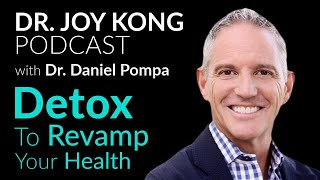
Dr. Daniel Pompa explains how heavy metals like mercury and mold trigger inflammation and hormone resistance. He spent years sick from mercury, lead, and cadmium exposure before standard blood tests caught it. His framework focuses on removing toxin sources, regenerating cell membranes, restoring mitochondrial energy through fasting, and rebuilding glutathione support.
Questions this video answers
November 22, 2023
pompaprogram.com and drpompa.com
Around 1999
In his early 30s
Keep people on oral chelators after the challenge for at least three days to avoid redistribution (per transcript)
Chapters
These toxins are driving an epidemic of cellular inflammation. This is why we don't feel well. You can change your diet and people 20 years ago would lose weight. Today, not so easy. People used to feel well if they made dietary changes. Today, not so simple. Because our cells are inflamed because we're exposed to a certain level of these neurotoxins that are causing the hormone disruption.
Maybe a lot of people are barking on the wrong trees, even working with holistic practitioners that they think they're getting something that's really going to make fundamental changes, but then they're just going to get frustrated. Hi everybody. Welcome Back to the Dr. Joy Khan podcast. And as you know, I use this format, this platform to bring to you some of the most incredible pioneers in the health and wellness space space to help enhance your life. And the subjects range from anti aging to, to inspirations into mental health. Of course the foundation of health is your physical health. Today I have with me Dr. Daniel Pompa, who I have tremendous respect for and he's has been such a leader in the health and wellness industry. So Dr. Pompa, I first want to welcome you to my show.
Yeah, thanks for having me. Likewise, have so much respect for you. Your story and just everything about you is just amazing and I, I've told many people your story. So.
Glad to be here, so much. I so appreciate that. Yeah. So. So Dr. Pompa, I want to introduce my audience to you a little bit. You have been a tremendous leader, presenting a lot of times top conferences, educating other practitioners and the public on the origins of inflammation driven diseases and the therapeutic approaches of diet variation, fasting, cellular healing and detoxification. You were trained as a chiropractor and your, your authority is rooted in your own battle to overcome neurotoxic illness and heavy metal poisoning. And you use your own unique sense of cellular detoxification strategies and now you are able to share it with everybody else and then also Dr. Pompa's journey back to health had led him to a voracious passion for researching and learning beyond what is often readily understood. Dr. Pompa is a relentless self experimenter. He has a passion for healing others and is a true warrior. Going upstream as and following a multi therapeutic approach to achieve healing. You can find Dr. Pompa@drpompa.com and on the Cellular Healing TV podcast. So Dr. Pompa, I can't wait to delve into your own journey and also what you are able to brought to the world as you know Kind of inspired by that. So maybe you can share with us what. What kind of health journey you've gone through.
Yeah, this whole space, I always said, and choose it. It chose me. Gosh, it was back in 1999 when I started getting sick. You know, it just kind of came out of nowhere. I was doing a lot of training at the time. Arguably, I was in the best shape of my life. And then fatigue started. So, of course you just think you're over training. I was also running a very busy practice, so must been over training. My adrenals, you know, were fried. I started getting a lot of thyroid symptoms, so I slowed training down. I really did everything that, you know, someone would do if they thought they were over stressing themselves, but it didn't work. I. I started getting more symptoms. I. I started to get to the point where even if I would just do a light workout, I wouldn't recover at all. I mean, meaning to the point where I'd have just anxiety and like, debilitating fatigue. And then insomnia started panic attacks. I became like, allergic to every food. I started food chasing, like so many people do today. Like, is it this? Is it that, you know, the symptoms just got more and more bizarre. Honestly, I mean, I don't want to take up the show, but I chased my adrenals. I chased my thyroid. One of the frustrating thing was, is that I spent $5,000. I went to the head of toxicology at Allegheny General Hospital in Pittsburgh. One of the best. $5,000 worth of blood work all out of pocket. And I remember the day. I remember the look, and I remember what he said. He looked at my blood work, and I was hoping they would find something. I mean, even if it was a horrible diagnosis, at least at that point I would know that, okay, this is what I'm up against. You know, maybe I can do something about it. But instead he said, son, you're healthier than I am. And he looked at me like, you know, so what's. What's going on? You know, it was basically all on your head was the Washington he was saying. So as it turned out, a lot of it was in my head, but not mentally. You know, I ended up. It was probably a year or so later after that that I was working with a very bright endocrinologist because, again, I knew something hormonally was not right. I just couldn't figure out what it was. I. And I. I knew instinctively it was something in the pituitary hypothalamus. That's kind of what controls all of your hormones, your whole endocrine system. But I, I just couldn't figure it out. He said, you know, Dan, I think you have heavy metal toxicity. And I said, oh, I thought so too. That's why I went to the toxicologist at Allegheny General. I thought I did too, but my blood test came back normal. He said, wrong test. That would be if you had acute mercury toxicity. But I think you have a chronic exposure. Did you have any dental work done when this all came about? And I was like, yeah, maybe because I had these two fillings that were cracked. A good friend of mine removed them and sure enough, it was days after that. Fatigue started. I never made the connection. And after that, then it was okay. How do I get this stuff out of my brain? Because that's where the mercury accumulates. I was living in a low grade, moldy home at the time. I already said I was doing a lot of training. That was a perfect storm. And that's really. After that, it was just my illness started basically presenting itself and I just never put it together. So here I am, like four years later after Misery and two young boys. @ the time, I could barely work. You know, I wasn't the dad that I was, I wasn't the doctor that I was, wasn't the husband that I was. So life came to a screeching halt. Needless to say, fast forward, everything I teach today came out of that. How to get it out of the brain, how to get it out of the cells. Because in our space, Joy, it's, it's done wrong, you know, and that's been my passion. I always say sometimes I get sick of myself talking honestly, but I find myself saying the same things over and over again. You know, telling doctors, no, that is not how you detox. This is not how you get these neurotoxins out of your nerve system, which, by the way, are driving most of the unexplainable hormone problems, weight loss, resistance, anxiety, sleep problems, Everything that people are dealing with, brain fog, brain conditions, all of it. Typically the upstream causative factor is some neurotoxin or some perfect storm.
So how did they found out? Could they do a test to see if the, the chronic mercury poisoning was actually the issue?
You know, one of the things I caution doctors and just people about, there's no perfect test for brain mercury. The reason is brain mercury is it's in there deep, it turns to inorganic mercury and there it's locked for life. And you end up with the symptoms depending on and what cells and parts of the brain it bioaccumulates, but without biopsy, you really can't test for it. So the best we can do is do a challenge test where we chelated out of the body and then measure it in the urine. But I caution, mercury, aluminum, and some, they just don't show up on those tests. So you almost have to look at those tests. As someone who's very burdened, then we might want to consider that you could have a lot of these types of neurotoxins in the brain. So it's very difficult to test for them. One of the things that I put over the years, a neurotoxic questionnaire where we kind of look for specific symptoms that people have, and it can lead us to the type of neurotoxin. For example, mold illness or AKA biotoxic illness, has a certain presentation to it. And then there is a test that we do. It's called a visual contrast sensitivity test, where we look at. Not the acuity, meaning someone's ability to see close, but we look at their contrast, and that's a really good beginning. If someone's biotoxically ill and if they have these sets of symptoms, then they might have mold illness, so. Or Lyme disease or another biotoxic type of illness. So, you know, heavy metals have a certain array of symptoms. So, you know, but training on that for so many years, you know, we help people narrow in what really they're dealing with.
Okay. So after you realize. It's almost like deductive reasoning where you realize this probably was mercury, I. You must have looked up all the mercury, all the symptoms, and everything started to fit perfectly.
I found online Mad hatter's disease. And I don't know if your viewers or listeners, you know, remember what that is, but if Mad as a hatter, all right, think of Alice in Wonderland. But Mad as a hatter, it came about because people making felt hats literally went mad. And the reason is because they were using mercury to attenuate, kill off different molds and things that get into the felt, and that's what they were using to make the hats. And so Matt is a hatter. I had all the symptoms. I was mad as a hatter. So that's what actually led me to realize I think I have mercury toxicity, but that's an acute poisoning, meaning that you're working with mercury every day. And, you know, then obviously it would show up on a blood test, and that's why I did it. Oh, you know, maybe I have this. But a year or so later than the endocrinologist said, yeah, wrong test. It won't show up on a blood test or just a urine test. He did lead me to chelated out of the tissues. And you have to be careful with that, too, because many people go to their doctor, they do an IV chelation and then measure the urine. And certain things show up very well in that lead and, you know, some other metals. But again, as I pointed out, aluminum, mercury don't show up very well in that test. But I had so many metals off the chart, I realized that my pathways were shut down. And even I did still have an abnormal mercury level on the urine test that didn't show up on the blood test. But again, using a chelator is very dangerous for some people because what happens is you get a lot in at once in the iv and then you go home and you start your body's dumping these metals, and then they redistribute. So the way we do the test today is we keep people on oral chelators after the challenge for at least three days. And you have to take the agents, what we call in your half life, meaning just keep the blood levels up so you don't get this reabsorption or, I'm sorry, redistribution of the heavy metal. So you can see it's not just like, hey, running. Get this urine test run and get this blood test, hair test, you know, very inaccurate. And you have to look at it again. You have to look at it in the light of other symptoms and in light of somebody's history. So one of the things what I teach doctors is, you know, we need to really do better histories. And, you know, because people's history will determine oftentimes, you know, what happened, their perfect storm. Because it's never typically one thing. Typically, it's. I always say it's three stressors. I'll date myself here. But if you remember the. The movie the Perfect Storm with George Clooney, you might remember that. But actually, you're looking at me like, I don't remember the Perfect Storm. It was a very popular 80s movie, so. But some of your viewers are like, oh, my Gosh, come on, Dr. Joy, you must know I was not in the.
In the United States. Yeah. So that's my excuse in her defense.
Y.
So.
But it was a movie about the perfect storm. Three weather fronts come together, and when that happens, a catastrophic storm ends up happening, and, you know, a lot of people die, bad things happen, but that's exactly what we see with people who just can't figure out what's wrong, they have a perfect storm. Meaning three stressors come together, physical, chemical or emotional. Could be two chemical, physical, stress. And then boom, bottom falls out, gene gets triggered. Now you're manifesting symptoms you don't like. Eventually you may or may not get a diagnosis. The thyroid is, we call that the canary in the coal mine. I'm going to date myself once again. So in the old days they would actually take canaries into coal mines because they didn't have sensitive enough equipment that when certain gases would be released in a coal mine, the canary would actually die first and you had a certain amount of time to get out. So we call the thyroid that today you see this mass. You know, I, I just did one of my seminars and I was even shocked because I, my first slide was what in the world is going on? And I presented the numbers in the last 10 years of thyroid conditions. Staggering increase in the last 10 years, diabetes and then even what was projected, all these hormone related conditions have just escalated, including obesity. You know, and just getting back from Italy pretty recently, I did some research. The Italians eat 20% more carbohydrates than here in the United States. One thing you don't see in Italy, especially when you leave where Taurus are, you don't see fat people, you don't see obesity. And yet they eat way more carbs. Well, as it turns out, it is really the lack of certain toxins that they're not getting exposed to that we are in the US they have far less, something forever called forever chemicals. We'll talk about that in a minute. They have far less exposure to obesogens. These are types of chemicals that actually cause weight gain and weight loss resistance. And they have far less diabetogens which their diabetes rates are far. Despite eating more carbs. Far less. I was, I was lecturing recently at a seminar in Europe and there was, it was half Europeans and half people were from the United States. I sat in on a gut panel talking about gut problems. The whole panel was Americans. I think there was five of them. And the audience was split, Europeans and Americans. And I, I wanted to so speak up during the thing, but I didn't want to be that guy because they, they knew I was in the audience and I didn't want to be like a know it all. So I didn't say a word. But at the end a gentleman from Germany spoke up and said what I wanted to say. He raises his hand and he says not to be disrespectful to my all American panel. He goes, but just an observation. Yesterday at lunch, half the table was Europeans, half the table was from the US and he said, all I heard about from the US was about all of their hormone problems and thyroid problems and gut problems. And so I turned to the colleagues that were around me, I said, do you have any of those problems? Do you have any. And none of them had the problems. He goes, so I think this is a toxic issue. You know, just what you're exposed to in the US versus here. Because he talked about everything that you said. Dietarily, we don't do in Germany. We all fat, we eat low. I mean, he went on this list, we don't have these problems. So I'm not sure what you're saying is 100% accurate. Then another woman raised her hand. She said, he's right. Look, when I go to the US I get all these gut problems. When I come back, he goes, she said it. After a few weeks, they go away again. The bottom line is, is that the level, that first slide of what in the world is going on? It is the amount of toxins that we're exposed to today has really caused major havoc with hormones, hormone havoc, but it's caused major health issues, a massive increase in autoimmune and these unexplainable conditions that we're seeing.
Gosh, I mean, how sad. And just your personal thoughts on why we're so particularly toxic in.
I just did a TV piece because California banned red dye. So bravo, California, there, that's one positive there. But that's been outlawed in Europe for many, many years. If you look at things that are in most cereals, Gatorade, they're all banned in Europe. Why they ban because of the chemicals. Most of the natural flavors. And glyphosate has been banned for many, many years. Glyphosate is the chemical that's sprayed on basically all of our food supp supply in the US It's a chemical that opens up our gut barrier and creates massive leaky gut. That's why everyone's running from different foods, including beyond gluten. They're running now from plant toxins that are, you know, really actually meant to be healthy. Things like oxalates, phytates, lectins. You know, these are things that people used to not react to, but in this country are reacting to. In Europe, they're not yet. Unless they start introducing these chemicals, which hopefully they don't. But the bottom line is that chemical is outlawed there. Other Chemicals are sprayed far less like 2,4D. These pesticides, they're not being sprayed there. And even the chemicals that they are using are allowing personal care. Products that are obesogens are not allowed there versus here. Forever chemicals. Joy, did you see the movie Dark Waters?
No, it's.
Most people haven't, unfortunately, but it just came out recently. It blows the lid off of what happened from two companies, 3M and DuPont, back in as early as the 1950s, they knew that this chemical, so it's basically the chemical used in flame retardants, non stick pans, water resistant things. This chemical is just ambiguous in the way we live our lives. It's in 10,000 products in the United States still. The fact is, is back then they knew that it caused birth defects, thyroid cancer, diabetes, metabolic problems, meaning hormone problems and horrific birth defects. They knew that. Then they went on to make billions, not millions, billions from this chemical. Until finally the lawsuits came about in 2019. Now billions of dollars have been awarded for the damaging effects of these chemicals. How many people actually know? And they're still using them here. So watch the movie. This one attorney dedicated his whole life to exposing this. So these chemicals are basically, they bioaccumulate. They're called forever chemicals because they stay in the environment forever unless you specifically try to remove them. And they stand us and virtually every living thing on the planet has these chemicals. But here in the United States, we enjoy more of them. But they do drive obesity, they do drive hormone problems. And here we are, a country that takes more hormones than any country in the world because we look at below hormone levels as a pathology. But really, as you age, hormones should go lower. However, it isn't the hormone levels as much as it is the cell's ability to hear the hormone. On every cell, you have hormone receptors. And these receptors are what hormones have to attach to to get in the cell or their message in the cell. And when that doesn't happen, we don't feel well despite our blood levels of hormones. Meaning I went and got $5,000 worth of blood work money I didn't have then. And my hormone levels were normal, even my thyroid levels, even though my hair was thinning, even though I was getting skinny fat and I had all thyroid symptoms. Now maybe in 10 years they would, oh, you know, maybe five years, oh, your hormone levels are finally off. What would they do? They would give me thyroid hormone. Now maybe it would make me feel better a little bit, right? But typically not because it doesn't matter. If we improve our blood levels of the hormones. It's what is getting in the cell. And these receptors on our cells, toxins blunt those receptors. They cause inflammation of the cell. So the problem isn't hormone levels as it is, as much as us not hearing the hormones at the cell. It's called hormone resistance. You're familiar with it. Not you, but your listeners, because of. Think of insulin resistance. That's called type 2 diabetes. That means the cell can't hear insulin despite having plenty of insulin, oftentimes too much because the body's trying to produce more. But the same thing's happening with estrogen. The same thing's happening with testosterone. The same thing's happening with hormones that we need to stay lean, have normal energy, normal brain. The cells are inflamed when. So that slide. What in the world is going on? These toxins are driving an epidemic of cellular inflammation. This is why we don't feel well. You can change your diet and people 20 years ago would lose weight. Today, not so easy. People used to feel well if they made dietary changes. Today, not so simple. Because our cells are inflamed because we're exposed to a certain level of these neurotoxins that are causing the hormone disruption and the gut disruption.
Yeah, that's such an important point. You know, maybe a lot of people are barking on the wrong trees, even working with holistic practitioners that they think they're getting something that's really going to make fundamental changes, but then they're just going to get frustrated. You mentioned that you were. You had a lot of heavy metal in your body, not just mercury. Is that correct?
Yeah, I mean, I also had high lead levels, which. The number one source of lead, believe it or not, is our moms. It's lead is stored in the bone. And we all grew up in the lead generation before 1978. They build, they, you know, paint. The lead had. The paint had lead in it. Gasoline had lead in it. Lead was in the dishes we were eating off of the toys we were chewing as children. And so in 1978, that was outlawed. And it took some years to come out, but our parents grew up in that generation. So most people watching this, your parents grew up in the lead generation that led lead, most of it ends up in the bone. It's very normal during pregnancy to lose bone. It's part of it. And. But out comes the lead. So the number one source of lead is mom. And then, of course, if you live in a home built before 1978. Oh, if you test the dust and send it in you'll see lead there because the windows have been painted. However, when you move windows up and down in old homes, you're putting lead off into the, the space. So no matter what the leads there in older homes, but even if you managed to always live in a newer home, you had a lead exposure from your mom, as I did. So, yeah, I had a lot of lead as well as I had a lot of cadmium thallium. I was eating a lot of vegetables at that time, and you get a lot of thallium in a lot of the vegetables, like kale and other things. You know, again, it's in the, it comes from the rain. It comes from, you know, what they utilize on the, the plants themselves. Another big problem today is aluminum. So I know that there's a lot of talk about chemtrails, but what people don't realize is that the aluminum is actually put in jet fuel to make it more efficient. And it's not just aluminum, there's other chemicals too. So you see when you see the streams behind jets, that is particulate, that creates a condensation. And then you see it in there, especially at certain humidity levels, but that is in there to make the jets, the, the fuel more efficient. So companies save not millions, but billions of dollars. These new jet fuels have really escalated over the last 10 years. I mean, meaning like the, the technology has gotten so much better. I'm going to put quotes around better, meaning that yes, they're more efficient, but now it's put this downfall of acid rain and aluminum into our air. So even the acid rain, you can google this, don't take my word for it. What it's doing is it's causing the number two element in the earth's crust to be released into our food and water. That's aluminum. So the acid rain is releasing the aluminum, which is typically bound, and then it's in our food supply. So think about this. Between the mercury and the lead, the forever chemicals, do you see why we have this massive explosion of all these weird conditions, degenerative conditions. You know, look at the amount of brain conditions and how that's escalated just in the last 20 years. And it starts with simple brain fog. But this is a problem.
So how old were you when you discovered that you actually had heavy metal poisoning?
I was in my 30s, my early 30s at that time. So. And I, I had a healthy childhood. I grew up in a family that home cooked meals and you know, so I, I really never experienced bad health until that, that moment. So it kind of Hit me over the head. Whereas I would say today, that's not as much of the case. People start with kind of where I started, just, you know, just fatigue, you know, need more stimulate to the day that doesn't everyone experience. I didn't sleep as well. We have a lot of reasons. I need to exercise more. Right. That's kind of what people say. And then the brain fog, you know, it's like, gosh, you know, I just, I can't think of things the way I used to think of things. I, I can't even read and understand anymore. I can't pay attention. And then it goes to the anxiety, you know, where it's like you have anxiety without worry or you find yourself worrying over stuff you would never have worried about, you know, then you find yourself not sleeping well. Right. Even if you do manage to sleep through the night, it feels like you didn't or you wake up middle. I can't get back to sleep. So, you know, there's all these little symptoms that kind of creep up on us and it really, they're signs of neurotoxic illness. They're signs of something getting much worse. The thing I love to explain, we all have a bucket. I, I call it a stress bucket. Genetically, some of us have bigger, some of us have small. I, I have a small one. Okay, so my stress bucket, not so good. But the, the fact is, you know, I, I do very well with emotional stress, but I don't do well with toxic stress. But once that bucket fills and where does it start filling in utero. Remember, it's, it's not just the lead, it's other things that we get from mom and dad. And it fills up to one day, it overflows. And that's when the symptoms start. That's when we go, what happened? Right. Or that's when we start medicating things away, symptoms away. Or maybe we're, that's when we start looking at different supplements or diets. The point I want to make is unless you empty that bucket, you're just chasing symptoms either with natural things, different diets, but you have to get to the what's in that bucket. Yes, physical stress, chemical stress and emotional stress fill it. But some of the emotional stressors and physical stressors we can't do anything about. But we can do something about the massive amount of neurotoxins that fill that stress bucket.
So how did you empty that bucket? How did you even discover where to go?
I started this by saying, in our space, there's A lot of myths about detox. And so let's start there. A myth about detox is you can just sit into a sauna and get rid of these toxins. I love saunas. Nothing against them, but it's not where real detox is. Real detox is a cellular issue. If you look up what a cell does every day, it's getting rid of toxins, and it has all these functions to do that. The reason is because in the cell, we make energy day in, day out. If you burn wood in a fireplace, you make energy, feel the heat. But if your damper is not open, smoke backs up into the house, and that's how you die. So you have to have the damper open. Think of that as the cell's ability to get rid of the smoke or the toxins when it's making energy. So when that cell gets overwhelmed, the detox pathways, they're not working the way they should. And so now it starts accumulating toxins. The problem with that is, is all the pathways that normally are utilized to get rid of the toxins, they start getting worse and worse and worse. So you can do all of these things that we call detox, but unless you fix those pathways, then you haven't really fixed the problem. My five Rs is a roadmap that I started teaching doctors of how to fix that. Those cell pathways, they're so compromised with this epidemic of toxins, and it caught on in the public. And just to. I don't want to bore people with the science, but our number one is you have to evaluate your life for. For sources. You have to remove the sources. And we talked about some of those, and there's more. But our number two is you have to regenerate those cell membranes. The membrane acts as the gatekeeper of what comes in and what comes out. Remember I said the thing that inflames those membranes and blunts the hormone receptors? Toxins. Number one. And so we have to regenerate those membranes. R3 is you have to restore the cell energy. I teach a lot of different methodologies to do that. You need cell energy to detox the cell. You need cell energy for every function of the cell. And it's a cornerstone of what I teach. R4 is you have to reduce the inflammation of the cell. And that's a lot of different pathways that we utilize to do that. R5 is reestablish something called methylation. Methylation is how your body gets rid of toxins, it gets rid of how it regulates stress, and it's even how your body gets rid of toxic hormones. But those pathways, I teach how to re establish them to get that cell working again. And then we open up downstream detox pathways. We use chelators correctly. And so there's a big process there that I've taught for years.
Okay, wait, that sounds pretty complex. So people know about removal. Even that part can be hard. You know, remove yourself from, from the toxins as we, you know, we're, you know, marinated, frankly, how do you regenerate the cell membrane?
You know, there's a lot of myths here too. I think if I asked your audience how many people would hear about the benefits of omega 3 fats? All of them would say, yes, and I love omega 3 fats. However, if I asked your audience what about the damaging effects of Omega 6, most of your audience say, yeah, I heard about that. Seed oils, these bad omega 6 fats. But the reality is, is because omega rancid, adulterated, meaning bad Omega 6 is so dangerous that therein lies why it's the solution to regenerating the cell membrane.
Yep.
It's not the omega 3. It's important in many things. It's the omega 6. So you have to avoid bad omega 6 in your diet. We could talk about what those are, but we have to get unadulterated, unrancid good omega 6, which is the key to fixing the membrane. And that is the cornerstone of detoxification. So I have a saying, real detox is at the cell and you won't get well until you fix the cell. So the membranes are critical. So I've developed a lot of products over the years for different companies and my own of products that target certain ratios of fats and quality. Omega 6 that get in there. So vegetable oils, canola oil, or even in most health food stores, in most products, rancid seed oils. Those oils are bad and they do get into the membrane and drive inflammation. However, the non rancid Omega 6 is, as I already pointed out, magic. So you can get unadulterated good seed oils. You know, you just have to again, know what you're looking at.
So I mean, it's so bad to the point that almost you don't look for what's bad. You look for only a few of the good ones. Right. Because almost everything else is bad. I do remember going back home to China. My brother brought some peanut oil and I said, oh, these are not good. He said, no, these are fresh, you know, pressed.
Yeah.
So these are mechanically pressed. So that will be very different from very good?
Yes.
You know oil.
Yeah, there's a seed oil, I'm not promoting a product, but Andrea's seed oil, he has a pressing process that he patent. He was a gymnast actually. A guy who lost his gut health and he got it back with omega 6 fats and he. Now you open up a bottle, his sunflower oil, it smells like sunflowers.
Right.
So it's to your point. It's how he presses it and it doesn't get denatured. The sunflower oil that you buy in most of the chips at a health food store has been chemically extracted. It's rancid, it's horrible for your cells. Right. So a lot of people in our space just throw all seed oils under the bus. Now I agree with you that seed oils that you find in most processed foods, yeah, they're bad. But the right seed oil, done correctly, the right flax oil, the right sunflower oil, sesame seed oil can be very, very healthy.
So what oils do you actually eat?
Yeah, so I mean, of course I use olive oil from my Italian descent. I'm very fussy about my olive oils, but that's not where I get my Omega 6. So I, I do like Andrea's seed oils. You know, he, they do a very, very good oil and they have like black cumin oils, pumpkin seed oils, sunflower oils, hemp oils. And he has that process that he uses. So you don't need a lot. I mean, my gosh, one teaspoon a day of those oils is extremely healthy and it's all you need. I love grass fed butter. And not that that's an oil, but it's a fat. And what does it carry with it? One of the big deficiencies that we have today is fat soluble vitamins like vitamin D and vitamin K2. So a lot of people talk about vitamin D, but they miss the K2, K2 you get mostly in grass fed animals. But the problem is, is people don't eat grass fed anything. They don't eat grass fed meat, they don't eat grass fed butter, and they're really missing vitamin K2. You need vitamin K2 to, you pull calcium into your muscles, into your cells, into your bones and vitamin K2 is a massive deficiency. So big fan of grass fed. Butterfly ghee is a clarified butter. It's, you know, obviously used in other countries more than it is here, but loaded with your fat solubles and a really good fat. So I like those fats as well.
Coconut oil?
Yeah, I like coconut oil. Coconut oil has recently got bad press. But real coconut oil, when I looked at the studies, they were just some random coconut oil. Again, that's like doing a study on sunflower oil. And it's chemically processed sunflower oil. It's rancid, it's bad. So I think that, you know, coconut oil done right is a health food.
Wonderful. Yeah. So what about the cellular energy part? How do you improve the energy of the cells?
Well, that's a mitochondria issue. Your mitochondria, if we go back to our biology, that's where we make energy, it's where we make ATP. That. That's how our brain works. That's how we feel good. That's how we burn fat for energy. Stay. Our mitochondria are really important. Okay, so into this subject of membranes, the mitochondria. So most cells in your body have these powerhouses where we make energy. So in that cell, we have the mitochondria, which has its own cell membrane which is even more fragile. So this topic of Omega 6 goes into the mitochondrial membrane as well. So a lot of the products that I developed pay attention to those fats that the mitochondria needs, one called cardiolipin. Cardiolipin is an omega 6 fat. It is so important that when your body, intelligence in your body wants to get rid of a bad cell, it sends a signal to the cell and oxidizes the cardiolipin and the mitochondrial membrane. The cell dies like that, without energy. That's how important this is. When you look at why people don't feel well today, they have some level of mitochondrial dysfunction, meaning the. The inability to make normal energy, the inability to burn fat for energy. So most people, whether you're fat or skinny today in America, when you're not eating, they have trouble transitioning to burning fat as an energy source. So skinny people just start burning muscle, and right away to make sugar for muscle. It's a process called gluconeogenesis. So they don't have the ability to tap into fat as energy because their mitochondria are toxic. They're broken. They're not working. So our ability to use fat at the cellular level, that's a mitochondrial issue, so. Or your ability to use fat people that go without eating. So say you went today without eating, and you're like, yeah, I didn't even really get hungry. My brain didn't stop working. I didn't have any symptoms. You have good mitochondria, meaning it shifted over to fat burning, and then it made something called ketones that your brain loves. So your brain stayed normal all day. Right. So I always say, if you want to test your mitochondrial health, go without eating for a day or two. Some people are going, I can't even go one meal. Right. But that shift of burning sugar for energy, because your cells can only use two things for energy, sugar or fat. So when you're not eating or taking glucose or carbohydrates, which turn to glucose, it has to shift over to fat. That has to happen in your mitochondria. So a lot of the strategies to that I teach on how to get your mitochondria and your cellular energy better is challenging the mitochondria. Let me explain. So by going without food for periods of time or lowering carbohydrates for periods of time, bad cells have to. Bad cells don't adapt to that stress. Good cells adapt. So by putting people in these short little fasts for periods of time where they adapt, eventually your body starts getting rid of those bad mitochondria and bad cells that don't make the adaptation and they start forcing to make new ones. It's like exercise. I call it. I call it just that. I call it cellular mitochondrial fitness, meaning if we force your cells to use fat for energy, eventually we can get your cells doing it more and more efficiently. So we actually get your cells to make better mitochondria by stressing them. And that's a lot of strategies I teach called feast, famine, cycling. And so there's a lot there.
Yeah. What would be a good feast and famine cycle like that you recommend for a normal person?
Yeah. Okay. It's different for everybody. Right. So one thing that happens in our space is that people like to do the same thing. Oh, Dr. Joy exercises, does this, and she exercises this many hours a day. Dr. Joy does an ice bath for three minutes every day. So I'm going to do that. That works for Dr. Joy because she's healthy and adapts to the three minute ice bath. But then Mary does. It doesn't adapt and it's a hormone disaster because if you don't adapt to a stress, it becomes negative. That's like someone doing it. This incredible trained athlete saying, I'm going to do their exercise program. You do it, it's a negative because you don't adapt. So something good just went bad. So. And so what I was saying is, is that we have to apply these stressors accordingly. Therefore, let's say that someone goes 12 hours without eating and they feel okay. We even have a way of measuring glucose and ketones, which is another subject. I don't want to confuse people and making sure that their body's doing the right thing. Then we can push it to 14 hours, then maybe 18 hours without eating and going, okay, now you're adapting, right before you weren't, but now we're going a little bit gradually. So now we're fasting you a little bit longer and making your body adapt gap. So if we're careful about the time that we famine somebody or fast them, we can extend that time even to where we're doing a three day fast, even a five day fast. So there's ways that we feast famine. And here's the other thing. People that are on very low carbohydrate diets, one of the first things that we do is tell them they have to feast, meaning they need one or two days a week where they actually take in high carbohydrates, healthy carbohydrates. Because especially people with more hormone challenges, more thyroid trouble, they typically need more feast instead of this, more famine. So feast famine cycling is a diet variation strategy that I teach to get our cells to adapt, to get our mitochondria to, to become better.
So what does the feast do to the cells?
So let's imagine that you have a cabin in the woods up in Alaska, and you have a certain amount of energy or certain amount of wood to make it through a very cold winter. You're basing that on the last winter. So you have the same amount of fuel, if you will, to burn that winter. Now this winter is extremely harsh, colder, longer, and your wood supply has diminished. Okay, so now your friend comes over and he sees that your wood supply is almost gone and you're actually now your metabolism or your heat in your cabin. Instead of keeping it at 70, now you're down to like 55 or 60 because you're afraid to burn that wood supply. So he comes over and is like, oh, I have plenty of wood, I'll give you some. And he brings some over and gives you all this wood. Immediately you fire your metabolism back up and you start feasting again. So the wood is analogous to carbohydrates. So all of a sudden now you have more and you start to burn more. So you fire up the metabolism. But the point was, is you, your body thought it was starving. When you go down low carbohydrate diets for too long, the body will start conserving its fat. Just like you conserved your wood. And your metabolism goes lower and lower and Lower and you're down to 10 grams of carbohydrates a day, wondering why you're getting weaker in the gym and you're actually getting belly fat or thigh fat or whatever it is, and you're eating perfect. Well, magic happens when you get more wood, so to speak. Carbohydrate days, one or two a week, your body knows it's not starving anymore, fires the machine back up and starts burning the fuel again. That's what happens. So one of the things too is when we fast people longer, we tell them, look, if you fast for five days, in that same month, you better feast for five days. So feast famine. So there's good times to fast, there's good times to feast. For women, we notice that it's very good to feast the week before their cycle and then fast during their cycle. So we kind of run those feast famine cycles weekly, we run them monthly and it works. But today in our space, we have low carb people, we have plant based people, we have paleo people, carnivore people. The fact is, is that I teach it a whole system of how rotating a diet really is the magic. You shouldn't stay in one diet too long, you will create problems. You stay in keto diet too long, you'll create problems. It can lead to an increase in free radicals that cause cancer. Studies show it. But yet people throw the whole diet out the window because of those studies. Well, those are long term studies. You're not meant to be in ketosis. It's a survival mechanism. It's not a diet, it's a survival mechanism that's extremely healthy. And we can do extremely good things for the body in times of ketosis. Carnivore, you can knock people out of autoimmune with carnivore. Stay in carnivore too long, you'll start to cause new problems. So plant based diets. Plant based diets, great. Stay in them too long, you'll start to irritate the gut because of the plant toxins. Right. So every diet, you know, too long can be bad.
Yeah, I remember you love the word hormesis. And you do eat carbs. You do enjoy your life. You think a proper amount of small, possibly even stressors for the body could be beneficial long term?
I, I do again the. The premise of hormesis, I always like to start with a premise or a principle that that is accurate and then whittle down from that deductively. So when you, a hormesis means that if you apply a stress to A, a living biological system like ourselves, if we adapt to that stress, we get stronger. If we don't adapt, we get weaker. And then it can lead to disease and other problems. The, the best example of this is exercise, and I kind of already made the point, but exercise, if you do too much, actually works against you. If you do too little, if you don't stress enough, you might not get the benefit. So it's stressing the body, changing the diet. So how do you make sure that the, the exercise. I said diet, I meant exercise. How do we know? Make sure the exercise is still working as a stress? If you go into the gym and do the same exercise all the time, in the beginning, the body acts like it's a stress and adapts and gets stronger. But eventually it's not a stress anymore and it doesn't get stronger and you're just wasting your time. And according to studies, you actually have a diminishing return on your results. Meaning you're better off not exercising. Literally. Hard to believe, but it's true. Cold bath, same thing, right? Too much, too much stress, you don't adapt. Very negative. Saunas, same way, very negative. If you do too much and you don't adapt the right amount in your body adapts, how do you know? How do you feel the next day? Do you have more energy? How do you feel later that day? How'd you sleep that night? So there's ways of knowing if you applied too much stress and didn't adapt. So again, you know, we have to apply this to every area of our life, and diet is one of them. We know that every time we change diet, our microbiome, our gut bacteria, they get stressed and create diversity. It's good. I mentioned that people are running from these plant toxins like lectins, oxalate histamines, nightshades. These are plant toxins. Yes, but they act hormitically. They act as little stressors in our gut microbiome, that if you adapt. That's the question. That's hormesis. If you adapt, you actually get better. Your gut microbiome gets more diverse, which means your immune system is better, your brain's better. But if you don't adapt because of all the chemicals that we're getting hit with today, then guess what? Then your microbiome gets worse, not better. And that's what we're seeing today. That's why people can't take in oxalates. That's why they can't eat lectins. So now what have we done, Joy? We've made the problem lectins and oxalates and nightshades like, oh, these things are bad. They're not bad. The problem is the gut. Right. It's the chemicals upstream that are destroying our gut, keeping us from adapting to something that would made us better, stronger, not weaker. So everything is adaptation. If you adapt, you get better. And by the way, how does the body adapt to stressors? Hormone optimization? If you stick, if you sit in a cold bath and come out, something called norepinephrine goes up. It's trying to save your life, okay? And then what happens is growth hormone goes up, Your cells become hormonally very sensitive. So all these positive hormonal changes take place to adapt. If you don't adapt, the exact opposite happens. You get a plummet in growth hormone. You get a plummet, you get an increase in inflammation. Your cells become more resistant to your hormones because you spent too much time in the cold bath. You see? So look at your lives. And are you applying this premise of hormesis correctly to your diet, to your exercise, to your emotional stress? Right. I mean, it applies to everything, to your detox. Everything.
Yeah. Wow. Yes. It's all about balance. Coming back to the, the Dallas principle, the middle road.
But you know what I hate about that though, is because your middle road's different than mine. Right. And hers is different than his and. And his is different than his. Yeah. So it's like you have to become really good at listening to your body, which as humans, we don't do that very well. Do.
Yeah. And then the other two Rs, you talked about reducing inflammation. What are some of the strategies you have for reducing inflammation?
You know, I've obviously developed some clever products around that. But again, I, I think when we look at the diet, some of these diet strategies, strategic fasting plays a critical role. One thing we didn't mention about fasting, and again, I did say, don't fast like me, don't fast like Mary, don't fast like Dr. Joy. You know, figure out what's working for you and work up to it. You know, you don't just run a marathon, you train for one. You don't just fast. You. You do the right things to have the best results for a fast. But during a time of either very low food or no food, your body gets rid of senescent cells. Senescent cells are the cells that age us prematurely. Right. That's what causes wrinkles. These cells are drive inflammation at the cellular level, they drive dysfunction, and they live long Some people refer to them as zombie cells. They just kind of live too long and they cause trouble. So people that are aging prematurely on the outside or inside have too many of these cells. People that got very sick from COVID that were 35 years old and shouldn't have, they realized, had too many senescent cells. So there's ways to get rid of them. The cheapest way is fasting. So if you lower your senescent cells via these fasting strategies, then we can lower our general inflammation, we can lower our fast, our body's aging. We can activate more stem cells to heal faster. So senescent cells is. Getting rid of them is critical. The process is called autophagy. So during a fast, your body goes, I need food. It's so smart that it doesn't get rid of the good cells, the good mitochondria. The mitochondria have the ability to burn fat. No, it keeps those. It's so smart that it goes for the ones that the mitochondria and the cells that can't burn fat, the senescent cells that are living too long, it eats them and lowers that threshold. That's why I believe even one fast a year can transform your health dramatically, your aging, you know. So the art of fasting, very, very critical that people learn that.
Yeah, wonderful. I plan to do more fasting. I probably need to work on my metabolic flexibility even more because more prolonged fast is definitely difficult. So I've. That probably is a sign that I've got work to do if I'm having trouble with, you know, if other people can do five day with no problem, and if I'm, you know, desperate in three days, maybe I have more work to do.
Yeah, no, exactly. And you know, it's. It's that internal thing, right? It's. You look at you from the outside and you have every. You just radiate health and beauty, you know, but on the inside, it is a reflection of that mitochondrial ability to shift over to fat burning, you know, and, and all of a sudden, three years from now, five years from now, all of a sudden it's like, gosh, yeah, I don't, you know, this is going on. I don't feel great. And it could be that mitochondrial problem. So when we fast, we, you know, get, we create more good cells, we get rid of more bad cells. It's that simple. And by the way, when your body gets rid of that bad cell, joy, it stimulates a stem cell to actually replace it. So it doesn't, you know, it doesn't just get rid of that immune cell, it will stimulate a stem cell, create a new immune cell. So the studies show that you literally, after a period of three or four fasts, your body literally can have a whole new immune system. So and again, it's a strategy to down regulate inflammation. Yes, but also to renew our immune system. Most of us aren't diagnosed with autoimmune, but most Americans are in a state of autoimmune, meaning your own immune system is hyperactive. It's driving inflammation, it's creating more of these bad cells. And then one day you might get the diagnosis of autoimmune. But unfortunately we don't feel well for years in our body's in a state of autoimmune or hyper immunity where your body literally has too many of these bad immune cells. So we get rid of them via fasting. So it's, it's these senescent immune cells are really why we're in this state of hyper immunity. So let's get rid of them fast.
Yeah. And it's such a simple and practical and very cheap way. Yeah, yeah, right. Saves you money. So. And the last thing that you talked about is re establish methylation. Probably most people don't understand importance methylation. Can you talk about what it is and how you re establish it?
Some years ago no one knew what it was and I would talk all about it and bore people to tears. But methylation is caught on because of the MTHFR genotype. I actually don't. As much as I like that it woke people up to the importance of methylation. I don't like the genotype because now we have people running around going, oh, I'm homozygous mthfr and they almost doom themselves. Right. And what we've learned about the genotypes is it's not so simple. Right. Just because you have the genotype, there's pathways around these. The body figures out pathways that we haven't even discovered yet. That being said, most of the people that just don't feel well, yeah, they have massive methylation issues. Methylation does a lot of things. It's a simple carbon and three hydrogens. That's it. So how could it be so important? But what it does is just to give you some ideas, one of the things it does that many people experience, it gets rid of toxic hormones, right. So if you build up toxic estrogen metabolites, they lead to cancer, they lead to not feeling well, they lead to pcos, they lead to. I could list this all out and methylation gets rid of them. But methylation also turns on your ability to adapt to stress. So it. It literally, literally will attach to a gene and it turns on cortisol, and you adapt to stress. Oh, but you need methylation, the same carbon and three hydrogens to hit another switch and turn off that stress reaction. Oh, and then you feel normal again. If it's left on, you're running high cortisol. So now you're getting fat, and you can't figure out why. You don't sleep. And you can't figure out, you wake up in the middle of night, can't figure out why. Because there's a principle called the methylation priority principle. What that means is your innate intelligence, that intelligence that's in us, it's methylation is so important that it prioritizes it to certain functions like stress adaptation. So let's say that your stress bucket is full of chemicals and emotional stress. Your body's prioritizing that carbon and three hydrogens, that methyl group to adapt to stress because it. That's the first priority. Okay? We have to adapt to the stress because we'll die. Okay, so first priority, survive. However, what's now not happening, you're not getting rid of toxic hormones. And maybe you do a urine hormone test and you see these dangerous estrogen metabolites like 4 hydroxy estrone off the chart. Well, it's because your methylation is being used over here, priority principle. And it's not being used to get rid of toxic estrogen. And now you end up with cancer. And your blood levels of hormones look normal the whole time. That's how important methylation is. We need it to recover. We need it for proper protein synthesis, to make muscle, to make bone, to make hormones, methylation, something called glutathione in the cells. You. This is how your cells, it's one of the ways how your cells detox. Well, methylation and glutathione parallel each other. Methylation goes down, glutathione goes down. So you have this relationship between the cell's ability to get rid of toxins and methylation. So if your stress bucket's full now, your cell's ability to detox gets compromised, and now your methylation depletes even more. So anyways, we need to reestablish this methylation, and we don't need a genotype. We just assume that people's methylation is struggling and therefore we need to support it. And I've developed many products around that.
Is glutathione One major way that you help with methylation.
Yes. Because if your glutathione drops, methylation gets stressed as well. So we want to support glutathione pathways and we want to support methylation. B, folic acid, B12. Sami, there's a lot different minerals. They all support methylation. But methylation has 21 steps around it where many things can go wrong. Toxic people, many of those steps go wrong. So we, we develop products that supports that whole methyl cycle. Right, Right.
And I know you've helped a lot of people. I know you know quite a few personally that have, who have worked with you. And of course, your own story is a success story that you have vibrant health and you have, you know, wonderful energy level, lecturing everywhere. So obvious. Obviously you've discovered a way to really detox our body and, and reestablish the cellular health. Where can people work with you and, and learn more from you?
You know, I recently just did a, a good webinar that kind of explains all that as a training. And if you go to pompaprogram.com you can see it. So papaprogram.com you can actually watch a little more in depth webinar. And then at the end I talk about how you can start with a cellular inflammation test. So you can check that out. Right, Right.
You're a phenomenal educator. You have a lot of really good videos and even on, just on Instagram, Facebook, you, you put out a really interesting material to educate people.
Yeah, you can find me on all those platforms, just Dr. Pompa.com or doctor. It'll come up.
Amazing. Thank you so much for sharing your wisdom and your story and you know, the, the vast amount of information I think is going to help a lot of people. So it's such an honor to have you on this program and it just, it's a pleasure talking with you.
Thank you for having me. And I hope it helps. That's, that's always my hope.
Oh, absolutely. First way more than one. Yeah. I'm sure people are really going to appreciate the episode. So thank you again, Dr. Pompa.
Thanks, Joy. Thanks for what you do. You help a lot of people as well.
Thank you so much.










