How To Do Keto Diet - Explained by Maria Emmerich - The Dr. Joy Kong Podcast
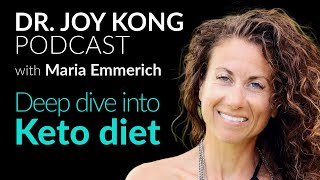
Maria Emmerich, a nutrition author, explains how she uses keto by cutting carbs and sugar, eating adequate protein to preserve muscle, and adjusting fat as an energy lever. She saw depression lift quickly and has helped others improve PCOS and IBS symptoms. Her husband moved to strict carnivore after six years on keto.
Questions this video answers
January 2, 2024
ketomaria.com
About 26 and a half years
About six years
Chapters
You can explain to people exactly what keto means.
Eliminating carbohydrates and sugar, eating enough protein to keep your lean muscle mass, and then using fat as a lever.
So what happened to you after you switched to this keto form of eating?
I didn't lose weight right away, but my depression certainly lifted right away, and that's what kept me on the diet. I felt so much better mentally. My PCOS symptoms were going away. And eventually, like, once I realized I needed to focus more on protein rather than fat, that's when the. The weight just flew right off, more than what I ever thought I would ever lose.
There's no question it can be highly beneficial for a lot of people. But how long should you continue that? You know, is. Is that going to be a lifetime choice, or could that be a temporary solution to help your body heal?
Hello, everybody.
Welcome to the Dr. Joy Kong podcast. So, again, here I bring in some of the best experts and wellness industry to bring to you. Knowledge, expertise, insights, so that you can enhance your own health. And today, I feel so fortunate to bring Maria Emrick. Yes. So Maria is an expert in nutrition and keto diet and is author of numerous books, a lot of beautiful cookbooks, just. Just beautifully made. And so she's here to share her expertise with you. And, Maria, thank you so much for being here.
Thank you, Dr. Joy. It's an honor to be here. Thank you.
Yeah, so maybe you could tell people a little bit about yourself and your journey.
Yeah. Well, it all started 26 years ago now. I was twice my size. I was a teenager, and I wasn't feeling very well. So I went to my family doctor, and at that visit, I was told I had something called PCOS, which we now know as type 2 diabetes that affects female fertility. I also had IBS. I had acid reflux, really bad. And I also was pretty depressed. And so I left that doctor's visit at age 16 with three very powerful drugs, prescriptions in my hand. And I decided, I don't want to take these drugs. Like, I really just wasn't into that. So, as fate had it, I had this beautiful golden retriever, but she was losing patches of her hair. And that same week, I took her to the vet, and the vet said, what are you feeding her? That was a question that my doctor never asked me. They actually told me it was nothing I was doing wrong. It was the cards I was dealt. However, I worked at a coffee shop, so before I would go to school, I would go to the coffee shop, and I would make the scones and the muffins and the cinnamon rolls and whatever didn't sell that day after school, I would go back to the coffee shop and we would close about 5pm and whatever didn't sell, I got to go home with. So you think I'm kidding, but I would make extra cinnamon rolls just so I would have dinner. Like I was eating all of those extra junk. And I lived off of coffee and cinnamon rolls and all that. And if you look into. There wasn't the Internet back then, but if you look into what causes pcos, it's excess caffeine, sugar, and carbohydrates. So I really had to completely change my diet. And I didn't want to live off of chicken breasts and broccoli. And so I just started recreating my favorite recipes like cinnamon rolls into, you know, these low carb, exotic foods that are really good. And I was just kind of doing it for myself. And before you knew it, people were like, hey, you need to like, write your recipes down and stuff. And before you know it, like, Halle Berry's making. Yum. It's pretty cool.
That's amazing. Yeah. You have such gorgeous cookbooks. Give us a range of all the things that you, you are excited about making into keto forms.
Oh, my gosh. Absolutely everything. Have you ever watched the Gilmore Girls? It's an old series that I was watching with my. I know a lot of your watchers will probably know Gilmore Girls, but one of the characters loves pop Tarts. And my boys are like, what's a Pop Tart, mom? And I was like, you know what? Let's go make some. And so we jumped in the kitchen and we'll make them and whatever they see, because they don't. They don't know what McDonald's is. They don't know what an M and M is. And so whenever they see one of their friends having that, I'm like, here, let's go make it. And I feel like there's nothing I can't recreate. I don't know, I mean, maybe an M and M, I can't, but pretty much like, I just have fun creating foods that honestly, like, I have like a Hostess Ding Dong cupcake that everybody says is way better than the store bought because it's not synthetic and it actually will go bad and it's real cream in there. And yeah, it takes time to make these things, but I feel like everything worth having in life takes time and effort and I don't mind doing that for my family and feeding them well.
So what do you use to make them sweet?
There's a few different natural sweeteners that are completely safe and healthy. Actually, allulose is the new one on the market that's actually really great for insulin levels and really great for blood sugar. It's actually helping people. I use stevia glycerite, which is a non bitter stevia. Stevia comes from a plant, but some people don't like that bitterness from stevia. So there's a stevia glycerite that's attached to an amino acid that makes it not bitter, which I really enjoy. And then there's also something called like erythritol, which is a sugar alcohol that doesn't affect blood sugar. If anything, it helps lower it.
Those are your favorites.
Yeah, yeah. Album Monk fruit. Monk fruit, yeah. That's a really great one too. Yeah, yeah, yeah.
Okay.
Fruit is not like if you're making a baked good, you need that bulking agent. So you can't use monk fruit on its own when you're making like a cookie or something. So I would pair that. I usually like to blend sweeteners because then it gives it a real natural flavor. So like allulose and a little bit of monk fruit with it would be great.
So maybe you can explain to people exactly what keto means.
Well, what keto means is eliminating, you know, carbohydrates and sugar, eating enough protein to, you know, keep your lean muscle mass, and then using fat as a lever. Because depending on what your goals are would depend on how much fat you want to consume. And that's why we have a free macro calculator on my website if you want to use it. But most people want to lose weight, so that fat lever is going to be dialed down. However, I work with athletes or people with epilepsy or seizures, multiple sclerosis, then we're going to probably increase that fat because protein is not a good energy source. Fat and carbohydrates are. And since we're eliminating carbohydrates, you need to add more fat for that energy source if you don't have a lot of body fat. But if you have a lot of body fat, that can be your energy source too. So that's where a lot of misconception like the newbie keto experts are like, yeah, you have to eat all the bacon and the butter or put butter on your steak. Well, steak has enough fat in it. You don't need to add any more butter to that. Does that make sense?
Yeah. So what happened to you after you switched to this keto form of eating?
Well, I was 80 pounds heavier than I am now, and I'm pretty short. And I didn't, I didn't lose weight right away, but my depression certainly lifted right away. And that's what kept me on the diet. I felt so much better mentally, which like, that just was when everybody thought I couldn't do it. Or even my mother. I love my mom, but like, you know, I was like, they're threatened when you cut out sugar, carbohydrates. They're worried that you're going to change. Which I was like, I'm changing for the better. But my moods is what kept me on the diet for sure. My PCOS symptoms were going away and eventually, like, once I realized I needed to focus more on protein rather than fat and that, and I had to cut out dairy, that's when the, the weight just flew right off, more than what I ever thought I would ever lose. But I just felt so much better. And that's why I decided to go to school for nutrition and exercise physiology. It's kind of an interesting story. I met my husband when I was only 17 and I told him I probably couldn't have my own children. And he's like, that's let's. You want to adopt? Was like, oh my gosh, absolutely. And so we started adopting quite. I was married before I could legally drink alcohol and we started adopting and I was a rock climbing guide because I would, I wanted to be a stay at home mom. That was my purpose in life. And sadly, he lost his job. And if you know anything about adoption, when the job that has insurance and everything goes away, you have to start over. So all that money we put into it went back to zero. We, the bank took our house, we sold our cars like we had nothing. Dr. Joy and someone said, maria, why don't you write your recipes in a book to help raise money for your adoption? So that's how it started. And you know, 21 years ago. And so I started, I put my recipes together and just, I was selling it locally. And pretty soon people like you, you should put it on Amazon. Can you get like a barcode? And so we did that. And before you know it, my husband's like, I don't think I need a job. Like, this is crazy. Like, it just went game busters. And it all was for my boys. And my boys are a huge, we homeschool. Like they're a huge part of our life. And it was all, it was like, it was for them. And I'm grateful for those times because I rode my bicycle to the library to write because I didn't even own a computer. I'm grateful for those times of having nothing because I still live very simply and I'm grateful for every day.
There must be a, you know, great need for a recipe book like that, right?
I think people really, they wanted to feel good and they wanted to lose weight, but they don't want to eat chicken breasts and broccoli. Like I didn't, you know, they want, they want good food like cinnamon rolls or like how can I eat cinnamon rolls and still feel great and lose weight? And like I just made on my blog a French silk pie, you know, And I think there's a balance between making food your life and making food. You know, like there's, there's definitely a balance to enjoying food, but yet not making it everything, right? So that's where that balance comes into play. Like I was mentioning you to earlier, we are more carnivore now than ever, more than keto. And that's because my. Are you familiar with Lyme disease? Wisconsin is known for having terrible Lyme disease. And he didn't know what was going on. This is 12 years ago. He wasn't feeling well and he kind of blamed it on an old football injury. And come to find out he probably had Lyme for many, many years. And to manage his pain. Looking into what causes pain. Oxalates. Have you ever heard of the word oxalates? Oxalates are in plants and looking more and more and more into these plant molecules and these anti nutrients. Like when he started eliminating them completely, he started feeling so much better and he could function and move and not be bedridden anymore just by like cabbage, you know, like little things that you wouldn't think are bad for you. But yeah, they do have a lot of oxalates. And oxalates they bind to different things like calcium and they will build up in areas like the kidneys or different things and they're like little crystals. Kiwi fruit has a lot of oxalates, cabbage, things like that. But that's why we, we lean more towards carnivore because we found out a lot of the so called health foods like kale or blueberries and all these things. Like no, the true foods that are superfoods are meat and organ meat. And so we just started, you know, going that route and he felt so much better. So I just kind of followed him because I just wanted him to feel better too, you know.
Well, there's a lot of controversy of, you know, the carnivore diet and how long you should be on it. And is this, you know, there's no question it can be highly beneficial for a lot of people, but how long should you continue that? You know, is. Is that going to be a lifetime choice? Could that be a temporary solution to help your body heal?
I think that the people that are afraid of it aren't really understanding the nutrients are. Like, if you put a diet in front of somebody and said, okay, these are the same amount of calories. This one has twice as many nutrients as this one. Everybody's going to pick this one, right? But they don't understand that this is the carnivore lifestyle. Like, if I put a plate of kale in front of you or a steak in front of you, which one has more nutrients? Most people think it's the kale, and it's not true. And in our books we describe. Craig helped me write it. That's why I say our books, the nutrients are in the steak. And the true superfoods are organ meats. But nobody wants to eat organ meats anymore. But if you look at the nutrient density, out of every single category, the meat and the organ meat throws every single vegetable out into the water. People are afraid of eating meat because they think that it's so harmful for them. And in reality, that's what's building your bones. If you look at the sheath of your bones, they're made up of protein. And to reverse bone loss, the best thing to do is increase your protein intake. So that's just where I think a lot of people are just confused and being told that. Not the truth for sure.
Well, I'm sure not all protein are equal. There are no, you know, all kinds of, you know, you have to pick the right ones.
Absolutely. Like, if you're using like a pea protein versus like a beef protein powder, if it says 20 grams of protein per scoop, the pea protein, you're going to only net about 10 grams because they all have different rates of absorption and they all have different bioavailability. And bioavailability is how you're going to actually absorb the protein. With a P protein, it's about half. So instead of 20 grams, you really get about 10. But with a beef protein, you're going to get all 20. Same with like, bioavailability for an example, like oysters. A lot of people know that oysters are packed with zinc. However, if you have the oysters with one corn tortilla you get zero zinc. If you have them with black beans, you get about 30% of the zinc. So that's, that's the bioavailability of what pairing foods can happen too.
Yeah, that's fascinating.
Sure.
That's a whole other level of complexity that's going to be a little hard to, to navigate as a person trying to, trying to eat out in the world. How long have you been on carnivore diet?
When I was strict carnivore, I probably lost too much weight to the point where I wasn't really enjoying food because I was just eating the meat and it was kind of like an afterthought. Does that make sense? I needed to like bring some things in to spice my life up. I mean, I don't know, but my husband is a strict carnivore and has been for about six years now and he feels so much better. And then. So I've been keto for 26 and a half years or so and that's mainly prioritizing protein and then using fat as my leverage. So as I lost weight and I needed more energy source, my fat lever has gone up quite a bit than when it was when I was, you know, 80 pounds heavier.
When you say you're fat lever, what do you mean?
My macros. So your macros would be your carbohydrates, protein and fat. And so my macros definitely changed throughout my lifestyle of eating this way. In the beginning it was definitely more protein focused and it's still that protein is there, but, but then my calories of fat have gone up for my energy because I, you know, I don't have a lot of fat on my body to use for energy and so that number has gone up.
Okay, okay. So you have a, had an evolution of your own keto diet.
Absolutely. I think like that's for everybody, you know, as we learn and evolve. Like what your diet is today is going to change in five years, it's going to change in 10 years. And I think that that's a good thing, is evolving and being open to new ideas. When you, when I heard that kale is bad for you, I was like, whatever, that's, that's not true. You know, but the proof is in the science and you can't deny that.
Yeah. So how has your, your approach with keto changed besides the fat? So if you feel that you don't have enough fat storage, then you would increase your fat intake a little bit. Like I'm trying to understand how you would advise people right and do keto.
Well, I guess when someone works with me, the first question is, what are your goals? That's what I ask them. What are your goals, what medications you take, things like that. But what are your goals is going to drive how I design the diet for you. Because again, like I said, 99% of people that work with me want to lose weight. They might have something else, like migraines or whatever, but they want to lose weight. And when it comes for that, the ketosis. You can build ketosis from your own personal body fat. Just like if you fast for longer than so long, you're going to be in ketosis babies. The younger you are, the faster you get into ketosis. Babies are naturally in ketosis. And I think that's something that we ignore too. Like it's a bad thing to be in ketosis. And you know, we're born in that state. But then like, what else do they have? Osteopenia or whatever that's going to kind of drive their personal macros. Because everybody has different macros. Your macros are different, different than mine and they're different than, you know, everybody else's. Because your lean mass, and I've seen you lift your weights, that's what is going to drive your protein amount. Because you want to get enough protein to maintain and grow that lean mass. Because that's the more lean mass you have, the more places for glucose to go. So you can have more carbohydrates if you want them. You know, the more sugar you have. When I say sugar, carbohydrates are the same thing. Because when, if you eat a cracker bagel that turns into sugar, it's fine. But the more muscle you have, the more places for sugar to go. So you want to maintain that with protein. And then depending on your goals, I'm going to give you your fat macros and your, the fat grams for the day. And then carbohydrates, we usually say 30 grams or less, you know, 20 grams if you can. And. But it's crazy because even eggs, scallops, even carnivore type things will have liver has carbohydrates. Doesn't mean you have to avoid those foods, but just be aware that they have them too.
So when you got on keto diet, did that help you with IBS as well?
Yeah, that went away right away for sure. And that's I was describing to you, like when you look at what our bodies resemble, there's something called a cecum. And the cecum is what helps you digest fiber. And our cecums are very small, they're tiny. They look like a lion's. If you look at a koala bear, it's very long, it looks like a cylinder like this. And a koala bear can handle a lot of fiber, but our bodies really can't. And this is why when people eliminate a lot of those carbohydrates, that they find that the IBS goes away. But not only that, when you look at sugar and carbohydrates, carbohydrates turned into sugar and sugar causes inflammation and that inflammation of the gut, that's what the IBS is. And so eliminating, first of all, gluten is a huge contributor. Sugar and carbohydrates is another cause of inflammation. And sometimes in many cases, it's dairy. We are all about getting rid of gluten in the keto space. But not a lot of people want to address dairy, which is a more common allergen than gluten is, you know.
The subject of dairy, because I've interviewed somebody that, you know, talks about the, the raw dairy, which really has a lot less allergen, has, you know, tremendous amount of nutrients and enzymes. So it's really, I think, what kind of dairy be.
I do, I do. But, you know, a lot of times it's very hard to get the raw dairy or people are fear mongered about it or whatever it is, you know, like, it's hard to get it where I'm at right now. But I do agree with you for sure. Like, the pasteurization is different, all of that. Like, even Europe versus the United States, I have a lot of people that can do the dairy in Europe, like yogurt and all of that, but here they just, they can't. Whether they get acne or their stomach hurts or it doesn't even have to be something physical, but they just don't feel well on it, you know.
Okay, you were saying the sugar, carbs and dairy.
Yeah. So a lot of people that, you know, they try carnivore, whether it be for a month or a year, their IBS goes away for sure.
Yeah. And then, you know, when it comes to the subject of keto diet, there's so many ways of doing keto, so I assume there are good keto diets and they're bad keto diets.
There's definitely the camp where eat all the bacon and the butter that you want to. That's not my approach whatsoever. And I believe that's why I have the results that I do I focus on, you know, real food and seafood and you know, the lean proteins. I definitely focus on lean proteins versus, you know, bacon and butter and things like that. First of all, it's really hard to find bacon without sugar. That's one thing. But second of all, like just focusing on lean proteins, I think that is. People think that you need a lot of fat in the diet in order to be in ketosis. Just the absence of carbohydrates will get you there. Your numbers, people get like really hung up on chasing like ketone numbers. And higher ketones do not mean better fat burning. We know that's fact. Higher ketones are beneficial for things like Alzheimer's or epilepsy and seizures. But that's the only way we found benefits to a higher ketone number, not weight loss whatsoever. My ketones are actually very, very low. The reason is, is the longer you've been in ketosis, the more efficient your mitochondria are and so you're not going to make more ketones. And it doesn't matter. I'm burning off free fatty acids. See, like people are chasing the wrong thing. They just are uneducated when it comes to ketosis. But I also work out fasted and so I'm using my ketones for energy and so I have less in my bloodstream. Does that make sense?
Yeah.
So don't get like caught in this marketing scam of drinking ketones because if you are drinking your ketones you just have more fuel in your bloodstream. That's not, that's not a good thing. And I think that that's actually. We don't know what the future holds for those people that are, you know, drinking these fake ketone drinks because they're told like just eat the damn muffin and drink the ketones and you'll be in ketones. So now you have high glucose and high keton. I think that's a recipe for cancer, to tell you the truth, because cancer loves excess fuel. And when you're giving your body excess fuel, that's just not a good thing in any way.
Yeah, I think there's way too much unknown about, you know, if we know one thing that's good about ketone doesn't mean that you can bombard your body with a ton. Besides, there are all kinds of different forms. So you just bombard you just because they are a ketone. I think they're. One day we're probably going to come out with research and find out the long term consequences when a lot of people think they're biohacking, they're doing something good for their body and then they're gonna wake up to, you know, some uncomfortable facts.
Yeah, I know, but people just want the easy way out. You know, they just want that magic pill. And it's not a magic pill. Sure. Like I do think that there's, there might be if, if my, you know, parents or grandparents had Alzheimer's, I probably would, I probably would use it because, you know, they're in such a detrimental state of their brain. We know that the brain can use ketones or glucose. And with Alzheimer's it's not, it's no longer using glucose for fuel. And so if you give it ketones many times their recollection will come back, things like that. But if they're in a home not feeding them keto, that's where maybe that can come into play. But you have to outweigh the benefits to that, those risks, you know. But how many years do they have left, you know, so just outweighing the, the risks to those benefits.
What do you think the subject of intermittent fasting combined with keto diet and is that something you do?
It's. I think it's something that comes naturally because how hunger happens is a falling blood sugar. It doesn't have to be low, it's just actually coming down. So this is why you can go to a Chinese buffet and eat all the sugar chicken and the rice and, and soon, you know, you should be full for days after, you know, going to that buffet. But a few hours later, like, yeah, sure, I can have some ice cream or whatever. It's not that you have low blood sugar. It's the fact that it's coming down and what goes up really high is going to come like this really fast. Okay. So when you're. No, when you're not having that blood sugar go up and down like that anymore, it's staying like this. You will get hungry, but it's not hangry, you know, like it's a manageable hunger. But it comes much more or less often. So my boys are 13 and 14 and I don't know, they've been up for a few hours and they still haven't eaten. I find it interesting because they were just at my parents house for a couple weeks. We went on an African safari and they were staying with my parents and it was like noon and they still didn't eat and my mom was getting kind of upset. You have to understand, like they will eat plenty of calories, but it's just, it's in a different window than what you're used to, you know, because she would give us a bed night snack and fear that we were gonna like pass away in the night because we didn't have, you know, like the bed night snack was a real thing. And that was the hardest habit for me to break. It wasn't that I was hungry, but it was a habit and brain ingrained in me for many, many years. But yeah, definitely, like intermittent fasting kind of comes naturally because you can go much longer periods without eating. And so that's why like the whole GLP one thing, I think people should maybe just give their body a chance to do that naturally with ketogenic diet. And because that's going to help with your insulin, that's going to help with your blood sugar. Everything that those drugs that are costing a thousand dollars a month are doing, you can do that with food. But again, you have to be ready to do it here. You know, what do you think the.
Impact is of eating a late night snack? Let's say it's a keto snack, right?
Think the impact is I talk a lot about like hormones and how you can manipulate your hormones when it comes to your goals. Right. And the largest surge of human growth hormone is about 30 minutes after you fall asleep. But that human growth hormone doesn't happen if insulin is present. And even if you eat pure fat like a ketogenic snack, insulin is going to rise some, which is going to affect your rise of human growth hormone. You know, they're like teeter totters. You know, when insulin is present, human growth hormone doesn't like to rise. So if you want to get the biggest bang for your buck, not eating three hours before bed is important. But that's also why I exercise in a fasted state when I wake up, because you can also that second largest surge is a hard workout. But again, if insulin's present, it won't happen. So I would say like, just don't work out as hard if you can't. And eat right afterwards. Eat some protein right afterwards. I know you're like into peptides and stuff and just like you don't want to inject peptides before bed. If you ate, it's kind of like a waste. Don't you agree?
I mean, it's sort of a general rule, but.
Yeah, I think when it.
Comes to a growth hormone promoting peptides, that, yeah, that may be true. Yeah. Okay, I like that you mentioned the idea of the keto drinks, so and, and how that's related to Alzheimer's that's really interesting.
Yeah, that and like seizures or epilepsy, they're. You know, it could be beneficial for that or an athlete, but I just think the risks are unknown, like you said, you know, it's just. They're so expensive. Like, just spend it on real food. I don't know.
Yeah. So how do you eat? Do you. Do you eat late at. During the day you. And then your window to a few hours?
I am more to have my meals earlier than my kids do just because I do work out in the morning and I like to have protein right after that. So after, you know, run lifting weights, then I have protein. And it's usually a tenderloin steak, which I love. And I make my carnivore steak sauce, which is like, people love that on YouTube. And then for lunch, I'll have fish, depending on, you know, where I'm at in the world, that type of fish, seafood somehow. And I have some great sauces that go with that, whether it be like my coconut ginger sauce or something of that sort. And then. Have you ever heard of my protein bread?
Yeah.
Okay. It's funny because I. I told you I was just on safari in South Africa and where I stayed, they're like, oh, you're the proteins. You're to the protein bread girl. And I was like. So they knew about. Banting is pretty popular in South Africa, which is just another name for keto. So they. They knew about my bread. And it's. It's basically made from egg whites. And I know this sounds super weird, but you whip egg whites and you add dried egg whites to it and it turns out like wonder bread. Like, it seriously is. It has beautiful holes in it like wonder bread. And it's soft and airy and there's some technique to it, but people have made it around the world. And so making a sandwich with that or a hamburger with that, and it's totally carnivore for those carnivore people. Yeah, just. Or like some eggs with the bread or toast or something like that. It makes really great angel food cake. It makes great. You name it. It's pretty. It's pretty. Pretty crazy. So something like that for dinner. I usually. I used to not. I used to only eat two meals a day, but now I don't really like to be really full. I'd rather have three smaller meals. So it's still in a fasting window, but it's three smaller meals just works best for me and my lifestyle.
So you do at least 16, 16 hours of fast, I assume. That's amazing. So I understand that you. Do you co write a book with Holly Berry?
Yeah, she. She's really passionate about the ketogenic lifestyle. And it's called Sugar Free Kids. And we named it Sugar Free Kids because if you call it keto kids, there's automatically that dogma, like, oh, I don't know. My kids aren't keto. But when you say Sugar free Kids, everybody kind of agrees that sugar's bad. Right. And so it's really a keto cookbook, but it's called Sugar Free Kids. And it's. Even people that don't have children say it's their favorite book of mine because everything that you could ever want is in that book. And it's. It was a really fun. It was a really fun book to write because I wrote it with my kids too. Like, they were a huge part of it with Halle, and it was just. I loved writing. The pop Tarts are in there, huh?
Yeah. And how did Halle Berry find you?
I was just. I remember sitting around working one day, and I was. My phone just, like, was blowing up, and everybody was like, oh, my gosh, Hallie's making your recipes on Instagram. And I was like, what? This is probably, I don't know, six years ago, and I went to her stories and I was like, oh, my gosh. Sure enough, she's, you know, reading from my book and, you know, making a few things. And I just. I was like, this isn't going to be her, but I'll just write thank you or whatever. And a long message came back, and we just started communicating, and she's like, you want to do some videos? And I'm like, yeah, I do. So it was really cool how we communicated that way. And I just feel really grateful to have someone so beautiful and healthy help promote such a great lifestyle, you know?
Yeah. Yeah. That's amazing. That bread sounds really awesome.
Thank you.
I have to give it a try. I hope I have the skills to make it.
Yeah, that's what you definitely want, a stand mixer, because otherwise it's hard to do it with a hand mixer. It takes a lot.
Okay, I see. Okay. I'm sure you consult with a lot of people, right? A lot of people probably have all kinds of health issues that come to you. What are some of the things that you've seen that really was kind of surprising to you and.
And striking everything from, you know, like, migraines is pretty simple to fix, high blood pressure, simple to fix. But then, you know, I Love helping children that have autism. Having their symptoms be much, much less. Having parents say, oh my gosh, he's hugging me now. You know, very much more affectionate when he wasn't before. Or like behavioral issues with kids. And even though I knew that depression and anxiety, bipolar issues. I am familiar with a few women with bipolar who are totally off their medication when they stick to 100% carnivore lifestyle. But as soon as spices or any vegetable gets into their diet, they need to go back on meds. And this is like 100% truth. They're out on social media about it. They're very vocal, but it's very amazing. But if you look into like, how to produce those brain chemicals like dopamine, serotonin, gaba, like those come from amino acids. And where do you find amino acids, protein. So a lot of times when I deal with people with depression, they're also on a vegan or vegetarian diet. So getting the amino acids back in is very important. Whether they want to do it with animal protein or supplementation, it's going to be very essential.
That's fascinating. You know, I worked as a psychiatrist for many years, so, you know, bipolar disorder, no one was treating, was telling people to get on ketogenic diet, you know, at least not when I was, you know, working with, you know, all these other doctors. So this is very interesting.
Yeah, I can send you their, you know, I have your information if you want more. But even things like, I mean, you name it, it's. It's pretty awesome. There's a man named Hal who opened up assisted living homes in Arizona. He has about 11 now all over Arizona. And he exclusively makes my recipes only. Oh, he uses my website and he picks out recipes, and then the recipes go to the chefs at each assisted living center. And the testimonies of people healing is unbelievable. One woman lost 80 pounds in three months and she's off all of her medications. And that's the thing, like, if we want to save the environment, we need to get people off these prescription drugs, you know, and. But just by just changing their food in this environment, because they don't have any, you have to eat my recipes. The, the amount of testimonies is amazing. I'm. I usually repost them on Twitter. He sent, he's post them all the time.
That's really encouraging and that's wonderful. But just to, you know, to look at the full picture. There are also people who have, have gotten tremendous healing by eating a vegan diet or raw vegan, like, you know, the philosophy in Hippocrates Health Institute in Florida. So that's all they do. Anybody that goes into the institute eats a raw vegan diet and all kinds of chronic conditions, you know, gets healed, so. Or cancer. So I, I think there, there are different sides of the story there. You know, some may be really good for some people, maybe another form. It's, you know, depending on what the person is suffering from.
You know, getting off of processed foods is the most important thing. So whatever, whatever diet you can stick to is the one that you should do. And I do, I do believe that. Because if you're not going to stick to, you know, a keto diet, but you can stick to a vegetarian diet, you know, like, getting off of processed foods is what's really important, I think.
I know there are people who have done keto for some time, but then they started to get a lot of fatigue and they weren't feeling good. And then once they add carbs back into their diet, all of a sudd and it's like they perk up, they feel great and they're maintaining great weight. So what do you say about that, about this kind of flexibility that some people believe is important?
Right. So this is what happens is when you eliminate carbohydrates, along goes all the water loss. And this is why a lot of people get very excited because they do keto and they're like, oh, I lost five pounds in a week. Yay. A lot of it's water loss, so don't get too excited. But that retention is good to get rid of. But with all that water loss, sometimes you'll get almost depression or low moods, but you have heavy legs. Walking upstairs, your energy is terrible. And it's not that keto is causing that. It's because you're not eating the carbohydrates anymore. And just by drinking more water, you're not going to retain it because you did. You're not eating carbohydrates. This is where electrolytes are very important. So bringing in that sodium and extra potassium and it's, it's hard for some people because they've been told sodium and potassium, like, never take that, that's bad for you. You know, eliminate the sodium. But it's really important on the ketogenic diet and carnivore lifestyle to add in more sodium because all the foods that we're eating, they don't have. So they don't have salt, Right? Eggs don't have salt. You know, like, you have to be very cognizant of adding sodium in because bread has a lot of sodium. Desserts, you know that a McDonald's milkshake has more sodium than a french fry does.
Wow.
Yeah. So a lot of desserts have a lot of sodium. Bread has a lot. Like a lot of the packaged foods have so much cereal has sodium. So when you're eliminating all of those foods, you can't just salt your food. That's not enough. So, like, I usually do salt capsules, especially before bedtime because it'll help you to sleep. But there's things like element or other electrolytes that you can just drink. They taste really great. But I also would say there are some people that have added in electrolytes and they still feel bad. In that case, I would have them get their iron tested because excessive iron levels, which can happen on the carnivore lifestyle, especially in men. I, I do recommend, like adding in copper when they're eating steak, things like that, to help balance the absorption of iron out. But too much iron can also cause those same symptoms. So it's important to know your numbers because, you know, maybe your iron is way too high and you should be donating blood or plasma, that thing, because that can also cause that low energy, heavy legs, walking upstairs, just not feeling well. So, you know, knowing, knowing your numbers is really important too.
So your favorite form of adding electrolytes is the salt capsules?
Well, I do that. Element. Yeah, element of the drink. I have it right. The box is right there. They have, you know, raspberry, they have unflavored. If you don't want any sweetener, which is fine. But they have raspberry salt. And my kids love like the grapefruit salt or they do like a chocolate. So if you want like a little hot chocolate, it's kind of an interesting way to get your, your electrolytes in.
Okay. Okay, that's great. Well, that's such a good tip. Maybe you can tell the audience a few of your most popular or your proudest books.
Oh, my gosh. Keto the Complete Guide to Success. I think that's, you know, probably the, the best one. Or like the Art of Fat Loss, you know, just depending on what I usually ask people, like, do you like to cook or not? And, you know, can you do dairy? Do you have autoimmune? And, you know, kind of guide them that way? Because there's a book for just about everything. But Keto the Complete Guide to Success, that's more of an educational book. It's not a cookbook. So that's that's what I like to lead people to that way.
But yeah. And one of your favorite cookbooks is the Sugar Free Kids, and basically Sugar Free kids and adults.
Yeah, for sure.
I think this is a really, you know, wonderful discussion, and I so appreciate your contribution to people's health by developing these fabulous recipes and educating everybody. Thank you so much and for accomplishing so much for your own health and your family.
Thank you so much. You know, if you want to use that free calculator or anything like that, it's keto maria.com and there's like, tons of free recipes there. There's giveaways, there's retreats and all of that stuff. So keto maria.com.
Oh, wow. You do retreats also?
Yeah, People reach out to me to be like the experts. So I don't. I don't do the retreats, but I'm like the guest host or whatever. And so we go to Thailand in March, Portugal in May, Italy in September. Like, it's.
Are these retreats going to be using your recipe specifically?
No. We're usually like, I mean, I will teach anybody a recipe in a kitchen, but we're usually like, they're making our food. And sometimes it's not my recipe recipes, but as keto.
Well, that may be fun for you to do one day is to do a retreat of all your recipes.
Okay. I know I love to cook, so let's go.
Yeah, Sign me up when that time comes. Thank you. Thank you so much, Maria. Really appreciate you talking with everybody here and, and sharing all the good stuff again. So anybody listening to this, if you really enjoy this, you. You like the podcast, please rate it and come to YouTube. I really appreciate all of your support, and again, thank you for being here at Dr. Joy Kong Podcast.










