How To Increase Testosterone [Regulate Hormones Naturally]
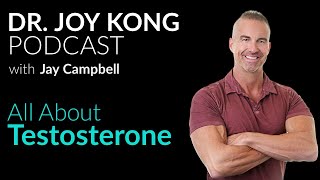
A YouTube interview (host: Dr. Joy Kong) with Jay Campbell about testosterone optimization for men and women. Campbell recounts his personal experience (low T after a testicular injury in his late 20s), his path to writing books (first book 2015; Testosterone Optimization Therapy Bible 2018), and detailed views on delivery methods (daily/alternate-day injections, transdermal — especially transcrotal — pellets, orals). He emphasizes that testosterone optimization improves cognition, energy, body composition and cardio protection, argues many over-the-counter “testosterone boosters” are ineffective, and advises lab testing, specialist physicians, and personalized care. Practical resources and contact info (jccampbell.com/freebooks; social handle JCampbell333) are provided.
Chapters
The number one symptom of a testosterone deficiency for both men and women is literally cognitive decline. You need an optimized set of hormones from, you know, thyroid, from testosterone, and from your pancreas as you age, because if you don't, your body is going to start declining. We are in an environment now where people are being absolutely decimated from all angles. And, you know, the biggest tool in the tool belt is optimizing your hormones.
Okay. This is Dr. Joy Kong. I am so excited that you can join me because I have an incredible guest today, Jay Campbell. So we met at a 4M meeting, you know, huge international, you know, anti aging meeting. And you are actually a four time international best selling author and also men's physique champion. Incredible. And you have a very influential podcast. You, you are, you've been dedicating your life to teaching men and women to optimize their health. And I'm super excited for you to come in and help us understand of how to maximize, especially in the aspects of hormone health. And of course, testosterone is really what I want to cover because, you know, everyone knows the benefits of testosterone in both men and women, you know, not only for, for their sex drive and also for their weight control, but heart health. So maybe you can tell us a little bit about your journey and how you came to become such an expert in this area.
First off, it's an honor to be here. I'm grateful to be here and talking with you. I'm always privileged and as I say, privileged to speak to people about things that I enjoy speaking about and obviously have a profound level of awareness about. So whatever I get this opportunity, I want to say, you know, in the spirit of gratitude, thank you and also to all the people that will eventually watch this, you know, I get, I'm grateful that I have a chance to speak to you too. So for my story, you know, I'll give a really summation. Anyone who knows me has probably heard this a couple times, but, you know, I basically was kicked in the testicles when I was 29 years old. An ex, I'm an ex professional basketball player. So I was still playing at a really high level at a men's competitive league in West Los Angeles. And, you know, I just crumbled over and went to the sideline and somebody subbed in for me. But about four or five weeks later, I started just having debilitating injuries, soreness, my lower back was killing me. I just didn't feel right. So I went to the doctor and at the time I was A high level sales guy. I worked for the Los Angeles Times. This is way back in like 1998, 1999. I don't remember. But I know it was around then. And my PPO doctor was, you know, I like to say, joy, there's no coincidence, there's only synchronicities. But he recommended me to an endocrinologist. And it turned out that the endocrinologist was a world renowned Harvard educated guy in Orange county by the name of Dr. Raymond Scruggs. And when I went to see him, he was like, look man, you just need to. I just need to take your blood panel and look at your blood testosterone. And I was like, why would you want to do that? And he's like, just trust me. So I was like, okay, cool. And sure enough, it came back and I had like the testosterone levels of a, you know, hypogonadal male in his 80s, right? It was like something to 220 or 230. I don't remember. I still have the lab work saved. But he's like, look, I can put you on a level of therapeutic testosterone and hcg. And I didn't know what HCG meant that at that time, but he's like, I can get you on that and I can restore you and you'll be right as rain. So he's like, go home, talk to your fiance at the time, who's now my long gone. She was my first wife. But to ask her, get confirmation from her. And so when I did, her name is Kelly. I said, are you cool with this? And she's like, well, look, you're a smart guy. Yeah, sure, right. So he sent me first. First time I went into his office, his nurse injected me. But then after that they sent me the injections in the mail and stuff like that again. I remember now. It was back in 1999. I was like, right under the age of 30. I was like a month away from turning 30. But as he said, you know, I started to administer the injections myself. She, my fiance, ex wife, you know, did the first couple. Because I was like scared shitless of needles. I was like, how can I do this? But after eight or nine weeks, I literally felt like Superman. I mean, I was like, oh my God. And again, I was using a very low therapeutic dose. Again, this was a very advanced guy who knew what he was doing. Back in 1999, when almost no doctors knew. I mean, even today, almost no doctors understand this, but reality was, is that I felt so good when I went back in for My checkup. He was like, okay, cool, we can withdraw. And I was like, no, you're not withdrawing me. Like, there's no way, Like, I look at my life now as, like, you know, pre and post therapeutic testosterone. So after that, I became, like, just this massive student of this, you know, I read everything I could get my hands on. Now I have a. From a college standpoint, a minor in molecular bio, right? So I was kind of a geeky, nerdy science person. So I was reading studies, I was going on PubMed, Medline. I was getting access to everything that I could. But at that time, again, back in, say, 2000 to 2003, there was very little information, unless you could read Russian or Bulgarian. There was not very much on using testosterone. So I started to go into the clinical space and community, and I found guys that were suffering from AIDS or wasting diseases or burning, been traumatized through burn injuries and whatnot. And you'd find some people, like fringe, who had written about using therapeutic testosterone. So I just started, like I said, immersing myself and understanding the science behind it and then at the same time, tinkering with the various delivery systems. At that time, I was still with Dr. Scruggs. I worked with him for five years. But I used transdermal, which was absolutely, at that time, not perfected. It was horrible. It didn't work. I was really moody and just didn't feel right because again, they didn't understand how to create the solution in the cream so that it would go through the blood, cross the blood vein barrier, through the skin points and stuff. They also didn't know about Transcrotal, which we'll talk about later. But so, you know, I was always experimenting with whatever various delivery systems were out there, of course, through him. And, you know, just to fast forward the whole conversation, you know, to. To this, like, I just became this, like, you know, bookish science nerd on how to use therapeutic testosterone. So I'd say 10 years later, you know, I got close to turning 40. One of my good friends was like, dude, you got to write a book about this. He's like, you know more about this than 99% of doctors. You know, he's like, you got to put it out there. But, you know, one statement to say would be, during that same time period, you know, people would always, like, comment. Like, they would be impressed at the way I look physically. And, you know, they would ask me and I'd always like, well, it's because I use therapeutic testosterone. So I'd always get, like, the looks of interesting, tell me more or what are you on steroids? Get out of here. So it was like always one of those two things that people would aggregate towards me to find out about it. So it was a very interesting time. I personally felt like the demonization of testosterone and hormones myself, right. Because of the way people would be. And again, the media has brainwashed millions of people all over the world that testosterone is evil. It's performance enhancement and all these other things. So it's like experienced, you know, the gamut of like the acceptance of using therapeutic testosterone versus like, oh my God, that's appalling. Like how could you do that? Right? So I first asked or sent an email to Rick Collins, who's a very famous attorney in the, you know, he was in the, like the worldwide wrestling, NFL, professional baseball. And I just, basically just sent him, you know, a cold pitch email and said, hey, look, if a non practicing, you know, or non licensed medical person was to write a book on using therapeutic testosterone, like what would be the risk to me? And literally within one day he sent me an email back and he didn't know me from Adam. And at that point I was nobody telling me that it would be needed. But at the same time there's a risk. I'm an attorney, so I'm going to tell you that all it would take is one senator to get a bug up their ass on you and they could investigate you. So I was like, I'm not going to do it. But thankfully I sent the white paper which I had sent to him on the book, which was about a four or five page PDF on what I wanted to write about and talk about to Nelson Virgel. And Nelson Virgil was the guy who wrote the first book Testosterone A Man's Guide. And he again, I was always say stepping on the shoulders of giants, wrote the book coming from the place of a man who was diagnosed with hiv. I mean he essentially was dying. And so he investigated, I mean at least his diagnosis was that he was dying like a lot of guys that had HIV 20 years ago, but he was investigating it using testosterone and whatever else, growth hormone and various other agents to survive. And that's why his book that he wrote with another doctor, Dr. Michael Mooney was called Built to Survive. And they were basically literally talking about how to use these drugs to survive a death sentence with hiv. And so he had read the white paper too, because I had just found his email on Google and he's a native from Venezuela and he came back three or four months later, after I had shelved the deal, and he was like, I don't know who you are, but he's like, this is unbelievable. And you have to put this into the world. Here's my cell phone number. Call me. So then at that point, it was like in 2014, I called him and then him and I started talking. He became a close friend of mine. He helped me write the book, and then the first book, I mean, the book was done, but he helped me formulate it for the marketplace. The book came out in 2015 in November, quickly became the number one selling book of all time on testosterone. And then from that book, I met amazing people like yourself. Doctors, physicians, researchers, through various conferences and networking and stuff like that. And that led to me writing a bunch of other books on health optimization, fasting. And then of course, my masterpiece book on hormones came out in 2018, which is still the number one selling and the world's leading book. It's called Testosterone Optimization Therapy Bible. And it has a whole section, as you know, in there on women. So I mean, it's got all sorts of stuff. 600 pages. I mean, it's so big, it's worthless today because most people can't read a book that's like 50 pages. They're so distracted with all the nonsense. But, you know, that's kind of fast forward to where, you know, I am today. So, you know, it went from just a guy that just was in the right place at the right time and found out about it to like, this guy now who's like, you know, considered one of the world's subject matter experts on hormones. And I like to think that, you know, nothing is coincidental. It was all just a synchronicity. It was part of my experience of my mission. Right, right.
So maybe that kick in the, in.
The testicles, literally that kick in the nuts for the world is the onus. Yeah, right, right.
Well, it takes a guy of your kind of drive and int to actually get to the bottom this and get that breath knowledge and then share with everybody. Yeah, it's fantastic. So the Bible. Yeah, very interesting. Maybe you can break down the Bible a little bit for people. So it's easily digestible in 20, 30 minutes. So if a person. I have a few questions. First of all, a person can go to integrative doctor and get hormone replacement. And if they do, in your, in your mind, what will be the ideal form of replacement? Because there are creams, there are injections, and there are also pellets. Like, what, what are your thoughts on replacement, this, I think we're really talking about men right now.
I mean, I mean, I could talk about women too. So I will correct you as I do everybody else. You don't want to use the term replacement, Right? Because if you use the term replacement versus optimization, you're basically replacing a hormone that it's cessating as we age. Right. So we don't want to replace it, we want to optimize it. And that's why I took my first book, which was the TRT manual, which was testosterone Replacement therapy, to tot, which is Testosterone optimization, which pretty much most of the doctors in the space say that now because it is true. It's about optimizing it as we age and not replacing it because obviously it's cessating. But you're technically right, right. But at the end of the day, it really comes down to the individual patient and adherence because some people are not going to inject themselves the testosterone, injectable testosterone preparations are now very highly resolvable and they can go through a very thin fine gauge needle and you can inject in the abdominal fat or the upper gluteal fat pad. So it's again, painless. For somebody that doesn't have that fear, the answer is really, what is a patient going to adhere to? Now, I say that, but there's definitely some delivery systems that are fraught with problems and errors. And I'm happy to explain that to you or why that is. But for the most part, men and women equally are going to do best on either micro thin injections. And you want to do an injection that is very, very close to mimicking the body's endogenous production and release. So that's going to either be daily or every other day. In a perfect world, you want to inject daily because again, you're going to mimic the diurnal pulse of testosterone for both males and females by doing that now. But is that realistic, Joy? Because again, most people are busy, they have interesting lives, they're traveling. Who's going to inject themselves every day? Very few people. Now, I know I truthfully do know this. I know thousands of people that do because they make that morning daily injection part of their routine. You know, it's like brushing your teeth or meditating or doing your journal, your gratitude journal or whatever. So it just becomes a part of their life. But the second most efficient would be transdermal. Now for women, you can go in the inner thighs, the vaginal lips. Some people will go depending on the solution. Now, in the inner outer arms. Truthfully, it should be somewhere close to center mass. Again, just for crossing the blood brain barrier, getting into circulatory system the most efficient way for men. And this is how I do it by the way. Now after 17 and a half years of injections, transcrotal, so you're going to place a compounded 2%, which is a 200 milligram gram mall cream and you can either use HRT or TRT base. Again, all the compounders make that. There's now new formulations in the marketplace called atrovacious. And again, just like in my business, you know, they claim, oh, it's liposomal so it, you know, absorbs better and it's, you know, lipophilic so it's absorbing in the skin or through the skin better. But in truth, like when you really start looking at the test, they all absorb about the same way. It's just another way that the pharmaceutical companies make money by telling you that it's liposomal and it's more expensive. But between all three of those delivery systems, if you put it on the base of the scrotum, for a man, the scrotum is eight. This is scientifically proven, by the way. There's like eight studies now. It's eight times more efficient from an absorption standpoint at the skin, at the base of the scrotum. Again because of the very thin nature of the membrane of the skin right there. If you place it right there, first thing in the morning, you're going to get a very similar release to, you know, your actual natural production of testosterone. Now, you know, some people and, and again this is scientifically proven, when they initiate that type of therapy will have a DHT spike which is dihydrotestosterone because again, right there in that place location you will get a higher androgen signal from DHT release. But anything that would cause a noticeable like you know, a PSA elevation or even maybe like a person would feel like they're starting to have a little bit of hair loss from it. It's totally transient. Again, this has been studied and it will go away after like a couple of weeks. Just depends on the, on the patient. The good news about transcrotal testosterone therapy is because of that increase in DHT signaling, you will have better sexual function. You'll have stronger, thicker erections. And it doesn't seem to cessate like it would if you were using injectable preparation. But beyond that, everything is equal. A lot of people say, well, what's better for you know, endurance or muscle gain or dopamine signaling or, you know, improved cognition. And I always say none, they're equal, right? So when they're done, right? But just to compare and contrast, if you're going to use injectable daily or every other day, and if you're going to use transdermal, for a man, it's at the base of the scrotum and for a woman it's like inner thighs or vaginal, right? Now, the other formulations, or I should say delivery systems, they are formulations that a lot of people use which are fraught with errors or pellets. And the reason that is, and I've talked about this at length, I've been on many podcasts to talk about this, pellets molecularly cleave differently in every individual, right? Because every individual is biochemically unique. So some people can have a pellet inserted and it works exactly as it's intended. One pellet every eight to 10 weeks and they feel great. You know, the pellet lessons towards the end, and they are, okay, right? But the average person who injects, excuse me, has a pellet inserted, cleaves the test the testosterone at different rates and speed. And so you see a lot of times people run out, right? There are eight week insertion and five weeks they're dying because their body has already cleaved through all the testosterone ester. And then it becomes a mess. The other issue with in pellets, which I really don't like, is that you're relying on a non surgical doctor to insert a pellet and you will see a lot of botched surgeries. I have an entire desktop folder which for confidentiality purposes I cannot show you, right. And I don't even have the right for these guys to send me these emails. But they're always like sending me the email saying, look at this, I have an abscess or assist, you know, and I look at them and I'm like, delete. Why did you send me that? But, you know, I've seen crazy pellet insertion, so I hate pellets, period. You know, again, I don't want to say that there isn't a place in a time, because for all medications, there's always a place in a time, right? Like even the most horrible big pharma preps, you know, there's still somebody out there that could use them for something. But I'm anti pellets because of that. And now they have, you know, there's guys out there now they've got an Oral. Now the problem with the oral is it works great for women, but it doesn't work well for men because it's not strong enough to truly optimize a man. It will for a woman. So the new ones, I think it's called Natesto, there's probably some other ones now that are out there now that are FDA approved. You know, this is a 30 year old pharmaceutical preparation from Europe and it used to be called Andreal, you know, and all the bodybuilder performance enhancement guys in the 70s and 80s, you know, would take that if they could get a hold of it, you know, towards the end of their competition cycle because it was such a mild androgen. But it still gave them like a tiny bit of, you know, anabolic signaling, you know, that testosterone wouldn't. And the reason they would use that is because it didn't prove it didn't create water retention like a higher dose of cypionate or ananthate, you know, injectable testosterone. But they always knew and we know now that because it's oral, it has to pass through the liver and it never produced the same results that a transdermal or an injectable formulation or preparation would. So again, here we go, here we are, big pharma reinventing the wheel. Thirty to 40 years later, selling this to doctors. I see this all the time because I have a lot of physicians who follow me in the integrative and the functional medicine space who will email me about these things and I'll tell them, don't prescribe them, you know, don't use them because you're not going to get any benefit with a man. You might with a woman. But again, you're taking an oral testosterone formulation that's more expensive because it's newer, you know, and again, recently FDA approved. And you know, you're not going to get better than you already have. The tried and prove, tried and true transdermal and injectable formulations. So like, you know, stay away. There's other ones we could talk about like troches and patches. But I mean again, they're all compared to the true. Tried and true worthless.
Wow, this is so fascinating. So helpful. Yeah, this is great information for everybody. For those people who are still not quite clear on the benefit of testosterone, like maybe you can just quickly list what they do for men and women.
Sure. I mean it's honestly a great question. So basically, testosterone is the essential lifeblood molecule, right? Like it's a, it's, it's what differentiates us sexually. You know, between male and female. Like, I always tell people this, that, like, in utero, the reason a woman is different than a man is because a man has a higher testosterone signal. It's literally that simple. Like, if you take a woman and you give her, you know, high levels of testosterone, not therapeutic. We're talking about super physiologic. You make them into a dude. I mean, it's literally that simple. I mean, hence, we've all seen, like, you know, these bodybuilder women that abuse steroids, mostly anabolics, and they look like dudes, you know, they got a deep voice and they become physically, you know, necks and shoulders. You know, they look like a guy. Because, again, this is what testosterone truly does. So when you understand that, you understand how powerful of a molecule it is. I mean, essentially, it is the lifeblood molecule for human beings. So when you have a, you know, a deficiency, okay? And obviously, as you know, Joy, I mean, if you live in a major city today and anywhere in the world, we are under siege, right? Like the biochemical onslaught from the air that we breathe, the water that we drink, the blue light coming out of our screens, you know, you cannot escape it. So most people are suffering hormonal deficiencies and declines and don't even know it. You know, and then if we went deeper, and you know this, but if we went deeper, the medical schools are not teaching doctors about hormone optimization, right? Like, this is something that you have to learn on your own, you know, in your practice, because it's, again, Big pharma doesn't want people to be hormonally optimized because then they don't need drugs that, you know, that big pharma makes money off of as they age and start to decline. But, you know, in truth, you know, very simply, you need an optimized set of hormones from, you know, thyroid, from testosterone, and from your pancreas as you age. Because if you don't, your body is going to start declining. You're going to have less muscle, higher body fat. You're going to be, you know, metabolically dysregulated. You know, all sorts of things become softer. You know, the one other thing I didn't mention which is very important is that, you know, testosterone improves dopamine signaling, so you have more energy, you have way better cognition. The number one symptoms of a testosterone deficiency for both men and women is literally cognitive decline. You know, and very few people understand that. But, you know, the symptom that most guys and women complain of when they go to their Say PPO or primary care doctor who knows nothing about hormone optimization is like, well doc, I feel like shit at two o', clock. I want to go home and take a nap. And so then that doctor not knowing anything about hormones is going to be like, oh well, I got just the thing for you. And they recommend or, you know, write them a script for, you know, brain, brain altering, you know, medication and if it's a guy. And now even with women with, what's it, what's the women's, you know, hormone, not hormone, but women, the women's sexual function drug. I forget what it's called, libid or something, but they write you a script for brain and for you know, penis or, or you know, some sort of sexual dysfunction stuff. And so then the guy or the girl goes home and both of those drugs mask the root cause, which again is a hormonal deficiency. And literally joy lead to worse root cause issues because we now know that Wellbutrin and all the brain stuff, I can't even remember half the Prozac. Half of these drugs now cause a further disruption in the hypogonado axis. So it actually declines testosterone even further. I mean, you put a man that for 15 to 18 months and they have no testosterone, you know, and I can go on and on where there's so many different drugs, statins. I mean again, I can go on and on and on. There's so many drugs that actually suppress or depress, you know, the HPT and HPGA axis, which again just causes further dysregulation hormonally. So now the person, male or female, just becomes a mess, right? You know, they have all sorts of other effects. But when you're optimized hormonally, you have unlimited energy. I mean, you're basically like me, right? You're like this hyper kinetic person who's like, what, it's 4:30 in the afternoon. I've had a day, I've been going since five and I'm still fully energized, right? Because again, I'm hormonally optimized. I take therapeutic testosterone. I take a therapeutic dose of desiccated thyroid to bump and modulate my thyroid. I'm also using metformin. I do use peptides and various other stuff intermittently throughout the year. But this is the difference. A person who's not hormonally optimized, who's 50, I'm 51 now, is on the slow, gradual, if not horrendous steep decline because you just cannot maintain your biological system functionality if your hormones aren't optimized, it's really the difference between night and day. And as I say all ways to anybody about this, the differentiation is so stark that you will really look at your life pre hormonal optimization and post. And when I say like, because you'll ask me and maybe the person watching this is thinking this like, well, when do I start? You start as soon as you start feeling like shit. And unfortunately there's a lot of young people, as you know now in their late 20s, who already suffering for hormonal deficiency. In fact, there's a doctor that I've had on my podcast, she's a woman, I forget her name. She's amazing. And she says that if you took a random sampling of 100 women under the age of 30 in the United States, actually she says, North America today and you tested them, you would find that almost all of them are chemically castrated. They have higher high levels of estrogen and no testosterone. And for men it's the same. So I mean, we are in an environment now where people are being absolutely decimated from all angles. And you know, the biggest tool in the tool belt is optimizing your hormones. Yeah, sure, you can optimize nutrition, you know, you can exercise, you can eat a, you know, insulin controlled diet. You know, you can change the, you know, dysregulation in your microbiome of your gut. You know, you can start doing things. But it's like I always say, like if you don't have optimized hormones, you don't have the energy to make all those other changes. You know, optimizing your diet, changing the way you eat, you know, meal prepping, doing all that, like without optimized hormones, you're not going to even have the energy to do that stuff, right? Like maybe if you're wealthy you can hire somebody to do it. But you still, you know, it's, it's, it's, you know, it's, it's one foot, you can't put the cart in front of the horse. You know, you have to have optimized hormones to truly understand like the energy expenditure and requirement necessary to do all the other things that you want to do, you know, as you live your life. And clearly if I didn't have optimized hormones, I definitely would not be as healthy, you know, as I act and as I feel. Because you know, that is the stimulus or the impetus that allows me to do all the other stuff because I have enough energy to do that very.
Interesting explanation of testosterone. So I'm sure a lot of people are thinking, great, you know, I let me check my level and see where I'm at. So both men and women. So they may or may not find, well, they probably will find doctors that can test it, but a lot of doctors will be either unwilling to replace it because the level is not under what's exactly, you know, normal because they, they kept the level so low. 300. Right.
So if it's lower than that now they continually to lower what I call the standard mean deviation. So the ends of the normal normalcy ranges. So now if you can believe it, it's like 170 at the lower end for LabCorp and 746 high end. It's unbelievable. I mean, if I was going to put my tinfoil hat on and say that this is a conspiracy, you know, I could say that. But you know, traditionally dogmatic doctors will say, oh no, Jay, it's not a conspiracy. It's just that people are fat and the fatter our society gets, the more the hormonal, you know, lower ends top off. And so they got a point. You know, it is based on obesity. I mean, look, this, this is crazy, by the way. And this was, as I told you, I just lectured at the biohacking Congress in Las Vegas on Sunday. It was really awesome. There were a lot of really smart, you know, clinicians and researchers that presented an rn, you know, was talking about intermittent fasting and she had a really deep, profound lecture. And dude, the data, it's incredible. The last data that we had about obesity in North America was 2018 before the scamdemic, right? So it's like here we are now four years later and health is so bad. Joy in the United States. And I'll focus on the United States because you and I are in the United States, but it really is the West. 70% of all men and women over the age of 40 are obese. Not fat, obese, like metabolically dysregulated. Basically. They're ticking time bombs. Right? We both know that they are going to get one of the various diseases of aging, whether it's heart disease, diabetes. I mean they're all probably type 2 diabetes, as I say that. But those things lead to other horrible things like type 3 diabetes, which is especially Alzheimer's neurodegenerative disorder, all these brain induced disease states that come later in life. So it's like when you start realizing how bad it is, you see the importance of having a physician who understands the importance of optimizing the hormones. Because as the top doctors out there now in this space will tell you, first line of defense for type 2 diabetes or metabolic disorder dysregulation disease is hormonal optimization. So the smart people now literally are prescribing testosterone and modulating thyroid at the first incidence or onset of type 2 diabetes. Yes, it's a dietary interventional lifestyle. Yes, you have to lower your carbohydrates. Yes, you have to start improving your movement patterning. But again, if you don't have the energy because your hormones are just decimated, it's not going to matter. All the advice and the wellness coaching in the world is not going to do a bit of good until that person has the energy to make change, Right? And the only way they're going to have energy to make change is to have their hormones optimized. So I'm glad in a lot of ways that now more and more doctors are seeing the importance of becoming hormonally optimized. But to your original question and point, this is not something that you can take to your PPO doctor. It's just not going to be that way. And so I always say, like, look, if you're one of those people that says, hey man, all I can afford is my co payment, it's $40 and these are the doctors I can go to, well then guess what, you're not going to get hormonally optimized. Because if in the event of a miracle, and yes, there are outliers out there and sure there's Kaiser doctors that are writing scripts for hormones for certain people, but they're not specialists, they're not specializing working with thousands of male and females on optimizing their hormones. So it's like I always say, and this is important for this podcast, like if you're a male or man or woman, male or female, concerned about what I call living a fully optimized life, if you cannot afford to spend 2,500 to $10,000 a year on your personal health, then you have your priorities completely out of whack. Because as you know, it's really, you got to look at it as you can't afford not to.1 myocardial infarction, one, you know, type 2 diabetes issue, gout, you know, glaucoma, These are hundred thousand dollars cost of health care regardless of the level of your benefits and your deductible. And people don't understand this until they go through it, you know, and that's why my wife, you know, she has this amazing, amazing comment that I've used in so many things I've done in my life. But she's like, most people don't care about their health until they don't have their health, right? And then, but that's where you become right. So it's like these people that say, like, I can't afford that doctor, he wants to charge me or she wants to charge me $500 a month to optimize my hormones. I'm like, bro, if you have a heart attack, you were begged and pleaded to be paying that $500 a month. You know what I'm saying? So it's like, and I know there's docs that are more than that and there's core stocks that are less than that, but again I always. It comes back to it. It's in course, if you're a six figure wager in the west and you're not spending, you know, six to ten grand a year on your personalized healthcare, everything is backward for you because you are going to end up in that, you know, in that guy. And I see this all the time. And I'm sure you see this too, you know, the 50, the 45 to 60 year old person patient who comes in, who's got everything, you know, done. They, they built their company, they got 10 million in the bank and now they have one foot in the grave. Because they are an absolute metabolic emergency, right? They're obese, they're sick, they literally are inflamed, their face is red, they struggle to breathe. I mean, you see it all the time and they have all the money, but what are they going to do with it? They can't, they're dead.
It's like.
And then they come to you or they come to me and they're like, I want you to put me on a six month program. You're like, dude, you just took 45 years to look like you do.
Like, well, I've even seen people who outwardly looks good, you know, these very successful people, but they're eating junk. But they think, okay, I'm exercising, I'm exercising it off. But they are not doing well on the inside. They may look still pretty darn good, but they things could happen any moment.
Oh totally, totally. And we're not even talking about the whole idea of like, do you feel worth, you know, self worth, Right? Like do you have lack love and trust of self, right? Because you're right, because all the external doesn't mean shit if you don't feel good. Internally about who you are and why you do it. But, yeah, so I see that all the time. But, you know, for me, this is primary. As soon as you're 35, let's just use that as a baseline. And it can be younger, you know, depending on who you are and where you live. But as soon as you're 35, you should absolutely be getting your blood work done at least. At least at a minimum, once a year. Now, if you work with a great doctor, you know, and you're blessed to meet someone like you or other optimization physicians, like, that's part of your deal, like, that's in your bag, right? But if you're just a person who's watching this podcast, not doing that, you know, you can go on to private lab companies. I say this all the time. You know, there's private MD labs. You know, I have a big national, nationwide affiliate sponsorship with them. You know, I have a landing page I send people all the time. There's three different levels. You know, I call there's a broke level, there's the medium level, and then there's like, hey, man, I want to know everything about me from a biomarker standpoint, you know, the anti aging panel. And so it's like, you know, a different level for everybody. But that is, you know, the quickest way to solve a problem is obviously, you know, having awareness of what may or may not be the problem. And if you don't have that issue where it's like, okay, how do I know I'm what I'm working with? Like, you can't even begin, right? So that's always step one is like getting your labs done, you know, understanding if you have a clinical need, an actual deficiency. And you kind of said it earlier. Doctors nowadays, not specialists, but ppo, hmo, family care, family doctors are literally running their businesses now on avoiding the state medical licensing boards, right? So they're not going to write a script for testosterone to somebody that comes in off the street. Because I don't know anything about testosterone. And I don't want to have that red letter, you know, Mark, that says, you know, going through insurance that I have a patient on testosterone. So that's another thing that people have to worry about or not worry about, but think about, like, why would you want to be working with a doctor who A, is only half educated on doing this, and B, could literally email you one day and say, I'm sorry, I can't see you as a patient anymore because I have you on testosterone, and my insurance company Said I can't do that. Right. So it's like you have to work with a physician that as I call it, and it has an experiential body of work. They've been prescribing hormones. I say, you know, in my course, I say at a minimum for 10 years. Like I wouldn't work with any doctor who hasn't been prescribing for 10 years. I mean it's literally the, to what I call them the de novo minimum standard. Now, you know, there's docs I work with that have been prescribing testosterone for 24 years. Right? So it's like 10 years is like, you know, enough. There's enough people out there that have been doing this, that can do this. And again, if you're in LA or you're in New York or you're in Miami or Houston or Atlanta or San Francisco or San Diego or Chicago, there's plenty of doctors that you can pick from. You know, you can't come at me like when I was involved in this at the beginning when there was nobody, you know, now it's like there's a ton of people to pick from. It's just you got to do your homework, you got to ask the right questions. I mean, so much so. And I'm happy to send this to you. You know, I created a document like five years ago and we actually just recently updated it for the course on questions to ask your doc. 10 questions to ask your doctor whether it's a male or female, whether you're a male or female before you choose them as your hormonal optimization doctor. Right, because like there's just like some very basic things that like you should be able to get an acceptable answer. And if you can't bounce, you go far in another one because there's plenty of, you know, and that's the thing is like, you know, there's a lot of doctors nowadays that are prescribing hormones or prescribing peptides. They're prescribing all sorts of adjuvants. But it's like who's educating them? You know what I mean?
Yeah, Well, I think it's the compound.
Pharmacy that educates them in bigger cities.
Is great to find a doctor. I think anything that has a sounding of functional medicine, integrated medicine, anti aging medicine. Right, Those are probably the doctors or natural, even naturopathic doctors, those are people you want to go to. But, but for a lot of people, they can't find anybody good that's close enough to them. And they were just having trouble. Or some people may not want to use a, you know, the hormone itself.
Right.
Want to see what can I do to naturally boost my testosterone level? So what can you tell men and women who want to do it naturally?
So that's a really good question. And that's also in my course. That's actually in module one of my course. So it's again, everybody's biochemically unique. We're all individual humans. What works for one person won't work for the other. But I, you know, one of the doctors that I work with, Dr. Rob Cominarek, you know, he's a legend in this space. He's in Dayton, Ohio. He's actually moving his entire practice to Florida because Ohio is just a disaster, you know, from an obesity standpoint. But very well known, speaks at all the conferences. You know, very close friend of mine, he's been on my podcast many times. But you know, I interviewed him specifically for the course to ask him that question. So the question is how. What is the percentage of people in today's day and age knowing that we're being bombarded, you know, in the biochemical onslaught of everything, the Internet of things. Right. What is the percentage of people who can stay naturally optimized? And his answers are fascinating and shocking. And again, 20, he's, he's been prescribing hormones. Now his is his 25th year, he's an emergency medicine trained doc. And he started doing this again by chance or luck or accident or whatever. But I mean, he's a master of this. He's got all sorts of celebrity clients he works with and he says that if he goes by age. So if you're 40 years of age, male or female, and you're totally type A annually retentive, and you cross every I, I mean, you know, dot every I and cross every T and you know, you do everything. He's like 15% of people can stay optimized if you're one of those people. Now what gets weird is when you're at 50 or older and you're one of those people, he says one and a half to 2%.
Wow.
So the answer is you can't do it. In truth, if you live in LA or New York and you are a 50 year old multimillionaire entrepreneur, white collar professional, and you're not type A, good luck, it's almost impossible. I mean, you know this, I mean, the water systems in LA are so contaminated. You know, Dr. Anthony J, you know, the Mayo Clinic researcher, the guy's written all the books on estrogen. You know, estrogen in the, in the, in the water and the food supply in the environment. He's like, you have to put in a massive filtration system in your home. You have to put in a filter in your shower. You know, there's so many things that you again, have to do just to prevent getting bombarded by phytoestrogens, you know, estrogenic compounds, BPA phylates, all these things. Plasticizers. I mean, it's insane, right? And the other thing that you know, because he wrote the book in 2018, he's actually doing a re. I just talked to him this week on a phone call, but he's redoing it. He's doing part two. Joy. The electromagnetic radiation that is coming out of these things.
Yes.
Are literally decimating our biological systems. Like we don't even comprehend yet. The third, the second and third order effects of what these things are doing. But I mean, he knows because this is what he studies. But it's like all of this shit is so bad. So when people ask that question, like, how can I do this naturally because I'm afraid of using hormones. Well, you really can't. You know, if you're genetically blessed and you're again, you're super anal retentive, then maybe you under 5% of people can do this. But it's really, really difficult. I mean, it's so difficult. And again, I'm definitely pro natural optimization before clinical intervention, but it's becoming harder and harder and harder to say to a person that you're ultimately at some point not going to have to have some form of clinical intervention. I mean, how many guys, here's the question that we really have to ask and nobody asked, is what is the percentage of men and women walking around on the streets today, 40 and up. Who have, who have a severe testosterone or progesterone or estradiol or all three combined deficiency. I mean, again, I don't know the answer, but if I do my Jay Campbell look around test, it's pretty high.
Yeah.
And you've got a lot of these people have nowhere to go. They don't know anything about this. They're not watching podcasts that you and I are on. They're not reading books on hormones. You know what I mean? And again, all they have is their first line of defense as their primary care doctor. And that person doesn't know jack shit. So it's like, what do these people do? You know, in truth, I mean, again, you know, the way I say it is like, you just have to take ownership of your health. You know, I like to call it. You know, I borrowed this from a doctor that I work with, but, you know, he says you have to become the proactive scientist of your own health. No one's pouring through your medical records. No one's looking, you know, at your interventions. Like, you know, oh, I see Mr. Campbell has now turned 51. And you know, you got to do this of this, this year. So I mean, like, you have to take ownership of everything yourself. Now, we're way past, you know, the family doctor, you know, intervening on your behalf at some point in time. I mean, it's all about you personalizing your health care. And like I said, you know, realizing that you're going to have to spend money. You know, whether it's four grand, eight grand, ten grand. I mean, I spend. My wife and I both spend more than $10,000 a year on our personal health. Are you kidding me? I mean, I avoid doctors. I mean, I was in a serious car accident in August of last year and I was literally, I'm lucky to be here, right? Like, I turned left out of my subdivision and a 74 year old man ran into me. Just, I mean, I was gone. And then the, the airbag deployed, it hit me right here and caused a third degree concussion. Brought me back. I was like, yes, I'm out of here. And then, boom. Shit, I'm still here. But I mean, it was like, you know, even then, like, do you want to go to the hospital? No, I refuse. I'm good. You know, I nursed myself back to health. I had a third degree concussion. You know, I called all my brain surgeon docs and stuff like that. Hey, you know, what could do? You know, my wife did the first two or three days, but I mean, I just, I was obviously in good health, right? I take care of myself. So, I mean, I recovered faster than somebody not in good health. But it's just kind of like, like I would have spent anything, right, to like, make sure that I'm good. So, you know, that's where people have to get to is like, okay, first you have to take care of yourself. You have to do your blood work. You got to know what you're working with. And then if there is a deficiency, and again, most people have a deficiency, then it's like, okay, I want to make sure that I'm going to work with the doctor who can help me. I need to know how to vet that doctor and I need to know If I can, you know, because you said there's a good point. I need to know if I can work with this person via telemedicine. Can I have a call like you and I are having right now, Right? Like it's commonplace now to have a call with your doctor like this and there's no reason that you can't.
I know a lot of doctors talk about supplements, you know, like in anti aging conferences to talk about supplements that can enhance and boost testosterone levels. So do you not believe that they really make a big dentist?
And I will tell you this, and I don't want to like ruffle anybody's feathers. There is nothing other than testosterone that will actually optimize testosterone. There are all sorts of supplements like Ashwagandha, Tongkat Ali, you know, things that will enhance libido, but they will not increase free or bioavailable testosterone in any level other than a transient increase. And again, my book studies all of this. We looked into all of the research for 50 years on testosterone boosting supplements and there's no proof. In fact, there's actually a lot of proof that shows that a lot of them actually lower circulating free testosterone, again transiently. But none of them will do anything. I mean I, you know, I hate to say it but you know, the only thing that those things literally do is take money out of the pockets of people who are paying for them because they don't do anything. And again, you continually see the commercials with ex pro athletes, celebrities, whomever promoting these things. And then of course the people, the general public that watches them are like, well if so and so is doing it, you know, they still look good, they're viral, blah blah blah. So then they buy them. But I mean, I'm telling you man, there's nothing. And I again, I'm always pro natural optimization, right? Like lower your carbohydrates, control for your insulin, exercise, get more sunlight, get better sleep. Sleep is a huge hormonal dysregulator. But all of those things, when you compare living in these contaminated worlds that we live in now, testosterone is the biggest tool in the tool belt and there's no reason that anyone should fear side effects. I mean again, in my course, in my second module, we really debunk the idea that there are side effects with this because there aren't. There are side effects, but the side effects come from not knowing what you're doing. And unfortunately the average doctor has no clue when they prescribe hormones to people. And the other thing is, and this is important, the Average doctor who doesn't have a clue is also prescribing this, this, this, this, this, this, this and this to that patient and then that patient and then that doctor too. Have no idea what all those chemical agents are doing in combination versus if you do this right, you start off with testosterone in isolation, okay. And you do that after you've tried to boost pregnenolone and boost vitamin D3, you know, and all again, these steroid, you know, precursor vitamins, which are really technically hormone or hormonal agents, hormonal modulating agents before you do that. But again, I don't ever see that because at the end of the day, the clinic, I call them windmill clinics, is trying to make money. So how are they not going to make money if a patient, male or female, comes in and says, hey doc, I'm feeling the blues. I went to my PCP and he's like, you need to go get on testosterone. I mean, obviously that would be lucky if the guy actually said that or the woman actually said that. But in the case that they do and they send them to these clinics and these clinics job are to prescribe hormones. And, and, and you know, you go on Google in la, Orange county or San Diego or San Francisco, and you put TRT or TOT even works now as a search term. And you'll get like 18 clinics that come up that say we do hormones for 299amonth. And then the patient goes into that clinic and says, hey, I saw your ad, I want to get on testosterone. My PCP or my HMO doctor said I have a deficiency, here's my labs, blah, blah, blah. And then before you know it, they're sitting there. Yeah, we could also put you on this and this and this and this and this is clinically proven to do this. And then the person walks out and he's got like a $950bill and he has absolutely no idea all the different agents he's taking. And then a month later he feels like absolute dog shit because he's literally got nine or ten chemicals in his body that he has no idea what is doing. What the doctor at the Windmill clinic doesn't either. Because the doctor at the Windmill clinic is probably just signing his name on there because like the people that run the clinic are the ones that are telling him what drugs to take and pills and supplements. So it just becomes a mess.
Yeah, you know, like any field, because I, I do a lot of stem cell therapy and there's so many people.
Who I can only imagine we do.
Stem cells, but there's so few who actually understand what they're doing. So. But, but I want to discuss one last point before we wrap up. Is this, you know what doctors scared patients about? Oh, testosterone. That's going to exacerbate your, your pbh, right? Your, your prostate, you know, enlargement, your psa. So they use that to scare a lot of people. So what, what are your thoughts on that?
So it's a total lie again in my book. And, you know, if you talk to Dr. Abraham Morgentower, who's really the world's leading, you know, Harvard educated physician, you know, who's basically disproven all of the, you know, perception, perceptional awareness of like, what causes what. Right? Like, so, I mean, again, a lot of dogma and inertia in medicine is that testosterone, you know, therapeutic testosterone, causes heart ailments and causes prostate disease or can even cause prostate cancer. It's all bullshit. In fact, the opposite, the inverse, is true. And again, this is now scientifically proven. Morgan Taylor and his team have put out hundreds of meta review analysis, but it's an inverse of the statements that were original that it causes. And it's now known that like a deficiency of testosterone is going to cause bph, which is obviously, you know, benign prostate hypertrophy. And as you know, Joy, you know, every man aging is going to have BPH at some point. It's just a natural occurrence of the prostate enlarging as we, as we get older. But they now know again, through all the research that Dr. Morgenthauer has done, that a man who is optimized on testosterone is going to have less hypertrophy of the prostate. So now again, it's all been put to bed. Same thing with the heart. You didn't ask, but I'll say it. There is absolutely unequivocally now they know that therapeutic testosterone or optimized levels of testosterone are cardio protective. Literally cardio protective. So again, if you are a man and you're suffering of a deficiency, which again, I would say it's the majority of guys in everyday society, the likelihood that you're going to suffer some form of cardiovascular incident or illness is high. I mean, it's literally high. And again, it just stands to reason, like if you're optimized with blood testosterone levels and your heart is pumping regularly and you're obviously exercising and you're doing all this things that you would necessarily not do because you have a deficiency which is lacking energy, then of course your heart is going to atrophy, of course, you're going to have, you know, free oxy radical buildup and you're going to have vascular, you know, illness because you're going to have all sorts of artery clogs and, you know, all these other things that happen, you know, over wear and tear of aging and living, right? But, like, the more energy you have again from, you know, optimized testosterone levels, the less chance that you're going to have, you know, all the stuff that happens from someone who's less active. I mean, if we were talking about, you know, consciousness, it would be about vibration. The more energy, the higher the vibrational aspect of the being, the less likely you're going to have sludge and build up and again, free oxy radicals and waste and degradation that, you know, someone of a lower vibration has. So it's like everything, you know, goes back to vibration, you know, and so it's like the more energy you have, which is clearly going to come from, from optimized hormones, the less likely you're going to have, you know, all of these, you know, disease states earlier rather than later. I mean, look, this physical body, your physical body, they all die. We all die. Right? Like our energy that, you know, encompasses our soul or whatever you want to call our spirit, you know, that to me is infinite. But these physical bodies have expiration dates. So the more you take care of the physical body now or the vessel, the longer, you know, you get to keep that sell by date going. You know what I mean? That's kind of the way I look at it.
Yeah. Yeah. Wonderful. Well, Jay, this has been a fascinating such, you know, such a helpful discussion. I think it really, really enriched people's understanding about testosterone and just, you know, a lot of aspects of their health and even healthcare. So I really applaud you for, you know, what you've contributed to, to, you know, to people's health and to the whole, you know, hormone replacement field. So where can people find you to learn more about what you can share and how maybe they can get help from you directly? How can they reach you?
Yeah, for sure. And just let me say again, thank you for asking great questions and I appreciate being on here. And for anybody who watches the show, I actually give away the Tot Bible now for free from a of piece PDF standpoint. So they can just go to J a Y, middle initial C and then my last name spelled out. So it's jccampbell.com forward/freebooks. And you'll get a copy of the Testosterone Optimization therapy Bible PDF. And then you'll also get, you know, one of my highest selling books of all time on fasting which is called the Metabolic Blowtorch Diet. So you guys can download the PDF for there for free. But I'm easily found on social media on Twitter is where my primary I hang out at. And that's my, my handle is J. Campbell333. Same thing on Instagram. J. Campbell333 and if you want to just act, you know, get in touch with my team or work with me, you know, privately. I don't do individual coaching anymore, but I do have a big private membership group which is called fully optimized health.com you know, there's four or 500 people in there, all amazing men and women, you know, really live living at their highest and best life. So you know, you can go there. But for inquiries and stuff like that, to reach me just go to contactcampbell.com amazing, wonderful, fantastic.
Thank you so much. It's been such a pleasure. I love learning from you.
Thank you, Joy. I appreciate the opportunity.
Yes. Keep up the good.
Sam.










